How to Evaluate Solar Panel Glass: A Buyer’s Checklist for BIPV and Solar Projects
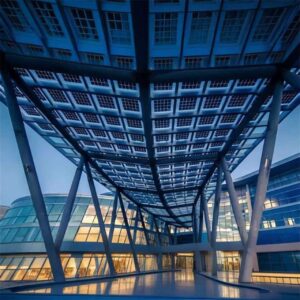
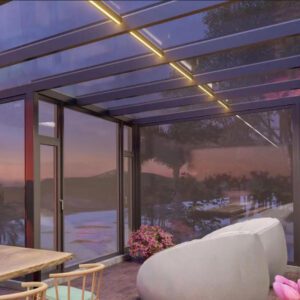
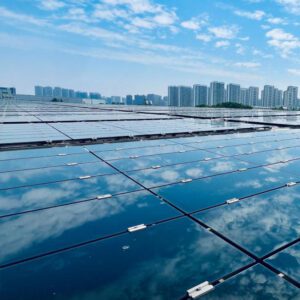
A 1200 kW BIPV photovoltaic glass project at the Wuhan Science and Technology Exhibition Center. Image: Jia Mao Bipv.
Quick answer: Judge solar glass on three things. Strength: will it survive loads, heat swings, and handling? Light transmission: how much light reaches the cell? Durability: will it still perform after 25 years of sun, moisture, and pollution? Then check the supplier, not just the datasheet. Ask for test reports, batch data, and warranty terms in writing.
In this guide: three technical pillars, matching glass to your project, supplier vetting, a scoring checklist, a 25-year cost model, installation risks, future trends, a glossary, and 12 client questions.
I. Why Glass Decides How a Solar Project Ages
A. The critical role of glass selection in the lifecycle of solar construction projects
Glass is the first layer sunlight crosses. It is also the last layer weather has to get through. In a building-integrated photovoltaic (BIPV) system, it carries load, keeps water out, and protects people below, all while generating power.
The U.S. Department of Energy describes BIPV as solar that replaces conventional materials in the roof, skylights, awnings, facades, or windows. When the solar part is the roof or wall, a glass mistake is a building mistake.
Here is what a poor glass choice looks like in numbers. A 100 kW commercial array in Phoenix lost 7,400 kWh in its first year because the installer chose standard float glass instead of low-iron, anti-reflective glass. At $0.12 per kWh, that is about $888 a year, or more than $22,000 over 25 years. Jia Mao Bipv documents the case in its guide to the four major solar glass types.
B. Common pain points for EPCs and architects
Each role on a project feels glass problems differently.
| Who you are | What worries you | What the glass must do |
|---|---|---|
| Curtain wall or roofing contractor | Breakage on site, leaks at joints, rework | Arrive intact, fit the framing, seal reliably |
| PV EPC or energy service provider | Yield shortfalls, warranty disputes | Transmit more light, last 25 years, be insurable |
| Architect, consultant, design institute | Look versus safety versus code | Meet the design, pass fire and impact rules |
| Material brand or distributor | Claims, returns, reputation | Match its datasheet in every batch |
C. Objective: a professional guide to technical evaluation and supplier vetting
To protect both the structure and the energy yield, you need one evaluation framework. It should weigh mechanical strength, optical efficiency, and environmental durability against your actual project specification.
The sections below give you that framework and a checklist you can use on your next bid. For a product-level overview first, see Jia Mao Bipv’s guide to solar glass features and benefits.
II. Technical Pillar 1: Mechanical Strength and Structural Integrity
A. Why load capacity comes first
Solar glass must work as a building envelope material, not just an electrical cover. A beautiful, high-yield module that cracks under wind or heat stress is a liability.
Curtain walls and roofs carry wind, snow, and the glass’s own weight. The glass sits in aluminum framing and is heated unevenly by the sun. So ask three questions: how strong is it, how does it fail, and which standards prove it?
B. Tempered vs. heat-strengthened glass for impact resistance
Both types are heat-treated. The glass is heated to roughly 620–680 °C, then cooled fast with air jets. That locks the surface in compression, which makes the pane stronger. The faster the cooling, the stronger the glass.
Vidro temperado breaks into small, blunt granules. Vidro laminado has a plastic interlayer that holds broken pieces in place.
| Property | Annealed (untreated) | Heat-strengthened | Fully tempered |
|---|---|---|---|
| Relative strength | 1× | About 2× | About 3–5× |
| Surface compression (ASTM C1048) | Baixa | 24–52 MPa | 69 MPa or more |
| How it breaks | Large, sharp shards | Large pieces that usually stay in the frame | Small, blunt granules |
| Thermal stress tolerance | Lowest | Medium | Highest |
| Spontaneous breakage risk | None | Very low | Possible (see section C) |
| Common PV use | Rarely | Thin double-glass modules | 3.2 mm front glass |
Approximate values commonly used in glazing practice. Replace them with your supplier’s test data on a real project.
For overhead glass, use laminated. Skylights, canopies, and facades above walkways must hold their fragments after a crack. Jia Mao Bipv’s tempered laminated glass page lists 680 °C tempering, surface compression above 69 MPa, and a 0.76 mm PVB interlayer. These are manufacturer figures, so ask for the lab report.
For hail, thickness matters. A thicker, fully tempered front pane usually takes impact better. Double glass wins on moisture protection. Pick the one that fits your site’s biggest risk.
This short video shows how annealed, tempered, and laminated glass behave when they break:

C. Reading stress and breakage patterns
A broken pane tells you why it broke. Photograph the pieces before cleanup.

Tempered glass that broke without impact. Photo: Ox1997cow, CC BY-SA 3.0, via Wikimedia Commons.
| What you see | Likely cause | What to do |
|---|---|---|
| Crack starts at an edge and curves inward | Thermal stress (partial shade, cold rain on hot glass) | Check shading, edge condition, and clamp design |
| Small chip at the edge, crack runs from it | Edge hit during handling | Review handling and storage |
| Two larger “butterfly” pieces with a tiny speck at the center | Nickel sulfide (NiS) inclusion, a rare flaw inside tempered glass | Ask whether the glass was heat-soaked |
| Cracks radiating from one point | Impact (hail, debris, dropped tool) | Check hail rating and site hazards |
| Crack across the center under pressure | Overload or wrong thickness for the span | Re-check the load calculation |
Heat soak is a factory test that holds tempered glass at about 290 °C for hours. It makes flawed panes break in the factory instead of on your building. If your tempered glass is overhead, ask for heat-soak records.
D. Compliance with international safety standards
Each standard answers a different question. Ask suppliers for the exact edition and certificate number.
| Standard | What it covers | Where it matters |
|---|---|---|
| IEC 61215 | Module durability: thermal cycling, damp heat, mechanical load, hail | Every PV module |
| IEC 61730 | Module electrical and fire safety | Every PV module |
| UL 7103 | BIPV roof coverings | U.S. roof-integrated BIPV |
| EN 12150 / ASTM C1048 | Thermally toughened and heat-treated flat glass | Any tempered or heat-strengthened glass |
| EN 14179 | Heat-soaked tempered glass | Overhead and facade glass |
| EN 12600 | Pendulum impact behavior | Accessible facade and overhead glazing |
| ASTM E1300 | Glass load resistance (wind, snow) | Thickness and span design |
| NFPA 285 / EN 13501-1 | Fire spread in wall assemblies | Facades on taller buildings |
Fire reports must match your actual wall build-up. A module-only certificate is not enough. UL explains why BIPV is tested as both a PV product and a building product on its BIPV testing and certification page.
Industry insight: The most common certificate mistake is a model mismatch. The paper covers a similar product, not the one on your purchase order. Check the model number line by line.
III. Technical Pillar 2: Optical Performance and Light Transmission
A. The balance between transparency and anti-reflective properties
Every photon that the glass absorbs or reflects is lost before it reaches the cell. Two levers matter most: how clear the glass is (iron content) and how little light it bounces away (coating). Thickness plays a smaller role.
B. Low-iron vs. standard glass
Iron oxide gives ordinary glass its green edge tint, and it absorbs light. Standard float glass often holds 800–1,000 ppm of iron. Low-iron solar glass holds about 120 ppm or less. In the data compiled by Jia Mao Bipv, that moves transmittance from roughly 83–85% to 91–92% at 3.2 mm. Its comparison of solar glass and traditional glass shows the differences side by side.
Typical industry ranges: standard float about 83–85%, low-iron about 91–92%, low-iron with AR about 93–95%. Bars show midpoints. Confirm with lab data for your product.
Jia Mao Bipv’s ultra-clear tempered glass is listed at up to 91.5% transmittance, about 8% higher than standard glass, with IEC 61215 hail-impact certification. The module-level gain is smaller than the glass-level gap, because the encapsulant and cell also shape output. But on a 25-year asset, even a small gain compounds.
C. Anti-reflective (AR) coatings: durability, cleaning, and gains
Each air-to-glass surface reflects about 4% of light. An AR coating is a thin, porous layer that cuts that reflection. In practice, a good coating adds about 2–3 percentage points of transmittance.
Durability is where suppliers differ. Coatings applied before tempering bond into the surface. Weaker coatings can wear off. Ask for abrasion, damp-heat, and salt-spray results on the coated glass, plus outdoor exposure data from a site like yours.
Cleaning rules that protect the coating:
- Use soft water and a soft brush or cloth.
- Avoid abrasive pads, scrapers, and strong chemicals.
- Clean when the glass is cool.
- Keep a written log, since many warranties ask for it.
Dirt costs real power, and high-rise access makes cleaning expensive. Jia Mao Bipv’s facade systems review reports that self-cleaning glass lowers maintenance cost by about 30%. That is a manufacturer claim, so ask for field data.
D. How glass thickness affects light and yield
For low-iron glass, going from 3.2 mm to 2.0 mm changes transmittance by well under one percentage point. The bigger trade-off is strength and weight. Glass weighs about 2.5 kg per m² for every millimeter.
| Glass build | Glass weight | Stiffness vs. 2.0 mm | Note |
|---|---|---|---|
| 2.0 mm | 5 kg/m² | 1× | Thin double-glass modules |
| 3.2 mm | 8 kg/m² | About 4× | Common single-glass front |
| 2 × 2.0 mm | 10 kg/m² | n/a (sandwich) | Double-glass module |
| 2 × 3.2 mm | 16 kg/m² | n/a (sandwich) | Heavier double glass |
| 5 mm + 5 mm laminated | About 25 kg/m² | n/a (sandwich) | Facade or overhead glass |
Industry insight: A plate’s stiffness grows with the cube of its thickness. A 2.0 mm pane is about 38% lighter than a 3.2 mm pane, but only about one quarter as stiff. Weight savings come with a bending and breakage cost.
IV. Technical Pillar 3: Weather Resistance and Environmental Durability
A. What “durable” must include
Solar glass sits outside for 25 years or more. Durability means more than “does not break.” The glass surface, the coating, and the edge seal all have to hold. Glass itself is chemically stable. The weak points are usually coatings, interlayers, and seals.
B. Humidity, hydrolysis, and coating degradation
Moisture attacks in two ways. It can leach alkali from a glass surface and leave a white haze, which often starts when sheets are stored stacked with trapped moisture. It can also break down coatings and edge seals over time.
The standard test is damp heat: 1,000 hours at 85 °C and 85% relative humidity (IEC 61215). For coastal or tropical projects, ask for longer-duration results and for transmittance measured after the test.
C. Wind-load and snow-load capacity
The IEC 61215 static load test uses 2,400 Pa on the front and rear, and 5,400 Pa for heavy snow. The test load already includes a 1.5 safety factor, so 2,400 Pa corresponds to a design load of about 1,600 Pa. In imperial terms, 2,400 Pa is about 50 psf, and 5,400 Pa is about 113 psf.
High-rise facades can need more than the standard test. When you see a rating, ask two questions: is it a design load or a test load, and what safety factor was applied?
Hail is the other roof hazard. The IEC hail test fires ice balls from a pneumatic launcher at over 10 spots on the module, then checks for broken glass, micro-cracks, and broken cells. The common qualification test uses 25 mm ice balls at 23 m/s. In hail-prone regions, ask for a larger size.
D. UV and chemical pollutants in urban and industrial zones
Glass shrugs off UV. Interlayers, encapsulants, and coatings do not always. IEC 61215 includes UV preconditioning of 15 kWh/m². For harsh sites, add salt-mist testing (IEC 61701) near coasts and ammonia testing (IEC 62716) near farms.
Industry insight: Most “glass failures” in the field are really interface failures: a coating lifting, an edge seal wicking moisture, an interlayer yellowing. Ask for aged-sample data on the whole stack, not just the pane.
V. Aligning Glass Specs with Project-Specific Requirements
A. Why one spec does not fit all
A spec that is perfect for a ground-mount farm can be dangerous overhead. A facade spec can be too expensive for a warehouse roof. Start with the application, then work back to the glass.
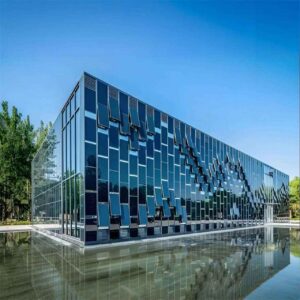
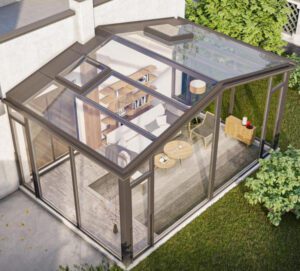
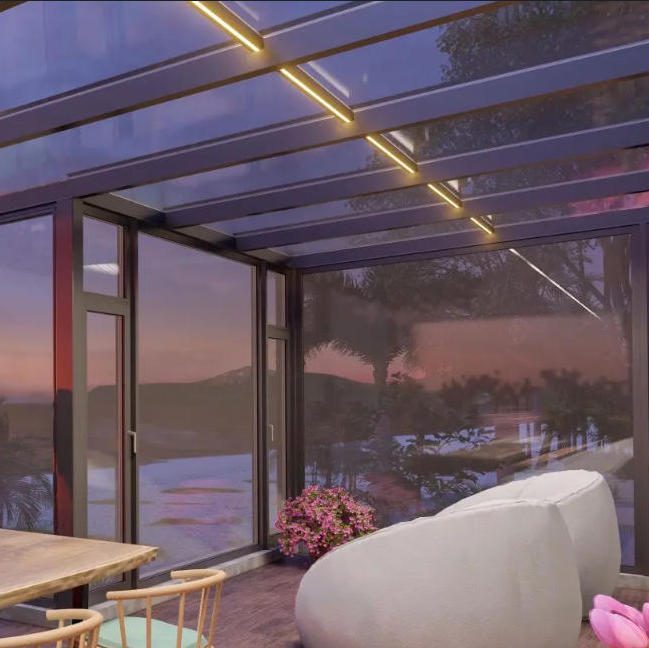
A glass-integrated PV facade. Image: Jia Mao Bipv.
B. Matching glass type to application
| Application | Glass priorities | Typical choice |
|---|---|---|
| Curtain wall facade | Safety, appearance, fire rating, color | Laminated, low-iron, tempered or heat-strengthened |
| Skylight, canopy, atrium | Fall-out protection | Laminated (required overhead) |
| Commercial roof | Hail, cost, weight | 3.2 mm tempered, low-iron, AR |
| Utility-scale ground mount | Lowest cost per kWh | AR-coated, 2.0 mm double glass or 3.2 mm single glass |
| Coastal or humid site | Moisture, corrosion | Double glass with durable edge seal |
| Hail-prone region | Impact | Thicker tempered front glass |
For facades, Jia Mao Bipv’s laminated photovoltaic glass page lists an 11 mm build (5 mm glass, 1 mm EVA, 5 mm glass) with an EN 356 P5A impact grade. Its curtain wall design guide covers how those units connect to the frame.
C. Framing: thermal expansion and sealant compatibility
Glass and aluminum grow at different rates when heated. Soda-lime glass expands about 9 × 10⁻⁶ per kelvin, and aluminum about 23 × 10⁻⁶. In a curtain wall, a non-structural outer wall, gaskets and joints must absorb that mismatch.
For a 1,500 mm panel and a 50 K temperature swing, glass grows about 0.7 mm and aluminum about 1.7 mm. About 1 mm of difference must be absorbed by your gasket or sealant joint every day.
Sealant compatibility is the other risk. Some sealants attack the PVB, EVA, or edge seal of a laminated module. Use only sealants approved by the module maker, and ask the sealant supplier for a written compatibility letter for your exact glass and interlayer.
Video: a presentation on BIPV and advanced glazing for building facades, from the Engineering Institute of Technology.
D. U-value and SHGC for LEED and BREEAM
Valor U measures how fast heat leaks through glazing (lower is better). SHGC (solar heat gain coefficient) measures how much of the sun’s heat gets in, on a scale from 0 to 1. Energy models for green building ratings use both.
Jia Mao Bipv’s BIPV transparent glass page lists 30%, 50%, 70%, and 90% light transmission options with an SHGC range of 0.15–0.45. Clear single glass sits around 0.86. For a low U-value, place PV glass as the outer lite of an insulating glass unit (IGU) with a low-e coating inside.
LEED awards points across energy, materials, and other categories, with levels up to Platinum at 80+ points. BREEAM is the UK-born equivalent, used worldwide. Both reward on-site renewable energy and efficient envelopes. Ask your supplier for tested U and SHGC values, not estimates.
VI. The Strategic Supplier Evaluation Framework
A. Why specs alone are not enough
A datasheet describes one good day in a lab. You need to know if the supplier can repeat it across 10,000 panes. Two suppliers can print the same numbers. One makes them daily. The other made them once for the test sample.
B. Quality management systems and batch-to-batch consistency
ISO 9001 certifies a documented quality system. It does not certify the product. Use it as a starting point, then ask for proof:
| Ask for | What it shows | Warning sign |
|---|---|---|
| Three months of lot data (transmittance, thickness, power) | Real variation, not one best result | Only one sample report |
| Electroluminescence (EL) images from recent batches | Cell and handling damage | Refusal to share |
| Flash-test yield | Share of modules meeting rated power | Low or unreported |
| Traceability from serial number to raw glass lot | Root-cause ability if a field issue appears | Paper-only records |
| 12-month corrective-action log | How fast problems get fixed | “We have no issues” |
Scale matters too. Jia Mao Bipv reports an annual production capacity of 3 GW, which helps when one tempering line goes down or an order doubles mid-project.
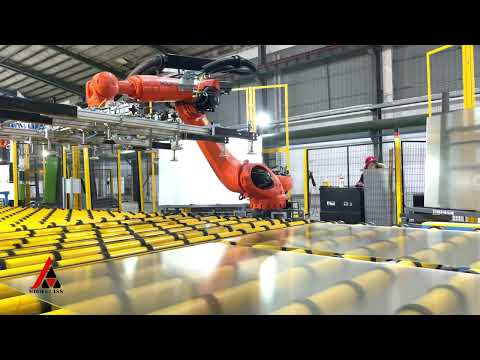
Video: a solar glass production line. Watch where tempering, inspection, and stacking happen. Those are the steps to ask about on a factory audit.
C. Supply chain reliability and lead time
On a large EPC project, a late glass delivery costs more than a higher unit price. Ask where the raw glass comes from, how many tempering lines run, and what happens if one stops.
For custom sizes, colors, or laminated units, get lead times in writing and tie order release to a design freeze date. Order 3–5% extra of custom items so you can replace a broken unit with one from the same batch.
D. After-sales technical support and warranty terms
A 25-year warranty is only as good as the company behind it. Check financial stability and track record, then read the claim terms.
Jia Mao Bipv’s warranty and maintenance guide explains product versus performance warranties. For reference, the tempered laminated glass page lists a 30-year linear power warranty (80% minimum output), a 20-year product defect warranty, and a 25-year structural integrity guarantee. The laminated PV glass page lists 25-year structural, 15-year electrical (85% output at 15 years), and 10-year aesthetic coverage.
On a facade, labor is the real cost. A replacement module may be worth a few hundred dollars, but access equipment and labor can cost several times that. Negotiate labor and shipping coverage into the contract.
VII. Practical Supplier Evaluation Checklist (The Tool)
Copy the tables below into Excel or Google Sheets and use them on your next bid.
A. Certification verification: ISO, UL, TÜV, and project-specific certifications
Follow these steps for every certificate. Jia Mao Bipv’s guide on how to verify certificates, test reports, and warranty terms covers each in more detail.
- Get the original PDF from the manufacturer, not a screenshot.
- Check the number with the issuing body (TÜV, UL, or the test lab).
- Match the model. The product on the certificate must be the exact product you are buying.
- Check the standard edition. An old edition may not meet current code.
- Check validity. Certificates need surveillance audits and can expire.
| Certificate | Covers | Verify with |
|---|---|---|
| IEC 61215 and IEC 61730 | Module durability and safety | Issuing lab database |
| UL 61730 / UL 7103 | U.S. listing, BIPV building product | UL certificate search |
| ISO 9001 | Factory quality system | Certificate scope and date |
| EN 12150, ASTM C1048 or equal | Tempering quality | Accredited lab test report |
| Project-specific (fire, impact, water) | Your wall or roof assembly | Report matching your build-up |
B. Sample testing protocol: mechanical stress and spectrometry
Before approving a supplier, test samples drawn from a production lot, not a special batch. Use an accredited lab (ISO/IEC 17025).
| Test | What you learn | Suggested pass rule (your call) |
|---|---|---|
| Spectrophotometer transmittance (ISO 9050 or ASTM E424), 300–1,200 nm | Real optical performance | Average within 0.5 points of datasheet |
| Fragmentation test (particle count) | Whether glass is truly fully tempered | Meets EN 12150 or ASTM C1048 |
| Surface compression measurement | Tempering strength | Within range for the glass type |
| Thickness, bow, and edge check | Dimensional control | Within drawing tolerance |
| Mechanical load and hail on finished modules | Real durability | No visible damage, under 5% power loss |
| Flash test against a reference module | Output difference | Matches nameplate |
Test at least five pieces and look at the spread, not just the average. A wide spread means an unstable process.
C. Logistics and packaging: breakage in transit and on delivery
Most glass damage happens between the factory and the lift. Write packaging rules into the purchase order.
| Item | What to require |
|---|---|
| Crates or A-frames | Rated for the weight, secured to the container floor |
| Spacers between sheets | Interleaf material that prevents scratching and trapped moisture |
| Edge protection | Corner and edge guards on every unit |
| Moisture control | Desiccant, sealed wrap, ventilated site storage |
| Shock and tilt indicators | Fitted on crates, checked on arrival |
| Unloading record | Photos before opening, damage reported within days |
D. Cost-benefit analysis: CAPEX vs. OPEX over 25 years
CAPEX is what you pay up front. OPEX is what you pay to run and maintain the system. The model below is for a 100 kW rooftop array. These are my assumptions, not measured data, so replace every input with your own.
Inputs: 100 kW system, 182 modules, 1,600 kWh per kW per year for standard glass, power at $0.10 per kWh, high-spec glass premium of $5 per module, 4% extra yield from low-iron plus AR glass, cleaning at $600 per visit twice a year (30% lower with self-cleaning glass), and 2% versus 0.5% of modules replaced over 25 years at $600 each.
| Line item | Standard-spec glass | High-spec glass | Difference over 25 years |
|---|---|---|---|
| Glass premium (182 × $5) | $0 | $910 | −$910 |
| Energy revenue (160,000 vs. 166,400 kWh per year × $0.10 × 25) | $400,000 | $416,000 | +$16,000 |
| Cleaning ($1,200 vs. $840 per year × 25) | $30,000 | $21,000 | +$9,000 |
| Replacements (4 vs. 1 module × $600) | $2,400 | $600 | +$1,800 |
| Net advantage of high-spec glass | +$25,890 |
The $910 premium pays back in about 10 months in this model. On a facade, replacement and access costs are much higher, so the case for better glass gets stronger.
Illustrative model using the assumptions above.
Jia Mao Bipv’s price and performance comparison of glass types and its BIPV glass ROI guide for EPC contractors show how to build a fuller financial model.
Supplier scoring sheet. Score each supplier from 1 to 5. Multiply each score by its weight, add the results, and divide by 5 to get a score out of 100.
| Criterion | Peso | Supplier A | Supplier B |
|---|---|---|---|
| Certificates verified and model-matched | 20 | 5 | 3 |
| Mechanical test data | 20 | 4 | 3 |
| Optical data (third-party) | 15 | 4 | 5 |
| QMS and batch consistency | 15 | 4 | 2 |
| Logistics and packaging | 10 | 3 | 4 |
| Warranty and support | 10 | 4 | 3 |
| Price and lifetime cost | 10 | 3 | 5 |
| Weighted score | 100 | 80 | 69 |
Supplier B is cheaper and tests well in the lab, but it is weak on factory consistency. The weighted score shows why a lower bid does not always win.
VIII. Risk Mitigation in Procurement and Installation
A. Where failure points hide
Risk is highest at three handoffs: spec to purchase order, factory to site, and installer to owner. Control each one with a written check.
B. Addressing “spec-drift” during procurement
Spec-drift is when the glass you receive differs slightly from the glass you approved. A supplier swaps in thinner glass, a different coating, or a new iron grade to hit a price. It is hard to see by eye.
| Parameter | How it drifts | Control |
|---|---|---|
| Thickness | 3.2 mm becomes 3.0 mm | Tolerance in the contract, caliper checks |
| Iron content / transmittance | Cheaper glass substituted | Minimum transmittance, lot spectrometry |
| Coating | Different AR supplier or process | Name the coating, require lot certificates |
| Tempering level | Heat-strengthened replaces tempered | Fragmentation test on delivery |
| Interlayer | Different brand or thickness | Bill of materials locked in the contract |
Keep a signed “golden sample” from the approval stage. Add a clause requiring written notice before any change in material, factory, or process.
C. Handling and installation guidelines to avoid micro-cracks
A micro-crack is a tiny crack in the cell or glass that you cannot see. It can grow with every heat cycle.

Handling glass inside a building under construction. Photo: Shixart1985, CC BY 2.0, via Wikimedia Commons.
Jia Mao Bipv’s guide for specialized contractors covers site workflow for glass-integrated projects. These rules prevent most damage:
- Lift with rated vacuum lifters or two-person carries. Never carry a module by one edge or the junction box.
- Store in A-frames on level ground, with spacers, and keep moisture out.
- Clamp only in the zones the manufacturer allows, and use a torque wrench.
- Never walk on modules, including double-glass ones.
- Avoid thermal shock. Do not hose cold water on hot glass.
- Keep tools and hard edges away from glass surfaces.
- Check shading before commissioning, since partial shade creates thermal stress.
- Take electroluminescence images of a sample after installation to find handling damage before the crew leaves.
D. A clear QA/QC handover between supplier and general contractor
QA/QC (quality assurance and quality control) is how you prove the work is right. Agree on the handover package before the first delivery.
| Handover item | Why it matters |
|---|---|
| Serial numbers mapped to glass lots | Fast root-cause tracking |
| Flash-test and insulation resistance results | Baseline power and safety |
| EL baseline report | Proof of “no damage at install” |
| Torque and fixing logs | Proof the fixing was done correctly |
| As-built drawings and photos | Maintenance and claims |
| Warranty registration and maintenance manual | Keeps coverage valid |
| Signed punch-list closure | Clear end of responsibility |
Industry insight: Disputes rarely start with “the glass was bad.” They start with “no one can prove it was fine when it left your hands.” A baseline EL scan and a lot-mapped serial list settle most claims in days instead of months.
IX. Future Trends in Solar Glass Technology
A. Why watch emerging glass
Today’s bottlenecks are weight, light capture, and the lack of dynamic control over heat and glare. Each trend below targets one of them. Each also has trade-offs, so ask for field data before specifying.
B. Bifacial glass and albedo-based gains
Bifacial modules collect light on both sides. Albedo is how much light the ground or roof reflects. Rear-side gains are commonly cited at roughly 5–10% over grass or dark ground and 10–25% over bright surfaces such as white roofing, sand, or snow. Your site simulation matters more than any rule of thumb.
Double glass also protects against moisture and tends to last longer. Compare costs in Jia Mao Bipv’s comparison of single, double, and bifacial glass (linked in section VII).
| Condition | Bifacial worth it? |
|---|---|
| Ground mount, light-colored ground, raised modules | Yes |
| Raised flat roof with white membrane | Yes |
| Carports and canopies | Yes, light reaches the back from below |
| Dark roof, flush-mounted | Rarely |
| Weight-limited roof | Check load first, double glass is heavier |
C. Smart glass and electrochromic layers
Electrochromic glass changes tint when a small voltage is applied. Combined with PV, it could control glare, heat, and power in one pane. Jia Mao Bipv lists self-dimming material R&D among its development areas, but commercial use remains limited. Ask for field data, switching lifetime, and a joint warranty before specifying.
D. Advancements in ultra-lightweight glass
Thinner glass (about 1.6–2.0 mm) lowers dead load, which helps older roofs. The trade-off is breakage risk, especially with large modules during transport and install. Very thin glass is also harder to temper, so makers use heat-strengthening or chemical strengthening. If your roof is weight-limited, ask for edge-strength data and a handling plan along with the weight savings.
X. Put the Checklist to Work
A. The tri-factor evaluation
Strong, clear, and durable glass is a package. Strength protects people and the building. Optical quality sets your energy yield. Environmental durability decides whether both survive 25 years. A weakness in any one shows up as a repair, a claim, or lost income.
B. Architectural vision and engineering reality
The best projects start with a design idea and test it against engineering limits early. Pick the glass that suits the application, confirm it with tests, and lock it into the contract.
C. Your next steps
- Choose the glass type for each application (roof, facade, overhead).
- Ask for certificates by number and verify them.
- Test samples from production lots, with spectrometry and fragmentation.
- Put thickness, transmittance, coating, and tolerances in the purchase order.
- Score suppliers with the weighted sheet and run the 25-year cost model.
- Agree on packaging, breakage allowances, and the QA/QC handover.
Choose technical specifications over the lowest bid, and treat solar as a building material, not an add-on. If you want a second opinion on a glass spec, contact the Jia Mao engineering team with your drawings and target performance. For a step-by-step framework on panel selection, see Jia Mao Bipv’s guide on how to evaluate BIPV panel options.
Glossary: Key Terms in Plain English
| Term | Plain meaning | Example |
|---|---|---|
| Low-iron glass | Glass with very little iron, so it is clearer | About 120 ppm iron vs. 800–1,000 ppm |
| Vidro temperado | Glass heat-treated to be much stronger | Breaks into small, blunt granules |
| Heat-strengthened glass | Glass with a milder heat treatment | Breaks into larger pieces that stay in the frame |
| Vidro laminado | Two panes bonded with a plastic interlayer | Stays in place after cracking |
| AR coating | Thin layer that reduces reflection | Adds about 2–3 points of transmittance |
| Transmittance | Share of light that passes through | 91.5% means 8.5% is lost |
| SHGC | Share of the sun’s heat that gets inside | About 0.86 for clear glass |
| Valor U | How fast heat leaks through | Lower is better |
| NiS inclusion | Rare flaw that can cause late breakage in tempered glass | Found by heat-soak testing |
| Heat soak | Factory test that breaks flawed tempered glass | Done before shipment |
| EL imaging | Camera test that shows cracks inside cells | Used at install and after |
| Spec-drift | Delivered product differs from the approved spec | Thinner glass than quoted |
| Albedo | How much light a surface reflects | White roof or snow |
| TCO | Total cost of ownership over the system’s life | Purchase, cleaning, repairs, lost energy |
Perguntas frequentes
1. How do I determine if my project requires tempered or heat-strengthened solar glass?
Start with the failure you most need to avoid. Fully tempered 3.2 mm glass is the usual front glass for single-glass modules, because it handles hail and handling well. Heat-strengthened glass suits thinner double-glass modules and some facades, where lower flaw-related breakage and less visual distortion matter. For any overhead use, choose laminated glass so fragments stay in place. Have your structural engineer confirm the choice with an ASTM E1300 load check.
2. What are the primary differences in safety certifications between rooftop PV glass and facade PV glass?
Both need IEC 61215 and IEC 61730. Rooftop products add roof-covering tests such as UL 7103 in the U.S. Facades add wall-assembly fire tests (NFPA 285 or EN 13501), impact tests (EN 12600), wind-driven rain tests (ASTM E331 or AAMA 501), and laminated safety glass when overhead. A module-only certificate is not enough for a facade. Jia Mao Bipv’s independent facade systems review goes deeper on these requirements.
3. How do I verify if a glass supplier’s “tempered” claim meets structural building codes?
Ask for a test report to EN 12150-1 or ASTM C1048 from an accredited lab, with a fragmentation count and a surface compression reading. Then test a sample yourself. Fully tempered glass should show about 69 MPa or more of surface compression and break into small granules. For overhead use, ask for heat-soak records. Make sure the report’s thickness and size match what you are buying.
4. What is the expected lifespan of anti-reflective coatings in high-pollution urban environments?
It depends on coating quality and cleaning habits. Coatings applied before tempering bond into the glass and are designed to last the module’s life. Weaker coatings can wear in harsh settings. Ask for abrasion, damp-heat, and salt-spray results on the coated glass, plus outdoor exposure data from a site like yours. Clean with soft water and avoid abrasive tools.
5. How can I verify if a supplier’s “high-transmission” claim is accurate through third-party testing?
Send five or more production samples to an ISO/IEC 17025 lab for spectrophotometer transmittance (ISO 9050 or ASTM E424) across 300–1,200 nm. Compare the average and spread with the datasheet. Then flash-test finished modules against a reference module. If the lab result is more than about 0.5 points below the claim, ask why before you order.
6. What are the most common causes of glass failure in solar roofing, and how can they be avoided?
The usual causes are hail, edge damage from handling, thermal stress from partial shade, over-tightened clamps, people walking on modules, and moisture damage in storage. Avoid them with the right hail rating, handling rules, shade checks, torque control, dry storage, and a baseline EL scan after install.
7. How do I balance the need for transparency (aesthetics) with the need for energy efficiency?
More transparency means fewer cells and less power. Use opaque BIPV where nobody needs a view, such as spandrels and parapets. Use semi-transparent glass only where you need daylight. Jia Mao Bipv offers colored BIPV glass for design matching, so ask for measured power data for your exact color and transparency.
8. What certifications should I insist upon for projects located in high-wind or seismic zones?
For wind, require project-specific load testing (ASTM E330) at your design pressure, not just the IEC minimum. In hurricane zones such as Florida, look for large-missile impact approval (Miami-Dade TAS 201/203) and laminated glass. For seismic zones, ask for curtain wall drift testing (AAMA 501.4 or 501.6) of the complete assembly with the PV units in it.
9. How does glass thickness impact the structural load calculations for an existing roof?
Glass adds about 2.5 kg/m² per millimeter. A 2 × 3.2 mm double-glass module carries about 16 kg/m² of glass alone, compared with about 8 kg/m² for 3.2 mm single glass. Across a 1,000 m² roof, that difference is about 8 tonnes. Have a structural engineer check the roof against the added dead load plus snow and wind uplift before choosing double glass.
10. What is the industry standard for acceptable breakage rates during the shipping of solar glass?
There is no single published industry standard, so set a number in your contract. A reasonable starting point for standard-size modules is under 0.5%, with a higher allowance for custom oversize laminated units. Require packaging specs, shock and tilt indicators, photo records on unloading, and replacement at the supplier’s cost.
11. How do I evaluate the compatibility of solar glass with various curtain wall sealant types?
Ask the sealant manufacturer for a written compatibility and adhesion test on your exact glass, coating, and interlayer. Use neutral-cure silicone for structural glazing and avoid acetoxy-cure types, which release acetic acid. Watch the PVB or EVA edge for staining or softening. Use only sealants approved in the module maker’s installation manual.
12. In what scenarios should I prioritize bifacial glass over monofacial glass for construction?
Choose bifacial when light can reach the back: raised ground mounts over light-colored ground, raised flat roofs with white membranes, canopies, carports, and vertical east–west installations. Skip it for dark, flush-mounted roofs or weight-limited structures. Gains vary widely by surface, so model your actual site.