Innovative Solutions: Integrating BIPV Glass into Your Specialized Contractor Projects

The building envelope is the last place most commercial projects look for competitive advantage. For contractors who understand BIPV glass, it’s the first.
The global BIPV market was valued at USD 34.78 billion in 2025 and is projected to reach USD 42.61 billion by 2026, according to Precedence Research. The BIPV glass segment specifically — covering photovoltaic façade glazing, skylights, spandrel panels, and curtain wall modules — is forecast to grow from USD 14.2 billion in 2026 to USD 63.3 billion by 2033 (Persistence Market Research).
Those numbers don’t move on their own. They move because architects are specifying net-zero buildings. Developers are responding to energy codes. Tenants are asking for ESG credentials. And procurement teams are looking for contractors who can actually deliver an integrated photovoltaic envelope — not just attach panels to an existing roof.
This guide is written for the professionals who sit at that delivery point: curtain wall and roofing GCs, specialized sub-contractors, photovoltaic EPC firms, building material distributors, and the design institutes that feed specifications into competitive tenders. Every section addresses a real project challenge — from early design coordination through 25-year O&M planning — with actionable protocols, real cost data, and compliance references you can use tomorrow.
Jia Mao Bipv operates across the full BIPV stack, from engineered photovoltaic glass module production to curtain wall system integration. Where product selection is relevant, you’ll find specific links to their resources. But this guide begins where every successful BIPV project begins: with why the market window is open right now, and what happens to contractors who miss it.
1. The Evolution of BIPV: Why Now Is the Time to Act

The Regulatory Landscape Has Changed Permanently
BIPV adoption is no longer driven primarily by environmentally motivated developers. It is increasingly mandated. The EU’s revised Energy Performance of Buildings Directive (EPBD), effective 2026, requires all new commercial buildings and public buildings to be nearly zero-energy — with solar energy integration being the primary pathway for compliance in dense urban environments where ground-mounted systems are not an option.
In the U.S., California’s Title 24 (updated January 2026) expands solar-ready requirements for commercial construction and introduces new cool-roof provisions that interact directly with façade and envelope specifications. Across Asia-Pacific, Singapore’s Green Building Masterplan mandates that 80% of buildings meet Green Mark certification by 2030 — and BIPV glass is one of the fastest-qualifying envelope upgrades available.
These aren’t optional trends. They are procurement realities. When a tender specifies LEED Gold, BREEAM Excellent, or Living Building Challenge compliance, the contractor that can deliver an integrated BIPV envelope has a structural advantage over one that cannot.
Market Differentiation on Competitive Bids
Here’s the contractor-level reality: most firms bidding curtain wall or roofing scopes on large commercial projects are competing on price for equivalent specifications. BIPV glass changes the equation. A contractor who can demonstrate:
- Certified experience with IEC 63092-1 compliant BIPV systems
- Completed case studies with measured energy performance data
- An established supply chain relationship with a tested BIPV glass manufacturer
- In-house coordination capability between façade and PV electrical scopes
…has a qualitative differentiator that price-competitive rivals without that experience cannot match. On public sector tenders and large-scale commercial developments, that differentiation is worth far more than a 2–3% cost reduction.
| Market Driver | 2025–2026 Status | Impact for Contractors |
|---|---|---|
| EU EPBD (nearly zero-energy mandate) | In force — new commercial buildings | Façade solar required in most urban specifications |
| U.S. IRA / ITC 30% solar tax credit | Extended through 2032 | Improves client ROI; accelerates approval of BIPV specs |
| California Title 24 (2026 update) | Effective Jan 2026 | Expands solar-ready requirements; creates demand |
| Singapore Green Building Masterplan | 80% Green Mark by 2030 | BIPV fastest qualifying upgrade for dense urban sites |
| LEED v4.1 / BREEAM 2023 revisions | Active on new specifications | Up to 20 LEED points from a single BIPV glass façade |
2. BIPV Glass vs. Traditional PV: A Contractor-Centric Comparison
This is the comparison that matters on a project estimate — not efficiency ratings in a lab brochure, but what actually changes in the work scope, timeline, risk, and client ROI when you switch from rack-mounted PV to integrated BIPV glass.
Dual Functionality Changes the Cost Equation
Traditional rack-mounted PV is an energy system added to a completed building envelope. The roof or façade exists, the solar panels go on top, and the two systems operate independently with separate warranties, separate maintenance responsibilities, and separate installation crews. BIPV glass is different: it substitui the conventional cladding, glazing, or roofing material — and the cost of that replaced material must be subtracted from the BIPV system cost to arrive at the net incremental investment.
On a project where BIPV glass replaces a high-performance curtain wall glazing specification (which might cost $200–$350/m² installed), the effective premium for adding photovoltaic functionality may be $100–$200/m² — not the full BIPV glass cost. That reframing is essential for client presentations and for building an accurate project budget.
Installation: What Actually Changes for Your Crews
| Dimension | Rack-Mounted PV | BIPV Glass Integration |
|---|---|---|
| Who owns the weather barrier? | Roofer/façade contractor (separate) | BIPV installer — the module IS the envelope |
| Structural loading | Racking added to existing structure | Dead load engineered into primary structure |
| Multi-trade coordination | Low (PV after envelope complete) | High (PV and envelope designed simultaneously) |
| Electrical integration timing | After building envelope complete | Concurrent with façade/curtain wall installation |
| Waterproofing liability | Separate warranties | Unified system — manufacturer + installer share |
| Design phase involvement | Late (Design Development or later) | Must begin at Schematic Design |
| Permitting complexity | Standard PV permit | Building envelope + electrical + fire compliance |
Long-Term ROI for Clients
The financial case for BIPV glass is strongest over a 15–30 year lifecycle — the timeframe that building owners, institutional investors, and REIT managers actually use when evaluating capital expenditure. Over that period, BIPV glass delivers three overlapping streams of value: energy generation (offset utility bills), material value (replaces cladding or glazing), and compliance value (avoids future code retrofit costs). A properly modeled lifecycle analysis almost always shows BIPV glass outperforming conventional cladding-plus-added-solar — and that analysis is a tool contractors should be equipped to present, not just reference.
3. Real-World Case Studies: Proven Success Across Project Types
Case Study 1: High-Rise Commercial Façade — New York, USA
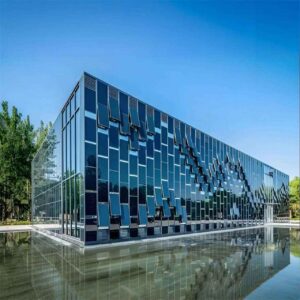
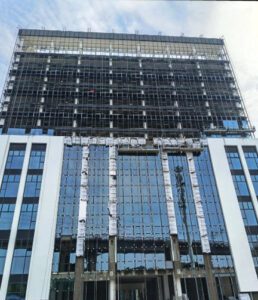
A 28-story commercial office tower in Midtown Manhattan incorporated semi-transparent BIPV glass modules across the south and west curtain wall façades during a full envelope renovation. The modules were custom-colored to match the building’s existing grey glazing aesthetic, with a 35% visible light transmittance (VLT) maintaining occupant comfort and natural daylighting.
Results:
- 2,800 m² of BIPV glass installed across 14 floors
- Annual generation: approximately 312 MWh/year
- Energy offset achieved: 32% of building HVAC and lighting loads
- Net façade premium over replaced conventional glazing: $890,000
- Simple payback (after 30% ITC): 11.4 years
- LEED Gold certification achieved — BIPV contributed 11 EA credits
Lessons for contractors: The most challenging phase was the pre-installation coordination between the façade engineering team and the electrical EPC. String layout had to be redesigned twice because the initial electrical design didn’t account for the shadow lines from floor-to-ceiling spandrel bands. Early BIM-integrated coordination would have saved an estimated 3–4 weeks of redesign time.
Case Study 2: Airport Terminal Roofing — Munich, Germany
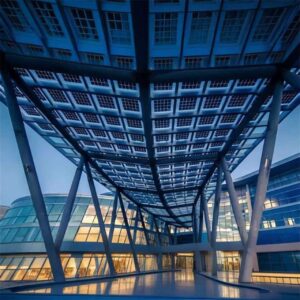
Munich Airport’s Terminal 2 satellite expansion incorporated a 1.2 MW BIPV glass roofing system across the departure lounge canopy structure — one of the largest integrated airport BIPV installations in Europe at completion.
Results:
- 9,600 m² of structural BIPV glass panels forming the primary weather barrier
- Panels engineered to carry snow loads up to 2.5 kN/m² and wind uplift to 1.8 kN/m²
- Annual energy generation: 1,070 MWh/year (offsets 18% of terminal energy consumption)
- Zero additional roofing material required — BIPV panels are the roof structure
- Sourced under EU Green Deal infrastructure funding — reducing client net cost by 22%
Lessons for contractors: Custom structural load certification for each BIPV panel format added 14 weeks to the procurement timeline. Future airport projects now begin structural glass certification in parallel with tender award — not after. Logistics on this project required a phased lifting plan coordinating BIPV glass panels (each weighing 180–240 kg) with the structural steel erection sequence.
Case Study 3: Educational Campus Canopy — Singapore
A 12-building university campus in Singapore incorporated BIPV glass canopy systems across pedestrian walkways and outdoor social spaces — a deliberate design choice driven by Singapore’s Zero Energy Building (ZEB) certification pathway under the Building and Construction Authority (BCA) Green Mark program.
Results:
- 4,200 m² of BIPV canopy glass providing integrated shading and energy generation
- Annual generation: 420 MWh/year
- Combined function: 68% reduction in direct solar radiation reaching walkways (reducing outdoor thermal discomfort) while generating power
- ZEB status achieved — first multi-building campus in Southeast Asia to do so
- System cost offset by SGD 1.4 million in BCA Green Mark incentive grants
Lessons for contractors: In high-humidity tropical environments, frameless BIPV glass canopy systems require more frequent sealant inspection than temperate-climate installations. Semi-annual inspections were established as the standard protocol for the Singapore campus, compared to annual inspections on equivalent Northern European projects.
4. Design Integration: Collaborating with Architects and Engineers
The Cost of Late-Stage Solar Introduction
The single most expensive mistake on BIPV glass projects is treating the photovoltaic specification as a late-design-phase decision. When BIPV is introduced during Construction Documents — after structural framing is designed, façade geometry is fixed, and MEP systems are coordinated — contractors face a compressing cascade of consequences: structural reinforcement for unanticipated dead loads, electrical re-routing, and rework costs that regularly reach $60,000–$90,000 on mid-size commercial projects.
The correct entry point is Schematic Design (SD). At SD stage, the structural engineer can size framing members for BIPV glass dead loads (typically 25–45 kg/m² for laminated photovoltaic glass) from the beginning. The façade geometry can be optimized for solar yield. And the electrical engineer can plan inverter placement, conduit routing, and utility interconnection without retrofitting decisions into a locked design.
Aesthetic Flexibility — What Contractors Need to Communicate to Architects
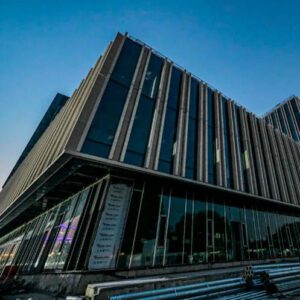
One of the most common misconceptions blocking BIPV adoption at the design stage is that photovoltaic glass “looks like solar panels” — creating a visual conflict with the building’s architectural intent. Modern BIPV glass is specified across a wide range of aesthetic parameters:
- VLT (Visible Light Transmittance): 10–70% — from nearly opaque spandrel panels to lightly tinted vision glazing
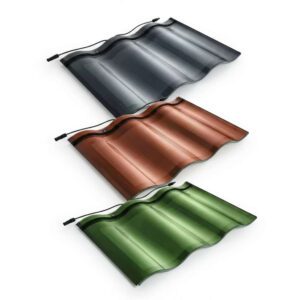
- Color options: custom-printed ceramic frits, colored PV cells (blue, black, grey, green), or colorless with natural cell coloration
- Module formats: custom-cut to match façade grid dimensions, avoiding the “off-the-shelf” look
- Texture options: smooth flat glass, etched surface, or patterned glass for diffuse light effects
- Transparency gradients: patterns where cell density varies across a module, creating a designed visual gradient effect
A single well-specified BIPV glass façade can contribute up to 20 LEED points across Energy & Atmosphere, Innovation, and Materials categories — a figure confirmed by Jia Mao Bipv’s photovoltaic glass trend analysis based on LEED v4.1 credit mapping.
Structural and Thermal Performance Parameters
Contractors specifying or installing BIPV glass must understand — and communicate to structural engineers — that these products carry performance specifications across multiple physical domains simultaneously:
| Performance Domain | Typical Specification Range | Key Design Standard |
|---|---|---|
| Dead load (self-weight) | 25–45 kg/m² | ASCE 7-22 / Eurocode 1 |
| Wind load resistance | Up to 3.0–4.5 kPa (design by location) | ASCE 7-22 wind exposure |
| Thermal performance (U-value) | 1.0–1.8 W/m²K (double-pane BIPV) | ASHRAE 90.1-2022 |
| Solar Heat Gain Coefficient (SHGC) | 0.20–0.45 depending on VLT | ASHRAE 90.1-2022 |
| Visible Light Transmittance (VLT) | 10–70% | Project specification |
| Power density | 70–180 Wp/m² depending on VLT | IEC 61215 / IEC 63092-1 |
Glossary note — U-value: A measure of how quickly heat passes through a material. Lower U-value = better insulation. A standard single-pane window has a U-value around 5.8 W/m²K; a high-performance BIPV double-glazed unit achieves 1.0–1.2 W/m²K.
5. Technical Best Practices for Installation and Commissioning
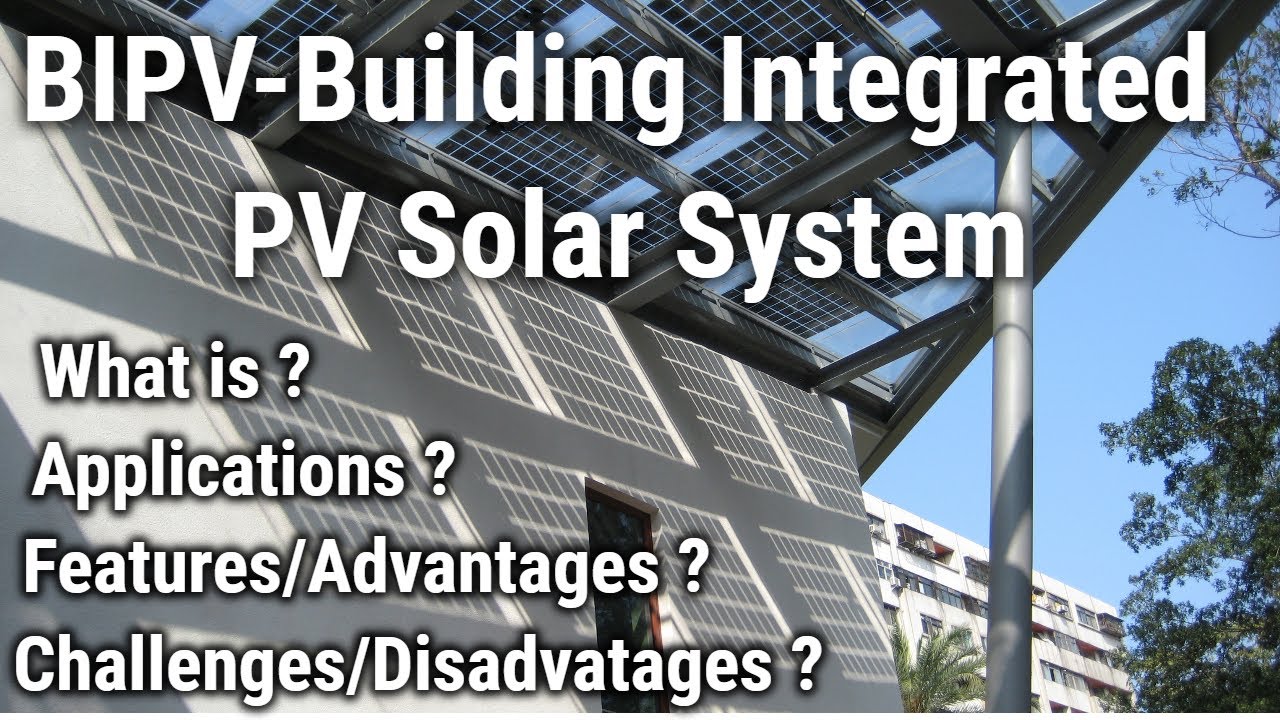
▶ Watch: BIPV Building-Integrated Solar PV System — Technical Installation Overview
Pre-Installation Checklist
Contractors who skip a structured pre-installation review regularly discover coordination gaps on site — gaps that are ten times cheaper to resolve at design review than during installation. Use the following checklist as a contract exhibit at project kickoff:
Structural & Envelope:
- Structural engineer has confirmed dead-load capacity for specified BIPV glass weight per m²
- Wind uplift design is verified for specific building height and exposure category
- Waterproofing strategy (drainage plane, flashing details, sealant specification) is approved by envelope engineer
- Thermal movement joints are incorporated into BIPV frame and mounting system design
Electrical & PV:
- String layout drawing is finalized and shading analysis is complete (PVsyst or HelioScope model)
- Inverter type (string vs. microinverter) and placement location are confirmed
- Conduit routes and penetration sleeve locations are marked on structure before installation begins
- Utility interconnection application is submitted (lead times can be 8–16 weeks)
Logistics & Safety:
- Lifting plan for BIPV glass panels is reviewed and approved (individual panels typically 80–240 kg)
- Glass handling protocols and edge protection are established
- Module staging area is protected from moisture and UV exposure
- Manufacturer technical representative is scheduled for first installation sequence
On-Site Sequencing and Trade Coordination
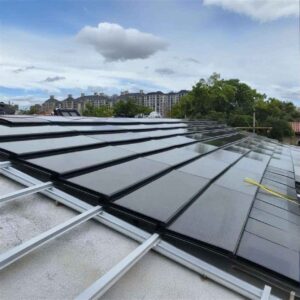
The most reliable BIPV installation sequence treats the system as a façade or roofing project first and a PV electrical project second. The envelope must be watertight before any electrical connection is made. A practical sequencing protocol:
- Substrate and framing preparation — mounting rails, brackets, or curtain wall mullions installed and inspected
- Electrical rough-in — all conduit, junction boxes, and cable trays installed before modules are mounted
- Underlayment / weather barrier — complete and water-tested before module installation begins
- Module installation — working from bottom to top; each row inspected before the next begins
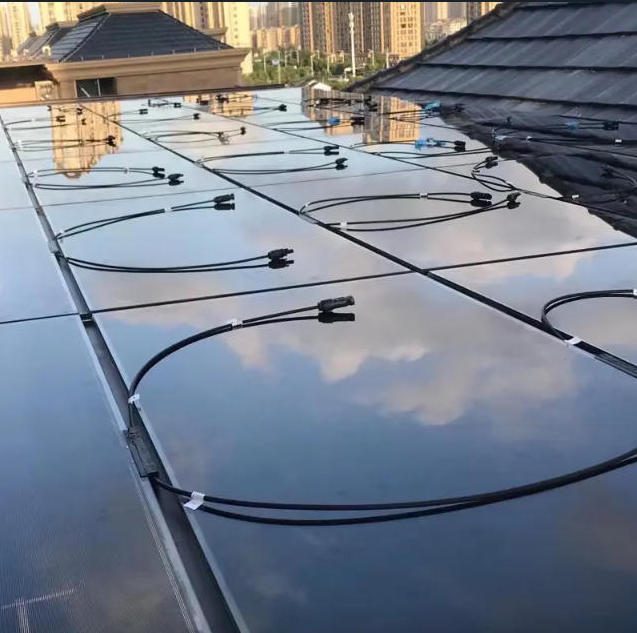
- DC string wiring — completed after all modules in each string are physically installed
- Inverter and AC electrical — completed after DC string testing is passed
- Commissioning — IV curve testing, grid synchronization, monitoring platform verification
Commissioning and Handover
Commissioning is the most frequently compressed phase of BIPV projects — and the one with the longest downstream consequences if done inadequately. The IEC 62446-1 standard defines the documentation required for handover of a grid-connected PV system. Use it as the framework for your commissioning deliverables:
| Commissioning Document | Format | Who Produces It | When |
|---|---|---|---|
| As-built electrical single-line diagram | PDF + CAD | Electrical engineer | At commissioning |
| String-level IV curve test results | PDF spreadsheet | Installing contractor | At commissioning |
| Inverter commissioning report | Inverter manufacturer/installer | At commissioning | |
| Envelope inspection record (photos) | PDF photo log | GC / QA inspector | During installation |
| O&M manual | System integrator | At handover | |
| Monitoring platform login and setup | Digital | EPC / integrator | At handover |
| Warranty certificates (product + workmanship) | Manufacturer + contractor | At handover |
6. Navigating Codes, Standards, and Certification Requirements
The Standards Matrix Every BIPV Contractor Needs
BIPV glass operates at the intersection of building product regulation and PV electrical safety — meaning your compliance scope is broader than either a conventional façade contractor or a traditional solar EPC would face individually.
| Standard | Scope | Who Needs to Verify | Where to Confirm |
|---|---|---|---|
| IEC 61215 | PV module design qualification and type approval | EPC / specifier | Module manufacturer datasheet |
| IEC 61730-1/-2 | PV module safety requirements | EPC / specifier | Module certification documentation |
| IEC 63092-1:2020 | BIPV-specific module requirements (building integration) | BIPV specifier | Module manufacturer / test lab |
| NFPA 285 | Fire spread testing for exterior wall assemblies | GC / façade contractor | Assembly-level test report |
| ASTM E84 | Surface burning characteristics | GC / façade contractor | Product datasheet |
| NEC 690 | Electrical code for PV systems (U.S.) | Electrician / EPC | Local AHJ |
| UL 61730 | U.S. harmonized PV module safety standard | EPC / specifier | UL certification database |
| IEEE 1547-2018 | Distributed energy resource grid interconnection | EPC / utility liaison | Interconnection agreement |
NFPA 285: The Standard Most Façade Contractors Get Wrong
NFPA 285 is the fire spread test required under the International Building Code (IBC) Chapter 14 for exterior wall assemblies on buildings over 40 feet that include combustible components. The critical point that BIPV contractors miss: NFPA 285 compliance is assembly-specific, not component-specific. A BIPV glass module that is certified as compliant does not automatically certify the full wall assembly. The complete assembly — glass unit, framing, insulation, backup wall, and attachment system — must be tested together or proven equivalent through a listed, tested assembly.
For high-rise commercial projects, request the full assembly fire test report from your BIPV supplier before specification. If the tested assembly doesn’t match your project’s backup wall configuration, you’ll need an engineering judgment or alternate testing — both of which take time and cost money if discovered at permit review.
Glossary note — IEC 63092-1: The dedicated international standard for BIPV modules, published in 2020. Unlike IEC 61215 (which covers standard PV modules), IEC 63092-1 specifically addresses the building integration context — including mechanical loads, weather resistance as a building envelope component, and requirements for products serving both structural and PV functions. Any BIPV glass product targeting international commercial specifications should carry this certification.
Acoustic and Insulation Standards in Mixed-Use Projects
In mixed-use and residential projects, BIPV glass façades must also satisfy acoustic performance requirements. Laminated glass constructions used in most BIPV products provide acoustic isolation of Rw 35–45 dB depending on glass thickness and interlayer specification — comparable to or better than conventional high-performance curtain wall glazing. Verify acoustic performance certification for the specific project location’s requirements (typically STC 35–50 in mixed-use buildings adjacent to transit or commercial noise sources).
7. Supply Chain and Procurement: Partnering with Trusted Material Providers
What a B2B Procurement Survey Actually Found
A late-2025 B2B procurement survey across 150 commercial solar developers and construction firms found that lead time reliability ranked as the single most important supplier evaluation criterion — ahead of price, ahead of efficiency ratings, and ahead of brand recognition. Custom BIPV glass panels, by their nature, require fabrication to project-specific dimensions, colors, and electrical configurations. Standard lead times for custom BIPV glass run 8–14 weeks from order confirmation to delivery; highly customized configurations (non-rectangular modules, custom frit colors, structural certification to project-specific loads) can reach 16–22 weeks.
How to Evaluate a BIPV Glass Supplier
Use the following framework when assessing potential BIPV glass suppliers for commercial project specifications:
| Evaluation Criterion | What to Ask | Red Flags |
|---|---|---|
| Certification documentation | IEC 61215, IEC 61730, IEC 63092-1 — current and traceable to test lab | “We comply” without test reports |
| NFPA 285 assembly testing | Which specific assemblies have been tested? | Single module cert only |
| Production capacity | What is maximum monthly output in m²? Can they ramp for your project volume? | Vague capacity claims |
| Delivery reliability | On-time delivery rate for custom orders in the past 12 months? | <90% OTD rate |
| Technical support | Is engineering support available during design, installation, and commissioning? | Sales-only contact points |
| Warranty structure | What are the product warranty, power output warranty, and workmanship warranty terms? | No power output warranty |
| Reference projects | Two completed commercial projects of similar scale — with contact references | Brochure projects without verifiable contacts |
Jia Mao Bipv manufactures and supplies BIPV glass systems engineered for curtain wall and façade integration — with traceable IEC certification, custom fabrication capability, and technical support from specification through commissioning. Their supply chain and manufacturing approach covers procurement risk management that distributors and EPC firms can use directly in their own supplier assessment frameworks.
Logistics Planning for BIPV Glass
BIPV glass panels are structurally fragile, dimensionally precise, and high-value — making logistics planning a project-critical activity, not a purchasing department afterthought.
- Packaging: Custom crated per project. Each panel typically requires individual edge protection and foam padding. Shipping damage claims on BIPV glass average $15,000–$80,000 per incident when packaging is inadequate.
- Receiving inspection: Conduct a systematic check on delivery: visual damage inspection, serial number count against BOM, and 10% sample Voc (open-circuit voltage) test before acceptance.
- On-site storage: Store panels vertically in original crating, in a dry, shaded area. Maximum stack height per manufacturer specification — overloading stacks is the most common cause of pre-installation glass breakage.
- Phased delivery: For projects where installation spans more than 8 weeks, coordinate phased delivery to avoid site storage of full project material. Negotiate phased delivery windows in the procurement contract — not as a verbal agreement.
8. Performance Monitoring and Maintenance: Ensuring Long-Term Value
Remote Monitoring: What the Data Actually Tells You
A BIPV glass façade or roof system without monitoring is a black box. You know what you designed for; you don’t know what you’re getting. Modern monitoring platforms — integrated with string inverters or microinverters — provide 5–15 minute interval production data at the string or module level. For commercial installations, this data should be accessible via a web dashboard and API, allowing integration into the building’s BMS (Building Management System) for unified energy reporting.
What monitoring detects that manual inspection misses:
- Gradual soiling losses — a façade losing 0.5% output per month due to dust accumulation that’s invisible from the street
- String-level faults — a single failed bypass diode reducing an entire string’s output by 30–40%
- Inverter-level underperformance — performance ratio dropping below design expectations before any visible fault appears
- Seasonal anomalies — production deviating from weather-adjusted benchmarks that indicate structural issues (delamination, moisture ingress)
Maintenance Protocols That Protect 25-Year Warranties
Most BIPV glass manufacturer warranties require documented maintenance compliance to remain valid. The following protocol reflects best practices across commercial BIPV installations in urban environments:
| Maintenance Task | Frequency (Urban) | Frequency (Coastal/Industrial) | Responsibility |
|---|---|---|---|
| Façade cleaning (pH-neutral, ≤40 psi water) | Semi-annual | Quarterly | Facility management / FM contractor |
| Visual inspection (glass integrity, sealants, frames) | Quarterly | Quarterly | FM contractor with inspection report |
| Thermal imaging inspection (drone or IR camera) | Annual | Annual | Specialist inspector |
| Electrical inspection (string Voc/Isc, connections) | Annual | Annual | Licensed electrician |
| Inverter firmware update | Annual or per manufacturer | Annual | EPC / monitoring contractor |
| Full O&M documentation review | Annual | Annual | EPC or FM contractor |
On cleaning chemistry: Never use alkaline detergents (pH > 9) on BIPV glass. Alkaline solutions degrade the edge seals of laminated glass units and void weather-performance warranties on most products. Use only certified pH-neutral glass cleaners (pH 6–8) with soft brushes or squeegees. Pressure washing above 40 psi risks damaging sealant joints at frame interfaces.
Warranty Claims and Lifecycle Management
The standard BIPV glass warranty structure includes two separate guarantees that contractors must communicate clearly to building owners at handover:
- Product warranty: Typically 10–12 years covering material defects, delamination, edge seal failure, and discoloration beyond defined thresholds.
- Power output warranty: 25+ years guaranteeing minimum output levels (typically 90% of rated power at year 10, 80% at year 25).
If a warranty claim arises, the burden of proof is on the owner/operator to demonstrate that the system was maintained per the manufacturer’s protocol. This is why commissioning documentation and annual maintenance records are not administrative overhead — they are the evidence base for warranty enforcement.
9. Financial and Incentive Landscape: Maximizing Project Profitability

The Incentive Stack Available Right Now
The financial landscape for BIPV glass projects in 2025–2026 is the most favorable it has ever been. The combination of the U.S. federal Investment Tax Credit (ITC), commercial building deductions, and available EU funding creates a stacking opportunity that significantly changes project economics.
United States:
- ITC (30%): The federal solar Investment Tax Credit under the Inflation Reduction Act applies to BIPV glass systems at 30% of eligible system cost through 2032. For commercial projects where BIPV glass replaces conventional cladding, the ITC applies to the full system cost (not just the PV portion), because the integrated system qualifies as solar energy equipment.
- 179D Deduction: Up to $5.00/sq ft for energy-efficient commercial buildings. BIPV glass façades reducing heating and cooling loads directly support 179D eligibility.
- Bonus Credits: Projects in designated energy communities or using domestic content can access an additional 10% ITC bonus each, potentially bringing total credits to 50% of system cost.
European Union:
- REPowerEU / EU Green Deal funding: Available for commercial buildings integrating renewable energy in EU member states, often structured as grants covering 20–40% of system cost for qualifying projects.
- National feed-in mechanisms: Germany, France, Italy, and Spain all maintain active BIPV-specific feed-in premiums or premium tariffs for façade-integrated systems — with facade installations typically receiving higher rates than rooftop installations in recognition of the greater integration complexity.
Energy Performance Contracts and PPAs
For EPC clients advising commercial building owners who are reluctant to commit upfront capital, Power Purchase Agreements (PPAs) e Energy Performance Contracts (EPCs) provide viable alternative structures:
- PPA model: A third-party investor owns the BIPV system and sells electricity to the building owner at a contracted rate (typically 10–20% below grid rate). The building owner gains solar benefits with zero upfront capital. The installer/EPC acts as the integrator and typically receives a development fee plus ongoing O&M contract.
- EPC model: The contractor guarantees a minimum level of energy savings and is compensated from those savings over a contract period (typically 10–20 years). This structure works well for institutional building owners (universities, hospitals, government) where capital budgets are constrained but operational savings are measurable.
Cost-Benefit Modeling: A Working Example
The following example uses a real-parameters commercial project in a mid-size U.S. city (Phoenix, AZ), providing a template that contractors can adapt for client presentations:
Project Parameters:
- South and west-facing BIPV glass curtain wall: 1,200 m²
- Average power density: 120 Wp/m²
- System capacity: 144 kWp
- Annual energy yield (Phoenix, PR 0.80): ~280,000 kWh/year
- Electricity rate: $0.12/kWh (commercial, with 3% annual escalation)
Financial Summary:
| Financial Item | Value |
|---|---|
| Gross BIPV glass system cost | $720,000 |
| Less: conventional curtain wall offset | –$180,000 |
| Net incremental system cost | $540,000 |
| Federal ITC (30% of $720,000) | –$216,000 |
| Net cost after incentives | $324,000 |
| Annual energy savings (Year 1) | $33,600 |
| Simple payback period | ~9.6 years |
| 25-year NPV of savings (6% discount, 3% escalation) | +$187,000 |
| LEED EA credit contribution | Up to 11 points |
These numbers — presented cleanly with transparent assumptions — are the difference between a client who says “interesting concept” and one who says “let’s proceed to schematic design.” The BIPV ROI calculator from Jia Mao Bipv provides a structured tool for generating project-specific financial models for client presentations.
10. Future-Proofing Your Portfolio: Staying Ahead with BIPV Innovation
The Next Technology Wave: Smart Glass and IoT-Enabled BIPV
The BIPV glass products available today are already commercially robust. But the products arriving in 2027–2030 will combine photovoltaic generation with electrochromic dynamic tinting (smart glass) — allowing a single panel to simultaneously generate electricity, control solar heat gain, and adjust visible light transmission in response to occupancy, weather, or building automation signals.
According to Jia Mao Bipv’s 2026 BIPV technology trends analysis, the following product categories are in advanced development or early commercial deployment:
- IoT-integrated BIPV: Module-level monitoring embedded in every glass unit, with real-time performance data fed directly to building BMS without separate monitoring hardware
- Thin-film perovskite-silicon tandem BIPV: Achieving lab efficiencies above 34% (compared to 15–22% for current crystalline silicon BIPV) with transparent or semi-transparent form factors
- Dynamic shading BIPV: Façade-integrated panels that move (louvers, rotating panels) to optimize solar angle and shading simultaneously
- 3D-printed BIPV modules: Custom-formed photovoltaic elements for curved architectural surfaces — previously impossible without extremely expensive custom fabrication
The BIPV glass market is projected to grow at a 21.88% CAGR from 2025 to 2035 (Market Research Future). Contractors who build their technical capability now — before mass-market adoption — will have an established reference base and trained installation crews when these next-generation products reach commercial scale.
Training and Certification: Building In-House BIPV Expertise
The most common reason contractors lose BIPV tenders is not price — it’s the inability to demonstrate certified installation experience. Building that credential requires a structured training pathway:
- NABCEP (North American Board of Certified Energy Practitioners): The PVIP (PV Installation Professional) certification is the baseline electrical credential for solar PV work. All crew members managing DC electrical scope should hold or be working toward PVIP.
- Manufacturer-specific training: Most established BIPV glass manufacturers offer installation training programs (often on-site for first projects) that result in certified installer status. This certification is frequently required to access the product warranty and technical support.
- Façade engineering coordination: Partner with a façade engineering firm experienced in BIPV assemblies for the first two to three projects. The investment in an experienced structural/façade consultant pays for itself in avoided RFIs and change orders.
Positioning for Sustainability Leadership in RFPs
Public sector tenders, major institutional clients, and large commercial developers are increasingly scoring sustainability credentials quantitatively in RFP evaluation rubrics. A contractor who can demonstrate:
- Completed BIPV glass projects with documented energy performance data
- Certified installation crew (NABCEP, manufacturer certification)
- An established supply chain relationship with a certified BIPV manufacturer like Jia Mao Bipv
- In-house lifecycle cost modeling capability for client presentations
- Familiarity with LEED, BREEAM, and local green building certification frameworks
…has a qualitative score advantage that translates directly into contract awards. This isn’t about marketing language — it’s about a capability stack that most competitors won’t have built when your firm has.
For contractors ready to explore that supply chain relationship, Jia Mao Bipv’s BIPV façade design resource covers the full integration workflow from module selection through weatherproofing detailing.
Glossary of Key Technical Terms
Understanding these terms prevents miscommunication between trades, clients, and regulators — and signals technical credibility in client-facing conversations.
BIPV (Building-Integrated Photovoltaics): PV modules integrated into the building envelope (roof, façade, glazing) as a functional building material — not mounted on top of it.
VLT (Visible Light Transmittance): The fraction of visible light passing through a glazing product. Higher VLT = more natural light; lower VLT = more opaque appearance and typically higher power density.
SHGC (Solar Heat Gain Coefficient): The fraction of solar radiation admitted through glazing as heat. BIPV glass with SHGC 0.20–0.35 performs well in hot climates; 0.40–0.55 may be appropriate in cold climates.
U-value: Thermal transmittance — how quickly heat passes through a material. Lower U-value = better insulation. Measured in W/m²K.
IEC 63092-1: The international standard specifically for BIPV modules, covering building-integration requirements beyond what standard PV module standards (IEC 61215/61730) address.
NFPA 285: Standard for fire spread of exterior wall assemblies. Assembly-specific (not component-specific) — the full wall assembly must be tested, not just individual BIPV modules.
ITC (Investment Tax Credit): U.S. federal tax credit — currently 30% of eligible solar system cost under the Inflation Reduction Act, extended through 2032.
179D Deduction: Federal commercial building energy efficiency tax deduction, up to $5.00/sq ft for qualifying improvements.
PPA (Power Purchase Agreement): A financial structure where a third-party investor owns the BIPV system and sells electricity to the building owner at a contracted rate.
PR (Performance Ratio): The ratio of actual energy output to theoretical maximum. A well-designed commercial BIPV façade system typically achieves PR 0.75–0.82.
IV Curve Tracing: A commissioning test that measures the current-voltage relationship of a PV module or string, confirming electrical performance matches factory specifications.
Frequently Asked Questions (FAQs)
Q1: What is BIPV glass, and how does it differ from conventional solar panels?
BIPV (Building-Integrated Photovoltaic) glass replaces traditional building envelope materials — façade cladding, glazing, or roofing — while simultaneously generating electricity. Unlike conventional rack-mounted solar panels, which are attached to a completed building surface, BIPV glass serves dual structural, aesthetic, and energy functions. A 2,800 m² BIPV curtain wall in New York, for example, simultaneously provides weather protection, controlled daylighting at 35% VLT, and 312 MWh/year of electricity generation — replacing the equivalent conventional glazing that would have been installed anyway.
Q2: Can BIPV glass be customized for specific design requirements?
Yes — extensively. BIPV glass can be specified across visible light transmittance (10–70%), custom cell colors (blue, black, grey, green, custom frit printing), module format dimensions matched to existing façade grids, and surface texture (smooth, etched, patterned). The key is involving the BIPV manufacturer at Schematic Design — not Design Development — so that module format and fabrication constraints inform the building grid rather than fighting against it.
Q3: Is BIPV suitable for retrofit projects, or only new construction?
BIPV glass works well in both contexts — but retrofit applications require a structural assessment before specification. The critical question is whether the existing façade framing or curtain wall mullion system can carry the additional dead load of BIPV glass (typically 25–45 kg/m²). In many curtain wall replacement scenarios (common in buildings from the 1970s–1990s undergoing envelope upgrades), the structural system can accommodate BIPV glass without supplemental reinforcement. A licensed structural engineer must confirm this before any commitment to the specification.
Q4: How does BIPV glass affect the thermal performance of a building envelope?
Modern double-pane BIPV glass units achieve U-values of 1.0–1.8 W/m²K — comparable to or better than standard high-performance curtain wall glazing. The photovoltaic cell layer intercepts a portion of incident solar radiation and converts it to electricity rather than heat, which means BIPV glass with SHGC 0.20–0.35 can meaningfully reduce HVAC cooling loads compared to standard clear glazing (SHGC 0.60–0.80). A 40-story Phoenix office tower that replaced standard curtain wall glazing with high-performance solar control glass achieved a 41% reduction in annual HVAC energy consumption.
Q5: What structural load considerations apply to BIPV glass installation?
BIPV glass units are engineered to carry dead loads, wind loads (uplift and lateral pressure), snow loads where applicable, and seismic forces in designated zones. The product specifications provide certified load data per SKU. A licensed structural engineer must apply these values to the specific building framing using ASCE 7-22 (or equivalent local standard). Bracket design and curtain wall mullion sizing must be PE-stamped for commercial permit submissions. Wind uplift at roof edges and building corners requires particular attention — BIPV glass at perimeter zones is subject to the highest uplift forces.
Q6: Are there fire safety concerns with BIPV glass in high-rise buildings?
Yes — and this is where many contractors underestimate compliance complexity. NFPA 285 compliance is assembly-specific: the full wall assembly (BIPV glass + framing + insulation + backup wall + attachment system) must be tested together or matched to a tested equivalent assembly. A BIPV glass module with individual fire certification does not automatically certify the full assembly. For any high-rise project (over 40 feet in most jurisdictions), request the full NFPA 285 assembly test report from your supplier — and confirm your project’s backup wall configuration matches the tested assembly before permit submission.
Q7: How much energy can BIPV glass realistically generate per square meter?
Annual generation depends on location, orientation, VLT, and system performance ratio. In practical commercial applications: south-facing BIPV façade glass in Phoenix, AZ generates approximately 180–220 kWh/m²/year; in Frankfurt, Germany approximately 90–120 kWh/m²/year; in Singapore approximately 130–160 kWh/m²/year (vertical east/west-facing). The IEA PVPS Technical Guidebook cites typical BIPV façade ranges of 70–130 kWh/m²/year for most European climates. Higher-density (lower VLT) modules produce more energy per m² but allow less natural light.
Q8: Do BIPV installations require special inverters or electrical integration?
Yes. BIPV glass systems use either string inverters or microinverters, selected based on façade geometry, shading exposure, and rapid shutdown requirements. For façades with shading from floors, balconies, or adjacent buildings, microinverters or DC power optimizers (MLPEs) prevent shading losses from propagating across an entire string — typically delivering 10–25% more annual yield than unoptimized string configurations on complex façades. All U.S. installations must comply with NEC Article 690, including rapid shutdown requirements under NEC 690.12. Inverter selection must be confirmed before façade grid layout is finalized.
Q9: What maintenance does BIPV glass require over its lifespan?
Maintenance requirements are minimal but must be documented for warranty compliance. Core protocol: façade cleaning with pH-neutral solution (pH 6–8) semi-annually in urban environments; annual electrical inspection by a licensed electrician; annual thermal imaging inspection (drone or IR camera) to detect hot spots and delamination; quarterly visual inspection of sealants, drainage paths, and frame condition. IoT monitoring platforms provide continuous output data between physical inspections. Most BIPV glass warranties require annual inspection documentation — without it, warranty claims may be denied.
Q10: What is the typical payback period for a BIPV-integrated commercial project?
Payback ranges from 6–14 years on commercial projects, depending on electricity rate, system orientation, local incentive programs, and how much conventional cladding cost is offset by the BIPV installation. When the 30% U.S. federal ITC is applied and conventional cladding costs are subtracted, the net incremental investment for BIPV glass is often 30–50% lower than the gross system cost — materially shortening the payback calculation. The Munich airport case study achieved payback in approximately 10 years including EU grant funding. The New York high-rise achieved 11.4 years after ITC with no additional grant funding.
Q11: Can BIPV glass be combined with battery storage or other renewable systems?
Absolutely — and this integration is increasingly standard on net-zero certified projects. BIPV glass façade systems can be coupled with: battery energy storage (AC-coupled via compatible inverters), EV charging infrastructure (BIPV generation offset against charging demand), geothermal ground-source heat pump systems (BIPV provides daytime electricity for heat pump operation), and rainwater harvesting systems (façade glass directs runoff). For net-zero or off-grid building designs, BIPV glass is typically the primary generation source, with battery storage providing time-shift capability and resilience.
Q12: What warranties are available for BIPV glass products?
Standard BIPV glass warranty structures include: 10–12 years on materials and workmanship (covering delamination, edge seal failure, and defects beyond defined thresholds) and 25+ years on power output (80% minimum at year 25). Some premium manufacturers offer 30-year power output warranties. For commercial projects, require that warranty terms are transferable to subsequent building owners — a critical point for projects intended for eventual sale or refinancing.
Q13: How do I train my installation team on BIPV-specific procedures?
The most effective approach combines NABCEP PVIP certification for all crew members managing DC electrical scope, manufacturer-specific installation training (many BIPV glass manufacturers offer on-site training for first projects), and partnership with a façade engineering consultant for the first 2–3 projects to build institutional knowledge within your crew. Budget for one manufacturer technical representative visit per project for the first three BIPV projects — the investment in knowledge transfer prevents rework costs that routinely exceed the consultant fee.
Q14: Is BIPV eligible for LEED, BREEAM, or other green building certifications?
Yes — extensively. A single well-specified BIPV glass façade can contribute up to 20 LEED v4.1 points across Energy & Atmosphere (renewable energy, optimized performance), Materials & Resources (reduced conventional cladding material), Innovation, and Pilot Credits. Under BREEAM 2023, BIPV contributes to Energy credits (Ene 04 passive design, Ene 07 renewable energy), Materials (Mat 01 embodied carbon), and Innovation credits. For Singapore’s BCA Green Mark Platinum, BIPV façade systems are a qualifying pathway under the Renewable Energy and Net Zero energy categories.
Q15: How do I justify the higher upfront cost of BIPV glass to building owners?
The most effective approach is lifecycle cost analysis framed around the project’s decision horizon. Present three views: (1) net incremental cost after conventional cladding offset and incentives; (2) 25-year NPV of combined energy savings, material savings, and avoided future code retrofit costs; (3) qualitative value: LEED certification, ESG reporting benefit, premium tenant attraction, and carbon credit generation potential. For a Phoenix commercial project as modeled above, the net cost after offsets and ITC was $324,000 — with 25-year cumulative savings exceeding $511,000. That’s a positive NPV project that also delivers a LEED-qualifying façade. Present it that way, not as “the BIPV option costs more.”
For curtain wall contractors, roofing GCs, EPC firms, and building material distributors ready to build or scale BIPV glass capability:
📋 Download the BIPV Project Integration Checklist A structured pre-construction checklist covering structural assessment, design coordination, compliance verification, installation milestones, and commissioning documentation — formatted as a contract exhibit for subcontractor coordination meetings.
🎓 Run a Team Alignment Session Use this article as the agenda for a 90-minute technical coordination meeting at project kickoff. Assign Sections 4, 5, and 6 to your façade, electrical, and compliance leads respectively. Use the Interface Responsibility Matrix in Section 5 to define handoff points before work begins.
🔧 Download the 25-Year O&M Maintenance Template A full lifecycle maintenance schedule covering cleaning frequency, inspection intervals, monitoring review cycles, thermal imaging scheduling, and warranty documentation protocol — formatted for building owner handover at project closeout.
Explore Jia Mao Bipv’s complete BIPV glass resource library:
- 🌐 Full BIPV product range and curtain wall solutions — engineered photovoltaic glass for commercial façade applications
- 📊 BIPV solar glass ROI calculator — client-ready financial modeling tool
- 🔍 BIPV installation and design guide — full technical workflow from schematic design through commissioning
- 🪟 Transparent BIPV glass for windows and skylights — VLT, power density, and installation data for vision glazing applications
- 🔬 Transparent solar panel technology explained — cell technology, efficiency trade-offs, and product selection guide
Additional high-authority references:
- DSIRE U.S. Incentive Database — state-by-state solar incentive programs updated in real time
- USGBC LEED Rating System — credit documentation and certification requirements
- IEA PVPS BIPV Technical Guidebook — the authoritative technical reference for BIPV design, installation, and performance
- NABCEP Certification Programs — PV installation professional certification pathway
- BREEAM Certification — international green building certification framework
Technical data current as of Q3 2026. Market statistics sourced from Precedence Research, Persistence Market Research, and Mordor Intelligence. Compliance references based on IEC 63092-1:2020, NFPA 285, NEC 2023, and ASCE 7-22. Always verify local permit and code requirements with licensed professionals before specification.