
Introduction: Why “Cost” Is Never One Number
When a homeowner asks “How much do solar tiles cost?”, they usually hear a number between $25,000 and $60,000. That number is real — but it is incomplete. The true cost of solar tile installation only becomes clear when you account for system sizing, permit fees, potential roof structural upgrades, inverter replacement cycles, degradation-driven output loss over time, and the financing structure you choose.
This guide exists to close that gap. It works through every cost component systematically — from your electricity bill analysis at the start, to your levelized cost of energy (LCOE) calculation at the end. By the time you finish reading, you will have a framework to evaluate any solar tile quote you receive, identify what is missing, and understand what your real 25-year financial position looks like.
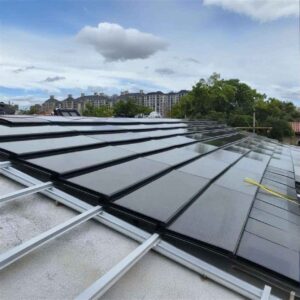
Whether you are considering premium BIPV tiles like those available from Jia Mao BIPV’s photovoltaic tile range, a well-known brand like Tesla Solar Roof, or a regional option — the calculation framework is the same. The numbers will differ; the methodology will not.
Understanding Solar Tiles vs. Conventional Solar Panels
Key Differences in Pricing, Aesthetics, and Roofing Impact
Solar roof tiles and conventional rack-mounted solar panels both convert sunlight into electricity. The engineering difference is significant: a conventional panel is an energy device bolted on top of an existing roof. A solar tile is the roof — it replaces standard roofing material and generates power simultaneously. That dual function explains almost every cost and performance difference between the two technologies.

| Factor | Solar Roof Tiles | Conventional Solar Panels | Impact on Cost Decision |
|---|---|---|---|
| Installed cost per watt | $4.00–$16.00/W Higher | $2.50–$3.50/W Lower | Tiles cost 2–5× more per watt; justified only when roof replacement is needed anyway |
| Efficiency (module) | 14–22% (varies widely by brand) | 19–23% (premium monocrystalline) | Panels produce more per sq ft; tiles require more roof coverage for same output |
| Aesthetics | Flush with roofline — street-level invisible | Visible panel arrays on roof surface | Tiles win decisively in HOA zones, heritage districts, premium neighborhoods |
| Roof replacement required? | Yes — tiles are the roofing material | No — installed on existing roof | If roof is <10 years old, panels are almost always better value |
| Degradation rate | ~0.5%/year (premium: ~0.3%/year) | ~0.25–0.5%/year | At 0.5%/yr degradation, year-25 output is ~88% of original rated power |
| Warranty (typical) | 25–30 yr performance; 10–15 yr product | 25 yr performance; 10–12 yr product | Leading tile brands match or exceed panel warranties |
| Best use case | New build, roof replacement, heritage/HOA zones | Retrofit on sound existing roof; maximum ROI speed | Decision should follow roof age + aesthetic constraints, not preference alone |
Longevity, Warranty Considerations, and Performance Expectations
A 25-year performance warranty sounds identical across brands until you read the fine print. The critical numbers are: (a) the guaranteed output floor at year 25 — most manufacturers promise ≥80% of original rated power; (b) the degradation curve — linear or stepwise; and (c) what “failure” the workmanship warranty actually covers.
For reference, Jia Mao BIPV photovoltaic tiles carry a 25-year performance warranty and a 15-year product warranty. At 17.3% module efficiency with N-type half-cell technology, they are designed to maintain output stability across seasonal temperature cycling — relevant for homeowners in climates with wide temperature swings where thermal expansion is a documented cause of early delamination in lower-grade products.
Assessing Your Home’s Energy Needs
How to Estimate Annual Electricity Usage
The most expensive mistake in solar tile sizing is designing a system around national averages instead of your actual consumption. The U.S. average household uses roughly 10,500 kWh per year — but a 2,400 sq ft home in Arizona with a pool, EV charging, and no gas appliances can easily consume 18,000–22,000 kWh annually. Sizing to the wrong number means either leaving money on the table or overpaying for tiles you do not need.
The correct starting point is twelve months of utility bills. Pull the kWh usage (not the dollar amount — rates change) for each month and calculate your annual total. Then ask two forward-looking questions: are you planning to add an EV or electric appliances in the next 5 years? And is your utility rate likely to increase? The U.S. Energy Information Administration has documented average residential rate increases of 2–4% annually over the past decade — a factor that meaningfully improves the long-term ROI of any solar installation.
Footprint of Solar Tiles on Roof Orientation and Shading
Solar tiles work best on south-facing roof planes (in the northern hemisphere) with a pitch between 15° and 40°. East and west-facing slopes generate approximately 15–25% less than an equivalent south-facing surface. North-facing surfaces are rarely viable for solar tile installation in residential applications above 35° latitude.
Shading is the silent efficiency killer. A single chimney shadow crossing a string of tiles at 10 AM can reduce the entire string’s output by 20–50%, depending on whether module-level power electronics (microinverters or DC optimizers) are specified. Before accepting any system sizing estimate, confirm that the installer has run a shading analysis — not an approximation, but a tool-based simulation using your specific address and roof geometry.
System Sizing and Tile Availability
Determining Optimal Tile Count for Your Roof
System sizing for solar tiles follows the same logic as any PV system, with the added constraint that tiles must cover the entire roof plane or a defined aesthetic zone — you cannot simply add three more tiles to increase output the way you might add a panel to a rack system.
| Home Size (sq ft) | Avg Annual kWh | System Size Needed | Approx Tile Count* | Active Roof Area |
|---|---|---|---|---|
| 1,200 sq ft | 7,500 kWh | 5.5–6.5 kWp | 180–220 tiles | ~450–500 sq ft |
| 1,800 sq ft | 10,500 kWh | 7.5–9.0 kWp | 250–320 tiles | ~600–700 sq ft |
| 2,400 sq ft | 13,500 kWh | 9.5–12.0 kWp | 320–430 tiles | ~750–900 sq ft |
| 3,200 sq ft | 18,000 kWh | 12.5–16.0 kWp | 420–580 tiles | ~950–1,200 sq ft |
*Based on 30W average tile output at 17% efficiency; assumes south-facing roof, mid-latitude (e.g., Atlanta, GA), and 5.0 peak sun hours/day. Use NREL PVWatts Calculator for your specific address.
Availability and Lead Times for Solar Tile Products
Solar tile availability has improved significantly since 2022, but lead times remain a real planning factor. Tesla Solar Roof installations have historically had lead times of 6–18 months in high-demand markets. Custom-profile BIPV tiles — which matter for heritage homes, complex roof geometries, or HOA color-match requirements — require additional production lead time, typically 4–10 weeks from a manufacturer after order confirmation.
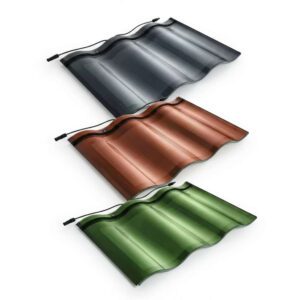
For projects where aesthetics are the primary driver — matching an existing clay tile pattern, for example — suppliers like Jia Mao BIPV offer customizable profile and color options (black, red, green, and textured slate variants) with standard dimensions of 630×480 mm and customizable sizing for non-standard roof geometries. Planning the procurement timeline 3–6 months before your intended installation date is prudent for any custom-profile tile order.
Local Codes, Permits, and Structural Assessment

Required Permits and Inspection Steps
Every residential solar tile installation in the U.S. requires at minimum a building permit and an electrical permit. Many jurisdictions additionally require a structural engineering review. The average U.S. permit timeline is 2–6 weeks from a complete submission. States with online permitting portals (California, Colorado, Massachusetts) typically process faster than those without.
Permit costs vary significantly by jurisdiction: expect $150–$500 for straightforward residential projects, but up to $1,200–$2,000 in high-cost jurisdictions or for large systems requiring professional engineering stamps. These costs are real and should appear as a line item in any quote you receive. If a contractor’s proposal does not include permit fees, ask why.
| Permit / Approval | Who Submits | Typical Cost | Typical Timeline | What Triggers Additional Review |
|---|---|---|---|---|
| Building permit | Contractor or homeowner | $150–$800 | 2–6 weeks | Roof load change, structural modification, new penetrations |
| Electrical permit | Licensed electrician | $100–$400 | 1–4 weeks | Service panel upgrade, battery storage addition |
| Structural engineering report | PE-licensed engineer | $400–$1,500 | 1–3 weeks | Roof age >15 years, added dead load >4 psf, seismic zone |
| Utility interconnection application | Contractor or homeowner | $0–$200 | 2–8 weeks | Required for any grid-connected system; processed separately |
| HOA / historic district approval | Homeowner | Usually $0 | 2–12 weeks | Required in covenant-governed communities; color/style documentation needed |
Roofing Structure, Weight Considerations, and Potential Retrofit Needs
Standard rack-mounted solar panels add approximately 2.5–4.5 lbs per sq ft to a roof. Solar tiles present a more nuanced load picture: at 7.5 kg (16.5 lbs) per tile covering 0.30 m² of roof area, the dead load is approximately 4.5 psf — comparable to standard panels but replacing the existing roofing material rather than adding to it. For most wood-frame residential roofs in good condition, this is acceptable without structural modification.
However, three conditions commonly trigger required structural upgrades: (1) existing roof framing that is undersized or deteriorated; (2) high-snow-load climates where combined live and dead loads approach code limits; and (3) roofs that have experienced prior water damage affecting rafter or sheathing integrity. A structural inspection that costs $400–$800 upfront can prevent a $5,000–$15,000 surprise mid-project.
Hardware, Mounting, and Roofing Materials
Inverter, Battens, Flashing, and Sealants
The inverter is the component most often underrepresented in initial quotes — not because it is cheap, but because its replacement cost over a 25-year system life is a hidden long-term expense. String inverters typically carry 10-year warranties; a 25-year system will require at least one replacement at a cost of $1,500–$3,500 installed. Microinverters and power optimizers carry 25-year warranties, eliminating the replacement cost but increasing upfront BOS spend by $0.30–$0.50/W.
Battens, flashing, and underlayment are roofing components that must be installed before tiles go down. Many tile systems require manufacturer-specific flashing kits at roof edges, valleys, and penetrations. Skimping on flashing quality is one of the most common causes of long-term water damage on solar tile installations — and water damage typically voids both the roofing and the PV warranty simultaneously.
Impact of Roof Materials and Warranty Implications
The underlayment beneath solar tiles matters for two reasons: thermal performance and warranty coverage. Premium solar tile systems typically specify synthetic underlayment rated for 50+ years (compared to 20–30 years for standard felt). Using a cheaper underlayment to save $300 on a 25-year system is false economy — if the underlayment fails at year 12, accessing it requires removing the tiles above it, and that labor and equipment cost will far exceed the original savings.
Cost Breakdown: Equipment and Materials
Solar Tiles, Mounting Hardware, Inverters, and Monitoring
🥧 Typical Installed Cost Distribution — Solar Tile System (Residential, 8–12 kWp)
PV tile modules, non-active filler tiles, ridge/hip caps
Tile clips, rails, battens, flashing kits, waterproofing underlayment
String inverter or microinverters, wiring, rapid shutdown, monitoring
Roofer + electrician coordination; typically 2–3 trade crews
Removing existing roofing; dumpster, haul-away, landfill fees
Permits, structural engineering, interconnection, project management
Source: Compiled from SolarTech Online (2025), Angi (2026), and field data from U.S. residential BIPV projects. Individual project distributions vary by brand, region, and roof complexity.
Comparisons: Tile-Specific Costs vs. Traditional Panels
📺 Watch: Solar Shingles vs. Solar Panels — Real Cost Comparison
Video: A professional solar installer breaks down the real cost and efficiency differences between solar shingles and traditional solar panels — including scenarios where each makes financial sense.
Installation Labor, Timeline, and Disruption
Labor Hours, Crew Requirements, and Scheduling
Solar tile installation requires coordination between two trades that rarely work together on standard projects: roofing and electrical. A typical residential installation involves a roofing crew of 3–5 workers handling tile placement and weatherproofing, and an electrical subcontractor handling DC wiring, inverter installation, and utility interconnection documentation. Miscoordination between these trades — usually when the roofer finishes before the electrician has completed pre-routing — is one of the most common causes of cost overruns on solar tile projects.
| Project Phase | Crew Type | Duration (Typical) | Labor Cost Range | Key Risk |
|---|---|---|---|---|
| Roof tear-off & substrate prep | Roofing crew (3–4 workers) | 1–2 days | $1,800–$4,500 | Hidden substrate damage discovered mid-job |
| Underlayment, batten & flashing install | Roofing crew | 1–2 days | $1,200–$2,800 | Weather window; rain halts job after tear-off |
| Electrical pre-routing (conduit, junction boxes) | Licensed electrician | Half to 1 day | $600–$1,400 | Must precede tile installation; scheduling gap adds cost |
| Solar tile installation | Roofing crew + oversight | 2–5 days (size-dependent) | $3,500–$9,000 | Complex geometry, dormers, skylights add significant time |
| Electrical connection & inverter installation | Licensed electrician | 1–2 days | $1,200–$2,800 | Panel upgrade required if service is undersized |
| Inspection & utility interconnection | Inspector + utility technician | 1–3 weeks (scheduling) | Permit fee only | Failed inspection adds 1–3 weeks; common on first-time installs |
Potential Roof Access Issues and Mitigation Strategies
Three physical factors consistently drive labor cost overruns: steep roof pitch (above 7:12 requires safety equipment and slows installation by 20–40%), complex geometry (multiple valleys, dormers, and skylights multiply cutting and flashing time), and multi-story height (requiring extended scaffolding and lift equipment rental).
The mitigation is simple: get a roof complexity assessment — not just a square footage estimate — before accepting a labor quote. Any contractor quoting labor based only on square footage without a site visit is giving you an incomplete number.
Incentives, Tax Credits, and Financing Options
Federal, State, and Local Incentives Applicable to Solar Tiles
The federal residential clean energy credit — commonly called the Investment Tax Credit (ITC) — provides a 30% direct reduction on your federal income tax liability for the full installed cost of a qualifying solar tile system. This includes tiles, mounting, inverters, electrical BOS, labor, and permit fees. For a $50,000 solar tile installation, that is a $15,000 reduction in what you owe the IRS — not a deduction, but a dollar-for-dollar credit. The credit is currently available through 2032 per the Inflation Reduction Act.
Beyond the federal ITC, many states and utilities offer additional incentives that stack on top of the federal credit. Examples include: California’s net energy metering (NEM 3.0) policy, New York’s 25% state solar tax credit (capped at $5,000), and various utility rebate programs in the $0.10–$0.50/W range. The DSIRE database is the most comprehensive source for state and local programs organized by ZIP code.
Financing Alternatives and How They Affect the True Cost
✅ Cash Purchase
- Lowest total cost — no interest
- Full ownership of ITC credit
- Immediate equity asset on property
- Simplest warranty and service structure
- Best payback period of any financing method
⚡ Solar Loan
- Preserves cash flow; spreads cost over 10–20 years
- You own the system and keep the ITC
- Rates: 5–9% (secured) to 9–15% (unsecured)
- Interest cost adds 15–40% to total system cost over loan term
- Best for homeowners with strong equity but limited liquidity
🏦 PACE Financing
- Property Assessed Clean Energy — repaid via property tax
- Rates: 6.5–9%; available in ~35 states
- No credit score requirement; tied to property not borrower
- Transfers with property sale (benefit and obligation)
- Best for homeowners who plan to sell within 5–10 years
📋 Solar Lease / PPA
- $0 upfront in most cases
- You do not own the system — the installer keeps the ITC
- Monthly payments for 20–25 years
- May complicate home sale (buyer must assume contract)
- Rarely offered for tile-based BIPV systems due to complexity
Ongoing Maintenance, Warranty, and Degradation
Cleaning, Inspections, and Replacement Parts
Solar tiles require less active maintenance than many homeowners expect. The self-cleaning effect of rain handles most soiling in temperate climates. In arid regions (Phoenix, Las Vegas, parts of Texas), dust accumulation can reduce output by 5–8% between cleanings, warranting a professional wash 1–2 times per year at a cost of $150–$400 per visit.
Annual visual inspection of flashing, sealant joints, and visible cable routing is good practice and takes under an hour. The more important inspection is electrical: a licensed electrician should verify string performance and check for degraded connections every 5 years, using thermal imaging to identify hot spots before they become failures. Many manufacturers of quality BIPV tiles — including those in Jia Mao BIPV’s solar roofing tile series — design individual tiles for replacement without disturbing adjacent tiles, which dramatically reduces the cost of localized repairs.
Degradation Rates and Warranty Coverage Differences
Degradation is the slow, predictable reduction in a solar tile’s output over time. The industry standard for high-quality monocrystalline tiles is approximately 0.5% per year — meaning a tile rated at 30W today will produce approximately 26.5W at year 25. N-type cell technology (used in premium tile lines including certain Jia Mao BIPV configurations) typically achieves lower degradation of 0.3%/year, which adds up to meaningfully more energy over a 25-year system life.
Long-Term Savings, Payback Period, and ROI

Calculating Levelized Cost of Energy (LCOE) for Tiles
LCOE — Levelized Cost of Energy — is the single most useful metric for comparing solar tile economics over a system’s full life. It answers: how much does each kWh this system will ever generate actually cost me? Unlike payback period, LCOE accounts for degradation, maintenance costs, inverter replacement, and the time value of money.
| Scenario | System Cost (Post-ITC) | Annual Output | 25-yr Output (with degradation) | Est. LCOE | Payback Period |
|---|---|---|---|---|---|
| Premium Tile (Tesla, GAF) — 8kWp | $63,000–$91,000 | 9,600 kWh/yr | ~216,000 kWh | $0.29–$0.42/kWh | 18–25 years |
| Mid-Range Tile (BIPV, 8kWp) | $34,000–$42,000 | 9,600 kWh/yr | ~216,000 kWh | $0.16–$0.19/kWh | 10–14 years |
| Mid-Range Tile (with roof offset, 8kWp) | $16,000–$24,000* | 9,600 kWh/yr | ~216,000 kWh | $0.07–$0.11/kWh | 7–10 years |
| Conventional Panels (rack, 8kWp) | $19,600–$25,200 | 10,400 kWh/yr | ~234,000 kWh | $0.08–$0.11/kWh | 6–9 years |
*”With roof offset” scenario subtracts the cost of a conventional roof replacement ($14,000–$20,000) that solar tiles would have replaced. Post-30% ITC applied to solar component. Assumes $0.13/kWh blended retail rate with 3% annual increase.
Impact of Energy Price Trends and Inflation on Savings
The payback calculation most homeowners see uses today’s electricity rate. That is a conservative assumption that understates long-term savings. The U.S. Energy Information Administration data shows residential electricity rates have increased an average of 2.5–3.5% per year over the past decade. At 3% annual rate inflation, a homeowner currently paying $0.13/kWh will pay approximately $0.22/kWh by year 15 and $0.30/kWh by year 25 — tripling the annual value of solar generation over the system life.
At $0.22/kWh in year 15, a system generating 9,600 kWh/year produces $2,112 of annual value — compared to $1,248 in year 1. The compounding effect of utility rate inflation is the primary reason solar tile economics continue to improve even as upfront costs remain elevated.
Tools, Resources, and Next Steps for Accurate Quotes
Solar Tile Calculators, Appraisals, and Professional Bids
Pull 12 Months of Utility Bills
Calculate your actual annual kWh — not dollars. Identify seasonal peaks (summer cooling, winter heating) that affect how much storage you may need.
Run a PVWatts Simulation
Use the free NREL PVWatts Calculator for your specific address, roof orientation, and tilt. This gives you a credible independent estimate to benchmark against installer proposals.
Get a Roof Complexity Assessment
Before requesting quotes, document: square footage of each roof plane, orientation (N/S/E/W), pitch in degrees, and the location of all dormers, skylights, chimneys, and HVAC penetrations. This enables apples-to-apples quotes from multiple contractors.
Request Minimum Three Competing Quotes
Solar tile quote prices vary by 30–50% between contractors for the same product. The lowest quote is not always the best — check what is and is not included (structural engineering, permit fees, inverter brand, monitoring hardware, roof disposal).
Check Local Incentives via DSIRE
Visit DSIRE.org and enter your ZIP code. Apply every applicable incentive to your modeled cost before calculating payback — the incentive stack can reduce effective system cost by 30–50% in strong-incentive states.
Calculate Your LCOE
Use the free BAESS Solar LCOE Calculator or the NREL LCOE tool. If the resulting LCOE is below your local retail rate, the project makes economic sense at current prices. If it exceeds your current rate but falls below projected rates in 7–10 years, the case still holds — you are hedging against future rate increases.
How to Compare Quotes and Identify Hidden Costs
🔍 Solar Tile Quote Comparison Checklist
Every proposal you receive should contain all of the following items. If one is missing, ask for it in writing before comparing prices:
- System size in kWp — not just tile count
- Estimated annual production in kWh — derived from PVWatts or equivalent simulation, not a rule-of-thumb
- Tile brand, model, wattage, and efficiency — specific, not “comparable to”
- Inverter brand, model, and warranty duration — string vs. microinverter; 10yr vs. 25yr warranty
- Roof tear-off and disposal included? — commonly omitted to lower headline price
- Structural engineering report included? — or quoted as optional add-on
- Permit fees included? — and which permits (building + electrical + utility interconnect)
- Monitoring hardware included? — app-based, panel-level vs. string-level
- Inverter replacement after 10 years — who is responsible?
- Commissioning and interconnection management — will the installer handle utility paperwork?
📖 Glossary: Key Terms for Solar Tile Cost Analysis
How to Compute the True Cost in Six Steps
The true cost of a solar tile installation is not the number in the first quote you receive. It is the sum of equipment costs, labor, permits, structural work, inverter replacement over the system life, maintenance, and financing — minus every available incentive and offset against the avoided cost of the roof material it replaces.
Six steps put you in control of that calculation:
- Know your actual kWh consumption — 12 months of bills, not national averages.
- Model your specific roof — orientation, shading, pitch, and available area — using a simulation tool, not a rule of thumb.
- Collect complete, itemized quotes — permit fees, tear-off, structural work, and inverter warranty must all be visible.
- Stack every applicable incentive — federal ITC + state credits + utility rebates + net metering value.
- Calculate LCOE, not just payback — LCOE accounts for degradation, maintenance, and the time value of money in a way that simple payback period cannot.
- Factor in roof replacement offset — if your roof needs replacing anyway, solar tiles compete against (new roof + panels), not against panels alone.
Homeowners who work through this framework consistently find that mid-range BIPV tile systems — like those available in customizable profiles and efficiency grades from Jia Mao BIPV’s residential tile range — offer a significantly more competitive LCOE than premium branded options, particularly in roof-replacement scenarios where the material offset is captured correctly. Premium branded tiles carry a real aesthetic and marketing premium; the financial case for paying that premium is much narrower than their marketing materials suggest.
Get multiple quotes. Ask hard questions about what is not in the proposal. And run the LCOE calculation before you sign anything.
Frequently Asked Questions About Solar Tile Installation Cost
Ready to Calculate Your Specific Solar Tile Cost?
Jia Mao BIPV offers customizable solar roof tiles — including N-type monocrystalline profiles in multiple styles and colors — with 25-year performance warranties and technical documentation support for permit submissions and structural assessments.
View Solar Tile Specifications →