Commercial property developers and facility managers are asking a sharper question about driveway and hardscape budgets: once you add up grid electricity, maintenance call-outs, and trenching costs over a 20-year asset life, does traditional driveway lighting actually cost less than its solar-powered alternative — or does it just feel cheaper at contract signing?
This guide compares solar-powered driveway pavers against traditional lighting and grid-based charging infrastructure across five dimensions: efficiency, total cost of ownership, durability, environmental footprint, and smart-system integration. We use real energy data, published procurement benchmarks, and operational case studies — not marketing claims — to answer the question that matters for B2B decision-makers: which option saves more, and in which context?
Geography and usage patterns skew every number in this comparison significantly. A logistics campus in Phoenix with 3,200+ peak sun hours per year runs a fundamentally different solar economics model than a distribution hub in Seattle with 1,600 hours. We flag these variables explicitly at each stage.
Overview of Solar-Powered Driveway Pavers

What They Are and How They Function
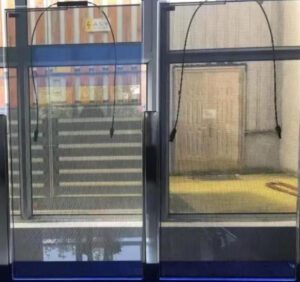
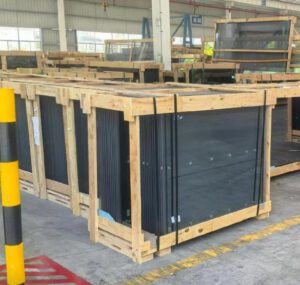
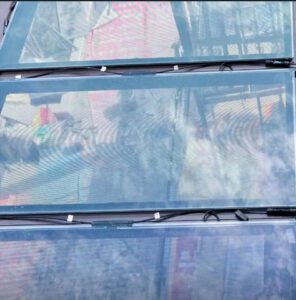
Solar-powered driveway pavers are hardscape units with embedded photovoltaic (PV) cells — the same semiconductor technology used in rooftop solar panels — sealed beneath a tempered, load-bearing glass or polycarbonate surface rated for vehicular and pedestrian traffic. During daylight hours, the cells convert incident solar radiation into direct current (DC) electricity. An onboard or centralised inverter converts that DC output to alternating current (AC) for grid feed-in or storage.
The distinction that matters for B2B buyers is this: solar pavers are not decorative lighting accessories. They are distributed micro-generation assets embedded in the hardscape, capable of simultaneously replacing paved surface material, providing ambient path lighting, and contributing measurable kilowatt-hours to the building’s energy budget.
Published technical data from leading paver systems shows individual tile output of 10–40W per unit, with efficiency rates of 10–15% under standard test conditions — lower than dedicated rooftop panels (17–24%) due to the near-horizontal installation angle and higher susceptibility to soiling. A 200 m² driveway array in a 1,800 peak-sun-hour location can be expected to generate approximately 3,200–6,500 kWh annually, depending on tile efficiency class and shading conditions.
Typical Components: Cells, Wiring, Storage, and Controls
A complete commercial solar paver installation comprises four hardware layers. Understanding each layer helps procurement teams evaluate supplier quotes accurately and avoid scope gaps at contract award.
| Layer | Component | Commercial-Grade Specification | Procurement Note |
|---|---|---|---|
| 1. Surface | Tempered glass / polycarbonate tile | ≥2 tons load rating; IP68/IP69 waterproof; R11–R13 slip resistance | Verify DIN-certified slip rating — critical for public access areas |
| 2. Generation | Monocrystalline PV cells | 10–40W per tile; 10–15% efficiency; 25-year output warranty | Match cell type to local irradiance profile; mono outperforms poly in low-light |
| 3. Storage | LiFePO₄ battery pack (per tile or centralised) | 2,600–5,200 mAh per tile; 6–10 hours lighting autonomy | Centralised BESS is more cost-effective above 50 m² deployment |
| 4. Controls | BMS + lighting controller + comms module | Motion sensing, auto-dim, scheduling, RS485/Modbus or IoT integration | Confirm BMS compatibility with site’s existing SCADA or BMS platform |
Common Installation Considerations
Commercial solar paver installation differs from standard hardscape in three key areas. First, sub-base preparation must account for the cable conduit network running between tiles and back to the inverter or BESS enclosure — this requires deeper excavation and more precise levelling than a standard concrete or asphalt base. Second, drainage design must route surface water away from tile edge seals, even though the tile bodies themselves carry IP68 ratings. Third, electrical commissioning — including isolation testing, string Voc verification, and inverter start-up — must be performed by a licensed electrician, not the paving contractor.
How Traditional Driveway Lighting and Charging Options Work

Standard Lighting Options: LED, Halogen, and Dusk-to-Dawn
Three lamp technologies dominate commercial driveway and path lighting specifications today. Each has a different efficiency profile, maintenance burden, and annual electricity cost that directly affects the comparison with solar alternatives.
Halogen fixtures — still found in older commercial installations — produce approximately 17–25 lumens per watt (lm/W) and have a rated lifespan of 2,000–4,000 hours. For a 50-fixture commercial driveway array running dusk-to-dawn (approximately 4,200 hours/year at most US latitudes), a 50W halogen system consumes 10,500 kWh/year. At a commercial blended rate of $0.12/kWh, that is $1,260/year in electricity alone — before lamp replacement, which typically occurs annually at commercial duty cycles.
LED fixtures have largely replaced halogen in new commercial installations, producing 80–200 lm/W with a rated lifespan of 50,000+ hours. The same 50-fixture driveway running 10W LED units consumes 2,100 kWh/year — an 80% electricity reduction — costing approximately $252/year. LED dusk-to-dawn sensors add approximately $15–30 per fixture installed, with a 2–3 year payback against the labour cost of scheduled switch-on/switch-off management.
Dusk-to-dawn high-pressure sodium (HPS) fixtures remain in use on older logistics campuses and industrial facilities. At 80–130 lm/W but with poor colour rendering and a warm-up delay of 3–5 minutes after power interruption, HPS is increasingly displaced by LED retrofits. Any facility still running HPS driveway lighting is leaving $800–$1,400/year in electricity savings on the table compared with a like-for-like LED replacement.
External Charging for EVs or Devices: Grid-Based vs. Portable Chargers
For commercial properties adding EV charging to driveways or parking surfaces, the infrastructure cost comparison is significant. A grid-connected Level 2 AC charger (7–22 kW) requires a dedicated circuit (NEMA 14-50 or hardwired), conduit trenching from the electrical room, permitting, and inspection — installed cost typically runs $1,800–$6,500 per charge point depending on trench distance and panel capacity headroom. Energy cost is the prevailing commercial kWh rate, typically $0.10–0.18/kWh in North America.
Portable or temporary chargers avoid the trenching cost but are limited to Level 1 output (1.4–1.9 kW), which adds only 8–12 km of range per hour — impractical for fleet vehicles or high-dwell commercial applications. The hidden cost of portable chargers is management labour: tracking units, preventing misuse, and ensuring units are returned to charge between sessions consistently adds $400–$800/year in staff time per 10 chargers managed.
Energy Efficiency and Efficiency Metrics
Light Output Efficiency: Lumens Per Watt
For procurement teams specifying driveway lighting, lumens per watt (lm/W) is the core efficiency metric — it tells you how much visible light you get for each watt of electrical power consumed. The gap between technologies is wide enough to drive a fundamentally different total cost of ownership calculation.
Source: Brandon Industries solar bollard comparison data; PacLights solar path lighting analysis. Advanced solar LED fixtures achieve efficiency gains through direct DC-to-LED conversion, eliminating the inverter losses present in grid-connected luminaires.
The efficiency advantage of solar LED is not just about the light source — it is structural. Grid-connected luminaires lose 8–15% of input energy in transformer and driver conversion before a single photon is emitted. Solar LED systems that run direct DC from the battery to the LED driver bypass this conversion step, which is why the best solar paver lighting systems reach 200 lm/W when comparable grid-connected products peak at 150–160 lm/W.
Solar Energy Capture vs. Grid Energy Usage
The comparison changes materially when you account for the source of the electricity, not just its use efficiency. A grid-connected LED driveway fixture consuming 10W continuously has a real-world energy chain that includes transmission losses (approximately 6–8% of generation), distribution losses (another 2–3%), and the carbon intensity of the local generation mix. The “10W LED” consumes closer to 11.5W at the generator.
A solar paver system captures energy at the point of use, with no transmission loss. The effective delivered energy cost is the amortised capital cost of the tile hardware — which, after the payback period, approaches zero marginal cost per kWh for the remaining asset life. For a commercial facility running 200 m² of solar paver surface with a 7-year payback, years 8–25 of asset life represent genuinely free lighting and generation.
Cost Considerations: Upfront and Ongoing

Purchase and Installation Costs: Pavers vs. Lighting Setups
Upfront costs for solar paver systems and traditional lighting setups diverge significantly in their cost structure — which makes simple price-per-unit comparisons misleading for B2B procurement. The table below presents a like-for-like comparison for a representative commercial driveway of 100 linear metres, divided into relevant cost categories.
| Cost Category | Solar Paver System | Grid LED Lighting | Grid LED + Level 2 EV Charger (×4) |
|---|---|---|---|
| Hardware (fixtures/tiles) | $18,000–$42,000 | $4,500–$9,000 | $4,500–$9,000 |
| Trenching & conduit | $800–$2,200 (minimal) | $6,000–$14,000 | $12,000–$28,000 |
| Electrical panel upgrade | $0–$1,500 | $1,500–$4,500 | $3,500–$8,000 |
| Inverter / BESS / controls | $3,500–$8,000 | $0 | $8,000–$24,000 (charger hardware) |
| Installation labour | $4,000–$9,000 | $3,500–$7,500 | $6,000–$14,000 |
| Total Installed (indicative) | $26,300–$62,700 | $15,500–$35,000 | $34,000–$83,000 |
The solar paver premium over a grid LED-only setup is typically $10,000–$28,000 for a 100-metre commercial driveway. This is the number that dominates initial budget conversations. The question that must immediately follow is: over what period does the ongoing electricity cost differential close that gap?
Operational Costs and Maintenance
Operational cost is where solar pavers begin to recover their upfront premium. Grid-connected driveway lighting generates an electricity bill that runs indefinitely — and utility rates for commercial customers have increased at an average of 2.5–3.5% annually in most North American markets over the past decade, with no structural reason to expect that trend to reverse.
For a 50-fixture grid LED driveway running 4,200 hours/year at 15W average (accounting for motion-dimming), annual electricity cost at $0.13/kWh is approximately $409/year. Adding lamp/driver replacement at a commercial 50,000-hour LED rating means zero lamp replacements for 11+ years, but control gear failures typically cost $80–$150 per fixture to service, and one service call per year across a 50-fixture array is a realistic operational allowance.
Solar paver maintenance costs are driven by tile surface cleaning (quarterly, to maintain generation efficiency), battery health monitoring, and occasional tile replacement (typically 2–5% of tiles over a 10-year period in high-traffic commercial applications). Published NREL data for comparable commercial solar assets places fixed O&M at approximately $15–25/kW/year — for a 5 kWp driveway array, that is $75–$125/year, substantially below the electricity cost of an equivalent grid system.
Payback Period and Total Cost of Ownership
The payback calculation must include all value streams: avoided electricity cost, avoided trenching and panel upgrades (on new-build projects where the solar paver replaces planned grid infrastructure), and any applicable incentives. The US federal Investment Tax Credit (ITC) at 30% applies to solar paver systems that meet IRS Section 48 equipment criteria, materially improving the payback arithmetic for commercial buyers.
Solar Paver System
Grid LED System
Source: Indicative modelling based on NREL O&M benchmarks, commercial electricity rate data ($0.13/kWh base, 2.8% annual escalation), and published solar paver hardware costs. Project-specific figures will vary by location, utility tariff, and system size. ITC eligibility should be confirmed with a qualified tax adviser.
Durability, Maintenance, and Lifespan
Weather Resistance and Warranty Considerations
Commercial solar paver tiles are engineered to the same load and weathering standards as conventional hardscape — not to residential lighting product standards. Properly specified commercial-grade units carry a minimum IP68 ingress protection rating (fully submersible to ≥1m for 30 minutes), a DIN-certified R11–R13 anti-slip rating for wet surface conditions, and a vehicular load rating of ≥2 tonnes per tile. These specifications reflect engineering decisions made at the module level — the same design discipline applied to commercial-grade photovoltaic floor tiles from dedicated BIPV manufacturers.
Battery warranty terms for solar paver systems vary significantly between suppliers. The standard for commercial applications should be a minimum 10-year battery capacity warranty covering ≥80% of rated capacity at end of warranty period — the same benchmark applied to lithium-iron-phosphate (LiFePO₄) packs in commercial energy storage applications. Monocrystalline PV cells embedded in the tiles typically carry a 25-year power output warranty. The weak link in most solar paver warranties is the control electronics and LED emitter — specify a minimum 5-year warranty on these components separately from the structural tile warranty.
Traditional grid lighting is simpler to warrant because the component types are well-understood. LED driver warranties typically run 5 years; luminaire body warranties run 10 years. The hidden warranty gap is in the underground conduit and junction box infrastructure — corrosion in below-grade conduit joints is the most frequent cause of grid driveway lighting failures in high-rainfall or coastal commercial sites, and trench repair costs ($80–$180/linear metre) are almost never covered by any product warranty.
Cleaning, Repair, and Replacement Needs
Solar paver surface cleaning is both a maintenance task and a revenue-protecting activity. A 1 mm film of airborne particulate on a solar tile surface reduces output by approximately 4–7%. In a high-traffic commercial driveway subject to tyre rubber deposit, oil tracking, and seasonal leaf fall, cleaning frequency should be set at quarterly minimum — monthly in arid/dusty environments. A pressure wash with neutral pH detergent, followed by a wipe-down with a microfibre pad, restores output to within 1–2% of clean-surface baseline.
Individual tile replacement on modular solar paver systems — where tiles interlock without adhesive bonding — typically requires 30–90 minutes of labour per tile at a parts cost of $80–$300 depending on tile wattage class. This is substantially less disruptive than replacing a failed underground conduit junction serving a 10-fixture run of grid-connected lighting, which can require full trench excavation and may leave the entire run dark for 48–96 hours pending utility permits for below-grade electrical work.
Aesthetics, Design Flexibility, and Property Value
Design Integration with Driveways and Landscaping
For commercial clients where the entrance experience directly affects tenant appeal, guest perception, or brand representation — hotels, corporate campuses, retail parks, logistics hubs with customer-facing reception areas — the visual language of the hardscape is a business decision, not just a facilities decision.
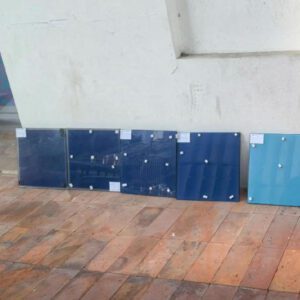
Solar pavers are available in translucent, frosted, clear, and opaque glass variants, with cell pattern customisation options that allow architects to specify a surface appearance that integrates with existing paving materials. Unlike rack-mounted solar panels, which visually announce themselves as energy infrastructure, solar paving tiles sit flush with the surrounding surface — generating energy without altering the architectural intent of the entrance design.
Grid-connected path lighting fixtures, by contrast, introduce above-grade hardware (bollards, uplighters, edge markers) that requires ongoing coordination with landscaping contractors, snow removal equipment clearances, and vehicle turning radii. Each above-grade fixture represents a physical obstacle that adds complexity to space planning and a maintenance liability for impact damage from delivery vehicles or groundskeeping equipment.
Seasonal and Architectural Customisation Options
Advanced solar paver systems offer programmable RGB LED output with seasonal scheduling — allowing a corporate campus to display brand colours during a product launch, shift to warm white for a winter event, or switch to minimum ambient lighting during overnight security-only hours. This level of programmability in a grid-connected system requires a separate addressable lighting control network (typically DALI or DMX protocol), adding $4,000–$12,000 in controls hardware and commissioning cost to a mid-sized commercial installation.
In solar paver systems with integrated BMS and IoT connectivity, the same seasonal programming is handled through a software interface — no additional hardware required, because the control module is already embedded in the paver system architecture.
Environmental and Sustainability Impacts

Embodied Energy and Manufacturing Impacts
Solar paving tiles carry a higher embodied energy burden than conventional concrete or asphalt pavers. Published life cycle assessment (LCA) research indicates that solar pavement systems have significantly greater energy consumption and GHG emissions during manufacturing than traditional asphalt alternatives — primarily driven by the tempered glass, PV cell fabrication, and electronics encapsulation processes. This is a meaningful consideration for organisations tracking Scope 3 supply-chain emissions.
However, the embodied energy payback period — the time required for operational generation to offset manufacturing emissions — is typically 2.5–4 years for monocrystalline solar products in commercial irradiance conditions, consistent with published data on conventional PV systems. For a product with a 25-year operational life, the remaining 21–22 years of operation represents a net carbon credit compared with the grid-electricity alternative, assuming any non-zero carbon intensity of the local grid mix.
End-of-Life and Recyclability Considerations
End-of-life management is an area where the solar industry is still developing mature infrastructure, but meaningful progress has been made. Silicon PV cells are approximately 95% recyclable by mass; tempered glass constitutes the majority of the tile’s material weight and is fully recyclable through standard glass processing streams. LiFePO₄ battery packs, used in most commercial solar paver systems, are substantially less problematic than cobalt-bearing lithium-ion chemistries at end of life and are increasingly accepted by commercial battery recyclers at zero or low cost.
Traditional concrete pavers are fully recyclable as aggregate but generate no operational carbon offset during their service life. Underground electrical conduit, copper conductors, and plastic junction boxes from grid lighting systems create a mixed-material waste stream with lower recyclability than the solar paver components they are compared against.
Safety, Reliability, and Performance in Various Conditions
Lighting Quality and Glare Control
Commercial path and driveway lighting is evaluated against IES (Illuminating Engineering Society) standards for horizontal illuminance, uniformity ratio, and glare control. IES RP-8, which covers roadway and parking facility lighting, specifies minimum average horizontal illuminance of 0.5–2.0 foot-candles for commercial driveways depending on pedestrian activity level.
Solar paver lights, which emit upward from a flush-mounted surface, produce a characteristically low-glare, ambient illumination pattern that differs from traditional pole-mounted or bollard lighting. This has practical advantages in environments where glare must be minimised — hotel entrance drives, healthcare facility approach routes, and corporate campus pedestrian zones. The tradeoff is that solar pavers are not a substitute for high-mast area lighting; they are a complement to it, providing visual guidance and surface definition rather than high-intensity task illumination.
For facilities requiring both area lighting and surface delineation, a hybrid specification — grid-connected LED pole lights at 15–20m spacing for area illuminance, supplemented by solar pavers for edge definition and low-level guidance — often provides the best lighting quality outcome at a lower total system cost than either technology specified alone at full coverage density.
Battery Safety, Heat Management, and Durability
Battery safety in flush-mounted solar paver systems is managed differently from rack-mounted BESS enclosures. Embedded battery packs must handle heat accumulation from both direct solar exposure (which can raise surface temperatures to 55–70°C on dark hardscape) and operational charging/discharging cycles. LiFePO₄ chemistry is the appropriate specification for this application — its thermal runaway threshold is approximately 270°C versus 150–160°C for NMC lithium-ion, providing a substantially wider safety margin in surface-embedded configurations.
For centralised BESS configurations (where a single battery rack serves an entire paver array rather than per-tile packs), thermal management follows standard commercial BESS guidelines — HVAC-controlled enclosure maintaining battery temperature between 15–35°C, with fire suppression per NFPA 855 requirements for stationary battery systems above 20 kWh.
Smart Controls, Automation, and Integration with Other Systems
▶ Video: How solar pavers integrate with smart city infrastructure, building energy management, and on-site power networks — a practical walkthrough of the technology in commercial deployment contexts.
Auto-Dimming, Motion Sensing, and Scheduling
Commercial solar paver systems from leading suppliers integrate passive infrared (PIR) and radar motion sensors that trigger 100% light output when pedestrian or vehicle movement is detected within a configurable zone (typically 3–8 metres), and dim to 20–30% ambient output in the absence of motion. This adaptive behaviour extends effective battery autonomy by 40–60% compared with constant-output operation — allowing a system specified for 6 hours of full output to deliver 9–10 hours of adaptive operation from the same battery capacity.
Scheduling overlays allow facility managers to pre-programme lighting behaviour by time-of-day, day-of-week, and seasonal profile through a web interface or BMS integration. A logistics campus, for example, can programme full output during 06:00–22:00 shift change windows, reduced output during the 22:00–05:00 low-activity period, and full brightness override triggered by gate access system events — all without operator intervention once the schedule is configured.
Compatibility with Home and Building Energy Management Systems
Integration with building energy management systems (BEMS) is the capability that most clearly separates commercial-grade solar paver systems from consumer-level products. Commercial deployments should specify systems with Modbus RTU/TCP, BACnet/IP, or MQTT data output — these are the three dominant protocols in commercial BMS/SCADA platforms. When the solar paver system exposes generation data, battery state-of-charge, and fault status through one of these protocols, the building management team can incorporate driveway generation into the facility’s overall renewable energy accounting.
This matters specifically for organisations under ESG reporting obligations. Verifiable, metered on-site renewable generation data — including driveway solar paver output — can contribute to LEED, BREEAM, and ENERGY STAR certification points and to annual GRI 302 (energy) and GRI 305 (emissions) disclosures. Grid-connected lighting infrastructure, by definition, produces only consumption data — it cannot contribute a generation record to ESG accounts.
The Jia Mao BIPV product platform — which covers BIPV modules, photovoltaic floor tiles, and solar integration components — is designed with this B2B integration requirement in mind. Commercial project teams specifying solar paving solutions can request module-level electrical documentation, certification records, and BMS compatibility specifications as standard deliverables in the procurement package, rather than discovering integration requirements at commissioning.
Decision Framework: Which Option Saves More in Typical Scenarios?
Factors by Climate, Sun Exposure, and Usage Patterns
No single answer covers all commercial sites. The table below maps the most significant decision variables against the technology option they favour, giving procurement teams a structured filter to apply before detailed cost modelling.
| Variable | Favours Solar Pavers | Favours Grid LED | Notes |
|---|---|---|---|
| Peak sun hours (annual) | ≥1,800 hrs/year | <1,400 hrs/year | Break-even zone: 1,400–1,800 hrs — site-specific modelling required |
| Driveway orientation | South / SE / SW (northern hemisphere) | North-facing or heavily shaded | Shading from structures or trees reduces solar paver output by 15–40% |
| Project type | New-build (solar replaces planned grid infrastructure) | Retrofit into existing grid infrastructure | New-build eliminates trenching cost, improving solar paver ROI significantly |
| Commercial utility tariff | High commercial rate + TOU demand charges | Low flat-rate commercial tariff | Sites with demand charges above $8/kW/month see amplified solar savings |
| EV charging requirement | Low EV charging demand (ambient power) | High EV fleet charging demand (Level 2+) | Solar pavers supplement but do not replace dedicated DC fast charging infrastructure |
| ESG / reporting requirement | LEED, BREEAM, GRESB, GRI 302/305 targets | No formal sustainability reporting obligation | Solar pavers generate metered renewable generation records; grid lighting does not |
| Lighting intensity requirement | Ambient guidance / edge delineation | High-intensity task lighting (loading docks, security perimeters) | Hybrid specification (grid poles + solar pavers) often optimal for mixed-use areas |
Scenario-Based Savings Comparisons
Three representative scenarios illustrate the real-world divergence in outcomes:
☀️ Scenario A: New-Build Logistics Hub, Phoenix AZ (3,200 hrs/yr)
- Solar paver TCO advantage: ~$18,000 over 20 years vs. grid LED
- Payback period: ~5.5 years (with 30% ITC)
- Annual generation: ~8,500 kWh from 200 m² array
- Carbon offset: ~3.5 tonnes CO₂/year vs. AZ grid mix
🌧️ Scenario B: Retrofit Facility, Seattle WA (1,600 hrs/yr)
- Grid LED lower TCO by ~$6,000 over 20 years
- Solar paver payback: ~11 years (marginal economics)
- Recommendation: Grid LED for lighting; evaluate BIPV roof for generation
- Hybrid option viable if ESG reporting drives incremental solar value
🏨 Scenario C: Hotel Entrance Drive, Dubai (3,600 hrs/yr + brand value)
- Solar paver TCO advantage: ~$32,000 over 20 years vs. grid LED
- Payback: ~4 years (with local green building incentives)
- Additional value: LEED point contribution + lobby display data
- Aesthetic integration eliminates bollard hardware conflicts
⚡ Scenario D: No-Moon Night / Extended Cloudy Period
- 8–10 hrs battery autonomy at adaptive dimming (20–30% output)
- Grid LED maintains 100% output — clear performance advantage
- Mitigation: Specify ≥2,600 mAh per tile; centralised BESS for arrays >50 m²
- Grid backup connection recommended for safety-critical zones
When to Combine Approaches for Maximum Savings
The binary framing of “solar pavers vs. traditional lighting” misses the most cost-effective configuration for most large commercial sites: a hybrid architecture where grid-connected LED pole lights provide primary area illuminance at IES RP-8 compliance levels, and solar pavers provide surface delineation, entrance ambience, and supplementary on-site generation without any grid draw. This hybrid approach captures the visual and ESG benefits of solar integration, maintains lighting reliability independence from battery state-of-charge, and reduces total installed cost by 20–35% compared with specifying solar pavers at the full luminance density required for area lighting.
For commercial sites adding EV charging infrastructure, the most financially efficient configuration pairs grid-connected Level 2 chargers for fleet charging demand with solar paver surface generation feeding building loads — allowing solar generation to offset daytime facility electricity consumption while dedicated charger circuits handle EV demand independently. Trying to route solar paver output directly to EV chargers through DC-DC conversion adds hardware cost and complexity that rarely pencils out at the paver-scale generation levels achievable from typical commercial driveways.
Conclusion: Key Findings and Decision Guide
The evidence across energy efficiency, total cost of ownership, durability, and sustainability points to a conditional answer: solar-powered driveway pavers save more in high-sun commercial markets, over a 15–20 year asset horizon, particularly on new-build projects and ESG-reporting organisations. Grid LED saves more upfront and delivers more predictable performance in low-sun or heavily shaded retrofit contexts.
The decision variables that matter most — in descending order of impact — are: annual peak sun hours at the site, whether the project is new-build or retrofit, the commercial electricity tariff structure (flat rate vs. TOU + demand charges), and the organisation’s formal sustainability reporting obligations. Applying those four filters to a specific project will identify the right technology mix more reliably than any general recommendation.
✅ Choose Solar Pavers When:
Site has ≥1,800 peak sun hours/year; new-build project; ESG reporting obligations exist; aesthetic integration is valued; driveway is unshaded and south-facing.
✅ Choose Grid LED When:
Site has <1,400 peak sun hours/year; heavy shade from structures; retrofit into existing conduit infrastructure; high-intensity task lighting required; tight capital budget.
✅ Choose Hybrid When:
Large commercial site needs both area illuminance (IES RP-8) and entrance ambience; EV charging demand is significant; management wants grid backup for safety-critical zones.
⚠️ Get a Professional Assessment When:
Site is in the 1,400–1,800 peak sun hour band; shading is partial or seasonal; utility tariff includes demand charges above $8/kW/month; building has formal sustainability certification targets.
One note on limitations: the cost and performance figures in this guide are based on mid-market commercial specifications as of 2024–2025. Solar paver hardware costs have been declining at approximately 8–12% per year — the TCO calculations for projects commencing in 2026 or later should be re-run with updated supplier quotes, as the crossover point between solar and grid LED TCO is shifting toward solar’s favour in an increasing proportion of commercial contexts.
Evaluating Solar Paving for a Commercial Project?
Jia Mao BIPV engineers commercial-grade photovoltaic floor tiles for driveway, plaza, walkway, and hardscape integration — with full electrical documentation, load certifications, BMS integration specs, and 25-year performance guarantees. EPC contractors, landscape architects, and facility developers can request a project-specific technical review before specification is locked.
Request a Technical Specification Review →