The solar industry is growing faster than ever, but customer trust isn’t automatic. Exceptional dealers stand apart by understanding homeowner pain points, communicating technical value in simple terms, and guiding customers confidently from initial interest to long-term satisfaction. This playbook gives you the strategies and frameworks to become the trusted energy partner your market depends on.
 The dealers who dominate their markets don’t have the lowest prices — they have the deepest trust.
Why Trust Is Your Competitive Advantage
Here’s the uncomfortable truth about solar sales in 2025: your product is not your differentiator. Every dealer in your market is selling panels from the same three or four manufacturers, offering the same 25-year warranties, quoting the same federal tax credit. Price differences are shrinking. Technical performance gaps between products are narrowing. The thing that separates the top 15% of solar dealers from everyone else isn’t what they sell — it’s how deeply their customers trust them.
Consider the numbers: according to industry benchmarks tracked in 2025, average solar dealer close rates run 8–12% on general leads. Top-performing dealers who have built trust-centered sales processes close at 15–22% on the same lead quality. That gap represents the dollar value of trust — and it compounds fast.
The referral dynamic makes it even more pronounced. NREL’s Solar Energy Evolution and Diffusion Study found that 80% of satisfied solar customers made referrals — with a median of three referrals each. Meanwhile, a Texas Tech study found that 83% of satisfied customers are willing to refer, but only 29% actually do — primarily because nobody asked them. The dealers extracting value from that referral pool are the ones who built a genuine relationship, not just a transaction.
Why homeowners hesitate on solar — and how you solve it
The barriers aren’t primarily financial. Aurora Solar’s homeowner research found that over one-third of homeowners (34%) actually believe solar costs less than it does — meaning price is not the primary hesitation. The real hesitation is trust. Homeowners have heard stories of high-pressure tactics, missed production promises, and companies that disappeared after installation. The hesitation you’re facing isn’t “I can’t afford it” — it’s “I don’t know if I can trust you.”
That is a solvable problem. And it’s the entire focus of this playbook.
What separates top-performing dealers from the rest
Top dealers share a pattern: they invest as much energy in the relationship as they do in the close. They ask more questions than they answer. They follow up consistently without pressure. They stay in touch after installation. The result is a business that generates 40–50% of new revenue from referrals rather than paid lead generation — dramatically lower acquisition costs and dramatically higher close rates.
This guide gives you the frameworks to build that kind of business — section by section, strategy by strategy.
Understanding Your Customer’s Real Journey
The Three Stages of Homeowner Decision-Making
Homeowners don’t decide to go solar in a single moment. They move through three distinct stages — and if you’re treating every prospect the same way regardless of where they are in that journey, you’re either rushing people who need more time or being too slow with people who are ready to move.
Awareness Stage — When Homeowners First Consider Solar
This stage is triggered by a utility bill spike, a conversation with a neighbor, a news article about energy costs, or a social media ad. The homeowner is curious but not committed. Their questions at this stage are broad: “Does solar even make sense for my situation?” and “Is this a scam or a legitimate investment?”
Your role at this stage is pure education — no pressure, no urgency. If you push toward a quote before they’ve answered those foundational questions, you trigger defensiveness rather than interest. The right move is to answer their exploratory questions thoroughly and then let them set the pace.
Evaluation Stage — Comparing Options and Building Confidence
Once a homeowner believes solar could work for them, they shift into evaluation mode. They’re now comparing dealers, reading reviews, asking questions about warranties, and trying to understand financing. This stage is where trust becomes the decisive factor — because the homeowner is essentially interviewing you alongside two or three of your competitors.
What they’re assessing isn’t primarily the technical specs of your panels. They’re evaluating whether you’re someone who will be there for them if something goes wrong, whether you’re giving them the full picture or hiding the details, and whether the experience of buying from you will feel like working with a partner or being sold at.
Common Fears and Misconceptions You’ll Encounter
Financial Concerns and ROI Skepticism
The most common financial fear isn’t “can I afford it” — it’s “what if the savings don’t materialize the way you’re projecting?” Homeowners have heard enough stories about inflated production estimates and optimistic payback projections that they approach every ROI conversation with justified skepticism.
The solution is specificity. Generic industry averages mean nothing to a homeowner. Their specific electric bill, their specific roof orientation, their specific utility rate escalation history — those numbers create a believable projection. An NREL study found that pitches emphasizing specific dollar amounts (e.g., “save $1,200 per year”) increase credibility by 68% compared to percentage-based projections. Use their actual bill as your reference point, not industry benchmarks.
Technical Complexity and Long-Term Reliability Worries
“What happens if a panel breaks in year 12?” “What if my utility company changes net metering rules?” “Will the installer still be around in ten years?” These questions reveal a deeper fear: that solar is a long-term commitment that could turn into a long-term problem.
Address these directly rather than glossing over them. Explain warranty coverage in plain terms. Be honest about net metering uncertainty and help them understand how their savings projections account for it. Name your installer and explain their track record. Homeowners don’t expect perfection — they expect honesty.
How to Map the Customer Journey for Your Sales Process
Identifying Touchpoints Where Trust Is Won or Lost
Map every interaction a prospect has with you before they sign: the first ad or referral that brings them to you, the initial inquiry response, the first consultation, the site assessment, the proposal presentation, the follow-up calls, the financing conversation, and the contract. At each touchpoint, ask yourself: “Does this interaction make them feel more informed, more confident, and more respected — or more pressured?”
Most trust is lost not during the proposal but during the follow-up. High-frequency, undifferentiated follow-ups (“Just checking in — are you ready to move forward?”) signal desperation, not care. A follow-up that delivers new value — a relevant article, an updated incentive timeline, a note about utility rate changes in their area — signals that you’re paying attention to them specifically.
Creating a Customer Timeline That Aligns With Your Follow-Up Strategy
Map a realistic timeline from first contact to signed contract for your average customer. If that timeline is typically 6–8 weeks, design a follow-up sequence that delivers one meaningful touchpoint per week — alternating between educational content, relationship check-ins, and updates relevant to their specific situation. Build the sequence in your CRM so it runs automatically but can be personalized at each touchpoint.
Building Your Credibility Foundation
 Certifications, manufacturer partnerships, and documented local results are the credibility signals that reduce perceived risk before the first conversation.
Certifications, Credentials, and Partnerships That Matter
Which Industry Certifications Actually Influence Buyer Decisions
The most widely recognized solar industry credential in North America is Certificação NABCEP — the North American Board of Certified Energy Practitioners. NABCEP’s own research shows that homeowners who work with NABCEP-certified installers report higher satisfaction levels and that the certification “helps customers make more informed decisions” and improves quality assurance.
In practical sales terms: homeowners who’ve done their research will recognize NABCEP. Those who haven’t can be walked through what it means — it signals that the installer has passed a rigorous technical exam, maintains continuing education requirements, and is accountable to a professional standards body. Having this credential removes one layer of “how do I know you’re legitimate?” before it becomes an objection.
Beyond NABCEP, state-level solar contractor licenses, OSHA safety certifications, and Better Business Bureau accreditation each serve as credibility signals to different customer profiles. Display them prominently in your proposals and on your website — not as decoration, but as evidence of accountability.
Leveraging Manufacturer Partnerships and Warranties as Trust Signals
A manufacturer partnership with a recognized brand — whether it’s a premium panel manufacturer, an inverter brand, or a module supplier like those available through Jia Mao BIPV’s wholesale solar product line — tells customers two things simultaneously: that you’ve been vetted by the manufacturer, and that the warranty backing your installation has a large, accountable company behind it.
When presenting manufacturer warranties, translate the terms into plain English. “This inverter carries a 12-year manufacturer warranty, backed by a company with 15 years in the industry” is more meaningful to a homeowner than the technical warranty document. The point is that if something fails, there is a clear, funded accountability chain — from installer to dealer to manufacturer.
Establishing Yourself as a Local Authority
Building a Reputation in Your Community Through Consistent Presence
Geographic authority is underrated in solar sales. A homeowner is far more likely to trust a dealer they’ve seen sponsoring the local school fundraiser, heard speak at the chamber of commerce, or whose yard signs they’ve noticed on three houses in their neighborhood than one they found through a Google ad.
This isn’t just about visibility — it’s about social proof at the local level. When a homeowner can look out their window and see a neighbor’s system installed by you, the credibility question is answered before you even make contact. SEIA data supports this: mentioning nearby installations boosts prospect trust by 53%, and “your neighbor” references decrease sales resistance by 40%.
Creating Educational Content That Positions You as the Expert
Publish local-specific content that answers the questions your prospects are actually asking: “How does solar perform in [your state] winters?” “What’s the current net metering policy in [your utility district]?” “How much can a homeowner in [your city] save with the federal tax credit?” This content costs very little to produce and generates sustained credibility — both with prospects who find it through search and with prospects you share it with directly during follow-up.
Transparency as Your Strongest Tool
How to Explain Pricing, Financing, and Terms Without Jargon
The moment a homeowner feels like something is being hidden from them — a fee they weren’t told about, a term buried in the financing agreement, an assumption in the production estimate they weren’t aware of — trust collapses and rarely fully recovers. The most effective transparency strategy is preemptive: surface everything before they ask.
In your proposal presentation, actively point out the line items that surprise people: dealer fees embedded in loan structures, production assumptions underlying the savings estimate, the impact of utility rate escalation on projected savings, any upfront costs that won’t be offset by incentives in the first year. Homeowners who feel like you told them everything are far more likely to close — and far less likely to have post-sale regrets that become negative reviews.
Sharing Case Studies and Real Results From Your Installations
Generalized claims about savings are unconvincing. A specific case study — “A homeowner in your zip code with a $280 monthly bill saw it drop to $34 after installation in March 2024, and here’s their actual monitoring data” — is a different category of evidence entirely. Develop 5–10 case studies from actual installations in your territory, with real numbers and (with permission) real customer names. These become your most persuasive sales tools.
Communication Strategies That Convert
Speaking the Customer’s Language (Not the Engineer’s)
Translating Technical Specs Into Homeowner Benefits
Nobody buys a solar system because it has a 21.4% panel efficiency rating. They buy it because their $280 monthly electric bill becomes $34. They buy it because they stop lying awake at night wondering what the utility company will charge next year. They buy it because their neighbor’s system just hit its 5-year mark and has saved $15,000.
Every technical specification in your system design has a customer-language translation:
| Technical Term | Customer Translation |
|---|---|
| 400W monocrystalline panels | Fewer panels needed — cleaner look on your roof |
| 98% inverter efficiency | Almost no energy wasted converting sunlight to usable power |
| 25-year linear power warranty | Your system still produces ≥80% of day-one output in 2050 |
| NEM 3.0 export rate | The credit you earn for sending power back to the grid |
| System size: 8.5 kW DC | Sized to cover 97% of your current usage based on 12 months of bill history |
Practice translating specs with your team until it becomes automatic. If you catch yourself saying “kilowatt-hours” before explaining what a kilowatt-hour is, you’ve already lost a portion of your audience.
Using Analogies and Visuals to Simplify Complex Concepts
A solar monitoring app showing real-time generation is worth 20 minutes of explanation. A simple bar chart showing the homeowner’s monthly utility bills for the past 12 months alongside projected post-solar bills is more persuasive than any payback period table.
For the “is solar worth it” question, try this analogy: “Think of it like prepaying for 25 years of electricity at today’s prices, with the utility company locked out from ever raising your rate again.” For financing: “Instead of paying the utility company $280 a month that you never see again, you’d pay $180 a month on a loan — and at the end of 10 years, you own the system outright and pay close to nothing.”
The Consultation Framework That Builds Confidence
Diagnostic Questions That Uncover What Customers Really Care About
The consultation that converts is 60% listening and 40% presenting. Most dealers flip this ratio — they spend the majority of the meeting explaining their system, their company, and their warranty, and then wonder why the homeowner needs “more time to think.”
Lead with questions that reveal the homeowner’s actual motivations:
- “What’s the main reason you’re looking at solar right now?”
- “What would need to be true for this to feel like a great decision for your family?”
- “Have you talked to any other solar companies? What did you like or not like about those conversations?”
- “What concerns you most about making this kind of investment?”
These questions accomplish two things: they give you the information you need to present a solution aligned with what the customer actually cares about, and they make the homeowner feel heard — which is itself a trust-building act.
Presenting Solutions That Address Specific Concerns, Not Generic Benefits
A homeowner who tells you “my biggest concern is whether I’ll still be here in 10 years to see the payback” needs a different conversation than one who says “my utility bill jumped $80 this year and I’m done with it.” Present to what they told you, not to a generic script.
For the uncertain homeowner: focus on the immediate monthly payment reduction, the transferability of warranties to new owners (which adds home value), and the reduced risk of solar in a financing structure where payments are fixed versus utility bills that keep rising.
For the frustrated bill payer: run their actual last 12 months of bills against a production estimate from their specific roof. Show them the month-by-month comparison. Make it visceral and specific.
Handling Objections Without Losing the Sale
Common Objections and Proven Response Frameworks
“That’s more than I expected to pay.”
Don’t drop your price immediately. The objection usually means “I don’t fully understand the value yet.” Respond: “I hear you — let’s make sure you understand exactly what you’re getting and what it means for your monthly costs. Can I walk you through the numbers tied to your specific situation?” Then return to the specific bill comparison, not a generic industry average.
“I want to wait and see if prices drop.”
Acknowledge the possibility and reframe the actual cost of waiting: “Prices might come down slightly on equipment. But federal tax credits are scheduled to step down after 2032, your utility rate goes up an average of 4% every year, and every month you wait is another full bill paid to the utility company. Let me show you what waiting 18 months actually costs in your specific case.” Then run the math — most homeowners discover that waiting costs more than the potential equipment savings.
“I’ve heard bad things about solar companies.”
Acknowledge this without defensiveness: “You’re right to be cautious — some companies have given this industry a bad reputation by overpromising and underdelivering. Here’s how we’re different” — then be specific. Name your installer, show your certifications, introduce them to a local customer they can call, and offer your performance guarantee in writing.
When to Educate and When to Bring in Technical Support
Not every question needs your answer. If a homeowner asks detailed questions about inverter topology, grid interconnection protocols, or structural load calculations, the right answer is “let me connect you with our technical team” — not an improvised answer that might contain inaccuracies.
The willingness to say “I don’t know — let me find out” is itself a trust signal. It tells the homeowner that you’re not going to make things up to close the deal.
Demonstrating Real Value Beyond Price
ROI Conversations That Actually Resonate
Calculating and Presenting Long-Term Savings in Customer-Friendly Terms
In your first conversation, avoid terms like “payback period,” “LCOE,” and “IRR.” These are valid financial metrics but they abstract the conversation away from the homeowner’s actual experience. Start with what they know: their monthly bill.
A practical ROI framework that works:
“Your energy bill today is about $210 a month. Solar reduces that to roughly $40. That’s $170 a month — or $2,040 a year — staying in your pocket instead of going to the utility company. Over 25 years, at today’s rates, that’s over $51,000. And utility rates have gone up an average of 4% per year for the last decade — so the actual number is almost certainly higher.”
This lands because it speaks in real dollars, real monthly numbers, and a timeline they can visualize. Run this calculation with their actual bill — not a hypothetical — and the conversation shifts from “I’m considering a purchase” to “I’m evaluating an investment.”
Comparing Total Cost of Ownership vs. Upfront Price
One of the most effective reframes in solar sales is the total cost of ownership comparison. The homeowner who thinks a $28,000 system is expensive has not yet compared it to the $0 upfront cost of continuing to pay the utility company.
| Option | Year 1 Cost | Year 5 Cumulative | Year 25 Cumulative |
|---|---|---|---|
| Continue paying utility (4% annual increase) | $2,520 | $13,700 | $101,400 |
| Solar (financed, $0 down, $150/mo) | $1,800 loan payment | $9,000 | $27,000 + system ownership |
| Solar (cash purchase, $28,000) | $28,000 upfront | $28,000 | $28,000 (break-even yr 8) |
The comparison reframes the conversation entirely. The “expensive” cash option becomes the cheapest over 25 years. The financed option generates positive cash flow from month one in most utility markets.
Energy Independence as an Emotional Benefit
How to Frame Solar as Protection Against Rising Energy Costs
The financial case for solar is rational. But buying decisions — especially decisions this large — are made emotionally and justified rationally. The emotional core of solar is control.
Homeowners who install solar describe a feeling that most of them hadn’t anticipated: the first time their monitoring app shows their home producing more power than it’s using during the day — sending electricity back to the grid rather than buying from it — feels like a fundamental shift in their relationship with energy. They are no longer passive consumers at the mercy of utility pricing. They are energy producers.
Frame this in your consultations: “Most of our customers tell us that the savings are great — but what they didn’t expect was how good it feels to own their energy supply. The utility company can raise rates all it wants. Your system cost is fixed.”
Connecting Solar to Homeowner Values (Sustainability, Security, Legacy)
Different homeowners are motivated by different values. Budget-focused buyers respond to ROI. Eco-conscious buyers respond to carbon impact. Families with young children often respond to “legacy” framing: leaving a home that’s more valuable, more efficient, and less dependent on fossil fuels. Retirees often respond to “security” framing: locking in predictable energy costs on a fixed income.
Adjust your value presentation to what the homeowner revealed in your diagnostic questions. The same system can be truthfully described as a financial investment, an environmental contribution, a home improvement, and an energy security measure — because it is all of these things simultaneously.
The Warranty and Support Story
Making Warranty Coverage Meaningful and Understandable
A 25-year panel warranty is meaningless to a homeowner if they don’t understand what it covers. Walk through it in plain terms: “If your panel output drops below 80% of its rated production at any point in 25 years, the manufacturer replaces or compensates. If there’s a manufacturing defect in the first 12 years, you get a full replacement. This warranty travels with the house — if you sell, the new owner inherits it.”
This explanation takes 60 seconds and converts an abstract warranty into a tangible commitment that reduces perceived risk.
Positioning Your Ongoing Support as Part of the Value Proposition
After installation, most solar dealers disappear. The customers who are most likely to become advocates — and to refer three more customers, per the NREL data — are the ones who hear from you after the sale. A performance check-in call at 30 days (“How’s the system looking? Are you getting the monitoring app reports okay?”), an annual performance review, and a proactive alert if monitoring shows underperformance — these touchpoints cost almost nothing and produce disproportionate loyalty.
This is where building a product portfolio that supports ongoing client engagement matters. As a dealer or distributor exploring premium BIPV products — from transparent solar panels to solar roofing systems — working with a supplier like Jia Mao BIPV means you can offer clients upgrades and complementary products post-installation, deepening the relationship while expanding your revenue per client.
Managing the Sales Process With Integrity
The Consultation-to-Close Timeline That Feels Natural
How Long Should the Process Take (And Why Rushing Hurts Trust)
The average homeowner decision timeline for a residential solar installation is 4–8 weeks from first consultation to signed contract. Dealers who attempt to compress this to a single-appointment close experience two problems: first, a higher rate of buyer’s remorse and cancellations; second, a signal to the homeowner that they’re being rushed into a decision, which activates distrust.
Respect the timeline. A homeowner who needs three weeks to discuss it with their spouse and financial advisor is not a lost deal — they’re a decision in progress. Your job during that period is to stay visible, deliver value, and answer questions promptly, not to manufacture urgency.
Strategic Follow-Up Cadences That Show Care, Not Desperation
Here is a follow-up sequence that works: one day after consultation, send a personalized email that summarizes what you discussed — including their specific concerns and how your proposal addresses them. One week later, send them a relevant piece of educational content (not a sales pitch) — something about incentive timelines, local utility rate trends, or a case study from a comparable homeowner. Two weeks in, schedule a brief check-in call: “Just wanted to see if any questions have come up since we last talked.” Three weeks in, offer to do a joint call with their spouse, financial advisor, or a trusted friend who installed solar.
This cadence shows sustained, personalized attention. It feels nothing like “Just checking in — are you ready to move forward?” and everything like a professional who genuinely cares about their decision.
Site Assessments as Trust-Building Moments
What to Evaluate and How to Communicate Findings
The site assessment is one of the highest-trust opportunities in the entire sales process. The homeowner is letting you onto their property. They’re watching how you handle their home with care and attention. They’re listening to how you explain what you find.
Communicate everything you observe — including the challenges. A south-facing roof with a 35° pitch and no shading is ideal and you should say so. But a roof with a 15-year-old membrane that will need replacement in 5 years is something you should surface now, not after installation. The homeowner who discovers a problem you knew about and didn’t mention feels deceived — and becomes a negative review.
When you’re transparent about challenges, you build trust that persists through the entire relationship.
Using Assessment Data to Personalize Your Proposal
Every data point from the site assessment — roof square footage, pitch angle, compass orientation, shading obstructions, current electrical panel capacity — should appear in your proposal and be tied to a specific element of the system design. Show the homeowner that this proposal was built for their house, not generated from a template. The specificity itself communicates care.
The Proposal Presentation That Closes Deals
Structuring Proposals for Clarity and Confidence
A proposal that confuses homeowners loses deals — even when the economics are compelling. Structure every proposal in the same sequence: (1) their current energy situation in their own numbers, (2) the system design and why it fits their specific roof, (3) the financial comparison showing what they pay now vs. what they’ll pay with solar, (4) the incentives available to them specifically and their timeline, (5) the warranty and support commitment, and (6) the next step.
Each section should answer a question the homeowner is already asking. If any section introduces new information that raises a new question, address it before moving to the next section.
Walking Through Numbers Without Overwhelming the Customer
Show three numbers in the first 60 seconds of your financial presentation: their current annual energy cost, their projected annual cost with solar, and the difference. Everything else — system size, loan terms, production estimates, incentive details — is supporting evidence for those three numbers.
A homeowner who understands the three core numbers will follow the supporting details. A homeowner who gets the supporting details first will lose the thread before the three core numbers land.
Handling Financing Without Losing Your Credibility
 A clear explanation of financing options — delivered by you rather than outsourced to a lender — is one of the most trust-building conversations in the sales process.
Financing Options Explained — So You Can Explain Them Clearly
Cash, Loans, Leases, and PPAs — When to Recommend Each
The homeowner sitting across from you is trying to make a 25-year financial decision in a 90-minute conversation. The four primary financing structures each serve a different customer profile, and your credibility depends on recommending the right one — not the one with the highest dealer fee.
| Financing Option | Who It Suits Best | Key Advantage | Limitação da chave |
|---|---|---|---|
| Cash purchase | Homeowners with capital available, high tax liability | Best long-term ROI; full ownership from day one | High upfront cost; limits liquidity |
| Solar loan | Homeowners who want ownership benefits without upfront cash | Eligible for 30% federal ITC; system ownership; positive monthly cash flow in most markets | Monthly payment replaces utility bill; requires credit qualification |
| Lease | Homeowners who want predictability; plan to move within 5–7 years | Fixed monthly payments; no maintenance responsibility | No ITC benefit; lease transfer complicates home sale |
| PPA (Power Purchase Agreement) | Homeowners focused on immediate bill reduction with no upfront cost | Pay only for power produced; $0 down | Utility-rate-like exposure; complex terms; no ownership |
One clear industry principle applies across all financing types: explain how dealer fees embedded in loan products affect total system cost. A $28,000 cash price may become $36,000 with a dealer fee built into the loan. If you don’t explain this proactively, the homeowner who figures it out later will feel deceived — and they’ll tell people.
How Financing Impacts the Customer’s Actual Savings
Every financing structure affects the customer’s effective savings differently. A $0-down loan at 5.99% APR over 20 years with a $28,000 system produces approximately $185/month in loan payments — which, in most U.S. markets, is significantly less than the $250+ monthly utility bills it replaces. The customer is cash-flow positive from month one, which is how you present it.
Run these numbers for their specific situation — their bill, their system cost, their loan rate, their state incentives — and show them a 12-month cash flow comparison. Month-by-month is more powerful than a 25-year projection because it speaks to an experience they can check against reality starting next month.
Being Honest About What Customers Will Actually Pay
Hidden Costs and How to Address Them Upfront
The most common post-sale trust killers in solar financing are the costs that weren’t mentioned at the table:
- Dealer fees embedded in financed prices (typically $3,000–$8,000 on a typical residential system)
- Federal ITC timing: homeowners who owe less than $8,400 in federal taxes in year one won’t capture the full 30% credit immediately — excess credit carries forward, but many dealers don’t explain this
- Net metering changes: utility credit rates for exported solar production vary by state and utility and can change — build conservative production assumptions and explain this variability
- Roof condition: if the roof needs work before or during installation, that cost needs to be addressed in advance
Surface every one of these before closing. The homeowner who encounters a surprise after signing becomes a complaint. The homeowner you prepared for every contingency becomes an advocate.
Protecting Your Reputation by Setting Realistic Expectations
Set a production estimate that your system will reliably meet or exceed — not the optimistic ceiling. First-year actual production that matches or beats the estimate creates a satisfied customer. First-year production that falls short creates a skeptical one, even if the shortfall is within the accepted tolerance range.
This matters because your reputation in a local market is driven primarily by post-installation experience. Positive reviews mention that the system “actually performs as promised.” Negative reviews almost always mention that “the savings weren’t what they said.” Protect your close rate next year by setting accurate expectations today.
Partnering With Lenders Without Compromising Your Position
Choosing Financing Partners That Align With Your Values
Not all solar financing partners operate with the same commitment to customer transparency. Before bringing any lending product to your customers, evaluate it from the customer’s perspective: Are the terms clear and fair? Is the prepayment penalty reasonable? Is the dealer fee disclosed? Is customer service responsive when issues arise?
Your financing partner’s reputation becomes part of your reputation. A homeowner who has a difficult experience with a lender you introduced them to will hold that experience against you as much as against the lender.
Staying Involved in the Financing Conversation (Not Handing It Off)
The moment you hand a homeowner off to a lender and exit the room — physically or emotionally — you’ve lost a piece of the trust relationship. Stay involved. Be the one who walks them through the loan terms in plain English. Be the contact who answers questions when they arise during the application process. The lender handles the transaction; you handle the relationship.
Post-Sale Excellence That Builds Loyalty

Installation Communication That Keeps Trust High
Setting Clear Expectations Before Work Begins
The week before installation begins, send a comprehensive pre-installation communication: who will arrive and when, what the installation process looks like from the homeowner’s perspective, how long it will take, what disruption to expect (noise, access to certain areas, temporary power interruption), and who to call with questions.
Most homeowners have never had a major home system installed. The unknown is uncomfortable. Your job is to eliminate the unknown before it produces anxiety.
Regular Updates That Show Professionalism and Care
During multi-day installations, send a brief end-of-day update: what was completed, what happens tomorrow, any schedule adjustments. This takes 3 minutes and produces disproportionate trust. Homeowners who receive consistent updates rate their experience higher regardless of minor installation hiccups — because the communication itself signals that they matter.
The Handoff to Your Customer — Making Them Feel Supported
Training Customers on Their System and Monitoring Tools
Every homeowner should leave the installation with three things: an understanding of how to read their monitoring app, a clear explanation of what the utility bill will look like in the first month (often confusing because of the transition period), and a named contact at your company for any questions.
The monitoring app walkthrough takes 15 minutes and pays dividends for years. Homeowners who understand their monitoring data are more likely to notice when performance is off (giving you early warning of issues), more likely to brag about their system to neighbors (generating referrals), and more likely to feel empowered rather than dependent.
Creating Documentation and Resources They’ll Actually Use
Produce a simple, plain-English homeowner guide covering: how their system works, what to do if the monitoring app shows a problem, how to read their utility bill after solar, how to claim the federal tax credit on their return, and how to contact you. Two pages, plain language, large type. This document costs almost nothing to produce and reduces your post-installation support calls significantly.
Ongoing Support That Turns Customers Into Advocates
Proactive Maintenance Reminders and Performance Checks
Set automated reminders at 30 days, 6 months, 1 year, and annually after installation. Each touchpoint should deliver something useful: the first year’s savings summary, a reminder about annual panel cleaning, an update on any incentive changes that affect them. These touches maintain the relationship without requiring much effort once the system is set up.
Building a Community of Satisfied Customers Who Refer
Aurora Solar’s NREL-backed research is unambiguous: 80% of satisfied solar customers make referrals, with a median of 3 referrals each. The dealers who capture that referral potential systematically — by asking at the right time (after the first utility bill showing solar savings), providing easy tools for sharing (a simple referral link, a review template), and offering meaningful incentives ($500–$1,200 per completed installation referral is the industry standard) — generate 40–50% of their new business from existing customers.
The math: if your average installation generates $3,500 gross profit and you pay $1,000 per referral, every customer who refers once still generates $2,500 in new gross profit. The customer acquisition cost on referral leads is $1,000 vs. $2,000–$4,000 on paid leads, per NREL benchmarks — and referral leads close at rates up to 3× higher than cold leads.
Differentiating Yourself in a Crowded Market
What Makes Your Dealership Unique (And How to Communicate It)
Identifying Your Genuine Competitive Advantages
Generic dealer differentiation claims — “we have the best customer service,” “we only use premium products,” “we’re the most experienced team” — are invisible because every dealer makes them. Genuine differentiation requires specifics: “We’ve completed 340 installations in this county since 2019, and every one of them carries our 2-year workmanship warranty backed by our own service team — not a third-party contractor.” That claim is specific, verifiable, and meaningful.
Audit your genuine advantages: How many local installations do you have? What’s your average time from contract to installation? What’s your actual close rate on referral leads? What’s your review score and volume? These numbers, if strong, are more persuasive than any marketing claim.
Telling Your Story in a Way That Resonates With Your Market
Why did you enter the solar industry? What did you see in your community that made you think, “This market needs someone who actually cares about doing this right”? That story — told honestly and specifically — creates a human connection that competitors who lead with product specs cannot replicate.
Share your story on your website, in consultations, and in your community. It doesn’t need to be dramatic. It needs to be true.
Local Marketing Strategies That Build Presence
Community Events, Partnerships, and Sponsorships That Matter
The most cost-effective marketing channel for solar dealers is not Google Ads — it’s community presence. A $1,500 sponsorship of a local high school athletic program generates sustained visibility with parents, teachers, and community members across a geographic area where your installations are most likely to happen. A solar education event at the local library generates qualified leads who have already raised their hand.
Energy efficiency partnerships with local HVAC companies, roofers, and electricians create a bidirectional referral network. When a roofer notices a south-facing roof in perfect condition on a house with a $400 monthly utility bill, they can send you a referral. When your solar customer needs an HVAC upgrade to maximize energy efficiency, you send them a referral. These relationships cost nothing beyond the time to build them.
Digital Presence That Attracts the Right Customers
Your digital presence needs to do one thing well: answer the specific questions that homeowners in your service area are searching for. “Is solar worth it in [your state]?” “Best solar companies in [your city]?” “How does net metering work in [your utility district]?” Answer these questions thoroughly on your website, and you rank for them.
Collect Google reviews consistently — not in bursts, but continuously. A steady stream of new, specific reviews (“They installed our system in one day, the monitoring app is easy to use, and our June bill dropped from $310 to $28”) is more persuasive than a large volume of generic ones.
Becoming the Go-To Dealer for Specific Customer Segments
Tailoring Your Messaging for Different Demographics
The retiree on a fixed income evaluating solar has different concerns than the 38-year-old homeowner with three kids and a HELOC. The sustainability-motivated tech worker has different values than the cost-motivated working-class family that just got hit with a rate increase. Each of these profiles has a version of your pitch that resonates with them specifically — and a version that doesn’t connect at all.
Build two or three distinct customer profiles from your actual installation history. Who are your best customers — the ones who close fastest, refer the most, and are most satisfied? What do they have in common? Design your marketing and messaging to speak directly to that profile.
Specializing in Niches (Energy-Efficient Homes, New Construction, Etc.)
Specialization wins. A dealer who positions as “the solar provider for new construction in [metro area]” and builds relationships with five or six active homebuilders has a repeatable, low-acquisition-cost revenue stream that a generalist dealer cannot easily replicate.
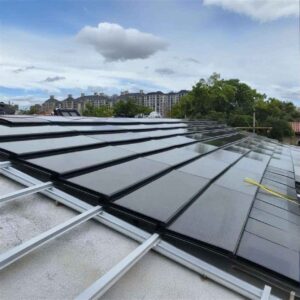
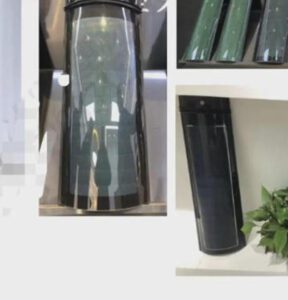
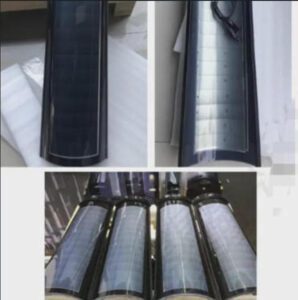
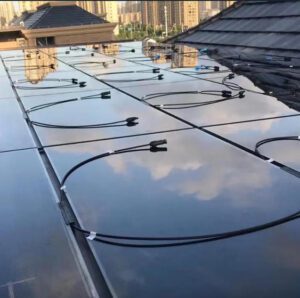
For dealers interested in expanding into premium building-integrated solar products — BIPV roofing tiles, solar facade systems, transparent solar panels for architectural projects — exploring the product range from manufacturers like Jia Mao BIPV opens access to the new construction and luxury renovation markets where margins are significantly higher than commodity residential solar. The global BIPV market reached $25.13 billion in 2025 and is growing at 21%+ CAGR — the dealers who build BIPV competency now will own that segment in their markets before the competition realizes it exists.
Measuring Trust and Adjusting Your Approach
Key Metrics That Reveal Whether Customers Trust You
Tracking Close Rates, Referral Rates, and Customer Satisfaction
Three metrics tell you the truth about your trust positioning that your sales team’s self-assessment cannot:
| Metric | What It Measures | Benchmark | Warning Signal |
|---|---|---|---|
| Initial consultation close rate | Whether your first impression and proposal convert | 15–22% for top performers; 8–12% average | Below 8%: your pitch is not addressing their real concerns |
| Referral rate | Post-sale customer satisfaction translated into action | 30–50% of new business from referrals for top dealers | Below 15%: customers liked the product but not the experience |
| Post-installation NPS (Net Promoter Score) | Whether customers would recommend you | 50+ is industry strong; 70+ is excellent | Below 30: serious process or communication issues |
Run these numbers monthly. A declining close rate tells you something in your pitch or proposal is misaligned with customer expectations. A declining referral rate tells you something in your post-sale experience is falling short. A low NPS on a specific question (“Did we explain everything clearly before installation?”) tells you exactly where to fix.
What Your Numbers Tell You About Your Positioning
A high close rate with a low referral rate means you’re closing deals but not creating advocates — often a sign that the experience after the close doesn’t match the promise before it. A high referral rate with a low close rate on cold leads means your existing customers love you but your outbound positioning isn’t communicating the same value.
Use your metrics diagnostically, not just as scorecards. Each number is a signal about a specific part of your process.
Gathering Feedback Without Making Customers Uncomfortable
Post-Installation Surveys That Reveal Real Customer Sentiment
Send a 5-question survey two weeks after installation and another at 6 months. Keep it short and specific: not “were you satisfied?” but “did we explain the financing terms clearly before you signed?” and “has the system performed the way we projected?” and “would you be comfortable referring a friend to us?”
The specific questions reveal specific problems. “Were you satisfied?” tells you almost nothing actionable. “Did we explain the financing terms clearly?” tells you exactly where to improve your pre-sale communication.
Using Reviews and Testimonials as Trust Signals
A Google review that says “They completed the installation in one day and my bill dropped from $290 to $22 in the first month” is doing active sales work for you 24 hours a day. Build a systematic review request process: send a direct link to your Google review page at the moment of highest satisfaction — typically when the customer gets their first post-installation utility bill showing the savings. That’s the moment they most want to tell someone.
Continuous Improvement — Staying Relevant as the Market Evolves
Monitoring Industry Changes and Competitor Positioning
Solar policy changes fast. Net metering rules, ITC eligibility requirements, state incentive programs, interconnection standards — any of these can change the economics of your pitch overnight. The dealer who stays current on policy changes and proactively communicates them to their market (“The net metering rate in our utility district is changing in Q1 — here’s what that means for your decision timeline”) is the one clients call first when they hear something in the news and need it explained.
Subscribe to SEIA’s market intelligence updates, your state’s solar industry association newsletters, and a handful of industry publications. 30 minutes per week on industry awareness pays dividends in customer-facing credibility.
Adapting Your Messaging as Customer Concerns Shift
In 2022, the primary homeowner concern was “will this save me money?” By 2025, that concern has bifurcated: cost-motivated buyers are as active as ever, but a growing segment of the market is motivated by resilience — backup power during grid outages, energy security against rate volatility, and independence from an aging utility infrastructure. As battery storage adoption accelerates (nearly half of all new residential solar customers added storage in 2025, per Digital Division Group data), the energy independence conversation is becoming as important as the savings conversation.
Update your pitch to reflect current motivations. A pitch that worked perfectly in 2022 may be leaving half of today’s prospects cold.
Creating Your Personal Trust-Building Action Plan
Auditing Your Current Positioning
Where You’re Already Strong and Where You Need to Improve
Score yourself honestly on a 1–5 scale on each of these dimensions:
| Trust Dimension | Your Score (1–5) | Priority for Improvement |
|---|---|---|
| First consultation quality (question-first approach) | ||
| Proposal clarity (specific to their situation, not generic) | ||
| Financing transparency (every cost surfaced proactively) | ||
| Post-installation communication (30-day, 6-month check-ins) | ||
| Referral system (systematic ask at the right moment) | ||
| Local community presence (events, partnerships, sponsorships) | ||
| Review collection (consistent, specific, high-volume) | ||
| Ongoing education (staying current on policy and market changes) |
Any dimension scoring below 3 is costing you deals. Any dimension scoring 4–5 is a competitive advantage worth amplifying in your marketing.
Quick Wins You Can Implement This Week
- Record all consultations (with permission) and review one per week to identify where you lose momentum
- Add a referral ask to your 30-day post-installation check-in call — with a direct Google review link
- Build one local case study from an existing installation — get permission, pull the monitoring data, write 200 words
- Connect with one local roofer or HVAC contractor and propose a bidirectional referral relationship
- Add one post-installation touchpoint to your CRM workflow: the 6-month performance update
Building Your 90-Day Trust-Building Roadmap
Prioritizing Changes That Will Have the Biggest Impact
| Timeframe | Focus Area | Specific Action | Success Metric |
|---|---|---|---|
| Days 1–30 | Proposal quality | Rebuild proposal around homeowner’s actual bill, specific roof data, and their stated concerns | Close rate on proposals delivered |
| Days 1–30 | Post-sale | Implement 30-day, 6-month, and annual check-in sequence in CRM | Referral request conversion rate |
| Days 30–60 | Credibility signals | Develop 3 local case studies with real numbers; collect 10 specific Google reviews | Review volume and quality |
| Days 30–60 | Community presence | Join one local business organization; sponsor one local event | Lead sources tracked |
| Days 60–90 | Financing transparency | Audit current financing conversations; build a simple 2-page financing comparison sheet for prospects | Financing objection rate |
| Days 60–90 | Referral system | Launch formal referral program with $800–$1,000 incentive; communicate to all past customers | Referral rate as % of new leads |
Creating Accountability Systems That Stick
Assign one team member ownership of each initiative in the 90-day plan. Set weekly check-ins where each owner reports a single metric — not a narrative, just a number. Monthly reviews compare the number against the target. This removes the “we’re working on it” accountability gap that kills most improvement initiatives.
Staying Committed to Integrity as You Scale
Maintaining Your Values as Pressure to Grow Increases
The moment your pipeline grows, you face pressure to cut corners: shorten consultations, use high-pressure close techniques, hand off financing to whoever pays the highest dealer fee, skip post-installation follow-up when the team is stretched. Each of these compromises produces a short-term gain and a long-term cost — in referral rates, review scores, and reputation.
Build your operating standards in writing while you’re small. What does a consultation look like? How are financing options presented? What happens at 30 days post-installation? Document these standards and train everyone to them before scale pressure arrives. It’s far easier to maintain a standard you’ve already established than to restore a standard you’ve let slip.
Building a Team Culture That Reinforces Trust
The dealers who scale without losing their trust-based positioning are the ones who make trust a team identity, not just a personal value. This means hiring for character as much as sales skill. It means recognizing and rewarding the behaviors that build trust — patient consultations, proactive problem disclosure, consistent follow-up — not just closed deals.
It also means being honest with your team about the market you’re operating in: customers have been burned before, they’re skeptical, and their skepticism is reasonable. The team that understands this goes into every consultation as a trust-builder first and a salesperson second — which is exactly the posture that closes deals.
Trust Is Built, Not Bought
Your position as a trusted energy partner isn’t determined by your product, your price, or your marketing budget. It’s determined by your commitment to understanding what your customers actually need, communicating with honesty and clarity, and delivering on every promise you make.
The dealers who dominate their markets aren’t the ones cutting corners or chasing every lead. They’re the ones who’ve earned the right to be their customers’ first call when energy questions arise.
The numbers support this unambiguously. Top-performing dealers close at 15–22% vs. an 8–12% industry average. Dealers with strong referral systems generate 40–50% of new revenue from existing customers at acquisition costs a fraction of paid leads. Post-installation trust — built through consistent follow-up and transparent communication — is the difference between a customer who buys from you and a customer who buys from you and then sends you three more.
Start with one section of this playbook. Master it. Then move to the next. Over time, you’ll build a reputation that makes your job easier and your business more profitable.
Ready to Become the Trusted Energy Partner Your Market Needs?
Download our Solar Dealer Trust Assessment Tool and get a clear picture of where you stand today. Identify your strongest positioning advantages and the gaps holding you back from dominating your market.
[Access Your Free Assessment →]
Glossary of Key Terms for Solar Dealers
| Term | Plain-English Definition | Why It Matters in Sales |
|---|---|---|
| ITC (Investment Tax Credit) | A federal tax credit equal to 30% of the solar system cost, deducted from the homeowner’s federal tax bill | The most powerful financial incentive in your pitch — but only for homeowners with sufficient tax liability to claim it |
| Net Metering | A utility billing arrangement where excess solar energy exported to the grid earns credits on the homeowner’s bill | The financial math of solar depends on net metering rates — which vary by state and utility and can change |
| PPA (Power Purchase Agreement) | A contract where a third party owns the solar system; the homeowner pays only for the electricity it produces | No ownership, no ITC — but $0 down and immediate bill reduction |
| NABCEP | North American Board of Certified Energy Practitioners — the leading professional certification for solar installers and sales professionals | A credibility signal homeowners recognize; the equivalent of a real estate license for solar |
| Production estimate | The projected annual electricity output of a solar system, measured in kWh, based on roof orientation, shading, and local sunlight data | The number your savings projection is built on — conservative estimates protect your reputation; inflated ones destroy it |
| Dealer fee | A fee charged to the installer by a solar lending company, typically passed on to the customer as a difference between cash and financed pricing | Must be disclosed proactively — homeowners who discover this on their own feel deceived |
| BIPV (Building-Integrated Photovoltaics) | Solar technology integrated directly into building materials — roofing tiles, glass facades, or wall cladding — rather than mounted on top | A growing premium segment for dealers targeting new construction and architectural renovation markets |
| kWh (kilowatt-hour) | The unit of electricity measurement — one kWh is one kilowatt of power used or generated for one hour | Your customers’ utility bills are denominated in kWh; your production estimates are in kWh; connecting these is your ROI conversation |
| NPS (Net Promoter Score) | A customer loyalty metric measured by asking “How likely are you to recommend us?” on a 0–10 scale | The single fastest metric to track whether your post-sale experience is generating referrals or preventing them |
| SEEDS Study | NREL’s Solar Energy Evolution and Diffusion Study (2014–2016) — the most comprehensive research on residential solar buyer behavior available | The data source behind most best practices in solar sales consultation and referral strategy |
12 FAQs Solar Dealers Ask — And How to Answer Them
1. How do I explain solar ROI to homeowners who don’t understand financial terms?
Skip the payback period calculation in your first conversation — it abstracts the experience into a number that means nothing to most homeowners. Instead, translate ROI into a monthly comparison using their actual bill: “Your energy bill today is about $210 a month. Solar reduces that to roughly $40. That’s $170 a month — $2,040 a year — staying in your account instead of going to the utility company.” Use their real numbers, not industry averages. Specific figures increase believability by 68%, according to NREL research. Once they understand the monthly story, the longer-term savings projection has a foundation to stand on.
2. What’s the biggest mistake dealers make when handling price objections?
Dropping price immediately. When a homeowner says “that’s too expensive,” they’re almost never saying they genuinely can’t afford it — they’re saying the value hasn’t landed yet. Responding with a discount signals two things: that your original price wasn’t justified, and that the value conversation wasn’t sufficient. Instead, respond: “I hear you — let me make sure we’ve walked through exactly what this investment means for your monthly bills and long-term costs. Can I go back through the numbers?” Return to the specific financial comparison for their situation. Most of the time, the price objection dissolves when the value is genuinely understood.
3. How long should I wait before following up with a lead who’s not ready to buy?
Consistency and variety beat timing and frequency. A prospect who gets a thoughtful, value-delivering touchpoint every 2–3 weeks for 4–6 months is far more likely to buy than one who receives five calls in two weeks followed by silence. Design your follow-up sequence to alternate between educational content (relevant policy updates, local installation case studies, utility rate news), relationship check-ins, and direct outreach. The goal is to remain present, useful, and human — not to manufacture urgency. Establish a follow-up sequence in your CRM and run it consistently.
4. Should I specialize in a particular customer type, or serve everyone?
Specialization generates better economics and stronger positioning. When you try to serve every homeowner equally, your case studies are generic, your messaging is broad, and you’re competing on price rather than expertise. Pick one or two segments where you have genuine strength — new construction partnerships, retirees on fixed incomes, sustainability-motivated urban homeowners, commercial property owners — and become demonstrably better at serving that segment than anyone in your market. Your close rate, referral rate, and average deal size will all improve.
5. How do I respond when a homeowner asks about a competitor’s lower price?
Don’t attack the competitor — ask clarifying questions: “Do you know what’s included in their price? What installation warranty do they offer? Who handles service calls after installation?” Most low-price quotes are low for a specific reason — fewer years of workmanship warranty, third-party installation contractors, a dealer fee hidden in the financing structure, or an aggressive production estimate that won’t materialize. Once you understand the actual difference, articulate your value specifically: “Our price includes X, Y, and Z — and specifically [the thing their competitor is missing]. Here’s what that means for you if something needs attention in year 8.”
6. What’s the best approach with homeowners who’ve had bad experiences with solar companies?
Acknowledge the past experience without defending the industry: “You’re right to be cautious — some companies have given this industry a serious credibility problem. I can’t speak for what happened with them. What I can do is show you specifically how we operate.” Then be concrete: show your certifications, provide two or three local customer references they can call directly, walk through your warranty terms line by line, and commit to specific communication standards in writing. These homeowners need proof, not promises. Earning their trust takes longer — but a customer you converted from skeptic to advocate refers more aggressively than almost any other customer type.
7. How do I know if my sales process is actually building trust or just closing deals?
Track three specific metrics: (1) your close rate on initial consultations — a declining rate often signals that your follow-up or proposal is not addressing what customers actually care about; (2) your referral rate as a percentage of new business — trusted dealers consistently generate 30–50% of new leads from existing customers; (3) your post-installation survey scores on specific questions about communication clarity and expectation management, not just overall satisfaction. If all three are strong, your process is building trust. If any is lagging, it points to a specific part of the process that needs attention.
8. What should I do if a customer discovers a problem with their system after installation?
Respond within 24 hours, take ownership regardless of where the technical fault lies, and communicate every step of the resolution. A homeowner’s post-problem experience determines their advocacy more than the problem itself. Customers who had a problem resolved quickly and transparently give better reviews and refer more actively than customers who never had a problem — because they’ve experienced what it means to have someone actually stand behind their commitment. Treat every post-installation issue as a trust-building opportunity, not a cost center.
9. How can I build credibility as a newer dealer without an established local track record?
Leverage the credibility signals you have access to immediately: NABCEP certification or training enrollment, manufacturer partnerships with recognized brands, case studies from any previous installations you’ve completed (in any market), and transparency about being new to the area while being specific about your commitment to it. Offer a workmanship warranty that’s meaningfully stronger than the market standard — a 5-year warranty from a new dealer signals more confidence than a 2-year warranty from an established one. Show up consistently in your community — local business groups, events, sponsorships. Visibility and reliability build trust faster than age.
10. Should I offer financing, or focus on cash sales?
Offer financing — but own the conversation rather than outsourcing it. The majority of homeowners cannot write a check for $25,000–$35,000, and removing that barrier removes the most common reason deals stall. But stay involved in the financing explanation rather than handing it to a lender. Explain how each financing option affects their actual monthly costs and long-term savings. Surface the dealer fee structure proactively. Help them evaluate the option that’s genuinely right for their financial situation — not the one with the highest dealer fee for you. The homeowner who understands their financing choice fully is a satisfied customer. The one who discovers a surprise in month 3 is a negative review.
11. How do I handle a homeowner who wants to wait for prices to drop?
Acknowledge that equipment prices may decline modestly and then reframe the actual cost of waiting: the federal tax credit timeline, the continued utility rate increases (the U.S. residential electricity price has increased an average of 4% annually for the past decade), and the compounding nature of delayed savings. Run the specific math for their situation: “If you wait 18 months, you might save $1,500–$2,000 on equipment. In the same 18 months, your utility bills will cost you approximately $3,800 more than a system in service today would have. That’s a net cost of waiting of roughly $2,300 — before accounting for any incentive changes.” The math, not the urgency, is what converts this objection.
12. What separates dealers who earn referrals naturally from those who constantly chase leads?
Three consistent behaviors: delivering on every promise without exception, making the customer experience clear and understandable rather than confusing and stressful, and maintaining contact after installation rather than disappearing when the contract is signed. According to Aurora Solar’s analysis of NREL research, 80% of satisfied solar customers make referrals — with a median of three each. The dealers capturing that referral flow are the ones who ask at the right moment (after the first bill showing savings), make it easy (a direct Google review link, a simple referral incentive), and deserve it (because the experience actually delivered on the promise). Your referral rate is a direct measurement of whether customers see you as a partner or a vendor.
Data sources: SEIA Solar Market Insight Report 2025, NREL Solar Energy Evolution and Diffusion Study (SEEDS), Aurora Solar Homeowner Solar Research 2025, Digital Division Group U.S. Solar Market Data 2025, World Metrics Solar Industry Marketing Statistics 2026, NABCEP Certification Impact Research, IBISWorld Solar Power Industry Revenue Report 2025.
External resources: SEIA U.S. Solar Market Data | NABCEP Professional Certification | Aurora Solar Referral Strategy Guide | EnergySage Solar Financing Options | Jia Mao BIPV Wholesale Solar Products | NREL Solar Sales Best Practices