Solar Roof Tile Companies Compared: Choosing the Right Partner

The procurement decision you make before a solar roof tile project begins will determine whether that project becomes a case study you present in your next tender — or a cautionary tale you discuss internally.
The global solar roof tiles market was valued at USD 3.56 billion in 2024 and is projected to grow at a CAGR of 10.6% through 2033, reaching USD 8.88 billion according to Grand View Research. Other forecasters place the growth trajectory even steeper — the solar roof tiles market valued at USD 1.44 billion in 2025 is expected to reach USD 8.92 billion by 2035 at a 20% CAGR according to LinkedIn market analysis tracking.
That growth is translating directly into tender specifications. Architects are calling for BIPV-integrated rooflines. Developers are using solar tile aesthetics as a premium residential and commercial differentiator. Local governments are mandating net-zero building performance. And the contractors, EPCs, and distributors who have already built supplier relationships — with certified crews and proven case studies — are consistently winning those bids over competitors who are evaluating product brochures for the first time.
This guide gives you the specification data, evaluation framework, and procurement strategy to be in the first group, not the second. Every section is written for industry professionals — roofing GCs, specialized contractors, PV EPC firms, building material distributors, and architects — not homeowners. The goal is helping you make fewer costly supplier mistakes, win more technically complex bids, and build long-term client value that drives repeat work.
Jia Mao Bipv manufactures BIPV glass modules engineered specifically for commercial curtain wall and façade applications — IEC 63092-1 certified, custom-fabricated, and supported by a technical team that engages from specification through commissioning. Where the analysis reaches commercial-scale BIPV glass, their product context is included. But brand selection is step three. Framework first.
1. Executive Summary: Why the Right Solar Roof Tile Partner Matters

The Convergence Point No One Tells You About Until It’s Too Late
Solar roof tile projects sit at the intersection of three disciplines that rarely coordinate well: roofing, photovoltaic electrical engineering, and building envelope performance. A tile that generates great kilowatt-hours but fails as a weather barrier is a leaking liability. A product with excellent roofing performance but no module-level monitoring is a maintenance headache five years from installation. A supplier with beautiful product photography but a 22-week lead time blows your project schedule.
The right solar roof tile partner doesn’t just supply hardware. They need to deliver: structural load documentation for your PE-stamped permit submission, certified installation training for your crew, a supply chain reliable enough for your project timeline, technical field support when something unexpected happens on site, and warranty terms that protect your client relationship for 25 years — not just until the invoice clears.
The Growing Role of Solar Tiles in Modern Construction
Solar roof tiles are no longer confined to high-end residential projects where aesthetics justify the cost premium. They are entering three significant commercial categories:
First, net-zero commercial buildings — where energy codes increasingly require on-site renewable generation and solar tiles deliver it without visible rack infrastructure that conflicts with design intent. Second, premium residential developments — where building permit restrictions on visible solar, HOA rules, or design requirements make rack-mounted panels unacceptable but energy performance remains mandatory. Third, BIPV façade and commercial roofing projects — where photovoltaic glass and integrated tile systems replace conventional cladding while generating measurable energy output and contributing to LEED and BREEAM certification targets.
Why Procurement Decisions Must Balance More Than Price
A solar roof tile procurement decision made on price alone regularly produces the following outcomes: products that arrive in the wrong color batch (color consistency across batches is a real quality control issue), systems installed by crews with insufficient training creating warranty disputes, products without the structural documentation needed for permit submission, and suppliers without regional technical support available when field issues arise.
The framework in Section 3 of this guide addresses all of these dimensions systematically. Apply it before issuing any RFQ, and you filter out the suppliers who cost more over the project lifetime than their lower unit price saves on the purchase order.
2. Market Landscape: Top 10 Solar Roof Tile Providers
The following ten companies represent the most commercially active solar roof tile and BIPV roofing suppliers across global and regional markets as of 2025–2026. This is not a ranked list — it is a landscape overview designed to orient procurement teams to the category before the detailed evaluation framework in Section 3.
| Provider | Primary Technology | Key Markets | Commercial Scale | Installer Model |
|---|---|---|---|---|
| Telhado Solar da Tesla | Tempered glass monocrystalline tile | U.S. (national) | Residential, light commercial | Tesla-certified only |
| GAF Energy (Timberline Solar) | Asphalt shingle with integrated cells | U.S. (national), Canada | Residential, light commercial | GAF EnergyPRO certified roofers |
| Luma Solar | Galvalume steel panel tile | U.S. (coastal, premium) | Residential, premium commercial | Luma-certified contractors |
| SunStyle (PowerHouse) | PERC monocrystalline interlocking tile | Europe, North America | Residential, high-performance commercial | SunStyle-certified network |
| Onyx Solar | Vidro fotovoltaico BIPV | Europe, global commercial | Commercial curtain wall, façade, canopy | Glazing/façade contractors |
| CertainTeed (Solstice/Apollo II) | Monocrystalline shingle glass tile | U.S. national | Residential, light commercial | CertainTeed-certified roofers |
| Hanergy (Hantile) | CIGS thin-film flexible tile | Europe, Asia-Pacific | Residential, curved-roof applications | Regional partner network |
| Isofotón | Crystalline and thin-film solar slate/tile | Europe (Spain), Latin America | Residential, heritage roofing replacement | Regional distributors |
| Redback Technologies | Smart inverter-integrated solar system | Australia, Asia-Pacific | Residential, commercial | Australian certified network |
| Solé Power Tile | Lightweight thin-film BIPV tile | U.S. (retrofit focus) | Residential retrofit, light commercial | General roofing crews |
Comparison criteria note: The market leaders in installer volume (Tesla, GAF) are not necessarily the leaders in technical performance or commercial project capability. The evaluation framework below helps you match the right product to your specific project type — not to the brand with the largest marketing budget.
3. Critical Evaluation Framework: 10 Key Selection Criteria
This framework is designed for procurement teams, project managers, and technical leads evaluating solar tile suppliers for bids and long-term partnerships. Apply all ten criteria before issuing an RFQ — not as a retrospective review after products are already delivered.
Criterion 1: Product Integration Compatibility
The foundational question: does this product fit the specific installation context — substrate type, existing framing system, slope, and adjacent roofing or cladding materials?
Compatibility varies significantly across the category. GAF Timberline Solar nails directly to plywood deck alongside conventional GAF Timberline HDZ shingles — compatible with any wood-framed residential or light commercial roof with standard sheathing. Telhado Solar da Tesla requires complete tear-off and full-system replacement — no hybrid integration with existing roofing. Onyx Solar e Jia Mao Bipv BIPV glass systems integrate into pressure-plate or SSG (Structural Silicone Glazing) curtain wall framing — not compatible with standard residential roofing workflows.
Substrate compatibility checklist before specifying:
- What is the existing or planned roof deck material? (plywood, concrete, metal, structural steel)
- What is the roof slope? (minimum slopes: GAF 2:12, Luma 2:12, Tesla 2:12, SunStyle 15°)
- What trades are managing installation? (roofing crew vs. glazing/façade contractor)
- Is this a hybrid layout (solar tiles + conventional shingles) or full-coverage system?
Criterion 2: Energy Performance and Efficiency Metrics
Module efficiency percentage matters less than watts per square foot of available roof area — because your client’s roof area is fixed, and maximizing production from that area is the actual optimization target.
| Product | Eficiência | W/ft² | Wattage per Unit | Low-Light Performance |
|---|---|---|---|---|
| GAF Timberline Solar ES2 | 22.6% | 14.3 W/ft² | 57 W/shingle | Good (monocrystalline) |
| Luma Solar | ~20% | 16.1 W/ft² | 100 W/tile | Good (monocrystalline) |
| Tesla Solar Roof (Gen 3) | ~19.5% | ~12.8 W/ft² | ~45 W/solar tile | Good (monocrystalline) |
| SunStyle PowerHouse | ~17–18% | 12.8–16.1 W/ft² | 84–115 W/tile | Good (PERC monocrystalline) |
| Onyx Solar BIPV Glass | 6–24% (by VLT) | 7.4–16.7 W/ft² | 80–180 Wp/m² | Good (thin-film configs) |
| CertainTeed Apollo II | 15.4% | ~12.5 W/ft² | Varies by format | Moderado |
| Hanergy Hantile | 10–13% (CIGS) | ~8–10 W/ft² | Varies | Excellent (diffuse light) |
| Solé Power Tile | ~8–10% | ~6–8 W/ft² | Low (thin-film) | Good (diffuse light) |
Practical implication: At 14.3 W/ft², a 1,000 ft² active solar zone on a GAF system produces 14.3 kW peak. The same zone at 12.8 W/ft² produces 12.8 kW — a 10.5% capacity reduction from identical roof area. In Dallas (4.9 peak sun hours/day), that 1.5 W/ft² difference is approximately 2,684 kWh/year — about $322/year at $0.12/kWh — compounding to over $12,000 across 25 years.
Temperature coefficient matters in hot climates. Solar cells lose output as temperature rises — typically –0.30% to –0.45% per °C above 25°C. In Phoenix or Dubai summer conditions (module surface temperatures 60–75°C), a product with a –0.30%/°C coefficient delivers 10–14% more energy than a –0.45%/°C product — a meaningful real-world performance gap that efficiency ratings alone don’t capture.
Criterion 3: Structural Load and Building Code Compliance
Solar roof tiles add permanent dead load that the roof structure must carry for the system’s entire service life. This is a structural engineering decision — not a product selection footnote.
| Tipo de sistema | Approximate Weight | Comparison Roofing Weight | Structural Implication |
|---|---|---|---|
| GAF Timberline Solar | 3.5–4 lbs/ft² | Asphalt shingles: 2–3 lbs/ft² | Marginal upgrade; most roofs comply |
| Telhado Solar da Tesla | 5–7 lbs/ft² | Asphalt shingles: 2–3 lbs/ft² | Requires structural review on older builds |
| Luma Solar (metal) | 3–4 lbs/ft² | Metal roofing: 2–4 lbs/ft² | Generally compatible with metal-ready structures |
| SunStyle (slate-profile) | 6–8 lbs/ft² | Concrete tile: 9–12 lbs/ft² | Typically lower load than replaced material |
| BIPV Glass (Onyx, Jia Mao) | 25–45 kg/m² (5–9 lbs/ft²) | Standard curtain wall glazing: 4–7 lbs/ft² | Requires confirmed structural framing |
Fire ratings: Tesla Solar Roof (Class A, UL 7103), GAF Timberline Solar (Class A, UL 790, ASTM E108), Luma Solar (Class A, ASTM E108), SunStyle (Class A, IEC standards), CertainTeed Apollo II (Class A). All leading products meet the Class A threshold required for most commercial and multi-family applications.
Wind ratings: Tesla 130 mph, GAF 130 mph, Luma 166 mph (Miami-Dade NOA — the strongest in the category), SunStyle 130+ mph. For coastal and hurricane-zone projects, Luma’s 166 mph rating is frequently the only product that satisfies the specification without engineering exceptions.
Seismic and fire code note: For commercial projects above 40 feet, confirm NFPA 285 compliance for the complete wall assembly — not just the individual module. NFPA 285 is assembly-specific, meaning the tile, underlayment, insulation, and backup wall must be tested together. Request the full assembly test report, not a reference to it.
Criterion 4: Installation Speed and Labor Requirements
Labor is the largest variable in your bid-to-margin equation. The crew training requirement and installation speed differ substantially across products.
| System | Installation Time (10 kW) | Labor Hrs/kW | Crew Training Required | Specialized Tools? |
|---|---|---|---|---|
| GAF Timberline Solar ES2 | 2–4 days | 3.5–5 hr/kW | GAF EnergyPRO certification | Standard roofing + electrical |
| Telhado Solar da Tesla | 10–17 days (full roof) | 6.9+ hr/kW | Tesla factory training | Tesla-specific tools |
| Luma Solar | 3–6 days | 4–6 hr/kW | Luma contractor certification | Clip-and-adhesive system |
| SunStyle | 4–8 days | 4.5–7 hr/kW | SunStyle certification | Proprietary interlocking hardware |
| Onyx/Jia Mao BIPV Glass | 2–4 weeks (façade) | 8–14 hr/kW | Curtain wall + electrical trades | Curtain wall framing, lifting equipment |
The Tesla installation reality: Field feedback from U.S. roofing contractors is consistent — Tesla Solar Roof installation is among the most time-intensive in the category. A 42-square (4,200 ft²) roof has required up to 17 days of labor per documented contractor accounts. Tesla’s installer network is closed; independent contractors cannot install and warranty the system without Tesla factory certification, which creates geographic availability constraints and limits competitive bidding.
The GAF advantage for existing roofing businesses: GAF Timberline Solar is engineered specifically for roofing contractors who already install GAF shingles. The product nails directly to the deck alongside conventional HDZ shingles using the same tools and substantially the same installation sequence. A crew certified by GAF can be profitable on solar installations within their first 2–3 projects — not after a multi-week factory training program.
Criterion 5: Warranty Depth and Transferability
A 25-year warranty printed in a brochure and a 25-year warranty enforced in practice are different products. Evaluate the following before signing any supplier agreement:
- What does the product warranty actually cover? Defects, delamination, discoloration beyond a defined threshold — or everything including hail damage and improper installation?
- What does the power warranty cover? The 80% at year 25 standard is table stakes. SunStyle’s 90% at year 10 guarantee is a stronger near-term commitment.
- Is the warranty transferable? For commercial projects that will be sold or refinanced, warranty transferability is a due diligence requirement from buyers and lenders. Confirm in writing.
- Who handles claims — manufacturer direct, or through the contractor? Tesla handles claims manufacturer-direct. Some smaller brands route claims through regional distributors, creating response delays.
| Marca | Product Warranty | Power Warranty | Wind Rating | Transferable? |
|---|---|---|---|---|
| Telhado Solar da Tesla | 25 anos | 25 yr (80% @ yr 25) | 130 mph | Yes |
| GAF Timberline Solar | 25 anos | 25 yr (80% @ yr 25) | 130 mph | Yes |
| Luma Solar | Lifetime (metal substrate) | 25 yr (80% @ yr 25) | 166 mph | Yes |
| SunStyle | 25 anos | 90% @ yr 10; 80% @ yr 25 | 130+ mph | Yes |
| CertainTeed Apollo II | 25 years (SureStart) | 25 yr (80%) | 130 mph | Yes |
| Onyx Solar BIPV | 10–12 years (product) | 25 yr (80%) | Per engineering | Confirm per project |
Criterion 6: Supply Chain Reliability and Lead Times
Supply chain performance is the criterion most frequently underweighted in initial procurement decisions — and the most frequently cited cause of project delays in post-project reviews.
Standard lead times for solar tile products in 2025 market conditions:
- GAF Timberline Solar (standard colors): 6–10 weeks
- Tesla Solar Roof: 8–14 weeks (custom to project)
- Luma Solar: 8–12 weeks
- SunStyle: 10–16 weeks (custom alpine formats longer)
- BIPV Glass (Onyx, Jia Mao): 8–14 weeks (standard), 14–22 weeks (custom color/size)
The project-scheduling implication: For a commercial project with a 26-week construction schedule, a 14-week product lead time means placing the material order at week 12 of design — before Construction Documents are finalized. That requires a procurement strategy integrated into the design calendar, not triggered by permit approval.
Domestic vs. overseas manufacturing: GAF Energy manufactures Timberline Solar in the U.S. (Georgetown, Texas), which provides supply chain resilience against import tariff changes and logistics disruptions. Most other products in this category are manufactured in Europe or Asia with associated import logistics complexity. For projects in U.S. markets sensitive to domestic content requirements (including potential ITC domestic content bonus credits), verify manufacturing origin before specification.
Criterion 7: Aesthetic Customization and Architectural Flexibility
Color consistency, profile matching, and the visibility of electrical components are real specification variables — not secondary concerns.
The color batch consistency problem: Solar tiles contain photovoltaic cells, and cell color can vary between manufacturing batches. For large projects or phased installations where tiles are ordered at different times, color mismatch between batches is a documented quality control issue. Request color consistency documentation — specifically, the manufacturer’s process for matching replacement tiles to the original installation batch — before specification.
Profile matching options by brand:
- Tesla Solar Roof: Single tempered glass aesthetic, contemporary/modern profile. No match to traditional tile or shingle profiles.
- GAF Timberline Solar: Designed to match standard asphalt shingle visual profile. Available alongside matching conventional GAF Timberline HDZ shingles for non-solar zones.
- Luma Solar: Metal standing-seam aesthetic. Works on contemporary and industrial architectural styles; does not match traditional tile profiles.
- SunStyle: Diamond-pattern slate aesthetic inspired by Alpine architecture. Distinctive profile with no conventional roofing equivalent — a design feature, not a limitation, on the right project.
- CertainTeed Solstice/Apollo II: Designed to match CertainTeed’s existing shingle and tile profiles. Best integration with traditional residential architectural styles.
BIM object availability: For commercial projects moving through design in Revit or ArchiCAD, BIM availability saves 2–4 weeks of design documentation time. GAF Energy, SunStyle, and Onyx Solar all provide downloadable BIM families through professional portals. Tesla provides structural load tables but limited BIM library support. Luma Solar provides CAD details and load specifications, with Revit families available on request.
Criterion 8: O&M Accessibility and Monitoring Integration
A solar tile system without monitoring is a black box. A system where individual tiles cannot be replaced without removing adjacent roof sections is a maintenance liability.
Module-level monitoring — tracking output at the individual tile or string level — detects underperforming units within hours of failure. Without it, a single failed bypass diode reducing an entire string’s output by 30–40% might go undetected for months, discovered only when the utility bill fails to decline as projected.
| Monitoring Platform | Compatible Systems | Key Capability | Custo |
|---|---|---|---|
| Enphase IQ Gateway | GAF (ES2), Luma, SunStyle (with IQ8 micros) | Module-level, lifetime data, app-accessible | Included with IQ8 micros |
| Tesla App | Tesla Solar Roof + Powerwall | Native integration, real-time, tile-level fault | Included with Tesla system |
| SolarEdge mySolarEdge | Most string-inverter compatible systems | String-level monitoring, optimizer data | Inverter-included |
| Third-party SCADA | Commercial Onyx/Jia Mao BIPV | BMS integration, API data export | $5,000–$15,000 commissioning |
Tile replacement accessibility: GAF, CertainTeed, and Luma all allow individual tile replacement without removing surrounding units. Tesla’s interlocking tile design requires removing adjacent tiles to access a failed unit — increasing replacement labor cost. For commercial projects with long service lives and client expectations of minimal disruption, replacement accessibility is a real selection criterion.
Criterion 9: Commercial and Financial Terms
Volume pricing, incentive eligibility, and payment structure all affect project economics as much as the per-unit cost.
Pricing models across the category:
The solar roof tiles market prices products in multiple structures — per tile, per watt ($/W), per square foot, or bundled system pricing. Normalize all pricing to $/W-installed before comparison. As of 2025:
- GAF Timberline Solar: $3.80–$5.50/W installed (lowest in the tile category)
- Tesla Solar Roof: $6.00–$10.00/W installed (highest in the tile category; includes full roof replacement)
- Luma Solar: $5.00–$7.00/W installed
- SunStyle: $5.50–$8.00/W installed
- CertainTeed Apollo II: $4.00–$6.00/W installed
- BIPV Glass (Onyx/Jia Mao Bipv): $4–$12/m² range (varies by power density, VLT, and customization)
Federal ITC eligibility (2025–2026): Solar roof tiles that generate electricity qualify for the 30% commercial ITC under Section 48E of the Inflation Reduction Act — applicable to commercial building owners and EPCs operating as the system owner. The residential Residential Clean Energy Credit (Section 25D) expired for systems placed in service after December 31, 2025. For residential projects in 2026 onward, verify current federal incentive status and check DSIRE for active state-level programs. The commercial ITC under Section 48E applies to systems beginning construction before July 4, 2026. According to SEIA’s tax policy resources, a technology-neutral clean energy credit (Section 48E) also remains available for commercial solar beginning in 2025.
Volume discount availability: GAF Energy and CertainTeed have established distributor pricing tiers with published volume discounts. Tesla does not offer distributor pricing — all procurement flows through Tesla’s direct sales channel. For EPCs managing multiple projects, GAF and CertainTeed’s distributor model provides more predictable procurement economics.
Criterion 10: Technical Support and Contractor Enablement
The supplier relationship doesn’t end at delivery. Pre-bid engineering support, field troubleshooting, and training access determine whether your crew can profitably install the second, fifth, and tenth project — not just survive the first one.
What to require from any supplier before signing:
- Pre-bid engineering support: Can they provide a structural load letter and electrical single-line diagram within 48–72 hours of a request for a bid submission?
- CAD/BIM availability: Do BIM families exist for their products, and are they accessible to your design team through a professional portal (not just on request with a 2-week turnaround)?
- Dedicated project manager: Is there a named technical contact for your project, or does every question go to a general support queue?
- Field troubleshooting response: What is the documented response time for field issues? Same day? 24 hours? 72 hours?
- Training program structure: Is certification training available in your region? What does it cost, and how long does it take?
- Submittal package: Can they deliver a complete AHJ submittal package — product data sheets, installation instructions, structural documentation, electrical specifications — within 5 business days of project engagement?
4. Installation, Warranty, and Support: What Sets Providers Apart

The five most-installed solar tile systems in commercial and premium residential projects show meaningfully different profiles across installation complexity, warranty structure, and contractor support — and those differences translate directly into project risk and margin.
Side-by-Side Comparison: Installation, Warranty, and Support
| Dimension | Telhado Solar da Tesla | GAF Energy ES2 | Luma Solar | SunStyle | Onyx / Jia Mao BIPV |
|---|---|---|---|---|---|
| Installer model | Tesla-certified only; closed network | GAF EnergyPRO certified; large open network | Luma-certified contractors | SunStyle-certified; regional network | Glazing/façade + electrical contractors |
| Crew training time | Factory training; several weeks | 1–2 days for GAF-certified roofers | 1–2 project learning curve | 2–3 projects with manufacturer support | 2–3 weeks (glazing) + PV cert |
| Typical install time (10 kW) | 10–17 days (full roof) | 2–4 days | 3–6 days | 4–8 days | 2–4 weeks (façade scope) |
| Product warranty | 25 anos | 25 anos | Lifetime (metal substrate) | 25 anos | 10–12 years |
| Power warranty | 25 yr, 80% | 25 yr, 80% | 25 yr, 80% | 90% @ yr 10; 80% @ yr 25 | 25 yr, 80% |
| Warranty claims handling | Tesla direct | GAF direct | Luma direct | Manufacturer / installer | Manufacturer + contractor |
| Pre-bid engineering support | Limited | Within 48–72 hrs (certified installers) | Available | Available | Available (commercial projects) |
| BIM/CAD objects | Limited | Yes (professional portal) | Yes (on request) | Yes (professional portal) | Yes |
| Support responsiveness | Mixed (reported by installers) | Contractor-focused; strong infrastructure | Direct manufacturer support | European-model direct support | Technical team direct engagement |
Why GAF Energy Has Become the Contractor-Preferred Platform
GAF Energy’s Timberline Solar ES2 earned the “Best Solar Shingle” designation from CNET — but for contractors, the more meaningful recognition is that LA County Building and Residential Code approved the product in one of the most demanding code jurisdictions in the U.S. That approval, combined with the product’s compatibility with GAF’s existing roofing ecosystem, makes it the lowest-friction entry point into solar tile installation for any established roofing contractor.
The critical operational detail: Timberline Solar tiles nail directly to the roof deck alongside standard GAF Timberline HDZ shingles using the same nailing pattern roofing crews already know. There is no separate racking system, no additional structural loading calculation, and no new tools. An experienced GAF crew completes the GAF EnergyPRO training in a day and is productive on solar projects by the second.
Why Onyx Solar (and Jia Mao Bipv) Serve a Different Market Entirely
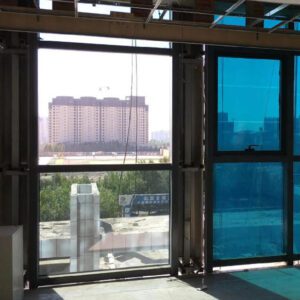
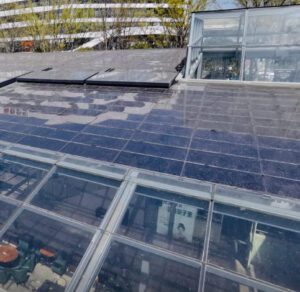
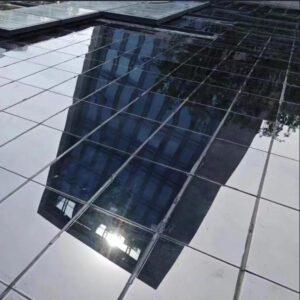
Onyx Solar and Jia Mao Bipv BIPV glass systems are not residential tile products — they are commercial architectural glazing systems engineered for curtain walls, skylights, canopies, and commercial roofing projects where photovoltaic glass replaces conventional glazing. The installation crew is a glazing or façade contractor, not a roofing crew. The procurement pathway is through glazing material distributors or direct manufacturer engagement. And the project value is typically 10–100x the residential tile scale.
For distributors and EPC firms serving the commercial façade market, Jia Mao Bipv’s full range of BIPV façade glass solutions — manufactured at 3 GW annual capacity, IEC 61215 and IEC 63092-1 certified, and available in custom configurations — provides a direct-manufacturer supply chain alternative for commercial specifications that avoids the lead time and customization constraints of routing every project through a single European supplier.
5. Matching Providers to Your Business Type
The most efficient procurement decision framework is not “which product is best” — it is “which product is best for your specific project profile and crew capability.” The matrix below maps suppliers to business types based on the evaluation criteria above.
Decision Matrix: Matching Solar Tile Suppliers to Project Types
| Business Type | Primary Recommendation | Secondary Option | Why |
|---|---|---|---|
| Residential roofing GC (re-roofing) | GAF Energy Timberline Solar | CertainTeed Apollo II | Nailing pattern compatibility, existing crew cert, distributor access |
| Premium residential (new construction) | Luma Solar or Tesla Solar Roof | SunStyle | Wind rating, aesthetic integration, long warranty |
| Commercial EPC (net-zero buildings) | GAF + Enphase or Tesla + Powerwall | SunStyle (European projects) | Monitoring depth, battery integration, yield predictability |
| BIPV curtain wall / façade specialist | Onyx Solar or Jia Mao Bipv | — | BIPV glass engineering, IEC 63092-1 certification, BIM support |
| Building material distributor | GAF Energy + CertainTeed | Luma Solar | Distributor tier pricing, inventory availability, brand recognition |
| Architect / design institute | SunStyle or Onyx Solar | Jia Mao Bipv (commercial façade) | Design flexibility, BIM library, custom specification support |
| Coastal / hurricane zone projects | Luma Solar | GAF (non-coastal) | 166 mph Miami-Dade NOA — the only tile meeting this threshold |
| Mountain / alpine climate projects | SunStyle | Luma Solar | Alpine-validated snow load performance, interlocking drainage design |
6. Case Studies: Real-World Procurement Decisions
Case Study 1: High-End Residential Retrofit — GAF + Enphase, Austin TX
A 1,800 ft² home in Austin required a full roof replacement after hail damage. The homeowner’s insurance covered the roofing component; the incremental solar upgrade was financed separately. The contractor specified GAF Timberline Solar ES2 with Enphase IQ8 microinverters — the Enphase choice driven by the partial shading on the east-facing slope from a mature oak tree.
Results:
- 8.7 kW installed over 3 days by a three-person certified crew
- Real-world efficiency: 22.1% against the 22.6% rated (2.2% deviation — among the tightest in the category)
- Monthly electricity bills: from $165 to $22 — an 87% reduction in the first six months
- Net out-of-pocket cost after insurance and federal ITC: $18,400
- Simple payback: 9.8 years
Procurement lesson: The Enphase IQ8 microinverter selection eliminated the shading-driven string mismatch problem that would have reduced annual yield by an estimated 12–18% on a string-inverter system. The per-microinverter cost premium of $0.30/W was recovered in under 3 years through improved yield.
Case Study 2: Commercial Mixed-Use Façade — BIPV Curtain Wall, Seneca College Toronto
Onyx Solar’s installation at Seneca College’s CITE building in Toronto demonstrates the commercial-scale value proposition of BIPV glass: a 47.4 m² photovoltaic curtain wall generating 34,570 kWh annually and reducing CO₂ emissions by 23 metric tons per year. The installation earned LEED certification, serves as a real-time energy teaching tool, and demonstrates the dual-function value — architectural glazing plus energy generation — that pure rooftop PV cannot deliver.
Procurement lesson: The project’s contractor coordinated glazing and electrical scopes simultaneously — not sequentially. Attempting to complete the curtain wall installation before engaging the electrical contractor would have required removing installed panels to route conduit. The coordination strategy was established at the pre-construction meeting, not discovered on site.
Case Study 3: Large-Scale EPC Rollout — Tesla Solar Roof, Boston MA
A 12-unit premium residential development in Boston specified Telhado Solar da Tesla across all units as a marketing differentiator in a competitive luxury rental market. The developer absorbed the cost premium ($6.50/W average) and positioned net-zero energy capability as a lease premium feature.
Results:
- $150/month rent premium per unit — $21,600/year total additional revenue
- Full occupancy within 4 weeks of listing — developer cited solar roof as the top decision factor in tenant surveys
- Premium over conventional roofing: approximately $180,000
- Payback on the premium: 8.3 years from rental uplift alone (before energy savings)
Procurement lesson: For premium residential developments, the Tesla brand has measurable market value that other solar tile brands do not yet match. The procurement decision was not purely technical — it was a marketing decision that happened to also deliver energy performance. Contractors who understand this can price the Tesla premium confidently without apologizing for it.
7. Risk Mitigation: Avoiding Costly Procurement Mistakes
▶ Watch: Solar Shingles vs. Traditional Solar Panels (2025) — Efficiency, Cost, and Which Makes Financial Sense for Contractors
These four mistakes appear consistently in post-project reviews on solar tile installations that went over budget, over schedule, or into warranty disputes.
Mistake 1: Overlooking structural load implications in retrofit projects
A residential roof structure designed for asphalt shingles (2–3 lbs/ft²) is not automatically adequate for glass-based solar tiles (5–7 lbs/ft²). The upgrade in dead load requires a structural review — and in older buildings or those with pre-existing structural issues, remediation. Contractors who skip this step discover the problem during installation, when the cost of addressing it has multiplied 5–10x over what a pre-project review would have cost. Budget $500–$1,500 for a structural engineering review on every retrofit project before specifying any solar tile product.
Mistake 2: Underestimating training time for crews new to solar tile installation
The first solar tile project a crew completes will take longer than the installation guide suggests. This is not a deficiency in the crew — it is a category reality. Budget explicit additional crew time for the first project: typically 30–50% additional labor hours above the manufacturer’s stated installation time. GAF Timberline Solar has the shortest learning curve for roofing crews; Tesla and SunStyle require the most adaptation. Plan accordingly in your bid labor calculations.
Mistake 3: Assuming aesthetic consistency across manufacturing batches
Solar cell color can vary between production batches. For phased projects or large installations where materials are ordered at different times, visual color inconsistency between early-installed and later-installed tiles is a documented quality issue — one that is difficult to resolve without replacing already-installed material. Mitigate this by: ordering all project materials in a single purchase order where possible, specifying that replacement tiles must come from a color-matched batch, and documenting the original tile batch numbers at installation for future warranty claims.
Mistake 4: Ignoring O&M access in tight roof configurations
A solar tile that generates great kilowatt-hours but requires removing 30 surrounding tiles to access a failed unit in a tight valley configuration is an expensive maintenance liability over a 25-year service life. Before finalizing tile layout and selection, confirm: can individual tiles be replaced without removing adjacent units? Are monitoring junction boxes and DC disconnects accessible without significant tile removal? Is there safe roof access (anchor points, step pads) at all maintenance points? These questions cost nothing to resolve at design — and thousands to address in the field.
8. Future-Proofing: Trends Shaping Solar Roof Procurement

Four trends are actively reshaping procurement strategy for solar roof tiles through 2030. Contractors and distributors who position now will be ahead when these trends reach mainstream specification.
Rise of Net-Zero Energy Building Codes
California’s updated Title 24 (effective January 2026) expands solar-ready requirements for commercial construction. The EU’s revised Energy Performance of Buildings Directive mandates nearly zero-energy performance for all new commercial buildings. Singapore’s Green Building Masterplan requires 80% Green Mark certification by 2030. LEED v5 (2026) mandates full electrification and 100% renewable energy for Platinum certification. These codes are not distant aspirations — they are active tender specifications today. Solar tile integration is frequently the most cost-effective path to compliance in dense urban environments where ground-mounted systems are not viable.
Demand for Resilient Power with Battery Integration
Battery storage is rapidly moving from optional to expected on premium residential and commercial solar tile projects. Tesla’s native Powerwall 3 integration, Enphase’s IQ Battery compatibility with GAF and Luma systems, and the growing commercial availability of AC-coupled storage solutions are creating a procurement pattern where solar tile selection and storage selection are evaluated together, not sequentially. For EPCs positioning as full-service energy partners, the ability to specify, install, and warranty a solar-tile-plus-storage system is a contract-winning capability.
Growth in Lightweight, Flexible Solar Tiles for Retrofit
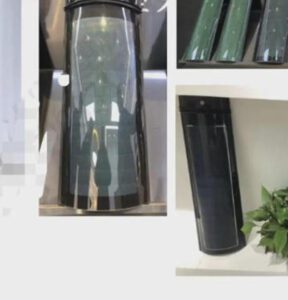
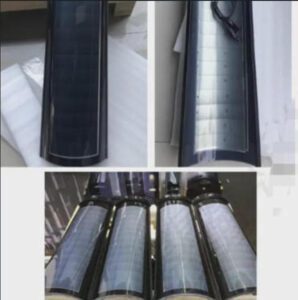
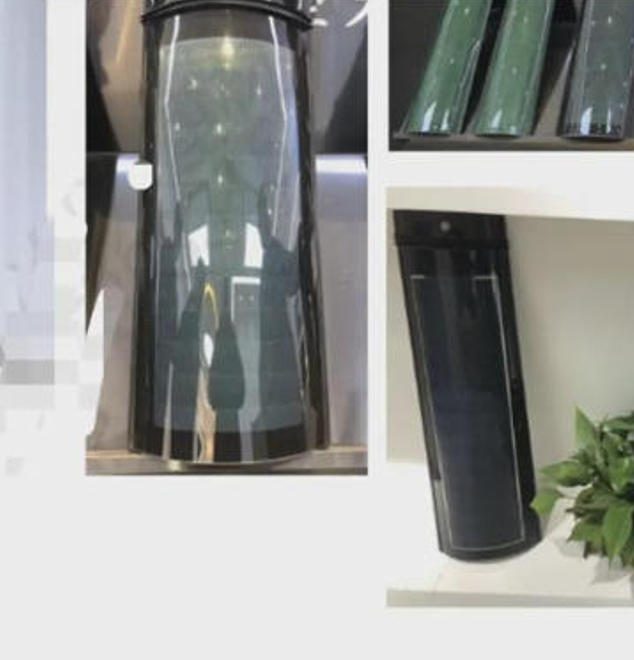
Products like Solé Power Tile (thin-film, lightweight) and Hanergy’s flexible CIGS tile variants are opening retrofit applications that heavier glass-based tiles cannot access — specifically, older buildings and lightweight metal roof structures with limited additional dead-load capacity. As the commercial retrofit market grows (driven by energy code upgrades on existing buildings), these lightweight products will move from niche to mainstream. Distributors who establish supply chain relationships with flexible tile manufacturers now will have a meaningful lead-time advantage when retrofit project volumes scale.
Lifecycle Carbon Accounting and EPD Requirements
EPD (Environmental Product Declaration) — a standardized report of a product’s lifecycle carbon footprint from raw materials through end-of-life — is becoming a procurement requirement on green-certified commercial projects and government-funded construction. LEED v4.1 and BREEAM 2023 both reward material selections supported by EPD data. Manufacturers who provide EPD documentation for their solar tile products will have a specification advantage over those who do not, as institutional clients increasingly require lifecycle carbon accounting in tender submissions.
9. Strategic Partnership Checklist: Questions to Ask Before Signing
This checklist is designed to be used as a supplier evaluation tool at the RFQ stage — before any commercial commitment is made. Use it in your first structured conversation with any new solar tile supplier.
Technical Documentation:
- Can you provide PE-stamped structural engineering sign-off for our specific project type and substrate within 10 business days of engagement?
- Do you offer BIM objects and shop drawings within 72 hours of request for design-phase submissions?
- What is your documented response time for technical field issues — and who is the specific named contact for our project?
Supply Chain and Logistics:
- What is your confirmed lead time for our project’s specific product configuration?
- Are replacement tiles stocked regionally or only at central manufacturing? What is the typical lead time for a single replacement tile?
- What is your on-time delivery rate for custom orders over the past 12 months?
Warranty and Claims:
- Is the warranty transferable to subsequent building owners or tenants?
- How do you handle warranty claims — through a direct manufacturer process, or through a third-party distributor?
- What documentation is required to file a valid warranty claim, and what is the typical resolution timeframe?
Contractor Enablement:
- What training is required to install your product under warranty coverage, and how do you deliver that training?
- Do you offer co-marketing resources for certified installers, including project leads or referrals?
- Can you provide contact references for two completed commercial projects of similar scope to ours?
10. Aligning Solar Roof Selection with Project Outcomes
The solar roof tile selection decision that wins your bid is not the one with the lowest cost per watt or the highest efficiency rating in the datasheet. It is the decision that delivers the right product, with the right support structure, installed by a qualified crew, on schedule, within the project’s structural and code compliance requirements — and backed by a warranty your client can rely on for 25 years.
The framework in this guide gives you the structure to make that decision systematically rather than reactively. Apply the 10 evaluation criteria before issuing any RFQ. Match suppliers to your project type and crew capability before engaging in pricing negotiations. Ask the nine questions in Section 9 before signing any partnership agreement.
The contractors, EPCs, and distributors who are winning the most technically complex solar tile and BIPV projects in 2025–2026 have one thing in common: they chose suppliers who function as true project partners — providing engineering documentation, installation training, logistics planning, and field support — not just hardware that arrives on a pallet.
For commercial-scale BIPV glass projects — curtain walls, façades, commercial canopies — Jia Mao Bipv’s complete BIPV glass resource library and product range covers the full technical workflow from feasibility through 25-year O&M planning, with engineering support available from specification through commissioning.
Glossary of Key Terms
BIPV (Building-Integrated Photovoltaics): Solar technology integrated into the building envelope — roof, façade, or glazing — replacing conventional building materials. The solar element functions simultaneously as a building material and an energy generator.
BAPV (Building-Applied Photovoltaics): Conventional rack-mounted solar panels installed on top of an existing roof or surface. Lower cost and faster payback than BIPV, but does not replace roofing or cladding material.
W/ft² (Watts per Square Foot): The relevant metric for solar tile comparison — how much peak power can be extracted from each square foot of available roof area, given the product’s form factor.
Temperature Coefficient: The rate at which a solar module’s output decreases as temperature rises above 25°C, expressed as %/°C. Lower is better in hot climates. Typical range: –0.30% to –0.45%/°C.
Class A Fire Rating: The highest fire resistance classification for roof coverings under ASTM E108 / UL 790, indicating effective resistance against severe fire exposure from outside the building.
Miami-Dade NOA (Notice of Acceptance): Product approval from Miami-Dade County confirming compliance with its stringent hurricane-impact wind resistance requirements — the most demanding residential roofing standard in the U.S.
MLPE (Module-Level Power Electronics): Microinverters or DC power optimizers installed at each individual solar module, preventing shading losses from one module from affecting an entire string.
IEC 63092-1: The BIPV-specific international standard, covering requirements for solar products that function simultaneously as building envelope components and PV generators.
ITC (Investment Tax Credit): The 30% federal tax credit for commercial solar energy systems under Section 48E of the Inflation Reduction Act, applicable through 2032.
EPD (Environmental Product Declaration): A standardized report of a product’s lifecycle carbon footprint, increasingly required by LEED v4.1, BREEAM 2023, and government tender specifications.
NEC 690: The National Electrical Code article governing all photovoltaic system electrical requirements in the U.S., including wiring, rapid shutdown, overcurrent protection, and grounding.
Frequently Asked Questions (FAQs)
Q1: What are the main differences between solar roof tiles and traditional rooftop PV panels?
Solar roof tiles replace the conventional roofing material — the tile is the roof. Traditional rack-mounted panels are mounted on top of an existing, separate roof. Tiles deliver seamless aesthetics with no visible hardware and carry dual structural and energy functions. Panels deliver lower installed cost ($2.50–$3.50/W vs. $3.80–$10.00/W for tiles), faster payback (7–10 years vs. 10–18 years), and simpler procurement. The right choice depends on whether aesthetics, roof replacement timing, energy code requirements, or green certification targets make integration a specification requirement rather than an option.
Q2: Which solar roof tile brands are easiest to install for general roofing contractors?
GAF Energy’s Timberline Solar ES2 and CertainTeed Apollo II are specifically designed for roofing crews with minimal prior solar experience. Both nail directly to the roof deck using standard roofing tools alongside conventional shingles. GAF’s EnergyPRO certification program can be completed in a day for crews already certified in GAF Timberline products. Tesla Solar Roof requires factory training and a Tesla-certified crew — not accessible to independent roofing contractors without completing Tesla’s certification program.
Q3: Do solar roof tiles qualify for the federal Investment Tax Credit?
For commercial projects, yes — the 30% commercial ITC under Section 48E applies to solar roof tile systems that generate electricity and meet IRS requirements, with projects beginning construction before July 4, 2026. For residential projects, the Section 25D Residential Clean Energy Credit expired for systems placed in service after December 31, 2025. For 2026 residential projects, verify current federal incentive status and check DSIRE for state-level programs by location.
Q4: How do solar tiles perform in low-light or heavily shaded conditions?
Performance depends on cell technology and inverter architecture. Monocrystalline tiles (Tesla, GAF, Luma) maintain strong proportional output in diffuse and overcast conditions. Thin-film tiles (Hanergy CIGS, Solé Power) show the best absolute performance in low-irradiance environments — relevant for Pacific Northwest, UK, and Northern European climates. For partially shaded roofs on any cell technology, microinverter-based systems (Enphase IQ8) or power optimizer configurations (SolarEdge) prevent shading on one tile from reducing an entire string’s output.
Q5: Can solar roof tiles be retrofitted onto existing roofs?
Yes — with product-specific constraints. GAF Timberline Solar, Luma Solar, and CertainTeed Apollo II allow partial retrofit installation, where solar tiles replace a subset of existing shingles on viable roof zones. Tesla Solar Roof requires complete tear-off and full-system replacement — no partial integration. For all retrofit applications, a licensed structural engineer must confirm the existing roof framing can carry the additional dead load (5–7 lbs/ft² for glass-based tiles) before specification is finalized.
Q6: What fire ratings do leading solar roof tiles carry, and why does it matter for commercial projects?
Tesla, GAF Energy, Luma, CertainTeed, and SunStyle all carry Class A fire ratings under ASTM E108 and UL 790 — the highest available classification. For commercial projects, the critical compliance requirement is NFPA 285, which applies to exterior wall assemblies over 40 feet and is assembly-specific — meaning the complete wall system (tile + underlayment + insulation + backup wall) must be tested together or matched to a tested equivalent. Request the full NFPA 285 assembly test report, not just a module-level fire certification.
Q7: Are BIM and CAD models available for use in commercial specifications?
Yes — from most leading brands. GAF Energy, SunStyle, and Onyx Solar all provide downloadable BIM families and CAD details through professional portals. Luma Solar provides CAD details and Revit families on request. Tesla provides structural load tables but limited BIM library support. Confirm BIM availability at the start of design development — discovering a missing BIM family at the shop drawing stage is a 3–4 week delay.
Q8: How long are solar roof tile warranties, and what do they actually cover?
Most leading brands offer 25-year product warranties (covering manufacturing defects, delamination, and discoloration beyond defined thresholds) and 25-year power output warranties (minimum 80% of rated output at year 25). SunStyle strengthens this with a 90% guarantee at year 10. Luma Solar provides a lifetime warranty on the Galvalume metal substrate. Before signing, confirm: does the warranty cover hail damage? Is it transferable to subsequent building owners? Are warranty claims handled directly by the manufacturer, or through a distributor?
Q9: Can solar tiles be mixed with conventional roofing materials on the same roof?
Systems like GAF Timberline Solar and CertainTeed Apollo II are explicitly designed for hybrid layouts — solar tiles on viable solar zones, matching conventional shingles on non-viable areas (valleys, dormers, north-facing slopes). Tesla Solar Roof requires full roof coverage for warranty validity — no partial hybrid installation is supported under the product warranty. Verify hybrid compatibility explicitly with any supplier before specifying a mixed-material layout.
Q10: What maintenance is required over a 25-year solar tile lifespan?
Maintenance requirements are minimal but must be documented for warranty compliance. Core protocol: cleaning with pH-neutral solution (pH 6–8, ≤40 psi) twice per year in urban environments; annual electrical inspection by a licensed electrician; annual thermal imaging inspection to detect hotspots and delamination; quarterly visual inspection of sealants, flashing, and drainage paths. Active monitoring systems (Enphase, Tesla app, SolarEdge) provide continuous output tracking between physical inspections and detect underperformance within hours — replacing the need for manual output checks.
Q11: How do solar tiles impact roof ventilation and moisture management?
Proper underlayment and ventilation design are critical and must be confirmed with the specific product’s installation documentation. Most solar tile systems require a continuous waterproof membrane underlayment (self-adhering peel-and-stick per ASTM D1970) — not standard felt paper. For ventilated roof assemblies, confirm that tile installation does not block intake or exhaust vents. Manufacturers who provide climate zone-specific system details (underlayment + ventilation + drainage) reduce the risk of moisture management problems that can void both the roofing warranty and the product warranty simultaneously.
Q12: Are there regional limitations on availability or technical support?
Yes — and these limitations should be verified before specification, not discovered after a project is awarded. Tesla’s certified installer network has strong U.S. coverage but limited presence outside major metros. GAF Energy’s EnergyPRO network is the broadest in the U.S. residential market. SunStyle and Onyx Solar have stronger infrastructure in Europe and are growing in North America. For commercial BIPV glass projects globally, Jia Mao Bipv’s supply chain and global distribution framework covers regional availability, lead times, and technical support deployment for international projects.
Q13: Can solar roof tiles integrate with battery storage and smart energy systems?
Yes. All major solar tile systems are compatible with grid-tied battery storage. Tesla Solar Roof has native integration with Tesla Powerwall 3 through a unified hybrid inverter and single-app monitoring platform. GAF Timberline Solar and Luma Solar integrate with Enphase IQ Batteries via the AC-coupled Enphase ecosystem. SunStyle and CertainTeed systems are compatible with any AC-coupled storage solution using IEEE 2030.5-compatible inverters. Confirm inverter compatibility with the specific storage system before finalizing system design.
Q14: What happens if a single tile fails? Can it be replaced easily?
Replacement accessibility varies significantly by product. GAF Timberline Solar and CertainTeed Apollo II allow individual tile removal and replacement without disturbing adjacent tiles — the most serviceable design in the category. Luma Solar’s clip-and-adhesive installation allows individual tile removal with appropriate tools. Tesla’s interlocking tile design requires removing adjacent tiles to access a failed unit, increasing replacement labor cost. For commercial projects where client expectations include minimal operational disruption, tile-level replacement accessibility should be weighted in the product selection decision.
Q15: Do solar roof tiles add structural load, and what does that mean for retrofit projects?
Average weight for solar roof tiles ranges from 3.5–7 lbs/ft² depending on product and format — compared to 2–3 lbs/ft² for asphalt shingles and 9–12 lbs/ft² for concrete tiles. For residential retrofit on structures designed for asphalt shingles, most products in the 5–7 lbs/ft² range require a structural review before installation can be specified with confidence. A licensed structural engineer’s dead-load calculation costs $500–$1,500 for a residential project — and eliminates the liability exposure of proceeding without one. For BIPV glass systems (25–45 kg/m²), a PE-stamped structural analysis is a permit submission requirement in virtually all commercial jurisdictions.
For EPC firms, roofing contractors, distributors, and architects ready to build or expand their solar tile capability:
📋 Download the Solar Tile Supplier Evaluation Checklist The 10-criterion scoring matrix from Section 3, formatted as an Excel spreadsheet for direct use in supplier RFQ evaluation. Score each supplier across all criteria before issuing any purchase commitment.
🎓 Run a Team Procurement Alignment Session Use Sections 3, 7, and 9 of this guide as the agenda for a 60-minute pre-procurement team meeting. Assign each evaluation criterion to a team member for independent scoring. Compare scores before finalizing supplier shortlists.
🔧 Access the 25-Year O&M Planning Template A structured maintenance schedule covering cleaning frequency, inspection intervals, monitoring review cycles, thermal imaging scheduling, and warranty documentation protocol — formatted for project closeout handover to building owners.
Explore Jia Mao Bipv’s complete BIPV glass resource library:
- 🌐 Full BIPV product range and commercial façade solutions — engineered photovoltaic glass for curtain wall and large-scale commercial applications
- 📊 Solar glass ROI calculator and energy savings modeling tool — for client-facing financial presentations
- 🔍 Top 5 solar roof tiles: specification and ROI guide — product comparison data for contractors and designers
- 🪟 Solar glass vs. traditional PV panels: technical comparison — efficiency, cost, and integration analysis
Additional reference resources:
- DSIRE Incentive Database — real-time state solar incentive program listings
- SEIA Tax Policy Resources — ITC eligibility, Section 48E documentation, and commercial credit guidance
- NABCEP Certification Programs — PV installation professional certification for electrical scope crews
- U.S. Green Building Council LEED Zero — net-zero energy certification pathway documentation
Technical specifications current as of Q3 2026. Market data sourced from Grand View Research and For Insights Consultancy. Code references based on NEC 2023, ASCE 7-22, NFPA 285, and IEC 63092-1:2020. ITC eligibility based on IRS guidance current at publication — verify status with a qualified tax professional before project commitment.