A practical guide for homeowners, architects, solar installers, and BIPV project teams comparing solar panel colors, textures, glare behavior, heat buildup, durability, and warranty risk.
Painted solar panel finishes matter because solar is now visible architecture. A panel on a black standing-seam roof, a clay-tile villa, a bronze curtain wall, or a gray townhouse façade has to do more than generate electricity. It also has to look intentional.
The phrase “painted solar panel” can be misleading. In professional solar manufacturing, the finish is usually not ordinary paint brushed onto a panel. It is typically a factory-applied coating, colored glass, ceramic frit, textured surface, anti-reflective layer, or colored encapsulation system designed to survive ultraviolet light, rain, hail, thermal cycling, and cleaning.
The key factors are glare, heat management, durability, and warranty implications. Darker finishes may blend beautifully with modern roofs but can run hotter. Lighter or ceramic colors may improve curb appeal but often reduce output because less sunlight reaches the solar cells.
This guide follows a 10-section structure: what finishes are, seven finish options from matte black to repaintable coatings, maintenance guidance, selection framework, conclusion, and FAQs. Jia Mao Bipv is mentioned where BIPV and colored solar-glass choices are relevant for real building projects.

What Painted Finishes Are Used on Solar Panels
Definition and common materials
A painted solar panel finish is a visual surface treatment used to change how a photovoltaic module looks. Photovoltaic, often shortened to PV, means the panel converts sunlight into electricity.
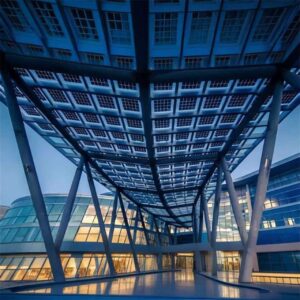
Common finish technologies include colored front glass, ceramic frit, tinted encapsulants, anti-reflective coatings, textured glass, black backsheets, black frames, colored solar cells, and decorative overlays. For building-integrated photovoltaics, or BIPV, the finish may be part of the façade, roof tile, or curtain-wall design.
For architects comparing building-integrated products, the colored solar panels efficiency guide from Jia Mao Bipv is a useful starting point because it explains why color choice and yield modeling need to be reviewed together.
Why finishes matter for curb appeal and efficiency
A finish changes three things at once: how the panel looks, how much light reaches the cells, and how the panel behaves under heat. Solar modules need light absorption, but buildings need visual harmony. That is the core trade-off.
The U.S. Department of Energy explains that PV efficiency is the percentage of sunlight converted into electricity. For a simple technical foundation, review the DOE page on solar photovoltaic performance and efficiency basics.
| Excel Row | Finish Option | Curb Appeal Strength | Typical Output Impact | Heat / Glare Note | Best Fit | Risk to Check |
|---|---|---|---|---|---|---|
| A2 | Matte black | Clean, low-glare, premium roof look | Low to moderate loss vs. standard black | Lower glare but may run hotter | Modern homes, dark roofs, HOA areas | Temperature coefficient and ventilation |
| A3 | High-gloss black | Sleek, glassy, high-contrast appearance | Often near baseline output | May create reflection complaints | Contemporary roofs, commercial canopies | Glare study and cleaning frequency |
| A4 | Brushed metallic silver | Matches metal roofs and industrial façades | Moderate loss if reflective layer blocks light | Can reduce heat but reflect more light | Metal roofs, tech campuses, gray façades | Scratch visibility and reflectance |
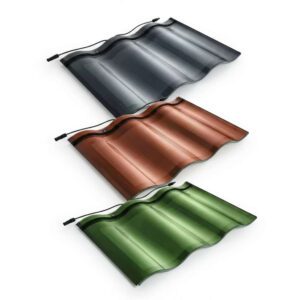
| A5 | Ceramic-coated colors | Best for clay, bronze, graphite, and custom façades | Moderate to high loss depending on color | Color and heat behavior vary widely | BIPV façades, heritage-sensitive roofs | Color stability and warranty wording |
| A6 | Textured charcoal-gray | Hides dirt and softens panel appearance | Low to moderate loss | Texture can reduce glare but trap dust | Suburban homes, low-slope roofs, visible carports | Cleaning method and abrasion |
| A7 | Ultra-dark nano coating | Deep black “invisible panel” look | Potentially low loss if engineered well | Heat and coating durability need proof | Luxury homes, design-led solar roofs | Field history and supplier test data |
| A8 | Repaintable or field coating | Useful for repair or color correction | Can be severe if not PV-approved | May trap heat or block light | Limited repairs, non-active trim, special cases | Warranty voiding and safety approval |

Finish A — Matte Black with Low Glare
Appearance and curb appeal benefits
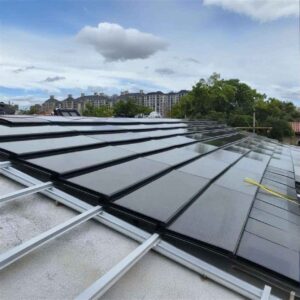
Matte black is the finish most homeowners ask about when they want the solar array to “disappear” into the roof. It reduces the bright grid effect of silver frames and blue cells. On black asphalt shingles, charcoal metal roofs, or dark flat tiles, matte black modules can look like a planned roof feature rather than an added device.
This finish is popular in neighborhoods with design review boards because it softens reflections and makes the array outline cleaner from the street.
Impact on heat absorption and efficiency
Matte black surfaces absorb more solar radiation than lighter finishes. This is good for visual depth but can raise module temperature. A temperature coefficient tells you how much output drops as the panel gets hotter.
Many crystalline silicon modules lose roughly 0.3% to 0.5% of power for each 1°C rise in cell temperature above standard test conditions. On a hot, low-ventilation roof, that difference becomes visible in summer production data.
Finish B — High-Gloss Black for Modern Look
Aesthetics in contemporary homes
High-gloss black gives a sharp, polished finish. It suits glass-heavy homes, standing-seam metal roofs, commercial canopies, and minimalist buildings where reflective surfaces already exist.
When paired with black frames and black backsheets, high-gloss panels can deliver a uniform “single plane” appearance. This is why many premium residential projects choose all-black modules even when a standard framed module would be cheaper.
Potential glare considerations and cleaning needs
The trade-off is glare. A glossy surface can reflect sunlight toward neighboring windows, roads, balconies, or rooftop terraces. Glare is usually site-specific, so the same finish may be acceptable on one roof and problematic on another.
Glossy finishes also show dust, pollen, and water spots more clearly. In dry regions, clients should plan cleaning intervals before promising a flawless black-glass look.


Finish C — Brushed Metallic Silver
Visual appeal and property harmonization
Brushed metallic silver is used when panels need to coordinate with zinc, aluminum, stainless steel, silver-gray standing seam, or industrial façade materials. It can make the solar surface feel closer to architectural cladding than a standard PV panel.
This finish can work well for commercial roofs, technology campuses, transit shelters, carports, and modern townhouses where silver or gray metals already define the design language.
Thermal behavior and micro-roughness effects
Metallic finishes can reflect some light and reduce heat absorption, but reflection can also mean less light reaches the solar cells. Micro-roughness can scatter reflections and soften the surface appearance.
The key question is whether the finish is optically engineered for PV. A decorative metallic coating that looks good on cladding may block useful wavelengths of sunlight if used on active solar glass.
Finish D — Ceramic-Coated Colors (Blue, Graphite, Bronze)
Color options and design flexibility
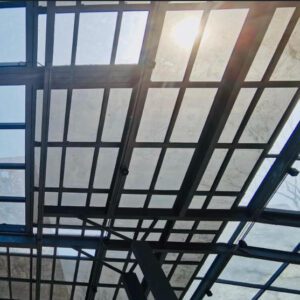
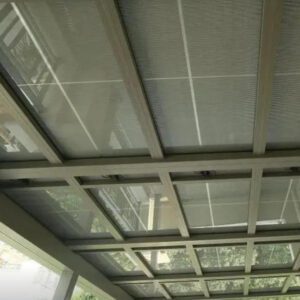
Ceramic-coated solar glass is one of the most important finish categories for BIPV. It allows PV modules to align with façade colors such as bronze, graphite, terracotta, blue, green, and warm gray.
The architectural benefit is clear: solar can become part of the building skin rather than a visible technical layer. Jia Mao Bipv applies this approach in colored glass and façade systems where the module must satisfy both energy and design requirements.
For façade projects, review the BIPV colored glass product page and the glass-integrated solar façade review to compare color, transparency, and installation constraints.
Durability, UV resistance, and long-term performance
Ceramic coatings can be durable when fired or bonded correctly, but color stability must be proven. Ask for ultraviolet exposure data, thermal cycling tests, damp heat tests, abrasion resistance, and cleaning instructions.
Color choice also affects yield. A deep graphite finish may perform closer to black. A pale terracotta, white, or highly reflective color may look better on a historic roof but reduce annual energy production more noticeably.

Finish E — Textured Charcoal and Charcoal-Gray Blends
Texture’s role in hiding dirt and reducing glare
Textured charcoal finishes sit between matte black and standard gray. They are useful where the client wants a softer appearance but does not want a strong custom color.
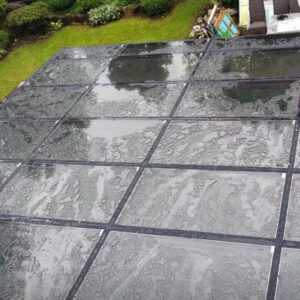
Texture can scatter light and reduce harsh mirror-like reflections. It can also hide dust better than glossy black. This is useful on low-slope roofs, carports, and façades near roads where pollen and fine particles collect.
Impact on heat management and energy yield
Texture changes how light enters the module. A well-designed texture can improve light trapping, but a poorly designed texture can increase soiling or make cleaning harder. In practical terms, the maintenance manual matters as much as the product brochure.
For projects where façade performance, weatherproofing, and electrical design all interact, Jia Mao Bipv’s BIPV façade design and weatherproofing guide explains why module selection should be coordinated with drainage, wiring, and mounting details.
Bar Chart: Relative Annual Yield Index by Finish Type
Planning index only. Actual yield depends on coating chemistry, cell technology, tilt, ventilation, soiling, inverter design, and local climate.
Finish F — Ultra-Dark Nano Coatings and Their Trade-Offs
Advanced coatings and perceived efficiency gains
Ultra-dark nano coatings are designed to create a deep black appearance while controlling reflection. Some coatings are engineered to absorb useful wavelengths while reducing visible glare. This is attractive for luxury homes and design-led BIPV projects.
The phrase “nano coating” should not be accepted without test data. Ask what the coating does: anti-reflection, hydrophobic cleaning support, spectral filtering, color control, abrasion resistance, or all of the above.
Potential maintenance and warranty caveats
Advanced coatings can be sensitive to abrasive cleaning pads, alkaline detergents, pressure washing, or harsh mineral deposits. Before approving the finish, request the cleaning method in writing and confirm that the module warranty references the coating.
A finish that delivers a beautiful black surface for the first two years but becomes patchy after repeated cleaning is not a premium finish. It is a future service call.
Finish G — Repaintability, Durability, and Warranty Implications
When repainting is feasible vs. not advised
Repainting active solar glass is usually not advised unless the coating is specifically approved by the module manufacturer. Ordinary paint can block sunlight, trap heat, damage seals, create fire risk, reduce insulation performance, or void the warranty.
Repainting may be feasible on non-active trim, mounting components, inactive dummy panels, replacement façade pieces, or factory-authorized repair zones. It should not be treated like painting a metal fence.
How coatings affect manufacturer warranties
Solar warranties usually separate product workmanship, power output, glass integrity, and sometimes finish appearance. A third-party coating can complicate all four. If a panel loses output after field repainting, the manufacturer may argue that the finish caused the loss.
Before approving any repaintable approach, ask three questions: Who supplies the coating? Who applies it? Who remains responsible if output, glass adhesion, or water sealing fails?
Finish H — Cleaning, Maintenance, and Long-Term Upkeep
Best practices for keeping finishes vibrant
Cleaning should protect both energy output and finish appearance. Dust, pollen, bird droppings, salt spray, and hard-water marks reduce visual quality and can lower production. Glossy finishes show dirt quickly. Textured finishes may hide dirt but hold particles longer.
Use clean water, manufacturer-approved soft brushes, and approved detergents only when needed. Avoid abrasive pads, harsh solvents, and pressure washing unless the product manual explicitly allows them.
Care routines that preserve efficiency
For most residential roofs, rainfall provides partial cleaning, but it does not remove all sticky residue. In dry, dusty, coastal, or bird-heavy locations, annual or semiannual cleaning may protect both yield and appearance.
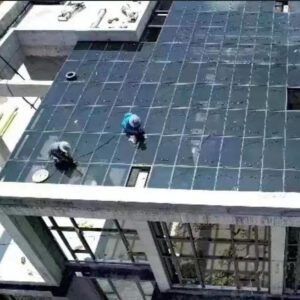
For commercial BIPV façades, cleaning access should be designed before installation. A colored façade module that needs rope-access cleaning every quarter may look affordable in procurement and expensive in operation.
Pie Chart: Decision Weighting for Painted Solar Panel Finishes
- 25% Curb appeal and roof or façade harmony
- 25% Energy output and temperature behavior
- 25% Durability, UV stability, and warranty protection
- 15% Glare control and neighbor acceptance
- 10% Cleaning effort and long-term appearance
Finish I & J — Practical Guidance: Selecting a Finish for Curb Appeal and Efficiency
Decision framework for homeowners and installers
Start with the building, not the finish catalog. A finish that works on a black roof may look wrong on red tile. A color that satisfies an architect may underperform on a shaded façade. A premium coating may be wasted if the roof is barely visible from the street.
Homeowner questions
- Will the array be visible from the street, neighbor windows, or a balcony?
- Is HOA or heritage approval required?
- Is the roof dark, light, clay, metal, slate, or mixed material?
- Is annual output more important than visual blending?
- Who cleans the panels, and how often?
Installer questions
- Does the finish have factory test data?
- What is the expected output loss versus standard modules?
- Does the finish change operating temperature?
- Does the warranty cover coating appearance and power output?
- Are glare, cleaning, and replacement modules documented?
Case studies and quick reference checklist
Below are three practical cases that show how finish selection changes by project type.
| Excel Row | Project Scenario | Recommended Finish | Why It Works | Performance Check | Procurement Note |
|---|---|---|---|---|---|
| B2 | Premium home with black metal roof | Matte black or ultra-dark nano coating | Low visual contrast and clean roofline | Check summer temperature and rear ventilation | Request coating warranty and cleaning instructions |
| B3 | Terracotta roof in design-controlled neighborhood | Ceramic bronze or terracotta tone | Better HOA acceptance and street-view blending | Model annual output reduction before approval | Order a physical color mockup before final purchase |
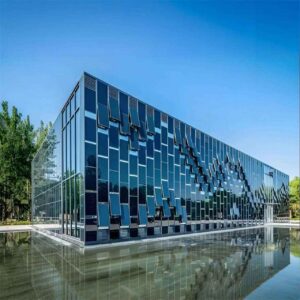
| B4 | Commercial glass façade with BIPV vision glass | Colored PV glass matched to façade palette | Solar becomes part of the curtain-wall design | Check transparency, heat gain, and inverter grouping | Coordinate early with façade engineer and supplier |
| B5 | Coastal home with salt spray and dust | Textured charcoal-gray or durable gloss black | Balances appearance with cleanability | Review soiling losses and water quality for cleaning | Confirm corrosion resistance for frames and clamps |
| B6 | Older system needing appearance correction | Manufacturer-approved repair coating only | Avoids unapproved repainting of active glass | Test one module or inactive sample first | Get written warranty confirmation before work |
For project teams specifying solar as part of the building envelope, the Whole Building Design Guide BIPV overview is a helpful reference. For yield estimates, compare finish assumptions in the NREL PVWatts solar calculator.

Glossary and Hover Tips for Advanced Concepts
Use these short definitions when discussing painted solar panel finishes with homeowners, architects, suppliers, and installers.
Photovoltaic technology converts sunlight directly into electricity.
Building-integrated photovoltaics are solar products that replace or become part of roofs, façades, glass, or other building elements.
The percentage of power a module loses as cell temperature rises above test conditions.
Bright reflected light that may affect neighbors, drivers, aircraft, or building users.
A durable ceramic pattern or color layer bonded to glass, often used in architectural glazing.
Energy loss caused by dust, pollen, salt, bird droppings, or other surface deposits.
A surface layer designed to reduce reflection and allow more light into the module.
The protective polymer layer that surrounds solar cells inside a module.
A warranty that promises the module will retain a certain percentage of rated output over time.
Painted solar panel finishes influence both appearance and system performance. Matte black improves visual integration and reduces harsh reflections, but heat must be reviewed. High-gloss black can keep output high but may raise glare and cleaning concerns. Metallic silver, ceramic colors, textured charcoal, and ultra-dark coatings each solve a different design problem.
Use this quick evaluation checklist before choosing a finish:
- Compare the finish against the roof or façade material in real daylight.
- Ask for expected output loss versus a standard black module.
- Check temperature coefficient, ventilation, and local summer conditions.
- Confirm glare risk for neighbors, roads, terraces, and upper floors.
- Request written cleaning instructions and coating warranty terms.
- Avoid field repainting active solar glass unless the manufacturer approves it in writing.
The safest next step is to consult both a solar installer and a color or façade specialist. For BIPV projects where appearance and electrical performance are linked, Jia Mao Bipv can help teams compare colored glass, façade modules, and roof-integrated options before final specification.
Planning a Colored or Architecturally Integrated Solar Project?
Share your roof material, façade elevation, target color, project location, and expected system size. Jia Mao Bipv can help evaluate whether a colored solar finish, BIPV glass, or standard all-black module is the better fit.
Explore Jia Mao Bipv colored solar glassFAQs
What is the most efficient painted solar panel finish?
High-performance black finishes usually stay closest to standard module output because they allow strong light absorption. However, the most efficient choice depends on coating chemistry, cell technology, ventilation, and local temperature. A finish with slightly lower lab efficiency may perform well if it runs cooler or stays cleaner.
Do painted solar panels void warranties?
Factory-applied finishes usually do not void warranties when they are part of the certified product. Field-applied paint or third-party coatings can void product and power warranties unless the module manufacturer approves the method in writing.
How often should painted finishes be refreshed or re-coated?
Factory finishes are normally designed to last for many years without refreshing. If a coating needs re-application every few years, confirm whether it is suitable for active PV glass. Re-coating should follow manufacturer instructions and warranty terms.
Do colored solar panels always produce less energy?
Most colored finishes reduce output compared with standard black modules because some light is reflected, filtered, or absorbed by the color layer. The loss can be small for engineered dark finishes and larger for pale, white, terracotta, or highly reflective finishes.
Are matte black panels better than glossy black panels?
Matte black panels are often better for low glare and curb appeal. Glossy black panels may deliver strong output and a polished appearance but can show dust and create more reflection. The better choice depends on roof visibility, neighbor exposure, and cleaning access.
Can I paint existing solar panels to match my roof?
Painting active solar glass is generally not recommended. Ordinary paint can block sunlight, increase heat, damage seals, and void warranties. If appearance correction is needed, speak with the original manufacturer or use approved replacement modules or dummy panels.
Which finish is best for a clay tile or terracotta roof?
Ceramic bronze, terracotta-toned, or warm graphite solar glass may blend better with clay roofs than standard black modules. The trade-off is usually lower output, so the installer should model annual production before final approval.
How do painted finishes affect cleaning?
Glossy dark finishes show dust and water spots clearly. Textured finishes may hide dirt but hold particles longer. Ceramic and nano coatings may need specific cleaning tools and detergents to avoid scratching or damaging the surface.
Are painted solar finishes useful for BIPV façades?
Yes. Colored and textured finishes are especially useful for BIPV façades because the solar module is part of the building skin. The finish must be reviewed together with transparency, heat gain, weatherproofing, wiring, cleaning access, and warranty coverage.
References and Further Reading
- colored solar panels efficiency guide
- BIPV colored glass product page
- glass-integrated solar façade review
- BIPV façade design and weatherproofing guide
- high-efficiency solar module options
- solar photovoltaic performance and efficiency basics
- NREL PVWatts solar calculator
- Whole Building Design Guide BIPV overview
- DOE solar photovoltaic technology basics