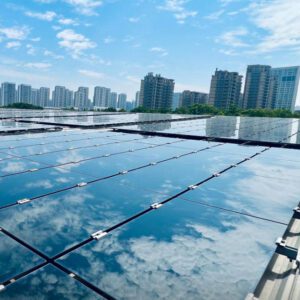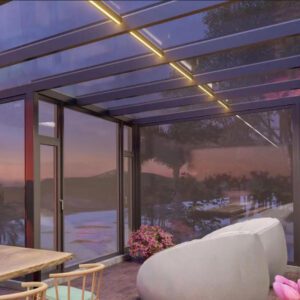

Windows already define how much light, heat, and noise enter your home. Now imagine those same windows quietly generating electricity every time sunlight touches the glass. That’s the promise of solar windows — and for a growing number of homeowners, it’s becoming a practical reality rather than a sci-fi concept.
But between glossy product brochures and the actual installation on your house, there’s a gap filled with acronyms, trade-offs, and decisions that can make or break your investment. This guide is built on one goal: give you a structured, no-fluff checklist so you can walk into any consultation — whether with an installer, an architect, or a BIPV manufacturer like Jia Mao BIPV — knowing exactly what to ask, what to watch for, and what to expect.
According to the U.S. Department of Energy, windows account for nearly 25–30% of a home’s total heating and cooling energy use. Solar windows address both the loss problem and the generation opportunity simultaneously — but only when chosen and installed correctly. By the time you finish reading, you’ll understand not just what solar windows are, but whether your home is genuinely a good fit, what realistic returns look like, and how to avoid the most common (and expensive) rookie mistakes.
Understand What Solar Windows Are and How They Differ from Traditional Windows
Definitions and Technology
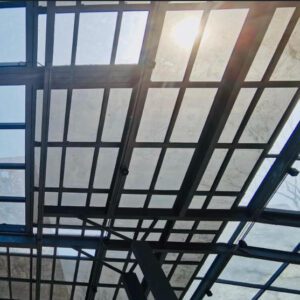
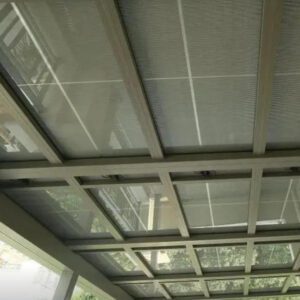
A solar window — often called a BIPV (Building-Integrated Photovoltaic) window — is a glazing unit that does the two jobs of a standard window (transmitting daylight, sealing out weather) while also converting sunlight into usable electricity through embedded photovoltaic cells or coatings. Unlike rooftop panels bolted onto your structure, BIPV glass is the building material.
The core physics hasn’t changed: solar cells absorb photons and release electrons, generating direct current (DC) electricity that an inverter then converts to the alternating current (AC) your appliances use. What’s different is how those cells are packaged. In solar windows, thin-film coatings, semi-transparent crystalline silicon cells, perovskite layers, or organic photovoltaic (OPV) materials are laminated directly into the glass assembly — creating a product that transmits 10–70% of visible light depending on the technology and intended use.
A breakthrough study published in Joule (2025) demonstrated a hybrid solar window achieving 75.6% visible transparency with a power conversion efficiency of 8.29% — numbers that would have seemed impossible five years ago. This is the direction the industry is moving: more transparency, more power, better aesthetics.

Solar glass laminated with semi-transparent PV cells can look nearly identical to standard tinted architectural glass. Photo: Unsplash
Benefits and Limitations
Benefits of Solar Windows
- Generate electricity without additional roof or yard space
- Reduce heating and cooling loads via SHGC management
- Seamlessly integrate with building aesthetics — no rack-mounted panels
- Long product lifespan of 25+ years matches window replacement cycles
- Dual function: building envelope + energy generator
- Can qualify for federal and state incentives
Limitations to Know
- Higher upfront cost than standard windows or rooftop solar
- Lower efficiency than opaque rooftop panels (transparency reduces output)
- Performance heavily dependent on orientation and shading
- Not all markets have experienced BIPV installers
- Warranty complexity: separate glass and electrical coverages
- Payback periods of 8–20 years for residential use
Common Misconceptions
Myth #1: “Solar windows replace my entire electricity supply.” In practice, south-facing windows on a typical 2,000 sq ft home might generate 1,500–3,000 kWh/year — covering 10–25% of average US household consumption (10,500 kWh/year per EIA data). They supplement, not replace, your grid connection or rooftop system.
Myth #2: “The glass will look dark and ugly.” Modern products from manufacturers like Jia Mao BIPV’s laminated photovoltaic glass achieve transparency levels comparable to premium architectural tinted glass, with subtle gray, blue, or neutral tones that complement contemporary homes.
Myth #3: “They don’t work on cloudy days.” Solar windows generate electricity from diffuse light, not just direct sunlight — though output is reduced by 50–70% on heavily overcast days.
The BIPV glass market is expected to grow at a CAGR of over 20% through 2033 (Coherent Market Insights, 2025). Regulatory tailwinds in Europe (EPBD) and US building codes increasingly mandate net-zero construction — making solar-window-ready buildings not just a nice-to-have but a future compliance requirement in many jurisdictions.
▶ Understanding Building-Integrated Photovoltaics: How solar facade systems and solar windows generate electricity while functioning as architectural glass. (YouTube)
Evaluate Your Home’s Suitability: Orientation, Shading, and Climate
Window Exposure and Solar Access
The single most important factor in solar window performance is how much unobstructed sun your windows receive. In the Northern Hemisphere, south-facing windows receive the most consistent direct sunlight throughout the year. According to Passive Solar Design guidance, windows positioned within 15° of true south capture 90–95% of the maximum possible solar energy for that latitude.
East and west-facing windows can still be viable — especially for morning or afternoon peak use — but north-facing windows rarely justify the investment in most US and European climates. Before signing any contract, request a shading analysis tool report (most professional installers use PVWatts or equivalent software) that maps your specific address, surrounding trees, neighboring buildings, and roof overhangs.
South-facing window exposure is the primary driver of solar window energy output. Homes with clear southern orientation and minimal shading are ideal candidates. Photo: Unsplash
Roof Structure, Mounting Options, and Load Considerations
Solar windows in new construction are straightforward — they’re simply specified as part of the glazing package. For retrofits, the existing window frame, wall structure, and load-bearing capacity must be assessed. BIPV glass is typically heavier than standard double-pane glass: a laminated BIPV unit can weigh 30–50% more per square meter. Your contractor should commission a structural assessment before finalizing frame selection, especially for large picture windows or floor-to-ceiling glazing.
Local Climate and Seasonal Solar Performance
Climate determines not just how much sun you receive, but what type of solar control matters most. In Phoenix or Miami, a lower SHGC is critical to prevent overheating. In Minneapolis or Seattle, you may actually want to capture winter solar heat gain through south windows — meaning aggressive SHGC reduction could hurt winter comfort and heating costs more than it helps summer cooling. The table below summarizes the ideal performance targets by US climate zone:
| Climate Zone | Example Cities | Recommended U-Factor | Recommended SHGC | Solar Window Priority |
|---|---|---|---|---|
| Zone 1–2 (Very Hot) | Miami, Phoenix, Houston | ≤ 0.40 | ≤ 0.25 | High — cooling load reduction |
| Zone 3–4 (Mixed) | Atlanta, Dallas, Seattle | ≤ 0.30 | 0.25–0.40 | High — balanced benefit |
| Zone 5–6 (Cold) | Chicago, Denver, Boston | ≤ 0.27 | ≥ 0.40 (south) | Moderate — prioritize south exposure |
| Zone 7–8 (Very Cold) | Minneapolis, Anchorage | ≤ 0.22 | ≥ 0.45 (south) | Lower — thermal performance dominates |
Sources: ENERGY STAR climate zone requirements; DOE window efficiency guidelines. U-Factor = heat loss rate (lower = better insulation). SHGC = solar heat gain (higher = more heat enters).
Estimated Energy Savings and Performance Metrics
Solar Window Efficiency Ratings and How to Read Them
Solar windows carry two different sets of performance labels that you must read together: the NFRC (Conselho Nacional de Classificação de Fenestração) energy label for window thermal performance, and the photovoltaic module datasheet for electricity generation. Neither one alone tells the full story.
Key numbers to request from every product you evaluate:
| Metric | What It Measures | Good Range | Red Flag |
|---|---|---|---|
| U-Factor | Heat loss through glass (lower = better insulation) | 0.20 – 0.30 | Above 0.45 |
| SHGC | Solar heat entering home (climate-dependent) | 0.20–0.40 (hot); 0.40+ (cold/south) | Ignoring climate zone |
| VLT (Visible Light Transmission) | % of visible light passing through | 30–60% for living spaces | Below 15% for habitable rooms |
| Densidade de potência (W/m²) | Electricity generated per unit area | 40–180 W/m² | No datasheet provided |
| PV Efficiency (%) | % of incident sunlight converted to electricity | 8–18% (semi-transparent) | Comparing to opaque panels unfairly |
Impact on Heating and Cooling Loads
In a real-world test conducted by the Efficient Windows Collaborative, replacing single-pane windows with high-performance glazing (comparable SHGC profile to today’s solar glass) cut heating energy use by 18–24% and cooling energy by 20–30% in mixed-climate homes. A homeowner in Dallas who installed BIPV glazing on 18 south- and west-facing windows in 2023 reported that their summer cooling bills dropped by $180/month — and the windows generated an additional ~220 kWh/month of electricity, offsetting another $26/month on their bill. That’s a combined monthly benefit of roughly $206, compounding into the ROI calculation.
Realistic Expectations and Seasonal Variations
Summer output can be 3–4× higher than winter output depending on your latitude. For a south-facing installation in the US Southeast, expect peak monthly generation in June-July and roughly 60–70% of that output in December-January. Always ask your installer for a month-by-month yield estimate based on your actual address — not just an annual average.
Combined score = normalized HVAC savings + electricity generation value. Source: illustrative composite based on DOE, BIPV research. Individual results vary by location, orientation, and system size.
Costs and Return on Investment
Upfront Costs, Installation, and Maintenance
There’s no way to sugarcoat it: solar windows cost more upfront than either standard replacement windows or rooftop solar panels on a per-watt basis. The premium comes from the custom glass lamination process, the lower manufacturing volumes compared to commodity solar panels, and the integrated electrical components.
Current market data for US residential projects suggests:
- BIPV glazing material cost: $150–$450/m² (semi-transparent, depending on efficiency and customization)
- Installation labor: $40–$120/m² (varies by region, building height, electrical complexity)
- Electrical balance of system (inverter, wiring, monitoring): $1,500–$4,000 for a typical home installation
- Building permits & inspections: $500–$2,500 depending on municipality
- Total installed cost, typical 10-window project: $18,000–$55,000
Compare this to standard window replacement: $300–$700 per window installed, or $3,000–$14,000 for the same 10-window project. The premium for the solar function is real — but it must be weighed against the dual benefit (thermal upgrade + electricity generation) and the available incentives.
Payback Period Scenarios and Long-Term Savings
Indicative residential project. Varies with glass size, custom specifications, region, and order volume.
Financing Options and Potential Incentives
The IRS Residential Clean Energy Credit allows homeowners to deduct 30% of qualifying solar installation costs from federal taxes — and BIPV windows installed as part of a solar energy system have historically qualified. Always confirm eligibility with a tax professional and verify the current credit status, as legislation can change.
State-level incentives vary significantly. The DSIRE database is the most comprehensive resource for finding state rebates, property tax exemptions, utility incentives, and solar-specific programs by zip code. California, Massachusetts, New York, and New Jersey historically offer the strongest stacking of incentives.
On the financing side, options include PACE (Property Assessed Clean Energy) loans that attach repayment to your property tax bill, green home equity lines of credit, manufacturer financing programs, and utility on-bill financing where it exists.
💡 Pro Tip: When calculating ROI, use the net cost after incentives as your baseline — not the gross price. A $30,000 installation that qualifies for the 30% federal credit effectively costs $21,000 before state incentives, potentially dropping your payback period by 3–5 years.
Installation Requirements and Integration with Existing Windows
Retrofit vs. New Construction Considerations
In new construction, solar windows can be planned from the ground up — electrical conduits routed inside walls, inverter rooms pre-allocated, and structural members sized for the glass weight. This is the cleanest and most cost-effective approach. Retrofit projects are more complex: existing frames may be too shallow for the thicker BIPV glass unit, electrical pathways must be surface-mounted or fish-taped through existing walls, and waterproofing at cable penetrations requires careful detailing.
Data from installation contractors suggests that retrofit work costs 15–50% more per window than equivalent new construction installation — but for homeowners who aren’t building from scratch, it remains feasible with the right contractor. The key question to ask: “Can the existing frame accommodate the additional thickness and weight, or does the rough opening need to be modified?”

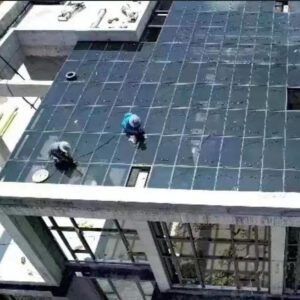
Professional installation of large-format glass panels requires coordination between glazing contractors, electricians, and building inspectors. Photo: Unsplash
Aesthetics, Visibility, and Curb Appeal
One of the most frequent concerns homeowners raise is: “Will it look weird?” The honest answer depends entirely on the product you choose. Lower-end semi-transparent BIPV glass can have visible cell patterns, grid lines, or uneven tinting. Premium architectural BIPV glass from manufacturers who specialize in facade systems — like the glass-integrated solar panel systems reviewed here — achieves a uniform appearance nearly indistinguishable from high-end tinted architectural glass.
Always request a full-size sample, not a desktop swatch. A 6-inch sample looks very different than a 4-foot window pane under natural light at different times of day. Also check how the glass looks from inside at night when interior lighting is on — this is when interior-to-exterior privacy considerations become relevant.
Building Codes, Permits, and Contractor Qualifications
Solar window installations touch three regulatory domains simultaneously: building permits (for window replacement), electrical permits (for the PV system), and potentially utility interconnection agreements (if you’re feeding surplus electricity back to the grid). In most US jurisdictions, all three are required, and each may involve separate inspections.
⚠️ Critical: Ensure your contractor holds both a licensed glazing/window installation credential and a solar/electrical contractor license — or uses qualified licensed subcontractors for each trade. A contractor who installs the glass but isn’t licensed for the electrical work puts your warranty, insurance, and utility interconnection at risk.
Compatibility with Glass, Frames, and Home Systems
Frame Materials, Thermal Performance, and Durability
The frame is not an afterthought — it accounts for 15–20% of a window’s total thermal performance. For solar windows, frame choice also affects structural capacity (for the heavier BIPV glass), electrical conduit compatibility, and long-term aesthetics. Here’s how the main materials compare:
| Frame Material | Thermal Performance | BIPV Glass Compatibility | Durabilidade | Typical Cost Premium |
|---|---|---|---|---|
| Aluminum (Thermally Broken) | Moderado | Excellent — industry standard for BIPV | Excelente | Low–Moderate |
| Fiberglass | Excelente | Good — can accommodate heavier units | Excelente | Alta |
| Vinyl (uPVC) | Ótimo | Limited — max glass weight constraints | Good (may fade) | Baixa |
| Wood (Clad) | Ótimo | Moderate — weight and moisture concerns | Moderado | Alta |
Thermally broken aluminum frames are the dominant choice for BIPV installations because they match the system used in commercial curtain-wall construction — the same framing infrastructure that BIPV glass was originally designed for — while offering the structural rigidity to hold heavier laminated solar glass units safely.
Glass Coatings, Tinting, and Glare Control
Beyond the photovoltaic layer, solar windows often incorporate additional coatings: anti-reflective coatings to improve light transmission and reduce glare, low-emissivity (Low-E) coatings to reduce heat transfer, and hydrophobic self-cleaning coatings to reduce maintenance frequency. Understanding which coatings are in a product — and whether they’re compatible with each other — is a question worth asking every supplier. This deep-dive on solar glass glazing options from Jia Mao BIPV covers the key glazing combinations in practical detail.
Integration with Smart Home or Energy Management Systems
Modern solar window systems can integrate with smart home energy management platforms — pairing with battery storage, EV chargers, and demand-response programs to maximize self-consumption. Look for inverters and monitoring systems that offer open protocols (MODBUS, SunSpec, or API access) so you’re not locked into a proprietary ecosystem. Platforms like Home Assistant, Enphase Enlighten, or SolarEdge MySolarEdge all support solar generation monitoring and can integrate solar window output data alongside rooftop array data.
Maintenance, Durability, and Warranty Considerations
Expected Lifespan and Warranty Coverage
A well-specified BIPV window should last as long as the building it’s in — 25 to 40 years — though electrical performance does degrade slowly over time. Industry-standard PV performance warranties guarantee at least 80% of rated power output at 25 years, with better premium products now offering less than 0.5% annual degradation under the latest extended 30-year performance warranty programs.
For solar windows specifically, you’ll need to track two separate warranty documents:
- Glass/product warranty: covers delamination, seal failure, coating defects, glass breakage (usually 10–15 years)
- PV performance warranty: covers minimum power output over time (typically 25–30 years)
Cleaning, Care, and Repair Requirements
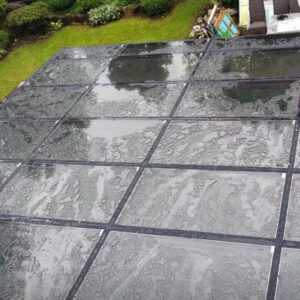
Solar windows should be cleaned 2–4 times per year with a soft cloth or squeegee and plain water or manufacturer-approved solution. Abrasive cleaners, strong solvents, and high-pressure washers can damage anti-reflective coatings or compromise edge seals. For second-floor or higher windows, factor access equipment into your maintenance plan before installation — not after.
One common mistake: homeowners order highly customized solar glass panels, then discover five years later that the original glass size is no longer in production, making a single broken pane extremely expensive to replace. Always ask manufacturers: “Do you hold safety stock? What’s the lead time for a replacement unit in five years?”
How to Evaluate Warranty Terms and Service Support
Read the exclusions as carefully as the headline warranty duration. Common exclusions that trip up homeowners include: damage from improper cleaning methods, color fade within “acceptable tolerance” ranges, seal failure attributed to “structural movement,” and electrical failures caused by third-party inverter issues. A strong warranty clearly defines who handles labor cost and access cost for a replacement, not just material cost.
Incentives, Rebates, and Financing Options
Federal and State Incentives for Solar Windows
The primary federal incentive is the Residential Clean Energy Credit (IRS Form 5695), which provides a 30% nonrefundable tax credit on qualifying solar installations through 2032, stepping down to 26% in 2033 and 22% in 2034. BIPV windows that are an integral part of a solar energy system — meaning the glass itself generates the electricity, not just passively filters it — have historically qualified. The Energy Efficient Home Improvement Credit provides an additional 30% (up to $600) for qualifying exterior windows meeting ENERGY STAR requirements, which can stack with the Clean Energy Credit in some configurations.
Utility Rebates, Demand-Side Management Programs, and Timelines
Many utilities offer rebates for solar installations ranging from $0.10–$0.50 per watt, paid directly to the homeowner or installer after inspection. Some utilities also run demand-side management programs where your solar window system can participate in grid-balancing events, earning bill credits. Processing times for utility rebates typically run 6–16 weeks post-inspection — plan your cash flow accordingly and don’t assume the rebate arrives before your installation loan payment is due.

Federal tax credits and state utility rebates can reduce the effective cost of a solar window installation by 35–50% in well-incentivized states. Consult a tax professional to confirm eligibility. Photo: Unsplash
Tax Implications and How to Incorporate Incentives into ROI
The 30% federal credit is nonrefundable — it reduces your tax liability dollar-for-dollar but doesn’t generate a refund if the credit exceeds what you owe. If your tax liability is lower than the credit amount, you can carry forward unused credit to subsequent tax years. Work with a CPA to model your specific liability before relying on the full 30% in your ROI calculation.
A correctly structured ROI model for solar windows should include: gross installation cost → subtract federal credit → subtract state incentives and utility rebates → calculate net cost → divide by annual energy benefit (electricity generation value + HVAC savings) = payback period. From there, extrapolate 25-year lifetime savings assuming 2–3% annual electricity rate escalation.
Choosing Vendors and Evaluating Proposals
Credentials, Certifications, and Experience
The BIPV installation space is still relatively young, and not every solar installer has genuine experience with window-integrated systems — as opposed to rooftop rack-mount systems, which are completely different in terms of glazing, waterproofing, and structural requirements. When evaluating contractors, verify the following credentials:
- NABCEP (North American Board of Certified Energy Practitioners) PV Installation certification
- Licensed glazing or window contractor credential for your state
- Familiarity with NFRC and ENERGY STAR rating systems for window products
- Proof of completed BIPV window installations — not just rooftop solar
- Manufacturer-authorized installer status for the specific BIPV glass product being proposed
Product Comparisons, Performance Data, and Quotes
Get a minimum of three proposals for any project over $15,000. Each proposal should specify: the exact BIPV glass product (manufacturer, model, VLT, SHGC, U-factor, power density), frame system, inverter model, monitoring system, warranty terms for glass and electrical components, permit handling, and a site-specific yield estimate in kWh/year. Any installer who cannot produce a site-specific yield estimate based on your address — using PVWatts or equivalent — is not sufficiently experienced for this work.
Global BIPV glass manufacturers increasingly offer specification support services that sit between you and the installer — helping you define the right product for your application before the glazing package is locked. Jia Mao BIPV’s transparent panel comparison guide is one example of this kind of pre-specification resource, walking buyers through VLT, power density, SHGC, and installation compatibility side-by-side across product types.
Customer Reviews, References, and Showroom Visits
Ask every shortlisted contractor for the addresses of two or three completed solar window installations you can visit in person. Look at the glass from both inside and outside at different times of day. Ask the homeowners: “How was the installation process? Has anything gone wrong? How long did the permit and utility interconnection process take?” Real homeowner experiences are worth more than any brochure.
Decision Checklist and Next Steps
How to Test Samples, Demonstrations, and Showroom Visits
Before committing to any solar window product, insist on evaluating a full-size or near-full-size sample panel installed in a real frame under natural light. Check all of the following during your sample evaluation:
- View clarity — can you see through the glass naturally, or does it feel claustrophobic?
- Color accuracy — does the glass introduce a color cast that affects how interior furnishings appear?
- Glare — at what sun angles does the glass create uncomfortable glare? Ask for the glare control data.
- Privacy — from outside, can people see in during the day? What about at night when lights are on?
- Evening appearance — stand outside at night with interior lights on. The glass may look different than during the day.
- Edge quality — are the lamination edges clean, sealed, and free of visible bubbles or adhesive lines?
Questions to Ask Installers and What a Solid Proposal Includes
Timeline, Milestones, and What to Prepare for Installation
| Phase | Key Milestone | Typical Duration | Your Action Required |
|---|---|---|---|
| Pre-Sale | Site assessment, yield modeling, product selection | 1–2 weeks | Gather utility bills, home orientation info, window count |
| Design & Engineering | Structural, electrical drawings, permit applications | 3–6 weeks | Review and sign off on engineering drawings |
| Permitting | Building + electrical permits approved | 2–8 weeks (varies by municipality) | Follow up with local authority having jurisdiction |
| Glass Manufacturing | BIPV glass units fabricated | 8–20 weeks (custom) | Confirm final glass specifications before production starts |
| Instalação | Window removal, BIPV glass installation, electrical wiring | 3–10 days (10-window project) | Clear window areas, arrange for temporary weather protection |
| Commissioning | Electrical inspection, utility interconnection, system activation | 1–4 weeks post-install | Submit utility interconnection application if not already done |
| Incentive Filing | Tax credit filing, utility rebate submission | At tax filing / 6–16 weeks for rebate | Keep all invoices, permits, and inspection certificates for tax records |

A 10-window BIPV retrofit project typically spans 4–6 months from initial assessment to system activation, with custom glass manufacturing representing the longest lead-time element. Photo: Unsplash
Conclusion: Key Decision Factors Summary
Solar windows have crossed from architectural novelty to genuine residential investment — but they remain a nuanced, high-stakes purchase that rewards careful preparation. After walking through this checklist, the households best positioned to benefit share a few common characteristics: south-facing window exposure with minimal shading, homes located in moderate-to-high solar irradiance regions, owners with 10+ year horizon planning, and projects where the windows are due for replacement anyway (making the incremental BIPV premium more defensible).
The households most likely to be disappointed are those who chase the technology without first validating the site fundamentals — orientation, shading, structural load, electrical infrastructure, and available incentives all have to align for the numbers to work.
- ☐ Map all windows by orientation — prioritize south-facing
- ☐ Request a solar shading analysis for your address
- ☐ Pull your last 12 months of utility bills for baseline consumption
- ☐ Check DSIRE for your state’s current solar incentives
- ☐ Request full-size glass samples from at least two manufacturers
- ☐ Get 3+ proposals — verify each includes a site-specific kWh yield estimate
- ☐ Verify contractor has BIPV-specific experience (not just rooftop solar)
- ☐ Read warranty exclusions carefully for both glass and PV components
- ☐ Consult a CPA about federal credit eligibility before project start
For final tips on securing a reliable installation: pay 10% or less as an upfront deposit; require a performance bond or surety for projects over $25,000; and insist on a monitoring dashboard showing real-time output before you make your final payment. The best installations aren’t just technically correct — they’re installations where the homeowner understands what they bought, how to read the data, and who to call when something looks off.
If you’re evaluating BIPV glass product options and need technical specifications for a real project, working directly with a manufacturer’s specification team — rather than relying solely on installer product selections — gives you a more objective baseline for comparison.
Ready to Explore Solar Windows for Your Home?
Start with the right specifications. Jia Mao BIPV offers transparent photovoltaic glass, BIPV laminated glass, and facade systems designed for real architectural and residential applications — with full technical data, not just marketing claims.
Explore BIPV Glass Products →