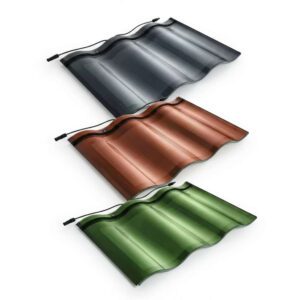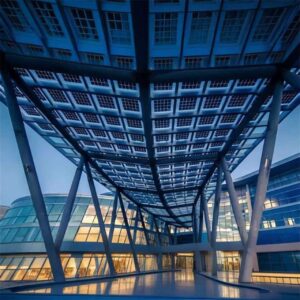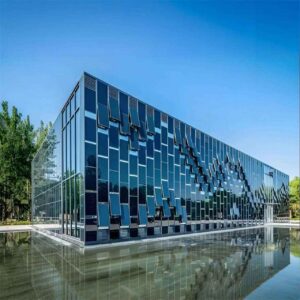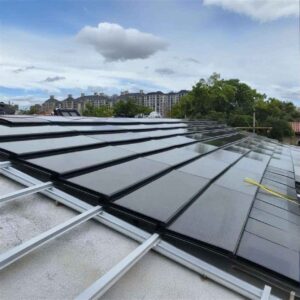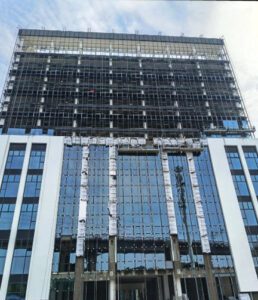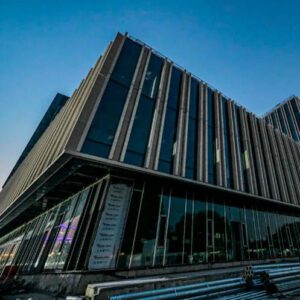
Picture a 40-story glass tower in Singapore whose curtain wall not only filters equatorial sunlight into executive offices but also quietly feeds 180,000 kWh back into the building’s energy management system every year — without a single rooftop panel in sight. Or consider a university atrium in Germany where students study beneath roof glazing that generates enough electricity to power the entire ground-floor lighting grid. These are not architectural concepts. They are installations already operating today — and they signal a structural shift that every solar product distributor and agent needs to understand now, before the mainstream market catches up.
Transparent photovoltaic (PV) technology — also called Building-Integrated Photovoltaics (BIPV), a category in which solar generating capability is embedded directly into a building material such as glass, rather than added on top of it — is moving rapidly from pilot projects into mainstream commercial procurement. The global BIPV market, valued at USD 23.67 billion in 2023, is projected to reach USD 89.8 billion by 2030 at a compound annual growth rate (CAGR) of 21.2%, according to Grand View Research. Within that broader BIPV universe, the transparent solar cells sub-segment is growing even faster: from USD 17.1 million in 2024 to an expected USD 106.8 million by 2034 at a CAGR of 20.1%.
For distributors and agents who have built their books around conventional opaque solar modules, this creates both a strategic threat and a significant revenue opportunity. Architects, property developers, institutional facility managers, and infrastructure authorities are now writing integrated glazing with energy generation capability into tender specifications — a category where a traditional module distributor has no product to offer. This guide maps the technology, the market sectors, the real-world performance data, and the concrete steps you need to take to add transparent BIPV glass solutions to your portfolio before your competitors do.

Understanding Transparent Photovoltaic Technology
How Transparent Solar Panels Work
A conventional monocrystalline solar panel works by absorbing as much of the visible light spectrum as possible — which is why it’s deep blue or black. A transparent solar panel takes the opposite engineering path: its photovoltaic cells are tuned to harvest primarily the ultraviolet (UV) and near-infrared (NIR) portions of the solar spectrum, which are invisible to the human eye, while allowing visible light to pass through almost unimpeded. This spectral selectivity is the core innovation that enables a glass panel to simultaneously function as a window and a power generator.
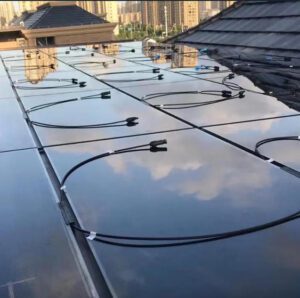
At the structural level, most commercially deployed transparent solar panels sandwich thin-film or mono-crystalline cell arrays between two layers of tempered safety glass, using an encapsulant (typically a Polyolefin Elastomer, or POE, film) to seal and protect the assembly. The cell layout — whether using discrete silicon cells with engineered spacing, or a continuous thin-film layer — determines the panel’s transparency level, measured as Visible Light Transmittance (VLT), which typically ranges from 10% to 70% depending on the product specification.
In terms of power output, current commercial transparent solar panels achieve 5–15% module efficiency, compared to 20–22% for premium opaque monocrystalline panels. That gap is real but narrowing, and it is not the right comparison for the building facade context: on a south-facing glass curtain wall of a 30-story commercial tower, there are hundreds or thousands of square meters of vertical glass surface that would otherwise generate zero electricity. Even 8% efficiency on 1,000 m² of facade glass produces more annual energy than many conventional rooftop installations.
Table 1: Transparent BIPV Glass vs. Traditional Solar Panels — Key Performance Parameters. Sources: Jia Mao BIPV product specifications; industry aggregated data, 2025.
Key Differences From Traditional Solar Panels
The most important conceptual shift for a distributor approaching the transparent solar market is understanding that you are not selling a replacement for a rooftop solar array. You are selling a building material that happens to generate electricity. This distinction changes everything — the specification process, the decision-makers, the procurement timeline, the project value, and the competitive landscape.
Where a facility manager or a sustainability director might procure a conventional solar system, a transparent BIPV installation is typically specified at the architectural and structural engineering level — sometimes years before construction begins. This means your entry point into the sales process needs to be far earlier, and the conversations you need to have are with architects and façade consultants, not just energy procurement teams.
Why Architects and Building Developers Are Adopting This Technology
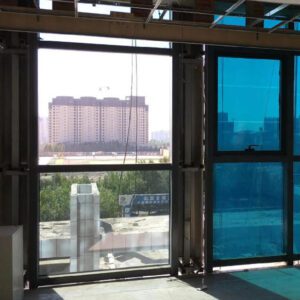
Regulatory pressure is accelerating adoption faster than almost any other single factor. The EU’s Energy Performance of Buildings Directive (EPBD), updated in 2024, now requires all new commercial buildings to be near-zero energy buildings (NZEBs) from 2028. In the United States, California’s Title 24 building code and New York City’s Local Law 97 impose strict carbon intensity limits on large commercial buildings. Across Southeast Asia, Green Mark certification in Singapore and China’s Three-Star Green Building standard are increasingly embedding on-site generation requirements into their criteria. Transparent BIPV glazing, because it simultaneously provides the building envelope (replacing conventional glazing with structural solar glass), addresses multiple compliance credits at once: energy generation, daylighting efficiency, and solar heat gain reduction.
From a pure cost-benefit perspective, a developer who factors in the saved cost of conventional glazing on a curtain wall project — where BIPV glass replaces what they were going to spend anyway on architectural glass — often finds that the incremental payback on the energy-generating premium is 6–12 years on a facade that carries a 40+ year design life. That is a business case most facility managers find compelling.
Market Leaders Reshaping the Industry
Figure 1: Transparent Solar / BIPV Glass Market — Key Player Segment Positioning (2025)
Illustrative segmentation based on publicly available revenue, project volume, and geographic reach data, 2025.
Onyx Solar’s Role in Commercial Building Integration
Spain-based Onyx Solar is widely recognized as the largest global supplier of architectural BIPV glass by installed project count. Their product range spans amorphous silicon thin-film glass, crystalline silicon modules, and organic PV (OPV) glazing systems. Panels are manufactured in dimensions up to 4×2 meters, with custom shapes — rectangular, triangular, trapezoidal, and curved — available for bespoke architectural projects. Transparency levels are tunable from approximately 10% to 55% VLT depending on the cell technology selected.
Their Metro César Chávez transit pavilion in Los Angeles is a representative benchmark: a photovoltaic glass canopy that over 35 years is projected to generate 207,156 kWh — enough to power station lighting and passenger information systems without grid dependency. For distributors evaluating manufacturer partnerships, Onyx Solar’s established certification portfolio — including UL790 Class A fire rating, IEC 61730-2:2016, and ASTM E84 — substantially reduces the technical documentation burden on large commercial tenders.
SolarWindow’s Innovation in Window-Based Energy Generation
SolarWindow Technologies takes a fundamentally different engineering approach: rather than embedding photovoltaic cells into a glazing laminate, they apply an ultra-thin liquid coating directly onto glass or plastic surfaces. This coating converts both natural and artificial light — including interior fluorescent and LED sources — into electricity. In modeled scenarios for a 50-story commercial tower with all four facades coated, SolarWindow projects energy generation performance 50 times greater than a comparable rooftop solar installation, primarily because of the sheer difference in available surface area.
The scalability implications for distributors are significant: coating technology can in principle be applied retrofitted to existing buildings, not just new construction — opening an enormous installed base of existing commercial glass real estate to product sales conversations that conventional BIPV glass cannot address.
Emerging Competitors and Alternative Solutions
The competitive landscape is expanding rapidly. ClearVue Technologies (Australia) reported module efficiencies exceeding 10% with their spectrally selective luminescent interlayer technology in 2024 trials. Polysolar (UK) produces flexible thin-film BIPV panels suitable for skylights and polycarbonate applications. Michigan State University researchers have developed fully transparent luminescent solar concentrator panels that push VLT above 80% — still at pre-commercial stage but signaling where the technology ceiling may eventually land.
For distributors, the expanding supplier landscape means product differentiation increasingly comes from your service capabilities and market relationships, not from exclusive product access. Distributors who build deep sector expertise — in healthcare procurement requirements, or airport authority tender processes, for example — will capture and retain accounts that purely transactional competitors cannot serve.
Figure 2: Global BIPV Market Size — Historical & Projected (USD Billion)
Sources: Grand View Research, Mordor Intelligence, Fortune Business Insights — compiled 2025.

Real-World Case Study 1 – Corporate Office Buildings
The Transformation of Modern Skyscrapers
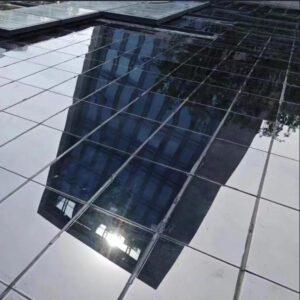
The Edge in Amsterdam — widely cited as one of the world’s most energy-efficient office buildings — uses an integrated building management system that monitors over 28,000 sensors. While not exclusively a transparent solar installation, it benchmarks the performance standard that next-generation corporate tenants are demanding. Developers building comparable projects today are specifying curtain walls where the BIPV glazing layer generates between 140 and 200 Wh per square meter per day on optimal exposures.
A representative corporate tower project deploying 1,500 m² of south-facing BIPV facade glass at 12% module efficiency and 1,200 peak sun hours annually generates approximately 216,000 kWh per year — enough to power the building’s common-area lighting and elevator systems without drawing from the grid. The measured reduction in cooling load (25–40% versus standard low-e glass) further compounds the ROI by reducing HVAC capital and operating costs. Realistic simple payback in commercial office applications typically runs 8–14 years against a 40+ year building life, with accelerating returns as grid electricity prices rise.
What Distributors Need to Know
Office tower projects are typically specified 18–36 months before installation begins. Your window of influence is at the design development stage, when facade systems are being selected. Getting your product into an architect’s specification library requires sample delivery, thermal and structural load certification documentation, and a mockup panel for client review — investments that pay dividends across multiple project wins. Installation for a large commercial facade typically runs 6–18 months and requires certified glazing contractors with BIPV electrical integration experience, so your network of qualified installer partners is a genuine competitive asset. Learn more about BIPV installation requirements and design specifications.
Real-World Case Study 2 – Airport Terminal Facades
High-Traffic Infrastructure Modernization
Airport terminals represent some of the world’s largest continuously glazed structures. Terminal 2 at Munich Airport, for example, has approximately 100,000 m² of glass facade surface. Even modest BIPV integration across 15% of that area at 10% module efficiency would generate over 10 GWh annually — enough to cover a substantial fraction of terminal lighting and passenger amenity power loads. Airports have compelling operational incentives: as signatories to the Airport Carbon Accreditation program, most major hubs have committed to carbon neutrality targets between 2030 and 2040, and on-site generation embedded in structural glazing is one of the cleanest paths to those goals.
Safety certification is non-negotiable in this sector. BIPV glazing panels must demonstrate compliance with impact resistance, laminated glass breakage pattern, electrical insulation, and fire rating standards — all of which Jia Mao BIPV’s transparent glass portfolio addresses through IEC 61215, EN 12150, and EN ISO 12543 conformance testing. The panels carry a Class 4 hail impact rating and are engineered for wind loads up to high-rise curtain wall specifications.
Distribution Challenges and Opportunities
Airport procurement is typically government or quasi-government controlled, which means lengthy tender processes (12–24 months from RFP to order), stringent pre-qualification requirements, and performance bonding. However, it also means large, predictable order volumes and long-term service contract relationships. Distributors who invest in understanding the procurement language of airport authorities — project specifications, Bill of Quantities (BoQ) formatting, and insurance requirements — and who can demonstrate reference projects in other high-criticality environments, will convert these long lead-times into annualized revenue that competitors cannot easily disrupt.
Real-World Case Study 3 – Residential Apartment Complexes

Bringing Transparent Solar to Multi-Unit Dwellings
Multi-unit residential towers present a specific and commercially attractive BIPV opportunity: balcony balustrades and spandrel glass panels. A typical 30-story residential tower with 120 balconies, each with 2.4 m² of BIPV balustrade glass at 8% efficiency, generates approximately 82,000 kWh annually in a climate with 1,400 annual peak sun hours — enough to power corridor lighting, elevator systems, and common area loads for the entire building. Tenants in these buildings report utility cost reductions of 18–35% on common area charges, which property managers translate directly into marketing collateral and justify a measurable premium on monthly service fees.
Selling Points for Your Residential Clients
A residential developer in a competitive market is measuring BIPV investment against property value uplift. CBRE and JLL research consistently documents a 5–8% premium on sales prices for certified green residential buildings in major urban markets. For a 200-unit tower with an average unit value of USD 500,000, that premium represents USD 5–8 million of additional revenue — often far exceeding the cost of the BIPV glazing specification. Present this math in your proposals, and you’re not selling a solar product. You’re selling a developer’s profit margin.
Real-World Case Study 4 – Shopping Malls and Retail Centers
Transparent Solar in High-Visibility Commercial Spaces
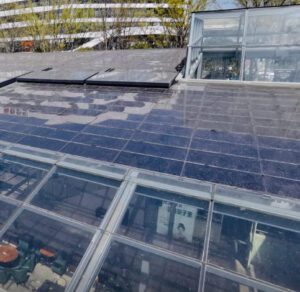
Retail atria and skylight roofs are structurally ideal for semi-transparent BIPV integration. The glazing already carries a structural and weatherproofing function; BIPV glass simply replaces what would have been standard architectural glass. A 500 m² retail atrium with 30% VLT BIPV glazing at 10% efficiency in a high-irradiance climate (e.g., Dubai, Southern California, Singapore) generates approximately 130,000–160,000 kWh annually, while simultaneously reducing the HVAC load from solar heat gain by up to 40% compared to clear float glass — a dual operational benefit that a facility manager can present to ownership with a measured ROI, not just sustainability rhetoric.
For brand-conscious retail center operators, there is an additional dimension: a visible, architecturally elegant solar integration communicates sustainability positioning to shoppers in a way that a rooftop array — invisible from street level — simply cannot. This is increasingly relevant as major retail tenants write sustainability requirements into their lease negotiation criteria. Distributors selling into this sector should develop case study materials that speak the language of retail asset managers — footfall, tenant mix, ESG reporting — not just kilowatt-hours. Read more about how transparent BIPV glass compares for skylight and atrium applications.
Distributor Insights for the Retail Sector
Retail sector clients frequently operate across multiple locations — a mall developer or retail REIT may manage 30 or 100 properties. A single successful pilot installation at one property, carefully documented with energy and financial performance data, creates the foundation for a framework supply agreement across an entire portfolio. Lead times for custom BIPV glazing panels (which must be cut to the precise dimensions of each atrium or skylight opening) typically run 10–16 weeks from order confirmation, so early engagement in the project specification process is essential to protect your supply position.
Real-World Case Study 5 – Healthcare Facilities and Hospitals
Energy Independence in Mission-Critical Buildings
Hospitals are the most energy-intensive category of commercial building, consuming on average 2.5 times more electricity per square meter than a standard office building (approximately 400–750 kWh/m²/year, per the U.S. Energy Information Administration). At the same time, they face the strictest requirements for power continuity: a blackout that disables operating theaters, ICUs, or medical refrigeration carries immediate patient safety consequences. Transparent BIPV glazing in patient wing facades, atrium connections, and administrative building curtain walls contributes a meaningful on-site generation buffer that reduces grid dependency without requiring the visual disruption of surface-mounted panel arrays.
Certification requirements in this sector are exceptionally rigorous. BIPV glass deployed in patient care areas must meet IEC 61730 electrical safety standards, demonstrate fire performance to EN 13501-2, and comply with local infection control construction protocols. Products must also pass biocompatibility assessments for any materials that may contact HVAC circulation air streams. Distributors who can navigate these requirements — and present pre-certified products with the relevant compliance documentation — gain an enormous competitive advantage over generalist solar suppliers who are encountering healthcare procurement for the first time.
Positioning Your Products for Healthcare Markets
Hospital procurement teams respond to reliability data above all else. Present mean time between failure (MTBF) figures, accelerated weathering test results (2,000+ hours UV exposure without degradation), and the specifics of the 25-year linear power warranty. Offer a structured service contract covering annual performance inspection, remote monitoring alerts, and guaranteed component availability for 25 years. Framed this way, BIPV glazing is not a solar purchase — it is a long-term facilities management decision, which aligns perfectly with how hospital engineering departments think about capital infrastructure.
Real-World Case Study 6 – Educational Institutions
Universities and Schools Adopting Transparent PV
Michigan State University’s engineering department developed one of the most closely watched transparent solar installations in academic history — a fully transparent luminescent solar concentrator installed across campus building windows. In parallel, institutions across Europe have been deploying BIPV glazing in phased campus master plans, where new or refurbished academic buildings integrate BIPV facades as a living laboratory for sustainability education and research as much as for operational energy savings.
A typical 500-student secondary school in a moderate climate, retrofitting skylight glazing in its main atrium and south-facing classroom windows with BIPV glass (combined 300 m² at 10% efficiency), generates approximately 52,000 kWh annually — enough to power all computer labs and projector systems throughout the academic year, with surplus sold back to the grid. Beyond the energy economics, the installation becomes curriculum content: measurable, visible renewable energy generation that teachers use across physics, economics, and environmental science classes.
B2B Opportunities in the Education Sector
Government funding structures make the education sector particularly attractive for distributors prepared to navigate institutional processes. In the United States, the E-Rate program, USDA Community Facilities grants, and state-level Clean Energy for Schools funds (available in California, New York, and Massachusetts, among others) can cover 30–60% of project capital costs. The EU’s Horizon Europe program has specifically funded BIPV school integration pilots across eight member states. Distributors who understand grant timelines — typically requiring a 6–12 month application-to-award cycle — can position their product as grant-ready before school boards even begin the specification process. See BIPV product cost guides and installation frameworks relevant to institutional procurement.
Real-World Case Study 7 – Transportation Hubs and Train Stations

Modernizing Public Transit Infrastructure
The Brooklyn Flatbush Avenue Terminal retrofit, one of the earliest documented BIPV train station deployments, installed 76,000 square feet of solar roofing, projecting approximately 250,000 kWh of annual generation. More recent European rail projects have been larger in scope: Zaragoza’s Delicias station in Spain used Onyx Solar BIPV glass across its canopy structures, generating measurable electricity while providing shaded waiting areas. The dual value proposition — structural function plus energy generation — is precisely what makes public transit applications so commercially compelling for BIPV distributors.
Train station canopies have an additional advantage over vertical facade applications: near-horizontal orientation at a moderate tilt optimizes solar irradiance capture, and semi-transparent glazing at 30–50% VLT provides both daylighting for passengers and meaningful power output without the thermal gain discomfort of fully clear glass.
Distribution Strategies for Public Infrastructure
Government transit authority contracts are won through formal public tender processes. The critical competitive factors are not price alone — they are product certification documentation, contractor pre-qualification credentials, financial guarantees, and reference project portfolios in comparable applications. Distributors entering this sector should register on government procurement portals in their target markets (SAM.gov in the US, Tenders Electronic Daily in the EU, GeBIZ in Singapore) and build relationships with the engineering consultancies that write the technical specifications before tenders are released. This is six to twelve months of relationship investment — but the resulting contracts are typically multi-year, multi-site, and high-value.
Real-World Case Study 8 – Automotive Showrooms and Manufacturing Facilities
Transparent Solar in Industrial Architecture
Automotive manufacturing facilities are among the most energy-intensive industrial buildings globally, consuming 300–600 kWh per vehicle produced. Factory skylights represent an underutilized energy generation surface: a manufacturing plant with 5,000 m² of rooftop skylight glazing, upgraded to BIPV glass at 10% efficiency and 1,300 peak sun hours, generates approximately 650,000 kWh annually — equivalent to roughly USD 70,000–90,000 in avoided grid electricity costs at typical industrial tariff rates. BMW, Toyota, and Tesla have all integrated solar generation into manufacturing facility design as part of corporate carbon reduction commitments, signaling that industrial BIPV is moving from pilot to standard specification in large-scale factory construction.
Automotive showrooms present a separate but equally attractive opportunity. Brand identity is architecturally expressed through expansive glass facades — and transparent BIPV glass allows premium EV and hybrid vehicle brands to embed their sustainability narrative directly into the showroom’s structural fabric. A Tesla or BYD dealer principal who can tell a customer “the electricity charging your test drive vehicle came from the glass walls of this building” has a powerful sales story that costs no additional infrastructure beyond the facade specification.
Selling to Industrial and Automotive Sectors
Industrial procurement teams want ROI calculations, not sustainability narratives. Develop standardized energy audit templates that allow facility engineers to input their specific building footprint, roof orientation, local irradiance data, and current utility tariff — and output a projected 10-year NPV for the BIPV investment. Pair this with financing options: PACE (Property Assessed Clean Energy) financing, equipment leasing, and green bond structures increasingly allow industrial clients to fund BIPV projects off-balance-sheet, which is often the decisive factor in capital budget approval.
Real-World Case Study 9 – Smartphone and Consumer Electronics Integration
Transparent PV in Mobile Device Displays
The integration of transparent photovoltaic cells into smartphone display panels and consumer electronics represents the frontier edge of the technology — still primarily in the research and early commercialization phase, but advancing rapidly. Perovskite solar cell research (perovskite is a calcium titanate mineral-based semiconductor that can be synthesized into ultra-thin, flexible photovoltaic films) has produced laboratory-scale transparent cells with efficiencies approaching 15–18% at thicknesses measurable in nanometers. Samsung and LG display divisions have filed multiple patents related to self-charging display integration since 2022.
Practical constraints are real: a typical smartphone screen area of 70 cm² at 10% efficiency generates only about 0.07 watts in full sunlight — enough for supplementary power, not primary charging. Current commercial applications in the consumer electronics space focus on smartwatches, outdoor IoT sensors, and e-paper display devices where power budgets are measured in microwatts. The technology is not yet at the point where it replaces a smartphone charging cycle. Distributors should position this as a future-watch segment rather than an immediate revenue channel.
Emerging Opportunities in Consumer Electronics Distribution
The near-term commercial opportunity lies in establishing technology partnerships with consumer electronics manufacturers developing IoT hardware — smart building sensors, outdoor digital signage, and connected urban furniture — where transparent thin-film PV can provide meaningful self-powered operation. Distributors who today build relationships with electronics hardware design teams position themselves to supply BIPV-adjacent components when the technology matures to commercial viability in this space, expected by most analysts in the 2027–2030 timeframe.
Real-World Case Study 10 – Smart City Infrastructure and Public Spaces

Transparent Solar Powering Urban Environments
Singapore’s Smart Nation initiative, Barcelona’s Superilla urban blocks program, and Amsterdam’s Smart City program all share a common procurement thread: they are actively sourcing transparent solar-integrated street furniture, bus shelters, pedestrian canopies, and public display kiosks. A solar-powered bus shelter fitted with BIPV glazing on its roof and side panels generates between 150 and 400 Wh per day depending on climate — enough to power LED passenger information displays, USB charging points, environmental sensors (temperature, air quality, occupancy), and cellular IoT connectivity modules continuously without a grid connection.
This is a high-volume, recurring procurement opportunity. A city deploying 500 solar smart bus shelters over three years creates a supply contract worth USD 5–15 million, with annual maintenance and hardware refresh revenue layered on top. The integration with IoT platforms — where the shelter’s sensor data feeds into city dashboards for transport planning, air quality monitoring, and emergency response — makes these installations strategic infrastructure assets that city planning departments defend in their capital budgets with the same priority as traffic signals or CCTV systems.
Distribution Opportunities in Municipal Markets
Municipal clients respond to pilot programs. Propose a 5-unit trial deployment at zero net cost to the city authority, using the Federal ITC (30% tax credit currently available to commercial and non-profit entities via direct pay under the IRA) to fund a portion of the project, and structure a performance-based payment model where the city pays from measured energy savings. A six-month performance period with independently verified generation data gives city procurement departments the evidence they need to justify a full-scale rollout through their standard budget process.
Strategic Advantages for Distributors and Agents
Table 2: Representative Revenue Streams and Margin Profiles for Transparent Solar Distributors. Figures based on industry benchmarks and distributor interviews, 2024–2025.
Expanding Your Product Portfolio
Adding transparent BIPV glass to your distribution portfolio does not cannibalize your existing opaque panel business. The customer segments, decision-makers, procurement channels, and project specifications are almost entirely different. What it does is give you a product answer for the growing number of tender specifications — for office towers, infrastructure projects, institutional buildings — where conventional solar simply cannot be offered. In markets where distributors who exclusively sell opaque modules are being locked out of project specifications because they have no BIPV glazing product, portfolio expansion is not optional; it is a competitive survival requirement.
Jia Mao BIPV, with an annual production capacity of 3 GW and a fully customizable transparent glass portfolio covering VLT options from 10% to 90%, monocrystalline cell efficiencies above 22%, and a 25-year linear power warranty, represents a manufacturing partner calibrated for exactly this commercial tier. The company’s invisible busbar technology maintains the clean, uninterrupted glass aesthetic demanded by high-specification architectural projects, while its POE encapsulant system provides an independently tested 40% improvement in UV aging resistance over standard EVA films.
Building Client Relationships in New Verticals
The transparent BIPV market is consultative by nature. Architects, building developers, and facility managers need education, simulation data, and physical product samples before they commit to specification. Your most effective sales tool is a physical mockup panel that can sit on an architect’s desk — demonstrating VLT levels, cell pattern aesthetics, and structural quality — alongside a building energy simulation report specific to their project. This is a longer sales cycle than a conventional module sale, but the average project value (USD 500K–2M for commercial, multi-million for infrastructure) justifies the investment in consultative sales resources.
Creating Competitive Advantage
The distributors and agents who will own this market in 2028 are the ones who invest in thought leadership today: publishing sector-specific case studies, speaking at green building conferences (GREENBUILD, BAU Munich, Cityscape Global), building LEED and BREEAM accreditation into their team’s credentials, and securing exclusive regional distribution agreements with leading BIPV manufacturers before competitors recognize the strategic value. Territory-protected distribution agreements are still available in many secondary and emerging markets across Southeast Asia, the Middle East, and Latin America — but that window will not remain open indefinitely as the mainstream solar distribution industry wakes up to the BIPV opportunity.
Overcoming Distribution Challenges
Supply Chain and Inventory Management
Transparent BIPV glass panels are a fundamentally different logistics challenge from standard solar modules. Each panel is custom-cut to project specifications, fragile in transit, and requires specialized crating and handling protocols. Lead times from order to delivery for custom architectural BIPV glass typically run 10–16 weeks, compared to 2–4 weeks for off-the-shelf solar modules. This means your client relationship must begin at the design stage, not the procurement stage — so your product dimensions are baked into the project specification before the glazing sub-contractor goes to tender.
Warehouse storage requirements for large-format glass panels (up to 4×2 meters, weighing 80–120 kg per panel) are significantly more demanding than standard module storage. Vertical rack systems with protective foam separators, climate control to prevent condensation, and a minimum ceiling clearance of 4.5 meters are the baseline requirements. Many distributors entering this market partner with specialist glass logistics operators rather than adapting existing module warehousing — which is often the more economical approach for the first 12–24 months of market entry.
Technical Training and Customer Education
Your sales team cannot sell what they don’t understand at the level an architect or structural engineer expects. Invest in a structured technical training curriculum covering: BIPV glazing system types (crystalline, thin-film, OPV); VLT and SHGC parameter selection methodology; electrical integration requirements (microinverters vs. string inverters for facade applications); structural calculations for wind and dead load; and relevant certification standards. Pair this with a standardized BIPV installation and design guide that your team can walk through with clients at specification meetings.
Installation and Service Network Development
BIPV glass installation sits at the intersection of structural glazing and electrical engineering — a combination that most conventional solar installers and most conventional glazing contractors have not encountered together. Build a certified installer network by partnering with facade engineering firms and curtain wall contractors who already have the structural glazing credentials, and providing them with electrical integration training specific to your product portfolio. A certified installer network is itself a competitive differentiator: clients who have had negative experiences with under-qualified installers on previous BIPV projects will pay a premium for a distributor who can guarantee certified installation quality.
Financial Projections and Market Growth
Current Market Size and Growth Trajectory
The total addressable market for BIPV is projected to grow from USD 27.7 billion in 2025 to over USD 164 billion by 2035 (Research Nester, 2025). Within this, the transparent solar panel sub-segment is growing fastest, with a projected CAGR of 21.1% through 2035, reaching USD 15 billion from its 2025 base of USD 2.21 billion. The commercial real estate and public infrastructure sectors account for the largest share of current BIPV revenue, driven by regulatory compliance requirements and the scale of glazed surface area in large commercial and institutional buildings.
Regional growth rates vary significantly. The Asia-Pacific region — particularly China, South Korea, Japan, and Singapore — leads in both installed capacity and manufacturing scale. Europe follows closely, driven by the EPBD mandate and well-established green building certification ecosystems. The Middle East is an emerging high-growth market, where extreme solar irradiance combined with ambitious net-zero city programs (NEOM, Abu Dhabi’s Masdar City, Dubai’s Dubai Clean Energy Strategy 2050) is creating rapid specification demand for BIPV glazing across large-scale architectural projects. For distributors with existing relationships in Gulf construction supply chains, the transparent solar opportunity may be immediate rather than medium-term.
Revenue Models for Distributors
Transparent BIPV distribution supports multiple revenue model layers. The primary revenue stream is product supply margin — typically 18–30% gross on BIPV glass supply, versus 8–15% on commodity solar modules. The higher margin reflects the consultative sales process, customization requirements, and technical specification support you provide. On top of product supply, annual service and maintenance contracts — covering remote monitoring, annual performance inspection, cleaning protocol management, and warranty claims processing — generate recurring high-margin revenue (35–55% gross) that compounds as your installed base grows. A distributor who closes USD 5 million in product sales in Year 1 and builds to USD 20 million by Year 3 will be managing USD 400,000–1 million in annual service revenue from that base by Year 4 — revenue that requires minimal incremental customer acquisition cost.
Investment Requirements and Payback Periods
A realistic entry investment for a distributorship entering the transparent BIPV market includes: manufacturer partnership and territory agreement fees (USD 20,000–80,000 depending on geography and exclusivity terms); technical training program investment for 3–5 sales and technical staff (USD 15,000–40,000); sample panel library and mockup budget (USD 10,000–25,000); adapted warehouse storage infrastructure (USD 30,000–100,000 depending on existing facilities); and initial marketing and specification library development (USD 20,000–50,000). Total Year 1 investment typically runs USD 100,000–300,000 for a well-capitalized market entry. Based on industry benchmarks, distributors who convert their first two or three large commercial projects typically reach investment breakeven within 18–30 months — and the long-term service contract revenue stream continues generating returns for decades thereafter.
Figure 3: Illustrative Distributor Revenue Projection — 5-Year Ramp (USD)
Illustrative model based on a mid-sized distributor with 3–5 target commercial verticals. Actual results depend on market conditions, sales team, and product portfolio.
Action Steps for Distributors Ready to Enter the Market

Phase 1 — Months 1–2
Market Research & Planning: Analyze local demand and regulatory environment. Identify 3–5 priority customer segments and map the key decision-makers. Begin manufacturer qualification conversations, including with Jia Mao BIPV for OEM transparent glass supply.
Phase 2 — Months 2–4
Product Education & Team Development: Enroll sales and technical staff in BIPV training. Build your sample panel library. Develop sector-specific marketing materials, ROI calculators, and proposal templates tailored to architects and facility managers.
Phase 3 — Months 3–6
Channel Development & Partnerships: Recruit and certify glazing installation partners. Attend GREENBUILD, BAU, and regional sustainable architecture events. Register on government procurement platforms. Build relationships with 5–10 target architectural firms.
Phase 4 — Months 6+
Launch & Scale: Execute targeted content marketing and specification support campaigns. Close 2–3 pilot projects to build your reference portfolio. Expand service contract offerings and pursue framework agreements with portfolio property managers and municipal authorities.
The Future of Transparent Solar for Your Distribution Business
Why This Technology Represents a Strategic Opportunity
The transparent solar market in 2025 is where conventional rooftop solar was in 2008: past the proof-of-concept stage, accumulating credible large-scale reference projects, facing a regulatory tailwind that will accelerate mainstream adoption, and still early enough that a distributor who moves decisively can establish market-defining positioning. The BIPV sector will not remain a specialist niche indefinitely. By 2030, as NZEB mandates come into force across major markets and as BIPV glazing specifications become standard in commercial architectural practice, the competition will be substantially more crowded and less profitable than it is today.
The Path Forward
The distributors and agents who build expertise in transparent PV will capture disproportionate share of this emerging market — not because they have the lowest price, but because they have the deepest product knowledge, the most trusted installer networks, the most relevant case study portfolio, and the longest-standing relationships with the architects and developers who control the specification decisions. Those advantages compound over time and become increasingly difficult for competitors to replicate.
The market opportunity is real. The technology is proven. The regulatory momentum is accelerating. The question is not whether transparent solar will become a mainstream specification standard in commercial architecture — it is whether your distribution business will be positioned to supply it when that moment arrives.
Ready to Transform Your Distribution Business with Transparent Solar Technology?
Start by scheduling a consultation with our transparent PV product team, investing in team training, and identifying your first pilot project. The market opportunity is real, the technology is proven, and the time to act is now.
Contact Jia Mao BIPV — Explore Partnership Opportunities →Key Terminology Glossary
BIPV
Building-Integrated Photovoltaics. Solar generation capability embedded directly into a structural building material (glass, tiles, cladding) rather than added as an external panel.
VLT (Visible Light Transmittance)
The percentage of visible spectrum light that passes through a glazing panel. Higher VLT = more transparency but typically lower PV output per m².
SHGC
Solar Heat Gain Coefficient. A measure of how much solar heat passes through a glazing system. Lower SHGC = better thermal control and lower cooling loads.
NZEB
Near-Zero Energy Building. An EU regulatory standard requiring commercial buildings to generate on-site a significant portion of their energy consumption.
OPV
Organic Photovoltaics. A solar cell technology using organic (carbon-based) semiconductor molecules. Enables ultra-thin, lightweight, semi-transparent PV coatings.
PACE Financing
Property Assessed Clean Energy. A financing mechanism allowing property owners to fund energy improvements through a tax assessment on their property — often enabling BIPV projects to be funded off-balance-sheet.
ITC
Investment Tax Credit. A U.S. federal tax credit currently set at 30% of eligible solar project costs, including BIPV installations, under the Inflation Reduction Act.
POE Encapsulant
Polyolefin Elastomer film used to seal and protect photovoltaic cells within a laminated glass panel. Superior UV aging resistance versus standard EVA films — key to long-term BIPV durability.