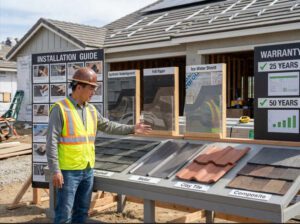
A practical guide for architects, façade engineers, developers, and procurement teams comparing transparent solar technologies for windows, skylights, façades, and atriums.
Transparent solar panel products are photovoltaic glazing systems that allow light to pass through while generating electricity. They are used in windows, skylights, curtain walls, canopies, atriums, greenhouse roofs, and solar shading devices.
The purpose of this article is to compare leading transparent solar panel product types by technology, transparency, efficiency, durability, installation complexity, code readiness, lifecycle cost, and procurement risk.
Transparent solar panels matter for windows and skylights because glass is already one of the most expensive and performance-sensitive parts of a modern building. If the glass can also generate electricity, reduce glare, or shade occupants, the value case changes.
Readers can expect a practical comparison, not a list of marketing claims. We will look at product families, where they fit, which metrics matter, and what questions to ask manufacturers before the glazing package is locked.

Overview of Transparent Solar Panel Technologies
Acronyms and Core Concepts: Perovskite, Organic, and Dye-Sensitized Approaches
Transparent solar panels are not one single technology. The main approaches include semi-transparent crystalline silicon, thin-film coatings, organic photovoltaics, dye-sensitized solar cells, perovskite solar cells, and luminescent solar concentrator concepts.
Perovskite solar cells are promising because their light absorption can be tuned by material composition. They can be made partially transparent and potentially integrated into glazing. The caution is stability: project teams should ask for outdoor durability data, not only lab efficiency.
Organic photovoltaics, often called OPV, use carbon-based materials. They can be lightweight, flexible, and visually subtle. They are attractive for curved or design-driven glass areas, but product maturity varies by supplier.
Dye-sensitized solar cells, often called DSSC, use dye molecules to absorb light. They can create colored or patterned glazing, which makes them interesting for atriums, public buildings, and design-led façades.
For broader PV fundamentals, the U.S. Department of Energy explains how sunlight is converted into electricity in its solar photovoltaic technology primer.
How Transparency Is Quantified: Tint Levels and Light Transmission
Transparency is usually discussed through visible light transmission, or VLT. A 50% VLT glass lets about half of visible daylight pass through. A 10% VLT glass looks much darker.
VLT is not the only visual metric. Architects should also review color rendering, haze, reflectance, pattern visibility, cell spacing, edge details, glare, and whether the view through the glass is acceptable for occupants.
Key Trade-Offs Between Efficiency and Transparency
Transparent PV products usually trade some power output for daylight and view. In simple terms, the more sunlight that passes through the glass, the less light is available for power generation.
This does not make transparent PV weak. It means it should be compared with architectural glazing, solar shading, and daylight-control systems, not only with opaque rooftop modules.
More Transparency
Better daylight and view quality, often lower W/m² and longer payback.
More Power
Darker glass or wider cell coverage, often less daylight and stronger visual impact.
Better Comfort
Optimized SHGC and glare control can reduce cooling load and improve occupant experience.
Market Leaders and Available Products
Notable Manufacturers and Their Flagship Transparent Panels
The transparent solar market includes established BIPV glass suppliers, specialized solar-glass manufacturers, research spinouts, and companies moving from pilot-scale products toward wider commercial deployment.
For procurement teams, the most important question is not “Who has the best press release?” It is whether the supplier can provide repeatable glass sizes, tested laminates, electrical documentation, warranty language, code support, and field references.
Jia Mao Bipv offers transparent BIPV glass for façade and architectural applications. A project team can review product positioning through the transparent BIPV glass product page, then request project-specific data for VLT, power density, glass make-up, cable exit, and warranty scope.
Target Applications: Windows, Skylights, Façades
Transparent PV products are best suited to glazing zones that already need solar control, daylight control, or architectural expression. Typical locations include skylights, atriums, canopies, curtain walls, office windows, greenhouse roofs, pedestrian bridges, and façade shading devices.
The WBDG building-integrated photovoltaics guide notes that BIPV elements can be used directly within the building envelope or canopy structure. That distinction matters because the product must satisfy both building-envelope and electrical requirements.
Current Certification and Regulatory Status
Certification status varies by product and market. Project teams should ask whether the product has relevant PV module safety certification, safety-glass documentation, fire classification, impact testing, weather-seal testing, and local grid interconnection compatibility.
Certification for a PV module does not automatically approve a complete window, skylight, or curtain-wall system. The full assembly may still need project-specific review.


Performance Metrics to Compare
Electrical Efficiency, Optical Transparency, and SHGC Considerations
Electrical efficiency measures how much sunlight is converted into electricity. For transparent products, efficiency alone can mislead. A high-efficiency dark product may not suit a window where occupants need view and daylight.
SHGC means solar heat gain coefficient. It measures how much solar heat passes through glass. In warm climates or west-facing façades, a lower SHGC can reduce cooling load and improve comfort.
Durability Metrics: UV Stability, Weather Sealing, Lifespan
Transparent PV glass must resist ultraviolet exposure, thermal cycling, humidity, wind pressure, sealant aging, and cleaning chemicals. Ask for accelerated-aging test data and outdoor field data.
For skylights, durability is even more critical because water stands longer on low-slope glass and replacement access can be difficult.
Color Rendering and Architectural Impact
Color matters. Some transparent PV products create a bronze, gray, blue, green, or patterned appearance. This affects interior color rendering, tenant experience, and exterior façade consistency.
Always request full-size samples or a project mock-up. A small desktop sample may look acceptable under office lighting but appear too dark, reflective, or colored when installed across a large atrium.
Bar Chart: Typical Product Priority by Application
Illustrative priority scores for windows and skylights. Final scoring should be adjusted by climate, orientation, occupant needs, and building code.
Window Applications: Performance and Aesthetics
Insertion Methods and Compatibility with Glazing Systems
Transparent solar panels for windows can be supplied as insulated glass units, laminated glass modules, curtain-wall panels, or specialty glazing inserts. The product must fit the framing system, gasket details, drainage path, thermal movement, and replacement method.
First-time definition: an insulated glass unit, often called IGU, is a sealed glass assembly with two or more panes. In solar windows, the PV layer may be laminated into one pane or integrated as part of the glazing unit.
Impact on View, Glare, and Privacy
Transparent PV can improve privacy and reduce glare when used on sunny façades, but it can also change the view. For office windows, the team should test whether occupants can still read screens, see outside, and avoid strong color distortion.
For hotel rooms, patient rooms, classrooms, and residential towers, view quality often carries financial or human-comfort value. Do not select a product by energy output alone.
Thermal Performance in Typical Building Envelopes
Transparent PV can reduce solar heat gain, especially when the active layer shades part of the glass. This may reduce cooling loads in hot climates or on west-facing façades.
In cold climates, lower heat gain may not always be beneficial. The façade consultant and energy modeler should compare annual heating, cooling, daylight, and PV output together.
Skylight Applications: Performance and Aesthetics
Self-Cleaning and Maintenance Considerations
Skylights collect dust, pollen, bird droppings, and water marks faster than vertical windows. If the skylight is difficult to access, cleaning cost can become a lifecycle issue.
Ask whether the product supports coatings, safe cleaning methods, and maintenance walkways. Avoid specifying a glass surface that requires frequent manual cleaning in a location that cannot be reached safely.
Impact on Daylighting and Occupant Comfort
A skylight can bring excellent daylight, but uncontrolled overhead sun can create glare and heat. Transparent PV can act like a built-in shading pattern while producing electricity.
In atriums, libraries, schools, and healthcare buildings, the correct skylight product should balance illuminance, glare, heat gain, and power output. Occupant comfort should be measured, not guessed.
Structural and Mounting Considerations for Skylights
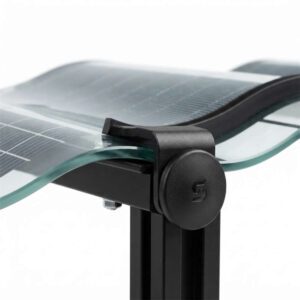
Skylight BIPV must satisfy overhead glazing requirements, wind uplift, snow load, water drainage, laminated glass safety, frame deflection, cable routing, and access for replacement.
A small wiring detail can become a leak if it penetrates the drainage plane incorrectly. The glazing contractor and electrical contractor should agree on cable exits before shop drawings are approved.

Durability, Reliability, and Lifespan
Environmental Testing and Warranty Statistics
Transparent PV products should be reviewed for thermal cycling, damp heat, UV exposure, mechanical load, hail impact where relevant, edge-seal durability, and electrical insulation.
Warranty length alone is not enough. Ask what is covered: power output, glass breakage, delamination, seal failure, moisture ingress, coating defects, inverter failure, labor, and access cost.
Resistance to Scratching, Delamination, and Moisture
Scratching affects appearance and cleaning. Delamination affects safety and output. Moisture ingress can damage cells, busbars, and connectors. These risks are more serious in skylights because they face stronger sun, standing water, snow, and cleaning traffic.
First-time definition: delamination is layer separation inside laminated glass or encapsulation. It may show as bubbles, haze, edge whitening, or loss of adhesion.
Long-Term Performance Data and Field Studies
Transparent PV is still a developing product category. Field data matters. Request references from installations with similar climate, orientation, glass size, and application.
For broader market and technology background, Fraunhofer ISE maintains a respected Photovoltaics Report that tracks PV performance, market growth, and technology trends.
Installation Transparency: Practical Considerations
Electrical Integration and Safety Requirements
Transparent solar glass still produces DC electricity. Each active glass unit may have cables, connectors, junction boxes, and string wiring that must remain protected and accessible.
First-time definition: a string is a group of PV modules connected together. Bad string grouping can make one shaded glass zone reduce output from several better-performing zones.
For façade electrical planning, Jia Mao Bipv’s BIPV façade modules and inverter guide is useful for understanding module selection, inverter architecture, weatherproofing, and safety coordination.
Building Codes, Permits, and Retrofit Challenges
Transparent PV glass may trigger glazing code, electrical code, fire review, wind-load design, safety-glass requirements, and utility interconnection review. In retrofit projects, frame depth, structural capacity, electrical pathways, and existing waterproofing can limit options.
New construction is usually easier because cable routes, mullion depths, inverter rooms, and access panels can be planned before the building is closed.
Maintenance Best Practices and Cleaning Requirements
Maintenance plans should identify cleaning method, cleaning frequency, approved chemicals, access anchors, monitoring dashboard, spare glass units, replacement sequence, and who responds to alarms.
A common owner mistake is buying custom transparent PV glass without spare units. Five years later, replacing one broken glass panel can create color mismatch or long lead times.
| Excel Row | Decision Metric | Window Priority | Skylight Priority | What to Request from Supplier | Risk if Ignored |
|---|---|---|---|---|---|
| A2 | Visible light transmission | High: view and daylight | Medium-high: daylight without glare | VLT value, sample glass, mock-up | Rooms become too dark or too bright |
| A3 | Power density | Medium: limited by view needs | High: larger sun-facing area | W/m², kWp layout, yield estimate | ROI model overstates generation |
| A4 | SHGC and thermal comfort | High on west/east façades | Very high under overhead sun | SHGC, U-value, daylight model inputs | Cooling load or glare complaints |
| A5 | Weather sealing | High | Critical | IGU details, edge seal, drainage detail | Leaks, fogging, moisture ingress |
| A6 | Electrical access | Medium-high | High | Cable exit drawings, junction-box access | Expensive glass removal for small repairs |
| A7 | Warranty scope | High | High | Power, product, glass, seal, labor terms | Disputes between glazing and solar contractors |
Cost, ROI, and Total Cost of Ownership
Capex vs. Opex: Material Costs, Installation, and Warranties
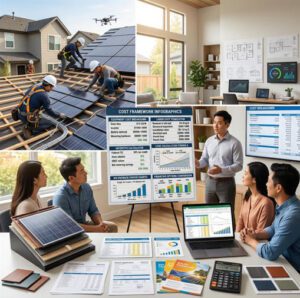
Transparent PV glass usually costs more than conventional architectural glass. The right comparison is not only cost per watt. It is the incremental cost versus the glass it replaces, plus energy value, shading value, incentives, maintenance, and tenant or brand value.
For project cost framing, Jia Mao Bipv’s glass-integrated solar façade review discusses BIPV glass applications, performance considerations, and cost structure.
Energy Savings, Payback Periods, and Value Optics
First-time definition: payback period is the time needed to recover the extra investment. For transparent PV, payback should include avoided glass cost, energy savings, possible cooling-load reduction, and incentives.
Use real electricity tariffs and site-specific solar modeling. The NREL PVWatts calculator can support early PV yield estimates, but complex glass geometry may need detailed 3D modeling.
Financing Options and Incentives for Green Building
Incentives vary by jurisdiction. In the U.S., the DSIRE incentive database is a useful starting point for policy research. Outside the U.S., check local feed-in tariffs, green-building funds, tax credits, carbon reporting programs, and low-interest building-performance loans.
Pie Chart: Typical Transparent PV Glass Cost Stack
Indicative only. Custom glass size, fire testing, high-rise access, low order quantity, and local labor rates can shift the cost stack.
Regulatory, Certification, and Standards Landscape
Benchmark Standards: IEC, UL, ISO Relevant to Transparent Photovoltaics
Transparent PV products may need to satisfy photovoltaic module standards, safety glass standards, insulated glass standards, fire rules, building code requirements, and electrical interconnection rules.
UL explains PV module safety standard evolution in its UL 1703 and UL 61730 safety update. For BIPV-specific design reference drawings, the IEA PVPS BIPV technical guidebook is a strong reference.
Grid Interconnection and Building Integration Considerations
Even if the product looks like glass, it is still part of an electrical system. The project team must plan DC routing, inverter location, disconnects, utility approvals, monitoring, labeling, and emergency access.
Transparent PV should be coordinated before curtain-wall shop drawings are final. Cable exits, mullion cavities, gasket lines, and access panels should not be improvised on site.
Labeling, Safety, and Privacy Compliance
Transparent PV glass may need labels for electrical identification, safety shutdown, fire responders, and maintenance teams. Privacy requirements also matter in offices, healthcare, schools, hotels, and residential buildings.
A darker PV glass may improve privacy during the day but can reverse privacy conditions at night when interior lights are on. Mock-ups should test both day and evening conditions.
Future Trends, Innovations, and Market Outlook
Emerging Materials and Improved Stability Promises
Perovskite, organic PV, luminescent solar concentrators, tandem concepts, and switchable glazing are pushing transparent solar products forward. The direction is clear: higher transparency, better stability, better color control, and simpler integration.
NREL has explored dynamic photovoltaic window concepts in its SwitchGlaze photovoltaic window research brief, highlighting how window-integrated PV can move beyond static glass.
Mass-Market Adoption Catalysts and Potential Price Trajectories
Adoption will likely accelerate when three conditions align: reliable long-term field data, standardized glazing formats, and clearer code pathways. Custom glass will remain expensive. Repeatable product sizes will lower procurement friction.
The strongest near-term markets are likely premium commercial façades, public buildings, universities, airports, transit hubs, atriums, and skylights where visibility, energy performance, and brand value matter.
Impact on Architecture and Urban Planning
Transparent solar glass changes the role of the building envelope. Windows and skylights can become energy assets, shading systems, educational displays, and carbon-reduction measures.
The industry insight is simple: transparent PV will not replace every window. It will first win in zones where daylight control, solar exposure, architectural expression, and energy value overlap.

Practical Guidance: How to Choose the Right Product
Decision Checklist by Application: Window vs. Skylight
For windows, start with view, VLT, glare, color, frame compatibility, privacy, and occupant comfort. Then evaluate power output and electrical routing.
For skylights, start with safety glass, waterproofing, drainage, snow or wind loads, heat gain, glare, access, and cleaning. Then compare output and payback.
Choose for Windows When…
- The façade has strong sun exposure.
- Glare control or privacy has value.
- View quality remains acceptable after tinting.
- Cable routing can fit the curtain-wall system.
Choose for Skylights When…
- The skylight receives long sun hours.
- Overhead glare and cooling load need control.
- Maintenance access is safe and documented.
- The framing system can manage water and wiring.
Questions to Ask Manufacturers and Integrators
Ask for VLT, SHGC, U-value, power density, color tolerance, glass make-up, safety certification, PV certification, fire data, warranty terms, replacement procedure, connector details, cable exit drawings, and references from similar climates.
If you are comparing products for a façade or skylight project, Jia Mao Bipv can review target glass zones, transparency goals, module layout, and electrical integration assumptions before the procurement package is finalized. The Jia Mao Bipv project inquiry page is the most direct route for a feasibility discussion.
Sample Evaluation Plan and Testing Protocol
A good evaluation plan includes desktop screening, sample review, visual mock-up, energy model, glare study, structural review, electrical design check, code review, maintenance review, and lifecycle cost analysis.
Do not approve full procurement based only on a datasheet. Transparent PV affects occupants every day. The glass should be tested under real light conditions before final order.
Glossary for Transparent Solar Procurement
- Transparent PV
- Photovoltaic glass that allows visible light to pass through while generating electricity.
- VLT
- Visible light transmission. Example: 40% VLT glass lets more daylight through than 15% VLT glass.
- SHGC
- Solar heat gain coefficient. Lower SHGC can reduce cooling load in hot climates.
- U-value
- A measure of heat transfer through glass. Lower U-value usually means better insulation.
- IGU
- Insulated glass unit: a sealed multi-pane glass assembly used in windows and curtain walls.
- Power density
- Electrical output per area, often expressed as W/m².
- Delamination
- Layer separation inside laminated glass or encapsulation, often visible as bubbles or haze.
- BOS
- Balance of system: inverters, cables, connectors, disconnects, mounting, and monitoring.
Recommended Video: Transparent Solar Panels Explained
The video below gives a useful visual introduction to transparent solar panels and how solar windows can generate electricity while allowing light through.
Transparent solar panel products should be compared through a combined lens: energy output, daylight, view quality, heat gain, durability, code compliance, installation access, and lifecycle cost.
The key finding is that windows and skylights need different selection logic. Window projects should protect view, color, privacy, and occupant comfort. Skylight projects should prioritize waterproofing, overhead safety, glare control, cleaning access, and thermal performance.
For most project types, the best next step is a side-by-side evaluation: request samples, check VLT and SHGC, model annual output, review code requirements, and ask for field references in similar climates.
For future procurement and testing, project teams should avoid vague “transparent solar” requests. Instead, define the target application, active glass area, transparency range, power target, frame system, code pathway, and warranty expectations.
Planning Transparent PV Glass for Windows or Skylights?
Prepare your elevations, skylight plans, target VLT, desired appearance, project location, utility tariff, and glazing system details. A structured feasibility review can prevent expensive changes after glass dimensions and electrical pathways are already fixed.
Discuss transparent BIPV glass with Jia Mao BipvFAQs
1. What defines a leading transparent solar panel product?
A leading product is not defined by transparency or efficiency alone. It should provide documented VLT, power density, SHGC, safety-glass data, PV certification, weather-seal details, warranty terms, field references, and a realistic installation method for the target glazing system.
2. Can transparent solar panels fully replace conventional glazing?
Yes, in some applications, but not automatically. Transparent PV can replace conventional glazing when it satisfies safety glass, thermal performance, fire review, structural load, waterproofing, appearance, and electrical requirements. The full window or skylight assembly must be reviewed, not only the PV layer.
3. What are typical installation challenges and warranties?
Common challenges include cable routing through frames, junction-box access, waterproofing at penetrations, glass replacement, color matching, and responsibility between the glazing contractor and electrical contractor. Warranties should clarify power output, product defects, glass seals, labor, and access cost.
4. Are transparent solar panels better for windows or skylights?
Skylights often receive stronger sunlight and can produce more energy per square meter, but they face tougher waterproofing and cleaning requirements. Windows may offer better façade integration and privacy benefits, but view quality and occupant comfort become more important.
5. What VLT should I choose for transparent solar glass?
There is no universal best VLT. A higher VLT, such as 40–60%, supports daylight and views but usually reduces power output. A lower VLT, such as 10–25%, can increase shading and power density but creates darker interiors. Choose based on daylight modeling and occupant needs.
6. How should ROI be calculated for transparent PV windows?
ROI should include the incremental cost over conventional glass, energy savings, potential cooling-load reduction, incentives, maintenance, inverter replacement, degradation, and the value of daylight or architectural branding. Do not calculate ROI using only gross product cost.
7. Do transparent solar panels need special cleaning?
They need approved cleaning methods that protect coatings, seals, and electrical components. Skylights may need more frequent cleaning than vertical windows because they collect dust and water marks faster. The maintenance plan should be written before installation.
8. What data should be requested before procurement?
Request VLT, SHGC, U-value, W/m², glass make-up, dimensions, color tolerance, certifications, fire data, electrical diagrams, connector details, cable exit drawings, warranty terms, installation manuals, and field references from similar projects.
References and Further Reading
- transparent BIPV glass product page
- glass-integrated solar façade review
- transparent solar panels for green buildings
- photovoltaic glass windows guide
- BIPV façade modules and inverter guide
- WBDG building-integrated photovoltaics guide
- solar photovoltaic technology primer
- Fraunhofer ISE Photovoltaics Report
- SwitchGlaze photovoltaic window research brief
- NREL PVWatts calculator
- DSIRE incentive database
- UL 1703 and UL 61730 safety update
- IEA PVPS BIPV technical guidebook