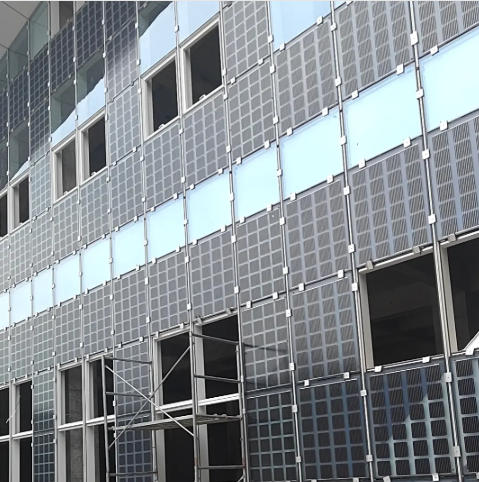
Solar cell windows represent a significant inventory investment. This guide covers installation best practices, maintenance protocols, and customer support strategies that reduce warranty claims, protect your reputation, and build the recurring revenue that makes your distribution business resilient.

Why Your Customers’ Success Directly Impacts Your Bottom Line
There is a direct financial relationship between how well your customers understand their solar cell window system and how profitable your distribution business becomes.
A customer who receives proper installation guidance, a clear maintenance schedule, and realistic performance expectations does not file warranty claims. They renew their service contract. They refer colleagues. When they develop their next building, they call you first — not because you had the lowest price, but because you were the only supplier who made their system actually work.
A customer who receives a product and a manual, but no installation oversight, no maintenance education, and no performance baseline, is a warranty claim waiting to happen. At $800–$2,500 per glass unit replacement plus labor and access costs, a single preventable failure on a commercial installation can erase the margin from your entire project.
This guide is organized around the real business outcomes that matter to distributors and agents. Every section answers one of three questions: How do I help my customers get the best performance from this product? How do I prevent the problems that generate complaints and warranty claims? And how do I build the recurring revenue that makes my business less dependent on the next new installation sale?
Who this guide is for: B2B solar product distributors, regional agents, and commercial builders who supply and support solar cell window (BIPV glazing) installations. This is a business operations document written for the people who actually need to make these systems work for their customers and their margins.
Section 1: Understanding Solar Cell Window Technology for Your Sales Strategy
What Your Customers Need to Know — And What You Need to Know to Sell Better
The Different Types of Solar Cell Windows Available
The solar cell window category is not monolithic. The technology options on the market today differ significantly in efficiency, transparency, cost, and application suitability — and recommending the wrong product for a specific building type is one of the fastest ways to generate a dissatisfied customer.
Glossary — BIPV (Building Integrated Photovoltaics): Photovoltaic technology embedded directly into building materials — glass, facades, roofing — so the material simultaneously serves as building envelope and power generator. Solar cell windows are BIPV: the window is both the glazing and the energy generation system.
Technology options and their real-world trade-offs:
| Technology Type | Efficiency Range | Transparency | Best Application | Cost Tier |
|---|---|---|---|---|
| Crystalline Silicon (Mono/Poly) | 15–22% (opaque cells) | 5–20% VLT (cell gaps only) | Spandrel zones, opaque infill panels | Medium |
| Thin-Film (CIGS/CdTe) | 10–14% | 10–40% VLT | Semi-transparent facades, skylights | Medium |
| Amorphous Silicon (a-Si) | 6–10% | 10–50% VLT | Semi-transparent windows, atria | Lower |
| Perovskite (emerging) | 13–26% (lab) | 15–75% VLT | High-efficiency future applications | Higher (premium) |
| Organic PV (OPV) | 8–12% | 20–60% VLT | Architectural glazing, design-led projects | Higher |
Glossary — VLT (Visible Light Transmittance): The percentage of visible light that passes through the glass. A 50% VLT solar window transmits half the light of clear glass — similar to quality architectural tinted glazing, not dark or obstructed.
Perovskite solar cells have achieved efficiencies above 26% in laboratory conditions (American Ceramic Society, 2025), making them one of the most closely watched emerging technologies in solar glazing. For commercial projects specifying today, crystalline silicon cell-based semi-transparent BIPV glass and thin-film options remain the most established products with the longest durability track records.
The practical guidance for your sales conversations: match technology to application first. A building designer who needs 70% transparency for a hospitality atrium needs a different product than one specifying opaque spandrel panels on a commercial tower. Confirm VLT requirements before discussing efficiency or cost — it determines the product category.
How Solar Cell Windows Generate Revenue for Your Customers
The financial case for solar cell windows has three components, and most distributors only present one.
Annual electricity generation is the component everyone discusses first — the kilowatt-hours produced by the window area and converted to dollar savings. Real-world generation data by climate zone:
| Climate Zone | Annual Solar Irradiance | Solar Window Output (50% VLT) | Annual Generation Value |
|---|---|---|---|
| Phoenix, AZ (Zone 2B) | 5.7 kWh/m²/day | 165–200 W/m² avg. | $0.11–$0.13/kWh rate |
| Los Angeles, CA (Zone 3B) | 5.4 kWh/m²/day | 155–190 W/m² avg. | $0.22–0.28/kWh rate |
| Dallas, TX (Zone 2A) | 4.9 kWh/m²/day | 140–175 W/m² avg. | $0.10–0.12/kWh rate |
| Chicago, IL (Zone 5A) | 3.9 kWh/m²/day | 105–135 W/m² avg. | $0.12–0.14/kWh rate |
| Seattle, WA (Zone 4C) | 3.5 kWh/m²/day | 95–125 W/m² avg. | $0.11–0.13/kWh rate |
Source: NREL PVWatts data, industry BIPV performance benchmarks.
HVAC load reduction is the second financial benefit — and for commercial buildings in warm climates, it is often larger than the electricity generation value. As documented in the Jia Mao Bipv solar control glass ROI guide, upgrading from standard clear glazing (SHGC 0.70) to solar control glass (SHGC 0.25) on a 10,000 sq ft commercial facade reduces annual HVAC energy costs by $205,000 over 30 years — combined with the glass itself generating electricity, the dual benefit is what makes the ROI case compelling.
Glossary — SHGC (Solar Heat Gain Coefficient): A number from 0 to 1 indicating how much solar heat passes through glass into the building. Lower = less heat. Standard clear glass sits at 0.70–0.86. Premium solar cell windows achieve 0.20–0.30, blocking 70–80% of solar heat.
Tax incentives and government programs are the third component. The IRS Residential Clean Energy Credit provides a 30% federal tax credit for qualifying solar installations in residential applications. For commercial projects, the Investment Tax Credit (ITC) under Section 48E provides equivalent benefits. BIPV solar windows qualify when properly documented as an integrated power generation system — not merely as window replacement. Note: the 30% residential ITC was subject to legislative changes effective end of 2025; confirm current eligibility with SEIA’s tax policy page before advising customers on specific credit amounts.
Section 2: Pre-Installation Assessment — Your Competitive Advantage
How to Help Customers Choose the Right Solar Windows Before Installation
Conducting a Professional Site Evaluation
The pre-installation site assessment is where most installation problems either get prevented or get scheduled. Distributors who provide structured site evaluation as part of their sales process differentiate themselves from competitors who hand over a spec sheet and leave the customer to figure out the rest.
Site assessment checklist for distributor use:
| Assessment Category | What to Evaluate | Why It Matters |
|---|---|---|
| Structural load capacity | Dead load, wind uplift, snow load capacity of existing frame system | BIPV glass is heavier than standard glazing — frame reinforcement may be required |
| Orientation mapping | Compass bearing of each glazed facade, shading obstructions, seasonal sun angles | Determines energy generation potential and product selection |
| Existing electrical infrastructure | Panel capacity, inverter space, grid connection capability | Insufficient infrastructure is the most common installation delay cause |
| Frame and substrate condition | Age, material, seal integrity, drainage channels | Old or deteriorated frames compromise the BIPV glass performance and warranty |
| Access and logistics | Equipment access for elevated work, staging areas, building occupancy constraints | Critical for scheduling and cost estimation |
| Climate-specific hazards | Coastal salt exposure, heavy snow load, extreme thermal cycling, seismic zone | Affects product selection and maintenance protocol |
Sun exposure mapping and orientation analysis:
The orientation of a facade determines the annual energy yield potential of any solar window installed there. South-facing facades in the Northern Hemisphere receive the highest annual irradiance. West-facing facades capture the most intense afternoon sun — directly relevant to peak demand charge reduction. North-facing facades receive minimal direct sun and are generally not cost-effective solar window candidates. East-facing facades contribute meaningfully to morning generation.
For distributors, the orientation analysis has a direct commercial implication: it determines which facades should be prioritized for solar window specification and which should be specified with conventional or solar control glass instead. This selective recommendation — “we recommend solar windows on your south and west facades, and standard low-E on north and east” — demonstrates expertise and builds trust more effectively than recommending solar windows everywhere regardless of orientation.
Matching Window Type to Customer Needs and Building Specifications
Commercial vs. residential installation differences:
Commercial installations involve multiple decision-makers, engineering sign-offs, building permit requirements, and typically longer lead times for custom BIPV glass units. The structural frame system is usually a curtain wall or storefront system with specific glazing tolerances — confirming compatibility with the BIPV product’s frame dimensions before ordering is essential.
Residential installations are simpler structurally but more personal. Homeowners who are anxious about disruption, concerned about aesthetics, or uncertain about performance need more communication and hand-holding than a commercial facilities manager. Build a residential-specific communication protocol into your installation support process.
Energy code compliance by region:
Most U.S. states have adopted ASHRAE 90.1-2022 or equivalent energy codes that specify maximum SHGC values for commercial glazing by climate zone. In ASHRAE Climate Zone 1–3 (the entire U.S. South and Southwest), maximum SHGC for fixed commercial glazing is now 0.25 or lower. This means solar cell windows — which deliver SHGC 0.20–0.30 and generate electricity simultaneously — are not just a premium option in these markets. For new construction and major renovations, they may be the only product that meets code and generates positive ROI.
Budget constraints and phased installation strategies:
Not every customer can fund a full-building solar window installation in a single project. A phased approach — south and west facades in Phase 1, remaining facades in Phase 2 — allows customers to demonstrate ROI from the highest-value glass areas before committing to the full system. Present phasing as a structured investment strategy, not a budget compromise. This approach often accelerates Phase 2 commitment because Phase 1 performance data becomes the evidence base.
Creating a Pre-Installation Report Your Customers Will Trust
A written pre-installation report — delivered before the contract is signed — is one of the most effective trust-building tools available to a distributor. Most competitors do not provide one. The ones who do consistently close at higher margins because the document demonstrates expertise and eliminates the uncertainty that delays decisions.
What the report should include:
- Orientation analysis and generation projections — kWh/year by facade and total, with climate-specific irradiance data cited
- Product recommendation — specific glass type, VLT, SHGC, and frame compatibility confirmation
- Performance projection — annual electricity value generated, HVAC savings, combined ROI, payback period
- Infrastructure requirements — electrical upgrades needed before installation, any structural reinforcement identified
- Maintenance schedule — location-specific recommendations for cleaning frequency and seasonal inspection protocol
- Warranty summary — what is covered, under what conditions, and what documentation the customer must maintain
This document becomes the customer’s reference guide for the next 25 years. It should be designed accordingly — clear, professional, and written in plain language, not technical jargon.
Section 3: Installation Best Practices That Prevent Costly Problems
The Installation Process — Where Most Customer Complaints Originate
Proper Preparation and Site Readiness

Frame preparation and weatherproofing — the unglamorous work that determines whether this installation generates a warranty claim in Year 3 or a case study in Year 5.
Structural reinforcement requirements: BIPV glass is heavier than standard glazing — laminated glass-glass configurations typically weigh 25–40 kg/m² compared to 10–15 kg/m² for standard double IGU. Confirm frame load capacity with a structural engineer for any installation replacing standard glazing with BIPV glass, particularly on older buildings with aluminum or steel curtain wall systems not originally designed for BIPV loads.
Electrical infrastructure upgrades before installation: The most common cause of installation schedule delays is discovering during the installation phase that the building’s electrical panel lacks capacity for the solar array output, or that inverter placement was not planned during the building renovation sequence. Conduct the electrical infrastructure assessment at the pre-installation stage, not on installation day.
For NEC-compliant electrical design for building-mounted solar systems, the Solar Permits Solutions NEC compliance guide provides grounding and electrical design requirements for distributor reference.
Weatherproofing and moisture barrier protocols:
According to the Jia Mao Bipv BIPV installation guide, envelope integrity is the non-negotiable foundation of every BIPV installation. The weatherproofing sequence — flashing, sealant application, movement joint design, and drainage — must be resolved before electrical routing begins. The common mistake is treating BIPV as a solar installation with some sealant around it. The correct mental model is: this is a building envelope replacement that generates electricity. Envelope integrity comes first.
Step-by-Step Installation Techniques That Ensure Optimal Performance
Correct framing and sealing methods:
The edge seal at every glass-to-frame interface is the component that determines whether moisture enters the system in Year 3 or Year 23. Use structural silicone sealants rated for the expected thermal cycling range (−40°C to +85°C minimum), applied to clean, dry, primer-treated substrates. Allow full cure time before exposing to weather — rushing this step is responsible for a significant share of early seal failures.
Thermal movement joints must be designed for the specific glass dimension and installation climate. A BIPV glass panel installed in Phoenix will experience thermal expansion cycling that a panel installed in Seattle will not. Use manufacturer-specified movement joint design for each geographic application.
Electrical connection standards:
Every electrical connection in the solar array must comply with NEC Article 690 (Solar Photovoltaic Systems). Key requirements:
- MC4 or equivalent weatherproof connectors at all module-to-string connections
- All DC wiring in conduit or listed cable assemblies rated for outdoor exposure
- Proper grounding of all metallic frames and equipment
- Rapid shutdown compliance for building-mounted systems under NEC 690.12
- String sizing and overcurrent protection to manufacturer specification
Always use licensed electricians for solar window electrical work. This is both a code requirement in most jurisdictions and a warranty condition for most BIPV glass products.
Quality checkpoints at each installation phase:
| Phase | Quality Check | Documentation |
|---|---|---|
| Pre-installation | Frame condition verified, electrical infrastructure confirmed, substrate flatness checked | Signed checklist + photos |
| Glass handling | No surface scratches, edge chips, or laminate defects visible | Defect log before installation |
| Frame seating | Glass seated to full depth, movement allowance confirmed, no glass touching hard surfaces | Measurement record |
| Sealing | Full sealant coverage, no voids, no contamination, specified cure time observed | Photo documentation |
| Electrical | Polarity confirmed, string open-circuit voltage measured, all connections secure | Commissioning test record |
| Performance test | System output measured under known irradiance, compared to expected output | Baseline performance record |
Common Installation Mistakes and How to Avoid Them
Improper sealing leading to water infiltration: The single most expensive installation mistake. Sealant voids at frame-to-glass interfaces allow water to track into the IGU cavity and along electrical cable paths. Prevention: require a continuous sealant bead with no gaps or voids, applied in one continuous motion for each joint. Photograph completed sealant lines before covering with frame trim.
Incorrect electrical connections reducing output: Reversed string polarity, crossed circuits, and loose MC4 connections are all common causes of “low output” complaints in the first months after installation. Prevention: require a string-level electrical verification check before commissioning — measure open-circuit voltage of each string and compare to calculated expected value. A string reading 20% below expected OCV has a wiring issue that needs resolution before the system goes live.
Inadequate structural support causing long-term damage: BIPV glass installed in frames not designed for its weight creates stress concentrations at the glass-to-frame contact points. Over time, thermal cycling causes micro-cracking that eventually propagates across the glass. Prevention: structural engineering sign-off before installation on any application replacing standard glazing with BIPV glass.
Misalignment issues compromising energy generation: In a BIPV glass array, cell rows must be aligned consistently across panels to avoid mismatch losses. Individual panels installed rotated 90° from adjacent panels, or panels installed upside down (which puts bypass diodes in the wrong configuration), create string-level performance losses that are difficult to diagnose without IV curve testing.
Post-Installation Inspection Checklist for Your Team
🎬 Watch: BIPV Solar Cell Window Installation — From Site Preparation to Commissioning
▶ Click to watch: A practical overview of BIPV solar window installation from envelope preparation through electrical commissioning — recommended for distributor installation partner training and customer education sessions.
Before handing over a completed installation to your customer, run through this commissioning checklist:
- Visual inspection: No surface scratches, no visible sealant voids, no debris in drainage channels, no cable left unprotected
- Electrical performance test: System output measured under current irradiance and compared to expected output at that irradiance level — document the baseline kWh/kW figure
- Monitoring system activated: Inverter connected to monitoring platform, customer login provided, baseline performance visible on dashboard
- Warranty documentation package: All product serial numbers recorded, installation date documented, installer certification recorded, warranty registration submitted to manufacturer
- Customer walkthrough: Walk the customer through the monitoring dashboard, explain the seasonal output curve, demonstrate the escalation protocol for any performance anomaly
- First-month follow-up scheduled: Book a 30-day check-in call before you leave the site
This commissioning process takes 2–3 hours on a typical commercial installation. It prevents the vast majority of first-year warranty disputes and performance complaints — which typically consume far more time than that to resolve after the fact.
Section 4: Maintenance Protocols That Protect Your Reputation
The Maintenance Schedule Your Customers Will Actually Follow
Monthly Maintenance Tasks — What Your Customers Should Do
A maintenance protocol your customers actually execute is worth more than a comprehensive protocol they find intimidating and ignore. Monthly tasks should take no more than 15 minutes and require no specialized equipment.
Visual inspection procedure: Once per month, have the customer or facilities manager walk the perimeter of the installation at ground level or from an accessible indoor vantage point. They are checking for: visible soiling or dark patches on the glass surface (efficiency loss indicator), any change in frame or sealant appearance at the glass edges, and any unusual markings or debris on the glass surface.
Performance monitoring through energy output tracking: The most important monthly check is the monitoring dashboard. The customer compares this month’s kWh to the same month last year (or to the commissioning baseline adjusted for weather). A decline of more than 10% from expected — after accounting for seasonal variation — triggers a call to your service team. Set up automated alerts at this threshold during commissioning.
Quick cleaning methods that do not damage the windows: For accessible ground-floor glass, a soft microfiber cloth with plain water or mild neutral pH detergent removes most surface soiling without risk to coatings. No abrasive materials, no strong solvents, no pressure washers. For any glass above ground floor, professional cleaning only — customer self-cleaning at height is both a safety liability and a warranty risk.
Seasonal Maintenance Requirements by Climate

Autumn inspection — the highest-value annual maintenance event for cold-climate installations. Seal and drainage issues identified now cost $200–$400 to fix. Discovered after the first freeze, they cost $800–$2,500.
Spring and summer care:
In humid climates, spring brings elevated pollen and organic material accumulation that supports algae and mold growth at frame bases. A spring cleaning that removes pollen buildup before the summer heat season prevents coating degradation and maintains VLT performance. Check sealant lines for any winter-related cracking or separation before the thermal expansion cycle of summer puts maximum stress on joints.
Summer monitoring focuses on energy output relative to peak season expectations. If June output is 15% below the same period from the previous year after cleaning, there is an efficiency issue that warrants professional inspection. Also monitor for condensation appearing between glass panes during summer humidity — this is the earliest sign of IGU seal failure and must be professionally assessed immediately.
Fall and winter challenges:
Fall is the single most important maintenance window for cold-climate installations. All seal and sealant deficiencies identified in autumn can be addressed before freezing temperatures make sealant curing impossible and freeze-thaw cycling turns small vulnerabilities into large cracks.
For snow-region installations, educate customers on snow clearance protocol: light accumulated snow on accessible sloped BIPV glass can be cleared with a soft broom; ice formation should never be chipped or pressure-washed; heavy snow accumulation on sloped applications should be allowed to melt naturally unless structural load calculations indicate a concern.
Coastal and harsh environment considerations:
Coastal installations within 5 km of the ocean require significantly more frequent maintenance attention. Salt crystallization on glass surfaces is physically abrasive, and salt penetration into frame joints accelerates sealant and anodizing degradation. Recommended coastal maintenance protocol:
- Clean glass with deionized water every 2–3 weeks (within 5 km), every 3–4 weeks (5–10 km from sea)
- Apply hydrophobic glass treatment after each cleaning cycle
- Inspect frame anodizing quarterly and touch up any coating breaches with marine-grade coating product
- Use marine-grade silicone sealants (rated for salt atmosphere exposure) for any maintenance resealing
For detailed coastal solar installation requirements, the Maysun Solar coastal environment guide provides product selection and maintenance guidance relevant to solar cell window distributors working in coastal markets.
Annual Professional Maintenance — Your Revenue Opportunity
Annual professional maintenance is simultaneously a customer service and a recurring revenue stream. The work performed at an annual inspection cannot be replicated by a customer’s facilities team — it requires professional tools, technical knowledge, and access equipment.
Comprehensive cleaning procedures that restore efficiency:
Research confirms that solar PV systems in urban environments experience 10–13% output reduction over a 3-month period without cleaning (ScienceDirect, 2025). A professional annual cleaning using soft-wash systems (15–40 PSI — never high-pressure) with purified deionized water restores this lost efficiency and extends the effective clean interval with hydrophobic treatment application.
Electrical system testing and connection verification:
Annual electrical checks should include: string-level open-circuit voltage measurement to identify any connection deterioration, inverter performance log review for fault codes or efficiency anomalies, and visual inspection of all accessible electrical connections for corrosion or loosening. According to thermal imaging research from Oxmaint, professional thermal imaging detects 85–90% of electrical faults before failure occurs — include thermal imaging as an add-on service to your premium maintenance tier.
Service tier pricing for annual maintenance contracts:
| Service Tier | Annual Price | What Is Included |
|---|---|---|
| Basic | $150–$350 | Annual performance review, written report, monitoring check, phone support |
| Standard | $400–$700 | All Basic + bi-annual professional inspection, connection check, inverter diagnostics |
| Premium | $800–$1,500 | All Standard + quarterly inspections, soft-wash cleaning 2x/year, thermal imaging, 48-hr priority response |
| Comprehensive | $1,500–$4,000 | All Premium + monthly monitoring review, same-day emergency response, warranty management, predictive replacement scheduling |
Source: Industry O&M pricing benchmarks from EnergyScape Renewables solar maintenance analysis.
A portfolio of 100 customers at an average contract value of $600/year generates $60,000 in annual recurring revenue — from your existing customer base, with zero new installation sales required. This revenue stream is the financial buffer that makes your distribution business resilient through slow installation periods.
Long-Term Maintenance Planning — 5–10 Year Intervals
Seal replacement and weatherproofing renewal:
Exterior silicone sealants have a functional life of 15–20 years in most climates, shorter in high-UV or coastal environments. The 10-year inspection should specifically assess sealant condition and initiate a planned replacement program for any joints approaching end of life. Planned sealant replacement (scheduled, performed on intact joints) costs a fraction of emergency seal repair (performed after moisture has entered the system).
Electrical component upgrades:
String inverters typically carry 10-year warranties and 15-year expected service lives. At the 10-year inspection, assess inverter performance against original commissioning data. An inverter generating 5–8% below its rated efficiency is approaching end of productive life and should be scheduled for replacement before it fails. Including inverter replacement scheduling in your 10-year maintenance program creates a predictable upgrade opportunity without emergency urgency.
Documentation for resale value and warranty transfer:
A complete maintenance record — every service visit documented, every finding and corrective action recorded — is a commercial asset when a customer sells their property. BIPV solar window systems with a documented 10-year maintenance history are more readily appraised and more attractive to buyers than systems with no service record. Position your maintenance documentation service as a value preservation tool for the customer’s property investment.
Section 5: Troubleshooting Common Performance Issues
Solving Problems Before They Become Customer Complaints
Reduced Energy Output — Diagnosis and Solutions
The most common performance complaint in solar cell window installations is lower-than-expected energy output. The diagnostic sequence is critical — jumping to the wrong conclusion sends you in the wrong direction and delays the resolution.
Diagnostic decision tree:
Step 1 — Check for soiling. Is the glass visibly dirty? Has there been an unusually long gap since the last cleaning? A 15% output drop that follows 3 months without cleaning is almost certainly a soiling issue. Schedule cleaning and monitor output for 2 weeks.
Step 2 — Check the monitoring system. Is the drop isolated to one string or affecting all strings? A single-string drop points to a connection issue, a shading change, or a cell damage event in that circuit. An all-string drop points to an inverter issue, shading from a new obstruction, or a weather-normalized decline.
Step 3 — Check the baseline. Compare to the same period in the previous year under similar weather conditions. A true 15% performance decline from Year 1 to Year 3, after accounting for soiling and natural degradation (0.45–0.5%/year expected), warrants professional investigation.
Step 4 — Schedule professional inspection. At this stage, thermal imaging to identify hot spots and IV curve testing to assess cell health provides the definitive diagnosis. Reserve this step for drops that persist after cleaning and cannot be explained by shading or weather.
Physical Damage and Degradation Issues
Identifying manufacturing defects vs. installation problems:
Manufacturing defects — cell delamination, edge seal failure from factory, electrical wiring faults within the module — typically manifest within the first 12–18 months of installation. Installation damage — glass chips from handling, sealant voids from application errors, mechanical stress from improper frame installation — can take 2–4 years to produce visible symptoms as environmental exposure works on the compromised area.
The documentation from commissioning is critical here. If your commissioning record includes photographs of the glass surface at installation and a measured performance baseline, distinguishing between a pre-existing manufacturing defect (covered by product warranty) and an installation-induced problem (covered by installer warranty) becomes straightforward. Without that documentation, every dispute becomes adversarial.
Warranty claim processes and documentation:
| Required Documentation | Purpose | When to Prepare |
|---|---|---|
| Timestamped installation photographs | Proves glass condition at installation | At commissioning |
| Commissioning performance baseline | Confirms system output at start | At commissioning |
| Maintenance service records | Demonstrates proper care | Ongoing |
| Performance anomaly report (date, symptoms, monitoring data) | Documents the defect timeline | At time of issue identification |
| Thermal imaging or IV curve test results | Technical evidence of defect | Professional inspection |
Electrical and Connection Problems
Safety protocols first: Solar cell window arrays generate live DC voltage at all times when sunlight is present — regardless of whether the AC disconnect is open. A 20-panel string at 40V per panel generates 800V DC, which is lethal at currents far below what is available. All electrical troubleshooting on solar window systems must be performed by licensed electricians with solar PV experience.
Common wiring issues your team will encounter:
Loose MC4 connectors — the most common field electrical fault — cause increased resistance at the connection point, which produces heat (visible on thermal imaging) and reduces string output. Connectors that were not fully latched at installation may vibrate loose over 2–3 years. Thermal imaging at the 3-year inspection catches these before they produce arc faults.
Insulation abrasion on cables running through aluminum frame extrusions without edge protection is a long-term fire risk and a performance issue. Identify any unprotected cable runs at commissioning and add protection before handover.
When to call licensed electricians vs. handling in-house: Visual inspection and performance monitoring are appropriate for trained maintenance technicians. Any work involving live DC circuits, connector replacement, wiring repairs, or inverter parameter changes requires a licensed electrician with solar PV endorsement. This boundary is not negotiable from a safety or liability standpoint.
Water Infiltration and Moisture Issues
Early warning signs: Condensation appearing between the glass panes — not on the exterior surface, but within the sealed cavity — is an unambiguous signal of IGU seal failure. The sealed gas fill (typically argon) has been replaced by moist ambient air. Other early signs: rust-colored staining at frame corners (water tracking through frame joints), efflorescence (mineral deposits) on the glass surface near frame edges, and visible sealant separation at frame-to-glass interfaces.
Sealing and weatherproofing solutions:
When edge condensation is detected early — visible as intermittent fog patches at glass edges in cold weather that clear as the glass warms — exterior sealant application may arrest further moisture progression. When condensation is visible throughout the day and has spread to the central area of the glass, the IGU has failed and requires full glass replacement.
The cost differential: early-stage exterior reseal — $200–$500 per unit. Full IGU replacement — $800–$2,500+ per unit plus access equipment. This is the economic argument for your proactive inspection program: every early detection saves $600–$2,000 per unit in remediation cost.
Section 6: Building Customer Support Systems That Differentiate Your Business
How to Create a Service Model That Keeps Customers Coming Back
Creating a Maintenance Service Package
The tiered service package structure allows customers to select the engagement level appropriate to their risk tolerance and budget. The most important design principle: every tier should represent genuine incremental value, not arbitrary feature differences.
For detailed guidance on building service package programs that generate recurring revenue, Payaca’s solar business diversification guide covers operational and pricing considerations directly applicable to solar window distribution businesses.
Emergency response protocols for urgent issues:
Define your response time commitments in writing and in your service contract. Recommended standards: phone/email response to any reported performance anomaly within 24 hours; site visit for priority issues (complete output loss, visible glass damage, water infiltration) within 48–72 hours; completion of diagnosed repairs within 5 business days for standard components. These commitments cost relatively little to meet with a well-organized dispatch system but generate outsized customer loyalty when they are honored consistently.
Building a Knowledge Base for Your Sales and Service Teams
Training programs for installation partners:
Your installation partner network is the front line of your quality control. An installer who does not understand thermal movement allowances will produce a glass installation that fails at Year 5. An installer who does not understand BIPV electrical requirements will produce a connection that thermal imaging catches at Year 3 — after it has already reduced output and generated customer anxiety.
Invest in structured training for your installation partners: product-specific installation procedures (provided by manufacturers including Jia Mao Bipv as part of their distributor support programs), NEC Article 690 electrical requirements for solar systems, and your quality control documentation protocol. Document each partner’s training completion — this record protects your warranty coverage and your reputation.
Video tutorials and visual documentation:
The most effective maintenance education tool for customers is a short video — 3 to 5 minutes showing what a routine monthly visual inspection looks like, what normal vs. abnormal sealant condition looks like side by side, and how to navigate the monitoring dashboard. Produce these once and use them for every customer onboarding. They answer the question every customer has but rarely asks: “What exactly am I supposed to be looking for?”
Warranty Management and Customer Communication
Clear warranty explanation that prevents disputes:
Solar cell window installations carry multiple warranties from multiple parties. The glass and laminate product warranty (typically 10–15 years from the manufacturer), the PV performance warranty (typically 25 years, guaranteeing 80% output retention), the frame and hardware warranty (typically 10 years), and your installer’s workmanship warranty (typically 1–5 years) are four separate documents covering four separate scopes. Customers who receive a stack of documents without explanation will inevitably misattribute defects to the wrong warranty — creating disputes that waste everyone’s time.
Produce a one-page warranty summary for every customer: which document covers which component, who to contact for which type of issue, what maintenance is required to maintain warranty validity, and the process for reporting a defect. This document saves more customer service time than any other single investment.
Manufacturer communication on behalf of customers:
Position yourself as the warranty claim intermediary for your customers. When a defect is identified, you manage the documentation submission, the manufacturer communication, and the replacement scheduling — the customer experiences you solving their problem, not them fighting a manufacturer they have never dealt with. This service is worth more in customer loyalty than almost any product feature.
For warranty claim best practices and documentation guidance, GreenLancer’s solar warranty management guide provides a practical framework applicable to solar window warranty processes.
Customer Education Programs That Build Loyalty
Installation day orientation:
Every new installation concludes with a structured 60-minute customer orientation. Walk through: how to read the monitoring dashboard, what the seasonal output curve looks like (lower in winter, higher in summer — this is normal and expected), the monthly visual inspection protocol, the maintenance schedule and contact information for each service level, and the escalation protocol for any performance anomaly or physical concern.
Customers who leave this orientation confident about their system become advocates. Customers who are left with a manual and a handshake become anxious, and their first sign of trouble becomes your worst-case call.
Annual performance review meetings:
Once per year, schedule a formal performance review with each commercial customer. Bring a one-page report showing: annual kWh generated vs. baseline, any maintenance events during the year and their outcome, current system health assessment, and energy savings realized in dollars. This meeting is your best retention and upsell opportunity — customers who see quantified results renew service contracts and commission future projects without competitive bids.
Section 7: Maximizing ROI for Your Customers and Your Business
How to Help Customers Achieve Real Financial Benefits

The annual performance review — the conversation where your maintenance service investment becomes visible in dollars. Customers who see their $800/year service contract returning $4,200 in preserved energy value do not shop for cheaper alternatives.
Tracking and Monitoring Energy Savings
Setting up monitoring systems customers understand:
The monitoring platform your customer logs into every month should show four numbers, clearly and prominently: total energy generated this month, total energy generated this year, cumulative savings in dollars, and system health status (green/yellow/red). Everything else is secondary. Platforms that bury these metrics under technical performance charts will not be used by the vast majority of customers.
Recommend monitoring platforms to your customers based on the inverter system installed — most major inverter manufacturers (SMA, Fronius, SolarEdge) include monitoring as part of their product. For BIPV glass systems using microinverters or string inverters from specialty manufacturers, verify monitoring platform compatibility before commissioning.
Comparing actual vs. projected performance:
Each annual report should include a comparison: projected Year N performance (from the commissioning baseline, adjusted for expected 0.45–0.5%/year degradation and known seasonal variation) vs. actual Year N performance. A well-maintained system should perform within 5% of projected output. Deviation beyond 10% warrants investigation. Deviation within 5% is the evidence your maintenance program works — present it as such.
Documentation for Tax Credits and Incentives
Gathering required documentation for federal tax credits:
For residential customers claiming the Residential Clean Energy Credit: retain the purchase receipt for the BIPV glass, the installation invoice, the installer’s license and insurance documentation, and any manufacturer certification confirming the product qualifies as a photovoltaic system. Customers should file IRS Form 5695 with their annual tax return.
For commercial customers claiming the commercial ITC: documentation requirements are more extensive, including property and installation records, manufacturer datasheets confirming PV system classification, and in many cases a professional energy engineer’s certification. Connecting commercial customers with a tax professional experienced in solar ITC claims at the point of system commissioning — not at tax filing time — prevents documentation gaps that disqualify claims.
State and local rebate application support:
The DSIRE database provides state-by-state solar incentive information updated in real time. For distributors active in multiple states, maintaining a current territory-specific incentive summary that you share with customers at the proposal stage is a meaningful differentiator — most customers are not aware of state-level programs and will not research them independently. Being the source of this information builds trust and accelerates decisions.
Resale Value and Property Enhancement
Documentation that increases property appraisal:
Solar cell window systems that are properly documented — installed system specifications, commissioning performance baseline, annual energy generation records, maintenance history, and transferable warranty coverage — are appraised differently than systems with no documentation. An appraiser presented with 5 years of monthly energy generation data and a clear warranty transfer package can quantify the energy asset value of the system. An appraiser presented with “the previous owner installed solar windows” cannot.
Prepare a standard property transfer documentation package for each installation: system specification summary, annual energy generation history, maintenance record summary, warranty transfer instructions, and monitoring platform access transfer procedure. Deliver this to customers at installation and remind them of it at each annual review.
Section 8: Scaling Your Solar Window Business Through Expertise
Positioning Your Distribution or Agency as the Market Leader
Building Partnerships with Quality Installation Teams
The quality of your installation partners directly affects your reputation — more immediately and more visibly than any other business decision. A single poorly executed installation produces a warranty claim, a negative customer experience, and a potential word-of-mouth problem in the local market. A consistently well-executed installation partner network produces case studies, referrals, and specification preferences.
Vetting and certification criteria for installation partners:
Require your installation partners to hold: a valid electrical contractor license with solar PV endorsement, NABCEP (North American Board of Certified Energy Practitioners) certification or equivalent for the solar PV scope, a minimum 2-year insurance policy with $1M general liability coverage, and manufacturer installation training certification for the specific BIPV product lines you distribute.
Performance incentives and accountability:
Track warranty claim rate by installation partner. A partner whose installations generate warranty claims at twice the portfolio average is a net cost to your business — even if their installation price is competitive. The cost of a warranty claim (replacement glass, labor, access equipment, customer goodwill repair) invariably exceeds the margin saved by using a cheaper installer.
Conversely, partners with low warranty claim rates and high customer satisfaction scores deserve proactive support — priority lead referrals, co-marketing opportunities, and favorable payment terms. Reward the behavior that protects your business.
Developing Repeatable Processes That Reduce Errors
Standardized checklists and procedures:
Every installation should follow the same checklist, in the same order, completed by the same role accountable for each step. Standardization eliminates the “I assumed someone else checked that” failure mode that is responsible for most preventable installation defects.
The core checklists for your distribution business: pre-installation site assessment, glass handling and storage protocol, installation quality control, electrical commissioning, customer orientation, and 30-day post-installation follow-up. Each checklist is a one-page document. Each completed checklist is a record in the customer’s file.
Continuous improvement based on customer feedback:
After every installation, send a 3-question feedback survey to the customer: What went well? What could have been better? Would you refer us to a colleague? Track responses by installation partner, by project type, and by region. The patterns in negative feedback identify your training priorities. The patterns in positive feedback identify your differentiators — what you are already doing that customers value most.
Creating Case Studies and Success Stories
A case study portfolio is the most effective marketing asset a solar window distributor can build — and the most underused. Every completed installation is a potential case study. The before-and-after performance data exists in your commissioning records. The customer satisfaction exists in your feedback surveys. The energy savings data exists in the monitoring system.
Documentation your case studies need:
- Building type, location, size, and facade area
- Previous glazing specification and performance
- Solar cell window product installed (SHGC, VLT, manufacturer)
- Installation date and commissioning baseline output
- 12-month energy generation data
- Calculated annual savings and projected payback period
- Customer quote (with permission) on their experience
Share case studies on your website, in your LinkedIn content, and in every sales proposal relevant to the same building type and climate. A case study from a comparable building in the same city is the most persuasive evidence a hesitant buyer can receive.
For reference on the value that systematic case study programs create for solar distributors, see the Jia Mao Bipv distributor case study collection for examples of how documented results build distribution business credibility.
Establishing Yourself as a Technical Resource
The distributors who build sustainable, defensible market positions are not the ones with the largest catalog or the most aggressive pricing. They are the ones whose names come up when a contractor asks a colleague: “Who do I talk to about solar window specifications?” Being that person — the technical authority in your territory — requires consistent investment in public expertise demonstration.
Practical authority-building activities that work:
- Publish one technical article per month targeted at the specific questions your customers search for: “How to specify solar windows for ASHRAE 90.1 compliance in Climate Zone 2” or “What does a solar window site assessment include?”
- Present at regional AIA chapter meetings or building industry association events — a 20-minute technical presentation on solar window specification reaches 40–80 qualified prospects at once
- Offer half-day technical workshops for glazing contractor installation teams — the distributors whose products are best understood by installers get the most consistent specification results
Section 9: Regulatory Compliance and Safety Standards
Protecting Your Business and Your Customers
Building Code and Safety Compliance Requirements
Solar cell window installations must satisfy two parallel compliance tracks: building envelope code requirements and electrical safety code requirements. Failing either track creates project delays, installation rejection, and liability exposure.
Building envelope compliance: Most jurisdictions with adopted IBC (International Building Code) or IRC require that any glazing replacement maintain or improve on the building’s existing weather resistance rating. BIPV glass must meet the same water penetration, air infiltration, and structural performance requirements as the conventional glazing it replaces. Manufacturer test reports demonstrating compliance with ASTM E283 (air infiltration) and ASTM E331 (water penetration resistance) should be included in every permit submission package.
Electrical safety compliance: NEC Article 690 governs solar PV system electrical design in the U.S. Key requirements for building-mounted solar windows: proper grounding of all metallic system components, rapid shutdown capability (required for most building-mounted applications since NEC 2017), listed and labeled equipment (inverters, disconnects, fusing), and arc fault circuit protection where required by the local jurisdiction’s adopted NEC version.
For the permit submission process, the SolSmart Solar Energy Toolkit provides a jurisdiction-specific permitting resource applicable to solar cell window projects.
Permit and inspection processes:
Permit submissions for solar cell window projects typically require: architectural drawings showing glazing system details and weatherproofing, structural engineering calculations for glass weight and wind/snow loads, single-line electrical diagram, equipment cut sheets and certifications, and in some jurisdictions a fire access pathway plan for the array. Prepare your installation partners with a standard permit package template that they complete for each project — this reduces permit submission errors and inspection delays.
Insurance and Liability Protection
Proper insurance coverage for installations:
Your distribution business should carry: commercial general liability ($1M–$2M per occurrence minimum), products liability covering the BIPV glass and electrical components you supply, and errors and omissions coverage for the site assessment and performance projection services you provide. Review your coverage annually — as your business scales, the aggregate value of installations in your portfolio increases the exposure that your insurance must cover.
Documentation and liability risk mitigation:
The most effective liability protection is not insurance — it is documentation. A distributor whose pre-installation report clearly communicated structural requirements, whose installation quality control records show all checkpoints completed, whose commissioning record includes a performance baseline, and whose maintenance records show annual service visits has a clear, defensible position when a customer claims the product is defective. A distributor without these records has no defense against a claim that their installation caused the problem.
Manufacturer Specifications and Certification
Following installation guidelines exactly:
Every BIPV glass manufacturer publishes installation instructions specific to their product — covering glass handling, frame clearances, sealant specifications, thermal movement allowances, and electrical connection methods. Deviations from these instructions — even seemingly minor ones — can void the manufacturer’s product warranty and transfer liability to the installer and distributor.
Maintain a copy of the current installation guidelines for every product line in your inventory. When installation guidelines are updated by the manufacturer, update your installation partner training material accordingly. Products from Jia Mao Bipv are backed by manufacturer technical support and installation guidance documentation — access the current product technical library through the Jia Mao Bipv product resource center.
Section 10: Future-Proofing Your Solar Window Business
Staying Ahead of Technology and Market Changes
Emerging Technologies and Upgrades
Perovskite solar cell windows represent the most significant technology shift on the 3–5 year horizon. Laboratory efficiency of individual perovskite cells has exceeded 26% (American Ceramic Society, 2025), and a research team published a scalable hybrid solar window achieving 8.29% system efficiency at 75.6% VLT — a combination that was not achievable with any commercially available technology three years ago (Cell/Joule, 2025).
For distributors, this technology trajectory means two things. First, the performance gap between solar cell windows and conventional glazing will continue to close — making the economic case easier to make with each product generation. Second, customers who install today’s products may ask about upgrade paths in 7–10 years. Building an upgrade replacement program into your long-term service relationships now — identifying which customers will be candidates for technology refresh — creates a future revenue stream.
Battery storage integration:
Solar cell window systems that pair with on-site battery storage shift from being energy generators to being energy management assets — storing excess daytime generation for evening use, providing resilience against grid outages, and enabling demand charge management strategies that dramatically improve commercial ROI. As battery prices continue to fall, the combined solar window + storage proposal is becoming increasingly compelling for commercial buyers. Building familiarity with battery storage integration before your customers ask is a competitive positioning move worth making now.
Market Trends and Customer Expectations
The global solar window market is projected to grow from $0.8 billion in 2025 to $6.2 billion by 2034 at a 22.5% CAGR (MarketIntelo, 2025). The broader BIPV market sits at $23.41 billion in 2025 and is growing faster than conventional solar across multiple research forecasts.
Net-zero energy requirements are creating mandatory demand: The European Union’s Energy Performance of Buildings Directive requires all new commercial buildings to be near-zero energy from 2028. Multiple U.S. states including California, New York, and Massachusetts have adopted or are developing equivalent requirements. Solar cell windows, as a dual-function envelope material that simultaneously meets thermal, visual, and energy generation requirements, are one of the most straightforward compliance pathways for architects designing to these standards. Distributors who understand these code requirements become specification-stage partners rather than procurement-stage suppliers.
Continuous Learning and Professional Development
The solar cell window market is changing faster than any printed guide can capture. The distributors who maintain competitive advantage are the ones with systematic processes for staying current:
- Manufacturer training updates: Schedule quarterly calls with your primary manufacturer contacts — including Jia Mao Bipv — to stay current on product updates, new certifications, and installation guideline changes
- NABCEP continuing education: The North American Board of Certified Energy Practitioners (NABCEP.org) offers ongoing education and certification maintenance for solar PV professionals — relevant for both your sales team’s credibility and your installation partners’ qualification maintenance
- IEA PVPS BIPV reports: The International Energy Agency’s Photovoltaic Power Systems Program publishes annual technical reports on BIPV technology and market development that represent the most authoritative independent research available in the category
Your Path to Sustainable Growth
The solar cell window market is not waiting for the technology to mature. It is here now, growing at 22.5% CAGR, and the distributors who build the technical expertise, installation quality control, and customer support infrastructure today are establishing market positions that will be extraordinarily difficult for later entrants to displace.
Your competitive advantage in this market is not the product in your warehouse. It is the expertise you bring to every customer interaction — from the pre-installation assessment that identifies problems before they happen, to the commissioning process that creates the documentation baseline that protects everyone, to the maintenance program that keeps systems performing and customers satisfied through 25 years of building operation.
Every warranty claim you prevent through better installation oversight protects your margin and your reputation. Every service contract you sell converts a one-time transaction into a recurring relationship. Every case study you document from a satisfied commercial customer becomes the evidence that closes your next proposal.
The path to sustainable growth in solar cell window distribution is not selling more. It is serving better — and letting the results of that service sell for you.
Ready to Become Your Market’s Solar Window Expert?
The resources and relationships you build now determine the market position you hold in three years. Start with these three actions this week.
1. Download the Solar Window Installation Checklist — the quality control tool for every installation your partners complete. Request it through Jia Mao Bipv’s distributor partner resources.
2. Explore the complete BIPV product technical library — specifications, installation guides, and warranty documentation for solar cell window products through the Jia Mao Bipv solar window resources.
3. Access the transparent solar panel comparison guide — product-by-product specifications, transparency levels, and application guidance through the BIPV glass comparison resource.
Contact our team today to discuss territory-specific strategies, installation partner training programs, and the maintenance service package framework that generates recurring revenue from your existing customer base.
Glossary of Key Technical Terms
| Term | Plain-Language Definition | Example |
|---|---|---|
| BIPV | Building Integrated Photovoltaics — PV cells embedded in building materials | Solar cell window = BIPV glass product |
| SHGC | Solar Heat Gain Coefficient — fraction of solar heat that enters through glass (0–1 scale) | SHGC 0.25 blocks 75% of solar heat vs. standard glass at 0.70 |
| VLT | Visible Light Transmittance — % of visible light that passes through the glass | 50% VLT = similar to quality architectural tinted glass |
| IGU | Insulated Glass Unit — sealed multi-pane glass assembly with gas cavity | Solar windows are IGUs with PV cells integrated into the glass laminate |
| MC4 Connector | Weatherproof push-fit electrical connector standard for solar PV systems | Used at every string connection point in a solar window array |
| NEC Article 690 | U.S. National Electrical Code section governing solar PV system electrical requirements | Governs grounding, disconnect, rapid shutdown, and overcurrent protection requirements |
| Specific Yield | kWh generated per kW of installed capacity per day — the standard performance benchmark | A system at 3.5 specific yield is generating 3.5 kWh per kW installed per day |
| Perovskite | An emerging PV cell material with lab efficiency above 26% and high transparency potential | The next generation of solar cell window technology currently in commercial development |
| Rapid Shutdown | NEC-required safety feature allowing first responders to de-energize a solar array quickly | Required for all building-mounted solar systems under NEC 2017 and later |
| NABCEP | North American Board of Certified Energy Practitioners — the professional certification authority for solar PV | NABCEP PV Maintenance Technician certification = the recognized solar O&M professional credential |
| ITC | Investment Tax Credit — U.S. federal tax credit for solar energy system installations | 30% credit on qualified commercial solar installations under IRC Section 48E |
| IV Curve | Current-Voltage performance curve for a PV module — the diagnostic test for cell health | IV curve testing identifies degraded cells that are not detectable by output monitoring alone |
Frequently Asked Questions: Solar Cell Window Installation and Maintenance
Q1. What structural modifications are typically required before installing solar cell windows?
Most installations require a load-bearing assessment because BIPV glass (laminated glass-glass construction) is 40–60% heavier than standard double-pane glazing. For commercial curtain wall systems, this typically means structural engineering review of frame capacity, fastener pull-out strength, and wind uplift resistance. For residential window replacement, standard window frames are generally adequate for most solar window products, but confirm with the manufacturer’s installation guide for the specific product weight. Electrical infrastructure upgrades — panel capacity, inverter placement, conduit routing — are also required at the pre-installation assessment stage rather than discovered on installation day.
Q2. How long does a typical solar cell window installation take?
Physical glass installation on a residential project (full-house window replacement, 15–25 windows) typically runs 2–5 days. Commercial installations are measured by floor or facade section: a single commercial floor of curtain wall glazing (approximately 200–400 m²) typically requires 3–5 working days including electrical commissioning. However, the full project timeline from contract to live system includes glass fabrication lead time (10–24 weeks for first-time custom BIPV orders), permitting (2–8 weeks depending on jurisdiction), and electrical grid interconnection (2–6 weeks depending on utility). Customers who understand the planning timeline vs. installation timeline are significantly less frustrated by the overall project duration.
Q3. Can solar cell windows be installed on any window opening?
Standard rectangular window openings in good structural condition can accommodate most solar cell window products. Non-standard situations requiring specific assessment: curved or angled openings (custom glass manufacturing required at significant cost premium), very large format openings (structural engineering for glass weight), openings in buildings on historic preservation registers (may require specific aesthetic compatibility review), and windows in high-seismic or hurricane zones (structural performance requirements may limit product selection). The pre-installation assessment should flag any non-standard conditions before the customer commits to a product selection.
Q4. What are the electrical requirements for solar cell window installation?
Grid-tied solar cell window systems require: adequate panel capacity for the array output (confirm with a licensed electrician at site assessment), a dedicated circuit for the inverter with appropriate overcurrent protection, NEC-compliant grounding for all metallic system components, rapid shutdown capability per NEC Article 690.12, and utility interconnection agreement before the system can operate in grid-export mode. Most residential electrical panels can accommodate a small solar window system without upgrade. Larger commercial systems — arrays over 20 kW — typically require dedicated subpanel or service entrance work. Always use a licensed electrician for all solar window electrical work, both for safety and to maintain warranty coverage.
Q5. How often do solar cell windows need cleaning, and what is the best method?
Cleaning frequency is primarily location-dependent. Temperate suburban locations with regular rainfall: 2–4 times per year. Coastal areas within 5 km of the sea: every 2–3 weeks due to salt crystallization. Desert or arid environments: every 2–4 weeks due to dust accumulation. Industrial or urban areas: monthly. Best method: soft microfiber cloth or professional squeegee with mild neutral pH detergent (pH 6–8) and plain water; deionized water rinse in hard water areas to prevent mineral deposit buildup. Never use abrasive pads, strong solvents, or pressure washers — each damages anti-reflective coatings or edge seals. For any glass above ground level, professional cleaning with proper access equipment is required — customer self-cleaning at height is unsafe.
Q6. What is the expected lifespan of solar cell windows?
Quality solar cell windows from established manufacturers are warranted for 25–30 years of PV performance (typically 80% output retained at Year 25). The underlying glass construction is expected to remain structurally sound for 30–40 years with proper maintenance — comparable to premium commercial curtain wall glazing. Annual degradation of 0.45–0.5%/year is the industry benchmark, meaning a well-maintained system generates approximately 89% of Year 1 output at Year 25. The components that typically limit practical service life are the edge seals (15–20 year functional life, requiring planned replacement), inverter electronics (10–15 year expected life, requiring replacement), and electrical connectors (requiring inspection at 5-year intervals for corrosion and loosening).
Q7. How much energy output will be lost if the windows get dirty?
Research confirms 10–13% output loss from 3 months of soiling in urban environments and up to 50% in extreme arid conditions without cleaning (ScienceDirect MDPI, 2025). The financial cost: a system generating $20,000/year of electricity value that underperforms by 15% due to soiling is losing $3,000/year in output — against a cleaning cost of $200–$600/year for professional annual service. The cleaning ROI is 5:1 to 15:1 depending on system size and local electricity rates. Present this calculation to every hesitant customer during the maintenance contract upsell conversation.
Q8. Can solar cell windows be repaired, or do they need replacement if damaged?
Minor damage — a chip less than 10mm in diameter at the glass edge — can sometimes be stabilized with a structural adhesive to prevent propagation. Cracks that extend from an edge toward the glass center, any delamination (layers separating from each other), failed IGU seals (condensation between panes), and any damage that affects PV cell integrity requires glass replacement. Electrical component damage — connectors, wiring, inverter — is typically repaired rather than replaced unless the damage has compromised the module itself. A professional assessment before deciding on repair vs. replacement is essential: the cost of a wrong repair decision (stabilizing glass that needs replacement, and then replacing it two years later) exceeds the cost of the correct decision made initially.
Q9. What is the typical ROI timeline for solar cell window installation?
ROI depends on three variables: electricity rates in the customer’s market, installation size and orientation, and available tax incentives. For commercial projects: Climate Zone 1–3 (U.S. South and Southwest) at standard commercial rates — payback 5–8 years, strong 20-year net savings. California commercial rates ($0.22–0.28/kWh) — payback 3–5 years, exceptional 20-year returns. Moderate climate markets (Zone 4–5) — payback 8–12 years, positive lifetime return. The Jia Mao Bipv ROI calculation framework provides a structured methodology for building location-specific projections. For residential projects, payback periods of 7–12 years are typical in most U.S. markets, extending to 15+ years in cool northern climates.
Q10. Are there tax credits or incentives available for solar cell windows?
The IRS Residential Clean Energy Credit has provided a 30% federal tax credit for qualifying residential solar installations — confirm current eligibility status for the year of installation as legislation governing this credit was being revised in 2025–2026. For commercial installations, the Section 48E Investment Tax Credit provides equivalent benefits for qualifying BIPV systems. State and local incentives vary significantly: use the DSIRE database for current state-level programs by location. Documentation requirements for claiming these credits include system purchase receipts, installation invoices, installer license documentation, and manufacturer certification that the product qualifies as a PV system. Help your customers gather this documentation at commissioning — not at tax filing time.
Q11. What happens if solar windows do not meet projected energy output?
The diagnostic sequence: first, verify the system has been properly cleaned (15–25% output loss from soiling is the most common cause of output gap); second, confirm monitoring data against weather-normalized expectations (a cloudy month genuinely produces less output than a sunny one); third, check for shading changes (new construction, tree growth, rooftop equipment added since installation); fourth, commission a professional electrical inspection if output remains below expectation after addressing soiling and shading. True performance deficits — where the system is clean, unshaded, and still underperforming baseline — typically indicate a connection fault, cell degradation issue, or (in early systems) a manufacturing defect covered by warranty.
Q12. How do I transfer the warranty if I sell my property?
Most major BIPV glass manufacturer warranties are transferable to subsequent property owners. The transfer process typically requires: written notification to the manufacturer within 30 days of the property sale, submission of the original warranty registration, purchase documentation, and installation records. Prepare a standard property transfer documentation package for every installation — system specifications, commissioning baseline, annual energy generation records, maintenance history, and manufacturer warranty transfer instructions. This package increases the property’s appraisal value and makes the transfer process smooth. Incomplete transfer documentation is the most common cause of warranty voidance during property sales — proactive preparation prevents this.
Q13. Can solar cell windows integrate with existing smart home systems?
Modern solar window systems with compatible inverters integrate with most major smart home platforms — including Google Home, Amazon Alexa, and Apple HomeKit — through the inverter’s monitoring API. Integration typically provides: real-time energy generation display on smart home dashboards, automated alerts for output anomalies, and in systems with battery storage, demand response automation that charges batteries from solar during peak generation and discharges during peak demand periods. Discuss integration options during the pre-installation assessment — some older smart home systems require a compatibility adapter, and specifying this at design stage is simpler than retrofitting it after installation. For commercial buildings, BACnet and Modbus integration with building management systems (BMS) allows solar window output data to feed into the building’s central energy management platform.
Q14. How do solar cell windows affect property value?
Research from Zillow shows homes with solar energy systems sell for 4.1% more on average than comparable homes without solar. More recent data suggests this premium has grown to 6.8% as energy cost awareness has increased. For commercial properties, LEED-certified buildings — which solar windows contribute meaningfully toward — command 3–7% higher rental rates and 6–18% higher sale prices than non-certified comparables. Maximizing this value in the appraisal process requires documentation: the installed system specification, annual energy generation records, warranty coverage, and any green certification achieved. A system without documentation is difficult for an appraiser to value; the same system with a complete 5-year performance history is an identifiable, documentable asset.
Q15. What certifications or qualifications should a solar window maintenance professional have?
For the electrical scope: NABCEP PV Maintenance Technician certification is the recognized professional standard. Any work on live DC circuits, connector replacement, or wiring repair requires a licensed electrician with solar PV endorsement in most jurisdictions. For the glazing scope: a state-licensed glazing contractor credential ensures seal work and glass handling meet building code standards. For thermal imaging diagnostics: FLIR-certified thermographer or equivalent professional thermal imaging qualification. Manufacturer installation certification — training directly from the BIPV glass manufacturer confirming familiarity with the specific product’s maintenance procedures — is an additional quality credential worth requiring of any professional service provider working on your distributed installations. When evaluating a maintenance service provider for your customers, require all three: NABCEP certification, glazing contractor license, and manufacturer training documentation.