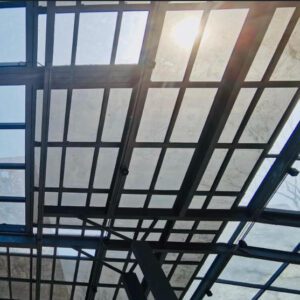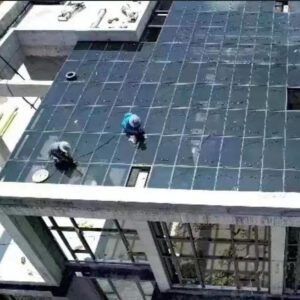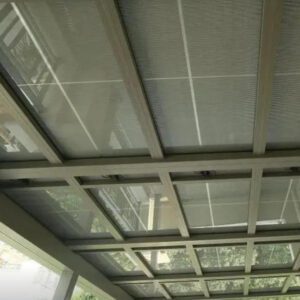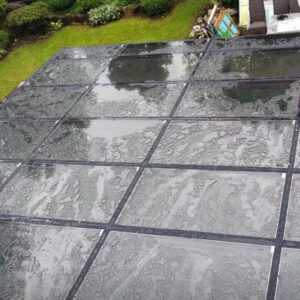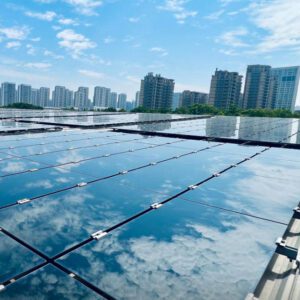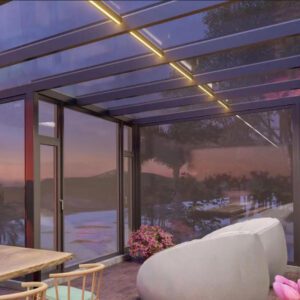
Solar tile roofs and traditional rack-mounted panels are no longer competing in the same conversation — they serve different projects, different clients, and different business models. This guide breaks down every dimension that matters for curtain wall contractors, roofing firms, EPC providers, architects, and distributors making the specification call.

The choice between solar tile roofs and traditional panels is fundamentally a project-type decision — not a technology debate. Understanding the trade-offs at a specification level is what separates trusted advisors from commodity suppliers.
Executive Summary: Addressing the Core Dilemma in Solar Integration
The commercial construction and energy sectors are converging faster than most firms anticipated. Roofing contractors are being asked to specify solar. EPC firms are being pulled into façade integration conversations. Architects are writing BIPV into specification documents that purchasing teams do not yet know how to procure. Distributors are being asked to carry product lines they have not yet qualified.
The global BIPV market was valued at $22.6 billion in 2024 and is projected to reach $101.4 billion by 2034, growing at a CAGR of 16.2% (Market.us). Within that market, solar tile roofs (photovoltaic tiles that replace conventional roofing materials) and traditional rack-mounted panels represent fundamentally different product categories — and confusing them leads to misspecified projects, margin erosion, and client dissatisfaction.
This guide exists to resolve that confusion. It is written specifically for the professionals who make and influence specification decisions: curtain wall and roofing general contractors, specialized roofing contractors, photovoltaic EPC and energy service providers, building material brands and distributors, and architects, consultants, and design institutes.
The core decision point is this: solar tile roofs (BIPV — Building-Integrated Photovoltaics, meaning the solar cells are embedded within the building material itself rather than added on top of it) replace the roofing envelope while generating power. Traditional rack-mounted panels add a solar generation layer on top of an existing structural roof. Both technologies generate electricity. Everything else about them — cost structure, installation pathway, maintenance model, stakeholder suitability, and regulatory compliance pathway — differs significantly.
The right choice is never universal. It is determined by project type, client objectives, technical constraints, and the lifecycle economics specific to each situation. This guide gives you the data to make that determination with confidence.
Understanding Solar Tile Roofs: Technology and Application
What Solar Tile Roofs Actually Are — and How They Work
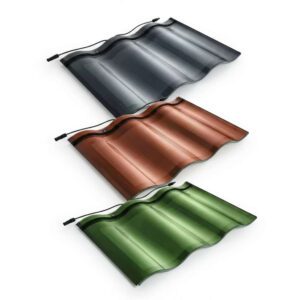
A solar tile (also called a solar shingle, BIPV roof tile, or photovoltaic shingle) is a roofing unit that contains embedded photovoltaic cells — typically monocrystalline silicon — laminated between layers of tempered glass or polymer. Each tile generates direct current (DC) electricity when exposed to sunlight, which an inverter converts to alternating current (AC) for building use or grid export.
The critical distinction from traditional panels: solar tiles become the roof. They replace conventional roofing materials — asphalt shingles, clay tiles, slate, metal panels — rather than mounting on top of them. The building envelope waterproofing, load resistance, and energy generation all happen within a single product layer.
This dual function is the entire commercial rationale for solar tiles. For new construction, it eliminates the separate roofing installation entirely. For full-roof replacements in existing buildings, it combines two capital expenditures into one. For architects and developers, it makes solar generation compatible with design briefs that explicitly exclude visible equipment.
Product Categories and Form Factors
Solar tile products currently available to the commercial and residential specification market include:
- Glass-on-glass integrated tiles (Tesla Solar Roof): Tempered glass units with colored louver film making them appear opaque from street level while transparent to sunlight from above. Premium aesthetic, premium pricing ($6.00–$8.00/W installed).
- Asphalt-format solar shingles (GAF Energy Timberline Solar): Nail-down installation alongside standard asphalt shingles. Lowest installed cost in the tile category ($3.80–$5.50/W). Best fit for residential contractors already working in asphalt.
- Metal roof-integrated tiles (Luma Solar): Designed for standing-seam metal roof systems. High wind resistance (rated to 166 mph). Strong commercial roofing application.
- Flat-profile architectural tiles (CertainTeed, Suntegra): Low-profile tempered glass units that replicate slate or flat tile aesthetics. Strong specification uptake in historic districts and premium residential.
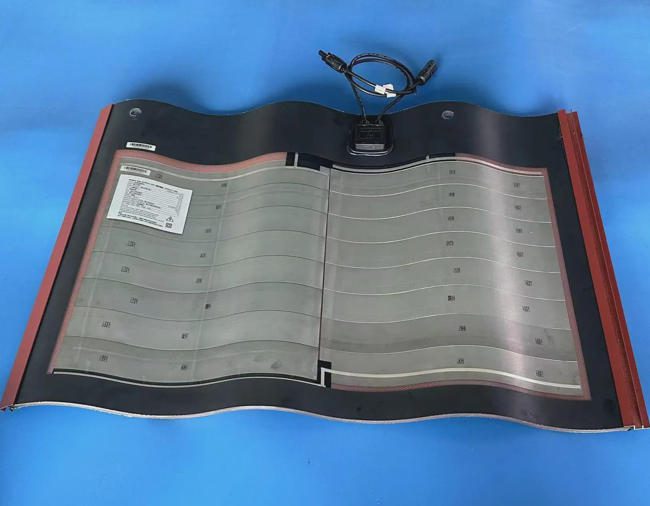
- Custom BIPV tiles for commercial and export projects: Manufacturers like Jia Mao BIPV, with 3GW annual production capacity, supply customizable monocrystalline solar tiles in flat, textured, and curved profiles — a practical supply chain option for EPC firms and distributors sourcing at volume for non-domestic markets.
Structural Compatibility and Installation Complexity
Solar tiles add uniform dead load — distributed weight across the roof deck — rather than the point loads that racking creates. Standard solar tiles weigh approximately 10–15 kg/m², comparable to ceramic roofing tiles and within the structural capacity of most residential and light commercial roof assemblies without modification.
Installation requires combined roofing and electrical expertise. The sequence: structural assessment → permit acquisition → existing roof tear-off → underlayment and waterproofing layer → tile placement with integrated wiring connections → inverter and electrical panel connection → AHJ inspection → utility interconnection. Total labor intensity runs approximately 6.9 worker-hours per kW installed, with residential projects typically spanning 5–14 calendar days depending on roof complexity and weather.
This dual-trade requirement — roofing and electrical in a single installation — is both the primary installation challenge and the primary training opportunity for firms that move early in this segment.
Traditional Solar Panels: Proven Performance and Scalability
The Rack-Mounted System — Why It Still Dominates
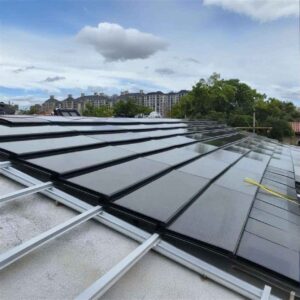
Conventional crystalline silicon solar panels mounted on racking systems remain the dominant solar installation technology globally, and for straightforward reasons: they are cost-effective, well-understood, and deployable across virtually every roof type and building configuration.
A standard commercial or residential panel measures approximately 1.0m × 1.7m, weighs 18–25 kg, and generates 380–450 watts. Modern monocrystalline panels from Tier 1 manufacturers achieve 20–23% module efficiency — the highest available for any commercially deployed photovoltaic technology. They connect via string inverters, microinverters, or power optimizers, each with distinct shading tolerance and monitoring characteristics.
The installed cost range — $2.50–$3.50/W for residential systems (EnergySage, 2025) and $1.00–$1.80/W for utility-scale commercial — reflects decades of manufacturing scale, supply chain development, and installer specialization. No other solar technology approaches this cost-per-watt competitiveness.
Reliability and Commercial EPC Track Record
The commercial bankability of traditional panels is unmatched in the solar category. Project finance institutions, utility off-takers, and insurance underwriters have evaluated traditional panel installations for over 30 years. The risk models are established, the failure modes are documented, and the O&M (Operations and Maintenance) protocols are standardized.
For EPC firms managing commercial and industrial projects, this bankability is a material business consideration. A technology that cannot be financed through standard project finance structures — or whose O&M costs are difficult to model — adds risk that ultimately comes out of project margin.
O&M costs for traditional panel systems run $12–$20/kW per year (DOE Solar Cost Benchmarks) for commercial ground-mount and rooftop systems, covering cleaning, inspection, inverter monitoring, and routine repairs. This predictability is a prerequisite for long-term service contracts — a revenue model that traditional panels support cleanly and that solar tiles currently cannot match at commercial scale.
Adaptability Across Roof Types
Traditional panels install on: asphalt shingle roofs (lag bolt racking), metal roofs (clamp-based attachment to standing seams), flat membrane roofs (ballasted or mechanically attached tilt racks), concrete or clay tile roofs (tile hooks), and even curtain wall and façade systems (custom mounting brackets). This adaptability across the full range of commercial and residential roof configurations is a key reason panels dominate the market. Solar tiles, by contrast, require minimum pitch (typically 2:12 or greater) and are incompatible with flat, green, or membrane roofs.

Performance Comparison: Efficiency, Output, and Longevity
Energy Conversion Efficiency
| Performance Metric | Традиционные панели | Solar Tile Roofs |
|---|---|---|
| Cell technology | Monocrystalline silicon | Monocrystalline silicon |
| Module efficiency (top tier) | 22.8% (Maxeon 7, 2025) | 22% (under ideal conditions) |
| Typical commercial module efficiency | 20–23% | 17–20% |
| Power density | 18–20 W/ft² | 12.8–16.1 W/ft² |
| Temperature coefficient | -0.30% to -0.35%/°C | -0.35% to -0.45%/°C |
| Performance under partial shading | High (with MLPEs or microinverters) | Moderate (varies by product architecture) |
| Annual degradation rate | 0.25–0.7%/year (NREL) | 0.3–0.5%/year |
| Power warranty | 25–30 years | 25–30 years |
| Expected system lifespan | 25–35 years | 30–50 years |
The efficiency gap — roughly 2–5 percentage points in favor of traditional panels — translates to approximately 12–23% less energy generation per square foot from solar tiles. This has a direct implication for roof-area-constrained projects: when the available roof area is limited, traditional panels generate more electricity from the same footprint.
Real-World Energy Yield Under Variable Conditions
Laboratory efficiency ratings are measured under Standard Test Conditions (STC: 1,000 W/m² irradiance, 25°C cell temperature, AM 1.5 spectrum). Real-world conditions differ. The key variables for both technologies:
Temperature: Both crystalline silicon tile and panel products lose efficiency as cell temperature rises above 25°C — approximately 0.30–0.45% per degree. Solar tiles, being closer to the roof deck with limited airflow on the underside, tend to run 3–8°C hotter than rack-mounted panels with ventilated undersides. This thermal disadvantage reduces tile real-world performance by approximately 1–3% relative to their nameplate efficiency.
Partial shading: Traditional panels equipped with microinverters (individual per-panel inverters) or power optimizers (module-level DC optimizers) manage partial shading effectively — a shaded panel affects only its own output. Solar tile systems with integrated microinverters (GAF Energy, some Tesla configurations) perform comparably. Tile systems using string inverter architecture perform worse under partial shading because one shaded tile reduces the output of the entire string.
Orientation and pitch: Both systems generate optimal output from south-facing surfaces at a pitch equal to the local latitude (30–40° in most of the contiguous U.S.). Traditional panels on flat roofs can be tilted to the optimal angle using adjustable racking — solar tiles follow the roof pitch, which may not align with the optimum solar angle.
Degradation Rates and Longevity
Both technologies carry 25–30 year power warranties, guaranteeing ≥80% of rated output at warranty end. NREL’s long-term field data shows traditional panel degradation rates of 0.25–0.7%/year, with median around 0.5%. Solar tile degradation data is less extensive given shorter commercial track records, but published manufacturer data and third-party testing indicate similar rates of 0.3–0.5%/year.
The key longevity difference is at the system level rather than the cell level. Solar tiles, being integrated into the waterproof roof envelope, eliminate the penetration points, racking hardware corrosion, and structural fastener degradation that affect rack-mounted systems over 25+ year service lives. However, if a tile fails — through impact damage, electrical fault, or weatherseal failure — the repair involves both the roofing and electrical systems simultaneously, adding labor complexity and cost.
Cost Analysis: Upfront Investment vs. Lifecycle ROI
Installed Cost Breakdown
| Cost Component | Традиционные панели | Solar Tile Roofs |
|---|---|---|
| Module/tile cost per watt | $0.30–$0.55/W | $1.20–$2.80/W |
| Racking / structural hardware | $0.15–$0.30/W | Included in tile system |
| Inverter (string) | $0.10–$0.18/W | $0.10–$0.18/W |
| Electrical BOS (wiring, conduit, combiner) | $0.20–$0.35/W | $0.25–$0.40/W |
| Labor (installation) | $0.40–$0.70/W | $0.90–$1.80/W |
| Permits and inspection | $0.08–$0.15/W | $0.08–$0.18/W |
| Total installed cost | $2.50–$3.50/W | $3.80–$8.00/W |
| Roofing replacement avoided | $0 | $8,000–$18,000 per project |
| Net effective cost (after roof offset) | $2.50–$3.50/W | $2.60–$6.20/W |
Sources: EnergySage 2025, SolarReviews 2025, DOE Solar Cost Benchmarks
The roof replacement offset is the variable that most dramatically changes the solar tile financial case. For a project where the existing roof needs replacement within 5 years regardless, the incremental cost of choosing solar tiles over conventional roofing plus traditional panels can narrow to $5,000–$15,000 for a standard residential system — a figure that changes the payback period calculation entirely.
ROI Modeling: Payback Periods and LCOE
LCOE (Levelized Cost of Energy) — the total cost of the system divided by the total energy it generates over its lifetime, expressed in $/kWh — is the standard metric for comparing energy investments with different capital costs and lifespans.
For a 10 kW system in a mid-climate U.S. location (production ratio 1.3, electricity rate $0.18/kWh, 3% annual rate escalation):
| Financial Metric | Traditional Panels (10 kW) | Solar Tile Roof (8 kW) |
|---|---|---|
| Gross installed cost | $30,000 | $52,000 |
| Roof replacement credit | $0 | -$14,000 (if applicable) |
| Federal ITC (30%, commercial) | -$9,000 | -$15,600 (solar portion) |
| Net effective cost | $21,000 | $22,400–$36,400 |
| Annual energy generation | 13,000 kWh | 10,400 kWh |
| Year 1 energy savings | $2,340 | $1,872 |
| 25-yr cumulative savings (3% escalation) | ~$78,000 | ~$62,400 |
| Net 25-yr profit | ~$57,000 | ~$26,000–$40,000 |
| Simple payback | 9.0 years | 11.9–19.5 years |
| Estimated LCOE | $0.06–$0.09/kWh | $0.10–$0.18/kWh |
Note: LCOE for tiles improves significantly when roof replacement cost is included in the alternative-scenario baseline.
For EPC firms evaluating commercial projects, the LCOE differential reinforces why traditional panels dominate at scale. The LCOE of utility-scale solar was $38–$78/MWh in 2025 (Lazard LCOE+) — commercial rooftop is somewhat higher, but still well below solar tile LCOE in most configurations.
Incentive Landscape and ITC Eligibility
Both technologies qualify for the federal Investment Tax Credit (ITC). For commercial projects, the 30% Section 48E commercial ITC applies to projects that began construction before July 4, 2026 and are placed in service by December 31, 2027 (Novoco).
Important ITC nuance for solar tiles: The IRS specifies (IRS FS-2025-01) that for integrated roofing products, only the solar-generating portion qualifies for the credit — not the structural or waterproofing components that also serve standard roofing functions. In practice, manufacturers provide a cost allocation between solar and non-solar components. Ensure your clients obtain this allocation documentation before filing.
Additionally, solar tile installations may qualify for MACRS 5-year accelerated depreciation on the solar portion in commercial applications — significantly improving the after-tax economics in the first five years of ownership.
Aesthetic and Architectural Integration
Design Flexibility as a Specification Driver
For architects, design institutes, and premium developers, the aesthetic dimension is not a secondary consideration — it is often the primary one. Projects in historic districts, urban design review jurisdictions, premium residential developments, and HOA-governed communities face design restrictions that effectively prohibit visible rooftop equipment.
Solar tiles offer what traditional panels cannot: roofline integrity. They replace the roof rather than interrupting it. From street level, a well-specified solar tile installation is indistinguishable from premium architectural roofing. Tesla’s colored louver film makes tiles appear opaque at eye level. GAF Energy’s Timberline Solar shingles integrate flush with surrounding asphalt shingles. Luma Solar’s metal tile system maintains the clean horizontal lines of a standing-seam metal roof.
For high-end residential projects, this aesthetic integration commands a 3–5% property value premium above comparable traditional panel installations, per U.S. Department of Energy research. For commercial buildings pursuing LEED Platinum or WELL certification, the integrated BIPV envelope contributes to multiple certification credits — including Energy and Atmosphere, Sustainable Sites, and Innovation categories.
Traditional Panels and the Aesthetic Compromise
Modern all-black panels with low-profile racking have significantly improved the visual profile of rack-mounted systems over the past five years. For the majority of commercial rooftop installations — particularly on flat or low-pitch roofs where the array is not visible from street level — aesthetics are not a meaningful differentiating factor.
The aesthetic constraint for traditional panels is most acute in: sloped visible-from-street residential installations, historic district projects, mixed-use urban developments with design review requirements, and premium hospitality or retail projects where the building exterior is a brand asset. In these specific contexts, the specification conversation should open with solar tiles — not begin with traditional panels and work backward.
Approval Pathways in Design-Sensitive Jurisdictions
Historic district approvals, HOA design review committees, and municipal design boards follow different evaluation criteria for solar tiles versus traditional panels. In most U.S. jurisdictions, solar tiles are evaluated as roofing materials rather than equipment — a distinction that often allows them to proceed through standard building permit processes without triggering equipment or mechanical system review.
Traditional panels trigger equipment review in most design-sensitive jurisdictions, requiring specific documentation of panel orientation, height above roofline, color, frame material, and visibility from public rights-of-way. This adds 4–12 weeks to the approval timeline in complex jurisdictions — a project schedule risk that solar tiles can eliminate.
Installation and Structural Considerations
Labor Requirements and Workforce Implications
The installation workforce requirements for each system are fundamentally different, and for contractors building service businesses, this distinction is operationally significant.
Traditional panel installation requires: a roofing certification or license to attach racking to the roof structure (jurisdiction-dependent), NABCEP PVIP certification or equivalent state electrical contractor license for the photovoltaic system, and general construction labor for panel placement and conduit running. A typical 10 kW residential installation uses 8–16 worker-hours and can be completed by a 3-person crew in a single day.
Solar tile installation requires: roofing contractor license (full roofing work is involved — tear-off, underlayment, flashing), electrical contractor license for the photovoltaic electrical system, and manufacturer-specific certification (Tesla, GAF Energy, and most tile manufacturers require product-specific training before installers can work on their systems). A typical 8–10 kW residential solar tile project uses 55–80 worker-hours across 5–14 calendar days with a crew of 3–5 workers.
For EPC firms assessing workforce capacity, this 4–7x labor differential is the primary reason solar tile installations cost $1.30–$4.50 more per watt than traditional panel installations. It also means that a crew sized for 5 traditional panel installations per week can only complete 1–2 solar tile installations in the same period — a throughput constraint that affects revenue planning directly.
Structural Load Distribution
Dead load (permanent structural weight) calculations differ between the two systems in a way that affects engineering review requirements:
Traditional panels create point loads at each racking attachment — typically lag bolts or clamps spaced 48–72 inches apart along the panel rows. Each attachment transfers concentrated force to the roof structure below. For older commercial buildings with steel decking or timber framing close to allowable load limits, these point loads may require engineering analysis to confirm structural adequacy.
Solar tiles create uniform distributed loads across the full tile coverage area — typically 10–15 kg/m², similar to ceramic or slate roofing. This load distribution is easier to evaluate against standard structural capacity tables and less likely to require supplemental engineering analysis in standard applications.
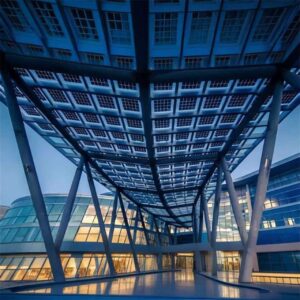
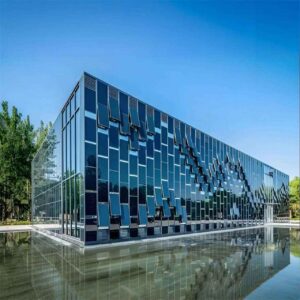
For curtain wall integration — a growing application area as BIPV façade systems move into commercial specification — the structural engineering becomes more complex. Jia Mao BIPV’s curtain wall-compatible photovoltaic glass panels are engineered for commercial curtain wall integration, with tested wind uplift resistance up to 200 km/h and structural glazing compatibility with standard unitized curtain wall systems.
Wind Uplift Resistance and Code Compliance
For roofing contractors, wind uplift resistance is a non-negotiable specification parameter — especially in coastal, high-wind, and hurricane-designated zones.
| Тип системы | Standard Wind Rating | Premium Rating | Certification |
|---|---|---|---|
| GAF Energy Timberline Solar | 130 mph | 160 mph (Class H) | UL 7103, ASTM D3161 |
| Солнечная крыша Tesla | 130 mph | Н/Д | UL 7103 |
| Luma Solar Metal Tile | 166 mph | Н/Д | Miami-Dade NOA |
| Traditional panels (standard mount) | 90–110 mph | 150+ mph (engineered) | IBC Section 1609 |
| Traditional panels (commercial ballast) | Varies by ballast weight | Н/Д | ASCE 7-22 |
For projects in ASCE 7 Wind Exposure Category D (coastal environments), Miami-Dade Notice of Acceptance (NOA) testing is the required certification for roofing products. Luma Solar is currently the only solar tile brand with Miami-Dade NOA certification — making it the only tile option viable for code-compliant installation in South Florida and other hurricane NOA jurisdictions. Verify the specific product’s certification before specifying for any coastal project.

Solar tile installation requires roofing expertise, not just solar expertise. The waterproofing layer, flashing details, and structural connections are full roofing work — which is why contractor training and certification are prerequisites before carrying this product category.
Maintenance, Durability, and Warranty Support
Maintenance Requirements by System Type
Traditional panels have a well-established maintenance protocol. Annual O&M for commercial systems runs $12–$20/kW per year (DOE Solar Benchmarks), covering: periodic cleaning (2–4 times/year in most climates), annual electrical inspection, inverter monitoring and firmware updates, and replacement of failed panels or inverters as needed. Replacing a single failed panel — a common maintenance event — takes approximately 2 hours for a 2-person crew.
Solar tiles require the same cleaning schedule but have a fundamentally different repair model. Replacing a single damaged tile requires: isolating the electrical circuit, removing surrounding tiles to access the damaged unit (because tiles interlock and have embedded wiring), replacing the tile, re-sealing all disturbed waterproofing layers, and re-inspection. A single-tile replacement that takes 2 hours for a traditional panel can take 6–12 hours for a solar tile — and in some tile architectures, requires removing a significant roof section to access the damaged unit.
For commercial property managers and EPC firms building long-term O&M service models, this repair labor differential is a meaningful cost and scheduling variable. Budget 1.5–2x the per-incident repair cost for solar tile systems versus traditional panels when building O&M projections.
Warranty Coverage Comparison
| Warranty Dimension | Традиционные панели | Solar Tile Roofs |
|---|---|---|
| Power warranty duration | 25–30 years (≥80% output) | 25–30 years (≥80% output) |
| Product (defect) warranty | 10–12 years | 10–25 years (varies by brand) |
| Roofing warranty | N/A (separate roofing product) | 10–25 years (combined with solar warranty) |
| Workmanship warranty | Installer-dependent (typically 1–5 yrs) | Installer-dependent; manufacturer-certified installers required |
| Degradation rate guarantee | ≤0.5–0.7%/year | ≤0.5%/year |
| Warranty transferability | Standard — transferable to new owner | Transferable (verify by brand) |
Industry insight: For EPC firms structuring O&M contracts or Energy Performance Contracts (EPCs), the warranty structure of solar tiles creates a complication. The combined roofing-and-power warranty from a single manufacturer seems comprehensive — but it also means that a roofing defect (not uncommon in complex residential installations) can generate a warranty claim that triggers both product and workmanship investigations simultaneously. Traditional panels separate the roofing warranty (from the roofing contractor) from the power warranty (from the panel manufacturer) — a cleaner liability structure for commercial project finance.
Service Network Accessibility
Traditional panel service is available through any NABCEP-certified solar technician — a workforce of tens of thousands across all U.S. markets. Lead time for a panel replacement or inverter repair in most metropolitan areas: 1–3 weeks.
Solar tile service is available only through manufacturer-certified installers. Tesla, GAF Energy, and Luma Solar each maintain proprietary installer networks. In smaller markets and rural areas, the nearest certified installer may be hundreds of miles away. Lead time for a tile repair in a secondary market: 4–12 weeks. This service accessibility gap is the single most frequently cited operational risk for solar tile programs — and it is real.
Before committing to a solar tile distribution or installation program in your territory, audit the certified installer network density for your target market. If the nearest certified technician for your primary tile brand is more than 3 hours from your project footprint, your after-sale support costs will be materially higher than your pro forma assumes.
Regulatory, Code, and Incentive Landscape
Building and Electrical Code Compliance
Both solar tiles and traditional panels must comply with the National Electrical Code (NFPA 70 / NEC), specifically Article 690 (Solar Photovoltaic Systems). The 2023 NEC’s rapid-shutdown requirement (Section 690.12) mandates that PV system voltage be reduced to ≤30V outside the array boundary within 30 seconds of initiator activation. Microinverter-based tile systems comply inherently. String-inverter-based tile systems require module-level power electronics (MLPEs) or UL 3741-listed hazard control systems.
Solar tiles are dual-jurisdictional products — they must comply with both PV codes (NEC 690, UL 61730) and roofing codes (IBC Chapter 15, IRC Section R905). This means solar tile projects typically require both building permits and electrical permits, with inspections by both building and electrical inspectors. Traditional panel projects require an electrical permit and, in some jurisdictions, a building permit for structural attachment — but not a roofing permit in most cases.
Fire Safety Ratings
Fire classification is a critical compliance parameter for roofing products under IBC Section 1505.1 and IRC Section R902.
| System | Fire Rating Available | Standard | Notes |
|---|---|---|---|
| Солнечная крыша Tesla | Class A | UL 790 / ASTM E108 | Standard configuration |
| GAF Energy Timberline Solar | Class A | UL 790 / ASTM E108 | Standard configuration |
| Luma Solar | Class A | UL 790 / ASTM E108 | Standard configuration |
| Traditional panels (roof-mounted) | Class A, B, or C | IBC 1505.9 | Depends on panel + roof deck combination |
| Traditional panels (BIPV façade) | Варьируется | IBC 1402 / NFPA 285 | Fire propagation testing required for multi-story |
Key compliance note: Traditional panels mounted on combustible roof decks (wood sheathing) must be tested as a complete system — panel plus racking plus deck — to receive a fire rating. The panel alone does not carry the rating. Verify complete system fire testing documentation with your racking manufacturer before specifying on combustible substrates (Greentech Renewables).
Building Energy Codes: Title 24, LEED, and Net Zero
California’s 2025 Title 24 Part 6 energy code — effective January 1, 2026 — significantly expands solar and battery storage requirements for new residential and commercial construction (California Energy Commission). BIPV products — both tiles and traditional panels — qualify as the solar generation component required for code compliance. However, the integration of BIPV tiles into the building envelope also contributes to the thermal performance compliance pathway, which traditional panels do not.
LEED contribution: BIPV installations can contribute to as many as 32 LEED points across Energy and Atmosphere, Sustainable Sites, and Innovation categories (Mitrex BIPV research). Solar tiles integrated into the roof plane have an advantage in the LEED Integrative Process credit — which rewards energy design decisions made early in the design phase — because they are specified as an architectural element rather than added as equipment after the design is established.
Strategic Recommendations by Stakeholder Type
For Roofing and Curtain Wall Contractors
The opportunity: Solar tile installation is a natural vertical integration for roofing contractors. You already manage the labor types required (roofing crews plus electricians), you understand structural loads, waterproofing, and building code compliance, and your existing customer relationships extend to the property owners who are the end buyers.
The risk assessment: The primary risks for roofing contractors entering solar tiles are: manufacturer certification requirements (plan for 2–4 weeks of training per crew before first installation), warranty liability overlap (your workmanship warranty interacts with the manufacturer’s product warranty), and supply chain lead times (solar tiles typically require 8–12 week lead times versus 1–3 weeks for traditional panels).
Practical recommendation: Start with GAF Energy Timberline Solar if you have asphalt shingle expertise — the installation process is closest to what your crews already know. Add one or two installer certifications before marketing the product actively. Price your first 3–5 projects conservatively to absorb the learning-curve labor overruns.
For traditional panels on commercial flat and metal roofs, the recommendation is straightforward: subcontract the electrical work to a certified solar electrician and focus on the mounting system as your value-add. Your structural and waterproofing expertise is genuinely differentiated in this market.
For EPC and Energy Service Providers
The opportunity: Traditional panels remain the commercial EPC workhorse — lower cost, faster deployment, more bankable, and better supported by O&M networks. For EPC firms serving commercial, industrial, and utility markets, traditional panels will remain the primary product for the foreseeable future.
Solar tiles enter your project mix when: a premium client with aesthetic requirements requests integrated BIPV, new construction specifications include solar tiles in the architectural drawings, or a rooftop lease structure includes aesthetic restrictions.
O&M planning: Build solar tile O&M costs at 1.5–2x the traditional panel rate. Factor the longer repair timelines into service contract SLAs. Specify monitoring systems with panel-level production data from commissioning — this is how you detect tile-level underperformance before it generates a customer complaint.
Bankability consideration: Traditional panel projects can be financed through standard solar project finance structures with well-established lender familiarity. Solar tile projects in commercial applications may encounter additional due diligence requirements — particularly around the dual roofing-and-power warranty structure and the limited field track record of some products. Involve your finance partners early in the project development process.
For Architects, Consultants, and Design Institutes
The specification opportunity: Solar tiles are the product that allows you to specify solar generation without compromising your design intent. For projects where the architectural brief includes visual continuity, roofline integrity, or zero visible equipment, solar tiles are the only technically viable solar solution.
Client communication: The financial case for solar tiles requires careful framing. The 25-year ROI is real and positive for most specifications — but the payback period is longer than traditional panels in most scenarios. Frame this correctly: the client is not choosing between solar tiles and solar panels — they are choosing between solar tiles and a conventional roof plus solar panels. When the full alternative-cost comparison is presented, the tile premium often narrows substantially.
Specification guidance: Write specifications at the performance level rather than the product level where possible. Specify minimum power output per unit area (e.g., ≥12 W/ft²), minimum power warranty duration (25 years), fire rating (Class A), and wind resistance (specific mph rating for the project’s wind zone) — then let the contractor propose compliant products. This approach keeps you design-intent-protected while allowing competitive pricing in procurement.
For Building Material Brands and Distributors
Portfolio strategy: Solar tiles represent a high-margin, specification-driven product category — the opposite of commodity distribution. The decision to carry them is not a volume decision; it is a market positioning decision. Carrying solar tiles signals to architects, premium builders, and design-forward developers that you are a specification-grade distributor, not a commodity supplier.
Inventory considerations: Solar tiles have 8–12 week lead times from most manufacturers and limited spot-market availability. Unlike traditional panels — where distributor inventory buffers are common and practical — solar tile inventory strategy should be project-driven: confirm orders before committing to procurement. The supply chain risk of holding solar tile inventory that does not move is materially higher than for traditional panels.
Pricing and margin: Solar tile distribution supports gross margins of 22–35% on product — significantly above the 12–18% typical for traditional panel distribution. The value justification is product complexity, specification support, and limited competitive availability. Price accordingly.
Jia Mao BIPV’s manufacturing capabilities — including customizable BIPV solar roof tiles in flat, textured, and curved profiles with IEC-certified quality and 3GW annual capacity — represent a viable supply chain option for distributors serving non-domestic markets or sourcing at volume for commercial projects. Their product range covers both the tile category and BIPV façade glazing, providing a single manufacturer relationship for distributors building a comprehensive BIPV portfolio.

▶ Watch: Solar Tiles vs Panels — What the Industry Doesn’t Tell You | A practical comparison covering efficiency, cost, installation, and real-world performance for solar professionals.
Glossary of Key Terms
| Term | Definition |
|---|---|
| BIPV | Building-Integrated Photovoltaics — solar cells embedded within building materials (tiles, glass, façade panels) rather than mounted on top of structures |
| EPC | Engineering, Procurement, and Construction — firms that deliver complete energy projects under a single contract |
| LCOE | Levelized Cost of Energy — total system cost divided by total lifetime energy generation; used to compare energy investments with different cost structures |
| MLPEs | Module-Level Power Electronics — microinverters or power optimizers that manage each solar panel or tile independently, improving shading performance |
| ITC | Investment Tax Credit — federal tax credit equal to 30% of qualified solar installation costs |
| Dead Load | Permanent structural weight — the weight of the building materials themselves, distributed across the structural framing |
| Point Load | Concentrated structural force at a specific attachment location — the load pattern created by racking hardware |
| NOA | Notice of Acceptance — Miami-Dade County’s product certification for building materials used in hurricane-designated zones |
| O&M | Operations and Maintenance — ongoing service activities required to sustain system performance |
| NEC 690 | National Electrical Code Article 690 — the primary U.S. electrical standard governing photovoltaic systems |
| AHJ | Authority Having Jurisdiction — the local government body responsible for code enforcement and inspection |
| STC | Standard Test Conditions — laboratory conditions (1,000 W/m², 25°C, AM 1.5) used to rate solar module performance |

For distributors and architects, the specification-grade solar tile conversation happens face-to-face — with product samples, performance data sheets, and project-specific ROI modeling. This is the consultative sales model that the category demands.
Часто задаваемые вопросы
1. What are the structural load implications of solar tile roofs vs. traditional panels?
Solar tiles add uniform dead load of approximately 10–15 kg/m² — distributed evenly across the roof deck, similar to ceramic or slate roofing. This load distribution is evaluated against standard dead load tables and rarely requires supplemental structural engineering in conventional construction. Traditional rack-mounted panels create point loads at each racking attachment — lag bolts or clamps spaced 48–72 inches apart — transferring concentrated forces to the roof framing below. For older commercial buildings or structures close to allowable load limits, these point loads may require engineering analysis to confirm structural adequacy. The design implication: solar tiles are often structurally simpler to justify in new construction; traditional panels require load path verification at each attachment point in retrofit applications.
2. Can solar tiles be retrofitted onto existing roofs?
Generally, no — at least not without a full roof replacement. Solar tiles replace the existing roofing material; they do not install over it. The installation sequence begins with removing the existing roof, applying new underlayment and waterproofing, and then placing tiles from the eave upward. For a building whose existing roof has 10+ years of remaining life, this means accepting the cost of discarding functional roofing material — which is why solar tile retrofits are most financially justified when the existing roof is already at or near end of life. Traditional panels, by contrast, attach to the existing roof structure with minimal disruption and no requirement to remove the existing roof material.
3. How do installation timelines compare between the two systems?
Traditional panels complete in 1–3 days for standard residential systems and 1–3 weeks for large commercial rooftop arrays. Solar tile installations span 5–14 calendar days for residential and longer for complex commercial applications, because the installation includes full roofing work — tear-off, underlayment, flashing — in addition to the photovoltaic electrical installation. Permitting timelines are comparable for both (2–6 weeks in most U.S. jurisdictions), but solar tile projects may require sequential building and electrical inspections rather than a combined inspection, adding 1–2 weeks to the post-installation approval process in some jurisdictions.
4. Are solar tiles eligible for the federal Investment Tax Credit (ITC)?
Yes — with an important qualification. For commercial projects (Section 48E), solar tiles are eligible for the 30% ITC for projects that began construction before July 4, 2026 and are placed in service by December 31, 2027. However, the IRS specifies that only the solar-generating portion of an integrated product qualifies — not the structural or waterproofing components. Manufacturers provide cost allocation documentation to support ITC filing. For residential projects (Section 25D), the residential clean energy credit has been affected by recent legislative changes — verify current eligibility with a tax professional for post-2025 placements (IRS).
5. Which system performs better in low-light or shaded conditions?
Traditional panels equipped with microinverters or power optimizers (module-level power electronics) significantly outperform solar tiles under partial shading because each panel operates independently. One shaded panel affects only its own output. Solar tile systems that use string inverter architecture — where tiles are connected in series — can lose output from the entire string when one tile is shaded. Solar tile systems with integrated microinverters (GAF Energy, some Tesla configurations) perform comparably to MLPE-equipped panel systems. When specifying either product for installations with seasonal shading from trees, adjacent buildings, or HVAC equipment, confirm the inverter architecture before committing.
6. Do solar tiles meet fire code requirements for commercial buildings?
Major solar tile brands — Tesla, GAF Energy, Luma Solar, CertainTeed — are UL 790 / ASTM E108 tested and rated Class A, the highest fire resistance classification for roofing materials. Class A qualification requires that the assembly withstand severe external fire exposure without contributing to fire spread. For commercial applications under IBC, verify that the complete system (tile plus underlayment plus deck) carries the Class A rating — individual product testing may not cover all substrate combinations. Traditional panels on combustible roof decks must also be tested as a complete assembly per IBC Section 1505.9 (Greentech Renewables). Product testing documentation should be requested from every manufacturer before specification.
7. How does maintenance differ for solar tile systems?
Solar tiles require the same cleaning frequency as traditional panels (2–4 times/year), but repairs are substantially more labor-intensive. Replacing a single damaged tile requires removing surrounding tiles to access the damaged unit — because tiles interlock and have embedded wiring that cannot be disconnected without disassembly. A repair that takes 2 hours for a traditional panel replacement typically takes 6–12 hours for a tile replacement. For commercial O&M service contracts, budget 1.5–2x the per-incident labor cost of traditional panel repair when modeling solar tile service economics.
8. Can traditional solar panels be integrated with curtain wall systems?
Yes — custom mounting solutions allow BIPV photovoltaic glass panels to integrate with unitized curtain wall systems in commercial façades. This is technically a BIPV application rather than a standard rack-mounted panel installation — the panels are custom-engineered to serve as the glazing infill within the curtain wall grid. Manufacturers like Jia Mao BIPV produce curtain wall-compatible photovoltaic glass with tested wind uplift resistance to 200 km/h and structural glazing compatibility with standard unitized systems. This application requires close coordination between the curtain wall contractor, the BIPV manufacturer’s engineering team, and the project structural engineer.
9. What training or certification is required to install solar tile systems?
Each major solar tile manufacturer requires product-specific installer training and certification before their warranty coverage applies to third-party installations. Tesla Certified Installer training includes online coursework and field assessment. GAF Energy requires completion of their Certified Roofing Contractor program. Luma Solar requires manufacturer training and background review. In addition to manufacturer certification, installers need: a roofing contractor license (required for the full roof tear-off and replacement), NABCEP PVIP certification or equivalent state electrical license for the photovoltaic system, and $1 million minimum general liability insurance plus workers’ compensation. The combination of roofing license, electrical license, and manufacturer certification creates a workforce constraint in most markets — which is why certified installer availability is a supply-side limiting factor for solar tile growth.
10. How do warranties differ between solar tiles and traditional panels?
Traditional panels offer a unified 25–30 year power warranty (≥80% output) from the panel manufacturer, separate from the roof and racking warranties. Solar tiles typically combine a roofing warranty (10–25 years, varies by brand) and a power warranty (25–30 years) in a single manufacturer document. The combined warranty appears comprehensive, but creates a potential complication: a roofing defect and a power defect are handled by the same manufacturer through the same claims process — which can slow resolution for either type of issue. Traditional panel warranty claims are routed to the panel manufacturer for power issues and to the installer or racking manufacturer for structural issues — separate, faster resolution paths.
11. Which solution is more suitable for large-scale commercial or industrial EPC projects?
Traditional panels dominate commercial and industrial EPC projects for three reasons: lower installed cost ($2.50–$3.50/W vs. $3.80–$8.00/W for tiles), faster deployment (days to weeks for large commercial vs. significantly longer for tile systems covering equivalent area), and proven O&M models that are financeable under standard solar project finance structures. For utility-scale and large commercial projects, solar tiles are not competitive on any financial metric. They enter commercial EPC consideration only when architectural integration is a project requirement — for premium mixed-use developments, landmark commercial buildings, or hospitality projects where the roof is visible and design-prominent.
12. Are there differences in permitting complexity?
Yes — meaningfully. Traditional panel projects require an electrical permit (universal requirement) and a building permit for structural attachment (required in most jurisdictions). The permitting pathway is standardized across most U.S. markets, and many jurisdictions offer expedited solar permits that can be approved in 1–5 days. Solar tile projects require both an electrical permit and a building permit for the roofing work — and the building permit review evaluates the product as a roofing material, not just solar equipment. In jurisdictions where solar tiles are a newer product category, the plan check reviewer may require additional documentation (UL 7103 test reports, manufacturer installation guides, fire rating certificates) that traditional panel projects do not require.
13. Can solar tiles be used in high-wind or hurricane-prone regions?
Only if the specific product has been tested and certified for the applicable wind zone. Luma Solar’s metal tile system is currently the only major solar tile product with Miami-Dade County Notice of Acceptance (NOA) — the certification required for code-compliant installation in South Florida and other high-velocity hurricane zones. Tesla and GAF Energy tiles are UL 7103 rated to 130 mph, which satisfies ASCE 7-22 wind requirements for most non-coastal U.S. locations but does not meet Miami-Dade NOA requirements. Traditional panel systems have more certified wind uplift solutions available — including engineered attachment systems designed for specific wind pressures by licensed structural engineers — and are more broadly deployable in extreme wind environments.
14. How do insurance providers view solar tile roofs vs. traditional installations?
Insurance treatment differs in several dimensions. Solar tiles are classified as roofing materials under most commercial and residential property policies, which means their replacement value is typically covered under the building structure coverage rather than equipment coverage. This can be advantageous — structure coverage limits are often higher than equipment limits. However, a combined roofing-and-solar damage claim may trigger additional investigation to determine whether damage is from a roofing defect (warranty claim), a storm event (insurance claim), or a combination. Traditional panels are generally classified as personal property or equipment under property policies, with different sublimits and claim processes. Advise clients to disclose solar installations to their underwriters during the design phase — not after installation — and obtain written confirmation of coverage treatment for both system types before project commitment.
15. What are the supply chain and lead time considerations for solar tiles?
Solar tiles require 8–12 week lead times from most manufacturers under normal demand conditions, compared to 1–3 weeks for traditional panels from distributor stock. Manufacturing capacity for solar tiles is significantly more limited than for traditional panels — the global solar tile market was valued at $1.1 billion in 2024 (Market.us) versus tens of billions for conventional panels. Supply disruptions — manufacturer allocation constraints, port delays, installation schedule changes — have historically extended lead times to 16–20 weeks in peak demand periods. For EPC firms and contractors managing construction schedules, this supply chain risk requires earlier procurement planning than conventional solar projects. Order solar tiles when the project design is confirmed — not when the installation crew is available.
Your Competitive Advantage in the Solar-Integrated Building Landscape
Choosing between solar tile roofs and traditional solar panels is not a one-size-fits-all decision — and the professionals who understand that distinction at a technical and commercial level are the ones earning specification relationships before competitors catch up.
For roofing contractors and EPC firms, traditional panels remain the operational standard: lower cost, faster deployment, predictable O&M, and proven bankability. They serve the majority of commercial, industrial, and residential solar projects efficiently and profitably. The firms that execute these projects cleanly — with proper structural assessment, code-compliant installation, and reliable monitoring — build the client relationships that bring the next project.
For architects, consultants, and premium developers, solar tiles represent a genuinely new design possibility: solar generation that works within an architectural brief rather than compromising it. The product category is real, commercially available, and increasingly specified in premium residential and commercial applications. Understanding its technical parameters, cost structure, and regulatory pathway is what converts that specification interest into delivered projects.
For distributors and building material brands, the question is not which technology to carry — it is how to position each product category for its appropriate market. Traditional panels serve volume, speed, and cost-driven procurement. Solar tiles serve specification, aesthetics, and value-driven procurement. Both belong in a comprehensive portfolio; each requires a different sales motion and customer conversation.
The BIPV market’s projected growth from $22.6 billion to $101.4 billion by 2034 does not belong to one product type. It belongs to the firms that understand both — and can guide their clients to the right solution for each project, based on real data rather than generic recommendations.
Your next solar specification decision should not be made without the right data.
Whether you are evaluating a commercial EPC project, specifying a premium residential installation, or building a distributor portfolio that captures the BIPV growth opportunity, the right product recommendation depends on the specific project — not a general preference for one technology over another.
Two ways to build that decision-making capability today:
- 📐 Download the Solar Solution Comparison Guide: A complete reference covering product specifications, cost models, compliance checklists, and stakeholder-specific decision frameworks — ready to use in client conversations and project proposals.
- 🤝 Schedule a Technical Consultation: Work directly with our B2B team to evaluate specific project requirements, identify the right product from our complete BIPV product range, and develop a supply chain strategy that protects your project schedules and margins.
The firms that position themselves as trusted technical advisors in this market — not commodity suppliers — will capture disproportionate share as the BIPV market accelerates. Start that positioning now.
Data in this article reflects market conditions and regulatory frameworks as of mid-2025. Incentive structures, code requirements, and product specifications change — verify current information with manufacturers, tax professionals, and the applicable authority having jurisdiction before project commitment. For the latest product specifications and B2B partnership information, visit jmbipvtech.com.