Solar Glass Evaluation Guide: A BIPV Decision Matrix
A facade is judged as an energy asset and as a building envelope. Solar glass has to pass both tests.
I. When Glass Has to Be a Power Plant
A glazing package used to be simple. You picked a U-value, a tint, and a price, and the glass did one job: let light in and keep weather out.
Solar glass adds a second job. It also makes electricity. That second job creates new ways for a project to go wrong.
What is solar glass? (Quick answer)
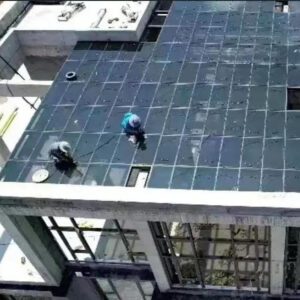
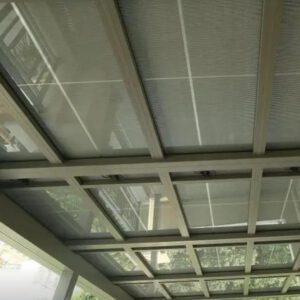
Solar glass is architectural glass with photovoltaic (PV) cells or thin-film layers built in. It works as a window, curtain wall, skylight, or canopy panel and generates power at the same time. It falls under Building-Integrated Photovoltaics (BIPV), which means solar products that replace building materials instead of sitting on top of them.
Why the evaluation is harder than it looks
Think about who reads the submittal. The architect checks color and transparency. The EPC checks watts and strings. The glazing contractor checks weight, tolerances, and sealants. The owner checks payback.
Each person can approve the same panel for a different reason, and nobody owns the gaps between them. At Jia Mao Bipv, most of the project problems we are asked to help with sit in those gaps.
What this guide gives you
The outline below is a decision matrix. It scores solar glass across seven areas: energy, optics, thermal behavior, structure, installation, electrical compatibility, and long-term reliability. It ends with a supplier vetting method.
The market is moving quickly, so the stakes are rising. The solar PV glass market was valued at USD 18.46 billion in 2025 and is forecast to reach USD 93.72 billion by 2034.
Codes are pushing in the same direction. The EU’s recast directive requires zero-emission buildings for all new construction from 1 January 2030, and for public buildings from 1 January 2028. Roofs alone often cannot carry that load, so walls and glazing are next.
Watch: BIPV and Advanced Glazing in 2 Minutes
Click to watch on YouTube.
The Decision Matrix at a Glance
You can paste this table into Excel and add your own scores from 1 (poor) to 5 (excellent). Weights are a starting point. Adjust them to your project.
| Area | Suggested weight | The question to answer | Section |
|---|---|---|---|
| Energy yield | 25% | How many kWh will this surface really make? | II |
| Optics and aesthetics | 15% | Does it look right, and is the daylight comfortable? | III |
| Thermal performance | 10% | Does it help or hurt the HVAC load? | IV |
| Structure and safety | 25% | Will it carry the loads and stay in the frame if it breaks? | V |
| Electrical and monitoring | 10% | Does the backend match the glass layout? | VII |
| QA and warranty | 10% | Will it still perform in year 20? | VIII |
| Supplier and lead time | 5% | Can they deliver the right glass on time? | IX |
Suggested weights. These are a planning framework from our team, not an industry standard. A hospital or high-rise might raise Structure to 30%, and a retail flagship might raise Aesthetics.
If the chart does not load in your editor, the table above holds the same numbers.
II. Technical Performance Criteria: Energy and Efficiency
Maximizing energy harvest starts with honest numbers. A facade is not a rooftop, and a module’s rated power is measured in a lab, not on your building.
Point 1: Conversion Efficiency and Power per Square Meter (W/m²)
Conversion efficiency is the share of sunlight that becomes electricity. For architects, the more useful number is W/m², which is how much power one square meter of glass can make at peak sun.
Here are typical ranges we see in BIPV specifications:
| Glass type | Typical power density | Common use |
|---|---|---|
| Opaque PV glass (monocrystalline) | 120 – 220 W/m² | Spandrels, parapets, canopies |
| Semi-transparent PV glass | 40 – 180 W/m² | Curtain wall vision glass, skylights |
| Thin-film (CdTe, CIGS) | Lower per m², steadier in heat | Curved or high-transparency glass |
| Perovskite or organic PV | Still maturing for buildings | Pilot projects, flexible surfaces |
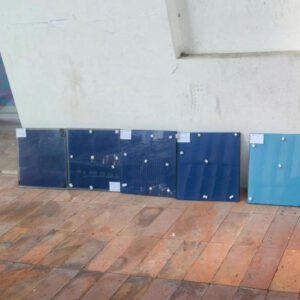
Our monocrystalline cells run above 22% efficiency, and our semi-transparent BIPV glass comes in 30%, 50%, 70%, and 90% transparency levels. The more light you let through, the fewer cells fit, so power drops.
Efficiency ranges by cell technology. Cell efficiency is only the starting point for a facade, because transparency, orientation, and heat all reduce it.
A worked example
Take a 100 m² south-facing spandrel zone using opaque glass at 150 W/m²:
A good vertical wall in a sunny climate produces about 800 to 1,000 kWh per kWp per year. A rooftop at the same site usually makes 1,200 to 1,500.
That gap between wall and roof is geometry, not a flaw. Just make sure the owner hears it before the project starts, not after the first utility bill.
Industry insight: Walls often have 1.5 to 3 times more area than the roof on mid-rise and high-rise buildings. A lower yield per kWp can still add up to more total energy than the roof can offer.
Point 2: Temperature Coefficients and Thermal Stress
A temperature coefficient tells you how much power a module loses for every degree Celsius above 25 °C. Crystalline silicon modules typically lose about 0.35% to 0.40% per °C. Some HJT (heterojunction) cell types lose less. Ask for the Pmax coefficient on the datasheet, not just the voltage one.
At a cell temperature of 65 °C and γ = 0.40%/°C, that is a 16% loss.
Calculated from a -0.40%/°C coefficient. Real modules vary, so use your datasheet value.
Why this matters for glass: an insulated spandrel has no airflow behind it, so modules can reach 70 to 85 °C on a hot afternoon. A ventilated gap behind the glass helps. Thermal cycling also stresses solder joints and seals, which is why IEC 61215 includes a test between -40 °C and +85 °C.
Point 3: Shading Analysis and String Voltage
Modules in a string are wired in series, like old Christmas lights. Their voltages add up, but the current is limited by the weakest module.
When a shadow covers part of one module, that module can drag the whole string down. Bypass diodes are the safety valves that let current go around a shaded section. Half-cut cells, common on 182 mm products, also keep a small shadow from taking out a large area.
A quick rule of thumb: a shadow over 10% of a module can cut its output by 30% to 50% unless diodes or module-level electronics are in place.
Use this checklist before you freeze the electrical layout:
- Run a 3D shade study for each elevation, floor by floor.
- Group modules by orientation и by shade pattern. Never mix east, south, and west on one string.
- Check that the string voltage stays inside the inverter’s MPPT window, including on the coldest morning and the hottest afternoon.
- Decide where microinverters or optimizers beat a simple string layout.
For help with zone-by-zone decisions, our PV glass suitability assessment offers a scoring method.
III. Optical and Aesthetic Evaluation for Architects
Solar glass still has to look like architecture. A panel that earns a big yield but gets rejected by the design review earns nothing.
A BIPV glass facade does what normal glazing does. It blocks weather, admits daylight, and keeps the view, and it also generates electricity.
Point 1: Light Transmission and VLT
VLT (Пропускание видимого света) is the percentage of visible daylight that passes through the glass. Glass with 30% VLT lets in 30% of the light.
Higher VLT means a brighter room and fewer cells. Lower VLT means more power and a darker room.
| Transparency level | Best for | Trade-off |
|---|---|---|
| 10 – 20% | Spandrels, shaded zones | Very little view or daylight |
| 30% | Offices with glare problems | Good solar control, modest daylight |
| 50% | Atriums, corridors, lobbies | Balanced light and power |
| 70 – 90% | Retail fronts, view zones | Lower power, best clarity |
Наш сайт transparent solar panel comparison walks through this trade-off for windows and skylights.
A real-world case helps. A university atrium needs 600 m² of skylight glass. A 40% product keeps the space bright and makes less power, while a 15% product makes more power and feels more like a covered court. The right answer is not the highest efficiency. It is the best balance for the people under the glass.
Point 2: Color Consistency, Transparency, and Hidden Cells
ΔE (Delta E) measures how different two colors look. A ΔE below 3 is hard for most people to see. Ask any supplier for a ΔE tolerance in writing, and for how long it is warranted.
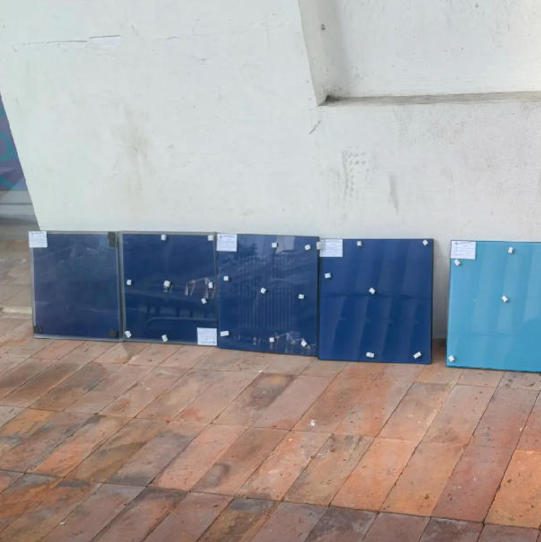
Наш сайт colored glass line carries a 30-year color warranty held to ΔE under 3. The reason this matters is replacement. A panel made years later may not match the original, so order spares from the same batch up front.
Hidden-cell technologies reduce the “solar look.” The main tools are:
- Invisible busbar designs. Busbars are the thin metal lines that collect current. Thinner or hidden ones give a clean, uniform surface.
- Dark or color-matched backsheets and interlayers. They hide cell edges and wiring.
- Custom cell arrangements. Patterns can be tuned to read as a deliberate facade rhythm.
Every color or hiding trick costs some light for the cells. Always ask for the percentage of power lost and put it in the contract.
A case study in “invisible” solar
The Copenhagen International School is a landmark example. Its facade is covered with roughly 12,000 colored PV panels, and from the street it reads as shimmering green-toned cladding, not as solar panels.

Copenhagen International School. Photo: Marta Victoria, Wikimedia Commons, CC BY-SA 4.0.
Point 3: Glare Control and Reflectivity
Standard glass reflects roughly 8% of light across its two surfaces. AR (anti-reflective) coatings and textured glass can lower that number and soften what neighbors see. Neighbors, drivers, and planners may complain about glare, so check it early.
Ask for:
- Measured reflectance data for the exact glass finish.
- A glare study for south- and west-facing elevations facing roads or taller buildings.
- A mock-up viewed at the real angles, at different times of day.
Textured or matte finishes diffuse reflections better than smooth finishes, with a small power trade-off. You can see the thinking behind that choice in our guide to solar glass types for BIPV.
IV. Thermal Performance and Building Physics
Solar glass must fit your thermal strategy. If it adds heat or condensation problems, you may lose in HVAC what you gain in kWh.
Glazing is the most thermally vulnerable part of an envelope. A single clear pane passes heat about 10 times faster than an insulated wall.
Point 1: U-Value and SHGC to Reduce HVAC Loads
U-значение measures how fast heat flows through the glass. Lower is better. SHGC (коэффициент солнечной теплоотдачи) measures how much of the sun’s heat gets in, on a scale of 0 to 1.
| Glass build-up | Typical U-value (W/m²K) | Note |
|---|---|---|
| Single laminated PV glass | 5.0 – 5.8 | Too leaky for most energy codes |
| Double-glazed PV unit | 1.8 – 2.7 | Common for curtain walls |
| Double unit with low-E inner lite | About 1.1 – 1.6 | Depends on gas fill and spacer |
| Triple-glazed PV unit | 0.8 – 1.2 | Cold climates, high-performance targets |
Cell coverage acts as built-in shading. Our transparent PV glass lists an SHGC range of 0.15 to 0.45 and rejects about 85% of infrared heat. In hot climates that can cut cooling loads. Our solar glass wall vs. traditional glazing article cites 35% to 45% HVAC savings in hot-climate retrofits.
In cold climates, low heat gain is not always a win, because you lose free winter heat. Ask your energy modeler to compare heating, cooling, daylight, and PV output together. For code reference, LEED awards points for energy performance. Glass that cuts HVAC load and makes power helps on two lines.
Point 2: Thermal Breaks and Condensation Prevention
A thermal break is an insulating strip inside a metal frame that stops heat from bridging from outside to inside. Without it, the frame is the coldest surface in the room.
Condensation happens when warm, humid indoor air touches a cold surface. Water collects, then attacks seals, wiring, and finishes. Here is what keeps it out:
- Thermally broken mullions and transoms.
- Warm-edge spacers in insulated units.
- Double or triple glazing, so the inner surface stays warmer.
- Good edge seals, which also protect against moisture reaching cells and junction boxes.
Point 3: Impact of PV Heat Absorption on Indoor Temperature
PV cells convert only about 20% of sunlight to power. Most of the rest becomes heat, and the glass gets hot.
The usual fix is placement. Put the PV layer in the outer lite of an insulated unit. Use a low-E coating on the inner lite. Keep a ventilated or insulated cavity between them. Then ask your energy modeler to run the actual glass data in a thermal simulation, not a generic window assumption.
V. Structural Integrity and Safety Standards
Solar glass is a building component first. It has to carry wind, hold its weight, and stay in the frame if it cracks.
Point 1: Wind Load Resistance and Mechanical Testing
A simple wind pressure estimate:
Here q is pressure in Pa and V is wind speed in m/s. At 45 m/s, q is about 1,241 Pa. Corners and high-rise elevations see much higher local suction, often 2.5 to 4.0 kPa.
Test standards to know:
| Standard | What it covers |
|---|---|
| IEC 61215 | PV module design qualification, including mechanical load (2,400 Pa wind, 5,400 Pa snow) and hail |
| IEC 61730 | PV module safety |
| EN 13830 / ASTM E1300 | Curtain wall performance and glass load design |
| EN 12150 / ASTM C1048 | Tempered and heat-treated glass |
| EN 14449 / EN 356 | Laminated glass and security glazing |
Our ultra-clear tempered glass is rated for 4.0 kPa wind pressure, which meets typical curtain wall needs.
Weight matters too. BIPV glass modules usually weigh 20 to 35 kg/m², and thick laminated insulated units can reach 50 kg/m² or more. Tell your structural engineer early. It changes anchors, brackets, and slab edge checks.
Point 2: Tempering, Lamination, and Shatter Safety
Закаленное стекло is heat-treated so its surfaces are in compression. It is about four times stronger than regular glass, and it breaks into small, blunt pieces. Our tempered laminated BIPV glass is tempered at about 680 °C and reaches surface compression above 69 MPa. It uses a 0.76 mm PVB interlayer.
Ламинированное стекло bonds two or more sheets with a plastic interlayer. When it cracks, the pieces stay stuck. That is why overhead and guard applications use it.
For high-security zones, our laminated BIPV photovoltaic glass is 11 mm thick (5 mm + 1 mm EVA + 5 mm tempered) and is rated EN 356 P5A.
Industry insight: Tempered glass can, rarely, break on its own because of tiny nickel sulfide inclusions. A heat soak test (holding glass at about 290 °C) forces weak pieces to fail in the factory, not on your facade. Ask for it on high-rise orders.
Here is a short video that shows the difference in how these glass types break:

Click to watch on YouTube.
Point 3: Impact Resistance and Long-Term Weathering
IEC 61215 includes a hail test that fires 25 mm ice balls at 23 m/s. The hail impact test is a qualification test for certification and design work, not something run on every production panel. It uses a pneumatic launcher at 10 or more impact points, and no visible damage is allowed.
Weathering is the slow killer. Two other tests worth knowing are damp heat (1,000 hours at 85 °C and 85% humidity) and UV exposure. Material choices matter here. We use imported POE encapsulant films that improve UV aging resistance by about 40%, and fluorocarbon backsheets built for 30 years of UV exposure.
Fire is the other factor. In FM’s large-scale BIPV facade fire tests, the hazards were cavity fire spread, glass shattering, burning encapsulants, and falling debris. Ask for fire data on the whole wall assembly, not only the module.
VI. Integration and Installation Coordination (The Contractor’s Perspective)
Most BIPV problems happen at interfaces, not in the cells. This is where the glazing contractor and the electrical EPC have to talk before the shop drawings are signed.
Envelope first, wiring second. That order prevents most leaks and callbacks.
Point 1: Frame Compatibility and Mounting Precision
A solar glass unit is heavier and less forgiving than normal glazing. Check four things before you order:
- Glass-to-frame fit. Confirm pocket depth, bite, and setting blocks for the actual glass thickness.
- Sealant compatibility. Sealants must be tested against the PV laminate’s edge and interlayer. ASTM C1087 is the common compatibility test.
- Tolerances. Mullion spacing and anchor position must hold within the tolerance the glass supplier gives you.
- Drainage. Our frame system includes integrated drainage channels and structural adhesive strips guaranteed for 25 years, but the same logic must carry through your curtain wall frame.
For a step-by-step view, read our BIPV installation and design guide.
Point 2: Cable Management, Junction Boxes, and Waterproofing
Here are the rules we give installation teams:
- Decide cable exits and junction box positions before shop drawings are approved.
- Route DC cables through mullion cavities that stay dry. Keep them out of drainage paths.
- Use plug-in connectors rated for outdoor use, and leave a drip loop at every connection.
- Keep junction boxes accessible. If one connector fails, the repair should take hours, not a facade teardown.
- Test insulation resistance and open-circuit voltage on every string before the joints are closed.
Наш сайт facade modules and inverter guide shows layouts for this.
Unitized systems, where glass is built into cassettes in the factory, usually cut on-site labor and make plug-in wiring easier to test.
Point 3: Thermal Expansion of Glass and Aluminum
Glass expands about 9 × 10⁻⁶ per °C, and aluminum about 23 × 10⁻⁶ per °C. The frame moves more than the glass.
For a 2,000 mm module with a 60 °C temperature swing:
- Glass: 2,000 × 0.000009 × 60 ≈ 1.1 mm
- Aluminum: 2,000 × 0.000023 × 60 ≈ 2.8 mm
- Difference: about 1.7 mm
That small number is large enough to crack an edge or tear a sealant if the pocket is too tight. Leave clearance, use slotted anchors, and keep cable loops long enough to flex.
Who Owns What? A Simple Responsibility Matrix
| Task | Glazing contractor | Electrical EPC | Architect / consultant |
|---|---|---|---|
| Glass unit, frame, sealant | Lead | Review | Approve look |
| Cable route inside mullions | Review | Lead | Approve visibility |
| String testing before closure | Support access | Lead | Witness |
| Water test of finished wall | Lead | Поддержка | Witness |
| Replacement plan for a broken unit | Lead | Lead (electrical isolation) | Approve match |
Write this into the contract. The row that nobody owns is the one that causes the dispute.
VII. Electrical System Compatibility and Safety
The backend has to match the glass. A beautiful facade with the wrong inverter strategy is a poor investment.
Point 1: Inverter Selection and String Configuration
Match the electrical design to the building geometry:
| Layout situation | Better choice | Why |
|---|---|---|
| Large, uniform south elevation | String inverter, one MPPT input per elevation | Lowest cost per watt |
| Mixed orientations, moderate shade | String inverter with multiple MPPT inputs, or power optimizers | Limits mismatch loss |
| Many small, shaded, or scattered zones (balconies, canopies) | Микроинверторы | Each module works on its own |
MPPT stands for maximum power point tracking. It is the inverter’s way of finding the best voltage for the sunlight it sees. Mixing east, south, and west modules on one input can cause mismatch losses of 15% to 20%.
Voltage matters too. Our laminated glass is rated for 1,500 V DC, while our colored glass line is rated for 600 V or 1,000 V DC. The inverter must be able to take the string voltage you design.
Point 2: DC Cabling Safety, Grounding, and Rapid Shutdown
DC electricity is harder to stop than AC. A DC arc can keep burning, so the rules are strict.
- Rapid shutdown lets firefighters cut voltage in the array to a safe level within seconds. In the U.S. it is covered by NEC 690.12. Check the local equivalent.
- Grounding and bonding must handle the frame, mullions, and any metal glazing parts that could become energized.
- Fuses and protection must match the module rating. For example, our laminated glass uses a 30 A fuse rating.
- Arc-fault protection adds another layer where the code requires it.
Involve the fire engineer and the local authority early, especially when cables run inside a fire-rated wall assembly.
Point 3: Integration with Building Management Systems (BMS)
Monitoring is how you find a problem in month three, not year three.
Ask for string-level or module-level data, and make sure it can reach the BMS through a standard protocol such as Modbus or BACnet through a gateway. Our tempered laminated glass line includes IoT monitoring. The monthly review should flag any string that falls more than a few percent below its neighbors on the same elevation.
VIII. Quality Assurance and Long-Term Reliability
Most premature failures can be spotted on paper before you place the order. You just have to know what to read.
Point 1: PID and LID
PID (Potential Induced Degradation) is a power loss caused by the voltage difference between the cells and the grounded frame. It can strike high-voltage strings in humid conditions. A common test (IEC TS 62804) runs for 96 hours under heat and humidity. Our double-layer encapsulation is designed to resist PID.
LID (Light Induced Degradation) is a loss that happens in the first hours or days of sun. For some crystalline cell types it is around 1% to 2% in year one. N-type and HJT cells usually show much less. Ask for the first-year number, not just the long-term one.
Point 2: Product Warranty vs. Linear Power Warranty
These two warranties protect different things.
- A product warranty covers defects, delamination, and failures in the glass, seal, or junction box.
- A linear power warranty guarantees a minimum output, such as 80% of rated power at year 25.
| Warranty type | Example from our product pages |
|---|---|
| Transparent glass, power | 25 years, 80% output |
| Transparent glass, optical | 15 years, less than 5% change |
| Transparent glass, product | 12 лет |
| Laminated glass, electrical | 15 years, 85% output |
| Laminated glass, structural | 25 лет |
| Tempered laminated glass, power | 30 years, 80% output |
| Colored glass, color | 30 years, ΔE under 3 |
Typical degradation of 0.4% to 0.5% per year leaves roughly 88% to 90% of power at year 25. A warranty is a floor, not a forecast. Read what is excluded and who pays for removal and reinstallation, because on a facade the labor can cost more than the glass. Our warranty and maintenance guide lists the questions to ask.
Point 3: Verifying Third-Party Certifications
A certificate is only useful if it matches the product you are buying.
Look for IEC 61215 and IEC 61730 (or UL 61730 in North America), plus building-product tests for fire and glazing. Check that:
- The certificate covers the exact model number and cell type, not a “similar” product.
- The lab is named, and the report date is recent.
- The factory address matches the one on your purchase order.
This is not a small risk. A fake IEC certificate on a 500-panel order can cost $200,000 or more in rework. Our guide on how to verify solar glass certifications walks through the checks. You can also confirm reports directly with TÜV Rheinland’s photovoltaic module services or through UL BIPV testing.
IX. Procurement and Supplier Vetting Strategy
The cheapest quote often hides the most expensive risk: the wrong glass, late.
Large facade glass has to be made, packed, shipped, and installed in sequence. A delay in any step stalls the whole wall.
Point 1: Track Record on Large-Scale BIPV Projects
Ask for projects of similar size, climate, and glass type, and ask to speak to the contractor who installed them. For instance, our team supplied the 1,200 kW BIPV photovoltaic glass project at the Wuhan Science and Technology Exhibition Center. See our real-world BIPV case studies for more examples of how teams scoped similar work.
Also ask about capacity. Our factory runs at 3 GW a year, with an automated MES system that tracks each panel through production. That matters when your order is 5,000 units and the sequence has to hold.
Point 2: Customized Dimensions and Bespoke Aesthetics
Custom size, color, transparency, and cell pattern are normal in BIPV. Ask:
- What are the minimum and maximum sizes, and the tolerance on each?
- Can they provide a full-size physical sample in your color and cell layout?
- How do they keep color consistent across batches?
- What happens to the schedule if the architect changes a dimension after approval?
Point 3: Lead Times, Packaging, and Logistics for Fragile Components
Custom BIPV glass often takes 12 to 20 weeks. A replacement unit ordered later can take 12 to 16 weeks. Plan for that, because a gap in a facade is a gap in the building’s weather seal.
Packaging is part of quality. Check crate design, edge protection, and stacking rules. Order 2% to 3% extra units, and agree on a short claim window for transport damage.
A practical supplier scorecard
| Question | Strong answer | Warning sign |
|---|---|---|
| Can you show similar projects? | Named projects, contact references | Only renderings |
| Is the certificate model-specific? | Yes, with lab report numbers | “Same family” language |
| How do you control color batches? | ΔE measured and recorded per lot | “It will be close” |
| What is the lead time in writing? | Weeks by stage, with milestones | A single vague date |
| How is breakage handled? | Agreed claim window and spares | Silence |
Наш сайт EPC contractors’ guide to BIPV glass ROI and our guide for specialized contractors cover how to line these questions up with your own delivery schedule.
X. Judge the Whole Wall, Not Just the Wattage
Solar glass works when five things line up: energy, aesthetics, structure, installation, and long-term reliability. A weak score in any one of them can cancel strong scores in the others.
Cross-disciplinary teamwork is the real specification
The architect sets the look. The EPC sets the electrical logic. The glazing contractor makes it buildable and watertight. If they only meet at handover, someone will inherit a problem.
Put them in the same meeting before the facade grid is locked. Use the matrix, agree on weights, and score the options together. A one-hour workshop can save weeks of rework.
Lifecycle value beats the lowest first price
The panel that is cheapest on day one can cost the most by year ten, through shading losses, replacement access, color mismatch, or a certificate that does not hold up. Ask for the full picture in our cost and ROI guide, and see how early design choices shape it in our guide to BIPV facade design for new construction.
For wider technical background, the IEA PVPS technical guidebook includes technical drawings and case studies for roofs, facades, and shading systems.
Your next step
Pick one live project. Score the glass options on the matrix in Section I. Bring the elevations, location, target VLT, and the weak points you found, and the Jia Mao Bipv team will review them with you. Contact Jia Mao Bipv to start.
Glossary of Key Terms
| Term | Plain-English meaning | Example |
|---|---|---|
| BIPV | Solar products that replace building materials | A skylight that is also the roof glass |
| W/m² | Power from one square meter of glass at peak sun | 150 W/m² means 15 kWp over 100 m² |
| kWp | Rated peak power of a system | A 15 kWp wall at about 850 kWh/kWp makes about 12,750 kWh a year |
| Temperature coefficient | Power lost per °C above 25 °C | -0.40%/°C means 16% loss at 65 °C |
| Bypass diode | A safety valve that lets current go around a shaded section | Keeps one shaded cell from stopping a module |
| String | Modules wired in series | Voltage adds, current is set by the weakest module |
| MPPT | The inverter’s way of finding the best voltage | One input per elevation |
| VLT | Share of visible light passing through | 30% VLT blocks most daylight |
| SHGC | Share of solar heat entering | 0.25 lets in a quarter of the heat |
| U-значение | How fast heat flows through glass | Triple units reach about 0.8 to 1.2 |
| ΔE | Color difference between two samples | Below 3 is hard to see |
| Thermal break | Insulating strip inside a metal frame | Stops the frame becoming a cold bridge |
| Закаленное стекло | Heat-treated, about 4× stronger glass | Breaks into small blunt pieces |
| Ламинированное стекло | Glass sheets bonded with an interlayer | Cracked pieces stay in place |
| PID | Power loss from voltage stress between cells and frame | Tested for 96 hours under heat and humidity |
| LID | Power loss in the first hours of sun | Often 1% to 2% for some cell types, less for HJT |
| Rapid shutdown | A system that drops array voltage fast in an emergency | Required by NEC 690.12 in the U.S. |
Professional FAQ for Architects, EPCs, and Contractors
1. How does the VLT of solar glass affect interior lighting requirements and energy credits?
Lower VLT means less daylight, so the lights may need to stay on longer. As a rough guide, a bright overcast day gives about 10,000 to 20,000 lux outside. Glass with 30% VLT lets in about 3,000 to 6,000 lux at the window plane, and that falls off quickly deeper into the room.
Run a daylight simulation for the real floor plan. Daylight and energy credits in BREEAM and LEED depend on the modeled result. If PV glass lowers lighting energy use less than it saves in cooling, ask your energy modeler to show the net effect.
2. What is the most effective way to handle the interface between the PV glass and the building’s waterproofing membrane?
Work “envelope first.” Design the flashing, drainage path, and sealant joints before the wiring is finalized. Keep cable penetrations out of the water plane. Test sealants for compatibility with the PV laminate edge. Run a field water test on a mock-up before the full wall goes up.
3. How do we calculate the actual energy yield for vertical facades compared to rooftop installations?
Use specific yield, which is kWh produced per kWp installed per year:
A good south-facing wall in a sunny climate makes about 800 to 1,000 kWh per kWp, while a rooftop at the same site makes 1,200 to 1,500. East and west walls usually give 55% to 75% of the south face, and north walls often give only 25 to 40 kWh/m² a year. Start with the PVWatts calculator for a first estimate, then run a 3D shade model for final sizing.
4. Which certifications (IEC/UL) are non-negotiable for solar glass used in high-rise commercial projects?
At minimum, ask for IEC 61215 and IEC 61730 (UL 61730 in North America), with a report that names your exact model. For building use, add glazing safety tests (tempered and laminated glass standards), fire data for the full wall assembly (such as NFPA 285 or EN 13501-1, depending on region), and wind load design under your local curtain wall code.
5. How do we resolve conflicts when the architect’s aesthetic vision clashes with the EPC’s electrical efficiency requirements?
Replace opinions with numbers. Agree on a minimum annual kWh and a maximum VLT or color tolerance. Build a full-size mock-up, then score two or three options on the decision matrix together. Most conflicts end when both sides see the actual power cost of a color or cell pattern, usually a few percent.
6. What are the primary causes of “hot spots” in solar glass, and how can they be prevented during the design phase?
A hot spot happens when one cell or area gets much hotter than the rest. The usual causes are partial shading, cracked cells, poor solder joints, and cell mismatch. Prevent them with a shade study, bypass diodes, half-cut cells, and electroluminescence (EL) images from the factory. After install, a thermal camera scan during commissioning can catch early problems.
7. In the event of a glass breakage, how is a single pane replaced without compromising the entire electrical string?
Design for it. Use plug-in connectors in accessible junction boxes, so one module can be disconnected without opening the whole wall. In shaded or scattered zones, microinverters or optimizers isolate one module from the others. Keep spare units from the same batch for color match, and remember that a replacement can take 12 to 16 weeks if you did not order spares.
8. How does the U-value of BIPV glass compare to high-performance Low-E glass?
PV glass does not change the unit’s U-value much, because U-value mostly depends on the number of panes, the gas fill, the coatings, and the spacer. A double PV unit with a low-E coating on the inner lite can come close to a standard low-E double unit, in the range of about 1.1 to 1.6 W/m²K. Always ask for a certified U-value for the full unit, not just the PV laminate.
9. What is the recommended method for cleaning solar glass on high-rise facades to avoid scratching the PV layer?
Use deionized or soft water, a soft microfiber pad, and a pH-neutral cleaner approved by the supplier. Avoid abrasive pads and strong solvents, which can damage coatings and void warranties. Clean one or two times a year using the same rope access or building maintenance unit as the rest of the facade. Self-cleaning coatings reduce the burden. Our coating cuts maintenance cost by about 30%.
10. How do we manage the thermal expansion differences between the solar glass and the curtain wall mullions?
Leave room for movement. A 2 m module with a 60 °C swing sees about 1.7 mm of difference between glass and aluminum. Use slotted anchors, adequate glazing pocket clearance, setting blocks in the right positions, and flexible sealants. Give cables a service loop so they can flex without pulling on connectors.
11. What is the typical degradation rate of BIPV glass over a 25-year lifecycle?
Typical crystalline silicon degrades about 0.4% to 0.5% per year, which leaves about 88% to 90% at year 25. Warranties set a lower floor: 80% at 25 years for our transparent glass and 80% at 30 years for our tempered laminated glass. Heat, humidity, and PID risk can speed up loss, so ask for PID and damp-heat test results.
12. Can solar glass be integrated into curved architectural elements without losing significant efficiency?
Yes, with the right product. Curved or cold-bent glass can use smaller cell strips, and flexible thin-film options (such as CIGS) suit tighter radii. Efficiency per m² is usually lower than flat monocrystalline glass, and you also lose some yield to tilt and shading. We are developing flexible BIPV materials for curved designs. Share your radius and glass thickness early so the supplier can confirm what is feasible.