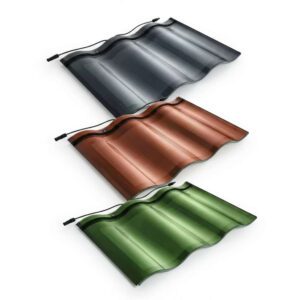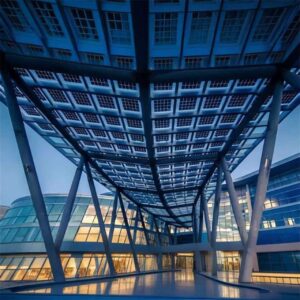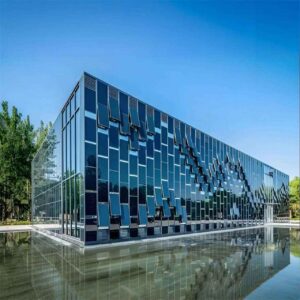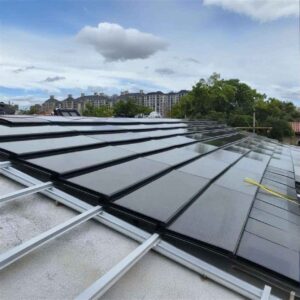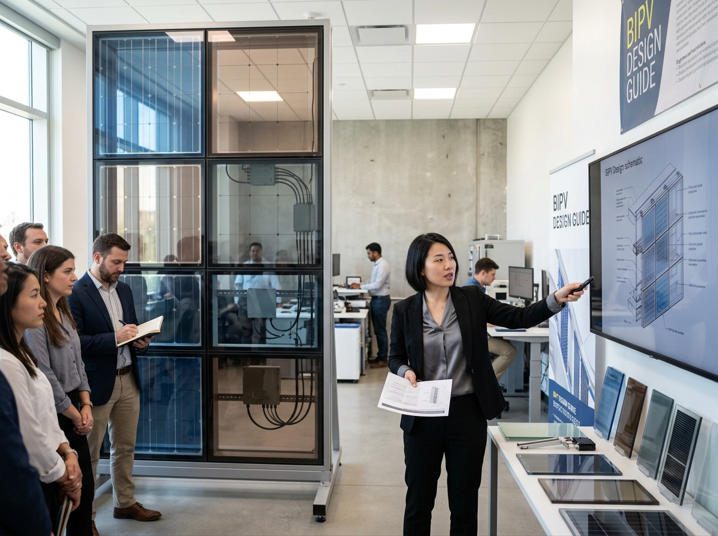
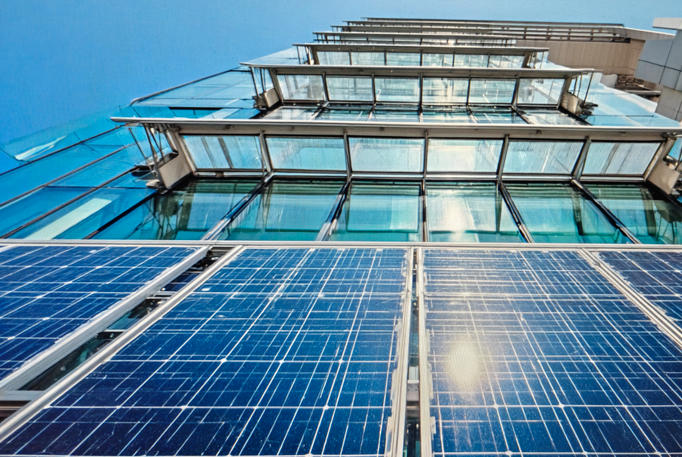
A BIPV façade is not a solar panel bolted to a wall. It is a building envelope component that happens to generate electricity — and that distinction reshapes every design decision, from cell chemistry to gasket material to conduit routing. The façade must simultaneously manage thermal loads, shed water, resist wind suction at elevation, meet fire classification standards, and look intentional rather than applied. Electricity generation, while valuable, is a secondary function that cannot compromise any of these primary building-envelope obligations.
The global BIPV façade market was valued at $4.1 billion in 2024 and is projected to reach $28.3 billion by 2034, growing at a CAGR of 21.3% according to Market.us. That growth is driven not by technology novelty but by convergent pressures: tightening energy codes in the EU (EPBD recast requiring near-zero-energy for new buildings), expanding net-zero mandates across North American municipalities, and the simple arithmetic that vertical façade surfaces represent 1.5–3× more envelope area than rooftops on mid- and high-rise buildings. For dense urban cores where rooftop space is already claimed by mechanical equipment, a BIPV façade may be the only viable on-site generation strategy.
This guide addresses the complete design chain for a BIPV-enabled façade — from establishing project performance targets through module selection, inverter architecture, weatherproofing, electrical safety, thermal management, structural integration, durability planning, code compliance, and project delivery. The target audience is the design team: architects, façade consultants, MEP engineers, and project managers who need to coordinate across disciplines to deliver a system that works as both a building envelope and a power plant.
Project Goals and Requirements
Energy Targets and Performance Metrics
Every BIPV façade project should begin with a quantified energy target, not an aspiration. The question “how much energy should this façade produce?” has no universal answer — it depends on building orientation, latitude, local irradiance, façade area, shading from adjacent structures, and the transparency requirements of the glazing. But the range is well-established: south-facing opaque BIPV façades in Central European climates yield 80–120 kWh/m²/year; the same orientation in sunbelt climates (southern U.S., Mediterranean, Middle East) produces 140–200 kWh/m²/year. East and west façades typically deliver 55–75% of south-facing yield, while north façades in the Northern Hemisphere rarely justify the BIPV investment, generating only 25–40 kWh/m²/year from diffuse radiation.
The performance metric that matters most is specific yield: kWh produced per kWp installed, annualized. A well-designed south-facing BIPV curtain wall in a latitude-30° location should target 800–1,000 kWh/kWp/year. Compare this to a rooftop array at the same location, which typically achieves 1,200–1,500 kWh/kWp/year. The 30–40% yield reduction on a vertical surface is a physical reality of incidence angles, not a design deficiency — and it must be communicated clearly to stakeholders who expect rooftop-level returns from a wall. According to a 2025 study published in ScienceDirect, façade PV potential averages 68.2% of rooftop potential globally, with some high-latitude cities exceeding that ratio due to low winter sun angles favoring vertical surfaces.
Aesthetic, Architectural, and Regulatory Constraints
Aesthetic requirements drive module selection more forcefully in façade applications than in any other PV context. A rooftop array can prioritize efficiency because no one sees it; a façade is the building’s public face. Architects typically specify color, pattern, transparency level, module dimensions, and joint width before the electrical engineer begins sizing the system. This is the correct sequencing — the building’s visual identity is a non-negotiable starting point, and the electrical system must adapt to it.
Regulatory constraints vary by jurisdiction but commonly include zoning restrictions on reflective surfaces (glare studies may be required for BIPV facades facing public roads or neighboring buildings), historic district design review (which may prohibit visible PV elements entirely), and fire-code requirements that differ between opaque cladding panels and vision glazing. In the EU, the Construction Products Regulation (CPR) governs BIPV as a construction product; in the U.S., building codes (IBC/IRC) and electrical codes (NEC Article 690) create a dual compliance framework that the design team must navigate simultaneously.
Long-Term Maintenance and Lifecycle Considerations
A BIPV façade is a 30–50 year building component with a 25–30 year electrical warranty. Unlike rooftop arrays that can be accessed with standard fall protection, façade modules may require boom lifts, rope access, or building maintenance units (BMUs) for inspection and replacement. The lifecycle cost model must account for these access methods — a single panel replacement via rope access team can cost $2,000–$5,000 depending on building height and complexity, compared to $200–$500 for a rooftop panel swap.
Design for maintainability means specifying standardized module sizes that allow individual replacement without disturbing adjacent units, accessible junction boxes and connector locations, and a monitoring system granular enough to identify a failing module before it requires emergency intervention. Leading BIPV transparent glass systems are now designed with these maintenance realities in mind, using standardized glazing pocket dimensions that align with conventional curtain wall replacement procedures.

Solar Module Selection for BIPV
Module Types (Crystalline, Thin-Film, Emerging Technologies) and Form Factors
Three technology families dominate BIPV façade applications, each with distinct trade-offs:
Crystalline silicon (c-Si) remains the efficiency leader, with monocrystalline cells achieving 22–24% conversion efficiency at the cell level. In BIPV façade modules, c-Si cells are typically laminated between glass layers in a glass-glass configuration, either as full-density opaque panels or with strategic cell spacing to create semi-transparent patterns. The primary limitation for façade use is rigidity — c-Si wafers cannot conform to curved surfaces — and the visible cell pattern, which some architects consider incompatible with sleek glazing aesthetics. However, advancements in half-cell and shingled-cell configurations have made c-Si patterns significantly more uniform and visually refined.
Thin-film technologies — primarily CdTe (cadmium telluride), CIGS (copper indium gallium selenide), and a-Si (amorphous silicon) — offer advantages in façade contexts that offset their lower efficiency (12–19%). Thin-film modules can be deposited on flexible substrates for curved applications, provide more uniform appearance without visible cell grids, and exhibit better performance under partial shading and high temperatures (a critical advantage on façades that routinely reach 70–85°C). CdTe modules show a temperature coefficient of approximately –0.25%/°C, compared to –0.35 to –0.40%/°C for c-Si, translating to 3–5% higher relative yield on hot south-facing façades.
Emerging technologies — particularly organic PV (OPV) and perovskite-based cells — are entering the market with unique form factors. NEXT Energy’s 2025 installation of large-format transparent OPV façade panels demonstrated the potential for truly colorless semi-transparency, though efficiency remains below 10% and long-term durability data is limited. Perovskite-silicon tandems, with laboratory efficiencies exceeding 33%, represent the next frontier — but as of early 2026, no perovskite BIPV product carries the full IEC 61215/61730 certification suite required for building-envelope deployment.
| Технология | Диапазон эффективности | Temp. Coefficient (%/°C) | Transparency Options | Curved Surface | Façade Suitability | 25-Year Degradation |
|---|---|---|---|---|---|---|
| Mono c-Si (N-type) | 20–24% | –0.29 to –0.35 | Semi (cell spacing) | No (rigid wafer) | Opaque / Spandrel | ~10% total |
| CdTe Thin-Film | 14–19% | –0.20 to –0.25 | Yes (laser patterned) | Limited | Vision / Curtain Wall | ~12% total |
| CIGS Thin-Film | 13–17% | –0.30 to –0.36 | Limited | Yes (flexible) | Curved / Rainscreen | ~14% total |
| a-Si Thin-Film | 6–10% | –0.20 | Yes (uniform) | Yes (flexible) | Large-area glazing | ~15–20% total |
| OPV (Organic) | 5–10% | Variable | Yes (colorless) | Да | Emerging / Pilot | TBD (limited data) |
| Perovskite Tandem | 25–33% (lab) | TBD | Possible | Possible | Future (no IEC cert yet) | TBD |
Table: BIPV module technology comparison for façade applications. Efficiency ranges reflect commercially available modules as of early 2026.
Integration Constraints with the Façade (Angles, Shading, Coverage)
Vertical mounting reduces annual irradiance capture by 30–40% compared to optimal-tilt rooftop mounting at most latitudes. However, façade-mounted modules capture proportionally more energy during morning and evening hours, and during winter months when the sun angle is low — a pattern that often aligns better with commercial building occupancy and peak-demand schedules than a rooftop array’s midday production peak.
Self-shading within the façade array is a persistent design challenge. Horizontal mullions, projecting floor slabs, balconies, and adjacent building elements can cast shadows that move across the façade throughout the day. Because BIPV modules on façades cannot be tilted away from these obstructions (they are the façade), shading mitigation relies entirely on electrical design: bypass diodes within modules, module-level power electronics, and string layouts that isolate shaded zones from unshaded zones. The IEA-PVPS Technical Guidebook recommends including dummy (non-active) cells in predictably shaded module areas rather than forcing active cells to operate under chronic shading conditions.
Reliability, Warranty, and Supply Chain Considerations
Module selection for a façade project carries higher stakes than for a rooftop array. A module failure on a roof is an inconvenience; a module failure at the 30th floor of a curtain wall is a logistics and safety event. The selection criteria must therefore weight reliability and manufacturer stability more heavily than marginal efficiency gains.
Key reliability indicators include IEC 61215 certification (design qualification and type approval), IEC 61730 certification (safety qualification), extended environmental testing beyond minimum certification requirements (e.g., 3,000-hour damp heat instead of the standard 1,000 hours), and a manufacturer with demonstrated financial stability and a credible 25-year warranty backing. Jia Mao Bipv’s high-efficiency panel lines, for example, undergo 2,000-hour UV exposure with simultaneous thermal cycling and 85°C/85% humidity testing for 1,000 hours — protocols that exceed IEC minimums and provide measurable confidence for long-service-life façade applications.
Inverter Architecture for BIPV
String vs. Microinverters vs. Power Optimizers
The inverter topology for a BIPV façade is arguably the most consequential electrical design decision, because the shading patterns on a vertical surface are fundamentally different from those on a tilted rooftop. Three architectures compete, each with distinct advantages in the façade context:
String inverters connect 8–15 modules in series per string, with all strings feeding a centralized DC-to-AC conversion unit. They are the lowest-cost option ($0.08–$0.15/W) and the most familiar to electricians. The limitation on a façade is that the lowest-performing module in a string constrains the entire string’s output. On a façade with progressive floor-slab shading, a single deeply shaded module at the bottom of a vertically oriented string can reduce the entire string’s output by 30–60%. String inverters are best suited for uniform, unshaded façade zones — typically large spandrel areas between floor slabs on a single orientation.
Module-level power optimizers (e.g., SolarEdge) pair a DC-DC converter with each module, performing per-module MPPT before feeding an optimized DC string to a central inverter. This architecture costs $0.05–$0.10/W more than a pure string system but recovers 8–15% of energy that would be lost to mismatch and partial shading. For façades with moderate, predictable shading patterns, optimizers represent the most cost-effective balance between performance and complexity.
Микроинверторы (e.g., Enphase) convert DC to AC at each module, eliminating string-level electrical dependencies entirely. They cost $0.15–$0.25/W more than string systems but maximize harvest in heavily shaded, multi-orientation façade installations. According to EnergySage’s comparative analysis, microinverter systems can harvest 5–20% more energy than string systems over a system lifetime in partially shaded conditions. For complex façades with multiple orientations, overhangs, and adjacent building shadows, microinverters often deliver the best return despite higher upfront cost.
| Фактор | String Inverter | Power Optimizer + String | Microinverter |
|---|---|---|---|
| Cost Premium (vs. String) | Baseline | +$0.05–0.10/W | +$0.15–0.25/W |
| Shade Tolerance | Poor (string-level impact) | Good (module-level MPPT) | Excellent (full independence) |
| Multi-Orientation Support | Requires separate strings | Mixed orientations OK | Any orientation per module |
| Monitoring Granularity | String-level | Module-level | Module-level |
| Rapid Shutdown (NEC 690.12) | Requires add-on devices | Inherent compliance | Inherent compliance |
| Typical Warranty | 12–15 years | 25 years (optimizer) + 12 years (inverter) | 25 лет |
| Façade Suitability | Uniform, unshaded zones | Moderate shading / mixed zones | Complex, multi-orientation |
Table: Inverter topology comparison for BIPV façade applications.
Grid Connection, Islanding, and Standard Compliance
BIPV façade systems connect to the building’s electrical distribution system, typically behind the main utility meter. Grid interconnection must comply with IEEE 1547 (U.S.) or the equivalent regional standard (EN 50549 in Europe, AS/NZS 4777 in Australia). Anti-islanding protection — the automatic disconnection of the PV system when grid power is lost — is required by all interconnection standards to prevent back-feeding a de-energized utility line and endangering maintenance workers.
Modern grid-interactive BIPV inverters incorporate smart-inverter functions including reactive power support, voltage regulation, frequency ride-through, and ramp-rate control. These features are increasingly required by utilities and distribution system operators, particularly for larger BIPV installations that can influence local voltage profiles.
Voltage, Current, and Fault Protection Strategies
Façade-mounted DC circuits present unique safety considerations compared to rooftop systems. High-rise buildings may have conduit runs of 50–100+ meters from the façade modules to the inverter room, creating voltage drop and safety challenges. String voltages in commercial BIPV systems typically operate at 600–1,000V DC (1,500V for utility-scale, but rarely for façade applications due to building-code limitations). DC arc fault detection (per NEC 690.11 or IEC 63027) is critical: a DC arc at the 20th floor, hidden within a curtain wall cavity, is significantly harder to detect and extinguish than an arc on an accessible rooftop.
Ground-fault protection must be sized for the system’s fault current capacity, and ground-fault detection interrupters (GFDIs) should be specified at thresholds below the arc-ignition energy of the enclosure materials. Surge protective devices (SPDs) rated for the system’s maximum open-circuit voltage must be installed on both the DC and AC sides of the inverter, and lightning protection integration (discussed in the Electrical Design section below) must be coordinated with the building’s overall lightning protection system.
Video: BIPV design principles covering 8 solar façade typologies — egg-crated, folded, layered, and more — with real-world case studies. (Credit: YouTube)
Weatherproofing and Enclosure Design
IP Ratings, Enclosure Sealing, and Gasket Materials
A BIPV module on a façade is, first and foremost, a weather barrier. It must prevent water, wind-driven rain, and airborne debris from entering the building interior with the same reliability as the conventional cladding or glazing it replaces. The relevant performance metric is the IP (Ingress Protection) rating: junction boxes on façade-mounted BIPV modules should carry a minimum IP65 rating (dust-tight, protected against water jets), with IP67 or IP68 preferred for modules below the third-floor line where driving rain intensity is highest.
Gasket material selection is a durability-critical decision. EPDM (ethylene propylene diene monomer) rubber is the industry standard for curtain wall glazing gaskets, with a proven 30+ year service life in architectural applications. Silicone gaskets offer superior UV resistance and a wider temperature range (–60°C to +230°C) but cost 2–3× more than EPDM. For BIPV applications where modules run hotter than standard glazing (due to absorbed irradiance converted to heat rather than transmitted), silicone gaskets are recommended for south- and west-facing zones where sustained surface temperatures exceed 70°C.
Thermal Management and Condensation Prevention
BIPV façade modules operate at significantly higher temperatures than rooftop arrays. A rooftop module benefits from convective cooling on both front and rear surfaces; a façade module integrated into a curtain wall has its rear surface insulated or enclosed, reducing heat dissipation and driving operating temperatures to 70–85°C on hot days. Research published by Green Fuel Journal confirmed that façade BIPV modules routinely exceed rooftop module temperatures by 10–15°C due to reduced wind cooling when embedded in the wall assembly.
This has two consequences. First, electrical output drops by 0.29–0.40%/°C above STC (25°C), meaning a module at 80°C loses 16–22% of its rated power — a significant and unavoidable penalty that must be modeled in energy yield projections. Second, thermal cycling between daytime highs and nighttime lows creates condensation risk within the module or within the curtain wall cavity behind it. Ventilated façade designs — where an air gap behind the BIPV module allows natural convection — reduce operating temperature by 5–15°C and minimize condensation risk, but add depth to the wall assembly and complexity to the waterproofing layer.
Wet-Dry Separation, and Abrasion/UV Resistance
The façade environment exposes BIPV modules to simultaneous UV radiation, thermal cycling, wind-driven moisture, and atmospheric pollutants — a more aggressive combination than most rooftop environments. Encapsulant materials (EVA or POE) must resist UV-induced yellowing that reduces light transmission to the cells. POE (polyolefin elastomer) encapsulant outperforms EVA in UV resistance and moisture barrier properties, and is increasingly specified for BIPV façade applications despite its 15–20% cost premium.
Glass surface coatings must balance multiple demands: anti-reflective treatment to maximize light capture, hydrophobic coating to promote self-cleaning and reduce maintenance frequency, and anti-soiling properties to prevent buildup of urban particulate matter. The Jia Mao Bipv BIPV laminated glass façade products incorporate a multi-layer surface treatment stack that addresses all three requirements, with accelerated weathering test results showing less than 3% transmittance loss after 2,000 hours of combined UV and thermal cycling.
Electrical Design and Safety
Wiring Methods, Conduit Routing, and Junction Boxes
Electrical routing in a BIPV façade is constrained by the building envelope assembly. DC conductors must travel from junction boxes on the rear of each module through the curtain wall cavity or mullion channels to vertical risers, then to the electrical room where inverters are located. The routing must avoid thermal insulation layers (which can trap heat around conductors), maintain minimum bend radii for the cable type, and provide accessible junction points at regular intervals for testing and maintenance.
Conduit types for BIPV façade applications include EMT (electrical metallic tubing) within fire-rated shafts, MC (metal-clad) cable where code permits, and PV wire (USE-2/PV rated) within the curtain wall cavity. All conductors in the cavity must be rated for the ambient temperature of the space — which can exceed 60°C behind a south-facing module — and sized with temperature derating factors per NEC Table 310.16 or the equivalent regional standard.
Lightning Protection, Grounding, and Surge Mitigation
A BIPV façade on a high-rise building is, by definition, in the lightning exposure zone. The building’s lightning protection system (LPS) — designed to IEC 62305 or NFPA 780 — must be coordinated with the BIPV system’s grounding and bonding. The metal frames and mounting hardware of BIPV modules must be bonded to the building’s structural steel or dedicated down-conductor system to provide a low-impedance path for lightning current. Failing to integrate these systems creates a scenario where lightning strike energy follows the PV circuit to the inverter, potentially destroying electronics and creating a fire risk.
Surge protective devices (SPDs) should be installed at three points in the BIPV circuit: at the module string combiner (closest to the façade), at the DC input of the inverter, and at the AC output of the inverter. Type 1 SPDs (capable of handling direct lightning current) are required at the combiner if the BIPV system is within the building’s lightning protection zone; Type 2 SPDs are sufficient at the inverter location for indirect surge protection. Research from Raycap shows that proper SPD sizing and installation reduces lightning-related inverter failures by over 80% in high-exposure locations.
Fire Safety and Arc-Fault Considerations
Fire safety in BIPV façades is the subject of intense regulatory scrutiny, particularly after high-profile cladding fires (non-BIPV) focused attention on façade combustibility. A BIPV module contains polymeric encapsulant and backsheet materials that can burn; when integrated into a ventilated cavity, the chimney effect can accelerate flame spread vertically up the building. IEC 61730-2 includes fire testing requirements for PV modules, but building-level fire performance depends on the complete wall assembly, not just the module alone.
DC arc-fault detection is mandatory per NEC 690.11 for all PV systems in the U.S. and is increasingly required in international standards. In a façade context, arc-fault detection must be sensitive enough to detect low-energy arcs within enclosed mullion cavities, where arcs can smolder for minutes before becoming detectable by thermal sensors. Modern inverters from leading BIPV inverter suppliers include enhanced arc-fault algorithms tuned for the electrical signatures of façade-mounted systems, with detection thresholds below 300W of arc power.
Thermal Performance and Façade Comfort
Heat Transfer, Thermal Bridging, and Insulation Interfaces
A BIPV module integrated into a façade participates in the building’s thermal envelope. Its U-value — the rate of heat transfer through the assembly — must meet the energy code requirements for the climate zone. Single-pane BIPV glazing has a U-value of approximately 5.0–5.8 W/m²K, far too high for most energy codes. Double-glazed BIPV units with a sealed air or argon cavity achieve 1.8–2.7 W/m²K, and triple-glazed configurations can reach 0.8–1.2 W/m²K, rivaling high-performance conventional glazing.
Thermal bridging at the module frame-to-mullion interface is a common design oversight. Aluminum frames and mounting hardware conduct heat approximately 5,000× more effectively than insulation materials. Without thermal breaks — typically polyamide strips inserted in the aluminum profile — the frame acts as a direct thermal conduit, creating cold spots (condensation risk in winter) and heat gain pathways (cooling load increase in summer). Specifying thermally broken mullion profiles is standard practice in high-performance curtain wall design and is equally critical for BIPV applications.
Shading Strategies and Daytime Comfort Impacts
Semi-transparent BIPV glazing serves a dual function: generating electricity and controlling solar heat gain. The Solar Heat Gain Coefficient (SHGC) — the fraction of incident solar energy that enters the building as heat — can be tuned by adjusting cell density and spacing within the BIPV unit. A 50% cell coverage BIPV module typically achieves an SHGC of 0.20–0.30, compared to 0.25–0.40 for high-performance low-E glazing. This means BIPV glazing can replace conventional solar-control glass while simultaneously generating electricity — a genuine dual benefit that reduces the net cost of the BIPV investment when offset against the solar-control glazing it replaces.
Daylight glare must be evaluated using tools like Radiance or validated BIPV-specific simulation platforms. The cell pattern in semi-transparent BIPV modules creates a periodic array of opaque and transparent zones that can produce visual discomfort if cell spacing aligns unfavorably with typical viewing angles. Computer-generated glare studies during the design phase allow pattern adjustments before module manufacturing begins.
Solar Reflectance and Urban Heat Island Considerations
Dark-colored BIPV modules absorb 80–95% of incident solar radiation — converting 15–22% to electricity and releasing the remainder as heat. On a south-facing high-rise façade, this heat emission contributes to the urban heat island (UHI) effect. The Solar Reflectance Index (SRI) of a standard dark BIPV module is typically 5–15, compared to 30–80 for light-colored conventional cladding. As cities implement UHI mitigation policies (the EPA’s cool-surface guidance is increasingly adopted by municipal zoning codes), designers must weigh the climate-positive impact of on-site electricity generation against the localized thermal impact of dark, absorptive façade surfaces.
Ventilated BIPV façade assemblies mitigate UHI contribution by directing absorbed heat into a convective chimney behind the modules, rather than radiating it outward into the streetscape. This strategy simultaneously reduces module operating temperature (improving electrical yield) and reduces outward heat emission (reducing UHI contribution) — a win-win that adds 50–100mm of depth to the wall assembly but delivers measurable thermal and electrical performance benefits.
Structural Integration and Mounting
Load Paths, Wind Suction, and Seismic Considerations
A BIPV façade module must resist dead load (its own weight, typically 20–35 kg/m² for glass-glass modules), wind pressure and suction (which can exceed 3.0 kPa on high-rise buildings per ASCE 7), seismic forces (in applicable zones), and impact loads (hail, debris). The critical load case for most façade panels is wind suction — the outward force created by negative pressure on the building’s leeward face and at corners, which tries to pull the panel off the building.
On a high-rise façade at 150 meters elevation, wind suction can reach 2.5–4.0 kPa at corner zones, requiring glass thicknesses of 8–10mm per lite in a laminated glass-glass BIPV configuration. The mounting system must transfer these loads through the module frame, into the mullion or bracket system, through the structural backup wall or steel frame, and into the building’s primary structure. Each connection in this chain must be engineered for the worst-case load combination with appropriate factors of safety per the governing structural code (IBC, Eurocode 1, or regional equivalent).
Mounting Hardware, Corrosion Resistance, and Serviceability
Mounting hardware for BIPV façades divides into two categories: structural glazing (where the module is bonded to the frame with structural silicone sealant) and mechanical fixing (where clips, pressure plates, or toggle bolts physically restrain the module). Structural glazing provides the cleanest visual appearance — no visible hardware on the exterior face — but requires meticulous surface preparation, controlled-environment application, and quality-assured adhesion testing. Mechanical fixing is more forgiving of site conditions and allows easier panel replacement, but introduces visible hardware elements.
All exposed hardware must resist corrosion for the façade’s design life. In coastal or high-pollution environments, 316-grade stainless steel is the minimum acceptable material for exterior fasteners. Aluminum components must be anodized or powder-coated, with coating thickness specified per the severity of the exposure environment. The Jia Mao Bipv photovoltaic bracket systems use marine-grade aluminum alloy with matched-alloy fasteners specifically designed for BIPV façade mounting, eliminating galvanic corrosion risk at connection points.
Integration with Curtain Walls and Non-Penetrating Designs
The most common BIPV façade integration strategy uses the existing curtain wall system’s glazing pocket to accept BIPV modules in place of conventional glass units. In a stick-built curtain wall, BIPV modules are set into the mullion frame with standard glazing gaskets, and electrical connections are routed through the mullion cavity. In a unitized curtain wall, the BIPV module is factory-assembled into the curtain wall unit, with pre-wired electrical connections that plug together at the unit-to-unit joint during erection — significantly reducing on-site electrical labor and quality risk.
Non-penetrating BIPV cladding systems use pressure-equalized rainscreen principles: the BIPV panel serves as the rain barrier, a drained and ventilated cavity behind the panel manages any water that penetrates the panel joints, and a secondary air/vapor barrier on the backup wall provides the final line of defense. This approach avoids any reliance on the BIPV panel’s edge seals for primary weatherproofing — a significant durability advantage, since the seals only need to manage bulk water deflection rather than complete watertightness.
Annual BIPV Façade Energy Yield by Orientation (kWh/m²/year)
Latitude ~35°N, opaque c-Si module, 1,800 kWh/m² global horizontal irradiance
Data range derived from IEA-PVPS Technical Guidebook and field study data. Site-specific modeling required for design purposes.
Durability, Reliability, and Maintenance
UV Exposure, Moisture Ingress, and Seal Degradation
The three primary degradation mechanisms for BIPV façade modules are UV-induced polymer degradation (encapsulant yellowing, backsheet embrittlement), moisture ingress through edge seals (leading to cell corrosion and delamination), and thermal fatigue from daily cycling (causing solder joint fracture and interconnect failure). All three are exacerbated in façade applications compared to rooftop installations: façade modules receive more direct UV (particularly on east and west orientations during low sun angles), experience more severe thermal cycling (the enclosed cavity amplifies temperature swings), and are exposed to more wind-driven rain at the module edges.
Glass-glass module construction provides superior moisture resistance compared to glass-backsheet designs, because glass is an essentially impermeable moisture barrier on both faces. The edge seal then becomes the only moisture ingress pathway, and dual-sealed edge configurations (primary butyl seal plus secondary structural silicone) provide the highest reliability. IEC 61215 damp heat testing (1,000 hours at 85°C/85% RH) is the minimum qualification; for façade applications with 30+ year design lives, specifying modules that have passed extended damp heat testing (2,000–3,000 hours) provides meaningful additional confidence.
Cleaning, Inspections, and Module/Accessory Replacement
Façade BIPV modules accumulate soiling differently than rooftop arrays. Urban particulate matter, building exhaust deposits, and bird droppings adhere to vertical surfaces and are not washed clean by light rain as effectively as on tilted rooftop panels. Annual yield losses from soiling on vertical BIPV facades are typically 3–8% in urban environments, rising to 10–15% near construction sites or heavy-traffic corridors. Regular cleaning — typically semi-annual in moderate environments, quarterly in high-soiling locations — is essential to maintain energy production. Self-cleaning hydrophobic coatings reduce but do not eliminate the need for physical washing.
Inspection protocols should include thermal imaging (to detect hot spots from cell damage or connection failure), visual inspection for delamination or discoloration, electrical performance testing of individual strings, and physical inspection of gaskets, sealants, and mounting hardware. Building maintenance units (BMUs) or rope access teams provide the physical access required for these inspections on mid- and high-rise buildings.
Warranty Management and Lifecycle Planning
A robust warranty structure for a BIPV façade includes three layers: the module manufacturer’s product warranty (typically 12–15 years against material and manufacturing defects), the module manufacturer’s performance warranty (typically 25–30 years, guaranteeing ≥80% of nameplate power at end of life), and the installation contractor’s workmanship warranty (variable, but should be a minimum of 10 years for façade applications). Each warranty should be read carefully for exclusions — many product warranties exclude damage from improper installation, and many performance warranties exclude degradation caused by soiling (which the building owner is expected to manage through regular cleaning).
Global BIPV Façade Module Technology Distribution (2025)
CdTe Thin-Film (22%)
CIGS (12%)
a-Si (8%)
OPV / Perovskite / Other (6%)
Source: Aggregated from MarketsandMarkets, Grand View Research, and IEA-PVPS data, 2024–2025.
Compliance, Standards, and Testing
International and Local Standards (IEC/UL) for BIPV and Safety
BIPV modules exist at the intersection of two regulatory worlds: photovoltaic product standards and construction product standards. The primary PV standards are IEC 61215 (design qualification, covering electrical performance, mechanical load, and environmental stress testing) and IEC 61730 (safety qualification, covering electrical insulation, fire resistance, and mechanical integrity). In North America, UL 1703 (now transitioning to UL 61730) covers flat-plate PV module safety, and UL 7103 specifically addresses BIPV products installed in building envelopes.
On the construction side, BIPV façade products must comply with applicable building codes for weather resistance (AAMA 501 for curtain wall water penetration), structural performance (ASTM E330 for wind load resistance), and thermal performance (NFRC certification for U-value and SHGC ratings in the U.S.). In the EU, the Construction Products Regulation (CPR) requires CE marking for products permanently incorporated into buildings, and the European Assessment Document (EAD) framework provides the pathway for BIPV products to demonstrate compliance.
Fire Performance, Wind Uplift, and Impact Testing
Fire testing for BIPV façades is among the most complex certification requirements. Large-scale façade fire tests — such as BS 8414 (UK), NFPA 285 (U.S.), or DIN 4102 Part 3 (Germany) — evaluate the entire wall assembly’s fire performance, not just the BIPV module in isolation. A module that passes IEC 61730-2 fire testing may still fail a full-assembly NFPA 285 test if the insulation, cavity, or backup materials create a fire pathway. This makes early coordination between the BIPV module supplier, the curtain wall contractor, and the fire engineer absolutely essential.
Wind uplift resistance is tested per ASTM E330 (uniform static pressure) and sometimes ASTM E1233 (dynamic wind load simulation). A BIPV module specified for a high-rise corner zone must demonstrate resistance to cyclic positive and negative pressure loading at design wind speeds without glass fracture, frame deformation, or gasket dislodgement. Impact testing (ASTM E1996 for wind-borne debris, or ISO 7892 for soft-body and hard-body impact) ensures the module can withstand accidental impacts during the building’s service life.
Factory and Field Testing Protocols and Documentation
Factory testing should include 100% electroluminescence (EL) imaging of every module (to detect cell cracks invisible to the naked eye), insulation resistance testing, wet leakage current testing, and visual inspection per IEC 61215 criteria. Sample-based testing for mechanical load, thermal cycling, and damp heat per the qualification standard rounds out the factory quality control program.
Field testing at commissioning should include string-level I-V curve tracing (to verify that installed performance matches factory test data within ±5%), insulation resistance measurement of the complete installed system, ground continuity verification, rapid shutdown function testing, and thermal imaging of the completed façade to identify hot spots or abnormal thermal patterns. All test results should be compiled into a commissioning report that becomes part of the building’s permanent documentation. The Jia Mao Bipv monitoring and accessories suite includes commissioning tools that generate standardized test reports compatible with major BIM documentation platforms.
Implementation Workflow and Project Management
Design Coordination, Approvals, and BIM Integration
A BIPV façade touches every design discipline: architecture (aesthetics, module layout, pattern), structural engineering (mounting loads, load paths), MEP engineering (inverter sizing, conduit routing, grid interconnection), façade consulting (weatherproofing, thermal performance, movement accommodation), and fire engineering (assembly fire rating, arc-fault protection). Coordination failures between these disciplines are the leading cause of BIPV project delays and cost overruns.
Building Information Modeling (BIM) is the coordination platform that keeps these disciplines aligned. A BIPV façade model should include module geometry and layout (Revit family or equivalent with accurate dimensions and connection points), electrical schematic overlaid on the façade model (showing string assignments, conduit routes, and inverter locations), structural connection details (bracket types, fastener sizes, load calculations), thermal performance data (U-values, SHGC, and thermal break locations), and maintenance access planning (BMU reach zones, replaceable module identification). Research from LinkedIn/Ambrosini demonstrates that BIM-integrated BIPV design reduces coordination errors by 40–60% compared to 2D documentation approaches.
Construction Sequencing, QA/QC, and Commissioning
BIPV modules are among the last components installed on a façade — they are typically glazed into the curtain wall frame after the structural backup, insulation, and secondary weather barrier are complete. This sequencing protects the modules from construction-phase damage but creates a critical-path dependency: delays in structural or insulation work directly delay BIPV installation and, consequently, electrical commissioning and grid connection.
QA/QC checkpoints during BIPV façade construction should include pre-installation inspection of every module for shipping damage (visual + EL imaging if available on site), verification of mounting bracket installation torque and alignment before module placement, confirmation of gasket seating and sealant application quality at each module, testing of electrical connections (continuity, insulation resistance) before the next module or cover plate obscures the junction box, and string-level voltage and current verification at the completion of each string.
| Project Phase | Duration (Typical) | Key Deliverables | Critical Dependencies |
|---|---|---|---|
| Concept & Feasibility | 4–8 weeks | Energy yield model, cost estimate, concept renders | Building orientation, energy targets |
| Detailed Design & BIM | 8–16 weeks | Module specs, structural calcs, electrical schematics | Architect approval, structural sign-off |
| Permitting & Approvals | 4–12 weeks | Building permit, electrical permit, fire cert | AHJ review process, fire test results |
| Procurement & Manufacturing | 8–20 weeks | Module fabrication, inverter delivery, hardware | Module size/custom spec lead times |
| Установка | 2–8 weeks per floor zone | Mounted, wired, and sealed modules | Curtain wall frame completion |
| Commissioning | 2–4 weeks | I-V testing, thermal scan, grid connection | Utility interconnection approval |
| Total (New Construction) | 28–68 weeks | — | — |
Table: Typical BIPV façade project timeline for new commercial construction. Retrofit projects may add 4–12 weeks for existing-condition assessment and demolition.
Risk Management, Cost Control, and Handover
The highest-risk items in a BIPV façade project are custom module lead times (16–20 weeks for non-standard sizes or colors, compared to 4–8 weeks for standard modules), fire-test certification delays (a failed NFPA 285 or BS 8414 test can set a project back by months), and coordination gaps between the curtain wall contractor and the electrical subcontractor (each often contracted separately, with no contractual obligation to coordinate). Mitigation strategies include early engagement of the BIPV module manufacturer in the design phase, specifying modules with existing fire-test approvals for the target assembly type, and using an integrated design-build contract that places curtain wall and BIPV electrical work under a single scope.
Cost control requires transparent unit pricing (€/m² or $/m² for installed BIPV, including modules, mounting, wiring, and inverter allocation), clear documentation of what is included in the BIPV scope versus the base curtain wall scope, and contingency budgeting for the three highest-risk items identified above. Industry data from MET Solar’s BIPV cost analysis indicates that installed BIPV façade costs currently range from €200–€625/m², with payback periods of 10–15 years depending on local electricity rates and incentive programs.
Project handover should include as-built drawings and BIM model updates, all commissioning test reports, complete warranty documentation for modules, inverters, and workmanship, monitoring system credentials and training, and a maintenance manual specifying cleaning frequency, inspection intervals, and replacement procedures. A well-documented handover is the foundation for the next 25–30 years of system operation.

Designing a BIPV-enabled façade is an exercise in managing trade-offs across disciplines. Every design decision — cell technology, transparency level, inverter topology, gasket material, ventilation strategy — involves balancing aesthetic intent against energy yield, thermal performance against electrical output, first cost against lifecycle durability. There is no universal “best” configuration; there is only the configuration that optimally serves the specific building’s performance targets, aesthetic requirements, structural constraints, regulatory environment, and maintenance capacity.
The critical design decisions that shape the outcome are: selecting the module technology and form factor before electrical engineering begins (because the façade’s visual identity drives all downstream decisions), choosing the inverter architecture based on the specific shading and orientation conditions of the site (not based on cost alone), designing the weatherproofing as a complete envelope system rather than relying on the BIPV module’s edge seals as the primary weather barrier, and coordinating the entire design team through BIM to prevent the interdisciplinary gaps that turn into construction-phase change orders.
For teams beginning their first BIPV façade project, the highest-value first step is a feasibility study that models energy yield, establishes cost benchmarks, identifies regulatory requirements, and defines the aesthetic parameters — all before a module is specified. Suppliers like Цзя Мао Бипв provide technical consultation during this feasibility phase, drawing on deployment data from projects across multiple climate zones to help design teams set realistic performance expectations and avoid the pitfalls that derail first-time BIPV projects.
Final checklist for a successful BIPV façade deployment:
| ✓ | Checklist Item | Responsible Discipline |
|---|---|---|
| ☐ | Energy yield target defined and modeled | MEP / Energy Consultant |
| ☐ | Aesthetic requirements documented (color, pattern, transparency) | Architect |
| ☐ | Module technology and manufacturer selected | Façade Consultant / MEP |
| ☐ | Inverter topology determined | Electrical Engineer |
| ☐ | Structural loads calculated and approved | Structural Engineer |
| ☐ | Weatherproofing strategy documented | Façade Consultant |
| ☐ | Fire certification confirmed for assembly type | Fire Engineer |
| ☐ | Electrical code compliance verified (NEC 690 / IEC) | Electrical Engineer |
| ☐ | BIM model complete with all disciplines coordinated | BIM Manager |
| ☐ | Maintenance access plan documented | Facilities / FM Consultant |
| ☐ | Monitoring system specified and configured | MEP / Controls |
| ☐ | Warranty documentation assembled | Руководитель проекта |

Frequently Asked Questions (FAQs)
1. What are the most important factors when choosing BIPV modules for façades?
The three factors that should drive module selection for a façade — in order of priority — are: (1) compatibility with the façade system (dimensions that fit the curtain wall glazing pocket, frame depth that matches mullion profiles, and weight within the structural capacity), (2) aesthetic alignment with the architectural vision (color, transparency, cell pattern, and surface finish), and (3) electrical performance given the site-specific conditions (orientation, shading, and local climate). Efficiency matters, but it is subordinate to envelope performance and aesthetics in a façade context. Always verify that the module carries both IEC 61215 and IEC 61730 certification (or UL equivalents) before specification.
2. How do you balance aesthetics with electrical performance in BIPV design?
The balancing point is typically found during the feasibility phase, when energy modeling quantifies the yield impact of different aesthetic choices. Increasing cell spacing from 10mm to 20mm in a semi-transparent module, for example, may improve daylight transmission by 15% while reducing power output by 10–12% per square meter. The design team must evaluate whether the additional daylighting (and the associated reduction in artificial lighting energy) offsets the lost PV generation — a calculation that often reveals the “optimal” transparency level is 30–50% cell coverage for office buildings, where daylighting benefits are substantial. Tools like BIPV design guides help quantify these trade-offs with project-specific data.
3. What standards should be prioritized for safety and reliability?
The non-negotiable standards are IEC 61215 (design qualification), IEC 61730 (safety qualification, including fire classification), and the local building code’s structural and weatherproofing requirements (AAMA 501, ASTM E330, etc.). In North America, UL 7103 specifically covers BIPV building-envelope products. For fire performance, the full-assembly test (NFPA 285 in the U.S., BS 8414 in the UK) is the gold standard — module-level fire ratings alone are insufficient to guarantee assembly-level fire safety. Additionally, electrical safety standards (NEC 690 or IEC 60364-7-712) must be satisfied for the wiring and power conversion systems.
4. How much energy can a BIPV façade realistically produce?
Annual yield depends heavily on orientation, latitude, module technology, and transparency level. Quantitative ranges: south-facing opaque c-Si modules produce 120–200 kWh/m²/year in latitudes 25–45°N; semi-transparent modules with 50% cell coverage produce approximately 60–100 kWh/m²/year; east/west façades yield 55–75% of south-facing values; north façades yield 25–35% of south-facing values. For a 500 m² south-facing BIPV curtain wall using opaque N-type modules in a sunny climate, expect 75,000–100,000 kWh/year — enough to power 15–20 average European households or offset 8–12% of a typical commercial office building’s electricity consumption.
5. What is the typical payback period for a BIPV façade investment?
Payback depends on the net cost premium of BIPV over conventional cladding (not the total BIPV cost, since the building needs a façade regardless). Net premiums currently range from €80–€300/m² above equivalent non-PV cladding. At electricity rates of €0.15–€0.30/kWh and south-facing yields of 120–180 kWh/m²/year, simple payback ranges from 8–18 years. Incentive programs, carbon credits, and green-building certification benefits can reduce this to 6–12 years. The financial model should also account for avoided costs: if BIPV replaces high-performance solar-control glazing (which itself costs €100–€200/m²), the net BIPV premium shrinks significantly.
6. How do BIPV façade modules handle extreme wind loads on high-rise buildings?
BIPV modules for high-rise applications are engineered to withstand wind pressures of 2.0–4.0+ kPa, depending on building height, terrain exposure, and zone location (corner zones experience higher loads). This is achieved through laminated glass-glass construction (typically 6mm + 6mm or 8mm + 8mm glass with PVB interlayer), structural silicone bonding or mechanical retention clips rated for the design load, and curtain wall framing with sufficient bite depth to prevent panel pull-out under negative pressure. Wind tunnel testing of the specific building form is recommended for buildings above 100 meters or with unusual aerodynamic profiles.
7. Can BIPV modules be replaced individually if one fails?
Yes, but replacement ease depends on the façade system design. Unitized curtain wall systems with mechanically retained BIPV modules allow individual panel replacement from the exterior using a building maintenance unit (BMU) or rope access. Structural-silicone-bonded modules require cutting and re-bonding, which is more labor-intensive and typically requires a controlled-environment enclosure on the BMU platform. Designing for replaceability means specifying mechanical retention where possible, maintaining a stock of spare modules (typically 2–5% of total quantity), and documenting all module positions with unique identifiers in the BIM model.
8. How does façade orientation affect inverter topology selection?
Single-orientation façades (e.g., an entirely south-facing wall) with minimal shading can be efficiently served by string inverters, which offer the lowest cost per watt. Multi-orientation façades (e.g., a building wrapping from east through south to west) require either separate string inverter inputs per orientation or module-level power electronics (optimizers or microinverters) that allow modules on different orientations to operate at their individual maximum power points. A detailed comparison of microinverter and string inverter architectures helps quantify the yield difference for a specific project’s geometry.
9. What maintenance is required for a BIPV façade over its lifetime?
A realistic BIPV façade maintenance program includes semi-annual exterior cleaning (manual or automated, depending on building height and BMU availability), annual thermal imaging survey to detect cell-level failures or connection hot spots, biennial electrical testing (string I-V curves, insulation resistance, ground continuity), gasket and sealant inspection every 5 years (with replacement as needed based on condition assessment), inverter maintenance per manufacturer schedule (firmware updates, fan replacement, capacitor inspection), and a full system performance audit every 10 years, benchmarking against the original commissioning data.
10. How does BIPV contribute to green building certifications like LEED or BREEAM?
BIPV façades contribute to multiple credit categories across green-building rating systems. In LEED v4.1, BIPV can earn points under EA Credit: Renewable Energy (on-site generation), EA Prerequisite: Minimum Energy Performance (reduced energy use through combined PV generation and solar-control glazing), EQ Credit: Daylight (semi-transparent BIPV can contribute to daylighting compliance), and MR Credit: Building Life-Cycle Impact Reduction (BIPV replaces conventional cladding, reducing material use). In BREEAM, equivalent credits apply under ENE 04 (Low and Zero Carbon Technologies) and HEA 01 (Visual Comfort). The combined effect of energy generation plus envelope performance improvement makes BIPV a particularly efficient pathway to high certification scores.