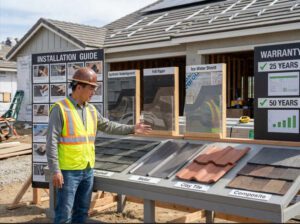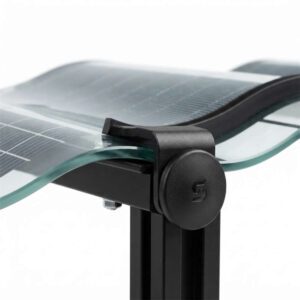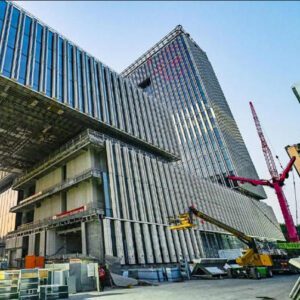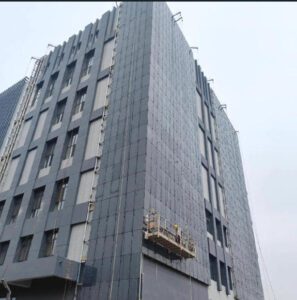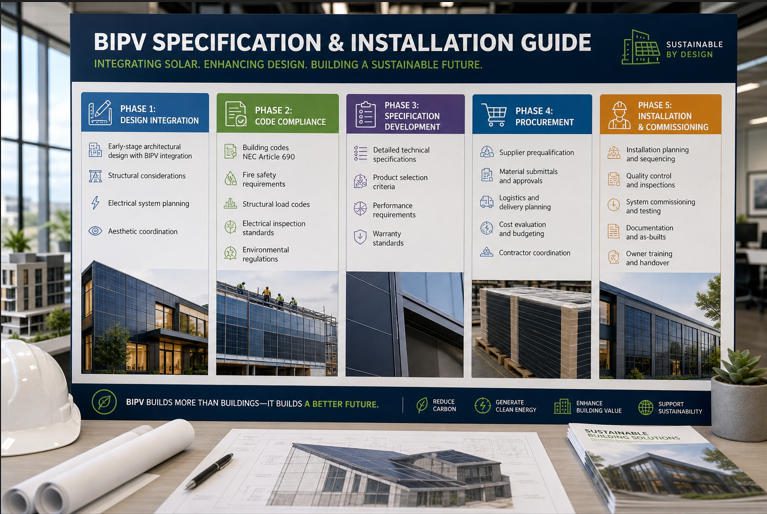
A clear, actionable guide for architects, engineers, developers, and construction teams integrating BIPV from concept design to commissioning.
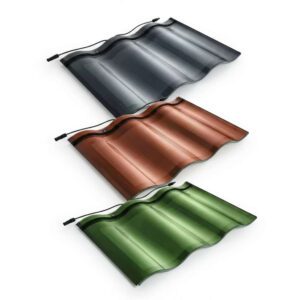
Building-integrated photovoltaics, or BIPV, are solar products that become part of a building’s envelope. They can replace façade cladding, curtain-wall glass, skylights, roof tiles, roof panels, balcony railings, or solar shading elements.
This guide explains how to specify and install BIPV in new builds. It covers design considerations, product selection, codes, installation best practices, commissioning, and lifecycle management.
The target audience is project teams that need decisions to survive real construction: architects coordinating façade grids, electrical engineers sizing inverters, developers checking ROI, construction managers sequencing trades, and facility teams preparing for maintenance.

Understanding Building-Integrated Photovoltaics (BIPV) and Its Value
The Whole Building Design Guide BIPV overview defines BIPV as photovoltaic collector elements located directly within the building envelope or canopy structure. This is the key difference: BIPV is not only an energy asset. It is also part of the roof, wall, glass, canopy, or shading system.
What Distinguishes BIPV from Standalone PV
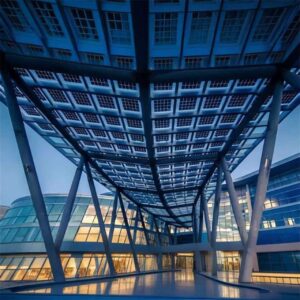
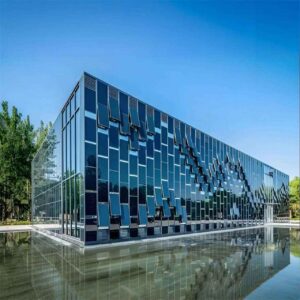
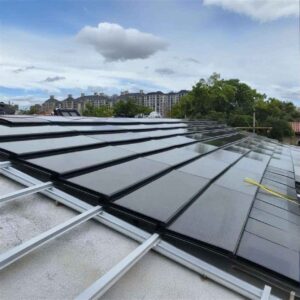
Standalone or building-applied PV usually sits on racks above a finished roof or on a separate ground structure. BIPV replaces a construction material. A BIPV glass canopy can provide weather protection and power. A BIPV roof tile can shed water and generate electricity. A solar façade panel can act as cladding and a DC generator.
First-time definition: DC electricity is the electricity produced by solar modules. An inverter converts it into AC electricity, which buildings normally use.
Benefits and Constraints for New Construction
In new construction, BIPV can reduce duplicate material use, improve visible sustainability, support building performance targets, and make use of roof or façade areas that would otherwise be passive.
The constraints are equally real. BIPV affects waterproofing, fire strategy, glass selection, wind-load design, electrical routing, inspection procedures, and maintenance access. The value is highest when the project team coordinates these issues early.
Material Offset
BIPV can replace cladding, roof tiles, skylight glass, or canopy glass, so ROI should include avoided conventional material cost.
Design Visibility
Solar becomes part of the architecture. That helps campuses, public buildings, hotels, and corporate headquarters communicate performance.
Coordination Risk
Late decisions can trigger redesign in façade grids, conduits, fire stopping, drainage, and access strategy.


Regulatory and Code Considerations for BIPV in New Builds
Energy Codes, Permits, and Inspections
BIPV projects usually require two approval paths: the building-envelope path and the electrical path. The roof or façade must satisfy local building code requirements. The PV system must satisfy electrical safety, inverter, interconnection, disconnect, grounding, overcurrent protection, and labeling requirements.
Use the authority having jurisdiction, or AHJ, as an early design stakeholder. A 30-minute pre-application meeting can prevent weeks of redesign if the inspector expects specific fire access, rapid-shutdown labeling, or façade test documentation.
Certification and Labeling: UL, IEC
BIPV products should be reviewed for relevant PV module safety certification, electrical ratings, fire performance, safety glazing, and building-product documentation. In many markets, product documentation may reference UL or IEC standards. UL’s PV module safety standards update explains the transition from UL 1703 toward UL 61730-based safety qualification.
Do not assume that a certified PV module automatically approves the wall or roof assembly. A complete BIPV assembly may still need project-specific review for fire propagation, water penetration, wind load, impact resistance, and attachment details.
Fire Safety and Performance Standards
Fire strategy must address the product, the assembly, and the access route for emergency responders. In a façade project, the fire consultant should review cavity barriers, non-combustible layers, cable routing, junction boxes, and vertical fire spread risk.
For technical drawings and international examples, the IEA PVPS BIPV technical guidebook is a useful reference for architects and engineers working through system-level details.
Early-Stage Planning: Aligning Architecture and Electrical with BIPV
Integrating BIPV into Architectural Design Intent
Good BIPV specification starts with the architectural grid. The module size, cell pattern, dummy panel locations, joint width, color, and reflectance should support the building’s design intent.
If the building uses a 1.5 m curtain-wall bay but the selected active BIPV panel is only economical at 1.2 m, the team must decide early: change the bay, use custom modules, add inactive panels, or move BIPV to another surface.
Siting, Orientation, and Shading Considerations
Siting decisions affect annual energy output. South-facing surfaces in the northern hemisphere generally produce more energy than north-facing surfaces. East and west elevations can still be useful where the building has morning or afternoon demand peaks.
First-time definition: shading analysis checks whether nearby buildings, parapets, fins, trees, or roof equipment block sunlight. This matters because shaded modules can reduce output for a whole string if the electrical layout is not designed carefully.
Bar Chart: Redesign Risk Increases When BIPV Decisions Are Late
Illustrative risk index. The lesson is practical: BIPV decisions become more expensive when they are made after façade, roof, electrical, and procurement packages are already fixed.
Selecting BIPV Products for New Construction
Transparent vs. Opaque Modules, Aesthetics, and Finish
Transparent and semi-transparent BIPV products suit skylights, atriums, canopies, and selected curtain-wall zones. Opaque BIPV products fit spandrels, rainscreens, roof planes, parapet zones, and equipment-screen walls.
The main trade-off is simple: more transparency usually means less power per square meter. First-time definition: VLT means visible light transmission. A 30% VLT glass allows more daylight than a 10% VLT glass but may produce less electricity.
Module Efficiency, Warranties, and Lifecycle Considerations
Module efficiency matters, but it should not be the only selection metric. For a façade, color consistency, junction-box position, cable route, wind-load rating, fire documentation, and replacement method can be just as important.
Project teams can compare product categories using Jia Mao Bipv’s BIPV product portfolio and then request project-specific datasheets, drawings, and certification documents.
Inverters, Balance of System (BOS), and Mounting Systems
The inverter converts DC electricity from PV modules into AC electricity used by the building. BOS means balance of system: inverters, cables, connectors, combiner boxes, disconnects, monitoring, mounting hardware, and protection devices.
In new construction, BOS must be coordinated with the architecture. Cable routes should not puncture waterproofing without approved details. Junction boxes should not be sealed behind inaccessible finishes. Inverter rooms should have ventilation, clearance, and maintenance access.
| Excel Row | Decision Item | What to Specify | Example Requirement | Responsible Team | Project Check |
|---|---|---|---|---|---|
| A2 | Module type | Opaque, semi-transparent, roof tile, glass-glass, façade panel | Opaque glass-glass spandrel BIPV | Architect + supplier | Matches elevation grid |
| A3 | Power density | Watts per square meter and total kWp | Minimum 150 W/m² on south façade zones | Energy consultant | Yield model reviewed |
| A4 | Envelope performance | Water, air, wind, movement, drainage, safety glass | Tested rainscreen or curtain-wall integration | Façade engineer | Mock-up detail approved |
| A5 | Electrical integration | String layout, inverter type, DC routing, disconnects | Strings grouped by orientation and shade pattern | Electrical engineer | Single-line diagram issued |
| A6 | Manutenção | Cleaning route, replacement method, spare modules | One panel replaceable without removing 20 panels | Facility manager | Access shown on drawings |
| A7 | Warranty boundary | PV output, product, waterproofing, workmanship, inverter | Responsibility matrix included in contract | Owner + contractor | Warranty path signed |
Structural and Envelope Implications of BIPV
Load Calculations and Roof/Façade Structural Requirements
BIPV adds dead load and changes wind-load behavior. Roof tiles, glass-glass modules, rails, clips, and electrical hardware must be included in structural calculations. On façades, wind suction and building height can drive glass thickness, fixing design, and bracket spacing.
First-time definition: dead load is the permanent weight of the installed system. wind suction is the outward force that can pull panels from the building during high winds.
Water Management, Drainage, and Weather Sealing
BIPV roof and façade details must drain water even if the electrical system is offline. Use layered water management: outer shedding surface, drainage cavity or flashing path, sealed penetrations, and inspection access.
Avoid routing cables through unplanned holes in the weather barrier. Every penetration needs a tested detail. For façade-specific coordination, review Jia Mao Bipv’s module inverter and weatherproofing guide.

Electrical Design and System Integration
DC Collection, String Configuration, and MPPT Strategy
A string is a group of PV modules connected in series. String design must consider cold-weather voltage, shade, orientation, module rating, cable distance, and inverter input limits.
MPPT means maximum power point tracking. In simple terms, it helps the inverter find the best working point for energy production. A façade with different orientations should not force heavily shaded east modules and sunny south modules onto the same MPPT input unless the design has been checked.
Connection to the Building’s Electrical Service
The electrical engineer should define the point of connection, inverter location, disconnect locations, metering method, utility interconnection path, emergency shutdown procedure, and monitoring platform. This should be coordinated with the electrical room layout before wall and ceiling routes are congested by other trades.
For system design basics and integration steps, the Jia Mao Bipv BIPV installation design checklist gives project teams a useful sequence from assessment to commissioning.
Safety, Arc-Fault, and Protection Devices
PV circuits need protection against overcurrent, ground faults, arc faults, and unsafe backfeed conditions. Designers should specify proper cables, connectors, isolators, labels, and rapid-shutdown functions where required by local rules.
First-time definition: an arc fault is an unintended electrical discharge that can create heat and fire risk. In BIPV, connector quality and access matter because faults can be hidden behind roof or façade materials.
Design for Durability, Maintenance, and Accessibility
Cleaning, Inspection Routines, and Access Points
Maintenance planning should be part of the design package. A vertical façade may collect less dirt than a low-slope roof, but high-rise access can be expensive. A glass canopy may need cleaning for public appearance even when energy loss is moderate.
Show cleaning zones, anchor points, safe access routes, inverter access, junction-box locations, and replacement sequences in the operations manual. Do not rely on memory after the project team leaves.
Material Aging, Corrosion Resistance, and Warranties
Materials age differently. Glass, sealants, cable jackets, connectors, coatings, inverters, and mounting metals each have different failure modes. In coastal or industrial environments, corrosion resistance must be specified, not assumed.
Ask for warranty terms covering power output, product workmanship, waterproofing, glazing, inverter performance, and installer workmanship. The warranty package should state who responds if a leak appears near a cable penetration.

Costing, Value Proposition, and Financing
Capital Expenditure vs. Operating Savings
BIPV often costs more upfront than conventional materials. The correct comparison is not simply “BIPV versus standard solar.” It is “BIPV incremental cost versus conventional roof or façade cost, plus energy value, incentives, maintenance impact, and brand value.”
For broader cost and ROI framing, use Jia Mao Bipv’s building-integrated solar cost and ROI guide. For U.S. incentive research, the DSIRE clean energy incentive database is a practical starting point.
Life-Cycle Cost Analysis and Payback Period
A basic payback calculation divides net incremental cost by annual energy savings. A better life-cycle cost model also includes avoided cladding or roofing cost, incentives, inverter replacement, cleaning, insurance, degradation, utility escalation, and residual value.
For early yield estimates, the NREL PVWatts calculator can help model grid-connected PV production. Complex BIPV glass and façade projects may need additional 3D shading simulation.
Pie Chart: Typical BIPV New Construction Cost Components
Indicative split only. High-rise access, custom glass, fire testing, small order volumes, and unusual roof geometry can shift the cost mix.
Procurement, Supply Chain, and Quality Assurance
Supplier Due Diligence and Product Testing
Supplier evaluation should go beyond price. Request datasheets, glass make-up, fire and safety documentation, wind-load data, color tolerance, connector type, junction-box location, installation manuals, warranty terms, and project references.
When working with Jia Mao Bipv or any BIPV supplier, send architectural elevations, roof plans, target active areas, module size preferences, expected wind zones, and desired appearance. Better input leads to fewer assumptions in the quotation.
Factory Acceptance Testing and On-Site Verification
Factory acceptance testing confirms that modules meet agreed specifications before shipment. On-site verification confirms that delivered products match shop drawings and are installed correctly.
Check labeling, serial numbers, glass dimensions, cable lengths, connector types, packing condition, color consistency, and documentation before panels are lifted onto the building.
Installation Best Practices and On-Site Coordination
Scheduling with Other Trades
BIPV installation touches multiple trades: façade contractor, roofer, electrician, steel contractor, waterproofing contractor, fire-stopping contractor, testing agency, and commissioning engineer. A coordination gap between two trades can create a leak, a failed inspection, or a hidden connector problem.
The installation schedule should define who installs brackets, who protects cables, who tests strings, who seals penetrations, who photographs hidden work, and who approves the area before it is closed.
Handling, Sealing, and Waterproofing During Installation
BIPV modules should be handled as both electrical equipment and building materials. Glass edges, coatings, backsheets, connectors, and sealants can be damaged by poor storage or rough lifting.
Store products flat or upright according to manufacturer instructions. Keep connectors dry. Do not leave unprotected cables in standing water. Photograph concealed waterproofing details before covering them.
Electrical Commissioning and Performance Testing
Electrical commissioning verifies polarity, string voltage, insulation resistance, grounding, inverter startup, monitoring connection, labeling, and performance baseline. A clean commissioning record helps diagnose future problems.
The U.S. Department of Energy’s solar photovoltaic technology basics page is useful for non-specialists who need a clear explanation of how PV converts sunlight into electricity.
Commissioning, Performance Verification, and Handover
Post-Installation Testing Procedures
Post-installation testing should include visual inspection, polarity checks, open-circuit voltage, insulation resistance, inverter startup, monitoring verification, and comparison against the expected performance baseline.
The team should also check envelope performance. For a roof-integrated product, inspect flashing, drainage, penetrations, and underlayment transitions. For a façade product, inspect joints, drainage paths, cable penetrations, fire stopping, and replacement access.
Documentation Package for Owners and Facilities
Handover should include as-built drawings, single-line diagrams, module serial numbers, inverter settings, monitoring login details, warranty documents, test reports, cleaning instructions, replacement procedures, and emergency shutdown steps.
Training for Operations Teams
Train the facilities team before occupancy. Show them where inverters, disconnects, monitoring dashboards, access anchors, spare parts, and string maps are located. A 60-minute walkthrough can save hours during a fault investigation.
| Handover Item | Required Format | Why It Matters | Owner Check |
|---|---|---|---|
| As-built roof/façade drawings | PDF + editable file | Shows module positions, dummy panels, access routes, and penetrations. | File stored in O&M folder |
| Electrical single-line diagram | Helps electricians trace strings, inverters, disconnects, and meters. | Reviewed with facility team | |
| Commissioning test reports | Signed PDF | Creates a performance baseline for warranty and troubleshooting. | Signed before occupancy |
| Warranty matrix | Table | Clarifies who responds to leaks, broken glass, inverter faults, and output claims. | Contacts verified |
| Monitoring access | Login + user guide | Allows the owner to detect faults and compare output against expectations. | Dashboard tested |
Post-Occupancy Considerations and Lifecycle Management
Monitoring, Service, and Component Replacement
After occupancy, BIPV performance should be monitored monthly at minimum. Sudden output drops may indicate inverter faults, string issues, shading changes, soiling, broken glass, or connector problems.
Keep spare modules or spare glass units when products are custom-sized or color-matched. Waiting years to replace one bespoke panel can create visible mismatch and longer downtime.
End-of-Life Options and Recycling
End-of-life planning should be included in the owner’s asset strategy. Ask suppliers about module take-back options, glass recycling pathways, aluminum frame recycling, inverter replacement, and documentation needed for future deconstruction.
First-time definition: end-of-life planning means deciding how components will be removed, reused, recycled, or disposed of when they no longer serve the building.
Recommended Video: Understanding BIPV Applications
If your project team is new to BIPV, this video gives a useful visual overview of building-integrated photovoltaics and where they can be applied.
Glossary for Project Teams
- BIPV
- Building-integrated photovoltaics. Example: solar glass that functions as façade glazing while producing electricity.
- BAPV
- Building-applied photovoltaics. Example: conventional solar panels installed on racks above an existing roof.
- DC
- Direct current electricity produced by PV modules before it reaches the inverter.
- AC
- Alternating current electricity used by most building equipment after inverter conversion.
- BOS
- Balance of system: inverters, cables, connectors, disconnects, mounting, monitoring, and protection devices.
- MPPT
- Maximum power point tracking: inverter control that helps extract the most power from PV modules.
- VLT
- Visible light transmission: the percentage of visible light passing through glass. Higher VLT means more daylight but often lower power density.
- AHJ
- Authority having jurisdiction: the local body or official that approves permits and inspections.
- Degradation
- Gradual reduction in module output over time. Warranties often define minimum output after 25 years.
To successfully specify and install BIPV in new construction, project teams should begin before the roof or façade geometry is fixed. BIPV must be treated as both a power system and a building-envelope component.
The key steps are clear: define the design intent, check orientation and shading, select suitable products, verify codes, coordinate structure and waterproofing, design the electrical system, procure with testing documentation, manage on-site installation, commission the system, and train the owner’s operations team.
Cross-disciplinary collaboration is not optional. The architect, façade consultant, roofer, structural engineer, electrical engineer, fire consultant, supplier, installer, commissioning agent, and facility manager all influence whether the system performs for decades.
Practical Next-Step Checklist for Project Teams
Before issuing a BIPV tender, collect the project location, roof plans, façade elevations, target BIPV areas, expected grid connection, design wind loads, fire requirements, visual finish targets, and maintenance access strategy.
Send these documents early so product sizing, electrical grouping, weatherproofing details, and cost assumptions can be checked before procurement.
Discuss a new construction BIPV specification with Jia Mao BipvFAQs
1. What is the difference between BIPV and standard PV installations?
Standard PV is usually mounted on racks above a finished roof or on a separate structure. BIPV replaces part of the building envelope, such as roof tiles, façade panels, skylight glass, canopy glass, or curtain-wall sections. Because of that, BIPV must satisfy both electrical and building-envelope requirements.
2. How early should BIPV be considered in project timelines?
BIPV should be considered during concept or schematic design. Early planning lets the team align module dimensions, façade grids, roof drainage, cable routes, inverter spaces, fire requirements, and maintenance access before drawings and procurement packages become expensive to change.
3. What are common BIPV challenges and how can they be mitigated?
Common challenges include mismatched module sizes, shading losses, hidden wiring, waterproofing conflicts, unclear warranties, and late code review. They can be mitigated with early supplier input, 3D shading analysis, mock-ups, clear trade responsibilities, documented access routes, and a full commissioning plan.
4. How does BIPV impact building codes and fire safety requirements?
BIPV affects electrical code, building code, fire spread review, roof or façade assembly requirements, emergency access, and labeling. A certified module does not automatically approve the complete wall or roof assembly. The AHJ should be consulted early.
5. Which BIPV product type is best for new construction?
The best product depends on the surface. Opaque panels often suit spandrels and roof planes. Semi-transparent glass suits atriums, skylights, and canopies. Solar tiles suit visible pitched roofs. The correct choice depends on appearance, yield, waterproofing, access, and cost.
6. Does BIPV require special maintenance?
BIPV requires normal PV monitoring plus building-envelope maintenance. Teams should plan cleaning, visual inspection, inverter checks, connector access, glass replacement, roof or façade inspection, and documentation updates.
7. How should BIPV ROI be calculated?
BIPV ROI should use net incremental cost, not only gross system cost. Subtract the conventional roof or façade material that BIPV replaces, then include incentives, annual energy savings, maintenance, inverter replacement, degradation, and utility price assumptions.
8. What documents should be included at BIPV handover?
Handover should include as-built drawings, single-line diagrams, module serial numbers, inverter settings, monitoring access, warranties, commissioning reports, cleaning instructions, replacement procedures, emergency shutdown steps, and supplier contacts.
References and Further Reading
- Jia Mao Bipv homepage
- BIPV product portfolio
- BIPV installation design checklist
- module inverter and weatherproofing guide
- building-integrated solar cost and ROI guide
- Whole Building Design Guide BIPV overview
- IEA PVPS BIPV technical guidebook
- solar photovoltaic technology basics
- NREL PVWatts calculator
- DSIRE clean energy incentive database
- PV module safety standards update