
Commercial Solar Roof Tiles: How to Evaluate Before You Buy

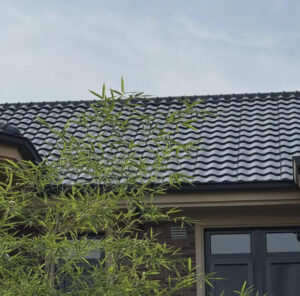
Image: Solar roof tiles installed on a building in Onalaska, Wisconsin. Author: Wikideas1, public domain (CC0), via Wikimedia Commons.
The short answer: To evaluate commercial solar roof tiles, check four things in order. First, the roof’s condition and structure. Second, your client’s energy goals and site conditions. Third, the vendor’s warranty, certifications, and track record. Fourth, the total cost against simpler options like rack-mounted panels. Skip any one of these and you risk a costly surprise after the tiles are on the roof.
Why This Decision Matters More Than It Used To
Clients now ask for buildings that make their own power. They also want a roof that looks clean and lasts decades. Solar roof tiles do both jobs, because they replace the roofing material instead of sitting on top of it.
That is also what makes them harder to specify. A rack-mounted panel can be swapped out in an afternoon. A tile that is part of the waterproof layer cannot.
If you are a roofing contractor, PV EPC, distributor, or architect, you will be judged on how the roof performs in year 15, not on how it looked on install day. This guide gives you a repeatable way to evaluate a project before you quote it.
The core idea is simple. A good solar tile project starts with the roof, is shaped by the energy goal, and is protected by the right vendor. The sections below follow that order.
Quick Glossary: Terms Used in This Guide
Here are the terms that come up most often, in plain language.
| Term | What It Means | Why It Matters |
|---|---|---|
| BIPV (Building-Integrated Photovoltaics) | Solar products that act as part of the building itself, such as roof tiles or facade glass | Tiles replace roofing material, so one product does two jobs |
| Solar roof tile / solar shingle | A roofing unit with solar cells built in (solar shingles are a close relative) | It sets your waterproofing and your power output |
| Load-bearing capacity | How much weight the roof structure can safely carry | Overloaded roofs can sag, crack, or fail an inspection |
| Roof slope (e.g., 2:12) | Rise over run. A 2:12 slope rises 2 inches for every 12 inches of horizontal distance | Many tile products need at least 2:12 |
| Ponding | Water that sits on a roof for more than a day or two after rain | It adds weight and speeds up wear on seals |
| Production ratio | Yearly kWh produced per watt of installed capacity at a given site | It is the fastest way to compare sites |
| Flashing | Metal or membrane strips that guide water away from edges and openings | Most tile leaks start at poor flashing |
| Performance warranty | A promise that panels will still produce a set share of rated power after a set number of years | It protects your client’s return |
Step 1: Check the Roof Condition and Structure
The foundation of any solar tile job is the roof under it. Tiles will not fix a weak roof. They will hide it, and hidden problems cost more to repair later.
Look for damage before you look at products
Walk the roof and inspect the deck from inside the building too. You are looking for leaks, water stains, mold, soft spots, and sagging areas. Old repairs and patched flashing also deserve a close look.
Fix these problems first. Once tiles are installed, every repair means lifting and re-laying them.

Image: Roof framing under construction. Public domain (CC0), via Wikimedia Commons.
Confirm the roof can carry the load
Load-bearing capacity is a job for a licensed structural engineer, not a guess. Tiles replace roofing, so your engineer will compare the new system’s weight to what comes off. They will also check wind uplift and snow. If your site gets heavy snow, read the research on snow loads on solar-paneled roofs, because snow can drift and pile up unevenly around raised or tilted arrays.
For a broader look at structural review on larger buildings, the Facility-Scale Solar Photovoltaic Guidebook notes that the extra structural load a roof can carry should be assessed before design begins.
Check slope and drainage
Most solar tile products need a minimum slope, commonly 2:12 (about 9.5 degrees). Flat and near-flat roofs usually need a different solution. Water that ponds on a roof adds weight and attacks seals over time.
Use this table on your next site visit.
| What to Check | What You Want to See | Red Flag | Who Should Check |
|---|---|---|---|
| Roof deck | Solid, dry, no soft spots | Sagging, rot, or mold | Roofer + engineer |
| Leaks and stains | None, or fully repaired | Repeated patches in one area | Roofer |
| Load capacity | Engineer’s sign-off in writing | “It should be fine” | Structural engineer |
| Slope | At or above the product minimum | Below spec | Architect or roofer |
| Drainage | Water clears within a day or two | Standing water | Roofer |
| Flashing and edges | Intact and sealed | Cracked sealant, rust | Roofer |
Industry insight: In retrofit work, most delays come from the roof, not the solar. A tear-off can uncover rotten decking that nobody could see from above. Build a contingency line for deck repair into every retrofit quote, and tell the client why.
Step 2: Set Energy Goals and Check the Site
Once the roof is sound, decide what the system needs to do. Clients say “we want solar,” but that can mean cutting bills, hitting a sustainability target, earning green building credits, or all three. Each goal points to a different design.
Start with how much power the building uses
Ask for 12 months of utility bills. Look at total kWh and at when the building uses power. A cold storage warehouse and a school use energy very differently.
Check the site factors
Orientation matters, because roofs facing the equator (south in the Northern Hemisphere) usually produce the most. Shading from nearby buildings, trees, or rooftop equipment can cut output sharply. Local climate matters too. High heat lowers cell output slightly, and heavy snow or dust can block light.
Estimate energy with real weather data
You do not need to guess. NREL’s PVWatts tool uses historical weather data to estimate output for a specific address. For quick math, use this formula:
$$\text{Annual kWh} = \text{System size (kW)} \times \text{Production ratio}$$
Here is a worked example. Say a client’s warehouse uses 600,000 kWh a year, and the site has a production ratio of 1.3.
$$100 \text{ kW} \times 1.3 = 130{,}000 \text{ kWh per year}$$
$$\frac{130{,}000}{600{,}000} = 21.7% \text{ of annual use}$$
Solar roof tiles usually deliver 12.8 to 16.1 watts per square foot. That means a 100 kW system needs roughly 6,200 to 7,800 square feet of usable roof. If the client wants to offset 50% of their bill, the roof may simply be too small, and it is better to say so now.
| Client Goal | What to Design For | Watch Out For |
|---|---|---|
| Lower power bills | Maximum kWh per dollar | Tiles cost more per watt than racked panels |
| Sustainability target | Visible, measurable clean energy | Verify how the target counts on-site generation |
| Premium building look | Seamless roofline | Shading and orientation limits |
| Long-term asset value | Durable roof + power in one | A vendor that may not exist in 20 years |
Industry insight: The best tile projects are ones where the client already needs a new roof. The tiles replace a cost the client would pay anyway. In that case the extra cost of going solar is much smaller than the sticker price suggests.
.jpg?width=1200 "Solar roof tiles on a pitched roof")
Image: Solar roof tiles. Author: Helena Wright, licensed under CC BY 2.0, via Wikimedia Commons.
Step 3: Ask Vendors the Right Questions
A vendor’s answers tell you more than its brochure. Tiles become your client’s roof, so a weak supplier is a long-term risk for you too.
Warranties, guarantees, and certifications
Ask for the warranty documents, not a summary. You want to know the roof-material warranty and the power-output warranty, and how each one handles labor for replacement. Many products carry 25 years on power output, though the roof warranty may differ.
Then ask about test reports. Two international standards are worth knowing. IEC 61215 covers how a module holds up to heat, cold, humidity, and mechanical stress, while IEC 61730 covers electrical and fire safety. The revised IEC 61215 and IEC 61730 standards explain what testing labs now expect. For the US market, ask about UL Solutions PV module certification, and confirm roof-specific ratings such as fire class and wind resistance.
Certificates should name the exact product model you are buying. A certificate for a sister product does not count.
Case studies and references
Ask for two or three projects similar to yours in climate, roof type, and size. Then call the contractors, not just the vendor’s marketing team. Ask what went wrong and how quickly the vendor fixed it.
Timelines, support, and maintenance
Residential tile installs often take 5 to 10 days, and a common benchmark is about 6.9 worker-hours per kW installed. Commercial jobs scale up from there. Ask whether the vendor provides installation drawings, on-site training, and remote monitoring. Also ask who replaces a broken tile at year 12, and how long that takes.
For reference, Jia Mao Bipv publishes a 25-year performance guarantee and an annual production capacity of 3 GW. It also offers custom size, color, and power output. Use numbers like these as a yardstick when you compare any supplier’s quote. If a vendor cannot give you equivalent figures in writing, treat that as your answer.
You can also compare supplier options in this overview of the top solar roof tile options for building projects.
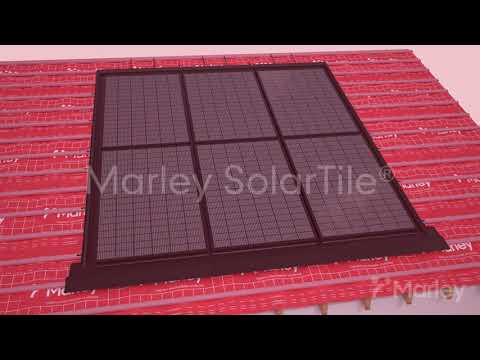
Watch: a step-by-step tutorial on installing Marley SolarTile, a good way to see how tiles, flashing, and wiring come together on the roof.
A simple vendor scorecard
Score each vendor from 1 to 5 in every category, then multiply by the weight. These weights are a suggested starting point. Adjust them to your project.
| Vendor Question | What a Strong Answer Looks Like | Red Flag |
|---|---|---|
| Show me your warranty documents | Separate roof and power terms, in writing | Verbal promises only |
| Which certificates cover this exact model? | Model-specific IEC/UL reports | Generic company certificates |
| Can I call a similar project? | Names, sites, and phone numbers | “Confidential” for every project |
| Who handles a broken tile in year 12? | A named process and a response time | “Contact the installer” |
| What is your real lead time? | A dated schedule tied to your order | “It depends” |
The Counterargument: “Regular Panels Are Cheaper and Easier”
This is a fair point, and you should say so to your client. Rack-mounted panels cost less per watt, install faster, and are simpler to expand or repair. Based on 2026 market data, tiles run about $3.80 to $7.00 per watt installed. Rack-mounted panels run about $2.50 to $3.50.
Source: SolarReviews, EcoWatch, and manufacturer datasheets (2026), as compiled in this solar roof tiles vs. traditional panels comparison. Ranges vary by project size and location.
Here is where tiles still make sense.
| Fator | Solar Roof Tiles | Rack-Mounted Panels |
|---|---|---|
| Installed cost per watt | $3.80 – $7.00 | $2.50 – $3.50 |
| Module efficiency | 17% – 22% | 20% – 23% |
| Power density | 12.8 – 16.1 W/sq ft | 18 – 20 W/sq ft |
| Roof penetrations | Fewer, since tiles are the roof | Mounting bolts through the roof |
| Look of the building | Flush, uniform roofline | Visible racks above the roof |
| Typical install time | Longer, since roofing is included | Shorter |
| Expected lifespan | 30 – 50 years | 25 – 35 years |
The rebuttal is about total value, not price per watt. Tiles win when the roof is due for replacement soon. They also win when design review or historic rules restrict visible panels, or when the client wants the building itself to look premium. If the roof needs replacing in five years, the avoided re-roofing cost can shrink the price gap a lot.
If the client’s roof is in good shape and the only goal is the lowest cost per kWh, racked panels are usually the better fit. Being upfront about that builds trust, and it protects you from a bad project. You can dig into the numbers in this cost of photovoltaic shingles breakdown.

Image: A rack-mounted array on a commercial building in Gilroy, California. Author: Roofjockey, licensed under CC BY-SA 4.0, via Wikimedia Commons.
Total Cost of Ownership: A Simple Formula
Your client will ask, “What does this really cost?” The sticker price is only part of the answer. Use this formula:
$$\text{Net cost} = \text{System cost} – \text{Avoided re-roof cost} – \text{Incentives}$$
$$\text{Simple payback (years)} = \frac{\text{Net cost}}{\text{Annual energy savings}}$$
Incentive rules have changed recently and depend on project dates, so ask the client’s tax advisor to confirm what applies. For funding, the U.S. Department of Energy explains leases, loans, and PPAs in plain terms. A PPA (power purchase agreement) means a third party owns the system and the client pays for the power it makes. Those models suit some commercial clients better than an upfront purchase.
Install Planning: What Contractors Should Lock Down Early
Once you choose a product, the next risk is the installation. Waterproofing details, fastener specs, and wiring layout all need to be settled before the crew is on the roof. Follow the manufacturer’s diagram, start at the lowest edge, and never drill through a tile. The step-by-step installation guide covers columns, anchor screws, underlayment, and flashing in detail. For larger projects, the BIPV installation and design steps add permitting and commissioning.

Image: Solar modules on a tile roof. Author: Marta Victoria, licensed under CC BY-SA 4.0, via Wikimedia Commons.
If your client also wants solar glass, skylights, or facade elements, look at BIPV solutions for homes and businesses to plan the whole envelope together.
A Short Evaluation Prevents a Long Problem
A strong solar tile project comes down to three checks. The roof must be sound and structurally ready. The energy goal must fit the site. The vendor must back its product with clear paperwork and real references.
Do these in order, and you can quote with confidence. You can also tell your client honestly when panels are the smarter choice. Contractors and energy service providers who work this way tend to win the repeat work, because their projects still perform years after handover.
Your next step: Pick your next project and run it through the roof table, the production formula, and the vendor scorecard above. It takes about an hour, and it can save weeks of rework.
Frequently Asked Questions (FAQs)
1. What are the key factors to consider when assessing roof condition for solar tile installation?
Check the deck for leaks, mold, and soft spots. Also check the flashing, the roof slope, and how well water drains. Repair problems before installation, because fixing them later means lifting the tiles.
2. How do I determine if my building is structurally sound enough for solar roof tiles?
Hire a licensed structural engineer to review the roof framing and calculate the load. The review should cover the weight of the system, wind uplift, and snow. Ask for the conclusion in writing.
3. What energy goals should I set before choosing solar roof tiles?
Decide whether the aim is lower bills, a sustainability target, a premium look, or a mix. Then set a number, such as “offset 25% of annual kWh.” Compare that to what the roof area can produce.
4. How do local climate conditions impact the effectiveness of solar roof tiles?
Sunshine hours set your output. Heat lowers cell efficiency slightly, and snow, dust, and shade block light. Tools like PVWatts use local weather history to estimate the effect.
5. What types of warranties or guarantees should I expect from solar tile vendors?
Expect separate terms for the roofing product and the power output, often around 25 years for output. Ask who pays for labor if a tile needs replacing, and get every term in writing.
6. How can I evaluate the performance of solar roof tiles compared to traditional solar panels?
Compare efficiency, watts per square foot, and expected yearly kWh for your site. Tiles generally produce less power per square foot than racked panels, but they also serve as the roof.
7. What maintenance requirements should I be aware of with solar roof tiles?
Plan an annual inspection for cracked tiles, loose fasteners, and debris. Most cleaning is done by rain, and a hose can handle dirt. Never use harsh chemicals or scrub brushes.
8. How do I assess the total cost of ownership for solar roof tiles?
Subtract the avoided re-roofing cost and any incentives from the system cost. Then divide the net cost by yearly energy savings. Add maintenance and possible tile replacement to the picture.
9. What questions should I ask to understand the vendor’s installation experience?
Ask how many similar projects they have finished and request two references you can call. Also ask about their crew training, how they handle waterproofing, and who provides support after handover.
10. Are there financing options available for installing solar roof tiles on commercial buildings?
Yes. Common options include cash purchase, loans, leases, and PPAs. Each spreads cost and risk differently, so match the option to the client’s cash position and tax situation.
11. How do solar roof tiles affect the aesthetics of a building?
Tiles sit flush with the roofline, so the roof looks like one clean surface. Rack-mounted panels stand above the roof and are more visible. That difference matters for design-driven and historic projects.
12. What certifications should I look for when evaluating solar roof tile products?
Look for IEC 61215 and IEC 61730 test reports and, in the US, UL certification. Also ask for roof-specific fire and wind ratings. Make sure each certificate names the exact model you are buying.










.jpg)

