Solar railing systems are increasingly specified across commercial developments, hospitality properties, and municipal infrastructure — but the performance gap between a well-specified product and a poorly chosen one is wide enough to produce corroded frames in three years, dead lights at midnight in December, or a product that looks identical on the spec sheet but carries a warranty the manufacturer won’t be around to honour. This guide evaluates solar railing systems across three criteria that actually determine long-term value: durability, brightness, and total cost of ownership.
Solar railing systems have expanded well beyond decorative post-cap lights for residential decks. Today, the category spans integrated LED railing fixtures, BIPV glass railing panels that generate usable electricity, and commercial-grade post luminaires serving pedestrian safety lighting at transit hubs, hotels, university campuses, and multi-family residential developments. The procurement decision involves real structural, electrical, and optical engineering — not just a choice between aesthetic finishes.
This guide covers the full evaluation framework: what constitutes a solar railing system, how to read durability claims critically, what lumen output numbers actually mean in the field, how to model total cost of ownership, and how to navigate the specific installation and permitting requirements that differentiate solar railing from conventional wired lighting.
1. Overview of Solar Railing Systems
What Constitutes a Solar Railing System
A solar railing system integrates one or more photovoltaic (PV) collection elements — small monocrystalline panels on post caps, semi-transparent BIPV glass panels as balustrade infill, or flexible thin-film strips along handrails — with battery storage, LED lighting, and control electronics into a structural railing assembly.
The “system” distinction matters commercially. A railing-mounted solar light is a self-contained product — PV panel, battery, and LED in one unit. A solar railing system is a designed installation where energy from multiple collection points may be aggregated, stored in a central or distributed battery bank, and distributed to multiple lighting points under programmed control. The latter requires an electrical design, potential utility permitting, and a commissioning plan. The former can be installed by a facilities maintenance team in an afternoon.
Core Components and How They Work
Every solar railing product — from a $28 decorative post cap to a $450/m² BIPV balcony railing glass panel — operates on the same energy chain: sunlight strikes the PV collector, DC electricity charges the battery through a charge controller, and the battery powers the LED array after dark. The performance at each step determines whether the light is still running at 3 AM in January.
- PV collector: monocrystalline silicon (highest efficiency per area, 18–22%), polycrystalline (14–17%), or amorphous thin-film (6–12%, better in diffuse light). Collector size typically ranges from 1.5 W (decorative post cap) to 50+ W (BIPV balustrade panel).
- Charge controller: PWM (pulse-width modulation) in budget units; MPPT (maximum power point tracking) in commercial-grade products. MPPT controllers recover 15–30% more energy in real-world conditions with partial shading or low-angle winter sun.
- Battery: LiFePO₄ (LFP) in premium commercial units for cycle life and thermal safety; NiMH in mid-range; AGM lead-acid in budget products. Capacity is the primary determinant of all-night performance.
- LED array: output measured in lumens (total light output), efficacy measured in lumens per watt (lm/W). Modern high-efficiency LEDs achieve 120–180 lm/W; budget units may be 60–90 lm/W.
- Control electronics: dusk-on/dawn-off sensor, optional PIR motion sensor, optional dimming profile (e.g., 100% for 4 hours, 30% overnight to extend battery).
Common Configurations and Use Cases
The market segments into four practical configurations relevant to B2B buyers:
| Configuration | Typical Output | Battery Size | Meilleure application | Approximate Unit Cost |
|---|---|---|---|---|
| Decorative post cap | 5–20 lm | 600–1,200 mAh NiMH | Residential deck, garden path ambience | $15–$45/unit |
| Functional post cap / luminaire | 20–100 lm | 1,500–3,000 mAh LFP/NiMH | Commercial pathway, stair railing safety | $40–$120/unit |
| Rail-integrated LED strip | 50–300 lm/m | Central battery unit | Deck perimeter delineation, hospitality | $25–$80/linear ft |
| BIPV glass balustrade panel | Generates 40–120 W/m² (powers building loads) | Centralised BESS | Commercial buildings, hotels, transit hubs | $200–$600/m² |
2. Durability: Material and Build Quality
Materials Commonly Used (Aluminum, Stainless Steel, Plastics)
Frame and housing material determines service life more than any other single specification. Three materials dominate the commercial solar railing market, and the choice between them is not primarily aesthetic — it is a corrosion environment decision.
6005A-T5 or 6061-T6 Aluminium is the structural default for commercial solar railing systems. Anodised or powder-coated to a minimum 25 µm coating thickness, these alloys provide excellent strength-to-weight ratio and resist atmospheric corrosion effectively in urban and suburban environments. For coastal projects within 2 km of salt water, the coating must be specified as PVDF (polyvinylidene fluoride) rather than standard polyester powder coat — PVDF coatings maintain gloss and film integrity for 20+ years in salt-air environments versus 5–8 years for standard polyester.
304 / 316 Stainless Steel is specified for structural components — balusters, base plates, handrail cores — where both strength and corrosion resistance are required under load. The distinction between 304 and 316 matters in practice: 304 (18% chromium, 8% nickel) is adequate for inland commercial environments; 316 (with 2% molybdenum) is mandatory for marine environments, swimming pool surrounds, and anywhere de-icing chemicals contact the railing. Jia Mao BIPV’s solar balcony railing product specifies 304/316 stainless steel frames as standard, with an operating temperature range of −40°C to +85°C — a specification that reflects genuine structural design for real-world installation environments rather than a controlled-lab rating.
ABS / UV-stabilised engineering plastics are used in housing components for mid-range post-cap luminaires. Quality variation here is wide: a product with a UV absorber package rated for 10 years of outdoor exposure will maintain surface integrity and colour; a product with standard commodity ABS will chalk, crack, and yellow within 3–5 years. Ask suppliers for accelerated UV weathering test data per ASTM G154 or ISO 4892-3 — not a marketing claim.
Weather Resistance and IP Ratings
IP (Ingress Protection) ratings define how well a fixture’s electronics are protected from solid particles and water. For solar railing fixtures in commercial outdoor installations, the minimum acceptable specification is:
| Environment | Minimum IP Rating | Why | Recommended Rating |
|---|---|---|---|
| Covered deck / balcony (low rain exposure) | IP44 | Water splash resistance | IP55 |
| Open deck / pathway (direct rain) | IP55 | Water jet resistance from any direction | IP65 |
| Marine / coastal environment | IP65 | Salt mist + water jet | IP67 |
| BIPV glass railing panel (embedded electronics) | IP67 | Temporary immersion in pooled water | IP68 |
| Pool or spa perimeter railing | IP67 | Chemical spray and partial immersion | IP68 |
3. Durability in Real-World Conditions
Salt Spray, Freeze-Thaw, and UV Exposure Considerations
Laboratory durability testing translates imperfectly to field performance — but it provides the only standardised basis for comparison between products. Three test types are most relevant to solar railing procurement:
Salt spray (ASTM B117 / ISO 9227): Standard test runs 500–1,000 hours of continuous salt mist exposure. A 1,000-hour pass result is often cited as equivalent to approximately 10 years of atmospheric coastal exposure, though real-world correlation depends heavily on the severity of the coastal environment. For marine-edge projects (breakwaters, harbour walkways, beachfront hospitality), specify a minimum 1,000-hour salt spray pass on the frame and housing materials — not just the PV glass.
Freeze-thaw cycling: Expansion joints in railing systems must accommodate the differential thermal movement between glass, metal, and polymer components across a −30°C to +60°C operational range. In practice, this means rubber gaskets and silicone sealants rated for at least 50 thermal cycles without loss of adhesion. The failure mode is not structural collapse — it is water ingress at joint seals, which then corrodes electrical connections that are invisible until the light stops working.
UV stability: The PV glass surface on a solar railing panel receives continuous UV exposure across its 25-year design life. IEC 61215 MQT 10 UV pre-conditioning (60 kWh/m² dose) is the standard test, requiring ≤3% power loss. For plastic housings, specify ASTM G154 UV weathering test results — any product claiming 10-year outdoor life without test data is making an unverifiable claim.
Long-Term Performance Expectations
Calibrating 25-year expectations for each component type is essential for maintenance budgeting and replacement planning:

4. Brightness: Lighting Output and Quality
Lumen Ratings and Color Temperature Differences
Lumen output — the total quantity of visible light emitted — is the primary metric for evaluating whether a solar railing light will perform its intended function. The number on the box is measured under controlled lab conditions; real-world output depends on battery state of charge, temperature, and whether the product uses a constant-current driver (output is stable as battery depletes) or a direct-drive circuit (output dims progressively as the battery drains).
For procurement purposes, categorise by function first, then specify lumen range:
| Fonction | Required Lumen Output | Color Temp (CCT) | Minimum LED Efficacy | Driver Type |
|---|---|---|---|---|
| Decorative ambience / path delineation | 5–15 lm | 2,700–3,000 K (warm white) | 80+ lm/W | Direct or constant current |
| Stair visibility / step safety | 15–40 lm | 3,000–4,000 K | 100+ lm/W | Constant current |
| Commercial pathway safety lighting | 50–150 lm | 4,000–5,000 K (neutral white) | 120+ lm/W | Constant current required |
| Security / high-visibility perimeter | 150–500 lm | 5,000–6,500 K (cool white) | 130+ lm/W | Constant current + PIR boost mode |
Color temperature (CCT) is as important as lumen output for specifying solar railing lights in commercial contexts. Warm white (2,700–3,000 K) creates the hospitality aesthetic appropriate for hotel balconies, restaurant decks, and premium residential balustrades. Neutral to cool white (4,000–5,000 K) provides the higher visual acuity needed for safety-critical pathway and stair lighting. Mixing CCTs across a single installation creates visual inconsistency that undermines the architectural intent — a common error when different product types are sourced from different suppliers.
Light Spread, Glare, and Occupancy Sensing Options
Beam angle and optical design determine whether a fixture illuminates the intended surface or creates glare that reduces visibility. For stair and pathway railing lighting, a downward-directed beam with 60°–90° spread places light where it is needed — on the walking surface — without shining into pedestrian eyes. Post-top luminaires with omnidirectional diffuse output are appropriate for decorative applications but create disability glare when used for functional pathway lighting.
PIR (passive infrared) occupancy sensing in commercial solar railing fixtures serves two purposes: security (full-output activation when motion is detected) and energy management (reduced output in unoccupied periods extends battery autonomy, enabling consistent light levels through longer winter nights). Commercially specified PIR solar post lights typically operate at 30% output continuously and boost to 100% on motion detection — extending effective battery run time by 40–60% compared to continuous full-output operation.
5. Brightness Consistency and Efficiency
Battery and Solar Panel Efficiency Under Varying Conditions
A solar railing light’s rated lumen output is measured with a fully charged battery at 25°C. The real question is whether that output is maintained through a 10-hour winter night following a cloudy day when the panel only received 2–3 peak sun hours instead of the design assumption of 5–6.
The calculation is straightforward. A post-cap luminaire drawing 1 W at rated output, operating for 10 hours, requires 10 Wh of stored energy. After accounting for 85% battery discharge efficiency, the battery needs 11.8 Wh of usable capacity. An 1,800 mAh battery at 3.7 V nominal provides 6.66 Wh — enough for approximately 5.5 hours at full output. After 5.5 hours, either the light dims (direct-drive circuit) or turns off (cut-off circuit).
Products that claim “all-night operation” without specifying at what output level are almost always operating in a dimmed mode for the second half of the night. Ask suppliers for the full discharge profile: hours at 100% output, hours at 50% output, and total minimum on-time. This is a performance specification that differentiates commercial-grade products from consumer-grade products sold into commercial applications.
Dusk-to-Dawn Performance and Dusk Thresholds
Winter is the design-stress case for any solar lighting system. A well-designed commercial solar railing fixture in a mid-latitude location (e.g., Chicago, London, Shanghai) must operate for approximately 14–15 hours between dusk and dawn in December, having charged from approximately 4–5 effective peak sun hours. In summer, the same fixture runs 8–9 hours from 10+ peak sun hours — easily manageable.
SMF (Sealed Maintenance Free) lead-acid batteries in budget solar railing products have a cycle life of 200–500 full cycles — typically 1–2 years of daily cycling. When the battery fails, the light either doesn’t come on or provides output for only 1–2 hours. Replacing SMF batteries in post-cap luminaires requires fixture removal, a replacement battery available from the original supplier (often discontinued for budget products), and recommissioning. At scale across a 200-fixture installation, this creates a maintenance event that typically costs more than upgrading to LFP chemistry would have cost at procurement.
6. Price and Total Cost of Ownership
Upfront Purchase Price vs. Installation Costs
Unit purchase price is the most visible number in a solar railing specification — and accounts for only a fraction of 5-year total cost of ownership. The table below maps the full cost structure for a 50-fixture commercial post-cap installation across three product tiers:
| Cost Category | Budget Tier ($25/unit) | Mid-Range ($75/unit) | Commercial Grade ($130/unit) |
|---|---|---|---|
| Unit purchase (50 units) | $1,250 | $3,750 | $6,500 |
| Installation (no wiring required) | $800 | $800 | $800 |
| Battery replacement at year 2–3 (budget), yr 5 (mid), N/A (comm.) | $750 (at yr 2) | $500 (at yr 5) | $0 |
| Fixture replacement from failures at year 4–5 (est. 20%) | $500 | $250 | $0–$100 |
| Annual O&M (cleaning, inspection, $150/yr) | $750 | $750 | $750 |
| 5-Year Total Cost | $4,050 | $6,050 | $8,150 |
| Cost per fixture per year | $16.20 | $24.20 | $32.60 |
| Unplanned maintenance events (est.) | High (6–10/yr) | Moderate (2–4/yr) | Low (0–1/yr) |
Estimates based on commercial lighting O&M cost benchmarks; actual costs vary by site and maintenance contract structure. Commercial-grade tier assumes LFP battery, IP65 rating, and constant-current LED driver.
Commercial-grade tier. Budget tier skews 15–20% higher in total TCO due to battery and fixture replacement costs.
Maintenance, Replacements, and Warranty Value
The financial value of a warranty depends entirely on whether the manufacturer will be available to honour it and what the claims process actually involves. Three warranty components matter for commercial procurement:
- LED performance warranty: 3–5 years standard; 10 years for commercial-grade. Confirm whether the warranty covers lumen depreciation (L70 — the point at which output drops to 70% of initial) or only complete failure.
- Battery warranty: 1–2 years for consumer products; 3–5 years for commercial. Note whether the battery is field-replaceable or requires factory service — a critical distinction for large-scale commercial installations.
- Structural/housing warranty: 5–10 years for frames; 1–3 years for plastic housings. For BIPV glass railing panels, the PV performance warranty is separate from the structural warranty — confirm both are provided by the same entity.
7. Energy Performance and Charging Behavior
Panel Efficiency, Charging Time, and SMF Considerations
The PV panel on a solar railing fixture is sized relative to the battery and LED load — not as an absolute power output specification. A 2 W panel at 18% efficiency on a product with a 1,500 mAh / 3.7 V battery (5.55 Wh) requires approximately 3.1 effective peak sun hours to reach full charge from 0% state-of-charge, accounting for 85% charging efficiency. In a location receiving 5 peak sun hours daily, this is manageable. In a north-facing installation or heavily shaded urban courtyard, the same product may only accumulate 1.5–2 effective peak sun hours, reaching 60–65% charge — which translates directly into proportionally shorter full-output run time after dark.
MPPT vs. PWM charge controllers: In full-sun conditions with a perfectly matched panel, a PWM controller wastes approximately 10–15% of available panel output. Under partial shade — which affects most post-cap solar fixtures for some portion of each day in urban and suburban environments — MPPT recovers 20–30% more energy by continuously tracking the panel’s voltage-current curve to find the maximum power extraction point. For commercial installations where partial shading is likely, specifying MPPT-controlled products is a quantifiable performance decision, not a premium specification without practical benefit.
Impact of Shading and Seasonal Variation on Brightness
Seasonal variation creates a systematic pattern of under-performance in winter that must be designed around rather than dismissed. Solar railing fixtures in a mid-latitude location (40–50°N) experience approximately 60–70% less available solar energy per day in December than in June — a ratio that translates directly into shorter or dimmer overnight operation if the system is not designed for the worst-case month.
8. Installation Considerations
Mounting Options and Required Clearances
Solar railing fixture mounting must address three constraints simultaneously: structural load on the railing post or balustrade, clearance for panel solar access, and accessibility for cleaning and maintenance. Standard post-cap luminaires require zero special clearance — they replace a standard post cap and are self-contained. Rail-integrated LED strips require a mounting channel compatible with the railing profile and a conduit path for inter-unit wiring. BIPV glass balustrade panels require a structural frame designed for the combined wind load and PV panel weight (typically 20–24 kg/m²), coordinated with the building’s structural engineer.
Wiring, Permits, and Professional vs. DIY Installation
The permitting requirement for solar railing systems depends on the electrical configuration. Self-contained solar post-cap lights (standalone battery and LED per unit, no grid connection, no inter-unit wiring) typically require no electrical permit in most US and European jurisdictions — they are classified as low-voltage lighting accessories, similar to battery-powered garden lights.
The threshold changes when the system involves:
- A central battery bank connected to multiple fixtures (requires electrical permit and NEC 690/Article 300 compliance)
- Grid interconnection for export or backup charging (requires utility interconnection approval)
- Any AC wiring or AC-connected inverter (requires a licensed electrician in all US jurisdictions and most EU member states)
- BIPV glass panels with output fed to a building’s electrical system (NEC 690 applies in full, including rapid shutdown, ground fault protection, and anti-islanding)
For commercial projects, engage a licensed electrical engineer to review the system design before procurement. The cost of the review ($500–$2,500 depending on system complexity) is invariably less than the cost of a failed permit application, required redesign, or re-inspection after an incorrect installation.
9. Brand Comparisons and Warranties
Notable Brands and Their Feature Trade-offs
The commercial solar railing market organises into three distinct tiers. Understanding which tier a product occupies before comparing prices prevents the common error of evaluating consumer-grade products against commercial specifications.
| Brand / Product | Tier | Lumen Output | Battery Type | IP Rating | CCT Options | Garantie | Best For |
|---|---|---|---|---|---|---|---|
| Classy Caps SL-series | Consumer | 5–20 lm | NiMH | IP44–IP55 | Warm white only | 1 year | Residential deck, light commercial path decoration |
| DEKOR Commercial LED Post Cap | Mid-range | 20–60 lm | LFP (select models) | IP55–IP65 | 2,700 K / 4,000 K | 2–3 years | Commercial deck, pathway safety lighting |
| GamaSonic GS-94F Commercial | Mid-range | 80–180 lm + PIR boost | LFP | IP65 | 5,000 K | 2 years | Municipal pathway, transit shelter, parking |
| Nature’s Solar Commercial PIR | Commercial | 540 lm (PIR) / 162 lm (base) | LFP | IP65 | 5,000 K | 3 years | Security, commercial perimeter, parking structures |
| Jia Mao BIPV Solar Balcony Railing | Commercial / BIPV | Generates 40–120 W/m² (building power) | External BESS (LFP) | IP67 | N/A (PV generation, not railing lighting) | 25 yr PV performance | Commercial buildings, hospitality, ESG projects |
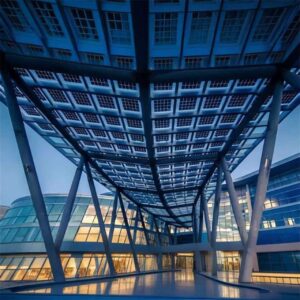
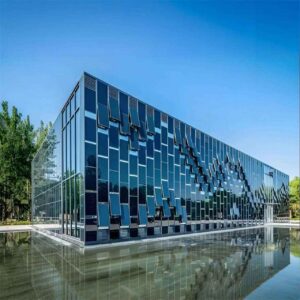
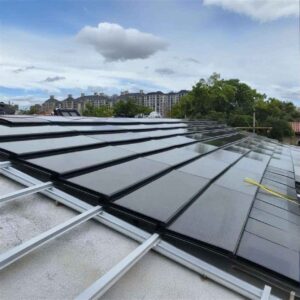
The BIPV glass railing category — of which Jia Mao BIPV’s solar balcony railing is a representative product — operates in a fundamentally different use case to post-cap lighting. The glass panels (monocrystalline silicon cells, 20–22% conversion efficiency, 10–12 mm tempered safety glass, −40°C to +85°C operating range, CE/IEC 61215/ISO 9001 certified) generate usable electricity that feeds building systems — reducing utility bills and qualifying for renewable energy incentives — while simultaneously fulfilling the structural balustrade function. The LED lighting function, if specified, uses a separate circuit powered from the building. For commercial developers and hospitality operators evaluating railing replacement as part of a broader energy-efficiency programme, the BIPV glass railing category changes the procurement conversation from “lighting cost” to “energy asset.”
Return Policies, Warranty Terms, and Service Availability
Three warranty dimensions that consistently separate reliable commercial suppliers from risky ones:
- Field-replaceable components: A commercial installation of 50+ fixtures requires that batteries, LED arrays, and control boards be field-replaceable without returning the entire fixture to the manufacturer. Confirm this explicitly before purchase — and confirm that replacement parts will be available for the full warranty period.
- Claims process documentation: Request a sample warranty claim procedure document before purchase. A 10-page legal document that requires laboratory return authorisation for every claim is functionally worthless for a commercial property maintenance team. A supplier that emails a replacement unit against a photograph and serial number is a practical partner.
- Service availability: For international procurement, confirm that the supplier has a service presence or authorised distributor in your country. A 3-year warranty serviced from a different continent is not the same as a 3-year warranty with local depot stock.

10. Buying Guide and Recommendations
How to Prioritise Durability, Brightness, and Price for Different Use Cases
The three evaluation criteria do not rank equally for every project. Use this framework to weight them correctly for your specific application before comparing products:
| Project Type | Primary Priority | Secondary Priority | Tertiary Priority | Minimum Spec Threshold |
|---|---|---|---|---|
| Hospitality hotel deck / balcony | Durability (aesthetics) | Brightness / CCT (atmosphere) | Price | IP65, LFP, 3-yr warranty, warm white CCT |
| Municipal pedestrian pathway | Brightness (safety) | Durability (maintenance cost) | Price | IP65, 50+ lm, PIR option, 3-yr warranty |
| University campus / institutional | Durability (low-maintenance) | Price (procurement budget) | Brightness | IP65, LFP, modular repair, 5-yr warranty |
| Commercial building ESG / BIPV | Durability (25-yr service) | Energy generation (ROI) | Esthétique | BIPV glass, IP67, IEC 61215, 25-yr PV warranty |
| Residential premium development | Aesthetics / CCT | Durabilité | Price | IP55+, warm white, 2-yr warranty minimum |
Quick Decision Checklist and Red Flags
✅ Solar Railing System Procurement Checklist
- IP rating confirmed for actual installation environment (not minimum code, but site-specific)
- Battery chemistry specified: LFP for commercial applications; query NiMH / SMF lead-acid cycle life if proposed
- Lumen output verified by independent test report, not marketing claim; confirmed at low battery state (constant-current driver)
- CCT confirmed for architectural context: 2,700–3,000 K hospitality / residential; 4,000–5,000 K commercial safety
- Winter performance modelled using December peak sun hours for installation latitude
- Frame material and coating specified for the corrosion environment (coastal = PVDF coating or 316 SS minimum)
- Warranty terms reviewed: product, LED L70, battery, and structural warranty are separate documents
- Field-replaceable parts confirmed: battery and LED module available as separate replacement items
- Permitting requirement assessed: self-contained units vs. wired system vs. grid-connected BIPV
- Supplier reference projects requested: same product, same load class, 3+ years in service
Red flags to stop procurement:
- IP rating stated without specifying the standard (IEC 60529) or test report reference
- “All-night operation” claimed without specifying at what lumen output level
- Battery chemistry not disclosed (“rechargeable battery included”)
- Warranty claims not backed by an accessible claims procedure document
- No third-party certification reference (CE, ETL, UL, IEC) for a product claimed for commercial use
- Sample provided but no production-equivalent test certificate — consumer and commercial grade products frequently differ from samples
Sample Scenarios (Garden Path, Stair Railing, Deck Perimeter)
Scenario A — Commercial Hotel Garden Path (80 linear metres)
Requirement: Warm-white pathway delineation, operated nightly, winter-reliable, maintenance managed by hotel staff.
Specification: 20 × post-cap luminaires at 4 m spacing; 25–40 lm warm white (2,700 K); LFP battery ≥ 2,000 mAh; IP65; MPPT controller; 3-year warranty with field-replaceable battery. Estimated unit cost: $75–$110.
Why: Low lumen output is appropriate for path delineation (not safety illumination); warm CCT matches hospitality aesthetic; LFP prevents mid-season battery failure; field-replaceable battery allows hotel maintenance team to service units without contractor callout.
Scenario B — University Stair Railing Safety Lighting (3 stairways, 48 steps)
Requirement: Step visibility compliant with university safety policy, must operate reliably through northern winter (48°N latitude).
Specification: 48 × stair-tread solar step lights; 30–50 lm neutral white (4,000 K); LFP ≥ 3,000 mAh; MPPT controller; IP65; sized for December minimum (1.8 hr/day effective sun). Annual output review in October to identify any units with declining battery SoH before winter season.
Why: Neutral CCT improves visual acuity on step edges vs. warm white; December sizing prevents mid-winter failures; LFP cycle life matches 10-year campus maintenance cycle without battery replacement.
Scenario C — Commercial Office Building Deck Perimeter (BIPV Railing)
Requirement: 200 m² of perimeter balustrade across 3 floors; developer targeting LEED EA credit and ESG reporting; 25-year building investment horizon.
Specification: BIPV glass balustrade panels (20–22% cell efficiency, tempered glass, IP67, IEC 61215 certified); 304/316 SS framing; central LFP BESS; building-integrated grid-tied inverter; 25-year PV performance warranty. Separate LED railing lighting circuit powered from building. Consider Verre photovoltaïque BIPV products with transparent or semi-transparent options to maintain views.
Why: BIPV glass railing generates building electricity revenue offsetting the installation premium; qualifies for ITC (US) or EU renewable energy incentives; 25-year warranty aligns with building depreciation cycle; glass panel aesthetics enhance property presentation to ESG-focused tenants.
Solar railing systems offer a genuine combination of safety lighting, aesthetic enhancement, and — in BIPV glass configurations — renewable energy generation that conventional wired systems cannot match. But the performance gap between a correctly specified commercial product and an incorrectly specified budget product is wide enough to create systematic operational failures within the first 3 years of service.
The procurement discipline required is straightforward: evaluate durability by corrosion environment and battery chemistry first; evaluate brightness by function and winter solar input second; and evaluate price as total cost of ownership over 5 years, not unit purchase price. Products that pass a rigorous specification review consistently cost 30–50% more per unit than budget alternatives — and consistently deliver lower 5-year TCO because replacement and maintenance costs dominate the budget-tier lifecycle.
For commercial projects where the railing is replacing a building component rather than adding to it, the BIPV glass railing category changes the financial case entirely: the incremental cost of the solar function over standard architectural glass is offset by energy generation, green building certification value, and in many markets, direct government incentives. Align product selection with installation environment, maintenance capacity, and investment horizon — then require test data, not marketing claims, to support every specification.
Specify BIPV Solar Railing Glass for Your Commercial Project
Jia Mao BIPV’s solar balcony railings combine monocrystalline cells at 20–22% conversion efficiency, 10–12 mm tempered safety glass, IP67 waterproofing, stainless steel framing, and a 25-year PV performance warranty — with CE, TÜV, and IEC 61215 certifications for commercial project specifications across EU, North American, and Asian markets.
Explore Solar Balcony Railings →
📖 Glossary of Key Technical Terms
- IP Rating (Ingress Protection)
- Two-digit code per IEC 60529 rating resistance to solid particles (first digit, 0–6) and liquids (second digit, 0–9K). IP65 = dust-tight + water jet resistant. IP67 = dust-tight + temporary immersion to 1 m. Minimum IP65 for commercial outdoor railing fixtures.
- Lumen (lm)
- Unit of total visible light output. Not to be confused with lux (illuminance — lumens per m²) or watt (power input). A 40 lm post-cap light directed downward onto a 1 m² step provides approximately 40 lux — adequate for step visibility but below the 100+ lux recommended for safety-critical stairways.
- CCT (Correlated Color Temperature)
- Measured in Kelvin (K). 2,700–3,000 K = warm amber-white (candle-like); 4,000 K = neutral white (office-like); 5,000–6,500 K = cool blue-white (daylight). Warm temperatures are standard for hospitality; neutral/cool for safety and security applications.
- LiFePO₄ (LFP)
- Lithium iron phosphate battery chemistry. Preferred for commercial solar railing applications: 3,000–6,000 cycle life (vs. 200–500 for SMF lead-acid), no thermal runaway below 270°C, −20°C to +60°C operating range. Costs more upfront but eliminates mid-service battery replacement in most commercial applications.
- MPPT (Maximum Power Point Tracking)
- Charge controller algorithm that continuously optimises the DC operating point of the solar panel to extract maximum power under varying irradiance and temperature conditions. Recovers 15–30% more energy than PWM controllers in real-world conditions with partial shading or low-angle winter sun.
- BIPV (Building-Integrated Photovoltaics)
- Solar technology integrated into building envelope materials — glass, facade panels, roofing — replacing conventional building components while generating electricity. BIPV railing glass panels are both structural balustrade elements and power-generating assets, requiring both PV performance and building safety certifications.
- Peak Sun Hours (PSH)
- The daily solar energy available at a location expressed as equivalent hours of 1,000 W/m² irradiance. A location receiving 4 PSH/day has the same daily solar energy as 4 hours of full direct sun. Used to calculate daily panel output: 2 W panel × 4 PSH = 8 Wh/day before charge losses.
- SMF (Sealed Maintenance Free) Battery
- Lead-acid battery variant (AGM or gel) sealed to prevent electrolyte spill. Common in budget solar lights due to low cost. Cycle life 200–500 full cycles — typically 1–2 years of daily cycling before capacity drops below functional threshold. Not recommended for commercial solar railing applications requiring 5+ year service without replacement.
Questions fréquemment posées
What factors most influence brightness in solar railing systems?
Four factors determine how bright a solar railing light actually is in field conditions — as opposed to its rated output on a specification sheet. First, battery state of charge at dusk: a product that only received 2 peak sun hours on a cloudy day starts the night at 40–50% charge, limiting maximum output duration proportionally. Second, LED driver type: constant-current drivers maintain rated lumen output until the battery hits its cut-off voltage; direct-drive circuits dim progressively as battery voltage drops, meaning the light appears bright at 8 PM and dim by midnight. Third, MPPT vs. PWM charge control: MPPT controllers recover 15–30% more energy under partial shading, directly extending available run time. Fourth, LED efficacy (lm/W): a 120+ lm/W LED produces the same brightness at half the power draw of a 60 lm/W LED, doubling effective run time from the same battery. For commercial procurement, require the supplier to provide: rated output at 100% battery, rated output at 20% battery, and minimum continuous run time at rated output under December conditions for the installation latitude.
How does climate affect the durability and performance of solar railing systems?
Climate affects solar railing systems through five independent mechanisms. (1) Corrosion: coastal salt air degrades standard powder-coated aluminium frames within 5–8 years; specify PVDF coating or 316 stainless steel for marine environments. (2) UV degradation: high UV index locations (tropical, desert) accelerate plastic housing chalking and encapsulant yellowing; require ASTM G154 UV weathering test data for any plastic-housed product. (3) Thermal cycling: large daily temperature swings stress joint seals and solder connections; specify products tested to IEC 61215 thermal cycling (200 cycles, −40°C to +85°C) for climates with > 25°C daily temperature swing. (4) Winter solar availability: northern latitudes receive 60–70% less solar energy per day in December than June; battery and panel must be sized for December, not the annual average. (5) Freeze-thaw cycling: expansion joint sealants must accommodate thermal movement; silicone sealants rated to Class 50LO (ISO 11600) for ±50% joint movement are required in climates experiencing > 50 freeze-thaw cycles per year. Specify the product for the worst month and the most aggressive environmental factor — not the average conditions.
Are solar railing systems cost-effective compared with wired lighting?
The answer depends entirely on whether the comparison includes installation cost — not just unit cost. TCO analysis tools consistently show that solar lighting becomes cost-competitive with wired equivalents when trenching distance exceeds approximately 15–20 metres per fixture, because the cost of electrical trenching, conduit, wiring, and connection work escalates faster than the solar premium. For a 50-fixture commercial railing installation requiring 200+ linear metres of new electrical trench, the solar option typically costs $15,000–$25,000 less in installed cost — enough to fully justify a commercial-grade battery and LED specification. The break-even changes in favour of wired lighting when: the fixtures are within 5–10 m of an existing electrical circuit, the installation is in a high-latitude location with very limited winter solar, or the fixtures require > 500 lm output continuously (load that demands a large solar panel and battery that becomes uneconomical). For most commercial railing applications at 15–150 lm, solar is cost-competitive on a 5-year TCO basis when installation costs are included in the comparison.
What is the minimum IP rating required for commercial solar railing lights?
For commercial outdoor railing installations exposed to direct rain and normal atmospheric conditions, IP65 is the practical minimum — not the code minimum, which may be lower. IP65 provides dust-tight protection and resistance to water jets from any direction, which covers rain, cleaning with a garden hose, and normal outdoor water exposure. For coastal environments within 2 km of salt water, specify IP67 minimum (temporary immersion to 1 m) because salt mist can enter IP65 housings through pressure-differential effects in high-wind conditions. For pool and spa perimeter railings, IP67 or IP68 is mandatory because splash and partial immersion are part of the normal operating environment. For BIPV glass railing panels, the junction boxes and electrical penetrations through the glass must be rated IP67 minimum, as water pooling occurs at the base of vertical glass panels in heavy rain. Always request the IEC 60529 test report — not just the rating stated on the product label or in the marketing materials.
How long do the batteries in solar railing lights typically last?
Battery service life depends almost entirely on chemistry and daily cycling depth. NiMH batteries in consumer solar post-cap lights: 300–500 full cycles, equating to 1–2 years of daily operation before capacity drops to 60–70% of original — typically manifesting as the light going off by 2–3 AM instead of dawn. SMF (AGM) lead-acid batteries in mid-range units: 200–500 cycles, similar service life to NiMH with larger capacity. LiFePO₄ (LFP) batteries in commercial-grade fixtures: 3,000–6,000 cycles to 80% state-of-health (SoH) — equating to 8–16 years of daily cycling. The practical implication for commercial procurement: NiMH/SMF batteries require replacement or fixture replacement at years 2–4, creating a maintenance event across all fixtures simultaneously. LFP batteries typically outlast the LED array and may never require replacement within a 10-year maintenance cycle. The cost delta between an NiMH and LFP unit is typically $15–$35 per fixture; the cost of a maintenance callout to replace batteries across a 50-fixture installation is $500–$1,500 — making LFP the correct specification for any commercial project where facilities management cost matters.
Do solar railing systems require permits or professional installation?
Self-contained solar post-cap lights — single units with internal battery, PV panel, and LED — generally require no electrical permit in the US or EU, as they are classified as low-voltage lighting accessories with no grid connection. Professional installation is not legally required, though it is recommended for commercial properties to ensure correct clearances and maintenance access. The permit threshold changes when the system involves any of the following: a central battery connected to multiple fixtures; AC wiring or an inverter; grid export or backup charging; or BIPV glass panels feeding building electrical systems. These configurations fall under NEC 690 (US) or IEC 60364-7-712 (international) and require a licensed electrical engineer to design and sign the system, a licensed electrician to install the electrical components, and an AHJ (authority having jurisdiction) permit and inspection before commissioning. For BIPV glass railing systems in commercial buildings, engage the structural and electrical engineers at schematic design stage — the later in the construction programme these systems are introduced, the more expensive the coordination becomes. Useful permitting reference: NEC Solar Electrical Requirements for Commercial.
What is the difference between a solar railing light and a BIPV solar railing?
A solar railing light is a self-contained fixture that mounts to a railing post or rail and provides illumination — it uses a small PV panel to charge an internal battery that powers an LED. The railing is a separate structure; the solar light is an accessory. A BIPV solar railing (Building-Integrated Photovoltaics) is a structural balustrade system where the glass infill panels are themselves the photovoltaic collectors — they replace conventional architectural glass while generating electricity. The electricity output goes to the building’s electrical system (or a dedicated battery bank), not to a railing-mounted LED. BIPV solar railings require structural engineering sign-off, electrical permits, and utility interconnection where grid-export is involved. They carry a 25-year PV performance warranty and are specified as both building materials and energy-generating assets. The two products serve different purposes: solar railing lights provide ambient or safety lighting independently of the grid; BIPV solar railings contribute to a building’s energy generation and ESG credentials. Jia Mao BIPV’s solar balcony railing product is a BIPV system — not a railing lighting product — and is specified for commercial building projects with 25+ year investment horizons.
What color temperature is best for commercial solar railing lighting?
Color temperature selection for commercial solar railing lighting should be driven by the functional and aesthetic requirement of the space, not component availability. 2,700–3,000 K (warm white) is the standard for hospitality venues, premium residential developments, restaurants, and recreational decks where creating a welcoming, comfortable atmosphere is the design intent. This CCT mimics incandescent and halogen light sources that guests and occupants associate with relaxation. 4,000 K (neutral white) provides better visual acuity for step edges, pathway boundaries, and level changes — appropriate for university campuses, corporate headquarters, and public infrastructure where safety lighting codes may specify minimum illuminance levels. 5,000–6,500 K (cool white) is reserved for security and perimeter applications where maximum contrast and visibility are priorities over aesthetics. The practical specification guidance for mixed-use commercial developments: use 3,000 K for all amenity and hospitality railing lighting, 4,000 K for stair and pathway safety lighting, and specify both from the same supplier to ensure consistent fixture aesthetics even where CCT differs. Mixing CCT sources from different manufacturers creates visual inconsistency that is difficult and expensive to correct after installation.


-300x300.jpg)