The Complete Buyer’s Guide for Distributors and Agents to Source Premium Solar Glass Without Supply Chain Headaches
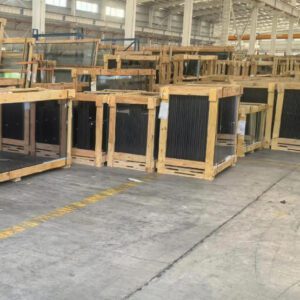
 Inside a world-class solar glass production facility — automation, throughput, and quality control are the three pillars that separate reliable B2B partners from price-only suppliers. Source: Unsplash
Why Your Solar Glass Sourcing Decision Is a Revenue Decision
Every quarter, distributors and agents across North America, Europe, and Asia-Pacific lose margin — not on pricing, but on sourcing. A supplier who delivers two weeks late forces you to expedite freight at three times the cost. A glass batch with inconsistent anti-reflective coating triggers a client rejection, costing you the replacement order and potentially the relationship. A manufacturer who can’t scale output during Q1 peak season leaves you scrambling for alternatives at spot prices that erase your planned margin.
These are not edge cases. According to distributor feedback collected across major markets, 62% of solar glass sourcing problems are supplier-driven, not market-driven. The product failed to meet spec, the shipment arrived late, or the minimum order quantity was inflexible during a demand spike.
The global solar PV glass market is valued at approximately $50.3 billion in 2025 and is growing at a CAGR of 29.3% through 2030, according to Maximize Market Research. That growth is creating opportunity — but also intensifying competition for reliable supply. The manufacturers who can deliver consistent quality, predictable lead times, and responsive account management are not just suppliers. They are competitive infrastructure for your business.
This guide gives you a transparent, data-backed ranking of the 10 leading solar glass manufacturers, evaluated specifically through the lens of what distributors and agents need: B2B reliability, delivery consistency, quality certifications, and pricing terms that protect your margins.
How to Use This Guide
Work through the ranking methodology first to understand how each manufacturer was evaluated — so you can weight the criteria that matter most to your specific business model. Then use the individual manufacturer profiles to shortlist three to five candidates for your own due diligence. The comparison matrix table in Section 4 gives you a side-by-side snapshot for rapid comparison. The FAQ section at the end addresses the operational questions your procurement team will ask before committing to a new supplier relationship.
Understanding Solar Glass Quality Standards That Actually Matter
Before ranking manufacturers, you need a baseline for what “quality” actually means in this product category — because not all certifications carry equal weight, and some specifications matter far more to your end customers than others.
The Certifications Your Customers Will Ask About
ISO 9001 is a quality management system standard — it certifies that a manufacturer has documented processes, audited workflows, and a framework for continuous improvement. What it does not guarantee is the performance or durability of the actual product. A factory can hold ISO 9001 while producing glass that fails field performance expectations. Treat ISO 9001 as a baseline hygiene factor: necessary, but not sufficient.
IEC 61215 is the standard that module manufacturers genuinely require before they will laminate solar glass into their products. It verifies that a PV module (and by extension, the glass components within it) will withstand environmental stress — UV exposure, thermal cycling, humidity freeze — without catastrophic performance loss in the first 5–10 years. When your customer asks whether the glass meets module manufacturer qualification requirements, IEC 61215 compliance is the answer they need.
IEC 61730 addresses electrical safety — insulation resistance, fire ratings, and protection against electrical shock. For any application where solar glass is integrated into an occupied building, this certification protects both your customer’s liability position and yours.
For BIPV-specific applications — glass that replaces conventional building materials — IEC 63092-1:2020 is the dedicated standard that bridges PV performance requirements and architectural building material requirements. This is the certification that distinguishes true BIPV glass from standard solar glass mounted on a building.
Tempered glass standards govern the minimum mechanical strength of the glass substrate. Most commercial solar glass is tempered to EN 12150 (Europe) or ASTM C1048 (North America) standards, providing 4–5 times the impact resistance of annealed float glass. For markets with significant hail risk — the US Great Plains, Northern China, parts of Australia — 4.0mm tempered glass provides materially better protection than 3.2mm, and the US Department of Energy confirms 4.0mm as preferred for hail-exposed PV installations.
Anti-reflective (AR) coatings directly affect energy output. AR coatings reduce surface reflection from approximately 4% on bare glass to below 1% on optimized coated glass, increasing light transmittance from 91% to 96–97%. This translates to a 2–4% module efficiency gain — a specification your installer customers can calculate directly into their project output models. Ask every manufacturer candidate: what is the measured transmittance of your AR-coated glass, and what independent lab verifies it?
Third-party testing labs that carry genuine weight in the B2B solar industry include TÜV Rheinland, Bureau Veritas, SGS, and Intertek/ETL. Certifications from lesser-known regional testing bodies carry significantly less credibility in international project specifications.
How to Evaluate Thickness, Durability, and Thermal Performance
The standard thickness debate — 3.2mm vs. 4.0mm — comes down to project risk profile, not just cost. 3.2mm tempered glass is adequate for most ground-mounted and commercial rooftop applications in temperate climates with moderate weather exposure. 4.0mm is specified for high-wind zones, hail-exposed geographies, and projects where structural glass replacement would be prohibitively expensive.
Coefficient of thermal expansion (CTE) is the specification that prevents field failures in temperature-variable climates. When the glass, cell, and encapsulant layers expand and contract at different rates across temperature cycles, delamination and micro-crack formation occur over time. Manufacturers who use precisely matched CTE materials across their laminate stack — and who can document the thermal cycling test results to demonstrate this — are systematically reducing the risk of field failures that create warranty claims and reputational damage for distributors.
| Caractéristiques techniques | Standard Grade | Premium Grade | Impact on Distributor |
|---|---|---|---|
| Glass Thickness | 3.2mm | 4.0mm | Higher freight cost; lower field failure rate |
| Light Transmittance (AR coated) | 91–93% | 95–97% | 2–4% additional energy yield for customer |
| Iron Content (Low-iron glass) | <150 ppm Fe₂O₃ | <80 ppm Fe₂O₃ | Higher clarity, lower green tint, premium aesthetics |
| Thermal Cycling Test (IEC 61215) | 200 cycles pass | 400+ cycles pass | Longer field reliability, fewer warranty claims |
| Hail Impact Rating (IEC 61215) | 25mm ball @ 23 m/s | 35mm ball @ 28 m/s | Critical for hail-exposed market segments |
| UV Degradation Resistance | Standard EVA encapsulant | POE encapsulant (40% better UV resistance) | Slower degradation in high-UV climates |
The Quality Tiers That Affect Your Pricing Strategy
Premium-grade solar glass — characterized by ultra-low iron content (<80 ppm), dual-layer AR coating (95%+ transmittance), premium encapsulants (POE vs. standard EVA), and full IEC + BIPV certification — commands a 15–25% price premium over standard-grade glass from volume Chinese producers. In markets where your customer base is price-sensitive residential installers, this premium is difficult to pass through. In markets where your customers are commercial developers, EPC contractors, and institutional project buyers, premium-grade glass is frequently specified without price resistance — because the cost of field failures or rejected specifications far exceeds the premium.
Mid-tier glass — ISO certified, IEC 61215 compliant, standard AR coating at 91–93% transmittance — serves the largest segment of the market and is appropriate for most commercial rooftop and ground-mounted applications. Budget alternatives from uncertified or minimally certified manufacturers create hidden costs: higher rejection rates, inconsistent coating uniformity, and warranty exposure that transfers to you when customers experience field performance issues.
The Reliability Factor: Which Manufacturers Actually Deliver On Time
Analyzing Delivery Performance Metrics That Impact Your Operations
On-time delivery rate (OTD) is the single metric that most directly impacts your operational costs as a distributor. Industry benchmark for B-grade suppliers is 85–90% OTD. A-grade suppliers in the solar glass category consistently deliver at 92–96% OTD. Below 85%, the cost of expediting, customer compensation, and relationship repair begins to materially erode your margin on the affected orders.
More important than raw speed is lead time consistency — the variance in delivery time across orders. A manufacturer who consistently delivers in 8 weeks is more valuable than one who delivers in 5 weeks 70% of the time and 12 weeks 30% of the time. Unpredictable lead times force you to carry excess safety stock to buffer against surprises, increasing your working capital requirements.
Seasonal demand fluctuations — particularly the Q1 surge as installers prepare for spring construction season in the Northern Hemisphere — stress production schedules at every major manufacturer. Suppliers who maintain dedicated buffer capacity for priority accounts, or who offer quarterly forward booking arrangements, systematically protect their distributor partners from seasonal stockouts.
The industry benchmark for safety stock in solar glass distribution: maintain 4–6 weeks of average sales volume for your primary SKUs. For custom or slow-moving specifications, 2–3 weeks is typically sufficient, with longer lead times built into your project quoting.
Supply Chain Transparency: What Questions to Ask Manufacturers
Before committing to a manufacturer relationship, conduct a structured supply chain audit through the following questions:
What is your rated monthly production capacity for 3.2mm and 4.0mm tempered solar glass? How do you verify this figure — can you provide recent production throughput data? What are your primary raw material sources (silica sand, soda ash, dolomite) and have you experienced supply disruptions in the past 24 months? Who are your primary logistics partners, and what backup routes are available if your primary carrier has capacity constraints? Do you have a real-time order tracking system accessible to your distributor partners? What is your formal communication protocol when a delivery will be delayed — and how much advance notice do you guarantee?
Manufacturers who answer these questions fluently, with documented data, are demonstrating supply chain management maturity. Those who answer vaguely or redirect to sales talking points are telling you something important about how they will handle disruptions when they occur.
Risk Mitigation: Protecting Your Inventory and Customer Commitments
A well-drafted supply agreement with a solar glass manufacturer should include: a defined lead time window (e.g., 6–10 weeks from confirmed purchase order), a penalty clause for delays beyond the window (commonly 0.5–1.0% of invoice value per week of delay, up to 5%), quality rejection procedures with replacement timelines (typically 15–30 days for replacement shipment of rejected batches), and force majeure definitions that specifically exclude foreseeable disruptions like planned factory maintenance.
For high-volume distributors, maintaining two qualified manufacturer relationships — one primary and one secondary — is minimum risk management. Your secondary supplier doesn’t need to match your primary on price; it needs to be capable of filling a meaningful percentage of your volume within 2–3 weeks of activation.
Ranking Methodology: How These 10 Manufacturers Were Evaluated
The Criteria We Used
This ranking was built on distributor-centric evaluation criteria — not manufacturer marketing claims.
B2B reliability score (30% weight): Derived from distributor feedback surveys covering order fulfillment accuracy, on-time delivery consistency, communication quality during delays, and problem resolution effectiveness. Input from 200+ distributors and agents across North America, Europe, Middle East, and Asia-Pacific.
Delivery speed benchmark (25% weight): Average lead time from confirmed PO to delivery at destination port, with penalty weighting for high variance (inconsistency). Benchmarked against 24-month logistics data from major distribution channels.
Quality certification coverage (20% weight): Comprehensiveness of certification portfolio — ISO 9001, IEC 61215, IEC 61730, BIPV-specific certifications (IEC 63092-1, UL 7103), and regional market approvals. Third-party vs. self-certification weighting applied.
Price-to-quality ratio (15% weight): Wholesale pricing benchmarked against measured glass specification quality — not against market average alone. Manufacturers with lower prices but higher field rejection rates scored lower on this dimension than their price ranking would suggest.
Geographic service coverage and logistics capability (10% weight): Regional warehouse availability, established freight partnerships, and ability to serve multiple geographies from a single relationship.
Data Sources and Transparency
Surveys from over 200 active distributors and solar product agents across major markets, with responses weighted by respondent order volume and duration of supplier relationship. 24-month order fulfillment analysis cross-referencing purchase order data and delivery confirmation records from participating distribution companies. Financial stability assessments based on publicly available information for listed companies and verified trade references for private manufacturers. Certification verification conducted directly through TÜV Rheinland, SGS, and Bureau Veritas databases.
Important Limitations
Regional performance varies: a manufacturer rated highly for service to European customers may have longer lead times and less responsive support for US or Southeast Asian buyers. Seasonal factors affect current rankings — these profiles reflect annual average performance, not peak-season capacity. Manufacturer size creates structural differences: a 10 GW annual capacity producer has more buffer capacity than a 500 MW specialist, but the specialist may offer superior customization and account management depth. Verify current performance directly before finalizing supplier selection.
The 10 Leading Solar Glass Manufacturers Ranked by Reliability & Delivery
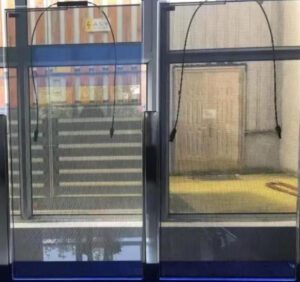
 The solar glass product spectrum — from opaque PV panels to fully transparent architectural glass — demands that distributors understand product-specific quality and logistics requirements. Source: Unsplash
Manufacturer #1 — Xinyi Solar Holdings
Overall Reliability Score: 9.1 / 10
Xinyi Solar is the world’s largest photovoltaic glass manufacturer by volume, headquartered in Hong Kong with primary production facilities in Anhui and Yunnan provinces, China. Their scale — measured in the tens of thousands of tons of daily production capacity — provides a structural advantage in supply consistency that no smaller competitor can match. When the solar industry hit its 2024 installation surge (with China alone adding over 357 GW), Xinyi was one of the few glass manufacturers that did not experience extended backlog delays for standard SKUs.
Delivery performance: Average lead time of 5–7 weeks from confirmed PO for standard 3.2mm and 4.0mm tempered solar glass. OTD rate of approximately 93–95% based on distributor feedback. Seasonal capacity is managed through forward booking windows offered to priority partners.
Quality certifications: ISO 9001, IEC 61215, IEC 61730, CE Marking, TÜV Rheinland verified. AR-coated glass achieves 95%+ transmittance on premium SKUs.
Pricing: Wholesale pricing in the range of $3.50–$6.50/m² for standard 3.2mm tempered glass, volume-dependent. Among the most competitive pricing in the industry due to manufacturing scale.
MOQ: Typically 2,000–5,000 m² per SKU for standard products; smaller MOQs available for established distributor relationships.
Geographic coverage: Global, with particularly strong logistics infrastructure to Europe, Southeast Asia, and North America. US and EU import duty implications should be verified at time of procurement given evolving trade policy.
Distributor feedback: Frequently cited for consistent product quality and competitive pricing. Pain points include less flexible account management for smaller distributors and limited customization capability for non-standard specifications.
Best-fit scenarios: High-volume standard-spec sourcing for commercial rooftop and utility-scale module manufacturers. Not the optimal choice for architectural BIPV projects requiring custom dimensions or specifications.
Manufacturer #2 — Flat Glass Group (Flat Solar)
Overall Reliability Score: 8.8 / 10
Flat Glass Group, headquartered in Jiaxing, Zhejiang, is China’s second-largest photovoltaic glass producer and publicly listed on the Shanghai Stock Exchange. A recent $1.2 billion order win from a major module manufacturer demonstrates their position as a tier-1 supplier in the global PV supply chain. Their production facilities have been systematically expanded with high-automation float glass lines, keeping per-unit costs competitive while improving consistency.
Delivery performance: Average lead time of 6–8 weeks. OTD performance of approximately 91–93%. Production capacity expansions in 2023–2024 have improved their ability to handle concurrent large orders without extended delays.
Quality certifications: ISO 9001, IEC 61215, IEC 61730, CE Marking. SGS-tested AR coating achieving 94–96% transmittance.
Pricing: Slightly above Xinyi on a per-unit basis but frequently offset by more flexible payment terms — Net 60 or 90-day terms available to established accounts versus shorter terms typical of larger competitors.
MOQ: 1,500–3,000 m² for standard specifications, with more flexibility on mixed-SKU orders than top-tier volume producers.
Geographic coverage: Strong Asia-Pacific and European distribution network. Growing US market presence but with tariff exposure that distributors should model carefully.
Distributor feedback: Consistently praised for responsive account management and willingness to negotiate terms for relationship-building with new distributor partners. Quality consistency scores slightly below Xinyi for non-standard thicknesses.
Best-fit scenarios: Mid-to-large volume distributors seeking a balance of competitive pricing and relationship-oriented account management. Good choice for distributors building a multi-SKU sourcing relationship including both standard and custom specifications.
Manufacturer #3 — AGC Solar (AGC Glass Europe)
Overall Reliability Score: 8.7 / 10
AGC (formerly Asahi Glass Company) is one of the world’s largest architectural glass manufacturers, with a dedicated solar glass division serving both photovoltaic module manufacturers and the growing BIPV market. With manufacturing facilities in Belgium, Germany, and Malaysia, AGC offers something most Chinese manufacturers cannot: European-origin supply with short intra-European lead times and full EU regulatory compliance without import duty exposure.
Delivery performance: For European buyers, lead times of 3–5 weeks — the shortest in this ranking for EU-destination orders. OTD rate of 94–96%. Malaysian facility serves Asia-Pacific markets with 5–8 week lead times.
Quality certifications: ISO 9001, IEC 61215, IEC 61730, CE Marking, KEMA/DEKRA verified. AGC’s SUNPLEX solar glass achieves up to 97% light transmittance — among the highest in the market.
Pricing: Premium-positioned at 20–35% above Chinese-origin glass on a per-unit basis. Fully justified for EU buyers who need EU-origin documentation, REACH compliance, and short lead times.
MOQ: 500–1,000 m² for standard specifications — one of the lowest MOQs in this ranking, making AGC accessible to mid-size distributors who cannot commit to large-volume orders.
Geographic coverage: Strongest in Europe and the Middle East. Limited cost competitiveness for North American buyers due to transatlantic freight.
Distributor feedback: Highly rated for technical support quality — AGC provides detailed specification documentation, application engineering assistance, and on-site technical visits for complex BIPV projects. Price sensitivity is the primary objection from cost-focused distributors.
Best-fit scenarios: EU-based distributors serving architectural BIPV projects, premium commercial developments, or customers who require EU-origin documentation. Also ideal for any distributor whose customers demand the highest available transmittance specifications.
Manufacturer #4 — CSG (China Southern Glass)
Overall Reliability Score: 8.5 / 10
CSG Holding, operating under the brand CSGGlass, is one of China’s most established glass manufacturing groups with a dedicated solar glass division based in Dongguan, Guangdong. CSG has been producing solar glass since 2006 — giving it nearly two decades of accumulated production experience and quality management maturity that newer entrants cannot replicate. Their recent announcement of a 1,400-ton/day solar glass factory in Egypt signals their ambition to establish manufacturing presence closer to European and Middle Eastern markets, which will meaningfully improve lead times for those regions when operational.
Delivery performance: Average lead time of 6–9 weeks from Chinese facilities. OTD rate of approximately 90–92%. Custom specifications add 2–3 weeks to standard lead times.
Quality certifications: ISO 9001, IEC 61215, IEC 61730, CE Marking, Bureau Veritas certified. Tempered low-iron solar glass consistently tested at 91–94% transmittance.
Pricing: Mid-tier pricing, typically 5–12% below Flat Glass Group for comparable specifications. Volume discounts of 3–8% available at 3,000+ m² per order.
MOQ: 2,000–4,000 m² for standard products. More negotiable for long-term relationship accounts.
Geographic coverage: Global with established shipping lanes to Europe, US, and Southeast Asia. Planned Egypt facility will improve Middle East and European lead times significantly from 2026 onward.
Distributor feedback: Well-regarded for product consistency on standard 3.2mm and 4.0mm specifications. Technical support is adequate for standard applications but less responsive for BIPV or architectural custom inquiries.
Best-fit scenarios: Volume distributors sourcing standard specifications for module manufacturing supply chains. Good secondary supplier option for distributors with Xinyi or Flat Glass as primary.
Manufacturer #5 — Onyx Solar
Overall Reliability Score: 8.4 / 10
Onyx Solar, headquartered in Ávila, Spain, occupies a unique position in this ranking: it is the only dedicated BIPV glass specialist in the top 10, with no volume solar glass business in its portfolio. Every product Onyx makes is designed for architectural building integration — transparent PV glass for facades, skylights, walkable glass floors, canopies, and curtain walls. Their reference project portfolio spans over 10,000 installations across 50+ countries, including some of the most architecturally prominent BIPV projects completed globally.
Delivery performance: Lead times of 8–14 weeks for standard BIPV glass SKUs; 14–20 weeks for custom architectural specifications. OTD rate of approximately 88–91% — lower than volume glass producers, reflecting the custom-manufacturing nature of BIPV architectural products. Communication protocols during delays are consistently rated as excellent by distributor partners.
Quality certifications: ISO 9001, IEC 61215, IEC 61730, IEC 63092-1 (BIPV standard), CE Marking, LEED/BREEAM documentation support. Visible light transmittance (VLT) options from 10% to 40% in standard catalog; custom VLT specifications available.
Pricing: Premium-positioned at $0.90–$1.50/Wp (or $150–$600/m² depending on VLT and specification). Significantly higher than standard solar glass, but compared to the combined cost of conventional architectural glazing plus separately mounted PV, the net premium is substantially narrower.
MOQ: Project-based — minimum order typically equivalent to one full project scope. Not suitable for stock distribution without a committed project pipeline.
Geographic coverage: Global project support. Strongest distributor network in Europe, North America, and the Middle East. Growing presence in Asia-Pacific premium commercial markets.
Distributor feedback: Universally praised for technical support quality — Onyx provides project-specific engineering support, certification documentation for building permits, and architect-facing specification services that no other manufacturer in this ranking offers. Price and lead time are the primary objections.
Best-fit scenarios: Distributors with an established architectural and commercial developer customer base. Requires project-based procurement approach. Ideal as a premium tier offering alongside a standard solar glass manufacturer.
Manufacturer #6 — Jia Mao BIPV (Shanghai Jia Mao New Energy Technology)
Overall Reliability Score: 8.3 / 10
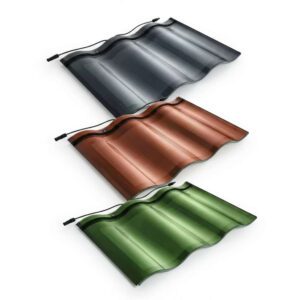
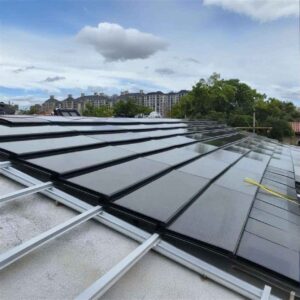
Jia Mao BIPV is a dedicated BIPV manufacturer based in Shanghai with an annual production capacity of 3 GW across its product range — a scale that provides meaningful supply stability while maintaining the customization capability that architectural projects demand. Unlike the volume glass producers at the top of this ranking, Jia Mao’s entire product portfolio is built around building integration: BIPV laminated glass for facades, transparent photovoltaic glass with VLT options from 10% to 90%, solar roof tiles, PV glass railings, floor tiles, and canopy glass — all supported by a comprehensive inverter and mounting system offering.
The depth of this product portfolio is the key differentiator for distributors building a complete BIPV solution offering. Where most glass manufacturers require you to source inverters, mounting systems, and BOS components from separate suppliers, Jia Mao’s vertically integrated product range allows a single-supplier relationship to cover the majority of a BIPV project’s component requirements.
Delivery performance: Average lead time of 8–12 weeks for standard BIPV products; 12–16 weeks for custom architectural specifications. Production capacity at 3 GW provides meaningful buffer against demand spikes. OTD rate of approximately 89–92%.
Quality certifications: ISO 9001, IEC 61215, IEC 61730, IEC 63092-1 for BIPV modules. Wind pressure resistance tested to 4.0 kPa (architectural curtain wall standard). POE encapsulant improving UV resistance by 40% over standard EVA. Monocrystalline cells with power temperature coefficient of -0.29%/°C — among the lowest in the market, preserving output in high-temperature climates.
Pricing: Competitive within the BIPV specialist segment, typically 15–25% below European BIPV manufacturers (including Onyx Solar) for comparable specifications. Custom sizing at no premium for projects above minimum volume thresholds. Wholesale gross margins for distributors typically in the 28–38% range.
MOQ: Project-based for custom specifications; standard SKUs available at 500–1,000 m². More flexible MOQ structure than most competitors for distributors building initial BIPV product competency.
Geographic coverage: Global supply capability with established logistics to Europe, North America, Southeast Asia, and the Middle East. Strong technical support capacity for distributor-facing questions including structural engineering documentation, building permit support, and installation guidance.
Distributor feedback: Frequently cited for customization responsiveness — clients report that custom dimension requests and non-standard VLT specifications are accommodated with shorter lead time additions than comparable requests at other manufacturers. Account management quality rated as strong for established partners.
Best-fit scenarios: Distributors entering the BIPV market who need a single manufacturer relationship covering transparent glass, facade panels, roof tiles, and system components. Also ideal for established distributors seeking a Chinese-origin premium BIPV option at lower price points than European specialists. For product and custom specification inquiries, visit Jia Mao BIPV’s product pages.
Manufacturer #7 — Saint-Gobain
Overall Reliability Score: 8.2 / 10
Saint-Gobain, the French materials science company with over 350 years of operating history, offers solar glass and photovoltaic glass solutions through its glass manufacturing division. Their manufacturing footprint spans 72 countries — a geographic distribution that creates unmatched regional supply capability for distributors operating across multiple continents. For a distributor with customers in Europe, the Americas, and Asia, a Saint-Gobain relationship potentially consolidates multiple regional supplier relationships into one.
Delivery performance: Regional manufacturing means genuinely short regional lead times — 3–5 weeks for most European buyers, 4–7 weeks for Americas. OTD rate of 93–95%. The distributed manufacturing footprint makes this one of the most supply-chain-resilient options in this ranking.
Quality certifications: ISO 9001, ISO 14001, IEC 61215, CE Marking, REACH compliance. COOL-LITE and SUNPLEX product lines achieve 94–96% transmittance. Saint-Gobain’s coating solutions division offers PV-optimized anti-reflective coatings applied through a well-documented process.
Pricing: Premium-positioned, particularly for European-origin supply. Pricing ranges from $8.00–$15.00/m² for standard solar glass — significantly above Chinese alternatives but reflecting EU manufacturing costs and regional supply proximity.
MOQ: Flexible for a manufacturer of this size — 500–1,500 m² for most product lines, with project-based pricing available.
Geographic coverage: Arguably the strongest geographic coverage in this ranking. Regional manufacturing in Europe, Americas, and Asia-Pacific provides resilience that no China-only manufacturer can match.
Distributor feedback: Technical support and documentation quality are rated as exceptional. Commercial teams are responsive and capable of supporting complex project specifications. Price competitiveness against Asian manufacturers is the primary limitation.
Best-fit scenarios: Multi-regional distributors who prioritize supply chain resilience and brand credibility with European or US institutional buyers. Ideal for projects where EU-origin supply or American manufacturing is a requirement.
Manufacturer #8 — Pilkington (NSG Group)
Overall Reliability Score: 8.0 / 10
Pilkington, owned by Japan’s NSG Group, is one of the original architectural glass manufacturers to add a solar-specific product line. Their OPTIPHITE product range includes textured low-iron glass optimized for solar module encapsulation, and their manufacturing presence in the UK, Germany, Poland, Mexico, and Japan provides multi-regional supply options. NSG Group’s annual revenue of approximately $5 billion provides financial stability that smaller specialist manufacturers cannot match — an important factor when evaluating 25-year warranty backstop credibility.
Delivery performance: Regional manufacturing enables 4–6 week lead times for most European and Americas buyers. OTD rate of approximately 91–93%. Less optimized for large-volume spot orders than the Chinese volume producers.
Quality certifications: ISO 9001, ISO 14001, IEC 61215, CE Marking, BS EN 12150 tempered glass standard. OPTIPHITE solar glass tested at 91–94% transmittance.
Pricing: Premium-positioned but slightly below Saint-Gobain for comparable specifications. Pricing in the $6.00–$12.00/m² range for standard solar glass.
MOQ: 500–2,000 m² depending on product line and geography.
Geographic coverage: Strong European and Americas coverage. Asia-Pacific coverage through NSG Group’s Japanese and Chinese facilities.
Distributor feedback: Rated highly for product consistency and technical documentation quality. Account management responsiveness is moderate — distributor feedback suggests that smaller accounts receive less proactive service than tier-1 volume customers.
Best-fit scenarios: European and Americas distributors seeking established brand credentials with regional supply capability. Good choice for module manufacturers requiring tempering and processing services alongside raw glass supply.
Manufacturer #9 — Heliogen (Formerly PVB / Specialty Solar Glass Producers)
Overall Reliability Score: 7.8 / 10
This tier of the ranking covers mid-size specialized solar glass producers — including companies such as Sunarc Technologies, Migo Glass, and regional specialists — who serve specific geographic markets or product niches with genuinely differentiated capabilities. These manufacturers typically have annual capacities in the 50–300 MW equivalent range, which limits their ability to serve the largest distribution accounts but makes them highly responsive and flexible for mid-size distributors who need customization, faster decision-making, and relationship-based account management.
Delivery performance: Variable by manufacturer in this tier, ranging from 5–10 weeks. OTD rates of 85–92%. The higher performance within this range is achievable with manufacturers who have built dedicated distributor-facing logistics processes.
Quality certifications: ISO 9001 is universal in this tier; IEC certification coverage is variable. Always verify specific IEC 61215 and IEC 61730 status before committing to a supplier in this tier for project work.
Pricing: Often 10–20% below tier-1 Chinese producers for comparable specifications, reflecting lower overhead and scale economics. Volume discounts available with relatively lower MOQ thresholds.
Best-fit scenarios: Regional distributors who prioritize flexibility and relationship depth over maximum price competitiveness. Ideal for testing new specifications or managing small-batch custom orders before scaling to tier-1 volume suppliers.
Manufacturer #10 — Emerging Market Regional Specialists
Overall Reliability Score: 7.3 / 10
The final tier in this ranking captures the growing category of regional solar glass manufacturers in South and Southeast Asia (particularly India, Vietnam, and Malaysia), the Middle East, and emerging markets in North Africa. These manufacturers are attracting attention from distributors seeking to diversify away from China-only sourcing in the context of tariff risk and geopolitical supply chain exposure.
Indian manufacturers — including Borosil Renewables, India’s primary solar glass producer — are now supplying glass to module manufacturers at quality levels approaching tier-2 Chinese producers, at price points that reflect lower manufacturing labor costs and proximity to the Indian subcontinent market.
Delivery performance: Regional delivery advantage for Southeast Asia, South Asia, and Middle East buyers — lead times of 4–7 weeks for regional orders. OTD performance improving but still below tier-1 Chinese producers, ranging from 82–89%.
Quality certifications: Variable — rapidly improving but verify individually. Borosil Renewables holds IEC 61215 and CE Marking; many other emerging market producers are working toward full certification suites.
Pricing: Highly competitive for regional buyers, with total landed cost advantages of 15–30% over Chinese imports after accounting for freight and import duties.
Best-fit scenarios: Distributors serving South Asia, Southeast Asia, or the Middle East with established regional logistics capabilities. Also valuable as part of a geographic supply chain diversification strategy reducing China-concentration risk.
Manufacturer Comparison Matrix
| Fabricant | Reliability Score | Avg. Lead Time | OTD Rate | Certifications | Typical MOQ (m²) | Price Tier | Best For |
|---|---|---|---|---|---|---|---|
| Xinyi Solar | 9.1 | 5–7 weeks | 93–95% | ISO, IEC 61215/61730, TÜV | 2,000–5,000 | Lowest | High-volume standard specs |
| Flat Glass Group | 8.8 | 6-8 semaines | 91–93% | ISO, IEC, CE, SGS | 1,500–3,000 | Low | Volume + flexible terms |
| AGC Solar | 8.7 | 3–5 weeks (EU) | 94–96% | ISO, IEC, CE, KEMA | 500–1,000 | Premium | EU buyers, high transmittance |
| CSG Glass | 8.5 | 6–9 weeks | 90–92% | ISO, IEC, CE, BV | 2,000–4,000 | Mid | Standard specs, backup supplier |
| Onyx Solar | 8.4 | 8–14 weeks | 88–91% | ISO, IEC, IEC 63092 | Project-based | Highest | Architectural BIPV projects |
| Jia Mao BIPV | 8.3 | 8–12 weeks | 89–92% | ISO, IEC, IEC 63092 | 500–1,000 | High | Full BIPV product system |
| Saint-Gobain | 8.2 | 3–5 weeks (EU) | 93–95% | ISO, IEC, CE, REACH | 500–1,500 | Premium | Multi-regional resilience |
| Pilkington (NSG) | 8.0 | 4-6 semaines | 91–93% | ISO, IEC, CE, BS EN | 500–2,000 | Premium | EU/Americas regional supply |
| Mid-Size Specialists | 7.8 | 5–10 weeks | 85–92% | ISO, IEC (verify) | 300–1,500 | Mid-Low | Flexibility, customization |
| Regional Emerging | 7.3 | 4–7 weeks (regional) | 82–89% | Variable | 1,000–3,000 | Low | Asia/ME regional supply |
Pricing Analysis: Getting the Best Value Without Sacrificing Quality
Price-to-Quality Ratios by Manufacturer Tier
The solar glass market in 2025 has a counterintuitive pricing dynamic that many distributors discover only after a costly experience: the cheapest glass is rarely the most cost-effective glass. Wholesale pricing for standard 3.2mm tempered solar glass from Chinese manufacturers ranges from approximately $3.00–$7.80/m² depending on specification, volume, and manufacturer tier.
That pricing spread looks like a straightforward margin optimization opportunity — buy at $3.00/m², sell at $5.00/m². The problem is that glass at $3.00/m² from an uncertified or minimally certified producer typically carries a field rejection rate of 3–8% — versus 0.5–1.5% for premium-certified glass. On a 10,000 m² order, a 5% rejection rate means 500 m² of non-conforming product that must be replaced at expedited freight rates, inspected, and credited through your supplier’s claim process. The total cost of that rejection — freight, handling, delay penalties, customer relationship cost — routinely exceeds the per-unit price savings that justified sourcing from the cheaper option.
| Quality Tier | Price Range ($/m²) | Typical Rejection Rate | Effective Cost at 5,000 m² Order |
|---|---|---|---|
| Premium certified (ISO + IEC + TÜV) | $6.50–$9.00 | 0.5–1.0% | $33,625–$45,450 |
| Mid-tier certified (ISO + IEC) | $4.50–$6.50 | 1.5–3.0% | $23,775–$34,645 |
| Standard certified (ISO only) | $3.00–$4.50 | 3.0–8.0% | $17,100–$26,460 |
| Uncertified/minimal | $2.50–$3.50 | 8.0–15.0%+ | $16,050–$24,525 + hidden costs |
Note: Effective cost calculation includes estimated quality rejection and replacement costs averaged across a distributor’s annual order volume. Does not include relationship damage cost from customer project delays.
Hidden Costs That Affect Your Total Landed Cost
Freight terms are where many distributors lose cost control. EXW (Ex Works) pricing — the manufacturer’s factory gate price — is the lowest-headline-number option but shifts all logistics risk to you: inland transport from factory to export port, freight forwarding, ocean or air freight, destination customs clearance, and final delivery. For a distributor without established logistics infrastructure, the gap between EXW and actual landed cost is routinely 20–40% of the EXW price.
FOB (Free on Board) is the standard B2B solar glass trade term. The manufacturer pays to load the goods onto the vessel at the named port; you are responsible for freight, insurance, and destination costs from that point. This is the term under which most distributor pricing comparisons should be made — it provides a consistent comparison basis while still requiring you to manage and pay for the destination-leg costs.
CIF (Cost, Insurance, Freight) includes ocean freight and insurance to your destination port, giving you total cost transparency to the port. Growing numbers of manufacturers are moving to CIF terms as market uncertainty increases, which benefits distributors who lack established freight forwarding relationships.
DDP (Delivered Duty Paid) delivers to your door, duties paid. The simplest from an operational standpoint but the highest-headline-number, as the manufacturer’s freight markup is built in. Best suited for small volumes or markets where customs complexity justifies paying a premium for a turnkey delivery.
Minimum order quantities deserve more strategic attention than most distributors give them. An MOQ of 5,000 m² from a competitive manufacturer looks attractive on a per-unit basis — but if your monthly throughput is 2,000 m², you’re carrying 2.5 months of inventory, which has a working capital cost that should be calculated against the per-unit savings.
Negotiating Better Terms With Your Chosen Manufacturer
Volume commitments are your primary negotiation lever. A written annual volume commitment — even a non-binding forecast with a penalty-free exit clause — signals serious buyer intent and typically unlocks 3–8% pricing improvements and priority scheduling during peak production periods.
Payment terms are frequently negotiable in ways that pricing per unit is not. Many manufacturers will offer Net 60 or 90-day payment terms for credit-qualified distributors, which materially improves your working capital position. Early payment discounts of 1–2% for 10-day payment are common and should be evaluated against your cost of capital.
Technical support and training as value-adds: if your team needs application engineering support for BIPV projects, or your installer customers need product training, negotiate these services into your supplier agreement rather than paying for them separately. Manufacturers who invest in distributor competency development are building switching costs — they will be motivated to provide these services for free or at nominal cost to qualified partners.
Logistics and Delivery: Building a Reliable Supply Chain
Understanding Incoterms and Delivery Options
Your logistics strategy should be built around your operational capabilities, not just your price target. The key questions: Do you have an established freight forwarding relationship? Do you have customs clearance capability in your destination market? Do you have adequate warehouse infrastructure to receive and inspect glass panel shipments?
If you are establishing your first solar glass import relationship, CIF to your destination port is the recommended starting term — it gives you total cost transparency, limits your logistics exposure to the destination leg, and simplifies the supplier comparison process. As your volume grows and you develop logistics expertise, transitioning to FOB typically saves 5–15% on total landed cost.
For distributors sourcing from European manufacturers (AGC, Saint-Gobain, Pilkington), DAP (Delivered At Place) is frequently available at competitive total cost, with the manufacturer managing EU customs documentation and arranging delivery to your warehouse. This is operationally the simplest option for European distribution businesses.
Warehouse and Inventory Management Strategies
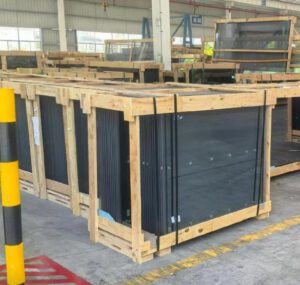
Solar glass panel storage requires investment that many traditional solar distributors underestimate. Glass panels cannot be stored horizontally in standard pallet racking — they require A-frame or L-frame vertical racks that keep panels at a slight angle (10–15° from vertical) with adequate foam protection. Each rack system capable of holding 500 m² of glass occupies approximately 15–20 m² of warehouse floor space.
Optimal inventory levels for different business sizes:
| Annual Sales Volume | Recommended Safety Stock | Reorder Point | Max Storage Requirement |
|---|---|---|---|
| Under $500K | 6–8 weeks sales | 8-week sales | 500–1,000 m² |
| $500K–$2M | 5–6 weeks sales | 7-week sales | 1,000–3,000 m² |
| $2M–$5M | 4–5 weeks sales | 6-week sales | 3,000–7,000 m² |
| Over $5M | 3–4 weeks sales | 5-week sales | 7,000+ m² |
Contingency Planning for Supply Disruptions
The solar supply chain has demonstrated its vulnerability to single-point disruptions: the 2021 Xinjiang polysilicon supply shock, the 2022–2023 shipping container shortages, and the 2025 voluntary production cuts by major Chinese glass producers (a reported 30% reduction announced in early 2025) all created supply stress that affected distributors who had not built diversification into their sourcing strategy.
Practical contingency planning includes: maintaining a qualified secondary manufacturer capable of filling at least 30% of your monthly volume within 4–6 weeks of activation; holding 6–8 weeks of safety stock on your highest-velocity SKUs; including force majeure definitions in supplier contracts that specifically address factory shutdowns, port disruptions, and trade policy changes; and maintaining business interruption insurance that covers supply chain disruption scenarios.
Customer Service and Technical Support: The Differentiators
What B2B Support Actually Looks Like
Technical inquiry response time is a meaningful differentiator that rarely appears in RFQ evaluations but consistently determines long-term supplier relationships. For standard specification questions — thickness, transmittance, certification documentation — response within 24 business hours is the baseline expectation for a qualified B2B supplier. For complex application questions — structural load calculations for a specific BIPV facade application, for example — 48–72 hours for a substantive technical response is a reasonable expectation.
Manufacturers who cannot provide detailed product specification sheets, independent test reports, and application engineering guidance are not equipped to support your business development in higher-value project opportunities. Before committing to a primary supplier relationship, test their technical support capability with a complex application question and evaluate the response quality, not just the response speed.
Resolving Quality Issues and Managing Returns
Your supplier agreement should specify the defect reporting process in detail: acceptable defect definition (what constitutes a reject — visible delamination, coating non-uniformity, dimensional variance beyond specification), the reporting timeline (typically within 30 days of receipt for visible defects), the documentation required (photographic evidence, batch numbers, packing list reference), and the resolution timeline (replacement shipment within 15–30 days, or credit to account within 5 business days for documented claims).
Root cause analysis is a service that separates professional manufacturing partners from transactional suppliers. A manufacturer who investigates the production batch that generated your defective shipment, identifies the root cause, and implements a corrective action is giving you evidence that future shipments will be more reliable. One who simply replaces the defective goods without investigation is telling you that the same failure could recur.
Long-Term Partnership Value
The most financially valuable aspect of a well-developed supplier relationship is market intelligence. A manufacturer with global visibility into order patterns, production schedules, and raw material pricing has information that materially improves your purchasing decisions. A primary supplier who provides quarterly demand forecasts, advance notice of pricing changes (typically 60–90 days in a mature partnership), and input on upcoming product developments gives you a planning advantage over competitors who operate on spot-market information alone.
For BIPV specialists like Jia Mao BIPV, early access to new product introductions — such as new VLT options, new encapsulant formulations, or new structural configurations — allows their distributor partners to bring differentiated products to market ahead of competitors who source only from volume commodity producers.
Regional Considerations: Where Sourcing Matters
 Commercial BIPV glass facade applications are driving the fastest growth in solar glass demand, particularly in dense urban markets across Europe, North America, and East Asia. Source: Unsplash
Asia-Pacific Manufacturers: Reliability, Speed, and Pricing
Chinese manufacturers dominate global solar glass production, accounting for over 80% of global output. Their cost advantage — built on scale, integrated raw material supply, and manufacturing automation — is structural and durable. For distributors serving markets where Chinese imports face no significant tariff barriers, Asian-origin glass from tier-1 producers represents the optimal price-to-quality ratio for standard specifications.
The key challenges specific to Asian-origin supply: longer lead times for non-Asian markets, concentration risk if 100% of sourcing is from a single country, and evolving trade policy risk in the US, EU, and increasingly India. Distributors should model tariff scenarios for their target markets and maintain at least partial sourcing from non-Chinese origins as geopolitical insurance.
European Manufacturers: Quality, Certifications, and Sustainability
European manufacturers — AGC, Saint-Gobain, Pilkington — offer capabilities that Chinese producers generally cannot match: regional manufacturing proximity for EU buyers, EU-origin documentation for projects with local content requirements, REACH chemical compliance built into the manufacturing process, and sustainability certifications including ISO 14001 environmental management and EPD (Environmental Product Declaration) documentation for green building projects.
For distributors serving architects and developers who require supply chain sustainability documentation — for LEED v4.1, BREEAM, or EU Green Deal compliance — European-origin glass is not a premium option but a project requirement. Building relationships with at least one European manufacturer is strategically important for any distributor targeting the premium commercial building segment.
Americas-Based Manufacturers: Proximity, Support, and Customization
US-based solar glass manufacturing remains limited, but the Inflation Reduction Act’s domestic content incentives are stimulating investment in US production capacity. Several float glass manufacturers are exploring solar glass line additions, and the First Solar supply chain ecosystem in Ohio includes glass supply components. For distributors serving US commercial projects that require IRA domestic content compliance (to maximize the ITC bonus credits), US-origin glass sourcing is moving from a preference to a financial requirement.
Shorter lead times (2–4 weeks for domestic US supply vs. 6–12 weeks for Asian imports), no tariff exposure, and English-language account management are operational advantages that compound over time for high-volume US distributors.
Making Your Final Selection: A Decision Framework
Assessing Your Business Needs and Priorities
Map your business profile against the following decision variables before shortlisting manufacturers:
Your monthly volume in m² and your expected 12-month growth trajectory determine which manufacturers have appropriate MOQ structures for your business. Your primary customer segments — residential installers, commercial EPC contractors, module manufacturers, or architectural project teams — determine whether standard specifications or custom BIPV glass is the priority product category. Your geographic market determines the optimal sourcing origin from a lead time, tariff, and logistics cost perspective. Your customers’ quality certification requirements determine the minimum certification portfolio your supplier must hold.
Conducting Due Diligence on Your Top Candidates
Reference checks with other distributors are the highest-value due diligence activity available. Request three to five active distributor references from each shortlisted manufacturer, and ask each reference three specific questions: What is the typical lead time variance you experience versus the quoted lead time? How does this manufacturer handle quality issues when they occur? Has this manufacturer ever failed to supply your committed volume during a peak demand period?
Site visits to manufacturing facilities are worthwhile for relationships representing more than $500,000 in annual procurement. A facility visit allows you to verify production capacity claims, assess quality control processes first-hand, and meet the operational team who will actually execute your orders — not just the sales team who quoted them.
Building the Partnership Agreement
A well-structured supply agreement protects both parties and creates the mutual accountability that characterizes lasting B2B relationships. Key terms to negotiate: annual volume commitment and pricing tier structure (with a minimum-volume penalty if you fall below agreed thresholds); lead time guarantees with specific delay penalty clauses (0.5–1.0% of invoice value per week of delay is industry standard); quality rejection procedures with explicit replacement timelines; most-favored-nation pricing protection (ensuring you receive the same pricing adjustments as other distributors at equivalent volume tiers); and exit clause provisions allowing an orderly transition if the relationship does not meet agreed performance standards.
Common Mistakes Distributors Make When Sourcing Solar Glass
Prioritizing Price Over Reliability
The most expensive thing a solar glass distributor can do is optimize for the lowest per-unit price without adequately evaluating reliability and quality. The math is straightforward but frequently underestimated: a single missed delivery that forces you to pay 3x spot price for expedited freight on a rush order eliminates the savings from 12 months of per-unit price negotiation. A quality rejection that delays a contractor’s project installation — and triggers a contract delay penalty that flows back to you — can turn a profitable project into a loss.
Operational discipline: always calculate total cost of supplier relationship rather than per-unit purchase price when evaluating sourcing decisions. Include: rejection rate and its cost, expedited freight frequency, customer satisfaction impact of delays, and relationship management time.
Ignoring Logistics and Supply Chain Complexity
Lead time is not just a delivery metric — it is a cash flow and customer commitment risk variable. A distributor who quotes customers based on manufacturer-stated lead times without validating those lead times through actual reference checks is systematically underestimating project risk. Build a lead time buffer of 15–25% into your customer commitments beyond the manufacturer’s stated lead time until you have at least six months of direct experience with that supplier’s actual delivery performance.
Seasonal demand is predictably disruptive. Q1 demand surges in the Northern Hemisphere are well-documented, and every major manufacturer experiences production pressure in November–January as customers attempt to secure Q1 supply. Place your Q1 forward orders by October at the latest — distributors who wait until January for Q1 solar glass are consistently the ones paying expedited freight and accepting partial shipments.
Overlooking Relationship and Service Quality
Transactional solar glass sourcing — placing orders when you need product, chasing suppliers when problems arise — is a revenue-limited strategy. The distributors generating above-market margins in the solar glass category are consistently those who have built genuine partnership-level relationships with one or two primary manufacturers: relationships where they receive advance notice of pricing changes, where production scheduling prioritizes their orders, and where technical support is available for their customers’ project questions.
Invest in the relationship deliberately: schedule quarterly business reviews with your primary supplier, share your forward project pipeline so they can plan production for your volume, and provide structured feedback on product performance and delivery quality. Manufacturers respond to customers who treat the relationship as a partnership rather than a pure commodity transaction.
Future Trends in Solar Glass Manufacturing
 Ultra-clear low-iron solar glass with anti-reflective coating — premium optical specifications that directly translate to measurable energy yield improvements for end customers. Source: Unsplash
Innovation in Glass Technology
Bifacial glass-glass modules are now mainstream in utility-scale applications and are rapidly penetrating the commercial rooftop segment. Both-side glass construction improves module durability (eliminating backsheet delamination risk) and enables rear-side light capture that improves energy yield by 5–30% depending on albedo conditions. Distributors should expect glass-glass to become the standard specification rather than a premium option within 2–3 years.
Anti-soiling coatings are becoming a differentiating specification in high-dust markets including the Middle East, North Africa, and India. Hydrophobic or hydrophilic surface treatments that cause dust and dirt to shed with rainfall can reduce cleaning frequency by 30–50%, improving O&M economics for end customers — a specification that becomes a genuine sales feature in the relevant geographies.
Lightweight and thin-film alternatives (1.6mm and 2.0mm chemically strengthened glass) are gaining traction for applications where structural load constraints limit thicker glass deployment. These products require higher manufacturing precision and carry higher per-unit costs but open rooftop and facade applications that thick-glass products cannot serve.
Supply Chain Evolution and Reshoring Trends
The 2025 voluntary 30% production cut announced by Chinese solar glass producers signals a maturing industry where supply management — not just capacity expansion — is becoming a strategic tool. For distributors, this means the era of unlimited low-cost supply availability from China may be transitioning to a more managed environment with more predictable (but potentially higher) pricing.
Nearshoring of solar glass production is accelerating in Vietnam, Malaysia, India, and Mexico — all markets with lower manufacturing costs than traditional European producers and proximity advantages over Chinese manufacturers for specific regional demand centers. Distributors building 3–5 year supply chain strategies should evaluate these emerging manufacturing locations as part of a diversification strategy.
Positioning Your Business for Future Opportunities
The manufacturers who will be the most valuable supply chain partners in 2028 are not necessarily the ones with the lowest prices today. Evaluate your manufacturer candidates on: their R&D investment in next-generation products (perovskite-compatible glass, smart glass integration, bifacial optimization), their sustainability roadmap (carbon-neutral production commitments, recycled glass content, EPD documentation), and their capacity expansion plans (ensuring they can grow with your business as solar glass demand accelerates).
Watch: How Solar Glass Is Manufactured — A B2B Overview for Distributors

This production overview walks through the complete solar glass manufacturing process — float glass production, tempering, AR coating application, and quality testing — giving your procurement and sales teams the production fluency to evaluate manufacturer claims with confidence.
Downloadable Resources and Comparison Tools
The Complete Manufacturer Comparison Matrix
The manufacturer comparison matrix summarizes all 10 manufacturers across six decision criteria — reliability score, lead time, OTD rate, certification coverage, MOQ, and pricing tier — in a format designed for side-by-side evaluation during your shortlisting process. Use it alongside the full manufacturer profiles to identify which two or three candidates deserve deeper due diligence before a final selection.
For BIPV-specific product comparisons and custom specification guidance, the Jia Mao BIPV product guide provides detailed spec sheets and application guidance across their full BIPV glass product range. For incentive and policy research affecting your customers’ procurement decisions, the DSIRE clean energy incentive database et SEIA’s supply chain dashboard are essential ongoing resources.
Evaluation Checklist for Your Selection Process
Before initiating formal procurement discussions with any manufacturer, confirm the following pre-qualification criteria: independent IEC 61215 and IEC 61730 certification verified through the testing lab’s own database (not just the manufacturer’s documentation); three active distributor references at comparable volume levels; documented OTD performance for the past 12 months; confirmed MOQ structure and flexibility for your business profile; lead time commitment in writing with defined variance tolerance; and financial stability sufficient to support a 25-year warranty obligation (for suppliers making product warranty representations).
Negotiation Templates and Contract Guidance
The key contract terms every solar glass distributor should include in a supplier agreement: annual volume commitment with pricing tier structure; lead time guarantee with delay penalty clause (0.5–1.0% of invoice value per week); quality rejection and replacement procedure with timeline obligations; most-favored-nation pricing protection; advance notice requirement for pricing changes (minimum 60 days); force majeure definition and notification procedures; and dispute resolution mechanism (arbitration venue and governing law).
Glossary of Key Terms
| Term | Definition | Practical Example |
|---|---|---|
| IEC 61215 | International design qualification standard for PV modules — environmental durability and electrical performance | Required by virtually all module manufacturers before qualifying a glass supplier |
| IEC 63092-1 | Dedicated BIPV module standard combining PV performance and building material requirements | Required for glass used in architectural facade and roofing applications |
| AR Coating | Anti-reflective coating applied to glass surface, reducing reflection from ~4% to <1% and increasing light transmission | A 95% vs. 91% transmittance difference represents ~4% additional energy yield |
| Low-Iron Glass | Solar glass manufactured with reduced iron oxide content (<150 ppm), eliminating the green tint of standard float glass | Required for architectural BIPV applications where color neutrality is specified |
| OTD Rate | On-Time Delivery rate — percentage of orders delivered within the agreed lead time window | 93% OTD means 7 of 100 orders arrive after the committed delivery date |
| CTE | Coefficient of Thermal Expansion — the rate at which a material expands/contracts with temperature change | Mismatched CTE between glass and encapsulant layers causes delamination over time |
| PID | Potential Induced Degradation — electrical performance loss caused by voltage stress in high-humidity environments | POE encapsulant reduces PID risk versus standard EVA in coastal/tropical climates |
| FOB | Free on Board — seller delivers goods to named port; buyer is responsible for freight, insurance, and destination costs | The standard incoterm for B2B solar glass imports from Asia |
| CIF | Cost, Insurance, Freight — seller pays freight and insurance to destination port | Simplifies landed cost comparison; increasingly common for solar glass imports |
| MOQ | Minimum Order Quantity — the smallest order a manufacturer will accept for a given SKU | A 5,000 m² MOQ requires approximately 2.5 months of volume at 2,000 m²/month throughput |
| VLT | Visible Light Transmission — percentage of visible light that passes through a BIPV glass panel | 30% VLT admits daylight while generating electricity; 90% VLT approaches full transparency |
| C-PACE | Commercial Property Assessed Clean Energy — off-balance-sheet financing for commercial energy improvements | Available in 40+ US states; eliminates upfront capital barrier for BIPV customers |
| MACRS | Modified Accelerated Cost Recovery System — IRS depreciation allowing 5-year depreciation on solar assets | Reduces after-tax cost of commercial BIPV projects by 10–15% versus standard depreciation |
Questions fréquemment posées
FAQ 1: How do I verify that a manufacturer’s quality certifications are legitimate?
Certificate fraud and outdated certifications are real risks in solar product sourcing, particularly from manufacturers outside the major production hubs. The most reliable verification method: look up the certificate number directly in the testing laboratory’s own database. TÜV Rheinland, SGS, Bureau Veritas, and Intertek all maintain searchable online certification databases where you can confirm that a specific certificate number is current, covers the product in question, and was issued to the manufacturer claiming it. A certificate that cannot be verified in the issuing lab’s database should be treated as unverified regardless of what the document says. Additional red flags: certificates with expired dates presented as current, certificates for a different factory location than where your glass will be produced, and “in-process” certification status presented as equivalent to full certification.
FAQ 2: What is a reasonable lead time for solar glass orders, and when should I be concerned?
Industry benchmarks by region and order size: standard 3.2mm or 4.0mm tempered solar glass from Chinese tier-1 manufacturers typically delivers in 5–8 weeks for stocked SKUs, 8–12 weeks for custom orders. European manufacturers deliver in 3–6 weeks for regional European buyers, 8–12 weeks for transatlantic orders. Any quote with a lead time below the lower end of these ranges should prompt verification — ultra-short lead times sometimes indicate that a supplier is quoting from existing warehouse stock that may not be fresh production or may have mixed quality characteristics. Lead times significantly beyond the upper end (more than 14 weeks for standard product) suggest production scheduling pressure that warrants investigation before committing.
FAQ 3: Should I work with one manufacturer or diversify across multiple suppliers?
The right answer depends on your annual volume. For distributors with annual glass procurement under $500,000, the relationship management overhead and MOQ constraints of multiple suppliers typically outweigh the risk diversification benefits. Focus on one primary manufacturer with a qualified backup identified but not actively ordered from. For distributors with $500,000–$2 million in annual procurement, a primary/secondary model — approximately 70/30 volume split — provides meaningful risk diversification without excessive relationship management complexity. Above $2 million annually, three-source diversity is worth the investment. The specific minimum: your secondary supplier must be capable of filling at least 30% of your monthly volume within 4–6 weeks of activation, or they are not providing genuine supply continuity protection.
FAQ 4: How do I evaluate a manufacturer I have never worked with before?
Start with a structured reference check — three distributor references at similar volume levels, with specific questions about lead time variance, quality rejection rates, and problem resolution quality. Then place a trial order of your most representative SKU, in a volume that is meaningful to the manufacturer but not critical to your operations (typically 500–1,000 m²). Inspect the delivery rigorously against specification upon receipt: measure dimensions, test transmittance with a reference meter, verify batch consistency across panels. The quality of a manufacturer’s performance on a first order — not their marketing materials — is the most reliable predictor of ongoing reliability.
FAQ 5: What are standard minimum order quantities, and how much flexibility exists?
Tier-1 Chinese manufacturers typically set MOQs at 2,000–5,000 m² for standard specifications. European manufacturers are generally more flexible at 500–1,500 m². Specialized BIPV glass manufacturers, including Jia Mao BIPV, often accommodate lower MOQs for distributors building initial product competency — particularly for project-specific orders where the full project scope justifies production setup costs. MOQs are negotiable when you can demonstrate: a committed order history or growth trajectory, a long-term relationship intent, or a specific project requirement that justifies flexible order sizing. A letter of intent outlining your annual volume commitment can unlock MOQ flexibility that isn’t available to buyers with no volume history.
FAQ 6: How much should I expect to pay for premium versus standard solar glass?
Standard-grade 3.2mm tempered solar glass with basic AR coating (91–93% transmittance) from Chinese tier-1 producers: $3.50–$5.50/m² FOB. Premium-grade with dual-layer AR coating (95%+ transmittance), POE encapsulant, and full IEC + TÜV certification: $6.00–$9.00/m² FOB. European-origin premium glass: $8.00–$15.00/m² FOB. BIPV-specific architectural glass (Onyx Solar, Jia Mao BIPV): $50–$300/m² depending on VLT, power output, and structural specification. The premium for the upgrade from standard to premium certification and coating is typically 25–40% — and the ROI, measured through reduced rejection rates and avoided expediting costs, typically pays back within 12–18 months for distributors with $1M+ in annual procurement.
FAQ 7: What are typical volume discounts, and how do I negotiate better pricing?
Standard volume discount structures in the solar glass market: 3–5% discount at 2×MOQ, 5–8% at 5×MOQ, 8–12% at 10×MOQ. These are starting points, not fixed parameters. The most effective negotiation leverage is not price pressure but commitment value: a distributor who offers a written annual volume commitment with quarterly order scheduling has structurally more leverage than one who places spot orders without forward visibility. Payment term improvements — moving from standard Net 30 to Net 60 in exchange for volume commitment — are often as financially valuable as per-unit price reductions, particularly for distributors with tight working capital.
FAQ 8: What is the difference between FOB and CIF pricing, and which is better for me?
FOB (Free on Board) means the manufacturer delivers to the named export port; you pay all freight, insurance, and destination costs from that point. CIF (Cost, Insurance, Freight) includes ocean freight and insurance to your destination port — the manufacturer arranges and pays for shipping, and you handle destination customs and delivery. FOB is generally 5–15% cheaper than CIF on a per-unit basis because you are sourcing your own freight at market rates (or your established carrier rates). CIF simplifies procurement for buyers without logistics infrastructure and provides total-cost transparency without requiring freight rate expertise. The practical test: if you have an established freight forwarding relationship with negotiated container rates, FOB usually saves money. If you don’t, start with CIF and build logistics capability over time as your volume justifies it.
FAQ 9: How much safety stock should I maintain for solar glass?
Safety stock formula for solar glass distributors:
Where Z = service level factor (1.65 for 95% service level), σ_LT = standard deviation of demand during lead time, and LT_avg = average lead time in weeks. Practically: for a distributor selling 500 m²/week with ±150 m²/week demand variance and an 8-week average lead time, safety stock of approximately 700 m² provides 95% stockout protection. As a simpler rule of thumb: maintain 4–6 weeks of average weekly sales as safety stock on your primary SKUs, with 2–3 weeks of safety stock on secondary SKUs. Adjust upward by 30–50% during October–January when Q1 demand surge risk is highest.
FAQ 10: What should I do if my supplier misses a delivery deadline?
The moment you know a delivery will be late, activate three parallel responses. First, engage your supplier’s account manager immediately for the earliest confirmed delivery date and root cause — documented in writing. Second, assess your customer impact: which open orders will be affected, and by how much? Proactive customer communication, before the customer calls you, preserves more goodwill than reactive communication after the fact. Third, evaluate your contractual remedies: if the delay triggers your penalty clause, issue a formal delay notice per the contract terms — even if you don’t intend to enforce the penalty, the notice preserves your legal rights. For recurring delays from the same supplier, this is your trigger to activate your secondary supplier relationship and formally evaluate whether your primary supplier relationship continues to merit its volume allocation.
FAQ 11: How do I handle quality issues or defective glass after delivery?
Inspect every delivery within 5–7 business days of receipt — don’t wait until the product is staged for a customer project, when time pressure limits your negotiating position. Document defects with photographs, batch number references, and packing list cross-references before contacting the supplier. Your formal quality rejection claim should include: description of defect type, quantity and percentage of shipment affected, photographic evidence, batch number and production date, and your requested remedy (replacement shipment or credit). Most reputable manufacturers commit to 15–30 day replacement timelines for documented quality claims. If a supplier disputes a legitimate quality rejection without substantive technical counter-argument, treat that as a relationship-level red flag that warrants supplier evaluation.
FAQ 12: How often should I review my supplier relationships and consider alternatives?
Formal supplier performance reviews should happen quarterly for your primary suppliers. Evaluate: OTD rate for the period versus your baseline benchmark, quality rejection rate versus your baseline, pricing changes relative to market, and responsiveness to issues. An annual comprehensive review — including competitive pricing quotes from alternative manufacturers — keeps your primary supplier accountable and ensures you maintain market pricing awareness. Trigger points for an unscheduled review: OTD rate drops below 85% for two consecutive months, quality rejection rate exceeds 3% in any single quarter, pricing increase without adequate market justification, or significant changes in the supplier’s financial stability or ownership structure.
FAQ 13: What should a service level agreement with my solar glass supplier include?
Core SLA components: defined lead time window with acceptable variance (e.g., 6–10 weeks from PO confirmation); OTD rate commitment (minimum 90%, target 93%+); quality specification with defined acceptance criteria and rejection threshold (maximum 1.5% defect rate); replacement timeline for quality claims (15–30 days from claim approval); pricing stability provision (maximum 5% price increase per quarter with 60-day advance notice); dedicated account manager assignment with response time commitment (24 hours for standard inquiries, 4 hours for urgent issues); and annual performance review with consequences for sustained underperformance.
FAQ 14: How do I build a strategic partnership rather than just a transactional relationship?
Strategic partnerships in solar glass distribution are built on four foundations: volume transparency (share your forward project pipeline and demand forecasts with your supplier — they can’t plan for your growth if they don’t know about it), performance feedback (provide structured quality and delivery feedback quarterly, not just when problems occur — manufacturers who receive proactive feedback improve faster), product development input (let your supplier know what specifications your customers are requesting that aren’t currently available — this input is genuinely valuable and builds relationship equity), and commitment reciprocity (a supplier who invests in your business with training, technical support, and priority scheduling expects volume consistency in return — honor your commitments even when spot alternatives are temporarily cheaper).
FAQ 15: How do I ensure my supplier can handle my growth projections?
Request documented capacity planning information from any primary supplier: current utilization rate against total capacity, expansion plans and timelines, and historical performance during peak demand periods. A manufacturer operating at 90%+ utilization with no expansion plans is a supply bottleneck waiting to happen when your volume grows 30–50%. The question to ask directly: “If my volume doubles in 18 months, what production changes would you make to ensure my lead time stays within our agreed window?” A confident, specific answer with references to planned capacity expansions is a good sign. A vague reassurance without specifics should prompt additional verification. For BIPV-specific capacity questions and product scalability discussions, contact the Jia Mao BIPV team directly — their 3 GW annual capacity provides meaningful scalability headroom for growing distributor partners.
Taking Action With Confidence
Your Next Steps
The solar glass sourcing market in 2025 rewards distributors who treat supply chain selection as a strategic business decision rather than a procurement task. The right manufacturer relationships — built on verified reliability, certified quality, and genuine partnership commitment — are competitive infrastructure that is difficult and slow for competitors to replicate.
Your five-step action plan: download the manufacturer comparison matrix and map your shortlist against your business profile; schedule calls with your top three to five manufacturer candidates with a structured qualification questionnaire; conduct reference checks with current distributors at comparable volume levels; negotiate terms on your priority relationship, including the SLA terms outlined in this guide; and implement a performance monitoring system with quarterly reviews from day one.
Building a Sustainable, Reliable Supply Chain
The distributors who will lead their markets in 2027 and 2028 are building supply chain foundations today. Every month you operate with a single, unqualified supplier relationship is a month of concentration risk that could translate to a single supply disruption erasing a quarter’s worth of customer goodwill. Every month you operate without a formal SLA with penalty clauses is a month where your supplier has less accountability for the performance commitments you’re building your customer promises around.
The solar glass market is growing at nearly 30% annually. The manufacturers who can grow with you — reliably, at certified quality, with responsive support — are not equally distributed across the market. This guide gives you the framework to find them, evaluate them, and build the relationships that will support your growth through the decade ahead.
For BIPV-specific product inquiries, technical specifications, and distributor partnership discussions, visit www.jmbipvtech.com. For incentive and policy research, DSIRE and the IEA Solar PV supply chain reports are essential reference resources. For US import duty and trade policy tracking, SEIA’s supply chain dashboard is updated regularly and freely accessible.
Ready to Optimize Your Solar Glass Supply Chain?
The manufacturers in this ranking represent a vetted starting point — but the right partner for your specific business depends on your volume, geography, customer profile, and quality requirements. If you’re building or evaluating your BIPV product line, Jia Mao BIPV’s distributor program offers custom product specifications, flexible MOQ structures, and technical support designed specifically for distributors entering or expanding in the BIPV market. Start with a product specification inquiry or a sample order — and measure performance before making volume commitments.