A step-by-step resource for entrepreneurs and businesses looking to join the solar distribution network, covering partner requirements, market opportunities, and competitive advantages in both European and U.S. markets.
 Solar distribution is no longer a niche play — it is one of the fastest-scaling B2B businesses in the global energy sector. | Photo: Unsplash
Why Solar Distribution Is the B2B Opportunity of the Decade
The numbers are difficult to argue with. In 2025, solar photovoltaics accounted for 54% of all new electricity-generating capacity added to the US grid, according to SEIA’s 2025 Year in Review report. The US alone installed 43.1 GWdc in a single year — even as the market navigated unprecedented policy turbulence. In Europe, the solar PV market was valued at USD 148.2 billion in 2025 and is projected to reach USD 1.12 trillion by 2034 (MarketDataForecast), fueled by the EU’s Energy Performance of Buildings Directive (EPBD) and aggressive national net-zero targets.
Behind every installation is a supply chain. Every watt deployed passes through a distributor, agent, or channel partner at some point between the manufacturer and the installation team. The question is not whether solar distribution is a viable business — it is whether your business will be positioned to capture that flow.
This guide addresses the two challenges every prospective distributor faces: knowing what the opportunity actually looks like in terms of real capital requirements, realistic margins, and practical steps to enter, and knowing how to structure your business to be competitive from day one rather than spending 18 months learning through expensive mistakes.
What you will find here is a sequential, practical framework covering how to assess your readiness, how to identify and negotiate with manufacturing partners, how to build your distribution network, and how to manage the financial and operational realities of scaling in a market that is simultaneously large, fast-growing, and increasingly competitive.
1. Understanding the Solar Distribution Landscape
Market Overview and Growth Potential
Current Market Size and Projected Growth — Europe vs. US
The scale of the global solar opportunity makes it one of the few sectors where a well-executed distribution business can grow from startup to mid-market within three to five years. Solar Power Europe’s Global Market Outlook 2025–2029 projects annual installation volumes of 655 GW in 2025 — a 10% increase year-over-year — climbing toward 930 GW by 2029. The trajectory is not linear; it is compounding.
In the United States, despite a 14% decline from 2024’s record year (driven by policy uncertainty around the One Big Beautiful Bill Act and ITC deadlines), the market remains structurally enormous. SEIA projects cumulative US solar capacity will nearly triple from 279 GWdc at year-end 2025 to 769 GWdc by 2036, averaging more than 44 GWdc of new installations per year through the forecast period.
In Europe, Germany, Spain, and Italy continue to lead installation volumes, supported by EU-wide renewable energy mandates. The European solar market is not just growing — it is maturing into a high-value procurement ecosystem where quality, certification, and supply reliability command premium positioning.
For distributors, this dual-market reality creates complementary strategic options: the European market rewards differentiation and technical expertise, while the US market rewards volume efficiency and state-level regulatory intelligence.
Key Drivers of Solar Industry Expansion and Demand
Three structural forces are accelerating solar demand in ways that are unlikely to reverse regardless of short-term policy changes. First, the economics: solar is now the lowest-cost source of new electricity generation in most major markets, which means demand is driven by financial logic, not ideology. Second, regulatory mandates: building energy codes, carbon pricing, and net-zero construction requirements are creating embedded, non-discretionary demand for on-site solar generation across commercial real estate and infrastructure. Third, corporate energy procurement: data centers, logistics facilities, and manufacturing plants are signing long-term power purchase agreements with on-site solar developers at a scale that was not commercially practical five years ago.
Each of these drivers creates a different buyer segment with a different procurement pattern — which is precisely why distribution businesses that understand their customer base and target specific segments consistently outperform generalist competitors.
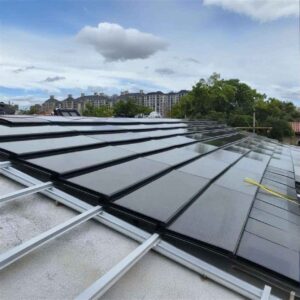
 Commercial and industrial rooftop installations remain the highest-volume segment for solar distributors — representing predictable, repeat procurement from a defined customer base.
Types of Solar Distribution Models
Direct Manufacturer Partnerships
A direct manufacturer partnership means you source products exclusively or primarily from one or two manufacturers, typically under a formal distributor agreement that defines territory, minimum volumes, pricing tiers, and support obligations. This model provides the deepest manufacturer relationship, the most favorable pricing, and the strongest technical support — but it concentrates risk in a small supplier base and limits your ability to respond to changing market needs with different products.
Direct manufacturer partnerships work best for distributors who have identified a clearly defined customer segment (for example, commercial rooftop contractors in a specific region) and a manufacturer whose product range and pricing structure align perfectly with that customer’s requirements.
Multi-Brand Distribution Networks
A multi-brand model means you carry products from several manufacturers simultaneously, giving your customers choice across technology types, price points, and certification profiles. This model requires more operational complexity — more supplier relationships to manage, more technical staff trained across multiple product families, more inventory breadth — but it significantly reduces your vulnerability to any single manufacturer’s supply disruptions, pricing changes, or product quality issues.
Most established solar distributors operate on a hybrid model: one or two primary manufacturer relationships that anchor their core volume, supplemented by secondary brands for specific applications or customer needs. For distributors entering the BIPV space alongside traditional panels, this hybrid approach is particularly relevant — your traditional panel relationship may anchor cash flow while your BIPV glass partnership drives the higher-margin growth.
Competitive Advantages of Entering Now
First-Mover Benefits in Emerging Markets
In both the BIPV segment and in geographically underserved solar markets, first-mover advantage is real and durable. An exclusive territory distribution agreement negotiated today, before competitors recognize the market’s value, creates a structural moat that is extremely difficult to replicate once established. Manufacturers grant exclusive territories selectively, and once a credible distributor occupies a geography, the bar for a competitor to displace them rises substantially.
In the BIPV glass sub-segment specifically, the combination of fast market growth (18%+ CAGR) and relatively limited current distributor presence means that qualified entrants can establish dominant regional positions within 24–36 months if they move purposefully.
Long-Term Revenue Stability and Recurring Opportunities
Solar distribution generates recurring revenue in ways that many first-time entrants underestimate. Once you build relationships with a network of solar installation contractors and EPC companies, those customers return for every project they execute. A contractor who installs 50 residential systems per month at 8 kWp each purchases roughly 400 kWp of panels from you every month — a predictable, repeating revenue stream that compounds as your installer network grows. Add BIPV product lines with service contract potential, and the recurring revenue component of your business becomes increasingly significant over time.
2. Assessing Your Readiness as a Distributor
Essential Business Requirements
Capital Requirements and Investment Levels
The single most common miscalculation by new solar distributors is underestimating working capital requirements. Capital requirements vary significantly by market, scale, and product category, but the following framework provides realistic planning benchmarks:
| Business Component | Minimum Entry | Mid-Scale Entry | Well-Capitalized Entry |
|---|---|---|---|
| Initial product inventory | $30,000–$60,000 | $80,000–$150,000 | $200,000–$500,000 |
| Warehouse setup (lease + fit-out) | $15,000–$30,000 | $30,000–$70,000 | $80,000–$200,000 |
| Working capital reserve (3 months ops) | $20,000–$40,000 | $50,000–$100,000 | $150,000–$300,000 |
| Sales and marketing | $10,000–$20,000 | $25,000–$50,000 | $60,000–$120,000 |
| Technical training and certification | $5,000–$15,000 | $15,000–$35,000 | $40,000–$80,000 |
| Total estimated entry investment | $80,000–$165,000 | $200,000–$405,000 | $530,000–$1,200,000 |
Sources: Industry benchmarks compiled from distributor interviews and manufacturer partner program data, 2025.
Beyond these setup costs, manufacturers typically require Minimum Order Quantities (MOQ) of $10,000–$50,000 per order for standard product ranges, with higher commitments required for exclusive territory agreements. Factor these into your cash flow planning, not just your setup capital.
Warehouse Space, Logistics, and Inventory Management Capabilities
Traditional solar panel storage requirements are relatively straightforward: flat-floor warehouse space with standard racking, a minimum ceiling height of 4 meters, and basic materials handling equipment (forklift, pallet jack). A startup distributor can operate from 500–1,000 m² of warehouse space, scaling as volume grows.
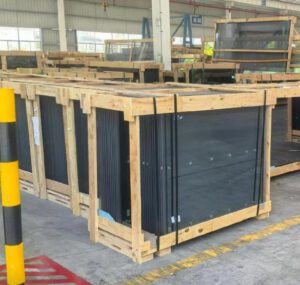
BIPV glass products impose stricter requirements: vertical A-frame racking systems for large-format glass panels, climate control to prevent thermal stress and condensation, and minimum 4.5-meter ceiling clearance for tall glass units. If your product strategy includes BIPV glass (which should be a serious consideration given the margin opportunity), budget for warehouse adaptation costs of $15,000–$40,000 beyond standard racking.
Technical Knowledge and Expertise
Solar Product Knowledge and Certifications Needed
You do not need an engineering degree to be an effective solar distributor, but you do need to be fluent in the technical language your customers use. At minimum, your team should understand: the difference between monocrystalline, polycrystalline, and thin-film technologies; how to read a panel datasheet and compare products across efficiency, temperature coefficient, and degradation rate; inverter types and their application contexts (string, micro, hybrid); mounting system load requirements; and the certification standards that govern product market access in your target region (IEC 61215, IEC 61730, UL 61730 for the US, CE marking for the EU).
For BIPV products, add building code compliance basics, structural glazing concepts, and an understanding of how BIPV certifications like IEC 63092-1:2020 differ from standard solar module standards.
Team Skill Sets and Training Requirements
Your founding team needs at least three complementary skill sets: someone with commercial solar product knowledge (technical sales), someone with logistics and supply chain experience (operations), and someone with financial management capability (cash flow, credit, pricing). A lean three-person founding team covering these competencies can operate a startup distributor efficiently. Larger-scale operations need dedicated inside sales, technical support, and warehousing roles.
Invest in manufacturer-provided training programs early. Most credible solar manufacturers offer free or subsidized product training for authorized distributors — take full advantage of these programs before your first product launch.
Market Position and Customer Base
Evaluating Your Existing Sales Channels
Before signing a single distributor agreement, conduct an honest assessment of what you are bringing to the market. Do you have an existing network of solar installation contractors or EPC companies? Do you have relationships with commercial developers or property managers? Do you have a track record in adjacent building materials or electrical supply distribution that gives you access to the same buyers solar products serve?
The answers determine your speed-to-first-revenue, which is the single most important variable in your path to profitability. A distributor with zero existing customer relationships should plan for 6–12 months of customer development before meaningful sales volume materializes. A distributor with an established installer network can potentially generate first revenue within 60–90 days of launching.
Identifying Target Customer Segments
Solar distribution serves several distinct customer types, each with different procurement behaviors and relationship dynamics.
Solar installation contractors and EPCs are your bread-and-butter volume customers — they buy repeatedly, know exactly what they want, and respond primarily to price, delivery reliability, and technical support. Architects and commercial developers are your highest-value BIPV customers — they buy less frequently but in higher-ticket projects and are driven by technical specification, aesthetic suitability, and warranty depth. Building materials distributors and MEP contractors are secondary channels that can rapidly extend your market reach without requiring you to build every customer relationship directly. Each segment requires a different sales approach, different marketing materials, and different service commitments.
Compliance and Legal Considerations
Regional Licensing and Regulatory Requirements
In the United States, solar product distribution does not require a specific federal license, but you will need standard business licenses, a state sales tax permit, and potentially an electrical contractor’s license if you plan to provide installation services alongside product supply. Some states have implemented solar-specific regulations: Texas, for example, launched residential solar retail sales oversight under TDLR in September 2025.
In Europe, distributor compliance requirements are more extensive. CE marking is mandatory for all electrical products sold in the EU. The EU’s Ecodesign Regulation imposes product environmental performance requirements. Import documentation requirements for non-EU manufactured products (including Chinese-origin solar panels subject to anti-dumping and countervailing duties) must be carefully managed to avoid compliance penalties and customs delays.
Insurance, Liability, and Business Structure Recommendations
A limited liability company (LLC in the US, GmbH in Germany, SAS in France, Ltd in the UK) is the appropriate business structure for most solar distributors — it provides liability protection without the administrative burden of a corporation. Required insurance coverage includes: commercial general liability (minimum $2M per occurrence), product liability (critical for electro-technical products), cargo and warehouse insurance, and errors and omissions coverage if you provide technical specification advice.
3. Identifying the Right Solar Manufacturer Partners
Evaluating Manufacturer Credibility
Brand Reputation and Market Presence
The manufacturer brands you carry directly affect your market credibility. A credible BIPV manufacturer partner with a verifiable track record of installed projects, independently tested performance data, and institutional references (commercial towers, public infrastructure, healthcare facilities) gives your distribution business a foundation that an unknown brand cannot provide — even if the unknown brand’s per-unit cost is lower.
When researching manufacturers, go beyond the company website. Verify their products appear in independent tender specifications, check whether their brand is referenced in green building certification case studies, and ask for the contact information of existing distributors in other territories as references.
Product Quality Certifications and Warranties
Non-negotiable certification requirements for the products you distribute:
| Certification | Market | Что она охватывает |
|---|---|---|
| IEC 61215 | Global | Module performance, environmental durability |
| IEC 61730 | Global | Electrical safety and insulation |
| UL 61730 / UL 1703 | United States | US National Electrical Code compliance |
| CE Marking | European Union | Product safety directive conformity |
| IEC 63092-1:2020 | BIPV products | Building material + PV performance |
| TÜV Rheinland / SGS | All markets | Third-party independent verification |
Products distributed without appropriate certifications for your target market cannot be legally sold and create significant liability exposure if installed on projects that face inspection or insurance review.
Partnership Terms and Support
Margin Structures and Pricing Models
Distributor margin structures in solar vary by product category and volume tier. Based on current market data, realistic gross margin ranges by category are:
The gross margin compression on commodity panels is a structural trend that will continue as Chinese manufacturing capacity runs at overcapacity. Distributors who anchor their portfolio to commodity panel margins alone face an increasingly difficult profitability path. BIPV products like those offered by Jia Mao BIPV — which combines 3 GW annual capacity with deep architectural customization capability and 25-year performance warranties — represent the higher-margin segment that sustainably supports distributor profitability.
Marketing Support, Training, and Technical Assistance
Before signing any distributor agreement, assess the manufacturer’s support infrastructure. Quality manufacturer partners provide: a dedicated distributor account manager; product training programs (on-site and online); marketing materials, datasheet library, and project reference case studies; pre-sales technical support for complex specifications; warranty claims processing and after-sales engineering support; and joint marketing funds (JMF) for local market development activities.
A manufacturer that offers excellent product pricing but minimal support infrastructure will cost you more in sales team time, technical errors, and customer dissatisfaction than the pricing discount is worth.
Geographic Territory and Exclusivity
Understanding Territory Assignments
Territory assignments in solar distribution define where you are authorized to sell a manufacturer’s products, and in exclusive agreements, where no other distributor is authorized to compete. Territory definitions vary: some manufacturers assign by country, others by state or region, and some by specific market vertical (commercial construction, residential, public sector).
Understand the territory definition precisely before signing — a contract that grants you “exclusive distribution in Texas” is very different from one that grants “exclusive distribution to commercial solar contractors in the Houston-Dallas corridor.” The specificity of the definition determines how much protection you actually receive.
Negotiating Exclusive vs. Non-Exclusive Agreements
Exclusive distribution agreements provide genuine competitive protection and justify the investment in market development — but they typically require higher annual sales commitments and may include claw-back provisions if targets are not met. Non-exclusive agreements carry lower volume commitments but expose you to direct competition from other distributors carrying the same manufacturer’s products in your market.
A practical negotiation approach: start with a non-exclusive agreement for the first 12 months while you validate market demand and demonstrate sales performance, then negotiate exclusivity as a renewal term once you have a track record to anchor the conversation. Most manufacturers are willing to grant exclusivity to distributors who have proven they can generate volume — they are reluctant to grant it speculatively to distributors whose performance is unproven.

4. Meeting Distributor Partner Requirements
Financial Qualification Standards
Minimum Order Quantities and Purchase Commitments
Manufacturers set MOQ requirements to ensure their distribution partners are serious and sufficiently capitalized to maintain meaningful market presence. Standard MOQ thresholds across the industry range from $10,000–$50,000 per order for entry-level distributor status, scaling to $200,000–$500,000 per order for premium tier distributor status with the best pricing tiers.
Annual purchase commitments for exclusive territory agreements typically range from $500,000–$2,000,000 in Year 1, escalating to $2,000,000–$10,000,000+ in Year 3 as the territory matures. These commitments are usually structured as targets rather than guarantees, but repeated failure to approach targets creates grounds for manufacturers to revoke exclusivity.
Payment Terms and Working Capital Requirements
Standard manufacturer payment terms for new distributors are 30 days net (payment due 30 days after invoice). Established distributors with strong payment track records can negotiate 45–60 day terms, which significantly improves working capital management. Some manufacturers offer early payment discounts (1–2% for payment within 10 days) — evaluate whether the cost of capital for the early payment exceeds the discount value before automatically taking it.
Invoice factoring is a financing tool used by many solar distributors to bridge the gap between manufacturer payment terms and customer receivables. South Star Capital and similar specialty finance companies have documented experience funding solar distribution working capital through invoice factoring, enabling distributors to maintain inventory flow without tying up all their capital in receivables.
Sales Performance Metrics
Annual Sales Targets and Growth Expectations
Manufacturers track distributor performance rigorously. Common annual sales target structures include: Year 1 ramp target (typically 60–70% of the steady-state annual commitment, acknowledging the market development curve); Year 2 full run-rate target; Year 3+ growth target (typically 15–25% above prior year). Failure to reach 80% of the annual target in two consecutive years is a standard trigger for manufacturer review of the exclusivity arrangement.
Negotiate performance relief mechanisms into your agreement: force majeure provisions (covering supply disruptions, regulatory changes, and market shocks), and market development grace periods when you enter a genuinely new geographic territory where no distributor infrastructure currently exists.
Key Performance Indicators Manufacturers Track
Beyond annual revenue, sophisticated manufacturers monitor: active customer accounts (number of unique buyers purchasing in a given quarter), product line penetration (what share of your sales volume goes to each product category), installer certification program participation (how many of your installer customers completed manufacturer training), and warranty claim rates (a high warranty claim rate is a signal of installation quality issues in your network). Understanding what your manufacturer partner monitors allows you to align your internal operations to maintain the metrics that protect your relationship.
Operational and Infrastructure Standards
Warehouse Certifications and Storage Conditions
Manufacturers increasingly require distributors to maintain warehouse facilities that meet specific product storage standards. For standard solar panels: dry, clean storage away from direct UV exposure, maximum temperature 50°C, minimum floor-to-pallet clearance preventing moisture damage, and fire suppression systems (most modules are rated as flammable due to polymer backsheet materials). For BIPV glass products, vertical storage racks, climate control, and minimum 4.5-meter ceiling clearance are additional requirements.
Some manufacturers require periodic warehouse audits as a condition of continuing the distributor relationship — particularly for high-value BIPV products where improper storage can cause glass stress fractures or laminate delamination that creates warranty claims and safety issues.
Logistics Capabilities and Delivery Timelines
Your ability to deliver products to your customers’ project sites reliably and on schedule is one of the primary reasons customers choose you over a competitor. Establish relationships with at least two freight carrier partners to avoid single-carrier dependency. Develop clear internal processes for order-to-delivery tracking, delivery confirmation documentation, and damage claims management. Customer-facing delivery timelines should be based on your actual capacity, not optimistic assumptions — a distributor known for reliable delivery at 5 business days will consistently outperform one known for promised 3-day delivery that routinely misses.
5. Building Your Distribution Network
Identifying and Recruiting Resellers
Creating a Partner Recruitment Strategy
Building a reseller and installer network is the most important distribution activity you will undertake in your first 12 months. Your installer network is not just a sales channel — it is the primary means by which your products reach end customers, and the quality of their installations directly affects your product’s reputation in the market.
Target recruitment should begin with the highest-quality, best-established installers in your region — not necessarily the largest, but those with the best track record for project quality and customer satisfaction. A network of 10 excellent installation partners will generate more sustainable revenue than 50 mediocre ones whose poor-quality work creates warranty claims and customer dissatisfaction that damages your brand.
Use industry events (Intersolar North America, SNEC PV Power Expo), trade associations, and LinkedIn to identify and make initial contact with target installer partners. The Intersolar & Energy Storage North America event is particularly effective for meeting commercial solar contractors who are actively seeking reliable distribution relationships.
Qualifying and Vetting Potential Agents and Installers
Before formalizing any partner relationship, verify: the installer’s licensing status in their operating states/regions, their insurance coverage levels (minimum $1M general liability, $2M recommended), their certification credentials (NABCEP for the US market is the gold standard for installation quality), their financial stability (a company that cannot pay its suppliers will eventually create problems for yours), and reference feedback from at least three of their recent project clients.
Establishing Channel Structure
Direct Sales vs. Sub-Distributor Models
A direct sales model means your company sells directly to installation contractors and EPC companies, managing all customer relationships in-house. A sub-distributor model means you appoint regional sub-distributors who carry your products and sell to their own installer networks, giving you geographic coverage without proportional headcount growth.
Direct sales provides the strongest customer relationship and the highest margin capture, but it scales slowly and is expensive in sales team headcount. Sub-distributor models scale faster but compress your margins and introduce relationship management complexity. Most successful mid-scale distributors operate direct sales for their core geographic market and use sub-distributors for geographic expansion into regions where they lack direct market presence.
Managing Multiple Tiers of Partners
Multi-tier channel management requires clear policies covering: pricing consistency (sub-distributors should not be able to undercut your direct pricing in shared markets), territory boundaries (preventing channel conflict), support flow (whether end installers receive technical support directly from you or only through their sub-distributor), and performance requirements that apply at each tier.
Document these policies in a Channel Partner Agreement and ensure all partners sign before receiving product access. Undocumented partner relationships are one of the leading sources of commercial disputes in distribution businesses.
Creating Partner Enablement Programs
Training Programs for Your Sales Team and Partners
Distributor-led training is the most effective tool for creating installer loyalty. When your company provides a 2-day BIPV installation certification program that an installer’s team cannot get elsewhere, you have created a switching cost that keeps that installer coming back to your product line even when a competitor briefly offers lower pricing.
Build your training curriculum to cover: product technical specifications and installation requirements; project design and yield estimation tools; local regulatory and permitting requirements; warranty procedures and documentation; and customer-facing sales support (how to present solar ROI to a building owner). Pair classroom training with hands-on installation demonstrations using physical product samples.
Marketing Materials and Sales Tools
Your installer and contractor customers are selling solar to their own clients — every tool you give them that makes that job easier creates loyalty and increases their tendency to specify your products. Develop and provide: product datasheets in both technical and customer-facing formats, project ROI calculators pre-loaded with regional electricity pricing, building permit documentation templates, reference project case studies with measured performance data, and digital rendering tools that show how BIPV glass looks installed on a specific building type. Jia Mao BIPV’s blog and technical resource library provides the kind of depth that supports exactly this type of installer enablement.
Managing Inventory Strategically
Demand Forecasting and Stock Optimization
New distributors frequently make one of two inventory errors: stocking too much of what they can get (whatever the manufacturer offers on favorable terms) rather than what their customers are actually buying, or stocking too little due to capital conservatism, resulting in stockouts that send customers to competitors.
Effective demand forecasting starts with customer pipeline visibility: talk to your top 10 installer customers monthly about their upcoming project pipeline and translate that into a 90-day forward demand forecast. Layer this with historical patterns as they develop, and establish reorder points that maintain 4–6 weeks of forward cover for your fast-moving SKUs.
Handling Seasonal Fluctuations and Market Shifts
Traditional panel demand peaks in Q1 ahead of the spring installation season and in Q3 ahead of year-end project completions. BIPV demand follows construction completion cycles more closely than seasonal solar patterns. Managing this requires maintaining a reserve of working capital to fund Q4 stocking builds without creating cash flow pressure during slower Q2 periods, and communicating openly with your manufacturer partners about your forward demand visibility so they can plan production accordingly.
6. Navigating Regional Market Differences
European Market Dynamics
EU Regulations, Tariffs, and Compliance Standards
The European solar market operates within one of the most comprehensive regulatory frameworks in the world. Anti-dumping and countervailing duties on Chinese-origin solar panels have been a recurring feature of EU trade policy. The EU’s forced labour regulation — which restricts the import of goods linked to forced labour in their supply chain — has created significant documentation requirements for Chinese-origin solar modules, directly affecting distributors sourcing from Chinese manufacturers.
The EU’s EPBD revision requires all new commercial buildings to be near-zero energy from 2028 and new residential buildings from 2030. This mandate effectively creates a structural demand floor for on-site solar generation in all new construction — a tailwind that benefits distributors serving the construction and architectural specification markets specifically.
Key Growth Markets — Germany, Spain, Italy, France
Germany remains Europe’s largest solar market by cumulative installed capacity, driven by strong retail electricity prices that create compelling rooftop solar economics and an established culture of energy self-sufficiency. Spain is the fastest-growing major European solar market, with abundant solar irradiance and national net-zero targets driving both utility-scale and distributed solar demand. Italy benefits from strong solar resource and generous incentive programs for commercial building energy efficiency. France is a growing market, with government mandates requiring solar on commercial car parks and agricultural structures creating specific distribution opportunities.
US Market Opportunities
State-Level Incentives and Interconnection Standards
The US solar market’s complexity is both a challenge and an opportunity for distributors. Each state has its own net metering rules, interconnection standards, and incentive programs — which means that a distributor with genuine state-level regulatory expertise can offer their installer customers something a national commodity supplier cannot: reliable guidance on what will actually work in a specific jurisdiction.
California’s commercial solar market remains the largest in the US, adding 2,345 MWdc in 2025 driven largely by the NEM 2.0 project pipeline. Texas added 9.7 GWdc of utility-scale capacity in Q3 2025 alone. Florida and Puerto Rico are among the fastest-growing residential markets. SEIA’s Solar State By State resource provides current incentive and regulatory data for all 50 states — essential reading for any US-focused distributor.
Regional Demand Patterns and Customer Preferences
US commercial solar customers are more price-sensitive than European counterparts and more focused on simple payback period calculations. Residential customers in high-electricity-rate states (California, Hawaii, Massachusetts, New York) show stronger ROI-driven purchasing; customers in lower-rate states need more support in building the financial case. Understanding these regional economics — and training your installer partners to communicate accordingly — is a genuine competitive differentiator.
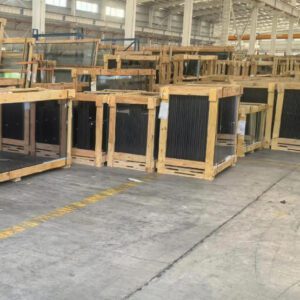
 Efficient warehouse operations and inventory management are foundational to a solar distributor’s ability to compete on delivery reliability — often a more important factor than price for repeat customers.
Pricing and Competitive Strategy
Currency Fluctuations and Cost Structures
For distributors operating across currency zones — for example, purchasing panels in USD or CNY from Asian manufacturers and selling in EUR in European markets — currency hedging is not optional. A 5% adverse move in EUR/USD on a $500,000 inventory position creates a $25,000 cost swing that can eliminate an entire quarter’s margin. Open a forward contract facility with your bank or foreign exchange provider, and review your currency exposure quarterly.
Competitive Positioning in Each Market
In the European market, position on quality, certification depth, and technical support rather than competing directly on price with the lowest-cost commodity suppliers. In the US market, regional delivery speed, technical support quality, and state-specific regulatory expertise are the most defensible competitive positions for a mid-scale distributor without the buying power to match a national distributor’s pricing.
Logistics and Supply Chain Considerations
Shipping Costs and Lead Times
Ocean freight lead times from Asian manufacturing hubs to European and US ports typically run 4–8 weeks depending on origin port, destination, and carrier availability. Air freight is available for urgent orders but costs 6–10x ocean freight rates — viable for high-value, small-volume BIPV glass shipments, not for bulk panel orders. Plan your inventory replenishment cycle around ocean freight lead times, and maintain minimum safety stock levels that cover your expected sales during the full replenishment cycle.
Local Warehousing and Distribution Hubs
A 3PL (third-party logistics) warehousing relationship can provide geographic coverage in secondary markets without the capital commitment of owned or leased warehouse facilities. Stone Management and similar solar-specialized 3PL providers offer solar panel storage, repackaging, and last-mile delivery services across major US regional markets, allowing smaller distributors to maintain “local” stock positions in multiple geographies without proportional fixed cost investment.
7. Developing Your Go-to-Market Strategy
Building Your Sales Team
Hiring Experienced Solar Professionals
Your first sales hire should have existing relationships with solar installation contractors or EPC companies in your target market. A salesperson who walks in with a relationship network that converts to early customers covers their cost of employment within the first quarter. Generic sales professionals without solar industry experience can be developed into effective contributors, but expect 6–9 months before they are generating independent revenue.
Compensation Structures and Incentive Programs
Solar distribution sales compensation typically combines a base salary (providing income stability during the ramp period) with a commission structure (5–10% of gross margin on new business, 2–4% on existing account maintenance). Add quarterly bonuses tied to installer network growth targets (number of new certified installer partners recruited) to incentivize the relationship-building activity that creates long-term revenue stability rather than just short-term transaction volume.
Customer Acquisition Channels
Direct Sales to Installers and Contractors
Face-to-face relationship development remains the highest-conversion customer acquisition channel in B2B solar distribution. Attend local solar contractor association meetings, state solar energy industry events, and regional construction industry exhibitions. Invite prospective installer partners to your warehouse for product demonstrations and training events. The physical relationship-building effort in Year 1 creates the referral network that generates a significant share of Year 3 revenue.
Online Platforms and Digital Marketing Strategies
A professional website with a product catalog, technical resource library, and clear contact information is table stakes. More impactful are: LinkedIn content publishing targeting solar installation professionals in your region, direct LinkedIn outreach to solar contractor principals, and search engine presence for localized terms like “solar panel distributor [city/state].” Consider listing your distribution business on industry procurement platforms like Sunhub — where installers actively search for wholesale solar suppliers — as an additional lead generation channel.
Pricing and Margin Strategy
Setting Competitive Prices While Maintaining Margins
The most common pricing error new distributors make is setting prices too low to win early customers, then discovering that at those prices, the volume required to cover overheads is unachievable. Anchor your base pricing at your target gross margin (minimum 20% for traditional panels, 30%+ for BIPV), then apply volume-based discounts below that anchor for high-volume customers — rather than setting your base price at the volume discount level.
Volume Discounts and Promotional Strategies
Volume discount tiers should reward genuine volume commitments, not just the largest orders in a given month. Structure your tier pricing around annual purchase commitment levels: a contractor who commits to purchasing $500K per year gets a better price than one who buys $500K in a single order without commitment. Annual purchase agreement pricing gives you forward revenue visibility and gives the customer a financial incentive to consolidate their supply to your business.
Brand Building and Market Positioning
Establishing Credibility in the Solar Industry
Credibility in B2B solar distribution is built through demonstrated technical competence and reliable supply execution — not through advertising. Publish technical case studies showing your products performing in real projects in your market. Share manufacturer technical documentation and performance test data. Offer free project design consultations to prospective installer customers. Every interaction that positions your team as more knowledgeable than a competitor’s team creates a preference that persists through multiple procurement cycles.
Building Relationships with Key Decision-Makers
In commercial solar distribution, the most valuable relationships are with the project managers and procurement directors at the 5–10 largest EPC companies in your region. These individuals control procurement decisions worth millions per year, and a trusted relationship with one of them is worth more revenue than 50 individual residential installer relationships. Identify these individuals, invest in getting to know them professionally, and make yourself genuinely useful to their work — with technical support, market intelligence, and proactive product recommendations.
8. Managing Financial Operations and Cash Flow
Understanding Cost Structures
Cost of Goods Sold (COGS) and Markup Calculations
Your COGS includes the landed cost of the products you sell — purchase price, import duties, freight, and any handling costs to get the product into your warehouse in sellable condition. Everything else (warehouse rent, sales team salaries, logistics to customers, back-office costs) is operating expense. The critical distinction matters because COGS determines your gross margin, which funds all operating expenses. If your gross margin is 20% and your operating expense ratio is 22%, you are losing money regardless of revenue growth.
Operating Expenses and Overhead Management
Fixed overheads in solar distribution include warehouse rent and utilities, core staff salaries, insurance, software subscriptions, and debt service costs. Variable overheads include outbound freight, commissioned sales costs, and volume-related handling costs. Keep fixed overheads as lean as possible in your first 24 months — every dollar of fixed overhead requires additional revenue to cover, and revenue in the early months is difficult to predict. Grow fixed infrastructure only when you have demonstrated the sustained revenue that justifies it.
Financing Your Growth
Working Capital Solutions for Inventory
Three primary working capital tools are available to growing solar distributors. First, trade credit from manufacturers: negotiate the longest payment terms possible (net 60 preferred over net 30), as every additional 30 days of payment terms is effectively a free 30-day loan equal to your average payables balance. Second, a revolving credit line from your bank: a $200,000–$500,000 committed revolving credit facility backed by your receivables and inventory provides a financial buffer for stocking seasonal inventory or capturing volume discount opportunities. Third, invoice factoring: selling your outstanding customer invoices to a specialty finance company at a discount (typically 2–4%) in exchange for immediate cash — useful when customers have longer payment terms than you can absorb from your own capital.
Credit Lines and Payment Term Negotiations
Payment terms with customers are as important as payment terms with manufacturers. Offering customers 30-day terms on large orders is a powerful competitive tool, but it requires sufficient working capital to fund the gap. Limit open credit to customers you have verified (credit check, trade references, payment history) and cap credit limits conservatively — a bad debt from a defaulting customer can eliminate months of accumulated margin.
Profitability Planning
Break-Even Analysis and ROI Projections
The following simplified break-even model illustrates the profitability trajectory for a mid-scale solar distributor:
| Metric | Month 6 | Month 12 | Month 18 | Month 24 |
|---|---|---|---|---|
| Monthly Revenue | $120,000 | $250,000 | $380,000 | $520,000 |
| Gross Margin (22%) | $26,400 | $55,000 | $83,600 | $114,400 |
| Monthly Fixed Overheads | $45,000 | $52,000 | $60,000 | $68,000 |
| Monthly Operating Profit/(Loss) | ($18,600) | $3,000 | $23,600 | $46,400 |
| Cumulative P&L | ($111,600) | ($126,600) | ($72,600) | $3,600 |
Note: This model assumes a steady revenue ramp, a 22% average gross margin, and disciplined fixed cost management. The business reaches cumulative break-even at approximately Month 24, consistent with industry benchmarks of 18–36 months to profitability.
Scaling Profitably While Managing Growth
The paradox of rapid revenue growth in distribution is that it typically consumes cash rather than generating it — faster sales mean more inventory to stock and more receivables to fund, both of which absorb working capital. Before pursuing aggressive growth, ensure your working capital facility scales proportionally. A business that grows revenue 100% year-on-year but runs out of cash in Month 15 because receivables outpaced financing is a failure, not a success.
9. Overcoming Common Distributor Challenges
Supply Chain Disruptions
Mitigating Shortage Risks Through Diversification
The solar panel supply chain experienced significant volatility between 2021 and 2025, with polysilicon shortages, shipping container shortages, and anti-dumping tariff changes each creating temporary supply disruptions that caught single-source distributors unprepared. SLD Tech’s supply chain analysis confirms that diversifying across 2–3 manufacturer partners and maintaining 6–8 weeks of safety stock for your fastest-moving SKUs is the most effective structural hedge against supply disruption.
Building Resilient Inventory Systems
Resilient inventory management means knowing your reorder points precisely and acting on them automatically, not reviewing them quarterly. Implement an ERP or inventory management system early — even a basic system like Zoho Inventory or Acumatica provides real-time stock level visibility and automated reorder triggers that prevent the stockout surprises that send customers to competitors. Blu Banyan’s SolarSuccess is a specialized ERP for solar businesses that integrates inventory, CRM, and project management in a solar-specific workflow.
Intense Competition and Price Pressure
Differentiation Strategies Beyond Price
The solar distribution businesses that compete primarily on price are in a permanently deteriorating position as manufacturer margins compress and commodity panel pricing falls. Sustainable differentiation comes from: technical expertise that helps your installer customers win projects and solve problems they cannot solve alone; delivery reliability that allows installers to commit to project schedules with confidence; BIPV and specialty product lines that competitors cannot supply; and service programs (training, certification, technical support) that create switching costs beyond product pricing.
Value-Added Services That Justify Premium Positioning
Value-added services that experienced solar distributors offer include: project design and yield simulation services (producing accurate energy output estimates for customer proposals), pre-sale technical consultation for BIPV and complex commercial projects, training academies for installer certification, and post-installation performance monitoring services with annual reporting. Each of these services creates a revenue layer beyond product margin and deepens the customer relationship in ways that make price-only competition less relevant.
Changing Market Regulations
Staying Compliant with Evolving Standards
Regulatory changes affecting solar distributors happen frequently and often with short notice periods. The US OBBBA’s changes to ITC qualification timelines in July 2025 fundamentally changed project economics for distributors’ EPC customers within weeks of enactment. The EU’s EPBD implementation timeline creates a wave of new NZEB compliance requirements coming into force in 2028. Subscribe to SEIA’s policy newsletters (for the US market) and SolarPower Europe’s regulatory updates (for the European market) as a minimum baseline for regulatory awareness.
Adapting to Policy Changes and Incentive Shifts
Distributors who adapt quickly to policy changes turn them into competitive advantages. When the US Section 25D residential ITC expiration was confirmed, distributors who immediately developed clear customer communications about what changed, what the new economics looked like, and what solutions were still available converted the uncertainty into increased orders from installers rushing to complete projects before the deadline.
Managing Customer Expectations
Setting Realistic Delivery Timelines
Under-promise and over-deliver is a cliché because it is reliably effective. Quote delivery timelines that have buffer for typical logistics delays, and proactively communicate any delays before the customer is expecting delivery. Customers forgive delays that are communicated in advance; they do not forgive delays they discover on their own. Build a reputation for reliable, transparent communication around delivery — it is one of the most consistently cited factors in installer loyalty.
Handling Technical Support and Warranty Claims
Every warranty claim is both a cost and an opportunity. Handled well, a warranty claim that is resolved quickly and fairly creates a customer who trusts you more than before the problem occurred. Handled poorly, it creates a vocal critic in your installer community. Establish clear written warranty claim procedures, document every claim systematically, and develop a relationship with your manufacturer’s technical support team so that you can resolve complex claims quickly rather than leaving customers waiting.
10. Scaling Your Distribution Business
Expanding Your Product Portfolio
Adding Complementary Products (Batteries, Monitoring Systems)
The most natural product portfolio expansion for a solar distributor is into energy storage (battery systems) and solar monitoring platforms. Battery storage is increasingly specified alongside solar on commercial projects — an installer who needs both from a single supplier gives a dual-supplier preference to distributors who carry both. The US commercial solar market added 2,345 MWdc in 2025 with an increasingly high proportion of storage-paired systems, creating immediate distribution demand.
Solar monitoring systems represent a lower capital, higher margin addition to your portfolio. Software-enabled monitoring subscriptions generate recurring monthly revenue that compounds as your installed base grows — a genuinely attractive financial characteristic in a business where most revenue is project-by-project.
Evaluating New Manufacturer Partnerships
As you scale, you will have the leverage to negotiate better terms with existing manufacturer partners and the credibility to attract premium manufacturers who do not work with startup distributors. Revisit your manufacturer portfolio annually: are there product categories your customers are sourcing from competitors that you could add to your offering? Are there manufacturers in the BIPV space whose product quality and warranty depth would strengthen your architectural market positioning?
Geographic Expansion
Entering New Regions and Markets
Before expanding geographically, ensure your core market is operating profitably and your operational systems are stable enough to replicate. Geographic expansion before operational maturity creates parallel organizational problems — you are simultaneously managing growth in your existing market and the startup challenges of a new one with limited management bandwidth.
When you are ready to expand, a sub-distributor model is typically more capital-efficient for new geography entry than building a direct team from zero. Identify an established regional solar distributor or electrical products distributor in the target region and propose a sub-distribution arrangement that gives them access to your product range in exchange for market coverage without you needing to establish a physical presence immediately.
Building Infrastructure in New Territories
The minimum infrastructure requirements for a direct market entry into a new region include: a local sales representative with existing installer relationships, a 3PL warehousing arrangement (not a committed lease — maintain flexibility until you have validated the market), and a local legal entity if the territory is a different country with distinct tax and regulatory requirements. Add dedicated warehouse and customer service infrastructure only once the market has demonstrated sufficient volume to justify the fixed cost commitment.
Technology and Operational Excellence
Implementing Inventory Management Systems
The operational transition from manual tracking to ERP-based inventory management is one of the most valuable investments a growing distributor can make, and one that is most effective when made early rather than late. Anchor Group’s 2025 wholesale distribution ERP review highlights Microsoft Dynamics 365, Acumatica, and NetSuite as the leading platforms for wholesale distribution businesses in the $2M–$50M revenue range. Each provides: real-time inventory visibility, automated reorder point management, purchase order processing, sales order management with customer pricing tiers, and financial reporting integration.
Automating Order Processing and Customer Communication
Automated order confirmation emails, shipment tracking notifications, and delivery confirmation messages reduce customer service inquiry volume by 30–40% for most distributors who implement them — freeing your team to focus on value-adding activities rather than responding to “where is my order?” inquiries. CRM integration with your order management system ensures every customer interaction is logged and visible to your sales team, enabling proactive relationship management rather than reactive problem-solving.
Strategic Partnerships and Consolidation
Mergers and Acquisitions in Distribution
The solar distribution sector is seeing increasing consolidation as larger regional distributors acquire smaller competitors to gain geographic coverage, product line breadth, and operational scale. If you build your distribution business with scale and strategic value in mind from the beginning — documenting your processes, building stable customer relationships, maintaining clean financials — you create the option to exit at premium multiples when the M&A market offers favorable conditions.
Joint Ventures and Collaborative Growth Models
Joint ventures between solar distributors with complementary geographic coverage or product portfolios can create market access that neither partner could achieve independently. A distributor with strong traditional panel relationships and installer networks can partner with a BIPV specialist to offer both product categories to shared installer customers — growing both businesses without the capital and risk of one partner trying to build the other’s capability from zero.
 Strategic manufacturer partnerships are the single most important business relationships a solar distributor builds — and the terms negotiated at the start define profitability for years.
Your Path to Solar Distribution Success
The solar distribution opportunity in 2025 is real, large, and still early enough to reward well-positioned entrants. The US alone will install an estimated 490 GWdc over the next decade; Europe’s solar PV market is tracking toward USD 1 trillion in value by 2034. Every watt of that capacity passes through a supply chain — and the distributors who build strong manufacturer partnerships, credible installer networks, and differentiated product portfolios now will capture the majority of the distribution margin from that growth.
The path is straightforward, if not easy: assess your readiness honestly, select manufacturer partners who align with your target market and margin requirements, build your installer network through genuine relationship investment, manage your cash flow conservatively during the growth phase, and differentiate on expertise and service quality rather than competing on price alone.
The addition of BIPV products — transparent solar glass, solar roof tiles, architectural facade panels — to a traditional panel distribution portfolio is one of the most compelling strategic decisions available to distributors in this market. The margin advantage is real (25–40% vs. 12–18% for commodity panels), the market growth is faster (18%+ CAGR for BIPV glass vs. 6–8% for traditional panels), and the competitive landscape is still open enough that well-executed first movers can establish dominant regional positions.
Такие производители, как Jia Mao BIPV — with 3 GW annual production capacity, full architectural customization capability, dual IEC PV and building material certifications, and a 25-year performance warranty — represent the kind of manufacturing partner calibrated for exactly the commercial and institutional markets where BIPV creates the most compelling value. Building a distribution partnership around that kind of manufacturer credibility gives you the product foundation to compete in the architectural specification market, not just the commodity panel market.
🎬 Watch: How to Start a Solar Sales Business
The following overview provides a practical starting framework for professionals new to the solar distribution and sales business model:

▶ How To Start A Solar Sales Business For Beginners – Step By Step Guide | YouTube
Ready to Launch Your Solar Distribution Business?
Partner with industry-leading manufacturers and join the fastest-growing segment of the renewable energy sector. A comprehensive partnership program provides the training, support, and resources you need to succeed.
Schedule Your Free Consultation with Our Partnership Team Today
Discover how you can build a profitable, scalable solar distribution business in 2025 and beyond.
Glossary of Key Terms
MOQ (Minimum Order Quantity): The smallest product volume a manufacturer will accept per order. Typically ranges from $10,000–$50,000 for distributor entry-level status.
COGS (Cost of Goods Sold): The total landed cost of the products you sell, including purchase price, import duties, freight, and handling. COGS is subtracted from revenue to calculate gross profit.
Gross Margin: The percentage of revenue remaining after COGS is deducted. The primary measure of product-level profitability in distribution.
3PL (Third-Party Logistics): A company that provides warehousing, fulfillment, and/or freight services to a distributor, without the distributor needing to own or lease the physical infrastructure.
MOQ Tier Pricing: A pricing structure where the unit price decreases as order quantities increase, incentivizing larger purchases.
BIPV (Building-Integrated Photovoltaics): A category of solar product in which photovoltaic capability is embedded directly into a building material (glass, roofing tile, cladding) rather than mounted separately on a building.
EPC (Engineering, Procurement, and Construction): A company that delivers a complete solar installation — engineering design, equipment procurement, and physical construction — typically under a single contract to the project owner.
ITC (Investment Tax Credit): A US federal tax credit for qualifying solar energy system investments, set at 30% of eligible costs under the Inflation Reduction Act (subject to changes following the OBBBA).
NABCEP: North American Board of Certified Energy Practitioners — the gold standard installation certification for solar professionals in the US market.
JMF (Joint Marketing Fund): A co-marketing budget provided by a manufacturer to a distributor to support local market development activities, typically calculated as a percentage of purchase volume.
Часто задаваемые вопросы
1. What are the minimum capital requirements to start a solar distribution business?
Capital requirements depend heavily on your target market, geographic scale, and product mix, but realistic planning benchmarks start at $80,000–$165,000 for a lean market entry (covering initial inventory, basic warehouse setup, three months of operating reserves, and marketing). A well-capitalized mid-scale entry — with sufficient inventory depth to serve commercial contractors reliably and weather early supply disruptions — requires $200,000–$405,000. Manufacturers typically require MOQ commitments of $10,000–$50,000 per order, and exclusive territory agreements usually come with annual purchase commitments of $500,000–$2,000,000 in the first year. Underestimating working capital needs during the growth phase is the most common financial error new distributors make.
2. Do I need specific certifications or licenses to become a solar distributor?
In the US, you do not need a specific federal solar license for product distribution — standard business licenses, sales tax permits, and potentially state-specific contractor or electrical licenses if you provide installation services are the typical requirements. In Europe, CE marking is mandatory for all electrical products sold in the EU, and import compliance documentation for non-EU origin products is a legal requirement. For BIPV products specifically, verify that your products carry both IEC PV certifications (IEC 61215, IEC 61730) and the dedicated BIPV standard IEC 63092-1:2020, as architectural projects require both. Check DSIRE’s state-by-state database for US state-level requirements and contact your local solar industry association in European markets.
3. How much inventory should I hold as a new distributor?
A conservative starting inventory position of 30–60 days of projected sales volume minimizes carrying costs and obsolescence risk while maintaining the ability to deliver against confirmed orders. As your demand forecasting improves and customer pipeline visibility grows, you can optimize this toward 45–60 days for fast-moving SKUs (your top 3–4 panel models by sales volume) and 15–20 days for slower-moving products. For BIPV glass products with 10–16 week manufacturing lead times, maintain safety stock based on confirmed project pipeline rather than forecasted demand, as these products are typically project-specific rather than off-the-shelf commodities.
4. What are typical profit margins for solar distributors?
Gross margins in solar distribution range significantly by product category. Commodity monocrystalline panels currently yield 12–18% gross margin for most regional distributors, reflecting manufacturing overcapacity and intense price competition. Premium panel brands command 18–25%. BIPV glass products — solar facade panels, transparent photovoltaic glass, solar roof tiles — generate 25–40% gross margins due to their architectural customization requirements and the consultative sales process that justifies premium positioning. Bundled solution sales (product plus technical support plus service contracts) can push effective margins above 40% for BIPV-focused distributors. The strategic implication: portfolio composition matters as much as volume growth.
5. How do I find and qualify solar manufacturers to partner with?
The highest-quality manufacturer discovery happens through direct market presence: attending SNEC PV Power Expo (the world’s largest solar trade event, held annually in Shanghai), Intersolar Europe and Intersolar North America, and regional solar industry events. Beyond trade shows, research manufacturer websites, request product samples and test reports, and speak with existing distributors in other territories as references — most manufacturers will provide reference contacts upon request. Evaluate: product certification portfolio, production capacity and delivery track record, existing distributor network (to understand competitive intensity in your market), and the depth of technical and marketing support they provide. For BIPV products, Jia Mao BIPV’s product range and manufacturer profile provides a useful benchmark for the level of documentation and support you should expect from a credible BIPV manufacturing partner.
6. What’s the difference between exclusive and non-exclusive distribution agreements?
An exclusive distribution agreement grants you sole rights to sell a specific manufacturer’s products within a defined territory — no other distributor can carry the same brand in your area. This provides strong competitive protection and justifies investing in market development activities (training, marketing, installer network building) without the risk of a competitor free-riding on your efforts. The trade-off is higher annual sales commitments and less flexibility if the manufacturer’s product quality or pricing competitiveness deteriorates. A non-exclusive agreement requires lower volume commitments and provides more flexibility, but exposes you to direct competition from other distributors carrying the same products. Best practice: begin with a non-exclusive agreement for 12 months while you validate market demand, then negotiate exclusivity as a renewal term once you have demonstrated sales performance.
7. How do I compete against larger, established distributors?
Size advantages in solar distribution — lower unit costs from volume purchasing, wider product range — are real but not insurmountable. The most effective competitive strategies for smaller distributors are: geographic focus (being the most knowledgeable and most responsive distributor within a specific region rather than a mediocre option across a wide area), technical specialization (becoming the go-to resource for BIPV specifications, complex commercial projects, or a specific application category), delivery reliability (consistently meeting or exceeding quoted delivery times, which is more important to repeat customers than any other single factor), and personal relationship investment (the senior decision-makers at your target installer companies should know you personally, not just know your company’s name). These advantages compound over time and become increasingly difficult for larger, less personal competitors to replicate.
8. What are the key differences between the European and US solar markets?
Europe’s solar market is characterized by stronger regulatory frameworks (binding EPBD energy performance requirements, CE marking, anti-dumping duties on Chinese panels), higher per-project technical specification requirements, and customers who prioritize product quality and certification depth over price. Feed-in tariff mechanisms in Germany and Spain create predictable economics that support long project planning horizons. The US market is more fragmented — 50 different state-level regulatory environments, varying net metering rules, and customer economics that vary dramatically from high-rate California to low-rate Midwest markets. US customers are generally more price-sensitive than European counterparts, but the market size and growth trajectory are exceptional. SEIA’s US solar market data and SolarPower Europe’s market outlooks are the primary reference sources for both markets.
9. How do I manage cash flow with long payment terms from manufacturers?
Three tools work in combination for most successful solar distributors. First, negotiate the longest possible payment terms from manufacturers — net 60 is achievable for established distributors with good payment histories, and every additional 30 days of payment terms reduces your working capital requirement by an amount equal to your average monthly payables. Second, offer early payment discounts to your customers — a 1–1.5% discount for payment within 10 days (vs. standard 30 days) costs less than the interest on a credit line and improves your cash cycle. Third, establish a revolving credit facility with your bank backed by receivables and inventory before you need it — credit is easiest to access when your financial position is strongest, not when you are under cash pressure. Invoice factoring provides emergency liquidity when the above tools are insufficient, but at a cost (2–4% of invoice value) that should be treated as a last resort rather than a primary financing tool.
10. What technology systems should I implement for distribution operations?
At startup, the minimum viable technology stack includes: an inventory management or ERP system (Zoho Inventory for entry-level, Acumatica or Microsoft Dynamics 365 for mid-scale), a CRM for tracking customer relationships and sales pipeline (HubSpot at entry-level, Salesforce for larger operations), accounting software (QuickBooks or Xero) integrated with your inventory system, and an order management system with customer-facing order tracking. Specialized solar business ERP like Blu Banyan’s SolarSuccess (built on NetSuite) combines these functions in a solar-specific workflow that reduces the integration complexity of using separate best-of-breed tools. Implement systems early — retrofitting processes and data migration after rapid growth is significantly more expensive and disruptive than building on a proper foundation from the start.
11. How do I handle product returns and warranty claims?
Establish a written warranty and returns policy before you ship your first product, and ensure it aligns precisely with your manufacturer agreement terms — you cannot offer customers broader warranty coverage than your manufacturer provides to you. Create a standardized warranty claim documentation process: customers submit claims with product serial number, purchase date, description of defect, photographic evidence, and relevant installation documentation. Log every claim in a central system, communicate timeline expectations to the customer within 48 hours of receipt, and track resolution time as a KPI. A warranty claim rate below 0.5% of units sold is a typical benchmark for quality products from reputable manufacturers. A rate significantly above this signals either product quality issues or installation problems in your network — both require investigation and action.
12. What’s the typical timeline to profitability for a new solar distributor?
Industry benchmarks suggest most distributors reach monthly operating profitability (revenue covering all operating costs) within 12–18 months, and cumulative break-even (recovering the total startup investment) within 18–36 months. The range is wide because the key variables — existing customer relationships, initial capital adequacy, quality of the manufacturer partnerships secured, and execution quality of the market entry — vary enormously between businesses. Distributors entering with an existing installer relationship network and sufficient capital to maintain 60 days of inventory cover tend to reach monthly profitability in 9–12 months. Distributors building their customer base entirely from zero should plan for 18–24 months to monthly profitability and maintain sufficient capital reserves to fund operations through that period.
13. Should I focus on one region or expand nationally/internationally immediately?
Focus first. The most common strategic error in distribution businesses is expanding geographically before the core market is operating efficiently and profitably. Geographic expansion multiplies all your operational challenges simultaneously — more customers to manage, more inventory positions to fund, more logistical complexity, more regulatory environments to navigate — at a time when your team and systems are typically not yet mature enough to handle the load. Establish genuine market leadership in your primary region: own the top installer relationships, achieve reliable on-time delivery, build a technical reputation, and reach consistent monthly profitability. Then expand from a position of operational strength rather than scaling before you have proven the model.
For distributor partnership inquiries, product consultations, and BIPV distribution program information, visit www.jmbipvtech.com or contact the Jia Mao BIPV partnership team directly.
Additional resources: SEIA US Solar Market Insight | SolarPower Europe Global Market Outlook | IEA PVPS Technical Guidebook on BIPV | DSIRE Solar Incentives Database