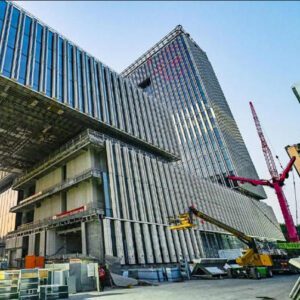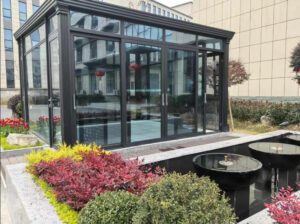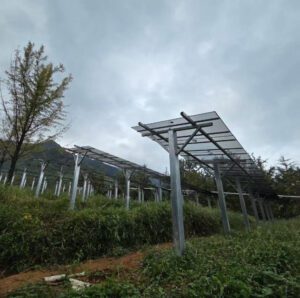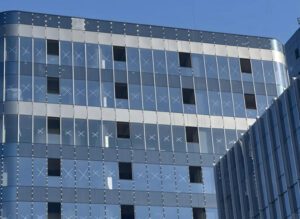

The skin is the largest surface a building owns. BIPV turns it into equipment.
A BIPV facade is not a solar system with a pretty cover. It is a building product that happens to make electricity.
That difference decides how you budget it. You cannot price it like a solar array, because half the invoice belongs to the envelope. You cannot price it like a curtain wall either, because the electrical design starts before the glass is ordered.
This guide breaks the cost into the parts you can control. It covers the three real cost drivers, the difference between a roof and a facade, and the numbers a developer will ask for at the first design review.
It is written for the teams who carry the risk: curtain wall and roofing contractors, PV EPC and energy service teams, building material distributors, and architects or consultants who have to defend a specification.
BIPV (building-integrated photovoltaics) means solar cells built into a building element, such as glass, tile or panel. The element keeps weather out and makes power at the same time. Remove it and you leave a hole in the building.
Key takeaways
- The fair comparison is BIPV against “cladding plus a separate PV system”, not against cladding alone.
- On a 1,000 m² facade, that fair comparison puts the premium at about $112,000, not $240,000.
- Module choice sets the look and the price. Semi-transparent glass makes 120–160 W/m², against 200–230 W/m² for opaque modules.
- Most budget variance comes from the interface between glazing and electrical trades, not from the panels.
- A facade displaces expensive glass. A roof displaces cheap membrane. That is why facades tolerate a higher price per square metre.
The words you need first
| Term | Plain meaning |
|---|---|
| BIPV | Solar cells built into a building element, so the element is both skin and power plant |
| BAPV | Ordinary panels fixed onto a finished roof or wall. Remove them and the building still works |
| Curtain wall | The outer glass skin hung on a frame. It carries wind and rain, not floors |
| kWp | Kilowatt-peak. The power a system makes at full midday sun |
| BOS | Balance of system. Everything except the panels: cable, inverters, isolators, connectors |
| String | A line of panels wired in series, feeding one inverter input |
| MPPT | Maximum power point tracker. The circuit that squeezes the most power from a string |
| LCCA | Life cycle cost analysis. All costs over the asset life, not just the first invoice |
| Thermal bridge | A path where heat escapes through the frame instead of the insulation |
| U-значение | How easily heat passes through a material. Lower is better |
1. From panels on a roof to solar as the skin
For twenty years, solar was an add-on. The building was finished, then a crew arrived with rails and clamps. That model still works on warehouses with big empty roofs.
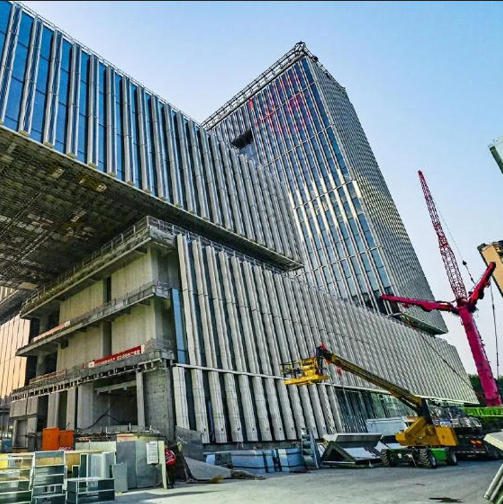
Facades changed the logic. A 30-storey tower may carry 800 m² of roof and 12,000 m² of wall. The wall gets less sun per square metre, but there is fifteen times more of it.
The value proposition has three parts, and they pull in different directions:
- Aesthetics. Integrated glass looks like glass. A racked array looks like equipment.
- Energy autonomy. The building makes power where it is used, so less is lost to the grid.
- Material substitution. The expensive part of the envelope is already in the budget.
Only the third one changes the maths. The first two change the decision.
So the job of this article is narrow. It shows where the money goes, which choices move it most, and how to compare options without fooling yourself.
If you want the wider picture first, our note on solar glass as an active building envelope covers the design logic before the cost logic.
2. The material substitution logic
A BIPV panel is bought once and does two jobs. Most budgets miss this because the two jobs sit in different cost centres.
The facade contractor books the glass. The electrical contractor books the inverter. Nobody books the overlap.
2.1 What BIPV replaces
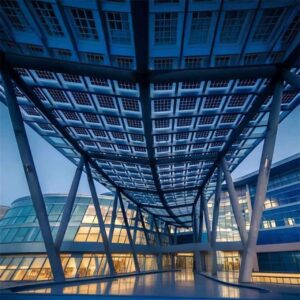
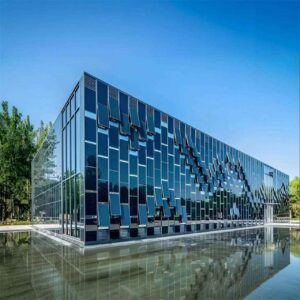
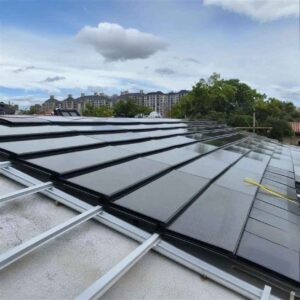
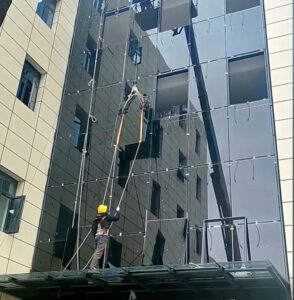
On a curtain wall, BIPV glass replaces the vision glass and often the spandrel panels. On a roof, it replaces tiles or membrane. On a canopy, it replaces the glazing or the metal deck.
In each case the displaced product has a real price:
- Double-glazed curtain wall glass: about $520/m² installed
- Concrete roof tile with underlay: about $95/m²
- Glazed skylight or canopy: about $480/m²
Those numbers matter more than the module price. A product that replaces $520 of glass has more room to cost more than one that replaces $95 of tile.
2.2 Labour is paid once, not twice
A separate roof array needs its own mobilisation: scaffolding or crane, cable routes, a crew on site for weeks after the roof is closed.
BIPV glass is hung by the crew that was already there, on the same crane, in the same sequence. The extra labour is real, but it is measured in slower hangs, not in a second site setup.
On a 1,000 m² facade, a second mobilisation for a roof array typically costs $15,000–$40,000 once access, welfare and supervision are counted.
2.3 The comparison that survives a cost review
Before you compare packages, know what the $760 is made of.
Here is the table to bring to a cost consultant. All figures are for the same 1,000 m² facade and the same 150 kWp.
| Package | Envelope | Separate PV | Total | Difference |
|---|---|---|---|---|
| Plain glass + rooftop PV | $520,000 | $127,500 | $647,500 | baseline |
| BIPV glass facade | $760,000 | $0 | $760,000 | +$112,500 |
The premium is $112,500, not $240,000. The $240,000 figure compares BIPV with glass alone, which is the wrong baseline once the project needs generation anyway.
Two things stay in BIPV’s favour after this correction. The roof stays free for plant, amenity or a second array. And the envelope carries one warranty instead of two.
Two things stay against it. The rooftop array makes more power per kWp. And the rooftop array is easier to replace when a part fails.
Understanding which of those four points matter on your project is the whole decision. Our overview of BIPV glass beyond the rooftop sets out where the envelope can carry generation and where it cannot.

A cladding package at $400–$600/m² is the budget BIPV is measured against, not the module price on its own.
3. Cost driver one: technology and module selection
The cell type decides three things at once: how much power you get per square metre, what the facade looks like, and what you pay.
3.1 Monocrystalline against thin-film
| Фактор | Crystalline silicon in glass | Thin-film (CIGS, CdTe) |
|---|---|---|
| Power per m² | 120–160 W/m² semi-transparent | 90–130 W/m² |
| Cost per m² | Выше | 10–20% lower |
| Look | Visible cell grid, dark blue-black | Even tone, no visible cells |
| Heat behaviour | Loses more output when hot | Holds output better in heat |
| Diffuse light | Weaker | Stronger |
| Best use | Facades where area is tight | Large even surfaces, canopies |
Crystalline wins when every square metre has to earn. Thin-film wins when the surface is large, the light is soft, and the architect does not want a grid pattern.
A common mistake is choosing thin-film to save money, then adding 25% more area to hit the same kWp. On a facade with fixed geometry, that trade often fails.
3.2 Transparency is a paid trade-off
Light has to pass through for the people inside. Every percent of transparency you add takes cells out of the panel.
The chart below uses a semi-transparent crystalline product as the baseline. Yield falls faster than cost rises, which is why 20–30% transparency is the usual sweet spot for offices.
At 40% transparency you keep about two thirds of the yield and pay about 12% more per square metre.
The design conversation should start with daylight need, not with watts. If the floor plate needs 40% transparency for the workplace, that is the brief. The energy model then reports what the facade can do at that setting.
For projects where glass clarity is the driver, transparent solar glass at architectural standard explains how the visual grade is specified and tested.
3.3 Customisation adds cost in a step, not a slope
Standard sizes and standard colours are cheap. Anything else moves the order into a different production run.
The cost drivers to watch:
- Non-standard dimensions. Each bespoke size needs its own lay-up and its own template. Expect 10–20% more per square metre.
- Colour and texture. Tinted interlayers, printed patterns and ceramic frit change both the look and the yield. Darker finishes make more power; light finishes look better in some designs. The coloured glass options show how far a palette can be pushed before yield suffers.
- Minimum order quantity. Small feature areas still carry a full set-up cost. A 60 m² feature wall can cost twice the rate of a 600 m² field.
- Testing. Bespoke units need their own mock-up and, often, their own structural and fire test evidence.
If your palette runs to four or five finishes, consolidate. Every extra finish is a separate approval, a separate spare part and a separate lead time.

Transparency is a daylight decision first and a yield decision second. Fix the daylight target, then model the power.
4. Cost driver two: integration and installation
This is where budgets move after tender. The modules arrive as specified. The interface between the module and the building does not.
4.1 Framing and mounting systems
Three families cover most projects:
- Unitized curtain wall. Panels are built and glazed in a factory, then hung. Fastest on site, highest factory content, best quality control.
- Stick system. Mullions and transoms are fixed on site, then glass. Cheaper on simple low-rise work, slower in the air.
- Rainscreen overcladding. BIPV panels sit on a sub-frame in front of a weather wall. Useful for retrofit.
Hidden profiles cost more than visible ones, because the bracket has to do more work and the tolerance is tighter. On a BIPV unit, the bracket also has to protect the cable exit, which is usually at the panel edge.
Наш сайт mounting brackets and profiles show the range of edge and back-rail details, and how the cable route is kept clear.
4.2 Waterproofing and thermal bridging
Two failures cost more than any other on a BIPV facade.
Water. Rain gets in at joints, not through glass. A drained and vented cavity, with a defined path for water to leave, is the standard answer. Gaskets must be EPDM or silicone, not PVC, because PVC hardens and cracks.
Thermal bridging. Aluminium conducts heat roughly 700 times better than insulation. A mullion that runs from the warm inner face to the cold outer face becomes a cold strip, and cold strips collect condensation.
The fix is a thermal break inside the profile. It adds cost per metre, but it protects the U-value and keeps the inside face above dew point. Skipping it shows up later as mould at the mullion line and a failed energy rating.
4.3 Labour and certification
BIPV crews need two skills: glass handling and electrical safety. Few firms have both.
Typical additions to labour cost:
- Vacuum lifters rated for 30–40 kg/m² units
- A qualified electrician on the glazing crew, or a paired crew
- Insulation resistance and IV curve testing at handover
- A documented sequence, because units cannot be reordered on site
This is the single most common source of variation claims. The glazing contractor assumes the electrical contractor terminates the leads. The electrical contractor assumes the leads arrive terminated.
Put it in writing before mobilisation. The video below shows how the sequence runs when both trades work to one drawing.
https://www.youtube.com/watch?v=5TuntR45Yw4
A BIPV curtain wall and roof junction going together. Watch the order of the hangs and where the cable exits land.

The cable exit is a design detail, not a site decision. If it is decided on the scaffold, it costs money.
5. Cost driver three: electrical infrastructure and BOS
Panels are about half the money. The rest is the system that turns direct current into something useful.
For a straightforward roof array, BOS runs 20–25% of total cost. For a complex facade it can reach 30%, because the geometry is harder and the shading is uneven.
5.1 Inverter choice
| Option | Best for | Cost effect |
|---|---|---|
| Central or string inverter | Large unshaded fields, one orientation | Lowest cost per kWp |
| String inverters with several MPPT inputs | Multi-orientation facades | Slightly higher, better yield |
| DC optimisers | Partial shade, mixed strings | +8–12% on BOS |
| Micro-inverters | Small areas, complex shapes, per-panel monitoring | +15–25% on BOS |
A facade rarely faces one direction. Two walls of the same tower can differ by 20% in output, and a neighbouring building can shade one of them for two hours a day.
Grouping panels by shading pattern is free at design stage. Fixing it later means re-cabling and, sometimes, re-hanging glass.
For larger commercial systems, three-phase hybrid inverter options cover the storage-ready configurations that most developers now ask for.
5.2 Wiring in a vertical installation
Vertical runs are long, and long runs lose voltage. Keep the DC run short by placing inverters near the facade, not in a basement plant room.
Three rules that keep cost down:
- Keep voltage drop under 1–2% on the DC side.
- Route cables in the mullion cavity or a dedicated service void, never loose behind cladding.
- Leave a service loop at every junction box, so a unit can be isolated without cutting cable.
Junction boxes must be reachable. A box sealed behind a finished panel is a future demolition job.
5.3 Grid connection and storage
Grid connection is a project cost that rarely appears in the panel price:
- Application and study fees
- Transformer upgrade, if the local network is weak
- Protection settings and metering
- Export limitation, if the network cannot absorb the output
Storage adds $250–$450 per kWh of usable capacity. It rarely pays on energy arbitrage alone in commercial buildings. It pays when the building needs resilience, demand-charge reduction, or a fixed capacity charge.

BOS is where a simple panel count turns into an engineering package.
6. Facades against roofs: the same product, a different business case
The location of the BIPV decides the financial profile more than the cell technology does.
6.1 Roofing BIPV
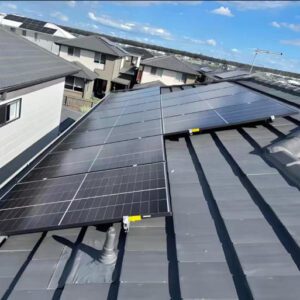
Roofs are the good real estate. A pitched roof at 30–40° in a temperate climate yields about 1,050–1,150 kWh per kWp. Installation is familiar, access is simple, and the product replaces the roof covering itself.
But a roof also replaces cheap material. Concrete tile with underlay costs about $95/m². So the BIPV tile costs $250–$320/m² against a $95 baseline.
Roof projects win on energy per dollar. They lose on premium per square metre, because the displaced material is cheap.
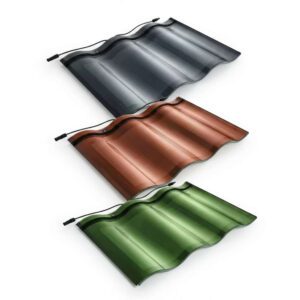
Наш сайт photovoltaic roof tiles are specified for pitched roofs where the covering is due for replacement anyway. The Guangzhou Jiazhou villa roof project is a small example of that logic in practice.
6.2 Facade BIPV
Facades yield less. A vertical south wall in a temperate climate produces about 800–900 kWh per kWp, because the sun hits it at a shallow angle for much of the day.
But a facade replaces expensive material. Glass curtain wall runs $450–$650/m². So the premium is smaller relative to the baseline, and the surface is often five to fifteen times larger than the roof.
The chart below shows the same product family against the material it displaces.
The roof bar looks cheap until you notice the baseline it replaces. The facade bar looks expensive until you compare it with the glass.
6.3 Skylights and canopies
These sit between the two. A tilted canopy at 15–25° gets better sun than a wall and costs less than a facade because the structure is simpler.
Canopies replace glazing at about $480/m², so the premium against the baseline is moderate. They also shade the space below, which cuts cooling load.
This is often the cheapest place to start on a large project. A canopy over a car park or entrance delivers visible generation with a short design cycle.

Roofs are easier to work on and cheaper to cover. They are also the surface most projects run out of.
7. The consultant’s role: design decisions are the cheapest cost lever
Every cost driver above can be fixed cheaply at concept stage and expensively after tender.
7.1 Retrofit against native design
A BIPV facade designed from the start costs about 17% more than the plain glass plus rooftop PV package it replaces. On the 1,000 m² example, that is the $112,500 gap.
The same facade added later costs 25–35% more than that, because:
- The structural frame was not sized for the extra weight
- Cable routes do not exist, so surface conduit appears
- The mullion depth cannot take the junction box
- The electrical room has no spare way for the inverter
Retrofit is still worth doing when the facade is due for replacement. It is rarely worth doing to a facade that is ten years old and performing well.
7.2 Energy modelling and shading
A shading study costs $3,000–$8,000 on a mid-size project. It regularly saves more than that by removing panels from a wall that would have underperformed.
Model three things:
- Annual irradiation on the actual plane, not a city average.
- Hourly shading from neighbouring buildings, including future ones allowed by zoning.
- Temperature at the module, because a facade behind glass can run hotter than a roof.
Then convert to money. A wall at 700 kWh/kWp and one at 900 kWh/kWp differ by 28% in revenue on identical capital cost.
7.3 Structural coordination
A BIPV unit weighs 30–40 kg/m². Wind load on a facade can exceed 2 kN/m². Both numbers go to the structural engineer, not the panel supplier.
Three checks prevent most problems:
- Deflection limit of the mullion under wind, so glass does not touch the frame
- Fixing capacity for the added dead load
- Movement joint detail, because aluminium and glass expand differently
Наш сайт professional guide to BIPV specification walks through the submittal package consultants usually ask for.

Every hour spent at concept stage is cheaper than an hour spent on a variation.
8. ROI and long-term financial performance
Simple payback answers the wrong question on an envelope. It ignores replacement cycles, maintenance and the value of the asset at sale.
8.1 Life cycle cost analysis
LCCA adds every cost over the asset life, then discounts them to today. The table below uses a 1,000 m² facade, 150 kWp, $0.22/kWh and 3% annual energy price growth.
| Line item | Plain facade | BIPV facade |
|---|---|---|
| Envelope at handover | $520,000 | $760,000 |
| Energy savings, 30 years | $0 | −$1,334,500 |
| Facade rebuild at year 25 | $520,000 | $0 |
| Net 30-year cost | $1,040,000 | −$574,500 |
The BIPV facade ends $1.6 million ahead over 30 years. Most of that comes from generation, and about a third from not rebuilding the envelope at year 25.
That last line deserves a challenge. If your specification already assumes a 30-year curtain wall with only gasket replacement, remove the rebuild and the gap narrows by $520,000. BIPV still wins, but by less.
8.2 What the operating saving is worth
The saving lands in three lines of a service charge statement.
Energy. The facade makes about 127,500 kWh a year on our example. At $0.22 per kWh, that is $28,050. Most of it is used in the building during the day, so it offsets retail price, not export price.
Demand charges. A facade produces most in the middle of the day, close to the building peak. On offices with cooling load, that can trim the monthly peak by a few percent. Model it, do not promise it: the saving depends on when the peak actually falls.
Maintenance. There is no separate roof array to clean, inspect and re-cable. Against that, facade access costs more per visit than roof access, so the two roughly cancel over 30 years.
The energy line is the one that compounds. At 3% annual price growth, $28,050 in year one becomes about $66,000 in year 30.
8.3 The three-way comparison
The honest comparison includes the option most developers choose: plain glass plus a rooftop array.
The step at year 25 is the envelope rebuild in the two non-BIPV options. BIPV crosses the plain facade around year eight and passes the rooftop option only after that rebuild.
Read the chart this way. Rooftop PV is the lowest-cost route for 24 years, because it makes more power per kWp on a cheaper structure. BIPV only takes the lead when the envelope has to be replaced anyway.
That is the honest version of the argument, and it is the one that survives a challenge in a boardroom.
8.4 Property value and certification
Certification turns performance into price. LEED rewards on-site renewable production, and the LEED rating system treats facade generation the same as roof generation. BREEAM scores low-carbon operation across the asset life, through its BREEAM assessment categories.
Certification is a proxy. The transaction is the real test. Two numbers carry it:
- Rent per square metre for certified space against comparable buildings in the same district.
- Capitalisation rate at sale. Assets with documented performance and lower operating risk tend to trade tighter.
A building with five years of metered generation is easier to finance than one with a promise. That is the line to put in front of a lender.
8.5 Incentives, carbon credits and subsidies
Three schemes can change the payback, and all three change often:
- Capital incentives. Grants and tax credits that cut the upfront cost. Some cover the PV element only, not the envelope.
- Accelerated depreciation. Often worth more than the grant, because it moves tax relief forward. Ask the accountant, not the supplier.
- Carbon credits. Small in most commercial projects, but useful for corporate reporting and for tenants with science-based targets.
Rules vary by country and by year. The EIA explainer on solar energy is a neutral starting point for how solar is priced and metered in the United States.
Global deployment keeps reshaping these numbers. The IEA solar PV tracking shows installed capacity rising fast, which keeps pressure on hardware prices and pushes the non-hardware costs to the front of the budget.

The model that convinces a developer is three lines, not thirty. Envelope, energy, replacement.
9. Risk mitigation for contractors and EPCs
Cost overruns on BIPV come from four places. All four are manageable before mobilisation.
9.1 The warranty gap
Three warranties cover one wall:
| Cover | Typical term | Who gives it |
|---|---|---|
| Envelope: water, wind, structure | 10-25 лет | Facade contractor or glass maker |
| Power output | 25–30 years | Module maker |
| Inverter and electronics | 10 years | Inverter maker |
The gap sits between them. If water enters at a junction box and corrodes a string, the envelope warranty says it is an electrical fault and the power warranty says it is water ingress.
Close the gap with one document. It should name a single responsible party for the assembly, and it should say who pays for access equipment when a unit is replaced.
9.2 Quality control for glass shipments
BIPV units are heavy, bespoke and slow to replace. Breakage in transit is the most expensive kind of waste, because the replacement arrives 12–20 weeks later.
Practical controls:
- Crating. Vertical crates with individual slots, not stacked flat.
- Inspection at factory. Electroluminescence imaging catches cracked cells before packing.
- Inspection at delivery. Photograph every crate before unloading, with the carrier present.
- Spares. Order 2–3% extra units from the same batch, for colour and dimensions.
On a 1,000 m² facade, a 1% breakage rate costs about $7,600 in product, plus the schedule impact. Spares cost less than the delay.
9.3 Fire codes and electrical standards
Fire requirements are set by the assembly, not by the panel. Three items decide most approvals:
- Reaction to fire class for the glass and interlayer combination.
- Rapid shutdown, so firefighters can isolate DC at the facade. Plan isolator locations with the fire consultant.
- Cable and connector rating, matched to the environment behind the cladding.
Most markets test modules to IEC 61730 for safety and IEC 61215 for design qualification. Local codes then add their own rules, and in the United States the NFPA fire and electrical codes govern installation practice.
Get the test reports before the facade is tendered. A missing fire classification after tender is a redesign, not a paperwork exercise.
Наш сайт due diligence checklist lists the documents to request from any BIPV supplier.

Long lead times turn a small breakage into a large delay. Spares are schedule insurance.
10. Conclusion
BIPV costs more because it is two products in one. The budget moves for three reasons: which cell and finish you choose, how well the module meets the building, and how the electrical design handles a wall that never faces one way.
Three numbers carry the decision:
- The material you no longer buy
- The energy the surface makes
- The envelope you do not rebuild
Get those three right and the premium stops looking like a cost. Get them wrong and BIPV becomes an expensive cladding with a cable attached.
The practical next step is not a quote. It is a one-page comparison with your own rates: cladding cost, PV alternative, annual yield, replacement year. Jia Mao BIPV will run that comparison on your drawings, including the string layout, before the glass goes into production.
Send the facade package to our team through the contact page for the Jia Mao BIPV engineering desk, or read how we manufacture and test laminated units first.
A facade is bought once every 25 years. The energy decision is made in the same meeting.
Frequently asked questions
How does BIPV cost compare with standard panels on a finished roof?
A rooftop system costs about $700–$1,000 per kWp installed. A BIPV facade costs about $1,600 per kWp in premium over the glass it replaces, and a BIPV roof tile about $1,300 per kWp over the tile it replaces. The rooftop system is cheaper per kWp in every case. BIPV closes the gap by removing a separate structure and by replacing material you were buying anyway.
Can BIPV replace the whole curtain wall, or only parts of it?
It can replace most of it, but rarely all. Vision glass, spandrels and parapets are all candidates. North-facing walls and heavily shaded elevations usually stay as plain glass, because the yield does not justify the premium. A typical project converts 40–70% of the facade area.
What is the lifespan of BIPV modules compared with normal building materials?
Laminated BIPV glass is built on tempered glass with a 25–30 year structural life, the same as quality curtain wall glass. Power output degrades about 0.4–0.7% a year, and most makers warrant 80–85% of initial output at year 30. The electronics are the shorter item: junction boxes and connectors should be treated as 15-year components.
How do I calculate the offset cost for a developer?
Start with the cladding bill of quantities, not the panel price. Take the cost of the glass or membrane you would have bought, subtract it from the BIPV price, and you have the true premium. Then add the cost of the separate PV system you no longer need. What remains is the number to justify.
Does colour or transparency reduce energy output significantly?
Yes, and transparency costs more than colour. Going from 10% to 40% transparency typically removes about a third of the yield, while adding around 12% to the cost per square metre. Darker colours absorb more light and generally produce more power than light or white finishes.
Who is responsible for the warranty, the glass maker or the PV provider?
On a good project, one party is responsible for the assembly and passes through the others. Ask for a single document that covers water tightness, structural performance and power output, and names who pays for access when a unit is replaced. If two suppliers each warrant half the wall, you own the gap.
What causes most budget overruns on BIPV projects?
Four things: an unclear trade interface on the DC side, late changes to string layout after the facade grid is fixed, breakage in transit with long replacement lead times, and a missing fire classification discovered after tender. None of them is a panel problem.
How does vertical BIPV perform against rooftop in ROI terms?
A vertical south facade in a temperate climate yields about 800–900 kWh per kWp. A pitched roof yields 1,050–1,150. So the roof wins on energy per kWp. The facade wins when the roof is too small for the target, or when the facade budget is large enough that the premium is a small share of it.
Which certification adds the most value with BIPV?
LEED and BREEAM both recognise on-site generation, and both are widely understood by tenants and lenders. WELL is about occupant health, so it rewards daylight and thermal comfort rather than generation. In practice, the certificate that matters is the one your target tenant asks for in the lease.
What maintenance does a BIPV facade need compared with normal glazing?
Less cleaning than a roof array, more inspection than plain glass. Plan on cleaning every 12–24 months, a visual and electrical inspection every two years, and an infrared scan of connections every five. Normal glazing needs the same cleaning and seal checks, without the electrical items.
Can BIPV be fitted to an existing building, or is it new-build only?
Both are possible. Retrofit works best as overcladding on a facade that is already due for replacement, or as a canopy added over an entrance or car park. Adding BIPV to a healthy facade usually costs 25–35% more than designing it in from the start.
How do I route cables through a curtain wall without harming the thermal envelope?
Use the mullion cavity or a dedicated service void, and keep the cable on the warm side of the thermal break where possible. Seal every penetration with a grommet rated for the movement, leave a service loop at each junction box, and never run cable loose behind the cladding where it can rub.