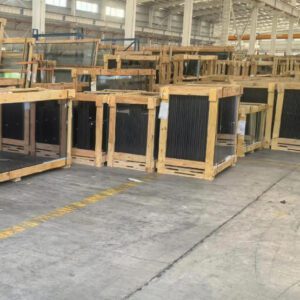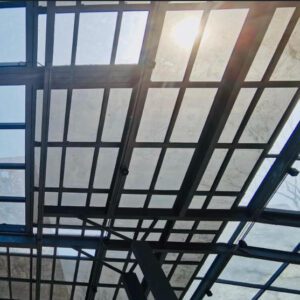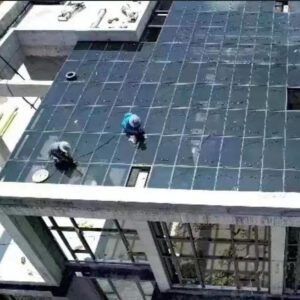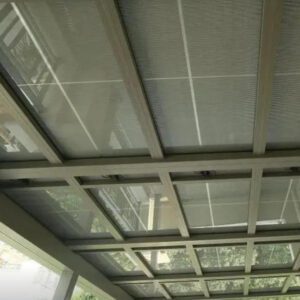
A comprehensive guide for distributors, dealers, agents, and construction partners ready to capitalize on the solar window revolution reshaping commercial real estate and urban energy infrastructure.

Introduction: The Market Opportunity Hidden in Plain Sight
Every morning, the sun rises over a city and floods millions of square meters of glass facades with photons — pure, free energy that bounces off curtain walls and disappears into the atmosphere. For decades, that energy has been completely wasted. Now, a rapidly maturing technology is about to change that calculus permanently, and the distributors, agents, and building contractors who position themselves ahead of this wave will capture a disproportionate share of one of the most significant infrastructure shifts of the 21st century.
Solar window technology — formally known as Building-Integrated Photovoltaics (BIPV) glazing — transforms ordinary architectural glass into electricity-generating surfaces without compromising the aesthetics or structural integrity of the building. This is not a speculative moonshot. The global BIPV market was valued at USD 23.41 billion in 2025 and is projected to reach USD 125+ billion by 2032, growing at a compound annual growth rate exceeding 20% (SNS Insider, 2025). The solar windows sub-segment specifically is tracking an 18.7% CAGR, expected to grow from USD 1.3 billion in 2024 to USD 4.3 billion by 2030 (Strategic Market Research, 2024).
For distributors of new energy and solar products, for construction companies bidding on commercial projects, and for agents representing green building solutions — this document is your strategic roadmap. We will cover every dimension of this opportunity: the technology, the financial case, the regulatory environment, the installation process, the sustainability narrative, and most critically, how to structure your distribution business to win in this market.
Section 1: Understanding Solar Window Technology — The Foundation of Modern Green Buildings
What Are Solar Windows and How Do They Work?
Solar windows are architectural glass units with photovoltaic (PV) cells embedded directly into the glazing assembly. Unlike conventional solar panels mounted on rooftops or ground racks, solar windows replace — or augment — the building’s existing glass surfaces, functioning simultaneously as a structural building envelope component and an electricity generator.
The core technology relies on photovoltaic glass composition: thin-film semiconductor materials (most commonly amorphous silicon, cadmium telluride, or organic photovoltaic compounds) are deposited onto or between glass panes using physical vapor deposition or lamination processes. When photons from sunlight strike these semiconductor layers, they excite electrons and create a direct current (DC), which is then collected by a thin oxide conductive coating — typically tin oxide — and routed via inverters to the building’s AC electrical infrastructure.
Three primary solar window architectures exist in today’s commercial market:
Crystalline Silicon BIPV Glazing: Individual monocrystalline or polycrystalline cells are laminated between glass layers with a defined spacing pattern. These offer the highest efficiency (monocrystalline cells now exceed 22% conversion efficiency, as demonstrated by Jia Mao BIPV’s proprietary cell integration technology) but reduce transparency proportionally to cell density.
Thin-Film BIPV Glazing: Semiconductor materials are deposited as ultra-thin layers across the entire glass surface, enabling higher transparency (up to 80%) at lower efficiency ratings (typically 6–12%).
Organic Photovoltaic (OPV) and Perovskite Glazing: Next-generation materials offering color-tunability and high transparency, currently at laboratory efficiencies of 15–18% with commercial scaling underway by 2026–2027.
In terms of energy generation: solar windows typically produce 5 to 15 watts per square foot depending on technology, orientation, and climate — compared to 15–20 watts per square foot for traditional rooftop panels. The critical insight for your sales conversations is this: a 40-story office tower in Shanghai, Dubai, or Chicago may have only 3,000 m² of rooftop area but 50,000+ m² of glass facade surface. The math transforms entirely when you shift from roof area to total building envelope.
Why Solar Windows Are Game-Changers for Urban Architecture
Dense urban environments represent the single largest gap in the global solar deployment story. Rooftop solar, the dominant residential solution, becomes geometrically constrained in cities where high-rises cast shadows on each other and roof-to-floor-area ratios collapse as buildings rise. A 50-story office tower in Manhattan or Hong Kong may have a roof-to-floor ratio of less than 2% — meaning rooftop panels alone can contribute negligibly to the building’s total energy demand.
Solar windows solve this problem structurally. By converting vertical glass facades — which represent 15 to 40% of the total exterior surface area of modern commercial buildings — into power-generating assets, BIPV glazing unlocks terawatts of untapped urban solar potential.
Beyond the energy dimension, solar windows offer decisive regulatory and aesthetic advantages. Many heritage districts and urban design codes restrict rooftop structures. Solar windows, integrated flush with the building envelope, face no such restrictions. Architects and developers gain a powerful sustainability credential without altering the building’s external visual profile — a consideration that becomes commercially significant when we discuss the corporate sustainability narrative in Section 6.
Current Technological Benchmarks (2025)
| Технология | Visible Transparency | Эффективность (%) | Продолжительность жизни | Лучшее приложение |
|---|---|---|---|---|
| Mono-Si BIPV Glass | 10–50% | 18–22% | 25–30 yrs | Office facades, high efficiency priority |
| Thin-Film (a-Si/CdTe) | 30–80% | 6–12% | 25 yrs | Skylights, atriums, retail windows |
| Organic PV (OPV) | 40–70% | 8–15% | 10–15 yrs | Interior partitions, design-focused |
| Perovskite (emerging) | 20–60% | 15–25%+ | TBD | Next-gen, 2027+ commercial scale |
Source: Jia Mao BIPV Technical Data, IEA-PVPS, MDPI Building Sciences, 2025
Section 2: The Commercial Building Market — Your Largest Revenue Opportunity
Why Commercial Properties Are Ideal for Solar Window Installation
Commercial buildings consume roughly 40% of all electricity in most developed economies. A single Class A office tower of 50,000 m² in a major business district may run annual electricity bills exceeding USD 2 million. The scale of energy cost — and the scale of the glass envelope that faces that energy problem — makes commercial buildings the natural primary market for solar window distributors.
Beyond energy bills, the structural economics are compelling. Commercial buildings typically have:
- Predictable 25–50 year operational horizons, giving asset owners confidence in the 7–12 year payback period typical of solar window installations.
- Sophisticated asset management teams that understand lifecycle costing, making total cost of ownership arguments straightforward.
- Corporate sustainability mandates with measurable KPIs — many Fortune 500 companies now require their real estate portfolio to hit specific carbon intensity targets, and solar windows directly reduce Scope 2 emissions (purchased electricity).
- Extensive glass facades on modern curtain-wall construction — precisely the installation substrate solar windows are designed for.
Key Commercial Segments to Target
Your highest-value client segments, ranked by conversion probability and deal size, are as follows.
High-rise office towers and corporate headquarters represent the flagship opportunity. A 30-story tower with a glass facade covering 20,000 m² can install sufficient solar glazing to offset 15–25% of annual electricity consumption, with annual savings in the range of USD 200,000–400,000 depending on local electricity tariffs and solar irradiance. These deals are large, visible, and become reference projects that open doors to the next opportunity.
Retail and shopping centers offer large, ground-level and upper-story glass storefronts that are high-visibility demonstration sites. Mall operators increasingly face energy cost pressures; the combination of daylight harvesting (reducing lighting loads) and power generation creates a dual financial benefit.
Hospitality properties — hotels, resorts, and conference centers — combine high 24/7 energy demand with a brand-sensitive environment where green credentials translate directly to premium positioning with corporate travel managers and ESG-conscious guests.
Educational institutions and research facilities are driven by both sustainability commitments and long investment horizons. Universities in particular often have explicit net-zero carbon pledges and patient capital for infrastructure projects.
Healthcare facilities demand uninterrupted power and run 365 days per year, making any reduction in energy cost per kWh extremely valuable over multi-decade building lifespans.
Market Size and Growth Projections for Your Sales Pipeline
 BIPV market growth trajectory 2024–2034 illustrates the scale of the commercial opportunity. (Source: Unsplash / Illustrative)
The numbers your regional sales teams need to internalize:
- Global BIPV market: USD 23.4 billion (2024) → projected USD 149.8 billion by 2034, CAGR of 20.4% (Market.us, 2025)
- Solar Windows specific: USD 1.3 billion (2024) → USD 4.3 billion by 2030, CAGR of 18.7%
- BIPV Facade sub-segment: USD 4.1 billion (2024) → USD 28.3 billion by 2034, CAGR of 21.3%
- Commercial segment share: The commercial sector captured 54.2% of total BIPV revenue in 2025 (Precedence Research, 2025)
- Asia Pacific dominance: Asia Pacific accounted for USD 7.01 billion (29.96% global share) in 2025, with China, Japan, South Korea, and Singapore as primary growth engines (Fortune Business Insights, 2025)
For distributors operating in Asia, Europe, or North America, each region presents distinct entry points. Asia Pacific growth is driven by aggressive government mandates for green buildings in China and South Korea. European growth is driven by the EU’s Energy Performance of Buildings Directive (EPBD), which requires all new buildings to be zero-emission from 2028. North American growth is driven by corporate ESG commitments and the federal Investment Tax Credit (ITC).
Section 3: Financial Benefits — Making the Business Case to Your Clients
Energy Cost Reduction and Long-Term Savings
When presenting to building owners and property developers, anchor the conversation in numbers they already understand: their electricity bill. The financial structure of a solar window installation looks like this across a typical commercial mid-rise scenario:
| Parameter | Технические характеристики |
|---|---|
| Building type | 20-story Class A office tower |
| Solar window facade area | 8,000 m² |
| Average annual output | 480,000–720,000 kWh/year |
| Electricity rate (commercial) | USD 0.12–0.18/kWh |
| Annual electricity savings | USD 57,600–129,600 |
| Payback period (with incentives) | 7–12 years |
| 25-year cumulative savings | USD 1.44M–3.24M |
| Performance warranty | 25 years, ≥80% rated output at Year 25 |
Note: Output varies by latitude, orientation, and technology. Data based on industry benchmarks and Jia Mao BIPV product specifications.
The 25–30 year performance warranty that leading BIPV manufacturers provide is a critical sales tool. Unlike HVAC systems that require major component replacement every 10–15 years, solar windows degrade at less than 0.5% per year, meaning a building that installs solar glazing today is locking in a known, declining-cost energy source for the next quarter century.
Government Incentives and Financing Options
The incentive landscape in 2025–2026 makes commercial solar window installations financially compelling at an unprecedented level:
United States: The federal Investment Tax Credit (ITC) continues to offer a 30% tax credit on the installed cost of qualifying solar systems, including BIPV glazing that meets IRS definitions of solar equipment (PPM Solar, 2026). Combined with accelerated bonus depreciation (currently at favorable rates under ongoing tax policy), the effective year-one cash benefit can reduce the net installation cost by 40–50%.
PACE Financing (Property Assessed Clean Energy): This mechanism allows building owners to finance solar window installations through property tax assessments rather than traditional debt, eliminating upfront capital requirements and keeping the investment off the balance sheet. PACE transfers with the property upon sale, which aligns the financial structure with the long-term ownership horizon of commercial real estate.
ESG-Linked Green Bonds: Major real estate investment trusts (REITs) and institutional property owners increasingly access green bond markets to finance sustainability capital expenditures, often at interest rates 20–50 basis points below conventional financing. Solar window installations that contribute to credible green building certifications (LEED, BREEAM, WELL) qualify as use-of-proceeds for green bond issuance.
Regional Programs: State, provincial, and municipal rebate programs layer additional incentives on top of federal credits. California, New York, Texas, Germany, the Netherlands, and multiple Chinese provinces all have active programs in 2025–2026. Your distribution business benefits from becoming the local expert on these stacking incentive structures — it is a genuine competitive moat.
Return on Investment Calculations for Your Sales Presentations
The simplified ROI formula your sales team should internalize:
For a building in a mid-latitude market (e.g., Shanghai, Los Angeles, Frankfurt) with moderate electricity rates and available federal/state incentives, this typically yields a 15–20% annualized return after payback — a figure that competes favorably with most alternative capital expenditure options available to building owners.
Section 4: Architectural Integration — Selling the Design Advantage
How Solar Windows Enhance Modern Building Aesthetics
One of the most persistent objections your clients will raise is aesthetic: “Will solar panels make our building look industrial?” This objection dissolves entirely once they understand how modern BIPV glazing works.
Jia Mao BIPV’s photovoltaic glass maintains 10% to 90% transparency — the specific light transmittance can be specified at the project design stage to meet the architect’s vision. Tinting options, custom cell patterns, and opacity gradations allow designers to create facades with visual depth and texture while generating electricity. The invisible busbar technology developed by leading manufacturers ensures no visible wiring grid disrupts the glass surface.

The compatibility with electrochromic (smart glass) technologies is a significant emerging advantage. Smart glass systems that dynamically adjust tint in response to sunlight — already deployed in high-specification office towers — can be combined with thin-film BIPV cells to create facades that simultaneously manage solar heat gain, glare, and energy generation. This combination addresses two line items on a building’s energy budget simultaneously: cooling loads and electricity generation.
For heritage buildings and conservation areas, where roof-mounted panels are prohibited, solar windows integrated into replacement window programs represent the only viable path to meaningful on-site renewable energy generation.
Working with Architects and Building Designers
Winning in the commercial BIPV market requires early-stage involvement in the design process. An architect specifying solar windows at schematic design phase will orient the building’s primary facade toward maximum solar exposure, size electrical infrastructure for the anticipated generation load, and specify compatible curtain wall systems — dramatically reducing installation complexity and cost versus a retrofit approach.
Your distribution business should develop structured relationships with architecture and engineering firms. The technical data architects require from Jia Mao BIPV’s product specifications includes: U-value and Solar Heat Gain Coefficient (SHGC) performance data, structural load ratings (wind pressure resistance), light transmittance certificates, and power output simulations by facade orientation.
Building Information Modeling (BIM) compatibility is increasingly a prerequisite for specification. Ensure your product data is available in IFC and Revit-compatible formats — this is a table-stakes requirement for serious commercial projects.
Case Studies: Buildings Transformed by Solar Windows
Several landmark commercial properties have demonstrated the viability of large-scale BIPV facade integration:
The Elithis Tower in Dijon, France generates more energy than it consumes annually, with integrated photovoltaic elements across the building envelope contributing to a net-positive energy balance — with occupants averaging monthly electricity bills close to zero.
In South Korea, the government-backed Smart Energy City initiative has driven installation of BIPV glazing across multiple commercial district redevelopments in Seoul, with individual buildings reporting 18–23% reductions in grid electricity consumption within the first operating year.
Chinese commercial developments in Shenzhen, Shanghai, and Suzhou increasingly specify BIPV curtain walls as a baseline design element, driven by the national Green Building Rating Standard (GB/T 50378) and provincial carbon intensity regulations. This is the market where manufacturers like Jia Mao BIPV have the deepest integration with the construction supply chain.
📺 Watch: BIPV Solar Explained — The Future of Building-Integrated Solar Energy
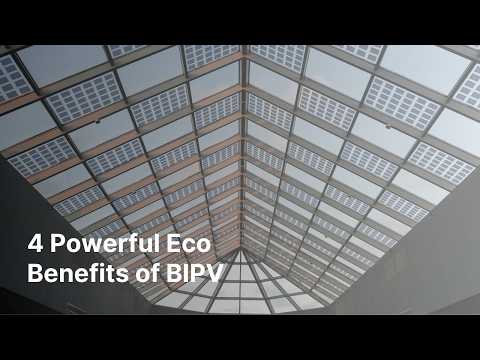
This video breaks down how BIPV solar glazing works in practice, covering real building integrations, facade system design, and energy performance metrics relevant for distributor conversations with commercial clients. (YouTube — BIPV Solar Explained)
Section 5: Installation and Implementation — Your Technical Advantage
Pre-Installation Assessment and Site Evaluation
A rigorous pre-installation assessment is the foundation of every successful commercial solar window project — and it is one of the most powerful ways your distribution business differentiates itself from competitors who simply sell product without providing comprehensive technical support.
The assessment process covers four primary dimensions. First, building envelope analysis: a detailed survey of window orientation (azimuth and tilt), glass area by facade, existing glazing specifications, and structural framing conditions. South-facing facades (in the northern hemisphere) receive the highest direct irradiance but east and west-facing facades contribute meaningfully through morning and afternoon sun capture. Second, structural load assessment: solar window assemblies are heavier than standard architectural glass; the structural engineering team must confirm that curtain wall framing, anchoring systems, and floor plate edge connections can accommodate the additional dead load without modification. Third, electrical infrastructure review: the building’s main electrical switchboard, existing inverter capacity, metering configuration, and utility interconnection agreement must all be assessed before system sizing begins. Fourth, shading analysis: neighboring buildings, mechanical equipment, and facade projections are modeled using solar simulation software (e.g., PVsyst, Helioscope) to produce hour-by-hour energy production estimates accounting for seasonal variation.
For distributors, offering this assessment as a value-added service — even at subsidized cost or free for qualified prospects — creates a commercial engagement depth that makes commodity price competition largely irrelevant.
Installation Process and Timeline Management
Commercial solar window installation is fundamentally a glazing replacement program delivered within an occupied building environment. The phased approach that minimizes business disruption looks like this:
| Phase | Activities | Typical Duration |
|---|---|---|
| 1. Mobilization | Equipment staging, safety planning, utility notification | 2–4 weeks |
| 2. Electrical rough-in | Inverter installation, conduit runs, monitoring system wiring | 4–8 weeks |
| 3. Glazing replacement | Floor-by-floor panel removal and BIPV installation, high-rise rigging | 12–36 weeks |
| 4. Commissioning | Electrical testing, performance verification, monitoring activation | 2–4 weeks |
| 5. Building handover | Documentation, warranty registration, operations training | 1–2 weeks |
High-rise window replacement requires specialized rigging equipment — suspended scaffolding systems or building maintenance units (BMUs) — and is subject to occupational safety regulations that vary by jurisdiction. Your installation partner network must include certified high-rise glazing contractors with current insurance and safety certifications.
Quality Assurance and Performance Monitoring
Once commissioned, a solar window installation should be monitored in real-time via a building energy management system (BEMS) integration. Modern BIPV inverters output string-level production data, enabling facility managers to detect underperforming zones — caused by shading, soiling, or electrical faults — within days rather than discovering problems during an annual audit.
The step-by-step BIPV installation guide developed by Jia Mao BIPV covers commissioning procedures, performance verification protocols, and recommended maintenance schedules in detail — a resource your technical sales team can share directly with client engineering departments.
Annual maintenance for solar windows consists primarily of facade cleaning (which most commercial buildings perform anyway as part of routine building maintenance) and a visual and electrical inspection of all connections. Maintenance costs average USD 0.01–0.02 per watt per year — a fraction of the cost of maintaining conventional HVAC equipment.
Section 6: Sustainability Impact — The Environmental Selling Point

Carbon Footprint Reduction and Climate Goals
The environmental performance of solar windows is compelling when expressed in the units that corporate sustainability officers actually track. A commercial tower generating 600,000 kWh per year from BIPV glazing avoids approximately 300–450 metric tons of CO₂ annually, depending on the local electricity grid’s carbon intensity. Over a 25-year operational life, that represents 7,500–11,250 metric tons of CO₂ avoided — equivalent to retiring approximately 1,600–2,400 gasoline-powered vehicles from the road permanently.
Life cycle assessment (LCA) data consistently shows that BIPV glazing achieves energy payback in 2–4 years — meaning the energy embedded in manufacturing the glass and solar cells is recovered through clean energy generation within 2–4 years of operation, and the remaining 21–26 years of output is effectively carbon-free.
This narrative is central to corporate ESG (Environmental, Social, Governance) reporting. Under the GHG Protocol framework, on-site renewable energy generation reduces a building owner’s Scope 2 emissions (purchased electricity). Increasingly, corporate tenants conduct building-level carbon audits as part of their own Scope 3 reporting, making the carbon performance of their leased office space a procurement criterion. Landlords with solar-integrated facades attract — and retain — higher-quality tenants at premium rents.
Building Certification and Green Standards
LEED v4.1 (Leadership in Energy and Environmental Design) awards credits under the Energy and Atmosphere category for on-site renewable energy generation. A commercial building generating 10% of its energy needs from BIPV glazing can earn up to 3 EA credits toward LEED Gold or Platinum certification, depending on the total generation percentage and optimization strategy (Mitrex / LEED documentation, 2025).
Additionally, solar windows contribute to compliance with the WELL Building Standard (thermal and lighting comfort categories) and can support qualification under Living Building Challenge net-positive energy requirements.
Local green building certification programs in China (GB/T Green Building Rating), Germany (DGNB), and the UK (BREEAM) all explicitly credit on-site renewable energy generation and building envelope energy performance improvements — both of which solar windows deliver simultaneously.
Section 7: Regulatory Landscape and Compliance — Navigating the Path Forward
Building Codes and Safety Standards
Every solar window product specified for commercial installation must meet a defined set of certifications. The primary standards framework includes:
- IEC 61215: Performance standard for crystalline silicon terrestrial PV modules — covers design qualification and type approval for the photovoltaic cell components.
- IEC 61730: Safety qualification for PV modules — covers mechanical, electrical, fire, and material safety requirements.
- UL 1703 / UL 61730: The UL equivalent certification required for installations in the United States. UL 1703 was the legacy standard; UL 61730 (harmonized with IEC 61730) is the current requirement for new installations.
- EN 50583 (Europe): Specific standard for photovoltaics in buildings, covering BIPV-specific design and installation requirements.
- Fire Safety / Building Material Classification: BIPV glazing must meet building code fire resistance requirements. Many jurisdictions require B1-grade flame retardancy as a minimum for facade materials — Jia Mao BIPV’s encapsulation system is designed to meet this threshold.
Electrical code compliance — specifically utility interconnection standards for grid-tied solar systems — varies significantly by country and utility. In the United States, IEEE 1547-2018 governs distributed energy resource interconnection. In the EU, national grid codes apply with ENTSO-E harmonization efforts ongoing. Your installation partners must be familiar with local requirements and hold the appropriate electrical contractor licenses.
Future Regulations Favoring Solar Window Adoption
The regulatory trajectory is uniformly favorable for BIPV distributors. Key policy drivers over the next five years include:
The European Union’s Energy Performance of Buildings Directive (EPBD) recast requires all new buildings to be zero-emission from 2028 and all existing buildings to undergo deep renovation toward zero-emission performance by 2050, with interim milestones by 2033 and 2040. Solar windows are among the most viable means of retrofitting existing commercial buildings to meet these standards without wholesale demolition.
In China, the 14th and 15th Five-Year Plans include explicit targets for BIPV deployment on commercial buildings as part of the national carbon peak and carbon neutrality strategy. Provincial governments in Guangdong, Jiangsu, Shanghai, and Zhejiang have issued implementation rules that effectively mandate BIPV consideration in new commercial construction above defined floor area thresholds.
In the United States, municipal building performance standards (BPS) in cities including New York (Local Law 97), Washington DC, and Boston impose escalating carbon intensity penalties on large commercial buildings, creating a financial imperative for clean energy retrofits — with solar windows as an eligible compliance pathway.
Section 8: Distribution Strategy and Sales Channels — Scaling Your Business
 Distribution success in the BIPV market depends on deep relationships with commercial real estate decision-makers and the technical credibility to navigate complex project requirements. (Source: Unsplash)
Building Your Distribution Network
A successful solar window distribution business is fundamentally a technical services business that happens to sell product. The distributors who will capture the most market share are those who help clients navigate the full project lifecycle — from site assessment through commissioning and long-term performance monitoring — not those who simply quote the lowest price on glass panels.
This means your distribution network needs three distinct capability tiers. First, technical sales representatives who can read architectural drawings, interpret energy simulation outputs, and speak credibly to building engineers. Second, certified installation partners — qualified glazing contractors with high-rise rigging experience and electrical subcontractors with grid-interconnection expertise. Third, long-term account management capacity — the ability to maintain ongoing relationships with building owners for performance monitoring, warranty management, and future expansion phases.
Training programs for your sales team should cover solar energy fundamentals (irradiance data interpretation, energy yield modeling), BIPV product specifications and competitive differentiation, financial analysis tools (ROI models, incentive stacking), and regulatory navigation for your primary markets. Jia Mao BIPV’s distributor support program provides product-specific training and technical certification pathways to help partners build this capability rapidly.
Direct Sales to Building Owners and Developers
The decision-making structure in commercial real estate for a capital expenditure of this scale typically involves the CFO or Head of Finance (ROI and payback), the Head of Sustainability or ESG Officer (carbon and certification alignment), the Facilities Director (installation logistics and operational impact), and the CEO or Board (brand and ESG reporting at investor level). Your proposals must address each of these stakeholders’ primary concerns explicitly.
For property developers evaluating new construction, the value proposition is different: integrating solar windows at the design stage costs approximately 15–30% less than retrofitting an existing building, and the resulting energy performance specification enhances the property’s LEED or BREEAM rating — which translates to rental premium, lower vacancy rates, and higher asset values at disposition.
Partnership Opportunities with Industry Stakeholders
The most capital-efficient growth strategy for BIPV distributors is through channel partnerships rather than direct sales teams. The highest-value partnership categories are:
Architecture and engineering (A&E) firms — embed your product specifications into their standard facade specification libraries. Once specified, your product follows the project through procurement.
General contractors and construction managers — become the preferred BIPV glazing supplier for major contractors active in commercial construction and renovation. This provides pipeline visibility and repeatable project flow.
Energy Service Companies (ESCOs) — ESCOs structure performance contracts that allow building owners to install energy-saving equipment with zero upfront cost, repaying the investment from guaranteed energy savings. Aligning your solar window product with ESCO contract structures dramatically reduces the sales friction caused by capital budget constraints.
Building Management System (BMS) providers — integration with Siemens Desigo, Johnson Controls Metasys, Schneider Electric EcoStruxure, and similar platforms adds significant value and creates a stickier customer relationship.
Section 9: Competitive Positioning and Market Differentiation
Solar Window Products Comparison and Specifications
The commercial solar window market currently encompasses three broad tiers of product positioning. Understanding where competing products sit — and where your offering from manufacturers like Jia Mao BIPV differentiates — is essential for effective proposal positioning.
| Product Tier | Диапазон эффективности | Transparency | Гарантия | Price Point | Typical Application |
|---|---|---|---|---|---|
| Premium (high-eff. mono-Si) | 18–22% | 10–50% | 25 yrs | Высокий | High-rise commercial, corporate HQ |
| Mid-range (thin-film/CIGS) | 10–15% | 30–70% | 20–25 yrs | Medium | Retail, institutional, hospitality |
| Value (amorphous Si) | 6–9% | 50–80% | 15–20 yrs | Нижний | Skylights, atriums, interior glazing |
Data: Jia Mao BIPV product portfolio benchmarks, IEA-PVPS Technical Guidebook 2025
Your Unique Value Proposition as a Distributor
Generic product distribution is a race to the bottom on price. Your defensible competitive position is built on four dimensions that competitors cannot easily replicate: local regulatory knowledge, project finance expertise, certified installation network depth, and long-term monitoring and maintenance capability.
The distributor who can tell a building owner not just “here’s the product” but “here’s your project ROI after stacking the 30% ITC, your state rebate, and PACE financing, delivered by our certified installation team with a 25-year performance guarantee, monitored through your existing BMS” is operating in an entirely different competitive space from a simple product reseller.
Addressing Customer Objections and Concerns
The most common objections your sales team will encounter, and the evidence-based responses:
“Solar windows aren’t as efficient as rooftop panels.” True in watts per square foot — but a building with 20,000 m² of south-facing facade and only 2,000 m² of usable roof generates 10 times more total energy from facade-mounted solar windows than from a fully loaded rooftop array. Total energy generation is the relevant metric, not density per square foot.
“The technology isn’t mature enough.” Thin-film BIPV glazing has been installed in commercial buildings since the 1990s. Crystalline silicon BIPV facades have decades of operational data in Germany, Japan, and South Korea. Jia Mao BIPV’s monocrystalline BIPV glass carries a 25-year performance warranty backed by a manufacturer with 3 GW annual production capacity — this is mature, bankable technology.
“The payback period is too long.” Before incentives and financing, a 12-year payback is correct in some markets. After the 30% federal ITC, PACE financing, and accelerated depreciation, the effective payback on the equity invested often falls to 4–7 years. Additionally, solar windows are replacing conventional glass that also has a capital cost — the incremental cost over standard glazing narrows the payback calculation significantly.
Section 10: Future Outlook — Positioning for Long-Term Growth
Emerging Technologies and Next-Generation Solar Windows
The next five years will see material performance improvements that will expand the addressable commercial market substantially. Three technology trajectories are most significant for distributors to understand and track.
Perovskite solar cells are the most discussed breakthrough material. In April 2025, Trinasolar announced a tandem (perovskite-silicon) conversion efficiency of 31.1% — compared to today’s practical BIPV efficiency ceiling of ~22%. When perovskite-silicon tandems achieve commercial-scale manufacturing stability (projected 2027–2029), the energy output per square meter of BIPV facade will increase by 30–40%, fundamentally improving the financial case in every market segment. As Taiwan Perovskite Solar Corp. noted, “Perovskite isn’t meant to replace silicon — it’s meant to bring solar where silicon can’t go.” That framing is directly applicable to BIPV glazing.
Bifacial BIPV glazing captures diffuse light reflected from interior surfaces and neighboring buildings on the non-sun-facing side of the glass, adding 5–15% to total energy capture versus single-sided absorption.
Integrated energy storage — coupling BIPV facades with building-integrated battery systems — transforms solar windows from a daytime generation asset into a true 24/7 energy management tool, enabling peak demand shifting, backup power, and participation in grid services markets.
Self-dimming BIPV glazing — currently in R&D at Jia Mao BIPV’s materials laboratory — combines electrochromic smart glass functionality with solar cell integration, creating a single glazing unit that simultaneously generates power, manages solar heat gain, and adjusts occupant comfort in response to real-time conditions.
Market Expansion Opportunities Beyond Commercial
While commercial buildings represent the dominant near-term market, distributors with a 5–10 year strategic horizon should track three emerging segments:
Infrastructure BIPV — noise barriers along highways, railway station canopies, and airport terminal facades represent gigawatt-scale deployment opportunities in Asia and Europe, where governments are mandating renewable integration in public infrastructure.
Industrial buildings — large-footprint manufacturing facilities and logistics centers in Southeast Asia, India, and Eastern Europe are increasingly incorporating BIPV roofing and facade systems as energy cost management tools.
Automotive integration — vehicle-integrated photovoltaics (VIPV) on commercial fleet vehicles represent an emerging adjacency, with solar glass technology directly transferable from architectural applications.
Conclusion: Your Opportunity in the Solar Window Revolution
The transformation of urban architecture through integrated solar solutions is not a future possibility — it is a present reality that is accelerating. Buildings across Asia, Europe, and North America are already generating electricity through their glass facades. The question for distributors, agents, and construction partners is not whether this market will develop, but whether they will be positioned to lead it or follow it.
Early movers in BIPV distribution enjoy compounding advantages: reference project portfolios that reduce sales cycles, installer networks that become progressively more efficient, regulatory expertise that clients cannot obtain elsewhere, and manufacturer relationships that provide preferential access to product, pricing, and technical support.
The BIPV facade market is tracking a 21.3% CAGR through 2034. At that growth rate, the distribution business you build today will be managing a market four to five times larger within a decade. The infrastructure you invest in now — your technical team, your installer network, your architecture firm relationships, your financial modeling capability — compounds in value proportionally.
The solar window revolution is not coming. It is here. The only question is your market position within it.
Call to Action
Ready to lead the solar window revolution in your market?
Contact the Jia Mao BIPV distributor support team today to access:
- Exclusive product specifications and pricing — full technical data sheets for BIPV glazing product lines
- Sales training and technical certification programs — structured pathways for your technical sales representatives
- Marketing materials and customer presentation tools — ready-to-use ROI calculators, case study decks, and product comparison guides
- Territory availability and partnership opportunities — exclusive distribution agreements in available markets
📧 Visit www.jmbipvtech.com to connect with our global distribution partnership team.
Glossary of Key Terms
| Term | Definition |
|---|---|
| BIPV | Building-Integrated Photovoltaics — solar technology embedded directly into building materials (glass, roofing tiles, facades) rather than mounted on top of them |
| Photovoltaic (PV) | The process of converting light (photons) into electricity (voltage) using semiconductor materials |
| Thin-film | A category of solar technology where semiconductor layers are deposited in very thin coatings on glass, enabling higher transparency than crystalline cells |
| Perovskite | A crystalline material structure showing exceptional light absorption efficiency; next-generation solar cell material |
| ITC | Investment Tax Credit — US federal tax credit equal to 30% of qualifying solar system installation costs |
| PACE | Property Assessed Clean Energy — financing mechanism that allows energy upgrades to be repaid through property tax assessments |
| ESG | Environmental, Social, and Governance — framework used by companies and investors to assess non-financial performance |
| LEED | Leadership in Energy and Environmental Design — US-based green building certification system |
| SHGC | Solar Heat Gain Coefficient — measure of how much solar heat passes through a window |
| ESCO | Energy Service Company — firm that finances and installs energy efficiency improvements, repaid from guaranteed savings |
| BIM | Building Information Modeling — digital 3D modeling technology for planning and managing construction projects |
| CAGR | Compound Annual Growth Rate — the rate at which a market grows year-over-year on a compounding basis |
Frequently Asked Questions (FAQ)
Q1: What is the actual energy output of solar windows compared to traditional rooftop solar panels?
Solar windows typically generate 5–15 watts per square foot depending on technology type (thin-film vs. crystalline silicon), facade orientation, and local solar irradiance. Traditional rooftop solar panels produce 15–20 watts per square foot under optimal conditions. However, the comparison changes dramatically at the building level: a modern 30-story commercial tower in a major city may have 30,000–50,000 m² of glass facade but only 2,000–4,000 m² of usable rooftop. Total building energy generation from BIPV facades can therefore be five to fifteen times greater than what rooftop panels alone could produce on the same building, making total energy output — not watts per square foot — the relevant metric.
Q2: How do solar windows perform in cloudy climates or regions with less sunlight?
Solar windows generate electricity in both direct and diffuse light conditions, meaning they continue producing power even under overcast skies — though at reduced output compared to full-sun conditions. Thin-film photovoltaic materials are particularly well-suited to diffuse light environments. Buildings in Hamburg, Vancouver, Tokyo, and other moderate-sunshine cities still achieve meaningful annual energy yields from BIPV facades, typically covering 10–25% of total building electricity demand. Distributors operating in northern European or Pacific Northwest markets should present performance data calibrated to local irradiance levels (available through Solargis or PVGIS databases) rather than citing tropical benchmarks.
Q3: What is the typical payback period for commercial solar window installations?
Before incentives, payback periods range from 10-15 лет for most commercial installations. After applying the US federal 30% ITC, available state rebates, and accelerated depreciation, effective payback on equity invested typically falls to 4–7 years. In markets with high electricity rates (California, Germany, Japan, South Korea, Singapore), paybacks at the shorter end of that range are common. Many commercial buildings achieve 15–20% annualized returns on the net investment over the 25-year system life.
Q4: Can existing buildings retrofit solar windows, or do they only work in new construction?
Both are viable pathways. Retrofit installations are more complex and carry a cost premium of approximately 20–35% versus new construction integration, primarily due to occupied-building logistics, existing facade removal, and the need for phased installation. However, retrofits represent the largest segment of the addressable market, since the vast majority of commercial floor space globally already exists and will not be demolished and rebuilt. New construction offers cleaner integration, lower per-unit costs, and the ability to optimize building orientation and electrical infrastructure from the design stage.
Q5: What maintenance do solar windows require over their 25–30 year lifespan?
Solar window maintenance requirements are minimal compared to conventional building systems. The primary task is periodic cleaning to remove dust, pollen, and pollutants from the glass surface — a process most commercial buildings already perform as part of routine facade maintenance. Annual electrical inspections are recommended to verify inverter performance, check connection integrity, and confirm monitoring system accuracy. Performance degradation is typically less than 0.5% per year, meaning a system at Year 25 is still producing over 87% of its original rated output under standard degradation assumptions.
Q6: How do solar windows integrate with existing building electrical systems?
Solar windows connect to the building’s electrical infrastructure through string inverters or microinverters that convert the DC electricity generated by the solar cells into AC power compatible with the building’s distribution panels. For large commercial installations, a dedicated solar inverter room is typically provided adjacent to the main electrical switchroom. Integration with existing metering, sub-metering, and building energy management systems is straightforward for qualified electrical engineers and does not require replacement of existing switchgear in most cases.
Q7: Are there aesthetic or transparency compromises with current solar window technology?
Modern BIPV glazing products offer 10–90% visible light transmittance — the exact transparency level is specified at the design stage. At 50–70% transmittance, a solar window appears visually similar to conventional solar-control glass that many premium commercial buildings already use. At 80–90% transmittance, thin-film products are nearly indistinguishable from standard clear glass. Custom cell spacing patterns, colored interlayers, and opacity gradations give architects substantial design flexibility. The key insight for sales conversations: most Class A commercial buildings already use solar-control or low-e coated glass that reduces transparency — solar windows simply add energy generation to glass that was already filtering light.
Q8: What happens to solar window performance during winter months or in northern climates?
Performance decreases in winter due to lower sun elevation angles, shorter daylight hours, and increased cloud cover. Annual production in northern climate markets (Minnesota, Canada, northern Germany, northern China) typically covers 20–40% of building energy needs — meaningful but lower than equivalent installations in sunnier climates. The economic case remains positive because northern markets often have higher electricity tariffs that increase the value of each kilowatt-hour generated, partially compensating for lower production volumes. Snow accumulation on vertical facades is rarely a significant issue since snow sheds from vertical glass surfaces quickly.
Q9: How do solar windows perform on vertical building facades versus optimally angled surfaces?
Vertical facades are less efficient than south-facing surfaces tilted at the optimal angle for the building’s latitude (typically 25–45° from horizontal), because the angle of incidence is higher throughout the day. A vertical south-facing facade in a temperate climate typically captures 60–75% of the energy that an optimally tilted surface of the same area would generate. However, east and west-facing facades capture significant morning and afternoon irradiance, and the sheer scale of glass area on modern commercial buildings more than compensates for this geometric penalty in total energy terms.
Q10: What certifications and safety standards do solar windows need to meet?
The minimum certification baseline for commercial BIPV glazing includes IEC 61215 (PV module performance qualification), IEC 61730 (PV module safety qualification), and UL 61730 for US market installations. Additionally, building-grade requirements include structural safety certification (wind load, impact resistance, and dead load ratings), fire safety classification (B1 or better flame retardancy in most jurisdictions), and electrical safety certification for the inverter and BOS components. Installers must comply with local electrical codes (NEC in the US, IEC 60364 in Europe) and utility-specific interconnection standards.
Q11: Can solar windows be combined with energy storage systems for 24/7 power generation?
Yes. BIPV facades pair directly with building-integrated battery energy storage systems (BESS). Daytime solar generation charges the battery bank, which then supplies power during evening peak demand hours, nighttime operation, or utility outages. This combination is particularly valuable in markets with time-of-use electricity pricing, where the price differential between peak and off-peak periods makes stored solar energy significantly more valuable than grid electricity during peak windows. The integration hardware — bi-directional inverters, battery management systems, and BEMS software — is mature, commercially available technology from multiple vendors.
Q12: What is the environmental impact of manufacturing and disposing of solar windows at end of life?
The lifecycle carbon footprint of BIPV glazing is strongly positive. The energy payback period — time for a solar window to generate the same amount of energy that was used to manufacture it — is typically 2–4 years, leaving 21–26 years of net carbon-free energy generation over the product’s 25–30 year lifespan. At end of life, the glass substrate (representing 90%+ of the product by mass) is fully recyclable through existing glass recycling infrastructure. Semiconductor materials (silicon, thin-film compounds) are subject to emerging take-back programs, with the EU’s WEEE Directive already requiring PV module recycling in European markets. Manufacturing carbon intensity for BIPV glass is also declining as manufacturers transition to renewable energy supply chains.
For comprehensive product specifications, project financing models, and distributor territory inquiries, visit www.jmbipvtech.com. For additional technical resources on BIPV installation design, review the IEA-PVPS BIPV Technical Guidebook. For market incentive data, see EnergySage’s Solar Tax Credit Guide and the LEED BIPV integration overview by Mitrex.