The Future of Roofing: Integrating Solar Energy Glass Panels
A Strategic and Technical Guide for Roofing Contractors, EPCs, Architects, Distributors, and Design Institutes
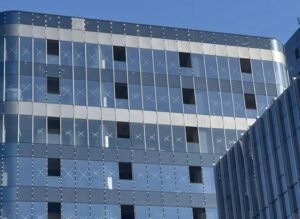
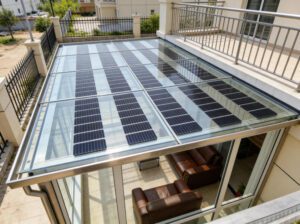
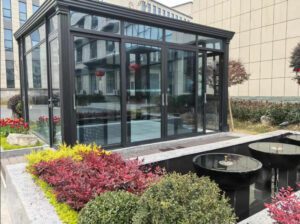
Solar glass roofing delivers two things conventional roofing never could: weather protection and electricity generation from the same surface. For contractors and designers who understand the specification, that dual function changes the project value proposition entirely. Source: Unsplash.
The Convergence of Architecture and Energy
For most of construction history, a roof had one job: keep water out. The idea that it could simultaneously generate electricity was a novelty reserved for demonstration projects and research campuses. That era is over.
The global Building-Integrated Photovoltaics (BIPV) market — the category that includes solar energy glass panels embedded directly into roofing and façade systems — reached an estimated $34.78 billion in 2025 and is forecast to hit $250.91 billion by 2035, growing at a 21.85% CAGR (Precedence Research). For context, that is a market growing faster than electric vehicles were in 2015. The projects being designed today will be specified and built during the steepest part of that growth curve.
The forces behind this growth are structural, not cyclical. Regulatory mandates are the most immediate: the EU’s revised Energy Performance of Buildings Directive (EPBD) requires all new buildings to achieve zero-emission status by 2030, with publicly-owned buildings hitting that threshold on January 1, 2028. In the U.S., ASHRAE 90.1-2022 has tightened building envelope energy requirements significantly, and numerous state and municipal jurisdictions — California, New York, Massachusetts, Washington — have layered additional mandates for on-site renewable generation onto new commercial and multi-family construction.
Corporate sustainability pressure is the second driver. Real estate portfolios owned by pension funds, insurance companies, and REITs face mandatory ESG disclosure under frameworks including the EU’s Corporate Sustainability Reporting Directive (CSRD) and the SEC’s climate disclosure rules. A building’s energy performance is increasingly a material financial consideration — not just a marketing claim. Buildings that cannot demonstrate measurable decarbonization face declining asset valuations and rising cost of capital.
The strategic implication for every professional in the construction and energy value chain is direct: solar energy glass panels are moving from optional upgrade to design-stage requirement. Contractors who can specify, install, and commission these systems will win projects that competitors who cannot cannot bid competitively. Distributors who carry certified BIPV glazing products will earn specification-stage positions that are far more defensible than commodity pricing. Architects who understand the technology can deliver buildings that meet client mandates and command premium fees. EPCs who bundle BIPV roofing into performance-based energy contracts can offer clients outcomes — guaranteed energy savings — rather than equipment.
Technology Deep Dive: How Solar Glass Panels Work in Roofing Systems
BIPV vs. BAPV: The Fundamental Difference
Before evaluating product options, the most important distinction in solar roofing is the one between BIPV (Building-Integrated Photovoltaics) e BAPV (Building-Applied Photovoltaics).
BAPV is what most people picture when they think of solar roofing: rack-mounted panels installed on top of an existing roof membrane or structural deck. The roofing is complete; the panels are added afterward. BAPV is lower cost per watt and simpler to design and install. Its limitation is that the two systems — roofing and solar — are separate, redundant, and independently maintained. The roof below still needs replacing every 15–20 years regardless of the panel condition above it.
BIPV replaces the conventional roofing or cladding material entirely. The solar glass panel is the roof — it serves as the weather barrier, the structural decking, and the power-generating element simultaneously. When specified and installed correctly, BIPV eliminates the cost of the conventional roofing material it replaces, which changes the payback calculation fundamentally.
For contractors and EPCs, the practical implication is that comparing the installed cost of a BIPV roofing system against a BAPV system is an incomplete analysis. The correct comparison is BIPV total cost against the combined cost of the conventional roofing material plus a separate BAPV system installed on top of it. In new construction replacing high-specification roofing — metal standing seam, TPO with ballast, architectural glass skylights — the incremental cost of BIPV over the conventional alternative is often far smaller than the gross BIPV system cost suggests.
Photovoltaic Glass Technologies Applicable to Roofing
Semi-transparent crystalline silicon (c-Si) embeds monocrystalline cells between two tempered glass sheets, with deliberate gaps between cells that allow visible light transmission. Cell-level efficiency exceeds 22%. Module-level efficiency is lower — typically 14–20% — because the gap area between cells contributes no electricity. VLT (Visible Light Transmittance) ranges from 10% to 40% depending on cell density. This technology is best suited to skylights, canopies, and overhead glazing where daylight is required.
Thin-film technologies (CdTe, a-Si, CIGS) deposit semiconductor material in ultra-thin layers directly onto the glass substrate. They produce a more uniform appearance — no visible cell pattern — and are available in custom tints and colors. Amorphous silicon has the best low-light performance and the most favorable temperature coefficient (-0.19%/°C, roughly half the thermal loss of c-Si in hot climates). Module efficiency ranges from 6–18%. Thin-film is particularly valuable in hot-climate roofing applications where temperature-driven efficiency losses are the primary performance challenge.
Opaque solar cladding uses high-efficiency monocrystalline cells behind a decorative glass or ceramic-printed surface that can replicate stone, metal, concrete, or solid color finishes. It generates no visible light transmission but delivers the highest electrical output — up to 150–200 Wp/m² — from surfaces that need not be transparent. For spandrel panels, parapet cladding, and industrial roofing, opaque solar cladding is typically the highest-ROI BIPV specification.
Emerging perovskite solar cells are advancing rapidly. Laboratory efficiencies now exceed 34% in tandem perovskite-silicon configurations (Greenlancer, 2026), and semi-transparent perovskite products are beginning limited commercial deployment. For specifications targeting 2027–2030 completion, perovskite technology is worth tracking closely — but verify outdoor durability data before specifying.
Key Performance Metrics: What to Compare and Why
| Metric | What It Measures | Why It Matters for Roofing |
|---|---|---|
| Module Efficiency (%) | Electrical output per m² of panel area | Determines kWh/year from available roof area |
| VLT (%) | Daylight transmitted through the glass | Required for skylights; 0% acceptable for opaque roofing zones |
| SHGC | Solar heat entering the building | Lower SHGC reduces cooling loads in warm climates |
| U-Value (W/m²K) | Thermal insulation performance | Affects heating/cooling energy consumption |
| Wind Load Resistance (kPa) | Maximum wind pressure the panel withstands | Critical for high-rise and exposed roofing |
| Temperature Coefficient (%/°C) | Output loss per degree above 25°C | More important in hot climates; a-Si outperforms c-Si |
| Performance Ratio | Actual vs. rated output in real conditions | Honest indicator of real-world yield |
| Degradation Rate (%/yr) | Annual efficiency decline | Determines 25-year yield and warranty value |
Compatibility with Roofing Substrates
Solar glass panels are compatible with the three most common commercial roofing substrate families, but each requires specific detailing.
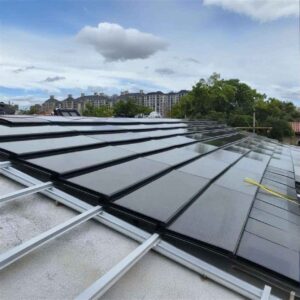
Metal roofing (standing seam, corrugated steel) is the most naturally compatible substrate. BIPV modules designed for metal roofing attach via clamp systems that hook onto seam profiles — no roof penetrations, no disruption to the waterproofing plane. This is the fastest and lowest-risk BIPV integration method for large industrial and commercial roof areas.
Membrane roofing (TPO, EPDM, PVC) requires a framed sub-structure to elevate the BIPV panels above the membrane surface, maintain drainage, and allow air circulation under the panels. Penetrations through the membrane for structural anchors are the primary waterproofing risk — ballasted mounting systems that avoid penetrations are preferred where dead-load capacity allows.
Composite and insulated panel roofing (structural insulated panels, sandwich panels) can incorporate BIPV glazing as the outer skin in new construction, creating a fully integrated envelope system. This approach delivers the best thermal performance and cleanest visual result, but requires coordination between the BIPV manufacturer and the envelope system engineer from the earliest design stages.
Design Integration: Aesthetic Versatility Without Compromising Function

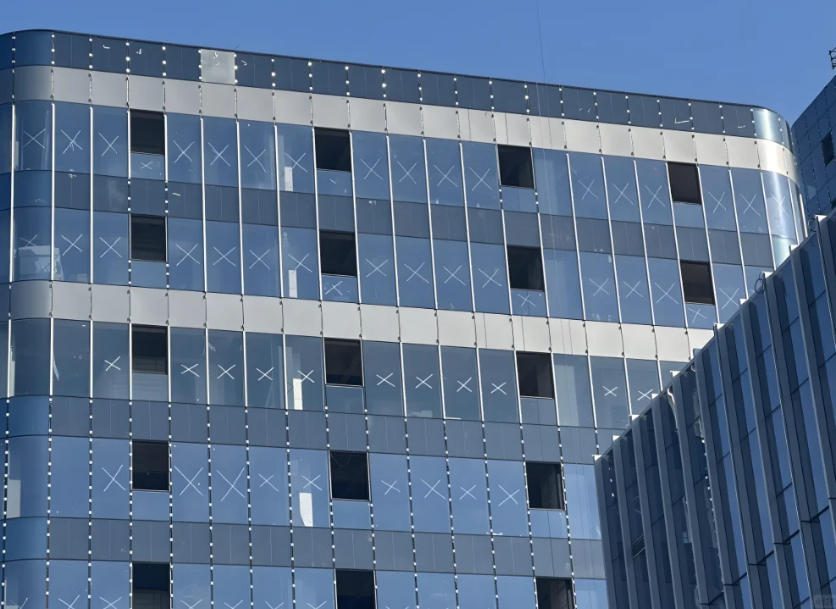
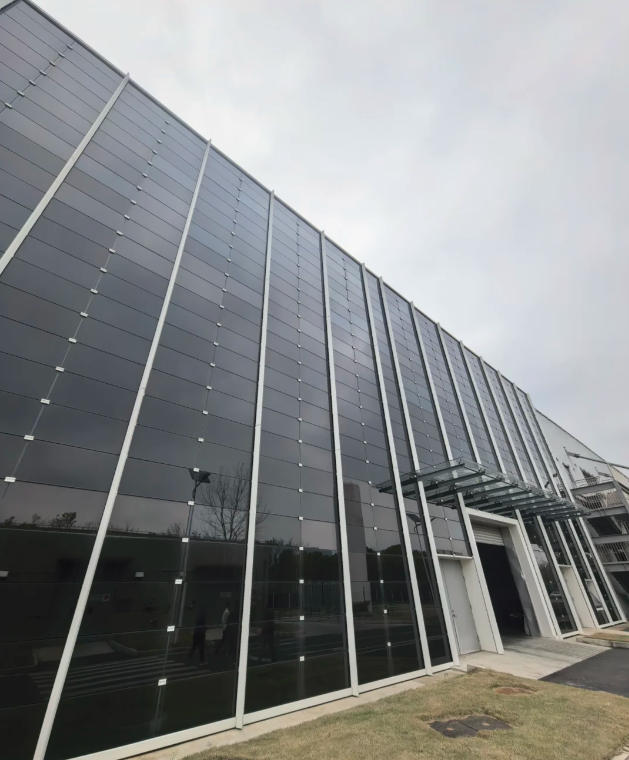
The specification decision that shapes everything else: which façade and roof zones need daylight, which need pure energy output, and which need both. Getting this mapping right at design development stage prevents the costly redesigns that happen when solar glass is treated as a late-stage add-on. Source: Unsplash.
Customization: Color, Transparency, Shape, and Pattern
The perception that solar glass roofing looks “industrial” or “utility-like” reflects products from five years ago, not current technology. The customization latitude available from leading BIPV manufacturers today is broad enough to serve heritage buildings, luxury hotels, and high-profile civic projects — not just warehouses and data centers.
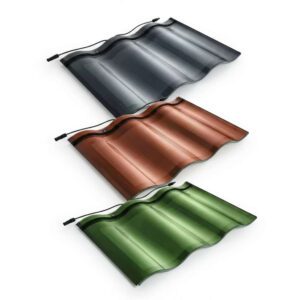
Color options now span from standard black and dark blue through gray, bronze, warm tan, and custom RAL-matched tones. Ceramic digital printing on the glass surface can replicate stone, wood, metal, and concrete finishes. At three meters’ distance, the visual difference between a well-specified opaque BIPV cladding panel and conventional stone veneer is negligible.
Transparency levels can be specified from 10% VLT to 90% VLT — from nearly opaque to near-clear glazing. Jia Mao BIPV, for example, offers transparency options across this full range, with cell spacing and thin-film deposition density adjusted to hit target VLT while maximizing electrical output within that constraint.
Shape and dimension flexibility has expanded significantly. Precision laser cutting enables non-rectangular module shapes — triangular, hexagonal, trapezoidal — for canopies, curved roof sections, and architecturally distinctive skylight configurations. Non-standard dimensions with 8–12 week lead times are standard practice for established BIPV manufacturers.
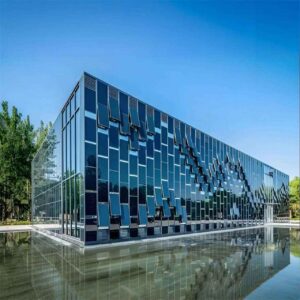
Cell pattern customization through proprietary cell arrangement processes allows geometric, organic, or branded patterns to be created using the solar cells themselves as the design element. Several architectural firms have used this capability to create building-specific visual identities on BIPV roofing that become a permanent visible feature of the completed project.
Seamless Integration with Curtain Walls, Skylights, and Canopies
The design strength of solar glass in roofing applications is that it fits naturally into glazing systems that buildings already use. Skylights that would previously be specified as conventional laminated safety glass can be upgraded to BIPV glazing of the same dimensions, using the same framing system, with electrical connections routed through the mullion cavities — with no visible change to the architectural intent.
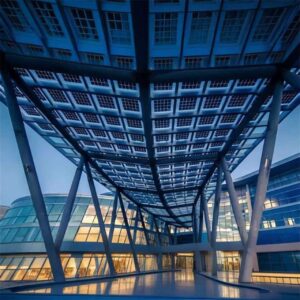
Canopies over entrances, walkways, and outdoor dining areas are among the highest-value BIPV applications. They receive direct overhead solar exposure, require no opaque roofing material that would block light, generate electricity, provide shade, and serve as visible demonstrations of the building owner’s sustainability commitment. The calculation for a 200 m² entrance canopy replaced with BIPV glazing at 100 Wp/m² producing 20 kWp in a 5.0 peak-sun-hour location generates roughly 36,500 kWh/year — enough to power three average U.S. homes or offset approximately 14 metric tons of CO₂ annually.
Landmark project reference: The Atlassian Central Tower in Sydney — the world’s tallest hybrid timber-and-steel commercial building at completion — incorporates 1,794 custom Onyx Solar PV louvres on its façade, totaling 247 kWp of integrated generation capacity. The louvres function as solar shading devices and electricity generators simultaneously. This dual function is the core design argument for BIPV in sun-exposed orientations: the solar shading device you would specify anyway now also generates power, at marginal additional cost.
Energy & Economic Value: Maximizing ROI for Building Owners
On-Site Generation Potential by Region and Roof Orientation
The first question every building owner asks about solar glass roofing is: how much electricity will it actually generate? The honest answer requires three inputs: active roof area, module efficiency, and peak sun hours for the specific location and orientation.
A practical example: a 500 m² south-facing industrial roof skylight system using 15% efficient semi-transparent BIPV glass panels in Phoenix, AZ (5.5 peak sun hours/day), with a performance ratio of 0.80:
At $0.12/kWh commercial rate, that is $14,454/year in avoided electricity cost before incentives.
The same installation in Boston, MA (4.1 peak sun hours/day) generates approximately 89,790 kWh/year — $10,775/year at the same rate. Orientation matters almost as much: a north-facing roof generates only 25–40% of the output of the same south-facing surface.
| Location | Daily Peak Sun Hours | 500 m² BIPV Output (kWh/yr) | Annual Savings at $0.12/kWh |
|---|---|---|---|
| Phoenix, AZ | 5.5 | 120,450 | $14,454 |
| Los Angeles, CA | 5.0 | 109,500 | $13,140 |
| New York, NY | 4.5 | 98,550 | $11,826 |
| Boston, MA | 4.1 | 89,790 | $10,775 |
| Chicago, IL | 4.0 | 87,600 | $10,512 |
| London, UK | 2.9 | 63,510 | £5,715* |
| Berlin, Germany | 3.2 | 70,080 | €11,213* |
Local electricity rates and currency applied. EU commercial rates average €0.16/kWh in 2025.
Long-Term Savings: Grid Independence, Utility Costs, and Feed-In Tariffs
Solar glass roofing reduces grid dependency in two compounding ways. The most direct is avoided electricity cost: every kilowatt-hour generated on-site is one fewer purchased from the grid, at whatever rate that grid electricity would have cost. In commercial buildings where electricity rates are rising at 2–4% annually, this saving compounds significantly over a 25-year panel lifespan. A system saving $14,000/year today will save approximately $20,000/year in year 15 at a 2.5% annual rate escalation.
The second benefit is HVAC load reduction. BIPV glass with a lower Solar Heat Gain Coefficient (SHGC) than the conventional glazing it replaces reduces the solar heat entering the building, cutting cooling load. Research from IEA PVPS Task 15 documented that BIPV glazing with 20% VLT reduces cooling loads by up to 23.2% compared with conventional clear glazing — an energy saving independent of the electricity generated. In Phoenix or Miami, this HVAC benefit can be worth $8–15/m²/year in avoided cooling cost.
Feed-in tariffs and net metering allow buildings that generate more electricity than they consume — common in summer months for well-sized systems — to export the surplus to the grid for credit. The specific rate depends on jurisdiction: Germany’s Erneuerbare-Energien-Gesetz (EEG), California’s NEM 3.0, and New York’s Value of Distributed Energy Resources (VDER) tariff all provide different structures, but all add financial value to buildings that generate more than they consume.
Impact on Building Valuation and ESG Reporting
Buildings with solar glass roofing command measurable premiums in commercial real estate transactions. A 3–5% property value uplift is consistently documented in green-certified commercial buildings across major markets. For a $20 million office building, a 4% uplift represents $800,000 in additional asset value — often exceeding the incremental cost of the BIPV system.
For corporate tenants operating under CSRD, SEC climate disclosure, or internal ESG commitments, the ability to occupy a building with on-site renewable generation and third-party certification (LEED, BREEAM, WELL) is increasingly a lease requirement. LEED v4.1 Energy and Atmosphere credits reward on-site renewable generation with up to 10 points, and the Renewable Energy Production credit directly rewards BIPV integration. BREEAM Outstanding certification — the highest tier — requires on-site generation contribution that BIPV roofing can satisfy. Developers who cannot offer certified sustainable buildings are losing major corporate tenant competitions to those who can.
Installation & Engineering: Practical Considerations for Contractors
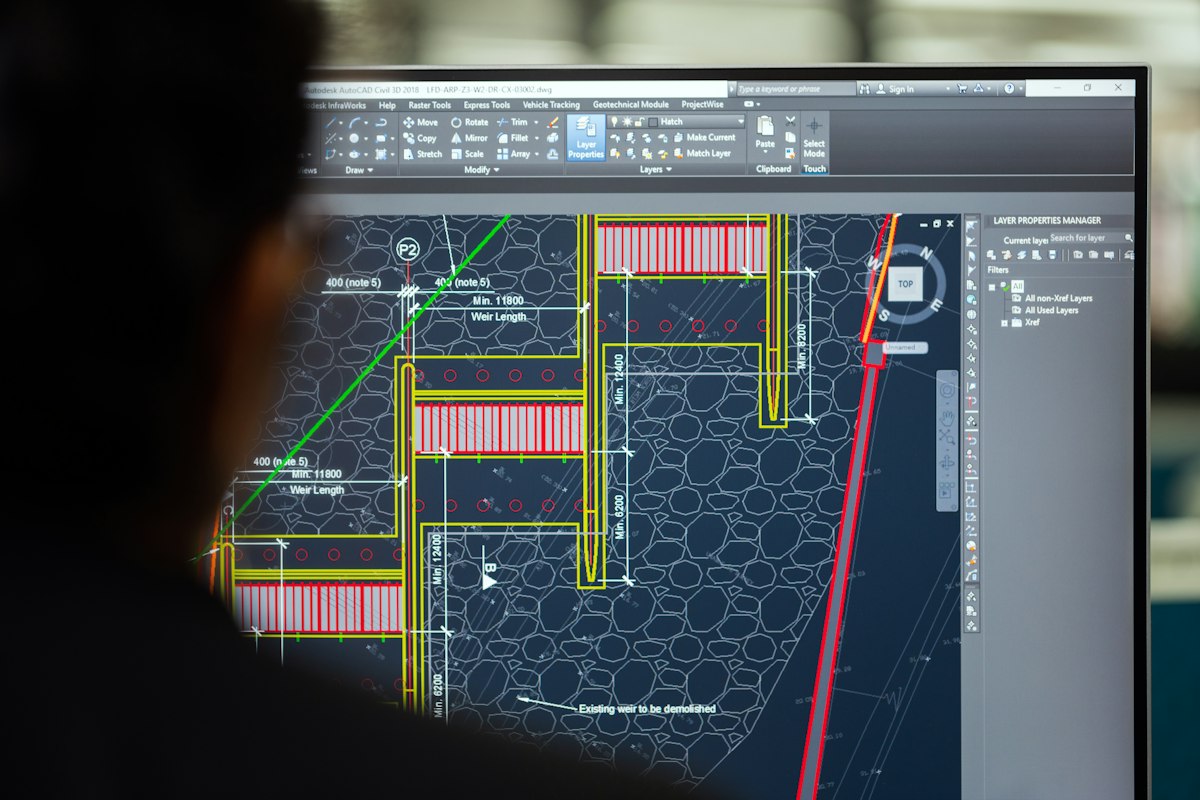
Solar glass roofing installation requires coordination between three trades that rarely work together: glazing/roofing, electrical, and structural. The contractor who builds that coordination into the project schedule from day one eliminates the delays and cost overruns that happen when they are treated as sequential rather than concurrent activities. Source: Unsplash.
Structural Load Analysis and Waterproofing Integration
Standard BIPV glass-glass modules weigh 20–22 kg/m² — comparable to conventional insulating glass units of similar specification. In most new construction projects, this load is fully within the structural design basis and requires no extraordinary reinforcement. For retrofit projects, a structural audit is mandatory before design finalization. The audit should assess the existing deck and framing for both dead load (the permanent weight of the panels) and live load (snow, wind uplift, maintenance access).
The critical structural check for flat and low-slope roofs is ponding — the accumulation of water on a roof surface that deflects under load. BIPV glass panels on a flat roof that deflects must be framed to maintain positive drainage slope (minimum 1/4 inch per foot) regardless of the panel position above. Draining water toward panel edges rather than onto junction boxes and cable exits is a design requirement, not an option.
Waterproofing integration follows a clear hierarchy: the roofing membrane is primary, and everything else is secondary. Every structural anchor penetrating the membrane requires a Code-compliant flashing detail. Every cable exit through the roof plane is a potential leak if not sealed with appropriate roofing-grade sealant and counter-flashed. The best practice for avoiding these failure points in large-scale installations is to route all wiring within the structural substrate before the membrane is applied — not afterward.
A practical rule for retrofit contractors: if you cannot document the complete drainage path from every panel connection point to the building’s perimeter drainage system before beginning installation, the design is not complete.
Mounting Systems, Framing Solutions, and Electrical Integration
For metal roofing applications, rail-free clamp systems that attach to standing seams eliminate roof penetrations and are the fastest installation method. A crew of four experienced installers can complete approximately 300–400 m²/day on a standing-seam metal roof using clamp-mount systems.
For membrane roofing, ballasted racking systems avoid penetrations where dead-load capacity allows — typically 10–15 kg/m² of ballast in addition to the panel weight. Where ballasting is not feasible, mechanically-attached L-foot systems with EPDM or TPO-compatible flashing boots are the standard approach.
Electrical integration checklist — every item below must be addressed before the crew leaves the roof:
- String grouping strategy finalized to minimize shading losses between strings
- DC combiner boxes located in accessible maintenance zones, not buried under panels
- All DC wiring in conduit from panel exit to inverter — UV-rated conduit above the membrane, standard EMT in enclosed spaces
- Rapid-shutdown devices per NEC 690.12 installed and labeled, accessible to fire personnel
- Ground fault protection per NEC 690.5 confirmed at inverter
- String-level monitoring enabled and connected to building BEMS or cloud monitoring platform
- Utility interconnection agreement in hand before commissioning — do not commission a grid-tied system without a signed interconnection agreement
Best Practices for Code Compliance and Minimizing Downtime
On occupied commercial buildings, the sequence of work matters as much as the quality of work. A practical installation sequence that minimizes tenant disruption and keeps the project on schedule:
Week 1–2: Structural anchors or racking installation — heavy equipment, some noise. Coordinate with tenants for work hours.
Week 3–4: Roofing membrane repairs/modifications and panel installation — moderate activity.
Week 5: Cable routing, junction box installation, conduit runs.
Week 6: Inverter installation and electrical connections.
Week 7: Commissioning, inspection hold points, AHJ electrical inspection, utility interconnection test.
Week 8: Monitoring system verification and performance baseline establishment.
Building departments in most jurisdictions require both a building permit and an electrical permit for BIPV roofing installations. Submit both simultaneously — not sequentially — to avoid the 2–4 week permit processing gap between them. In jurisdictions that require a separate roofing permit and a solar permit, submit all three together. The permit package should include: structural calculations stamped by a licensed PE, electrical single-line diagram, rapid-shutdown compliance documentation, and the BIPV product’s UL 7103 or IEC 63092 certification.
Regulatory Landscape & Incentives: Navigating the Policy Environment
Global and Regional Incentives for Solar-Integrated Roofing
United States: The 30% Investment Tax Credit (ITC) under Section 48E of the Inflation Reduction Act applies to commercial BIPV systems placed in service through 2032. For a $500,000 BIPV roofing installation, that is $150,000 off the federal tax bill in the installation year. MACRS 5-year accelerated depreciation on top of the ITC can reduce the effective net cost of a commercial BIPV system by 50–55% in the first five years of ownership — the single most powerful factor in commercial solar economics. The SEIA Tax Policy resource provides current guidance on ITC eligibility and bonus credit provisions.
For residential applications, the Residential Clean Energy Credit at 30% applies through 2032 with no dollar cap, as confirmed by the IRS Residential Clean Energy Credit guidance.
European Union: EU member states have implemented a range of national BIPV-specific incentive programs alongside the EPBD mandate. France’s Appel d’Offres BIPV program provides preferential feed-in tariff rates for building-integrated systems versus standard ground-mount solar. Italy’s Conto Energia scheme and Germany’s BAFA building renovation program both support BIPV integration as an eligible measure. BREEAM certification — the EU’s most widely adopted building performance standard — awards credits specifically for on-site renewable generation, creating certification-linked financial value beyond direct energy savings.
Asia-Pacific: China’s provincial BIPV subsidy programs, Singapore’s SolarNova initiative, and Australia’s Small-scale Technology Certificates (STCs) all provide financial support for BIPV roofing installations in their respective markets.
Building Codes and Fire Safety Standards
The regulatory framework for solar glass roofing is layered: PV electrical standards apply to the solar generation function, and building envelope standards apply to the weather barrier and structural function. Both layers are mandatory, and products that carry only PV certification — but not building product certification — are not code-compliant for roofing integration.
| Standard | O que ele cobre | Applicable Jurisdiction |
|---|---|---|
| UL 7103 | Integrated BIPV system (electrical + fire + weather) | U.S. (2021 IBC/IRC) |
| UL 61730 / IEC 61730 | PV module electrical safety | U.S. and international |
| IEC 61215 | PV module performance and durability | International |
| IEC 63092-1:2020 | BIPV-specific product standard | International |
| NFPA 285 | Exterior wall fire test (buildings >40 ft) | U.S. commercial |
| UL 790 / ASTM E108 | Roof covering fire classification (Class A/B/C) | U.S. roofing |
| EN 13501-1 | Fire classification of building materials | EU |
| NEC Article 690 | Solar PV electrical systems | U.S. |
| EN 12600 | Glass impact resistance | EU glazing |
Fire safety is the regulatory area where inexperienced contractors most commonly create liability exposure. A Class A fire rating (UL 790) is required for all roof coverings in most U.S. jurisdictions. BIPV products meeting this requirement have been tested to confirm they do not spread fire under severe exposure conditions. Request the current UL 790 test report — not just a certificate — and verify it covers the specific product configuration being installed, including the module thickness, encapsulant type, and any underlayment.
Compliance as Competitive Advantage
Here is a practical reality that most contractors underestimate: the contractor who walks into a bid meeting with a complete compliance package wins. Not the lowest bidder. The contractor who can hand the building owner a folder containing the UL 7103 listing certificate, the IEC 61215 test report, the NFPA 285 fire assembly report, the structural PE stamp, the NEC 690 compliance narrative, and the LEED credit calculation sheet — that contractor eliminates the owner’s risk, and owners pay for risk elimination.
Document preparation should be built into every BIPV bid as a line item. Budget 40–60 hours of engineering and documentation time per project. The first project where you build this package takes longer. By the tenth project, you have a template that takes four hours to customize.
Supply Chain & Procurement: Partnering with Reliable Material Providers
Evaluating Solar Glass Manufacturers: Durability, Warranties, and Scalability
The three most common procurement failures in BIPV roofing projects are: choosing a supplier based on unit price without verifying lead-time reliability, specifying a product without verifying it carries the correct certifications for the project jurisdiction, and placing a large first-time order without establishing the manufacturer’s quality control documentation.
A reliable evaluation framework for BIPV glass manufacturers uses six criteria:
1. Technical Certification Completeness. The manufacturer should carry IEC 61215, IEC 61730, and — for roofing applications — UL 7103 or equivalent national listing. For EU projects, CE marking and EN 13501 fire classification are required. Ask for the actual test certificates, not marketing references to them.
2. Production Scale and Capacity Stability. A manufacturer with 3 GW annual capacity — such as Jia Mao BIPV’s Shanghai facility — can absorb a 500 m² custom order as routine production. A manufacturer running at 50 MW annual capacity may need to schedule your order months in advance and may deprioritize it if a larger order comes in. Ask for production lead time commitments in writing.
3. Warranty Coverage Depth. Standard BIPV manufacturer warranties cover: 10–12 years on materials and workmanship (defect replacement), and 25 years on power output (minimum 80% of rated power after 25 years). Some manufacturers add a linear degradation guarantee — specifying the maximum output loss at each year, not just a 25-year endpoint. Request both warranty documents before ordering. A warranty that requires returning panels to China for evaluation is not the same as one that covers on-site inspection and replacement.
4. Customization Lead Time. Standard catalog products: 8–12 weeks. Custom dimensions, VLT, or colors: 14–20 weeks. First-time orders: add 2–4 weeks for quality approval. These lead times need to be built into the project schedule from the design development stage — not discovered at procurement stage.
5. Technical Support Response. A manufacturer who cannot provide a substantive technical answer to a load-bearing specification question within 48 hours is not prepared to support a commercial roofing project. Test this during the pre-qualification phase, not after the purchase order is placed.
6. Quality Management Documentation. ISO 9001:2015 certification, in-process quality control records, and — ideally — third-party factory audit reports from TÜV Rheinland, Bureau Veritas, or SGS confirm that quality is a system, not a promise.
Lead Times, Logistics, and Inventory Planning
The solar glass supply chain operates on longer cycle times than commodity construction materials, and these cycle times have real consequences for project scheduling. Industry supply chain analysis confirms that long lead times require careful project scheduling and inventory management — and that procurement decisions made too late are one of the top drivers of construction delays on BIPV projects.
A practical inventory strategy for distributors:
- Maintain 4–6 weeks of safety stock on your two or three highest-volume standard SKUs
- For custom-dimension or custom-VLT products, build lead time into project quoting as a fixed schedule requirement — do not promise what you cannot deliver
- Maintain a secondary qualified supplier capable of covering 30% of monthly volume within 4–6 weeks of activation
- Carry packaging materials (corner protectors, crating lumber, vertical glass racks) in sufficient stock to handle a 500 m² emergency order without a separate procurement cycle
Glass breakage during transport is a real risk that experienced distributors plan for explicitly. BIPV glass panels should travel vertically, secured in purpose-built A-frame crating, with minimum 20% shock-absorbing padding at all contact points. Budget a 3–5% breakage allowance on first orders with a new logistics partner until breakage rates are established empirically.
Collaboration Models Between Brands, Distributors, and Contractors
The BIPV supply chain works best — and delivers the lowest effective cost for all parties — when manufacturer, distributor, and contractor establish roles before the project is bid, not after it is awarded.
The manufacturer’s role: provide accurate technical documentation, certified products, BIM objects, and project-specific engineering support. The distributor’s role: manage inventory, logistics, and first-level technical support; serve as the specification resource for architects and designers before a project goes to bid. The contractor’s role: translate the specification into a compliant installation, coordinate with the electrical and structural trades, and document the installed system for the owner’s records.
Distributors who invest in specification-stage engagement — providing architects with product samples, U-value and SHGC data sheets, LEED credit calculation templates, and BIM objects — establish positions that are far more durable than price-only vendor relationships. When the specification names your product or your approved product category, you have effectively won before the bid opens.
Collaboration Across Disciplines: From Design to Commissioning
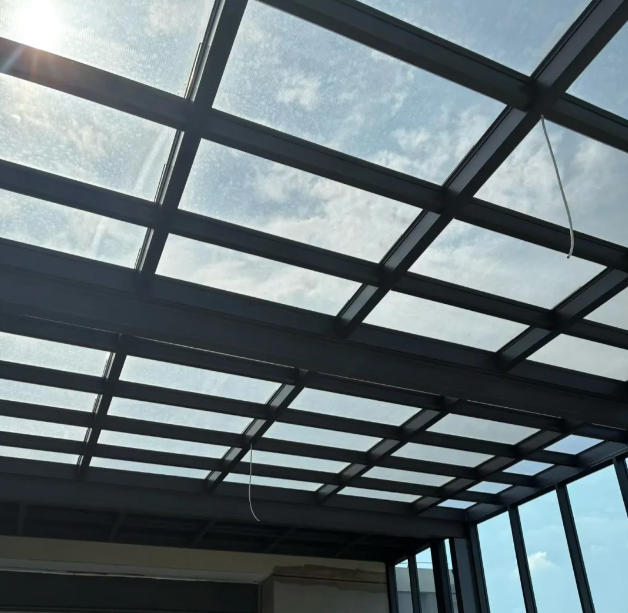
In BIPV roofing projects, the most expensive decisions are the ones made too late. BIM energy modeling at schematic design stage — not after construction documents are issued — is what keeps solar glass specifications aligned with structural capacity, electrical routing, and budget. Source: Unsplash.
Roles of Architects, Engineers, EPCs, and Contractors
BIPV roofing projects fail most often not from product defects — but from coordination failures between disciplines that each assumed someone else had resolved a critical decision.
The architect defines the VLT requirements, sets the aesthetic constraints, and coordinates the building code compliance strategy. In BIPV projects, the architect must also make product selection decisions that have structural and electrical implications — VLT choice determines cell density, which affects weight, which affects structural framing requirements.
The structural engineer confirms that the existing or proposed structure can carry the BIPV dead load plus all applicable live loads, calculates the wind uplift design pressure that governs panel anchorage design, and stamps the structural drawings required for building permit submission.
The MEP engineer designs the electrical system: string configuration, combiner box locations, inverter sizing, conduit routing, rapid-shutdown compliance, utility interconnection application, and monitoring system integration. This work must be coordinated with the glazing framing system before shop drawings are issued — not as an independent scope after glazing installation is underway.
The EPC/energy services provider brings whole-system perspective: energy modeling to verify annual yield projections, financial modeling to structure the ROI analysis and any performance-based contract, utility coordination for interconnection, and — increasingly — operation and maintenance contracting after commissioning.
The glazing/roofing contractor provides the installation capability that makes everything else real. For BIPV roofing, this requires holding both a roofing license and an electrical contractor license (or subcontracting electrical work to a licensed electrical contractor), manufacturer certification for the specific product being installed, and demonstrated experience with at least two prior BIPV roofing projects of comparable scope.
Early-Stage Coordination to Prevent Costly Redesigns
The single highest-value action any project team can take on a BIPV roofing project is scheduling a BIPV integration coordination meeting at the end of schematic design — before design development begins. The 4-hour meeting with architect, structural engineer, MEP engineer, BIPV manufacturer’s technical representative, and general contractor resolves the following questions in sequence:
- Which roof zones are candidates for BIPV, and what are the orientation and shading conditions for each?
- What VLT and SHGC requirements apply to each zone (daylighting, cooling load, occupant comfort)?
- What is the dead-load capacity of the structural system for each candidate zone?
- Where does electrical conduit need to run from each roof zone to the inverter location?
- Where is the inverter room, and is it sized correctly for the proposed system?
- Which jurisdiction’s codes apply, and what certifications does the product need to carry?
- What is the procurement lead time for the selected product, and when does the purchase order need to be placed to meet the construction schedule?
Four hours at the start of design development is worth four weeks of redesign avoidance. Every time.
Digital Tools: BIM, Energy Modeling, and Performance Simulation
Building Information Modeling (BIM) has become the coordination standard for complex commercial projects, and BIPV roofing benefits from BIM integration more than almost any other roofing system. A fully coordinated BIM model confirms conduit routing clearances from structural members before the structural steel is fabricated, identifies clashes between junction box locations and roofing drains before the waterproofing membrane is laid, and allows the MEP engineer to confirm string grouping assumptions against the actual installed panel layout — not an idealized drawing.
Manufacturers who provide BIM objects — Revit families or IFC exports including accurate panel geometry, weight, electrical connection locations, and cable exit positions — significantly reduce coordination burden. When evaluating manufacturers, ask specifically whether BIM objects are available and whether they carry accurate physical and electrical geometry, not just visual representations for rendering.
Energy modeling tools — NREL’s PVWatts Calculator for quick estimates, PVsyst for detailed system design, EnergyPlus for whole-building energy simulation — should be used at the design development stage to verify that projected energy yield supports the financial model. An energy model that reveals a 25% lower yield than initial estimates is only useful if it is completed before the project is financed. An energy model completed after commissioning is a post-mortem.
Future-Proofing Projects: Staying Ahead of Market Trends
Emerging Technologies: Bifacial, Smart Glass, and Energy Storage Pairing
Bifacial solar panels — modules that generate electricity from both front and rear surfaces — are delivering 5–20% more annual energy production than equivalent monofacial panels (Greenlancer, 2026). In roofing applications where the panel underside faces a reflective surface (white TPO membrane, gravel ballast), bifacial gains consistently hit the upper end of this range. Bifacial glass-glass modules also offer longer service life due to dual-glass construction that protects both sides from UV and moisture. For any new BIPV roofing specification where bifacial compatibility can be achieved without significant additional cost, it represents a straightforward yield improvement.
Smart glass integration — combining photovoltaic glass with electrochromic or thermochromic dynamic tinting — allows the glazing to adjust its solar heat gain in real time in response to indoor temperature, occupancy, or grid signals, while continuing to generate electricity. Commercial electrochromic BIPV products are beginning limited deployment in 2025–2027. Specifiers targeting projects for completion in 2028–2030 should confirm that selected framing systems are compatible with the electrical infrastructure that dynamic glazing will eventually require.
Battery energy storage pairing transforms a solar glass roofing system from a grid-dependent generation asset into a resilient, dispatchable power source. A BIPV roof that generates 200 kWh/day paired with a 400 kWh battery system can maintain critical building loads through a 12-hour grid outage, shift solar-generated electricity from midday peak generation to evening peak-demand periods (when grid rates are highest), and participate in utility demand-response programs as a grid flexibility resource. The economics of BIPV + storage have reached viability in U.S. commercial markets where demand charges constitute 30–50% of monthly electricity bills.
Perovskite-silicon tandem cells — already exceeding 34% efficiency in laboratory testing — will enable semi-transparent BIPV roofing products to generate 2–3× more electricity per square meter than current a-Si products while maintaining useful daylight transmission. Commercial availability in roofing-grade formats is expected in the 2027–2029 timeframe. Project teams specifying today should select framing systems with sufficient electrical capacity margins to accommodate higher-output replacement panels in future re-glazing cycles.
Demand Drivers: Urban Density, Carbon Regulations, and Corporate Mandates
The market forces driving BIPV roofing adoption are not going to moderate — they are going to intensify.
Urban density eliminates ground-mount solar as a practical option for most commercial development. In dense urban environments, the building envelope is the only available solar surface. BIPV roofing is not competing with ground-mount solar in these markets; it is the only option.
Carbon regulations are tightening globally on a trajectory that makes current building performance standards look lenient in retrospect. The EU’s EPBD zero-emission mandate for new buildings by 2030 is the current standard. Future revisions will extend zero-emission requirements to existing buildings. The U.S. Energy Star and zero-carbon building standards are moving in the same direction. Buildings designed today that are not BIPV-ready will require expensive retrofits within their design life.
Corporate sustainability mandates have moved from voluntary to effectively mandatory for large tenants. Fortune 500 companies with science-based targets under the Science Based Targets initiative (SBTi) are binding themselves to building performance standards that only net-zero-capable buildings can meet. Developers and building owners who cannot deliver certified net-zero spaces are losing major tenant competitions.
Positioning Your Firm as a Leader
The contractor who installs the first BIPV roofing system in a regional market becomes the reference site for every subsequent project in that market. The distributor who first stocks a complete BIPV roofing specification — certified glass panels, compatible framing, inverter systems, monitoring, documentation — becomes the go-to source for every EPC and contractor who subsequently enters that market.
First-mover advantage in construction specialties is durable because the barriers to entry are real: BIPV manufacturer certifications take months to obtain, installer experience is non-transferable (you cannot buy the knowledge that comes from having managed one project), and specification relationships built at the architect and design stage take years to develop. Every day spent not building that position is a day spent falling behind the peers who are.
How to Start Integrating Solar Glass Panels Today
Step-by-Step Guide for Contractors and Designers
Step 1 — Feasibility Assessment (Week 1–2) Identify the first project in your pipeline where BIPV roofing is feasible. Criteria: new construction or roof at end-of-life, south- or west-facing roof zone of at least 200 m², client with sustainability mandate or LEED target, project timeline of 12+ months (sufficient to manage BIPV lead times). Use NREL’s PVWatts Calculator to run a 15-minute yield estimate. If the annual energy value covers more than 1% of the total project budget, the economics warrant a full analysis.
Step 2 — Manufacturer Pre-Qualification (Week 2–4) Contact two to three BIPV manufacturers. Request: current IEC 61215 and IEC 61730 test certificates, UL 7103 listing certificate if U.S. project, product datasheet with SHGC and U-value data, reference list of completed projects with contact information, BIM objects for preliminary coordination, preliminary pricing for the project’s approximate area and specification.
Step 3 — Structural and Electrical Coordination (Week 3–6) Engage the structural engineer for a preliminary dead-load confirmation. Engage the MEP engineer for an electrical design scoping discussion: inverter sizing, conduit routing feasibility, rapid-shutdown compliance approach. Identify any structural reinforcement or electrical infrastructure requirements that affect project cost and schedule.
Step 4 — Pilot Project Execution (Months 2–8) On the first BIPV project, budget for two additional site visits from the manufacturer’s technical representative: one before installation begins (confirming framing details and cable routing) and one during commissioning (confirming electrical connections and monitoring setup). These visits cost money; they save significantly more in avoided rework.
Step 5 — Documentation and Case Study Development (Month 8–12) Commission a post-installation energy monitoring baseline for the first year of operation. Document the installed system: photographs, electrical commissioning records, AHJ sign-off documentation, first-year energy production data. This documentation becomes your case study for every subsequent bid and every architect presentation.
Step 6 — Training and Certification (Ongoing) Pursue NABCEP PV Installation Professional certification for key installation staff. Obtain manufacturer certification training from your primary BIPV glass supplier — most leading manufacturers including Jia Mao BIPV offer certified installer training programs that provide both technical competency and warranty protection on installed projects. Assign one team member as your firm’s BIPV technical lead, responsible for staying current with code changes, new product introductions, and manufacturer updates.
Building Partnerships with Solar Technology Providers
A distributor or contractor relationship with a BIPV manufacturer is most durable when it is built on mutual investment, not just transaction volume. The partnerships that generate the most value share these characteristics: the manufacturer provides specification support (CAD details, BIM objects, code compliance documentation, architect presentation materials) — and the contractor/distributor provides market intelligence (what codes are changing locally, what architects are asking for, what competitors are offering). Both parties invest in the relationship before the first purchase order is placed.
For contractors: select your primary BIPV manufacturer based on technical capability, certification depth, and support responsiveness — not on unit price alone. A manufacturer whose technical team can answer a load-bearing specification question in 24 hours is worth a 5–10% price premium over one who takes a week. One day of installation delay on a commercial project costs far more than the price difference.
For distributors: build a product offering around system completeness, not individual products. A distributor who can supply BIPV glass panels, compatible framing systems, inverters, monitoring equipment, and documentation templates is a BIPV solutions provider. A distributor who only sells the glass panels is a glass vendor. The solutions provider earns specification-stage positioning; the glass vendor earns spot-quote consideration.
Marketing Your Capabilities to Developers and Public-Sector Clients
Developers and public-sector clients who are evaluating BIPV roofing for the first time have a consistent set of concerns: Does it work in real buildings, or is it a laboratory technology? Who has installed it locally? Will it create permitting delays? What happens if a panel breaks in year 12? Your marketing materials — case studies, technical brochures, reference client contacts — must address these concerns specifically, with project data and documented outcomes, not general claims.
The most effective marketing tool for a BIPV roofing capability is a completed project site tour. Nothing reduces a prospective client’s risk perception faster than standing on a functioning BIPV roof, seeing real-time monitoring data on a display, and talking to the building operator about their first-year energy performance. If you do not have a completed project to show yet, partnering with a manufacturer like Jia Mao BIPV for a joint client presentation — where the manufacturer provides reference project data and technical depth, and you provide local installation credibility — is the most effective substitute.
Public-sector clients respond to a specific combination: demonstrated compliance capability (you know the codes and can document compliance), local reference projects, and lifecycle cost analysis that shows responsible stewardship of public funds. Build that combination into your public-sector proposal template and you will outperform competitors who bid on unit price alone.
Watch: How BIPV Solar Roofing Systems Work
▶ Watch: Record-efficiency transparent solar panels and the near-future of BIPV roofing integration — a useful visual primer for client presentations and team training sessions.
Glossary of Key Terms
BIPV (Building-Integrated Photovoltaics): Solar technology that replaces conventional building materials — roofing, cladding, glazing — rather than mounting on top of them. Serves dual structural and energy functions.
BAPV (Building-Applied Photovoltaics): Conventional rack-mounted solar panels added on top of existing roofing. Simpler and lower-cost than BIPV, but does not replace the underlying roofing material.
VLT (Visible Light Transmittance): The percentage of visible daylight that passes through the glass. Higher VLT means more daylight and typically lower power density.
SHGC (Solar Heat Gain Coefficient): The fraction of solar heat that passes through the glazing. Lower SHGC reduces cooling loads in warm climates.
Performance Ratio: Actual system output divided by theoretical maximum output, accounting for temperature, shading, wiring, and inverter losses. Typically 0.75–0.85 for BIPV roofing systems.
ITC (Investment Tax Credit): The 30% federal tax credit for commercial and residential solar energy systems installed in the U.S. through 2032.
MACRS: Modified Accelerated Cost Recovery System — U.S. federal accelerated depreciation for commercial solar assets over 5 years, significantly improving commercial project IRR.
NEC 690: The National Electrical Code article governing solar photovoltaic systems — wiring, overcurrent protection, rapid shutdown, grounding, and disconnecting requirements.
UL 7103: The integrated U.S. standard for BIPV system testing, covering electrical safety, fire performance, wind resistance, and weathering — required under the 2021 IBC/IRC for BIPV roofing.
POE Encapsulant: Polyolefin elastomer — a premium PV module encapsulant film with 40% better UV aging resistance than standard EVA. Standard in high-quality BIPV products including Jia Mao BIPV modules.
Rapid Shutdown: NEC 690.12 requirement to de-energize a PV array to safe voltage levels within 30 seconds of initiating shutdown — protects first responders from DC shock hazard.
Frequently Asked Questions (FAQs)
1. What is the difference between BIPV and traditional rooftop solar?
BIPV (Building-Integrated Photovoltaics) replaces the conventional roofing or cladding material entirely — the solar glass panel is the roof, serving as weather barrier, structural element, and power generator simultaneously. Traditional rooftop solar (BAPV) adds rack-mounted panels on top of an existing roof that remains in place. The critical economic difference: BIPV’s correct cost comparison is its price against the combined cost of the conventional roofing material it replaces plus a separate solar system. In new construction replacing high-spec roofing, the incremental cost of BIPV is often far smaller than the gross system cost suggests.
2. Can solar glass panels be used on low-slope or flat roofs?
Yes, with proper framing and drainage engineering. Flat and low-slope roofs require framed racking systems that maintain a minimum drainage slope (at least ¼ inch per foot) and manage water away from electrical components. Ballasted racking systems avoid membrane penetrations on flat roofs where dead-load capacity allows. On retrofit flat roofs, a structural audit must confirm the deck and framing can carry BIPV module weight (20–22 kg/m²) plus racking, ballast, and snow load. Framed BIPV skylight systems on flat roofs are among the most architecturally effective applications — providing overhead daylight, weather protection, and electricity generation from a single glazing system.
3. How do solar glass panels perform in low-light or cloudy conditions?
BIPV glass panels continue generating electricity in diffuse and overcast conditions, though at reduced output. Amorphous silicon (a-Si) thin-film technology maintains proportionally better low-light performance than crystalline silicon — its low temperature coefficient (-0.19%/°C) also means it performs better in hot climates where c-Si panels lose more output to heat. A well-sited BIPV roofing system in a northern European climate (e.g., London) generates approximately 40–55% of the annual output of the same system in a high-irradiance U.S. Southwest location. In low-irradiance markets, the HVAC cooling load reduction benefit of lower-SHGC BIPV glazing often contributes as much financial value as the electricity generated.
4. Are solar glass roofs more expensive than conventional roofing systems?
Upfront installed costs are higher: standard BIPV roofing systems cost $120–280/m² more than premium conventional roofing. However, lifecycle cost analysis typically shows breakeven within 7–12 years when accounting for energy savings at commercial electricity rates, the 30% ITC, MACRS accelerated depreciation, HVAC load reduction savings, and property value uplift from green certification. For new construction replacing high-specification glazing (structural glass skylights, premium metal cladding), the incremental cost can be as low as $65–120/m², with payback periods of 4–8 years in well-irradiated locations.
5. What maintenance is required for solar-integrated roofing systems?
BIPV roofing requires minimal but specific maintenance. Cleaning 2–4 times per year with approved non-abrasive cleaning methods maintains transmittance and power output. Visual inspection of sealants, gaskets, and electrical connections should be performed annually. String-level monitoring should be reviewed monthly to identify underperforming zones — performance drops of more than 10–15% from baseline typically indicate a fault requiring inspection. Inverter replacement is typically required at the 10–12 year mark. Budget $15–25/kW/year for comprehensive O&M on commercial BIPV roofing systems.
6. How do fire safety regulations apply to solar glass roofs?
In the U.S., BIPV roofing must meet UL 790 Class A fire classification — the highest rating, requiring resistance to severe fire exposure without igniting the building structure below. Buildings above 40 feet with BIPV on exterior walls must also comply with NFPA 285, which tests the complete wall or roof assembly — not just the panel in isolation — for fire propagation behavior. The critical point: verify that the NFPA 285 test report covers the exact assembly being installed, including the same insulation type, cavity depth, and backing material. A test report covering a different assembly configuration does not demonstrate code compliance for your project.
7. Can solar glass be combined with insulation or green roofing systems?
Yes. BIPV panels can be installed over insulated roof assemblies with proper framing to maintain the insulation’s thermal performance. For green (vegetated) roofing, BIPV panels in a solar + green roof hybrid — sometimes called a BioSolar Roof — demonstrate in field studies up to 12% higher BIPV output than conventional rooftop installations, because the vegetated surface cools the air around the panels, reducing the thermal losses that are the primary real-world efficiency penalty for BIPV. Weight coordination is the critical constraint: green roof growing media adds 80–150 kg/m² to the structural load, which must be confirmed against the structural design basis before the hybrid system is specified.
8. What warranties are typically offered for solar glass panels?
Standard BIPV manufacturer warranties include a 10–12 year product warranty covering materials and workmanship defects (replacement panels at the manufacturer’s cost), and a 25-year power output warranty guaranteeing minimum 80% of rated output at year 25. Premium manufacturers — including Jia Mao BIPV — provide linear degradation guarantees specifying the maximum output decline at each year (typically maximum 0.5–0.7%/year), not just a pass/fail at year 25. Always request both the product warranty and the power output warranty as separate documents, and verify that the warranties cover logistics and labor costs for replacement — not just panel cost.
9. How do I ensure structural integrity when retrofitting solar glass onto an existing roof?
The mandatory first step is a structural audit by a licensed structural engineer. The audit reviews existing roof framing drawings, performs dead-load calculations for the proposed BIPV system (panels + racking + electrical components), assesses the condition of existing structural members, and confirms compliance with ASCE 7-22 load combinations including wind uplift. If the existing structure cannot carry the load without modification, the audit identifies the reinforcement options and their costs — information that must be in hand before the project budget is finalized. Do not accept a contractor’s verbal assessment of structural adequacy; require a licensed PE’s stamped analysis.
10. Can solar glass panels be integrated into historic or heritage buildings?
Yes, with careful product selection and regulatory coordination. The most effective approach for heritage buildings is specifying low-profile, neutral-tint BIPV panels on roof surfaces that are not visible from street level — such as rear-facing roof slopes, inner courtyard canopies, or hidden plant room roofing. For visible surfaces, thin-film technologies with uniform tint (no visible cell pattern) and colors matched to the heritage material palette offer the best aesthetic compatibility. Historic preservation authorities in most jurisdictions evaluate BIPV applications case-by-case. Early engagement with the reviewing authority — before design finalization — is essential. Several landmark heritage buildings across Europe have successfully integrated BIPV in ways that satisfied historic preservation boards, demonstrating that aesthetic compatibility and energy generation are not mutually exclusive.
11. What are the electrical integration requirements for connecting solar glass to the grid?
BIPV roofing systems require: DC-to-AC inverters (string inverters, microinverters, or power optimizers depending on system configuration and shading conditions), DC combiner boxes if multiple strings are consolidated before the inverter, overcurrent protection per NEC 690.9, rapid-shutdown devices per NEC 690.12 (mandatory for all residential and building-integrated commercial systems), a production meter, and a signed utility interconnection agreement before the system is energized. The interconnection application must be submitted to the utility company — not after construction is complete, but during design development. In some jurisdictions, interconnection approval takes 60–90 days; a late submission is the most common cause of commissioning delays on otherwise-completed BIPV projects.
12. How do I train my crew to install solar glass roofing systems?
Begin with NABCEP (North American Board of Certified Energy Practitioners) PV Installation Professional certification for key installation supervisors — the most widely recognized credential for solar installation quality. Supplement with manufacturer-specific certified installer training for the product line being installed. Most leading BIPV manufacturers, including Jia Mao BIPV, offer training programs covering product handling (glass-glass modules require specific lifting and hoisting protocols to prevent micro-cracking), electrical connection procedures, waterproofing integration details, and commissioning and monitoring setup. Do not allow uncertified crew to handle BIPV glass panels — a micro-crack invisible to visual inspection can cause a performance defect that voids the warranty if caused by improper installation.
13. Are there BIM models and technical drawings available for solar glass products?
Yes — from qualified manufacturers. Request Revit families or IFC BIM objects that include accurate panel geometry, weight, electrical connection point locations, cable exit positions, and mechanical clearance requirements. The BIM object should be accurate enough to use in clash detection — not merely a visual representation for rendering. Leading suppliers also provide load specifications (dead load in kg/m², wind pressure ratings in kPa), CAD details for standard framing conditions (flush mounting, tilted mounting, skylight conditions), and project-specific shop drawing support for complex geometries. If a manufacturer cannot provide BIM objects or CAD details, their product is not ready for specification-grade commercial BIPV work.
14. How does solar glass impact a building’s thermal performance?
BIPV glass improves thermal performance through two mechanisms: the photovoltaic cells absorb solar radiation that would otherwise enter the building as heat, reducing Solar Heat Gain Coefficient (SHGC) compared to equivalent-VLT conventional glazing. IEA PVPS research documents up to 23.2% cooling load reduction in buildings that replace conventional clear glazing with BIPV glazing of 20% VLT. Additionally, BIPV glass panels installed as ventilated façade or roofing systems create an air cavity between the panel and the building structure that provides an additional thermal buffer. The combined effect — reduced solar heat gain plus thermal buffering — improves building energy performance independent of the electricity generated.
15. Can solar glass be used in residential as well as commercial projects?
Yes. BIPV solar glass applications span the full range from residential skylights and conservatory roofing to airport terminal canopies, sports stadium roofs, and industrial warehouse skylights. Residential applications typically use smaller-format standard panels (1.0 × 1.6 m) compatible with domestic roofing framing, while commercial applications use larger custom-dimension panels optimized for curtain wall or structural glazing framing systems. The fundamental technology — photovoltaic cells laminated between tempered glass panes — is identical; scale, certification requirements, and electrical system design differ. The Jia Mao BIPV product range covers both residential and commercial applications with certified products for each.
The Strategic Imperative for Forward-Thinking Professionals
Solar energy glass panels are not a technology waiting to mature. They are a commercially proven, code-compliant, economically viable building system that is already specified in landmark projects on every inhabited continent — and the regulatory mandates, corporate ESG targets, and urban density pressures ensuring their continued growth are intensifying, not slowing.
The professionals who will lead this market are not the ones who wait for BIPV roofing to become mainstream before learning to specify and install it. By the time a technology is mainstream, the learning curve has been captured by early movers, and the competitive advantage has been commoditized. The window for differentiation is open precisely because BIPV roofing is still growing — and the specification depth, installer certifications, manufacturer relationships, and completed project references built now will be the competitive advantages that win projects for the next decade.
The path forward is concrete: assess one project in your current pipeline for BIPV feasibility, contact two BIPV glass manufacturers for preliminary technical engagement, schedule a structural and MEP coordination conversation, and price the first project with the full compliance package included as a line item. The first project teaches you what no amount of reading can. The second project is profitable.
For product specifications, system design support, and project-specific technical consultation, explore the complete BIPV roofing product range at Jia Mao BIPV — one of the largest dedicated BIPV manufacturers globally, with 3 GW annual production capacity, full IEC/UL certification, and a technical team available to support project specifications from feasibility through commissioning.
Additional authoritative resources: NREL PVWatts Calculator for site-specific yield estimates · DSIRE Incentive Database for current U.S. state and federal incentives · USGBC LEED Rating System for green certification guidance · UL BIPV System Certification for U.S. product listing requirements · IEA PVPS Task 15 BIPV Resources for international technical guidance