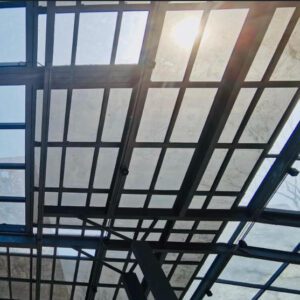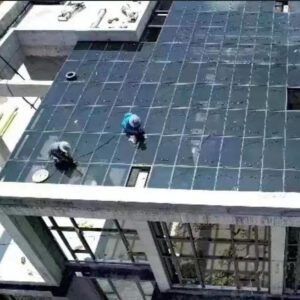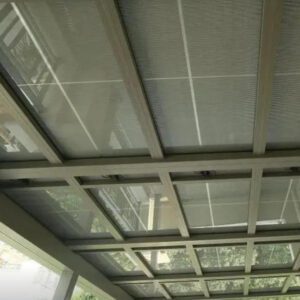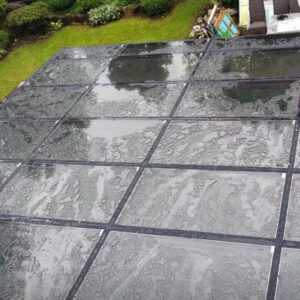
Help Your Customers Make Confident Solar Window Investments — A Complete Resource for Distributors and Agents Selling High-Performance Solar Solutions
 Solar panel windows integrate power generation directly into a building’s glass envelope — a premium product category growing at 13.8% CAGR through 2035.
Here is the situation most solar distributors and agents face right now: your customer has already been to three competitors. They’ve seen the same rack-mounted panel pitch, the same payback-period spreadsheet, and the same stock photos of rooftop arrays. They’re not saying no to solar — they’re saying no to another commodity conversation.
Solar panel windows change that conversation entirely.
The global solar window market was valued at $1.47 billion in 2025 and is projected to reach $5.34 billion by 2035, growing at a CAGR of approximately 13.8% (Market Research Future). This is not a niche or a novelty. It is a fast-growing product category that rewards distributors and agents who understand the technology deeply enough to guide architects, developers, and premium homebuilders toward the right specifications.
This guide gives your team three things: a clear understanding of how solar windows work, the financial and technical vocabulary to build credibility with specification-driven buyers, and a practical sales framework that turns product questions into closed contracts. Every section is structured around the objections, comparisons, and decisions your customers actually face — not a generic technology overview.
Jia Mao BIPV, with its 3GW annual manufacturing capacity and full product range from transparent photovoltaic glass to solar roof tiles, sits at exactly this intersection of architectural quality and energy performance. Use this guide to put their product specifications to work in your sales process.
1. Understanding Solar Panel Window Technology: What Your Customers Actually Need to Know
The Basics of Solar Window Efficiency
A solar panel window — also called a BIPV window (Building-Integrated Photovoltaic window, meaning photovoltaic cells are embedded directly into the glass rather than mounted on top of a surface) — generates electricity from sunlight while functioning as a standard glazing unit. The photovoltaic cells are laminated between two glass layers, making the unit structurally identical to a standard double or triple-pane window while adding an energy-generating layer.
The key number your customers will ask about is conversion efficiency — the percentage of sunlight that gets converted into usable electricity. Current monocrystalline BIPV windows achieve 19–22% efficiency at the cell level (ScienceDirect, 2025). At the module level, after accounting for glass transmission losses and cell spacing, effective efficiency typically lands between 10–17%, depending on transparency level.
The common misconception you will encounter: customers assume that because solar windows are “less efficient” than opaque roof panels, they are a poor investment. Your reframe — a solar window occupies space that was never generating energy before. Every watt it produces is incremental, not a replacement for a roof panel.
Types of Solar Window Systems Available
There are three primary product categories your inventory should address:
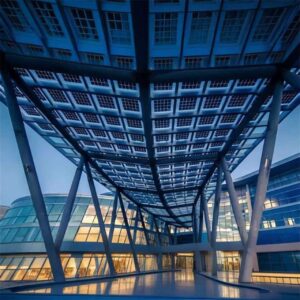
Photovoltaic (PV) integrated windows are the most common. Monocrystalline or polycrystalline silicon cells are arranged within the glass unit, with visible cell patterns. They offer the highest efficiency but lower visible light transmission (VLT — the percentage of visible light that passes through). These are ideal for commercial façades where energy generation is the priority.
Transparent and semi-transparent solar windows use thin-film technology or spaced crystalline cells to allow more daylight through. VLT ranges from 20% to 60%, making them suitable for residential applications where interior light quality matters. Thin-film options achieve 6–12% efficiency but offer full transparency; spaced crystalline options reach 14–18% efficiency at medium transparency levels.
Hybrid systems combine electrochromic smart glass (glass that changes tint electronically) with photovoltaic generation. These are the highest-value product in the category — pricing at $450–$900/m² — and are increasingly specified for premium commercial and high-end residential projects. The smart glass market alone is growing from $7.1 billion (2025) to $18.2 billion (2035) at a CAGR of ~9.9%.
Key Performance Metrics You Should Master
Your sales team needs to speak three numbers fluently before walking into any specification meeting:
| Metric | Definition | What It Means for the Customer |
|---|---|---|
| Eficiência (%) | % of sunlight converted to electricity | Higher % = more power from same glass area |
| SHGC (Coeficiente de ganho de calor solar) | How much solar heat enters through the glass (0–1 scale) | Lower = better for hot climates; higher = better for cold climates |
| U-Value (W/m²K) | Rate of heat transfer through the glass | Lower = better insulation; BIPV glass achieves 0.28–0.5 W/m²K |
| VLT (Visible Light Transmission, %) | % of visible light that passes through | Higher = brighter interiors; lower = more privacy and solar cell density |
| Potência de saída (Wp/m²) | Watts produced per square meter of window | Directly translates to annual kWh and energy bill savings |
When a customer asks “how much will this save me?”, the answer flows from these five numbers. A south-facing window with 1.5 m² of area, 15% module efficiency, and 1,600 peak sun hours per year generates approximately 360 kWh/year — worth $54–$90 at $0.15–$0.25/kWh — per window. Multiply across a 20-window commercial façade and the conversation becomes much more compelling.
2. Efficiency Ratings: The Numbers That Drive Sales
Decoding Efficiency Ratings Like a Pro
Efficiency certifications you will encounter on product data sheets come from two primary standards bodies: IEC 61215 (for crystalline silicon modules) and IEC 61646 (for thin-film modules). Both specify testing conditions — 1,000 W/m² irradiance, 25°C cell temperature, AM 1.5 spectrum — called STC (Standard Test Conditions). Real-world conditions differ from STC, which is where many distributor conversations go wrong.
When comparing products, look at the temperature coefficient — the rate at which efficiency drops as the cell heats up. A monocrystalline cell with a temperature coefficient of -0.35%/°C will lose 3.5% efficiency for every 10°C above 25°C. In a Phoenix, AZ summer where rooftop temperatures hit 65°C, that’s a 14% performance reduction versus the nameplate rating. BIPV windows, being integrated into the building envelope with airflow on the interior side, typically run cooler than rack-mounted panels and maintain better real-world performance.
Real-World Performance vs. Laboratory Testing
The gap between STC ratings and actual field performance — called the performance ratio (PR) — typically sits at 0.75–0.85 for well-designed BIPV installations. That means a window rated at 80 Wp/m² under STC conditions will realistically deliver 60–68 Wp/m² in annual average conditions.
Seasonal variation is the most common customer concern, and the most manageable one with honest framing. A solar window in Chicago generates roughly 40% more energy in June than in December due to sun angle and day length differences. Annual averages smooth this variability — the energy savings calculation should always use annual kWh, not peak summer output.
On overcast days, solar windows still operate — modern crystalline cells generate 10–25% of their rated output under heavy cloud cover (Verde Solutions). Thin-film products actually perform relatively better in diffuse light conditions, making them the preferred choice for consistently cloudy markets like the Pacific Northwest or Northern Europe.
Calculating Long-Term Energy Savings for Your Prospects
Use this framework in every customer conversation:
The compounding factor: electricity rates increase an average of 2.5–3.5% annually in the US (EIA, 2025). A customer saving $600/year today saves $780/year in 10 years e $1,020/year in 20 years at a 3% escalation rate. Over a 25-year system life, that compounding turns a seemingly modest annual saving into a very large cumulative number — and your proposal should show it.

3. Aesthetic Considerations: Selling Performance Without Sacrificing Style
Design Options That Appeal to Modern Homeowners
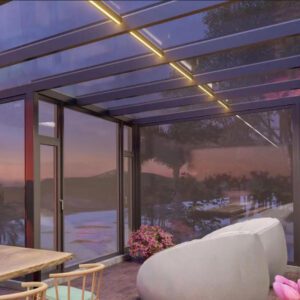
The single biggest reason solar windows command a premium over traditional rooftop arrays is that they eliminate the aesthetic objection entirely. Your customers — especially premium homebuilders and architects — will have already rejected rack-mounted panels for high-end projects. Solar windows are the product that brings those projects back to solar.
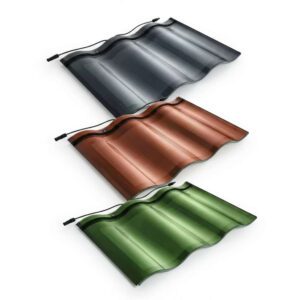
Current product options include: cell colors (standard blue-black, custom grey, black, terracotta), frame finishes (anodized aluminum in silver, black, bronze, or custom RAL colors), and transparency levels from 10% to 60% VLT. Manufacturers like Jia Mao BIPV offer complete customization of cell arrangement patterns, allowing architects to create geometric designs within the glass — something no rack-mounted panel can replicate.
Price positioning is straightforward: solar windows should be presented as a premium window upgrade, not as a solar add-on. The comparison is not “solar window vs. rooftop panel” — it is “solar window vs. premium glazing that does nothing else.” When a standard architectural glass unit costs $180–$320/m², a solar window at $350–$600/m² delivers not just the glass but also energy generation, reduced HVAC load, and property value appreciation. The premium shrinks considerably when framed correctly.
Integration with Existing Home Architecture
Different building typologies require different product recommendations:
- Modern/contemporary homes: Full-transparency thin-film windows for floor-to-ceiling glazing. Clean frameless look. VLT 40–60%.
- Traditional and colonial styles: Semi-transparent crystalline windows with bronze or dark-wood-effect frames. VLT 25–35%.
- Industrial/loft: Dense monocrystalline cells with black frames, high power output. VLT 15–25%.
- Farmhouse/rural: Solar roof tiles (a BIPV category extension) combined with semi-transparent glazing. Aesthetic continuity is the priority.
Before-and-after architectural renderings close deals faster than any spec sheet. Build a library of project renderings for each home typology with your key manufacturer — this is a direct competitive advantage over distributors who sell on spec sheets alone.
Transparency and Light Transmission
The VLT decision affects customer comfort significantly and should be guided by room function and climate zone:
| Room Type | Recommended VLT | Rationale |
|---|---|---|
| Living room / great room | 40–60% | Natural light priority; lower energy density acceptable |
| Home office | 35–50% | Glare reduction while maintaining daylight |
| Bedroom | 20–35% | Privacy and light control |
| Kitchen | 45–60% | Maximum daylight for task areas |
| Commercial office façade | 20–40% | Balance energy generation with glare management |
| Commercial lobby / atrium | 50–70% | Architectural transparency is the primary value |
A customer who chooses 20% VLT for their living room to maximize power output will be disappointed by the dimness. A customer who chooses 60% VLT expecting high energy generation will be disappointed by the output. Your role is to match product to application before the sale — not explain the mismatch after installation.
4. Cost Analysis and ROI: The Financial Conversation Your Customers Want
Pricing Structures and What Drives Costs
Solar window pricing has three components: the glazing unit itself, the electrical balance-of-system (inverter, wiring, monitoring), and installation labor. Here is a realistic breakdown for residential specification projects in 2025:
| Cost Component | Residential (per m²) | Commercial (per m²) |
|---|---|---|
| BIPV glass unit | $280–$520 | $220–$450 |
| Inverter / microinverter | $40–$80 | $30–$60 |
| Wiring and conduit | $25–$50 | $20–$40 |
| Installation labor | $80–$150 | $60–$120 |
| Permits and inspection | $15–$35 | $10–$25 |
| Total installed cost | $440–$835/m² | $340–$695/m² |
Volume discounts typically kick in at 50+ units for residential distributors and 500+ m² for commercial contractors. Establish tiered pricing agreements with your manufacturer — this is standard practice and directly improves your margin on larger projects.
Financing Options to Present to End Customers
The federal Investment Tax Credit (ITC) currently covers 30% of the total installed cost of qualifying solar energy property, including BIPV windows, through at least 2032 under the Inflation Reduction Act (IRS Residential Clean Energy Credit). For a $50,000 solar window installation, that is a $15,000 direct tax credit — not a deduction, but a dollar-for-dollar reduction in tax liability.
Additional incentive layers available in many states:
- PACE financing (Property Assessed Clean Energy): enables 100% financing repaid through property tax assessments; no out-of-pocket cost for the customer
- Utility rebates: $0.10–$0.50/W in markets with active solar programs (California, Massachusetts, New York)
- State tax credits: Additional 10–25% in states including New York, Maryland, and Massachusetts
- Manufacturer warranty programs: Some manufacturers offer performance-based financing where payments are tied to actual energy production
Your competitive advantage as a knowledgeable distributor: most homeowners have no idea these layered incentive structures exist. Walking a prospect through a net-cost calculation that takes a $50,000 project to $32,000–$38,000 after incentives is a deal-closing conversation.
Long-Term Investment Value
Here is a 25-year ROI scenario for a typical residential solar window installation — 20 m² of south-facing BIPV glazing in a mid-Atlantic US market:
| Scenario Metric | Value |
|---|---|
| System size (m²) | 20 m² |
| Installed cost (gross) | $52,000 |
| Federal ITC (30%) | -$15,600 |
| State rebate (est.) | -$3,200 |
| Net cost | $33,200 |
| Annual generation (est.) | 3,400 kWh |
| Year 1 savings (at $0.18/kWh) | $612 |
| Year 10 savings (3% escalation) | $822 |
| Year 25 savings (3% escalation) | $1,242 |
| Cumulative 25-year savings | ~$24,800 |
| Property value increase (6.9% median home) | ~$20,000 |
| Total 25-year economic value | ~$44,800 |
| Simple payback (net cost ÷ Yr 1 savings) | ~9.5 years |
The property value uplift — which SolarReviews, citing Zillow 2025 data confirms at 6.9% for solar-equipped homes — is what differentiates your ROI proposal from every competitor who only shows the energy savings line.
5. Climate and Location Factors: Matching Products to Regional Needs
How Climate Affects Solar Window Performance
Climate zone is the single most important variable in product selection, and it is where many distributor sales conversations go wrong. There is no universal “best” solar window — there is only the best product for a specific climate, orientation, and use case.
| Climate Zone | Recommended Product | Key Priority |
|---|---|---|
| Hot-Arid (Phoenix, Dubai, Riyadh) | Low SHGC (0.20–0.30), moderate efficiency | Reject solar heat; reduce HVAC load |
| Hot-Humid (Miami, Singapore, Houston) | Low SHGC (0.25–0.35), high VLT | Balance cooling and daylight |
| Mixed-Temperate (New York, Chicago, Seoul) | Mid SHGC (0.30–0.45), high efficiency | Optimize year-round energy generation |
| Cold (Minneapolis, Helsinki, Montreal) | High SHGC (0.45–0.60), low U-value | Passive solar heating in winter |
| Cloudy-Temperate (Seattle, London, Amsterdam) | Thin-film or high-sensitivity cells | Maximize diffuse-light performance |
The thermal performance of BIPV glazing from manufacturers like Jia Mao BIPV — with U-values as low as 0.28 W/m²K comparable to high-performance triple-glazed units — means solar windows can replace standard energy-efficient glazing without any thermal performance trade-off. In cold climates, this is a critical specification point.
Regional Sunlight Availability and Orientation
Peak Sun Hours (PSH) — the number of hours per day during which solar irradiance averages 1,000 W/m² — vary significantly by geography:
| Region | Avg PSH/Day | Annual Solar Window Generation (per 10 m²) |
|---|---|---|
| Southwest US (Phoenix, LA) | 5.5–7.0 | 2,000–2,800 kWh |
| Southeast US (Miami, Atlanta) | 4.5–5.5 | 1,600–2,200 kWh |
| Midwest US (Chicago, Denver) | 4.0–5.0 | 1,400–1,900 kWh |
| Northeast US (New York, Boston) | 3.5–4.5 | 1,200–1,600 kWh |
| Pacific Northwest (Seattle) | 3.0–4.0 | 1,000–1,400 kWh |
| Northern Europe | 2.5–3.5 | 850–1,200 kWh |
| Southeast Asia | 4.5–6.0 | 1,600–2,400 kWh |
Window orientation follows a clear hierarchy: south-facing generates the most annual energy in the Northern Hemisphere (70–80% of optimal). East and west-facing windows capture morning and afternoon sun, generating 60–70% of south-facing output. North-facing windows generate only 20–30% of south-facing output and are generally not recommended as primary solar surfaces.
Local Building Codes and Permitting Requirements
BIPV window installations fall under two separate permitting tracks in most jurisdictions: electrical permits (for the PV system) and building permits (for the window replacement or new installation). In most US states, the electrical permit requires a licensed electrician and in some states specifically a solar electrician with NABCEP PV Installation Professional certification (NABCEP.org).
Key compliance checkpoints for your installer network:
- UL 1703 or UL 61730 certification for the PV module itself
- NFPA 70 (NEC) Article 690 compliance for the electrical installation
- AAMA/WDMA/CSA 101/I.S.2/A440 for the window unit’s structural performance
- ENERGY STAR certification (required in some states for incentive eligibility)
- Local utility interconnection agreements — especially for grid-tied systems
Build a permitting checklist specific to your top three markets and give it to every installer you work with. The distributors who reduce permitting friction win the installers who keep coming back.

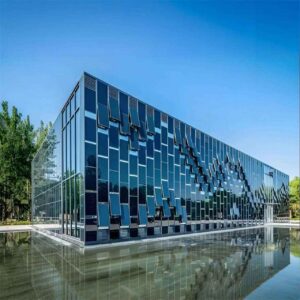
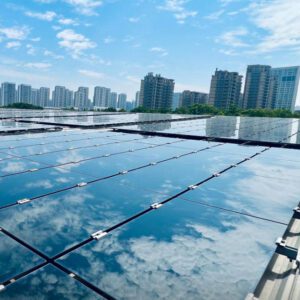
South-facing commercial façades with BIPV glass can generate 1,400–2,800 kWh annually per 10 m², depending on geographic location.
6. Installation Quality: The Factor That Makes or Breaks Customer Satisfaction
Choosing Qualified Installation Partners
Your product’s reputation lives or dies with the installer. A perfectly specified Jia Mao BIPV window installed by an unqualified crew will underperform, leak, or fail — and the customer will blame the product, not the installer. Your installer qualification process is as important as your product selection process.
Minimum qualification standards for BIPV window installers:
- NABCEP PVIP certification for the supervising electrician (NABCEP certification details)
- State contractor license for both electrical (C-10 equivalent) and glazing/fenestration work
- $1 million general liability insurance plus workers’ compensation coverage
- 3+ completed BIPV projects with verifiable references
- Manufacturer training completion — most quality BIPV manufacturers require this before warranty coverage applies to third-party installations
The NABCEP PVIP certification adds $3–$7/hour to an installer’s rate but significantly reduces warranty claim frequency and customer complaint rates — a worthwhile premium for projects that put your distribution relationship on the line.
Pre-Installation Assessment and Planning
Every solar window project should begin with a formal site assessment covering:
Structural evaluation: Solar glass units weigh 30–55% more than standard glass of equivalent dimensions. A 1.0 m × 1.5 m double-glazed solar window can weigh 35–50 kg versus 18–25 kg for standard glass. Window frames and rough openings must be evaluated for load capacity before ordering.
Electrical infrastructure: BIPV windows generate DC electricity that must be converted to AC by an inverter. The electrical panel must have capacity for the added generation. In older homes with 100A service, a panel upgrade may be required before installation.
Shading analysis: Even partial shading — a tree branch, adjacent building, or rooftop HVAC unit — can reduce output by 10–40% or more for affected windows. Conduct a full-year shading analysis using tools like Aurora Solar before finalizing the window placement plan.
Thermal expansion planning: BIPV glass units experience thermal expansion and contraction with temperature changes. Frame systems must accommodate ±3–5mm of movement per meter of glass width, requiring flexible sealant systems rather than rigid adhesives.
Post-Installation Support and Maintenance
Solar windows require no additional maintenance beyond what standard windows require — periodic cleaning with water and a soft cloth. The photovoltaic layer is hermetically sealed between glass layers and is not accessible or vulnerable to external cleaning products.
What does require ongoing attention:
- Monitoring system verification: Most BIPV installations include a module-level monitoring system (Enphase Enlighten, SolarEdge monitoring, or manufacturer-specific platforms). Confirm the monitoring is transmitting data within 48 hours of commissioning.
- Warranty registration: Register every installation with the manufacturer within 30 days of commissioning to activate full warranty coverage.
- Annual production review: Provide customers with an annual energy production report comparing actual generation against projected output. This turns a post-sale maintenance touchpoint into a retention and referral opportunity.
7. Comparing Brands and Manufacturers: Your Competitive Advantage
Top Solar Window Manufacturers and Their Strengths
The BIPV window market has a clear segmentation between commodity producers and specification-grade manufacturers. For distributors serving architects, developers, and premium homebuilders, the distinction matters enormously.
| Manufacturer Tier | Characteristics | Best Use Case |
|---|---|---|
| Specification-grade (e.g., Jia Mao BIPV, Onyx Solar) | Full customization, architectural patterns, low U-values, 25-year warranties, engineering support | Commercial façades, premium residential |
| Performance-grade | Standard sizes, certified efficiency, limited color options | Mid-market residential and commercial |
| Entry-level | Fixed sizes, basic efficiency, shorter warranties | Cost-sensitive residential retrofit |
Jia Mao BIPV’s complete solar building product portfolio covers the full specification-grade range: transparent and semi-transparent photovoltaic glass, solar roof tiles, custom curtain wall systems, and smart glass integration — all backed by a 25-year performance guarantee and manufactured at 3GW annual capacity. For a distributor building a premium positioning strategy, this breadth of product range is a direct competitive asset.
Quality Certifications and Standards
For solar windows, three certification families matter most to specification-grade buyers:
Module certifications: IEC 61215 (crystalline Si), IEC 61646 (thin-film), UL 1703, UL 61730. These confirm the photovoltaic component meets safety and performance standards.
Glazing certifications: ASTM E773/E774 (accelerated weathering), EN 1279 (European sealed unit performance), AAMA certification for window system performance. These confirm the glass unit itself meets building envelope requirements.
Fire and building safety: IEC 61730 Module Safety Qualification, Class A fire ratings (ASTM E108), and local building code compliance certifications vary by market. In the EU, CPR (Construction Products Regulation) marking is required.
When third-party testing reports are available — from institutions like UL Solutions, TÜV Rheinland, or PV Evolution Labs — include them in your technical proposal packages. Independent validation data closes specification deals faster than manufacturer claims alone.
Reputation and Customer Satisfaction Metrics
Before adding a manufacturer to your preferred supply list, conduct a structured evaluation:
- Warranty claim rate: What percentage of installed units generate warranty claims? Below 1% is strong; above 3% signals quality control issues.
- Lead time consistency: Does the manufacturer deliver within their quoted lead time at least 90% of the time? Delays on a commercial construction schedule cost money.
- Technical support response time: How quickly does the manufacturer respond to installer technical questions? Under 24 hours is the standard for specification-grade partners.
- Reference projects: Request contact information for 3–5 completed projects of similar scale and complexity. Call the project manager directly, not just the end customer.
8. Environmental Impact and Sustainability: The Values Conversation
Carbon Footprint Reduction Over System Lifetime
The environmental ROI of solar windows is a genuine selling point with specification-driven buyers — particularly corporate real estate teams with ESG (Environmental, Social, and Governance) commitments and green building certification requirements.
A 20 m² south-facing BIPV window installation in the US Midwest generating approximately 3,400 kWh/year displaces roughly 1.7 metric tons of CO₂ annually (at the US average grid carbon intensity of 0.5 kg CO₂/kWh). Over 25 years, that is 42.5 metric tons of CO₂ offset — equivalent to planting approximately 1,700 trees or taking a mid-sized car off the road for nine years.
For commercial projects with larger glazing areas, these numbers scale proportionally. A 500 m² commercial façade installation generates roughly 85,000 kWh/year and offsets 42.5 metric tons of CO₂ annually — the kind of number that appears in corporate sustainability reports and earns LEED or BREEAM certification points.
Material Sourcing and Manufacturing Practices
Specification-grade buyers increasingly request Environmental Product Declarations (EPDs) — standardized documents that quantify the environmental impact of a building product over its full lifecycle, from raw material extraction through end-of-life disposal. Manufacturers who provide EPDs have a distinct advantage in green building specification processes.
Key sustainability questions to ask your supply chain partners:
- Is the PV glass manufactured using low-carbon float glass processes?
- Are encapsulant materials (EVA, POE) sourced from suppliers with documented environmental management systems?
- What is the manufacturer’s end-of-life recycling program for glass modules?
- Does the factory operate on renewable energy?
Jia Mao BIPV’s use of POE (Polyolefin Elastomer) encapsulant films — which enhance UV aging resistance by 40% compared to standard EVA — not only extends product life but also reduces replacement frequency, lowering the lifecycle environmental impact of each installation.
Energy Independence and Grid Resilience
For buyers in markets with grid reliability concerns — Texas, California, Southeast Asia, and increasingly across Europe — the energy independence narrative is a genuine differentiator. A solar window installation paired with a battery storage system (Tesla Powerwall, Enphase IQ Battery, or BYD Battery-Box) provides continued power during grid outages.
According to the U.S. Energy Information Administration, average grid outage duration in the US increased from 1.5 hours in 2013 to 5.8 hours in 2021 — a trend that has continued, making resilience a practical rather than merely aspirational customer benefit.
9. Common Challenges and How to Address Them
Overcoming Objections About Cost
The most common objection: “Solar windows are too expensive.” The most effective response is not to defend the price — it is to reframe the cost comparison.
Traditional premium window: $250–$450/m², zero energy generation, zero property value premium, no incentive eligibility.
Solar window (net of 30% ITC): $308–$585/m², generates 40–80 Wp/m², increases property value 6.9%, potentially eligible for additional state incentives.
The total cost of ownership (TCO) comparison over 25 years almost always favors the solar window, particularly when electricity rate escalation is included. Build a TCO calculator into your proposal template and use it with every cost-sensitive prospect.
Another framing tool: incremental cost analysis. If a customer is already replacing windows (renovation, new construction, or storm damage), the incremental cost of upgrading to solar windows may be only $80–$200/m² over a standard premium window — a much smaller number than the full solar window price.
Managing Expectations About Aesthetics
Some customers will initially resist the visible cell pattern in crystalline solar windows. The counter is visual proof. Build a portfolio of completed installations — ideally in each home typology you serve — and present it before any spec discussion. When customers see that a well-designed solar window on a contemporary home looks like a premium design feature rather than a solar compromise, the aesthetics objection largely disappears.
For customers who remain concerned about appearance, recommend thin-film products with 50–70% VLT. The efficiency trade-off (6–12% vs. 19–22%) is often acceptable when aesthetic integration is the priority — and it keeps the customer in the solar window category rather than pushing them back to rooftop panels.
Handling Performance Concerns
“What if the windows don’t generate as much as promised?”
This is a legitimate concern rooted in the industry’s history of over-promising solar savings. Your counter: use conservative projections, show your methodology transparently, and back the numbers with a monitoring system that lets the customer verify actual performance against projections monthly.
Production guarantees — available from quality manufacturers at the module level (typically guaranteeing ≥80% of rated output after 25 years with ≤0.5% annual degradation) — are a powerful tool here. Make warranty terms a standard part of every proposal.
Navigating Technical Complexity
Not every customer can absorb a full technical presentation. Use a three-tier explanation approach:
Tier 1 (30-second version): “These windows make electricity from sunlight while working exactly like regular windows. They reduce your energy bill and pay for themselves over time.”
Tier 2 (5-minute version): Add efficiency percentages, annual kWh generation for their specific home, and the 25-year ROI scenario.
Tier 3 (Full technical): Deploy for architects, engineers, and technically sophisticated buyers — include U-values, SHGC, IEC certifications, shading analysis methodology, and electrical specifications.
Matching your technical depth to your audience is a sales skill, not just a communication preference. Overwhelming a homebuyer with cell temperature coefficients ends the sale. Presenting superficial data to a building engineer loses the specification.

▶ Watch: BIPV Solar Window Installation and Performance — A Practical Overview for Installers and Contractors
10. Building Your Sales Strategy: From Prospect to Installation
Identifying Ideal Customers for Solar Windows
Not every solar prospect is a solar window prospect. The ideal solar window customer profile for residential distribution looks like this:
Primary indicators of high conversion probability:
- Currently replacing windows (renovation project, storm damage, or end-of-life replacement)
- New construction with architect involvement — specification decisions are still open
- Premium homeowner: home value above the local median, existing investment in smart-home technology
- Strong aesthetic preference — previously declined rooftop panels due to appearance concerns
- ESG-motivated: corporate executive, sustainability professional, or environmentally engaged buyer
Pre-qualification questions to ask in the first five minutes:
- “Are you replacing existing windows, or is this a new installation?” (Replacement = incremental cost framing applies)
- “Have you already specified your windows with an architect or designer?” (Yes = you have a specification partner; no = you become the specification guide)
- “What’s your primary goal — energy savings, aesthetics, environmental impact, or property value?” (Answer shapes your entire presentation)
- “What’s your timeline for the project?” (Under 90 days = strong incentive urgency)
For commercial prospects, the equivalent questions center on: building energy code compliance obligations, LEED or BREEAM certification targets, annual energy budget, and ownership structure (owner-occupied vs. investment property, since ROI framing differs for each).
Creating Compelling Proposals and Presentations
A high-converting solar window proposal has four sections:
1. Site-specific energy analysis: Show the customer’s actual current energy bill, model their specific window area and orientation, and produce a projected annual generation figure with ±10% confidence range. Do not use generic national averages — use their address, their utility rate, their window layout.
2. Financial scenario modeling: Present three scenarios — base case (current incentives), conservative case (no incentives), and optimistic case (full incentive stack). Customers make decisions at the base case but feel confident when the conservative case still makes sense.
3. Product visualization: Provide a rendering of their specific home or building with the proposed solar windows installed. This is the single most powerful closing tool in the solar window category. Tools like Aurora Solar’s design platform or manufacturer-provided visualization services can produce photorealistic renderings within 48 hours.
4. Process and timeline: Spell out every step from contract signing to commissioning. Include permit timeline, manufacturing lead time, installation duration, and utility interconnection timeline. Customers who understand the process have dramatically lower cancellation rates than those who feel the timeline is vague.
Closing the Deal and Managing Expectations
The most common reason solar window deals stall at the final stage is not price — it is timeline anxiety. Customers who have had bad experiences with renovation contractors or installation delays become risk-averse. Address this directly:
- Provide a written project schedule with milestone dates
- Specify who is responsible for each permitting step
- Identify the critical path items (typically: permit approval timeline and manufacturing lead time)
- Offer a milestone payment structure tied to project progress rather than upfront payment
Documentation that protects both sides: a written contract specifying system specifications, projected output, warranty terms, payment schedule, change-order procedures, and performance monitoring access. This level of documentation reduces disputes and increases referral rates — customers who feel professionally managed become advocates.
Post-installation follow-up system: contact the customer at 72 hours (confirm monitoring is live), 30 days (first monthly production report), 6 months (mid-year performance check), and 12 months (full annual production review and referral request). This four-touch follow-up system turns installations into referral pipelines.

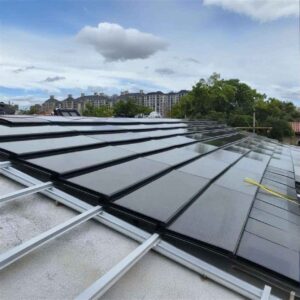
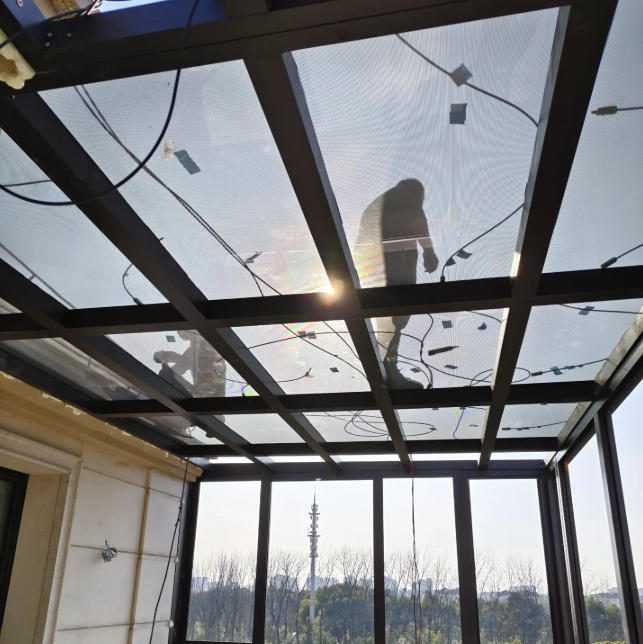
Professional installation teams with both glazing and electrical certifications are the foundation of every successful BIPV window project.
Glossary of Key Terms
| Term | Plain-Language Definition |
|---|---|
| BIPV | Building-Integrated Photovoltaics — solar technology built directly into building materials (glass, tiles, façade panels) rather than added on top |
| Eficiência (%) | The percentage of sunlight that gets converted into usable electricity |
| SHGC | Solar Heat Gain Coefficient — how much solar heat passes through glass; lower = less heat enters the building |
| U-Value | The rate at which heat transfers through a window; lower = better insulation |
| VLT | Visible Light Transmission — the percentage of visible light that passes through glass |
| Peak Sun Hours (PSH) | Hours per day during which solar irradiance averages 1,000 W/m² at a specific location |
| STC | Standard Test Conditions — laboratory conditions used to rate solar module performance (1,000 W/m², 25°C) |
| ITC | Investment Tax Credit — federal US tax credit equal to 30% of qualifying solar installation costs |
| NABCEP | North American Board of Certified Energy Practitioners — the gold-standard certification for solar installation professionals |
| Performance Ratio (PR) | Real-world system output as a fraction of theoretical maximum — typically 0.75–0.85 for well-designed BIPV systems |
| EPD | Environmental Product Declaration — a standardized document quantifying a product’s environmental impact over its full lifecycle |
| PACE | Property Assessed Clean Energy — financing for solar projects repaid through property tax assessments |
Your Roadmap to Solar Window Success
The solar window category rewards distributors and agents who invest in technical knowledge before their competitors do. The market — growing from $1.47B to $5.34B by 2035 — is not waiting for the industry to catch up. Architects and developers who have been specifying premium glazing for decades are now asking about energy-generating options. The distributors positioned to answer that question with confidence, data, and a complete service offering will capture the business. Those who are not will watch it go to a competitor who did the preparation work.
Three priorities for your next 90 days:
First, build product depth. Carry at least one product from each category: high-efficiency crystalline (for maximum generation applications), semi-transparent thin-film (for aesthetics-first projects), and smart hybrid glass (for premium commercial specifications). A single-product solar window offering loses deals to distributors with full-range capability.
Second, build specification relationships. The decision-maker for solar windows in most commercial and premium residential projects is an architect or building engineer — not the end-user. Get into architectural specification networks, attend AIA (American Institute of Architects) chapter events, and produce technical content that demonstrates your expertise to this audience.
Third, build installer quality. Your installer network is your product in the market’s eyes. Vet every installer against the credential and insurance standards in this guide before recommending them to customers. One failed installation damages your reputation far more than losing one deal to a lower-priced competitor.
The Jia Mao BIPV product line — with full customization capability, 3GW production capacity, and 25-year performance warranties — gives distributors the manufacturing depth to serve every segment of this growing market. Use it.
Partner with us to access exclusive training, product specifications, and sales tools designed specifically for solar product distributors and agents.
Your team needs three things to win in the solar window market: product knowledge that builds architect credibility, financial models that close specification deals, and installation quality that generates referrals. We provide all three.
- 📋 Access our B2B product specification library — detailed data sheets, architectural renderings, and BIM objects for every product in the Jia Mao BIPV range
- 📊 Download our distributor ROI calculator — customizable by region, window area, orientation, and incentive stack
- 🤝 Schedule a B2B partnership consultation — our technical sales team works directly with distributors and agents to build custom product packages and training programs
Contact our B2B partnership team today →

The distributors who own the solar window specification conversation today will own the market tomorrow.
12 Frequently Asked Questions (FAQs)
1. What’s the difference between solar panel windows and traditional solar panels?
Solar panel windows integrate photovoltaic cells directly into the glass unit, allowing the window to generate electricity while performing all standard window functions — insulation, weather protection, light transmission. Traditional panels are mounted separately on roof surfaces and have no glazing function. For distributors and agents, this distinction matters because solar windows open an entirely new customer segment: buyers who have already ruled out rooftop panels due to aesthetic concerns, limited roof space, or architectural restrictions. Solar windows serve those customers without compromising roof real estate, making them a complementary product category rather than a replacement for traditional panels.
2. How much energy can solar panel windows actually generate compared to roof panels?
Solar windows typically generate 10–30% less energy per unit area than dedicated roof panels due to lower module efficiency and the constraints of architectural integration (spacing, transparency requirements, frame systems). However, they utilize glazing surface area that produces zero energy in traditional window installations. A 20 m² south-facing BIPV window installation in a mid-climate US market generates approximately 2,800–3,600 kWh/year. Help your sales team frame this trade-off correctly: solar windows are not a replacement for roof panels — they are an addition to them, utilizing building surface area that would otherwise generate nothing.
3. Do solar windows work in cloudy climates?
Yes — with appropriately calibrated expectations. Solar windows generate 10–25% of their rated peak output under heavy cloud cover (Verde Solutions), and thin-film products perform relatively better in diffuse light conditions than crystalline silicon options. For distributors selling into consistently cloudy markets — Pacific Northwest, Northern Europe, Northeastern US — the recommendation is to use thin-film BIPV glass optimized for diffuse spectrum performance, accept longer payback periods (12–18 years vs. 7–10 in sunny markets), and lean into the aesthetics and property value arguments rather than energy generation as the primary value driver.
4. What’s the typical lifespan and warranty of solar panel windows?
Quality solar windows carry 25-year performance warranties guaranteeing at least 80% of rated output after 25 years, with annual degradation rates of 0.5–0.8% per year — comparable to premium conventional solar panels. Product (manufacturing defect) warranties typically cover 10-15 anos. The glass component itself — from manufacturers with architectural-grade production standards like Jia Mao BIPV — is guaranteed for the same 25-year period for structural integrity and weatherproofing. For your sales conversations, position solar windows as permanent building components with a 25-year energy guarantee, not temporary equipment. This framing aligns with how premium buyers think about long-term building investments.
5. How much do solar panel windows cost, and what’s the payback period?
Installed costs range from $440–$835/m² for residential projects and $340–$695/m² for commercial projects, before incentives. After the federal 30% ITC, net costs drop to approximately $308–$585/m² residential and $238–$487/m² commercial. Payback periods range from 7–12 years in high-irradiance markets with strong electricity rates (California, Texas, Southwest US) to 12–18 years in lower-irradiance markets. Volume purchasing by distributors reduces these costs further — establish tiered pricing agreements with manufacturers at 50+ unit residential or 500+ m² commercial thresholds. Regional incentive stacks (state tax credits, utility rebates, PACE financing) can reduce net costs by an additional 15–30% beyond the federal ITC.
6. Are there government incentives or tax credits for solar windows?
The federal Investment Tax Credit (ITC) covers 30% of qualified solar installation costs through at least 2032, including BIPV windows (IRS Residential Clean Energy Credit). ENERGY STAR-certified solar windows may also qualify for the Energy Efficient Home Improvement Credit (up to $600/year for qualifying windows). State-level incentives add another layer: California (SGIP), Massachusetts (SMART program), New York (NY-Sun), and Maryland (CleanEnergy Rebate Program) all provide supplemental incentives ranging from $0.10 to $0.50/W of installed capacity. Keep a regional incentive database updated quarterly — this is a direct sales tool that separates informed distributors from generic sellers.
7. Do solar windows require special maintenance?
No. Solar windows require the same maintenance as standard windows — periodic cleaning with water and a soft cloth or standard window cleaning solution. The photovoltaic cells are hermetically sealed between glass layers and are not accessible, vulnerable to cleaning products, or subject to any additional maintenance requirement. The electrical components (inverter, monitoring system) require occasional firmware updates and an annual electrical inspection, which most qualified installers include in their service agreements. This zero-additional-maintenance characteristic is one of the strongest objection-handlers in the product category — particularly for customers who have heard about solar panel cleaning and degradation concerns.
8. Can solar windows be installed in any room or orientation?
Solar windows can be installed in any orientation, but performance varies significantly. South-facing windows produce the most annual energy in the Northern Hemisphere — use them as the primary installation surface. East and west-facing windows generate 60–70% of south-facing output, with east-facing panels peaking in the morning and west-facing in the afternoon — useful for buildings with high morning or afternoon energy demand profiles. North-facing windows generate only 20–30% of south-facing output and are generally recommended only when completing a whole-building façade specification for architectural uniformity rather than energy optimization. Help your agents assess each project’s window layout before final specification to ensure customers receive accurate output projections by orientation.
9. What happens to solar windows during extreme weather or storms?
Specification-grade BIPV windows meet or exceed the same impact, wind load, and thermal cycling standards as conventional architectural glazing. Hurricane-impact rated options — tempered and laminated glass constructions meeting ASTM E1886/E1996 — are available for coastal and storm-prone markets. The photovoltaic layer is sealed between glass layers, providing no additional vulnerability compared to standard laminated safety glass. IEC 61215 module certification includes hail impact testing (25mm hailstone at 23 m/s) and mechanical load testing (2,400 Pa wind pressure equivalent). In markets with frequent severe weather — Florida, Gulf Coast, the Philippines, coastal Southeast Asia — hurricane-rated BIPV windows are both a performance specification and a significant sales differentiator.
10. How do solar windows integrate with home batteries and backup power systems?
Solar windows connect to battery storage systems using the same electrical interface as conventional solar panels. Compatibility with major residential battery platforms — Tesla Powerwall, Enphase IQ Battery, Sonnen, BYD Battery-Box — is standard for any BIPV installation using a compatible inverter. The solar-plus-storage combination converts a solar window installation into a complete energy resilience system: generating power during the day, storing excess for nighttime use, and providing backup power during grid outages. For distributors, this is a powerful upsell pathway. A 20 m² solar window installation with a 10 kWh battery provides 4–8 hours of essential load backup during grid outages — a tangible resilience value that is increasingly a purchasing driver in markets with grid reliability concerns.
11. Do solar windows affect home resale value?
The data is clear: homes with solar sell for more. SolarReviews, citing 2025 Zillow data, documents an average 6.9% sale price premium for solar-equipped homes — translating to $25,000+ on a median-value US home. Solar windows offer an additional advantage over rooftop panels at resale: they are permanent architectural components that enhance curb appeal rather than adding visible equipment to the roof. Premium homebuyers — the demographic most likely to buy homes with solar windows — are also the demographic most likely to pay a premium for aesthetic integration. Use this as a core sales argument with real estate investors, premium homebuilders, and renovation-focused customers where property value appreciation is a key decision factor.
12. What should I look for when choosing a solar window installer or distributor?
For installers: NABCEP PVIP certification for the supervising electrician, state glazing and electrical contractor licenses, $1 million minimum general liability insurance, workers’ compensation coverage, documented BIPV project experience (minimum 3 comparable projects with references), and manufacturer-specific training completion. For distribution partners: product range breadth (covering efficiency, transparency, and smart glass categories), engineering support capability (can they provide shading analysis, structural load calculations, and compliance documentation?), warranty support infrastructure (how are warranty claims processed and resolved?), and manufacturing supply stability (what is the lead time reliability track record?). The combination of certified installation partners and specification-grade distribution relationships is what separates successful solar window programs from commodity distributors competing on price alone.
This guide is updated periodically to reflect current market data, incentive structures, and product specifications. For the latest product data sheets, regional incentive updates, and distributor pricing, visit jmbipvtech.com.