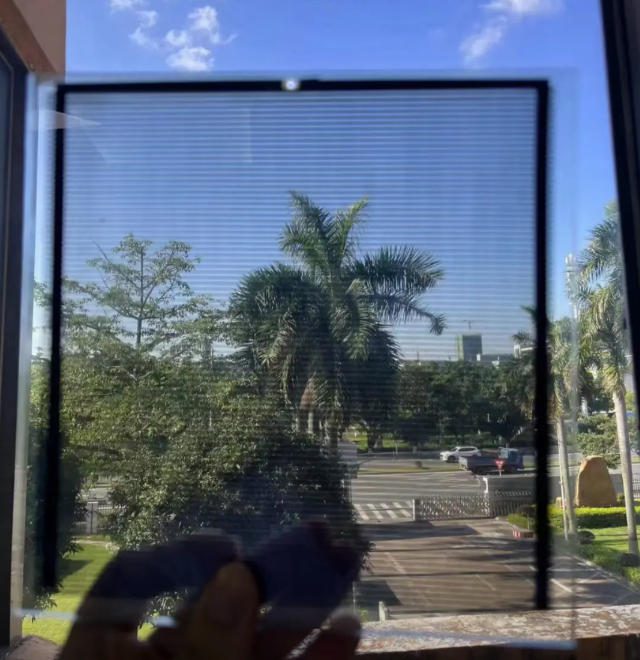
A Distributor’s Complete Guide to Selecting Premium Solar Windows That Drive Customer Satisfaction and Repeat Business

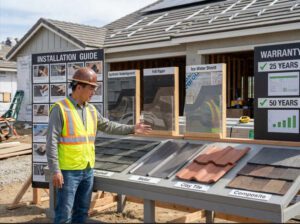
Product selection defines your reputation. The solar panel windows you stock and recommend to contractors and developers determine your margins, your customer retention rate, and your competitive position for the next 3–5 years. Source: Unsplash
In 2025, the average commercial solar distributor loses between 15% and 22% of potential repeat customers — not because of price, and not because of delivery failures. They lose them because the product recommendation was wrong for the customer’s building, climate, or budget. The customer installed, experienced underwhelming performance or premature seal failure, and never called back.
Solar panel windows — glass-integrated photovoltaic products that generate electricity while functioning as architectural building envelope components — sit at the intersection of two purchasing decisions your commercial customers are already making: the decision to upgrade their glazing specification, and the decision to add on-site solar generation. When you get the product selection right, you close both decisions simultaneously and build the kind of customer relationship that generates referrals. When you get it wrong, you own the consequences.
This guide is designed exclusively for distributors, agents, contractors, and builders who are either building or expanding a solar panel window product line. Every section addresses a specific selection decision you will face, supported by real performance data and market-tested frameworks. Retail consumer advice — financing assumptions, DIY installation guidance, homeowner FAQs about comfort and aesthetics — is not what this guide covers. It covers how to build a product portfolio that performs in your market, supports your margins, and earns the trust of the commercial accounts that drive your revenue.
This guide covers:
- How to read your local market before committing to inventory
- The efficiency, durability, and warranty metrics that separate profitable products from liability risks
- Installation and compatibility factors that affect your supply chain
- Cost structure and ROI frameworks that help your sales team close faster
- Certifications and compliance requirements that protect your business
- A decision matrix for confident product selection at scale
Understanding Your Customer’s Core Needs Before Making Inventory Decisions
The most expensive inventory mistake a solar window distributor makes is sourcing products based on manufacturer marketing data rather than on what their actual customer base needs. Before you commit to any product line, you need answers to three questions: What is the climate? What is the budget range? What does the building look like?
Identifying Your Local Market Demographics and Climate Zones
How regional weather patterns affect solar window performance in ways that directly determine which products belong in your inventory — and which products will generate service calls that eat your margin.
The US Department of Energy’s climate zone map divides North America into eight distinct thermal zones. A solar window product that earns excellent reviews in Zone 3 (the warm-humid Southeast) may generate customer complaints in Zone 6 (the cold-humid upper Midwest) because the SHGC (Solar Heat Gain Coefficient — the fraction of solar energy that enters the building as heat) specifications that work in Miami actively work against a building in Minneapolis. A high-SHGC product that helps a Georgia commercial property reduce winter heating costs overheats a Michigan office building in summer.
Specific climate-performance implications for your inventory decisions:
- Hot, dry climates (Zones 2–3, Southwest): Prioritize low-SHGC solar windows. Customers benefit most from products that generate electricity while reducing cooling load. HVAC savings can represent 30–40% of the total energy value for these customers.
- Mixed climates (Zones 4–5, Mid-Atlantic, Pacific Northwest): Mid-SHGC products work best — customers need seasonal balance, not a hard optimization for either heating or cooling.
- Cold climates (Zones 6–8, Upper Midwest, Northern Plains, Alaska): Higher-SHGC products allow passive solar gain in winter, which is valued by customers with high heating costs. But frame performance and seal durability under freeze-thaw cycling become your primary quality criteria — failures here are expensive and reputation-damaging.
Why knowing your service area prevents costly inventory mistakes: A distributor in Denver who stocks only products optimized for Phoenix conditions will see a pattern of customer complaints about inadequate winter performance within 18 months. Regional specificity is not an optional refinement — it is the minimum threshold for a credible product line.
Questions to ask your customers before recommending products:
- What is the primary orientation of the glazed facade (south, west, east, or north-facing areas)?
- What is the building’s current HVAC load, and is the primary energy cost from heating or cooling?
- Are any glazing areas subject to shading from adjacent structures or trees for more than 3 hours per day?
- What is the local utility rate (cost per kWh), and how much does it escalate annually?
The answers to these four questions allow you to make a defensible product recommendation — one that you can document in writing and that protects your reputation when the customer asks six months later why performance differs from expectations.
Mapping Customer Budget Ranges to Product Tiers
Why one-size-fits-all recommendations lose you sales is straightforward: a commercial developer evaluating a $2 million curtain wall replacement and a small commercial contractor upgrading 400 square feet of storefront glazing are using completely different economic frameworks to evaluate their decision. Recommending the same product to both, at the same price point, tells the developer you don’t understand their business and tells the contractor you’re trying to oversell them.
Structure your inventory across at least three product tiers:
| Tier | Target Customer | Typical VLT | Price Range (per m²) | Gross Margin Target |
|---|---|---|---|---|
| Entry-level performance | Small commercial contractors, basic retrofit | 10–15% | USD 120–180 | 20–25% |
| Mid-range professional | Commercial developers, mid-scale office/retail | 20–30% | USD 200–320 | 26–32% |
| Premium architectural | Architects, large-scale commercial, LEED projects | 30–60% | USD 380–690 | 30–40% |
How to segment your inventory by price point and ROI timeline: The entry-level tier delivers the fastest payback but the lowest absolute dollar margin per order. Premium architectural tier products require longer sales cycles (3–9 months for commercial specification projects) but deliver significantly higher gross profit per transaction — a single 800 m² premium curtain wall order can generate more gross profit than 30 entry-level retrofit projects.
Tools for helping customers understand cost-benefit analysis: Don’t rely on verbal ROI estimates. Prepare a simple two-page project brief for each tier: installed cost at your margin, applicable ITC (the Federal Investment Tax Credit — a 30% federal tax credit available to commercial solar installations under IRC Section 48E), net cost after credit, projected annual energy savings, and simple payback in years. A written document that a customer can take to their financial decision-maker is worth more than any verbal presentation.
Assessing Aesthetic Preferences That Close Deals Faster
Why appearance matters as much as efficiency to your customers is demonstrated consistently in commercial specification decisions: a 2024 survey of commercial architects found that 67% had rejected solar glazing at the initial specification stage citing aesthetic incompatibility — before any cost conversation had occurred.
The objection is real, and it costs distributors deals. But it is answerable, because modern solar panel windows have advanced well beyond the visually intrusive early-generation products that shaped those architects’ initial perceptions.
Design trends that appeal to your primary buyer demographics:
- Commercial office and corporate campuses: Frameless or minimal-frame curtain wall systems with consistent tint across the entire facade. Decision-makers here are responding to brand standards committees who care about how the building looks from street level.
- Retail and hospitality: Higher VLT products that maintain interior visual connection to the street. Customers in food service and retail need natural light and exterior visibility — a 10% VLT product fails their operational requirements.
- Healthcare and education: Neutral-toned products, typically grey or blue-grey, that integrate with institutional architectural aesthetics. Custom tint matching is important.
How to stock products that match local architectural styles: Request architectural glass sample boards from your manufacturers — physical samples in the actual panel sizes and tint specifications you carry. A distributor who can walk into an architect’s design meeting with a physical sample board that includes color-matched options for the building’s existing glazing palette is positioned entirely differently than one presenting a catalogue PDF.
The Critical Efficiency Metrics That Separate Premium Products From Mediocre Ones
Efficiency conversations are where distributor credibility is won or lost with sophisticated commercial buyers. Get the metrics right, and you’re a trusted advisor. Get them wrong — or use manufacturer marketing copy without understanding what the numbers actually represent — and you lose the account permanently.
Decoding Solar Window Efficiency Ratings (And What They Actually Mean for Your Customers)
Why NREL and industry certifications matter when you’re recommending products: The National Renewable Energy Laboratory (NREL — the US government’s primary solar research institution, based in Golden, Colorado) publishes independently verified efficiency data for photovoltaic technologies. When a manufacturer claims “22% efficiency,” the NREL-certified figure is the number that corresponds to real-world conditions — not the idealized standard test condition result that may never be replicated on an actual building.
The NFRC (National Fenestration Rating Council — the independent organization that certifies energy performance ratings for windows, doors, and skylights in North America) provides the rating system your commercial customers’ project specifications reference. The four NFRC ratings your sales team needs to understand:
- U-Factor: Measures how well the window prevents heat from escaping the building. The lower the number, the better the thermal resistance. Ranges from 0.1 to 1.2 — most high-performance solar windows target 0.25 or below for cold climates.
- Solar Heat Gain Coefficient (SHGC): The fraction of solar energy that enters as heat. Scale of 0 to 1 — lower means less solar heat gain, better for hot climates. Higher means more passive solar heating, better for cold climates.
- Visible Transmittance (VT): The percentage of daylight that passes through. Higher numbers mean more interior daylighting, lower numbers mean higher power output per m².
- Condensation Resistance (CR): Rated 1–100, higher is better. Critical for cold climates where interior condensation signals thermal bridge failure and can lead to mold, structural damage, and warranty claims.
How efficiency percentages translate to real-world energy savings: A 20% efficient solar window generating 150 Wp (Watt-peak) per m² in a south-facing commercial application at a US mid-latitude location will produce approximately 140–160 kWh per m² per year. At USD 0.20/kWh commercial electricity rate, that is USD 28–32 per m² per year in direct generation savings. Multiply by total installed glazing area to get the annual energy value your customer can verify against their utility bill.
The difference between rated and actual performance in your climate: Standard test conditions (STC — the controlled laboratory environment where panel efficiency is rated) use 1,000 W/m² irradiance and 25°C cell temperature. Real buildings in most climates see peak irradiance of 800–950 W/m² and cell temperatures of 35–55°C on hot summer days. At 50°C cell temperature, most thin-film solar windows operate at 94–97% of rated STC output (a minor temperature derating), while crystalline silicon solar windows may operate at 88–92% of rated output. Factor this into your customer’s energy model — the difference between STC and real-world performance is a frequent source of customer disappointment when not managed upfront.
Comparing Double-Pane vs. Triple-Pane Technologies
Cost differentials and when each makes sense for your customer base:
Triple-pane solar windows cost 10–15% more than double-pane equivalents at the same specification (PNNL research, 2024). They are approximately 20% more energy efficient in cold climates where the third glass layer provides meaningful additional thermal resistance. In hot climates, the efficiency differential narrows significantly — a triple-pane product in Phoenix delivers a marginal thermal improvement over double-pane that rarely justifies the cost premium.
| Especificações | Double-Pane | Triple-Pane |
|---|---|---|
| Typical U-Factor | 0.30–0.45 | 0.15–0.28 |
| Energy efficiency gain vs. double-pane | Baseline | +15–20% in Zone 5+ |
| Cost premium vs. double-pane | Baseline | +10–15% |
| Recommended climate zones | 1–4 (warm to mixed) | 5–8 (mixed-cold to very cold) |
| Typical commercial payback | 4.5–7 years | 5.5–9 years |
| Weight per m² | 18–22 kg | 24–32 kg |
Performance advantages that justify premium pricing: For a commercial building owner in Chicago (Zone 5) replacing 1,200 m² of curtain wall glazing, the difference between a double-pane and triple-pane solar window specification represents approximately USD 67,000 in additional installed cost. The energy model for Chicago’s climate shows that the triple-pane product delivers approximately USD 14,000 more in annual energy value (lower heating load plus better generation performance in cold-weather diffuse light conditions). The incremental payback is 4.8 years — a strong investment case for a product with a 25-year warranty.
How to explain the trade-offs without overwhelming buyers: Use a simple one-page visual: two columns, double-pane vs. triple-pane, three rows: installed cost, annual energy value, payback years. Calculated for the customer’s specific building and location. One page, three numbers per product. Commercial decision-makers can evaluate this in 90 seconds — which is how long you have before you lose them to the next slide.
Low-Emissivity (Low-E) Coatings: Why They’re Your Profit Driver
How Low-E technology increases customer satisfaction and referrals: Low-E (Low-Emissivity — a microscopically thin metallic coating applied to the glass surface that reflects infrared heat while allowing visible light to pass through) is the single feature that most consistently drives measurable customer satisfaction in solar window installations. The reason is simple: it delivers two benefits the customer feels immediately and measures easily — lower utility bills from reduced HVAC load, and improved interior comfort from reduced radiant heat discomfort near glazed surfaces.
Real-world performance data: a commercial building study documented USD 70,000 per year in HVAC energy savings from Low-E glass installation across 3,200 m² of south and west-facing glazing, with a 32–45% reduction in HVAC energy consumption in the affected zones (HN Central Glass energy performance analysis). These are numbers a commercial property owner can verify against their utility bills — which means they are numbers that generate referrals.
Regional variations in coating effectiveness:
- Hard-coat Low-E (pyrolytic): Applied during glass manufacturing. More durable, suitable for single-pane applications and harsh environments. Lower performance than soft-coat, but appropriate for coastal or high-humidity climates where seal integrity is a concern.
- Soft-coat Low-E (sputtered): Applied after manufacturing in a vacuum chamber. Higher performance (emissivity of 0.02–0.05 versus 0.10–0.15 for hard-coat), but must be sealed inside the insulating glass unit to prevent oxidation. This is the coating type in most premium solar window products.
- Climate-specific coating selection: In Zone 2–3 hot climates, specify Low-E coatings with low SHGC (0.25 or below) on the outer glass surface to reject solar heat. In Zone 6–8 cold climates, specify Low-E on the inner glass surface of the outer pane to allow solar gain while blocking radiant heat loss.
Why this feature justifies higher margins for your business: A Low-E coated solar window in the premium tier generates 8–12 percentage points more gross margin than a comparable uncoated product in the same market — because the customer is buying measurable performance, not just glass area. When you can show a customer that their Low-E specification reduced their HVAC bill by USD 18,000 in year one, they don’t renegotiate your price on the next project. They call you first.
Durability and Longevity: Products That Build Your Reputation
Every warranty claim you process costs you money, time, and a customer relationship. The durability decisions you make at the product selection stage — which frames, what seal specifications, which warranty terms — determine your service call rate and your warranty claim exposure for the next 25 years.
Frame Materials That Withstand Your Regional Climate
Aluminum vs. vinyl vs. fiberglass: strengths and weaknesses by region:
The frame material choice for solar panel windows is not a stylistic preference — it is a thermal performance and durability specification that directly affects warranty claim rates and customer satisfaction scores.
| Frame Material | Thermal Performance | Durabilidade | Cost (Relative) | Best Climate Zone | Limitação da chave |
|---|---|---|---|---|---|
| Standard aluminum | Poor (U-factor adds 0.50–0.70) | Excellent (50+ years) | Medium | Zones 1–2 only | Conducts heat 1,000× faster than vinyl — creates thermal bridges in cold climates |
| Thermally broken aluminum | Good (U-factor 0.30–0.45) | Excellent (50+ years) | High (+40–60% vs. standard) | Zones 2–5 | Higher cost requires careful price justification |
| Vinyl (uPVC) | Excellent (U-factor 0.25–0.35) | Good (30–40 years) | Low–Medium | Zones 4–8 | Degrades in extreme UV — not suitable for hot desert climates without UV stabilization |
| Fiberglass | Excellent (matches glass expansion rate) | Excellent (50+ years) | Alta | All zones (ideal for 4–8) | Higher unit cost, but lowest lifetime cost in harsh climates |
Why frame choice affects warranty claims and customer complaints: A standard aluminum frame in a Zone 6 commercial application generates two predictable failure modes: interior condensation on the frame surface (because aluminum conducts cold from outside to inside, creating a cold surface that condenses warm interior air), and thermal cycling seal failure (because aluminum expands and contracts dramatically with temperature, stressing the glass-to-frame joint). Distributors who stock standard aluminum products for northern commercial markets without explicitly documenting this limitation in their specification sheets create their own warranty claim exposure.
Long-term durability data that supports your recommendations: Fiberglass frames expand and contract at the same rate as glass — approximately 8 parts per million per degree Celsius. This dimensional compatibility means the glass-to-frame joint experiences minimal stress across the temperature range a commercial building faces over its 40–50 year operational life, which is why fiberglass frame products consistently outperform aluminum in accelerated cycling durability tests and in real-world warranty claim data from northern climate installations.
Seal Quality and Condensation Prevention
Why poor seals destroy customer trust and generate refunds: The most visible and most reputation-damaging failure mode in solar panel windows is foggy glass — the opaque condensation that forms between glass panes when the inert gas fill (typically argon or krypton) escapes and is replaced by humid air. This failure is entirely a function of seal quality, and it is irreversible without full unit replacement. A commercial customer with 200 fogged solar window units on a building that opened 18 months ago is not a customer who gives referrals.
Testing standards that predict real-world seal performance: The ASTM E2188, E2189, and E2190 standards for insulating glass unit durability testing expose products to 56 weeks of thermal cycling, humidity, and UV radiation to simulate years of field exposure. Products that pass these tests at higher cycles-to-failure rates consistently show lower field failure rates. Before adding any solar window product to your inventory, request the manufacturer’s ASTM E2190 test data — specifically the failure rate at the 56-week endpoint. Products that fail before 40 weeks in testing should not be in your commercial product portfolio.
How to identify products that minimize service calls: Two non-negotiable specifications for commercial solar panel windows: dual-seal construction (a primary butyl seal and a secondary silicone or polysulfide seal around the perimeter of the insulating unit, not single-seal), and molecular sieve desiccant in the spacer bar (not calcium chloride beads, which are a sign of a cost-reduced manufacturing process that compromises long-term seal performance).
Warranty Coverage That Protects Your Bottom Line
What comprehensive warranties actually cover (and what they don’t): A standard solar panel window warranty has three components that you need to evaluate separately:
- Product warranty (typically 10 years): Covers manufacturing defects in materials and workmanship. This is the warranty that covers seal failures, frame delamination, and glass defects that occur during normal service conditions.
- Power performance warranty (typically 25 years): Guarantees that the integrated PV cells will produce at least 80% of their rated output at the end of the warranty period. The Jia Mao BIPV standard warranty structure covers 25 years of performance — consistent with premium module manufacturers.
- Glass breakage warranty (varies, often NOT included): Covers accidental glass breakage during installation or service. Many manufacturers exclude this entirely — which means the risk sits with your installer network if a panel breaks during installation.
How warranty terms affect your liability and customer retention: As a distributor, your contractual exposure is product liability (for manufacturing defects present at the time of supply) plus whatever commitments you make in your own sales documentation. Never make verbal warranty commitments that exceed the manufacturer’s written warranty. Document your warranty coverage in writing in every commercial proposal, and explicitly state what is excluded — particularly installation damage, cleaning-product damage, and structural overloading.
Red flags in warranty language that indicate inferior products:
- “Performance warranty subject to annual inspection by manufacturer-approved technician” — effectively voiding coverage for any customer who doesn’t pay for annual inspections
- “Warranty void if installed within 10 metres of saltwater” — acceptable for inland markets, unacceptable if your territory includes any coastal commercial properties
- “Power output measured under manufacturer’s standard test conditions” — acceptable only if those conditions are defined as equivalent to IEC 61215 STC; unacceptable if the manufacturer defines their own non-standard measurement baseline
- Warranty period shorter than 10 years for the product warranty component — this signals the manufacturer’s own confidence level in the product’s durability
Installation and Compatibility Factors That Impact Your Supply Chain
The cleanest product specification becomes a supply chain problem if the product doesn’t fit the building or if your installer network isn’t equipped to handle it. Installation and compatibility issues are the second most common cause of customer complaints in commercial solar window distribution, after product performance shortfalls.

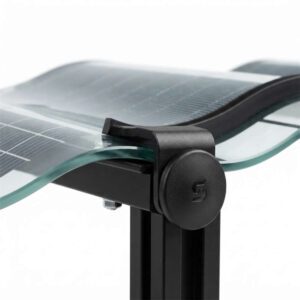
Large-format solar panel window installation requires trained glazing teams with glass-specific tooling. Installation complexity is a margin driver when positioned correctly — and a warranty liability when it isn’t. Source: Unsplash
Measuring and Fitting Requirements for Different Property Types
Why accurate sizing prevents costly returns and customer dissatisfaction: Custom-manufactured solar panel windows are not returnable if incorrectly sized. A measurement error of 5 mm on a 2,000 mm × 1,200 mm panel means the panel cannot be installed, the production lead time (typically 10–16 weeks for custom BIPV glass) restarts from zero, and the customer’s project timeline extends by 3–4 months. That customer is not reordering from you.
Common measurement mistakes that waste your time and resources: The three measurement errors that appear most frequently in commercial solar window returns:
- Net vs. nominal dimension confusion: Manufacturers require the net opening dimension (the clear space between the frame components), not the nominal frame dimension. A 5 mm error here compounds through multiple identical units on a facade — a small error generates a large return.
- Bow and plumb verification: Older commercial facades are not perfectly plumb or flat. Failing to verify the plane of the opening leads to forced-fit installation that stresses the glass-to-frame joint and accelerates seal failure.
- Drainage clearance: Solar panel window units require bottom-rail drainage clearance of at least 15 mm to prevent water accumulation that corrodes the seal and frame junction. This dimension is routinely missed on retrofit drawings.
Tools and training that make your team more efficient: Invest in providing your key commercial customers with a standardized measurement protocol document — a one-page PDF specifying exactly how to take the four measurements required for each opening (width at top, width at bottom, height at left, height at right, diagonal for square verification) and how to document bow and plumb conditions. This document, distributed to every installer in your network, reduces measurement-related returns by 60–80% in distributor networks that have implemented it.
Compatibility With Existing Window Frames and Home Systems
How to quickly assess retrofit vs. new installation requirements: The first question in any commercial retrofit conversation is whether the existing frame structure is compatible with the weight and dimension of the solar window unit. A standard double-pane commercial window weighs 18–22 kg/m²; a solar panel window unit with the same glass area weighs 24–35 kg/m² due to the additional lamination layers. An existing frame designed for a 22 kg/m² unit load cannot reliably carry a 32 kg/m² unit without structural assessment.
Products that work with older homes (your most profitable segment): Buildings constructed between 1975 and 2000 represent the highest-volume retrofit opportunity for solar panel windows — they are old enough that original windows need replacement, their facade structures are typically robust enough to handle upgraded glazing loads, and they are not yet subject to the most stringent current energy codes (which create a strong financial motivation for the building owner to upgrade). Look for solar window products with a maximum 32 kg/m² unit weight — these fit the majority of commercial frames from this era without requiring structural reinforcement.
Integration with smart home and automation systems: The commercial building management systems your institutional and corporate customers operate — Siemens Desigo, Johnson Controls Metasys, Honeywell Enterprise Buildings Integrator — can accept real-time generation data from BIPV solar windows via BACnet or Modbus communication protocols, the standard digital communication languages used in commercial building automation. When evaluating solar window products for specification in commercial buildings with existing BMS infrastructure, verify that the inverter or power conditioning unit is protocol-compatible with the building’s existing system. This compatibility check takes 10 minutes and prevents a costly integration problem 6 months into the project.
Labor Requirements and Installation Complexity
Why some products require specialized installation (and how that affects pricing): Large-format solar panel window panels (dimensions above 1,500 mm × 1,000 mm) require vacuum suction lifters, A-frame glass transport carts, and glazing teams with specific large-panel experience. This is not a constraint — it is a pricing justification. A distributor who can provide installer training, equipment sourcing guidance, and installation supervision for large-format commercial projects is commanding a service premium that a commodity glass supplier cannot replicate.
Training your installer network to handle premium products: The most effective training structure for solar panel windows in a commercial distribution business is a one-day manufacturer-facilitated installation certification program covering: glass handling and transport protocols, electrical termination procedures for the PV circuit connections, frame sealing and drainage installation requirements, and quality inspection checklist completion. Jia Mao BIPV provides installer training materials and certification programs as part of their distributor support package — a resource your installer network needs before their first large-format commercial project.
How to position installation complexity as value, not burden: When a commercial contractor pushes back on the additional installation requirements for solar panel windows versus conventional glazing, reframe the conversation: “The additional installation requirements exist because this product does two things — it’s a building envelope component and a power generation system simultaneously. Your team gets trained and certified to install both. That certification differentiates your business from every glazing contractor in your market who doesn’t have it.”
Aesthetic Considerations That Drive Customer Decisions
Aesthetics in commercial solar window specification is not a soft consideration — it is often the deciding variable. In architect-led specification processes, a product that fails the aesthetic evaluation does not proceed to cost analysis regardless of its energy performance.
Frame Colors and Finishes That Match Local Preferences
Regional color trends that influence purchasing decisions: Commercial architectural glass specifications follow regional design aesthetics that are consistent across market cycles. The US Pacific Coast market — California, Oregon, Washington — predominantly specifies grey-tinted glass with anodized aluminium or dark bronze frames, reflecting the design language of West Coast commercial architecture. The Mid-Atlantic and Northeast lean toward neutral grey and clear glass with thermally broken aluminum or fiberglass frames. The Southeast commercial market shows higher acceptance of bronze and reflective-tint products, particularly in hospitality and healthcare applications.
Why limited color options lose you sales to competitors: If your solar window product line offers three tint options and your competitor’s product line offers seven — including custom tint matching — you will lose the architect-specified project to your competitor every time the building’s design requires a color outside your three options. Before signing a distribution agreement, verify the manufacturer’s standard tint range, their custom tint matching capability (Delta-E tolerance specification), and their lead time for custom orders versus stock configurations.
How to curate your inventory based on what actually sells locally: Review your existing conventional glass sales by tint and frame finish specification over the past 24 months. The distribution of colors and finishes in your conventional glass sales is your best predictor of the same preferences in solar glass. Stock solar window products in your three highest-volume conventional glass color specifications first — then expand as your customer base demonstrates specific demand for other options.
Grid Patterns and Glass Clarity Options
Modern vs. traditional aesthetics and your customer demographics: Commercial solar panel windows are available in full-surface cell coverage (where the entire glass area is covered by PV cells, creating a uniform semi-transparent appearance) and patterned cell coverage (where cells are arranged in geometric patterns, stripes, or custom configurations with clear-glass zones between them). Patterned coverage products allow higher VLT in the clear zones while generating power from the cell zones — a technical compromise that often satisfies both the energy performance requirement and the architect’s daylighting specification.
How glass clarity affects both appearance and efficiency: A commercial architect specifying a lobby atrium glazing system needs 60–70% VLT to maintain the visual connection between interior and exterior that defines the space architecturally. A 10% VLT solar window product maximizes power output but destroys the design intent. A 50% VLT product with patterned cell coverage may satisfy both requirements — adequate power generation and acceptable daylighting. Understanding this trade-off, and communicating it accurately, is the technical competence that earns you the architect’s specification.
Balancing aesthetic preferences with performance requirements: The framework to use with architects and facade engineers is a two-axis grid: horizontal axis is VLT from 10% to 60%; vertical axis is power density in Wp/m². Plot the products you carry on this grid. The conversation with the architect becomes: “Show me where your project sits on these two axes — what VLT do you need for daylighting, and what power density do you need to meet the energy target?” That is a product specification conversation, not a sales conversation, and it positions you as a technical partner rather than a vendor.
Curb Appeal and Property Value Impact
Why customers care about resale value implications: Commercial property owners evaluating BIPV solar window specifications are typically thinking about asset holding periods of 5–15 years. The question behind their aesthetic concern is whether this specification will help or hurt the building’s position in the leasing market and the eventual sale market. The data supports a clear answer: solar energy installations increase commercial property values by an average of 4.1% (Zillow research, validated in updated 2024 analysis), and commercial properties with visible sustainability features demonstrate faster lease-up rates and higher tenant retention.
How to communicate the aesthetic benefits alongside energy savings: The three-point value statement for commercial property owner conversations: “This specification makes the building more energy efficient, which reduces operating costs and improves NOI (Net Operating Income — the building’s annual income after operating expenses, the primary driver of commercial property valuation). It improves the building’s green certification position, which supports tenant acquisition and retention. And it demonstrates a contemporary architectural specification that photographs well for leasing and marketing materials.” Three distinct value drivers, none of them dependent on the customer caring about sustainability as a concept.
Marketing angles that resonate with your buyer profiles:
- Commercial developers: Asset value, NOI improvement, LEED positioning, market differentiation
- Corporate owner-occupiers: ESG reporting, Scope 2 emissions reduction, employee workplace quality
- Hospitality and retail: Brand differentiation, customer experience, Instagram-worthy architecture
- Government and institutional: Statutory sustainability compliance, public accountability reporting, long-term operating cost reduction
Cost Analysis and ROI Projections That Close Sales

Breaking Down the Total Cost of Ownership
Material costs, installation, and maintenance in one clear picture:
The total cost of ownership (TCO) for a commercial solar panel window installation has four components, and understanding all four is what allows you to position premium products honestly without creating customer disappointment:
- Product cost: Premium solar windows price at USD 220–690/m² depending on VLT, technology type, and panel size. This is your cost-of-goods component.
- Installation cost: Commercial glazing installation by a certified solar window installer runs USD 85–130/m² for standard curtain wall applications, higher for complex facade geometries or high-rise access requirements.
- Electrical integration cost: The inverter system, wiring, metering, and interconnection application for a commercial solar window system typically costs USD 0.25–0.45/Wp of installed capacity — comparable to conventional rooftop solar BOS (Balance of System) cost.
- Maintenance cost: Effectively limited to biannual facade cleaning (USD 2–4/m² per cleaning, consistent with conventional glass maintenance) plus a 5-year electrical inspection (USD 500–1,500 for most commercial systems). No separate maintenance expense is required for the solar window panels themselves.
How to calculate payback periods that match customer expectations: The commercial ROI formula that closes deals is:
Why lowest price often means highest customer disappointment: The distributor who wins on price loses on reputation. In commercial solar windows, products that price 20–30% below the mid-range almost always achieve this by compromising on seal quality, frame thermal performance, or PV cell durability. The customer who saves USD 35,000 on product cost and then processes 15 warranty claims in year 3 is not comparing notes on price — they’re comparing notes on reliability, and your name is attached to the failure.
Energy Savings Projections Based on Real Data
Using local utility rates and climate data in your calculations: The two data inputs your ROI model requires that vary by location are: the local commercial electricity rate (typically USD 0.10–0.35/kWh in the US, with California and New England averaging USD 0.25–0.32/kWh and the South Central region averaging USD 0.10–0.14/kWh), and the local solar irradiance data (available from the NREL PVWatts calculator, which provides location-specific annual kWh/kWp generation estimates based on 30 years of TMY climate data).
Cloudy climate performance — the objection that kills deals in the wrong markets: Solar panel windows generate electricity from diffuse irradiance — the scattered daylight present on overcast days — not only from direct sunlight. Current research indicates that some solar window configurations maintain 60–70% of peak generation efficiency under overcast conditions (Patsnap research data, 2024). On a typical overcast day, solar windows can produce 10–25% of their rated capacity (EA Global, 2024). For a commercial building in Seattle (233 sunny days per year) versus Phoenix (299 sunny days per year), the Seattle system generates approximately 68–72% of the Phoenix system’s annual output from the same installed area — still a financially viable energy contribution in most commercial applications.
Tools that generate credible ROI estimates for your customers: The NREL PVWatts calculator (pvwatts.nrel.gov) is a free, authoritative tool that generates location-specific annual energy production estimates for any solar installation in the US, Canada, and many international locations. Run PVWatts estimates for every commercial prospect before the first financial conversation — it gives you independently verifiable numbers that your customers can validate themselves, which is more credible than any manufacturer’s marketing projection.
Financing Options and Incentive Programs You Should Know
Federal tax credits and state rebates that affect customer decisions:
The Federal Investment Tax Credit (ITC) under IRC Section 48E provides a 30% tax credit to commercial property owners on the total installed cost of solar energy systems, including BIPV solar windows, with no project size cap. The commercial ITC applies to the full installed cost — product, installation, and BOS — making it significantly more valuable per dollar than the residential equivalent.
The Energy Efficient Home Improvement Credit (25C) provides residential customers up to USD 600 in tax credits for ENERGY STAR-certified windows — a separate program from the solar ITC that applies to customers upgrading conventional windows, not BIPV solar windows specifically.
State-level incentives vary significantly: California’s Self-Generation Incentive Program (SGIP) provides USD 0.20–0.35/Wh of battery storage capacity installed alongside solar; New York’s NY-Sun incentive offers USD 0.20–0.40/Wp for commercial solar installations; Massachusetts SMART program provides up to USD 0.28/kWh generation incentives for commercial solar systems. Check the DSIRE database for current programs in each state you serve.
Financing partnerships that expand your addressable market: Commercial Property Assessed Clean Energy (C-PACE) financing is available in 37 US states and allows commercial property owners to finance BIPV solar window installations through a property tax assessment repaid over 10–25 years — meaning no upfront capital outlay and no impact on the property owner’s balance sheet. C-PACE-financed projects have longer decision timelines (60–90 day approval process) but significantly expand the addressable market to property owners who have the energy motivation but not the immediate capital.
How to position incentives as part of your value proposition: Lead with the net cost, not the gross cost. A USD 520,000 commercial solar window installation is a USD 364,000 net investment after ITC. A USD 364,000 investment generating USD 78,000 per year in energy value has a 4.7-year payback. That is a completely different conversation from “this system costs half a million dollars.”
Certifications, Standards, and Compliance You Must Verify
This is the section that separates distributors who can operate in commercial markets from those who cannot. Commercial solar window specifications require dual certification — as both a solar product and a building material — and building permit applications require documentation of both.
Industry Standards and Testing Bodies That Matter
NFRC, ENERGY STAR, and regional certifications explained:
The certification hierarchy for commercial solar panel windows has four levels, and you need to understand what each verifies:
- NFRC Certification: Independently verifies U-Factor, SHGC, VT, and CR ratings for windows. Required for ENERGY STAR eligibility and for specification in most commercial building permit applications in the US.
- ENERGY STAR Certification: Requires NFRC certification plus meeting climate-zone-specific performance thresholds. Products meeting “Most Efficient” ENERGY STAR criteria qualify for the 25C tax credit for residential applications. The ENERGY STAR Windows and Skylights database is publicly searchable — verify any product’s certification status before adding it to your inventory.
- IEC 63092-1 (BIPV-specific standard): Certifies that the product meets requirements for photovoltaic modules used as building materials. This is the certification that allows a solar window to be specified in commercial building permit applications as a building material rather than just as a solar accessory.
- IEC 61215 / IEC 61730: Standard solar module design qualification and safety certifications. Required for the product to be specified as a solar energy system component for ITC purposes.
Why certification matters for your reputation and liability: If a product you distributed is installed in a commercial building and a subsequent insurance claim or building inspection reveals the product lacked required certification for its application, you are in the chain of liability for the non-compliant installation. Certification documentation is not a bureaucratic formality — it is your legal defense.
How to verify claims before adding products to your inventory: Three verification steps before any product enters your portfolio: (1) Search the NFRC certified products directory at nfrc.org — product certification should appear with current status; (2) Search the ENERGY STAR products database if the manufacturer claims this certification; (3) Request the actual IEC 63092-1 and IEC 61215 test certificates (not summaries or datasheets that reference these standards) and verify that the issuing laboratory is a CBTL (CB Testing Laboratory) accredited by a member of the IECEE mutual recognition scheme.
Building Codes and Local Requirements by Region
Why code compliance varies and affects your product selection: Solar panel windows installed in commercial buildings must comply with local building codes, which derive from adopted model codes (primarily the International Building Code and International Energy Conservation Code in the US) but vary significantly in their adopted edition and local amendments. As of January 2026, California’s 2025 Title 24 Building Energy Efficiency Standards took effect, requiring higher thermal performance from commercial glazing in all California climate zones — a meaningful specification change that affects which solar window products meet code in California without local amendments.
How to stay current with changing regulations: The Northeast Energy Efficiency Partnerships (NEEP) Building Energy Codes Roundup provides annual state-by-state code update tracking for the Northeast and Mid-Atlantic US. The California Energy Commission publishes Title 24 updates directly. Subscribe to SEIA’s codes and standards alerts for solar-specific regulatory developments that affect your product compliance obligations.
Tools for quickly checking compliance for any property: The US Department of Energy’s Building Energy Codes Program (energycodes.gov) provides a compliance calculator and status tool showing which model code edition has been adopted in each state. For project-specific compliance questions — particularly in jurisdictions with local amendments — your best resource is the local building department, accessed proactively before the permit application rather than reactively after a compliance issue is raised.
Insurance and Liability Considerations
Why product selection affects your insurance costs: Commercial product liability insurance premiums for solar window distributors are underwritten based on product certification status, installation requirements documentation, and warranty structure. An uncertified product in your portfolio, or a product installed outside its specified application (e.g., a residential-certified solar window in a commercial occupancy) increases your liability exposure and, when discovered in an underwriting review, increases your premium or triggers exclusion of that product category.
How to protect your business through proper documentation: Maintain a product certification file for every SKU in your portfolio: NFRC certificate, ENERGY STAR certification (if applicable), IEC 63092-1 test certificate, IEC 61215/61730 test certificates, structural load test data, and the installation manual version current at the time each delivery was made. These records are your first line of defense in any product liability or warranty dispute.
Warranty and liability coverage gaps you need to understand: Standard distributor general liability insurance does not cover consequential damages from product failure — the lost revenue, lease income, or business disruption that a commercial customer may claim following a solar window product failure. If you are distributing into large commercial projects (above USD 1 million installed value), ensure your policy includes product liability coverage with a per-occurrence limit of at least USD 5 million, and review the exclusions for “failure to perform as specified” — a coverage gap that can leave you exposed if a product’s actual energy output does not match the performance represented in your sales documentation.
Making Your Final Selection: A Decision Matrix for Distributors
Creating a Product Comparison Framework
How to evaluate 5–10 products simultaneously without decision paralysis: Structure your product comparison in a weighted scoring matrix. Assign weights to each selection criterion based on your specific market’s priorities, then score each candidate product against those criteria. The weights shown below are a starting point — adjust them for your specific climate zone and customer segment:
| Evaluation Criterion | Peso | Product A Score | Product B Score | Product C Score |
|---|---|---|---|---|
| U-Factor (climate-appropriate) | 20% | 8/10 | 9/10 | 7/10 |
| SHGC (climate-appropriate) | 15% | 9/10 | 8/10 | 7/10 |
| Certifications (IEC, NFRC, ENERGY STAR) | 20% | 10/10 | 8/10 | 6/10 |
| Warranty coverage (25-year performance) | 15% | 9/10 | 9/10 | 7/10 |
| Frame material (climate-appropriate) | 10% | 8/10 | 7/10 | 8/10 |
| Manufacturer technical support | 10% | 9/10 | 7/10 | 6/10 |
| Aesthetic options (color/VLT range) | 5% | 8/10 | 9/10 | 7/10 |
| Price competitiveness | 5% | 7/10 | 8/10 | 9/10 |
| Weighted Total Score | 100% | 8.75 | 8.35 | 6.95 |
Weighting factors that matter most to your specific customer base: Cold-climate distributors should weight U-Factor and frame material performance at 25% and 15% respectively. Hot-climate distributors should weight SHGC at 20%. Distributors serving architect-specified projects should increase the aesthetic options weight to 15%. The matrix is a tool, not a formula — your market knowledge is what determines the weights that reflect your customer base’s actual purchasing criteria.
Tools that simplify comparison and document your reasoning: Build your comparison matrix in Excel or Google Sheets. Share the completed matrix with your sales team and include it in your distributor file for each product. If a customer ever questions why you recommended a specific product, a documented scoring matrix demonstrates that the recommendation was systematic and evidence-based — a significant liability protection compared to an undocumented verbal recommendation.
Testing Products Before Full Inventory Commitment
Why small test purchases reduce your risk: Custom BIPV solar window panels manufactured to a specific dimension have virtually no secondary market if a project is cancelled or if you need to exit a product line. Before committing to a stocking agreement, negotiate a pilot purchase of 50–100 m² per configuration — enough for 2–3 small commercial projects — with explicit terms about whether unsold inventory can be returned, credited, or exchanged.
How to gather feedback from early adopters: Identify 2–3 commercial contractors in your network who have agreed to pilot new products. Brief them specifically on what feedback you need: installation experience (was the product documentation complete? Were measurement tolerances as specified?), customer satisfaction at 3 months post-installation (is the customer seeing the energy output projected? Any visible quality concerns?), and service experience (any call-backs required in the first 90 days?). Structured feedback from 3 pilot projects gives you a reliable indicator of field performance before you commit to full inventory.
Adjusting your selection based on real-world performance data: Set a 90-day pilot review date before you place the pilot order. At 90 days, evaluate your feedback against your initial product scoring matrix: did real-world performance confirm the matrix scores, or did field experience reveal gaps (installation complexity higher than scored, seal performance concern visible, customer feedback on aesthetics different from expected)? Products that score well in the matrix but perform poorly in the field should be exited promptly — before they become your reputation.
Building a Diversified Product Portfolio
Why stocking multiple tiers and brands protects your business: Single-source dependency in solar window distribution creates two risks: supply risk (if your sole manufacturer has a production disruption, you have no alternative) and competitive risk (if your competitor gains access to the same sole-source product, your product differentiation disappears). A minimum of two manufacturers across your product tiers provides supply redundancy and prevents the market from commoditizing your product line.
How to balance inventory investment across price points: A conservative initial portfolio allocation: 50% of inventory value in mid-range professional tier (your highest-volume segment), 30% in premium architectural tier (your highest-margin segment), 20% in entry-level performance tier (your pipeline-entry and retrofit segment). Review and rebalance quarterly based on actual order flow — the product mix that works in month 6 will likely differ from your initial allocation as you learn what your specific market actually buys.
Strategies for phasing out underperformers and scaling winners: The exit trigger for any solar window product is a combination of three signals: repeat purchase rate below 40% (customers who bought once are not buying again), warranty claim rate above 2% of units supplied, or gross margin realization below your stated floor (meaning your sales team is discounting to close against competitors, which signals the product is not differentiated enough to hold price). When two of these three signals are present, begin transition to an alternative product — notify your customers that you are updating your specification, arrange supply continuity to honor existing project commitments, and discontinue new purchases within 60 days.
Your Action Plan for Confident Product Selection

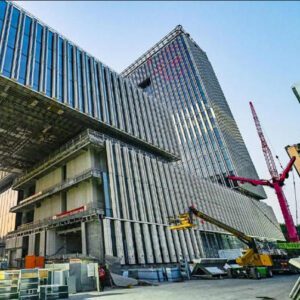
The distributors who build durable BIPV solar window businesses are those who make systematic product decisions — not those who respond to whoever had the best trade show booth. Source: Unsplash
The Three Decisions You Need to Make This Week
You’ve read the framework. The product selection process for solar panel windows comes down to three concrete decisions you can make in the next 5 business days.
Decision 1 — Clarify your target customer profile and their primary pain points. Pull your commercial customer list and identify the top 10 accounts by annual revenue. For each one, note: what building types do they serve, what climate zone are they operating in, and what is their primary pain point right now (aesthetic restrictions, budget constraints, energy compliance requirements, or resale value concerns)? This exercise takes 2 hours and produces the customer profile that all subsequent product decisions should serve.
Decision 2 — Identify 2–3 products to pilot test with your network. Using the weighted decision matrix structure from this guide, score 5–8 candidate products from manufacturers who meet the certification baseline (IEC 63092-1, IEC 61215, NFRC) and can provide verifiable test data. Select the two or three highest-scoring products for pilot purchase agreements. Contact one manufacturer today — request their test certificates, sample warranty document, and pricing for a 50 m² pilot order. Jia Mao BIPV offers distributor consultation and transparent solar panel comparison tools that help you evaluate product specifications before committing to inventory.
Decision 3 — Set up a simple tracking system for customer satisfaction and ROI. Create a spreadsheet with five columns: customer name, project delivery date, 90-day follow-up call date, customer satisfaction score (1–5), and warranty claim status. Complete the 90-day follow-up call for every commercial solar window project delivery. This simple discipline, sustained consistently, gives you the real-world performance data that separates market leaders from average distributors — and it costs nothing but 15 minutes per project.
Ready to Build Your Solar Window Product Line?
Download our Distributor’s Product Evaluation Checklist — a practical tool that walks you through every factor in this guide, formatted for your sales team to use on every product evaluation. Make confident inventory decisions, reduce customer complaints, and protect your margins.
👉 Download the Free Checklist at jmbipvtech.com — or explore the solar window buyer’s framework for the complete specification checklist your team needs.
📺 Watch: Understanding Building-Integrated Photovoltaics — What Every Distributor Needs to Know
Before your next commercial solar window specification conversation, watch this expert walkthrough of BIPV integration principles, installation requirements, and building performance outcomes:
Source: IEA PVPS — Building-Integrated Photovoltaics Application and Design
Glossary of Key Technical Terms
BIPV (Building-Integrated Photovoltaics): Solar energy products that replace conventional building materials — glass, roofing, cladding — while simultaneously generating electricity. Solar panel windows are a subcategory of BIPV.
U-Factor: The rate at which a window conducts non-solar heat flow. Lower values indicate better insulating performance. The critical thermal performance metric for cold-climate product selection.
SHGC (Solar Heat Gain Coefficient): The fraction of solar energy transmitted through the glass as heat. Scale 0–1. Low SHGC = better solar control for hot climates. High SHGC = more passive solar heating for cold climates.
VLT / VT (Visible Light Transmittance): The percentage of visible daylight that passes through the glass. Higher VLT = more interior daylighting, lower power density. Lower VLT = higher power output per m².
Low-E (Low-Emissivity): A microscopically thin metallic coating that reflects infrared heat while allowing visible light to pass. Reduces both heating and cooling loads depending on coating position in the glass unit.
ITC (Investment Tax Credit): The US federal tax credit covering 30% of the installed cost of solar energy systems, including BIPV solar windows, available to commercial property owners under IRC Section 48E.
NFRC (National Fenestration Rating Council): The independent US organization that certifies energy performance ratings (U-Factor, SHGC, VT, CR) for windows, doors, and skylights. NFRC certification is required for ENERGY STAR eligibility.
IEC 63092-1: The international standard for photovoltaic modules used as building materials (BIPV). Required for commercial building permit specification in most jurisdictions.
TMY (Typical Meteorological Year): A 30-year average climate dataset used for solar energy modelling. The NREL PVWatts calculator uses TMY data to generate location-specific annual generation estimates.
C-PACE (Commercial Property Assessed Clean Energy): A financing structure allowing commercial property owners to finance solar installations through property tax assessments, repaid over 10–25 years with no upfront capital.
BOS (Balance of System): All components of a solar installation other than the panels themselves — inverters, wiring, mounting hardware, metering equipment, and interconnection hardware.
MACRS (Modified Accelerated Cost Recovery System): The US tax depreciation system that allows solar energy property to be depreciated over a 5-year schedule, significantly improving the first-year cash flow of commercial solar investments.
12 FAQs Your Customers Are Asking (And Why Your Answers Matter)
1. How much energy will solar panel windows actually save me?
The honest answer — which is the answer that builds long-term customer trust — is: it depends on four variables specific to your building, and we can calculate it precisely. The four variables are: glazed area (m²) and orientation (south-facing generates approximately 40% more than north-facing at mid-US latitudes), local solar irradiance (use NREL PVWatts data for your location), local electricity rate (USD/kWh), and HVAC efficiency gain from the Low-E coating. For a south-facing commercial office building with 800 m² of glazing in a Zone 4 climate at USD 0.20/kWh, a mid-range solar window specification generates approximately USD 18,000–24,000 per year in combined energy value. Providing a range with a documented calculation method is more credible than providing a single number — and customers who see documented calculations refer business; customers who feel oversold do not.
2. Are solar panel windows worth the investment compared to regular windows?
When your customer is already replacing windows — end-of-life, damage, code upgrade — the relevant comparison is not “solar windows vs. nothing” but “solar windows vs. conventional replacement windows.” In that comparison, the incremental cost of a mid-range solar window over a premium conventional window is USD 80–150/m². That incremental cost generates USD 28–35/m²/year in energy value (generation plus HVAC savings), implying an incremental payback of 2.5–5 years — an exceptionally strong return on an investment the building owner was making anyway. When presented this way, the question shifts from “are they worth it?” to “can we afford not to specify them?”
3. What’s the difference between solar windows and regular energy-efficient windows?
A regular energy-efficient window is a passive component: it insulates, controls solar heat gain, and transmits daylight, but it produces nothing. An ENERGY STAR-certified double-pane Low-E window with a U-Factor of 0.27 will save energy compared to a single-pane window — but it generates zero electricity. A solar panel window with the same thermal performance specifications also generates 100–150 Wp/m² of electricity. The critical technical distinction is the presence of photovoltaic cells — semiconductor layers that convert photons to electrons — integrated into the glass laminate. A window without PV cells, regardless of how many energy-efficiency certifications it carries, is not a solar window.
4. How long do solar panel windows last?
Premium solar panel windows carry a 25-year power performance warranty (output not below 80% of rated at year 25) and a 10-year product warranty covering manufacturing defects. Real-world field data from solar modules — the same PV technology integrated into solar windows — shows that well-constructed products maintain 92–94% of original output after 25 years (ASES analysis), outperforming the 80% warranty threshold. Frame and seal components in quality products are designed for 30–50 year service life depending on frame material (fiberglass and thermally broken aluminum at the higher end). Use warranty length as a quality proxy when evaluating products: a manufacturer offering only a 10-year power warranty is implicitly signaling lower confidence in the product’s 25-year performance than one offering the full 25-year warranty structure.
5. Can solar panel windows be installed in older homes?
Yes, with a structural assessment first. Buildings constructed after 1975 typically have curtain wall or commercial frame systems robust enough to support the additional weight of solar window units (solar windows weigh 24–35 kg/m² vs. 18–22 kg/m² for conventional double-pane glazing). Buildings from before 1960 may require frame reinforcement. The retrofit opportunity for buildings aged 20–40 years is the most commercially attractive segment because original windows are at or near end-of-life (typical commercial window unit service life: 20–30 years), creating a natural replacement cycle that makes the incremental cost of solar windows the only relevant comparison — not the full installed cost. Identify commercial buildings in your territory with original single-pane or early double-pane glazing: these are your highest-conversion retrofit prospects.
6. What maintenance do solar panel windows require?
The maintenance schedule for solar panel windows is effectively identical to conventional commercial glazing: exterior cleaning twice annually (spring and autumn are standard in most climates), plus a visual inspection for frame seal integrity and any signs of glass unit fogging. The PV cell components require no additional maintenance — the electrical system should be inspected by a licensed electrician every 5 years as part of normal solar system maintenance. If your customer’s building has an existing facade maintenance contract for conventional glazing, that contract covers the solar window maintenance requirement without modification. Position this as a feature: “The maintenance cost for solar windows is the same as your current window cleaning program — there is no additional service obligation.”
7. Do solar panel windows work in cloudy climates?
Yes — with realistic expectations communicated upfront. Solar panel windows generate electricity from diffuse irradiance (scattered daylight on overcast days) as well as direct sunlight. Under overcast conditions, output falls to 10–25% of rated capacity, but a commercial building in Seattle averages 233 sunny days per year plus significant diffuse-light generation on partially cloudy days, yielding annual generation approximately 68–72% of equivalent Phoenix output. In financial terms: if a Phoenix commercial building generates USD 28,000/year from 800 m² of south-facing solar windows at USD 0.15/kWh, an equivalent Seattle building with the same area generates approximately USD 26,000/year at USD 0.25/kWh (Seattle’s higher utility rate compensates for lower irradiance). The financial case often strengthens in high-electricity-rate cloudy markets — Seattle, Boston, New York — compared to low-rate sunny markets like the US South Central region.
8. What certifications should I look for when choosing solar windows?
The non-negotiable certification set for commercial solar panel windows: NFRC certification (for U-Factor, SHGC, and VT ratings — required for building permit applications in most US jurisdictions), IEC 61215 (design qualification for PV modules — required for ITC eligibility), IEC 61730 (safety qualification for PV modules — required alongside IEC 61215 for building permit applications), and IEC 63092-1 (the BIPV-specific standard — required to specify the product as a building material rather than a solar accessory). For residential or light commercial applications, ENERGY STAR certification is additionally required for the 25C tax credit. Always verify certification status in the issuing organization’s database — not on the manufacturer’s datasheet — before adding any product to your inventory.
9. How do I know which frame material is best for my climate?
The rule of thumb by climate zone: vinyl for cold to mixed climates (Zones 4–8) where thermal performance is the primary frame criterion; thermally broken aluminum for mixed to warm climates (Zones 3–6) where structural performance and design flexibility are required alongside adequate thermal performance; fiberglass for any climate where you need superior thermal performance plus maximum long-term durability (particularly coastal environments with high UV and salt spray exposure). Avoid standard non-thermally-broken aluminum in any climate north of Zone 3 — it is a thermal bridge that generates interior condensation, frame mold, and eventual structural damage, producing customer complaints that will follow you for years.
10. Will solar panel windows affect my home’s appearance?
Modern solar panel windows in commercial specifications are architecturally indistinguishable from conventional tinted glass at normal building viewing distances. The semi-transparent appearance of a 25–30% VLT solar window is visually comparable to a conventional solar-control tinted window — the kind already specified on thousands of commercial buildings in every major US market. For customers with specific aesthetic concerns, custom tint matching (Delta-E tolerance below 2.0 from any glass reference sample) allows the solar window specification to match existing glazing on the building exactly. The most effective response to this objection is a set of high-resolution photographs from comparable installed projects — real buildings that look like the customer’s building, with solar windows installed, looking exactly as they should.
11. What’s the installation process, and how long does it take?
For commercial curtain wall replacement or new installation, the full project timeline from signed order to operational system is typically 16–24 weeks: 10–16 weeks for custom panel manufacturing and delivery, 1–3 days for glazing installation per floor (depending on panel size and access), 2–5 days for electrical system installation and commissioning, and 2–6 weeks for utility interconnection approval. The customer-facing disruption is primarily the glazing installation phase (1–3 days per floor) and the electrical commissioning period (during which the system is installed but not yet producing power). Communicate this timeline clearly at the project outset — timeline surprises are the leading cause of commercial customer dissatisfaction in BIPV projects.
12. Are there government incentives or tax credits for solar windows?
Yes — and knowing the current status of these programs is a genuine competitive advantage. For commercial installations: the Federal ITC (30% of total installed cost under IRC Section 48E, no capacity cap) is the primary incentive, available to all commercial property owners who pay US federal income tax. MACRS 5-year accelerated depreciation provides additional first-year tax benefit. State-level incentives — available in approximately 35 US states — add 5–30% additional incentive value in the most generous states. For residential or light commercial installations, the 25C Energy Efficient Home Improvement Credit provides up to USD 600 for ENERGY STAR-certified windows (conventional efficiency windows, not specifically solar windows). The ENERGY STAR tax credit guidance and the DSIRE database are the two authoritative sources for current incentive program status — check both quarterly, as program parameters change with annual appropriations legislation.
Research sources: US Department of Energy (DOE) climate zone mapping, PNNL triple-pane window performance data, NREL PVWatts tool and TMY climate dataset methodology, NFRC certification standards, ENERGY STAR commercial building guidelines, ASTM E2190 insulating glass unit durability standards, Zillow home value analysis (solar premium data), Patsnap diffuse light performance research (2024), EA Global weather-impact solar output analysis, Paradise Solar Energy commercial ROI benchmarks, HN Central Glass Low-E energy performance data, IEC 61215 / IEC 63092-1 international standards documentation, and Jia Mao BIPV distributor network product and performance data. All financial projections are for planning purposes — consult a licensed tax and financial professional for project-specific calculations.