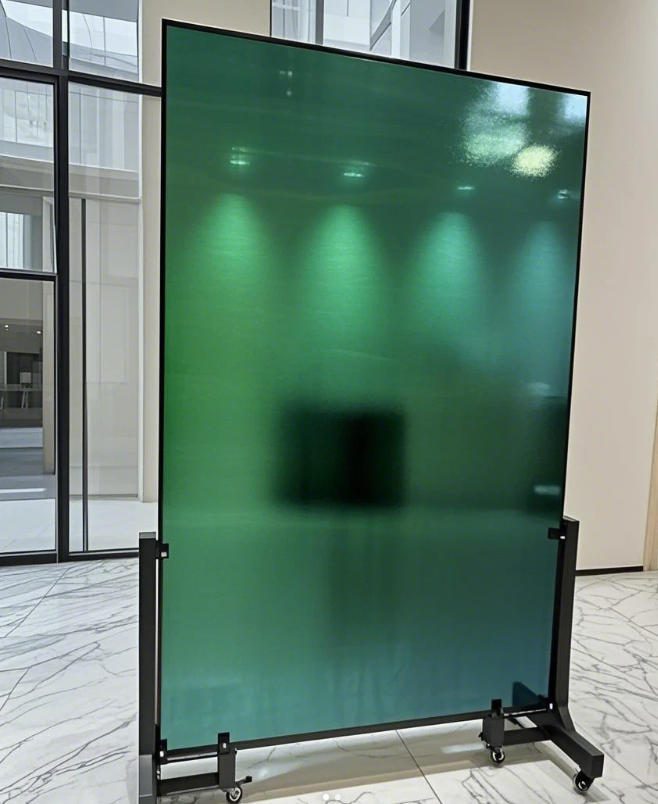
How Solar Panel Windows Help You Capture Market Share and Increase Customer Lifetime Value
The growing demand for integrated solar solutions has created a specific gap in the residential market: homeowners want the financial benefits of solar, but they don’t want their home’s architecture compromised by rooftop panel arrays. Solar panel windows close that gap — and for distributors and agents who position them correctly, they represent a high-margin product category that opens customer conversations traditional solar simply can’t start.
This guide covers the 10 core advantages of solar panel windows — written specifically for distributors and agents who need to translate product benefits into sales conversions, overcome objections confidently, and build customer relationships that generate referrals.

Understanding Your Customer’s Core Problem: Energy Costs + Home Aesthetics
Why Homeowners Are Frustrated With Traditional Solar Solutions
Walk through any premium residential neighborhood and you’ll see the pattern: custom-designed homes with rooftop panel arrays that look exactly like what they are — industrial equipment bolted onto residential architecture. For the homeowners who care about design — and in the luxury and premium residential markets, that’s nearly all of them — this visual compromise is a dealbreaker.
Rooftop panels create visual clutter that reduces curb appeal. Surveys of home buyers consistently show that aesthetic concerns rank among the top reasons homeowners hesitate on solar. The irony is that these are often the same homeowners with the highest energy bills, the strongest interest in sustainability, and the greatest financial capacity to invest in solar solutions.
Customers want energy savings without compromising their home’s design. This isn’t a niche preference. Research published in MDPI’s Energies journal (Vardopoulos, 2023) found that 72% of homeowners surveyed were interested in energy efficiency investments — but the same research showed that aesthetic integration was consistently cited as a decisive factor in purchase decisions.
The gap between “energy efficient” and “beautiful” has left market opportunity untapped. That gap is exactly where solar panel windows — photovoltaic glass integrated directly into window frames, skylights, and glazed facades — operate. For distributors and agents, this gap represents a customer segment that has been actively trying to say yes to solar while waiting for a product that let them.
How Solar Panel Windows Solve the Dual-Benefit Problem
Solar panel windows — also called BIPV window systems (Building-Integrated Photovoltaics, meaning solar technology embedded directly into building materials rather than mounted on top of them) — generate electricity using photovoltaic cells embedded within the glass itself. The window looks like a high-quality architectural glazing product. It also functions as a power generator.
The customer gets energy generation without sacrificing home value or appearance. For distributors, this means the two most common residential solar objections — “it’s ugly” and “it’s complicated” — are addressed by the product itself before the sales conversation begins.
Your competitive advantage: Most distributors in your territory are still leading with rooftop panels. The distributor who adds solar panel windows to their portfolio has a product category their competitors aren’t offering, a customer segment those competitors aren’t reaching, and a margin structure that outperforms commodity panel distribution.
Benefit #1 – Significantly Reduced Energy Bills
How Much Can Homeowners Actually Save?
The financial case for solar panel windows starts with the same energy economics as rooftop solar — and then adds the aesthetic and property value dimensions that make the premium pricing defensible.
A Lawrence Berkeley National Lab study found that the median US solar customer sees annual bill savings of $1,987 from their solar installation. Solar panel windows targeting south-facing glazed surfaces in high-irradiance climates achieve comparable generation per m² to rooftop systems at equivalent orientation — meaning customers in strong-sun markets can expect 30–50% reductions in their electricity costs from a well-specified solar window installation covering significant glazed area.
The regional variation your sales team needs to understand:
| Region | Average Annual Energy Bill | Projected Solar Window Savings | Estimated Annual Dollar Savings |
|---|---|---|---|
| California (high irradiance, high rates) | $2,100 | 40–50% | $840–$1,050 |
| Texas (high irradiance, moderate rates) | $1,800 | 35–45% | $630–$810 |
| Northeast (moderate irradiance, high rates) | $2,400 | 25–35% | $600–$840 |
| Pacific Northwest (lower irradiance, moderate rates) | $1,400 | 20–30% | $280–$420 |
| Southeast (high irradiance, moderate rates) | $1,700 | 35–45% | $595–$765 |
Data based on EIA residential electricity pricing 2024; LBNL solar customer bill savings analysis; regional irradiance data from NREL PVWatts.
Translating Savings Into Your Sales Pitch
Cost-benefit analysis frameworks are the most effective sales tool for overcoming the upfront investment objection. The conversation shifts from “this costs $X” to “here’s what happens to your energy bill for the next 25 years if you do nothing versus if you invest now.”
The payback period for solar panel windows in most residential markets runs 8–12 years — and after payback, the system continues generating savings for a further 15–20 years. With the 30% federal Investment Tax Credit (ITC) applied — which applies to qualifying BIPV products — the effective upfront cost drops significantly, shortening payback to 6–9 years in strong-sun markets.
Creating urgency: The residential ITC providing up to 30% cost reduction expires after December 31, 2025 for qualifying customer-owned systems, according to Enphase Energy’s ITC update analysis (2025). This is a concrete, time-limited reason to act now that your sales team can use in every customer conversation without manufactured pressure.
Why This Matters for Your Distribution Business
Quantifiable savings give customers the confidence to commit — and committed customers who experience those savings become your most effective referral generators. A homeowner who tells their neighbor “my bills dropped by $800 last year” generates a warmer inbound lead than any digital advertisement.
Positioning yourself as a problem-solver, not just a product vendor, starts with leading every customer conversation with the financial outcome rather than the product specification.
Benefit #2 – Increased Property Value
The Real Estate Market’s Response to Solar Windows
Solar technology consistently adds measurable value to residential properties. According to Zillow’s 2024 analysis, homes with solar installations sell for 4.1% more than comparable non-solar properties nationally, representing a median premium of approximately $15,000–$32,000 depending on market and system size (Nuwatt Energy analysis, 2024).
Studies of solar home sale performance show that homes with owned solar systems sell 13–20% faster than comparable non-solar properties — spending 10–18 fewer days on market (Solar Info Path, 2024). For homeowners planning to sell within 5–15 years, this combination of value increase and faster sale cycle is a persuasive investment argument.
Solar panel windows add an additional dimension that rooftop panels don’t: architectural integration. High-end properties featuring integrated solar glazing don’t carry the visual discount that some buyers apply to homes with obvious panel arrays. The energy generation is fully integrated into the building design, making the property more attractive to the design-conscious buyers who typically occupy the premium segment of the residential market.
How to Communicate This to Homeowners (And Why It Matters to You)
Positioning solar windows as a home improvement that pays dividends requires a simple two-column comparison in your sales materials: the initial investment alongside the cumulative value creation — energy savings over 25 years, property value increase, and the avoided cost of conventional window replacement that the solar window also handles.
Documentation that proves property value increases: The US Department of Energy’s Lawrence Berkeley National Lab analysis of solar home premiums provides peer-reviewed data confirming the resale value impact of solar installations. Sharing this reference — not just asserting a number — builds the credibility that converts skeptical homeowners.
Your Advantage as a Distributor
The distributor who can show a homeowner how solar windows affect their home’s resale value — not just their energy bill — is serving a genuinely different and more complete customer need than a distributor focused only on wattage and payback calculations.
Satisfied customers who experienced both energy savings and a smooth home sale with a documented solar premium become advocates who recommend you to every homeowner conversation they have. That referral network is your most cost-effective customer acquisition channel.
Benefit #3 – Environmental Impact & Sustainability

Meeting the Growing Demand for Eco-Conscious Solutions
The demand for sustainable home features is not a marketing trend — it’s a demographic reality. Research published in MDPI’s Energies journal (2023) found that 64% of homeowners surveyed were interested in investing in renewable energy, and a parallel 2023 study of green building demand found that 63% of US homeowners actively prefer smaller, greener homes (Ruby Home Green Building Statistics, 2024).
The World Green Building Council’s latest trends survey found that nearly half of respondents expect 60% of their projects to be green within three years (WorldGBC, 2024). This preference is translating directly into what residential buyers specify, what builders propose, and what architects design.
For distributors and agents, this represents a customer segment that is actively looking for a product like solar panel windows — one that delivers both environmental benefit and integrated design without the visual compromise of rooftop panels.
Quantifying Environmental Impact in Customer-Friendly Terms
The environmental math on solar panel windows translates naturally into customer-friendly language. A solar window installation generating 3,000–5,000 kWh annually (depending on system size and location) reduces CO₂ emissions by approximately 1.5–2.5 tonnes per year — equivalent to planting 35–60 mature trees annually, based on EPA carbon equivalency calculations.
These equivalencies create emotional connection between a purchase decision and a tangible positive impact. For the values-driven customer segment, this emotional connection is not secondary to the financial case — it’s often primary.
Building Your Brand Around Sustainability
The distributors and agents who build a visible sustainability identity — using project case studies, environmental data, and community contribution messaging — attract a customer segment with higher willingness to pay premium pricing e stronger referral behavior than the purely price-driven residential buyer.
Create content that documents the environmental impact of completed installations in your territory: cumulative kWh generated, CO₂ reduced, and energy bill savings across your customer base. Sharing this annually positions your brand as an environmental contributor with a documented track record — not just a business making sustainability claims.
Benefit #4 – Enhanced Home Aesthetics & Design Integration
Solving the “Ugly Solar Panels” Objection
The aesthetic objection to rooftop solar is the single most common reason design-conscious homeowners decline solar in the premium residential segment. Solar panel windows eliminate this objection structurally — the product IS the architectural element, not an addition to it.
How solar windows maintain home architecture and curb appeal: BIPV window systems integrate photovoltaic cells into the glass itself, using cell arrangements, transparency levels, and framing options that allow the product to match existing architectural details. Transparency options typically range from 20% to 60% VLT (Visible Light Transmittance — the percentage of daylight that passes through), giving architects and homeowners genuine design flexibility.
Design options and customization: Leading BIPV manufacturers including Jia Mao BIPV offer solar glazing in custom dimensions, transparency levels, cell colors, and frame configurations specifically designed for residential integration. A south-facing window wall that generates electricity can be specified to match the home’s existing glazing profile — visually indistinguishable from premium architectural glass.
Positioning Solar Windows as a Premium Home Feature
The language shift that closes more premium residential deals: stop presenting solar windows as an energy product with aesthetic benefits, and start presenting them as an architectural upgrade with energy generation capability.
Interior designers and architects are increasingly adopting BIPV glazing as a standard specification option for high-performance residential projects. This adoption by design professionals gives distributors a valuable third-party endorsement that resonates with design-conscious buyers: when their architect specifies a product, it carries implicit quality validation.
Why Aesthetics Drive Your Sales Volume
Removing the aesthetic barrier to solar adoption opens the full premium residential market — the segment that has historically been the most solar-interested but least solar-committed due to design concerns.
Conversion rates improve when customers see that the visual barrier has been removed. Higher conversion rates mean lower customer acquisition cost — which means more of your marketing investment generates actual revenue rather than high-engagement-but-no-commitment interactions.
Benefit #5 – Improved Home Comfort & Temperature Regulation
How Solar Windows Enhance Year-Round Comfort
Solar panel windows don’t just generate electricity — they manage how solar radiation enters the home. The photovoltaic cells and specialized coatings within BIPV glass absorb a portion of incoming solar radiation that would otherwise enter the home as heat gain in summer.
Research from CoolVu (2024) found that uncontrolled solar heat gain accounts for 25–30% of residential energy costs and creates temperature variations of 8–15°F between rooms — the source of the “hot room” problem that homeowners in sunny climates deal with daily.
Solar panel windows reduce this solar heat gain while simultaneously generating electricity from the absorbed radiation — a dual benefit that improves both comfort and economics simultaneously. In winter, the same glass technology that limits excessive summer heat gain provides improved insulation performance compared to standard single or double glazing, reducing heating costs through better thermal retention.
The Comfort-to-Energy-Savings Connection
The comfort benefit is often the dimension of solar windows that generates the strongest customer word-of-mouth, because it’s the one that customers experience daily and notice immediately. A homeowner who comments “we haven’t run the AC as much this summer and the house actually feels cooler” generates a referral conversation that no energy bill comparison can match.
Positioning this as a lifestyle upgrade, not just an energy product opens the product to homeowners whose primary frustration is comfort rather than cost — a significant segment in high-irradiance markets where temperature management is a persistent daily concern.
Your Sales Strategy Around Comfort Benefits
Addressing durability and performance concerns: Solar panel windows from established BIPV manufacturers are built to the same structural and thermal performance standards as premium architectural glazing. They carry the same weather resistance certifications, the same building code compliance documentation, and the same professional installation requirements as conventional high-performance glazing.
Leading your comfort conversation with third-party performance certifications (ENERGY STAR, NFRC ratings) rather than manufacturer claims removes the skepticism that comfort-focused customers often bring to new technology product categories.
Benefit #6 – Government Incentives, Tax Credits & Rebates
Understanding Current Incentive Landscapes
The federal Investment Tax Credit (ITC) — which provides qualifying residential solar system purchasers with a 30% tax credit on the cost of their solar installation — is currently one of the most powerful financial drivers for residential solar adoption in the US. The IRS Energy Efficient Home Improvement Credit also provides up to $1,200 annually for qualifying energy-efficient home improvements including windows and skylights meeting Energy Star requirements.
The critical timeline your customers need to know: the residential solar ITC providing the full 30% credit is set to expire for customer-owned systems after December 31, 2025 (Enphase Energy, 2025). For homeowners evaluating solar windows, this creates a genuine and verifiable financial urgency that moves purchase timelines forward.
State and local incentives vary significantly by jurisdiction. California’s SGIP (Self-Generation Incentive Program), Massachusetts’ SMART program, and New York’s NYSERDA rebates provide additional financial incentives layered on top of the federal ITC. Utility company rebates in many service territories add further reductions to effective customer cost.
| Incentive Type | Typical Benefit | Who Qualifies | Your Role |
|---|---|---|---|
| Federal ITC (solar) | 30% of installed cost | Homeowners with tax liability | Educate and document |
| Federal Energy Efficient Window Credit | Up to $600/year | ENERGY STAR qualified windows | Identify qualifying products |
| State rebate programs | $0.15–$0.50/W | Varies by state | Provide state-specific guide |
| Utility rebates | $50–$500 per system | Varies by utility | Connect customers with utility |
| PACE financing | 100% upfront coverage | Property owners | Present as financing option |
Sources: IRS Energy Efficient Home Improvement Credit 2025; ENERGY STAR Federal Tax Credits; EnergySage state incentive database.
Helping Customers Navigate Financial Incentives
The distributor who makes the incentive process simple — creating a one-page regional incentive summary, helping customers understand how to document qualifying costs, and connecting them with tax professionals familiar with solar credits — removes one of the most common friction points in the solar purchase decision.
Positioning yourself as an expert who handles incentive complexity differentiates your operation from competitors who deliver a product and leave customers to navigate the paperwork alone. Customers who feel supported through the financial complexity are significantly more likely to complete the purchase and to refer others who ask who handled their solar window project.
Why This Knowledge Becomes Your Competitive Moat
Accurate, current incentive information is genuinely valuable — and most homeowners don’t have it. The distributor who provides this information proactively builds authority that commodity competitors can’t replicate by dropping a product price. Customers choose suppliers who reduce complexity, not just suppliers who reduce price.
For a complete overview of BIPV product options and the incentive structures that apply to qualifying solar glazing products, Jia Mao BIPV’s top BIPV product guide provides detailed specifications that align with federal qualifying requirements.
Benefit #7 – Long-Term Durability & Low Maintenance

Addressing Customer Concerns About Product Longevity
The durability question is one of the first concerns that homeowners — particularly those investing in premium residential solutions — raise about solar panel windows. The answer, supported by industry data, is straightforward.
Leading solar PV technology carries a 25–30 year operational lifespan with typical performance degradation of 0.45–0.5% per year (EnergySage, 2025; ASES performance analysis). After 25 years, a high-quality panel maintains 87–88% of its original rated output — a performance profile that makes the product’s long-term value proposition highly defensible. High-quality solar panel windows meet the same performance standards as conventional solar PV modules while additionally meeting architectural glazing durability requirements for weather resistance, structural load bearing, and thermal cycling.
Warranty coverage from established BIPV manufacturers typically includes: a 25-year performance warranty guaranteeing minimum output levels; a 10–12 year product (materials and manufacturing defects) warranty; and a workmanship warranty covering installation quality. These coverage tiers, clearly explained to customers before purchase, remove the anxiety that premium pricing can create.
Total Cost of Ownership Analysis
The comparison that consistently converts skeptical buyers: total cost of ownership over 25 years, not just upfront price.
| Comparison | Custo inicial | 25-Year Maintenance | Energy Savings (25 yr) | Net 25-Year Position |
|---|---|---|---|---|
| Standard windows only | $8,000–$15,000 | $500–$1,500 (cleaning, sealing) | $0 | -$9,000 to -$16,500 |
| Rooftop solar + standard windows | $20,000–$35,000 | $1,500–$3,000 | $30,000–$50,000 | +$9,000 to +$25,500 |
| Solar panel windows (BIPV) | $25,000–$45,000 | $500–$1,000 (no separate system) | $30,000–$50,000 | +$12,000 to +$26,000 |
Illustrative ranges based on a medium-specification residential installation. Actual results vary by market, utility rate, and system size.
Your Role in Establishing Trust
The way you present warranty information determines whether it builds confidence or raises suspicion. Present warranty terms line by line, specifically — what’s covered, what’s excluded, who to contact, and what the remedy process is. The distributor who walks a customer through warranty specifics before they ask demonstrates confidence in the product. The one who says “it’s covered” and changes the subject triggers the opposite response.
Building your reputation as a reliable, long-term partner — not a transaction-focused product vendor — starts with how you handle the warranty conversation before the sale.
Benefit #8 – Seamless Integration With Smart Home Technology
How Solar Windows Connect to Smart Home Ecosystems
Solar panel windows integrate with home energy management systems in the same way as conventional solar installations — connecting through the home’s inverter to monitoring platforms that track real-time generation, consumption, and grid interaction.
Leading monitoring platforms (Enphase Enlighten, SolarEdge mySolarEdge, Huawei FusionSolar) provide app-based real-time performance visibility, historical generation data, and performance alerts if the system deviates from expected output. Voice integration with Amazon Alexa and Google Home allows homeowners to check energy generation status as part of their daily smart home routine.
The automated energy management capability — where the smart home system automatically directs solar generation to battery storage, high-consumption appliances, or grid export based on real-time pricing and consumption patterns — creates measurable additional value beyond simple net metering.
Positioning Solar Windows as Part of a Larger Solution
The upsell pathway from solar windows to a comprehensive home energy solution follows a natural logic: solar windows generate power → battery storage captures excess generation → smart home controls optimize when that stored power is used → EV charging integration extends the value to transportation energy costs.
Each product in this chain is a natural complement to the previous. Distributors who offer or refer across this ecosystem are creating multi-product customer relationships that generate significantly higher customer lifetime value than single-product transactions. A customer who starts with solar windows and adds storage 18 months later, then EV charging integration after their next vehicle purchase, represents a relationship worth 3–5x the value of the initial installation.
Why Smart Integration Increases Your Market Share
Tech-forward homeowners — those who already have smart thermostats, connected appliances, and home automation systems — are among the highest-converting customer segments for solar window technology. They understand connected systems, they have existing infrastructure that integrates with solar monitoring, and they are willing to pay premium pricing for products that extend and enhance their existing smart home investment.
This segment is also highly likely to generate social proof through their networks — sharing performance data, discussing their monitoring apps, and recommending their technology suppliers to peers who ask about their energy setup.
Benefit #9 – Increased Energy Independence & Resilience
Meeting Customer Concerns About Grid Reliability
Grid reliability concerns have moved from a niche preoccupation to a mainstream concern following high-profile outages in Texas (Winter Storm Uri, 2021), California’s rolling blackouts, and the increasingly visible impact of extreme weather events on grid infrastructure. Stanford Energy research (2024) found that approximately 60% of US households could reduce electricity costs by 15% on average with solar-battery systems — and the resilience benefit was cited as a primary motivator by a significant proportion of respondents.
Solar panel windows, connected to home battery storage, provide a measurable reduction in grid dependence. During daylight hours, the home runs on generated power. During evening hours, stored battery energy covers consumption. During outages, the battery provides backup power — keeping lights, refrigeration, and critical systems running while grid-dependent neighbors experience complete outage.
Positioning Energy Independence as Security
The language of energy security resonates differently with different customer segments, and recognizing this distinction improves your close rate. In markets with recent outage history, the backup power angle is often the primary motivator — the ROI calculation is secondary to the peace of mind value. In high-rate markets like California or the Northeast, the protection against rising energy costs and future price volatility is the dominant framing.
For families with medical equipment dependencies, remote property situations, or home offices where power outages have direct economic consequences, the resilience conversation has emotional as well as financial weight. The distributor who asks “have you experienced outages that affected you significantly?” before presenting the resilience solution is qualifying for the most receptive version of this customer.
Your Distributor Advantage in the Resilience Market
Integrated resilience solutions — solar windows combined with battery storage — command both higher margins and stronger customer stickiness than either product alone. A customer who has purchased a complete energy independence package from you has no single-component competitor they can defect to, because the value they experience is from the integrated system, not any individual component.
Benefit #10 – Competitive Advantage in Real Estate Marketing
How Solar Windows Help Real Estate Agents Sell Homes Faster
Solar technology gives real estate agents a concrete, data-backed marketing advantage for listings. Homes with owned solar systems sell 13–20% faster than comparable properties and command measurable price premiums (Solar Info Path, 2024; DOE Lawrence Berkeley National Lab). Solar panel windows add an additional differentiator: they present the solar technology as an architectural feature rather than an equipment installation — a meaningful distinction in markets where design-conscious buyers dominate.
For agents, a listing with solar panel windows reads as “premium home with integrated energy generation” rather than “solar panels on the roof” — a narrative that attracts rather than filters a broader set of high-value buyers.
Your B2B Opportunity: Selling to Real Estate Professionals
Real estate professionals are an underused distribution channel for solar window products. Agents and brokers who understand the resale value and marketing advantages of solar technology become active advocates for the product — recommending solar windows to seller clients preparing homes for market, and to builder clients developing premium residential inventory.
Building referral relationships with agents and brokers requires a specific outreach approach: offer a 30-minute presentation for a local real estate office on how solar technology affects listing price, sale speed, and buyer appeal — with the local data that makes it directly relevant to their market. This positions you as a knowledgeable resource, not a vendor making a pitch.
Expanding Your Distribution Network
Real estate professionals who have experienced the benefits of recommending solar windows to their clients — faster sales, higher prices, happier sellers — become consistent referral sources. A network of 15–20 active real estate advocates in your territory generates qualified warm inbound leads without additional marketing investment.
For distributors and agents looking to understand how real-world BIPV projects have performed in comparable residential contexts, Jia Mao BIPV’s real-world photovoltaic glass case studies provide the documented performance data that real estate professionals and homeowners find persuasive.
How to Position Solar Windows to Different Customer Segments

The Budget-Conscious Homeowner
For customers where the primary decision variable is financial return, lead with the long-term savings calculation — not the product features. Present the 25-year net position (total energy savings minus total investment cost), show the ITC reduction, and offer financing options that demonstrate how the monthly cost of a solar window loan compares to their current monthly energy bill.
The framing that closes budget-conscious buyers: “The alternative to investing $X today is paying your current energy bill — which is rising 3–5% annually — for the next 25 years. Here’s what that comparison looks like.”
The Luxury/Design-Focused Homeowner
Premium buyers are not primarily motivated by ROI calculations — they’re motivated by the quality of the outcome and the narrative around the product. Lead with the architectural integration story: “This is the product your home’s architect would choose if they were specifying a window that also generates energy.” Show high-resolution images of completed premium installations. Discuss customization options for transparency, dimensions, and cell color.
The framing: an architectural upgrade that happens to eliminate your energy bill — not an energy product that happens to look acceptable.
The Environmentally Conscious Customer
For values-driven buyers, the environmental impact data carries more weight than the financial projections in many initial conversations. Lead with carbon reduction equivalencies, connection to community sustainability goals, and the distinction between solar panel windows and conventional solar in terms of their manufacturing impact and end-of-life recyclability.
The framing: your home becomes part of the renewable energy infrastructure of your community — and it doesn’t require any visual compromise to do so.
The Tech-Forward Early Adopter
Tech enthusiasts are motivated by the sophistication of the integrated system and the novelty of being early in adoption of a category that will be mainstream within a decade. Lead with the monitoring platform, the smart home integration, the real-time data visibility, and the roadmap of improvements coming to the category.
The framing: this is the solar technology that the rest of the market will be adopting in 5 years — and you can have it now, with all the early adopter advantages in terms of incentive access and market position.
For a complete technical overview of how solar window technology has evolved from early BIPV concept to today’s commercial product reality, Jia Mao BIPV’s technology timeline provides the narrative that tech-forward customers find compelling.
Overcoming Common Objections — The Closing Strategies
“Solar Windows Are Too Expensive”
This objection almost always means one of two things: the customer is comparing solar windows to conventional windows (not accounting for energy value), or they’re comparing to rooftop panels without accounting for the aesthetic premium and avoided window cost.
The effective counter-framework: Present total 25-year cost of ownership with and without the ITC applied. Show the comparison against conventional windows plus a separate solar installation for equivalent outcome. Calculate the annual energy savings and show the payback period. Then let the numbers respond rather than your words.
The data that resolves this objection when the ITC is included: for a well-specified solar window installation in a high-irradiance market, the effective payback period after the 30% federal credit drops to 6–9 years, with 16–19 years of additional savings generating positive return.
“I’m Worried About Durability and Performance”
Third-party performance data removes this objection more effectively than product claims. Point to the ASES analysis showing well-constructed solar panels demonstrating real-world lifespans of 25–30 years or more across various climates (ASES, 2024). Reference the manufacturer’s 25-year performance warranty. Where possible, reference local completed installations with documented 1-year or 3-year performance data.
The most persuasive element: actual vs. projected performance from a comparable completed project in the customer’s climate zone. When you can show “this installation in [nearby city] was projected to generate X kWh in year one and actually generated Y kWh,” the durability conversation is essentially complete.
“Will Solar Windows Actually Generate Enough Power?”
Realistic output expectations, set before the customer asks, prevent disappointment and establish your credibility. An individual solar window generates 50–100W under optimal conditions depending on size, cell coverage, and orientation. A set of south-facing solar windows covering 15–20 m² of glazed area can generate 2,000–5,000 kWh annually — meaningful but typically not a whole-home replacement for a standard consumption household.
The positioning: solar windows work best as part of a balanced energy strategy — generating a significant portion of household consumption, particularly during peak daytime hours, and combined with battery storage for comprehensive coverage. This honest framing prevents over-expectation and positions you as a trustworthy advisor.
“What About Installation and Disruption?”
Professional solar window installation typically takes 2–5 days for a medium residential specification, with minimal structural modification required in most retrofit applications. The disruption comparison to rooftop solar installation — which involves roof access, structural assessment, and electrical system modification — is favorable to solar windows in most residential contexts.
Provide a specific written timeline for the customer’s project scope, identify which areas of the home will be affected during which days, and confirm the professional installation guarantee and cleanup commitments. Specificity removes the anxiety that vague reassurance can’t.
Watch: Solar Panel Windows Explained — The New BIPV Technology
Before your next customer presentation, watch this overview of how next-generation solar window technology is developing — covering the organic solar cells and perovskite technology that are pushing solar window efficiency to new levels.
“This NEW Solar Panel Window Hits Record Efficiency” — Covers how the EU-funded CitySolar project combined organic solar cells and perovskite to create solar windows with record-breaking efficiency. Essential background for sales teams positioning solar windows as cutting-edge technology.
Creating Your Sales Enablement Materials
Building Comparison Charts
Your sales team’s most useful tool in any solar window conversation is a clear, locally-calibrated comparison chart. Build one that covers three comparisons: solar windows vs. traditional rooftop panels (for customers already considering solar); solar windows vs. standard windows (for customers coming from a window replacement or renovation context); and the ROI timeline by region for your specific service territory.
| Recurso | Standard Windows | Rooftop Solar Panels | Solar Panel Windows |
|---|---|---|---|
| Integração estética | Full | Low — visible hardware | Full |
| Energy generation | None | Alta | Medium-High |
| Installation disruption | Low-Medium | Medium | Low-Medium |
| Property value impact | Baixa | +4.1% (Zillow) | +4–6% estimated |
| Government incentive eligible | Partial (ENERGY STAR) | Yes (30% ITC) | Yes (30% ITC) |
| Maintenance requirement | Baixa | Low-Medium | Baixa |
| Typical lifespan | 20–30 years | 25–30 years | 25–30 years |
| Design flexibility | Alta | Baixa | Alta |
| Smart home integration | None | Yes | Yes |
Developing Case Studies and Testimonials
The case study structure that closes commercial and residential deals: project background (home type, location, climate zone), specific challenge addressed, solution specified, installation timeline, first-year performance data, and customer comment on the experience.
Financial savings data in case studies should be specific: “$1,240 first-year energy bill reduction, against a projected $1,150” performs far better than “significant energy savings.” Specificity signals confidence in the data and respect for the customer’s intelligence.
For a detailed BIPV installation guide that distributors can adapt as technical backing for their sales materials, the step-by-step BIPV solar panel installation guide from Jia Mao BIPV covers the technical process that your installation partners will follow — giving your sales team the process confidence to address installation questions accurately.
Creating Educational Content for Customers
The educational content that generates the highest distributor credibility: guides explaining how solar windows work in plain language without the jargon that makes customers feel they’re being sold to rather than educated; performance data by climate zone that helps customers understand realistic expectations for their specific location; and incentive summaries updated quarterly for your service area, showing which federal, state, and utility programs apply and what they’re worth in dollar terms.
For customers who want to understand the technology roadmap — where solar window technology is going over the next 5–10 years — the solar window technology timeline gives distributors a credible narrative to share with tech-forward prospects who ask about the category’s future.
Position Yourself as the Solar Window Expert Your Market Needs
Your Path to Market Leadership
Solar panel windows represent a high-growth residential product category at the intersection of three strong demand trends: rising energy costs that make generation investment compelling, mandatory sustainability standards that make building integration preferable, and design-conscious homeowner demand that makes aesthetic integration non-negotiable.
The distributors and agents who position themselves in this category now — building product knowledge, developing local case studies, creating segment-specific sales materials, and establishing referral relationships with architects, designers, and real estate professionals — will be the ones capturing the customer relationships when this market reaches mainstream adoption.
The Distributor Who Wins
The distributors succeeding in solar panel windows share three characteristics. They lead customer conversations with the specific problem the customer is experiencing — not with product features. They provide documentation, data, and third-party evidence rather than manufacturer claims. And they build relationships with the professionals who influence their customers’ decisions — architects, real estate agents, contractors — creating referral networks that generate warm inbound leads rather than cold prospecting.
Your Next Steps
Begin with an audit of your current product mix: which of your existing customer segments — luxury residential, premium retrofit, environmentally focused — represents the highest natural alignment with solar panel windows? Which architects, developers, or real estate professionals in your territory are already engaged in premium residential projects where solar window specification is plausible?
Develop a regional cost-benefit analysis for your top three markets, using the tables in this guide as the framework. Create a one-page incentive summary for each jurisdiction you serve. Identify 5–10 real estate professionals or residential architects for initial relationship-building outreach.
Build these foundations in the next 30 days and you’ll have the materials, the market knowledge, and the relationship starting points to convert your first solar window inquiries into documented, referral-generating installations within 90 days.
Ready to capture this high-growth residential market? The Jia Mao BIPV team works directly with distributors and agents to provide product specifications, technical support, and go-to-market resources tailored to your territory.
Contact the B2B Sales Team to discuss wholesale pricing, regional partnership opportunities, and product training for your sales team.
Or explore the full solar glazing product range and technical resources directly:
- Complete BIPV solutions guide for residential and commercial applications
- How to assess PV glass for BIPV residential and commercial projects
- Solar control glass ROI calculator for customer conversations
Glossary of Key Solar Window Terms
BIPV (Building-Integrated Photovoltaics): Solar technology embedded directly into building materials — windows, facades, roofing — rather than mounted separately. Solar panel windows are the window subcategory of BIPV. The defining characteristic: the solar element IS the building material, not an addition to it.
VLT (Visible Light Transmittance): The percentage of visible daylight that passes through a glazing product. A VLT of 40% means 40% of natural daylight passes through; the remaining 60% is either absorbed (generating electricity) or reflected. Typical solar windows offer VLT between 20% and 60%.
SHGC (Solar Heat Gain Coefficient): The fraction of solar radiation that passes through glazing as heat. Ranges from 0 to 1. Lower SHGC reduces summer cooling loads (beneficial in hot climates). Higher SHGC contributes to passive winter heating (beneficial in cold climates). Solar windows actively manage this through photovoltaic cell coverage.
ITC (Investment Tax Credit): The federal tax credit for qualifying solar energy systems, currently 30% of installed cost for residential systems. Reduces the effective upfront cost significantly — a $30,000 installation becomes a $21,000 after-credit investment. Note: the residential ITC for customer-owned systems expires after December 31, 2025.
ENERGY STAR: A US EPA program that certifies energy-efficient products meeting specific performance standards. Windows and skylights meeting ENERGY STAR requirements qualify for separate tax credits of up to $600 annually, independent of and additive to solar-specific incentives.
Degradation Rate: The annual reduction in solar PV output over time. Industry standard for quality modules is 0.45–0.5% per year — meaning after 25 years, a panel rated at 100W at installation still produces approximately 87–88W. This is the data behind “25-year performance warranties at 80%+ efficiency.”
Net Metering: The billing arrangement where solar-generating homeowners receive credits from their utility for electricity they export to the grid. Critical context: under California’s NEM 3.0 (effective 2024), export credits have reduced significantly — increasing the value of battery storage that captures and uses generated power rather than exporting it.
Frequently Asked Questions: Solar Panel Windows for Distributors and Agents
Technical Questions
1. How much electricity can solar panel windows actually generate?
Output depends on window size, location, orientation, and cell coverage ratio. An individual south-facing solar window measuring approximately 1.5 m² with 50% cell coverage generates 50–100W under optimal direct sunlight conditions. A set of solar windows covering 15–20 m² of south-facing glazed area generates approximately 2,000–5,000 kWh annually in high-irradiance markets. For your sales positioning: frame individual windows as components of a system — multiple solar windows create cumulative generation that addresses a meaningful portion of household consumption, particularly daytime load.
2. Do solar windows work in cloudy climates or winter months?
Yes, with reduced output. Modern BIPV photovoltaic cells capture diffuse light (ambient skylight, not just direct solar radiation), which means they generate electricity in overcast conditions — at reduced levels, typically 15–25% of peak output in heavily overcast weather. Winter performance depends on latitude and panel orientation; lower sun angles in winter affect south-facing vertical installations less than horizontal roof panels. For customers in lower-irradiance markets: be honest about reduced output relative to sunny climates, and ensure your ROI projections use location-specific irradiance data from NREL’s PVWatts calculator rather than generic national averages.
3. How long do solar panel windows last?
Quality BIPV glazing products carry a 25–30 year operational lifespan with performance degradation of approximately 0.5% per year — meaning a solar window producing 100W today will still produce approximately 87W after 25 years. Performance warranties from established manufacturers guarantee minimum output levels (typically 80–87% of original rating) over this period. The glass substrate itself meets the same durability standards as premium architectural glazing — weather resistance, structural load, and thermal cycling tested per relevant building standards.
4. Can solar windows be installed in existing homes, or only new construction?
Retrofit installation is available for most existing window openings. The installation process involves removing the existing window unit and fitting the solar window product into the existing frame opening — similar in process to standard window replacement. Most residential window configurations are compatible, though non-standard dimensions require custom fabrication with lead times of 6–12 weeks. Your positioning: any home with south, southeast, or southwest-facing windows and adequate glazed area is a candidate for retrofit solar window installation.
Financial Questions
5. What’s the actual ROI and payback period for solar windows?
Payback period typically ranges 8–12 years without incentives and 6–9 years with the 30% federal ITC applied, depending on market irradiance, local electricity rates, and system size. After payback, 16–19 years of additional savings generate ongoing positive return. In markets with high electricity rates (California, Northeast) and strong irradiance, the economics are strongest. In lower-rate or lower-irradiance markets, the aesthetic and property value dimensions of the value proposition carry proportionally more weight.
6. Are there government tax credits or incentives available?
The federal ITC provides 30% of installed cost as a tax credit for qualifying solar systems, including BIPV window products meeting eligibility requirements. The IRS Energy Efficient Home Improvement Credit provides up to $600 annually for qualifying ENERGY STAR windows — potentially additive to the solar ITC for dual-qualifying products. State programs vary significantly: California, Massachusetts, New York, and New Jersey offer the most comprehensive state-level incentive stacks. The ENERGY STAR federal tax credit page is the authoritative reference for current qualifying product requirements.
7. What financing options are available?
Solar-specific loan products (Mosaic, GreenSky, Dividend Finance) allow homeowners to finance the full installation cost at interest rates of 4–8% APR over 10–25 year terms. HELOC (Home Equity Line of Credit) financing at current rates may offer lower costs for homeowners with significant equity. PACE (Property Assessed Clean Energy) financing — where the loan attaches to the property tax rather than personal credit — is available in California, Florida, and other states but carries specific risks (property lien implications) that customers should understand before selecting. Cash purchase remains the option with best long-term economics when the ITC can be fully utilized.
8. How do solar windows affect home insurance and property taxes?
Most homeowners’ insurance policies cover solar windows as building components under the dwelling coverage section — similar to standard windows. Some insurers may require a rider for the solar generation component; check with your local insurance partners for market-specific guidance. Property tax treatment varies by state: many states offer full or partial property tax exemptions for added value from solar installations (California, Arizona, Texas, and 30+ other states have exemptions in place), meaning the property value increase from solar windows may not increase the annual property tax assessment.
Installation & Maintenance Questions
9. How difficult is the installation process, and how long does it take?
Professional installation by a certified contractor is required — this is not a DIY product. A standard residential installation of 5–10 solar windows typically takes 2–5 business days from removal of existing windows to commissioning and monitoring setup. No structural modifications are required in most retrofit applications. The disruption profile is comparable to a standard window replacement project — considerably less than rooftop solar installation, which involves roof access, structural assessment, and exterior penetration work.
10. What maintenance is required to keep solar windows performing optimally?
Minimal. Solar windows require occasional cleaning (the same cleaning you’d do for standard windows) to maintain maximum light transmittance and generation output. Dust and environmental contamination on vertical installations is typically less than on horizontal rooftop panels — they shed rain more effectively. A professional electrical inspection every 5 years is recommended to verify inverter and connection performance. No moving parts, no consumables, and no annual service contracts are required for standard installations.
11. What happens if a solar window breaks or needs replacement?
Individual solar window panels can be replaced without affecting the rest of the installation — the modular electrical design allows a single unit to be disconnected, removed, and replaced while the remaining windows continue operating. Breakage under normal conditions is covered by the product warranty (similar to standard building glass). Breakage from external impact (storm damage, accidental impact) is typically covered under homeowners’ insurance under the dwelling coverage section. The replacement process is comparable in time and cost to standard architectural glass replacement by a professional glazing contractor.
Performance & Integration Questions
12. Can solar windows be combined with battery storage for backup power?
Yes — this is the highest-value integration for resilience-focused customers. Solar window generation feeds into a home battery system (Tesla Powerwall, Enphase IQ Battery, Franklin Electric) during daylight hours, storing excess generation for evening use or grid outage backup. A fully integrated solar window + battery system can maintain critical home loads (lights, refrigeration, communications) for 12–48 hours during grid outages, depending on battery capacity and consumption profile.
13. How do solar windows work with smart home systems?
Solar window installations connect to home energy management through the inverter system, which communicates with major smart home platforms (Amazon Alexa, Google Home, Apple HomeKit via compatible gateways). Performance data is accessible through manufacturer apps (real-time generation, historical output, system alerts) and can be integrated into broader home energy dashboards. Automated optimization — directing generation to priority loads, scheduling high-consumption activities during peak generation hours — is available through compatible energy management controllers.
14. Will solar windows interfere with cell phone signals, WiFi, or other wireless technology?
No. The photovoltaic coatings and cell layers within BIPV glass are designed and tested to allow standard wireless signal transmission — they do not create a Faraday cage effect that would block cellular, WiFi, or Bluetooth signals. BIPV products from established manufacturers carry the relevant electromagnetic compatibility certifications for the building markets they serve.
15. How do I as a distributor or agent identify the best customer profile for solar windows in my territory?
The highest-conversion customer profile for solar panel windows: homeowners with monthly electricity bills above $150, south-facing glazed surfaces receiving unshaded sunlight for 5+ hours daily, household income above $100,000 (sufficient to utilize the ITC against federal tax liability), and either strong aesthetic preferences that have previously blocked rooftop solar adoption, or active renovation plans that create a natural window replacement opportunity. Cross-referencing these criteria with your existing customer database typically reveals a significant addressable segment that has not yet been approached with solar window-specific positioning.