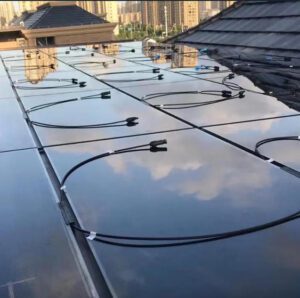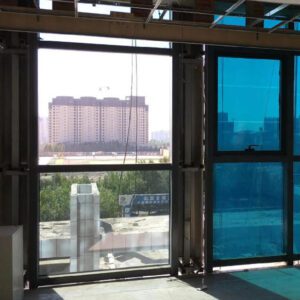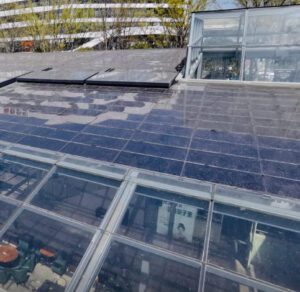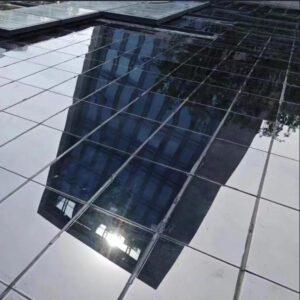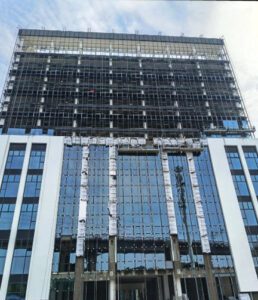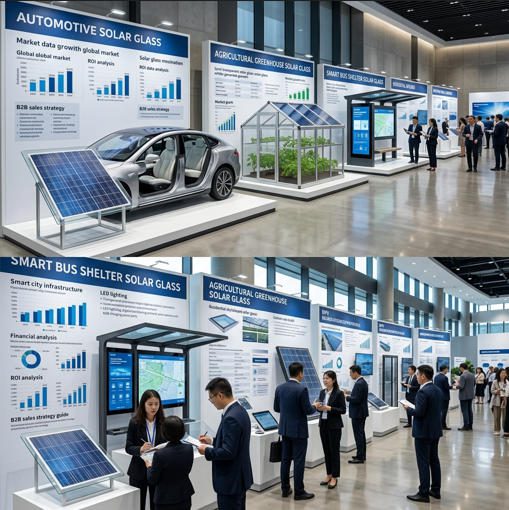
Solar glass technology is revolutionizing energy generation far beyond traditional rooftops. Discover how photovoltaic glass is reshaping vehicles, smart devices, urban infrastructure, agriculture, marine systems, aerospace, and more — creating multiple new revenue streams for distributors and agents in the renewable energy sector.
Introduction: The Solar Glass Revolution Is Here
For most of the past two decades, solar energy meant one thing: dark blue panels bolted to a south-facing roof. That picture is becoming obsolete. Solar glass — also called photovoltaic (PV) glass — is fundamentally different. It converts sunlight into electricity while remaining transparent or semi-transparent, enabling it to replace conventional glass in windows, skylights, vehicle roofs, greenhouse panels, maritime canopies, and dozens of other surfaces that were previously just energy costs waiting to be paid.
The global solar PV glass market was valued at USD 20.3 billion in 2025 and is projected to reach USD 80.4 billion by 2034, growing at a CAGR of 16% (IMARC Group). Some analysts project even faster growth — the Solar PV Glass Market research from Fortune Business Insights places the 2034 value at USD 93.7 billion. The consensus is clear: this is one of the fastest-growing segments in the entire renewable energy ecosystem.
For distributors and agents in the renewable energy sector, this market expansion represents a structural opportunity — not a temporary spike. The key insight is that solar glass creates revenue streams across ten entirely distinct application sectors, each with its own buyer profile, procurement cycle, and margin structure. Understanding where these opportunities sit is what separates early market leaders from followers.
Key Terms: Your Reference Guide
- Photovoltaic (PV) Glass
- Glass that contains embedded solar cells, converting sunlight to electricity while remaining at least partially transparent. Unlike standard panels, it functions as a building or product material simultaneously.
- BIPV
- Building-Integrated Photovoltaics. Solar glass embedded into building envelopes (windows, facades, roofing, skylights) rather than mounted separately on top of a finished structure.
- VLT (Visible Light Transmission)
- The percentage of visible daylight that passes through solar glass. 40% VLT means 40% of daylight passes through. Higher VLT = more daylight but typically less power output.
- Eficiência (%)
- The percentage of sunlight hitting the panel that is converted to electricity. Commercial solar glass: 5–22%. Higher transparency generally means lower efficiency.
- Perovskite
- An emerging solar cell material offering potentially higher efficiency and lower manufacturing cost than silicon. Currently in late-stage commercialization with lab records exceeding 34%.
- Agrivoltaics
- The co-location of solar energy generation and agricultural production on the same land. Solar glass greenhouses are a key agrivoltaic application.
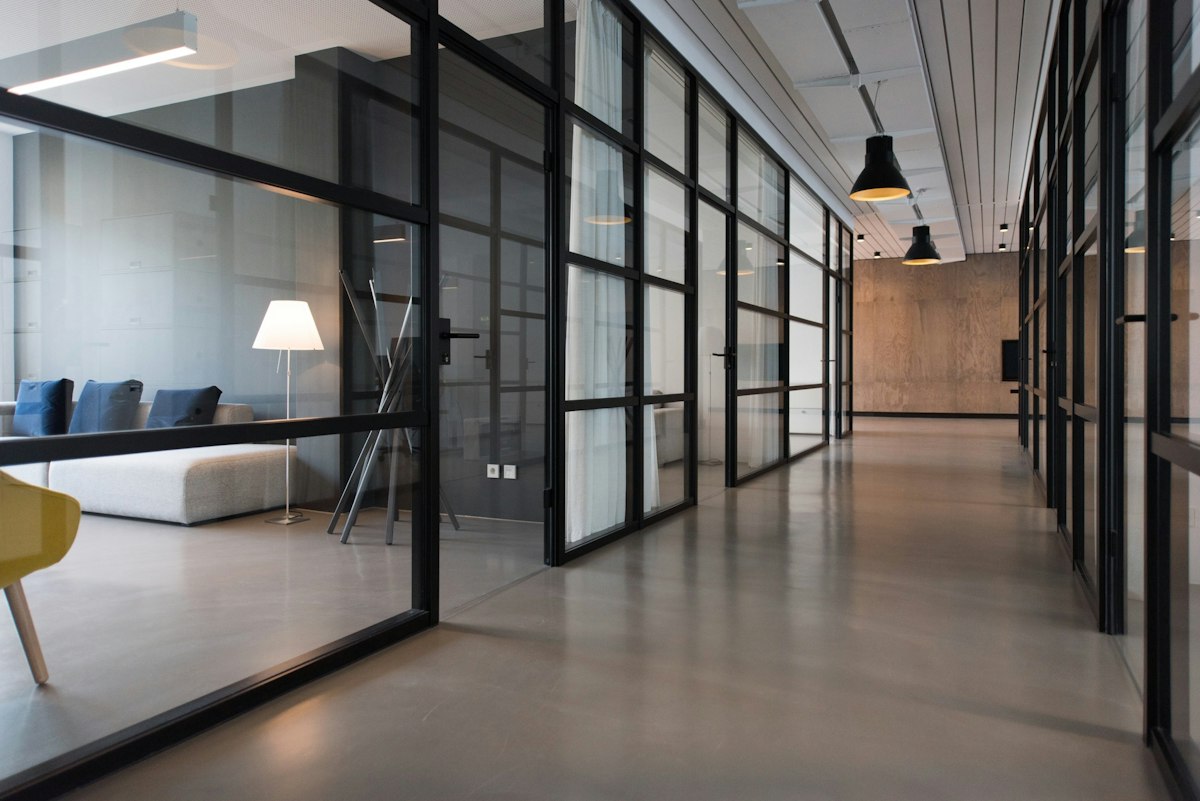
Solar glass is increasingly specified across commercial buildings, urban infrastructure, vehicles, and agricultural structures — creating diverse distribution opportunities well beyond traditional rooftop solar. Photo: Unsplash
Electric Vehicles: Powering the Future of Transportation
How Solar Glass Is Integrated Into EV Design
Automotive solar glass works by laminating monocrystalline silicon cells between two sheets of automotive-grade safety glass — the same safety-glazing technology used in windshields and panoramic roofs, simply with electricity generation added. The cells are thin enough (roughly 200 microns) and arranged with sufficient spacing to maintain meaningful transparency while harvesting solar energy from every surface exposed to daylight.
Hyundai’s Sonata Hybrid demonstrated real-world viability: its roof-mounted solar panel system uses cells with a 22.8% efficiency rate — roughly 30–50% higher than typical rooftop panel cells — and provides approximately 808 additional miles of range per year under average driving conditions, equivalent to about 2.2 miles of daily free travel from sunlight alone (Hyundai Motor Group). Lightyear’s solar technology for mobility applications achieves up to 23% module efficiency with a 95.5% DC-DC conversion rate, enabling 30–45 km of daily solar-charged range in favorable conditions (Lightyear One).
Market Opportunities for EV Solar Glass Distributors
The EV solar glass supply chain is bifurcated: OEM partnerships (supplying glass panels directly to automakers at the design stage) and aftermarket integration (solar film and panel retrofits for fleet operators and individual EV owners). For distributors, the aftermarket channel is currently more accessible. Fleet operators — logistics companies, ride-share operators, and municipal transit authorities — have the strongest economic case: every kilowatt-hour of solar-generated range directly reduces charging infrastructure costs and reduces downtime.
Wholesale distribution opportunities exist through partnerships with EV service centers, auto body shops with solar installation capabilities, and fleet management companies. Bulk pricing agreements for 50+ vehicle installations deliver both margin efficiency and predictable procurement volumes.
Challenges & SolutionsChallenges and Solutions in Vehicle Implementation
Automotive solar glass must meet standards no building-glass product faces: vibration resistance, thermal shock from rapid temperature cycles (cold garage to summer sun), impact resistance to meet safety glazing requirements, and aerodynamic profiling that does not create drag penalties. Durability certifications require testing to automotive industry standards (FMVSS, ECE regulations), which adds lead time and cost to product qualification.
Smart Home Devices: Energy Independence at Your Fingertips
Solar Glass in Windows and Smart Glass Systems
BIPV window technology embeds solar cells into laminated glazing with typical transparency levels of 20–60% VLT — enough daylight for comfortable living while generating meaningful power. Current commercial BIPV windows generate 50–100 W/m², and when integrated with home automation systems, they feed generated electricity directly into smart home energy management platforms — automatically prioritizing self-generated power, then battery storage, then grid draw.
The smart home integration layer is what elevates the sales proposition from “solar window” to “connected energy asset.” When a homeowner’s app shows them in real time that their south-facing living room windows generated 8.4 kWh today, offset their air conditioning by 62%, and saved them €2.10 — that is a different product conversation than a standard energy efficiency upgrade. BIPV technology’s advantages for modern buildings go well beyond simple electricity generation.
Residential Market PotentialResidential Market Potential and Customer Benefits
The residential BIPV window market targets a specific customer profile: homeowners who are already committed to premium home technology, either because they are building or renovating, or because they are expanding an existing solar/smart home system. This customer responds to three value propositions simultaneously: reduced electricity bills (measurable, monthly), aesthetic preservation (no panels on the roof), and property value enhancement — research indicates solar installations increase home resale values by 4–7% on average (U.S. Department of Energy).
Government incentive programs amplify the value case. The US Investment Tax Credit covers 30% of qualifying BIPV window installations under the Inflation Reduction Act. EU member states offer varying national rebate programs through cohesion funds and national green building schemes.
Distribution StrategyDistribution Strategies for Smart Home Solutions
The most productive channel for residential BIPV windows runs through smart home integrators, premium glazing contractors, and home automation installers — professionals who already have relationships with high-spending homeowners and are constantly seeking high-margin product additions. Bundling BIPV windows with IoT energy monitors, smart thermostats, and battery storage systems creates a turnkey “intelligent home energy” package that commands premium pricing and differentiates your distribution business from single-product competitors.
📦 Distributor Opportunity
Partner with two or three leading smart home automation brands (Loxone, KNX, Control4) and develop co-branded installation packages. A BIPV window + smart energy management bundle priced at €4,500–€8,000 per room set generates significantly higher margins than either component sold alone — and creates a recurring relationship with the installer partner.

Premium residential developments with large glass facades and skylights are ideal for BIPV window integration — combining natural daylight, smart home connectivity, and on-site energy generation. Photo: Unsplash
Urban Infrastructure: Powering Cities Smartly
Solar Glass in Public Transportation Systems
Municipal solar glass applications cover a wide surface area — literally. Solar bus shelters use transparent PV glass roofing panels that power LED lighting, digital passenger information screens, USB charging stations, and real-time IoT sensors, all without any grid connection. A single solar bus shelter with a 2.5 m² PV glass roof generates approximately 400–600 kWh annually in a temperate European climate — enough to run LED lighting for 10–14 hours per day year-round.
Street lighting powered by integrated PV glass canopies reduces municipal electricity costs without the complexity of underground cable upgrades. Cities including Rotterdam, Singapore, and Seoul have deployed solar-glass-covered walkways that generate electricity during daylight hours and power LED street lighting after dark — with any surplus fed into the municipal grid or stored in ground-level battery banks.
Smart City ApplicationsSmart City Applications and Infrastructure Solutions
Beyond transit and lighting, solar glass enables a new category of self-powered urban infrastructure. Public Wi-Fi hotspots, air quality monitoring stations, emergency communication panels, traffic counting sensors, and smart parking signage can all be powered by solar glass canopies or facade elements — eliminating the need for grid connections and the associated civil engineering costs of trenching and cable laying. In dense urban environments where digging up pavements is expensive and disruptive, this self-powered infrastructure model is a significant cost advantage.
B2B Municipal DistributionB2B Distribution Opportunities for Municipal Contracts
Government procurement in most markets operates through formal tender processes. Your competitive advantage in municipal solar glass tenders comes from three factors: local reference projects (a solar bus shelter installation in one city is your most powerful bid document for the next city’s tender), long-term maintenance capability (municipalities require 10–15 year service agreements, not just supply), and certification documentation (CE marking, EN safety standards, IP weatherproof ratings). Build your bid team around these three competencies before pursuing municipal contracts.
Portable and Wearable Devices: Energy on the Go
Solar Glass in Consumer Electronics
Miniaturized solar glass for consumer electronics operates on a different set of physics than building applications. The cells must be thin (less than 100 microns in many wearable applications), flexible in some cases, and integrated into product form factors where weight and aesthetics are paramount. Current commercial applications include smartwatch faces with embedded thin-film PV cells that extend battery life by 15–30% in daylight conditions, and solar-charging backpack panels with flexible glass-encapsulated cells.
Smartphone screens with integrated photovoltaics remain commercially limited (current efficiency at these transparency levels is 3–6%), but they represent an active development frontier. Research from multiple university labs has demonstrated functional solar smartphone screens — the commercial race is primarily about efficiency and manufacturing yield, not scientific feasibility.
Emerging Wearable Technology MarketsEmerging Wearable Technology Markets
Smart eyewear with integrated solar charging is entering commercial viability. In 2025, smart glasses were identified by major technology platforms as the next mainstream wearable category, with adoption projected to grow sharply through 2028. Solar glass integrated into eyewear frames or lens surrounds can trickle-charge built-in batteries during daylight use — extending active usage time by 20–40% without added bulk or weight. For distributors serving the electronics wholesale channel, this is an emerging premium accessory opportunity.
Medical device applications — particularly for wearable health monitors, insulin pumps, and hearing aids worn in daylight — represent a niche but high-margin distribution opportunity. A solar glass charging element that extends device battery life from 3 days to 5 days without a recharging event is a clinically meaningful improvement for patient compliance.
Distribution ChannelsDistribution Channels for Compact Solar Solutions
Consumer electronics solar glass reaches end markets through three primary channels: OEM supply agreements with device manufacturers (high volume, thin margins, long qualification cycles), specialist accessory wholesale (solar charging cases, protective covers with embedded PV), and e-commerce direct distribution for solar accessories targeting outdoor, adventure, and emergency preparedness markets. The latter channel is accessible at lower minimum order quantities and allows faster market entry for distributors who are new to the electronics category.

From drones extending flight duration to wearables extending battery life, compact and lightweight solar glass is enabling a new generation of energy-independent portable technology. Photo: Unsplash
Commercial Buildings and Skylights: Dual-Purpose Architecture
Solar Glass Skylights: Aesthetics Meets Functionality
A BIPV skylight does something a conventional skylight cannot: it generates electricity from the same surface area that provides natural daylight. Using semi-transparent PV glass with 30–60% VLT, commercial skylights over atriums, retail spaces, office lobbies, and covered walkways convert the most energy-rich daylight — direct overhead sunlight — into electricity while still flooding interiors with comfortable, diffused natural light.
The energy arithmetic is compelling. A 500 m² BIPV skylight in Southern Europe (e.g., a retail mall atrium in Madrid) generates approximately 65,000–85,000 kWh/year. At a commercial electricity tariff of €0.18/kWh, that is €11,700–€15,300/year in electricity savings from a surface that also functions as the building’s primary daylight source. The skylight would have been built and paid for anyway — the BIPV specification captures the energy value at an incremental material cost.
Office and Retail Space ApplicationsOffice and Retail Space Applications
Natural light from BIPV skylights reduces artificial lighting demand — typically the largest electricity consumer in commercial spaces at 25–35% of total building consumption. Research consistently shows employees in naturally lit offices report higher productivity, lower fatigue, and better sleep quality. For office landlords, this translates to higher tenant satisfaction scores and stronger lease renewal rates — intangible but commercially real benefits that complement the direct energy savings.
For retail, daylit environments with BIPV skylights create measurably superior shopping environments. Studies on retail environments show natural daylight increases average transaction values by 8–12% compared to equivalent artificially lit environments — a finding that large-format retail operators have begun incorporating into store specifications. Jia Mao BIPV offers customizable semi-transparent photovoltaic glass panels in precisely calibrated VLT levels for commercial skylight applications.
Commercial Distribution ServicesCommercial Distribution and Installation Services
Commercial BIPV skylight projects are specification-led: architects and facade engineers select the product 12–18 months before procurement. Your distribution business needs to be present at the specification stage, not just the tender stage. Maintain relationships with structural glazing contractors, skylight manufacturers, and the architecture practices that specify premium commercial glazing. Offer performance modeling services — generating kWh/year estimates for specific building orientations and climate zones — as a free pre-sales tool. A distributor who arrives at a meeting with a site-specific energy model is a technical partner; one who arrives with a brochure is just another supplier.
Watch: How Photovoltaic Glass Works Across Applications
This video provides a clear visual explanation of BIPV technology and its real-world applications across buildings and infrastructure — useful for your sales team and for sharing with clients who are new to the technology.
Agricultural Applications: Farming the Sun
Solar Glass in Greenhouse Technology
A photovoltaic glass greenhouse achieves something a conventional greenhouse cannot: it generates electricity from its own roof structure while controlling the light spectrum reaching the crops below. Wavelength-selective solar glass filters out the near-infrared and ultraviolet light that plants cannot efficiently use for photosynthesis, converts that energy to electricity, and transmits the visible spectrum that supports plant growth. The result is a structure that simultaneously protects crops, controls climate, and generates revenue from electricity — three functions from one glass surface.
US agrivoltaic capacity exceeded 10 GW across 60,000 acres by November 2024 — doubling in a single year (NREL). The global agrivoltaics market is projected to grow from USD 4.1 billion in 2024 to USD 12 billion by 2034 at an 11.3% CAGR (Market.us). This is not a fringe application — it is a fast-maturing market segment with well-documented economics.
Agrivoltaics and Sustainable Farming Solutions
The dual-use economics of agrivoltaic solar glass are compelling for farmers facing both rising energy costs and climate volatility. A tomato greenhouse equipped with PV glass roofing generates electricity from the same surface area that previously just let rain fall on it. Energy costs for greenhouse climate control — heating, cooling, supplemental lighting, irrigation pumps — can represent 30–40% of total operating cost. A self-powered greenhouse that covers 60–80% of its own energy needs changes the farm’s fundamental economics.
Shade-tolerant crops including leafy greens, herbs, berries, and mushrooms show no yield reduction or even yield improvement under properly calibrated semi-transparent solar glass (25–35% VLT), according to multiple field studies. Farmers running shade-tolerant crops in hot climates benefit from reduced heat stress on plants — the solar glass provides both electricity and a cooling shade function simultaneously.
Rural Distribution NetworksRural Distribution Networks and Farmer Partnerships
Agricultural solar glass distribution requires a different channel strategy than commercial or residential. Farmers respond to demonstrated economic results, not specifications sheets. Your most effective sales tool is a reference installation within 50 km of your prospect — a working greenhouse they can visit and speak to the farmer about energy bills before and after. Agricultural equipment dealers, irrigation suppliers, and agri-cooperative purchasing organizations are productive channel partners because they already have trusted relationships with farming communities and understand seasonal procurement patterns.
Marine and Water Infrastructure: Powering Waterways
Solar Glass in Floating Systems and Vessels
Marine solar glass faces the harshest operating environment of any solar glass application: salt spray, humidity, mechanical vibration, UV exposure, and biofouling. Products qualified for marine use carry IP68 or higher ingress protection ratings, salt fog corrosion testing to 3,000+ hours per IEC 61701, and impact resistance sufficient to survive wave loading and casual physical impacts aboard working vessels.
Boat canopies, bimini tops, and hard-top enclosures with integrated PV glass are increasingly standard specifications on premium powerboats and sailing yachts. A 12 m cruising yacht with a 4 m² solar glass bimini generates approximately 700–1,000 Wh/day in Mediterranean summer conditions — enough to fully power refrigeration, navigation electronics, and LED lighting without running the diesel generator. For marina operators and boat builders, this is a premium differentiation feature that adds €8,000–€25,000 to vessel value for a glass area cost significantly lower than that premium.
Offshore and Coastal ApplicationsOffshore and Coastal Applications
Floating solar — solar panels on water surfaces — is expanding to offshore deployments with marine-grade PV glass. Companies like SolarDuck are deploying offshore floating solar platforms targeting 1+ GW annual deployment from 2030. Wave energy integration, harbor electrification for vessel shore power, and environmental monitoring buoys powered by PV glass are all active commercial applications. Desalination plants powered by solar glass represent a particularly compelling combination in water-stressed coastal regions: co-locating power generation and water purification on the same structure using the abundant solar irradiance of coastal environments.
Marine Industry DistributionMarine Industry Distribution Opportunities
The marine solar glass market is accessed through boat manufacturer supply chains, marine equipment distributors (chandleries), shipyard retrofit programs, and marina management organizations. Certification is critical: marine solar glass must comply with IMO safety regulations, ABS or equivalent classification society standards, and SOLAS (Safety of Life at Sea) requirements for commercial vessels. Distributors who invest in maintaining these certifications hold a significant barrier-to-entry advantage over non-certified competitors.

Marine and floating solar glass applications range from luxury yacht canopies to offshore floating power platforms, desalination facilities, and harbor electrification systems. Photo: Unsplash
Aerospace and Aviation: Lightweight Energy Solutions
Solar Glass in Aircraft and Drone Technology
Weight is the defining constraint in aerospace photovoltaics. Every gram of solar panel weight must be justified by more grams of avoided battery weight or fuel savings. Ultra-lightweight flexible PV laminates — sometimes called “solar glass” despite using polymer rather than glass substrates — achieve power densities of 200–350 W/kg, making them viable for drone (UAV) wing and fuselage integration.
The results are demonstrable. In 2025, a solar-powered research drone reached 17,160 metres altitude during an 8-hour flight, demonstrating stratospheric endurance missions viable only with continuous solar charging (Imnovation Hub). Commercial solar UAV market share is dominated by long-range systems (300+ km range) which hold 64.1% market share in 2024 — primarily for surveillance, environmental monitoring, and telecommunications relay missions (Credence Research).
Space and Satellite ApplicationsSpace and Satellite Applications
The commercial space industry’s rapid expansion — driven by satellite constellations, commercial launch services, and lunar exploration programs — creates demand for advanced solar glass technology that performs at the frontier of efficiency and weight. Next-generation satellites use multi-junction solar cells achieving 30–40%+ efficiency in space conditions, where the absence of atmosphere means higher irradiance but also greater thermal stress. The commercial space industry’s spending on solar power systems exceeds USD 2 billion annually and is growing rapidly.
Specialized Aerospace DistributionSpecialized Distribution for Aerospace Markets
Aerospace solar glass distribution is a niche market that demands extraordinary precision in product specification, traceability, and certification documentation. AS9100 quality management certification, material traceability to individual batch level, and compliance with export control regulations (ITAR in the US, EAR) are minimum requirements for serious aerospace supply chain participation. The margins reflect this specialization: aerospace solar glass commands 3–8× the price per watt of commodity solar modules. Entry requires significant investment in quality systems and technical expertise — but the competitive barriers are equally high once established.
Energy Storage and Grid Integration: The Infrastructure Backbone
Solar Glass as Part of Smart Grid Systems
Solar glass installations — whether on buildings, transport hubs, or urban infrastructure — become significantly more valuable when integrated with battery storage and smart grid management systems. A microgrid combining BIPV glass generation with lithium-iron-phosphate (LFP) battery storage and a smart energy management system can shift electricity consumption from peak-tariff periods to off-peak periods, reducing commercial energy costs by an additional 15–25% beyond the generation savings alone.
Real-time energy management platforms use AI-driven demand forecasting — incorporating weather data, occupancy patterns, and grid pricing signals — to optimize when to store, self-consume, or export solar glass generation. For large commercial installations, this active grid interaction capability can transform a building from a passive energy consumer into a grid asset, earning revenue through demand response and grid balancing services in markets with such programs.
Microgrid and Distributed Energy SolutionsMicrogrid and Distributed Energy Solutions
Community-scale solar glass microgrids — serving residential developments, business parks, or rural villages — represent a growing distribution opportunity. A 50-unit residential community equipped with BIPV glass on each building, connected through a shared battery and grid-management system, achieves energy cost reductions that no individual installation could match. The shared system maximizes self-consumption by balancing generation from buildings facing different orientations and drawing on storage when generation is low.
In remote or island locations without reliable grid access, solar glass + storage microgrids can achieve full energy independence. The elimination of diesel generator dependency — with its fuel costs, maintenance requirements, and noise/emissions — creates an immediate and compelling economic case. Distributed energy solutions for remote areas and islands are an underdeveloped distribution territory with high growth potential as solar glass manufacturing costs continue to fall.
Utility-Scale Distribution PartnershipsUtility-Scale Distribution Partnerships
Utility companies and grid operators are increasingly procuring distributed solar glass generation capacity as a grid resource. Framework agreements with utilities for BIPV glass supply across their managed building portfolios, grid infrastructure, and public facilities programs provide distributors with high-volume, long-duration contracts. These relationships require technical support capabilities — system design assistance, performance monitoring, and reporting aligned with utility regulatory requirements — but reward capable distributors with multi-year preferred supplier status.
Future Innovations: What’s Next for Solar Glass Technology
Emerging Technologies and Research Developments
The most significant near-term technology shift in solar glass is the commercialization of perovskite and tandem solar cells. In April 2025, LONGi set a new world record for crystalline silicon-perovskite tandem solar cell efficiency at 34.85% — nearly double the current commercial solar glass efficiency (LONGi). Jinko Solar simultaneously recorded 34.76% for N-type TOPCon-based perovskite tandem cells. These are laboratory measurements — commercial deployment at scale will take several years — but they confirm that the physical ceiling for solar glass efficiency is far above current commercial rates.
When tandem cell technology reaches commercial solar glass production (estimated 2028–2032 for widespread availability), it will approximately double the energy output per square meter of installed glass area. For distributors, this means the economic case for solar glass across all 10 application sectors becomes dramatically stronger — payback periods approximately halve, and the addressable market expands to include building orientations and locations that are currently marginal investments.
Market Trends and Forecasting
Geographic expansion is accelerating. While Germany, California, China, Japan, and South Korea represent the established high-growth markets, India is emerging as the fastest-growing solar glass market (CAGR 9.5%), driven by the government’s aggressive renewable energy targets and a construction boom that increasingly incorporates green building standards. Southeast Asia — Vietnam, Thailand, and Indonesia — is experiencing rapid commercial building growth with expanding solar glass specification requirements.
📈 Market Forecast Summary (Solar PV Glass, 2025–2034)
2025 value: USD 20.3 billion → 2034 projected: USD 80.4–93.7 billion. Growth is driven by EV adoption (new market access), net-zero building regulations (mandatory on-site generation requirements), and perovskite/tandem efficiency breakthroughs (expanding addressable applications). Distributors who establish market presence, technical credentials, and manufacturer partnerships in 2025–2027 will be positioned to capture disproportionate share of the scaling market.
Positioning Your Distribution Business for Tomorrow
The distributors who will lead this market in 2030 are making three specific investments now: (1) technical training — building genuine product knowledge across all 10 application sectors so your team can consult, not just quote; (2) manufacturer relationships — establishing preferred supplier agreements with manufacturers who have both production scale and R&D investment; and (3) reference project development — creating documented case studies in each sector you target, because in a specification-led market, precedent is the most powerful sales tool.
Jia Mao BIPV, with a 3 GW annual production capacity, monocrystalline cells exceeding 22% efficiency, a 25-year performance warranty, and a comprehensive product portfolio spanning transparent solar glass for windows and skylights, facade systems, and specialty applications, represents exactly the manufacturer partnership profile that positions distribution partners for long-term market leadership.
Market Data: Solar Glass Across Applications
- Commercial BIPV Buildings — 40%: Largest revenue base, architectural specification cycle, highest average project value
- Smart Home / Residential — 20%: Premium margins, bundling opportunities with smart home tech
- Urban Infrastructure — 15%: Municipal contracts, volume programs, long-term maintenance revenue
- Agricultural / Agrivoltaics — 12%: Rapidly growing, strong ROI narrative, rural channel potential
- EV / Marine / Aerospace / Other — 13%: Emerging channels, high $/unit, specialist positioning
Full Application Comparison: Key Metrics for Distributor Planning
| Application Sector | Current Efficiency Range | Typical Lifespan | Avg. Payback Period | Market CAGR | Distributor Margin Profile | Entry Complexity |
|---|---|---|---|---|---|---|
| Commercial BIPV Buildings | 8–22% | 25–30 yrs | 7–12 yrs | ~17% | Medium–High | Medium |
| Electric Vehicles | 18–23% | 10–15 yrs | 4–8 yrs | 22–28% | High (aftermarket) | High (OEM) |
| Smart Home / Windows | 5–15% | 25–30 yrs | 8–14 yrs | ~19% | Alta | Medium |
| Urban Infrastructure | 10–18% | 15–25 yrs | 6–10 yrs | ~16% | Medium | Medium |
| Portable / Wearables | 3–10% | 3–7 yrs | 1–3 yrs | ~15% | Medium (accessories) | Low–Medium |
| Agricultural / Agrivoltaics | 10–18% | 20–25 yrs | 5–9 yrs | 11.3% | Medium–High | Low–Medium |
| Marine / Water | 12–20% | 15–20 yrs | 6–11 yrs | ~18% | High (certification premium) | Alta |
| Aerospace / UAV | 15–35% (space: 40%+) | 5–15 yrs | 2–5 yrs | ~25% | Very High | Very High |
| Energy Storage / Microgrid | 10–22% | 20–30 yrs | 5–10 yrs | ~20% | High (system value) | Medium–High |
| Future / Perovskite (est.) | 25–35%+ (2028+) | 25+ yrs (est.) | 3–7 yrs (est.) | 30%+ (est.) | Very High | Medium (2028+) |
Capturing Market Opportunities in Solar Glass

The convergence of solar glass technology across buildings, vehicles, infrastructure, agriculture, and mobility is creating the distributed energy architecture of future cities. Distributors who build expertise across multiple application sectors position themselves as indispensable partners in this transition. Photo: Unsplash
Key Takeaways for Distributors and Sellers
The ten application sectors in this guide are not competing for the same budget — they serve different buyers, different procurement cycles, and different economic rationales. A commercial BIPV building project is won through architect specification relationships 18 months before construction. An agricultural greenhouse project is won by visiting a farmer with a working reference installation 30 km away. A marine application is won through a boat manufacturer’s design team partnership. Each sector requires a different approach — but all of them can be served from the same core manufacturer relationship and technical product knowledge base.
1. Diverse revenue streams — ten sectors means no single-client concentration risk and multiple simultaneous growth vectors.
2. Compound reference portfolio — every successful project across any sector strengthens your credibility in adjacent sectors.
3. Specification lock-in — once your product is written into an architect’s specification, a manufacturer’s design standard, or a municipality’s tender template, competitors face significant switching costs.
Action Steps to Launch Your Solar Glass Distribution Strategy
-
1
Identify Your Priority Sectors (30 Days)
Assess your existing customer base and territory for the two or three sectors with the strongest immediate demand. Commercial buildings and smart home/residential are typically the fastest entry points. Run 10 prospect conversations in each target sector before committing to a full go-to-market plan.
-
2
Establish Manufacturer Partnerships and Supply Chains (60 Days)
Qualify at least two solar glass manufacturers across your priority sectors. Assess production capacity, certification documentation, customization capability, minimum order quantities, lead times, and technical support provision. Negotiate your first commercial terms on a volume-commitment basis, not spot pricing. Jia Mao BIPV’s distributor partner program provides product training, technical documentation, and co-marketing support for new distribution partners.
-
3
Develop Technical Training for Your Team and Partners (90 Days)
Solar glass is a specification product — your sales team needs to speak credibly about efficiency, VLT, structural loads, certification standards, and installation sequencing before they can compete on value rather than price. Prioritize NABCEP technical sales certification for your commercial sales staff and manufacturer-specific installation training for your installer partners. Pair technical training with the BIPV installation and design guide for field reference.
-
4
Build Your Reference Portfolio (Ongoing)
Negotiate a monitoring and documentation agreement with every new installation. Collect energy generation data, bill savings before and after, and client testimonial quotes at 6 and 12 months post-installation. Organize your references by sector, climate zone, and building type. A portfolio of five or more documented installations across two sectors is sufficient to win most competitive tender situations.
Frequently Asked Questions About Solar Glass
These questions address both your clients’ most common queries and the AI-generated search queries most likely to surface this content in next-generation search engines.
-
1. What exactly is solar glass, and how does it differ from traditional solar panels?Solar glass — also called photovoltaic (PV) glass — is transparent or semi-transparent glass containing embedded solar cells that convert sunlight into electricity while allowing daylight to pass through. Traditional solar panels are opaque, encapsulated in rigid aluminum-framed modules, and mounted on top of existing surfaces using racking systems. Solar glass substitui conventional glass in windows, facades, skylights, vehicle roofs, and greenhouse structures — serving both as a building material and as a power generator simultaneously. The key distinction: solar panels are an add-on; solar glass is the building component itself. You can explore the difference between these technologies in depth at the solar glass performance and value comparison guide.
-
2. What are the current efficiency rates of solar glass technology?Current commercial solar glass achieves 5–22% conversion efficiency depending on the product type. Opaque BIPV facade panels using monocrystalline cells (like those in Jia Mao BIPV’s product range) achieve 18–22% — comparable to standard rooftop panels. Semi-transparent window glass with 30–40% VLT typically achieves 8–15%. Highly transparent glazing (50–70% VLT) achieves 5–10%. Laboratory prototypes using perovskite-silicon tandem cells have reached 34.85% (LONGi, April 2025) — setting a trajectory for commercial solar glass exceeding 25% efficiency within the next 5–8 years.
-
3. How long do solar glass installations typically last?Most commercial solar glass products are warranted for 25 years, with power output guarantees of 80–85% of rated output at end of warranty period. Annual degradation rates for high-quality crystalline silicon BIPV glass average 0.3–0.5% per year. The structural glass component (tempered laminated safety glass) has an inherent lifespan of 30–40+ years — often longer than the power-output warranty itself. Marine-grade and automotive solar glass products carry shorter warranties (10–15 years) reflecting the more demanding operational environments they are designed for.
-
4. What is the cost comparison between solar glass and traditional solar panels?Solar glass currently costs 20–40% more per watt than traditional rack-mounted panels at the component level. However, this comparison is misleading for most applications because solar glass replaces conventional building materials (windows, cladding, roofing) that the client would purchase regardless — the relevant comparison is solar glass vs. conventional material + conventional solar panel. On that basis, the net cost premium is often only 15–30%, and the dual function eliminates a separate solar installation cost entirely. The cost gap is also narrowing: solar glass manufacturing costs have declined 15–20% over the past five years, and perovskite technology commercialization is projected to reduce costs further by 2030.
-
5. Can solar glass be retrofitted to existing buildings and vehicles?Yes, solar glass can be retrofitted, but the complexity and cost-effectiveness vary by application. Building facade and skylight retrofits are highly viable when the existing glazing is approaching end-of-life — the replacement glass budget absorbs much of the BIPV cost. Window-by-window retrofits on occupied buildings are possible using the same curtain wall replacement techniques used for conventional glass upgrades. Vehicle integration is more complex: most solar glass EV applications are currently implemented at the OEM level (manufacturing stage), though aftermarket solar canopy installations on commercial fleet vehicles are commercially available. For step-by-step retrofit planning, see the BIPV installation roadmap for building owners.
-
6. What maintenance is required for solar glass installations?Solar glass requires minimal ongoing maintenance. The primary maintenance activity is periodic surface cleaning to remove dust, pollution deposits, and biological growth that reduce light transmission and therefore power output. Frequency depends on the local environment: quarterly cleaning is typical for urban commercial facades in high-pollution areas; semi-annual or rain-dependent cleaning suffices in cleaner environments. Quality solar glass products with anti-fouling coatings (such as those used in Jia Mao BIPV’s product lines) reduce cleaning frequency by approximately 30%. Electrical system maintenance includes annual connection inspection, inverter performance checks, and module-level monitoring review — typically 1–2 days per year for a commercial installation, schedulable during normal building maintenance cycles.
-
7. Are there government incentives or subsidies available for solar glass products?Yes, and in most markets, BIPV solar glass qualifies for more comprehensive incentive treatment than standard rooftop panels, because it is classified as both an energy technology and a building fabric material. In the United States, the Investment Tax Credit (ITC) under the Inflation Reduction Act covers 30% of qualifying solar glass installation costs for commercial and residential applications. In the EU, projects can access national green building grant programs, EU Cohesion Funds, and Innovation Fund grants. Singapore’s Green Mark scheme, Japan’s ZEB (Zero Energy Building) program, and China’s green building incentives all include BIPV glass provisions. Distributors should maintain current knowledge of local incentive programs in their territory — incentive availability is one of the most persuasive closing arguments in a client financial discussion.
-
8. How does solar glass perform in low-light or cloudy conditions?Solar glass continues to generate electricity in cloudy conditions, though at reduced output — typically 10–25% of peak capacity under overcast skies, depending on cloud density and the specific solar cell technology used. Monocrystalline silicon cells (used in commercial BIPV glass) perform better in diffuse light than polycrystalline or thin-film alternatives. Cold, bright winter days with direct sun often produce output close to rated capacity despite lower sun angles. In consistently overcast climates like the UK, Netherlands, or Pacific Northwest, roof-mounted BIPV installations are generally prioritized over vertical facades to maximize the available irradiance, while facade installations still contribute meaningfully to the building’s energy balance.
-
9. What certifications and standards must solar glass products meet?Certification requirements vary by application. Building BIPV glass must meet: IEC 61215 (module design qualification), IEC 61730 (module safety), CE marking (EU), UL 1703/61730 (US), EN 356 (safety glazing), and local building code provisions for fire, structural loading, and electrical safety. Automotive solar glass must meet FMVSS (US) or ECE (EU/international) automotive glazing standards plus IEC PV standards. Marine solar glass requires IP68 ingress protection, IEC 61701 salt fog resistance, and compliance with IMO and classification society (ABS, Lloyd’s) standards. Aerospace applications require AS9100 quality management and product-specific airworthiness or export control compliance. Always request the full certification document pack from your manufacturer — incomplete certification is the most common cause of project delays and lost tenders. The IEA solar PV resource provides useful context on international standards frameworks.
-
10. Can solar glass be recycled, and what is its environmental impact?Solar glass is 85–95% recyclable by weight. The glass component is infinitely recyclable; aluminum frames are fully recovered; silicon solar cells are reclaimed for reuse or recycling of silicon and metals. The environmental payback period — the time for a solar glass installation to offset its manufacturing carbon footprint — is typically 2–4 years for most applications, after which every kilowatt-hour generated is net carbon-positive over conventional grid electricity. Solar glass installations also displace conventional building materials (glass, cladding) whose embodied carbon is avoided — further improving the net lifecycle environmental calculation. End-of-life recycling programs for solar glass are expanding as the first large-scale commercial BIPV installations approach replacement age.
-
11. What are the main barriers to widespread solar glass adoption?The primary barriers to solar glass adoption are: higher upfront costs versus conventional materials (though the gap is narrowing); limited installer expertise in BIPV-specific integration (glazing + electrical); absence of universal design standards creating project-by-project engineering requirements; access challenges for maintenance on high-rise facades; and limited consumer awareness outside specialist architecture and construction circles. As manufacturing scale increases, costs decline. As reference projects multiply, installer expertise expands. As building codes increasingly mandate on-site renewable generation, solar glass transitions from optional premium to regulatory necessity. Distributors who address these barriers through technical training, reference projects, and installer partnerships are actively accelerating adoption — and capturing the market share that creates.
-
12. How can distributors differentiate themselves in the solar glass market?The most durable competitive differentiators for solar glass distributors are: (1) Technical depth — the ability to generate site-specific energy models, navigate certification requirements, and support installation partners with genuine expertise rather than generic sales support; (2) Reference portfolio — documented case studies with measured performance data across multiple sectors and climate zones; (3) Manufacturer exclusivity or preferred access — pricing and availability advantages that price-only competitors cannot replicate; and (4) Integrated solutions capability — the ability to supply solar glass plus storage plus energy management systems as a complete package rather than individual components. See the BIPV product and pricing comparison guide for product portfolio context.
-
13. What is the projected market growth for solar glass over the next 5–10 years?The global solar PV glass market is projected to grow from USD 20.3 billion in 2025 to USD 80.4–93.7 billion by 2034, representing a CAGR of 16–29% depending on the forecasting model. Growth is driven by four converging forces: EV adoption (new market segment with rapid growth), net-zero building regulations (mandatory on-site generation in EU, Singapore, and growing list of markets), perovskite/tandem cell technology commercialization (doubling energy output per m²), and accelerating cost reduction from manufacturing scale. The BIPV sub-segment specifically is growing at ~17% CAGR to reach USD 98+ billion by 2034. Distributors entering the market with established positions in 2025–2027 will hold significant advantages as the market scales through 2030.
-
14. Which geographic regions offer the best opportunities for solar glass distribution?The strongest current markets are: Germany (EU regulatory leadership, high electricity prices, strong BIPV specification culture), California and Northeastern US (aggressive building energy codes, high commercial electricity tariffs, EV adoption leadership), China (massive construction volume, government BIPV mandates, domestic manufacturing scale), Japan (premium building market, high electricity costs, island energy security premium), and Singapore (tropically sited, mandatory Green Mark requirements for commercial buildings). Emerging high-growth markets include India (9.5% solar glass CAGR, expanding construction sector), Vietnam and Thailand (rapid commercial development, growing green building standards), and the Gulf States (extreme solar irradiance, large-scale infrastructure investment). Each region requires localized product specification, incentive knowledge, and regulatory compliance capability.
-
15. What training and certifications should distributors and installers have?Recommended training for solar glass distribution teams: NABCEP PV Technical Sales Certification (North America) for commercial sales staff; manufacturer-specific product training from your BIPV glass supplier; IEC standard familiarization for the certification requirements of each application sector you serve; and project management training for large commercial BIPV installations (PMP or PRINCE2 for major project coordination). For installation partner teams: NABCEP PV Installation Professional Certification, glazing contractor licensing (varies by jurisdiction), electrical contractor qualifications appropriate to the local electrical code, and manufacturer-specific installation certification. Working installation experience on at least 2–3 completed BIPV projects (even in a supporting role) is worth more than classroom training for building genuine technical competence.
Ready to Transform Your Distribution Business with Solar Glass?
The solar glass market is growing at 16–29% CAGR. The distributors building their partnerships, technical credentials, and reference portfolios now will own the market when it scales. Let’s start that conversation.