A practical workflow for architects, developers, facade consultants, and electrical engineers who want the building skin to generate power without creating waterproofing, fire-safety, or grid-connection headaches.
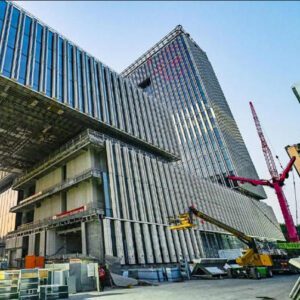
Building-integrated photovoltaics, or BIPV, means photovoltaic modules become part of the building envelope instead of being bolted on after construction. In a facade project, the same surface may act as weather barrier, cladding, sunshade, architectural finish, and power generator.
That dual role is why BIPV design must start earlier than conventional rooftop solar. A late PV decision can force the team to redraw mullions, reroute conduits, repeat fire reviews, or change glass sizes after procurement. The better approach is to treat the solar facade like a building system from day one.
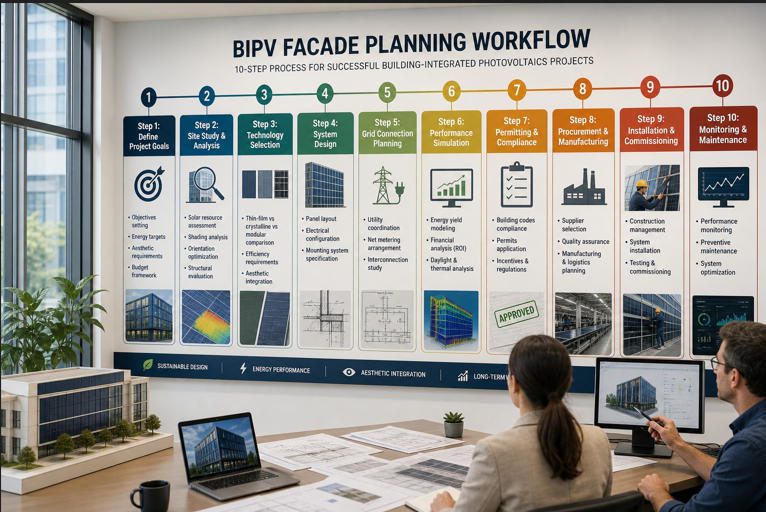
This guide follows a 10-step workflow used on real commercial design packages: goals, climate analysis, technology selection, envelope detailing, electrical design, energy modeling, procurement, maintenance, financing, and knowledge transfer. It also shows where a manufacturer such as Jia Mao Bipv fits into the process: not as an afterthought, but as a technical partner during module sizing, glass specification, testing documentation, and mock-up review.
Before the 10 Steps: Know What BIPV Replaces
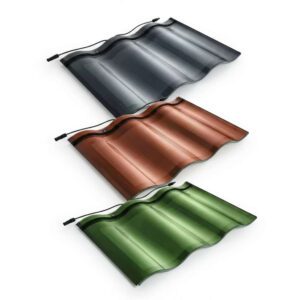
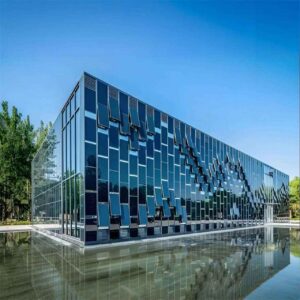
A standard PV panel only has to produce electricity and withstand outdoor exposure. A BIPV panel has to do more. It may replace metal cladding, ceramic rainscreen panels, laminated safety glass, skylight glass, louvers, or spandrel glazing.
The WBDG BIPV overview explains BIPV as photovoltaic collector elements located directly within the building envelope. That definition is simple, but the execution requires coordination across architecture, structure, fire, waterproofing, and electrical engineering.

Excel-Style Planning Table: Align Goals Before Drawing Details
The fastest way to derail a BIPV facade is to let each discipline optimize separately. The owner may want payback, the architect may want a uniform black surface, and the electrical engineer may want simple string layouts. Put the priorities in one table before schematic design ends.
| Cell | Decision Area | Input | Example Target | Formula / Check | Owner |
|---|---|---|---|---|---|
| A2 | Annual generation | Suitable facade area × W/m² × yield | 85,000 kWh/year | =BIPV_kWp*850 | Energy consultant |
| A3 | Visual acceptance | Color, reflectance, cell visibility | Uniform dark gray spandrel | Mock-up approved by architect | Architect |
| A4 | Envelope performance | Water, air, wind, thermal movement | No water intrusion at tested pressure | Pass facade lab test | Facade engineer |
| A5 | Electrical safety | String voltage, disconnects, routing | Compliant with NEC 690/705 or local equivalent | V_oc,cold < inverter max DC | Electrical engineer |
| A6 | Financial case | Incremental cost minus avoided cladding | Simple payback under 8–12 years | =(Net premium)/(Annual energy value) | Developer / owner |
| A7 | Maintenance access | Panel replacement, cleaning, monitoring | Replace one module without removing 20 panels | Access route shown on drawings | Facility manager |
Bar Chart: Expected Relative Yield by Surface Type
Vertical facades rarely beat a well-tilted roof on raw kWh per installed watt. Their value is different: they use otherwise passive building skin, can improve daytime self-consumption, and can replace premium envelope materials. Use early yield estimates to decide where BIPV deserves budget.
Relative Annual PV Yield, South Roof = 100%
Use this as a concept-stage guide only. Final values depend on latitude, shading, module type, ventilation, inverter design, and soiling. For project modeling, use tools such as the NREL PVWatts calculator and a facade-aware simulation workflow.
The 10-Step BIPV Facade Workflow
Define Goals and Success Metrics
Start with a short decision brief. Is the facade meant to maximize annual kWh, improve ESG reporting, reduce peak demand, qualify for green-building credits, replace expensive cladding, or make the building visually distinctive?
A hospital may prioritize resilience and low maintenance. A university building may prioritize visible sustainability and student engagement. A speculative office tower may focus on net operating income and tenant attraction. The technology choice changes with each goal.
For early benchmarking, review Jia Mao Bipv’s building-integrated solar cost and ROI guide and set three numbers: target kWp, annual kWh, and maximum incremental facade premium.
Run Site, Climate, and Shading Analysis
BIPV facades are sensitive to shade from neighboring buildings, balconies, fins, signage, trees, and even the project’s own geometry. A 30 cm projecting vertical fin can look minor in elevation but create recurring shade stripes that reduce output and create electrical mismatch.
At minimum, evaluate orientation, annual solar access, wind exposure, airborne dust, snow risk, and maintenance access. A coastal site also needs corrosion-resistant fixings and careful junction-box placement. A desert site needs attention to dust and high module temperatures.
First-time definition: irradiance means the sunlight available on the facade surface. High irradiance means more potential power, but temperature, shading, and inverter losses still matter.

Select the BIPV Technology
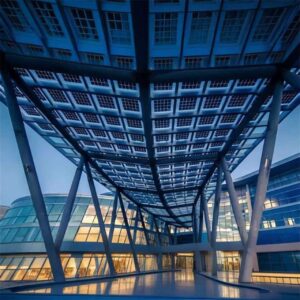
The right module is not always the highest-efficiency module. A lobby atrium may need semi-transparent PV glass. A mechanical-floor spandrel may be better suited to opaque crystalline silicon. A curved canopy may justify thin-film. Louvers may suit east and west elevations where glare control matters.
| Tecnologia | Best Fit | Typical Design Strength | Main Risk to Control | Early Question to Ask |
|---|---|---|---|---|
| Opaque crystalline silicon BIPV | Spandrels, rainscreens, high-yield facade zones | High power density and mature supply chain | Visible cell pattern if not architecturally managed | Can the module grid align with the facade grid? |
| Semi-transparent PV glass | Atria, skylights, curtain wall vision areas | Daylighting plus power generation | Lower W/m² as transparency increases | What visible light transmission is acceptable? |
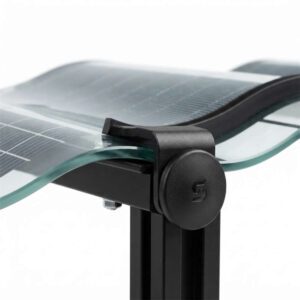
| Thin-film BIPV | Uniform surfaces, lightweight zones, curved forms | Visual uniformity and diffuse-light performance | Lower nominal efficiency versus premium crystalline modules | Does the project value appearance over maximum W/m²? |
| PV louvers and sunshades | East/west facades, external shading systems | Combines solar control and power generation | Wind load, access, and moving-part complexity | Can the louver angle balance glare, daylight, and yield? |
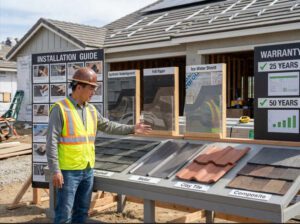
For manufacturer coordination, compare datasheets, glass make-ups, certification reports, connector types, junction-box positions, color tolerances, and warranty terms. The BIPV product options page is a useful starting point for discussing module categories with Jia Mao Bipv.
Integrate the Envelope: Water, Air, Fire, Structure
A BIPV facade is still a facade. It must manage rain, pressure equalization, condensation, wind suction, thermal movement, impact, replacement, and fire propagation. Do not let electrical drawings drive the envelope. The water line, fire line, and structure line must be clear first.
First-time definition: a rainscreen separates the outer cladding from the air and water barrier behind it. BIPV rainscreens often use rear ventilation to lower module temperature and preserve output.
The project team should verify assembly-level fire requirements, such as NFPA 285 in relevant U.S. wall assemblies or EN 13501-1 classifications in European projects. Module certification alone is not the same as facade assembly approval.
For a deeper facade-specific workflow, see the Jia Mao Bipv new-construction solar facade guide.
Design Electrical Strings, Inverters, and Grid Interconnection
BIPV electrical design must respect both PV engineering and the building’s life-safety strategy. Typical string design may group 8–12 modules in series, but the actual number depends on module voltage, cold-weather open-circuit voltage, inverter limits, local code, rapid shutdown rules, and shade patterns.
First-time definition: string design determines how modules are electrically grouped. Poor string grouping can make one shaded panel reduce the output of several clean panels.
Inverters convert DC electricity from the facade into AC electricity used by the building. String inverters are cost-effective for uniform zones. Module-level power electronics can help when shading is uneven, but they add equipment that must remain accessible for service.
Coordinate routing before the wall closes. Cables should not puncture waterproofing casually, cross fire compartments without detailing, or hide connectors where replacement is impossible.
Model Building Energy and Certification Impact
BIPV affects more than an electrical spreadsheet. Semi-transparent PV glass changes daylight, glare, solar heat gain, and cooling load. External PV louvers can reduce heat gain while producing power. Opaque PV cladding may slightly change thermal behavior depending on ventilation and insulation strategy.
If the project is targeting LEED, BREEAM, WELL, local carbon limits, or corporate ESG reporting, model the facade early. Treat BIPV energy as one part of a broader building-performance package that may include high-performance glazing, daylight controls, heat recovery, demand management, and battery storage.
For technical background and international case-study thinking, the IEA PVPS technical guidebook is a strong reference.

Plan Construction Sequencing and Procurement
BIPV procurement is less forgiving than buying standard panels for a roof. Module dimensions may be tied to the curtain wall grid, glass make-up, laminate color, junction-box position, cable length, and mounting clips.
Catalog modules may fit faster schedules, but custom BIPV glass can require longer shop drawing, sample, mock-up, testing, and production windows. As a working assumption, project teams often reserve 6–16 weeks for module lead-time planning, depending on customization and certification documentation.
Do not release final production until the team has signed off on shop drawings, electrical single-line diagrams, cable routing, replacement method, glass tolerances, and packaging logistics. A single wrong connector location can create field labor delays across hundreds of panels.
Define Maintenance, Monitoring, and Warranties
Maintenance should be designed, not improvised. Ask how a failed module will be isolated, removed, replaced, documented, and recommissioned. On a high-rise facade, replacement cost is often driven more by access equipment and labor than by the module price itself.
A practical maintenance package includes string-level or module-level monitoring, annual visual inspection, cleaning rules, spare modules, warranty contacts, as-built drawings, torque records, flash-test data, and commissioning reports.
Teams preparing for installation can use Jia Mao Bipv’s installation and commissioning checklist to structure handover requirements.
Build the Cost, Incentive, and Financing Case
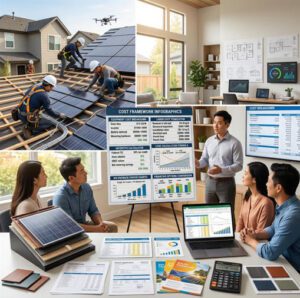
BIPV pricing should not be judged only in dollars per watt. A facade module replaces another building material, so the useful question is often: “What is the net premium over the conventional facade package after avoided cladding, energy value, incentives, maintenance, and brand value?”
For many commercial facades, teams see net premiums in the range of about $150–350 per m² over high-performance conventional materials, although project-specific pricing can move outside that range. Custom colors, non-standard sizes, complex access, small order volumes, and strict fire-test requirements can raise cost.
In the U.S., incentive research can start with the DSIRE incentive database. For PV cost-benchmark methodology, review the U.S. Department of Energy’s solar system cost benchmarks.
Transfer Knowledge Before Occupancy
Handover is where many good BIPV designs lose performance. Facility managers need more than a binder. They need a clear map of strings, inverters, DC isolators, monitoring dashboards, cleaning zones, warranty contacts, emergency shutdown steps, and replacement procedures.
Hold a practical training session with the owner, building engineer, security team, and maintenance contractor. Walk the facade, open the monitoring portal, identify alarms, and confirm who responds when production drops.
If your team wants to test a smaller area before committing to a whole tower, contact Jia Mao Bipv to discuss a pilot facade.
Pie Chart: Typical BIPV Facade Cost Components
Cost distribution varies by country, height, facade system, and module customization. Still, a simple cost split helps owners see where value engineering should focus. Reducing custom glass sizes may save more than negotiating a small inverter discount.
Indicative Cost Split for a BIPV Facade Package
Indicative only. Small projects, high-rise access, non-standard colors, and custom dimensions can shift the mix.
Recommended Video: BIPV Facade Typologies
The following video is useful for design teams comparing facade forms such as layered facades, folded surfaces, louvers, and solar shading systems.
Glossary and Hover-Tip Terms
- BIPV
- Building-integrated photovoltaics: PV modules that also serve as building-envelope elements, such as facade panels, glass, skylights, roof tiles, or louvers.
- BAPV
- Building-applied photovoltaics: PV modules attached to a building after the envelope is complete, usually on racks or rails.
- kWp
- Kilowatt-peak: the rated DC capacity of a PV system under standard test conditions. Example: 100 kWp may produce 75,000–120,000 kWh/year depending on location and orientation.
- BOS
- Balance of system: non-module components such as inverters, cables, connectors, combiner boxes, disconnects, monitoring, and protection devices.
- MPPT
- Maximum power point tracking: inverter control that finds the voltage and current combination where the PV array produces the most power.
- VLT
- Visible light transmission: the percentage of visible light passing through glass. Higher VLT improves daylight but usually lowers PV power density.
- Thermal coefficient
- The rate at which module output drops as temperature rises. Example: a -0.35%/°C coefficient means output falls about 3.5% when the module is 10°C hotter.
Industry Insights for 2026 Project Teams
1. Early integration saves redesign
BIPV decisions affect the facade grid, glass thickness, cable paths, fire stopping, inverter rooms, and maintenance strategy. Bring the PV supplier into schematic design, not after construction documents are nearly complete.
2. Vertical yield is lower, but surface value is higher
A vertical facade may generate less per watt than a tilted roof. But the wall area is often larger, more visible, and already part of the construction budget.
3. Mock-ups are not optional
BIPV mock-ups should test appearance, glare, color matching, water management, cable routing, and replacement access. A beautiful render is not a substitute for a tested corner detail.
For broader PV technology fundamentals, the U.S. Department of Energy provides a clear solar photovoltaic technology primer. For BIPV-specific product and project discussions, the Jia Mao Bipv engineering team can help align module specifications with facade design intent.
Planning a BIPV Facade?
Send the facade elevation, target module area, project location, preliminary grid dimensions, and desired appearance. A focused feasibility review can identify suitable BIPV zones, likely module formats, electrical grouping, and early risk items before the design team commits to the wrong facade geometry.
Start a BIPV facade feasibility discussionFAQ: BIPV Facade Design
1. What is the difference between BIPV and regular rooftop solar?
Regular rooftop solar is usually attached to a finished roof with racks. BIPV replaces part of the building envelope, such as facade panels, glass, roof tiles, skylights, or louvers. That means BIPV must satisfy both electrical and building-envelope requirements.
2. Is a BIPV facade worth it if vertical panels produce less energy than roof panels?
Often, yes. A facade may produce less per watt than a tilted roof, but it uses wall area that would otherwise be passive cladding. The financial case improves when the BIPV panel replaces premium facade material and when the building can consume the electricity during operating hours.
3. Which facade orientation is best for BIPV?
In the northern hemisphere, south-facing facades usually produce the most annual energy. East and west facades can still be valuable because they generate during morning and afternoon demand periods. North-facing facades are usually selected for appearance rather than energy output.
4. Can BIPV glass be transparent?
Yes. Semi-transparent PV glass is available for atria, skylights, curtain walls, and canopies. The trade-off is that higher transparency usually means lower power density. The design team must balance daylight, glare, heat gain, view quality, and electricity production.
5. How early should the supplier be involved?
Ideally during schematic design. Module dimensions, glass build-up, cable exits, junction-box positions, color, fire documentation, and lead time can all affect facade drawings. Early supplier input reduces the risk of late redesign.
6. What are the main code issues for BIPV facades?
Project teams must check electrical codes, fire propagation requirements, structural loads, safety glazing, water penetration, wind load, access, and grid interconnection. Local requirements vary, so the authority having jurisdiction should be consulted early.
7. How are BIPV panels maintained?
Maintenance usually includes monitoring, visual inspection, periodic cleaning, connector checks, inverter review, and replacement planning. Vertical facades may soil less than low-slope roofs, but access can be more expensive, especially on high-rise buildings.
8. What information is needed for a BIPV feasibility study?
Provide project location, facade elevations, orientation, approximate BIPV area, desired appearance, grid dimensions, structural concept, utility tariff, expected occupancy profile, and any target certifications such as LEED or BREEAM.
9. Does BIPV require batteries?
No. Many BIPV systems are grid-connected without batteries. Storage may be useful when the building has high evening loads, demand charges, backup-power needs, or low export compensation.
10. What is the biggest mistake in BIPV facade projects?
The biggest mistake is treating BIPV as a late-stage solar purchase instead of an integrated facade system. That often leads to mismatched module sizes, awkward cable routing, weak maintenance access, and avoidable approval delays.