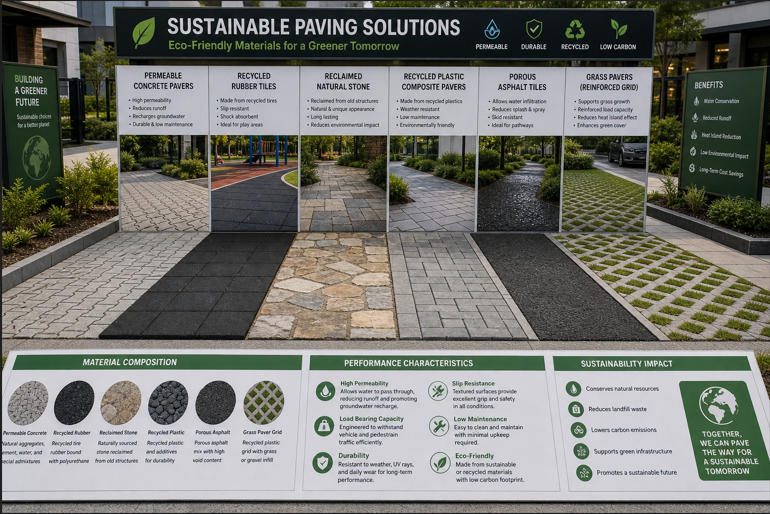
A practical specification guide for architects, landscape designers, developers, facility managers, and homeowners comparing sustainable paving options for real projects.
Eco-friendly pavement tiles are no longer a niche choice for parks and showcase projects. Cities are using them to reduce stormwater runoff, developers are using them to improve outdoor amenity areas, and homeowners are using them to replace heat-trapping driveways with better-draining surfaces.
The challenge is that “eco-friendly” can mean different things. One tile may use recycled material. Another may allow rainwater to pass through. A third may reduce heat buildup, last longer, or require less sealing and chemical cleaning.
This guide uses four decision criteria: materials, permeability, durability, and maintenance. Together, they help you compare options for sidewalks, plazas, driveways, courtyards, parking aisles, green alleys, and mixed-use developments.

Material Options for Eco-Friendly Pavement Tiles
Material choice affects carbon footprint, strength, slip resistance, color stability, and maintenance. Start by matching the material to the application: a shaded residential courtyard has very different needs from a fire-lane access route or a busy urban plaza.
Recycled and reclaimed materials
Recycled-content tiles may use crushed concrete, reclaimed brick, recycled glass, rubber, slag, or recycled plastic binders. The environmental benefit is simple: less virgin raw material and less waste sent to landfill.
The specification should not stop at “contains recycled content.” Ask for the percentage of recycled material, the source, compressive strength, freeze-thaw test results, abrasion performance, and whether the tile can be recycled again at end of life.
Natural and low-embodied-energy options
Natural stone, clay pavers, locally sourced aggregates, and unfired or lower-temperature products can reduce transport and manufacturing impacts. Embodied energy is the energy already spent before a tile reaches the site.
For example, a locally quarried stone may outperform an imported decorative tile if it avoids long-distance shipping and lasts for decades with minimal coating or replacement.
Composite and innovative blends
Composite pavement tiles combine materials to solve specific problems. Examples include rubber-concrete blends for impact comfort, plastic grid pavers for grass reinforcement, and solar paving products that add energy generation.
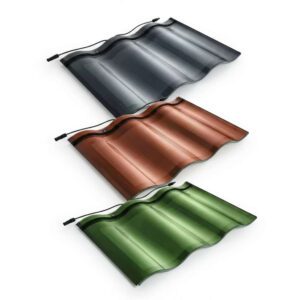
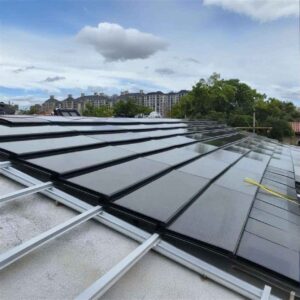
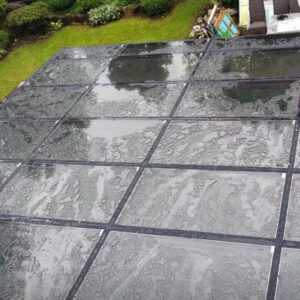
Where pavement must also produce electricity, teams can compare conventional pavers with Jia Mao Bipv photovoltaic floor tiles. These are not replacements for every sidewalk, but they can make sense in demonstration zones, smart campuses, public plazas, and branded entry areas where visibility and clean-energy storytelling have value.
| Excel Row | Material Type | Eco Benefit | Meilleure application | Key Risk | Data to Request |
|---|---|---|---|---|---|
| A2 | Recycled concrete pavers | Uses reclaimed aggregate and reduces virgin material demand | Walkways, courtyards, low-speed parking areas | Variable quality if source material is poorly controlled | Recycled content %, compressive strength, abrasion rating |
| A3 | Clay or reclaimed brick | Long service life and potential reuse | Historic districts, pedestrian streets, residential paths | Uneven surfaces if installation tolerance is poor | Freeze-thaw data, slip resistance, dimensional tolerance |
| A4 | Grass-grid or open-cell pavers | Supports vegetation and surface infiltration | Overflow parking, fire lanes, low-traffic driveways | Rutting if base is undersized | Load rating, soil mix, vegetation maintenance guide |
| A5 | Permeable concrete pavers | Manages rain where it falls and reduces runoff volume | Plazas, sidewalks, parking stalls, alleys | Clogging if sediment control is ignored | Infiltration rate, joint stone gradation, maintenance plan |
| A6 | Solar or smart paving tiles | Can generate electricity or collect usage data | Showcase areas, campus entries, public innovation zones | Higher upfront cost and electrical coordination | Slip rating, load rating, output estimate, warranty terms |

Permeability and Drainage Implications
Permeability is one of the most important differences between conventional pavement and eco-friendly pavement systems. A permeable tile alone does not solve drainage. The joints, bedding layer, base stone, soil, underdrain, and overflow route all matter.
Permeable vs. semi-permeable tile systems
A permeable system is designed to let water pass through the surface and into a storage layer below. A semi-permeable system may allow some drainage through joints or openings, but not enough to manage large storms by itself.
For sites with heavy rainfall, clay soil, or strict stormwater requirements, use a designed permeable pavement section rather than assuming any paver with gaps will perform.
Subgrade and filter considerations
The subgrade controls how much water can soak into the ground. Sandy soils may infiltrate quickly. Clay soils may need a thicker stone reservoir, underdrain, or overflow structure.
A filter layer or geotextile may be needed to separate soil from clean stone. The goal is to prevent fine soil particles from migrating upward and clogging the system.
Impact on flood risk and urban heat mitigation
Permeable pavement can reduce peak runoff during storms by slowing and storing water. The U.S. EPA explains that permeable pavement for stormwater control helps rain soak into the ground rather than immediately running into drains.
Heat is another issue. Light-colored pavers, open-grid systems, and planted pavers can reduce surface temperature compared with dark, sealed asphalt. The USGBC heat island reduction credit recognizes strategies such as high-reflectance paving and open-grid pavement.


Durability and Structural Performance
Durability is the difference between a pavement that looks sustainable on opening day and one that still performs after years of foot traffic, delivery carts, turning vehicles, rain, deicing salt, and cleaning equipment.
Load ratings and wear resistance
Load rating means the system can handle expected weight and movement. A patio tile may be fine for pedestrians but fail under delivery vans. A parking paver may handle vehicles but still need edge restraint to prevent shifting.
For plazas and streets, check compressive strength, flexural strength, abrasion resistance, point loads, and whether heavy maintenance equipment will cross the pavement.
Freeze-thaw stability and climate considerations
In cold climates, freeze-thaw cycles can damage weak tiles and unstable bases. Water enters pores, freezes, expands, and stresses the material. Permeable systems must drain well enough to avoid trapped water.
In hot climates, color, reflectance, and thermal movement matter. Dark pavers can become uncomfortable for pedestrians and pets, while poorly controlled expansion can cause edge heave.
Longevity expectations and warranties
A long warranty is useful only when it covers the failure mode you care about. Ask whether the warranty covers surface wear, cracking, color fading, freeze-thaw damage, efflorescence, permeability, or only manufacturing defects.
Bar Chart: 15-Year Total Cost of Ownership Index by Pavement Type
Planning example only: the index combines installation, cleaning, expected repairs, and replacement risk. Site conditions can change the ranking.
Maintenance Requirements and Life-Cycle Costs
Maintenance is where many “green” pavement systems either prove their value or lose it. A permeable pavement that is clogged with sediment behaves like a conventional hard surface. A beautiful recycled tile that needs frequent chemical sealing may not be the most sustainable option over time.
Cleaning, sealing, and staining needs
Ask how the tile handles oil, leaves, food stains, tire marks, moss, and deicing salts. Some materials need periodic sealing. Others should avoid sealers because the coating can block permeability.
Maintenance frequency by material type
In leaf-heavy or dusty areas, permeable pavers may need vacuum sweeping several times per year. Standard concrete pavers may need joint sand replenishment. Grass pavers need vegetation care, irrigation during establishment, and occasional soil repair.
Cost of ownership over time
Coût total de possession is more useful than unit price. Include base preparation, drainage structures, cleaning equipment, repair access, expected service life, and replacement complexity.
Pie Chart: Recommended Decision Weighting for Eco-Friendly Pavement Tiles
- 28% Durability and structural performance
- 25% Permeability and drainage value
- 25% Material impact and recycled content
- 22% Maintenance effort and life-cycle cost
Slip Resistance and Safety
Slip resistance is a safety requirement, not a finishing detail. A pavement can be environmentally strong and still be a poor choice if it becomes slippery in rain, frost, algae growth, or after cleaning.
Coefficient of friction targets
The coefficient of friction is a grip measurement. Because test methods vary by region, do not compare numbers without confirming the test standard and whether the surface was tested wet, dry, polished, or contaminated.
Surface texture and wet-weather performance
Textured surfaces usually improve grip, but they can also trap dirt. Smooth stone may look premium but require a specific finish for outdoor use. For public spaces, request wet-condition slip data and test a mockup after rain or cleaning.
Installation Considerations and Substrate Preparation
Installation quality controls drainage, settlement, edge stability, and long-term appearance. Eco-friendly pavement tiles should be specified as a system: tile, joint material, bedding, base, edge restraint, drainage, and maintenance access.
Proper bedding and base choices
Conventional pavers often use sand bedding. Permeable pavers typically use open-graded stone to let water flow through. The base thickness depends on traffic load, soil type, rainfall, and storage needs.
For technical background, the Federal Highway Administration provides a detailed FHWA permeable interlocking concrete pavement report that explains design and construction considerations for permeable interlocking concrete pavement.
Edge restraint and expansion gaps
Edge restraint keeps pavers from creeping outward under traffic and turning loads. Expansion gaps help manage thermal movement. Without these details, even high-quality pavers can shift, chip, or create trip hazards.
Installation environmental factors
Weather matters during installation. Saturated subgrade, frozen soil, poor compaction, and uncontrolled sediment can shorten service life. On construction sites, protect permeable surfaces from mud and concrete washout until final handover.

Aesthetics, Color, and Design Flexibility
Sustainable paving still has to look right. Public plazas need consistent color and alignment. Residential courtyards need scale and comfort. Retail streets need patterns that guide movement without creating visual clutter.
Colorfastness and fading concerns
Colorfastness means resistance to fading from sunlight, cleaning, weather, and abrasion. Pigmented concrete, fired clay, natural stone, and coated composites age differently. Ask for weathering data and inspect older installations if possible.
Pattern options and accessibility considerations
Patterns can organize pedestrian flow, define outdoor rooms, and support wayfinding. They can also create problems if joints are too wide, surfaces are uneven, or color contrast confuses people with low vision.
For universal access, consider smooth travel paths, tactile warning areas where required, stable joints, and clear contrast between pedestrian and vehicle zones.
Environmental Certifications and Standards
Certifications and third-party standards help separate measurable sustainability claims from marketing language. They do not replace project-specific review, but they make supplier comparisons easier.
Green building certifications (LEED, BREEAM) relevance
Eco-friendly paving can support green building goals through heat island reduction, stormwater management, recycled content, local sourcing, and construction waste reduction. The exact contribution depends on the rating system, project location, and documentation.
Material-specific standards and testing (permeability, durability)
Ask for test reports tied to the material type: permeability, compressive strength, flexural strength, abrasion resistance, freeze-thaw durability, slip resistance, and solar reflectance where relevant.
The EPA’s overview of green infrastructure types is a useful starting point for understanding where permeable pavement fits within broader stormwater strategies.
End-of-life and recyclability considerations
End-of-life planning asks what happens when the pavement is removed. Can the tile be reused? Can it be crushed as aggregate? Does it contain coatings, adhesives, or mixed materials that make recycling difficult?
For solar and energy-generating pavement, end-of-life planning also includes electrical components, glass layers, connectors, and safe removal. Jia Mao Bipv’s green energy paving systems overview explains how solar, kinetic, and permeable concepts can overlap in modern paving projects.
Case Studies and Real-World Applications
Different sites reward different pavement choices. The right tile for a quiet courtyard may fail in a bus stop. The best material for a flood-prone alley may be unnecessary for a covered walkway.
Urban plazas and pedestrian zones
Urban plazas need high wear resistance, stable joints, stain control, and attractive patterns. A city-center plaza with food vendors may choose dense concrete or stone pavers for cleanability, plus permeable zones near planting beds to manage runoff.
Parking areas and low-traffic streets
Parking stalls, drive aisles, and low-speed streets need stronger base design and edge restraint. Permeable interlocking concrete pavement can work well when turning loads, snowplows, sediment, and maintenance equipment are included in the design.
Residential driveways and courtyards
Residential projects often prioritize appearance, drainage, and low maintenance. For a driveway with occasional vehicles, permeable concrete pavers or grass-grid pavers can reduce puddling while softening the look of the site.
If the owner also wants renewable energy from hardscape areas, review solar paving tiles for driveways. Solar paving is a more specialized option than standard eco-pavers, but it can be relevant when clean-energy visibility is part of the project brief.
Choosing the Right Supplier and KPI Checklist
A reliable supplier should help you reduce uncertainty before purchase. That means clear test data, installation guidance, realistic lead times, warranty boundaries, and maintenance instructions.
Material data sheets and third-party verification
Request product data sheets, safety data sheets where relevant, recycled-content documentation, test reports, and installation manuals. Third-party testing is especially valuable for slip resistance, freeze-thaw durability, permeability, and load capacity.
Warranty terms, lead times, and serviceability
A warranty should explain what is covered, what is excluded, who inspects failures, and whether replacement tiles will match the original color. For public projects, also ask about spare stock availability and batch tracking.
Total cost of ownership benchmarking
Benchmark at least three cost scenarios: upfront installation, 10-year maintenance, and 15- to 30-year replacement risk. A product with a 15% higher installed cost can be cheaper over time if it reduces repairs, sealing, downtime, or stormwater infrastructure.
| Excel Row | KPI | Why It Matters | Good Evidence | Red Flag |
|---|---|---|---|---|
| B2 | Recycled or reclaimed content | Confirms material impact claim | Supplier declaration plus third-party verification | “Eco” label with no percentage or source |
| B3 | Permeability rate | Shows drainage potential | Test method, design infiltration rate, maintenance plan | No clogging or sediment-control guidance |
| B4 | Load rating | Prevents cracking, rutting, and settlement | Vehicle class, base design, edge restraint details | Pedestrian tile proposed for vehicle area |
| B5 | Slip resistance | Reduces wet-weather injury risk | Wet and dry test results under named standard | Only showroom sample, no wet-condition data |
| B6 | Maintenance frequency | Protects performance after installation | Cleaning schedule, equipment guidance, inspection checklist | No maintenance manual |
| B7 | End-of-life route | Improves circularity and reduces disposal burden | Reuse, take-back, or recycling guidance | Composite product with no disposal plan |
Glossary and Hover Tips for Key Terms
Use these short definitions when discussing eco-friendly pavement tiles with owners, contractors, and review boards.
The ability of pavement to let water pass through the surface and base layers.
The prepared soil underneath the pavement base. Weak subgrade can cause settlement.
The energy used to extract, manufacture, transport, and install a material.
The total cost over time, including installation, maintenance, repair, and replacement.
The grip level of a surface under dry or wet conditions, measured by a test method.
Crushed stone with gaps between particles, used to store and move stormwater.
Higher urban temperatures caused by dark, hard surfaces that absorb and radiate heat.
A border element that keeps pavers from shifting sideways under traffic.
Pavement with photovoltaic components that convert sunlight into electricity.
The best eco-friendly pavement tile is not chosen by one label. It is chosen by weighing material impact, permeability, durability, slip safety, maintenance effort, and total cost of ownership against the site’s climate and use.
For a pedestrian plaza, the winning option may be a durable recycled-content paver with strong stain resistance. For a flood-prone alley, permeability and base storage may matter most. For a residential courtyard, comfort, appearance, and low maintenance may lead the decision.
Long-term value comes from matching the tile system to the project reality: rainfall, soil, load, cleaning resources, climate, and user behavior. When those factors are considered early, eco-friendly pavement tiles can support resilience, reduce runoff pressure, improve outdoor comfort, and lower replacement waste.
Need to Compare Sustainable Paving with Solar-Integrated Options?
Jia Mao Bipv supports projects where hardscape areas may need to do more than carry foot traffic — including solar paving, smart public-space surfaces, and energy-generating outdoor features.
Explore photovoltaic floor tile optionsFAQs
What makes a pavement tile eco-friendly compared to conventional options?
A pavement tile is more eco-friendly when it reduces virgin material use, supports stormwater infiltration, lasts longer, lowers heat buildup, needs fewer chemical treatments, or can be reused or recycled at end of life. The strongest products usually combine several of these benefits rather than relying on one claim.
How do permeability choices affect urban drainage and flooding risk?
Permeable pavement allows rainwater to pass through the surface into a stone base or soil below. This can reduce runoff volume and slow peak flow during storms. The full system must be designed correctly, including joints, bedding, base stone, subgrade, underdrain, and overflow route.
Which materials offer the best balance of durability and environmental impact?
Recycled concrete pavers, reclaimed brick, permeable concrete pavers, locally sourced stone, and open-cell grass pavers can all perform well when matched to the right use. The best balance depends on traffic load, climate, maintenance resources, and whether stormwater management is a project goal.
How often should permeable tiles be maintained or sealed?
Many permeable pavements should be inspected several times per year and cleaned when sediment buildup is visible. Vacuum sweeping may be needed in dusty or leaf-heavy sites. Sealers are usually avoided on permeable surfaces because they can block water flow unless the manufacturer specifically approves them.
Are grass pavers suitable for daily parking?
Grass pavers can work for overflow parking, emergency access, and low-traffic driveways. For daily heavy use, the base design, soil mix, irrigation, shade, and turning movements must be reviewed carefully because vegetation can wear down under repeated traffic.
What is the biggest mistake when specifying eco-friendly pavement tiles?
The biggest mistake is choosing the tile first and designing the base later. Pavement performance depends on the complete system: tile, joints, bedding, base, subgrade, edge restraint, drainage, and maintenance plan.
Can eco-friendly pavement tiles help with heat island reduction?
Yes. Light-colored pavers, open-grid systems, planted pavers, and surfaces with higher solar reflectance can reduce heat buildup compared with dark impermeable pavement. The effect depends on color, shading, airflow, moisture, and surrounding materials.
When should solar paving tiles be considered?
Solar paving tiles are best considered for visible demonstration zones, smart campuses, public plazas, driveways, and branded outdoor areas where renewable-energy generation and educational value justify the added cost and electrical coordination.
References and Further Reading
- Jia Mao Bipv photovoltaic floor tiles
- solar paving tiles for driveways
- green energy paving systems overview
- permeable pavement for stormwater control
- green infrastructure types
- FHWA permeable interlocking concrete pavement report
- USGBC heat island reduction credit
- ASCE permeable interlocking concrete pavements manual