Building-Integrated Photovoltaics (BIPV) is one of those technologies that looks deceptively simple from the street—sleek solar glass, roof tiles, or façade
cladding that “just happens” to generate electricity. In reality, BIPV demands deeper coordination than conventional rack-mounted PV because it becomes part of
the building envelope and the electrical system at the same time. This guide walks you through the same decision flow we see on real projects, from early
feasibility checks to installation-ready design thinking—without losing sight of architecture, safety, and long-term maintainability.
How to Install and Design BIPV Solar Panels (Direct Answer)
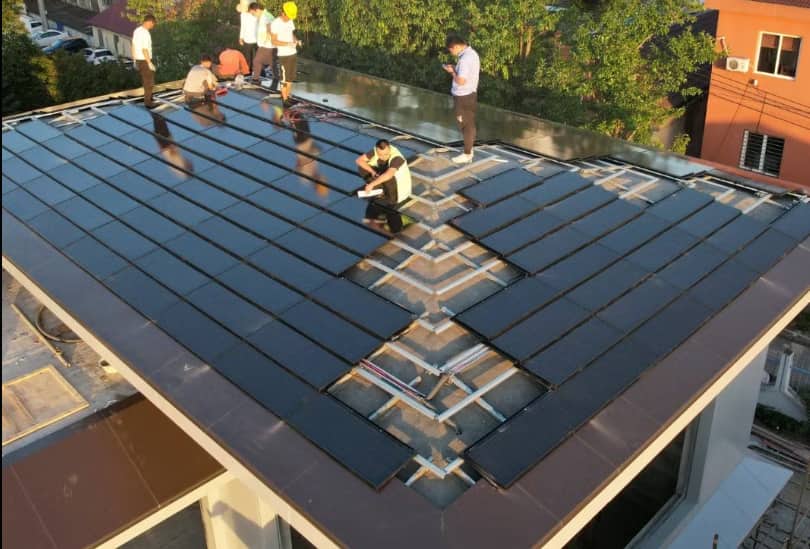
To install and design BIPV solar panels correctly, you start by confirming that the building envelope can host an electricity-generating component (roof,
façade, skylight, canopy, etc.), then align the solar design with structural loading, waterproofing strategy, fire safety expectations, and electrical code
requirements. Next, you select a BIPV system type that matches the architectural intent (visual uniformity, transparency, color, module format) while meeting
the project’s yield targets. Finally, you execute installation with envelope-first discipline: flashing, drainage/ventilation, sealing, and thermal movement
details must be resolved before electrical routing is finalized.
Why BIPV Is More Complex Than Traditional Solar
With conventional PV, the roof is already a roof—modules are added on top, and the building envelope remains mostly unchanged. With BIPV, the PV product
becomes the roof or façade component. That means you’re no longer optimizing “just energy”; you’re balancing energy production, weather tightness, thermal
performance, durability, and appearance in the same assembly. If one stakeholder optimizes in isolation (for example, choosing a module size purely for peak
wattage), the project can suffer later through leaks, difficult service access, or compromised aesthetics.
Planning, Integration, and “Smart Compromise”
A practical BIPV mindset is to define your non-negotiables early:
envelope integrity, code compliance, safety, and realistic energy expectations. From there, you “trade” thoughtfully—maybe you accept a
slightly lower module efficiency for a façade pattern that improves acceptance and reduces custom fabrication. This is also where brand selection matters:
Jia Mao Bipv projects typically benefit from discussing module format and mounting logic early with the façade/roof designer to avoid late-stage
redesign.
What This Guide Covers (Assessment → Design → Installation → Maintenance)
The structure below follows a step-by-step path: we define BIPV, assess the site and building, design/select the right system, and then move into planning,
codes, and the physical installation process. We also address commissioning and ongoing maintenance because BIPV is a long-life building component, not a
“set-and-forget” gadget. For readers who want to explore product options and project references, start with
www.jmbipvtech.com.
Professional Best Practices (Homeowners + Pros)
Even if you’re a homeowner, treat BIPV like a building-envelope retrofit: insist on clear drawings for waterproofing, thermal movement, and service access.
If you’re an architect or installer, align early with the Authority Having Jurisdiction (AHJ) on what they consider “roofing” vs “electrical equipment,” and
document the safety strategy clearly. A strong reference point for BIPV fundamentals and common integration pathways is the Whole Building Design Guide’s BIPV
resource page. [Source](https://www.wbdg.org/resources/building-integrated-photovoltaics-bipv)
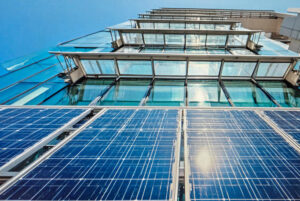
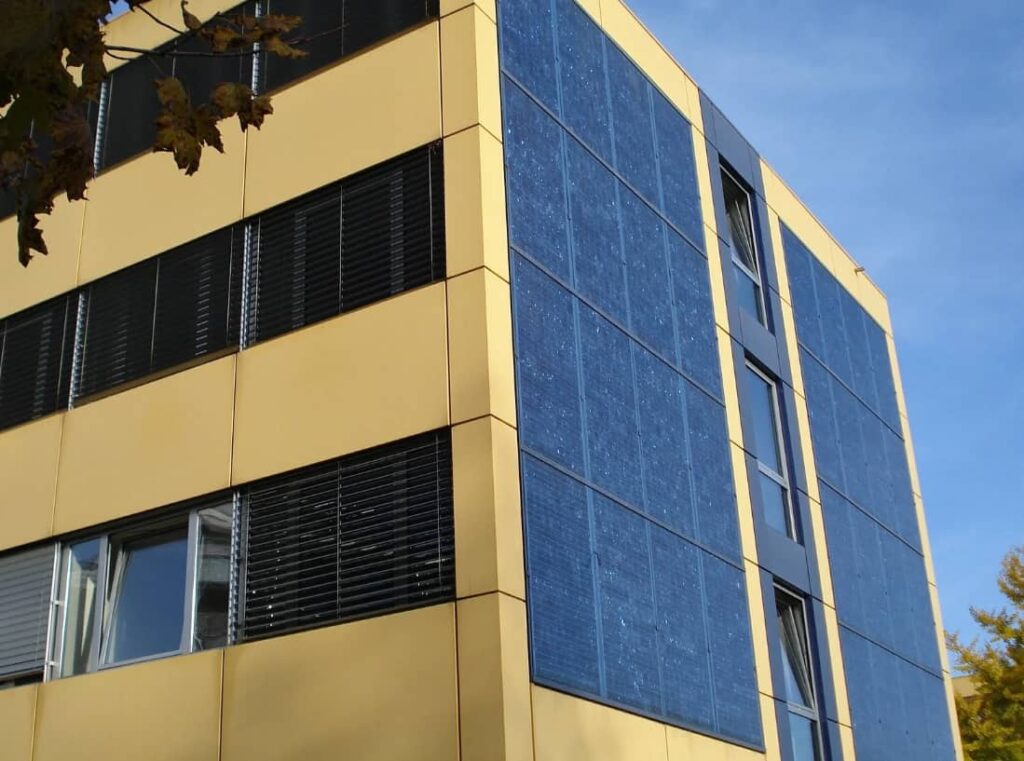
Visual Examples (Façade + Roof Integration Inspiration)

What Is Building-Integrated Photovoltaics
BIPV Definition and Basics
Building-Integrated Photovoltaics (BIPV) refers to PV components that are integrated into the building envelope—commonly roofs and façades—so they serve as
both a building material and a power generator. In practice, that means BIPV replaces (not merely sits on top of) conventional materials like roof coverings,
spandrel panels, cladding, or glazing. A well-known research and industry framing emphasizes that BIPV is “integrated into the roof or façade of a building,”
which is a useful mental model when you’re deciding who owns which scope: roofer/façade contractor vs electrician. [Source](https://www.ise.fraunhofer.de/en/business-areas/solar-power-plants-and-integrated-photovoltaics/integrated-photovoltaics/building-integrated-photovoltaics-bipv.html)
Where BIPV Typically Lives on a Building
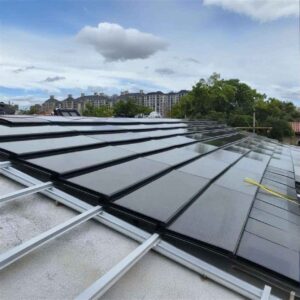
- Roofs: solar tiles, metal roof PV laminates, integrated roof modules
- Façades: PV curtain wall, rainscreen cladding, spandrel zones
- Glazing elements: PV skylights, PV glass (where permitted/engineered)
- Shading structures: canopies, awnings, pergolas
If you want a concise market overview of common BIPV component types and how they are used in buildings, the WBDG page provides a practical list of examples
and applications. [Source](https://www.wbdg.org/resources/building-integrated-photovoltaics-bipv)
Anchor: Learn more about solutions
If you’re evaluating system formats (roof vs façade) and want to see how a manufacturer approaches integrated assemblies, explore:
Jia Mao Bipv (official site).
This is also a helpful place to align terminology internally—teams often mix “BIPV” with “solar façade” or “solar roof tiles,” which can cause scope gaps in
bidding.
Benefits of BIPV Solar Panels
The most compelling value of BIPV is multifunctionality: a single component contributes to weather protection, architectural expression, and electricity
generation. In some projects, BIPV can reduce the need for separate cladding materials, improve brand/ESG visibility, and enable solar deployment where
conventional racking is constrained by aesthetics or zoning. The U.S. Department of Energy frames building integration as a pathway to expand solar
opportunities “from rooftops to building integration,” signaling that BIPV is increasingly seen as an important category for scaling deployment. [Source](https://www.energy.gov/eere/solar/articles/expanding-solar-energy-opportunities-rooftops-building-integration)
Key Benefits (Practical, not Marketing)
- Architectural integration: solar becomes part of the design language instead of an afterthought
- Potential material offset: part of the envelope budget may shift to energy-producing materials
- Better stakeholder alignment: façade + electrical teams must coordinate early, which often improves documentation quality
- Visibility: BIPV is “seen,” making it a strong sustainability statement for commercial buildings
Mini ROI Logic (Illustrative Table)
Below is a simple planning table you can copy into your feasibility spreadsheet. It’s not a bid—just a way to keep discussions grounded.
| Cost / Value Line | Conventional Envelope | Conventional PV Add-on | BIPV (Integrated) | Notes |
|---|---|---|---|---|
| Primary function | Weather/thermal protection | Electricity generation | Both at once | Integration complexity increases coordination needs |
| Design ownership | Architect / envelope engineer | Solar EPC / electrician | Shared scope | Clarify who owns waterproofing & service access |
| Aesthetic constraints | High control | Often limited | High control (if specified early) | Module size/color impacts façade grid |
| Permitting complexity | Typical | Typical PV permit | Often higher | Because it’s both envelope + electrical |
Simple “Benefit Mix” Pie Chart (HTML/CSS)
Different projects weight benefits differently. Here’s a lightweight pie chart visualization you can keep in the article for reader clarity.
- Energy yield (35%)
- Aesthetics / integration (30%)
- Material offset (20%)
- Branding / ESG (15%)
BIPV vs Traditional Solar
The clearest difference is functional responsibility. Traditional solar is an energy system attached to a building. BIPV is a building component that
generates energy. That single distinction affects everything: detailing, liability, sequencing, and long-term operations. From a design-review standpoint,
BIPV should be evaluated like any envelope assembly (water, air, vapor, thermal, structure) plus electrical performance.
Fast Comparison (What Changes on Real Projects)
- Waterproofing: must be proven with details, not assumed
- Thermal movement: façade/roof expansion joints and module tolerances matter
- Maintenance access: glass replacement strategy, wiring access paths, safe fall protection planning
- Compliance: PV safety and building code intersect (often needing clearer documentation)
Industrial Expert Quote (Credibility Insert)
“Building-Integrated Photovoltaics (BIPV) refers to the integration of photovoltaic modules into the roof or façade of a building.”
— Fraunhofer ISE (Building-Integrated Photovoltaics overview)
That short sentence is powerful because it sets the scope boundary: if it’s “integrated into” the roof/façade, then envelope engineering is not optional.
[Source](https://www.ise.fraunhofer.de/en/business-areas/solar-power-plants-and-integrated-photovoltaics/integrated-photovoltaics/building-integrated-photovoltaics-bipv.html)
Embedded YouTube (at least 1)
If your team prefers a visual walkthrough before diving into drawings, this short explainer video can help align stakeholders on what “BIPV” includes.
Video reference: “BIPV Building Integrated Solar PV System” (YouTube). [Source](https://www.youtube.com/watch?v=8oErqEAAfS0)
Site Assessment for BIPV Solar Panels
Building Structure and Orientation
Site assessment starts with the building, not the module. Because BIPV becomes part of the envelope, you need a basic “host readiness” check before you
even estimate kWh. Confirm what surface is truly available (roof planes, façade bands, spandrels, canopies), then verify structural capacity and attachment
zones. Orientation matters, but so does geometry: façade PV is often vertical or near-vertical, producing less annual energy than an optimally tilted roof,
yet it may unlock far more usable area—especially in high-rise or dense urban settings.
Host Readiness Checklist (Envelope-First)
- Substrate condition: decking, sheathing, curtain wall mullions, or backup wall soundness
- Load paths: wind suction, dead load, and maintenance loads
- Water management strategy: drainage plane, flashing continuity, sealant joints
- Routing corridors: planned paths for DC strings/optimizers/inverters without compromising the envelope
Bar Chart: Orientation vs Expected Relative Yield (Illustrative)
Use this as a reader-friendly visual (not a substitute for simulation):
Note: Actual yield depends on climate, shading, glazing ratio, module temperature, and system losses—run PV simulation for real sizing.
Energy Needs and Goals
Define the energy goal before choosing the product. Is the target to offset a percentage of annual consumption, comply with a green-building requirement, or
deliver peak shaving during business hours? For commercial buildings, a façade can align with daytime loads even if annual kWh is lower than a roof array.
For residential projects, roof-integrated tiles may be the best “invisible solar” approach if homeowners value curb appeal.
Practical Targets to Document Early
- Annual offset goal (e.g., 10–30% for façade-heavy sites)
- Demand alignment (e.g., daytime HVAC loads)
- Resilience scope (battery-ready? critical loads?)
- Visual constraints (module color, reflectance, grid alignment)
Anchor: Start feasibility discussion
If you need a product-led feasibility conversation (module format + mounting logic + typical integration constraints), a good starting point is
www.jmbipvtech.com
so your team can talk concretely about available system types rather than generic “solar glass” ideas.
Environmental and Shading Factors
BIPV performance is highly sensitive to shading because integrated surfaces often have fixed geometry (vertical façades, parapets, balcony lines). Conduct a
shading review that accounts for nearby buildings, trees, rooftop equipment, façade fins, and seasonal sun angles. Also document local environmental stress:
coastal salt mist, heavy snow, wind-driven rain, dust/soiling, and urban pollution—all of which influence product choice, cleaning plan, and sealant
durability.
What to Record in Your Site Report
- Obstructions: skyline shading, adjacent towers, roof mechanical units
- Soiling risks: traffic corridors, construction zones, industrial areas
- Water exposure: wind-driven rain direction, roof drainage patterns
- Maintenance logistics: safe access for cleaning and replacement
For an authoritative, building-industry-friendly overview of BIPV applications and planning considerations, WBDG remains a solid reference point for many
design teams. [Source](https://www.wbdg.org/resources/building-integrated-photovoltaics-bipv)
BIPV System Design and Selection
BIPV System Types
Once the site assessment is clear, the next step is selecting a BIPV system type that can satisfy two masters: building performance and electrical
performance. This is where many projects either “lock in” a smooth delivery path—or quietly set themselves up for painful RFIs later. A helpful frame is to
view BIPV as a menu of envelope components that happen to generate power: roofs, solar shadings, rainscreen façades, curtain walls, and double-skin façade
solutions. That breadth is one of the reasons the IEA PVPS Task 15 technical guidebook is widely referenced by practitioners—it explicitly covers these
integration families and uses annotated reference drawings to bridge architecture and PV thinking. [Source](https://iea-pvps.org/wp-content/uploads/2025/02/Building-Integrated-Photovoltaics-Technical-Guidebook.pdf)
Common BIPV “Families” (How to Think Like an Envelope Designer)
- Roof-integrated PV: PV replaces roof covering (tiles, shingles, standing seam PV laminates, integrated roof modules)
- Ventilated façade PV (rainscreen): PV cladding sits on substructure with an air cavity (good for thermal management)
- PV curtain wall / spandrel: PV glass becomes part of glazing system, often with strict engineering requirements
- PV canopies & shading devices: dual function—shade + power generation (often easier to maintain)
- PV skylights: daylighting + power; requires careful glare/thermal and safety design
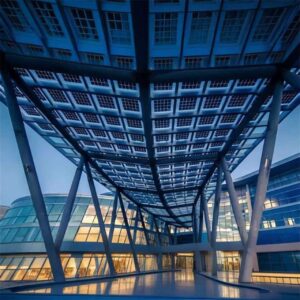
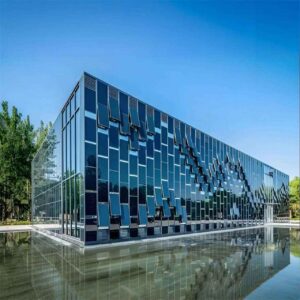
Visual Carousel: BIPV Façade + Curtain Wall + Skylight/Canopy Examples

Selection Table (Copy-Paste Friendly)
| System Type | Best Fit | Main Technical Risk | Design Tip | Maintenance Reality |
|---|---|---|---|---|
| Ventilated façade (rainscreen) | Commercial façades, retrofit cladding | Substructure + cable routing coordination | Keep a continuous air cavity; plan service panels | Generally accessible with façade BMU / lifts |
| PV curtain wall / spandrel | New build high-rises, feature façades | Glazing engineering, replacement strategy | Define module sizes early to match façade grid | Replacement requires glazing workflow |
| Roof-integrated tiles/modules | Residential or pitched roofs, aesthetic priority | Waterproofing & penetrations | Detail flashing & drainage first, then wiring | Access is roof-dependent; plan safe tie-offs |
| Canopies / shading devices | Entrances, walkways, parking, outdoor spaces | Wind uplift, structural vibration | Separate waterproof plane from PV when possible | Often easiest to clean & inspect |
| Skylights | Daylit atriums or corridors | Glare/heat, safety glazing requirements | Confirm light transmission + thermal comfort goals | Cleaning frequency may be higher |
If you’re trying to narrow options quickly for a concept design package, a practical starting point is to pick one “envelope family” first (roof vs façade
vs canopy), then let module format and electrical topology follow. For product-led exploration and manufacturer discussion, you can start at
www.jmbipvtech.com (Jia Mao Bipv).
Aesthetics vs Performance
In BIPV, aesthetics is not decoration—it’s a functional constraint that shapes module size, string layout, and even yield. Architects often want consistent
grids, clean sightlines, and color harmony. Electrical designers want maximum watts per area with minimal mismatch loss. The “win” is designing a façade/roof
rhythm that avoids tiny partial modules, creates repeatable patterns, and limits shading edges that cause energy losses. This is where BIPV differs from
traditional PV: what looks “minor” visually (like a projecting fin or balcony) can become a major yield reducer across a vertical array.
Rule-of-Thumb Workflow
- Lock the visual module (format, color, transparency, reflectance).
- Design the building grid to avoid custom cuts whenever possible.
- Run shading and yield checks once the grid is stable.
- Adjust with smart compromises: move PV zones away from chronic shade, reserve shaded zones for non-PV cladding.
Mini Bar Chart: What Usually Drives BIPV Design Changes
Industrial Expert Quote (Market Credibility)
“A global mass market is developing for photovoltaic building envelopes, allowing cities, in particular, to develop a more sustainable energy consumption.”
— Fraunhofer ISE press release (2019)
This matters because “mass market” pressure pushes standardization—meaning the best-performing BIPV projects often avoid over-customization and instead build
repeatable façade/roof logic. [Source](https://www.ise.fraunhofer.de/en/press-media/press-releases/2019/building-integrated-photovoltaics-moves-from-the-niche-to-the-mass-market.html)
Materials and Technology Choices
Material choice in BIPV is not only about efficiency. It’s also about durability under heat cycling, exposure, cleaning chemicals, and building movement.
Technology choices include module construction (glass-glass vs glass-backsheet), framing (framed vs frameless), and how the module interfaces with the
substructure (clips, rails, point-fix, cassette). Use the IEA PVPS guidebook as a reality check for how these systems are typically detailed and the
importance of resilient architecture practices across BIPV typologies. [Source](https://iea-pvps.org/wp-content/uploads/2025/02/Building-Integrated-Photovoltaics-Technical-Guidebook.pdf)
Materials Table (Design Intent → Practical Spec)
| Design Need | Common Material/Tech Choice | Why It Helps | Watch-Out |
|---|---|---|---|
| Façade heat management | Ventilated cavity behind PV | Reduces temperature-driven power losses | Needs insect screens, drainage continuity |
| Premium visual uniformity | Glass-glass, frameless options | Cleaner façade lines | Replacement and sealing details must be clear |
| High robustness mindset | Framed modules / cassette approach | Easier handling and sometimes faster install | Frame visibility may affect aesthetics |
| Daylighting + power | PV skylights / PV glass | Dual-function building element | Glare/thermal comfort + safety glazing constraints |
Anchor: Brand mention, naturally
When you’re aligning module format with façade/roof detailing, it helps to review integrated-system examples from manufacturers early. For many teams, that
means opening a dialogue with a supplier like Jia Mao Bipv so the architectural grid and the mounting logic are coordinated before
construction documents begin. Start here:
www.jmbipvtech.com.
Planning, Codes, and Permits for BIPV
Local Regulations and Compliance
BIPV compliance is usually “two-track”: you must satisfy building-envelope regulations (weather resistance, fire considerations, structural engineering) and
PV electrical safety standards. In North America, many projects lean on UL frameworks and harmonized PV module safety standards; globally, IEC standards are
common. UL Solutions notes that PV module safety standards were harmonized (UL 1703 aligned to IEC 61730-1 and IEC 61730-2), and it also highlights BIPV
testing and certification needs as distinct from conventional PV. [Source](https://www.ul.com/news/ul1703-ul-61730-pv-module-safety-standards-updates-making-transition)
[Source](https://www.ul.com/services/building-integrated-photovoltaic-bipv-system-testing-and-certification)
Compliance Map (Simple “Who Cares About What”)
- Building department / AHJ: envelope performance, structural integrity, fire and life safety implications
- Electrical inspector: wiring methods, disconnects, labeling, rapid shutdown requirements (where applicable)
- Fire marshal (often): access pathways, hazard reduction strategy, emergency response considerations
Embedded YouTube (Code topic: Rapid Shutdown concept)
If you want a quick, practitioner-oriented overview of rapid shutdown concepts tied to NEC language (important for many building-mounted PV systems), this
Mayfield Renewables video is a useful orientation piece for teams. [Source](https://www.youtube.com/watch?v=K74_939pbPE)
Permitting Process
Permitting for BIPV goes faster when your submission package clearly separates envelope scope from electrical scope, while proving that the integration is
engineered as one system. Treat your permit set like a “bridge” document: show how PV components maintain weather tightness, how penetrations are sealed,
and how wiring routes avoid compromising the building envelope. Also, include commissioning and documentation expectations early; IEC 62446-1 explicitly
defines the information and documentation that should be handed over following installation of a grid-connected PV system—this is a strong framework to
mirror in your closeout plan and can reduce inspection friction. [Source](https://webstore.iec.ch/en/publication/24057)
Permit Package Checklist (Practical Items Inspectors Want)
| Discipline | Include This | Why It Helps |
|---|---|---|
| Architecture / Envelope | Water management details, flashing, drainage plane, expansion joints | Proves BIPV is not a “leak risk” guess |
| Structural | Loads, anchorage, wind uplift analysis, attachment schedule | Supports safety and longevity |
| Electrical | Single-line diagram, equipment cut sheets, labeling plan, shutdown strategy | Speeds electrical review and reduces rework |
| Commissioning / Closeout | Test plan + documentation set aligned to IEC 62446-1 approach | Streamlines handover and O&M readiness |
Working with Professionals
BIPV is a coordination sport. Even small projects benefit from at least a light-touch façade/roofing consultant plus an electrician experienced with
building-mounted PV. For commercial work, consider a façade engineer or curtain wall specialist if PV touches glazing systems. For installation quality,
NREL’s best practices guide for C&I PV system installation outlines minimum requirements and quality thinking that many teams adapt as internal checklists.
While that guide is not BIPV-specific, the discipline it promotes—training, documentation, and verification—translates well to BIPV execution. [Source](https://docs.nrel.gov/docs/fy16osti/65286.pdf)
“RACI” Mini Table (Who Owns What)
| Work Item | Architect/Envelope | Solar/Electrical | GC / Installer | Owner/Facility |
|---|---|---|---|---|
| Waterproofing continuity | R/A | C | R | I |
| Wiring routing + penetrations | C | R/A | R | I |
| Module replacement strategy | R | C | C | A |
| Commissioning documentation set | C | R | C | A |
Legend: R = Responsible, A = Accountable, C = Consulted, I = Informed.
BIPV Solar Panel Installation
Site and Structure Preparation
BIPV installation starts with the building substrate and weatherproofing logic. The best installers treat this as “envelope installation with electrical
awareness,” not “electrical installation with some caulk.” Prepare the structure: verify tolerances, confirm all attachment points, and ensure drainage and
ventilation details are constructible. Use staging plans that protect modules (especially glass-heavy products) and maintain a clean workflow to reduce
sealant contamination and micro-cracking risk during handling.
Installation Prep Checklist
- Substrate readiness: flatness, integrity, and confirmed fastener pull-out values
- Weatherproofing plan: flashing sequence, sealant spec, movement joints, water testing plan
- Logistics: staging area, lifting plan, glass handling safety
- QA/QC: photographic documentation and hold points before concealment
YouTube: Quick Installation Visual (BIPV Roof Waterproof Context)
A short visual can help crews understand the “waterproof-first” mindset. [Source](https://www.youtube.com/watch?v=FTWAAdXc6a4)
Electrical Integration and Safety
Electrical integration for BIPV must be planned so that wiring routes do not compromise water/air barriers and so that emergency response needs are met.
This is where “traditional PV habits” can cause problems: careless penetrations, poorly protected cable runs, or inaccessible junctions create long-term risk.
For certification and safety alignment, UL’s materials highlight the harmonized PV module safety standards and emphasize safety/certification considerations
for PV modules and BIPV contexts. [Source](https://www.ul.com/news/ul1703-ul-61730-pv-module-safety-standards-updates-making-transition)
[Source](https://www.ul.com/services/pv-module-certification)
Safety-by-Design Practices
- Routing discipline: use protected paths, avoid sharp edges, provide strain relief
- Service access: plan access hatches or removable panels at junction points
- Labeling & shutdown strategy: design for inspectors and first responders, not just for the electrician
- Thermal consideration: do not bury wiring in hot stagnant cavities without justification
Mini Pie Chart: Typical Safety Risk Sources (Illustrative)
- Penetrations / sealing (30%)
- Cable management (25%)
- Labeling / shutdown clarity (20%)
- Workmanship variance (25%)
Building Envelope Integration
Envelope integration is the heart of BIPV. Every fastener, gasket, and joint either preserves or undermines water management. For façade systems, ensure a
defined drainage plane with clear weep/vent paths. For roof systems, define how water flows over/around modules and where it exits. Importantly, document
thermal movement allowances—buildings move, and BIPV assemblies must accommodate that movement without cracking glass or tearing seals. The IEA PVPS BIPV
guidebook is specifically valuable here because it emphasizes decision-making and resilient architecture practices across multiple envelope typologies, which
is exactly the context BIPV teams need. [Source](https://iea-pvps.org/wp-content/uploads/2025/02/Building-Integrated-Photovoltaics-Technical-Guidebook.pdf)
Façade Detail Reminder (Ventilated Systems)
- Maintain continuous cavity airflow where designed.
- Use corrosion-resistant substructures in appropriate climates.
- Ensure cables are supported and separated from drainage channels.
Reference Image: Curtain Wall System Example
Avoiding Common Installation Pitfalls
The biggest BIPV pitfalls are predictable: rushed penetrations, missing movement allowances, unclear sequencing between envelope trades and electrical
trades, and inadequate documentation. If you use a quality mindset similar to the discipline described in NREL’s PV installation best-practices guidance
(training, documentation, inspection and verification), you can reduce failures even if your project is new to BIPV. [Source](https://docs.nrel.gov/docs/fy16osti/65286.pdf)
Pitfall Table (Symptom → Root Cause → Prevention)
| Symptom | Likely Root Cause | Prevention |
|---|---|---|
| Water intrusion at edges | Flashing/sealant not sequenced correctly | Define envelope-first hold points + water testing |
| Hot spots / mismatch losses | Shading not accounted for in layout | Move PV zones away from chronic shade; re-string |
| Glass damage during service | No replacement workflow defined | Design access and “swap” procedures early |
| Inspection delays | Unclear documentation set | Plan handover docs aligned with IEC 62446-1 style |
If you want to reduce rework, bring the BIPV supplier into coordination early—this is one reason many teams choose to consult Jia Mao Bipv
during concept design rather than waiting until procurement:
www.jmbipvtech.com.
Post-Installation and Commissioning
System Testing and Verification
Commissioning is where BIPV stops being an impressive façade/roof detail and becomes a verified energy asset. Your testing plan should include both
electrical verification and envelope verification (where relevant). IEC 62446-1 defines the information and documentation to be handed over after
installation of a grid-connected PV system and is a strong reference framework for what your test records and documentation should look like at handover.
[Source](https://webstore.iec.ch/en/publication/24057)
Commissioning Table (Minimum Practical Checks)
| Category | Check | Record |
|---|---|---|
| Visual | Module damage, sealant continuity, cable protection | Photo log + punch list closure |
| Electrical | Polarity, string verification, inverter startup | Test sheets + measured values |
| Safety | Labeling, shutdown function verification (where applicable) | Inspector-ready checklist |
| Envelope (as needed) | Water testing at critical zones | Test protocol + results |
Safety and Compliance Checks
Safety checks should confirm that the system is not only operational but also compliant with the applicable certification and code expectations. UL
Solutions highlights PV module certification pathways and BIPV testing/certification services, reinforcing that BIPV often faces more stringent safety
expectations due to its role as a building material. [Source](https://www.ul.com/services/pv-module-certification)
[Source](https://www.ul.com/services/building-integrated-photovoltaic-bipv-system-testing-and-certification)
Checklist (Inspection Day Ready)
- All labels installed and durable.
- Shutdown strategy demonstrated and documented.
- Wiring methods protected and consistent with drawings.
- As-built drawings updated for any field changes.
Documentation and Handover
Handover is not a binder—it is an operational tool. The best BIPV projects hand over a clean document set: as-builts, equipment datasheets, maintenance
schedule, and a simple troubleshooting guide. This aligns with IEC 62446-1’s emphasis on documentation delivered to the customer after installation. [Source](https://webstore.iec.ch/en/publication/24057)
Handover “Excel-style” Table (Easy to Convert to Spreadsheet)
| Document Item | Owner | Format | Where Stored | Update Frequency |
|---|---|---|---|---|
| As-built drawings (envelope + electrical) | GC / Engineer | PDF + CAD (if available) | Owner O&M repository | As needed after modifications |
| Commissioning test sheets | Installer | PDF + spreadsheet | Owner O&M repository | At commissioning / major repairs |
| Maintenance plan | Facility manager | Spreadsheet | CMMS / shared drive | Quarterly review |
| Warranty + vendor contacts | Owner | Owner O&M repository | Annual check |
Maintenance and Troubleshooting for BIPV
Routine Inspection and Cleaning
BIPV maintenance must respect that the system is both a generator and an exterior building component. Inspections should include sealant and gasket
condition, drainage paths, fasteners, cable protection, and any visible module damage. Cleaning intervals depend on local soiling conditions—urban pollution,
construction dust, salt mist, and pollen can all reduce output and stain glazing. When BIPV is installed as a façade, access strategy (BMU, lifts, rope
access) becomes part of O&M planning rather than an afterthought.
Routine Checklist (Monthly/Quarterly/Annual)
| Frequency | Tasks | Why |
|---|---|---|
| Monthly (or seasonal) | Visual check for debris, staining, obvious damage | Catch issues early before water ingress or hot spots |
| Quarterly | Check sealant joints, cable protection, drainage paths | Prevents slow failures and output loss |
| Annual | Detailed envelope review + electrical check + documentation update | Maintains reliability and warranty confidence |
Common Issues and Solutions
Common BIPV issues fall into a few buckets: water ingress at joints, reduced output from shading/soiling, cable wear, and difficulty servicing concealed
junctions. The smartest troubleshooting approach is to start with a “building-first” inspection (water, joints, corrosion) and then move to electrical
diagnostics. When documentation is strong, troubleshooting becomes faster; this is why commissioning documentation frameworks like IEC 62446-1 are so useful
to mirror at handover. [Source](https://webstore.iec.ch/en/publication/24057)
Troubleshooting Table
| Problem | Likely Cause | First Step | Long-Term Fix |
|---|---|---|---|
| Output drops after storms | Water intrusion, damaged connectors, insulation compromise | Visual inspection + verify affected string | Improve joint detail and replace damaged components |
| Persistent low output on one zone | Shading pattern changed (new building/trees) or soiling | Compare irradiance exposure / clean test | Re-zone PV areas, update cleaning plan |
| Intermittent faults | Cable wear at edges or poor strain relief | Check cable routing / abrasion points | Add protection and reroute where needed |
| Hard-to-service junctions | No access strategy built into design | Identify concealed locations via as-builts | Retrofit access panels where feasible |
Maximizing Efficiency and Longevity
Longevity comes from three habits: (1) keep the envelope healthy (no chronic moisture), (2) keep modules clean enough for your climate, and (3) keep
documentation current so future teams can service the system safely. On the technology side, integrated PV is increasingly seen as a broad category with
applications across roofs, façades, awnings, windows, skylights, and more—so “longevity” also depends on choosing the right application for the right
building zone rather than forcing a single product everywhere. [Source](https://docs.nrel.gov/docs/fy23osti/85230.pdf)
Mini Bar Chart: What Improves Long-Term Performance Most (Illustrative)
Practical Tips for BIPV Projects
Lessons from Real Projects
The most consistent lesson from successful BIPV work is that the building grid and the PV system must be co-designed. When teams treat PV as a late add-on,
they end up with awkward partial modules, congested wiring routes, and more leakage risk. When teams treat BIPV as an envelope system, they tend to build
repeatable details and reduce surprises. Industry resources emphasize the breadth of BIPV applications and the need for structured decision processes across
roofs, façades, and shading systems—exactly the areas where project teams most often underestimate complexity. [Source](https://iea-pvps.org/wp-content/uploads/2025/02/Building-Integrated-Photovoltaics-Technical-Guidebook.pdf)
[Source](https://docs.nrel.gov/docs/fy23osti/85230.pdf)
3 Behaviors That Separate Smooth Projects from Painful Ones
- Early coordination: façade/roof + electrical designers align before the grid is frozen.
- Document hold points: no concealment before photo QA and inspection sign-off.
- Service planning: define replacement workflow and access routes at design stage.
Cost-Saving Ideas
BIPV cost control is mostly about reducing custom work. “Bespoke everything” can quickly dominate budgets. The goal is to use a standardized module format
and a repeatable mounting logic, then express design creativity through layout and composition rather than one-off fabrication. This aligns with broader
market movement toward scalable photovoltaic building envelope solutions. [Source](https://www.ise.fraunhofer.de/en/press-media/press-releases/2019/building-integrated-photovoltaics-moves-from-the-niche-to-the-mass-market.html)
Cost Levers Table
| Cost Lever | How to Use It | Tradeoff |
|---|---|---|
| Standard module sizes | Align façade grid to module; avoid cuts | Less freedom in façade rhythm |
| Repeatable detailing | Limit unique corners/edge conditions | May reduce “architectural drama” |
| Focus PV where sun is reliable | Reserve shaded zones for non-PV cladding | Lower PV coverage ratio |
| Plan access once | Design maintenance paths early | Some upfront design effort |
Enhancing Visual Appeal
Visual appeal is a major reason clients choose BIPV—so treat it as a primary design objective. Use consistent alignments (head/jamb), avoid random seams,
and coordinate PV zones with architectural features. Consider grouping PV areas into intentional “fields” rather than sprinkling modules across a façade.
Ventilated façade solutions can help maintain clean lines while allowing better thermal performance. [Source](https://onyxsolar.com/building-applications/photovoltaic-ventilated-facade)
Visual Tip: “PV Fields” vs “PV Confetti”
- PV fields: large, intentional zones that read as a design element.
- PV confetti: scattered panels that look accidental and often perform worse (more edges, more shade interactions).
A successful BIPV project is not just “solar that looks nice.” It’s a coordinated envelope-and-electrical system that must perform for decades. The step-by-step
sequence is consistent across projects: start with realistic assessment, choose the right BIPV system type, design the architectural grid and mounting logic
together, document codes and permitting needs early, install with envelope-first discipline, and commission with a documentation set that makes long-term
maintenance straightforward. Using structured best-practice resources (like the IEA PVPS BIPV guidebook, UL certification guidance, and IEC 62446-1
documentation expectations) improves outcomes and reduces costly rework. [Source](https://iea-pvps.org/wp-content/uploads/2025/02/Building-Integrated-Photovoltaics-Technical-Guidebook.pdf)
[Source](https://www.ul.com/services/building-integrated-photovoltaic-bipv-system-testing-and-certification)
[Source](https://webstore.iec.ch/en/publication/24057)
Strong Call to Action
If you’re planning a BIPV façade, roof, canopy, or skylight, the most valuable next step is a feasibility package that locks: (1) the target building zones,
(2) the architectural grid/module format strategy, and (3) the code/inspection pathway. To move from concept to a buildable plan faster, start a
manufacturer-level discussion early with Jia Mao Bipv:
www.jmbipvtech.com.
Bring your elevation/roof plan, a basic shading context, and your aesthetic intent—then align system type and integration details before you freeze drawings.
Ready to start? Build a short scope list (roof/façade/canopy), define your energy goal, and book a technical consultation—your future self (and your building
envelope) will thank you.
FAQ (BIPV Installation and Design)
1) What is the main difference between BIPV and traditional solar panels?
Traditional PV is mounted on top of an existing building surface. BIPV replaces part of the building envelope (roof/façade/skylight/canopy) and therefore
must meet envelope performance needs while generating power. A concise definition used by Fraunhofer ISE is that BIPV refers to integrating PV modules into
the roof or façade of a building. [Source](https://www.ise.fraunhofer.de/en/business-areas/solar-power-plants-and-integrated-photovoltaics/integrated-photovoltaics/building-integrated-photovoltaics-bipv.html)
2) Is BIPV always more expensive than conventional PV?
Not always “more expensive” in total value terms, because BIPV may offset conventional envelope materials and deliver architectural value. However, it often
requires more design coordination and detailing. The most reliable cost-control lever is reducing customization through standardized module formats and
repeatable detailing. [Source](https://www.ise.fraunhofer.de/en/press-media/press-releases/2019/building-integrated-photovoltaics-moves-from-the-niche-to-the-mass-market.html)
3) Which building areas are best for BIPV?
Roofs usually provide the highest yield per area, while façades and canopies can unlock more surface area and stronger architectural integration. NREL’s
integrated PV overview highlights that BIPV can be applied to roofs, façades, awnings, windows, skylights, balustrades, and other external surfaces.
[Source](https://docs.nrel.gov/docs/fy23osti/85230.pdf)
4) What documents should be included in BIPV system handover?
A robust handover includes as-builts, commissioning test records, equipment datasheets, and maintenance instructions. IEC 62446-1 defines the documentation
required to be handed over following installation of a grid-connected PV system. [Source](https://webstore.iec.ch/en/publication/24057)
5) Do BIPV systems require special testing or certification?
Often yes, because BIPV is used as a building material and can face additional safety considerations. UL Solutions provides BIPV system testing and
certification services and outlines PV module certification pathways. [Source](https://www.ul.com/services/building-integrated-photovoltaic-bipv-system-testing-and-certification)
[Source](https://www.ul.com/services/pv-module-certification)
6) How do I choose between a ventilated BIPV façade and a curtain wall PV approach?
Ventilated façade systems are often easier to manage thermally and may be more straightforward for replacement access, while curtain wall PV is tightly
coupled to glazing engineering and façade replacement workflows. Your choice should follow the building’s façade system type and the project’s maintenance
access strategy. [Source](https://onyxsolar.com/building-applications/photovoltaic-ventilated-facade)
[Source](https://onyxsolar.com/index.php?option=com_content&view=article&id=450&catid=47&lang=en-GB)
7) What is the biggest cause of BIPV underperformance?
Persistent shading and soiling are common causes. Underperformance can also come from poor thermal behavior (overheating) and mismatch due to uneven sun
exposure. The fix is usually design-stage layout discipline plus a maintenance plan that matches the site’s environment. [Source](https://docs.nrel.gov/docs/fy23osti/85230.pdf)
8) When should I contact a BIPV manufacturer or supplier?
Ideally during concept design—before the façade grid/roof module pattern is locked—so the product format, mounting logic, and service strategy can be
coordinated. A practical place to start product and integration discussions is:
www.jmbipvtech.com (Jia Mao Bipv).
External Link Ideas (Authoritative Sources)
- IEA PVPS Task 15 BIPV Technical Guidebook (PDF):
https://iea-pvps.org/wp-content/uploads/2025/02/Building-Integrated-Photovoltaics-Technical-Guidebook.pdf - UL Solutions – BIPV System Testing & Certification:
https://www.ul.com/services/building-integrated-photovoltaic-bipv-system-testing-and-certification - UL Solutions – PV Module Certification:
https://www.ul.com/services/pv-module-certification - IEC 62446-1 publication page (documentation/commissioning framework):
https://webstore.iec.ch/en/publication/24057 - NREL – Best Practices in C&I PV System Installation (PDF):
https://docs.nrel.gov/docs/fy16osti/65286.pdf - NREL – Integrated Photovoltaics report (PDF):
https://docs.nrel.gov/docs/fy23osti/85230.pdf - Fraunhofer ISE – “BIPV moves from niche to mass market” (press release):
https://www.ise.fraunhofer.de/en/press-media/press-releases/2019/building-integrated-photovoltaics-moves-from-the-niche-to-the-mass-market.html - Onyx Solar – Photovoltaic ventilated façade application page (visual reference):
https://onyxsolar.com/building-applications/photovoltaic-ventilated-facade - Onyx Solar – Photovoltaic curtain wall (visual reference):
https://onyxsolar.com/index.php?option=com_content&view=article&id=450&catid=47&lang=en-GB


-300x300.jpg)