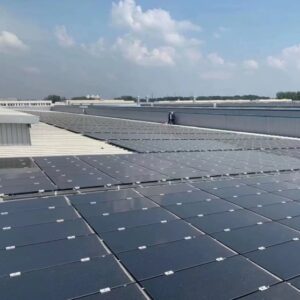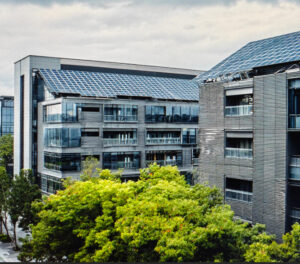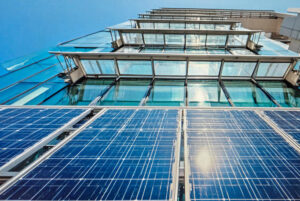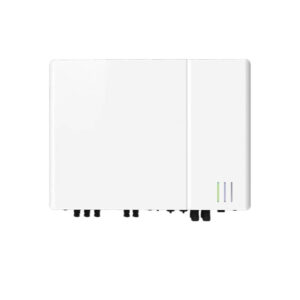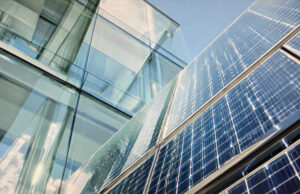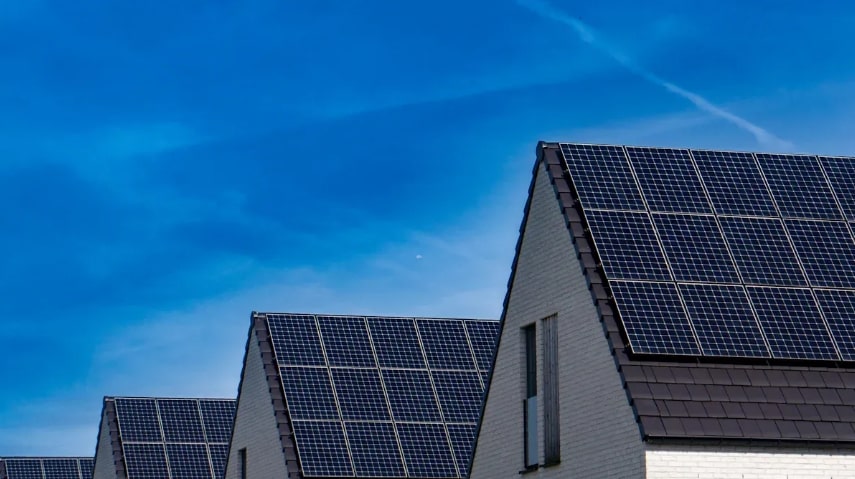
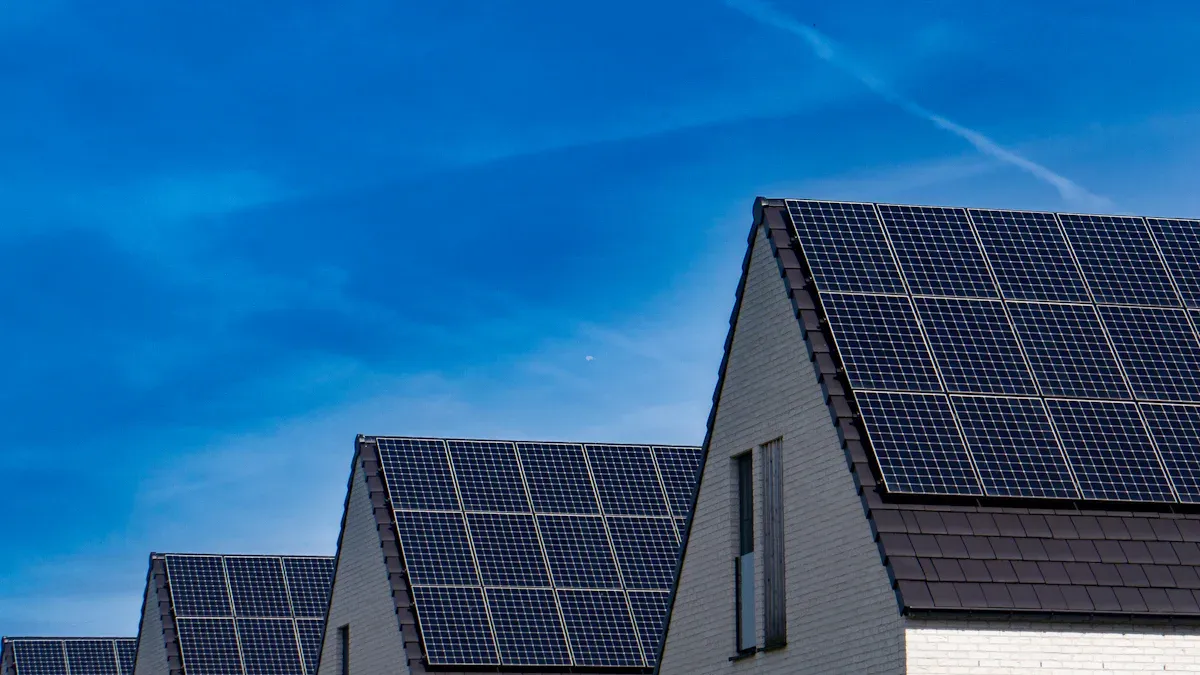
You see BIPV market trends making solar power easy to use. You can add solar power to your building projects. The global market is growing fast. It will reach $25.13 billion in 2025. It was $20.5 billion in 2024. This growth happens because people care more about the environment. There is more demand for green solutions. Governments give strong support. They offer money and good rules.
- Lightweight solar panels
- High absorption materials
- Attractive designs
- Smart integration
These trends make it easier to use solar power. You do not need much effort to start. Companies like Jia Mao Bipv help you pick solar. You can use solar for homes and businesses.
| Trend | Impact |
|---|---|
| Aesthetic appeal | Makes people want retrofits |
| Favorable policies | Helps more homes use solar |
Key Takeaways
- The BIPV market is growing fast. It may reach $25.13 billion by 2025. This growth happens because people care about the environment. Governments also help with support.
- New technologies make BIPV easier to put in. They also make it work better. BIPV can save up to 60% on energy costs. This is more than regular solar panels.
- BIPV makes homes worth more money. Homes can sell for 5% to 10% more. It also lowers energy bills by up to 30%.
- Government rewards and good rules help BIPV cost less. This makes BIPV a smart choice for owners and builders.
- BIPV fits many building types. It brings solar power to both cities and the countryside.
BIPV market trends
Market growth and projections
BIPV market trends are changing how buildings use solar energy. The market is getting bigger every year. Experts think it will grow by 18.33% each year from 2023 to 2035. By 2035, the market could be worth $182.88 billion. Europe is ahead in using BIPV. Asia-Pacific is growing fast because more people need power. North America is also growing, especially in the U.S. and Canada.
- Europe is the biggest BIPV market. It may be worth $15 billion by 2030.
- Asia-Pacific is growing fast. This is because many people need electricity and governments help in places like China and India.
- North America, including the U.S. and Canada, could grow by 20.7% each year from 2021 to 2030.
These BIPV market trends help more people use solar power in different places.
Drivers of adoption
There are many reasons why BIPV market trends help people pick solar power. Builders and owners want to make their own energy. Governments give money to help pay for solar. Strong rules and green building codes support BIPV.
| Driver | Description |
|---|---|
| Energy Self-Sufficiency | Buildings can make their own energy. |
| Government Incentives | People get money to help with solar projects. |
| Regulatory Frameworks | Green building codes make it easier to use BIPV. |
The European Commission gives money to help BIPV grow in Europe. In Asia-Pacific, government rules make it easier to put in BIPV systems. North America also has good rules and money to help.
Technology and design advances
BIPV market trends are making technology and design better. New systems save money and time. A 1 kW BIPV system can save 30 to 60 percent on energy costs compared to regular solar panels. Old solar panels need extra roofing, which means you get 30 to 40 percent less money back. BIPV systems turn building walls into places that make energy, so you get real savings.
It is now faster and easier to install BIPV. Roof-integrated photovoltaics can be put in 44% faster on new buildings than old solar panels. Retrofitting takes 7% less work. On reroofing jobs, workers spend about 6.4 hours per kW. On new buildings, they spend only 3.5 hours per kW.
Smart technology makes BIPV even better. You get AI and IoT to help manage energy. IoT sensors watch how panels work and help fix problems early. AI can guess the weather and move panels for more energy. Smart BIPV systems talk to the grid, so you can manage energy in real time and save money.
Companies like Jia Mao Bipv are leading with new BIPV solutions. These BIPV market trends make solar power easy, smart, and good-looking for your building projects.
Benefits for owners & developers
Simplified processes
It is easier to use BIPV for your building now. Many owners and builders used to worry about rules and limits. Today, there are new ways to make these steps simple. Local officials work with companies to write better codes for BIPV. There are special standards to help you get certified. Programs teach you and others about BIPV. Inspections and permits go faster because rules are clearer. New policies also help remove limits from utilities.
| Challenge | Description | Solution |
|---|---|---|
| Regulatory Barriers | Local rules do not match BIPV technology. | Regulators develop new codes for BIPV. |
| Certification Difficulties | Solar standards do not fit BIPV products. | New standards for BIPV products. |
| Knowledge Gaps | Some groups do not know about BIPV. | Education and outreach programs. |
| Permitting Issues | Old codes slow down BIPV projects. | Faster inspections and clear rules. |
| Utility Limitations | Utilities limit solar power. | Policy changes remove these limits. |
Jia Mao Bipv gives you expert help, so each step is easy.
Accessibility for more buildings
BIPV can be used in many kinds of buildings. In cities, BIPV helps buildings keep power during problems. It also helps people make their own energy. People with less money can use solar power more easily. Cities get very hot, so energy use goes up. BIPV helps with this problem. In the countryside, things are different. There is less heat, so people focus on sharing energy and using BIPV in flexible ways.
- BIPV helps city buildings stay strong during power issues.
- People with lower incomes can use solar power.
- The Urban Heat Island effect changes how BIPV is used.
- Rural areas use BIPV for sharing energy and flexible plans.
Enhanced property value
BIPV makes your property worth more money. Studies show homes with solar sell for 5% to 10% more. If a home costs $790,000, it could sell for $39,500 to $79,000 more. You also save money over time. BIPV can make your building use up to 30% less energy. You spend less on energy and building materials. The government gives you money back and tax credits, so BIPV is a better deal.
- Homes with solar sell for 5% to 10% more.
- You can save up to 30% on energy bills.
- You spend 10-15% less on building materials.
- Incentives and tax credits help you save more money.
BIPV market trends make it easier to use solar, reach more buildings, and raise property value. Jia Mao Bipv helps you at every step, so solar power is simple and helpful.
Real-world BIPV adoption
Commercial case study
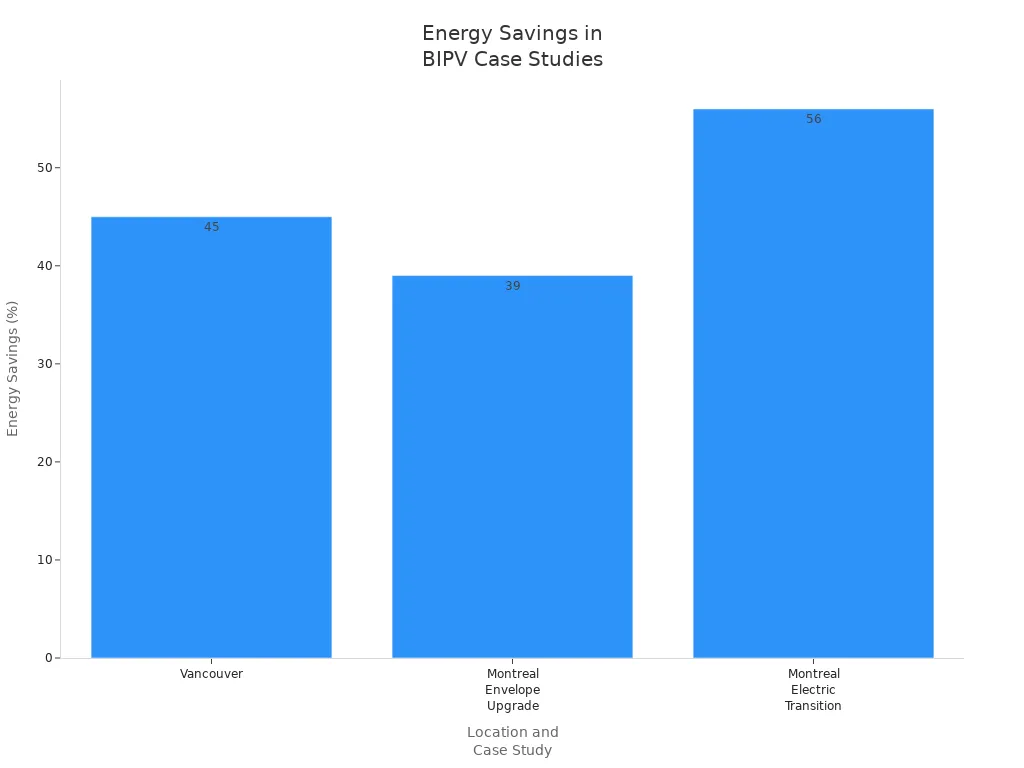
You can see BIPV in real buildings. In Vancouver and Montreal, companies use BIPV to save money and energy. Jia Mao Bipv put BIPV systems in these cities. The results show big energy savings and good returns.
| Location | Energy Savings (%) | Additional Notes |
|---|---|---|
| Vancouver | 45 | Net zero energy solutions are economical |
| Montreal | 39 | Building envelope upgrade improves savings |
| Montreal | 56 | Transition to electric building increases savings |
You get more benefits when you use BIPV for your business:
| Benefit | Description |
|---|---|
| Energy Efficiency | You make clean energy from your building’s structure. |
| Aesthetic Integration | You can make your building look better with custom designs. |
| Cost-Effectiveness | You save money on energy and materials over time. |
| Environmental Impact | You lower your carbon footprint and meet green standards. |
| Space Efficiency | You use walls and roofs to make energy, not just rooftops. |
| Durability and Functionality | You get weather resistance and strong support. |
| Energy Independence | You can reach net-zero energy and use less outside power. |
Residential example
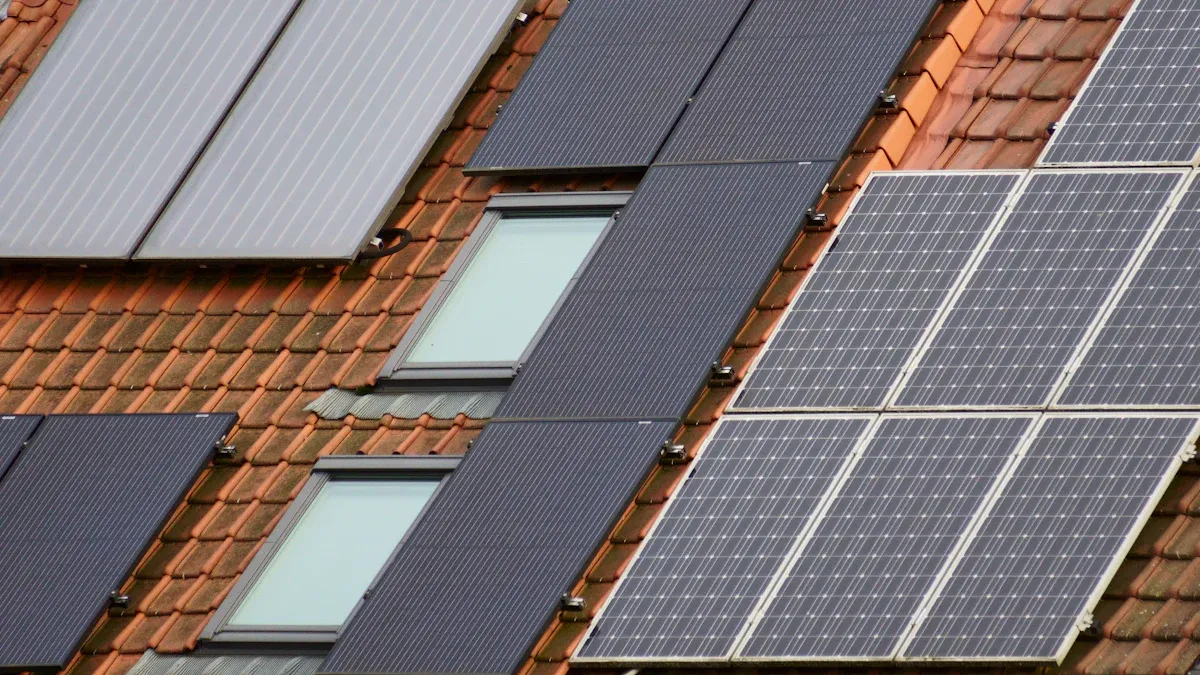
You can use BIPV at home too. Many people pick BIPV for better looks and energy savings. There are some challenges:
- BIPV costs more than regular solar panels.
- It can be hard to install.
- The roof’s angle and direction matter for best results.
BIPV works better than regular panels in weak light. It has lower hot spot risks and gives steady energy over time.
| Feature | BIPV Systems | Traditional Solar Panels |
|---|---|---|
| Performance in Weak Light | Works better, catches diffused light | Does not work well in cloudy weather |
| Hot Spot Risk | Lower risk because it cools better | Higher risk of overheating |
| Energy Production Stability | More stable over time | Can lose power in high heat |
| Installation Flexibility | Can go on many surfaces and angles | Usually only goes on rooftops |
Jia Mao Bipv helps homeowners with advice and easy installation. This makes BIPV a smart choice for your house.
Public infrastructure
You see BIPV in public places like schools, libraries, and train stations. Cities use BIPV to reach their green goals. When you add BIPV to public buildings, your city makes clean energy right there. This lowers carbon emissions and saves energy. Jia Mao Bipv works with city planners to design BIPV for public needs and a greener future.
Tip: If you pick BIPV for public projects, you help your community save energy and protect the environment.
Future outlook for BIPV
Emerging technologies
Many new BIPV technologies will come by 2030. Transparent solar panels are growing quickly. They grow at a rate of 21% each year. These panels work well in offices and stores. Colored BIPV modules are also becoming popular. They make buildings look nicer and help more people like solar power. New cell types like Tunnel Oxide Passivated Contact (TOPCon) and Heterojunction Technology (HJT) need extra protection. These new cells can work better than older ones.
| Technology Type | Expected Growth Rate | Notes |
|---|---|---|
| Transparent Solar Panels | 21.0% CAGR | High demand in commercial and retail buildings |
Materials are getting better too. Organic solar cells and halide perovskites help panels work in many ways. New ways to make panels let you cover bigger spaces and improve quality. These changes help BIPV fit more building types. Jia Mao Bipv uses these new ideas to give you better products.
Policy and incentives
Strong policies and incentives help you use BIPV. Governments in the European Union give money, tax rebates, and clear rules for BIPV. The U.S. has the Investment Tax Credit (ITC) to lower costs. Many states offer extra rebates. These programs make solar power cheaper for you.
| Region | Incentive Type | Description |
|---|---|---|
| European Union | Financial Incentives | Large subsidies and tax rebates for BIPV |
| European Union | Regulatory Support | Strict laws for renewable energy in buildings |
| U.S. | Investment Tax Credit | Federal tax credit lowers solar costs |
| U.S. States | State Rebates | Extra savings for homeowners and businesses |
You should pay attention to new laws. Some laws can help solar power grow. Others might slow it down for a while. The One Big Beautiful Bill Act (OBBBA) may slow home solar for a short time. Later, it could help the market get better.
Market expansion
The BIPV market will grow in many places by 2035. North America will go from $2 billion in 2024 to $5 billion in 2035. Europe will keep growing because governments help a lot. Asia will grow fast as cities get bigger and need more energy.
| Region | 2024 Value (USD Billion) | 2035 Projection (USD Billion) | Growth Description |
|---|---|---|---|
| North America | 2 | 5 | Fast adoption in building structures |
| Europe | N/A | Steady expansion | Driven by incentives and green rules |
| Asia | N/A | Strong growth | Urbanization and high energy demand |
You will see more BIPV products like flexible solar films, colored panels, and anti-glare glass. These work on roofs, walls, and skylights. In 2024, over 150 new BIPV products came out. Jia Mao Bipv helps you pick the best solution for your project. This makes solar power easy and modern.
You notice BIPV market trends are making solar power easy. New designs help you use solar power in simple ways. It is faster to install BIPV now. Smart technology makes it work better for you. Experts say BIPV will grow a lot by 2030. The growth rate is 31.4% each year. Governments will give more support for BIPV. Companies like Jia Mao Bipv will make better products.
- Crystalline silicon helps BIPV work better and cost less.
- Incentives and subsidies make BIPV a good choice.
- Green buildings and smart cities need more BIPV.
When you choose BIPV, you help the planet. Solar power becomes normal in buildings. This makes buildings smarter and better for the environment.
FAQ
What is BIPV?
BIPV stands for Building-Integrated Photovoltaics. You use BIPV to turn parts of your building, like roofs or walls, into solar power generators. Jia Mao Bipv offers solutions that blend with your building’s design.
How does BIPV differ from regular solar panels?
You install BIPV as part of your building’s structure. Regular solar panels sit on top of your roof. BIPV looks better and saves space. Jia Mao Bipv helps you choose the right system for your needs.
Can you use BIPV on old buildings?
Yes, you can add BIPV to old buildings. You may need to check your building’s structure first. Jia Mao Bipv provides advice and support for retrofitting projects.
Is BIPV expensive?
BIPV costs more at first, but you save money over time. You use less energy and get incentives. Jia Mao Bipv helps you find the best value for your project.
Who should you contact for BIPV solutions?
You can contact Jia Mao Bipv for expert help. The team guides you from planning to installation. You get support at every step.


-300x300.jpg)