Advanced Maintenance Strategies for Solar Roof Tile Systems: A Professional Guide for Industry Stakeholders
This guide is written for curtain wall and roofing contractors, photovoltaic EPC and energy service providers, building material brands and distributors, and architects, engineering consultants, and design institutes. Every section addresses maintenance challenges that happen on real projects — with the field-tested protocols that prevent them from becoming expensive problems.
Here is the operational reality: well-maintained solar roof tile systems retain 95% of their original output capacity after 20 years. Poorly maintained systems drop to 85% or lower. For a 500 kW commercial rooftop, that 10-percentage-point difference represents roughly $180,000–$240,000 in lost energy value over the system’s lifetime at a $0.14/kWh commercial rate — before accounting for production degradation, warranty disputes, and unplanned repair costs.
The solar installation business has matured. Clients no longer evaluate contractors only at commissioning. They evaluate them 5, 10, and 15 years into the project lifecycle. EPC firms, specialized roofing contractors, and building material suppliers who build systematic O&M (Operations and Maintenance) capability into their service offering are building something that purely installation-focused competitors cannot quickly replicate: a track record of long-term performance.
This guide covers the 10 maintenance disciplines that separate high-performing solar roof tile portfolios from underperforming ones — with the specific protocols, intervals, tools, and documentation practices that support warranty compliance, regulatory alignment, and client confidence.
1. Comprehensive Visual and Thermal Inspections: Proactive Roof Integrity Monitoring
Why Annual Visual Checks Are No Longer Sufficient
A standard visual inspection from the roofline — or from the ground with binoculars — will catch obvious physical damage. It will not catch delamination developing beneath the glass surface, micro-cracks in the cell layer invisible to the naked eye, or hotspots caused by partial shading or cell degradation. These are the failure modes that cost $15,000–$60,000 to remediate when discovered late, and $1,500–$4,500 to address when caught early.
Drone-mounted thermal imaging — using infrared cameras to detect temperature differentials across the array surface — is now the professional standard for commercial solar roof tile inspection. A panel with a developing hotspot runs 8–15°C hotter than adjacent healthy panels under the same irradiance. That temperature signature is unambiguous on an IR image and invisible on a visible-light photograph.
Inspection Protocol: What a Professional Schedule Looks Like
Biannual thermal drone inspection is the recommended interval for commercial solar roof tile systems — once in spring before the high-generation summer period and once in autumn before winter loading. For coastal installations, add a post-storm inspection after any weather event producing sustained winds above 70 mph.
Typical thermal drone inspections for commercial rooftop systems range from $1,500–$5,000 per project, depending on roof area and access complexity. Against the cost of a missed hotspot that progresses to a module failure and string outage, this is not a maintenance cost — it is a risk management investment.
| Inspection Type | Interval | What It Detects | Typical Cost (Commercial) |
|---|---|---|---|
| Thermal drone (IR) | Every 6 months | Hotspots, delamination, cell cracks, bypass diode failures | $1,500–$5,000 per visit |
| Visual inspection (ground/drone) | Quarterly | Physical damage, debris accumulation, sealant condition | $300–$900 per visit |
| Sealant and flashing inspection | Annually | Adhesion failure, capillary bridging, water tracking paths | Part of annual O&M contract |
| Post-storm assessment | After qualifying events | Wind uplift damage, displaced tiles, debris penetration | $500–$1,500 per event |
What On-Site Teams Need to Know
Train on-site maintenance crews to document three specific conditions that appear before thermal imaging would formally detect a problem: localized discoloration on the tile surface (yellowing or browning of the encapsulant, often visible at panel edges), visible separation at tile-to-tile sealant joints, and any tile that produces an audible rattle when tapped — indicating separation from the mounting substrate.
These are early indicators, not failures. Documenting them in the inspection log with geo-tagged photographs and GPS coordinates creates the timeline that makes warranty claims defensible and maintenance scheduling proactive.
Digital asset management platforms — such as SiteCapture’s solar O&M documentation system — allow contractors and EPC firms to maintain structured inspection logs with photographic records, technician timestamps, and automated alert escalation when a condition exceeds defined severity thresholds. For firms managing 10+ active solar tile systems, this is the operational infrastructure that makes compliance reporting possible without manual coordination overhead.
2. Performance Benchmarking and Real-Time Monitoring Integration

A solar system without monitoring is operating blind — performance drops go undetected for months before a client notices.
The Performance Gap Problem
Here is a maintenance failure pattern that repeats across commercial solar portfolios: a single failed DC optimizer in one string causes a 15% output reduction on that string. The building owner notices the electricity bill is slightly higher than expected. Three months later, a monitoring alert eventually surfaces the issue. By then, the system has underperformed by an estimated 3,200 kWh — representing roughly $450 in lost energy value and a client conversation that starts from a deficit of trust.
The same failure caught by a properly configured monitoring system generates an alert within hours of occurrence. A technician dispatches the next business day. The optimizer is replaced. Total lost production: less than one day.
This is the operational difference between monitoring as an afterthought and monitoring as a core O&M discipline.
AI-Powered Monitoring: What “Zone-Level Comparison” Actually Means
Modern commercial solar monitoring platforms — including SolarEdge, Enphase Enlighten, and SCADA-based systems compliant with IEC 61724 solar monitoring standards — provide performance data updated every 5–15 minutes at the string or module level.
The critical capability is irradiance-normalized comparison: the system doesn’t just alert when output drops — it alerts when output drops relative to expected output given current solar irradiance. This distinction separates a cloudy-day underperformance notification (normal, no action required) from a string fault (immediate attention needed).
AI-enhanced platforms take this further by identifying failure signatures — patterns that distinguish a failing bypass diode from a soiled panel from a corroding connection — based on how the performance deviation behaves over time and temperature. According to oxmaint’s predictive maintenance analysis for renewable energy, predictive maintenance strategies in solar reduce emergency repairs by 80–90% while improving energy output by 15–25% compared to reactive maintenance models.
SCADA Integration for EPC Portfolio Management
SCADA (Supervisory Control and Data Acquisition): A software system that collects performance data from multiple connected systems and provides centralized monitoring, alerting, and control from a single dashboard.
For EPC firms and energy service providers managing multiple commercial solar tile portfolios, SCADA integration transforms O&M from a site-by-site service call model into a portfolio-wide performance management operation. A single O&M technician with a SCADA dashboard can monitor 40–60 commercial systems simultaneously, prioritizing dispatch based on alert severity rather than customer call volume.
Configure automated alerts for two specific thresholds that catch the highest-impact issues earliest:
- String output deviation >5% from modeled P50: Triggers a same-day diagnostic review
- Single module output deviation >15%: Triggers a next-dispatch field visit for IV curve tracing
3. Moisture Intrusion Prevention and Flashing Integrity Protocols
Where Water Actually Enters Solar Tile Systems
Water damage in solar roof tile systems almost never enters through the tiles themselves — it enters through the interfaces: where tile meets ridge cap, where conduit penetrations pass through the waterproofing layer, where perimeter flashing meets the fascia detail, and where sealant joints between adjacent tiles have experienced UV-driven degradation.
For a roofing or EPC contractor, understanding these pathways is what separates a credible maintenance conversation with a building owner from a generic “we’ll check the roof” assurance.
Annual Flashing and Sealant Inspection Protocol
Every annual maintenance visit should include a systematic assessment of five critical interface zones:
Perimeter flashing: Check adhesion at the roof-to-wall junction, eave drip edge, and gutter interface. Thermal cycling causes sealant to expand and contract; after 3–5 years, sealant at metal-to-membrane interfaces commonly shows visible cracking or separation.
Ridge cap integration: Solar tile systems at ridge transitions require flexible flashing that accommodates tile thermal movement. Rigid flashing that has been improperly installed will show gap formation after the first winter. Any gap wider than 2 mm at the ridge is a water intrusion risk.
Conduit penetrations: Every conduit sleeve through the roof membrane is a potential water entry point. Check that the penetration flashing has not separated from the sleeve, that the sealant bead is continuous, and that no capillary bridging (water traveling along the conduit surface) is visible inside the wall cavity.
Tile-to-tile sealant joints: Semi-transparent sealants applied during installation have a rated service life of 15–20 years, but UV exposure, thermal cycling, and foot traffic during maintenance can accelerate degradation. Flag any joint where sealant shows loss of adhesion on one face.
Hydrophobic coating at structural supports: Where tile frames contact structural aluminum or steel supports, apply hydrophobic sealant coatings at installation and inspect annually for signs of moisture tracking between dissimilar materials.
Post-Rainfall Moisture Scanning in High-Humidity Climates
In climates with sustained high humidity — coastal Southeast U.S., Singapore, Vietnam, southern China — conduct moisture scans using a capacitance-type moisture meter on the roof deck immediately below the tile array within 24–48 hours after a heavy rainfall event. Elevated moisture readings directly below a specific tile zone identify a water entry point that may not yet be visible from the tile surface or from interior inspection.
Catching moisture ingress before it reaches the structural deck prevents the scenario where a $600 sealant repair becomes a $28,000 deck replacement.
4. Vegetation and Debris Management for Urban and Rural Installations
Why This Is Not Just a Cleaning Task
Vegetation growth on and around solar roof tiles is not primarily an aesthetic issue — it is a moisture management and electrochemical risk. Moss and lichen on solar tile surfaces retain moisture for extended periods after rainfall, creating sustained wet conditions at the tile surface and at the gaps between tile frames.
According to Oregon State University Extension’s moss control research, lichen is particularly damaging because it is acidic — it erodes protective surface coatings and, on metal framing components, can initiate localized corrosion that undermines structural connections over a 5–10 year timeline. For BIPV glass tiles, lichen at the edge of a panel that has contacted the frame can accelerate edge seal degradation, increasing moisture infiltration risk at the laminate boundary.
Vegetation management is a maintenance discipline — not an optional cosmetic service.
Seasonal Cleaning Schedules That Don’t Void Warranties
Most solar tile manufacturers — including Jia Mao BIPV — specify cleaning with deionized or purified water and soft-bristle brushes or non-abrasive pads. High-pressure washing is explicitly prohibited in most warranty documentation because it can:
- Force water under sealant joints at tile edges
- Dislodge or crack the anti-reflective surface coating
- Damage junction box seals on rear-mounted electrical connections
A practical seasonal cleaning schedule for commercial solar tile systems:
| Season | Cleaning Activity | Equipment | Notes |
|---|---|---|---|
| Spring | Full surface clean post-pollen season | Deionized water, soft brush system | Remove winter debris and pollen accumulation |
| Summer | Spot clean as needed based on monitoring output | Hand wash with purified water | Only if soiling loss >3% detected by monitoring |
| Autumn | Pre-winter debris clearance | Soft brush, leaf blower (low pressure) | Clear valleys and gutters before first freeze |
| Post-storm | Immediate debris removal | Manual removal, never pressure wash | Inspect for tile displacement or impact damage |
Bird Deterrents and Perimeter Guards
Bird nesting beneath solar tiles is a more significant problem than most contractors anticipate until it happens. Nesting material accumulates at tile edges, retains moisture, and the organic material accelerates biological growth. Additionally, bird activity creates foot traffic sounds that building occupants notice — triggering service calls that are not performance-related.
For installations in coastal zones, forested suburban areas, or buildings near water features: install polycarbonate or stainless steel bird guard mesh around the perimeter of the array immediately at commissioning, not after the first nesting season. Retrofit installation on an occupied array is 3–4× more labor-intensive than perimeter guarding during initial installation.
5. Electrical System Health: Junction Box, Conduit, and Grounding Checks
The Failure Modes Nobody Talks About Until They Become Emergencies
The most consistent source of unplanned maintenance cost on commercial solar tile systems — across multiple O&M providers and geographic markets — is not panel degradation. It is electrical connection degradation: corroding MC4 connectors, deteriorating conduit insulation at UV-exposed runs, and intermittent grounding continuity caused by loosening bonding connections over thermal cycling.
These failures are invisible to visual inspection, they develop gradually over 2–5 years, and they announce themselves with either a string outage, a failed inspection, or — in arc fault scenarios — a fire risk.
The protocol that prevents them is systematic: scheduled electrical testing at defined intervals, not ad-hoc testing when a problem is suspected.
Insulation Resistance Testing: The 18-Month Standard
Insulation resistance (IR) testing — using a DC insulation tester (megohmmeter) to measure resistance between the DC conductors and the system ground — is the standard method for detecting developing ground faults in solar PV wiring before they become complete failures.
The Mayfield Energy ground fault testing guide recommends the following IR test thresholds for commercial solar systems:
- >1 MΩ per kW of system capacity: Acceptable (healthy system)
- 0.5–1 MΩ per kW: Flag for investigation within 30 days
- <0.5 MΩ per kW: Immediate shutdown and investigation required — likely ground fault condition
Perform IR testing at 18-month intervals for standard installations, and annually for installations in high-humidity environments, coastal salt-air exposure zones, or in systems installed more than 10 years ago.
Conduit and UV Degradation Inspection
Conduit runs exposed to direct sunlight on rooftops — particularly PVC conduit that was not rated for UV exposure — can become brittle and crack within 5–7 years of installation. Cracked conduit does not immediately cause an electrical fault. It creates a pathway for water ingress that eventually causes insulation deterioration and a ground fault condition.
Inspect all exposed conduit runs during every annual maintenance visit. Flag any conduit showing:
- Surface crazing or cracking visible to the naked eye
- Discoloration from grey to chalky white or yellowed (UV oxidation indicator)
- Loose or missing conduit support clamps (particularly at expansion joint crossings)
- Any location where conduit contacts metal roof flashing without a protective sleeve or saddle
Replace UV-degraded PVC conduit with gray Schedule 40 UV-resistant PVC or liquid-tight flexible conduit rated for outdoor exposure.
Grounding Continuity After Seismic Events
For solar tile installations in Seismic Design Categories C through F — California, the Pacific Northwest, the New Madrid zone, and significant areas of the Mountain West — perform a post-seismic grounding continuity check after any documented seismic event above magnitude 5.5 in the installation’s county.
Seismic motion at the roof level causes racking hardware to shift microscopically relative to the roof deck. While this shift is typically too small to affect structural integrity, it can break the metal-to-metal contact of bonding connections that were relying on compression rather than listed bonding hardware. A broken bonding connection creates an ungrounded array — an NEC violation and a shock hazard.
Use a low-resistance ohmmeter to verify continuity from the last module frame in the array to the grounding electrode. Expected resistance: <0.5 Ω for a properly bonded commercial array. Values above 1 Ω indicate a broken bonding path that must be investigated.
6. Warranty Compliance and Documentation for Contractors and Distributors

Why Documentation Is a Revenue Protection Strategy
A solar tile system with a 25-year performance warranty is a financial asset for the building owner. For that asset to retain its value when something goes wrong, the building owner — or their EPC contractor — must demonstrate that the system was maintained in accordance with the manufacturer’s requirements. Maintenance performed but not documented is, from a warranty administration standpoint, maintenance that was not performed.
The EPC contractors and specialized roofing firms that maintain digital maintenance records with geo-tagged photographs, technician certification records, and timestamped service logs are the ones who successfully process warranty claims. The firms that keep paper logs in a site folder — if they keep records at all — lose warranty claims because they cannot prove maintenance compliance.
Digital Maintenance Records: Minimum Required Content
Every maintenance visit should generate a digital record containing:
| Record Element | Why It Matters for Warranty | Format |
|---|---|---|
| Date, time, and technician name | Establishes timeline of care | Timestamped log entry |
| GPS/geo-tagged site photos | Proves location and condition at time of service | Photo with embedded location data |
| Technician certification number | Confirms qualified personnel performed service | Certificate reference in job record |
| Actions performed and findings | Demonstrates adherence to OEM maintenance protocol | Structured checklist + narrative notes |
| Equipment tested and results | Provides diagnostic baseline for warranty comparison | Test report with values and acceptance criteria |
| Any deferred maintenance items | Demonstrates awareness and planned corrective action | Action item list with target completion date |
For building owners seeking LEED O+M recertification, ITC compliance documentation, or ESG investor reporting, the maintenance record set becomes a compliance deliverable. EPC firms that structure their documentation to serve these secondary uses — not just their own internal records — create a service offering that commands premium O&M contract pricing.
Jia Mao BIPV’s product warranties require biannual inspections by qualified personnel as a condition of coverage. The inspection protocols and documentation standards described in their technical installation and design guide define exactly what “qualified maintenance” means for their product line — follow this documentation framework precisely to protect warranty coverage on every project using their solar tile systems.
7. Structural Load Reassessment for Aging Buildings
The Invisible Risk in the 5–10 Year Window
When a solar tile system was originally installed on a commercial building, the structural assessment was current. The roof framing was in good condition. The dead load from the solar tiles was verified against the available capacity margin. Everything checked out.
Five years later, the building owner has added a rooftop HVAC unit for a tenant fit-out. Seven years in, they are considering adding EV charging and want to route cable trays across the roof. Ten years later, they want to expand the solar array.
None of these changes automatically triggers a structural re-assessment — but each one consumes some of the structural capacity margin that the original assessment found. If they accumulate without review, the building may be carrying loads its structure was not designed for.
When to Reassess: The 5–7 Year Trigger Rule
Collaborate with a licensed structural engineer to re-evaluate roof loading capacity under any of the following conditions:
- 5–7 years after original solar tile installation (baseline reassessment)
- Addition of rooftop equipment weighing more than 5 kg/m² (average across the roof)
- Addition of battery storage on the roof or top floor — BESS units are heavy (typically 150–300 kg per unit)
- Planned solar array expansion adding more than 10% to the installed capacity
- Any modification to the roof drainage system that could affect ponding water loads
The structural assessment in the context of a maintenance program is not a full structural engineering engagement — it is a load tabulation review by a PE, typically 1–3 days of work, producing a written confirmation of continued structural adequacy or a flagged item for engineering follow-up.
Snow Accumulation: The Compounding Load Nobody Plans For
For solar tile installations in Zones 3–7 of the ASCE 7 snow load map — broadly, any location where ground snow load exceeds 25 psf — the interaction of snow accumulation with the solar tile array creates drift patterns that the original structural assessment may not have anticipated.
Solar tiles create a surface obstruction that causes snow to drift and accumulate in predictable patterns — typically at the downslope edge of the array and at any protrusions like conduit risers or equipment housings. The Rimkus commercial snow load analysis documents that drift loads can exceed flat-roof design snow loads by 2–3× in worst-case configurations. If the original assessment used flat-roof snow load without modeling drift patterns from the solar array, the actual peak loading may exceed the design assumption.
Flag this specifically in structural reassessment briefs for installations in high-snow zones.
8. Interconnection and Code Compliance Updates
The Code That Changed Without Notice
On commercial solar tile projects commissioned under NEC 2017 or NEC 2020, the installed rapid shutdown systems may not comply with NEC 2023 requirements — even if they were code-compliant at the time of installation. When the jurisdiction adopts a new NEC edition, existing systems are typically grandfathered, but any system modification, expansion, or major repair triggers compliance with the currently adopted edition.
The 2023 NEC updates to Article 690 that EPC contractors and roofing specialists need to track:
NEC 690.12 (Rapid Shutdown — 2023 update): Clarified carport and non-enclosed structure exceptions, reorganized initiation device requirements, and tightened conductor zone definitions. According to GreenLancer’s 2023 NEC solar guide, any commercial system modification after a jurisdiction adopts NEC 2023 must verify that the rapid shutdown system configuration complies with the 2023 language — not the edition in effect at original installation.
NEC 690.11 (Arc-Fault Circuit Interrupter — 2023 update): DC arc-fault protection is now required for any PV system operating at 80V DC or greater between any two conductors. Systems installed before AFCI requirements applied that are undergoing modifications must address this requirement in the scope of the modification.
NEC 690.4(C): New installations and system modifications must use listed equipment in a listed combination — an inverter listed with a specific rapid shutdown device cannot be substituted for an equivalent device without re-evaluation of the listed combination.
Third-Party Commissioning After Major Repairs
After any repair or modification that involves the DC electrical system — string rewiring, inverter replacement, MLPE device substitution, rapid shutdown equipment modification — conduct a third-party commissioning verification before returning the system to full operation.
Third-party commissioning is distinct from internal quality checks. An independent commissioning engineer verifies system configuration against the approved permit drawings, performs IV curve tracing on modified strings, tests rapid shutdown function, and issues a commissioning certificate that becomes a record document for warranty, insurance, and utility interconnection compliance.
The cost of third-party commissioning — typically $1,500–$6,000 for a commercial system — is the insurance premium that protects against a failed utility inspection, a voided manufacturer warranty, or an arc fault incident attributable to an improperly modified system.
Watch: Solar Roof Tile Thermal Inspection and O&M Techniques in Practice
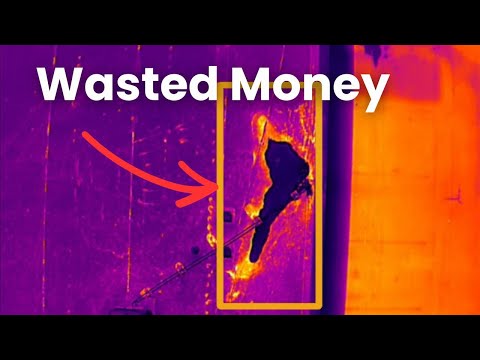 Click to watch: How thermal drone inspection identifies hotspots, delamination, and hidden performance losses on solar rooftops — directly applicable to commercial solar tile O&M programs.
9. Predictive Maintenance Using Data Analytics
From Reactive to Predictive: What the Data Actually Shows
The shift from reactive to predictive maintenance in solar roof tile systems is not a theoretical concept — it is an operational change with documented financial impact. A 2025 AI-driven predictive maintenance study published in TechRxiv demonstrated that machine learning models trained on historical inverter performance data could predict inverter failures 3–7 days in advance with 87% accuracy — allowing planned maintenance dispatch rather than emergency response.
For a commercial O&M provider, the cost difference is significant: a planned inverter servicing dispatch costs approximately $350–$600 in labor and travel. An emergency dispatch for a system that has already failed, with production loss while waiting for technician availability, typically runs $900–$2,400 per event when total cost including lost generation is counted.
Forecasting Inverter Replacement Cycles
String inverters in commercial solar systems have a rated service life of 10–15 years. But within any installed portfolio, actual failure timing varies based on operating temperature, load profile, and the specific thermal cycling the unit experiences. Inverters in sun-baked rooftop enclosures without adequate ventilation consistently fail at 8–10 years; inverters in climate-controlled electrical rooms routinely exceed 15 years.
Track these four inverter performance indicators in your monitoring platform:
- Fan speed increase trend: Cooling fan RPM gradually increases as the fan bearing wears. A >15% increase from baseline fan speed on an inverter under constant load indicates bearing wear — schedule replacement before failure, not after.
- Conversion efficiency decline: Compare monthly DC-in to AC-out ratio normalized for temperature. A gradual decline of >0.5% per year in conversion efficiency indicates aging capacitors or power electronics.
- Thermal shutdown frequency: Any inverter logging more than one thermal shutdown event per quarter is operating above its thermal design point — investigate cooling adequacy before the unit fails.
- Communication dropout pattern: An inverter that loses monitoring communication intermittently before eventual complete failure is a pattern documented in the Infosys solar inverter predictive maintenance framework as the most consistent early warning indicator of control board failure.
Identifying Geographic Failure Patterns
EPC firms managing solar roof tile portfolios across multiple geographic markets have a data asset that is underutilized in most organizations: the failure pattern database. When you track which components fail, when, and in what climatic conditions across a portfolio of 20+ systems, patterns emerge that improve future design decisions.
A firm managing solar tile installations across coastal Florida, inland Texas, and the Pacific Northwest might find that junction box seal failures cluster at systems in the Florida market — pointing to salt-air exposure as an accelerant. That finding should feed back to the product specification for future Florida projects: specifying IP68-rated junction boxes (versus standard IP65) adds $8–$15 per junction box and eliminates a failure mode that generates $2,000–$6,000 per system in repair and claim costs.
Share these insights formally with your design and specification partners — architects, consultants, and design institutes — not just internally. Architects who understand the performance data from installed systems make better specification decisions on future projects. That knowledge-sharing relationship is one of the most durable competitive advantages an EPC or specialized contractor can build.
10. Collaborative Maintenance Frameworks Across Project Stakeholders

The Responsibility Matrix: Writing It Before It Matters
The most reliable predictor of a successful warranty claim — and of a smooth client relationship through the operational life of a solar tile system — is whether the maintenance responsibility matrix was defined in writing before the system was handed over. Not at the point of a claim. Before.
A maintenance responsibility matrix for a commercial solar tile system should define, for every foreseeable maintenance event, who initiates action, who performs the work, who pays for it, and what documentation is required:
| Maintenance Event | Owner Obligation | EPC / Contractor Obligation | Manufacturer Obligation | Documentation Required |
|---|---|---|---|---|
| Biannual inspection | Provide site access; pay O&M fee | Perform inspection; deliver report | Provide inspection protocol | Signed inspection report with photos |
| Panel replacement (manufacturing defect) | Notify EPC; provide access | Coordinate claim and installation | Replace under warranty | EL imaging, IV curve trace, serial number record |
| Inverter replacement (end of warranty) | Budget replacement; approve procurement | Procure and install; commission | None (post-warranty) | Commissioning report, as-built update |
| Sealant repair (normal wear) | Approve and fund repair | Perform repair per OEM protocol | None | Repair record, before/after photos |
| System expansion | Commission structural assessment | Redesign and permit expansion | Provide updated product documentation | New permit set, commissioning report, warranty extension |
| Grounding failure (seismic) | Notify immediately | Dispatch within 24 hours; restore | None (installation issue) | Repair record, NEC compliance confirmation |
O&M Handover Packages: What Facility Managers Actually Need
EPC firms that hand over a solar tile system with a USB drive containing PDF versions of manufacturer manuals and a one-page commissioning certificate are setting their clients — and themselves — up for a warranty dispute in Year 4 or Year 7.
A professional O&M handover package, as detailed in the Solar Best Practices handover-to-O&M guidelines, should contain everything a facility manager needs to operate and troubleshoot the system without calling the EPC for basic questions. This includes:
- As-built drawings: Updated to reflect field changes, with module serial numbers mapped to their physical location in the array
- Monitoring platform access: Login credentials, alert configuration documentation, and a 30-minute orientation with the facility manager or their designated team
- Spare parts inventory: Manufacturer-recommended on-site spares (typically 2–5% of modules, one spare junction box per 20 installed, compatible sealant products)
- Emergency contact list: EPC project manager, manufacturer technical hotline, utility emergency operations center, and local certified service technician contact
- O&M manual: Inspection schedule, cleaning protocol, alert response decision tree, and escalation path for each alert type
- Warranty registration confirmations: Written confirmation that all equipment has been registered under the applicable warranty programs
Training Modules for Building Operators
Building operators — facility managers, in-house maintenance teams, property management staff — are often the first people to notice that something is wrong with a solar tile system. But without basic training, they cannot distinguish between a monitoring alert that requires immediate escalation and one that resolves with a cloud front passing through.
Co-develop basic operator training with the solar tile manufacturer and the EPC’s technical team. A 2-hour session covering four topics creates measurable value: how to read the monitoring dashboard, what alert colors and thresholds mean, which alerts require immediate EPC notification versus routine logging, and what never to do without EPC authorization (including never power-cycling an inverter during a ground fault alert, and never accessing the DC electrical system for any reason).
Building material distributors who supply solar tile products have a role here that most do not currently fill: acting as the technical liaison that maintains updated product bulletins, replacement part availability, and installation procedure updates for the field teams serving their distribution territory. A distributor that proactively sends updated sealant compatibility documentation when a manufacturer formulation changes — rather than waiting for a contractor to discover incompatibility on-site — is providing genuine technical value that justifies a preferred supplier relationship.
Maintenance Cost vs. Risk: A 25-Year Financial Model
The following table compares the long-term financial impact of three maintenance approaches on a 200 kW commercial solar tile system (installed cost: $320,000; annual generation value: $42,000 at $0.14/kWh).
| Maintenance Approach | Annual O&M Cost | Year 10 Output (% of rated) | Year 20 Output (% of rated) | Cumulative Unplanned Repair Cost (25 yr) | Net 25-Year Energy Value |
|---|---|---|---|---|---|
| No structured maintenance | $0 | ~82% | ~71% | $45,000–$80,000 | $740,000 |
| Reactive-only (fix on failure) | $3,500/yr | ~87% | ~78% | $28,000–$45,000 | $860,000 |
| Proactive O&M (this guide’s protocol) | $8,500/yr | ~94% | ~89% | $8,000–$15,000 | $1,080,000 |
Assumptions: 0.5%/yr degradation (maintained systems); 0.8%/yr (reactive); 1.1%/yr (no maintenance). Utility rate escalation: 3%/yr. All figures illustrative; project-specific analysis required.
The proactive maintenance program costs $125,000 more in O&M fees over 25 years. It generates approximately $340,000 more in energy value. Net benefit of the proactive program: ~$215,000 per 200 kW system — before accounting for warranty protection value, avoided emergency repair costs, and client retention value.
Frequently Asked Questions
1. How often should commercial solar roof tiles be inspected for optimal performance?
The professional standard is biannual thermal imaging inspections — once in spring before peak generation season and once in autumn — combined with quarterly visual inspections and an annual comprehensive electrical check covering insulation resistance testing and grounding continuity. For coastal installations or high-humidity climates, add a post-storm assessment after any weather event producing sustained winds above 70 mph.
2. What are the early warning signs of solar tile degradation?
Four specific signs appear before formal diagnostic testing would detect a problem: localized discoloration at tile edges (yellowing of the encapsulant visible at the laminate boundary), visible separation at tile-to-tile sealant joints, a rattle sound from a tile when tapped during inspection, and a string output decline greater than 3% compared to adjacent strings under equivalent irradiance. Any of these warrants an immediate thermal imaging inspection and IV curve trace on the affected zone.
3. Can standard roofing crews maintain solar tile systems safely?
Only if they have completed specific training covering DC electrical hazard identification, safe working distances from energized DC conductors, arc flash assessment for the installed system voltage, and temporary shading procedures for work on partially completed arrays. Standard roofing safety training does not cover DC electrical hazards, which behave differently from AC systems and cannot be interrupted by standard circuit breakers. Assign DC electrical work — including any work within 1 meter of junction boxes or conduit runs — exclusively to NABCEP-certified PV technicians or licensed electricians with solar-specific training.
4. How do I verify if a performance drop is due to soiling vs. equipment failure?
Compare irradiance-normalized yield data across multiple strings simultaneously. A soiling-related performance drop affects all strings on a given roof section uniformly — if all strings show similar percentage decline, soiling is the likely cause. A localized drop on one or two strings while adjacent strings perform normally indicates a hardware issue — junction box corrosion, a failing optimizer, a developing cell crack, or a module-level fault. Follow localized drops with IV curve tracing on the affected strings to pinpoint the specific module or connection causing the deviation.
5. What tools are essential for diagnosing underperforming solar roof tile zones?
Five tools form the diagnostic toolkit for commercial solar tile maintenance: a drone-mounted IR thermal camera for hotspot detection, an IV curve tracer (such as the Fluke 1500 series) for string-level electrical characterization, a clamp meter for string current verification, a calibrated DC insulation tester (megohmmeter) for ground fault detection, and module-level monitoring software for performance trend analysis. The monitoring software should be the first tool used — it often identifies the specific string and approximate failure mode before any physical site visit is needed.
6. Are there specific cleaning methods that won’t void solar tile warranties?
Yes. Use deionized or purified water with a soft-bristle brush, microfiber pad, or robotic cleaning system approved for the specific tile product. Never use high-pressure washing — the pressure can force water under tile edge sealants, crack anti-reflective coatings, and damage junction box seals. Avoid detergents or cleaning chemicals unless explicitly approved by the manufacturer in writing. Document the cleaning method, water source, and technician name in the maintenance log — this documentation is required to demonstrate warranty-compliant maintenance if a moisture-related claim arises.
7. How can EPC providers ensure long-term O&M readiness during project handover?
Deliver a handover package that includes: as-built drawings with module serial numbers mapped to physical location, monitoring platform access and a 30-minute orientation session for the facility manager, manufacturer-recommended spare parts inventory (2–5% module quantity, compatible sealant products), an O&M manual with inspection schedule and alert response protocols, warranty registration confirmations for all major components, and a signed maintenance responsibility matrix defining who acts on each foreseeable maintenance event. Structured handover documentation, as outlined by Solar Best Practices, is the foundation of every successful EPC-to-owner transition.
8. What role do building material distributors play in maintenance support?
Distributors supporting commercial solar tile projects should stock critical spare tiles (matching current production specifications), compatible flashing and sealant products listed on the manufacturer’s approved materials list, and updated technical bulletins from the manufacturer covering any specification changes that affect maintenance protocols. Proactive distribution of updated maintenance information — particularly when product formulations, sealant compatibility requirements, or warranty condition updates change — is a genuine service that justifies preferred supplier relationships with EPC contractors and roofing specialists.
9. How should architects design for future maintainability of solar roof tile systems?
Four design decisions at schematic design stage have the highest long-term impact on maintainability: incorporate safe roof access pathways (minimum 900 mm wide, slip-resistant surface) that reach all array zones without requiring panel removal; design electrical zoning so that individual roof sections can be isolated and de-energized without shutting down the entire array; size inverter rooms and conduit pathways for 120% of initial installed capacity to accommodate future additions; and specify modular tile layouts with standard dimensions that allow individual tile replacement without disturbing adjacent panels. These decisions add minimal cost at design stage and eliminate significant maintenance cost over 25 years.
10. What data should be included in a maintenance report for client compliance?
For clients with LEED O+M, ITC compliance, investor ESG reporting, or insurance compliance requirements, the maintenance report should include: inspection date, technician name and certification reference, geo-tagged photographs of inspection findings, performance metrics (actual kWh vs. P50 modeled kWh for the reporting period), thermal imaging results with hotspot temperatures and locations, electrical test results (IR values, string Voc/Isc measurements), any corrective actions taken or deferred with expected completion dates, and current warranty status for all major components. This structured reporting format converts routine maintenance records into a compliance deliverable that clients in regulated industries genuinely need.
11. Can vegetation growth underneath solar tiles impact system longevity?
Yes, significantly. Moss and lichen retain moisture against the tile surface and frame components after rainfall, creating sustained wet conditions that accelerate edge seal degradation and, on metal framing, initiate localized corrosion. Lichen is acidic and erodes protective coatings on both glass surfaces and aluminum frame anodizing. Studies on roofing systems document that lichen colonies on metal roof components can initiate corrosion within 3–5 years of establishment. Install zinc or copper anti-moss strips at the ridge of any solar tile installation in humid, shaded environments at commissioning — not as a reactive measure after moss appears.
12. How do I handle a failed tile replacement without disrupting the entire array?
Follow the manufacturer’s removal sequence for the specific product — typically removing the adjacent lower-row tiles first to access the failed tile’s mounting clips, then removing the failed tile without disturbing the electrical connections of adjacent panels. Use load-distributing temporary supports (foam-padded plywood spreaders) across the frame members when a technician must work in the immediate vicinity of the removal zone. Immediately after a tile is removed, cap the exposed electrical connectors with weatherproof dust caps — never leave open MC4 connectors unprotected during a repair, as moisture ingress in an open connector can damage the adjacent string’s wiring insulation.
13. Is it necessary to re-commission the system after major maintenance?
Yes, for any maintenance that involves the DC electrical system — including inverter replacement, string rewiring, MLPE device substitution, or rapid shutdown equipment modification. Re-commissioning should include IV curve tracing on modified strings, insulation resistance testing, functional test of the rapid shutdown system, and a performance ratio verification against the baseline commissioning data. The re-commissioning certificate becomes a required document for warranty continuity, utility compliance, and insurance coverage — treating it as optional creates an administrative gap that can invalidate coverage when a claim arises.
14. What are the risks of delaying minor repairs on solar roof tiles?
The escalation pattern is consistent and well-documented: a cracked tile edge sealant (repair cost: $200–$400) becomes a water ingress pathway that reaches the roof membrane (repair cost: $1,500–$3,500) and then the structural deck (repair cost: $8,000–$28,000). A corroding DC connection (repair cost: $150–$300) becomes a partial arc fault condition (hazard mitigation cost: $3,000–$8,000) and eventually a complete string failure (production loss + repair: $5,000–$15,000). In both cases, the decision to defer a minor repair generates a 10–40× cost escalation within 12–36 months. NEC 690.11 arc fault protection is specifically designed to interrupt developing arc faults before they propagate to fire conditions — but a system with a corroding connection that hasn’t yet tripped AFCI protection is operating with a developing hazard that becomes increasingly likely to cause a serious event the longer it goes unaddressed.
15. How can consultants verify contractor compliance with maintenance best practices?
Require contractor submission of digital maintenance logs with timestamped entries and geo-tagged photographs at each reporting interval (typically quarterly or annually per contract). Specify third-party audit rights in the O&M contract — the right to engage an independent inspector to verify that maintenance activities documented in the log were actually performed. Require use of OEM-approved service partners for warranty-covered maintenance activities — not just qualified technicians generally. And specify that any maintenance activity generating a compliance finding (failed IR test, grounding continuity gap, code non-compliance) triggers written notification to the consultant within 48 hours of discovery, with a remediation timeline. These four contractual provisions create the oversight structure that makes compliance verification possible without full-time site supervision.
Maintenance as Competitive Advantage
A 500 kW commercial solar tile system represents 1,000–1,200 MWh of annual energy production, $140,000–$170,000 in annual energy value at current commercial rates, and 25 years of ongoing client relationship. The difference between a well-maintained system that retains 94% of its output at Year 10 and a poorly maintained one at 82% is not just a performance statistic — it is $180,000–$240,000 in cumulative value that either flows to the building owner or evaporates through avoidable degradation.
EPC firms, roofing contractors, architects, and distributors who build systematic O&M capability — the inspection protocols, the monitoring infrastructure, the documentation standards, and the stakeholder communication frameworks described in this guide — are building something that purely installation-focused competitors cannot quickly replicate: a demonstrated track record of long-term performance that clients can verify.
Three actions to take before your next project handover:
First, draft a maintenance responsibility matrix specific to the project and have all parties sign it at commissioning — before any warranty question arises. Use the framework in Section 10 as your starting template.
Second, configure monitoring alerts to flag string deviations >5% from modeled P50 and deliver those alerts to a named technician, not a generic inbox. The value of a monitoring system is in the response it triggers, not in the data it collects.
Third, request manufacturer-specific maintenance documentation — inspection protocols, approved cleaning methods, spare parts list — from your solar tile supplier at project award, not at handover. For projects using Jia Mao BIPV solar tile systems, this documentation is available through the manufacturer’s technical support team and should be incorporated directly into your O&M manual.
The solar roof tile systems installed today will still be generating power — and still be your clients’ reference for your firm’s capabilities — in 2045 and 2050. Build the maintenance program that makes those long-term references positive ones.
Glossary of Key Terms
AFCI (Arc-Fault Circuit Interrupter): A listed device that detects and interrupts arc fault conditions in DC circuits — required by NEC 690.11 (2023) for PV systems operating above 80V DC.
BEMS (Building Energy Management System): Software platform controlling and monitoring a building’s energy systems, increasingly integrated with solar monitoring for demand management.
BESS (Battery Energy Storage System): Battery bank paired with a solar system to store excess generation for use during peak-tariff periods or grid outages.
Electroluminescence (EL) Imaging: A quality inspection technique that applies a forward current to a solar module and photographs the luminescence pattern — revealing cell cracks, delamination, and connection defects invisible to visual inspection.
Ground Fault: An unintended electrical connection between a conductor and the system ground. In solar PV systems, ground faults create shock hazards and, if sustained, can cause fire.
Insulation Resistance (IR) Testing: A diagnostic test using a DC insulation tester (megohmmeter) to measure resistance between DC conductors and ground — used to detect developing ground fault conditions.
IV Curve Tracing: A diagnostic measurement of a solar module or string’s current-voltage relationship, compared against the expected curve to identify performance defects.
MLPE (Module-Level Power Electronics): DC optimizers or microinverters at each module, enabling rapid shutdown compliance and string-level performance monitoring.
P50 / P90: Statistical production estimates. P50 = output exceeded in 50% of years (median). P90 = output exceeded in 90% of years (conservative estimate used for financial guarantees).
Performance Ratio (PR): Actual energy output divided by theoretical maximum output under current irradiance. Well-maintained commercial systems target PR ≥ 0.80 at Year 10.
SCADA (Supervisory Control and Data Acquisition): A software platform collecting real-time performance data from multiple connected solar systems — used by EPCs for portfolio-level monitoring.
VLT (Visible Light Transmittance): The percentage of visible daylight transmitted through a glazing panel — relevant for BIPV glass tiles in facade or skylight applications.