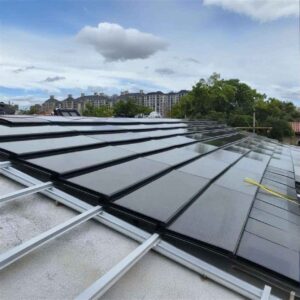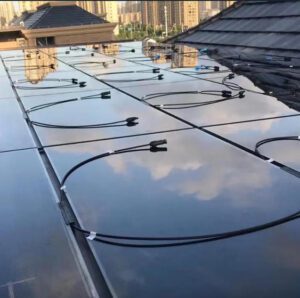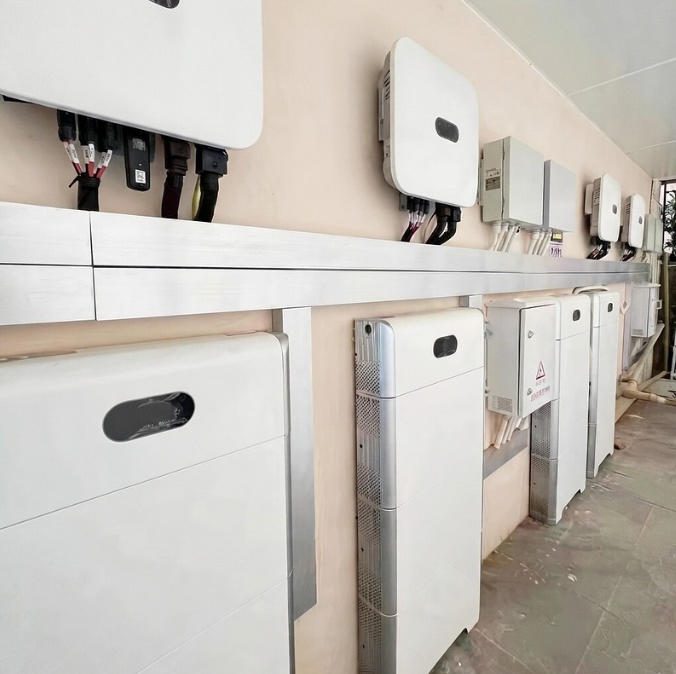
How pairing solar installations with battery storage maximizes energy utilization and creates a competitive edge for distributors and agents selling complete energy solutions to homeowners.
 Solar-only systems leave significant value on the table. The distributors closing larger deals today are the ones who walk in with a complete storage conversation — not just a panel proposal.
Most homeowners who buy solar panels believe they’ve made the complete smart energy decision. They’ve reduced their electricity bill. They’re generating clean power. Done.
What they don’t fully grasp — and what most sales conversations fail to explain — is that a solar-only system is fundamentally incomplete. Without storage, roughly 30–50% of the energy those panels generate gets exported to the grid at rock-bottom compensation rates, often at exactly the time the household doesn’t need it, while those same homeowners pay premium peak-hour rates to pull power back from the grid in the evening.
For distributors and agents, this gap between what homeowners think they’ve solved and what they’ve actually solved is the most significant revenue opportunity in your current customer base.
Battery storage doesn’t just increase deal size — though it does that substantially, with the average storage-paired deal worth $10,000–$20,000 more than a solar-only installation. It transforms a transactional sale into a complete energy solution. It creates customers who experience genuine energy independence and become your most vocal advocates. And it positions your business in a category where margins are stronger, competition is thinner, and customer switching costs are higher.
This article gives you the frameworks, the economics, the objection-handling scripts, and the market intelligence to make storage a confident, consistent part of every sales conversation you have.
Why Solar Alone Leaves Money on the Table
The Grid Dependency Trap:
Here’s the reality most homeowners don’t grasp until after installation: a standard solar panel system without storage is not an energy independence solution. It’s a grid-linked generation asset with the grid serving as an invisible battery.
When the sun shines and your solar panels generate more power than the household is consuming — which happens for most of the day in sunny climates — the excess flows onto the grid. Under older net metering arrangements, this export was compensated at retail electricity rates, which made the economics work reasonably well. Under today’s increasingly prevalent net billing structures, that export is compensated at wholesale rates, which are typically 3–5 times lower than the retail rates your customer pays to import power in the evening.
The practical result: a homeowner with a well-sized solar system in California under NEM 3.0 (the state’s net billing policy that took effect January 1, 2024) might receive $0.05/kWh for exported midday generation, then pay $0.45–$0.55/kWh to import power during the evening peak. That gap is the money their solar system is leaving on the table — and it’s the gap that battery storage directly and completely addresses.
Missed Revenue During Peak Hours:
Without storage, peak solar generation (typically 10am–2pm) almost always exceeds household consumption. That surplus is exported to the grid at low rates. Peak household consumption (typically 6pm–9pm) happens after the sun has set — when the grid is at its most expensive. A solar-only system misses the arbitrage window entirely.
A modeled example: a California homeowner with a 7 kW solar system and no battery might export 12 kWh per day at $0.05/kWh ($0.60 revenue), then import 8 kWh in the evening at $0.48/kWh ($3.84 cost). Add battery storage and that same 12 kWh is stored for $0 and used in the evening for $0, replacing $3.84/day in grid purchases. Over 250 billing days, that’s a $960/year swing — and that’s before accounting for time-of-use rate arbitrage optimization.
The Rising Cost of Grid Electricity:
Residential electricity prices across the US averaged 16.7 cents/kWh in 2025, up from 15 cents/kWh in 2024 — and that trajectory is structural, not cyclical. Grid infrastructure investment, wildfire hardening, climate-driven demand peaks, and the electrification of transportation and heating are all pushing utility rates upward at 4–7% annually in most markets.
Every year that a homeowner delays adding storage, the value of that decision increases. Distributors who frame storage as a hedge against electricity price escalation — not just a current-year bill reducer — are making an argument that gets stronger every time their customer receives a utility rate increase notice. That notice, coincidentally, is one of the most powerful trigger events for storage purchase decisions in the sales funnel.
What Your Clients Need to Know About Energy Storage Systems
How Modern Battery Systems Work:
A residential battery storage system captures electricity — either directly from solar panels or from the grid during low-rate periods — stores it in a battery bank, and releases it on demand when generation is low or grid rates are high. Three technology types dominate the current market, and knowing the differences helps you match products to customers.
Lithium-ion NMC (Nickel Manganese Cobalt): The chemistry used in Tesla Powerwall and many first-generation storage products. High energy density (meaning more kWh per unit of physical size), good cycle performance, and relatively mature manufacturing. Typical operating temperature range: -4°F to 104°F (-20°C to 40°C). The primary concern with NMC chemistry is thermal runaway risk in manufacturing defects — which rigorous BMS (Battery Management System) engineering addresses in quality products.
LiFePO4 (Lithium Iron Phosphate): The chemistry used in many newer systems including several from Chinese manufacturers who have driven significant volume in global storage markets. LiFePO4 offers longer cycle life (typically 4,000–6,000 cycles versus 2,000–3,000 for NMC), better thermal stability (a material safety advantage), and slightly lower energy density. For homeowners who prioritize longevity and safety, LiFePO4 is typically the stronger recommendation. Battery pack prices for stationary storage fell to $70/kWh in 2025 — a 45% decrease from 2024 — with LiFePO4 systems leading the cost reduction curve.
Hybrid Inverter Systems: A hybrid inverter manages the flow of power between solar panels, battery storage, and the grid in a single unit, replacing separate solar inverter and battery inverter components. This integrated approach reduces installation cost and complexity, and enables more sophisticated energy management (charge from solar first, charge from cheap grid power second, discharge during peak rates). Most new solar-plus-storage installations in 2025 use hybrid inverter architectures.
Storage Capacity vs. Power Output:
These two specifications are often confused, and the confusion leads to customer disappointment. Capacity (measured in kilowatt-hours, kWh) is how much energy the battery holds — how long it can power your home. Power output (measured in kilowatts, kW) is how fast it can deliver that energy — how many appliances it can run simultaneously.
A 13.5 kWh battery with a 5 kW continuous output can power essential loads (refrigerator, lighting, Wi-Fi, device charging) for approximately 12–18 hours during a grid outage. The same battery trying to power an air conditioning system that pulls 3.5 kW while the refrigerator draws 0.8 kW is already near its output limit. Understanding this distinction helps you prevent the most common storage sizing mistake: a customer who buys adequate capacity for their expected duration needs but insufficient power output for their actual load profile.
Round-Trip Efficiency Explained:
Round-trip efficiency is the percentage of energy you get out of a battery relative to what you put in — accounting for conversion losses during charging and discharging. Most quality lithium storage systems achieve 90–97.5% round-trip efficiency. The Sigenergy Sigenstor BAT leads current benchmarks at 97.5%; most mainstream systems cluster around 90–92%.
In practical terms: for every 100 kWh you charge into a 90% round-trip efficiency battery, you get 90 kWh back out. The 10 kWh is lost as heat in the conversion process. At $0.15/kWh electricity value, that’s a $1.50/100 kWh loss — minor in the context of annual economics. In ROI conversations with customers, the more important point is that round-trip efficiency should be a product differentiator in your sales comparisons: a 90% system versus a 95% system represents a meaningful efficiency difference over a 10-year operating life.
When Battery Storage Becomes a Smart Investment (Not Just a Nice-to-Have)

The ROI conversation changes completely when you show customers the specific dollar amount their stored solar is saving versus what they’d pay the grid during peak hours.
Time-of-Use Rate Arbitrage Scenarios:
Time-of-use (TOU) rates are utility pricing structures where the cost of electricity varies by time of day — typically charging significantly more during evening peak hours (when demand is high) and less during overnight or midday off-peak periods. California’s TOU peak rates in 2025 reach $0.45–$0.58/kWh between 4pm–9pm for Southern California Edison customers. Off-peak rates in the same territory run $0.25–$0.30/kWh.
A 13.5 kWh battery fully charged with solar during the day and discharged during the 4pm–9pm peak is replacing $6.08–$7.83 worth of grid electricity per day ($0.45–0.58 × 13.5 kWh). Over 300 billing days, that’s $1,824–$2,349 in annual savings from TOU arbitrage alone — before any other value streams are counted. At a $14,000 system cost after incentives, payback in this scenario runs 6–8 years, with 7–12 years of additional value generation within the system’s warranty period.
Texas presents a different but equally compelling picture. TXU Energy’s peak pricing tiers can reach $0.32/kWh during extreme heat events, with real-time pricing during grid stress events (like the 2021 Winter Storm Uri) reaching catastrophically higher levels. For Texas homeowners who have experienced grid failure directly, the backup power value proposition carries emotional weight that the pure-arbitrage argument doesn’t need to carry alone.
Backup Power Value During Outages:
A 2024 analysis found that the average US homeowner experiences approximately 8 hours of power outage annually — but that average masks enormous geographic variation. Customers in Florida, Texas, California fire zones, Puerto Rico, and the Gulf Coast experience outage hours measured in days, not hours. In Puerto Rico, where grid reliability remains structurally compromised, homeowners have installed storage not as an energy savings tool but as the primary mechanism for maintaining basic household function.
Quantifying backup power value for your sales conversation: food spoilage in a refrigerator and freezer during a 24-hour outage averages $300–$500 for a typical household. A sump pump failure during a storm costs $2,000–$8,000 in basement flooding damage. A medically vulnerable household member who requires powered equipment faces care disruption costs that are far larger. A battery system that prevents these outcomes has a calculable insurance value that sits alongside the electricity arbitrage economics — and for many customers, particularly those in outage-prone areas, this insurance framing closes the deal when the savings framing doesn’t.
Self-Consumption Maximization:
Without storage, the typical solar household self-consumes approximately 25–35% of their own generated solar — meaning they export the majority at low rates and import the majority at high rates. Add appropriately sized battery storage, and self-consumption rates climb to 80–95%, dramatically shifting the household’s relationship to the grid.
A real-world case study from a California homeowner documented by Simcore Partners illustrates the arithmetic: post-NEM 3.0, a 9 kW solar system without storage was generating net savings of approximately $800/year (severely compressed by low export compensation rates). The same system paired with a 27 kWh battery storage system generated net savings of approximately $3,200/year — a 4x improvement in annual savings from a single product addition. The storage system cost $18,000 before the 30% ITC, making the net cost $12,600 and the payback period approximately 4 years on the incremental investment.
Battery Degradation Costs vs. Long-Term Savings:
Honest conversations about battery lifespan build more trust than optimistic projections that customers later discover were inaccurate. Most quality LiFePO4 residential battery systems are warranted to 70–80% of original capacity at 10 years or a specified cycle count (typically 4,000–6,000 cycles, which at one full cycle per day represents 11–16 years of operation). After the warranty period, the battery doesn’t fail — it continues to operate at reduced capacity.
The annual degradation cost can be modeled simply: if a 13.5 kWh system costs $15,000 and has a warranted life of 10 years at 80% capacity, the effective depreciation is $1,500/year. Against annual savings of $2,000–$3,500 in most TOU markets, the net economics remain strongly positive throughout the warranty period and beyond. Share this math with customers who ask about degradation — it demonstrates your honesty and turns a potential objection into a confidence-builder.
How Location Changes the Storage Equation
High-Sunshine States with Low Export Rates:
California’s NEM 3.0 policy change is the most dramatic example of a storage demand accelerant operating at scale. California’s overall solar market shrank by 36% in 2024 following the NEM 3.0 transition — but storage attachment rates among new solar customers surged to above 80% in the same period. The policy change that compressed solar-only economics simultaneously made storage economics compelling: when export compensation drops from retail to wholesale rates, the value of storing and self-consuming shifts from marginal to essential.
Arizona, Nevada, and Hawaii have implemented similar net billing structures that reduce export compensation, creating TOU-driven storage economics that mirror California’s. Distributors in these states have the most immediately compelling storage ROI story to tell — and the customers who are most primed to hear it.
Seasonal Variation and Winter Performance:
Northern climate markets — the Pacific Northwest, New England, the Upper Midwest — require a modified storage economics conversation. Winter solar generation is significantly lower than summer peak, and a battery system sized for summer self-consumption may be underutilized during winter months.
The corrective framing: position storage in northern climates first on backup power value and second on the summer TOU arbitrage that still makes the economics work over an annual cycle. A Massachusetts homeowner who loses power during nor’easters, pays $0.22/kWh off-peak and $0.28/kWh on-peak, and has a well-sized solar system will see different absolute savings than a California peer — but the backup power value and the growing Massachusetts utility rate trajectory (up approximately 40% between 2021 and 2025) make the storage case legitimate and defensible.
Regional Incentive Programs:
The federal landscape as of 2025: homeowners who purchased and installed standalone battery storage systems by December 31, 2025 could claim the 30% Residential Clean Energy Credit (Section 25D). Enphase and other manufacturers have flagged that post-2025 homeowner-owned batteries may face changed treatment under evolving legislation. The practical implication for your sales calendar: customers considering storage have an incentive to act before their regional policy window narrows.
State-level incentives add meaningfully to the federal baseline in key markets:
| State / Region | Key Incentive | Approximate Value |
|---|---|---|
| California | SGIP (Self-Generation Incentive Program) | $150–$200/kWh of storage |
| Massachusetts | SMART Program storage adder | Additional $/kWh generation payment |
| New York | ConEd & NYSERDA incentives | Up to $250/kWh in ConEd territory |
| Maryland | State tax credit + solar canopy grants | Up to $1,000 state tax credit |
| Texas | Local utility rebates vary by provider | $0–$2,000 depending on utility |
| Australia | VPP (Virtual Power Plant) programs | Premium FIT rates for storage participants |
Knowing the specific incentive stack in your territory is not optional knowledge for a storage-focused distributor — it’s the difference between a customer who says “that’s too expensive” and one who says “when can we schedule the installation?”
Grid Reliability Factors:
In markets with structurally unreliable grid infrastructure — Puerto Rico, rural areas served by aging distribution networks, wildfire-prone California communities under Public Safety Power Shutoff protocols — storage isn’t an add-on to solar. It’s the primary purchase motivation, with solar serving as the charging mechanism. These customers arrive at the conversation already convinced of the need for backup power; your job is to size the system correctly and ensure the product meets their expectations for duration and reliability.
When to Recommend Storage — Five Profiles That Convert
Scenario 1 — The High-Bill Homeowner in a Time-of-Use Market:
Profile: A homeowner in Southern California, Arizona, or Nevada paying $350–$500/month in electricity bills. They’re on a TOU rate where peak hours (4pm–9pm) cost $0.45–$0.55/kWh. They’ve inquired about solar primarily because of bill shock.
Pain point: They want the bill to go down, and they want to control their energy costs. The idea that a solar system on their roof still leaves them dependent on the expensive grid during their highest-consumption hours is genuinely surprising — and motivating.
The ROI conversation: Run their actual bill through a TOU analysis. Show them their peak-hour consumption versus their projected solar generation timing. Show them what happens to their net annual position with solar only versus solar-plus-storage. In most California TOU scenarios, storage converts a $400–$800/year net benefit (solar only, post-NEM 3.0) into a $2,000–$3,500/year net benefit. That conversation closes storage add-ons reliably.
Scenario 2 — The Outage-Prone Area Resident:
Profile: A homeowner in Texas, Florida, coastal California, or rural areas with aging distribution infrastructure. They’ve experienced at least one multi-day outage in the past three years. They have family members with medical equipment, a work-from-home setup, or a home business that can’t afford downtime.
Pain point: They are willing to pay for reliability. The February 2021 Texas grid failure left millions without power for days in subfreezing temperatures. The emotional weight of that experience, or the awareness that it could happen again, makes backup power a purchase priority that doesn’t require financial justification.
Positioning: Lead with the backup power story. Quantify what an outage costs them specifically — food spoilage, hotel costs, lost work hours, medical continuity concerns. Then show how storage addresses each of those costs. The ROI conversation is almost secondary — these customers have already decided they need storage before your meeting.
Scenario 3 — The Off-Grid or Remote Property Owner:
Profile: A vacation home owner, a rural property owner, or someone building on land without grid access. For these customers, storage isn’t a financial optimization tool — it’s the enabling infrastructure for habitation.
Pain point: Generator fuel costs, maintenance, noise, and the operational burden of managing generator uptime are the specific pain points. Off-grid solar-plus-storage eliminates all of them. A well-designed off-grid system with 3–5 days of battery autonomy and appropriately sized solar charging handles the vast majority of residential energy needs without grid dependency.
Positioning: Off-grid applications command premium system sizing and therefore premium deal sizes. A 30–60 kWh battery bank paired with a 10–15 kW solar array is not unusual for a fully off-grid residence in a northern climate. These are $40,000–$80,000 projects where your margin and the customer’s value are both substantial.
Scenario 4 — The Net-Metering Phase-Out Customer:
Profile: An existing solar customer in California, Hawaii, Nevada, or another state that has transitioned to net billing. They installed solar under the old net metering rules and are about to or have already experienced a significant reduction in their export compensation.
Pain point: They feel like the rules changed on them. Their solar investment is generating less value than they expected, and they’re frustrated. Storage is the mechanism that restores their expected economics — and it’s a genuine technical solution to a real policy problem.
Upsell opportunity: Your existing solar customer base in NEM 3.0 states is your most qualified storage lead pool. These customers already believe in solar, already have the hardware installed, and already have experienced the policy shift that makes storage economically necessary. A retrofit storage add-on conversation with these customers should have a close rate well above the market average for new storage sales.
Scenario 5 — The Peak Demand Reducer:
Profile: A small business owner or large residential customer on a commercial or demand-charge rate structure. Demand charges are fees based on the highest 15-minute power draw in a billing period — a business that briefly peaks at 50 kW pays a demand charge on that 50 kW even if average consumption was much lower.
Pain point: A single demand spike — an HVAC system starting simultaneously with production equipment, for example — can add hundreds of dollars to a monthly electricity bill. A battery system that detects approaching demand peaks and discharges to prevent them can reduce demand charges by 20–40%, translating to $5,000–$24,000 in annual savings for mid-size commercial customers.
Positioning: Commercial demand charge reduction is a separate ROI calculation from residential TOU arbitrage — and it often produces shorter payback periods on larger system investments. For distributors serving commercial customers alongside residential, this is a high-margin conversation that most competitors are not having with sufficient technical confidence.
How to Recommend the Right Storage Solution
Load Analysis and Consumption Patterns:
Every storage sizing conversation should begin with a copy of the customer’s utility bill — specifically the monthly consumption data (kWh used per month) and the rate structure they’re on. These two data points, combined with their geographic solar irradiance, determine the economics of storage more accurately than any rule-of-thumb sizing formula.
The diagnostic questions that reveal system sizing needs include: How many hours does a typical outage last in your area? Which loads are absolutely essential during an outage (refrigerator, medical equipment, lighting, Wi-Fi)? What is your typical peak consumption window? Are you on a TOU rate? When does your highest electricity consumption occur — and is that during peak pricing hours?
A homeowner who needs 24 hours of essential backup (refrigerator at 0.15 kW, lighting at 0.2 kW, Wi-Fi at 0.02 kW, device charging at 0.2 kW = approximately 0.57 kW × 24 hours = 13.7 kWh) needs a different system than one who wants to run their entire home normally during a 3-day outage (average US home consumption of 1.2 kW × 72 hours = 86 kWh). Preventing undersizing disappointment requires this conversation before specification, not after installation.
Stacking Value Streams:
The strongest storage ROI arguments stack multiple value streams simultaneously rather than relying on a single use case. A well-designed solar-plus-storage system can capture: daily TOU arbitrage (shifting solar from midday to evening peak), backup power protection (insurance value against outages), demand charge reduction (for commercial and large residential accounts), and — in markets with demand response programs — payments for making battery capacity available to the grid operator during peak demand events.
The following table illustrates the annual value stacking for a 13.5 kWh system in a California TOU market:
| Value Stream | Annual Value (Estimated) |
|---|---|
| TOU arbitrage (peak/off-peak spread) | $1,200–$2,400 |
| Avoided grid import during peak hours | $600–$1,100 |
| Backup power insurance value (amortized) | $300–$600 |
| Demand response program participation | $200–$500 |
| Total annual value | $2,300–$4,600 |
Against a $12,600 net system cost (after 30% ITC), this produces an estimated payback period of 3–5 years in high-TOU markets — well within the 10-year warranty period and significantly ahead of the 25-year expected system life.
Scalability and Future-Proofing:
Recommending a modular, expandable storage architecture does two things simultaneously: it lowers the initial investment barrier (a customer can start with 13.5 kWh and expand later) and it creates a natural upgrade sales cycle for your business 2–3 years down the line.
Modular systems like those in the Jia Mao BIPV energy storage battery range allow capacity to be added without replacing the inverter or control system — which means your initial installation creates a platform for future upsells rather than a complete replacement cycle.
Integration with Existing and New Solar Arrays:
For retrofit storage additions to existing solar systems — your NEM 3.0 customer base, for example — the primary technical question is inverter compatibility. AC-coupled storage (adding a separate battery inverter alongside an existing solar inverter) works with virtually any existing solar installation but involves a conversion efficiency penalty. DC-coupled storage (connecting battery storage directly to the solar DC circuit) is more efficient but requires a compatible hybrid inverter, often necessitating inverter replacement.
For new solar installations, always design for DC coupling from the outset — it’s more efficient, more elegant architecturally, and creates a better customer experience. Presenting the hybrid inverter as standard equipment rather than an optional add-on is the simplest way to ensure new installations are storage-ready.
The Storage Conversations That Stop Sales — and How to Win Them

“The Payback Period Is Too Long”:
This objection is almost always a framing problem rather than an economics problem. The customer is calculating payback against the full system cost — often $15,000–$20,000 — rather than against the incremental value the storage adds to their existing solar economics.
Reframe: “Let me show you the specific numbers for your situation.” Pull up their utility bill. Calculate their current net position with solar only. Calculate their projected position with solar-plus-storage. The conversation shifts from “payback on $18,000” to “what does this $12,600 (after ITC) investment return annually based on your actual rate structure?” When the annual savings figure is $2,500–$4,000, the payback period reframes itself — and the customer is now evaluating an investment with a clear annual return rather than a cost with an abstract recovery period.
Additionally, introduce lifetime value framing: a system warranted for 10 years that produces $3,000/year in savings generates $30,000 over its warranty period against a $12,600 net investment — a $17,400 net benefit before considering the value of years 11–25.
“Battery Technology Is Improving Too Fast — I Should Wait”:
This objection has been made about every technology since the mobile phone, and it contains a logical error that a confident distributor can dismantle without being dismissive.
Your response: “That’s a reasonable thought, and you’re right that technology is improving. But here’s the math on waiting: every year you delay, you’re paying $2,500–$3,500 more in electricity costs that storage would have prevented. Battery costs have already fallen 45% in 2025 alone. Future improvements will likely be incremental rather than dramatic — and even if the next generation system is 20% better, the value of capturing 3 years of savings today exceeds the value of upgrading to a marginally better system later. The customers who waited for better iPhone technology 3 years ago missed 3 years of value from the phone they had.”
The closing argument: modular systems can be upgraded by adding capacity, not replacing the entire system. So buying today doesn’t lock them into today’s technology permanently.
“I Don’t Trust Battery Longevity Claims”:
This is a legitimate concern from customers who have encountered inflated warranty language or who have heard about battery performance issues in electric vehicles. Acknowledge it directly rather than deflecting.
The credible response combines three elements: manufacturer warranty specifics (what exactly is warranted, to what capacity, for how many cycles or years), independent real-world performance data (battery degradation studies from LBNL and NREL consistently show residential LiFePO4 systems performing within or above warranty projections), and local customer references (a neighbor who has had a system running for three years and can confirm their actual experience).
Warranty documentation matters. Real homeowner solar battery case studies with documented savings data provide the kind of third-party evidence that builds credibility when customers are skeptical of manufacturer claims.
“My Utility Rates Are Too Low for Storage to Make Sense”:
This objection is most common in rural areas, cooperative utility territories, and markets with flat rate structures where TOU arbitrage economics don’t apply in their standard form. The full value proposition beyond arbitrage often overcomes it.
The complete storage value proposition for flat-rate customers: backup power (quantify their specific outage history and the cost of each event), self-consumption improvement (even at flat rates, consuming your own solar at $0 is better than importing at $0.10–$0.14/kWh), property value contribution (storage-equipped homes sell faster and at premium in most US markets), and future-proofing against rate structure changes (flat rates are being replaced by TOU structures in utility territory after utility territory — a customer who installs storage today is positioned for the rate structure change that’s likely coming to their market within 5 years).
“Installation and Maintenance Seem Complicated”:
Modern residential battery systems install in 4–8 hours for a straightforward grid-tied retrofit. The hardware mounts on a wall (typically in a garage or utility room), connects to the existing electrical panel via a designated circuit, and communicates with the solar system through standardized protocols. Post-installation, the homeowner interaction is primarily through a smartphone app — monitoring energy flows, setting backup reserve levels, and receiving system health notifications.
The maintenance requirement is genuinely minimal: software updates happen automatically over Wi-Fi; annual inspections by an electrician verify connection integrity; there are no fluids to manage, no filters to replace, and no moving parts to service. This is not a complex appliance — it’s closer to a refrigerator than a generator in terms of operational demands.
How Storage Solutions Differentiate Your Business
🎥 Watch: Is Battery Storage Actually Worth It in 2025? The Real ROI Breakdown
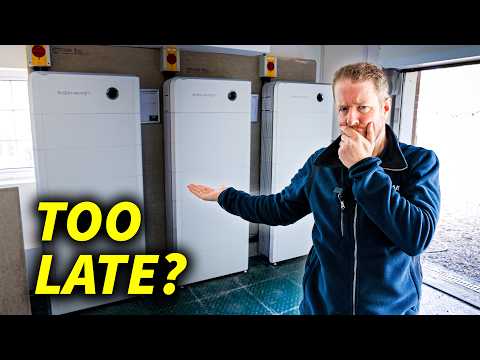
This video presents the honest, data-driven case for battery storage in 2025 — including the scenarios where it makes strong economic sense and the ones where it doesn’t. Use it as a pre-meeting resource to send prospects who want a third-party perspective before your conversation.
Moving Beyond Price Competition:
A solar-only sale in a competitive market is a commodity transaction. Multiple distributors and installers are quoting similar panels with similar warranties at prices within 5–10% of each other. The customer makes a decision based primarily on price and installer reputation — and there’s minimal differentiation available.
A solar-plus-storage conversation is fundamentally different. It involves custom load analysis, utility rate structure interpretation, incentive program navigation, and system design expertise that most distributors and installers cannot credibly provide. The customer is no longer buying a commodity — they’re engaging an expert. And experts command premium pricing that commodity sellers cannot access.
Storage attachment to solar deals typically increases total project value by $10,000–$25,000 while increasing margin by a larger percentage than solar alone — because the storage conversation justifies a consulting premium that the panel-only conversation doesn’t.
Building a Storage-Centric Sales Process:
The questions that identify storage-ready customers early in the sales funnel: Are you on a time-of-use rate? How many hours of power outage have you experienced in the past two years? Have you considered what happens to your solar investment if export compensation rates change in your area? Do you work from home or have any medical equipment that requires continuous power?
Any “yes” or “sometimes” response to these questions is a storage qualifier. Building them into your initial discovery conversation ensures you’re identifying storage opportunities in your pipeline rather than discovering them after solar specifications are already set.
Training Your Sales Team to Sell Storage Confidently:
The knowledge gaps most agents have about storage are concentrated in three areas: battery chemistry and performance specifications (agents often can’t explain LiFePO4 versus NMC in terms customers find accessible), utility rate structure analysis (agents often don’t know how to read a TOU rate schedule and calculate arbitrage value), and incentive program details (agents often give vague answers about the ITC and state programs that undermine confidence).
Addressing these gaps through a 90-minute training module — combining chemistry basics, a hands-on rate analysis exercise, and a current incentive program cheat sheet for your primary territories — is the minimum investment required. Role-playing the five objection scenarios above, with one team member playing a skeptical homeowner and another practicing the responses, builds the conversational confidence that reading a training document alone cannot provide.
Partnering with Local Installers and Electricians:
Storage installation requires electrical panel work that often falls outside the scope of a solar-only installation contractor. Building a referral network with licensed electricians who have completed battery storage installations — and who understand the interconnection requirements, load calculation process, and utility notification procedures for your territory — expands your installation capacity without requiring you to build an electrical team.
These partnerships also work in reverse: electricians working on panel upgrades and EV charger installations are encountering homeowners who are actively thinking about energy independence. A referral agreement that compensates electricians for storage leads they send your way creates a lead generation channel that costs nothing when it doesn’t produce — and generates qualified warm introductions when it does.
Making Storage Affordable and Profitable for Your Customers
Federal Tax Credits and State Rebate Programs:
The federal Residential Clean Energy Credit (Section 25D) provided a 30% tax credit on battery storage systems installed by qualifying homeowners through December 31, 2025. Homeowners who installed standalone battery systems (not paired with solar) also qualified under expanded Section 25D provisions — a significant expansion from previous rules that required solar pairing.
The IRS Residential Clean Energy Credit guidance provides the authoritative source for customer questions about credit eligibility and claiming procedures. As a distributor, having this URL bookmarked and being able to direct customers to official guidance builds credibility and prevents misinformation.
State-level programs vary significantly and change frequently — which is precisely why staying current with your territory’s incentive landscape is a competitive advantage. The California SGIP program, for example, provides additional rebates of $150–$200 per kWh for storage systems in disadvantaged communities and for customers with medical baseline rates. A California customer with a 13.5 kWh system who qualifies for SGIP receives an additional $2,025–$2,700 off their net cost — a number that can be the deciding factor in a purchase decision.
Financing Options That Work:
The three financing structures that match different customer profiles:
Solar loan: Customer owns the system, finances it over 10–25 years at rates typically ranging from 5.99%–8.99% APR in 2025. They claim the full ITC themselves. Monthly loan payments are ideally structured to be lower than the monthly electricity savings, making the net cash flow immediately positive.
Lease / PPA for storage: Less common for storage than for solar, but available in some markets. The customer pays a monthly service fee for the storage system; the financier claims the ITC. Best for customers who lack sufficient tax liability to benefit from the ITC directly.
PACE (Property Assessed Clean Energy) financing: Available in California and select other states. PACE attaches repayment to the property tax bill rather than the individual’s credit profile, making it accessible to homeowners who don’t qualify for standard solar loans. The repayment stays with the property if the home is sold — a feature that requires clear explanation to prevent customer confusion.
Calculating True Cost of Ownership:
The honest total cost of ownership calculation for a 13.5 kWh LiFePO4 system over a 15-year expected operating life includes: gross system cost ($15,000–$18,000), minus ITC ($4,500–$5,400), minus applicable state rebates ($2,000–$3,000 in states with strong incentive programs), plus estimated Year 12–15 replacement cost (potentially $6,000–$9,000 for a replacement battery at projected future prices, if the full system is kept rather than upgraded). Net cost over 15 years, in a favorable incentive market: approximately $6,000–$8,000 for a system that generates $2,000–$4,000 in annual value throughout its life.
The spreadsheet approach to this calculation — showing year-by-year cash flows, the ITC credit timing, the degradation curve, and the total net benefit versus cost — converts the abstract concept of “long-term ROI” into a concrete document that customers can review and share with skeptical family members. Aurora Solar’s storage modeling tools are worth incorporating into your pre-sale analysis workflow for the most accurate customer-specific projections.
What’s Coming Next — and How to Position Yourself

Vehicle-to-home technology is turning EVs into distributed batteries — fundamentally changing the energy storage conversation for homeowners who already own or are considering an electric vehicle.
Vehicle-to-Home (V2H) Integration:
V2H (Vehicle-to-Home) technology enables a bidirectional EV (one equipped with a two-way charger) to supply its battery energy back to the home — effectively making the car a large, mobile battery that can power the house during an outage or during peak rate hours.
The scale is significant: the Ford F-150 Lightning’s battery ranges from 98–131 kWh — 7–10 times the capacity of a typical residential battery system. A homeowner with a bidirectional-capable EV and a compatible V2H charger already owns more storage capacity than most dedicated battery systems provide, at no additional battery cost. The infrastructure investment is the bidirectional charger ($4,000–$8,000 installed), not an additional battery bank.
For distributors, V2H creates two distinct opportunities: selling bidirectional charging hardware as a storage-equivalent product to EV owners who want energy independence without a separate battery purchase, and selling dedicated battery systems to EV owners who want both grid-independent home power and maximum vehicle range availability simultaneously.
The V2H market is early-stage but accelerating. Ford, Hyundai/Kia, Nissan (Leaf), and Mitsubishi Outlander currently offer production bidirectional-capable vehicles in various markets. As EV adoption grows, the percentage of your residential solar customers who also own or plan to own a bidirectional EV will grow — and your ability to design complete energy systems that include V2H capability positions you at the forefront of a rapidly developing market.
Grid Services and Demand Response Programs:
Some battery systems in select markets can be enrolled in demand response programs — arrangements where the utility pays the homeowner to make their battery’s discharge capacity available during grid stress events. Pacific Gas & Electric’s Emergency Load Reduction Program pays California residential battery owners $2/kWh for every kWh they discharge during called grid events. Sonnen’s eCommunity virtual power plant model aggregates customer batteries into a grid-service asset, sharing revenue with participating homeowners.
These programs are currently available in limited geographies but represent the direction of travel: as grid operators increasingly rely on distributed storage resources to manage peak demand, the compensation structures for homeowner battery participation will expand. For distributors in markets where these programs exist, the ability to explain and facilitate customer enrollment is a differentiator that competitors without this knowledge cannot match.
AI-Driven Energy Management:
Modern battery management systems are incorporating AI-driven optimization that adjusts charging and discharging schedules based on weather forecasts (anticipating tomorrow’s solar generation), utility rate structures (scheduling charge and discharge to maximize TOU arbitrage automatically), and real-time grid signals (responding to demand response events or spot pricing without homeowner intervention).
Systems like those from Tesla, Enphase, and manufacturers offering fully automated energy management platforms reduce the “complexity” objection by handling optimization automatically. A homeowner doesn’t need to understand TOU rates or monitor their battery state — the system maximizes value without their active management. As a sales feature, AI energy management justifies premium pricing on sophisticated storage systems and addresses the “sounds complicated” objection in the most direct way possible: by making the system genuinely simple to live with.
Regulatory Changes and Net Metering Evolution:
The net metering transition happening in California is a preview of what’s coming in most US utility markets over the next 3–7 years. State regulators and utility commissions are under consistent pressure from utilities to reduce cross-subsidies embedded in retail-rate net metering — and the tools available to them (time-varying rates, export compensation reduction, fixed grid charges) all have the same effect: they increase the relative value of self-consumption and storage.
Distributors who understand this regulatory trajectory and can explain it credibly to homeowners are framing storage not as an optional enhancement but as a rational response to a predictable policy direction. The homeowner who installs storage today is buying insurance against the net metering change that will eventually come to their market — and that framing converts undecided customers in markets where the economics are marginal today.
Battery Technology Roadmap:
Battery pack prices for stationary storage fell to $70/kWh in 2025 — the most dramatic single-year cost reduction in the industry’s history, driven by LiFePO4 manufacturing scale increases led by Chinese manufacturers. The technology roadmap for the next 5–10 years includes: continued cost reduction (with $50/kWh pack-level costs projected by 2028–2030), sodium-ion chemistry alternatives for lower cost at slightly reduced energy density, and solid-state batteries offering improved safety and energy density for residential applications on a 5–8 year commercialization timeline.
How to discuss this without undermining current sales: “The technology is improving, and costs will continue to fall. But the economics of installing today are already strong — and every month you wait, you’re paying full grid rates for electricity that storage would have provided at zero cost. The customers who waited for better solar panel prices in 2018 missed 7 years of energy savings. The scenario looks the same for storage in 2025.”
Making Storage Your Competitive Advantage
The complete energy solution is the deal that every distributor should be positioning every solar customer toward — not because it maximizes deal size (though it does), but because it genuinely solves a more complete set of problems than solar alone addresses.
A homeowner with solar and storage is not dependent on utility pricing decisions. They are not exposed to grid outages. They are not exporting their most valuable daytime energy at wholesale rates only to buy it back at premium evening prices. They have a system that works for them across all hours of the day and through whatever grid disruption their region experiences.
Your role as a distributor isn’t to sell batteries alongside panels. It’s to architect energy solutions that give your customers genuine control over their energy costs and reliability — and to do it with the technical confidence and financial specificity that distinguishes a trusted energy advisor from a product vendor.
The homeowners who invest in solar-plus-storage become your most vocal advocates. They’ve experienced the difference between being connected to an expensive, unreliable grid and being genuinely energy-independent. That experience generates referrals that no marketing spend can replicate.
The distributors who make storage a confident, consistent, data-driven part of every solar conversation will find that deal sizes grow, close rates improve, and customer relationships deepen into the kind of long-term trust that drives repeat business, referrals, and market leadership.
Ready to Build Your Storage-Focused Sales Strategy?
Start by reviewing your current customer base for storage retrofit opportunities — particularly any customers in NEM 3.0 states or TOU markets. Identify the three homeowners in your pipeline who are most likely to respond to the backup power or TOU arbitrage conversation. Schedule those conversations this week.
Then build the tools that make every subsequent storage conversation more efficient: a utility rate analysis template, a value-stacking ROI calculator, and a one-page incentive summary for your primary territory.
→ Explore Jia Mao BIPV’s energy storage battery solutions at www.jmbipvtech.com — including residential and commercial storage systems designed for easy integration with solar arrays, modular scalability, and the technical documentation your customers need to make confident purchase decisions.
Glossary of Key Terms
TOU (Time-of-Use) Rates: Electricity pricing that varies by time of day. Peak hours (typically 4pm–9pm) are significantly more expensive than off-peak hours. TOU rate structures are the primary economic driver for residential battery storage in most developed markets.
Round-Trip Efficiency: The percentage of energy retrieved from a battery versus the energy put into it. A 90% round-trip efficiency system returns 90 kWh for every 100 kWh charged. Top systems currently achieve 97.5%.
LiFePO4 (Lithium Iron Phosphate): A lithium battery chemistry offering superior thermal stability and cycle life (4,000–6,000+ cycles) versus standard NMC lithium-ion. Now the dominant chemistry in residential storage systems globally.
NMC (Nickel Manganese Cobalt): A lithium battery chemistry offering higher energy density (more kWh per unit of physical size) with slightly lower cycle life. Used in Tesla Powerwall and first-generation storage products.
Self-Consumption Rate: The percentage of solar energy generated that is consumed directly by the household (including via storage) rather than exported to the grid. Solar-only systems typically achieve 25–35%; solar-plus-storage systems achieve 80–95%.
Net Metering (NEM): A utility billing arrangement that credits solar customers for exported electricity at retail rates. NEM 3.0 in California replaced retail-rate credits with lower wholesale-rate compensation, dramatically improving battery storage economics.
Demand Charge: A utility fee charged to commercial customers based on their peak power draw (kW) in a billing period, separate from energy consumption charges (kWh). Battery storage can reduce demand charges by preventing peak draw events.
V2H (Vehicle-to-Home): Technology enabling a bidirectional electric vehicle to supply its battery energy back to the home — effectively using the EV as a large-capacity distributed storage asset.
ITC (Investment Tax Credit): The federal Residential Clean Energy Credit, providing a 30% tax credit on the cost of qualifying clean energy installations including solar and battery storage systems.
Hybrid Inverter: An inverter that manages power flow between solar panels, battery storage, and the grid in a single unit — enabling DC-coupled storage with superior efficiency compared to AC-coupled retrofits.
BMS (Battery Management System): The electronic system that monitors and controls battery cell voltages, temperatures, and state-of-charge to ensure safe, optimal operation and prevent thermal events.
Frequently Asked Questions
FAQ 1: When does it actually make financial sense for a homeowner to add battery storage to their solar system?
Storage makes strong financial sense when one or more of the following conditions apply: the homeowner is on a TOU electricity rate with a significant peak-to-off-peak price spread (the larger the spread, the stronger the arbitrage economics); the local grid experiences frequent or extended outages (making backup power insurance value high); net metering has been reduced or eliminated in their territory (as in California post-NEM 3.0); or their solar system is generating significant excess midday power that is exported at below-retail rates. In California TOU markets, the combination of high peak rates ($0.45–$0.58/kWh), low export compensation ($0.05/kWh), and available ITC incentives produces payback periods of 4–7 years on storage investments — making the financial case straightforward. In flat-rate markets with stable net metering, the case is weaker on pure arbitrage grounds, but backup power value and future-proofing against rate structure changes often still justify the investment.
FAQ 2: What does a typical residential battery storage system actually cost, and what incentives reduce that number?
A 13.5 kWh residential storage system (the most common sizing for a typical US home) costs approximately $14,000–$18,000 installed before incentives in 2025. The federal Residential Clean Energy Credit provides a 30% tax credit, reducing net cost to $9,800–$12,600 for qualifying customers. State programs add further reduction in favorable markets — California’s SGIP rebate, for example, can provide an additional $2,000–$3,000 for eligible customers. The total out-of-pocket cost in the best incentive markets can reach $7,000–$10,000 for a fully installed 13.5 kWh system. Against annual savings of $2,000–$4,000 in TOU markets, this produces payback periods of 2.5–5 years — with 5–12 years of net positive cash flow remaining within the warranty period.
FAQ 3: What is the difference between lithium-ion NMC and LiFePO4 batteries, and which should I recommend?
For most residential storage applications in 2025, LiFePO4 is the stronger recommendation. The reasons: LiFePO4 offers 4,000–6,000 cycle life versus 2,000–3,000 cycles for NMC, meaning it lasts longer under daily cycling conditions. LiFePO4 is also thermally more stable — it is significantly less likely to experience thermal runaway (a battery fire risk) under manufacturing defect or damage conditions. Battery pack costs for LiFePO4 systems fell to $70/kWh in 2025, eliminating the historic cost premium over NMC. The primary advantage of NMC — higher energy density (more kWh per unit of physical space) — matters in space-constrained installations but is less relevant in most residential settings where wall-mount space is adequate.
FAQ 4: How long do residential battery storage systems actually last, and what happens to capacity over time?
Quality LiFePO4 residential battery systems are warranted to 70–80% of original rated capacity at 10 years or approximately 4,000–6,000 cycles (whichever comes first). At one full cycle per day, that cycle count represents 11–16 years of operation — meaning the warranty period is typically the binding constraint, not the cycle limit. Annual capacity degradation is approximately 2–3% per year for the first 3–5 years, then slowing to roughly 1–1.5% per year as the chemistry stabilizes. A 13.5 kWh battery at Year 10 retains approximately 10.8–11 kWh of effective capacity — still highly functional for its primary purpose. The system does not fail abruptly at end of warranty; it continues to operate at reduced capacity. Replacement of the battery module (not the entire system) at Year 12–15 is the typical maintenance scenario for customers who want to restore original capacity.
FAQ 5: Can battery storage be added to an existing solar installation, or does the homeowner need a new system?
Yes — storage can be added to most existing solar installations. The primary technical consideration is inverter compatibility. AC-coupled storage (adding a separate battery inverter alongside the existing solar inverter) works with virtually any existing solar system regardless of inverter brand or age, but introduces a small efficiency penalty from the additional conversion step. DC-coupled storage (connecting battery storage directly to the DC solar circuit) is more efficient but requires a compatible hybrid inverter — which often means replacing the existing solar inverter. For retrofit storage additions, AC-coupled systems are typically the most practical approach unless the existing inverter is already at or near end of life, in which case inverter replacement with a hybrid unit makes sense. The retrofit storage conversation should be a standard part of every after-sales follow-up call to your existing solar customer base — particularly customers in NEM 3.0 states who have recently experienced a reduction in their export compensation.
FAQ 6: How much backup power does a typical homeowner actually need during a grid outage?
The answer depends on which loads they want to maintain and for how long. Essential loads for most households — refrigerator (0.15 kW average), lighting (0.2 kW for LED throughout the home), Wi-Fi router (0.02 kW), phone and laptop charging (0.2 kW) — total approximately 0.6 kW continuous draw. A 13.5 kWh battery at 90% usable capacity provides roughly 20 hours of essential load coverage without any solar recharging. Add a modest solar contribution (even 2 kW of generation during daylight hours) and the effective coverage extends to multiple days. Customers who want to maintain air conditioning, electric cooking, or EV charging during outages need substantially larger systems — a 27 kWh or larger configuration — because HVAC startup currents and continuous draw are multiples of essential load requirements. Mapping the specific loads against the expected outage duration in the customer’s area is the design conversation that prevents both undersizing disappointment and oversizing that inflates cost without proportionate benefit.
FAQ 7: How significantly does a battery storage system reduce a homeowner’s monthly electricity bill?
The reduction ranges from 30–70% of the remaining grid electricity bill depending on system size, rate structure, and daily usage patterns. A homeowner on a California TOU rate who currently pays $180/month (already reduced from $350/month by their solar system) can typically reduce their remaining grid bill to $55–$80/month by adding storage — a further reduction of $100–$125/month, or approximately $1,200–$1,500/year. The specific savings depend on how well the storage system captures the peak-to-off-peak rate spread and how fully the solar generation covers daytime self-consumption. Customers in flat-rate markets with low export compensation will see savings more modestly sized but still meaningful — typically $50–$120/month depending on system size and consumption profile.
FAQ 8: Does adding battery storage affect the homeowner’s property taxes or insurance rates?
This varies by location and policy. Most US states that have addressed this specifically provide a property tax exemption for solar installations that extends to battery storage — California’s active solar energy system property tax exclusion, for example, covers battery storage systems installed with or after a solar system. States without explicit exclusions may assess the storage system as a property improvement, potentially increasing assessed value and therefore property taxes. On the insurance side, most standard homeowner’s policies cover battery storage systems under dwelling coverage, but the liability coverage implications of a battery fire (however rare) are worth discussing with the homeowner’s insurance provider before installation. Knowing the specific property tax and insurance treatment in your primary markets is due diligence that prevents surprises and positions you as the informed advisor your customers need.
FAQ 9: What happens to the battery system during a power outage — does it automatically switch over?
Modern solar-plus-storage systems are designed to automatically detect a grid outage and switch to backup mode within milliseconds — fast enough that most homeowners don’t notice the transition except for seeing the battery system’s status indicator change. The critical distinction is between systems that provide whole-home backup (the battery is connected to the main electrical panel and powers all loads subject to its capacity and output limits) and systems that provide critical load backup (the battery powers a separate subpanel with pre-selected essential circuits). Whole-home backup systems are more expensive and require larger battery capacity to be practical; critical load systems are simpler and lower cost but require the homeowner to consciously manage which loads they run during an outage. For customers whose primary motivation is backup power reliability, clarifying this distinction and recommending the appropriate configuration is one of the most important services you provide as a knowledgeable distributor.
FAQ 10: How do time-of-use electricity rates affect battery storage ROI, and how do I calculate the arbitrage value for a specific customer?
TOU arbitrage value is calculated by: identifying the daily kWh consumption during peak hours (from the customer’s utility bill usage data), multiplying by the peak rate, subtracting what would have been paid at the storage’s opportunity cost (solar generation that would otherwise have been exported at the low export rate), and annualizing. Simplified: if a customer is shifting 10 kWh/day from a $0.48/kWh peak rate to $0.00 (stored solar), the daily savings are $4.80 and the annual savings from this single value stream alone are $1,752. The wider the spread between peak and off-peak rates, the stronger the arbitrage case. Aurora Solar’s storage modeling tools and EnergySage’s battery calculator are both useful resources for generating customer-specific projections that can be included in your proposal documents — making the savings concrete rather than illustrative.
For residential and commercial energy storage battery solutions, technical specifications, and distributor resources, visit Jia Mao BIPV at www.jmbipvtech.com. Additional reference resources: IRS Residential Clean Energy Credit guidance, EnergySage’s home battery cost and comparison tool, and LBNL’s residential battery economics research.