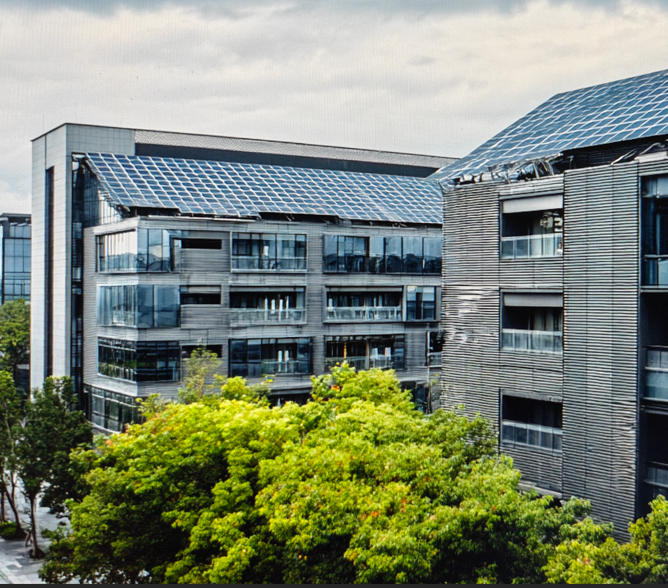
A homeowner in Austin, Texas, recently paid $52,000 for a Tesla Solar Roof on a 2,000 sq ft home. The system generates 8.5 kW and offsets roughly 11,900 kWh per year — saving about $1,547 annually at the local rate of $0.13/kWh. Down the street, a neighbor installed a 10 kW traditional panel array for $28,000 and generates 14,200 kWh per year — saving $1,846 annually. The panel system pays for itself in 8.7 years; the tile system needs 14.6 years. Yet the first homeowner got a new roof, seamless curb appeal, and a 30+ year lifespan in a single project.
That gap — higher upfront cost versus better aesthetics and dual functionality — defines the solar roof tiles vs traditional panels decision that thousands of homeowners face every year. The global building-integrated photovoltaics (BIPV) market reached an estimated $30.78 billion in 2026 and is projected to hit $68.12 billion by 2030 at a compound annual growth rate of 22%, according to Research and Markets. Meanwhile, traditional panel installations continue to dominate residential solar with lower costs per watt and faster returns.
This guide compares solar roof tiles and traditional solar panels across every dimension that matters: cost, efficiency, installation, durability, aesthetics, flexibility, and long-term financial return. Every claim is backed by manufacturer specs, third-party data, or field-verified case studies.
What Are Solar Roof Tiles?

Solar roof tiles — also called solar shingles or BIPV roof tiles — replace conventional roofing materials while simultaneously generating electricity. Each tile contains photovoltaic cells, typically monocrystalline silicon, laminated between layers of tempered glass or polymer. When sunlight strikes the tile, the cells convert photons into direct current (DC), which an inverter transforms into usable alternating current (AC) for the home.
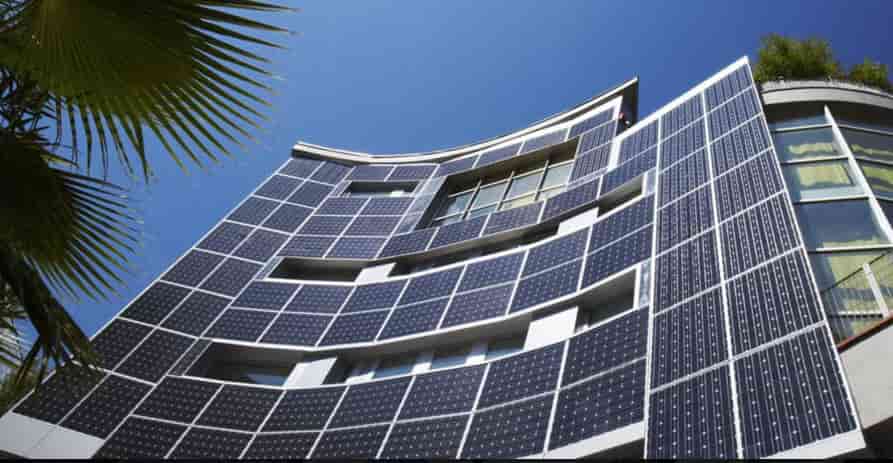
Unlike traditional panels that mount on top of an existing roof, solar tiles become the roof. This dual-function design eliminates the need for separate roofing and solar installations, which is why architects and builders increasingly specify them for new construction and full-roof replacements. Jia Mao Bipv, a specialist BIPV supplier, notes that modern solar roof tiles achieve 17–23% cell efficiency while maintaining Class A fire ratings and wind resistance up to 130 mph — comparable to premium asphalt or slate roofing.
The product category includes several form factors: flat profile tiles that mimic slate, textured shingles that look like architectural asphalt, curved tiles for clay-style roofs, and even metal-integrated panels for standing-seam installations. Leading brands include Tesla (Solar Roof), GAF Energy (Timberline Solar), Luma Solar, CertainTeed, Suntegra, and VOLTAIC, each with different pricing, efficiency, and warranty structures.
What Are Traditional Solar Panels?
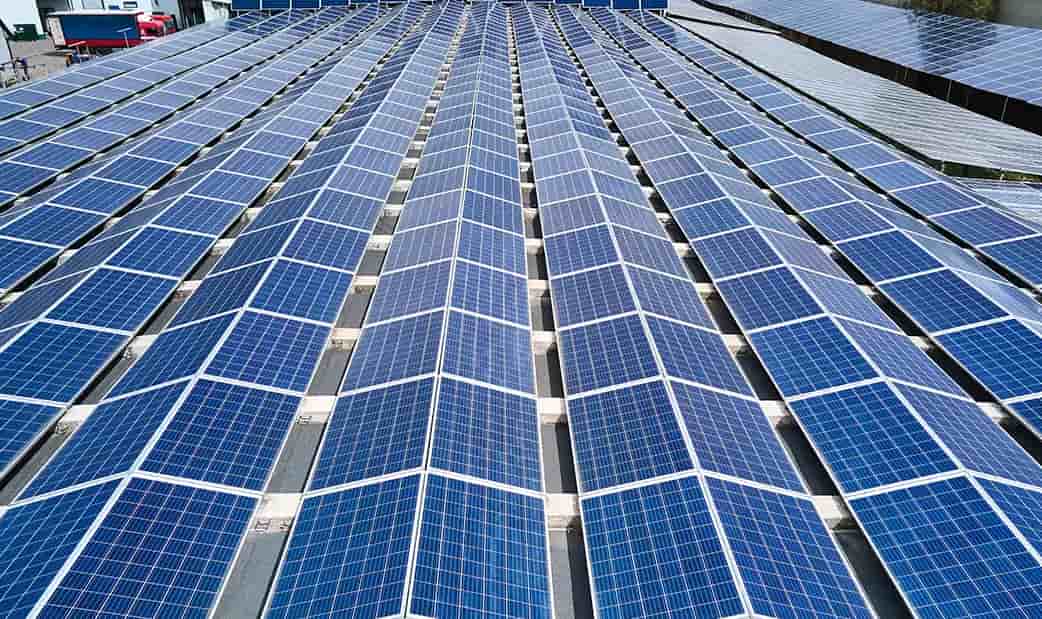
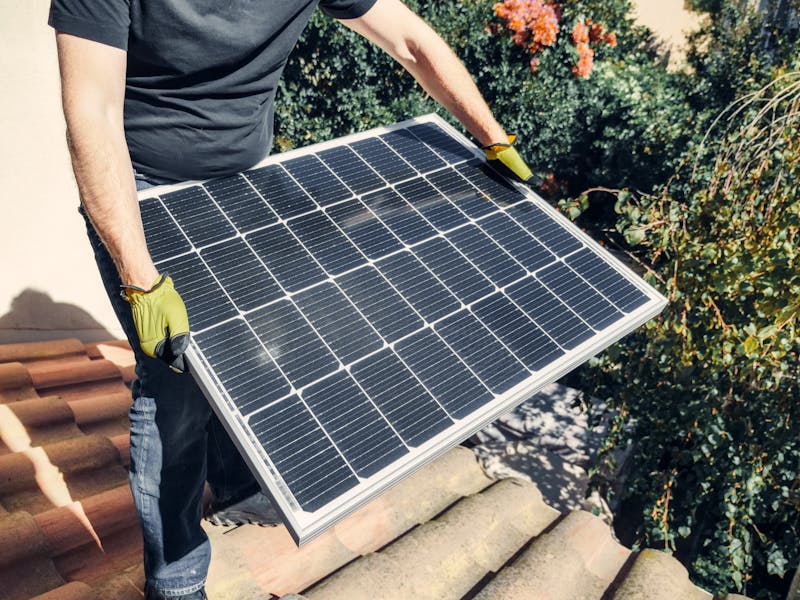
Traditional solar panels are standalone photovoltaic modules mounted on metal racking systems bolted to an existing roof. A typical residential panel measures approximately 65 × 39 inches, weighs 40–50 lbs, and produces 370–430 watts. The panels use the same monocrystalline silicon cell technology found in solar tiles, but because they are not constrained by roofing aesthetics, manufacturers optimize them purely for power density and efficiency.
Modern residential panels from brands like REC, Qcells, Canadian Solar, and Maxeon achieve 20–23% module efficiency. They connect in series strings to a string inverter or individually to microinverters, which convert DC to AC. The rack-mounted design means panels can be installed on virtually any roof type — asphalt shingle, metal, clay tile, or flat membrane — with minimal structural modification. Installation typically takes one to three days for a standard residential system.
Head-to-Head Comparison: Solar Roof Tiles vs Traditional Panels
Efficiency and Energy Output
Traditional panels hold a measurable efficiency advantage. The best residential panels reach 22.8% module efficiency (Maxeon 7, 2025 datasheet). Solar roof tiles peak at 22% under ideal conditions, but most products land between 17% and 20% because the tile form factor limits cell size and airflow, which increases operating temperature and reduces output.
In practice, a 2,000 sq ft roof in Charlotte, North Carolina (production ratio 1.3) illustrates the gap clearly. A 10 kW traditional panel system covering roughly 550 sq ft of roof generates approximately 13,000 kWh per year. A solar tile installation covering 800 sq ft of the same roof (lower power density of 12.8–16.1 W per sq ft versus 18–20 W per sq ft for panels) produces a comparable 10,000–11,500 kWh per year — 12% to 23% less energy from 45% more roof area.
Cost and Financial Return
Cost is where the two technologies diverge most sharply. Solar roof tiles carry a premium because you are paying for a roof and a solar system simultaneously. Traditional panels add solar generation to an existing roof at a fraction of the price.
| Metric | Solar Roof Tiles | Traditional Panels |
|---|---|---|
| Installed Cost per Watt | $3.80 – $7.00 | $2.50 – $3.50 |
| Total System Cost (8 kW) | $30,400 – $56,000 | $20,000 – $28,000 |
| Material-Offset Credit (roof replacement avoided) | $8,000 – $18,000 | $0 |
| Net Effective Cost | $22,400 – $38,000 | $20,000 – $28,000 |
| Federal ITC (30% — systems placed in service by Dec 31, 2025) | $9,120 – $16,800 | $6,000 – $8,400 |
| Annual Energy Savings (at $0.13/kWh) | $1,300 – $1,495 | $1,430 – $1,846 |
| Simple Payback Period | 12 – 16 years | 7 – 10 years |
| 25-Year Net Savings | $18,000 – $33,000 | $28,000 – $42,000 |
| Module Efficiency | 17 – 22% | 20 – 23% |
| Power Density (W per sq ft) | 12.8 – 16.1 | 18 – 20 |
| Degradation Rate (per year) | 0.3 – 0.5% | 0.25 – 0.7% |
| Warranty (Power) | 25 – 30 years | 25 – 30 years |
| Expected Lifespan | 30 – 50 years | 25 – 35 years |
| Installation Time | 5 – 14 days | 1 – 3 days |
Sources: EcoWatch, SolarReviews, SolarTech Online, Jia Mao Bipv.
The material-offset credit is critical for tiles: if your roof needs replacement in the next five years anyway, the net cost of solar tiles drops substantially because you avoid a $10,000–$18,000 re-roofing bill. In that scenario, the payback gap between tiles and panels narrows to two to four years, according to analysis published by Jia Mao Bipv.
Aesthetics and Curb Appeal
Solar roof tiles win this category decisively. They integrate flush with the roofline and are nearly indistinguishable from conventional premium roofing when viewed from the street. Tesla’s Solar Roof tiles, for instance, use colored louver film so the tiles appear opaque at street level but transparent to sunlight from above. GAF Energy’s Timberline Solar shingles nail directly into the roof deck alongside standard GAF shingles, creating a uniform appearance.
Traditional panels, by contrast, protrude 3–6 inches above the roofline on metal racks. While all-black panels and low-profile mounts have improved aesthetics significantly, the panels remain visible and distinct from the surrounding roof material. For homes in historic districts or homeowner associations with strict design guidelines, solar tiles often represent the only practical path to rooftop solar.
Installation Complexity
Solar roof tiles require both roofing and electrical expertise. The installer removes the existing roof, applies underlayment and flashing, sets columns and stringers, and then places each tile individually — connecting wiring harnesses as they go. Jia Mao Bipv’s step-by-step installation guide documents a labor intensity of approximately 6.9 worker-hours per kW installed, with a typical residential project spanning 5 to 14 calendar days depending on roof complexity and weather.
Traditional panel installation is far simpler: mount the racking, set the panels, run the wiring, and connect the inverter. Most residential installs finish in one to three days. The lower labor requirement is a key reason panels remain $1.00–$3.50 per watt cheaper than tiles.
Durability and Lifespan
Both technologies are engineered to survive decades of weather exposure, but their failure modes differ. Solar tiles are laminated under tempered glass rated to withstand Class 4 hail (2-inch ice balls at 50+ mph) and wind speeds up to 130 mph per ASTM D3161 and UL 7103 testing. Because tiles are part of the roof structure, there are no penetration points — reducing leak risk compared to rack-mounted panels, which require lag bolts into the roof deck. A 10-year case study by VOLTAIC measured an annualized degradation rate below 0.5% for their integrated roof tiles in harsh coastal environments.
Traditional panels carry 25–30 year power warranties and typically degrade at 0.25–0.7% per year (NREL). However, the racking system introduces potential leak points, and the panels themselves can be more easily damaged or displaced in extreme wind events if mounting hardware fails. On the upside, replacing a single damaged panel is far simpler than replacing a damaged tile that is integrated into the waterproof layer of the roof.
Brand-by-Brand Breakdown: Top Solar Roof Tiles in 2026
| Brand | Tile Type | Efficiency | Cost per Watt (Installed) | Warranty | Fire / Wind Rating |
|---|---|---|---|---|---|
| Tesla Solar Roof | Tempered glass tile | ~19.5% | $6.00 – $8.00 | 25 yr power, 25 yr tile | Class A / 130 mph |
| GAF Energy Timberline Solar | Asphalt shingle | ~19.1% | $3.80 – $5.50 | 25 yr power, 25 yr shingle | Class A / 130 mph |
| Luma Solar | Metal roof tile | ~20% | $5.00 – $7.00 | 25 yr power, lifetime roof | Class A / 166 mph |
| CertainTeed | Flat profile tile | ~18% | $4.50 – $6.00 | 25 yr power, 15 yr workmanship | Class A / 110 mph |
| Suntegra | Flat shingle | ~18.9% | $4.00 – $5.50 | 25 yr power, 10 yr workmanship | Class A / 110 mph |
| VOLTAIC | Composite tile | ~20% | $4.50 – $6.50 | 30 yr power, lifetime tile | Class A / 130 mph |
Sources: SolarReviews 2025, EcoWatch 2026, manufacturer datasheets.
GAF Energy’s Timberline Solar stands out for its lower cost per watt among tiles ($3.80–$5.50), largely because it nails directly onto the roof deck alongside standard GAF shingles — reducing labor hours. Tesla’s Solar Roof commands a premium but delivers a distinctive glass-tile aesthetic that no other brand matches. For overseas BIPV projects, Jia Mao Bipv supplies customizable monocrystalline solar tiles in flat, textured, and curved profiles at competitive factory pricing — a strong option for builders sourcing BIPV materials at scale.
Cost per Watt: Visual Comparison
Installed Cost per Watt — Solar Roof Tiles vs Traditional Panels (2026)
$8.00
$6.00
$4.00
$2.00
$0.00
$6–$8
$3.8–$5.5
$5–$7
$4.5–$6
$4–$5.5
$4.5–$6.5
$2.5–$3.5
Tesla
GAF
Luma
CertainTeed
Suntegra
VOLTAIC
Trad. Panels
Source: SolarReviews, EcoWatch, manufacturer datasheets (2026)
The chart above shows that even the most affordable solar tile brand (GAF Energy at $3.80/W) costs 8–57% more per watt than traditional panels ($2.50–$3.50/W). Tesla sits at the top of the price range, a reflection of its glass-tile manufacturing process and premium brand positioning.
Market Share: Where the Industry Is Heading
2026 U.S. Residential Solar Installation Mix (Estimated)
Traditional
Panels 72%
Roof Tiles 18%
Other BIPV 10%
Traditional Panels
Solar Roof Tiles
Other BIPV
Traditional rack-mounted panels still dominate the U.S. residential market with an estimated 72% share of new installations, driven by their lower cost and faster install times. Solar roof tiles have grown from a niche category to roughly 18% of installations, powered by GAF Energy’s ramp-up and Tesla’s expanding installation network. The remaining 10% includes BIPV façade systems, solar canopies, and other building-integrated products. Globally, the BIPV sector is projected to reach $89.8 billion by 2030 (Grand View Research), with solar roof tiles capturing the fastest-growing residential segment.
When Solar Roof Tiles Make More Sense Than Panels
Solar roof tiles are not the right choice for every home. They deliver the strongest return on investment under specific conditions. The decision framework below identifies when tiles outperform panels financially and practically.
Your roof needs replacement within five years. If your existing roof is nearing end of life (15–20 years for asphalt shingles), combining a roof replacement with solar tile installation eliminates the $10,000–$18,000 re-roofing expense. This material-offset credit can reduce the effective payback period of solar tiles from 14 years to as few as 9 years — approaching parity with traditional panels.
HOA or historic-district restrictions prohibit visible panels. Many homeowner associations and municipal historic boards restrict or ban rack-mounted panels. Solar tiles satisfy design review requirements because they match the roofline and profile of conventional premium roofing materials.
You plan to stay in the home for 20+ years. Solar tiles deliver their full financial return over 25–30 years. If you are selling in 5–10 years, the faster payback of traditional panels makes more financial sense. However, a U.S. Department of Energy study found that BIPV installations increase home resale value by 3–5% on average, compared to 2–4% for traditional panel systems.
You are building a new home. New construction is the ideal scenario for solar tiles. The roof installation happens once, labor is combined, and there are no demolition or disposal costs for old roofing. Jia Mao Bipv’s solutions guide reports that new-construction BIPV installations reduce overall project timelines by 15–20% compared to sequentially installing a conventional roof and then a solar array.
When Traditional Panels Are the Better Choice
Your roof is in good condition. If your roof has 10+ years of remaining life, adding traditional panels avoids the cost and disruption of a full re-roof. You benefit from solar savings immediately without the tile premium.
You want maximum energy per dollar. At $2.50–$3.50 per watt installed, traditional panels deliver 30–55% more generating capacity per dollar invested compared to solar tiles at $3.80–$7.00 per watt. For homeowners whose primary goal is energy independence or net-zero electricity bills, panels provide the shortest path to that target.
You have a flat or unconventional roof. Solar tiles require a minimum roof slope (typically 2:12 or greater). Flat roofs, mansard roofs, and highly complex multi-gable roofs are better suited to ballasted or tilted-rack panel systems that can be angled for optimal sun exposure regardless of roof geometry.
You may expand the system later. Adding panels to an existing racked system is straightforward — the installer adds modules and updates the inverter. Expanding a solar tile installation requires removing and re-laying tiles, a more invasive and costly process.
Installation Process: What to Expect
Solar roof tile installation follows a distinct sequence: structural assessment, permitting, roof tear-off, underlayment and flashing, column and stringer layout, tile placement with electrical connections, waterproofing inspection, inverter and electrical hookup, municipal inspection, and utility interconnection. The Jia Mao Bipv installation and design guide recommends starting at the lowest roof edge and working upward in rows, securing each column with M20 anchor screws (four per column, 150 × 150 mm spacing, 70 mm exposed length, double-nut fastening).
Traditional panel installation skips the roofing steps entirely. After permitting, the crew installs rail-based or rail-less racking, sets the panels, runs conduit and wiring to the inverter location, and connects to the main electrical panel. A standard 8–10 kW residential system typically requires 8–16 worker-hours — compared to 55–70 worker-hours for an equivalent solar tile installation.
Both system types require final inspection by the local authority having jurisdiction (AHJ) and approval from the utility before grid interconnection. In most U.S. municipalities, the permitting process takes two to six weeks regardless of the technology chosen.
Video: How BIPV Solar Roof Tiles Are Installed
This video from SANGOBUILD demonstrates the modular installation process for BIPV solar roof tiles, showing how tiles interlock and connect electrically during placement.
Long-Term ROI Scenario: 25-Year Projection
Consider a 2,000 sq ft home in Dallas, Texas (production ratio 1.4, electricity rate $0.13/kWh, 2% annual rate increase). The homeowner needs approximately 11,000 kWh per year.
Scenario A — Solar Roof Tiles (8 kW): Installed cost $48,000. Material-offset credit (existing roof at end of life) $14,000. Net cost $34,000. Annual production 11,200 kWh. Year-1 savings $1,456. Cumulative 25-year savings (with 2% escalation) approximately $46,800. Net 25-year profit after system cost: $12,800. Payback period: 13.2 years.
Scenario B — Traditional Panels (10 kW): Installed cost $30,000. No material offset. Annual production 14,000 kWh. Year-1 savings $1,820. Cumulative 25-year savings approximately $58,500. Net 25-year profit after system cost: $28,500. Payback period: 8.4 years.
In this scenario, traditional panels generate $15,700 more net profit over 25 years. However, if the homeowner would have spent $14,000 on a new roof regardless, the effective gap narrows to $1,700 — and the tile system provides a newer, more durable roof with a 30–50 year lifespan versus the 20–25 year lifespan of a standard asphalt roof installed separately.
Codes, Standards, and Compliance
Both solar roof tiles and traditional panels must meet national and local building codes. In the United States, the primary standards include the National Electrical Code (NFPA 70 / NEC), International Building Code (IBC), and International Residential Code (IRC). Solar roof tiles carry additional requirements because they serve as roofing materials, so they must also comply with UL 7103 (photovoltaic roof tiles), UL 61730 (PV module safety), and fire classification testing per UL 790 and ASTM E108.
NEC 2023 rapid-shutdown requirements (Section 690.12) mandate that PV systems reduce voltage to ≤30 V outside the array boundary and ≤80 V inside within 30 seconds of initiator activation. Microinverter-based solar tile systems (common with GAF and Tesla installations) comply inherently. String-inverter-based tile systems require module-level power electronics (MLPEs) or UL 3741–listed hazard control systems for compliance.

Frequently Asked Questions
1. What is the main difference between solar roof tiles and traditional solar panels?
Solar roof tiles replace your existing roofing material and generate electricity simultaneously. Traditional solar panels mount on top of your existing roof using metal racking. Tiles integrate flush with the roofline for a seamless look; panels protrude 3–6 inches above it. Tiles cost $3.80–$7.00 per watt installed versus $2.50–$3.50 per watt for panels (EcoWatch).
2. Are solar roof tiles as efficient as traditional panels?
Not quite. Traditional panels achieve 20–23% module efficiency, while most solar roof tiles range from 17–22%. The difference translates to approximately 12–23% less energy production per square foot of roof covered. If your roof area is limited, traditional panels will generate more electricity from the same footprint (SolarTech Online).
3. How long do solar roof tiles last compared to panels?
Solar roof tiles typically last 30–50 years, depending on the brand and materials. Traditional panels last 25–35 years. Both technologies degrade at 0.25–0.7% per year. The longer tile lifespan reflects the durability of the tempered glass and integrated mounting, which eliminates exposed racking components that can corrode over time (SunStyle).
4. Do solar roof tiles qualify for the federal solar tax credit?
Yes. Solar roof tiles qualify for the Residential Clean Energy Credit (Section 25D) at 30% of total installed cost, including both the solar and roofing components — provided the system was placed in service by December 31, 2025. For systems installed in 2026 and beyond, the residential credit has expired under current law, though commercial BIPV projects may still qualify under Section 48E (IRS). State-level incentives vary; check your local programs.
5. Can solar roof tiles be installed on any roof type?
Solar roof tiles require a minimum slope of 2:12 (about 9.5°). They work on most pitched roofs but are not suitable for flat roofs, green roofs, or wood shake roofs (fire risk). Metal, asphalt shingle, clay tile, and concrete tile substrates are all compatible, though the specific product determines exact requirements (Jia Mao Bipv).
6. What happens if a single solar roof tile is damaged?
Individual tiles can be replaced without removing the entire roof. An installer disconnects the wiring harness, removes the damaged tile, and fits a replacement. The process takes one to three hours for a single tile. However, because tiles are integrated into the waterproof layer, proper re-flashing and sealing are critical to prevent leaks.
7. How much energy does a solar roof tile system produce per year?
An 8 kW solar tile system in a location with a production ratio of 1.3 (e.g., Charlotte, NC) generates approximately 10,400 kWh per year. In sunnier climates like Phoenix (production ratio 1.7), the same system produces about 13,600 kWh per year. Traditional panels of the same wattage produce the same amount — the difference lies in how much roof area each system requires to reach that wattage (EnergySage).
8. Are solar roof tiles worth the extra cost?
They are worth the extra cost when your roof needs replacement anyway, when HOA or historic-district rules prohibit visible panels, or when you are building a new home. In those scenarios, the material-offset credit reduces the effective premium to $2,000–$10,000 over traditional panels. If your roof is in good condition and aesthetics are not a constraint, traditional panels deliver faster payback and higher net savings over 25 years.
9. Which solar roof tile brand offers the best value in 2026?
GAF Energy’s Timberline Solar offers the lowest installed cost per watt among major brands ($3.80–$5.50/W) while delivering 19.1% efficiency and a 25-year dual warranty. For homeowners seeking premium aesthetics, Tesla’s Solar Roof provides a distinctive glass-tile look but at $6.00–$8.00/W. For international or large-scale BIPV sourcing, Jia Mao Bipv offers customizable tiles at competitive factory pricing with IEC-certified quality.
10. Can I mix solar roof tiles and traditional panels on the same home?
Yes, hybrid installations are possible and increasingly common. Some homeowners install solar tiles on the front-facing, street-visible roof slopes for curb appeal and traditional panels on rear or side slopes for maximum production per dollar. The two systems can share a single inverter or use separate microinverter strings. Work with a qualified installer to ensure electrical compatibility and code compliance.
Conclusion: Matching the Technology to the Project
The solar roof tiles vs traditional panels decision is not about which technology is objectively better — it is about which technology is better for your specific situation. Traditional panels remain the default choice for homeowners who want the fastest payback, the highest energy output per dollar, and the simplest installation. Solar roof tiles earn their premium when the project involves a roof replacement, when design rules demand an integrated look, or when the homeowner is building new and can roll the cost into a construction mortgage.
The BIPV market’s 22% annual growth rate signals that solar tiles are moving from niche to mainstream. As manufacturing scales, costs will compress — Coherent Market Insights projects the solar roof market to reach $14.15 billion by 2033, roughly double its 2026 value of $6.56 billion. Homeowners who install solar tiles today are early adopters investing in both energy production and a long-lived roof that will outlast two generations of conventional asphalt shingles.
Whatever you choose, get at least three quotes, verify installer credentials, confirm warranty terms in writing, and model your specific energy production and savings using tools like EnergySage or NREL PVWatts. The best solar investment is the one backed by data, not assumptions.




-300x300.jpg)