The solar industry’s reputation problem is costing you sales. Learn how to build trust with customers, protect them from predatory practices, and position your distribution or sales operation as the ethical choice that wins long-term loyalty.
 Transparency at every stage — from contract to commissioning — is the single biggest competitive differentiator in today’s solar market.
Why This Matters for Solar Distributors and Agents Right Now
The FTC received over 7,000 solar fraud complaints in 2025 — making solar one of the fastest-growing consumer fraud categories in the United States. That number doesn’t just represent damaged customers. It represents a wave of distrust that is actively slowing down your sales cycle, hardening your prospects’ objections, and handing ammunition to competitors who can credibly say “we’re not like the others.”
If you’re a distributor, agent, installer, or contractor operating in solar right now, you are working in a market where your customer has almost certainly heard a scam story before they ever sit down with you. A neighbor who got locked into a 25-year lease at above-market rates. A business owner who was promised 40% energy savings and got 18%. A homeowner whose PACE financing (Property Assessed Clean Energy — a loan attached to the property tax, not the borrower’s credit) made their home nearly impossible to refinance.
Your job isn’t just to sell solar. It’s to be the person who proves those stories aren’t universal.
This guide is written exclusively for professionals in the solar distribution and installation chain — not homeowners researching their first system. The goal is to give you the frameworks, checklists, language, and systems to build an operation that uses consumer protection as its primary competitive weapon.
The Trust Crisis in Solar — And Why It’s Killing Your Deals
How Scams and Bad Actors Are Damaging Customer Confidence
What customers fear most when considering solar has shifted considerably over the past three years. According to NPR’s 2024 reporting on solar fraud, customers now routinely cite concerns about misleading savings estimates, hidden financing terms, and contractor disappearance mid-project as their top reasons for hesitation — ahead of concerns about technology performance or installation quality.
The fear cycle works like this: a customer gets a quote, it sounds too good to be true, they think of a neighbor’s bad experience, and they either stall indefinitely or demand levels of due diligence that a typical sales process can’t accommodate.
Why one bad experience in the neighborhood spreads fast is straightforward math. A dissatisfied solar customer tells an average of 9–15 people. In suburban neighborhoods where solar adoption tends to cluster, those 9–15 people are likely prospects in your same territory. One poorly handled installation — inflated savings claims, a financing surprise, an unresponsive warranty process — can create a cold zone in your service area that takes 18 months to warm back up.
The cost of distrust goes beyond lost deals. It shows up in longer sales cycles (industry average has stretched from 45 days to 60–90 days in high-complaint markets), higher customer acquisition costs as more touchpoints are needed to build confidence, and reduced referral rates. A solar operation generating 40%+ of new business from referrals is doing something right. Most operations generating less than 20% referral business have a trust problem, even if they don’t know it yet.
Your Competitive Advantage: Becoming the Transparent Alternative
How ethical practices differentiate you from fly-by-night operators isn’t theoretical. The Campaign for Accountability’s analysis of consumer complaints against major solar companies found that companies with consistent transparency in contract language, pricing, and savings projections had measurably lower complaint rates — and measurably higher customer lifetime value.
When a prospect has been burned by vague promises, a competitor who walks in with a line-item pricing breakdown, plain-language warranty documentation, and a conservative (rather than aggressive) savings projection doesn’t feel like just another vendor. They feel like a relief.
Why customers will pay premium prices for peace of mind comes down to what economists call “trust premiums.” In categories where customers have been burned before — contractor work, financial services, home improvement — verified, credible operators routinely command 10–20% price premiums over lower-priced alternatives, because the risk-adjusted value is genuinely higher.
In practical terms: if your operation is known for clear contracts, accurate projections, and responsive post-installation support, you don’t need to compete on price. You compete on certainty.
Building a reputation that generates referrals and repeat business is the compound interest of ethical solar operations. One satisfied commercial customer who refers three colleagues, each of whom refers two more, creates a pipeline that no paid advertising can replicate at the same cost per acquisition.
Red Flags Every Solar Agent and Distributor Should Know
Financing Scams That Trap Customers (and Create Liability for You)
Predatory loan terms hidden in fine print represent the largest single category of solar fraud complaints in 2024–2025. The mechanism is consistent: a dealer-fee (also called an “origination fee” or “processing fee”) is embedded in the financed amount, inflating the total loan principal by 15–30% without being clearly disclosed to the borrower. The customer believes they’re financing a $25,000 system. The actual loan principal is $31,000.
When customers discover this — usually during refinancing or when they try to sell — the reaction is predictably severe. And if your sales team recommended that financing product, your business is in the blast radius.
PACE program pitfalls and why they backfire deserve particular attention. PACE (Property Assessed Clean Energy) financing attaches to the property as a tax assessment rather than to the borrower’s personal credit. The CFPB’s 2024 rule on PACE financing found that PACE borrowers experienced property tax increases averaging $2,700 per year — an 88% average increase — and were significantly more likely to default on their mortgages.
The risks your customers need to understand about PACE before signing:
- It’s a lien on the property, senior to the mortgage in many states
- It can block conventional refinancing until paid off
- If the customer sells before payoff, the liability may or may not transfer (depending on state law and buyer willingness)
- The CFPB’s 2024 rule now requires PACE lenders to assess ability-to-repay, but enforcement varies
How to spot financing schemes before they become your problem: Request a full disclosure document from any financing partner before recommending them to customers. If they can’t produce a clear breakdown of origination fees, APR, total cost of financing, and prepayment penalties within 24 hours, walk away from the partnership.
What to Teach Your Customers About Legitimate Financing Options
Legitimate solar financing is transparent about five things: (1) the actual interest rate or APR, not a promotional “solar savings rate”; (2) total cost of financing over the loan term; (3) any dealer fees or origination fees built into the principal; (4) what happens if the system underperforms; and (5) prepayment terms and penalties.
Customers who understand these five elements before signing are customers who don’t call you angry six months later.
How to Position Your Offerings as the Ethical Alternative
The positioning script is simple: “Before we talk about any financing option, I’m going to show you every line item in what you’re paying for and what the financing actually costs you. Most customers tell me they’ve never seen it explained this clearly.” That one statement differentiates you from roughly 70% of the market.
Contracting Tricks That Lead to Disputes, Complaints, and Refunds
Vague warranty language that creates false expectations is endemic in solar contracts. Terms like “lifetime warranty,” “comprehensive coverage,” and “full performance guarantee” mean nothing without specific definitions, exclusions, and remedy clauses. When customers discover that “lifetime” means the company’s lifetime (not the product’s), or that “comprehensive” excludes storm damage and inverter failure, the resulting disputes are both expensive and reputationally damaging.
Inflated pricing with fake “discounts” that confuse customers is a tactic borrowed from retail — presenting an inflated “retail price,” then offering a time-limited “discount” to create urgency. Customers who later discover the “discount” was manufactured resent the manipulation even if the final price was fair. This tactic generates complaints, triggers cancellations during cooling-off periods, and destroys referrals.
Unclear timelines that set up disappointment are one of the most common sources of negative reviews. “Installation in 4–6 weeks” sounds specific but leaves enormous room for disappointment. “We’ll have your permit submitted within 10 business days, and installation scheduled within 3 weeks of permit approval — here’s how you’ll be notified at each stage” is a statement that builds confidence.
Contract Review Checklist for Your Sales Team
| Contract Element | What to Check | Red Flag |
|---|---|---|
| Warranty terms | Specific duration, coverage, exclusions | Vague language like “lifetime” or “comprehensive” |
| Performance guarantee | % of rated output at year 10, 15, 25 | No degradation schedule |
| Financing disclosure | Full APR, total cost, fees | “Solar savings rate” instead of APR |
| Installation timeline | Milestone-based with notification plan | Single date with no milestone breakdown |
| Cancellation rights | 3-day right-to-cancel per state law | Missing or buried cancellation clause |
| Escalation clause | Fixed vs. floating payments | Annual payment increases >3% without cap |
| System size and output | kW system size, annual kWh production estimate | Generic “estimated savings” without basis |
| What happens if underperforming | Remedy process, timeline, responsible party | No remedy clause |
How Transparent Contracts Actually Close More Deals
Counter-intuitively, detailed contracts close more deals than vague ones in the solar category. Customers who have heard horror stories are specifically looking for the operator who has nothing to hide. Walking a prospect through a line-by-line contract review signals competence and integrity simultaneously — and removes the subconscious fear that’s keeping them from committing.
Installation and Performance Promises You Can’t Keep
Unrealistic efficiency claims that damage credibility are one of the most common ways otherwise ethical operations undermine themselves. Claiming a system will “eliminate your electric bill” is almost never true for net-metered customers with significant load variation, seasonal differences, or growing consumption. Claiming “30% energy savings” without a site-specific analysis is guesswork dressed up as engineering.
Overstated savings projections that anger customers later follow a predictable pattern: the sales estimate uses best-case irradiance, no shading, perfect orientation, and the current utility rate held flat. The reality involves some shade, a rate structure change, and the customer’s consumption growing 5% per year. The gap between projection and reality becomes the source of complaints, chargebacks, and online reviews.
Timeline promises that collapse under real-world conditions are a liability in both directions. Permitting timelines vary dramatically by jurisdiction — some municipalities approve in 2 weeks, others take 14 weeks. Grid interconnection queues have lengthened significantly in 2024–2025 as utility backlogs grew. Any timeline promise that doesn’t account for these variables is a promise you will regularly break.
How to Set Honest Expectations Without Losing the Sale
The sales language shift is small but critical. Instead of “you’ll save $1,800 a year,” use “based on your current usage and your utility’s current rate structure, our conservative projection is $1,400–$1,600 annually. Here’s the methodology.” Instead of “installation in 6 weeks,” use “permit approval typically takes 3–6 weeks in your area, and installation follows 2–3 weeks after. Here’s the milestone tracker we use to keep you updated.”
Customers don’t leave for competitors offering the same transparency. They leave for competitors who promise more — and then come back to you when those promises don’t materialize.
The Long-Term ROI of Under-Promising and Over-Delivering
A solar operation that consistently delivers actual performance 5–10% above conservative projections generates a qualitatively different type of customer relationship than one that consistently misses aggressive targets. The first type of customer calls to say “this is amazing.” The second type calls to say “you lied to me.” One generates referrals. The other generates Yelp reviews.
Credential and Licensing Deception
Fake certifications that expose you to legal risk are a real and growing problem. The FTC’s 2024 enforcement actions against solar companies included cases where installers claimed NABCEP (North American Board of Certified Energy Practitioners) certification without holding it, and where companies advertised state licensing they had allowed to lapse.
Unlicensed installers creating liability nightmares affect distributors and agents directly. If you recommended or connected a customer with an installer who subsequently caused property damage, electrical failure, or voided a roof warranty due to unlicensed work, your exposure depends on how that referral was documented. In many states, recommending an unlicensed contractor exposes you to joint liability.
How to verify legitimacy and protect your operation:
- NABCEP certification can be verified at nabcep.org by searching the certified professional database
- State contractor licensing can be verified through each state’s licensing board (most have online lookup tools)
- Proof of general liability insurance ($1M+ per occurrence) and workers’ compensation should be obtained before any installation begins
Vetting Your Installation Partners
Establish a minimum documentation checklist for every installer you work with: current state contractor license, NABCEP certification or equivalent, general liability certificate of insurance naming your entity as additional insured, workers’ compensation certificate, and references from at least three completed commercial or residential projects in the past 12 months.
Review this documentation annually. Licenses lapse. Insurance policies expire. An installer who was fully compliant 18 months ago may not be today.
Documentation Practices That Protect You Legally
Keep a dated file for every installation partner that includes copies of all credentials, your verification records, and any communications about project scope. If something goes wrong, your documented due diligence is the difference between a manageable insurance claim and a lawsuit that drags on for two years.
How to Build a Customer-First Solar Operation That Wins Market Share
 The shift from “custom quote” to transparent, line-item pricing is one of the fastest ways to separate your operation from competitors who are still hiding margins in vague estimates.
Transparent Pricing That Actually Increases Conversions
Why customers distrust “custom quotes” — and how to fix it is straightforward. “Custom quote” has become code for “we price to what we think you’ll pay.” Customers know this. Every time a prospect asks how much solar costs and your team says “it depends, let us do a site visit,” you’re triggering a defensive response rooted in prior experience with high-pressure sales situations.
The fix is a pricing framework — not fixed pricing, but a documented rationale. “Here’s our cost per watt for a standard residential installation, here’s how that changes based on system size, roof complexity, and local permitting costs, and here’s the margin we build in for customer support.” You don’t have to disclose every dollar of margin. You have to demonstrate that the price isn’t arbitrary.
Creating pricing frameworks that feel fair and honest involves three elements: a base rate that’s defensible, a transparent list of variables that affect the final price, and a written explanation of what the customer is getting for each dollar. Customers who understand why the price is what it is are customers who don’t shop solely on price.
Breakdown Templates That Educate Rather Than Overwhelm
| Cost Component | Typical Range (per watt, US 2025) | Notes |
|---|---|---|
| Equipment (panels + inverter) | $0.90 – $1.20 | Varies by brand tier and efficiency rating |
| Installation labor | $0.50 – $0.75 | Higher in union markets and complex roof types |
| Permitting & interconnection | $0.15 – $0.30 | Highly variable by municipality |
| Design & engineering | $0.10 – $0.20 | More complex for commercial systems |
| Project management & overhead | $0.20 – $0.35 | Covers monitoring setup, utility coordination |
| Warranty & support | $0.15 – $0.25 | Long-term service commitment |
| Total (before incentives) | $2.50 – $3.50 | Consistent with 2025 national averages |
Source: Sustainable Design Group 2025 industry data; SolarReviews 2025 national average $3.03/watt.
How to Discuss Costs Without Triggering Skepticism
Lead with the methodology, not the number. “The way I calculate your project cost is [explain process]. For a system your size, the range comes to [range]. Here’s exactly what makes up that number.” This approach positions you as an advisor, not a vendor trying to extract maximum margin.
Honest Communication About Solar’s Real Benefits and Limitations
What solar can and cannot do for different customer profiles is a conversation most sales teams avoid because it risks losing a deal. It is actually the conversation that closes the deals worth having and filters out the ones that become problems later.
Solar significantly reduces electricity costs for customers with high daytime consumption, strong roof exposure, and stable utility rate environments. It is less effective for customers in heavily shaded locations, those on time-of-use rates that penalize daytime generation, or commercial buildings with very low electricity consumption relative to available roof area.
How to identify customers who aren’t good fits requires a brief qualifying analysis: annual electricity consumption, utility rate structure, roof orientation and shading conditions, and financial payback tolerance. A customer who needs a 5-year payback and has a heavily shaded north-facing roof isn’t a solar customer. They’re a future complaint.
Why saying “no” to bad deals builds your reputation is the counterintuitive truth of ethical solar sales. When a prospect’s neighbor hears “they told me solar wasn’t right for my situation — I was impressed by the honesty,” that distributor or agent gets a referral call.
Qualifying Conversations That Filter Early
Three questions that qualify or disqualify in the first conversation: (1) “What’s your average monthly electricity bill?” — anything under $80/month rarely pencils out. (2) “Is your roof unshaded for most of the day?” — significant shading requires a professional analysis before any savings estimate. (3) “What payback period are you comfortable with?” — customers expecting payback under 5 years in most markets will be disappointed.
Honest ROI Timelines That Set Realistic Expectations
The national residential payback range in 2025 is 5–12 years, depending on location, system size, utility rates, and available incentives. California, with strong irradiance and historically high utility rates, runs 5–7 years. The Pacific Northwest and Midwest run 9–12 years. Stating a specific range for your market, with the variables explained, is a statement of expertise — not a concession.
Clear, Jargon-Free Contracts and Documentation
What customers actually need to understand before signing can be reduced to seven elements: what they’re buying, what it costs, how it’s being financed and at what real cost, what the system is warranted to do, what happens if it doesn’t do that, who they call if there’s a problem, and how long they’re committed.
Simplifying technical language without losing accuracy doesn’t require dumbing down — it requires precision. “Inverter” can be defined once as “the device that converts the DC electricity your panels produce into the AC electricity your building uses.” After that, use “inverter” freely. “Degradation” can be defined as “the natural reduction in panel output over time — typically 0.5% per year, so after 25 years your panels will still produce at least 87.5% of their original rated output.” These definitions build trust and customer literacy simultaneously.
Plain-Language Warranty Explanations
| Warranty Type | What It Covers | Industry Standard | What to Watch For |
|---|---|---|---|
| Product/materials warranty | Manufacturing defects, panel failure | 10–12 years | Exclusions for “improper installation” |
| Performance warranty | Guaranteed power output over time | 25 years (≥80–87% at year 25) | Degradation rate assumed |
| Inverter warranty | Equipment failure | 10–12 years (some extendable to 25) | Separate from panel warranty |
| Workmanship/labor warranty | Installation quality issues | 5–10 years | Often the weakest link |
| Roof penetration warranty | Leaks from mounting points | 5–10 years | Verify installer covers this |
Step-by-Step Guides Customers Can Actually Follow
Provide every customer with a one-page post-installation guide that covers: how to read their monitoring dashboard, what alert notifications mean, who to call for each type of issue (equipment, installation, utility connection), and what to do if their system shuts down. Customers who understand their systems generate fewer support calls and more referrals.
Setting and Meeting Installation Timelines
Realistic scheduling that accounts for real-world delays requires honest communication about the variables you don’t control: permitting timelines, utility interconnection queues, equipment lead times, and weather windows. In 2024–2025, grid interconnection queues in several high-growth markets have extended to 8–16 weeks. Permitting in some California jurisdictions takes 10–14 weeks. Any timeline that doesn’t account for these realities is a promise you’ll break.
Communication protocols that keep customers informed at each milestone are the difference between a delay that feels managed and a delay that triggers complaints. A simple text or email at each of these stages — permit submitted, permit approved, equipment ordered, equipment delivered, installation scheduled, inspection passed, utility connection confirmed — keeps customers informed and reassured without requiring significant staff time.
How to handle delays without losing trust: Contact the customer before they contact you. Explain the cause, give a revised timeline, and confirm what you’re doing to accelerate resolution. Customers who feel informed and respected during a delay become advocates. Customers who feel ignored become complainants.
Project Management Systems That Prevent Surprises
A simple CRM (Customer Relationship Management) system that tracks milestone dates, sends automatic customer notifications at each stage, and flags overdue milestones prevents the most common source of solar complaints. Aurora Solar, Salesforce Energy Cloud, and HubSpot with solar-specific pipelines all provide this functionality at accessible price points.
Keeping Customers Engaged Throughout the Process
The period between contract signing and system commissioning is the highest-risk window for cancellations and complaints. Weekly check-in emails or texts — even brief updates confirming “your permit is still in queue, expected approval [date]” — reduce cancellation rates and increase referral likelihood. Customers who feel like partners in the process don’t feel like victims of it.
Post-Installation Support That Creates Loyalty
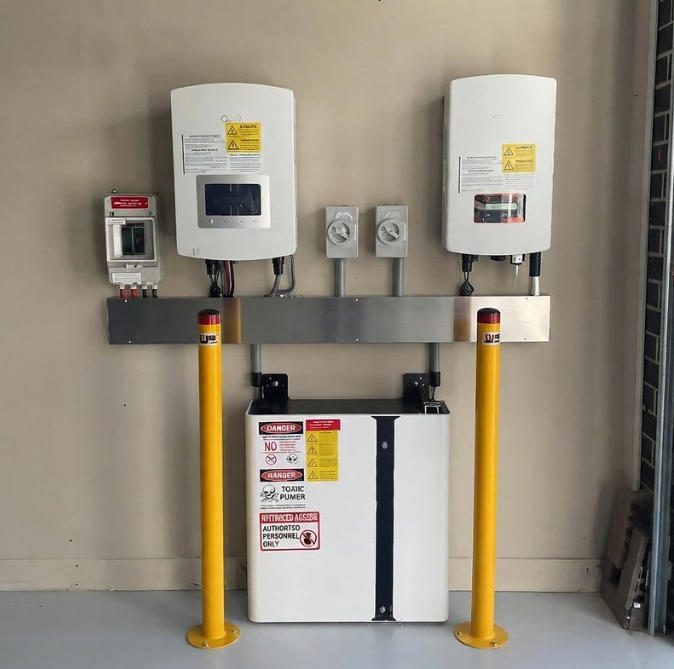
Monitoring systems that catch problems early are a standard offering from major solar equipment manufacturers (SolarEdge, Enphase, Huawei), and offering monitoring setup and ongoing review as part of your service package significantly increases customer lifetime value. A system that produces 15% below projection for six months and is caught proactively by your team is a loyalty event. The same underperformance discovered by the customer is a complaint.
Response protocols that show you care have one rule: contact within 24 hours of any customer-reported issue, with an initial diagnostic call or visit within 72 hours. Operations that meet this standard generate dramatically better reviews than those with 5–7 day response windows, regardless of ultimate resolution quality.
Creating advocates who refer friends and family requires one investment: making the post-installation experience as good as the sales experience. The customers who refer most actively are those who felt well-served at every stage — not just during the sales process.
Training Customers to Use Their Systems Effectively
A 30-minute “system orientation” call or visit after commissioning, where a technician walks the customer through their monitoring app, explains their first bill, and answers initial questions, costs approximately $75–$150 in labor time. The referral value of a customer who fully understands and advocates for their system is measured in thousands of dollars. This is one of the highest-ROI activities in your post-installation process.
Ongoing Maintenance Plans That Add Revenue and Trust
Annual maintenance plans covering system inspection, panel cleaning, inverter health checks, and monitoring review are both a revenue stream and a trust-building mechanism. Customers on maintenance plans have lower complaint rates, higher satisfaction scores, and meaningfully higher referral rates than customers who receive no post-installation contact. Price these plans at $150–$350 annually for residential and $400–$1,200 for commercial, with clear scope of service.
Regulatory Landscape — What You Need to Know to Stay Compliant
 Regulatory compliance isn’t just legal protection — it’s a marketing asset. Operations that can demonstrate active compliance stand out in a market where customers have been burned by those who didn’t.
State and Federal Regulations Protecting Solar Consumers
FTC guidelines on solar marketing claims are unambiguous: claims must be truthful, not misleading, and substantiated. The FTC’s 2024 enforcement action specifically targeted solar companies making unsubstantiated savings claims in advertising. If your marketing material says “save up to 100% on electricity,” that claim needs to be based on actual customer data from systems in comparable conditions — not theoretical best-case modeling.
The FTC’s consumer guidance on solar scams published in August 2024 is worth reading for its customer perspective — because every claim they warn customers to be skeptical of is a claim your sales team should stop making.
State-specific licensing and disclosure requirements vary significantly. California requires solar companies to hold a C-10 (electrical) or C-46 (solar) contractor license. Texas requires TECL licensing for electrical work associated with solar installations. Florida requires an EC (electrical contractor) license. Operating without proper state licensing exposes your operation to fines, forced project remediation, and potential criminal liability in some jurisdictions.
How regulations vary by region: The National Renewable Energy Laboratory’s solar policy resources maintain state-by-state compliance guides. Review the requirements for every market you operate in annually — regulatory changes have accelerated with the growth of solar adoption.
Compliance Checklist for Your Sales Materials
| Marketing Claim | Compliant Version | Non-Compliant Version |
|---|---|---|
| Energy savings | “Based on [customer profile], savings typically range $X–$Y annually” | “Save up to 100% on electricity” |
| Payback period | “Average payback in [market] is 7–10 years based on [data source]” | “Pays for itself in 3 years” |
| System performance | “Our panels are rated at [X]% efficiency with 25-year warranty” | “Best panels available” |
| Government incentives | “Currently eligible for 30% federal tax credit through 12/31/2025” | “Free solar through government program” |
| Price | Itemized breakdown with all fees disclosed | “Starting from $X” without full disclosure |
Documentation Requirements That Protect Your Business
Keep copies of all customer communications, signed contracts, financing disclosures, permit applications and approvals, utility interconnection agreements, inspection records, and post-installation monitoring reports. Maintain these for a minimum of 7 years, or the length of the longest warranty period you’ve provided, whichever is longer.
Warranty Regulations and What You’re Actually Required to Provide
Federal warranty standards vs. state-specific requirements: At the federal level, the Magnuson-Moss Warranty Act governs written warranties on consumer products. It doesn’t require you to offer a warranty — but if you do, it mandates specific language, clear disclosure of what’s covered, and an accessible remedy process. Many states have additional solar-specific warranty requirements; California’s Solar Rights Act and Hawaii’s Solar Warranty Law are the most comprehensive.
How to communicate warranty terms without overstating coverage requires distinguishing clearly between manufacturer warranties (which you pass through), your own workmanship warranty (which you are directly responsible for), and any extended service agreements. Conflating these three is the most common source of warranty-related disputes.
Warranty Language That’s Both Protective and Honest
Standard warranty language that meets both regulatory and ethical standards: “This system includes a [X]-year manufacturer’s performance warranty guaranteeing [Y]% of rated output, a [Z]-year equipment warranty against manufacturing defects, and our [A]-year workmanship warranty covering installation quality. Your monitoring system will alert both you and our support team to any performance deviation exceeding 10% of projected output.”
How to Handle Warranty Disputes Before They Escalate
Designate a specific point of contact for warranty claims — not the sales team, who have a conflict of interest, but a dedicated service coordinator. Commit to a 48-hour initial response and a 7-day inspection timeline for physical claims. Customers who receive fast, professional warranty responses overwhelmingly resolve issues without escalating to regulatory complaints or legal action.
Financing Regulations and Your Responsibility
Truth in Lending Act (TILA) requirements for solar financing apply whenever you’re involved in arranging or recommending consumer credit. TILA requires clear disclosure of the APR, total finance charge, total amount financed, and number of payments. Any solar company that recommends a financing product without these disclosures in writing is exposed to regulatory action.
PACE program regulations and restrictions tightened significantly with the CFPB’s 2024 rule, which now requires PACE lenders to assess borrower ability to repay and provide enhanced disclosures. As a recommending agent, you’re not insulated from the CFPB’s requirements — you have a responsibility to understand what you’re recommending.
Your liability when recommending financing options is real. If you recommend a financing product that a customer later demonstrates was unsuitable for their financial situation, and the product caused material harm (inability to refinance, default), you may be named in litigation even if you didn’t originate the loan.
Disclosure Templates That Meet Legal Standards
Create a one-page financing comparison sheet for every customer that includes: the cash price, the financed price at full term, the APR, the monthly payment at year 1 and year 10 (for escalating-payment products), the total amount paid over the loan term, prepayment options and penalties, and any PACE-specific property lien information. This document is both a legal protection and a trust-building tool.
Partner Vetting for Financing Providers
Before recommending any financing partner, obtain: their NMLS (Nationwide Mortgage Licensing System) registration number, copies of their standard loan disclosures, their complaint history with the CFPB, and references from solar dealers who have placed loans with them. Financing partners who won’t provide this information are partners whose problems will become your problems.
Training Your Sales Team to Be Trust-Builders, Not Pressure Merchants
Shifting From “Always Be Closing” to “Always Be Honest”
Why pressure tactics backfire in solar — especially in 2024 is supported by consistent data. Aurora Solar’s analysis of solar sales conversion found that operations using consultative, no-pressure sales approaches had lower cancellation rates during the 3-day cooling-off period and measurably higher referral rates than operations relying on urgency tactics and same-day close pressure.
The urgency tactics that worked in 2019 (“this incentive expires Friday”) are actively counterproductive in a market where customers have been warned to be skeptical of exactly those tactics. An FTC consumer advisory published in August 2024 specifically tells customers to “beware of high-pressure sales tactics and same-day signing pressure.” When your sales approach matches the scam profile your customer has been warned about, you’ve already lost.
Sales conversations that build confidence instead of triggering resistance are built around questions and education, not presentations and closes. “What’s your biggest concern about going solar?” is a more powerful opening than any presentation slide. “Let me show you exactly how I calculated that savings number” is a more powerful close than “this offer expires tonight.”
Sales Scripts Focused on Education, Not Manipulation
Discovery script: “Before I talk about our products at all, I want to understand your situation. What’s your current monthly electricity cost? What’s your roof situation? What outcome are you hoping solar delivers for you?”
Projection walkthrough: “Here’s how I calculated the savings estimate. I used your actual consumption from your last 12 bills, your utility’s current rate structure, the solar irradiance data for your specific location, and a 0.5% annual panel degradation assumption. I’m giving you a conservative range, not a best-case scenario.”
Close: “Does this make sense for your situation? If it doesn’t pencil out for you, I’d rather tell you now than have you make a decision you’ll regret.”
Handling Objections With Transparency, Not Deflection
| Customer Objection | Deflection (Wrong) | Transparency (Right) |
|---|---|---|
| “I heard solar doesn’t really save money” | “That’s a myth — our customers save thousands!” | “That can be true in some situations. Let me show you the specific calculation for your home.” |
| “I don’t want a 25-year contract” | “It’s not really a contract, it’s a warranty” | “That’s a fair concern. Here’s exactly what the 25-year term covers and what it doesn’t obligate you to.” |
| “A neighbor had problems with their solar company” | “We’re different, we’re the best” | “That happens more than it should. Here’s how our process is different and what you’d do if you had an issue with us.” |
| “The price seems high” | “You get what you pay for” | “Here’s a line-item breakdown of every dollar. Tell me which component you want to adjust and I’ll show you the tradeoff.” |
Identifying and Coaching Out Bad Practices
Red flags in your own team’s behavior that indicate ethical risk: consistently closing deals on the first visit (healthy close rates on first visits are below 30% for qualified residential leads); customers calling to complain about “pressure” or “not understanding what they signed”; unusually high 3-day cancellation rates (industry average is 15–25%, rates above 30% indicate a sales process problem); savings projections that consistently exceed actual first-year performance by more than 15%.
Retraining conversations that stick focus on the long-term economics of ethical selling, not abstract principles. “A customer who cancels and tells three neighbors about the pressure costs you $15,000–$25,000 in lost pipeline. A customer who closes and refers three neighbors generates $15,000–$25,000 in new pipeline. Ethical selling isn’t just right — it’s more profitable.”
Mystery Shopping and Quality Audits
Conduct quarterly mystery shop calls on your own sales team using a script that matches the profile of a skeptical residential prospect. Record with disclosure where required. Review the recordings for compliance with your ethical selling standards. The most valuable thing you can do with the results is share them in team training, not use them punitively — teams that see their own behavior clearly self-correct faster.
Incentive Structures That Reward Honesty, Not Shortcuts
Tie sales team compensation to 90-day customer satisfaction scores and referral generation, not just signed contracts. A commission structure that pays equally on a deal that cancels within 90 days and a deal that generates two referrals is an incentive for high-pressure tactics. A structure that pays a meaningful bonus for referrals and satisfaction scores while clawing back commissions on cancellations is an incentive for honest selling.
Building Product Knowledge That Supports Honest Selling
Understanding your products deeply enough to discuss limitations is a prerequisite for honest selling. If your sales team can’t explain the difference between monocrystalline and polycrystalline panel efficiency under diffuse light conditions, they can’t have an honest conversation about whether your product is the right fit for a cloudy market. If they can’t explain how inverter string design affects performance under partial shading, they can’t honestly advise customers with significant shading challenges.
Knowing when competitors’ products are genuinely better is a sign of expertise, not weakness. “For your specific application, a microinverter system would outperform our string inverter solution by approximately 8–12% due to your shading pattern” is a statement that builds massive credibility — and often closes the deal anyway, because the customer trusts the advisor who told them something that appeared to cost them a sale.
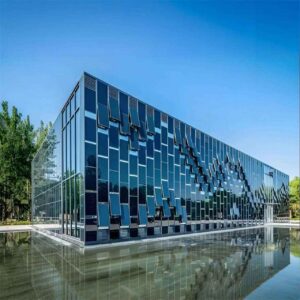
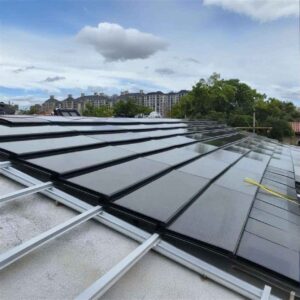
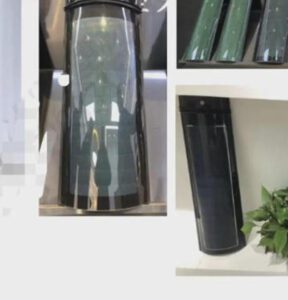
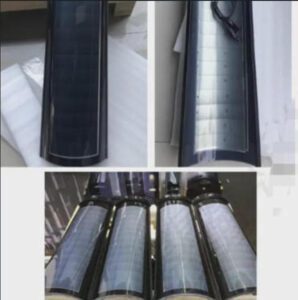
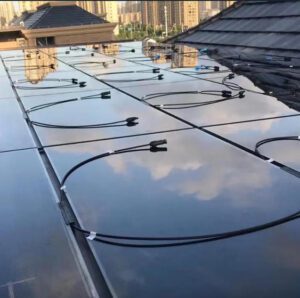
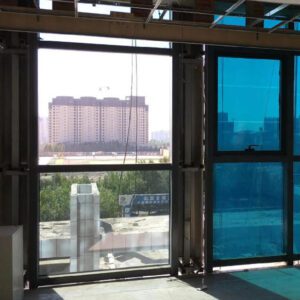
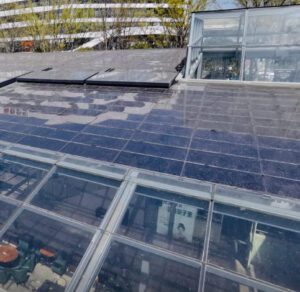
This is also where a supplier like Jia Mao BIPV adds genuine value for distributors operating in the building-integrated space: the product range — from transparent solar glass to BIPV roof tiles — allows honest advisors to match specific building applications to the appropriate technology rather than forcing every project into a standard panel-on-rack configuration.
Competitive Analysis That’s Honest, Not Dismissive
Build a product comparison matrix for your top five competitors that includes genuine strengths and weaknesses — not just your talking points. Teams that can honestly discuss competitor advantages are perceived as credible advisors. Teams that dismiss every competitor as inferior are perceived as salespeople.
Training Materials That Emphasize Accuracy Over Persuasion
Replace sales deck slides that say “best in class performance” and “industry-leading warranty” with specific data: “Our panels produce 21.4% efficiency at standard test conditions, degrading at 0.45% per year, warranted for 25 years.” Replace “customers love us” with “93% of our surveyed customers in the past 12 months said they would recommend us to a friend — here are the three things they cited most.”
Protecting Yourself: Legal and Reputational Risk Management
Documentation That Protects Your Business
What to keep and how long to keep it: Contracts and amendments (lifetime of warranty plus 3 years), all customer communications including text messages (7 years minimum), permitting and inspection documentation (lifetime of system), photo/video documentation of installation (10 years minimum), financing disclosure records (length of financing term plus 5 years), and any complaint or dispute correspondence (10 years).
Email and communication records that support your position: Use a business email system with automatic archiving for all customer communications. Document verbal commitments in follow-up emails: “As we discussed today, the installation timeline is [details] and the savings projection methodology is [details].” These follow-up emails are legally significant documentation of what was represented to the customer.
Photo and video documentation of installations protects you from claims of damage to roof, electrical systems, or property. Document the pre-installation condition of all affected surfaces, the installation process itself, and the completed installation before handover. This documentation has resolved insurance claims, warranty disputes, and legal actions in favor of the installer.
Systems for Organizing Customer Records
A project management system with document storage at the customer record level is not optional for operations doing more than 20 installations per year. Jobber, Aurora Solar’s project management suite, and Salesforce Field Service are all purpose-built for this use case. The cost of losing a legal dispute due to poor documentation vastly exceeds the cost of any of these systems.
How to Handle Customer Complaints Without Admitting Liability
The response framework: (1) Acknowledge the customer’s experience without conceding fault — “I understand this hasn’t gone the way you expected, and I want to understand what happened.” (2) Gather complete information before responding substantively. (3) Respond in writing to confirm your understanding of the complaint and your proposed resolution. (4) If the resolution involves any compensation or adjustment, document it in a signed settlement agreement. Never respond to complaints defensively in writing — every written response is potentially discoverable in litigation.
Insurance and Liability Considerations
What your general liability policy actually covers for solar operations typically includes: bodily injury and property damage during installation, completed operations liability (claims arising after installation is complete), and personal and advertising injury. Standard GL policies for solar contractors should carry limits of at least $1M per occurrence and $2M aggregate.
Gaps in coverage that could sink you: Standard GL policies typically exclude professional liability (claims that your design or recommendation caused financial harm), pollution liability (relevant if your installation causes a roof leak leading to mold), and cyber liability (relevant if your monitoring systems store customer data). Each of these exclusions can expose you to significant uninsured loss.
Why solar-specific insurance matters: Solar installation creates unique exposures — roof penetration liability, electrical system interaction, generation warranty risk — that generic contractor insurance may not cover adequately. Work with a broker who specializes in renewable energy contracting to ensure your coverage matches your actual risk profile.
Working With Insurance Providers Who Understand Solar
Ask your broker specifically: “Does this policy cover claims arising from inaccurate energy production estimates?” and “Does this policy cover damage to a customer’s electrical system caused by our inverter recommendation?” The answers to these questions will reveal whether you have appropriate coverage or a significant gap.
Claims Processes and Documentation Requirements
Notify your insurer immediately upon becoming aware of any potential claim — even before a formal complaint is filed. Late notice is a common basis for claim denial. Your documented customer records, installation photos, and communication files are the foundation of your defense in any claim.
Reputation Management in the Age of Online Reviews
Responding to negative reviews without being defensive follows one rule: respond to the specific facts, not the tone. A review that says “the salesperson pressured me into signing immediately and the system doesn’t perform as promised” deserves a factual response addressing the sales process and the performance claim — not a response about your company’s values. Respond publicly on the review platform with professionalism, then invite the reviewer to contact you directly to resolve the underlying issue.
Building a review generation system for satisfied customers: The highest-performing solar operations ask for reviews at two specific moments — immediately after system commissioning (when the customer first sees their monitoring dashboard working and is at peak satisfaction) and 90 days after installation (when they have their first full billing cycle comparison). Automate these requests through your CRM.
Monitoring online mentions and addressing misinformation: Set up Google Alerts for your company name and your principals’ names. Monitor Google Business, Yelp, Trustpilot, and the BBB monthly. Address factually incorrect claims directly and calmly — misinformation that goes unaddressed becomes perceived fact.
Response Templates for Common Complaints
For “system not performing as promised”: “Thank you for reaching out. We take performance concerns seriously and want to resolve this immediately. Our service team will contact you within 24 hours to review your monitoring data and schedule an inspection if needed. We stand behind our performance guarantees.”
For “felt pressured to sign”: “We’re sorry your experience with our sales process felt uncomfortable — that’s not the standard we hold ourselves to. I’d like to understand specifically what happened and address it directly. Please contact me at [direct contact] so we can discuss.”
Strategies for Generating Authentic Positive Reviews
Authentic reviews come from authentic experiences. The three-part strategy: deliver what you promised on the timeline you committed to, follow up proactively with the monitoring orientation call, and ask specifically for a review at the 90-day mark with a direct link. Operations that do all three consistently generate 4.5+ star averages even with occasional negative reviews, because the volume of authentic positive responses provides context.
Case Studies: How Ethical Solar Operations Win Market Share
 The operations that win market share in a trust-damaged market aren’t the most aggressive — they’re the most consistent.
Case Study 1: The Distributor Who Built Trust Through Transparency
A mid-sized regional solar distributor in the Southwest United States was watching their close rate fall from 38% to 24% between 2022 and 2024 despite maintaining competitive pricing. Exit surveys revealed that customers who declined cited “concerns about the contract” and “not sure about the savings claims” as primary reasons — not pricing.
What they did differently: They hired a contract attorney to rewrite their standard customer-facing documents in plain language. They eliminated all claims above “conservative projection” in savings estimates. They created a one-page pricing breakdown that every customer received before any site visit. They implemented a 90-day satisfaction survey with results posted publicly on their website.
How it affected their sales cycle and pricing power: Close rate recovered to 41% within 12 months — above their previous peak. Average project value increased 11% as customers focused less on price comparison and more on confidence in delivery. Sales cycle shortened from 62 days average to 44 days.
Results in customer retention and referral rates: Referral business grew from 18% of new customers to 34% within 18 months. Annual maintenance plan attachment rate reached 67% of installed base. Customer-reported satisfaction at 90 days averaged 4.7/5.0.
Case Study 2: The Sales Team That Ditched Pressure Tactics
A solar sales organization operating across three states had strong gross sales numbers but persistently high 3-day cancellation rates (28–31%) and a deteriorating online reputation. Their commission structure paid full commission on signed contracts regardless of whether the deal ultimately completed.
The shift in approach and initial concerns: After bringing in a sales training consultant, they restructured commissions to pay 60% at contract signing and 40% at system commissioning, with clawbacks on cancellations within 90 days. They eliminated same-day close incentives and replaced them with referral bonuses. Initial team resistance was significant — several high-producing salespeople left.
How it changed customer satisfaction scores: Within 6 months, 3-day cancellation rates fell from 29% to 14%. Customer satisfaction scores at 90 days rose from 3.8/5.0 to 4.5/5.0. The remaining sales team, while smaller, was producing higher-quality deals.
Impact on close rates and deal quality: Gross close rate fell from 34% to 28% in the transition period, then recovered to 36% within 12 months as the team’s reputation for honest dealing drove warmer inbound inquiries. Average contract value increased 9% — customers comfortable with the process were less focused on price compression.
Case Study 3: The Operation That Recovered From a Major Scam Incident
A commercial solar contracting operation discovered that a subcontractor they had worked with for two years had been falsely representing NABCEP certification and had allowed their state contractor license to lapse. Three installations completed by that subcontractor had electrical deficiencies identified during customer-requested third-party inspections.
What went wrong and how it was discovered: Two customers filed complaints with the state contractor licensing board. The licensing board investigation revealed the credential issues and notified the general contractor. The contracting operation had not verified credentials annually — their initial vetting had lapsed.
The transparent recovery process: The operation contacted all customers for whom the subcontractor had done work proactively — before any complaints — and offered free third-party inspections of all systems. Deficiencies were remediated at the operation’s cost. The operations manager personally contacted each affected customer with a full written explanation of what had occurred, what had been remediated, and what procedural changes had been implemented.
How they rebuilt trust and actually grew stronger: Of the 11 customers who received proactive outreach, 9 reported satisfaction with the response. Seven left positive public reviews specifically citing the company’s transparency in handling the situation. The operation’s annual credential verification process became a marketing point: “We re-verify every installer partner’s credentials every 12 months — here’s the documentation.” Pipeline from referrals by affected customers (who were ultimately impressed by the transparent response) generated approximately $380,000 in new contracts within 18 months of the incident.
Your Action Plan: Implementing Consumer Protection Standards Today
Week 1: Audit Your Current Practices
Checklist for reviewing contracts, pricing, and claims:
- Pull your standard customer contract and identify all warranty terms — are they specific or vague?
- Review your last 10 savings projections: what was the methodology? What assumptions were used? How do projections compare to first-year actuals?
- Review your standard financing disclosure: does it include APR, total cost, origination fees, and prepayment penalties?
- Verify active credentials for every installer currently in your network
- Review your marketing materials against FTC guidelines — flag any claims that aren’t substantiated
- Check your 3-day cancellation rate for the past 12 months
- Review all public reviews and identify the most common complaint themes
Identifying gaps and problem areas: Prioritize by risk — contract language issues that create legal exposure come first, followed by financing disclosure gaps, then sales practice issues, then marketing compliance.
Documenting baseline metrics: Record your current close rate, cancellation rate, 90-day satisfaction score, referral percentage, and average online review rating before making changes. You need these baselines to measure progress.
Week 2–3: Update Your Systems and Materials
Rewriting contracts and pricing documents: Work with an attorney familiar with solar consumer protection law in your operating states to redraft your standard contract. Budget $1,500–$4,000 for this — it is one of the highest-ROI legal investments you can make. Create the itemized pricing breakdown template referenced earlier. Create the financing comparison one-pager.
Creating training materials for your team: Develop the qualifying conversation script, objection handling framework, and projection methodology documentation described in this guide. Create a one-page “what we don’t promise” sheet that covers realistic timelines, conservative savings projections, and what’s not covered by warranty.
Implementing new processes and safeguards: Set up annual credential verification calendar reminders for every installer partner. Implement the project milestone notification system for customer communication. Create the post-installation monitoring orientation protocol.
Week 4+: Monitor, Measure, and Refine
Tracking customer satisfaction and complaint metrics: Survey every customer at 90 days post-installation. Track: overall satisfaction (1–5), likelihood to recommend (Net Promoter Score, 0–10), perceived accuracy of pre-sale information, and responsiveness to any issues encountered. Review monthly, act on patterns within 30 days.
Monitoring online reputation: Weekly Google Alerts review. Monthly audit of all review platforms. Respond to every negative review within 48 hours. Track your average rating and review volume as key performance metrics.
Quarterly reviews and continuous improvement: Four times per year, review your baseline metrics against current performance. Review your contract and marketing materials for any claims that have become outdated. Retest your sales team’s objection handling scripts. The ethical solar operation isn’t a destination — it’s a practice.
Ethical Solar Operations Aren’t Just Right — They’re Profitable
The solar market in 2025 is operating under a cloud of consumer distrust that is the direct result of years of overpromising, predatory financing, and inadequate post-installation support. That cloud is your opportunity.
Every customer who has been burned by a previous operator is a customer with lowered defenses to an honest approach. Every prospect who has heard a neighbor’s story of inflated savings claims is a prospect who will respond viscerally to your transparent projection methodology. Every building owner who has been handed a vague contract by three competitors will remember the one who walked them through every line.
The practices described in this guide — transparent pricing, honest projections, plain-language contracts, verified installer credentials, proactive communication, and responsive post-installation support — are not differentiators in most markets. They are the table stakes for building a solar operation that doesn’t generate regulatory complaints, legal disputes, and reputation damage.
But in a market where those practices are rare, they are a genuine competitive weapon. The distributors, agents, and installers who build these practices into their standard operating procedures now will be the dominant players in their markets within 24 months.
The window for differentiation through ethics is open right now. It won’t stay open indefinitely — as the market matures and regulatory enforcement tightens, the floor will rise. The operations that build these capabilities now will own the reputation advantages that are difficult for new entrants to replicate.
For distributors and agents looking to integrate premium, certified products into their ethical solar offering, Jia Mao BIPV’s full product range — including BIPV solar glass, roof tiles, and integrated panel systems — provides the technical foundation for honest, high-performance installations backed by documented specifications.
Let’s Build Your Ethical Solar Operation
Your next step depends on where your biggest gap is:
If your contracts and pricing need work: Start with the Week 1 audit checklist. Identify the top three risk items and address them this month.
If your sales team needs retraining: Share the objection handling framework and the qualifying conversation script at your next team meeting. Run one role-play session per week for the next 8 weeks.
If your installer partner network needs vetting: Pull the current documentation for every active installation partner this week. Any partner who can’t provide current credentials within 5 business days should be paused until they can.
If your post-installation process needs improvement: Implement the 90-day satisfaction survey and the monitoring orientation call immediately. These two changes alone will measurably improve your referral rate within 6 months.
For a deeper dive into BIPV product specifications and certified installation support that backs up your ethical sales promises with genuine product performance, visit jmbipvtech.com and explore their distributor and agent resources.
Watch: Solar Scams Exposed — What Your Customers Have Already Seen
Before your next customer meeting, watch what your prospects are watching. Understanding the specific tactics they’ve been warned about is the first step to demonstrating you’re different.
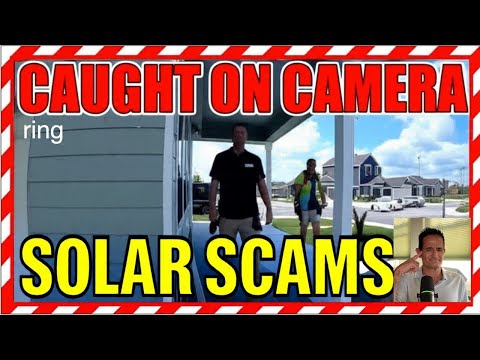
Video: “EXPOSED: 2 NEW Solar Scams Targeting Homeowners in 2025” — This is what your customers are watching before they meet with you. Knowing the specific tactics they’ve been warned about helps you actively demonstrate you’re operating differently.
Post-installation monitoring reviews are not just a support function — they are a referral generation mechanism. Customers who see their system performing as promised become your most effective salespeople.
Glossary of Key Terms
PACE Financing (Property Assessed Clean Energy): A financing mechanism where the loan is attached to the property as a tax assessment rather than to the borrower’s personal credit. Pros: accessible to customers with lower credit scores. Cons: becomes a senior lien on the property, can complicate refinancing and home sales, and has been associated with predatory practices. The CFPB finalized new consumer protections in 2024.
NABCEP (North American Board of Certified Energy Practitioners): The leading certification body for solar installation professionals in North America. NABCEP-certified installers have met minimum training hours, passed rigorous exams, and documented field experience. Verify certification at nabcep.org.
NEM (Net Energy Metering): A billing arrangement where solar customers receive credits for excess electricity exported to the grid. California’s transition from NEM 2.0 to NEM 3.0 (effective January 2024) significantly reduced export credits, making battery storage more economically important.
Degradation Rate: The annual reduction in solar panel output over time. Industry standard is 0.45–0.5% per year, meaning a panel rated at 400W today will produce approximately 350W in year 25 under standard conditions.
kWp (Kilowatt-peak): The rated maximum power output of a solar panel or system under standard test conditions (STC: 1,000 W/m² irradiance, 25°C cell temperature). Real-world output is typically 75–85% of kWp due to temperature, shading, and system losses.
TILA (Truth in Lending Act): Federal law requiring clear disclosure of credit terms including APR, total finance charge, amount financed, and payment schedule for any consumer financing product.
BIPV (Building-Integrated Photovoltaics): Solar technology integrated directly into building materials — roofing tiles, glass facades, skylights — rather than mounted on top of existing structures. BIPV replaces conventional building materials while generating electricity, making it especially relevant for new construction and architectural renovation projects.
Interconnection: The process of connecting a solar system to the utility grid. Requires utility approval, inspection, and the installation of a bi-directional meter. Timelines vary significantly by utility — from 2 weeks to 16 weeks in current high-demand markets.
Dealer Fee: An origination fee paid to the financing company by the solar dealer, typically financed into the customer’s loan principal. Dealer fees of 15–30% of system cost are common but frequently not disclosed clearly to customers. A $25,000 system with a 20% dealer fee results in a $30,000 loan principal.
FAQ: Consumer Protection in Solar (For Distributors, Agents, and Installers)
1. What’s the difference between legitimate solar financing and predatory schemes?
Legitimate solar financing discloses the actual APR, total cost of financing, all origination fees, and prepayment terms in plain language before signing. Predatory schemes bury dealer fees in the financed principal (inflating costs by 15–30% without clear disclosure), use promotional “solar savings rates” that obscure the true interest rate, or promise savings that only materialize in best-case scenarios. As a distributor or agent, you should be able to explain every financing product you recommend in terms your customer’s accountant would recognize as accurate.
2. How can I verify that a solar installer is properly licensed and certified?
NABCEP certification can be verified through the public directory at nabcep.org. State contractor licenses can be verified through each state licensing board’s online lookup tool. Always obtain current certificates of insurance (general liability and workers’ compensation) naming your entity as additionally insured. Conduct this verification annually — not just at onboarding. A contractor who was fully licensed 18 months ago may have allowed credentials to lapse.
3. What should a realistic solar ROI timeline look like for different markets?
National residential payback ranges in 2025 run 5–12 years, with significant regional variation. California and the Southwest (high irradiance, high utility rates): 5–7 years. Mid-Atlantic and New England: 7–10 years. Pacific Northwest and Midwest: 9–12 years. Any projection claiming shorter payback should be scrutinized for the assumptions used — particularly the utility rate escalation assumption and the shading analysis. Conservative projections that are subsequently exceeded create advocates. Aggressive projections that fall short create complaints.
4. Are PACE programs appropriate to recommend for most customers?
PACE financing has legitimate uses — particularly for customers who own their property, plan to stay long-term, and have limited conventional financing options. However, PACE creates a tax lien senior to the mortgage, can complicate refinancing, and may not transfer cleanly in a property sale. The CFPB found in 2024 that PACE borrowers experienced average property tax increases of $2,700/year (88% increase). Educate every customer about these specific risks before presenting PACE as an option. Never recommend PACE as a default without confirming the customer understands the property tax and lien implications.
5. What warranties should customers actually expect from a reputable solar installation?
The industry standard as of 2025 includes: a 25-year manufacturer performance warranty guaranteeing at least 80–87% of rated output, a 10–12 year equipment (materials) warranty against manufacturing defects, a 10–12 year inverter warranty (extendable to 25 years with premium products), and a 5–10 year workmanship warranty covering installation quality. Roof penetration warranties (covering leaks at mounting points) should be explicitly included in the workmanship warranty or covered separately. Any warranty claim that exceeds these standards — “30-year comprehensive warranty” — should be scrutinized for what it actually excludes.
6. How much should solar actually cost in 2025?
The national average installed cost for residential solar in 2025 ranges from $2.50–$3.50 per watt before incentives, per data from SolarReviews and Sustainable Design Group. For a typical 6–8 kW residential system, that’s $15,000–$28,000 before the 30% federal Investment Tax Credit (ITC). Quotes significantly below this range should prompt questions about equipment quality, labor credentials, and what’s excluded. Quotes significantly above this range require a clear justification based on roof complexity, market-specific labor costs, or premium equipment selection.
7. What’s the most common solar scam affecting customers right now — and how do I position against it?
The most prevalent current scheme, based on FTC complaint data, is the combination of inflated savings estimates paired with hidden dealer fees in financing. A customer is told they’ll save $2,200/year (when a conservative analysis would show $1,400–$1,600), and the financing carries a 20–25% dealer fee inflating their loan by $5,000–$8,000. The positioning script: “I’m going to show you exactly how I calculated your savings estimate and exactly how much the financing costs you — including every fee. Most customers tell me they’ve never seen it explained this clearly.”
8. Can customers trust online solar calculators for sizing and savings estimates?
Generic online calculators provide useful ballpark figures but miss the variables that most affect real-world performance: actual roof orientation and tilt, shading from trees and adjacent structures, local utility rate structure (time-of-use vs. tiered billing), and available state and local incentives. They’re useful for establishing customer interest, but any savings projection you provide to a customer should be based on a site-specific analysis using actual irradiance data, not a generic calculator output.
9. What should customers ask before signing a solar contract?
Train your sales team to proactively answer these before the customer asks: (1) What is the total installed cost and how is it broken down? (2) If financing, what is the actual APR and total amount I’ll pay over the loan term? (3) What exactly does the warranty cover, and who do I call if something goes wrong? (4) What is the realistic installation timeline, including permitting and utility interconnection? (5) What does the performance guarantee specify, and what happens if the system underperforms? A team that can answer these clearly before being asked is a team that closes higher-quality deals.
10. How do I demonstrate that my operation will still be here to honor warranties in 10 years?
This objection is one of the most legitimate in solar sales — the industry has significant business failure rates among small installers. Specific evidence points that address it: years in business (anything over 5 years is meaningful), number of installed systems in service with monitoring data, manufacturer certifications that tie you to brand warranty fulfillment obligations, and your insurance coverage documentation. Offering to provide references from customers whose systems are 3–5 years into their warranty period is powerful evidence that a fly-by-night operator simply cannot replicate.
11. What’s the meaningful difference between a consultative solar advisor and a high-pressure salesperson?
A consultative advisor asks questions first, presents a solution based on the customer’s specific situation, and sometimes says “based on your usage and roof conditions, solar might not give you the return you’re looking for.” A high-pressure salesperson presents a single solution, uses urgency tactics (“this incentive expires at midnight”), and closes on the first visit regardless of fit. The business case for the consultative approach: lower cancellation rates, higher referral rates, higher average deal values (customers who trust you don’t shop on price alone), and a sales cycle that doesn’t rely on customer regret.
12. What are the specific red flags in a solar contract that distributors should train customers to recognize?
The highest-risk contract elements: (1) “Lifetime warranty” without a specific duration — meaningless legally; (2) escalating payment clauses without a cap — payments can increase 2–3% annually for 20+ years; (3) automatic renewal terms that extend the agreement without explicit customer action; (4) vague performance language like “industry standard output” without a specific percentage; (5) exclusions that cover the most common failure modes (inverter failure, roof penetration leaks); (6) dispute resolution clauses requiring binding arbitration that waive the customer’s right to small claims court. Your contracts should not contain any of these elements.
13. What’s the right process when a customer is unhappy with their installed system?
Contact timeline: acknowledge within 24 hours, initial diagnosis within 72 hours, remediation plan within 7 days. Process: document the complaint in writing immediately, review the contract and monitoring data before responding substantively, respond to the specific technical or contractual issue rather than the emotional tone, and propose a specific remediation with a timeline. What not to do: respond defensively, dismiss the concern, cite warranty exclusions before fully understanding the issue, or go silent. Operations that respond to complaints transparently and quickly generate better long-term outcomes — including reviews — than operations that “win” disputes through contract language.
14. How can I verify that a solar savings estimate is realistic rather than inflated?
Ask the salesperson for the methodology: What 12-month consumption data was used? What utility rate (and which rate escalation assumption)? What irradiance data source (PVWatts, SolarEdge, custom)? What degradation rate was assumed? What shading losses were applied? A salesperson who can answer all five questions clearly is doing honest analysis. A salesperson who says “our proprietary model” or “standard industry estimates” is giving you a number they can’t defend. For commercial projects, NREL’s PVWatts calculator is a publicly available, credible tool that allows you to verify any savings projection independently.