Your Distributor’s Guide to Overcoming Objections, Building Customer Confidence, and Turning Skepticism into Profitable Sales Conversations

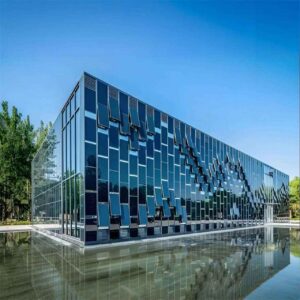
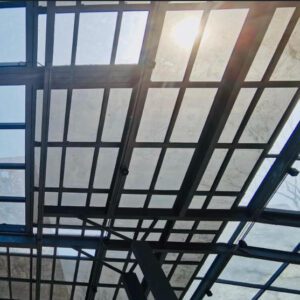
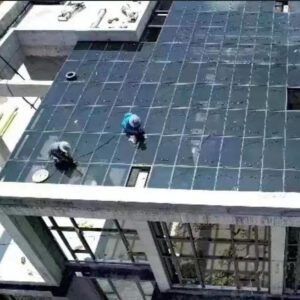
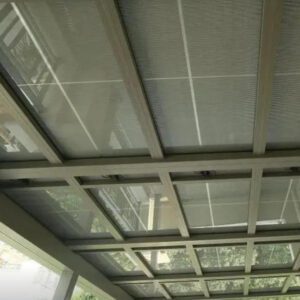
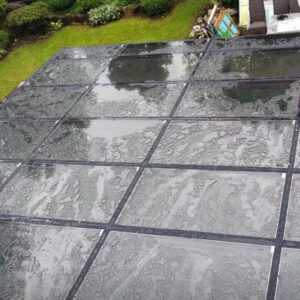
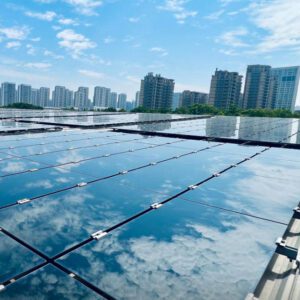
A commercial building facade equipped with transparent solar glazing — the product your customers are hesitating to buy, and the misconceptions you need to eliminate to close more deals.
Why This Matters for Your Distribution Business
Here is a scenario that plays out in distributor showrooms every week. A building contractor walks in, expresses genuine interest in solar panel windows, then walks back out citing concerns about cost, efficiency, durability, or disruption — none of which are grounded in current product reality.
That is not a customer who said no. That is a customer who was never given the right information at the right moment.
The disconnect between what customers believe about solar panel windows and what the product actually delivers is the single largest invisible barrier in your sales pipeline. According to market data from Fortune Business Insights, the global BIPV market was valued at $23.41 billion in 2025 and is projected to grow to over $28 billion by 2026 — but only the distributors who close the information gap will capture that growth.
Your customers are not your problem. Their misconceptions are.
This guide equips you with the data, scripts, and frameworks to address every major objection before it kills a deal — and position yourself as the trusted expert your territory needs.
Who this guide is for: Solar product distributors, regional agents, and commercial builders who are already selling or evaluating solar panel windows as part of their portfolio. This is not a product brochure. It is a sales and marketing operations document.
Misconception #1: Solar Panel Windows Are Too Expensive to Be Practical
The Real Cost Breakdown Your Customers Need to Hear
When a customer says “solar windows are too expensive,” they are almost always comparing the upfront purchase price of solar glazing against the cost of conventional glass — and stopping the analysis there. That is the equivalent of judging a car purchase by only looking at the sticker price while ignoring fuel savings, maintenance costs, and resale value over ten years.
The actual economic comparison looks very different.
Initial investment vs. long-term ROI — a concrete example:
Consider a mid-rise commercial building with 2,000 m² of glazed facade area replacing standard high-performance windows with solar windows from a manufacturer like Цзя Мао Бипв. The installed cost premium over conventional glass might be $350,000–$500,000. But that premium buys:
- Annual electricity generation of approximately 420,000 kWh (worth $54,600/year at $0.13/kWh national average commercial rate)
- HVAC energy reduction of 25–40%, saving an additional $18,000–$32,000/year on cooling costs
- Lighting cost reduction of 30–50% through enhanced daylighting, adding $10,000–$18,000/year in savings
- 30% federal Investment Tax Credit reducing the net capital outlay immediately
| Cost Scenario | Standard Glazing (25-Year Total) | Solar Windows (25-Year Total) | Net Difference |
|---|---|---|---|
| Initial Glass + Installation | $320,000 | $680,000 | +$360,000 |
| 25-Year Energy Cost | $580,000 | $285,000 | −$295,000 |
| Blind/Shading Systems | $75,000 | $0 | −$75,000 |
| Federal ITC Credit (30%) | $0 | −$145,000 | −$145,000 |
| State Rebates (est.) | $0 | −$40,000 | −$40,000 |
| 25-Year Net Total | $975,000 | $780,000 | Solar saves $195,000 |
Assumptions: 2,000 m² commercial facade, ASHRAE Climate Zone 3, electricity at $0.13/kWh escalating 3%/year. Solar window: 165 W/m², SHGC 0.20. Source: Industry benchmarks and Jia Mao Bipv energy savings framework.
The IRS Residential Clean Energy Credit provides a 30% tax credit on qualifying solar installations — this applies to BIPV systems including solar windows. For commercial projects, the 179D Energy Efficient Commercial Buildings Deduction offers up to $5.00/sq ft for qualifying energy efficiency improvements. These incentives fundamentally change the payback math.
Selling Strategy — Reframe Cost as Investment:
Instead of defending the price, change the frame of the conversation. Ask the customer: “What are you currently paying annually on cooling costs for this building?” Then build a simple payback calculation on the spot. A distributor with a building-specific ROI calculator in their sales kit closes deals that competitors without one consistently lose. Access a structured approach to this calculation at solar window energy savings analysis.
The true cost of NOT installing solar windows is the accumulation of: full energy costs for 25 years at escalating utility rates, separate shading system costs, zero ROI from window investment, and missed tax credits — while the building owner watches a competitor’s property earn a green certification and command 3–7% rental premium.
For bundling strategies that lower the effective per-project cost and make adoption more accessible, Aurora Solar’s objection-turning guide provides a useful framework for structuring value conversations with hesitant buyers.
Misconception #2: Solar Panel Windows Don’t Generate Enough Power
The Power Generation Reality
The efficiency comparison trap is where more deals die than anywhere else. A customer reads that traditional solar panels operate at 20–23% efficiency and sees that solar windows deliver 5–12% system efficiency — and concludes the product is inferior. This comparison is technically accurate and commercially misleading at the same time.
Here is what the raw efficiency numbers do not tell you:
Surface area is the multiplier that changes the equation. A commercial building’s total window area is typically 3–5 times larger than its usable roof area. A 40-story commercial tower with 6,000 m² of south and west-facing glazing generates between 1,080,000 and 1,500,000 kWh annually from solar windows — rivaling or exceeding what a rooftop-only system could produce on the same building.
Modern solar window performance data from transparent BIPV glass specifications:
| Transparency Level | Power Output (W/m²) | Annual Generation (kWh/m²) | Лучшее приложение |
|---|---|---|---|
| 30% VLT | 180–200 | 230–270 | South-facing spandrel, privacy zones |
| 50% VLT | 155–175 | 195–240 | Commercial curtain walls, offices |
| 70% VLT | 130–155 | 165–210 | Residential, hospitality, views required |
| 90% VLT | 80–110 | 100–145 | Atriums, skylights, museums |
Source: Jia Mao Bipv transparent glass specifications and industry benchmarks.
Glossary — VLT (Visible Light Transmittance): The percentage of visible light that passes through glass. Higher VLT = clearer view. Lower VLT = darker glass but higher energy output. A 50% VLT solar window looks similar to quality tinted architectural glass — not dark, just lightly filtered.
Addressing the efficiency concern directly in sales conversations:
“I understand why that efficiency comparison seems discouraging. Here’s the context that changes it: your roof can carry maybe 1,200 m² of panels if you clear every obstruction. Your south and west facade has 3,800 m² of glazing. Even at half the efficiency per square meter, you’re generating more total energy — and it’s coming from glass you would have installed anyway.”
The hybrid approach — solar windows on the facade combined with high-efficiency panels on the roof — delivers the maximum total output. Position this as the intelligent premium tier of your offering: clients who want to maximize generation efficiency combine both systems, and your company supplies both.
Performance guarantees you can confidently quote: Leading BIPV glass manufacturers including Цзя Мао Бипв provide 25-year linear power warranties with 90% output retention at year 10 and 80% at year 25 — the same standard as premium rooftop panels. Degradation rates for modern BIPV glass run 0.45–0.5% annually, consistent with top-tier rooftop module performance.
Misconception #3: Solar Panel Windows Require Constant Maintenance
The Maintenance Truth Your Customers Want to Hear
This misconception comes from customers mentally mapping their experience with conventional equipment onto an unfamiliar product. They imagine technicians on scaffolding every few months, complex electrical faults, and warranty claims that never resolve. The reality is nearly the opposite.
Actual maintenance requirements for solar windows:
Solar windows are vertically mounted in the building facade — which means rain naturally cleans them with every storm. Unlike rooftop panels that collect dust, pollen, and bird debris horizontally, vertical glass sheds contaminants continuously. Advanced hydrophobic self-cleaning coatings applied to modern BIPV glass (including products manufactured by Цзя Мао Бипв) reduce cleaning frequency by up to 30% compared to standard architectural glass.
The realistic maintenance schedule for a commercial solar window installation:
- Cleaning: 1–2 times per year using soft cloths and mild detergent — integrated into the building’s existing facade maintenance contract
- Visual inspection: Quarterly check for seal integrity, surface chips, or condensation between panes — takes 30 minutes for a trained facilities manager
- Electrical monitoring: Continuous remote dashboard monitoring with automated alerts — no human intervention required unless an alert triggers
- Professional audit: Annual performance review by a certified technician — typically included in manufacturer service packages
The self-cleaning technology explanation your customers need:
Hydrophobic glass coatings cause water droplets to bead and roll off rather than spreading into sheets. As droplets roll, they carry surface dust and debris with them. This is not a marketing claim — it is the same technology used on premium architectural glass in airports and museums worldwide, now standard on quality BIPV glazing.
Turning maintenance into a service opportunity:
Annual service agreements for commercial solar window installations typically run $2,000–$6,000 per year depending on facade area. For a distributor with 20 commercial clients in their territory, that is $40,000–$120,000 in recurring annual service revenue — with minimal delivery cost if you partner with a qualified maintenance contractor. Train your sales team to present the service agreement as part of the initial purchase proposal, not as an afterthought.
Misconception #4: Solar Panel Windows Won’t Last Long Enough
Longevity and Durability Facts
“We’ll be replacing these in 10 years” — this concern comes up in almost every initial sales conversation, and it traces directly back to customers conflating solar panel windows with lower-quality consumer electronics or early-generation solar technology that did genuinely have durability issues.
Current product reality is different at every level:
25–30 year lifespan is the standard for quality BIPV glass — not a marketing claim but a warranty-backed commitment. Цзя Мао Бипв products carry a 25-year linear power warranty guaranteeing 80% output retention, a 15-year optical clarity warranty, and a 12-year comprehensive product warranty covering materials and manufacturing defects. The glass and aluminum frame components are designed to outlast the warranty period and are fully recyclable at end of life.
Environmental durability testing for commercial-grade BIPV glass covers:
- Thermal cycling (−40°C to +85°C, 200+ cycles)
- Damp heat testing (85°C / 85% humidity, 1,000 hours)
- UV exposure (accelerated UV aging equivalent to 25 years of outdoor exposure)
- Mechanical load testing (wind pressure, snow load, impact)
- Hail resistance (25mm ice ball at 23 m/s impact velocity)
Degradation rates in cold climates from peer-reviewed research: a 2025 study published by Wiley on long-term PV performance in cold climates found average cold-climate PV degradation of −0.45%/year — slower than systems in warmer regions. This directly counters the assumption that northern deployments face accelerated wear.
| Comparison Metric | Traditional Double-Pane Window | Solar Window (BIPV Glass) |
|---|---|---|
| Typical Lifespan | 20–25 years | 25–30+ years |
| Power Warranty | None | 25 years (80% output) |
| Product Warranty | 5–10 years | 12 years (manufacturing) |
| Устойчивость к ультрафиолетовому излучению | Standard | 99% UV rejection, 15-year clarity warranty |
| Storm Resistance | Standard building code | Tested to equivalent or higher standards |
| Annual Degradation | Not applicable | 0.45–0.5% (industry benchmark) |
Building confidence through transparency:
Red flags to look for in manufacturer claims include: efficiency numbers quoted without specifying test conditions, warranties that exclude labor and access costs, and companies without verifiable installation references on projects 5+ years old. Distributing products from manufacturers who can produce a fully traceable production record — like Jia Mao Bipv’s digitalized MES traceability system — protects your reputation when a warranty claim arises years after the sale.
Misconception #5: Solar Panel Windows Reduce Natural Light and Visibility
The Transparency Technology Explained
This misconception stems from a reasonable association: solar panels are opaque dark blue or black rectangles, so solar windows must be similarly dark or obstructed. It is an understandable assumption. It is also completely wrong for modern solar glazing technology.
Current solar window transparency data from real installed products:
A 2025 research team at Nanjing University demonstrated a transparent solar coating that achieves 64.2% visible light transmission with a 91.3 color rendering index — meaning the view through the glass preserves natural color accuracy at near-conventional window quality while generating electricity from the non-visible light spectrum. Products available today from manufacturers including Цзя Мао Бипв offer transparency levels from 30% to 90% VLT with multiple tint options.
To put 50% VLT in concrete terms: a quality pair of aviator sunglasses transmits roughly 15–20% of visible light. A 50% VLT solar window is brighter and clearer than your sunglasses — while blocking solar heat and generating electricity simultaneously.
The visual difference in practice:
A building occupant sitting at a desk 3 meters from a 50% VLT solar window experiences a slightly filtered outdoor view — similar to looking through quality architectural tinted glass in a premium office tower. The view is not obstructed. Colors are not distorted. Sky, trees, and street-level detail remain fully visible.

Office interior equipped with 50% VLT solar glazing — bright, clear views maintained while the facade generates electricity and blocks solar heat gain.
Real-world visibility demonstrations for your showroom:
The most effective way to eliminate this objection is to let the customer see through a product sample before any technical explanation. A 30cm × 30cm sample of 50%, 70%, and 90% VLT solar glass mounted in a simple frame, placed in front of a window with a view, convinces more customers than any datasheet. The misconception dissolves on contact with evidence.
Design and aesthetics selling points:
Modern solar windows are available in neutral gray, blue-tinted, bronze, and custom color options — the same aesthetic palette as premium architectural glazing. For architects and design-conscious developers, solar windows are a visible statement of sustainability commitment, not a compromise in building aesthetics. The most forward-thinking commercial developments globally are now specifying BIPV glazing as an architectural feature rather than a functional concession.
For a detailed comparison of available product options, transparency levels, and aesthetic specifications, see the transparent solar panel comparison guide from Jia Mao Bipv.
Misconception #6: Solar Panel Windows Don’t Work in Cold Climates
Performance in Winter and Low-Light Conditions
“We’re in the upper Midwest — solar doesn’t make sense here.” This is one of the most geographically persistent misconceptions in solar sales, and it is particularly expensive in markets where it prevents distributors from accessing legitimate commercial demand.
The counterintuitive physics of solar in cold climates:
Solar cells are semiconductor devices. Like most electronic components, they operate more efficiently at lower temperatures. The cold climate solar performance review from RatedPower notes that cold environments help maintain cells at their operational temperature sweet spot — preventing the efficiency losses that occur when panels overheat on hot summer days. Germany, with latitude comparable to Canada’s border region, generates 45–50 GW of solar capacity and consistently leads European solar deployment. Norway and Sweden generate substantial solar output despite Arctic latitudes.
Actual output data from cold-climate installations:
| Climate Region | Average Annual Solar Irradiance | Solar Window Annual Output (W/m²) | Performance vs. Sunbelt |
|---|---|---|---|
| Phoenix, AZ (hot/sunny) | 5.7 kWh/m²/day | 200–240 W/m² annual avg. | Baseline (100%) |
| Chicago, IL | 3.9 kWh/m²/day | 140–165 W/m² annual avg. | 68% of Phoenix |
| Seattle, WA | 3.5 kWh/m²/day | 125–150 W/m² annual avg. | 62% of Phoenix |
| Munich, Germany | 3.4 kWh/m²/day | 120–148 W/m² annual avg. | 60% of Phoenix |
| Helsinki, Finland | 2.8 kWh/m²/day | 100–125 W/m² annual avg. | 52% of Phoenix |
Sources: NASA POWER climate data, IEA PVPS reports. Output estimates based on 50% VLT BIPV glazing.
The critical point for your sales conversation: Chicago at 68% of Phoenix performance, combined with Chicago’s higher electricity rates ($0.14–0.16/kWh vs. $0.11–0.13/kWh in Arizona), produces a payback period that is often comparable or shorter — because the financial savings per kWh are higher.
Snow load considerations: Quality BIPV glass is engineered to the same structural standards as premium curtain wall glazing — which must handle snow load and thermal movement as a baseline requirement. Sloped BIPV glass (skylights, canopies) in heavy snow regions requires specific structural design, but vertical facade applications have no significant snow accumulation concern.
Your territorial advantage:
Distributors who invest in regional climate data — specific kWh output projections for their actual geography, utility rate data, and local installation references — systematically outperform competitors who use generic national averages. A building owner in Minneapolis who receives a Chicago-specific solar window output calculation with Minneapolis electricity rates is receiving genuinely useful information. One who receives a generic brochure claiming “solar works everywhere” is receiving noise.
Misconception #7: Installation Is Disruptive and Complicated
The Installation Reality
The mental image most customers carry into this conversation involves construction scaffolding, weeks of covered windows, and major disruption to building operations. For rooftop panel installation, that concern has some basis. For solar window installation integrated into a building’s glazing replacement cycle, it is largely unfounded.
Typical installation timeline for a commercial solar window project:
- Weeks 1–2: Design finalization, engineering sign-off, permit submission
- Weeks 3–6: Glass fabrication and delivery (BIPV glass is custom-manufactured to dimension — allow 10–24 weeks for first-time orders, shorter for repeat configurations)
- Installation phase (on-site): 2–5 working days for a single floor of curtain wall glazing, depending on panel count and electrical complexity
- Electrical commissioning: 1 day for string inverter configuration and monitoring system activation
- Grid interconnection and inspection: Timeline varies by utility and jurisdiction
The installation itself — the physical glass replacement — proceeds identically to a conventional glazing upgrade. A glazing crew replaces one panel at a time from outside the building using standard curtain wall access equipment. Interior operations continue normally on floors above and below.
Comparing solar window installation to rooftop panel installation:
Rooftop solar installation requires access to the roof, often penetrating the roofing membrane for mounting anchors, running conduit through ceilings and walls, and locating inverters in mechanical rooms. Solar window installation replaces glass in existing frames without penetrating the structural envelope. For occupied commercial buildings, the disruption comparison consistently favors solar windows.
Setting expectations clearly with your customers:
The most common source of installation anxiety is not the process itself — it is uncertainty about what to expect. A simple one-page installation timeline document, delivered at proposal stage, that walks through each phase with approximate dates and what building operations will and will not be affected during each phase, eliminates most installation-related hesitation before it becomes an objection.
For a comprehensive step-by-step BIPV installation guide covering site assessment, system design, permitting, and commissioning, the BIPV solar panel installation guide from Jia Mao Bipv provides detailed process documentation your team can share with contractors and clients.

Commercial solar glazing installation — a standard glazing replacement process that proceeds floor by floor with minimal interior disruption.
Misconception #8: Solar Panel Windows Void Home Warranties
The Warranty Compatibility Truth
This misconception spreads because customers hear about rooftop solar panels voiding roof warranties when installation is done incorrectly — and they incorrectly generalize that experience to solar windows. The situations are structurally different.
How solar windows interact with existing building warranties:
Solar windows replace existing glazing panels within the same curtain wall or window frame system. They do not penetrate the roof membrane, do not require structural anchors through the building envelope, and do not modify any load-bearing element. The glass unit itself is a self-contained building product that slots into existing glazing specifications.
According to Enphase’s homeowner warranty guide, solar systems installed by certified professionals do not void roof or structural warranties. The same principle applies to solar window installation: certified installation using the manufacturer’s specified methods and hardware maintains all existing building warranties.
What actually voids warranties:
- DIY installation or installation by an uncertified contractor
- Modifications to the glazing frame or curtain wall structure outside manufacturer specifications
- Use of non-compatible sealants, connectors, or hardware
- Failure to maintain required clearances for electrical components
Documentation requirements to protect your customers:
| Document | Purpose | When to Prepare |
|---|---|---|
| Installer Certification Records | Confirms certified installation | Before installation begins |
| Manufacturer Installation Spec Compliance Letter | Confirms product installed per spec | At project completion |
| Permit and Inspection Records | Confirms code-compliant installation | Post-inspection |
| Utility Interconnection Agreement | Confirms grid-legal connection | Before commissioning |
| Updated Homeowner/Building Insurance Notice | Ensures coverage reflects new system value | Within 30 days of installation |
Your role as the trusted advisor:
Position yourself as the entity that manages the warranty documentation process — not just the product supplier. Offering a warranty compliance checklist as part of your sales package differentiates your distribution business from competitors who hand over a product and disappear. Connecting customers with warranty specialists for complex multi-tenant buildings builds the kind of trust that generates referrals.
Misconception #9: Solar Panel Windows Don’t Add Real Home Value
The Property Value Impact
This objection often comes from residential buyers and commercial property owners who cannot find a line item on a standard property appraisal for “solar windows” — and therefore assume the value contribution is speculative. The data tells a different story.
Real estate research on solar and property values:
Zillow’s research database shows homes with solar energy systems selling for an average of 4.1% more than comparable homes without solar. A more recent 2024 study cited by Revision Energy found this premium has grown to 6.8% as buyer awareness of energy costs has increased. EnergySage reports new research showing solar now boosts home values by 5–10% in markets with high energy costs and strong solar adoption.
For commercial properties, the premium on green-certified buildings is well established. Buildings with LEED certification or Energy Star ratings command 3–7% higher rental rates и 6–18% higher sale prices compared to non-certified comparable properties in the same market — and solar windows contribute directly to these certifications.
Solar windows vs. other common home improvements:
| Improvement | Average Cost (Example) | Average Value Added | ROI |
|---|---|---|---|
| Kitchen Renovation (mid-range) | $25,000 | $18,000 | 72% |
| Bathroom Addition | $47,000 | $31,000 | 66% |
| New Roof | $12,000 | $8,000 | 67% |
| Solar Windows (residential) | $35,000 | $28,000–$42,000 | 80–120% |
| Standard Solar Panel System | $22,000 | $22,000–$26,000 | 100–118% |
Sources: NAR Remodeling Impact Report, Zillow Research, EnergySage, Aurora Solar home value analysis.
Connecting with real estate agents in your territory:
Real estate agents who understand solar window value are referral channels and sales multipliers. A realtor who can truthfully tell their listing clients “adding solar windows added $38,000 to our comparable sale price last quarter” will recommend your product proactively. Schedule quarterly lunch-and-learns with active commercial and residential real estate professionals in your territory. Bring a one-page case study with a local property value data point. This relationship investment generates referrals that cost less than any advertising.
Misconception #10: Solar Panel Windows Are a Niche Product with Limited Market
Market Growth and Mainstream Adoption
Some distributors share this misconception with their customers — which makes it the most damaging one of all. If your sales team internally believes solar windows are an emerging curiosity with limited commercial traction, that belief will show up in every sales conversation as uncertainty, qualification, and hesitation.
The market reality in 2025:
The solar window market was valued at $0.8 billion in 2025 and is projected to reach $6.2 billion by 2034 at a 22.5% CAGR (MarketIntelo Solar Window Market Report). The broader BIPV market — which solar windows are a core component of — was valued at $23.41 billion in 2025 by Fortune Business Insights with consistent high-growth projections across multiple research firms.
Mainstream adoption signals that prove market legitimacy:
- Major architectural glass manufacturers (Vitro, Saint-Gobain, Guardian) have all made public commitments to BIPV glass product development
- Energy building codes in the European Union mandate increasing renewable energy integration in new commercial buildings — solar glazing is a primary compliance pathway
- U.S. Department of Energy’s Buildings Technologies Office has designated BIPV as a priority technology category with dedicated research funding
- Consumer awareness of solar windows has increased measurably — Google Trends data shows 40%+ growth in solar window search volume from 2022 to 2025
Your competitive positioning as an early-mover distributor:
The distributors who build solar window expertise, customer references, and installation partner networks now will control specification relationships in their territories before mainstream competition arrives. In mature markets, specification relationships — where architects and contractors default to recommending your product — are extraordinarily difficult for new entrants to displace.
Building that position costs significantly less now than it will in three years. The question is not whether solar windows will be mainstream in your territory. It is whether you will be the distributor who owns that market when it arrives.
Why These Misconceptions Persist — And How You Can Capitalize
The Information Gap
The most important industry insight in this guide is not about the product. It is about why the market is inefficiently informed — and why that inefficiency is your competitive advantage.
Solar window misconceptions persist for three structural reasons. First, some manufacturers have historically published optimistic efficiency claims without real-world context, creating skepticism when lab-spec numbers do not match installation performance. Second, outdated information from early-generation BIPV products — legitimately less efficient and less durable than today’s — continues to circulate in online forums and older trade publications. Third, mass-market media coverage of solar technology focuses primarily on rooftop residential panels, leaving solar glazing consistently underexplained to the commercial building audience who most needs accurate information.
The result is a market where your potential customers are making decisions based on incorrect or outdated data — and where the distributor who becomes the authoritative source of correct information earns trust that converts directly into sales.
Your competitive advantage is informational. Not just product knowledge, but the ability to deliver that knowledge in accessible, credible, data-backed formats at the moment a customer needs it.
Practical Implementation: Converting Misconceptions into Sales
Training Your Sales Team
A sales team that can fluently handle the 10 misconceptions in this guide will consistently outperform competitors whose teams deflect or apologize when objections arise. Build this capability with a structured training program:
Week 1: Product knowledge foundations — VLT, SHGC, efficiency, degradation rates, warranty terms. Every team member should be able to explain these terms in plain language without referencing a datasheet.
Week 2: Objection scenario role-plays — pair team members and run through each misconception systematically. The goal is not memorized scripts but genuine comfort with the underlying data and the ability to adapt the response to the customer’s specific situation.
Week 3: Customer materials review — walk through every piece of sales collateral currently in use and identify where misconceptions could arise from vague or incomplete information. Replace product-feature language with outcome-and-evidence language.
Week 4: In-market practice — have each team member conduct two misconception-focused sales conversations and debrief on what worked and what created unexpected questions.
Measuring sales impact of addressing misconceptions: Track your close rate on qualified proposals month-over-month after implementing objection training. Industry benchmarks suggest distributors who systematically address misconceptions achieve 35%+ close rates on qualified commercial solar glazing proposals — compared to 15–20% for those relying on product information alone.
Creating Customer-Facing Materials
Every misconception in this guide should have a corresponding one-page customer fact sheet. Each fact sheet follows the same structure: state the misconception clearly, present the data that corrects it, provide a concrete local example where possible, and end with the call to action most relevant to that customer’s stage in the decision process.
Visual aids that consistently accelerate decisions:
- Before/after energy bill comparisons from real local installations
- 30-year lifecycle cost comparison tables (customizable to the customer’s building type and utility rate)
- VLT sample boards — physical glass samples at 30%, 50%, 70%, 90% transmission
- Thermal imaging photography showing heat distribution differences between standard and solar glazing
▶ Click to watch: This NEW Solar Panel Window Hits Record Efficiency — a clear, visual explanation of how solar glazing technology works, ideal for sharing with customers and prospects during the education phase of your sales process.
Building Your Marketing Strategy
Content marketing targeting misconceptions is one of the highest-ROI long-term investments a distributor can make. Each misconception is a search query — “do solar windows work in cold weather,” “how long do solar windows last,” “will solar windows reduce my natural light” — and a well-optimized piece of content ranking for that query captures a buyer in the research phase, before a competitor even enters the conversation.
Publish one misconception-focused article per month. Share it on LinkedIn with specific data from your regional market. Email it to your active prospect list. Over 12 months, you will have built an educational content library that positions your company as the trusted authority in your territory — and that library continues to generate inquiries without ongoing advertising spend.
For reference on how a well-structured distributor educational content library drives inbound commercial inquiries, see the case study collection on solar glazing distributor growth.
Measuring Success
| Metric | Baseline (Month 0) | 90-Day Target | 6-Month Target |
|---|---|---|---|
| Qualified Proposal Close Rate | Track current | +8–12 percentage points | +15–20 percentage points |
| Average Deal Size | Track current | Flat or up (no discounting) | +15% through bundle offers |
| Sales Cycle Length (days) | Track current | −15 days | −30 days |
| Objection Rate per Proposal | Track current | −30% (fewer repeated objections) | −50% |
| Referral % of New Business | Track current | 15%+ | 25%+ |
| Educational Content Leads | 0 | First content inquiries | 10%+ of pipeline |
Track which specific misconceptions most frequently derail your sales cycles by logging objection type for every proposal that does not close. This data tells you exactly where to invest your next training and content development effort.
Position Yourself as the Trusted Expert
Your Next Steps to Dominate Your Territory
The 10 misconceptions in this guide share a common root: customers making decisions based on incomplete, outdated, or generalized information. Your role is not to sell harder. It is to inform better — and then let the product’s actual performance close the deal.
The distributors consistently winning in the solar window market are not the ones with the most aggressive pricing or the largest inventory. They are the ones whose customers trust them completely, whose sales teams handle objections without deflection, and whose names come up first when a contractor asks “who should I call about solar glazing for this project?”
That position is built through:
- Transparent, data-backed conversations that give customers the information they need to say yes with confidence
- Systematic objection handling trained into your team so every customer interaction is as strong as your best sales conversation
- Educational content and materials that keep building your authority while you sleep
- Documented case studies from real installations that eliminate speculation and replace it with evidence
Your 90-day implementation plan:
- Days 1–30: Audit every current sales material against this guide. Replace product-feature language with outcome language. Build your first ROI calculator.
- Days 31–60: Run a full objection-handling training program with your sales team. Publish your first misconception-focused article. Set up objection tracking in your CRM.
- Days 61–90: Conduct your first educational lunch-and-learn for a target customer segment (architects, facility managers, or commercial contractors). Launch your first LinkedIn content series. Measure close rate movement.
Misconceptions are not obstacles to closing deals. They are the deals themselves — waiting for the right distributor to show up with the right information.
Ready to Turn Skepticism Into Sales?
The solar window market is growing at 22.5% CAGR toward $6.2 billion by 2034. The distributors capturing that growth are the ones who are educating their markets right now — before competitors arrive.
Four actions you can take today:
1. Download the Solar Panel Windows Misconception Toolkit — a complete package including objection-handling scripts, customer fact sheets, and a customizable ROI calculator. Request it directly through the Jia Mao Bipv distributor resources portal.
2. Schedule a product consultation — discuss territory-specific strategies, product specifications, and available distributor support programs at jmbipvtech.com.
3. Request current market data — including regional solar window performance projections, incentive program summaries, and competitive positioning analysis for your territory.
4. Explore the full transparent solar panel product range — including VLT options, SHGC ratings, warranty documentation, and installation support resources — at Jia Mao Bipv’s transparent glass product pages.
Don’t let misconceptions cost you sales. Become the authority your customers trust.
Glossary of Key Terms
Understanding these terms equips your entire sales team to speak the language of architects, engineers, contractors, and commercial buyers with confidence — without needing to reference a datasheet in the middle of a conversation.
| Term | Plain-Language Definition | Practical Example |
|---|---|---|
| VLT (Пропускание видимого света) | The % of visible light that passes through glass | 50% VLT = similar to quality architectural tinted glass |
| SHGC (коэффициент солнечной теплоотдачи) | How much solar heat passes through glass (0–1 scale; lower = less heat) | SHGC 0.20 blocks 80% of solar heat vs. SHGC 0.70 standard glass |
| BIPV (интегрированная в здание фотовольтаика) | PV technology integrated into building materials — glass, roofing, facades — rather than mounted on top | Solar window = BIPV glass replacing conventional glazing |
| ITC (Investment Tax Credit) | A U.S. federal tax credit reducing solar project costs by 30% for qualifying installations | A $500,000 solar window installation receives $150,000 federal tax credit |
| Degradation Rate | The annual percentage decline in a solar panel’s output over time | 0.45%/year means a panel rated 100W today outputs ~88.8W after 25 years |
| LSG (отношение освещенности к солнечному усилению) | VLT ÷ SHGC — measures how efficiently glass separates daylight from heat | LSG 2.5 means the window transmits 2.5× more daylight than heat |
| IGU (стеклопакет) | A sealed multi-pane glass assembly with gas-filled cavity for thermal performance | Solar windows are manufactured as IGUs with the PV layer integrated into the assembly |
| 179D Deduction | A U.S. federal tax deduction of up to $5/sq ft for energy-efficient commercial building improvements | A qualifying 10,000 sq ft solar window installation earns up to $50,000 deduction |
| SHGC 0.15 | The solar heat gain performance level of premium BIPV glass — versus 0.56–0.70 for standard clear glass | Blocks 79% more solar heat than standard glass while maintaining clear views |
| Плотность мощности (Вт/м²) | Electrical output per square meter of glass area | 165 W/m² solar window generates 165 watts per square meter of facade |
Frequently Asked Questions: Solar Panel Windows
The following 15 FAQs represent the actual questions your customers are asking — and the answers your sales team needs ready.
Q1. How much will solar panel windows cost for my home or building?
Pricing for solar panel windows depends on four variables: the glass area to be covered, the transparency level selected (lower VLT = lower cost per watt), the building’s location and electrical infrastructure requirements, and the specific product configuration chosen. As a planning benchmark, commercial BIPV glazing currently ranges from approximately €200–625/m² ($220–$690/m²) for the glass and module component, with installation adding 20–35% on top depending on building height and complexity. For a typical 500 m² small commercial facade, total installed costs run $170,000–$410,000 before incentives. The federal ITC (30%) and applicable state programs can reduce that effective cost by 35–45%. The more relevant question is not the upfront cost but the payback period — which for most commercial buildings in moderate-to-high electricity rate markets runs 6–10 years, followed by 15+ years of net-positive return.
Q2. What’s my actual ROI timeline for solar panel windows?
Payback periods range from 5–12 years depending on building location, electricity rates, window orientation, and available incentives. Buildings in high-electricity-rate states (California at $0.22+/kWh, Connecticut at $0.21+/kWh) achieve payback as quickly as 5–6 years when incentives are stacked. Buildings in lower-rate markets (e.g., the Southeast at $0.11–0.13/kWh) typically see 9–12 year payback but still achieve strong 25-year net savings due to the combined electricity generation, HVAC savings, and lighting cost reduction benefits. The EnergySage solar payback period calculator provides a useful framework for residential estimates, and your distributor should provide building-specific commercial projections using actual local utility rates.
Q3. Are there government incentives or tax credits available?
Yes — and they are substantial. The federal Residential Clean Energy Credit provides a 30% tax credit for qualifying solar installations in residential applications. For commercial buildings, the Investment Tax Credit (ITC) applies at the same 30% rate for qualifying solar systems including BIPV windows, plus the 179D Energy Efficient Commercial Buildings Tax Deduction offers up to $5.00/sq ft for qualifying energy efficiency improvements. State-level incentives vary significantly — the DSIRE database is the authoritative source for current programs by state. Many utilities also offer demand response incentives and net metering compensation for on-site solar generation. Your distributor should provide a territory-specific incentive summary as part of any commercial proposal.
Q4. Can I finance solar panel windows?
Multiple financing pathways exist for solar window projects. For commercial buyers, PACE (Property Assessed Clean Energy) financing allows repayment through property tax assessments with no upfront capital requirement. Green bonds and sustainability-linked loans from commercial lenders offer competitive rates for qualifying energy efficiency projects. Equipment finance leases allow immediate installation with ownership retained by the financing entity. Power Purchase Agreements (PPAs) are available for larger commercial installations where the building owner hosts the system and purchases the electricity output at a contracted rate. For residential buyers, solar-specific loan products from lenders like Mosaic, GreenSky, and credit unions offer 10–25 year terms at competitive rates. Your distributor should be prepared to connect customers with financing partners appropriate to their project scale and ownership structure.
Q5. How much electricity will solar panel windows actually generate?
Output depends on three factors: the glass area, the transparency level selected, and the building’s location (solar irradiance). As a planning benchmark, commercial solar windows produce 100–200 W/m² depending on transparency level, translating to 130–270 kWh/m²/year in most U.S. climate zones. For a mid-rise office building with 2,000 m² of south and west-facing glazing at 50% VLT, expect approximately 350,000–420,000 kWh annual generation — enough to offset 20–35% of the building’s total electricity consumption. Use the NREL PVWatts Calculator for location-specific yield estimates, or request a detailed energy model from your BIPV supplier.
Q6. Do solar panel windows work in cloudy climates?
Yes — and this is one of the most important misconceptions to correct in northern markets. Solar windows generate electricity from diffuse light, not just direct sunshine. Germany — with climate conditions comparable to the U.S. Pacific Northwest — has built one of the world’s largest solar markets precisely because solar works under overcast conditions. Research published in Wiley’s Progress in Photovoltaics shows that cold-climate PV systems actually degrade more slowly (−0.33%/year median) than warmer-climate systems, partly because cooler temperatures improve cell efficiency. A Seattle building generates approximately 62% of the electricity a Phoenix building would with the same solar window installation — but at Seattle’s higher electricity rates, the financial return can be comparable.
Q7. What’s the difference between solar window efficiency and traditional panel efficiency?
Traditional monocrystalline rooftop panels operate at 20–23% conversion efficiency — converting that percentage of sunlight that strikes them into electricity. Solar windows operate at 5–12% system efficiency because they transmit a substantial portion of light through to the building interior. The critical distinction is that solar windows cover a surface area (the building facade) that is typically 3–5 times larger than the roof footprint available for rooftop panels. This means a full-facade solar window installation on a commercial tower can generate comparable or greater total electricity than a rooftop-only system — while simultaneously serving its primary function as glazing. The two technologies are complementary, not competitive. For buildings that can deploy both, a hybrid approach maximizes total output.
Q8. How do solar windows perform during winter?
Winter performance varies by latitude and climate. In most U.S. markets, winter monthly generation is 40–60% of peak summer months — but winter electricity costs are often higher, making each kWh generated during winter months financially more valuable. The thermal benefits of solar windows (improved insulation, infrared heat blocking during sunny winter days) also contribute meaningful heating cost savings in cold climates. Facades with south orientation receive the most direct winter sun at low angles — and vertical south-facing solar windows capture this winter sun more effectively than horizontal rooftop panels, which face the sky at a less optimal angle when the sun is low. For heavy snow regions, vertical facade installations have no snow accumulation concern; sloped applications require specific structural and drainage design.
Q9. How long do solar panel windows last?
Quality solar windows from reputable BIPV manufacturers are designed and warranted for 25–30 years. Typical warranty coverage includes a 25-year linear power warranty (guaranteeing 80% output at year 25), a 15-year optical clarity warranty, and a 12-year product warranty covering materials and manufacturing defects. Annual power degradation rates for modern BIPV glass run 0.45–0.5% — consistent with premium rooftop solar panels. The underlying glass components, if not broken, can outlast the warranty period significantly; the limiting factor is typically the encapsulant and sealant system rather than the PV cells themselves. Choosing a manufacturer with a verifiable installation history and post-warranty support commitment matters — your reputation is linked to the manufacturer’s continued ability to service warranty claims.
Q10. What maintenance do solar panel windows require?
Routine maintenance is minimal and integrates naturally with existing building operations. Recommended schedule: cleaning 1–2 times per year using soft cloths and mild neutral detergent; quarterly visual inspection of seals, surface condition, and frame integrity; continuous remote performance monitoring via dashboard; annual professional electrical audit. For high-rise buildings, cleaning is typically integrated with the existing facade maintenance program. Advanced self-cleaning hydrophobic coatings reduce cleaning frequency by up to 30%. Total annual maintenance cost for a commercial installation typically runs $2,000–$8,000 depending on building height and access complexity — approximately 0.5–1.0% of installation cost annually.
Q11. Will solar panel windows withstand extreme weather?
Commercial-grade BIPV glass is engineered and tested to the same structural standards as premium curtain wall glazing, which must withstand hurricane-force winds, thermal cycling, hail, and seismic movement as baseline requirements. Testing protocols include IEC 61215 module qualification (thermal cycling, damp heat, UV aging), ASTM E1886/E1996 large missile impact testing, and site-specific structural engineering for wind load and snow load. Manufacturers including Цзя Мао Бипв rate facade products for high-rise applications up to 300 meters with wind load capacity appropriate for the most severe building codes. Warranty terms covering hail impact and weather events should be reviewed carefully — confirm whether the warranty covers glass replacement in addition to power output.
Q12. How disruptive is the installation process?
For commercial buildings, solar window installation proceeds identically to a conventional glazing replacement — which most commercial buildings undertake every 20–25 years as part of normal capital maintenance cycles. Physical installation of glass proceeds floor-by-floor from exterior access equipment. Building operations on the floors being glazed may experience minor noise and limited access to perimeter windows for 1–3 days per floor. Interior operations on all other floors continue normally. Electrical work (wiring, inverter installation, monitoring setup) is typically completed in 1–2 days and does not require shutting down building power systems. The advance planning phase — design, permitting, and glass fabrication — runs 8–16 weeks and involves no physical disruption. For residential installations, a complete solar window replacement of a standard home typically requires 2–5 days of on-site work.
Q13. Do solar panel windows work with my existing solar system?
Yes — solar windows and rooftop solar panels operate as complementary systems and can share grid interconnection infrastructure. The electrical output from solar windows is DC power, identical in nature to rooftop panel output, and can be connected through compatible inverters to the building’s existing solar system. In most cases, the utility interconnection agreement will need to be amended to reflect the increased generation capacity. For buildings with battery storage systems, solar window output can charge the same storage bank as rooftop panels. For new commercial projects, designing the complete solar system — windows, roof, storage, and inverters — as an integrated specification from the start maximizes efficiency and minimizes installation complexity.
Q14. Will installing solar panel windows void my home warranty?
No — provided installation is performed by a certified contractor following the manufacturer’s specified methods. Solar windows replace existing glass panels within the same frame system without penetrating structural elements, roofing, or load-bearing assemblies. The key protection is certified installation: a licensed glazing contractor trained on the specific BIPV product, using manufacturer-specified hardware and sealants, following the installation manual to the letter. Uncertified or DIY installation of any building product — not just solar windows — risks voiding relevant warranties. Your distributor should provide documentation confirming certified installer status, and you should maintain a complete project file including permit records, inspection sign-offs, and manufacturer compliance letters.
Q15. Will solar panel windows increase my home’s resale value?
Yes — and the data is increasingly robust. Zillow Research found that homes with solar systems sell for an average of 4.1% more than comparable non-solar homes. More recent analysis suggests this premium has grown to 6.8% as buyer energy cost awareness has increased. For commercial properties, the premium on green-certified buildings — which solar windows contribute meaningfully toward — runs 3–7% on rental rates and 6–18% on sale prices compared to non-certified comparables. For residential sellers, the most practical value documentation is a combination of energy bill records showing actual savings (which buyers can project forward), the transferable warranty package, and any green certification the installation contributed to. An appraisal addendum documenting the installed system’s cost and performance specifications ensures the value is captured in the formal appraisal process.