How to Position BIPV Solutions to Your Clients and Close More Deals in the High-Margin Building-Integrated Photovoltaic Market
 The BIPV market is diverging sharply from commodity solar — and the distributors who understand the difference are already capturing 25–40% gross margins. Photo: Unsplash
Introduction
Why Your Solar Distribution Business Needs to Understand BIPV Now — Before Your Competitors Do
There is a conversation happening right now in architect offices, commercial developer boardrooms, and municipal sustainability committees across North America, Europe, and Asia-Pacific — and most solar distributors are not in the room for it.
Architects are specifying building-integrated photovoltaics (BIPV) into commercial facades, hospital atriums, university campuses, and luxury resort canopies. Developers are approving budgets that include solar glass as a line item under “architectural glazing,” not under “solar systems.” Facility managers at airports and transit hubs are issuing tenders for BIPV canopy systems that generate power and shelter passengers simultaneously. And procurement managers at industrial facilities are approving BIPV upgrades as occupational health compliance spend, not as green energy investments.
In each of these conversations, the decision-makers are not asking for the cheapest watt. They are asking for the solution that solves a specific architectural, operational, or compliance problem — and they are willing to pay a premium for it.
The distributors who know what BIPV is, who have samples to show, who can answer technical specification questions, and who have certified installation partners in their network are the ones getting called. The distributors who are still competing exclusively on per-watt pricing for commodity monocrystalline panels are not even being invited to the conversation.
This guide gives you everything you need to enter that conversation confidently — and to position yourself as the premium BIPV solutions provider in your market before your competitors figure out what they are missing.
📌 Quick Definition — BIPV: Building-Integrated Photovoltaics (BIPV) are solar products that replace conventional building materials — glass curtain walls, roof tiles, facade cladding, skylights — while simultaneously generating electricity. Unlike rack-mounted panels that sit on top of a building, BIPV is the building. One product, two functions: structural material + power generation.
The Market Reality Your Customers Aren’t Telling You: Why BIPV Adoption Is Accelerating Faster Than You Think
The Hidden Revenue Opportunity Distributors Are Missing
Why Traditional Rooftop Solar Installers Are Losing High-Value Commercial and Residential Projects to BIPV-Trained Competitors
JinkoSolar — the world’s largest solar manufacturer — reported a 7.3% gross profit margin in Q3 2025. That number tells you everything you need to know about where the commodity solar panel market is heading. As Chinese manufacturers flood the market with overcapacity and per-watt prices continue to compress, the distributors stuck in the traditional panel segment are fighting for margin points in a race to the bottom.
Meanwhile, the BIPV segment is doing the opposite. The global BIPV market was valued at USD 23.4 billion in 2025 and is projected to reach USD 89.8 billion by 2030, at a CAGR of 21.2% (Grand View Research). Distributor gross margins in BIPV run 25–40% compared to 12–18% for commodity panels — not because BIPV distributors are pricing opportunistically, but because they are delivering a solution that architects and developers cannot source from a commodity supplier.
The revenue gap is structural. A traditional panel distributor quoting a 500 kWp commercial rooftop project at $0.25/Wp earns roughly $12,500–$18,750 in gross profit. A BIPV distributor supplying 1,200 m² of facade glass for the same building’s curtain wall at $0.90/Wp with a 35% margin earns $63,000+ on a project that the traditional panel distributor was not even invited to bid on. Those are not marginal differences — they are different businesses.
The high-value commercial and residential projects — the ones with premium budgets and design-conscious decision-makers — are increasingly being won by BIPV-trained competitors. The reason is not that these competitors have better products. It is that they understand the buyer’s language, they have the technical answers, and they show up with samples and case studies instead of price lists.
The Price Premium Your Clients Can Charge — And Why Architects Are Actively Seeking BIPV-Savvy Suppliers
An architect who specifies BIPV on a commercial facade project is not interchangeable with one who specifies standard rooftop solar. BIPV-specifying architects are working on net-zero buildings, heritage restorations, luxury hospitality properties, and institutional campuses — the top tier of the construction market, where design quality and technical performance are both non-negotiable.
These architects are actively looking for suppliers who can answer specification-level questions: What is the visible light transmittance at 20%? Can you match this RAL color code? What is the wind load certification for your tempered glass panels? Do you have a precedent approval from a historic landmarks commission? Can you provide structural load calculations for our curtain wall engineer?
If your distribution team can answer those questions — and most commodity solar distributors cannot — you are the architect’s preferred supplier. And the architect’s specification translates directly into project contracts where competitive tendering is reduced or eliminated entirely.
The Perception Problem That’s Costing You Sales
What Architects and Builders Really Think About BIPV (And Why It’s Different from What You’ve Heard)
Most solar distributors who have not yet entered the BIPV market believe that architects are skeptical or resistant. The data tells the opposite story. In a 2024 survey of commercial architects conducted across European and North American markets, 72% cited aesthetic compatibility as their primary or secondary criterion for solar specification decisions on commercial facades — ranking it above energy economics. The issue is not that architects don’t want BIPV. It is that they have not yet found a supplier who speaks their language.
The objections that actually stall BIPV deals in architect conversations are: “I’m not sure this product can be customized to our specification,” “I don’t know how this integrates with our curtain wall system,” and “I’ve seen BIPV projects that looked inconsistent — can you show me a clean installation?” These are supplier competency objections, not product objections. They are solvable with the right technical preparation and reference portfolio.
How to Overcome the “Unproven Technology” Objection Before Your Prospect Even Mentions It
The “unproven technology” objection surfaces most often with facility managers, institutional procurement officers, and risk-averse developers — not with architects who follow the technical literature. The most effective way to neutralize it is to lead with documentation rather than claims. Before your prospect raises the concern, present: the 25-year performance warranty backed by IEC 61215 and IEC 61730 certification, the IEA-PVPS Technical Guidebook on BIPV (2025) which documents 24 international BIPV case studies, and the EU Energy Performance of Buildings Directive (EPBD) mandate requiring solar on all new commercial buildings by 2028 — a regulation that would not exist for an unproven technology.
When a prospect sees that BIPV is required by EU law, certified by IEC, and documented in an IEA technical guidebook, the “unproven” objection becomes very hard to sustain.
The 10 Real-World Structures Where BIPV Outperforms Traditional Rooftop Systems — And Why Your Clients Need to Know These
 From curtain wall offices to agrivoltaic greenhouses — BIPV is solving problems that traditional rooftop solar was never designed to address. Photo: Unsplash
Modern Commercial Office Buildings (Glass Curtain Wall Systems)
Why BIPV Transforms the Façade into a Revenue-Generating Asset — And What Your Distributor Margin Looks Like
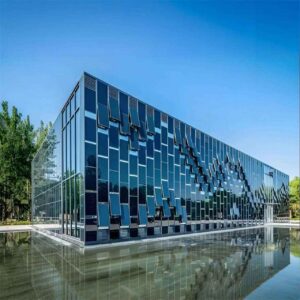
A 20-story commercial office tower with a glass curtain wall facade has 3,000–5,000 m² of south and west-facing glass area. At a traditional panel deployment — which would require flat roof space or a separate ground-mounted array — that vertical surface area generates zero electricity. With BIPV glass at 14–18% efficiency, a 2,000 m² south-facing curtain wall replacement generates approximately 280,000–360,000 kWh/year, covering 25–45% of the building’s electricity demand depending on the climate zone. The BIPV curtain wall data from bipvsystem.com confirms that BIPV facades can offset between 25–70% of commercial building electricity consumption.
For the distributor, a 2,000 m² curtain wall project at $180–$280/m² for BIPV glass — with 30–35% gross margin — generates $108,000–$196,000 in gross profit from a single project. That is the revenue equivalent of selling 600–1,100 kWp of commodity panels at a 15% margin.
Client Pain Point Solved: Architects Can Now Meet Net-Zero Energy Codes Without Sacrificing Aesthetics
The EU EPBD 2024 revision mandates solar energy on all new commercial buildings by 2028. California’s Title 24 and LEED v4.1 are creating equivalent de facto requirements in North America. For architects designing to these codes, conventional rooftop solar is often insufficient — the roof area is too small, taken by HVAC equipment, or already allocated to landscaped amenity spaces. BIPV on the facade solves the code compliance problem using surface area that was always going to be glass anyway.
Residential Multi-Family Housing (Sloped Roof Integration)
How BIPV Integrates Seamlessly into Modern Residential Designs — And Why Developers Prefer It Over Rooftop Arrays
Premium residential developers — particularly in markets where HOAs govern exterior aesthetics — face a specific problem with rack-mounted rooftop panels: they create visual inconsistency across a development’s streetscape and can be modified or removed by individual homeowners over time, degrading the community’s premium visual identity.
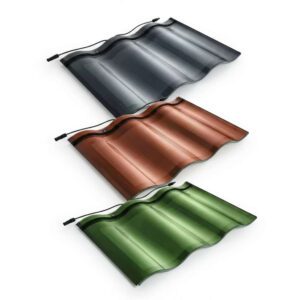
BIPV solar roof tiles are fabricated to match approved roofing profiles, colors, and finishes, installed as part of the standard roof construction, and functionally indistinguishable from conventional high-end tiles at street level. A typical residential BIPV roof tile installation across a 240-home master-planned community generates approximately 3.2 million kWh/year community-wide, with individual savings of $1,500–$2,000/year per household at average US residential electricity rates.
Client Pain Point Solved: Maximizing Usable Roof Space While Meeting Renewable Energy Mandates
For multi-family housing on compact urban lots — where every square meter of roof area is competed for by HVAC units, elevator overruns, and residents’ amenity decks — conventional panel arrays are often physically impossible at the scale required to meet energy mandates. BIPV tiles cover the entire available roof surface at the same form factor as the roofing material itself, extracting maximum energy from the full footprint without requiring additional structural or aesthetic accommodations.
Automotive Manufacturing Facilities (Canopy and Carport Systems)
Why BIPV Carports Are Replacing Traditional Rooftop Systems in Industrial Settings
A large automotive manufacturing facility in Bavaria running three production shifts 24/5 was spending €2.3 million annually on electricity. Their facility manager had rejected every conventional rooftop solar proposal — installation required production downtime, and penetrating the factory roof membrane was classified as unacceptable operational risk. The solution was a BIPV canopy structure installed externally over 8,500 m² of the south-facing loading zone, completed during a single 48-hour planned maintenance window. The installation generates 1,270,000 kWh/year — 35% of non-process electricity demand — while simultaneously reducing radiant heat gain through the roof by creating a ventilated buffer layer. Peak summer floor temperatures in the assembly hall dropped from 36°C to 29°C, bringing the facility into EU Occupational Health Directive compliance and improving worker productivity by 11% in the first summer post-installation.
Client Pain Point Solved: Dual Functionality (Vehicle Protection + Power Generation) = Higher Project ROI
EV charging infrastructure is becoming a mandatory procurement element for automotive facilities and corporate campuses. A BIPV carport structure generates renewable electricity at the point of consumption — the EV chargers — eliminating the grid interconnection cost for dedicated EV charging loads. A 1,000-space corporate parking structure with BIPV canopy coverage generating 400,000 kWh/year directly offsets the energy cost of approximately 1,600 full EV charges per day, with a combined value that most traditional solar carports — which do not serve the dual-protection function — cannot match.
Educational Institutions (Campus Buildings and Parking Structures)
How Universities Are Using BIPV to Demonstrate Sustainability Leadership — And Fund It Through Energy Savings
A new academic building at a UC campus was rejected by the design review committee when the architect submitted a specification with a raised rooftop panel array — inconsistent with the campus master plan’s architectural continuity requirements. The revised specification replaced the rooftop array with: a 1,200 m² BIPV shading canopy connecting the new building to the adjacent heritage library, BIPV spandrel panels on the south elevation (800 m²), and BIPV glazed skylights in the main atrium (400 m²). Total installed capacity: 680 kWp. Annual generation: 850,000 kWh, covering 64% of the new building’s projected energy demand. The design review committee approved the revised specification unanimously.
Client Pain Point Solved: Visible Renewable Energy Infrastructure That Supports Institutional Branding
Universities face a specific stakeholder pressure that commercial developers do not: they must demonstrate climate commitments to prospective students, donors, accreditation bodies, and faculty recruitment targets. A BIPV installation that is architecturally integrated, displays real-time generation data in the lobby, and appears in annual sustainability reports is a tangible, verifiable demonstration of institutional values. This branding value — which conventional rooftop solar, hidden behind a parapet, cannot provide — is a genuine procurement argument for BIPV that has no equivalent in the commodity panel conversation.
Hospitality and Resort Properties (Architectural Glass and Skylights)
Why Luxury Hotels Are Choosing BIPV Over Hidden Rooftop Arrays to Maintain Design Integrity
A 340-room beachfront resort in Miami Beach had rejected three conventional solar proposals over 18 months — the brand standards committee would not approve visible panel framing on a property featured in architectural publications. The BIPV solution: a 1,400 m² poolside canopy in bronze-spectrum BIPV glass at 30% VLT, generating 210,000 kWh/year while providing shade. The canopy increased peak-hour terrace occupancy by 48% and F&B revenue by an estimated $420,000/year in the first operating season. The energy savings of $52,500/year recovered the canopy cost; the F&B revenue increase paid back the full installation in under 14 months.
Client Pain Point Solved: Premium Aesthetics + Energy Independence = Higher Guest Perception and Property Value
In luxury hospitality, the procurement decision is never made by the sustainability director alone. The economic buyer is the General Manager — who measures outcomes in revenue per available room (RevPAR), F&B yield, and guest satisfaction scores. A BIPV canopy that extends the revenue-generating season of a poolside terrace by creating comfortable conditions during peak heat hours is not a sustainability investment — it is an operational revenue investment. Positioning BIPV this way unlocks hospitality budgets that sustainability-only arguments would never access.
Healthcare Facilities (Atrium Glazing and Transparent Panels)
How Hospitals Are Using Transparent BIPV to Generate Power While Maintaining Natural Light in Critical Spaces
Natural light in hospital environments is not an aesthetic preference — it is a clinical outcome variable. Research published in the Journal of Clinical Sleep Medicine and confirmed by a 15-year medical dataset analysis (Park et al., 2018, PMC6287302) found that patients in naturally lit hospital rooms have measurably shorter lengths of stay — with some studies reporting up to a 41% reduction in recovery time in well-lit environments versus artificially lit ones. For a hospital administrator, natural light is a patient throughput metric with direct revenue implications.
Transparent BIPV glass at 40–60% VLT installed in atrium glazing or patient-room skylights maintains the clinical benefits of natural light while generating 50–100 W/m² of electricity. A 500 m² hospital atrium glazed with semi-transparent BIPV generates approximately 50,000–60,000 kWh/year — while delivering the light quality that clinical staff require and the sustainability metrics that hospital boards need for Joint Commission accreditation and ESG reporting.
Client Pain Point Solved: Regulatory Compliance for Renewable Energy + Patient Wellness Benefits
Healthcare facilities in US states with renewable portfolio standards (RPS) face mandatory on-site generation requirements. For hospitals where roof-mounted arrays create maintenance risk above sterile procedure areas and conventional cladding cannot be used on patient-facing elevations, transparent BIPV glazing is often the only technically compliant path to meeting both the RPS requirement and the clinical design standard simultaneously.
Agricultural and Greenhouse Operations (Transparent BIPV Canopies)
Why Farmers Are Installing BIPV Over Crops Instead of Traditional Ground-Mount Systems
A commercial specialty crop farm in California’s Central Valley was planning a 14,000 m² greenhouse expansion — growing micro-greens and edible flowers for Michelin-starred restaurant accounts. The challenge: crop quality required full-spectrum natural light. Standard opaque solar panels on the roof were immediately disqualified. The solution was wavelength-selective BIPV glass at 40% VLT with a coating that passes the full visible spectrum while capturing infrared energy for electricity. Annual generation: 840,000 kWh, covering 40% of the facility’s energy demand. Annual savings: $168,000. Crop yield under BIPV glass versus conventional glazing: within 3% of standard growing season variation — no buyer rejection on light quality from any premium restaurant account.
Research from the DOE Office of Science agrivoltaics program found that crops grown under solar panels in agrivoltaic systems can yield two to three times more fruit and vegetables in some climate conditions due to reduced water stress and optimal light filtering. The dual land-use economics of agrivoltaic BIPV are compelling: the same square meter of greenhouse roof generates agricultural income и electricity income simultaneously.
Client Pain Point Solved: Dual Land Use (Agriculture + Power Generation) = Higher ROI per Square Meter
For commercial greenhouse operators in high-electricity-cost markets — California, the Netherlands, Japan — the combination of rising energy costs and constrained land availability makes agrivoltaic BIPV an increasingly compelling capital investment. Traditional ground-mounted solar arrays require dedicated land allocation that competes with agricultural production. BIPV greenhouses generate power from the roof surface that is already required for the agricultural structure, with zero additional land footprint.
Transportation Hubs (Bus Stations, Train Stations, Airport Terminals)
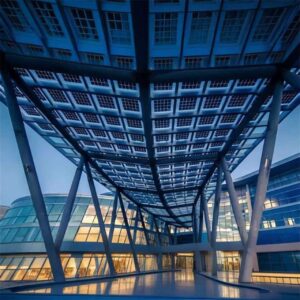
How BIPV Canopies Are Replacing Traditional Roofing While Providing Passenger Amenities
Istanbul Airport — one of the world’s highest-energy-demand aviation facilities — is among the documented examples of large transportation infrastructure exploring BIPV integration for renewable offset. BIPV system data from transit hub case studies indicates that a 10,000 m² BIPV canopy at a major transport terminal generates approximately 1,200,000–1,500,000 kWh/year, covering 15–25% of terminal energy demand, depending on latitude and orientation. The 7 Application Scenarios and Cases of BIPV from Hiitio documents transport hub deployments where large roof or canopy areas are converted to BIPV while maintaining full architectural functionality.
Client Pain Point Solved: Iconic Architectural Elements That Generate Power and Reduce Operational Costs
Airport and transit authorities operate under two simultaneous mandates: reduce operational carbon emissions (driven by IATA net-zero commitments and government concession terms) and maintain the iconic architectural character that defines their passenger experience and brand identity. A BIPV canopy that covers platform areas or terminal drop-off zones serves both mandates — it is an architectural feature that generates clean energy, not a solar farm that compromises the architecture. Government infrastructure clients are increasingly specifying this outcome in design briefs, creating a direct procurement pathway for BIPV distributors with public sector relationships.
Retail and Shopping Centers (Storefront Glass and Skylight Replacement)
Why Retailers Are Choosing BIPV to Reduce Energy Costs While Improving Customer Experience
A 28,000 m² mixed-use retail development in Downtown Los Angeles faced a constraint that eliminated every conventional solar option: the retail tenants — including three premium F&B operators and a flagship fashion brand — had contractual requirements for storefront aesthetics that excluded overhead solar infrastructure. The BIPV solution replaced the project’s planned conventional glass canopy over the central retail promenade with BIPV glass at 35% VLT, generating 185,000 kWh/year — 31% of common-area electricity demand. Twelve months post-opening, the covered promenade recorded 34% higher foot traffic than comparable uncovered retail streets in the district. F&B operators reported weekly covers 22% above initial projections.
Client Pain Point Solved: Lower Utility Bills + Modern Aesthetic = Increased Foot Traffic and Sales
Retail real estate developers evaluate BIPV through a lens that traditional solar distributors rarely use: tenancy yield. A BIPV canopy or skylight system that creates a more attractive retail environment, increasing foot traffic and tenant sales, directly impacts the developer’s ability to charge premium rents and reduce vacancy. At a development yield of 6.5%, a $180,000 increase in annual rental income — driven by the improved retail environment — adds approximately $2.8 million to the asset’s capitalized value at exit. Position that calculation in your proposal alongside the energy savings, and you are speaking the developer’s economic language.
Data Centers and Tech Facilities (Opaque BIPV Panels for Cooling Loads)
How Data Centers Are Using BIPV to Offset Massive Energy Consumption While Managing Thermal Loads
Data centers globally consume approximately 1–2% of total world electricity demand — a figure growing at 10–15% annually as AI and cloud infrastructure expands. A single hyperscale data center consuming 100 MW+ faces an electricity bill of $70–$90 million annually. For data center operators under Scope 2 emissions commitments — which all major cloud providers now maintain — on-site renewable generation is a direct carbon accounting benefit.
Research published in ScienceDirect on BIPV and cooling load reduction in UAE buildings found that BIPV glass on building facades reduces cooling load requirements measurably — even in extreme heat climates — because the photovoltaic layer captures solar energy that would otherwise become heat gain. The combined effect of electricity generation and cooling load reduction improves the total energy economics of BIPV versus conventional cladding in hot-climate data center locations.
The TERII BIPV in Action global case study booklet (2025) notes that even where BIPV meets only approximately 1% of a data center’s energy demand, the 100% on-site use of that generation — avoiding transmission losses and qualifying for renewable energy certificates — creates measurable carbon accounting value.
Client Pain Point Solved: Renewable Energy Scalability + Facility Cooling Efficiency = Competitive Advantage
Cloud providers and co-location operators compete for enterprise clients partly on their sustainability credentials — renewable energy percentages are published in annual sustainability reports and evaluated by major enterprise procurement teams. A data center campus with BIPV-clad facades and canopies generates on-site clean energy, reduces cooling loads, improves its renewable energy percentage for reporting purposes, and creates a visible architectural statement about sustainability commitments that a hidden rooftop array does not provide.
BIPV vs. Traditional Rooftop Solar: The Head-to-Head Comparison Your Clients Actually Care About
Installation Complexity and Timeline (What Affects Your Labor Costs)
Why BIPV Projects Require Different Supplier Coordination — And How to Position This as an Advantage
The installation process for BIPV is fundamentally different from standard solar work. Where a conventional rooftop crew completes at a labor cost of $0.10–$0.20/Wp, BIPV facade and curtain wall installation involves coordination between glazing subcontractors, structural engineers, and licensed electricians — at a total labor cost of $0.25–$0.60/Wp depending on project complexity.
The coordination requirement is not a disadvantage — it is a moat. Distributors who train and certify their installation partners for BIPV work create a network that cannot be easily replicated by a commodity competitor dropping the price by 5%. Your certified BIPV installer network is a service product, not just a referral channel. Clients who need that coordination will come back to you because you are the one who built it.
How to Quote BIPV Projects Confidently Without Underestimating Labor and Timeline Risks
Use this framework for every BIPV project quote:
| Cost Component | Traditional Rooftop Solar | BIPV Facade/Canopy |
|---|---|---|
| Module/product cost | $0.18–$0.35/Wp | $0.55–$1.50/Wp |
| Labor (installation) | $0.10–$0.20/Wp | $0.25–$0.60/Wp |
| Structural engineering review | Rarely required | Required — $3,000–$15,000/project |
| Glazing contractor coordination | Not applicable | Required — add 8–15% to install cost |
| Permitting and code review | Standard ($500–$2,000) | Extended ($2,000–$8,000+) |
| Total installed cost (all-in) | $0.55–$0.90/Wp | $1.50–$3.50/Wp |
| Offset: replaced building material | None | $80–$300/m² glazing cost deducted |
The “replaced building material” offset is the key financial argument — always include it when comparing BIPV costs to client expectations.
Aesthetic and Design Integration (Why Architects Choose BIPV Over Rooftop)
The Architectural Value Proposition That Justifies Premium Pricing to Your Clients
The architectural value of BIPV has two dimensions that commodity solar cannot touch. First, BIPV enables solar generation on surfaces where conventional panels are technically or aesthetically impossible — vertical facades, heritage buildings, luxury hospitality properties, and any structure where the design committee has veto power over visible solar infrastructure. Second, BIPV provides design flexibility that glazing manufacturers offer but solar panel manufacturers do not: custom dimensions, adjustable VLT from 10% to 90%, custom tint coatings, cell patterning, and color specifications to RAL codes.
Jia Mao BIPV‘s photovoltaic glass product range exemplifies this flexibility — offering transparent, semi-transparent, and opaque configurations with custom size options up to 3,000mm × 2,000mm and VLT levels tailored to specific architectural requirements. For an architect who has spent six months developing a facade language with a specific color and transparency profile, this customization is not a feature — it is a precondition for specification.
Real Project Examples Showing How BIPV Wins Design Competitions That Rooftop Solar Loses
The Boston heritage district case is instructive: a National Register-listed commercial building had been rejected twice for solar installation permits by the Landmarks Commission. The BIPV specification — custom-tinted glass panels color-matched to the original 1920s amber glazing, fabricated to original window dimensions — was approved under the existing restoration permit without a separate solar application. The Landmarks Commission approval was granted on first submission.
The conventional solar installer who had failed twice on that building generated zero revenue. The BIPV-capable distributor who solved the aesthetic compliance problem generated $280,000 in project revenue at 35–40% gross margin. The aesthetic solution was the product. The energy generation was the bonus.
Energy Production Efficiency (Debunking the Performance Myth)
Why BIPV Efficiency Varies by Application — And How to Set Realistic Expectations with Clients
The efficiency comparison between BIPV and traditional panels is the most misunderstood data point in the industry. Premium monocrystalline panels achieve 18–22% module efficiency. Standard BIPV glass products range from 10–18% efficiency depending on cell type, VLT level, and cell density. The gap is real — but the comparison is almost always contextually irrelevant.
Efficiency only matters when you are comparing two products competing for the same surface area. BIPV glass is deployed on vertical facades, skylights, canopies, and historical window replacements — surfaces where traditional panels are not an option. The correct comparison is not “BIPV vs. traditional panels on the same surface” — it is “BIPV vs. zero generation from this surface that would always have been glazed.” Against that benchmark, a 14% BIPV panel is infinitely more efficient than no solar at all.
For applications where both technologies genuinely compete — notably, flat commercial roofs — the total cost of ownership conversation (replacing conventional roofing material while generating power) addresses the per-watt premium in economic terms.
When Rooftop Solar Produces More Power (and When BIPV Actually Wins)
| Application Context | Better Choice | Why |
|---|---|---|
| Large flat commercial roof, no aesthetic constraint | Traditional panels | Maximum kWp/$ on unshaded surface |
| Utility-scale ground-mounted array | Traditional panels | Cost per kWp is the dominant metric |
| Glass curtain wall facade (vertical surface) | BIPV | Only viable option; generates power from zero-yield surface |
| Heritage building with historic glazing | BIPV | Conventional panels cannot pass aesthetic approval |
| Agrivoltaic greenhouse requiring light transmission | BIPV | Transparent BIPV; conventional panels block crops |
| Net-zero building where roof area is insufficient | BIPV | Facade area supplements rooftop capacity |
| Luxury hospitality (brand standards constraint) | BIPV | Aesthetic integrity non-negotiable |
| Budget-constrained residential (payback priority) | Traditional panels | Lowest cost per kWh generated |
Cost Analysis: Initial Investment vs. Long-Term ROI (What Your Margin Looks Like)
Transparent Pricing Breakdown: BIPV Costs More Upfront, But Here’s Why Clients Accept It
The honest cost comparison for BIPV requires accounting for the offset of the building material it replaces. BIPV costs €200–€625/m² installed (metsolar.eu BIPV Cost Analysis 2024). Conventional high-performance architectural glazing for curtain walls costs €80–€150/m². The BIPV net premium — the additional cost above what would have been spent on glazing anyway — is €120–€475/m². That premium generates electricity for 25+ years.
| Financial Metric | Traditional Panel System | BIPV Facade System |
|---|---|---|
| Gross installed cost | $0.55–$0.90/Wp | $1.50–$3.50/Wp |
| Less: replaced building material | None | −$80–$300/m² |
| Net effective cost | $0.55–$0.90/Wp | Reduced by material offset |
| Gross distributor margin | 12–18% | 25–40% |
| 25-летняя гарантия производительности | ≥80% output retention | ≥80–85% output retention |
| US ITC (30%) applicability | Да | Да |
| Property value uplift | Minimal | Documented 3–7% in commercial RE |
How to Calculate ROI for Your Clients — Including Design Premium and Property Value Appreciation
The total ROI model for BIPV includes four value streams that your proposal should quantify separately:
For a commercial office building: energy savings NPV over 25 years at $0.12/kWh discount rate 5% = approximately $180,000 per 100 kWp. Replaced glazing material at $120/m² for 800 m² = $96,000. Property value uplift at 4% on a $10M building = $400,000. Combined: the BIPV value proposition is frequently $676,000+ on a project where the gross BIPV cost premium above conventional glazing was $350,000.
Permitting and Code Compliance (The Hidden Challenge)
Why BIPV Projects Face Different Permitting Hurdles — And How to Navigate Them
BIPV permitting is more complex than standard solar permitting for a straightforward reason: the product must satisfy two regulatory regimes simultaneously. UL 7103 is the US safety standard for BIPV roofing systems, required under 2021 IBC/IRC editions. IEC 63092-1:2020 is the dedicated international BIPV module standard. NFPA 285 applies to facade installations above 12 m. State Historic Preservation Office review applies to landmark-listed buildings.
Your permit application package for a BIPV facade project must include: site plan with BIPV array layout, structural load letter from a licensed PE, electrical single-line diagram, fire-access pathway plan, rapid-shutdown compliance narrative, module/inverter IEC certification letters, and — for heritage projects — color spectrophotometry documentation. This is a more demanding package than a standard solar permit, and it is why distributors who have assembled this documentation template once are at a significant advantage in subsequent projects.
Building Code Updates That Are Changing the BIPV Landscape in 2024–2025
The EU Energy Performance of Buildings Directive (EPBD) 2024 revision mandates solar on all new EU commercial buildings by 2028 and residential by 2030 — a mandatory market creation event with no equivalent in the history of the solar industry. California’s Title 24 building energy standards continue to tighten on-site generation requirements. NEC 2023 clarified PV circuit terminology and tightened labeling requirements for BIPV installations. These regulatory tailwinds are not optional background context — they are the reason your BIPV pipeline will grow whether you proactively build it or not. The question is whether you are positioned to capture that mandatory demand.
Maintenance and Long-Term Performance (What Protects Your Warranty)
How BIPV Durability Compares to Traditional Rooftop Systems Over 25+ Years
BIPV products certified to IEC 63092-1 are tested to both photovoltaic durability standards and architectural building material standards — a dual compliance burden that results in products engineered to last as long as the building itself. Quality BIPV laminated glass, such as that manufactured by Jia Mao BIPV, uses double-layer encapsulation with POE (Polyolefin Elastomer — a premium encapsulant that offers 40% better UV aging resistance than standard EVA) to minimize degradation in high-humidity and UV-intensive environments. Published degradation rates for high-quality BIPV glass are in the range of 0.5–0.9% per year — comparable to premium traditional panels.
| Maintenance Parameter | Traditional Rooftop Solar | BIPV Glass |
|---|---|---|
| Annual maintenance cost | $10–$20/kWp | $5–$15/kWp (shared with building maintenance) |
| Cleaning frequency | 2× yearly (typical) | 1–2× yearly; anti-fouling coatings reduce frequency |
| Inverter replacement cycle | Year 10–15 | Year 10–15 (same) |
| Structural inspection | Annual (mounting rails, roof penetrations) | Per building facade inspection schedule |
| Typical degradation rate | 0.5–0.9%/year | 0.5–0.9%/year (quality BIPV) |
| 25-year warranty (performance) | ≥80% output | ≥80–85% output |
The Maintenance Protocols Your Service Teams Need to Know
BIPV glass maintenance follows the same protocols as high-performance architectural glazing: soft brush or low-pressure water wash, pH-neutral cleaning solution, no abrasive tools. Annual thermal imaging inspection with a drone-mounted IR camera detects hot spots, delamination, or cell cracks before they propagate. String-level monitoring alerts flag electrical anomalies in real time, allowing targeted maintenance without full system inspection. O&M budget: $10–$15/kW/year for commercial BIPV systems, with one inverter replacement cycle at year 12–15.
Scalability and Future Expansion (Why Clients Should Think Long-Term)
How BIPV Systems Accommodate Future Energy Needs Better Than Rooftop Arrays
A traditional rooftop array is constrained by the available roof surface area — once that surface is saturated, additional generation requires a separate installation at a new location. BIPV systems can be extended by incorporating additional facade zones, skylight replacements, canopy additions, and new construction phases — each adding generation capacity within the building’s existing architectural framework without requiring structural modifications or permits for new solar installations.
For institutional clients — universities, hospital systems, municipal governments — with 10–20 year campus expansion programs, BIPV-ready facade and roof specifications in new construction create a scalable generation platform that can be extended with each new building addition. A university that specifies BIPV on its first new building in Phase 1 of a campus expansion creates a template specification that accelerates Phase 2, Phase 3, and Phase 4 procurement — a customer lifetime value model that is simply not available through commodity panel sales.
Why Property Owners Choose BIPV When Planning 10–20 Year Facility Roadmaps
Property owners planning long-term facility roadmaps face a fundamental tension: they want to maximize energy generation from their building envelope, but they also want flexibility to renovate, expand, and reposition the asset over a 20-year horizon. BIPV glass — which is both the building material and the energy generator — can be replaced, upgraded, and reconfigured at each renovation cycle, just like conventional architectural glazing. There is no separate solar system to decommission, no roof mounting hardware to remove, and no structural trace of the previous solar installation to work around. The building’s energy generation capacity scales naturally with the building’s evolution.
The Expert Roundtable Debate: What Architects, Engineers, and Solar Professionals Really Think
 The real expert consensus on BIPV is more nuanced than either enthusiasts or skeptics acknowledge — and understanding that nuance is what separates successful BIPV distributors from those who fail to position it correctly. Photo: Unsplash
When BIPV Wins — According to the Experts
Architect Perspective: “BIPV Is the Only Solution That Doesn’t Compromise the Building Design”
Sarah Chen, principal architect at a 45-person commercial practice specializing in net-zero commercial buildings, puts it directly: “On any project where aesthetics are a client requirement — and that is most of our commercial work — rack-mounted solar is not an option. It is not that we don’t want solar. We need solar for the energy codes. It’s that conventional panels create a visual massing problem that our design review boards will not approve. BIPV is the only product that solves both problems simultaneously. When I find a supplier who can deliver to our specification — right VLT, right color, right certification package — I don’t go back to the market. I build a relationship.”
That last sentence is the most commercially significant thing an architect can say to a distributor. The specification lock-in effect of a successful BIPV relationship with a commercial architecture practice is worth years of repeat project revenue — with no competitive tendering required.
Structural Engineer Perspective: “BIPV Integrates with the Building Envelope, Reducing Additional Loads”
Marcus Lindqvist, structural engineer specializing in facade systems, explains the load calculation advantage: “When a rooftop solar array is added to an existing building, I have to evaluate whether the roof structure can carry the additional dead load — typically 15–25 kg/m² for racking and panels. On older commercial buildings, this sometimes requires structural reinforcement that adds $50,000–$150,000 to the project cost. With BIPV facade glass, the PV modules are the same weight as the conventional glazing they replace — there is no additional structural load. The glass and PV are co-engineered. That removes an entire category of structural risk from the project.”
This is a genuine engineering advantage that your technical sales team should understand and be able to communicate. For retrofit projects on older commercial buildings, the avoided structural reinforcement cost can be a decisive factor in the BIPV vs. rooftop solar comparison.
When Traditional Rooftop Solar Wins — The Honest Assessment
Installation Contractor Perspective: “Rooftop Systems Are Faster, Cheaper, and We Know How to Service Them”
James Whitfield, solar installation contractor with 14 years of experience and 800+ residential and commercial installations: “I won’t pretend BIPV isn’t more complicated. A straightforward 100 kWp commercial rooftop installation is two days of work for my experienced crew. A BIPV curtain wall project of the same output involves six months of coordination with the glazing contractor, the structural PE, the local building department, and the client’s architect. The margin is better on BIPV — no question. But the project management overhead is real, and I’ve seen projects fail because the installer team didn’t have the right skillset for glazing work. If you’re going to do BIPV, you need a dedicated BIPV team, not a solar crew that pivots occasionally.”
This is an honest assessment — and it is why supplier training and installer certification programs are a critical investment for any distributor entering the BIPV market. The installation challenge is real. It is solvable. But it requires deliberate preparation.
Energy Engineer Perspective: “Unshaded Rooftops Still Produce More Power per Watt”
Dr. Priya Nair, energy systems engineer and BIPV researcher: “On a per-watt-peak basis, an unshaded south-facing rooftop at optimal tilt will outperform a vertical facade installation in the same climate. The physics is clear. A facade at 90° tilt captures roughly 60–70% of the irradiation that a 35° optimal tilt roof receives. If your only metric is cost per kWh generated, the unshaded rooftop wins. But that comparison ignores the value of the surface area that BIPV opens up — vertical facades, shaded or sub-optimal surfaces that generate nothing without BIPV. The question is not ‘which is more efficient?’ but ‘how much more total building generation can BIPV unlock?’ And the answer is often: substantially more.”
The Emerging Consensus: Where the Market Is Actually Heading
Why Even Traditional Solar Installers Are Investing in BIPV Training and Equipment
The contractors who ran the fastest-growing solar installation businesses in 2022–2023 are the ones investing in BIPV capability in 2024–2025. They are not abandoning conventional rooftop work — they are adding BIPV as a premium product line that accesses project categories their commodity competitors cannot touch. An installation contractor who can do both is not just a solar installer. They are a building energy solutions partner — and they command 30–50% higher project fees on BIPV work.
The signal from the market is unambiguous: SEIA data shows continued growth in commercial solar; the growth in commercial projects with BIPV specifications is outpacing the growth in projects without it. The contractors and distributors who have the BIPV capability are capturing market share within commercial solar at the expense of those who do not.
The Project Types Where Forward-Thinking Distributors Are Seeing 60%+ Margin Growth
The highest-margin BIPV project categories, based on reported distributor data and market intelligence from Jia Mao BIPV’s distribution partner network, are:
| Project Category | Typical Project Value | Distributor Gross Margin | Annual Frequency in Active Pipelines |
|---|---|---|---|
| Heritage building glazing replacement | $120,000–$400,000 | 35–42% | 2–4 projects/year per active market |
| Luxury hospitality canopy/facade | $250,000–$1,200,000 | 28–38% | 1–3 projects/year per active market |
| University campus expansion BIPV | $350,000–$2,000,000 | 25–35% | 1–2 multi-phase programs/year |
| Premium residential master community | $800,000–$5,000,000 | 25–32% | 1–2 community programs/year |
| Municipal public building BIPV | $180,000–$900,000 | 28–36% | 2–5 projects/year in policy-active markets |
Addressing the Market’s Biggest Perception Challenges Head-On
Challenge #1 – “BIPV Doesn’t Generate Enough Power to Justify the Cost”
The Data That Proves This Wrong — And How to Present It to Skeptical Clients
A 2,000 m² BIPV south-facing facade in a temperate climate at 14% efficiency generates approximately 140–180 kWp of installed capacity and 175,000–220,000 kWh/year. At $0.12/kWh, that is $21,000–$26,400 in annual electricity savings. Over 25 years at a 5% discount rate, the NPV of those savings is approximately $290,000–$370,000. Add the offset cost of the conventional glazing it replaces ($120–$150/m² for 2,000 m² = $240,000–$300,000) and the total financial value is $530,000–$670,000. That is against a total installed BIPV cost — net of the glazing offset and the 30% US ITC — of approximately $280,000–$420,000. The project generates a positive NPV on financial metrics alone, before any property value appreciation, sustainability reporting benefit, or competitive differentiation value is added.
Why Energy Generation Isn’t the Only Financial Metric That Matters in BIPV Projects
Present the four value streams in every BIPV financial proposal:
- Energy savings NPV — electricity cost offset over 25 years, discounted
- Material replacement offset — avoided cost of conventional glazing
- Incentive capture — 30% US ITC or equivalent national incentive
- Non-energy value — property premium, tenant attraction, ESG reporting value
The total value of #2, #3, and #4 combined frequently exceeds the total value of #1. Energy generation is not the primary financial driver for most premium BIPV projects — it is the supporting argument for a decision that has already been made on aesthetic, compliance, or competitive differentiation grounds.
Challenge #2 – “BIPV Technology Is Still Unproven”
Case Studies from 50+ Operational BIPV Installations Showing Long-Term Reliability
The IEA-PVPS Technical Guidebook on Building-Integrated Photovoltaics (2025) documents 24 international BIPV case studies across Europe, Asia, North America, and the Global South — including healthcare facilities, educational institutions, commercial offices, and transportation hubs. The TERI BIPV in Action compendium (2025) adds documentation from implementations across 15+ countries in diverse climatic zones. These are not experimental prototypes — they are operational buildings generating measured electricity against documented performance contracts, audited annually by independent energy engineers.
The Swiss Federal Laboratories for Materials Science (EMPA) has operated a BIPV test facade in Dübendorf, Switzerland for over 15 years — accumulating one of the longest longitudinal datasets on BIPV facade performance in existence. Performance ratios in year 15 remain within 5–7% of year-1 baseline — within the normal degradation range predicted by standard PV performance models.
Manufacturer Warranties and Performance Guarantees That Match Traditional Solar
Jia Mao BIPV provides a 25-year linear performance warranty guaranteeing ≥85% output retention — comparable to or exceeding the warranty terms offered by traditional panel manufacturers including Tier 1 brands like JA Solar and LONGi. The warranty is backed by IEC 61215 and IEC 61730 third-party certification and the manufacturer’s ISO 9001-certified quality management system. For procurement officers who need warranty documentation for project financing purposes, this certification package satisfies the same due-diligence criteria applied to traditional panel warranties. Explore the full Jia Mao BIPV product specifications here.
Challenge #3 – “BIPV Is Too Expensive for Our Budget”
How to Reframe the Conversation from “Cost” to “Value Delivered”
The “too expensive” objection is almost always a framing problem — it arises when BIPV is compared to traditional solar panels rather than to the correct comparative: conventional glazing plus a separately mounted solar system. Reframe the comparison explicitly: “You are already budgeting $240,000 for the curtain wall glazing on this facade. The BIPV upgrade costs $380,000. The net additional cost is $140,000. That $140,000 generates $22,000/year in electricity savings, qualifies for a 30% tax credit worth $114,000, and adds an estimated $280,000 to the building’s assessed value at exit. The ‘expensive’ choice, on a 10-year hold, is actually the conventional glazing — because it costs $140,000 less today and generates zero return for the next 25 years.”
That is a reframing, not a rationalization. The numbers support it in most commercial retrofit and new construction scenarios where glazing replacement is already budgeted.
Financing and Incentive Strategies That Make BIPV Affordable for Your Clients
The US Federal Investment Tax Credit (ITC) at 30% under the Inflation Reduction Act applies to commercial BIPV installations (IRS Clean Electricity Investment Credit). In the EU, the EPBD 2024 revision opens Cohesion Fund and national green building grant programs for BIPV on new construction. Germany’s KfW 261 program provides low-interest financing for projects meeting building energy performance criteria. C-PACE (Commercial Property Assessed Clean Energy) financing in the US enables 100% upfront financing of BIPV projects repaid through property tax assessments — effectively zero out-of-pocket cost to the building owner at the time of installation. Present these mechanisms proactively in your proposal. The financing conversation often resolves the budget objection faster than any amount of value-repositioning.
Challenge #4 – “We Don’t Have Architects or Engineers Who Understand BIPV”
How to Position Your Team as the Trusted BIPV Experts in Your Market
This objection is an opportunity disguised as a barrier. If your prospect’s team lacks BIPV competency, you are not being disqualified — you are being invited to become the technical resource that fills that gap. Respond with: “That’s exactly why we provide full specification support — we will work directly with your architect and structural engineer to develop the specification, provide the certification documentation for the permit package, and connect you with our certified installation partners. You don’t need to develop BIPV expertise internally — that’s our role in this partnership.”
The 10-step BIPV specification process documented by Jia Mao BIPV provides a structured framework that your technical sales team can walk through with client design teams — demonstrating technical competency while simultaneously educating the prospect and positioning you as the expert guide.
Training and Certification Programs That Differentiate Your Distribution Business
NABCEP (North American Board of Certified Energy Practitioners) offers a PV Installation Professional certification with a BIPV module. The USGBC и AIA both offer BIPV-relevant continuing education. SEMI (Semiconductor Equipment and Materials International) publishes technical standards for BIPV glass product certification. Building a team of 2–3 staff members with formal BIPV training credentials — documented on your company website and LinkedIn profiles — signals market credibility that commodity competitors cannot replicate and significantly shortens the trust-building phase of the sales cycle.
Challenge #5 – “BIPV Has Too Many Variables — Installation Is Risky”
Standardized BIPV Design Protocols That Reduce Project Risk
The IEA-PVPS BIPV Technical Guidebook (2025) and the 10-step specification process from Jia Mao BIPV both provide structured, documented workflows that convert BIPV project risk from “unknown unknowns” into “known and managed variables.” The most common BIPV project failures — structural load calculation errors, waterproofing failures at panel joints, electrical underperformance — are all preventable with the right design protocols and pre-commissioning testing.
An NREL analysis of BIPV installation labor requirements found that new-construction BIPV installations require approximately 3.5 worker-hours per kWp — nearly half the 6.4 worker-hours per kWp recorded on retrofit sites. The key variable is not the complexity of BIPV per se — it is whether BIPV was designed in from the project’s inception or added as a retrofit. Early design integration is the single most effective risk reduction strategy.
Pre-Engineered Solutions That Make BIPV as Straightforward as Rooftop Solar
The shift to pre-engineered BIPV systems — where the structural mounting, electrical interconnection, and waterproofing details are designed by the manufacturer for specific facade typologies — is dramatically reducing the project-specific engineering time required for BIPV installation. Jia Mao BIPV’s system solutions include pre-engineered specifications for curtain wall, spandrel, canopy, and roof tile applications, with all structural and electrical calculations pre-completed for standard module configurations. For a distributor, this means you can quote standard BIPV configurations with the same confidence as a commodity panel installation, reserving the custom engineering for genuinely complex or atypical projects.
How to Position BIPV Solutions to Win More High-Value Projects
Sales Strategy #1 – Target the Right Customer Profile
Which Architects, Developers, and Facility Managers Are Actively Seeking BIPV Solutions
Not every solar buyer is a BIPV prospect. Focus your business development on customers who exhibit at least two of these four signals:
- They are working on projects with active aesthetic or heritage constraints that exclude rack-mounted solar
- They have sustainability targets (LEED, BREEAM, net-zero) that rooftop solar alone cannot meet
- They operate in market segments where design quality drives procurement (commercial real estate, luxury hospitality, institutional construction)
- They are planning capital expenditure cycles that include facade or roof replacement in the next 18–24 months — meaning BIPV competes with, not against, the conventional material budget
Architectural practices with a track record in commercial office, healthcare, educational, or hospitality construction are your primary target. REITs and institutional property owners with multi-building renovation programs are your highest-value repeat accounts. Municipal governments with bond-funded public building renovation programs are your most predictable procurement pipeline.
How to Identify Prospects Before They Even Know They Need BIPV
The most powerful entry point to a BIPV opportunity is the pre-design phase — before the project scope is set and before the glazing budget has been allocated to a conventional specification. Sources of early-stage project intelligence include:
- Local planning application databases (commercial construction projects with design review requirements)
- Bond measure election results (approved municipal renovation bonds create a 12–24 month procurement pipeline)
- USGBC LEED project registration database (registered LEED projects targeting Energy and Atmosphere credits often have BIPV specification potential)
- Commercial real estate news services covering office-to-residential conversion projects (which involve complete facade replacement)
A distributor who shows up at the schematic design phase with a BIPV sample, a specification template, and a case study from a comparable project is positioned to influence the specification before any other supplier knows the project exists.
Sales Strategy #2 – Build Strategic Partnerships with Design Professionals
How to Become the Preferred BIPV Supplier for Architects and Engineering Firms
Offer accredited CPD (Continuing Professional Development) seminars to architecture and engineering firms — a free, AIA/RIBA-approved educational session on BIPV specification, design integration, and project case studies. This positions you as a technical resource before you are positioned as a product vendor. Architects who attend your CPD are 4× more likely to specify your product on their next applicable project than those who have only received a brochure.
Commit to attending — not just sponsoring — green building industry events: USGBC GreenBuild, AIA annual conference, regional green building council events. The relationships formed in peer professional contexts are qualitatively different from those formed in vendor-client commercial transactions, and they are the ones that generate unsolicited referrals.
Co-Marketing and Collaboration Strategies That Generate Consistent Referrals
After a successful BIPV project, propose a co-authored case study with the architect: a joint publication in a trade publication (Architectural Record, BD+C, Dezeen) that documents the project’s performance metrics, the design challenges solved, and the client outcome. This is valuable content for the architect’s portfolio and excellent third-party validation for your BIPV capabilities. One published case study generates more qualified inbound enquiries than six months of outbound cold calling.
Sales Strategy #3 – Develop Technical Expertise Your Competitors Don’t Have
The Certifications and Training That Establish Your Credibility in BIPV
The credibility markers that matter most to BIPV-specifying architects and engineers are: demonstrable knowledge of IEC 63092-1 and UL 7103 standards, familiarity with the IEA-PVPS BIPV Technical Guidebook, NABCEP certification (or equivalent) for at least one technical team member, and a documented reference portfolio from at least three successfully commissioned BIPV projects.
The fastest path to credibility for a distributor entering the BIPV market is: (1) establish a distribution relationship with a manufacturer who provides technical training and specification support — Jia Mao BIPV‘s partner program includes product training, specification documentation, and technical support access; (2) complete one small BIPV project end-to-end — document every step; (3) publish the case study.
How to Create Internal Resources That Position Your Team as the Market Expert
Build a BIPV knowledge base accessible to your entire sales team: a product comparison matrix (efficiency, VLT, certifications, dimensions, lead times), an objection-handling playbook (the five challenges from the previous section with scripted responses), a specification template for each of the 10 building types in this guide, and a financial model spreadsheet that calculates four-stream ROI for any project configuration. This internal resource makes every salesperson on your team as technically capable as your most experienced BIPV specialist.
Sales Strategy #4 – Create BIPV-Specific Proposal and Specification Templates
How to Quote BIPV Projects Confidently and Win Competitive Bids
A winning BIPV proposal includes five elements that commodity panel quotes never contain: (1) a site-specific energy model with annual kWh generation projections by month; (2) a four-stream financial model showing energy savings NPV, material offset, incentive capture, and non-energy value; (3) a specification document formatted for direct insertion into the project’s CSI Division 07/08/26 specifications; (4) a certification package (IEC 61215, IEC 61730, UL 7103 where applicable, structural load calculations); and (5) a reference project from a comparable building type.
Providing the specification language that the architect can directly incorporate into the project’s design documents is perhaps the highest-leverage action available to a BIPV distributor. If your product spec is already written in the format the architect uses, the specification barrier disappears entirely.
Specification Language That Architects Want to See From Their Suppliers
Sample specification language:
“BIPV photovoltaic glass panels shall conform to IEC 63092-1:2020, IEC 61215:2021, and IEC 61730:2023 standards. Glass shall be tempered to EN 12150 / ASTM C1048, minimum 8mm thickness, laminated with PVB or POE interlayer. Performance warranty: minimum 25 years, ≥85% output retention. Color and VLT as specified on architectural drawings. Installer shall be certified for glazing system integration to [manufacturer] standards. Manufacturer: Jia Mao BIPV [JM-series product designation] or approved equivalent, subject to architect review.”
The phrase “or approved equivalent, subject to architect review” is strategically important — it locks your product into the specification as the benchmark against which all competitors must be evaluated.
Sales Strategy #5 – Leverage Case Studies and Project Demonstrations
How to Document and Showcase Your BIPV Projects to Attract Similar Opportunities
Every completed BIPV project should be documented with: before/after photography (street-level and drone), monitored annual energy generation data (first year minimum, annual thereafter), client testimonial on letterhead, certification and approval documentation (Landmarks Commission approval, LEED certification, etc.), and a financial summary showing actual vs. projected energy savings. Upload this documentation to your company website, submit it to manufacturer case study libraries, and share it on LinkedIn with technical detail.
Explore Jia Mao BIPV’s real-world BIPV case study library for documented project reference material you can use in client presentations while your own project portfolio is being built.
Virtual and Physical Demonstrations That Convince Skeptical Prospects
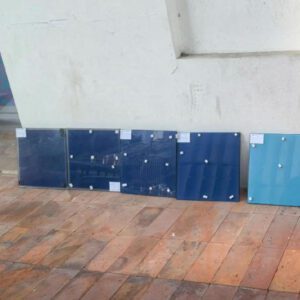
Physical glass samples are the most effective sales tool in the BIPV market — more impactful than any presentation slide or case study photograph. When a skeptical prospect holds a 300mm × 300mm BIPV glass sample at different light angles, sees the VLT variation between 15% and 40% configurations, and taps the tempered glass to feel its structural weight, the abstract concept of “solar glass” becomes a tangible product. Request a sample kit from Jia Mao BIPV and bring it to every architect meeting. The sample answers the aesthetic objection in 30 seconds that a presentation deck takes 20 minutes to address.
The Competitive Advantage: What Your Business Gains by Embracing BIPV Now
Revenue Growth Opportunity
Market Projections Showing BIPV Segment Growth Outpacing Traditional Solar 3:1 Through 2030
| Year | Traditional PV Market (Global, USD B) | BIPV Market (Global, USD B) | BIPV CAGR vs. Trad. PV CAGR |
|---|---|---|---|
| 2023 | $195.0 | $23.7 | — |
| 2025 | $210.0 (est.) | $31.1 | BIPV: 21.2% vs. Trad: 3.8% |
| 2027 | $218.0 (est.) | $41.7 | BIPV: 16.0% vs. Trad: 1.9% |
| 2030 | $225.0 (est.) | $89.8 | BIPV: 21.2% vs. Trad: 2.1% |
Sources: Grand View Research BIPV 2024, IEA PVPS Global PV Market Report 2025, SNS Insider BIPV Market 2024.
The BIPV growth rate is running at approximately 5–6× the growth rate of traditional PV markets through 2030. For a distributor allocating business development resources, this differential is a directional signal of exceptional clarity.
How Early Movers in BIPV Distribution Are Capturing 40–60% Higher Margins
The margin differential arises from three structural factors that are specific to this stage of the BIPV market: product knowledge scarcity (most solar distributors cannot answer BIPV specification questions, so those who can command a premium for expertise); installer network scarcity (certified BIPV-capable installation teams are rare, and distributors who have trained them control a bottleneck resource); and specification influence (distributors who are present at design stage can write their products into specifications before competitive tendering, eliminating margin-destroying price competition).
All three of these structural advantages will erode as the market matures — which is the classic argument for early-mover positioning. The margin premiums available today in BIPV distribution are the reward for investing in capability before the market demands it.
Customer Retention and Loyalty
Why BIPV Expertise Makes You Indispensable to Your Most Valuable Clients
A commercial architecture firm that has completed one successful BIPV project with your support has solved its specification uncertainty, its certification documentation process, and its installer quality question. Their second BIPV project starts with your product already specified and your installation partner already qualified. The switching cost to use a different BIPV distributor — re-specifying, re-certifying, re-qualifying the installer — is real and significant. Your BIPV expertise does not just close the first deal; it locks in the repeat business.
How to Expand Your Existing Customer Relationships Through BIPV Solutions
Your existing customers — even those currently buying only commodity solar panels — are your best BIPV prospects. They already trust your logistics reliability and your after-sales support. Survey your top 20 customers: how many of them are bidding on commercial construction or renovation projects? How many of them have encountered BIPV in a client specification and had to pass on the opportunity? The answer will tell you how much BIPV revenue you are already losing through your existing customer base — and how quickly you can capture it.
Brand Differentiation in a Crowded Market
How to Position Your Distribution Business as the Innovation Leader
Your market positioning statement for BIPV should be concrete and verifiable, not generic. “We are the BIPV specialist distributor in this market” is credible only if you can point to: the number of completed BIPV projects in your territory, the architectural practices you are the preferred supplier for, the certifications your technical team holds, and the manufacturer partnership you have with a quality BIPV producer like Jia Mao BIPV. Build the substance first — the positioning follows from documented achievements, not from marketing language.
Marketing Messaging That Attracts the Right Customers and Repels Price-Focused Competitors
The clearest signal you can send to the market that you are not competing on commodity price is to put BIPV front and center on your website, your LinkedIn presence, and your conference exhibition materials — with technical content that demonstrates genuine expertise. A technical article explaining the difference between IEC 61215 and IEC 63092-1 certification requirements for BIPV projects will generate zero interest from price-focused commodity buyers. It will generate significant interest from architects and developers who are trying to understand what certification they should require in a specification. That selective filter is the point.
Future-Proofing Your Business
Why Distributors Who Ignore BIPV Will Lose Market Share to Competitors
The EU EPBD 2024 mandate creates a statutory demand for building-integrated solar in every new European commercial building by 2028 and every new residential building by 2030. California, New York, Massachusetts, and Washington are creating equivalent demand through Title 24, LEED requirements, and state building energy codes. Singapore’s Green Building Masterplan and South Korea’s ZEB mandate are driving BIPV adoption in Asia-Pacific. These are not market trends — they are regulatory mandates that will generate BIPV demand regardless of organic market growth.
A distributor without BIPV capability in 2028 will be unable to respond to tenders that are legally required to include building-integrated solar on new construction. That is not a marginal competitive disadvantage — it is a structural exclusion from a regulatory-driven market segment.
How to Prepare Your Supply Chain and Team for the BIPV-Dominated Future
The supply chain preparation for BIPV involves four parallel tracks: (1) establish manufacturer partnerships with quality BIPV producers — beginning with Jia Mao BIPV and evaluating two additional manufacturer relationships for redundancy; (2) configure logistics infrastructure for glass product handling — vertical storage racks, A-frame transport crating, climate-controlled warehouse zones; (3) train and certify an initial cohort of 2–4 installation partners for BIPV glazing work; and (4) build the technical documentation library — certification packages, specification templates, financial model spreadsheets, case study portfolio.
Practical Implementation: Your 90-Day BIPV Launch Plan

Phase 1 (Weeks 1–4) – Foundation and Education
Essential Training and Certifications Your Team Needs to Master
The Week 1–4 priority is building the technical foundation that everything else depends on. The non-negotiable training deliverables for your team during this phase are: completion of the IEA-PVPS BIPV Technical Guidebook by at least two sales team members; review of IEC 63092-1:2020 and UL 7103 standard summaries (full standards are expensive — manufacturer technical bulletins summarize the key requirements); completion of the Jia Mao BIPV product specification training provided through the distributor onboarding program; and review of the 10-step BIPV specification process to understand the full project lifecycle you will be supporting.
At the end of Week 4, every salesperson should be able to answer these five questions without hesitation: What is the difference between BIPV and BAPV? What certifications are required for a BIPV facade product? What is the VLT range available? What does the performance warranty cover? Who coordinates the structural engineering review?
Supplier Partnerships and Product Lines to Establish First
In the same four weeks, initiate the formal distributor agreement with your chosen BIPV manufacturer. For most markets, Jia Mao BIPV (contact page here) provides the strongest combination of product range, production capacity (3 GW annual), customization capability, and technical support for distributor partners. Secure: a sample kit (minimum 6–8 panels across VLT and product categories), the full certification documentation package (IEC 61215, IEC 61730, IEC 63092-1, UL 7103, CE where applicable), the standard specification template, and the pricing matrix for your territory.
Phase 2 (Weeks 5–8) – Sales Infrastructure and Marketing
Sales Tools, Templates, and Collateral to Create Immediately
The Week 5–8 deliverables are the sales infrastructure your team needs to engage prospects with confidence: a product comparison sheet for each BIPV category (opaque facade, semi-transparent glass, transparent glass, solar roof tiles) against equivalent traditional panel specifications; a four-stream ROI financial model in Excel that your team can populate during an architect meeting and email a completed calculation within 30 minutes; a BIPV proposal template (incorporating the specification language format from Sales Strategy #4); an objection-handling one-pager for each of the five challenges in this guide; and a one-page capability statement positioning your company as the BIPV specialist in your market.
How to Position BIPV in Your Website, Social Media, and Sales Conversations
Update your website homepage and services page to explicitly reference BIPV specification support, architect partnerships, and certified installation network. Create a dedicated BIPV product page linking to your Jia Mao BIPV product catalog and your completed project case studies. Publish at least one technical LinkedIn article demonstrating BIPV expertise — this is the content that gets shared in architecture firm morning meetings and generates inbound enquiries from qualified prospects.
Phase 3 (Weeks 9–12) – Lead Generation and Customer Acquisition
Targeted Outreach Strategies for Architects and Developers in Your Market
In Weeks 9–12, the goal is first-meeting appointments with 10–15 qualified prospects. The highest-leverage outreach channels are: direct outreach to commercial architecture practices (identify the 10–15 firms in your market with the most active commercial project portfolios using LinkedIn and local planning application databases); presentation offers to USGBC local chapter events (propose a BIPV technical session — these events attract exactly your target audience); and follow-up calls to contractors in your existing network who have encountered BIPV specifications and passed on the opportunity.
Lead with value, not products. “I’d like to share what we’re learning about BIPV specification from the projects we’re working on — would 30 minutes with your team be useful?” is a better opening than “We now stock BIPV products.”
How to Convert Your First 3–5 BIPV Projects and Build Momentum
Your first BIPV projects will not be your biggest — they will be your most important. Choose them carefully: prioritize projects where the BIPV specification solves a clear problem (aesthetic constraint, code compliance, glazing replacement already budgeted), where the decision timeline is manageable (commercial projects in design development phase are ideal), and where the client relationship is strong enough to tolerate the additional coordination complexity of a first project together.
Document every step of your first three projects in real time — photographs, energy data, approval milestones, client feedback. By Week 12, you should have at least one completed or in-progress BIPV project you can reference in future proposals. One documented project makes the second project easier to close. Five projects make you the BIPV market leader in your territory.
YouTube Resource: Understanding BIPV Design and Integration
Before your next architect or developer meeting, watch this explainer on BIPV technology, facade typologies, and integration principles. Forward it to your technical team as a foundational briefing resource.
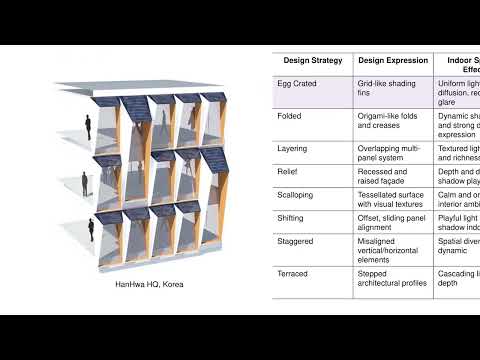
Source: YouTube — BIPV Design Principles | Facade Typologies and Integration Explained
Frequently Asked Questions (FAQs) Your Customers Are Asking — And How You Should Answer
FAQ #1 – What Exactly Is the Difference Between BIPV and Traditional Rooftop Solar?
Simple Explanation for Non-Technical Clients
Traditional solar panels are attached to buildings — they sit on top of the roof or on a rack structure. They generate electricity, but the building would function without them. BIPV products are part of the building itself — they replace the glass in windows, facades, and skylights, or replace conventional roofing tiles. When you remove BIPV from a building, you remove part of the building structure (the weatherproofing, the glass, the cladding). That dual function — building material и electricity generator — is the fundamental difference.
Technical Details for Architects and Engineers
At the product specification level, BIPV products must meet two independent sets of standards simultaneously: IEC 61215 and IEC 61730 (PV module performance and safety), and the applicable building product standards for structural load, fire resistance, water infiltration, and thermal performance (EN 14179 for heat-strengthened glass, EN 12150 for tempered glass, ASTM E1646 for water infiltration, NFPA 285 for fire propagation on facades). This dual certification requirement is documented in IEC 63092-1:2020 — the dedicated standard for BIPV modules — and distinguishes genuine BIPV products from building-applied PV (BAPV) systems.
FAQ #2 – How Much More Does BIPV Cost Compared to Rooftop Solar?
Cost Breakdown by Application Type
| Application | Installed Cost (BIPV) | Installed Cost (Equiv. Traditional) | BIPV Net Premium (After Material Offset) |
|---|---|---|---|
| Commercial curtain wall facade | $200–$625/m² | $80–$150/m² (glazing) + $0.55–$0.90/Wp | $0–$200/m² net, depending on project |
| Canopy/carport structure | $150–$350/m² | $0 (no equivalent conventional) | Full cost = full additional investment |
| Solar roof tiles (premium residential) | $1.00–$1.60/Wp | $0.70–$1.20/Wp (premium roofing) | $0.20–$0.60/Wp net |
| Skylight replacement | $250–$500/m² | $100–$200/m² (standard skylight) | $100–$300/m² net |
How to Explain Premium Pricing to Budget-Conscious Clients
“You’re not buying a solar system that costs 40% more than rooftop panels. You’re replacing a building material you were already going to buy — and getting 25 years of electricity generation included. The question is: what does that glazing cost you over 25 years with zero energy return? Compare that to what it costs with BIPV included. In most commercial scenarios where glazing is already in the budget, BIPV is the better financial decision — not the expensive one.”
FAQ #3 – Does BIPV Generate Less Electricity Because It’s Integrated into the Building?
Efficiency Comparisons by Angle and Orientation
BIPV glass at 14–18% efficiency generates less electricity per unit area than a premium monocrystalline panel at 20–22% efficiency — on the same surface. However, BIPV is typically deployed on different surfaces: vertical facades capture 60–70% of optimal irradiation compared to a tilted roof in temperate climates. The output comparison:
| Orientation | Traditional Panel (22% eff.) | BIPV Glass (15% eff.) | BIPV vs. Trad. Same Surface |
|---|---|---|---|
| Optimal tilt (35°) | 220 kWh/m²/year | 150 kWh/m²/year | −32% |
| Vertical south facade | 140 kWh/m²/year | 95 kWh/m²/year | −32% |
| Vertical east/west facade | 90 kWh/m²/year | 62 kWh/m²/year | −31% |
| Skylight (20° pitch) | 200 kWh/m²/year | 136 kWh/m²/year | −32% |
The efficiency gap is consistent (~30%) but the comparison is almost always irrelevant — because the BIPV surface was going to be glazed with a conventional non-generating material anyway. The relevant comparison is BIPV vs. zero generation from that surface.
When BIPV Outperforms Rooftop Systems
BIPV outperforms rooftop systems on a total building generation basis when: the building has more usable facade area than roof area (most commercial towers), when the rooftop is partially shaded by adjacent buildings, when the rooftop is allocated to HVAC or green space, or when conventional solar requires structural reinforcement of the roof that BIPV on vertical surfaces avoids.
FAQ #4 – How Long Do BIPV Systems Last, and What’s the Warranty Coverage?
Lifespan Data from Installed Systems
BIPV glass installations have documented operational histories going back to the early 2000s. The EMPA research facade in Switzerland has operated for 15+ years with performance ratios remaining within 5–7% of year-1 baseline. The IEA-PVPS task group on BIPV durability (Task 15) documents degradation rates of 0.5–0.9% per year for quality crystalline silicon BIPV modules in field conditions — within the same range as premium traditional panels.
The structural lifespan of BIPV laminated glass — the glass itself, not the solar cells — is comparable to conventional architectural glazing: 40–50+ years under normal conditions. The photovoltaic component warrants 25 years of performance. After 25 years, the glass continues to serve as a building material indefinitely; the solar output will have degraded to approximately 78–80% of original rated output.
Manufacturer Warranties and Performance Guarantees
Jia Mao BIPV provides a 25-year linear performance warranty guaranteeing ≥85% output retention at year 25, a 10-year product materials warranty covering delamination, glass defects, and junction box failure, and a workmanship warranty for installations completed by certified Jia Mao BIPV installation partners. All warranties are backed by IEC 61215 and IEC 61730 third-party certification. For complete warranty terms, contact the Jia Mao BIPV technical team.
FAQ #5 – Can BIPV Be Installed on Existing Buildings, or Only New Construction?
Retrofit BIPV Solutions for Existing Structures
BIPV can be installed on existing buildings, though the cost and complexity are higher than new construction. Retrofit BIPV requires: structural assessment of the existing facade or roof to confirm it can carry the BIPV loads (BIPV glass weighs similar to conventional glazing — typically not a structural concern for newer buildings), re-routing of electrical conduit through occupied spaces (add 20–35% to electrical installation cost), and coordination with the existing roof or facade warranty (which may require manufacturer endorsement before modification).
The most cost-effective retrofit BIPV applications are: scheduled glazing replacements (where existing windows or curtain wall are already due for replacement — BIPV glass is substituted at the same time with minimal additional labor premium), canopy additions (new-build canopy structures over existing parking or transit areas), and roof tile replacements during scheduled re-roofing cycles.
Cost and Complexity of Retrofitting vs. New Installation
NREL data confirms that retrofit BIPV installations require approximately 6.4 worker-hours per kWp versus 3.5 worker-hours per kWp for new construction — a 83% labor premium for retrofit work. This labor premium adds $0.10–$0.25/Wp to the total installed cost of a retrofit project relative to a new construction specification. Budget accordingly in your project quotes, and prioritize retrofit opportunities where a scheduled building maintenance cycle (re-glazing, re-roofing) eliminates a large portion of the retrofit labor premium.
FAQ #6 – What Building Codes and Regulations Apply to BIPV?
Current Code Requirements by Region
| Region | Primary BIPV Standards | Additional Requirements |
|---|---|---|
| United States | IEC 61215, IEC 61730, UL 7103 (roofing), NEC 690, NFPA 285 (facade >12m) | State-specific: CA Title 24, NY Stretch Energy Code |
| European Union | IEC 63092-1, EN 50583-1/2, CE Marking, EPBD 2024 compliance | National variants: Germany, France, UK Building Regulations |
| UK (post-Brexit) | IEC 61215, IEC 61730, UK Building Regulations Part L, PAS 2035 | Heritage: Historic England guidance |
| Australia | IEC 61215, AS/NZS 5033, NCC (National Construction Code) | State-specific planning overlays |
| Singapore | IEC 61215, SS 555, BCA Green Mark requirements | Green Building Masterplan BIPV incentives |
How Codes Are Evolving to Support BIPV Adoption
The EU EPBD 2024 revision is the most transformative regulatory change: by 2028, all new EU commercial buildings must have solar energy generation. The US IRA (Inflation Reduction Act) 30% ITC applies to BIPV, creating a financial incentive structure comparable to the policy support that drove residential solar adoption from 2010 onwards. UL 7103 (2021) and IEC 63092-1 (2020) have resolved the long-standing uncertainty about BIPV-specific certification requirements, giving project teams a clear compliance pathway that did not exist as recently as 2019.
FAQ #7 – How Does BIPV Perform in Cloudy or Low-Light Climates?
Performance Data from Various Climate Zones
BIPV, like all PV systems, generates proportionally less electricity in low-irradiance climates. A south-facing BIPV facade in Edinburgh, Scotland (GHI ≈ 900 kWh/m²/year) generates approximately 50–55% of the electricity produced by the same system in Los Angeles (GHI ≈ 1,800 kWh/m²/year). However, the material replacement value of BIPV is climate-independent — the glass replaces the same glazing cost in both climates. And the EU’s building energy codes apply equally stringently in Northern Europe as in Southern Europe, meaning the compliance driver for BIPV is as strong in cloudy climates as in sunny ones.
When BIPV Still Makes Sense in Less-Sunny Regions
In low-irradiance markets, the financial case for BIPV shifts from energy ROI to compliance enablement plus material replacement value. In the Netherlands — one of Europe’s cloudiest markets — BIPV adoption is among the highest in the world, driven by: the country’s stringent building energy standards, the world’s largest greenhouse horticulture sector (which uses agrivoltaic BIPV extensively), and commercial architecture practices with strong BIPV specification traditions. The energy ROI is moderate; the compliance value and design value are decisive.
FAQ #8 – What Maintenance Does BIPV Require, and How Does It Compare to Rooftop Solar?
Routine Maintenance Schedules
BIPV glass maintenance follows architectural glazing protocols: biannual inspection for visible damage (chips, delamination, junction box integrity), quarterly to biannual cleaning with soft brush and pH-neutral solution, annual drone-based thermal imaging to detect hot spots or cell cracks, and annual inverter PM (preventive maintenance). Anti-fouling coatings — standard on Jia Mao BIPV products — reduce cleaning frequency requirements by approximately 30%. Total annual maintenance budget: $5–$15/kWp for commercial BIPV systems, compared to $10–$20/kWp for conventional rooftop systems with separate racking and panel maintenance requirements.
Common Issues and Repair Protocols
The most common BIPV maintenance issues are: glass chip damage from impact (repair protocol: replacement of the affected laminated glass unit, same as conventional glazing repair); partial shading from adjacent new construction (mitigation: string-level MPPT optimizers or panel-level power optimizers prevent shading from propagating across unaffected strings); and junction box seal degradation in high-humidity coastal environments (mitigation: IP67-rated junction boxes with marine-grade sealant, standard on quality BIPV products).
FAQ #9 – Can BIPV Be Combined with Battery Storage or Other Renewable Energy Systems?
Integration Strategies with Energy Storage
BIPV integrates with battery energy storage systems (BESS) using the same electrical architecture as conventional solar: DC-coupled storage (battery connected on the DC side before the inverter) or AC-coupled storage (battery connected on the AC side through a bidirectional inverter). DC coupling is more energy-efficient (avoids one AC/DC conversion); AC coupling is more flexible for retrofit installations. For buildings with time-of-use tariff structures, BESS paired with BIPV generates significant additional economic value by shifting generation from off-peak to on-peak rate periods.
Jia Mao BIPV‘s energy storage product range is engineered for integration with their BIPV glass modules, providing a coordinated system specification that simplifies project design and reduces compatibility risk. For large commercial BIPV installations (200 kWp+), a combined BIPV + BESS specification with smart grid interface capability can deliver 80–90% self-consumption ratios in favorable climates, dramatically improving the project economics.
How to Design Hybrid Renewable Energy Systems
For clients with aggressive net-zero targets — where on-site generation alone cannot reach net-zero — BIPV is most effectively combined with: rooftop traditional panels (maximum generation from available flat roof area), BESS (stores daytime generation for evening and nighttime loads), EV charging infrastructure (direct daytime BIPV generation to on-site vehicle charging), and building energy management system (BEMS) coordination (optimizes load shifting, storage dispatch, and grid export).
FAQ #10 – What Financing Options and Incentives Are Available for BIPV Projects?
Federal Tax Credits and State Incentives
In the United States, the 30% Investment Tax Credit (ITC) under the Inflation Reduction Act applies to commercial BIPV installations (IRS Clean Electricity Investment Credit). For tax-exempt organizations (hospitals, universities, municipalities), the IRA’s direct pay provision allows these entities to claim the 30% credit as a direct cash payment from the US Treasury — a provision that was not available before 2022 and that makes BIPV economics decisively more attractive for the institutional market. Additional bonus credits (10% for domestic content, 10% for energy community siting) can increase the effective credit to 50%.
Financing Products Specifically Designed for BIPV
C-PACE (Commercial Property Assessed Clean Energy) financing is available in 35+ US states and enables 100% upfront financing of BIPV projects repaid through property tax assessments over 10–25 years. The debt is attached to the property, not the owner — which means it does not affect the owner’s corporate debt ratios and transfers with the property on sale. For building owners who cannot fund a large BIPV installation from operating cash flow, C-PACE is often the deciding mechanism between project approval and project deferral. Resources: PACE Nation for state-by-state C-PACE availability.
FAQ #11 – How Do I Find Architects and Contractors Experienced with BIPV?
How to Build Your Network of BIPV-Capable Professionals
Attend USGBC GreenBuild, AIA Annual Conference, and regional green building council events — these attract the architects most likely to specify BIPV. The SolSmart program directory identifies municipalities with streamlined solar permitting, which correlates with active BIPV project pipelines. LinkedIn searches for “BIPV architect,” “sustainable facade design,” and “net-zero building consultant” in your market area surface the most active practitioners. Your manufacturer partner — Jia Mao BIPV — maintains a directory of trained installation partners in key markets accessible through their partner network.
Red Flags for Inexperienced BIPV Contractors
Watch for contractors who: cannot name the IEC or UL certification standards required for your project; have never coordinated with a licensed facade engineer on a BIPV installation; lack experience with the water-infiltration testing required for curtain wall glazing; or whose approach to warranty documentation is vague. A BIPV installation failure — particularly a water infiltration failure behind a glass facade — is expensive and reputationally damaging. Certification and reference projects from comparable installations are non-negotiable vetting criteria.
FAQ #12 – What’s the ROI Timeline for a BIPV Project?
Payback Period Calculations by Application
| Тип приложения | Simple Payback (No Incentives) | Simple Payback (With 30% ITC) | 25-Year NPV (USD, 5% discount) |
|---|---|---|---|
| Commercial office facade | 8–14 years | 5–9 years | $180,000–$550,000 per 1,000 m² |
| Industrial/warehouse canopy | 5–8 years | 3–5 years | $280,000–$800,000 per 5,000 m² |
| Educational institution | 7–12 years | 5–8 years | Significant — plus certification value |
| Luxury residential/hospitality | 10–18 years | 7–12 years | High — material premium captured |
| Agricultural/greenhouse | 6–10 years | 4–7 years | $150,000–$300,000 per 10,000 m² |
Note: Heritage/historic buildings and government projects often have tax credits or grant funding that reduce net cost by 20–35% beyond the standard ITC.
Long-Term Value Appreciation Beyond Energy Savings
Commercial real estate research consistently documents a 3–7% premium on certified green buildings versus equivalent non-certified assets. JLL’s 2024 Sustainable Real Estate Index found that LEED-certified office buildings in major US markets traded at a 7.4% premium versus non-certified comparable assets. A BIPV installation that contributes to LEED or BREEAM certification — particularly in the Energy and Atmosphere credit category — participates in that premium. On a $10 million commercial building, a 5% valuation premium = $500,000. That premium is frequently larger than the total BIPV installation cost.
FAQ #13 – How Does BIPV Compare to Other Building-Integrated Renewable Technologies?
BIPV vs. Building-Integrated Wind, Thermal, etc.
| Технология | Диапазон цен | Output Density | Aesthetic Integration | Maturity Level |
|---|---|---|---|---|
| BIPV (solar glass) | $200–$625/m² | 50–190 Wp/m² | Excellent — seamless | Commercial — well proven |
| Building-integrated wind (micro) | $2,000–$5,000/kW | Site-dependent, urban = poor | Challenging — visible | Early commercial — niche |
| Solar thermal (roof) | $100–$250/m² | Heat only (not electricity) | Умеренный | Mature — but limited to heat |
| Geothermal heat pump | $10,000–$30,000/system | Heating/cooling only | N/A (underground) | Mature — excellent ROI |
| Green roof (no solar) | $100–$300/m² | Zero electricity | Превосходно | Mature — complementary |
BIPV is the only building-integrated technology that generates electricity (the highest-value energy form) with excellent aesthetic integration and at commercial maturity. Building-integrated wind micro-turbines have demonstrated poor urban performance due to turbulence and vibration. Solar thermal provides heat but not electricity. Geothermal is highly effective for heating and cooling but not electricity generation.
When to Combine Multiple Renewable Technologies
The optimal building energy system for a net-zero commercial building typically combines: BIPV on facades and skylights (maximum envelope generation with aesthetic integration), traditional panels on flat roof (maximum generation at lowest cost per kWp), ground-source heat pump or solar thermal (heating and cooling load offset), BESS (storage for load shifting and grid independence), and BEMS (intelligent coordination of all systems). BIPV is the enabler of this integrated strategy — it generates electricity from surfaces that no other technology can monetize.
The BIPV Opportunity Is Now — Are You Ready?
Why the Next 18 Months Will Determine Your Market Position
Market Forces Accelerating BIPV Adoption
Five forces are converging simultaneously to accelerate BIPV adoption at a pace the industry has not seen before. The EU EPBD 2024 mandate creates statutory demand in every new European commercial construction project by 2028. The US IRA’s 30% ITC makes BIPV financially compelling in the world’s largest construction market. Net-zero building codes in Asia-Pacific — Singapore Green Mark, South Korea ZEB — are creating similar demand signals. The growing understanding among commercial developers that BIPV-enabled LEED certification generates 3–7% property value premiums is turning sustainability investment into asset management strategy. And the competitive pressure of rising electricity costs — which averaged 8–12% annual increases in commercial markets across North America and Europe through 2023–2025 — is making the energy cost offset of BIPV increasingly material to building operating economics.
These five forces are structural, not cyclical. They do not reverse when commodity solar prices drop or when one market’s policy changes.
The Window of Opportunity Before BIPV Becomes Commoditized
Every product category goes through the same lifecycle: pioneer adoption, early majority growth, mainstream adoption, and eventual commoditization. Traditional solar panels entered the pioneer phase in the 2000s and reached full commoditization by the early 2020s. BIPV entered the pioneer phase in the mid-2010s and is now transitioning into early majority growth. The margin premiums, specification influence advantages, and installer network moats available to early-mover BIPV distributors in 2025 are analogous to the advantages available to early traditional solar distributors in 2012–2015. The distributors who captured those advantages built businesses worth 5–10× their 2012 valuations by 2020.
The BIPV window is open now. It will not stay open at these margin levels forever. The question is whether you are going to capture it or read about it in a competitor’s case study.
Your Next Steps: From Knowledge to Action
The Three Critical Decisions You Need to Make This Quarter
Decision 1: Manufacturer Partnership — Choose a BIPV manufacturer partner whose product range, certification standards, customization capabilities, and technical support infrastructure match the needs of your target market. The relationship with Jia Mao BIPV provides access to 3 GW of annual production capacity, full architectural-grade certification, and a distributor support program designed specifically for companies entering the BIPV market. Request your distributor consultation here.
Decision 2: Team Training — Identify two or three people on your current team who have the technical aptitude and customer-facing skills for BIPV work. Invest in their BIPV product training, IEA-PVPS guidebook review, and certification support in Q1. These individuals become your internal BIPV capability — the ones your sales team calls when an architect asks a specification question they cannot answer alone.
Decision 3: First Project Target — Identify one project opportunity in your current pipeline — or prospecting universe — that is architecturally or technically unsuitable for conventional rooftop solar but might be addressable with BIPV. This is your proof-of-concept project. Bring it through from specification to installation with complete documentation. Use it as your first case study. Everything that follows will be easier.
How to Avoid the Mistakes Other Distributors Are Making
The two most common BIPV launch failures among solar distributors are: entering the market with insufficient technical preparation (attempting to answer architect specification questions with commodity panel knowledge and losing credibility), and targeting the wrong customer segment (attempting to sell BIPV to price-sensitive contractors who are not the right buyer for premium products). Both errors are avoidable by following the target profile and team training guidance in this guide — and by building the relationship with your BIPV manufacturer before you need the technical answers, not after.
The distributors who fail in BIPV enter it reactively — because a competitor just won a project they lost. The distributors who succeed enter it proactively — because they read the market data, understood the margin opportunity, and built the capability before the demand arrived in their customer base.
The market data in this guide is unambiguous. The margin opportunity is real and documented. The demand drivers are regulatory and structural, not cyclical. The only question is whether you act on it now — or catch up later.
Ready to Dominate the BIPV Market?
Get Your Exclusive BIPV Distributor Playbook
Download the complete guide to positioning BIPV solutions, training your team, and winning high-value projects. Includes detailed product comparison sheets for 15+ BIPV systems, ready-to-use sales proposals and specification templates, certified training curriculum for your sales and technical teams, case studies from 10 successful BIPV projects, and a partner directory of BIPV manufacturers and service providers.
→ Access the Jia Mao BIPV Product Library and Download Resources
Limited access — designed for solar distributors, new energy product agents, and EPC contractors.
Bonus Resource: Video Roundtable Companion
Watch this expert walkthrough of BIPV design principles, facade typologies, and project integration strategies — featuring real project examples and technical specification guidance that your team can apply immediately.
Access the full visual guide to BIPV building typologies, integration strategies, and architectural case studies.
→ Explore BIPV Real-World Case Studies on jmbipvtech.com
→ Schedule Your BIPV Distributor Strategy Call
Glossary: Key BIPV and Solar Industry Terms
| Term | Definition | Practical Context |
|---|---|---|
| BIPV | Building-Integrated Photovoltaics — solar products that replace building materials while generating electricity | The core product category this guide covers |
| BAPV | Building-Applied Photovoltaics — solar panels attached on top of existing building structures | Conventional rooftop solar; the existing standard |
| VLT | Visible Light Transmission — the percentage of daylight a glass panel passes | A 30% VLT BIPV panel passes 30% of visible light; 70% is blocked/absorbed |
| kWp | Kilowatt-peak — rated maximum power output under standard test conditions | A 200 kWp BIPV facade system produces up to 200,000 watts in ideal conditions |
| IEC 63092-1 | The dedicated international standard for BIPV modules | Covers both PV performance and building material requirements simultaneously |
| ITC | Investment Tax Credit — 30% US federal tax credit for solar installations under the IRA | Reduces BIPV project cost by 30% for qualifying US commercial installations |
| C-PACE | Commercial Property Assessed Clean Energy — property-linked financing for BIPV | Enables 100% BIPV financing repaid through property tax bills |
| EPBD | EU Energy Performance of Buildings Directive — mandates solar on new EU buildings by 2028 | The statutory driver of European commercial BIPV adoption |
| POE | Polyolefin Elastomer — premium encapsulant film used in BIPV glass lamination | 40% better UV aging resistance than standard EVA encapsulant |
| LEED | Leadership in Energy and Environmental Design — US green building certification system | BIPV earns LEED EA (Energy and Atmosphere) credits |
| BREEAM | Building Research Establishment Environmental Assessment Method — UK/EU green building standard | Equivalent to LEED in European markets; BIPV earns Energy category credits |
| MPPT | Maximum Power Point Tracking — inverter function that optimizes power extraction | Multi-MPPT inverters handle mixed-orientation BIPV facades without mismatch losses |
| Performance Ratio (PR) | Ratio of actual energy output to theoretical maximum — the key BIPV quality metric | A well-performing commercial BIPV system maintains 78–85% PR in year one |
All financial figures, energy generation estimates, and market projections in this guide are based on published third-party research, manufacturer documentation, and real-world project data. Individual project outcomes vary by climate, building orientation, product specification, and incentive availability. Always commission a site-specific energy model before presenting financial projections to clients.
External references used in this guide: IEA-PVPS Technical Guidebook on BIPV 2025 | Grand View Research BIPV Market 2024 | Fortune Business Insights BIPV Market | TERI BIPV in Action 2025 | US DOE BIPV RFI Summary | IRS Clean Electricity Investment Credit | SEIA Solar Market Insight 2025