
For most solar applications, crystalline silicon PV modules perform better — they deliver higher efficiency, longer proven lifespan, and superior return on investment for standard rooftop and ground-mount installations. However, amorphous silicon PV modules outperform crystalline technology in specific scenarios where flexibility, low-light performance, and heat tolerance are decisive factors.
The main differences between these two technologies come down to efficiency, cost, durability, and application suitability. Crystalline silicon modules (both monocrystalline and polycrystalline) dominate the global solar market with efficiencies of 15–25% and lifespans exceeding 25 years. Amorphous silicon (a-Si) thin-film modules offer lower efficiencies of 6–14% but excel in flexibility, low-light harvesting, and superior temperature performance — making them the preferred choice for building-integrated photovoltaic (BIPV) applications, portable devices, and challenging environments.
The reality is that neither technology is universally “better.” Amorphous silicon PV modules shine in situations demanding flexibility and low-light operation, while crystalline silicon modules lead in raw efficiency and large-scale power generation. Finding the right balance between these competing strengths — and matching them to your specific project needs — is the key to making the best decision. Manufacturers like Jia Mao Bipv offer both crystalline and thin-film BIPV solutions, helping architects and developers select the optimal technology for each unique project.
Efficiency of Solar Modules
Amorphous Silicon PV Module Efficiency
Amorphous silicon (a-Si) PV modules typically achieve power conversion efficiencies between 6% and 14% under Standard Test Conditions (STC: 1000 W/m² irradiance, 25°C cell temperature, AM 1.5 spectrum). The best commercially available single-junction a-Si modules reach approximately 7–10%, while tandem-junction designs (a-Si/µc-Si “micromorph” configurations) push toward 12–14%.
These numbers appear modest compared to crystalline technology, but they require context. Amorphous silicon’s broader spectral absorption — its ability to harvest energy from a wider range of light wavelengths — means it performs disproportionately well under conditions that deviate from STC. Diffuse sunlight from overcast skies, indirect light reflected off nearby surfaces, and even artificial indoor lighting all produce usable power from a-Si panels. According to research by PowerFilm Solar, amorphous panels have outperformed crystalline alternatives by up to 4× under indoor lighting conditions — a performance gap that no efficiency rating can capture.
The practical implication is that a-Si modules often deliver higher annual energy yields relative to their rated capacity than crystalline modules do, particularly in regions with significant cloud cover. A 100 Wp amorphous module installed in the Pacific Northwest or Northern Europe may produce closer to 85–95% of its expected annual output, while a crystalline module at the same site may underperform its STC-based projections due to reduced diffuse light harvesting.
Crystalline Silicon Power Conversion Efficiency
Crystalline silicon PV modules are the workhorses of the global solar industry, commanding over 95% of the market share. Monocrystalline modules achieve commercial efficiencies of 20–25% (with laboratory records exceeding 26.8%), while polycrystalline modules deliver 15–20%. The latest TOPCon and HJT cell architectures are pushing monocrystalline module efficiencies beyond 23% in mass production.
This efficiency advantage translates directly to power density: a crystalline module generates 2 to 3 times more electricity per square meter of panel area than an amorphous module of comparable size. For applications where space is limited — residential rooftops, commercial buildings with defined roof areas, or ground-mount systems with land constraints — this space efficiency is decisive.
Crystalline technology also benefits from decades of manufacturing optimization. Production costs have fallen by more than 90% since 2010, driven by economies of scale, improved cell architectures, and automated production lines. Companies like Jia Mao Bipv leverage high-efficiency monocrystalline cells (>22% cell efficiency) in their photovoltaic glass products, combining the power density of crystalline technology with the aesthetic flexibility required for building-integrated applications.
| Metric | Amorphous Silicon (a-Si) | Monocrystalline Silicon (c-Si) | Polycrystalline Silicon (mc-Si) |
|---|---|---|---|
| Module Efficiency (STC) | 6–14% | 20–25% | 15–20% |
| Lab Record Cell Efficiency | 14.0% | 26.8% | 23.3% |
| Power Density (W/m²) | 60–140 | 200–250 | 150–200 |
| Low-Light Performance | Превосходно | Good | Умеренный |
| Diffuse Light Harvesting | Superior | Умеренный | Умеренный |
| Indoor Light Operation | Yes (useful power output) | Minimal | Minimal |
| Shade Tolerance | Superior (retains 60–70%) | Poor (drops to 20–30%) | Poor (drops to 20–30%) |
Module Efficiency Comparison by Technology (%)
Amorphous
Silicon (a-Si)
Monocrystalline
Silicon (c-Si)
Polycrystalline
Silicon (mc-Si)
STC efficiency at 1000 W/m², 25°C, AM 1.5

Crystalline silicon cells achieve the highest commercial efficiencies, making them the standard for space-constrained installations.
Durability and Temperature Performance
Amorphous Silicon Durability
The durability profile of amorphous silicon modules is defined by two competing characteristics: excellent physical resilience paired with a unique degradation phenomenon. On the physical side, a-Si thin-film modules are remarkably robust. Their monolithic construction — where the photovoltaic layer is deposited as a continuous film rather than assembled from individual cells — eliminates the micro-crack failures that afflict crystalline modules during thermal cycling. There are no soldered interconnections between cells that can fatigue and break, and no glass-encapsulated wafers that can fracture under mechanical stress.
Flexible amorphous panels can bend to radii as tight as 25mm without damage, survive impacts that would shatter crystalline modules, and withstand vibration levels common in transportation and marine applications. This physical toughness makes a-Si technology exceptionally suitable for portable, mobile, and building-integrated applications where mechanical stress is unavoidable.
However, amorphous silicon experiences a phenomenon called the Staebler-Wronski effect — a light-induced degradation that reduces output by approximately 10–30% during the first few hundred hours of sunlight exposure. This initial degradation occurs because photon absorption creates defects in the disordered silicon structure that trap charge carriers. The good news is that this degradation is partially reversible: thermal annealing during hot summer months can recover a portion of the lost output, creating a seasonal performance cycle. After the initial stabilization period, modern a-Si modules degrade at approximately 0.5–1.0% per year, with quality products warranted for 20–25 years of operation.
Crystalline Silicon Durability
Crystalline silicon modules set the benchmark for photovoltaic longevity. The ordered atomic structure of crystalline silicon is inherently stable, and decades of field data confirm that well-manufactured modules maintain reliable performance for 25–30+ years. A comprehensive study published in Progress in Photovoltaics analyzing 82 MWp of commercial installations over 10 years found average degradation rates of just 0.27%/year — significantly better than the 0.5–0.8%/year commonly assumed. Research from the Fraunhofer Institute confirms average degradation of 0.5–0.6% annually, meaning crystalline modules retain approximately 85% of original output after 25 years.
Modern crystalline modules incorporate advanced protective features including tempered glass front sheets, POE or EVA encapsulant films, fluoropolymer backsheets, and anodized aluminum frames that provide comprehensive environmental protection. Leading BIPV manufacturers such as Jia Mao Bipv further enhance durability through architectural-grade tempered glass, structural silicone sealing, and imported POE encapsulant films that increase UV aging resistance by 40% compared to standard EVA.
The primary durability concern for crystalline modules is mechanical vulnerability. The silicon wafers (typically 150–180 µm thick) are brittle and susceptible to micro-cracking from improper handling, thermal stress, or mechanical loading. These micro-cracks can propagate over time, creating hot spots and reducing output. However, advanced cell technologies — such as half-cut cells and multi-busbar designs — have significantly mitigated this risk by reducing mechanical stress on individual cells and providing redundant current paths.
Temperature Sensitivity in Solar Modules
Temperature performance represents one of the most important practical differences between amorphous and crystalline silicon technologies. All solar modules lose efficiency as cell temperatures rise above the 25°C standard test condition — but the rate of that loss varies dramatically between technologies.
The temperature coefficient of power (Pmax) quantifies this relationship. Lower absolute values indicate better heat tolerance:
| Technology | Temperature Coefficient (Pmax) | Power Loss at 50°C Cell Temp | Power Loss at 65°C Cell Temp |
|---|---|---|---|
| Amorphous Silicon (a-Si) | -0.16% to -0.25%/°C | -4.0% to -6.3% | -6.4% to -10.0% |
| Monocrystalline (Standard) | -0.35% to -0.40%/°C | -8.8% to -10.0% | -14.0% to -16.0% |
| Monocrystalline (HJT/TOPCon) | -0.26% to -0.30%/°C | -6.5% to -7.5% | -10.4% to -12.0% |
| Polycrystalline Silicon | -0.38% to -0.45%/°C | -9.5% to -11.3% | -15.2% to -18.0% |
According to research from PowerFilm Solar, amorphous silicon panels lose only 0.16% per °C, compared to 0.40% per °C for standard crystalline silicon. This means that on a hot summer day when panel surface temperatures reach 65°C, an amorphous module retains approximately 93–94% of its rated output, while a standard polycrystalline module retains only 82–85%. In arid desert climates or tropical regions where cell temperatures routinely exceed 60°C, this temperature advantage can narrow the real-world efficiency gap between the two technologies by 5–8 percentage points.
Additionally, amorphous silicon benefits from a thermal annealing effect: exposure to elevated temperatures partially reverses the Staebler-Wronski degradation, meaning that hot weather actually helps a-Si modules recover lost performance. This phenomenon creates a unique synergy where the conditions that hurt crystalline modules (extreme heat) simultaneously benefit amorphous modules through both lower temperature sensitivity and degradation recovery.

In hot climates, amorphous silicon’s superior temperature coefficient provides a meaningful real-world performance advantage over crystalline technology.
Cost and Value
Manufacturing Costs of Amorphous Silicon PV Module
Amorphous silicon PV modules benefit from a fundamentally different manufacturing process than crystalline modules — one that uses dramatically less raw material and simpler production equipment. The thin-film deposition process deposits silicon layers approximately 1 micrometer thick — roughly 300 times thinner than the 150–180 µm wafers used in crystalline panels. This means a-Si modules use less than 1% of the silicon required for crystalline production, and silicon historically represents one of the largest material costs in solar manufacturing.
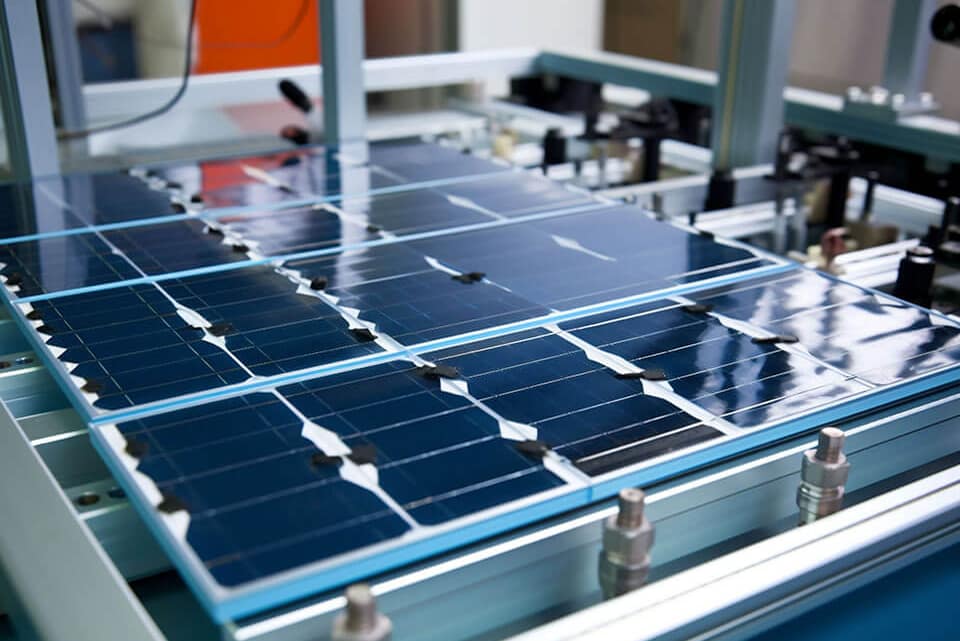
The manufacturing process itself is also more streamlined. A-Si modules can be produced using continuous roll-to-roll deposition techniques similar to industrial printing, which are less capital-intensive than the ingot growth, wire sawing, and wafer handling required for crystalline production. The total manufacturing cost for a-Si modules has been estimated at approximately $0.73 per Wp for 10%-efficient glass-based modules, translating to roughly $73 per square meter — approximately 30% less than equivalent-area crystalline modules.
However, the lower per-panel cost must be weighed against lower efficiency. Because a-Si modules produce fewer watts per square meter, the cost per watt (the more meaningful metric for energy-producing systems) is not always lower. The thin-film amorphous silicon solar cell market is projected to grow at a CAGR of 7.9%, driven by demand from price-sensitive projects in developing economies and specialized applications like BIPV where thin-film’s unique form factor justifies any cost premium.
Crystalline Silicon Module Investment
Crystalline silicon modules have experienced one of the most dramatic cost reductions in industrial history. Module-level pricing has fallen from approximately $8.00 per watt in 2010 to approximately $0.10–$0.15 per watt for wholesale modules in early 2026, according to updated industry pricing data. Installed residential system costs (including inverters, mounting, wiring, and labor) average $2.50–$3.50 per watt nationally in the United States.
The investment case for crystalline modules is straightforward: higher efficiency means more energy produced per dollar invested in installation labor, mounting hardware, inverters, and permitting — costs that are largely fixed regardless of panel efficiency. A 20%-efficient crystalline system generates twice the energy from the same roof area as a 10%-efficient a-Si system, while installation labor and balance-of-system costs remain roughly similar. This efficiency leverage makes crystalline technology the clear economic winner for standard residential and commercial rooftop installations where space is the primary constraint.
Long-Term Value and ROI
Return on investment (ROI) analysis must account for the complete picture: initial system cost, annual energy production, degradation rate, maintenance expenses, and system lifespan. The following table compares the long-term value proposition of both technologies:
| ROI Factor | Amorphous Silicon (a-Si) | Crystalline Silicon (c-Si) |
|---|---|---|
| Typical Payback Period | 8–14 years | 5–10 years |
| Annual Degradation Rate | 0.5–1.0%/year | 0.3–0.5%/year |
| 25-Year Output Retention | ~75–87% | ~85–93% |
| Warranty Period | 20–25 years | 25–30 years |
| Energy Payback Time | 1–2 years | 2–4 years |
| Structural Cost Savings | High (lightweight, no racks) | Low (heavy, requires racking) |
| Dual-Function Value (BIPV) | Excellent (replaces building materials) | Excellent (with BIPV modules) |
| Maintenance Requirements | Low (no hot spots, monolithic) | Low (occasional micro-crack monitoring) |
For standard installations, crystalline modules deliver faster payback and higher lifetime energy production, making them the superior value proposition in most cases. However, when the calculation includes avoided building material costs (in BIPV applications where panels replace glazing, cladding, or roofing), reduced structural engineering expenses (for lightweight installations on buildings with limited load capacity), and HVAC savings from thermal management (transparent and semi-transparent modules reduce cooling loads), amorphous silicon’s total value can rival or exceed crystalline technology in specific project contexts.
Manufacturers like Jia Mao Bipv address this value equation by offering both technology options, allowing project designers to select crystalline-based BIPV modules for maximum energy output or thin-film solutions for applications demanding maximum flexibility and lightweight construction.
Application Suitability
Amorphous Silicon PV Module Uses
Amorphous silicon technology excels in applications where its unique physical and electrical characteristics provide advantages that crystalline modules cannot match. The primary use cases fall into several distinct categories.
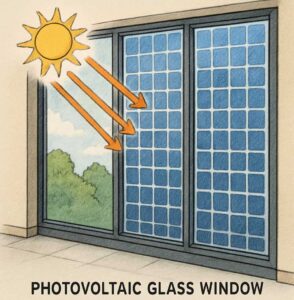
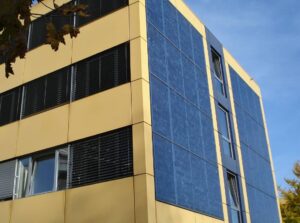
Building-Integrated Photovoltaics (BIPV) represents the largest growth opportunity for a-Si technology. Flexible amorphous panels can serve as roofing membranes, facade cladding, or semi-transparent glazing elements — performing dual functions as both weather protection and energy generation. The ability to conform to curved architectural surfaces, achieve various transparency levels, and integrate invisibly into building envelopes makes a-Si technology the preferred choice for architecturally sensitive projects. The global BIPV market is projected to reach billions in value, with thin-film technologies capturing an increasing share.
Portable and emergency power applications benefit from a-Si’s lightweight construction (2–3 kg/m² vs. 10–15 kg/m² for crystalline), physical flexibility, and superior shade tolerance. Foldable solar chargers, military field power, disaster relief equipment, and camping/hiking gear all favor amorphous technology.
Consumer electronics and IoT devices leverage a-Si’s unique ability to generate useful power from indoor artificial lighting. Solar-powered calculators, sensors, remote controls, and wireless IoT devices can achieve battery-free operation using amorphous micro-cells — an application class where crystalline technology produces negligible output.
Hot climate and cloudy region installations benefit from a-Si’s superior temperature coefficient and diffuse light performance, where the technology’s advantages partially compensate for its lower rated efficiency.
Crystalline Silicon Applications
Crystalline silicon technology dominates applications where maximum power output per unit area is the primary objective. This includes the vast majority of solar installations worldwide.
Residential rooftop systems overwhelmingly use monocrystalline panels because homeowners need to maximize energy production from limited roof space. Modern monocrystalline modules deliver 400–600+ watts per panel, offsetting significant portions of household electricity consumption from modest installation areas.
Commercial and industrial rooftop systems similarly favor crystalline technology for its power density and proven long-term reliability. Warehouse, office, and factory rooftops represent enormous solar potential, and crystalline modules deliver the highest return per square meter.
Utility-scale solar farms use crystalline modules (increasingly bifacial designs) because the cost-per-watt advantage and higher energy yield per acre directly impact project economics. Even small efficiency improvements translate to millions of dollars in additional revenue over a 25-year project lifetime.
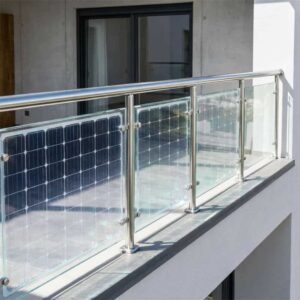
High-performance BIPV applications increasingly use crystalline technology as well. Companies like Jia Mao Bipv produce transparent and semi-transparent BIPV modules using strategically spaced monocrystalline cells within glass laminates, achieving 140–200 W/m² generation capacity — significantly higher than thin-film alternatives while still providing architectural transparency and aesthetic appeal.
Environmental and Space Considerations
The choice between technologies is often determined by physical constraints of the installation site. Space-constrained projects (small roofs, limited facade area) strongly favor crystalline technology because every square meter must produce maximum energy. Space-abundant projects (large warehouse roofs, expansive facades) can consider a-Si modules when their other advantages (weight, flexibility, aesthetics) provide meaningful value.
From an environmental lifecycle perspective, amorphous silicon modules achieve energy payback in 1–2 years compared to 2–4 years for crystalline modules, due to dramatically lower energy-intensive manufacturing. They also use far less silicon and avoid some of the chemical-intensive wafer processing steps. However, crystalline modules’ longer operational lifespans (25–30+ years vs. 20–25 years for a-Si) mean they generate net-positive energy for a greater total number of years.
Global Solar Module Market Share by Technology (2025)
Polycrystalline (~12%)
Thin-Film / a-Si (~5%)
Other (CdTe, CIGS) (~3%)
Video: Amorphous Vs Crystalline Solar Panels — Which Should You Buy?

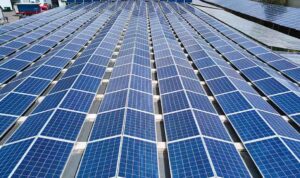
Crystalline silicon dominates utility-scale and rooftop installations where maximum energy output per square meter drives project economics.
Crystalline silicon PV modules are generally superior for most solar applications based on the balance of efficiency, cost, durability, and proven long-term performance. With module efficiencies of 20–25%, degradation rates as low as 0.27%/year, lifespans exceeding 25 years, and dramatically reduced manufacturing costs, crystalline technology delivers the best return on investment for standard residential rooftops, commercial installations, and utility-scale solar farms.
However, amorphous silicon PV modules earn their place as the better-performing technology in specific — and increasingly important — application niches. When the project demands physical flexibility for curved surfaces, lightweight construction for structurally limited buildings, superior shade tolerance for urban environments, excellent performance in hot climates or cloudy regions, indoor light harvesting for IoT devices, or seamless architectural integration through BIPV, amorphous silicon outperforms crystalline technology on the metrics that matter most for those applications.
The most productive approach is not to declare a universal winner but to match the technology to the application. For architects, developers, and building owners exploring solar integration, experienced BIPV manufacturers like Jia Mao Bipv offer both crystalline-based and thin-film BIPV solutions — enabling customized technology selection based on each project’s specific efficiency requirements, aesthetic goals, structural constraints, and climate conditions. Their comprehensive product portfolio includes high-efficiency crystalline photovoltaic glass, transparent BIPV glass, and flexible thin-film solutions — ensuring the right technology is deployed for maximum performance in every scenario.
Before making your decision, weigh all factors: available installation area, structural load capacity, local climate conditions, aesthetic requirements, budget constraints, and long-term energy production goals. Consulting with qualified solar professionals who understand both technologies will ensure your investment delivers optimal results for your specific situation.

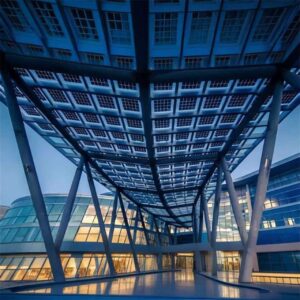
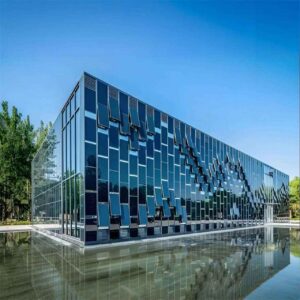
The future of solar technology: both amorphous and crystalline silicon playing complementary roles in sustainable architecture and energy generation.
Frequently Asked Questions (FAQ)
Q1: Which performs better overall — amorphous silicon or crystalline silicon PV modules?
Crystalline silicon PV modules perform better for most standard solar applications due to their higher efficiency (20–25% vs. 6–14%), longer lifespan (25–30+ years), and lower degradation rates (0.3–0.5%/year). However, amorphous silicon outperforms crystalline in specific scenarios including low-light conditions, high temperatures, flexible installations, and building-integrated photovoltaic (BIPV) applications where flexibility and aesthetics are priorities.
Q2: Why do amorphous silicon panels perform better in hot climates?
Amorphous silicon has a significantly lower temperature coefficient — approximately -0.16% to -0.25% per °C compared to -0.35% to -0.45% per °C for crystalline silicon. This means a-Si panels lose roughly half as much power as crystalline panels when cell temperatures rise above 25°C. At typical hot-climate operating temperatures of 60–65°C, this advantage translates to 5–8% more real-world output from amorphous panels relative to their rated capacity.
Q3: What is the Staebler-Wronski effect, and how does it impact amorphous silicon modules?
The Staebler-Wronski effect is a light-induced degradation unique to amorphous silicon that reduces module output by 10–30% during the first few hundred hours of sunlight exposure. This occurs because photon absorption creates defects in the disordered silicon structure. The effect is partially reversible through thermal annealing — hot summer temperatures help a-Si panels recover lost performance. After initial stabilization, modern a-Si modules degrade at 0.5–1.0% per year, and quality products are warranted for 20–25 years.
Q4: How much space do I need for amorphous silicon vs. crystalline silicon panels?
Because amorphous silicon modules have lower efficiency (6–14% vs. 20–25%), you need approximately 2–3 times more panel area to generate the same total power output. For a typical 6 kW residential system, crystalline modules might require 25–30 m² of roof space, while amorphous modules would need 60–90 m². This space requirement makes crystalline technology the clear choice for space-constrained installations.
Q5: Are amorphous silicon panels suitable for building-integrated photovoltaics (BIPV)?
Yes — amorphous silicon is exceptionally well-suited for BIPV applications due to its flexibility, lightweight construction (2–3 kg/m² vs. 10–15 kg/m²), availability in various transparency levels, and ability to conform to curved surfaces. However, crystalline-based BIPV modules (such as those produced by Jia Mao Bipv) also offer excellent architectural integration with significantly higher power output, making the choice between technologies application-dependent.
Q6: Which technology has better shade tolerance?
Amorphous silicon panels have dramatically superior shade tolerance. Under partial shading conditions, a-Si modules retain 60–70% of their rated output, while crystalline panels can drop to just 20–30% due to their series-connected cell architecture where one shaded cell limits the entire string. This makes amorphous technology especially valuable in urban environments with complex shadow patterns from surrounding buildings, trees, and architectural elements.
Q7: How do manufacturing costs compare between the two technologies?
Amorphous silicon modules are less expensive to manufacture per panel due to minimal silicon usage (less than 1% of crystalline requirements) and simpler roll-to-roll deposition processes. However, when measured in cost per watt — the more meaningful metric — crystalline modules have achieved price parity or better due to their dramatically higher efficiency and massive economies of scale. Wholesale crystalline module prices have fallen to approximately $0.10–$0.15 per watt in 2026.
Q8: Can amorphous silicon modules generate power from indoor lighting?
Yes — this is one of amorphous silicon’s most distinctive advantages. A-Si cells can generate useful electricity from indoor artificial lighting (fluorescent, LED), making them ideal for IoT sensors, smart home devices, and portable electronics that need battery-free or battery-extending operation. Crystalline silicon produces negligible output under indoor lighting conditions, making a-Si the only viable technology for indoor energy harvesting applications.
Q9: What is the environmental impact comparison between the two technologies?
Amorphous silicon modules achieve energy payback in 1–2 years compared to 2–4 years for crystalline modules, due to dramatically lower energy-intensive manufacturing. A-Si technology uses less silicon, avoids toxic heavy metals, and has a smaller manufacturing carbon footprint. However, crystalline modules’ longer lifespans (25–30+ years) mean they generate net-positive clean energy for more total years. Both technologies contribute positively to decarbonization goals.
Q10: Which technology should I choose for my project?
Choose crystalline silicon if: you have limited installation space, need maximum power output, want the fastest ROI, or are installing a standard rooftop or ground-mount system. Choose amorphous silicon if: you need flexible/curved installation, have structural weight limitations, operate in a very hot climate or heavily shaded area, need indoor light harvesting, or require seamless architectural integration. For BIPV projects that combine energy generation with building design, consult a specialist manufacturer like Jia Mao Bipv to determine the optimal technology for your specific application.


-300x300.jpg)