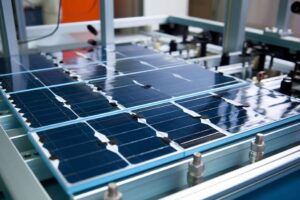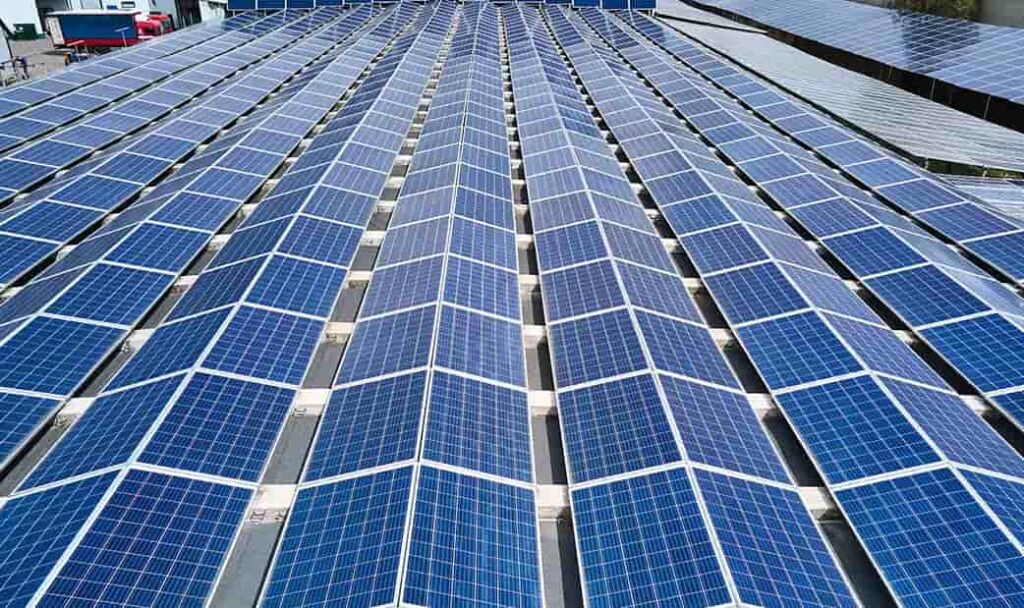

Building-Integrated Photovoltaics (BIPV) refers to photovoltaic materials that replace conventional building components — facades, roofing, windows, skylights, and shading devices — while simultaneously generating electricity. Unlike bolt-on rooftop panels mounted on top of an existing structure, BIPV materials are the structure: the glass curtain wall that defines a skyscraper’s exterior, the roof tiles that protect a residence from rain, the skylight that floods an atrium with natural light. Each of these elements produces power as a secondary function on top of its primary architectural role.
The advantages are practical and measurable. BIPV systems enable buildings to approach or achieve net-zero energy status by generating electricity on-site, precisely where it is consumed. They reduce total building energy consumption through passive thermal effects — shading, insulation, and solar heat gain modulation. They lower construction costs by replacing expensive facade materials that would need to be purchased regardless. And they do all of this while meeting the aesthetic demands of contemporary architecture, available in hundreds of colors, transparency levels, and surface finishes that architects can specify as confidently as any other building material.
The global BIPV market reflects this practical value: valued at approximately USD 33.1 billion in 2025, it is projected to reach USD 103.7 billion by 2032, growing at a compound annual growth rate (CAGR) of 17.7%, according to Coherent Market Insights. This guide examines each advantage in specific, data-backed detail — and addresses the challenges honestly — so you can evaluate whether BIPV belongs in your next project.
BIPV Technology Advantages
Net-Zero Energy Benefits
Buildings account for roughly 40% of total energy consumption and 33% of greenhouse gas emissions globally, according to the UN Environment Programme. BIPV technology directly addresses this by converting building envelopes — the largest exposed surfaces in the built environment — into distributed power plants. A research paper published in MDPI Energies concluded that “the use of BIPV technology in buildings is one of the fundamental ways to achieve net zero energy consumption.”
The net-zero pathway is straightforward in principle: reduce the building’s energy demand through efficient design, then generate enough on-site renewable energy to offset whatever demand remains. BIPV makes the second half of that equation feasible by utilizing surfaces that traditional rooftop solar cannot access. The International Energy Agency (IEA) estimated that incorporating BIPV on building facades could increase PV-suitable surfaces by approximately 35% compared to roof-only installations — a critical expansion for dense urban areas where roof space is limited relative to total energy demand.
A practical example: a 20-story commercial building with 8,000 m² of south-facing facade area equipped with semi-transparent BIPV glass at 10% module efficiency generates approximately 400–600 MWh annually (depending on latitude and irradiance), which can offset 15–25% of the building’s total electrical consumption. When combined with rooftop panels, this brings many commercial buildings within striking distance of net-zero targets.
On-Site Power Generation
On-site generation carries advantages beyond the raw kilowatt-hours produced. Electricity consumed where it is generated avoids the transmission and distribution (T&D) losses inherent in centralized power delivery. In the United States, the U.S. Energy Information Administration (EIA) reports average annual T&D losses of approximately 5%, with peaks reaching 8–10% during high-demand periods. Every kWh generated and consumed on-site by a BIPV system avoids these losses entirely, making the effective value of that kWh 5–10% higher than the same kWh delivered from a distant power plant.
On-site BIPV generation also reduces a building’s peak demand charges — often the largest single component of commercial electricity bills. Because BIPV output peaks during midday hours when commercial energy demand (and utility pricing) is highest, the temporal alignment between generation and consumption is inherently favorable. Building operators in markets with demand-based tariffs have documented peak-demand reductions of 15–30% after installing BIPV facades, directly reducing the most expensive component of their electricity costs.
Reduced Transmission Losses
Beyond avoiding T&D losses for the building itself, widespread BIPV adoption reduces stress on the broader electrical grid. Urban areas — where buildings are densest and BIPV potential is greatest — are also where grid infrastructure is most constrained and expensive to upgrade. Every megawatt of on-site BIPV generation in a city center is a megawatt that does not need to be transmitted from a remote solar farm or power plant through congested urban grid infrastructure. Utility planners refer to this as “non-wires alternatives” — meeting energy demand through distributed generation rather than building new transmission lines.
The cumulative impact scales with adoption. If 20% of suitable building surfaces in a city like Shanghai, London, or New York were equipped with BIPV, the aggregate generation would reduce peak grid demand by a measurable percentage, deferring billions of dollars in grid infrastructure upgrades. This is precisely the scenario that manufacturers like Jia Mao Bipv — with an annual production capacity of 3 GW of BIPV products — are scaling to serve.
BIPV Market Growth Projection (2024–2032)

Sources: Coherent Market Insights, Precedence Research, Fortune Business Insights (2025 estimates).
Energy Efficiency and Indoor Comfort
Lower Energy Consumption
BIPV’s energy efficiency advantage extends far beyond the electricity it generates. When photovoltaic modules replace conventional glazing or cladding, they alter the building envelope’s thermal behavior in ways that directly reduce HVAC energy demand. A peer-reviewed numerical study published in Solar Energy found that BIPV facades on high-rise office buildings achieved energy savings rates ranging from 28% to 55% when both electricity generation and thermal effects were accounted for, depending on climate zone and building orientation.
Semi-transparent BIPV windows are particularly effective at reducing cooling loads. By absorbing a portion of incoming solar radiation for electricity conversion, they transmit less heat into the interior — functioning as both power generators and high-performance solar control glazing. Research from MDPI Sustainability documented maximum energy savings of 60% for south-facing double-glazed BIPV modules compared to standard clear glazing, driven primarily by reduced air conditioning demand.
The electricity that BIPV panels generate offsets grid electricity purchases. The thermal load they reject keeps HVAC systems running less. Together, these two effects compound to produce energy savings substantially greater than either alone — a synergy that standard rooftop solar cannot replicate because roof-mounted panels have minimal impact on the building’s thermal envelope.
Temperature Regulation
BIPV elements serve as a thermal buffer between the exterior environment and the building interior. Opaque BIPV facade panels, for example, absorb solar radiation on their outer surface, convert a portion to electricity, and re-radiate the remainder outward rather than conducting it through the wall assembly. Ventilated BIPV facade systems — where an air gap between the panel and the structural wall allows convective cooling — further enhance this effect. Research published in Energy and Buildings found that ventilated BIPV systems reduced winter heat losses by over 40% in semi-arid climates while causing only a slight increase in summer cooling loads.
In hot climates, BIPV facades significantly reduce the urban heat island effect. Conventional dark-colored building envelopes absorb solar radiation and re-radiate it as thermal energy, heating the surrounding air. BIPV facades absorb much of that same radiation but convert it to electricity instead of heat, reducing the thermal contribution of each building surface to the urban microclimate.
Enhanced Building Performance
Modern green building certifications — LEED, BREEAM, WELL, EDGE, and China’s Three-Star system — award credits for on-site renewable energy generation, envelope thermal performance, and reduced operational carbon. BIPV facades can contribute to all three categories simultaneously, often earning enough credits to advance a building by one or two certification levels compared to an identical design without BIPV. For commercial developers, this certification upgrade translates directly to higher rental rates (typically 5–15% premiums for LEED Platinum vs. LEED Gold) and stronger tenant demand.
Aesthetic Integration and Design
Seamless Architectural Fit
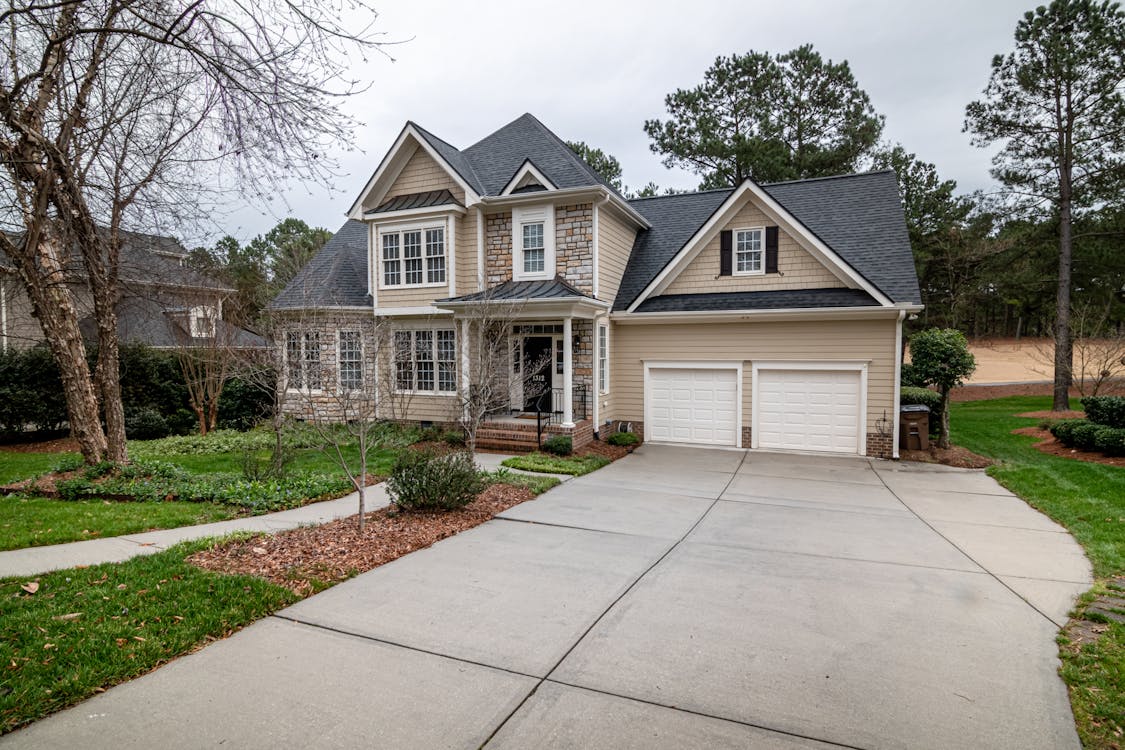
The most persistent misconception about BIPV is that it requires compromising architectural design for energy generation. The reality in 2025 is the opposite: BIPV products have become one of the most versatile facade materials available to architects, offering design flexibility that many conventional materials cannot match.
Contemporary BIPV glass can be produced in transparency levels ranging from 10% (nearly opaque, maximizing power output) to 90% (nearly clear, maximizing daylighting), with any level in between specified to precise project requirements. This adjustability means that a single building can use different transparency levels on different facades — higher transparency on north-facing walls for daylighting, lower transparency on south-facing walls for maximum generation — all using visually coordinated products from the same manufacturer.
Jia Mao Bipv’s transparent BIPV glass line exemplifies this design capability. Using ultra-clear tempered glass with up to 91.5% base light transmittance (8% higher than standard architectural glass), their photovoltaic cells are arranged in proprietary patterns that create customizable architectural motifs while maintaining clean, uniform surface aesthetics. Invisible busbar technology eliminates the visible silver gridlines that characterize conventional solar cells, producing a facade that reads as premium architectural glass — with the added benefit of generating electricity.
Customizable BIPV Panels
Customization extends beyond transparency. BIPV panels can be produced in virtually any solid color through colored interlayer films or printed ceramic frits, allowing them to match corporate branding, comply with historic district color requirements, or create deliberate artistic patterns. Products are available in sizes from small spandrel panels (300 × 600 mm) to full-floor curtain wall units (1,500 × 3,000 mm+), and can be cut to non-rectangular shapes for projects demanding geometric complexity.
Surface textures include smooth gloss, matte anti-reflective, textured (mimicking stone or terracotta), and even three-dimensional profiles for rainscreen facade applications. This material palette means that an architect specifying BIPV is not choosing between “solar panel look” and “building material look” — they are choosing from a wider range of appearances than most conventional cladding systems offer, with energy generation included.
BIPV Application Distribution by Building Element (2025)
Sources: Grand View Research, IEA-PVPS Task 15 reports, industry analyst estimates.
Modern Visual Appeal
The visual transformation BIPV enables is evident in award-winning projects worldwide. The Copenhagen International School’s facade features 12,000 sequin-like colored BIPV panels that shift appearance throughout the day as light conditions change — producing 300 MWh annually while creating one of Denmark’s most photographed buildings. The SwissTech Convention Centre in Lausanne integrates multicolored BIPV glass into its western facade, generating electricity while creating a kaleidoscopic visual effect visible from kilometers away.
These are not experimental prototypes. They are occupied, functioning buildings that have operated for years, demonstrating that BIPV can simultaneously meet the performance demands of a building material and the creative ambitions of architectural design. For architects who have historically viewed solar panels as visual compromises to be hidden from primary facades, BIPV represents a material category that enhances rather than constrains design intent.
Cost and Sustainability Benefits
Lower Building and Mounting Costs
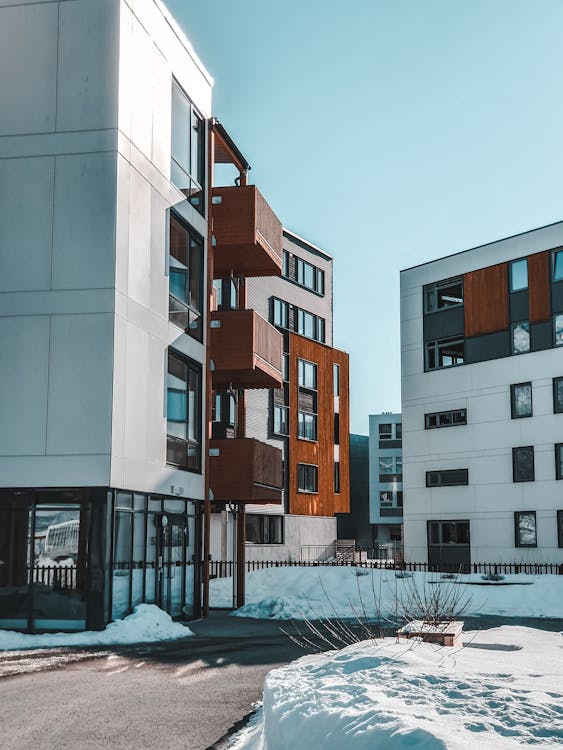
The most overlooked economic advantage of BIPV is cost offset. Every square meter of BIPV facade is a square meter of conventional building material that does not need to be purchased. High-end commercial curtain wall glazing — the material BIPV glass directly replaces — costs approximately €150–€400/m² depending on specification. BIPV curtain wall glazing costs approximately €200–€625/m², according to analysis from METSolar. The net incremental cost — the premium over what the building owner would have spent on conventional glazing anyway — is often only €50–€225/m², and this premium generates electricity for 25–30 years.
BIPV roofing tells a similar story. An NREL study documented that BIPV roof systems eliminate the cost of separate mounting hardware that conventional rooftop PV requires, generating savings that account for a “bulk of the BIPV cases’ potential savings.” When BIPV roof tiles replace premium architectural roofing materials (slate, standing-seam metal, designer concrete tiles), the cost differential narrows further — in some cases to near zero.
| Building Element | Conventional Material Cost | BIPV Material Cost | Net Premium | 25-Year Energy Value* |
|---|---|---|---|---|
| Curtain Wall Glass (High-End) | €250–€400/m² | €350–€625/m² | €100–€225/m² | €180–€450/m² |
| Standard Glass Facade | €150–€250/m² | €200–€400/m² | €50–€150/m² | €150–€380/m² |
| Premium Roof Tiles (Slate/Metal) | €80–€200/m² | €120–€280/m² | €40–€80/m² | €250–€500/m² |
| Spandrel Panels | €100–€180/m² | €160–€300/m² | €60–€120/m² | €200–€450/m² |
*Energy value calculated at €0.12–€0.20/kWh, location-dependent irradiance, with 0.4%/year degradation. Actual returns vary by project.
Clean, Renewable Energy
Every kWh generated by a BIPV system displaces grid electricity — and the carbon emissions associated with that grid electricity. In countries relying heavily on coal and natural gas for power generation, the CO₂ displacement is substantial. A single 100 m² BIPV facade with 15% module efficiency in Central Europe generates approximately 12,000–15,000 kWh annually, displacing roughly 4.5–6.0 tonnes of CO₂ per year based on average European grid emission factors. Over a 25-year system life, that single facade section eliminates approximately 112–150 tonnes of CO₂.
The manufacturing carbon footprint of BIPV modules has dropped sharply as well. Leading manufacturers like Jia Mao Bipv operate production lines with an annual capacity of 3 GW, leveraging automated manufacturing and solar-powered facilities to minimize embodied carbon. Their N-type monocrystalline cells exceed 22% efficiency, meaning each square meter of facade generates more clean energy over its lifetime relative to the energy consumed in its production — a metric known as energy return on energy invested (EROEI) — typically achieving EROEI ratios of 15:1 to 25:1.
Environmental Impact
BIPV’s environmental benefits extend beyond carbon displacement. By eliminating the need for separate mounting structures, BIPV systems reduce steel and aluminum consumption associated with conventional rooftop racking. The dual-function nature of BIPV — building material plus power generator — means one product serves two purposes, reducing total material extraction, manufacturing, and transportation compared to installing separate building cladding and a separate solar array.
End-of-life recyclability is increasingly addressed by the industry. BIPV glass panels, like all glass-encapsulated PV modules, are 85–95% recyclable by weight. The glass component is infinitely recyclable, the aluminum frames are recovered intact, and silicon cells are reclaimed for reuse. Manufacturers committed to circular-economy principles — including those in the Jia Mao Bipv product range — design products with end-of-life disassembly in mind, using mechanical fastening systems and compatible material combinations that simplify recycling.
Watch: Understanding Building-Integrated Photovoltaics (BIPV)
Types and Applications of Building-Integrated Photovoltaics
Facades and Curtain Walls
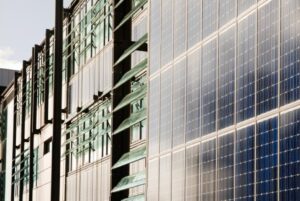
BIPV facade systems represent the fastest-growing application segment, driven by the enormous surface area available on commercial building exteriors and the high value of the conventional materials they replace. Modern BIPV curtain wall systems are engineered to meet the same structural, thermal, acoustic, and fire-safety standards as conventional curtain walls — because they are curtain walls, with photovoltaic capability added.
Typical BIPV facade configurations include opaque spandrel panels (covering floor slabs and mechanical zones, where transparency is not needed and maximum power density is desired), semi-transparent vision panels (in occupied zones where daylighting matters), and ventilated rainscreen systems (where the BIPV panel forms the outermost weather barrier with a ventilated cavity behind). Each configuration serves a different architectural function while generating electricity.
A comprehensive case study published in MDPI Energies (2025) analyzed a full-size BIPV ventilated curtain wall in Berlin — operating as both a functioning commercial building and a “living laboratory.” The study measured actual energy generation, thermal performance, and system reliability over multiple years, confirming that BIPV facades deliver predictable, bankable energy yields while maintaining structural integrity equivalent to conventional curtain wall systems.
| Application | Typical Efficiency | Power Density | Transparency | Primary Benefit |
|---|---|---|---|---|
| Opaque Facade Panels | 18–22% | 180–220 W/m² | 0% | Maximum energy from spandrel zones |
| Semi-Transparent Curtain Wall | 8–15% | 80–150 W/m² | 20–60% | Daylighting + power + solar control |
| BIPV Roof Tiles | 17–23% | 170–230 W/m² | 0% | Replaces conventional roofing entirely |
| BIPV Skylights | 6–12% | 60–120 W/m² | 30–70% | Overhead daylighting + generation |
| Solar Shading Louvers | 18–22% | 180–220 W/m² | N/A (exterior) | Solar control + generation combined |
| BIPV Windows | 5–10% | 50–100 W/m² | 40–80% | Maximizes transparency, moderate power |
Roofs and Skylights
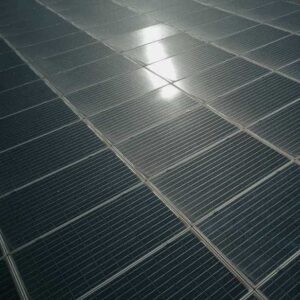
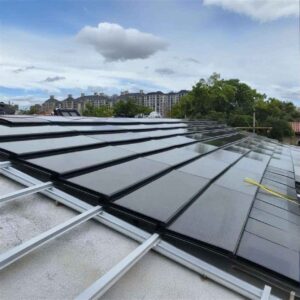
BIPV roofing products have matured significantly. Solar roof tiles — available from multiple manufacturers in profiles mimicking slate, clay, flat concrete, and standing-seam metal — achieve efficiencies of 17–23% while maintaining the visual character of conventional roofing materials. They are installed by standard roofing contractors using conventional techniques, with electrical connections handled during the installation process rather than as a separate solar installation phase.
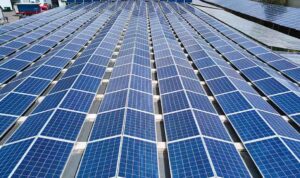
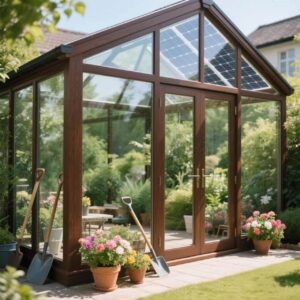
BIPV skylights serve a dual daylighting and generation function that is particularly valuable in commercial buildings. By replacing conventional skylights with semi-transparent BIPV glass, building designers reduce the need for artificial lighting (typically the largest single electricity consumer in commercial buildings, at 20–30% of total consumption) while generating power from the same aperture. The net effect — reduced lighting energy demand plus on-site generation — can exceed the energy benefit of either a conventional skylight or a rooftop panel alone.
Windows and Shading Devices
BIPV windows represent the frontier of building-integrated solar technology. Using strategically spaced monocrystalline cells within laminated glass, or thin-film coatings that are partially transparent to visible light while absorbing infrared and ultraviolet wavelengths, BIPV windows maintain occupant views and daylighting while generating electricity. Current products achieve 5–10% module efficiency at transparency levels of 40–80%.
BIPV shading devices — louvers, brise-soleil, overhangs, and automated tracking fins — combine solar control with energy generation in a single element. These are particularly effective on east and west facades, where low-angle sun causes the most glare and overheating. A BIPV louver system simultaneously blocks direct sunlight (reducing cooling load), redirects diffuse daylight deeper into the floor plate (reducing artificial lighting demand), and generates electricity from the absorbed direct radiation — delivering three benefits from one building component.
Challenges and Limitations
Initial Investment
The most frequently cited barrier to BIPV adoption is higher upfront cost compared to conventional building materials. Industry data from Maysun Solar reports that BIPV systems typically carry initial costs 20–30% higher than non-photovoltaic alternatives of similar architectural quality. For a 5,000 m² commercial facade, this premium can translate to €250,000–€1,125,000 in additional upfront expenditure.
However, this headline number is misleading without context. First, it compares BIPV to the cost of conventional material alone — ignoring the avoided cost of a separate rooftop solar installation that would otherwise be needed to meet energy or certification targets. Second, it ignores 25–30 years of electricity generation revenue that offsets the premium. Third, it does not account for HVAC savings from BIPV’s thermal effects. A holistic lifecycle cost analysis published in Energy and Buildings concluded that when all cost offsets were quantified, BIPV achieved payback periods of 8–15 years for facade applications and 5–10 years for roof applications — within the acceptable range for commercial real estate investors.
The trajectory of BIPV pricing is also strongly favorable. Manufacturing costs have declined approximately 15–20% in the past five years, and industry analysts project BIPV systems could reach upfront cost parity with premium conventional materials by the late 2020s to early 2030s, driven by manufacturing scale and technology improvements.
Technical Integration
Integrating photovoltaic functionality into building components introduces technical complexity that conventional construction does not face. BIPV facade panels must simultaneously meet structural load requirements (wind, seismic, dead load), thermal performance standards (U-value, SHGC), fire safety codes (flame spread, smoke development), acoustic performance targets, electrical safety requirements (NEC rapid shutdown, arc fault protection), and power conversion specifications (inverter compatibility, string sizing). The design team must coordinate across disciplines — architecture, structural engineering, electrical engineering, and facade engineering — at a level of integration that many project teams find unfamiliar.
Standardization remains a work in progress. While products from established BIPV manufacturers like Jia Mao Bipv ship with comprehensive technical documentation, certified test reports, and installation guides, the broader industry lacks the kind of universal design standards that exist for conventional curtain walls (AAMA, CWCT) or rooftop PV (IEC 61215, IEC 61730). This means each project requires more upfront engineering, testing, and coordination than either conventional facade construction or conventional rooftop PV alone.
Потребности в обслуживании
BIPV systems require both building-material maintenance (seal integrity, structural fastener checks, water-tightness testing) and electrical-system maintenance (connection inspection, inverter monitoring, performance verification). These two maintenance regimes overlap but do not perfectly align, creating a coordination need that building operators must plan for. Accessing BIPV panels on high-rise facades for cleaning, inspection, or panel replacement can be significantly more expensive than accessing ground-mounted or roof-mounted solar panels — often requiring building-mounted cranes, rope access teams, or swing-stage platforms.
The good news is that modern BIPV panels are designed for low maintenance. Self-cleaning glass coatings reduce cleaning frequency by up to 30%. Module-level monitoring systems (using microinverters or power optimizers) can identify underperforming panels remotely, enabling targeted maintenance rather than building-wide inspections. And because BIPV panels are structural building components designed for 25–30+ year service, their inherent durability exceeds that of add-on rooftop panels exposed to separate mounting stresses.
BIPV Adoption Barriers — Industry Survey Results
Source: Compiled from DOE RFI responses, IEA-PVPS Task 15 reports, and industry interviews (2024–2025).
BIPV technology transforms buildings from passive energy consumers into active contributors to the energy grid — without requiring separate solar installations that compete with architectural intent. The advantages are specific and measurable: on-site generation that eliminates 5–8% transmission losses, facade systems that reduce building energy consumption by 28–55%, material cost offsets that reduce net premiums to fractions of the headline numbers, customizable aesthetics spanning hundreds of colors and transparency levels, and contributions to green building certifications that command rental premiums of 5–15%.
The challenges are equally real — 20–30% higher initial costs compared to conventional materials, technical complexity requiring multi-disciplinary coordination, and maintenance access concerns for high-rise applications — but they are diminishing. BIPV manufacturing costs continue to decline, design standards are being formalized, and a growing base of completed projects demonstrates that the integration challenges are manageable with experienced teams and capable manufacturers.
For architects, developers, and building owners evaluating BIPV, the decision should be grounded in lifecycle cost analysis rather than upfront cost comparison. When the avoided cost of conventional materials, 25+ years of electricity generation, HVAC savings, certification value, and property value enhancement are all quantified, BIPV delivers a compelling return on investment for the right projects — particularly commercial facades, high-value residential developments, and institutional buildings with long ownership horizons. Manufacturers like Jia Mao Bipv — with a comprehensive portfolio of transparent BIPV glass, photovoltaic modules, и integrated solutions — provide the technical depth to support projects from initial concept through decades of operation.
Consider efficiency, cost, and application honestly. Match the technology to the building’s specific orientation, climate, aesthetic goals, and energy targets. BIPV is not the right solution for every surface on every building — but for the surfaces where it fits, it is increasingly the best solution available.
Watch: BIPV Design Principles — 8 Solar Facade Typologies Explained
Frequently Asked Questions (FAQ)
What is BIPV and how does it differ from traditional rooftop solar?
Building-Integrated Photovoltaics (BIPV) refers to photovoltaic materials that replace conventional building components — facades, roofing, windows, skylights, and shading devices — serving dual function as both building material and power generator. Traditional rooftop solar panels are mounted on top of an existing roof using separate racking systems; they serve only one purpose (electricity generation) and do not replace any building material. BIPV eliminates the need for separate mounting hardware and integrates visually and structurally into the building’s architecture. Learn more at the U.S. Department of Energy.
How much does BIPV cost compared to conventional building materials?
BIPV systems typically cost 20–30% more than the conventional building materials they replace. However, the net premium is significantly lower than the headline number suggests because BIPV offsets the cost of materials that would be purchased regardless. For high-end curtain wall applications, the incremental cost over premium glazing can be as low as €50–€225/m². This premium generates electricity for 25–30 years, with payback periods of 8–15 years for facades and 5–10 years for roofs when lifecycle costs are fully analyzed.
Can BIPV help a building achieve net-zero energy status?
Yes. BIPV is widely recognized as one of the key technologies for achieving net-zero energy buildings. By using building facades — which provide approximately 35% more PV-suitable surface area than roofs alone (per IEA estimates) — BIPV can generate enough on-site electricity to offset 15–25% of a commercial building’s total electrical consumption from facade generation alone. Combined with rooftop BIPV and energy-efficient design, many buildings can reach or approach net-zero targets.
What efficiency do BIPV panels achieve?
BIPV panel efficiency varies by application type. Opaque facade panels and roof tiles using monocrystalline cells achieve 18–23% efficiency — comparable to standard rooftop panels. Semi-transparent curtain wall glass ranges from 8–15% depending on transparency level. BIPV windows achieve 5–10%, and BIPV skylights typically reach 6–12%. Higher transparency means lower efficiency, but the trade-off provides daylighting, views, and solar control benefits that opaque panels cannot offer. Manufacturers like Jia Mao Bipv use N-type monocrystalline cells exceeding 22% cell efficiency in their BIPV products.
How long do BIPV systems last?
BIPV systems are designed for building-lifetime durability — typically 25–30+ years. Leading products carry 25-year performance warranties guaranteeing at least 80–85% of rated output at end of warranty period. Annual degradation rates for quality crystalline BIPV modules average 0.3–0.5% per year. The glass, aluminum frame, and structural sealant components are engineered to meet architectural-grade longevity standards, often exceeding the durability of the conventional building materials they replace.
What types of buildings are best suited for BIPV?
BIPV delivers the strongest return on investment in commercial office buildings (large facade areas, high electricity prices, certification value), institutional buildings (universities, hospitals, government — long ownership horizons, sustainability mandates), high-rise residential (premium aesthetics justify cost premiums), and retrofit projects where facade renovation is already planned. Buildings with significant south, east, or west facade exposure and high daytime electricity demand benefit most. Dense urban environments where roof area is insufficient for rooftop PV are particularly strong BIPV candidates.
Does BIPV reduce a building’s cooling costs?
Yes, significantly. Semi-transparent BIPV windows and facades absorb solar radiation for electricity conversion, transmitting less heat into the building interior. Research has documented BIPV facades achieving energy savings of 28–55% (including both power generation and thermal load reduction) in high-rise office buildings. South-facing double-glazed BIPV modules achieved up to 60% energy savings compared to standard clear glazing, primarily from reduced air conditioning demand. Ventilated BIPV systems also reduce heat transfer through the wall assembly, adding further cooling benefits.
How big is the global BIPV market?
The global BIPV market was valued at approximately USD 33.1 billion in 2025 and is projected to reach USD 103.7 billion by 2032, growing at a compound annual growth rate of 17.7%, according to Coherent Market Insights. Europe leads with approximately 40% market share, followed by Asia-Pacific and North America. Growth is driven by net-zero building mandates, green building certification requirements, and declining BIPV manufacturing costs.
Can BIPV panels be customized in color and transparency?
Yes. Modern BIPV products are available in virtually any solid color through colored interlayer films or printed ceramic frits, and in transparency levels ranging from 10% (nearly opaque) to 90% (nearly clear). Surface textures include smooth, matte, textured (stone/terracotta appearance), and three-dimensional profiles. Sizes range from small spandrel panels to full-floor curtain wall units. Manufacturers like Jia Mao Bipv offer fully customizable BIPV glass with variable transparency, custom colors, and proprietary cell arrangement patterns for architectural integration.
What maintenance does BIPV require?
BIPV systems require a combination of building-material maintenance (seal integrity checks, structural fastener inspection, water-tightness verification) and electrical-system maintenance (connection inspection, inverter monitoring, performance verification). Cleaning frequency is typically quarterly to semi-annual, depending on location and pollution levels; self-cleaning glass coatings can reduce this by approximately 30%. Module-level monitoring systems enable remote identification of underperforming panels, allowing targeted rather than building-wide maintenance visits. Overall maintenance costs are comparable to or lower than the combined costs of maintaining separate conventional cladding and separate rooftop solar systems.


-300x300.jpg)