
1. The Future of Building Envelopes Is Here
Three forces are reshaping every project brief hitting your desk right now. Energy costs are climbing — commercial electricity rates in the U.S. averaged $0.1246/kWh in 2024, and most energy analysts expect a further 2–3% annual escalation. Sustainability regulations are tightening — the EU’s revised Energy Performance of Buildings Directive now requires all new buildings to be zero-emission by 2030, and equivalent pressure is building across U.S. state codes. And clients, whether they are corporate tenants, institutional owners, or municipal authorities, are writing net-zero commitments into project briefs that used to say nothing about energy at all.
BIPV glass — short for Building-Integrated Photovoltaics glass — sits precisely at the intersection of all three pressures. It is not a panel bolted onto a finished building. It is the building envelope itself: a glass assembly that simultaneously provides weather protection, thermal performance, daylighting, and on-site electricity generation.
The global BIPV market was valued at approximately $23.4 billion in 2025 and is projected to reach $89.8 billion by 2030, growing at a compound annual growth rate of 21.2%, according to Grand View Research. That is not a niche trend. That is a structural shift in how building envelopes are specified, procured, and built.
For curtain wall contractors, PV EPCs, roofing specialists, building material distributors, and design teams, the question is no longer whether BIPV glass matters. It is whether your firm is ready to compete for the projects that will specify it — and there are more of those projects every quarter.
2. What Is BIPV Glass and Why It Matters to Your Projects
BIPV glass (Building-Integrated Photovoltaics glass) is a dual-function building material. It replaces a conventional envelope element — a curtain wall lite, a skylight unit, a spandrel panel, a roofing sheet — while embedding photovoltaic cells that convert sunlight into electricity. The key word is заменяет, not supplements.
This is the fundamental difference from traditional rack-mounted solar panels. A standard rooftop array sits on top of the building, requires its own racking structure, creates maintenance access complications, and adds dead load to a roof that was not designed for it. BIPV glass is designed into the building from the start. It carries the same structural, thermal, fire, and weathering requirements as any other architectural glazing — and it generates power at the same time.
That dual function changes the economic equation. When a BIPV glazing unit replaces a high-performance curtain wall panel that would have cost $150–$250/m² anyway, the incremental cost of adding power generation is often $120–$280/m² above the conventional baseline — not the full installed cost of $410–$750/m². Payback calculations built on the incremental cost look very different from those built on the full system cost.
The relevance to your projects is direct. For contractors: BIPV eliminates the coordination gap between the facade subcontract and the solar subcontract — the same glazing package generates both the building envelope and the electrical output. For EPCs: BIPV opens a new service category — integrated facade energy systems — that commands higher margins than rack-mounted retrofit work. For architects: BIPV means you do not have to choose between a high-performing envelope and a clean aesthetic. For distributors: BIPV glass carries per-square-meter margins that commodity glass cannot approach.
3. Energy Efficiency Meets Architectural Design
One of the most persistent friction points in sustainable building design is the perceived conflict between energy performance and architectural intent. Clients want buildings that look premium. Energy codes want buildings that generate or consume less energy. Those two demands have historically pulled in opposite directions.
BIPV glass removes that conflict at the envelope level.
A semi-transparent BIPV curtain wall with 20–30% visible light transmission (VLT) can simultaneously reduce cooling loads by up to 23% compared to conventional clear glazing (per IEA PVPS Task 15 research), control glare for occupants, admit useful daylight, and generate electricity from the same facade area. It achieves all four functions with a single product — one specification line, one glazing subcontract, one facade system.
The energy case is well-supported by real project data. A 2022 study published in Cell Reports Sustainability documented that highly glazed commercial buildings with BIPV facades reduced annual energy use and CO₂ emissions by up to 40% compared to equivalent buildings with conventional glazing. That figure comes from buildings where the BIPV glass was designed in from the concept stage — not retrofitted — which is why early integration matters so much.
A practical example: a south-facing commercial facade of 1,000 m² in a Central European climate, glazed with semi-transparent c-Si BIPV at 100 Wp/m², will generate approximately 90,000–110,000 kWh per year after applying a realistic performance ratio of 0.78 and accounting for the reduced irradiance of a vertical surface relative to a tilted optimum. At an electricity cost of $0.15/kWh escalating at 2.5% annually, that is approximately $13,500–$16,500 in year-one energy value — and growing every year as electricity costs rise.
The design freedom available within that performance envelope is broader than most specifiers expect. VLT can be specified anywhere from 10% to 90%. Cell color can be matched to architectural intent — standard black and dark blue, through bronze, gray, and custom RAL colors. Patterns can be laser-scribed into thin-film cells or created through custom cell spacing in crystalline products. The building does not need to look like it has solar panels. It looks like the building the architect designed.
4. Enhancing Project Value for Contractors and Developers
Every contractor who has managed a large commercial project knows the coordination cost of managing multiple specialty subcontractors across the facade and electrical trades. BIPV glass compresses that interface.
When the glazing package includes the photovoltaic function, there is one set of shop drawings that covers both the building envelope details and the electrical layout. There is one product warranty that covers both glass performance and power output. There is one supplier relationship to manage for lead time, logistics, and quality assurance. The overlap between the glazing contractor and the solar installer shrinks — in unitized curtain wall systems, the facade contractor can install the BIPV units with the same equipment, crew, and sequence used for any other glazing package.
For developers and building owners, the value proposition compounds over time. BIPV buildings qualify for LEED v4 Energy & Atmosphere Optimize Energy Performance credits, BREEAM carbon reduction credits, and an increasing number of regional green building incentive programs. In jurisdictions where energy performance certificates affect asset valuation and lease pricing — which increasingly means most major commercial markets — a building that generates on-site renewable energy commands measurable premium positioning.
Developers who adopted green building certification early reported 6–8% rental premiums over comparable non-certified space in central business district markets (CBRE research, 2024). BIPV glass is one of the most visible and differentiated ways to achieve and communicate that positioning.
For contractors, the competitive differentiation is equally real. A curtain wall subcontractor who can specify, supply, install, and commission a BIPV facade system is not competing in the same pool as one who can only install conventional glazing. The bid list gets shorter, the margin conversation changes, and the relationship with the main contractor and architect becomes more strategic.
5. Seamless Integration with Curtain Walls and Roofing Systems

BIPV glass integrates into building envelope systems across four primary configurations. Understanding which configuration fits a given project determines the coordination sequence, structural requirements, and electrical design approach.
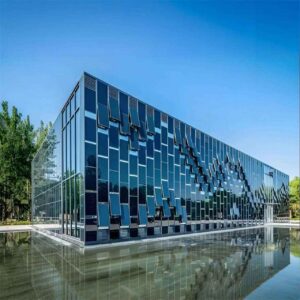
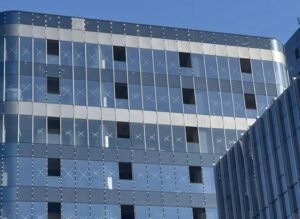
Unitized curtain wall is the most common commercial application. BIPV modules are factory-glazed into aluminum unitized frames before arriving on site. Each frame unit carries the glass module, the electrical connectors, and the drainage details as a pre-assembled package. Crane lifts place units floor by floor in the same sequence as any unitized system. The electrical connections between units are made through pre-positioned connectors in the mullion stack — no on-site wiring threading required. This approach achieves the cleanest visual result and the most consistent installation quality.
Stick-built curtain wall suits projects where the facade profile is irregular, the spans are non-standard, or the architect requires a custom aluminum profile that does not lend itself to unitized fabrication. BIPV glass modules are glazed into the field-assembled framing. Electrical wiring is routed through the mullion cavities and terminated in junction boxes located at the base of each floor zone. Stick-built BIPV requires tighter coordination between the glazing contractor and the electrical contractor during installation, but it allows greater flexibility in facade geometry.
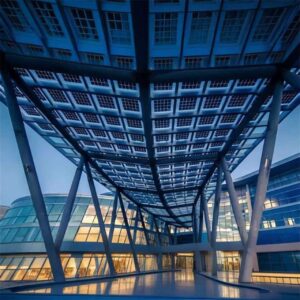
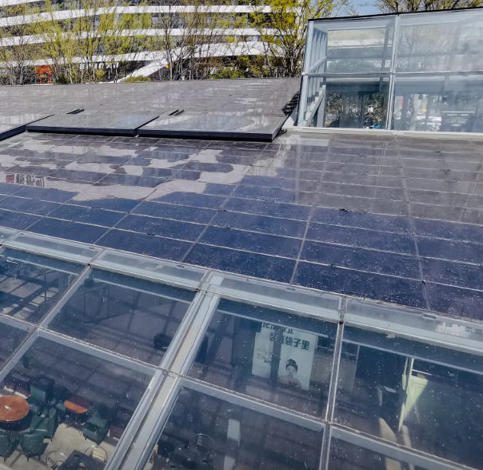
Sloped glazing and skylights demand the most careful waterproofing engineering. BIPV glass units in overhead positions must manage water drainage at every joint, and the cable penetrations through the glazing frame must not compromise the drainage plane. Products specified for skylights should be tested to ASTM E331 water intrusion standards, not just IEC PV module standards — those two test categories address different failure modes and both must pass.
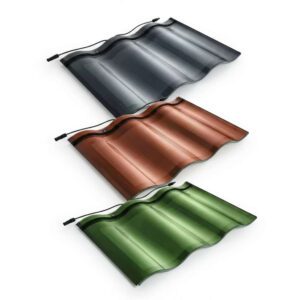
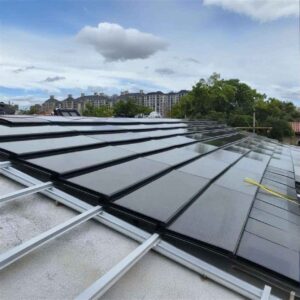
Metal roofing integration suits opaque BIPV — solar glass laminates that replace conventional metal roof panels. These products generate more power per square meter than transparent glass (typically 150–200 Wp/m²) because they maximize cell density without daylighting constraints. They integrate with standing seam or profiled metal roof systems and are ideal for large-area industrial, logistics, or institutional roofs where energy generation is the primary objective.
Structural considerations to verify before specification:
| Parameter | Typical Requirement | Verification Method |
|---|---|---|
| Dead load capacity | BIPV glass: 20–22 kg/m² (glass-glass) | Structural engineer review of existing or designed frame |
| Wind pressure rating | Jia Mao BIPV: tested to 4.0 kPa | Request product test report for specific project wind zone |
| Thermal expansion clearance | 3–5 mm edge clearance per module | Verified in shop drawing glazing bite detail |
| Fire classification (U.S.) | NFPA 285 for facades >12 m (40 ft) | Request assembly-specific NFPA 285 test report |
| Fire classification (EU) | EN 13501-1 A2-s1,d0 for high-rise | Request CE Declaration of Performance and fire test data |
| Electrical cable routing | Mullion cavity or dedicated conduit | Resolved in curtain wall shop drawing coordination |
| Water intrusion (field) | AAMA 501.2 hose-stream testing | Specify as contractual post-installation quality check |
Collaboration tip from the field: The single most common source of BIPV project delays is discovering that the mullion profile selected for a curtain wall does not have sufficient cavity depth to accommodate the electrical connectors and cable routes of the BIPV module. This is discovered during shop drawing review — six to ten weeks into the procurement cycle — and changing the profile at that stage costs both time and money. The fix is simple: bring the BIPV manufacturer’s technical team into the curtain wall profile selection meeting before the glazing subcontract is awarded. Jia Mao BIPV’s engineering team provides this coordination support as part of project onboarding, and it consistently prevents the most expensive rework scenarios.
6. Meeting Sustainability Goals Without Compromising Aesthetics
The architectural specification community increasingly treats sustainability mandates and design intent as competing demands. That framing is becoming obsolete, and BIPV glass is one of the products making it obsolete.
Architects’ actual pain point is not sustainability per se — it is the visual intrusion of energy systems onto building facades that were designed to communicate something specific about an organization, a place, or a brand. Rack-mounted panels visible above a parapet, mechanical equipment crowding a roofline, or PV arrays that look like afterthoughts on an otherwise resolved facade — these are the design failures that sustainability mandates have historically imposed.
BIPV glass does not impose anything. It is the facade. The photovoltaic cells are embedded within the glass laminate. From the exterior, the building reads as a glass building — which is what the architect designed. The only visual difference between a BIPV curtain wall and a conventional high-performance curtain wall is a subtle tint or pattern that, in most applications, is indistinguishable from standard solar-control glazing.
The customization range available from manufacturers including Jia Mao BIPV is extensive. Transparency can be specified from 10% (very dark, high power density) to 90% (nearly clear, lower power density but maximum view preservation). Cell arrangement can create geometric patterns, gradients from denser to sparser cells across a facade zone, or custom arrays that align with the architectural grid. Colors range across the full architectural palette — black, dark blue, gray, bronze, green, and custom RAL matches are all achievable. Module sizes can be specified to match the curtain wall grid exactly, with no visible panel edge within the glazed area.
Notable examples of BIPV aesthetics in practice: The Atlassian Central Tower in Sydney incorporated 1,794 custom BIPV louvres totaling 247 kWp — each louvre is a triple-glazed structural element that serves simultaneously as solar shading, daylight diffusion, and power generation. From ground level, the building reads as an innovative timber-and-glass tower. The energy system is invisible until you look at it closely. That is the design standard BIPV glass makes achievable.
For heritage-adjacent projects, colored BIPV glass can be manufactured to complement traditional masonry palettes — sand, terracotta, and muted earthy tones are standard options. For public institutions and transit hubs, the glazing can be printed with imagery or gradients that create architectural features while generating power. The technical platform is flexible enough to follow the design, not constrain it.
7. Accelerating Compliance with Green Building Codes and Incentives

Regulatory pressure on building energy performance is accelerating on every continent. Understanding which regulations apply to a project — and how BIPV glass addresses them — is now a core competency for anyone in the building envelope supply chain.
United States: California’s Title 24 energy code requires progressively lower energy use intensity for commercial buildings, with on-site renewable generation credits available for BIPV systems. The Department of Energy’s Zero Energy Ready Home program and emerging commercial ZNE (Zero Net Energy) standards in several states create direct demand for on-site generation. The Inflation Reduction Act (IRA) provides a 30% Investment Tax Credit (ITC) for commercial solar installations — including BIPV facade systems that qualify as solar energy property. With prevailing wage and apprenticeship requirements met, the base 6% credit scales to the full 30%. The MACRS 5-year accelerated depreciation schedule applies to BIPV systems, further improving the after-tax economics. For state-specific incentive programs, the DSIRE database is the authoritative reference — it tracks over 1,000 active incentive programs across all U.S. states.
European Union: The revised Energy Performance of Buildings Directive (EPBD) requires all new buildings to be zero-emission by 2030, with publicly owned buildings meeting that standard by January 1, 2028. Member states including France, Italy, Switzerland, and Germany have active BIPV subsidy programs that provide per-watt incentives on top of the baseline ITC equivalents. Feed-in tariff programs in several EU markets provide guaranteed purchase prices for BIPV-generated electricity exported to the grid.
Asia-Pacific: China’s domestic BIPV market is growing at over 30% annually, driven by provincial net-zero building pilot programs and national carbon reduction commitments. Australia’s NCC 2022 energy provisions and the Clean Energy Finance Corporation’s commercial green building finance programs are accelerating BIPV adoption in the Asia-Pacific market.
Green building certification contribution:
| Certification System | BIPV Contribution Category | Potential Credits |
|---|---|---|
| LEED v4 | Energy & Atmosphere: Optimize Energy Performance | Up to 5 points |
| LEED v4 | Energy & Atmosphere: Renewable Energy Production | Up to 3 points |
| BREEAM | Energy category (carbon reduction) | Contributes to ~50% carbon-focused credits |
| WELL v2 | Light Concept: Light Exposure & Education | Indirect contribution via daylighting optimization |
| Passive House (PHIUS) | Primary Energy Renewable (PER) target | Directly reduces PER demand |
Financing pathways that reduce upfront burden for clients:
- Power Purchase Agreements (PPAs): A third-party investor owns and finances the BIPV system; the building owner purchases the electricity generated at a pre-agreed rate below the grid tariff. Zero upfront capital required. Most viable on projects with 10+ year occupancy certainty.
- Green loans and bonds: Many commercial lenders now offer preferential rates for buildings targeting LEED Gold or BREEAM Very Good and above. The ITC reduces the loan principal that needs to be financed.
- PACE financing (U.S.): Property Assessed Clean Energy programs in participating states allow BIPV system costs to be repaid through property tax assessments — transferable to future owners, which removes the long-payback objection for building owners who may sell within 10 years.
8. Collaboration Across Stakeholders: A Win-Win for the Ecosystem
BIPV glass is not a product you bolt on at the end of a project. It is a building system that must be designed in from the concept stage. That design requirement creates a coordination imperative — and a competitive advantage for the teams that get it right.
The roles and specific benefits by discipline:
Curtain wall and roofing contractors gain a higher-margin product line that distinguishes them from competitors who supply only conventional glazing. The installation sequence for unitized BIPV is identical to conventional unitized curtain wall — same equipment, same crew skills, same floor-by-floor sequence — which means the learning curve is manageable. The added coordination is electrical: pre-positioning cable routes, ensuring mullion cavities match the connector package, and scheduling the electrical commissioning inspection.
Photovoltaic EPCs and energy service providers gain access to the commercial building market through a new service category: integrated facade energy systems. This is a higher-value engagement than rack-mounted rooftop solar because it requires structural, architectural, and electrical coordination — skills that not every EPC competitor has. The contract value per kilowatt is higher, the client relationship is deeper, and the referral pathway (through architects and curtain wall contractors) is different from the commodity solar lead.
Architects and design consultants can achieve net-zero energy targets without sacrificing design intent. BIPV glass is the only building envelope product that simultaneously contributes to energy generation, daylighting quality, thermal performance, and architectural expression. Early integration — meaning BIPV is in the facade concept, not the value-engineering list — is what makes those benefits achievable at the cost structure that makes sense for the project.
Building material brands and distributors gain a product category with genuine technical depth and recurring advisory relationships. Selling BIPV glass is not a commodity transaction — it requires understanding the project’s facade system, orientation, energy model, and code context. That requirement creates barriers to entry that protect margin and build long-term customer loyalty.
The collaboration sequence that works:
The IEA PVPS Technical Guidebook on BIPV identifies early-stage coordination as the single most important success factor across the case studies it reviewed. Projects where BIPV was introduced during schematic design consistently outperformed projects where it was introduced during construction documents — on cost, schedule, and energy performance.
A practical coordination milestone structure:
- Concept / Schematic Design: BIPV manufacturer technical team reviews facade orientation, approximate area, transparency targets, and energy performance goals. Feasibility confirmed or ruled out before design development investment.
- Design Development: Curtain wall system selected with BIPV module dimensions, connector package, and mullion cavity requirements already incorporated into the framing design. Electrical engineer designs inverter location, DC routing, and grid interconnection.
- Construction Documents: BIM model includes BIPV module families with accurate geometry and connector locations. Shop drawing process starts with BIPV glass dimensions already locked. Fire test report verified for the specific assembly configuration.
- Procurement: Long-lead BIPV glass order placed (8–16 weeks typical; custom colors and sizes add 4–8 weeks). Supply chain status tracked against glazing installation schedule.
- Installation and Commissioning: Facade installation and electrical commissioning sequenced as a single coordinated work package. Electroluminescence (EL) imaging performed on a statistical sample of installed modules to detect handling damage before contractor demobilization. AAMA 501.2 water intrusion testing completed before electrical system energization.
9. Overcoming Common Implementation Challenges
The implementation concerns that come up most often from contractors, distributors, and design teams are real — but each one has a clear, evidence-based response. Here is what the data and field experience actually show.
“The upfront cost is too high.”
The upfront cost of BIPV glass is higher than conventional architectural glazing — typically $120–$280/m² incremental for semi-transparent curtain wall, or $65–$170/m² incremental for opaque cladding, compared to a standard high-performance glazing baseline. That incremental cost is what should be evaluated in ROI terms, not the full system cost.
For a new-construction project replacing premium stone cladding or high-specification glazing, the incremental cost per square meter narrows considerably. Against opaque cladding with an energy output of 150–200 Wp/m² and an annual energy value of $0.15/kWh, the payback on the incremental investment runs 4–10 years for opaque BIPV cladding — well within the financing period of most commercial developments.
A worked example: a 500 m² opaque BIPV cladding installation (replacing conventional stone veneer at $200/m² baseline) costs approximately $250/m² installed incremental. That $125,000 incremental investment generates approximately 82,500 kWh/year (at 165 Wp/m², south-facing, Central Europe). At $0.15/kWh, that is $12,375/year in year one — growing at 2.5% annually with electricity price escalation. After U.S. federal ITC at 30%, the net incremental cost falls to $87,500. Payback: approximately 6.7 years. After that, the energy is essentially free for the remaining 18+ years of the system’s 25-year warranty period.
“Performance in low-light and cold climates is uncertain.”
Modern BIPV glass using amorphous silicon (a-Si) thin-film technology has a temperature coefficient of approximately -0.19%/°C for maximum power — roughly half the thermal sensitivity of standard crystalline silicon. In low-light, diffuse-radiation conditions (overcast northern European or Canadian winters), a-Si products maintain proportionally higher output than crystalline alternatives. Bifacial glass-glass modules also capture reflected light from ground snow cover, improving winter yield.
Field data from a Berlin office building BIPV facade study published in Energies (2024) measured a performance ratio of 78% over a full year — including winter months with low irradiance — comparable to well-designed rooftop installations in the same climate.
“Maintenance must be more complex than standard glazing.”
BIPV glass has the same cleaning and inspection requirements as high-performance insulated glazing units (IGUs). The PV cells are laminated inside the glass — they are not exposed to the environment. Cleaning is performed with the same methods and frequency as conventional curtain wall glass.
The one maintenance addition specific to BIPV is electrical system inspection: inverter performance monitoring (automated via online dashboards), and a periodic (every 2–3 year) electrical inspection of string performance and connector integrity. These inspections are typically combined with the facade inspection that would occur anyway. Self-cleaning coatings, available as a standard option on Jia Mao BIPV’s photovoltaic glass range, reduce cleaning frequency by approximately 30% compared to uncoated architectural glass.
“Shading on one module will kill the output of the whole system.”
This concern reflects an older understanding of string inverter architecture. Modern BIPV systems use module-level power electronics (MLPEs) — microinverters or DC optimizers — that allow each module or small group of modules to operate at its individual maximum power point. Shading from an adjacent building, a facade element, or seasonal sun angle changes affects only the shaded module, not the string. Conducting a shading analysis using building geometry and local sun path data (tools including PVWatts by NREL and specialized 3D shading software) before finalizing the system design eliminates uncertainty about annual yield.
BIM modeling of the complete building geometry — including neighboring buildings and the project’s own overhangs, setbacks, and balconies — should be a contractual deliverable in the design phase for any BIPV facade project. Teams that skip this step consistently overestimate energy yields and underperform their client commitments.
10. Performance and Specification Data: A Practical Reference
Understanding BIPV glass products at a technical level is what separates winning specifications from those that get value-engineered out. The table below gives you the core metrics used in real product comparisons.
Table: BIPV Glass Technology Comparison for Curtain Wall and Roofing Applications
| Технология | Диапазон VLT | Power Output (Wp/m²) | Temp. Coefficient (Pmax) | SHGC Range | Typical Application | Key Advantage |
|---|---|---|---|---|---|---|
| Semi-transparent c-Si glass | 10–35% | 80–150 | −0.34 to −0.40%/°C | 0.15–0.35 | Vision zones, curtain walls, skylights | Highest per-cell efficiency |
| Amorphous silicon (a-Si) thin-film | 5–25% | 30–70 | −0.19%/°C | 0.10–0.25 | Hot climates, spandrel, low-light | Best low-light and high-temp performance |
| CdTe thin-film | 10–30% | 60–120 | −0.28%/°C | 0.12–0.30 | Facades, canopies | Uniform dark appearance |
| Opaque BIPV cladding | 0% | 150–200 | −0.34%/°C | Н/Д | Spandrel panels, rainscreen cladding | Maximum power output per m² |
| Colored BIPV glass (Jia Mao BIPV) | 10–40% | 70–140 | −0.34%/°C | 0.12–0.30 | Custom facades, heritage, branding | Full color and pattern customization |
| Luminescent transparent PV | 50–70% | 30–50 | Варьируется | 0.30–0.45 | High-transparency vision glazing | Near-clear appearance |
| Perovskite-silicon tandem (emerging) | 20–40% | 150–200+ | TBC | TBC | Future curtain walls (2028+) | High efficiency + useful transparency |
Energy yield by facade orientation (illustrative, Central European climate, 1,000 m² BIPV, 100 Wp/m²):
| Orientation | Annual Irradiance (kWh/m²) | Est. Annual Yield (kWh) | Annual Energy Value @ $0.15/kWh |
|---|---|---|---|
| South-facing vertical | ~800–900 | 62,000–70,000 | $9,300–$10,500 |
| East or West vertical | ~550–650 | 43,000–51,000 | $6,450–$7,650 |
| Tilted 30° South (roof) | ~1,100–1,300 | 86,000–101,000 | $12,900–$15,150 |
| North-facing vertical | ~150–250 | 11,700–19,500 | $1,755–$2,925 |
Performance ratio assumed 0.78. Values are illustrative planning estimates; project-specific modeling is required for contractual commitments.
Watch: How BIPV Glass Transforms Building Facades
The video below provides a clear visual overview of how BIPV glass integrates into building design, generates electricity from facades and skylights, and contributes to net-zero building performance.
BIPV in Action: Solar Glass, Advanced Glazing, and Energy Solutions — A practical walkthrough of BIPV glass applications in real commercial buildings.
11. The Road Ahead: BIPV as a Standard in High-Performance Buildings
The BIPV glass market is not approaching mainstream adoption — it is already there for the high-performance building segment, and the rest of the market is catching up faster than most industry observers expected five years ago.
Three technology developments will expand the addressable market further within the next five to eight years:
Perovskite-silicon tandem cells have exceeded 33% combined efficiency in laboratory settings. When stability challenges under UV and humidity are solved — which leading manufacturers expect around 2027–2028 for pilot production — semi-transparent facade modules will produce two to three times more electricity per square meter than current amorphous silicon products while maintaining useful transparency. That step-change in power density will compress payback periods dramatically and open markets currently constrained by marginal yield.
Smart switchable BIPV glass integrates electrochromic interlayers that adjust transparency in response to light levels or electronic signals. Combined with PV generation, this creates a facade that simultaneously generates electricity and dynamically controls solar heat gain — a building energy management system built into the glass itself. Manufacturers including Jia Mao BIPV are actively developing self-dimming material technology for this category, with commercial deployments anticipated within the next three to five years.
BIPV/T (photovoltaic-thermal) systems capture both electricity and heat from the facade, making the waste heat from PV cell operation available for space heating or domestic hot water. For buildings in cold climates pursuing net-zero heating targets, BIPV/T systems can achieve a combined energy utilization factor significantly higher than electricity-only BIPV.
On the regulatory side, IEA PVPS Task 15 is developing an integrated qualification framework that will combine PV performance testing (IEC 61215/61730) with building product testing (fire, impact, water intrusion) into a single coherent standard. When that framework is adopted, the complexity of verifying dual-certification compliance will decrease, reducing a major procurement barrier for specifiers who are currently uncertain about which test reports to require.
The business case for moving now — rather than waiting for further technology improvement — is straightforward. Firms that develop BIPV specification and delivery capability today will have three to five years of project experience, supply chain relationships, and client reference lists when the market reaches its next inflection point. The contractors, EPCs, and distributors who are learning BIPV on small projects in 2025 and 2026 will be the credible bidders on large-scale projects in 2028 and 2030. The ones who wait will be starting from scratch in a market where experienced competitors already have the references.
12. Start Building Your BIPV Capability
The following sequence is designed for firms that are ready to move from awareness to active engagement with BIPV glass as a project delivery capability.
Step 1: Run a facade irradiance audit on your next three projects. For each project with a south, east, or west facing facade of 500 m² or more, calculate the annual irradiance using PVWatts or a 3D shading tool. Any facade receiving more than 600 kWh/m² annually is a viable BIPV candidate worth modeling.
Step 2: Request a technical briefing from a BIPV manufacturer. Jia Mao BIPV’s technical team provides project-specific consultations — covering product selection, VLT and power density trade-offs, module sizing, and electrical integration approach — at no cost at the pre-specification stage. Use their product inquiry page to initiate that conversation for a live project or a prospective bid.
Step 3: Build a dual-certified product list. For each product you are evaluating, request both PV certification (IEC 61215, IEC 61730) and building envelope test data (fire classification, impact testing, water intrusion testing appropriate to your project jurisdiction). Keep this documentation on file — it will be required for permit submittals and client due diligence.
Step 4: Establish a supplier relationship before you need it. BIPV glass lead times run 8–16 weeks for standard products and up to 24 weeks for custom sizes, colors, or fire-tested assemblies. A supplier relationship established before the project is won — including an approved product list and a draft supply agreement — means you can commit to client schedules with confidence rather than discovering lead-time constraints after contract award.
Step 5: Develop a BIPV ROI template. Build a spreadsheet that takes project inputs (facade area, orientation, local electricity rate, incentive program, baseline glazing cost) and outputs payback period, net present value, and ITC benefit. Having this tool ready means you can present a credible economic case to a client at the first meeting — before your competitors have done any analysis at all.
Step 6: Identify your first BIPV reference project. A 100–300 m² curtain wall replacement or skylight project is sufficient to build installation experience and generate a reference photograph and energy performance data point. Choose a project where the client is sustainability-motivated and willing to be cited as a reference. That reference will be worth more than any marketing material in your next BIPV bid.
Glossary of Key Terms
| Term | Definition |
|---|---|
| BIPV | Building-Integrated Photovoltaics — photovoltaic technology integrated into the building envelope as a functional component (facade, roof, skylight), replacing conventional building materials. |
| BAPV | Building-Applied Photovoltaics — solar panels mounted on top of an existing building surface, without replacing the underlying material. The more common rack-mounted rooftop system. |
| VLT | Visible Light Transmission — the percentage of visible daylight that passes through a glass product. A 30% VLT glass transmits 30% of incident visible light. |
| SHGC | Solar Heat Gain Coefficient — the fraction of solar radiation admitted through a glass unit, both directly transmitted and absorbed then re-radiated inward. Lower SHGC = less solar heat entering the building. |
| U-значение | A measure of the rate of heat transfer through a glass unit. Lower U-value = better thermal insulation. |
| IGU | Insulated Glass Unit — a sealed assembly of two or more glass panes with a gas-filled gap between them. The standard configuration for energy-efficient architectural glazing. |
| Performance ratio (PR) | The ratio of actual measured energy output to theoretically expected output under standard conditions. A PR of 0.78 means the system delivers 78% of its theoretical maximum — accounting for real-world losses from temperature, shading, wiring, and inverter efficiency. |
| PID | Potential Induced Degradation — a failure mode in PV modules where leakage current driven by high system voltage causes output loss, sometimes exceeding 30%. Prevented by POE encapsulant and proper system grounding design. |
| POE encapsulant | Polyolefin Elastomer — an encapsulant material used to laminate PV cells between glass layers. Superior to EVA in UV aging resistance (approximately 40% longer) and resistance to acetic acid formation that causes delamination. |
| EL imaging | Electroluminescence imaging — a quality control technique that passes current through a PV module and photographs the emitted light. Micro-cracks, delamination, and cell damage invisible to the naked eye appear clearly in EL images. |
| ITC | Investment Tax Credit — U.S. federal tax credit equal to 30% of the installed cost of qualifying solar energy systems, including BIPV, under the Inflation Reduction Act. |
| MACRS | Modified Accelerated Cost Recovery System — U.S. federal tax depreciation schedule. BIPV systems qualify for 5-year accelerated depreciation, improving after-tax project economics. |
| NEC 690 | National Electrical Code Article 690 — the U.S. standard governing the design, installation, and inspection of solar PV systems, including rapid shutdown requirements for building-mounted systems. |
| NFPA 285 | U.S. fire test standard for multi-story facade assemblies above 12 meters (40 feet). Tests the full facade assembly — including insulation, framing, and cladding — not just the PV module in isolation. |
| MLPE | Module-Level Power Electronics — microinverters or DC power optimizers that allow each PV module to operate at its individual maximum power point, eliminating string-level losses from shading. |
| BMS / BEMS | Building Management System / Building Energy Management System — automated system that monitors and controls building energy use, including HVAC, lighting, and renewable energy generation. BIPV output can be integrated via Modbus or BACnet protocols. |
Frequently Asked Questions (FAQs)
1. What is the difference between BIPV glass and traditional solar panels?
BIPV glass replaces conventional building envelope materials — curtain wall glazing, spandrel panels, roof cladding, skylights — and generates electricity as a built-in function of that envelope component. Traditional solar panels are add-on equipment mounted on top of a completed building surface. The difference is not cosmetic. BIPV glass must pass both PV performance standards (IEC 61215, IEC 61730) and building product standards (fire classification, impact resistance, water intrusion testing). A traditional rack-mounted panel has no building envelope certification because it is not a building envelope component.
2. Can BIPV glass be used in retrofit projects, and what are the real constraints?
Yes — particularly in curtain wall replacement or facade re-cladding projects where the existing system is at end-of-life. The key constraints are structural capacity (BIPV glass-glass modules weigh 20–22 kg/m²; the existing frame must accommodate this dead load), electrical routing (cable pathways through an existing wall cavity require investigation and often involve unforeseen obstructions), and installation timeline in occupied buildings (typically 50–100% longer than in a vacated or new-build scenario). Projects where the facade is already being replaced are the most economically rational entry point for BIPV retrofit.
3. How much energy can a BIPV glass facade actually generate?
Yield depends on three primary variables: product type (opaque cladding generates 150–200 Wp/m²; semi-transparent vision glass typically generates 70–140 Wp/m²), facade orientation (south-facing facades in mid-latitudes generate 2–3× more than north-facing), and location (annual irradiance ranges from approximately 1,800 kWh/m² in southern Spain to approximately 900 kWh/m² in northern Germany, with vertical-surface corrections applied). A realistic planning estimate for a 1,000 m² south-facing semi-transparent curtain wall in Central Europe is 70,000–110,000 kWh/year. Use PVWatts for location-specific preliminary modeling, then commission a detailed 3D shading analysis before locking energy yield commitments into a client agreement.
4. Is BIPV glass durable enough for high-wind or seismic zones?
Yes, when specified and tested correctly. BIPV glass modules engineered for facade applications are tested to wind pressures up to 4.0 kPa — sufficient for most mid-rise and high-rise curtain wall applications. For seismic zones, the key requirement is that the glazing system’s racking and connection design accommodates inter-story drift without overstressing the glass-to-frame connection. This is a structural engineering coordination task, identical to the seismic design requirements for any high-performance curtain wall. Request a project-specific structural calculation from the BIPV supplier for buildings in high seismic or high-wind zones.
5. Does BIPV glass compromise natural lighting or views?
No — but it changes them, and the change must be designed intentionally. A 30% VLT BIPV panel is comparable in appearance to a standard solar-control or lightly tinted architectural glass. Occupants in an office behind 30% VLT glass retain full exterior views, adequate daylight, and reduced glare on hot, sunny facades. A 10–15% VLT product creates noticeably darker interiors and should be limited to spandrel zones, shading applications, or project contexts where interior daylight is secondary to energy generation. Mock-up review under real site lighting conditions — before the glazing package is ordered — is the only reliable way to evaluate appearance at project scale.
6. How does BIPV glass affect facade U-value and thermal performance?
Modern BIPV glass integrates the same low-E coatings and gas-fill insulating layers used in high-performance IGUs. U-values comparable to double or triple glazing are achievable — typically 1.0–1.4 W/m²K for double-pane BIPV IGUs, and 0.6–0.8 W/m²K for triple-pane configurations. Additionally, the photovoltaic cells absorb a portion of solar radiation that would otherwise pass through the glass as heat — reducing SHGC by up to 30–40% compared to clear glazing of equivalent U-value. The net thermal performance is typically better than an equivalent conventional glazing product, not worse.
7. What maintenance does BIPV glass require, and who is responsible?
Maintenance requirements are equivalent to high-performance architectural glazing: periodic cleaning (frequency depends on building location and air quality — typically 1–2 times per year for vertical facades in temperate climates), visual inspection of sealants and frame joints at the same intervals as standard curtain wall maintenance, and electrical system inspection every 2–3 years. The electrical inspection — string performance testing, inverter health check, connector integrity — adds approximately 0.5–1 hour per 100 m² of BIPV area and can be performed during a scheduled facade inspection. Products with self-cleaning glass coatings reduce cleaning frequency. Warranty responsibilities should be clearly split between the facade contractor (glass integrity, water intrusion, sealant performance) and the electrical installer (inverter, wiring, monitoring system).
8. Can BIPV glass be integrated with smart building management systems?
Yes — and this integration is increasingly expected by sophisticated building owners. BIPV inverter and monitoring systems communicate via standard building automation protocols including Modbus TCP, BACnet, and Sunspec. This allows the building energy management system (BEMS) to track real-time generation, optimize self-consumption against load schedules, coordinate with battery storage, and report carbon reduction metrics on the building’s sustainability dashboard. The grid connection and net metering configuration must be coordinated with the local utility before commissioning — this is the EPC’s core coordination responsibility in a BIPV project.
9. Are there fire safety concerns specific to BIPV glass facades?
Fire safety is the area of BIPV specification that requires the most rigorous product verification. For U.S. buildings above 12 meters (40 feet), NFPA 285 testing is required for the complete facade assembly — not just the PV module in isolation. The assembly test must match the proposed installation exactly: same insulation type, same cavity depth, same framing configuration. A 2026 large-scale fire test study found that BIPV modules using POE encapsulant and 3.2 mm or thicker glass performed significantly better in fire tests than those using EVA encapsulant with thin (2.0 mm) glass. Always specify the encapsulant type and glass thickness — not just the brand name — in the fire compliance documentation.
10. How should I calculate ROI for a BIPV project to present to a client?
A defensible BIPV ROI calculation for a commercial new-construction project includes six inputs: the incremental cost of BIPV over the conventional facade baseline (not the full system cost); the annual energy yield based on project-specific shading analysis; the local electricity rate and its expected escalation rate; applicable incentives (U.S. 30% ITC, MACRS depreciation, state programs via DSIRE); the avoided cooling load savings from reduced SHGC; and the 25-year system performance warranty as the analysis horizon. Most clients also want to see the simple payback period alongside the net present value — present both. For retrofit projects or situations where the full system cost (not just incremental) is the investment basis, state this clearly in the calculation and explain why the payback period is longer: the incremental approach applies only when BIPV replaces a material that would have been purchased anyway.
11. Can BIPV glass be customized for unique architectural designs?
Yes — this is one of the strongest competitive advantages BIPV glass holds over rack-mounted systems. Module dimensions can be specified to match curtain wall grid dimensions exactly. Transparency levels are selectable from 10% to 90%. Cell color options include black, dark blue, gray, bronze, green, and custom RAL color matching. Cell arrangements can create geometric patterns, gradients, and custom arrays aligned with the architectural expression. Curved BIPV glass is achievable using flexible thin-film technologies or through controlled cold-bending of laminated panels. For a project-specific review of what is achievable within a given design and budget, the Jia Mao BIPV product customization page provides a useful starting reference — followed by a direct technical consultation for project-specific requirements.
12. What certifications should I require from a BIPV glass supplier?
A minimum certification suite for a facade-grade BIPV glass supplier includes: IEC 61215:2021 (PV module design qualification — thermal cycling, damp heat, UV, mechanical load), IEC 61730:2023 (PV module safety — electrical insulation, fire resistance), ISO 9001:2015 (quality management system for manufacturing), and building product certifications relevant to the project jurisdiction: NFPA 285 и UL 790 Class A (U.S. high-rise facade and roofing), EN 13501-1 (EU fire classification), EN 12600 (EU safety glass impact testing), and ASTM E331 / AAMA 501 (water intrusion, U.S.). Additionally, for U.S. projects, UL 7103 is the integrated BIPV system standard that covers electrical, fire, and weathering performance in a single test program. Manufacturers who cannot provide test reports for the specific assembly configuration you are specifying — not just generic product certifications — should not be considered for facade applications on occupied buildings.
13. How does BIPV affect project timelines, and when should it be introduced?
When introduced at the concept or schematic design stage, BIPV adds no net delay to a project. The facade design, structural coordination, and electrical engineering all proceed in parallel, and the BIPV module dimensions are locked in time to drive curtain wall shop drawings on the standard timeline. When BIPV is introduced during construction documents or after the curtain wall subcontract is awarded, timeline impact can be significant — requiring redesign of the framing system, electrical layout, and possibly structural elements. The cost of introducing BIPV late is primarily schedule, not material cost. The industry guideline from the IEA PVPS BIPV Technical Guidebook is clear: design BIPV in from the first concept, or plan for rework.
14. Who should lead BIPV coordination on a project team?
The most successful BIPV projects consistently show a single point of technical coordination — someone who understands both the building envelope and the electrical system well enough to identify conflicts before they become field problems. This is typically either the lead facade engineer (in firms with solar engineering capability) or the PV EPC (in firms that have developed facade coordination skills). The architect sets the design intent and transparency targets. The structural engineer verifies load capacity. The MEP engineer designs the electrical infrastructure. The BIPV supplier provides module-specific technical data and code documentation. But someone has to own the interfaces between all of these — and establishing that coordination lead in the project organization chart, at schematic design, is the clearest predictor of whether BIPV delivers its intended performance and economic outcomes.
15. Is financing available specifically for BIPV projects?
Yes, across several vehicles. In the U.S., the federal ITC applies to BIPV systems that qualify as solar energy property. PACE financing (Property Assessed Clean Energy) in participating states allows BIPV investment to be repaid through property tax assessments, removing the payback period objection for owners who may sell the asset within 10 years. Power Purchase Agreements (PPAs) allow building owners to benefit from BIPV-generated electricity with zero upfront capital — the PPA provider finances, owns, and maintains the system. Green building loans and sustainability-linked bonds from commercial lenders offer preferential rates for projects meeting LEED Gold or equivalent standards. For a breakdown of programs available in your project’s jurisdiction, the DSIRE database is the most comprehensive U.S.-specific reference.
Want to evaluate BIPV glass for your next curtain wall, roofing, or facade project? The most direct path is a technical consultation with a manufacturer who can review your project’s orientation, glass area, transparency targets, and code context — and give you specific product options, energy yield estimates, and incremental cost data before your design development phase closes.