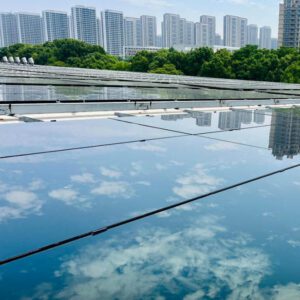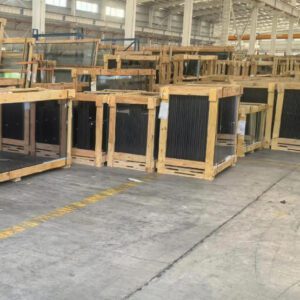
A comprehensive guide to emerging solar glass applications transforming industries and creating new revenue opportunities for distributors and energy product sellers
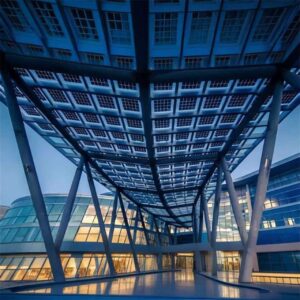
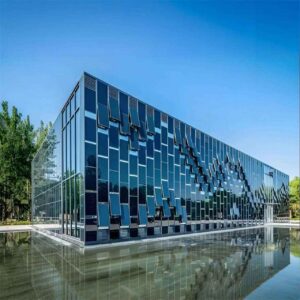
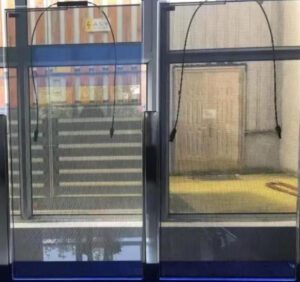
 Modern commercial building with integrated photovoltaic glass facade — the future of building energy design.
The $85 Billion Opportunity Nobody Is Talking About
For most of the past two decades, the solar industry conversation has orbited one image: panels bolted to a rooftop. That image is now dangerously incomplete.
The global Building Integrated Photovoltaics (BIPV) market — the category that encompasses solar glass embedded into the very skin of buildings, vehicles, greenhouses, and infrastructure — was valued at USD 23.41 billion in 2025 and is projected to surge to USD 85.9 billion by 2034, growing at a CAGR of 14.87% (Fortune Business Insights, 2025). The broader photovoltaic glass market is tracking toward USD 62.8 billion by 2032. These are not speculative numbers. They are the compounding result of architectural mandates, corporate ESG commitments, automotive electrification, and a global infrastructure pipeline that needs power where no roof exists.
For distributors, agents, and construction partners, this shift represents something rare: a market still in early formation, where positioning today determines who captures the majority of tomorrow’s contracts. The window manufacturers, glazing contractors, and building materials distributors who understood the transition from single-pane to double-pane glass in the 1990s became category leaders. The solar glass transition is structurally identical — and materially larger.
This guide maps ten specific application domains where solar glass is already generating real-world revenue, explains the buyer psychology and procurement dynamics in each vertical, and shows you exactly how to position your business at the intersection of where the money is flowing.
Jia Mao BIPV serves this precise market — supplying certified photovoltaic glass, transparent solar panels, solar roof tiles, and BIPV facade systems to distributors, glazing contractors, and construction groups who need a manufacturing partner capable of 3GW annual output, full customization, and building-grade quality standards.
Application 1: Building-Integrated Photovoltaics (BIPV) — Transforming Architectural Facades
The Business Case for Facade Integration
Walk past any major commercial construction site in Frankfurt, Singapore, or San Francisco and look at the curtain wall specification drawings. Increasingly, those drawings include a note that would have been unusual five years ago: photovoltaic glazing — see energy compliance annex. Buildings are now legally required to generate a portion of their own energy in multiple jurisdictions, and the facade — not the roof — is often the largest available surface.
Commercial buildings held a 34.7% dominant share of the BIPV facade market in 2024. The driver is straightforward: a 30,000 m² commercial tower in a dense urban district may have rooftop solar potential of 500–800 kW. That same tower’s south and east facades represent 8,000–12,000 m² of glass — a surface three to five times larger, now capable of generation.
The profit mechanics for distributors are compelling. A distributor who positions themselves as a transparent solar specialist can realistically maintain 25–40% gross margins on BIPV glass products — a figure confirmed by market practitioners in the segment. This compares favorably to standard architectural glazing margins of 12–18%. The margin premium exists because BIPV glass is a specification product: architects specify it by technical parameters, not by lowest price.
Onyx Solar, one of the global reference suppliers in the space, has delivered PV glass facades for projects including the Apple Store in Miami, international airports, and corporate headquarters across Europe and North America. Their product portfolio demonstrates what distributors need to understand: facade solar glass is not a commodity. It is a customized architectural product with a 25-year performance warranty, structural testing to curtain wall standards, and an electrical output that is calculated as part of the building’s energy model.
Technical Specifications Distributors Need to Know
BIPV glass for facades is typically manufactured as a laminated glass unit — two tempered glass lites with photovoltaic cells (monocrystalline or thin-film) encapsulated between them in a polymer interlayer. The glass achieves the structural performance of architectural glazing while the cells convert incident solar radiation into DC electricity, which is then managed by inverters connected to the building’s electrical infrastructure.
Key parameters that buyers will ask about:
| Parameter | Typical Specification Range | Why It Matters to Buyers |
|---|---|---|
| Light Transmittance (VLT) | 10% – 50% | Affects interior daylighting & tenant comfort |
| Power Output per m² | 60 – 130 W/m² | Determines energy contribution to building model |
| Cell Technology | Monocrystalline (>22% efficiency), Thin-film | Efficiency vs. aesthetic density of cell coverage |
| Wind Load Rating | ≥4.0 kPa | Required for curtain wall compliance |
| Гарантия | 25 years power output, 10–15 years workmanship | Directly impacts specification approval |
| Сертификаты | IEC 61215, EN 13501, local building codes | Required for permitting and insurance |
Jia Mao BIPV’s laminated photovoltaic glass for facades is engineered with imported POE encapsulant films that enhance UV aging resistance by 40%, invisible busbar technology for clean architectural surfaces, and transparent backsheet options for skylight applications — all backed by the 25-year performance guarantee that commercial projects require.
Selling Strategy for Architects and Contractors
The key decision-maker for facade BIPV is not the facility manager — it is the architect of record working with the energy consultant and the glazing subcontractor. Your sales motion must work at all three levels. Architects respond to design flexibility and certification documentation. Energy consultants need power output modeling data compatible with EnergyPlus or IES-VE. Glazing subcontractors need installation details, handling procedures, and logistics support for oversized units.
Objection handling in this vertical almost always surfaces around the aesthetics-versus-functionality tension. The answer is data: a 40% VLT BIPV glass panel generates meaningful energy while maintaining the visual transparency of a standard tinted office window. Carry specification sheets that show side-by-side photographs of installed projects at different transmittance levels. The objection dissolves when the buyer can see it.
 Transparent solar glass windows in commercial offices reduce energy costs while maintaining a bright, productive work environment.
Application 2: Smart Windows and Transparent Solar Glass for Commercial Offices
Why Offices Are Adopting Solar Windows
A class-A office building in a tier-1 city typically spends 40–60% of its total energy budget on HVAC — most of it compensating for heat gain and loss through conventional glass. When that glass becomes a solar generator и a thermal management layer simultaneously, the economics of the building envelope shift fundamentally.
The corporate sustainability agenda is not a soft consideration in this context. Major tenants — financial institutions, technology firms, professional services companies — are now including minimum energy performance clauses in their lease agreements. Building owners who cannot demonstrate LEED Gold or BREEAM Excellent ratings are losing anchor tenants to competitors who can. Transparent solar glass is one of the most visually demonstrable ways to signal energy leadership, and it works in the building’s energy model.
The ROI calculation for facility managers is built on three stacked benefits: energy generation from solar conversion, reduced HVAC load from the glass’s improved thermal performance (the cell encapsulation adds meaningful insulating value), and reduced glare requiring less artificial lighting compensation. Projects instrumented with submetering have documented daytime electricity bill reductions of 30–50% in well-configured installations.
Product Differentiation in the Window Market
Transparent photovoltaic glass currently achieves commercial efficiencies of 8–12% for visible-light-transparent configurations. Researchers at the University of Michigan have documented 8% efficiency at high transparency levels, while more recent work has pushed demonstration devices to 12.3% at 30% visible light transmission. For a distributor, the practical implication is this: a 500 m² south-facing office curtain wall using transparent PV glass at 100 W/m² generation capacity produces 50 kW of peak power — roughly equivalent to a mid-size rooftop installation, on a surface that was previously pure cost.
The integration with smart building systems is a growing differentiator. When transparent solar glass is paired with building energy management systems (BEMS), the facade can participate in demand-response programs, adjusting shading elements or feeding surplus generation back to the grid. This positions the product not as a building material but as an active energy infrastructure asset.
Distribution Channels for Office Building Projects
The most productive distribution channel for this application is through partnerships with commercial real estate developers and their preferred facade contractors. Developers working on speculative office construction are motivated to increase the building’s energy rating before lease-up, because the energy certificate affects both the achievable rent and the building’s capitalization rate at sale.
Government incentive programs are a significant lever. In the United States, the commercial Investment Tax Credit (ITC) under Section 48E, effective from 2025, continues to offer meaningful credits for eligible solar-integrated building components. In Europe, the EU’s Energy Performance of Buildings Directive (EPBD) recast creates regulatory pull across all 27 member states. Distributors who can explain the incentive stack in their target market reduce buyer friction materially.
Application 3: Agricultural Greenhouses — Powering Sustainable Farming
The Growing Demand from the Agricultural Sector
The global agrivoltaics market — the category covering dual-use solar-plus-agriculture systems — was valued at USD 5.12 billion in 2024 and is projected to reach USD 12.49 billion by 2030. The greenhouse solar glass subset is the fastest-growing component, driven by the convergence of food security concerns, rising agricultural energy costs, and government subsidy programs for controlled-environment agriculture.
A modern commercial greenhouse in the Netherlands or Japan consumes 40–60 kWh of electricity per square meter per year for lighting, climate control, and irrigation automation. At industrial electricity rates, that is a significant cost structure. When the greenhouse roof becomes a partial solar generator while also managing crop light spectra, the operating model changes: energy becomes a partially self-supplied input rather than a pure external cost.
The Dutch innovation in semi-transparent bifacial agrivoltaic panels is a reference case. Commercial greenhouse operators using calibrated spectral-filtering solar glass have documented crop yield maintenance above 90% of conventional yield, while generating enough electricity to offset 30–50% of facility energy consumption. The key variable is spectral management: the solar cells filter wavelengths the crops do not require for photosynthesis, converting them to electricity while transmitting the photosynthetically active radiation (PAR) that crops need.
 Semi-transparent solar glass greenhouse roofs allow crops to thrive while generating clean electricity — dual-use agriculture is one of the fastest-growing solar glass applications.
Solar Glass Applications in Greenhouse Design
The design parameters for greenhouse solar glass differ from facade applications. Light transmission must be carefully calibrated to the specific crops being grown. Tomatoes and cucumbers, which are high-PAR-demand crops, require VLT levels of 50–70%. Leafy greens and herbs can tolerate lower transmission levels of 35–50%. Distributors working in this space need to be fluent in the crop-light interaction data to make credible recommendations to growers.
The dual-functionality also extends to water management. Solar glass greenhouse systems can be paired with rainwater harvesting from the panel surface, reducing irrigation water requirements. In water-stressed regions — the Middle East, North Africa, southern Spain — this feature elevates the proposition from energy savings to operational resilience.
Targeting Agricultural Buyers and Cooperatives
Agricultural procurement cycles are seasonal and planning-horizon driven. A greenhouse operator planning a new 5-hectare expansion makes their major capital equipment decisions 12–18 months in advance of the construction timeline, aligned with crop rotation planning and government subsidy application windows. Distributors who establish relationships at the planning stage — attending agricultural trade shows, working with greenhouse construction contractors — enter the decision process at the right moment.
Government grants for sustainable agriculture infrastructure are available in most major agricultural economies. The EU’s Common Agricultural Policy (CAP) includes provisions for energy efficiency investments in agricultural buildings. In the U.S., USDA programs under the Rural Energy for America Program (REAP) provide grants and loan guarantees for renewable energy systems at agricultural operations. Knowing these programs and helping buyers navigate them is a meaningful service that creates competitive advantage.
Application 4: Vehicle Integration — From Concept Cars to Production Models
The Automotive Industry’s Solar Glass Revolution
The automotive sector’s integration of solar glass represents one of the highest-profile but most technically demanding applications in the category. As of 2025, OEMs command 72.5% of automotive glass specification revenues — meaning the glass specification is locked into the vehicle design 2–4 years before production launch. This creates both a barrier and an opportunity: the sales cycle is long and specification-driven, but contracts are multi-year and volume-based.
Several major OEMs have made concrete public commitments to solar roof integration. Hyundai’s Sonata solar roof, Toyota’s Prius solar charging roof, and Lightyear’s whole-vehicle solar approach represent different points on the integration spectrum. The emerging consensus among automotive engineers is that rooftop solar integration can extend EV range by 15–25 km per day under optimal sun conditions — not a complete solution to range anxiety, but a meaningful reduction in charging frequency for urban commuters.
The market dynamic is shifting toward mass-market adoption timelines of 2026–2030 for solar-capable roofs in mainstream segments, driven by the intersection of falling BIPV glass costs and the range extension benefit becoming more material as EV ownership patterns normalize.
Technical Challenges and Solutions in Vehicle Integration
Automotive-grade solar glass must satisfy requirements that do not exist in architectural applications. Federal Motor Vehicle Safety Standard (FMVSS) 205 and its global equivalents govern automotive glazing safety. The glass must pass impact resistance, penetration resistance, and optical distortion tests at a higher threshold than building glass. The curved geometry of automotive panels requires flexible or formable cell configurations — an area where thin-film technology on curved substrates has an advantage over rigid crystalline silicon.
Weight is a critical parameter. Every kilogram added to a vehicle has a calculable impact on range in an EV. Solar glass panels for automotive use are typically 30–40% thinner than equivalent facade panels, using film-based cell technologies that add minimal mass to the glazing unit.
B2B Selling Opportunities in Automotive Supply
For distributors, the most accessible entry point is not the Tier-1 OEM relationship but the Tier-2 supplier network — the companies that supply glass assemblies, sunroof modules, and panoramic roof systems to the Tier-1 glazing integrators. These companies are actively seeking BIPV glass suppliers who can meet automotive quality standards and deliver at volume. The qualification process is rigorous — expect 12–18 months of product validation — but the contract value is substantial.
Application 5: Public Transportation — Buses, Trains, and Transit Infrastructure
Why Public Transit Operators Are Investing in Solar Glass
A 2026 study published in Transportation Research Part A evaluating three solar deployment strategies for public transit found that station-based solar infrastructure — solar canopies, glass shelters, and terminal roof integration — delivered the most favorable energy economics compared to onboard vehicle integration, with payback periods of 7–12 years and lifetime savings sufficient to fund multiple bus fleet replacements.
Transit authorities in North America, Europe, and Asia-Pacific are under simultaneous pressure from two directions: government mandates to reduce fleet emissions (many jurisdictions require zero-emission fleets by 2030–2035), and chronic operating budget deficits. Solar glass infrastructure addresses both: it reduces purchased electricity costs while demonstrating the environmental commitment that attracts favorable capital financing.
Long Beach Transit in California documented a case study in which solar-powered bus shelters with integrated display technology reduced ongoing power infrastructure costs while improving passenger information quality. In Yinchuan, China, integrating solar PV and battery storage at bus depots demonstrated measurable cost reduction and emissions reduction that was reported as a reference project by the Alternative Energy Magazine.
Solar Glass Applications in Transit Systems
The application landscape spans the full infrastructure footprint of a transit network. Station canopies and bus shelters are the most immediately deployable applications — they are simple structures where solar glass can replace conventional polycarbonate or opaque roofing with a direct functional benefit. Train car roof integration is technically feasible and in pilot deployment in several European and Asian networks. Terminal building facades in major transit hubs represent large-scale BIPV opportunities directly analogous to the commercial building facade market.
The passenger information display market — solar-powered real-time arrival boards, wayfinding, and safety lighting — is a high-visibility, lower-threshold entry point that many distributors use to establish transit agency relationships before pursuing larger infrastructure contracts.
Distribution Strategies for Transit Authorities
Transit authority procurement operates through formal tender processes with defined technical specifications and multi-year contract structures. The key preparation work for distributors is developing tender-ready documentation: product data sheets formatted to the relevant procurement standard, third-party test reports from accredited laboratories, compliance statements for applicable public transportation safety regulations (EN 45545 for rail in Europe; FTA requirements in the U.S.).
Long-term maintenance contracts are the revenue model to pursue in this vertical. Transit agencies value operational continuity above all else. A distributor who bundles performance monitoring, annual inspection, and panel replacement into a 10-year service contract wins on total cost of ownership, not just initial price.

Application 6: Airports and Infrastructure — Canopies, Terminals, and Charging Stations
Airports as Solar Glass Hubs
Airports are energy-intensive facilities that operate 24 hours a day, 365 days a year. A medium-sized international airport consuming 100–200 GWh of electricity annually faces an energy cost structure that makes any technology delivering reliable generation at scale immediately compelling to financial decision-makers.
The infrastructure geometry of airports creates multiple solar glass application points simultaneously. Terminal curtain walls offer large facade surfaces. Departure hall skylights and atriums are natural BIPV glazing opportunities. Parking structure canopies — already common as opaque solar panel installations — become more valuable as solar glass when they serve dual-purpose as covered parking with natural light penetration. EV charging infrastructure for ground transportation (rental car fleets, employee vehicles, airport buses) creates a demand load that can be partially offset by canopy-mounted generation.
Mitrex, a Canadian BIPV manufacturer, has documented solar cladding transformations of airport terminal facades that reduce operating costs and emissions while maintaining the architectural quality expected of major international transit hubs. The thin-film solar panels referenced in the Nature study on sustainable aviation can be integrated into airport windows and facades without structural modification — a critical specification advantage in retrofit projects where major structural work is not feasible.
Revenue Opportunities in Airport Infrastructure
The contract structure for airport solar glass is typically a design-build-maintain model with the airport authority or its facilities management contractor. Initial installation revenue can reach seven or eight figures for a full terminal facade project. The ongoing maintenance contract — typically 10–20 years — provides the recurring revenue baseline that makes the customer acquisition investment worthwhile.
Secondary revenue opportunities exist in the logistics and cargo facility footprint of major airports: warehouses, maintenance hangars, and cargo processing centers all have large roof and wall surfaces that are candidates for solar glass integration.
Selling to Airport Operators and Facility Managers
Aviation safety regulations govern every material used in an airport facility, and solar glass is no exception. The relevant certifications include compliance with local fire safety standards for facades (EN 13501 in Europe; IBC requirements in the U.S.), impact resistance requirements for glazing in public spaces, and operational safety reviews for installations near aircraft movement areas. Arriving at the conversation with pre-prepared compliance documentation positions the distributor as a technically credible partner rather than a vendor.
Application 7: Hospitality and Retail — Hotels, Restaurants, and Shopping Centers
Why Hospitality Venues Are Adopting Solar Glass
The hospitality industry operates on thin margins where energy is typically the second or third largest operating cost line item. A 200-room hotel in a sun-belt market operating with conventional HVAC systems can spend USD 800,000–1.2 million per year on electricity. An installation of solar glass on the building’s south facade and skylight areas sufficient to cover 15–20% of that consumption generates USD 120,000–240,000 in annual savings at current commercial electricity rates — a figure that translates directly to operating income improvement.
One documented case from the hotel sector: a property that installed a commercial solar system was saving approximately USD 1,500 per month in energy costs and earning USD 16,000 annually in renewable energy credits (Hotel Management, 2024). While this specific installation used conventional panels, the economic template translates directly to integrated solar glass when the property is new-build or undergoing a facade renovation that would require re-glazing regardless.
The competitive differentiation angle is equally real. Hospitality brands are responding to data showing that a growing segment of travelers — particularly corporate travelers who book under employer sustainability policies — explicitly filter accommodations by sustainability certification. A hotel whose facade visibly integrates solar glass and whose lobby communication highlights the energy generation data is converting that infrastructure into a marketing asset.
Solar Glass Applications in Hospitality Settings
Restaurant dining areas with solar glass skylights represent one of the most visually compelling applications in the segment. The spectral quality of light transmitted through calibrated VLT solar glass is often described by interior designers as superior to standard tinted glass — warmer, less blue-shifted, with reduced glare. Hotel atriums integrating BIPV glass can generate meaningful power from the largest single glass surface in the building while maintaining the architectural drama that defines the guest arrival experience.
Retail storefronts are a growing application, particularly for flagship stores in high-footfall locations where brands invest heavily in facade design. Solar glass that also serves as the storefront glazing aligns with corporate sustainability reporting requirements while generating power from what is otherwise a pure-cost building element.
Marketing Strategies for Hospitality and Retail Buyers
The decision-maker in hospitality is typically the Director of Engineering or VP of Facilities at the property management company level, working in coordination with the Chief Sustainability Officer for corporate brand standards. The ROI presentation needs to model the full financial picture: energy savings, REC income, maintenance cost delta versus conventional glazing, and brand value contribution.
Occupancy research supports the sustainability investment thesis. Hotels with verified sustainability certifications command a measurable premium in both occupancy rate and average daily rate compared to comparable non-certified properties. Including this data in a distributor’s sales presentation elevates the conversation from an energy cost discussion to a revenue strategy discussion — a different and more productive conversation for a C-suite audience.
Application 8: Educational Institutions — Schools, Universities, and Research Centers
The Educational Sector’s Solar Glass Adoption
University campuses and K-12 school systems are among the most motivated adopters of solar glass infrastructure for a combination of financial and mission-driven reasons. Institutionally, sustainability commitments are a competitive differentiator in student and faculty recruitment. Practically, educational institutions own large, long-lived building inventories where energy cost certainty over 25-year timeframes has direct budget planning value.
Government and foundation funding for green educational infrastructure is a critical market enabler. In the U.S., programs including the ITC, USDA grants, and state-level education department capital programs have funded solar integration at hundreds of campuses. The UNCG Middle College solar installation completed in January 2026 is a recent example of how institutional solar investment continues to accelerate even at the community college level. The University of Washington’s Life Sciences Building, featuring architectural glazing systems designed for solar integration, received recognition from the American Institute of Architects Committee on the Environment.
 Solar glass integration in university campus buildings supports sustainability goals while funding future operational costs through energy savings.
Applications in Academic Settings
New construction at major research universities increasingly incorporates BIPV as a baseline specification rather than an optional upgrade. Research facilities have particularly strong energy demands — laboratory ventilation, specialized lighting, and computational infrastructure — that make on-site generation valuable. Student housing is a growing application; dormitory facades oriented to sun-facing aspects are prime candidates for solar glass integration during renovation cycles.
Outdoor campus spaces — covered walkways, outdoor classroom canopies, sports facility roofs — represent the visible, public-facing BIPV applications that generate campus community engagement and support the institution’s sustainability narrative for donor communications.
B2B Approach for Educational Buyers
Educational procurement typically operates through multi-year capital planning cycles, with major building projects approved in budget processes 18–36 months before ground-breaking. The most effective distributor approach is to engage at the feasibility stage, providing energy modeling data that supports the capital justification in the institution’s budget submission. Grant writing assistance — helping procurement teams identify and apply for available renewable energy funding — is a high-value service that builds deep institutional relationships.
Multi-year purchasing agreements are common in the educational sector. A university system with 15–30 buildings in a facilities master plan represents a multi-phase pipeline where the first building becomes the reference case for the rest of the portfolio. Invest in the first project; harvest the rest of the portfolio.
Application 9: Healthcare Facilities — Hospitals, Clinics, and Medical Centers
Healthcare’s Critical Need for Reliable, Clean Energy
Hospitals are among the most energy-intensive buildings in the built environment — consuming 2.5–3 times more energy per square meter than a typical commercial office building. A large regional hospital may spend USD 5–10 million per year on electricity. When the grid fails, the consequences are life-safety events, not merely operational inconvenience. This combination of high consumption and mission-critical reliability creates a category of buyer who is motivated by both cost reduction and resilience — the strongest possible procurement psychology.
The regulatory environment for healthcare sustainability is tightening. The Joint Commission’s Certified Green Healthcare standards, LEED for Healthcare certification, and state-level healthcare facility sustainability regulations are creating compliance requirements that BIPV investments can address. Many health systems now publish annual sustainability reports with specific energy generation targets; solar glass integration contributes directly to those reported metrics.
A 2024 National Institutes of Health study (PMC10835743) on solar energy for primary healthcare concluded that energy-intensive utilities like hospitals can benefit tremendously from solar energy for reliable, round-the-clock, economical, and waste-free operations — particularly when paired with storage. The New York City installation at Elmhurst Hospital’s Level 1 Trauma Center (completed January 2024) demonstrated that even dense urban hospital campuses can integrate meaningful solar capacity.
Solar Glass Integration in Medical Settings
Patient room windows are an underutilized solar glass application. Research on patient recovery environments consistently demonstrates that natural light access accelerates recovery times and reduces dependence on artificial lighting and the associated energy cost. Solar glass patient room windows that maintain high visible light transmission while generating power represent a dual clinical and financial benefit that resonates strongly with healthcare administrators.
Parking structures at hospital campuses are major solar glass opportunity targets. Hospital parking facilities are typically large, used 24/7, and benefit from covered parking that reduces vehicle heat buildup — an amenity that patients and staff value. Solar glass canopy systems on hospital parking structures generate power, provide covered parking, and support EV charging infrastructure for the rapidly electrifying healthcare workforce transportation fleet.
Selling to Healthcare Administrators and Procurement
Healthcare capital procurement operates on a rigorous financial governance model. Capital requests compete for approval against clinical equipment, facility maintenance, and technology infrastructure. The solar glass proposal must be packaged as a capital project with a documented financial return: NPV calculation at a defined discount rate, simple payback period, sensitivity analysis across electricity price scenarios, and risk-adjusted comparison to alternative roofing or facade materials.
The risk mitigation frame is particularly effective in healthcare. Position solar glass as insurance against electricity price volatility — a fixed-cost energy supply asset that reduces the facility’s exposure to utility rate increases that have historically outpaced general inflation.
Application 10: Industrial and Manufacturing — Warehouses, Factories, and Processing Plants
Why Industrial Facilities Are Going Solar
The U.S. solar industry installed nearly 50 gigawatts of capacity in 2024 — a 21% increase from 2023 (SEIA, 2024). A substantial and growing fraction of that is industrial and commercial rooftop and facade deployment. The driver is not idealism; it is arithmetic. Industrial electricity rates in the U.S. average USD 0.08–0.12/kWh at scale. A 500,000 sq ft distribution center consuming 8 GWh per year at USD 0.10/kWh spends USD 800,000 annually on electricity. A solar glass roof and facade system generating 2–3 GWh annually reduces that bill by USD 200,000–300,000 per year.
Environment America’s analysis of warehouse solar potential found that warehouses could produce an average of 176% of their annual electricity use by fully building out their rooftop solar potential — meaning many industrial facilities could not only eliminate their electricity purchases but become net generators. Solar glass skylights and wall-integrated panels extend that potential to vertical surfaces.
Supply chain resilience is an increasingly important driver in the post-pandemic industrial management mindset. Facility managers who experienced production disruptions due to grid outages during extreme weather events in 2021–2024 are receptive to arguments about on-site generation as a resilience investment, not merely a cost reduction.
Manufacturing and Warehouse Applications
Industrial skylight replacement is one of the highest-ROI solar glass applications in this segment. Conventional polycarbonate or wire glass skylights in manufacturing and warehouse facilities age poorly — they yellow, crack, and lose light transmission over 10–15 years. When a facility needs skylight replacement (a certain, budgeted capital event), upgrading to solar glass skylights costs incrementally more but generates power for 25+ years. The incremental payback period on the premium is typically 5–8 years, against a 25-year performance horizon.
Wall-integrated solar glass on large south and west-facing factory walls extends generation potential beyond the roof footprint. For facilities in sun-belt markets with large vertical wall exposures, this can add 20–40% to total on-site generation capacity. Jia Mao BIPV’s photovoltaic glass products are engineered specifically for these demanding environments — with fluorocarbon backsheets offering 30 years of UV resistance and flame retardancy meeting B1-grade architectural material standards.
 Industrial facilities with large roof and wall exposures represent some of the highest-volume solar glass opportunities for distributors targeting B2B clients.
Industrial B2B Distribution Strategy
Industrial buyers make decisions on a total-cost-of-ownership framework. The distributor who arrives with a 25-year financial model — capital cost, energy savings, maintenance cost, residual value, ITC capture — wins over the distributor who presents only a product specification sheet. Technical integration services matter: industrial facilities have complex electrical systems, and the inverter selection, grid connection, and metering configuration must be designed to work with the existing facility power infrastructure.
Performance monitoring is a service layer that creates recurring revenue and stickiness. Industrial facility managers who can see real-time generation data on a dashboard — confirming that their investment is performing to specification — are significantly more likely to expand the installation in Phase 2 and refer peers in their industry networks.
🎬 Watch: Understanding BIPV and Solar Glass Applications
{% include youtube.html id=”Fix6Y6tZbag” %}
This video by a leading solar glazing specialist covers the benefits and real-world use cases for BIPV solar glass integration across architectural and commercial applications — directly relevant to the opportunities outlined in this guide.
Alternatively, watch directly on YouTube: BIPV, Advanced Glazing and Energy Solutions — Solar Glass Applications Explained
Market Opportunity Overview: All 10 Applications
The following table synthesizes the key commercial parameters across the ten application domains covered in this guide, giving distributors a rapid-reference comparison for prioritizing market entry.
| Application | Market CAGR | Typical Gross Margin | Sales Cycle | Lead Buyer | Key Entry Point |
|---|---|---|---|---|---|
| BIPV Facades (Commercial) | 18.1% | 25–40% | 12–24 months | Architect / Developer | Specification stage |
| Smart Windows (Offices) | 17.9% | 22–35% | 9–18 months | Facility Manager / ESG Officer | Energy audit outcome |
| Agricultural Greenhouses | 14.5% | 20–28% | 6–12 months | Grower / Cooperative | Capital expansion planning |
| Vehicle Integration | 12.8% | 20–30% | 18–36 months | OEM / Tier-2 Supplier | Qualification program |
| Public Transit | 15.2% | 18–25% | 12–18 months | Transit Authority Procurement | RFP / Tender |
| Airport Infrastructure | 16.4% | 22–32% | 18–30 months | Airport Facilities | Framework agreement |
| Hospitality & Retail | 14.1% | 22–30% | 3–9 months | Director of Engineering | Renovation cycle |
| Educational Institutions | 13.9% | 20–27% | 18–36 months | Campus Facilities / CFO | Capital budget cycle |
| Healthcare Facilities | 15.8% | 22–30% | 12–24 months | Healthcare Procurement | Capital committee submission |
| Industrial / Warehouse | 16.2% | 20–28% | 6–12 months | Facility Manager / Engineer | Skylight replacement cycle |
Sources: Fortune Business Insights BIPV Market Report 2025; Market Research Future BIPV Glass Report 2025; Vantage Market Research BIPV Glass Market 2025.
Positioning Your Business for Solar Glass Growth
The Untapped Market Opportunity
The BIPV glass market is growing at a 21.88% CAGR (Market Research Future, 2025), from USD 7.21 billion in 2024 toward USD 63.54 billion by 2034. Commercial buildings command 55.88% of end-user share. The glass segment specifically captures 52.70% of total BIPV market share in 2025. And yet, in most regional markets, the number of distributors who have built genuine technical depth and vertical-market specialization in solar glass can be counted on one hand.
This is the definition of a first-mover opportunity. The distributors who build specification-level knowledge in two or three of the ten application domains described in this guide, who develop relationships with the architects, developers, facility managers, and government procurement officers in those verticals, and who align with a manufacturing partner capable of delivering consistent quality at scale will not be competing on price. They will be operating as the only credible option in their chosen market segment.
Building Your Solar Glass Distribution Strategy
Vertical market selection is the critical first decision. Generalists in this space lose to specialists almost universally, because BIPV procurement is specification-driven, and specifications are written by technical professionals who want to work with the most knowledgeable counterpart available. Choose one or two verticals — commercial BIPV and industrial skylights, for example, or agrivoltaic greenhouses and educational campuses — and become the reference expert in your region.
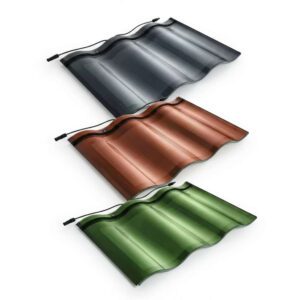
Product portfolio development requires alignment with a manufacturing partner who offers the full specification range: transparency levels from 10% to 50%, cell technologies for both architectural and high-efficiency applications, tempered and laminated configurations, and a quality management system that produces the certification documentation your buyers need. Jia Mao BIPV’s comprehensive product range — spanning transparent photovoltaic glass, solar roof tiles, photovoltaic floor tiles, and BIPV railing systems — provides the portfolio breadth to serve multiple verticals from a single supply relationship.
Technical training and sales enablement are investments that compound. Every sales engineer who can competently discuss VLT specifications, power output modeling, and curtain wall compliance documentation closes more deals than one who cannot — and closes them at higher margins because they are not competing on price alone.
Future-Proofing Your Business
The next generation of solar glass technology — perovskite-silicon tandem cells, self-dimming electrochromic-PV hybrids, flexible substrates for curved architectural applications — is moving from laboratory demonstration toward commercial readiness on a 3–5 year timeline. Distributors who are actively engaged with their manufacturing partners’ R&D roadmaps will have first access to next-generation products before competitors.
Policy changes are the other critical monitoring domain. The commercial ITC under Section 48E is effective from 2025, but the policy environment for renewable energy incentives requires continuous attention. Distributors who maintain relationships with renewable energy policy specialists and can proactively advise buyers on incentive windows create advisory value that extends well beyond product supply.
Start Capturing Solar Glass Revenue Now
The ten markets described in this guide are not future opportunities. They are generating real procurement decisions and real contracts today, in every major economy. The question is not whether solar glass will reshape your industry — it is whether you will be the distributor capturing that revenue or watching a competitor do it.
Connect with Jia Mao BIPV to access the resources that move your business forward:
- 🔗 Explore our full BIPV product range — transparent photovoltaic glass, solar roof tiles, facade systems, and custom configurations
- 🔗 Download product specifications and certifications for your target vertical markets
- 🔗 Read our BIPV technical guides to build the specification-level knowledge your buyers expect
- 🔗 Contact our B2B distribution team to discuss preferred pricing, inventory planning, and technical support programs
Industry references for further market intelligence:
- 📊 Fortune Business Insights — BIPV Market Report — comprehensive market sizing and segmentation data
- 📊 SEIA Solar Market Insight — U.S. installation data and commercial market trends
- 📊 IEA PVPS Agrivoltaics Report — dual land use solar and agriculture technical reference
Glossary of Key Terms
Understanding the technical language of solar glass is essential for credible client conversations. Here are the most important terms defined in plain language:
BIPV (Building-Integrated Photovoltaics): Solar energy technology that is incorporated directly into building materials — glass, roofing tiles, facade panels — replacing conventional building materials rather than being added on top of them. Unlike a rooftop solar array, a BIPV product serves a dual function: it is both a building component and an electricity generator.
VLT (Visible Light Transmittance): The percentage of visible light that passes through a glass panel. A VLT of 40% means 40% of visible light is transmitted; the remainder is absorbed or reflected. In solar glass, some of this absorbed energy is converted to electricity. Higher VLT means a more transparent, window-like appearance; lower VLT means a darker, more tinted appearance.
Monocrystalline Silicon Cells: The dominant photovoltaic cell technology in high-performance applications. Made from a single crystal of silicon, they achieve efficiencies above 22%. In BIPV glass, they appear as the regular grid pattern visible in many facade installations.
Thin-Film Technology: A photovoltaic cell technology deposited as a thin layer on glass or flexible substrates. Generally lower efficiency than monocrystalline silicon but offers advantages in flexibility, low-light performance, and architectural uniformity (less visible cell patterning). Ideal for curved architectural applications and large-area homogeneous glazing.
Power Conversion Efficiency (PCE): The percentage of incident solar energy converted to electricity. A 10% PCE panel converts 10% of sunlight hitting its surface into electrical power. Higher PCE means more power per square meter, which is valuable in space-constrained installations.
IEC 61215: The international standard for photovoltaic module performance and durability testing. Compliance with this standard is required for most commercial BIPV applications and signals that the product has passed standardized aging, temperature cycling, and mechanical load testing.
LEED / BREEAM: The two dominant green building certification systems (LEED in North America, BREEAM in Europe and internationally). BIPV glass installations contribute points toward these certifications, which in turn affect building valuations, lease premiums, and regulatory compliance in many jurisdictions.
PAR (Photosynthetically Active Radiation): The wavelengths of light (400–700 nm) that plants use for photosynthesis. In agrivoltaic greenhouse applications, solar glass is designed to filter non-PAR wavelengths for energy conversion while transmitting PAR wavelengths to crops — the key to maintaining crop yields under solar glass roofs.
Frequently Asked Questions (FAQ)
The following FAQ section is designed to address the specific questions arising in B2B solar glass procurement conversations across the application domains covered in this guide.
Q1: What is the difference between standard solar glass and BIPV glass?
Standard solar glass — such as the anti-reflective coated glass used as the front cover of a conventional rooftop panel — is an input material for panel manufacturing. It is not the product itself. BIPV glass, by contrast, is the finished product: a fully functional glazing unit with photovoltaic cells encapsulated inside the glass assembly, designed to replace conventional window glass, facade panels, skylight glazing, or roofing tiles while simultaneously generating electricity. The defining characteristic of BIPV glass is that it serves a dual function: building material and power generator.
Q2: How much energy does solar glass actually generate per square meter?
Commercial BIPV glass products for facade applications currently generate 60–130 W/m² under standard test conditions (1,000 W/m² irradiance, 25°C cell temperature). Transparent configurations with VLT above 30% operate toward the lower end of this range; less transparent products with denser cell coverage operate toward the upper end. For reference, a 1,000 m² south-facing commercial facade in a location with 1,600 peak sun hours per year would generate 96,000–208,000 kWh annually — enough to power 25–55 average U.S. households.
Q3: What is the lifespan and warranty for commercial solar glass products?
Commercial-grade BIPV glass carries a 25-летняя гарантия производительности guaranteeing a minimum of 80% of rated power output at end of warranty period. Workmanship warranties covering glass integrity, edge sealing, and laminate bond typically run 10–15 years. Physical service life with proper installation and maintenance is 30+ years, consistent with the service life of the buildings they are integrated into.
Q4: Is solar glass certified for use in buildings under current building codes?
Yes. Properly manufactured BIPV glass is tested and certified under the same standards as conventional architectural glazing. Relevant certifications include IEC 61215 (PV module performance), EN 13501 (fire classification for building materials in Europe), and compliance with local building codes for structural loading, impact resistance, and electrical safety. Products must carry documentation of these certifications for permitting. Always verify that your supplier’s products carry current, auditable certifications from accredited testing laboratories.
Q5: How do solar glass economics compare to traditional rooftop solar panels?
Traditional rooftop panels generate more energy per dollar of installed cost because they are optimized purely for energy output, mounted at optimal tilt angles, and use the least expensive materials adequate for the application. BIPV glass costs 15–40% more per installed watt than equivalent rooftop capacity. However, the economic comparison must account for the building material cost that BIPV glass replaces: when a building is going to have a glass facade regardless, the incremental cost of using BIPV glass versus conventional architectural glass is the relevant comparison — and on that basis, the payback periods are typically 8–12 years with 25+ years of generation benefit.
Q6: What are the highest-margin application segments for solar glass distributors?
Commercial BIPV facades and smart window systems for offices command the highest gross margins — typically 25–40% — because they are specification products with no direct price competition at the project level. Industrial skylight replacement and agricultural greenhouse applications offer 20–28% margins with shorter sales cycles. Automotive and transit applications offer competitive margins (18–30%) but require longer qualification timelines and higher technical support investment.
Q7: What government incentives currently apply to solar glass purchases in commercial buildings?
In the United States, the Investment Tax Credit (ITC) under Section 48E (effective from 2025) provides a tax credit for eligible solar energy components incorporated into commercial building systems. The PACE (Property Assessed Clean Energy) financing mechanism is available in many states and allows commercial property owners to finance solar glass installations through property tax assessments, removing the upfront capital barrier. In Europe, the EU Energy Performance of Buildings Directive creates regulatory pull across member states, and national programs in Germany, France, Italy, and the Netherlands include specific BIPV incentives. Incentive programs change regularly; distributors should maintain a current reference database for their target markets.
Q8: What certifications does a distributor need to sell solar glass in the commercial market?
Distributor-level certifications vary by market. In the U.S., most commercial projects require that the installer (not the distributor) hold appropriate electrical contractor licenses. As a distributor, the critical documentation you must be able to provide is the product certification documentation: IEC 61215 test reports, UL listing (where required), fire safety certification, and the manufacturer’s warranty documentation in a form accepted by the specifying architect. Work closely with your manufacturing partner to ensure this documentation is complete, current, and formatted for the markets you are targeting.
Q9: How do I identify the first vertical market to enter as a solar glass distributor?
Start with the vertical where you have the strongest existing customer relationships and the most relevant technical background. If you currently distribute architectural glazing, commercial BIPV facades are a natural extension — you are selling to the same specifying architects and glazing subcontractors with a product that upgrades the technical and commercial value of what you already supply. If you have agricultural equipment distribution experience, agrivoltaic greenhouses leverage your existing channel relationships. Market entry is faster and less capital-intensive when you are selling to buyers who already trust you, through channels you already understand.
Q10: What are the typical sales cycle timelines for different solar glass applications?
Sales cycles vary considerably: commercial BIPV facade projects run 12–24 months from first contact to contract (driven by architectural design timelines and building permit processes); agricultural greenhouse projects run 6–12 months; industrial skylight replacement projects run 6–12 months (often triggered by a maintenance event); hospitality and retail retrofits run 3–9 months; transit authority projects run 12–18 months (driven by government procurement processes); and automotive supply relationships require 18–36 months of product qualification before volume supply begins. Pipeline management and cash flow planning must account for these variable timelines.
Q11: How do distributors build long-term recurring revenue from solar glass customers?
The transition from transactional supplier to strategic partner in this market happens when you extend beyond product supply into service offerings. Performance monitoring contracts — where you provide the instrumentation and quarterly reporting on system generation versus design specification — create recurring touchpoints and early warning of maintenance needs. Annual inspection and maintenance contracts build on this. When a building expands or undergoes renovation in years 3–7 after initial installation, the distributor who has maintained the relationship through the service layer is the automatic first call for the Phase 2 installation.
Q12: What are the minimum order quantities and lead times for custom solar glass from manufacturers?
Lead times for custom BIPV glass — non-standard sizes, specific VLT levels, custom cell patterns — typically run 8–14 weeks from order confirmation to shipment, depending on production schedule and whether custom tooling is required. Minimum order quantities for custom configurations vary by manufacturer; most commercial-grade manufacturers require a minimum of 50–100 m² per configuration for custom production runs. Standard configurations in common sizes are typically available from inventory at shorter lead times of 2–4 weeks. Jia Mao BIPV’s 3GW annual production capacity supports both custom and standard order fulfillment at the volumes required for commercial and industrial project supply.
Q13: How does solar glass perform in non-ideal climates — cold, cloudy, or humid regions?
Modern BIPV glass is engineered for diverse climate zones. In cold climates, photovoltaic cells actually operate at higher efficiency (silicon cell efficiency improves at lower temperatures), so cold-weather performance is generally better than marketing materials suggest. In humid climates, edge sealing and the choice of interlayer material are critical — POE (polyolefin elastomer) interlayers significantly outperform older EVA interlayers in moisture resistance. In overcast climates (Germany, the UK, the Pacific Northwest), generation is lower than in high-irradiance markets but still economically meaningful, particularly for facade products where the alternative is zero generation from conventional glass.
Q14: What technical support should distributors expect from their manufacturing partner?
A credible BIPV glass manufacturer should provide: product specification sheets in a format compatible with architectural specification software (CSI format in North America, NBS in the UK), third-party test reports from accredited laboratories, sample panels for architectural presentation and mock-up approval, energy generation modeling support (or compatible data for use in energy modeling software), installation guidance documentation, and responsive technical inquiry support within 24–48 hours. Manufacturers who cannot provide comprehensive technical documentation create liability for distributors in specification-driven commercial markets.
Q15: What is the total addressable market for solar glass across the ten applications covered in this guide?
The combined total addressable market across the ten application domains — commercial BIPV, office smart windows, agricultural greenhouses, vehicle integration, transit infrastructure, airport and public infrastructure, hospitality and retail, education, healthcare, and industrial facilities — is represented in the broader BIPV and PV glass markets. The BIPV glass market alone is projected to reach USD 63.54 billion by 2034 (Market Research Future, 2025). The broader PV glass market reaches USD 62.8 billion by 2032 (Persistence Market Research). For a regional distributor capturing even 0.01% of a USD 60+ billion market, that represents USD 6+ million in annual revenue at scale — with the margins in this guide suggesting USD 1.5–2.4 million in gross profit from that revenue base.
This article was produced with market data current to mid-2025. Market projections are sourced from third-party research firms and are subject to revision. Consult your regional regulatory counsel for current incentive program details before committing to customer proposals.