You might find these BIPV market analysis predictions surprising:
- The global BIPV market could grow from $2.9 billion in 2018 to $11.6 billion in 2027.
- The U.S. market may hit $2 billion by 2023.
- Residential BIPV could reach $872 million and 15% of the global share by 2023.
- The U.S., China, and Japan might control 75% of the market.
These forecasts matter for companies like Jia Mao Bipv. You need to understand these shifts for smart planning.
Principais conclusões
- The global BIPV market will grow a lot. It will go from $2.9 billion in 2018 to $11.6 billion by 2027. The U.S. BIPV market might reach $2 billion by 2023. Residential BIPV will be 15% of the world’s total. Asia-Pacific is growing the fastest for BIPV. This is because many people in China and Japan want it. Knowing different ways to study the market helps companies make smart choices. It also helps them change their plans when needed. Lower costs and help from the government make BIPV easier to get. This helps more homes and businesses use BIPV.
BIPV Market Analysis: Growth Forecasts
Regional Growth Rates
The BIPV market grows at different speeds in each region. Europe makes the most money, with about 38% of the market in 2024. That is around $8.5 billion. North America also does well, reaching $6.69 billion in 2024. Asia-Pacific is growing the fastest. Experts think Asia-Pacific will grow by 24.1% each year from 2025 to 2033. This fast growth happens because many people in China and Japan want BIPV.
Here is a table that shows the market size and growth in key regions:
| Region | 2024 Market Size (USD) | 2034 Projected Size (USD) | CAGR (2025-2033) |
|---|---|---|---|
| North America | $6.69 billion | $31.06 billion | N/A |
| Europe | $11.56 billion | $53.65 billion | N/A |
| Asia-Pacific | $8.75 billion | $40.62 billion | 24.1% |
- Europe makes the most money in the market.
- Asia-Pacific grows the fastest because of China and Japan.
- North America gets help from the government and new technology.
Forecast Methodologies
You may notice that research firms give different numbers for the BIPV market. This happens because they use different ways to make predictions. Some firms use math tools to look at trends. Others collect data from many places and compare it. Many firms ask people who work in the industry for their thoughts.
Here is a table that explains some common methods:
| Methodology Type | Descrição |
|---|---|
| Statistical Tools | Use numbers and trends to predict market changes. |
| Data Triangulation | Compare data from different sources to get the best estimate. |
| Stakeholder Feedback Analysis | Ask experts and companies for their opinions and compare their answers. |
| Data Mining | Study lots of data to find patterns that affect the market. |
| Primary Validation | Check facts with industry experts to make sure the data is correct. |
| Market Analysis Models | Use special models like Vendor Positioning Grid and Market Time Line Analysis. |
These methods can give different results. For example, one firm may listen more to experts. Another firm may only use numbers. That is why bipv market analysis reports do not always agree.
Impact on Stakeholders
The way bipv market analysis is done can change your business plans. If you make products, you must decide how much to spend on new ideas. If you see fast growth in Asia-Pacific, you may want to build more factories there. Investors use these forecasts to pick where to put their money. Policymakers use the data to make rules and give rewards.
For companies like Jia Mao Bipv, knowing these forecasts helps you get ahead. You can work on new products to stay strong. You might team up with builders and architects to find more customers. If you see a region growing fast, you can try to sell there first.
Tip: Always check how a research firm makes its predictions before you use their numbers for your business plan.
Cost Trends and Forecasts
Declining System Costs
BIPV system costs are going down lately. This happens for a few reasons. The price of crystalline silicon cells keeps dropping. This makes installation cheaper. Research teams try to make manufacturing less expensive. More companies join the market. This means more competition and lower prices.
Still, BIPV systems cost more than regular solar panels. You need special workers to install them. That adds extra cost. BIPV modules can be 10-30% more expensive than normal PV systems. The design and materials also change the price.
But you get benefits over time. You pay less for energy and save on materials. This helps you get your money back. Governments give rewards for using renewable energy. This makes BIPV easier to afford. The payback time is usually 5 to 15 years. It depends on where you live, how good your system is, and what rewards you get.
Note: The first cost is high, but you can save money later with energy savings and government help.
Timeline Discrepancies
BIPV market analysis reports show different timelines for cost drops. Some experts think prices will fall a lot in five years. Others say it will take longer. This is because skilled workers and advanced materials are needed.
Here is a table that compares costs and adoption rates in different places and market segments:
| Region/Segment | Adoption Rate | Installation Cost (per m²) | Growth Rate | Key Insights |
|---|---|---|---|---|
| China | Alta | $280 – $320 | 13% (2023) | China leads in polycrystalline BIPV. It is strong in Southeast Asia and Europe. |
| Europe (Thin Film) | Alta | $200 – $260 | N/A | Over 1.7 million m² installed. Thin film is popular for design. |
| Residential | Alta | N/A | 18% (year-on-year) | More than 2.7 million homes use BIPV. California is a big user. |
| Commercial | Dominant | N/A | N/A | Over 5.6 GW capacity. Germany has many projects. |
| Others (Industrial) | Moderado | N/A | N/A | Airports and government buildings in India use BIPV. |
China and Europe are leaders in using BIPV. Costs are not the same everywhere. Residential growth is strong in California. Commercial projects are big in Germany. These differences mean you should check local trends before deciding.
Adoption Implications
As prices drop, more people and companies will pick BIPV. Lower costs make it easier to buy. Government rewards and clean energy goals help too. New technology makes BIPV look nicer and work better. This brings in more users.
Companies like Jia Mao Bipv can reach more customers. Lower costs and higher demand help them grow. They can make products cheaper and easier to install. Builders and designers can offer BIPV for new buildings.
Here are some important points:
- The biggest problem is the higher starting cost compared to regular solar panels.
- You can save money later with lower energy bills.
- Government programs can help pay for BIPV.
- Companies try to make BIPV cheaper and simpler.
If you want to invest or grow in this market, watch cost trends closely. BIPV market analysis shows where prices are going and how fast people will use BIPV. This helps you make smart choices for your business or home.
Application Segments in BIPV Market
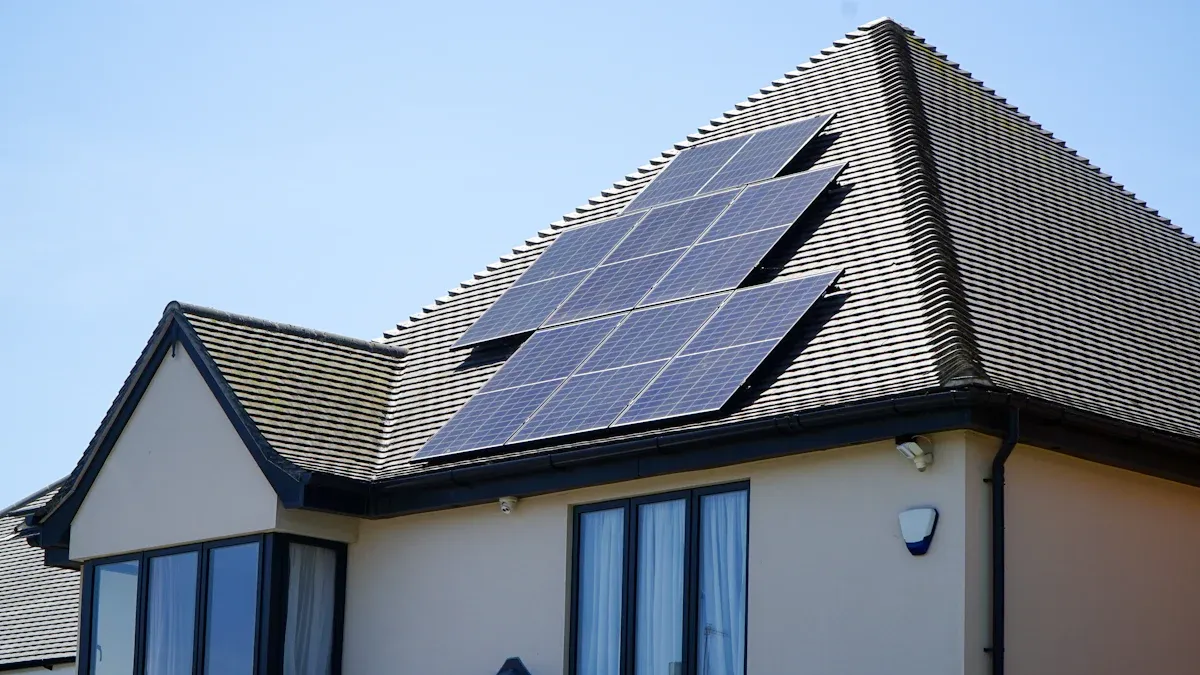
Non-Residential vs. Residential
There are three main segments in the BIPV market. These are residential, commercial, and industrial. Each segment grows for different reasons.
- The residential segment grows because people want clean energy at home. Governments in places like Germany and France give rewards for using BIPV. Homeowners want to save money and energy.
- The commercial segment grows as businesses want to look modern and save money. Large buildings have big roofs, so BIPV works well. Companies want to show they care about the environment.
- The industrial segment grows slower but has big potential. Factories and plants use lots of energy. BIPV helps them save money and meet green goals.
New technology makes BIPV better for all segments. For example, new designs and smart systems help BIPV fit many building types.
Market Share Predictions
In 2024, the residential segment leads the market. This happens because more people know about renewable energy. They want to use it at home. The commercial segment also grows fast. Businesses like BIPV for its look and for saving energy.
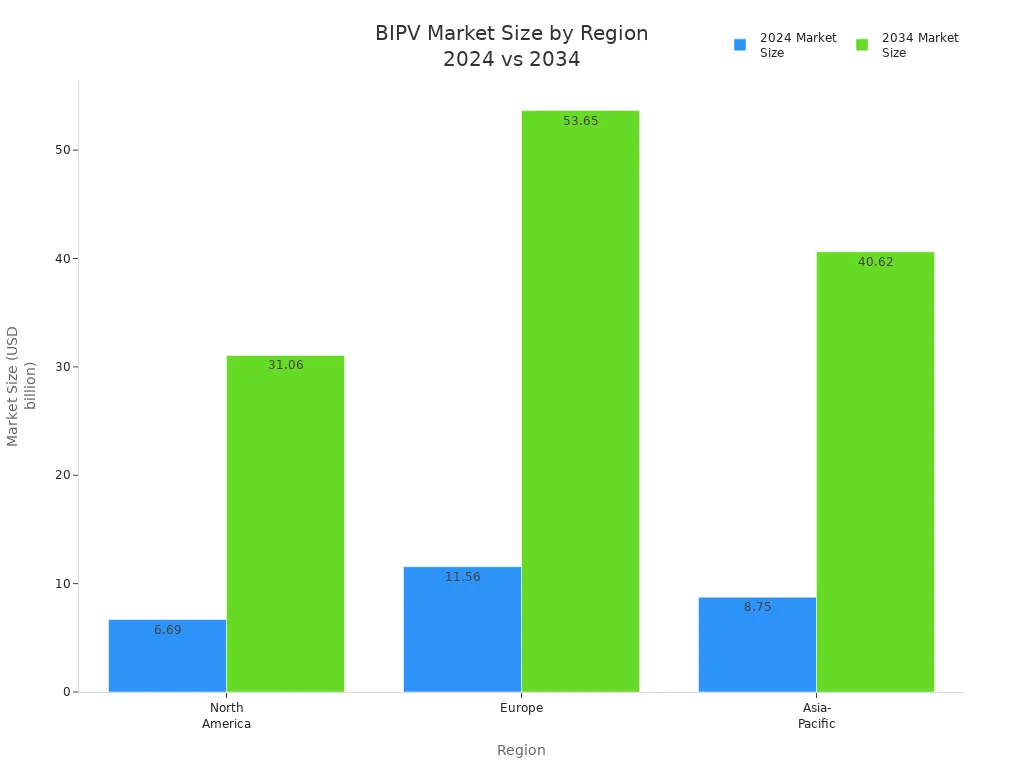
North America, Europe, and Asia-Pacific all show strong growth. Government support, new technology, and climate goals help drive this trend.
Strategic Implications
You can use bipv market analysis to plan your next steps. If you work with Jia Mao Bipv, you might focus on homes or offices. You should look for the segment with the most growth. Here is a table that shows what drives each segment and what you can do:
| Segment | Growth Drivers | Strategic Implications |
|---|---|---|
| Residential | Consumer awareness, high electricity costs | Make stylish, energy-saving products. Use government rewards to help sales. |
| Commercial | Sustainability, large roof space | Offer BIPV for big buildings. Help companies get green certificates. |
| Industrial | Energy needs, green goals | Build large systems for factories. Support energy security and ESG targets. |
Tip: Focus on regions with strong policies. Invest in new technology to stay ahead.
You can use data to find new trends and target the right customers. This helps you grow your business and meet market needs.
Comparing BIPV Market Analysis Predictions
Key Differences and Similarities
You can see differences and similarities in bipv market analysis predictions from top research firms. Each firm studies technology, application, and end-use in its own way. Some focus on crystalline silicon. Others look at thin-film or new technologies. BIPV is used in roofs, windows, walls, and facades. Rooftop installations are a big part of the market. The market serves industrial, commercial, and residential sectors. Each sector has its own reasons for picking BIPV.
Here is a table that shows these details:
| Aspecto | Details |
|---|---|
| Technology | BIPV systems use crystalline silicon, thin-film, and new technologies. |
| Application | BIPV fits roofs, windows, walls, and facades. Rooftop installations are important. |
| End-use | Industrial, commercial, and residential sectors each have unique motivations for BIPV adoption. |
Europe leads with a 37.1% market share. Germany gives strong government support and feed-in tariffs. France offers tax credits and rewards. Asia Pacific, especially China and Japan, grows fast because of government programs and high demand. Central and South America see more installations in industrial and commercial sectors.
| Region | Market Share (%) | Growth Rate (%) | Key Drivers |
|---|---|---|---|
| Europe | 37.1 | N/A | Renewable energy outlook and consumer awareness. |
| Germany | 42.8 | N/A | Government regulations and feed-in tariffs. |
| France | N/A | 18.7 | Incentives and tax credits for solar energy. |
| Asia Pacific | 30.0 | N/A | Consumer awareness and government support. |
| China | 30.0 | N/A | Government programs for PV and BIPV. |
| Japan | N/A | 19.9 | High demand and increased consumer spending. |
| Central & South America | N/A | N/A | More solar installations in industrial and commercial sectors. |
Actionable Insights
You can use these comparisons to make smart choices. Here are some ideas you can use:
- Find areas in the BIPV market that grow fast.
- Learn what makes the market grow.
- Change your plans based on how BIPV is used.
- Watch for places with strong government support and rewards.
- Look for new trends and chances that others miss.
You may face problems like unclear rules and not enough knowledge about BIPV technology. Some architects, builders, and buyers worry about technical or money issues.
Note: There is a global push for green buildings and net-zero energy. People want technologies that mix energy generation with building design.
If you work with Jia Mao Bipv, you can use bipv market analysis to find market chances in different regions. You check risks by looking at what competitors do and how rules change. You find special markets and new trends to help your business grow.
Here are steps you can follow:
- Invest in better cell and module research to improve efficiency.
- Work with schools to speed up new ideas.
- Give financing options to help commercial clients pay for upfront costs.
Tip: Talk to policymakers and industry groups. This helps create rewards and building codes, making BIPV easier to use.
You build a plan that fits your region and sector. You stay ahead by watching market changes and adapting fast.
You have seen three surprising predictions: rapid global growth, strong U.S. and Asia-Pacific markets, and a rising share for residential BIPV. These insights from bipv market analysis can shape your business plans and help you spot new trends. If you work with Jia Mao Bipv, you can use this knowledge to make smart choices.
Stay curious and check new reports often. This helps you keep up with changes in the BIPV market.
PERGUNTAS FREQUENTES
What is BIPV?
BIPV stands for Building-Integrated Photovoltaics. You use BIPV to turn parts of a building, like roofs or windows, into solar energy systems. Jia Mao Bipv offers products that help you make your building both beautiful and energy efficient.
How does BIPV differ from regular solar panels?
You install BIPV as part of the building itself, not just on top. Regular solar panels sit on roofs. BIPV blends with your design. Jia Mao Bipv creates solutions that fit your building’s style and needs.
Is BIPV more expensive than traditional solar panels?
Yes, BIPV usually costs more at first. You pay extra for design and installation. Over time, you save money on energy bills. Jia Mao Bipv helps you find the right system for your budget.
Where can I use BIPV in my building?
You can use BIPV in roofs, walls, windows, or facades. Jia Mao Bipv offers many options for homes, offices, and factories. You choose the best spot for your project.


-300x300.jpg)