
Choosing the best transparent solar module for your project begins with a clear understanding of your priorities: energy efficiency, light transmission, durability, affordability, and real-world viability. Transparent solar panels represent one of the most exciting frontiers in renewable energy, transforming ordinary glass surfaces into electricity-generating assets without sacrificing aesthetics or natural daylight. The key to a successful project lies in finding the right balance between transparency and power generation — a trade-off that varies depending on whether you are designing a new commercial skyscraper, retrofitting an existing building, or integrating photovoltaic glass into a residential sunroom.
As the BIPV (Building-Integrated Photovoltaics) market continues to mature, the number of available transparent solar module options has expanded significantly. Industry leaders such as Jia Mao Bipv now offer fully customizable transparent solar panels with variable transparency levels ranging from 10% to 90%, giving architects and developers unprecedented flexibility. This guide will walk you through every critical factor — from understanding how the technology works to comparing efficiency, cost, and installation requirements — so you can confidently select the transparent solar module that best suits your specific application.
Understanding Transparent Solar Modules
How They Work
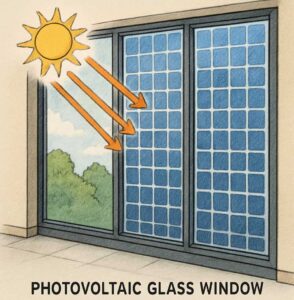
Transparent solar modules operate on a fundamentally different principle than conventional opaque photovoltaic panels. Rather than absorbing all incoming sunlight, these modules selectively harvest the portions of the solar spectrum that are invisible to the human eye — primarily ultraviolet (UV) and near-infrared (NIR) wavelengths — while allowing visible light to pass through the glass.
The core technology behind most transparent solar panels is the Transparent Luminescent Solar Concentrator (TLSC). Developed originally by researchers at Michigan State University in 2014, the TLSC uses organic salts embedded within the glass that absorb invisible UV and infrared light and then re-emit (luminesce) that energy as a different infrared wavelength. This re-emitted light is guided to the edges of the glass panel, where thin strips of conventional photovoltaic cells convert it into electricity. Because all of these absorption and emission processes occur outside the visible spectrum, the glass appears clear to the naked eye.
In semi-transparent modules — such as those manufactured by Jia Mao Bipv — conventional monocrystalline silicon cells are strategically spaced within the glass laminate. By adjusting the cell density and spacing patterns (hexagonal, linear, or custom configurations), manufacturers can fine-tune the balance between power output and light transmission. Premium modules use 182mm × 182mm monocrystalline cells with individual cell efficiencies exceeding 22%, combined with half-cell configurations for enhanced reliability.

Transparent solar modules selectively harvest UV and infrared wavelengths invisible to the human eye while letting visible light pass through.
Unique Features
Transparent solar modules stand apart from traditional solar panels in several distinctive ways. First, they serve a dual function: they act simultaneously as a building material (window, skylight, curtain wall) and as an energy generator, eliminating the need for additional roof or ground space. Second, they offer spectral selectivity, blocking up to 85% of infrared heat radiation and 99% of UV light while maintaining natural daylight quality — which means they can reduce cooling loads by 25–40% compared to conventional glazing.
Third, transparent modules exhibit superior angular performance. Unlike rooftop panels that rely on optimal tilt angles, transparent solar glass can generate meaningful electricity even when installed vertically on building facades, because the sun strikes these surfaces at varying angles throughout the day. This characteristic makes them particularly valuable in dense urban environments where vertical glass surface area far exceeds available rooftop space. According to MSU researchers, the United States alone has approximately 5 to 7 billion square meters of glass surface area — a staggering deployment opportunity.
Video: Future of Energy — Transparent Solar Panels Explained
Key Criteria for Choosing Transparent Solar Panels
Efficiency and Performance
Efficiency is the first metric most buyers evaluate, and understanding the realistic performance range of transparent solar modules is essential for setting proper expectations. Fully transparent solar panels (those with near-100% visible light transmission) currently achieve efficiencies of approximately 1–5%, while semi-transparent modules with moderate cell coverage can reach 7–12% system-level efficiency. For context, conventional opaque monocrystalline panels typically deliver 20–25% efficiency.
However, efficiency should not be evaluated in isolation. A semi-transparent module rated at 10% efficiency that covers an entire 500 m² glass facade will generate far more total energy than a 22%-efficient rooftop panel array occupying only 50 m². The relevant question is not “What is the efficiency?” but rather “How much total energy will this system produce given my available glass area?”
Leading BIPV manufacturers such as Jia Mao Bipv report system-level power generation capacities of 140–200 W/m² depending on the transparency level selected, with annual energy yields of 180–250 kWh/m² in typical commercial building orientations. Their modules feature a temperature coefficient of -0.29%/°C, which means power loss in hot weather is minimal — a significant advantage for projects in warm climates.
Transparency vs. Power Output
The fundamental engineering trade-off in transparent solar technology is the inverse relationship between transparency and power output. Higher transparency means more visible light passes through the glass, which inherently means less light energy is available for conversion into electricity. The following table illustrates how this trade-off works in practice for different project types:
| Transparency Level | Visible Light Transmission (VLT) | Active Cell Coverage | Approx. Power Output (W/m²) | Solar Heat Gain Coefficient (SHGC) | Best Application |
|---|---|---|---|---|---|
| High (70–90%) | 0.7 – 0.9 | 10–15% | 40–80 | 0.35–0.45 | Storefronts, residential windows |
| Medium (40–60%) | 0.4 – 0.6 | 25–35% | 100–160 | 0.22–0.35 | Office curtain walls, atriums |
| Low (20–40%) | 0.2 – 0.4 | 40–50% | 160–200 | 0.15–0.22 | Skylights, canopies, spandrel panels |
| Minimal (10–20%) | 0.1 – 0.2 | 50–65% | 200–260 | 0.10–0.15 | Parking structures, industrial facades |
When choosing a transparency level, consider the primary function of the glass surface. A ground-floor retail storefront that relies on product visibility may require 70%+ transparency, while a south-facing office curtain wall — which often already uses tinted glass to manage glare — may perform optimally at 40–50% transparency with significantly higher power output.
Transparency Level vs. Approximate Power Output (W/m²)
200
150
100
50
0
Alta
(70–90%)
Medium
(40–60%)
Baixa
(20–40%)
Minimal
(10–20%)
W/m² output increases as transparency decreases
Durability and Real-World Viability
Transparent solar modules must withstand the same environmental stresses as conventional architectural glazing — wind loads, thermal cycling, hail impacts, UV exposure, and moisture ingress — while simultaneously maintaining electrical performance over decades. When evaluating durability, look for the following certifications and specifications:
The glass should be tempered to architectural curtain wall standards, with wind pressure resistance of at least 4.0 kPa (suitable for high-rise applications up to 300 meters). The module should carry IEC 61215 e IEC 61730 certifications for photovoltaic safety and performance. Encapsulation materials — particularly POE (polyolefin elastomer) films — are preferable to EVA because they offer approximately 40% better UV aging resistance and superior resistance to Potential Induced Degradation (PID).
Researchers at Michigan State University have developed transparent solar panels with zinc-oxide coatings expected to last up to 30 years, demonstrating that durability can rival that of conventional PV modules. Jia Mao Bipv backs its transparent solar modules with a 25-year linear power warranty (guaranteeing 80% output retention), a 15-year optical clarity warranty, and a 12-year product warranty covering materials and manufacturing defects.
Operating temperature range is another critical factor. Premium modules function within a -40°C to +85°C range, and a low temperature coefficient (such as -0.29%/°C) ensures that power generation remains stable even in extreme heat.
| Durability Metric | Industry Standard | Jia Mao Bipv Specification |
|---|---|---|
| Operating Temperature | -40°C to +85°C | -40°C to +85°C ✔ |
| Wind Pressure Resistance | ≥ 2.4 kPa | 4.0 kPa ✔ |
| Hail Impact Resistance | Class 3 | Class 4 ✔ |
| UV Aging (POE Film) | 1000 hours | 2000 hours ✔ |
| Humidity Freeze Testing | 10 cycles | 200 cycles ✔ |
| Power Warranty | 25 years (80% retention) | 25 years (80% retention) ✔ |
| Optical Clarity Warranty | N/A (not standard) | 15 years (<5% degradation) ✔ |
Affordability and Cost
Transparent solar panels currently cost more per watt than traditional crystalline modules due to limited manufacturing scale, specialized materials, and complex lamination processes. Market pricing for transparent solar glass typically ranges from $200 to $600 per square meter, depending on efficiency, transparency level, and customization requirements. On a per-watt basis, transparent modules can be 2 to 4 times more expensive than conventional panels.
However, a direct cost-per-watt comparison is misleading because transparent solar modules provide dual functionality — they simultaneously serve as premium architectural glazing and energy generators. When you factor in the cost of the high-performance glass that would have been installed anyway (low-E coated, UV-blocking, thermally insulating glazing can cost $150–$350/m²), the incremental cost of adding photovoltaic capability becomes far more reasonable.
| Cost Factor | Traditional Solar Panel | Transparent Solar Module | Net Difference |
|---|---|---|---|
| Panel / Module Cost (per m²) | $80 – $150 | $200 – $600 | +$120 – $450 |
| Replaces Building Material? | No (additional to roof) | Yes (replaces glazing worth $150–$350/m²) | Saves $150 – $350/m² |
| Annual HVAC Savings | Minimal | 20–40% cooling load reduction | Significant |
| Installation Infrastructure | Mounting racks required | Integrated into curtain wall | Saves rack cost |
| Eficiência | 20–25% | 5–12% (system-level) | Lower per m² |
| Tempo de vida | 25–30 years | 25–30 years | Equal |
| Additional Space Required? | Yes (roof or ground) | No (uses existing glass area) | Saves space |
| Green Certification Credits | Energy credits only | Energy + Daylighting + Thermal | More credits |
As production scales — companies like Jia Mao Bipv now operate at 3 GW annual production capacity — costs are expected to decline substantially in the coming years. The total cost of ownership (TCO) calculation should include energy generation revenue, HVAC savings, LEED green building certification credits, and potential increases in property value.
Aesthetic Considerations
For many architects and building owners, aesthetics are a decisive factor. Transparent solar modules offer a level of design flexibility that traditional rooftop panels simply cannot match. Modern BIPV manufacturers provide customization options including varied cell spacing patterns (hexagonal, linear, randomized), multiple color temperatures for consistent facade appearance, anti-glare coatings, and invisible busbar technology that maintains a clean, uniform surface.
The visual impact varies significantly by transparency level. At 70%+ transparency, the photovoltaic elements are nearly invisible — the glass looks essentially identical to premium architectural glazing. At 30–50% transparency, a subtle geometric pattern becomes visible, which many designers actually use as a deliberate aesthetic element. At lower transparency levels, the modules resemble lightly tinted glass, suitable for spandrel panels, canopies, and parking structures.
Jia Mao Bipv’s transparent solar glass products maintain a Color Rendering Index (CRI) above 80, ensuring that natural color perception is preserved for building occupants — an important factor for retail environments, healthcare facilities, and educational spaces where light quality directly affects comfort and productivity.

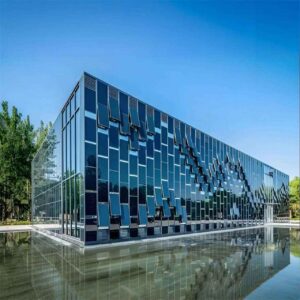
Semi-transparent BIPV facades create stunning geometric patterns that enhance architectural design while harvesting solar energy.
Application Scenarios
Building Integration
Building-Integrated Photovoltaics (BIPV) represents the most compelling application for transparent solar modules. In this scenario, the solar module is not an add-on — it replaces a conventional building component such as a window, curtain wall panel, skylight, or glass roof. This integration eliminates the visual and structural compromises of bolt-on rooftop systems and transforms the building envelope itself into a distributed power plant.
BIPV transparent modules are particularly impactful in commercial office towers, where glass curtain walls can span thousands of square meters. A 40-story office building with 8,000 m² of south- and west-facing glass could generate approximately 800,000–1,200,000 kWh annually using semi-transparent BIPV modules at 40% transparency — enough to offset a meaningful percentage of the building’s electricity consumption while simultaneously reducing cooling loads.
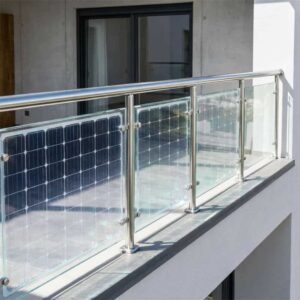
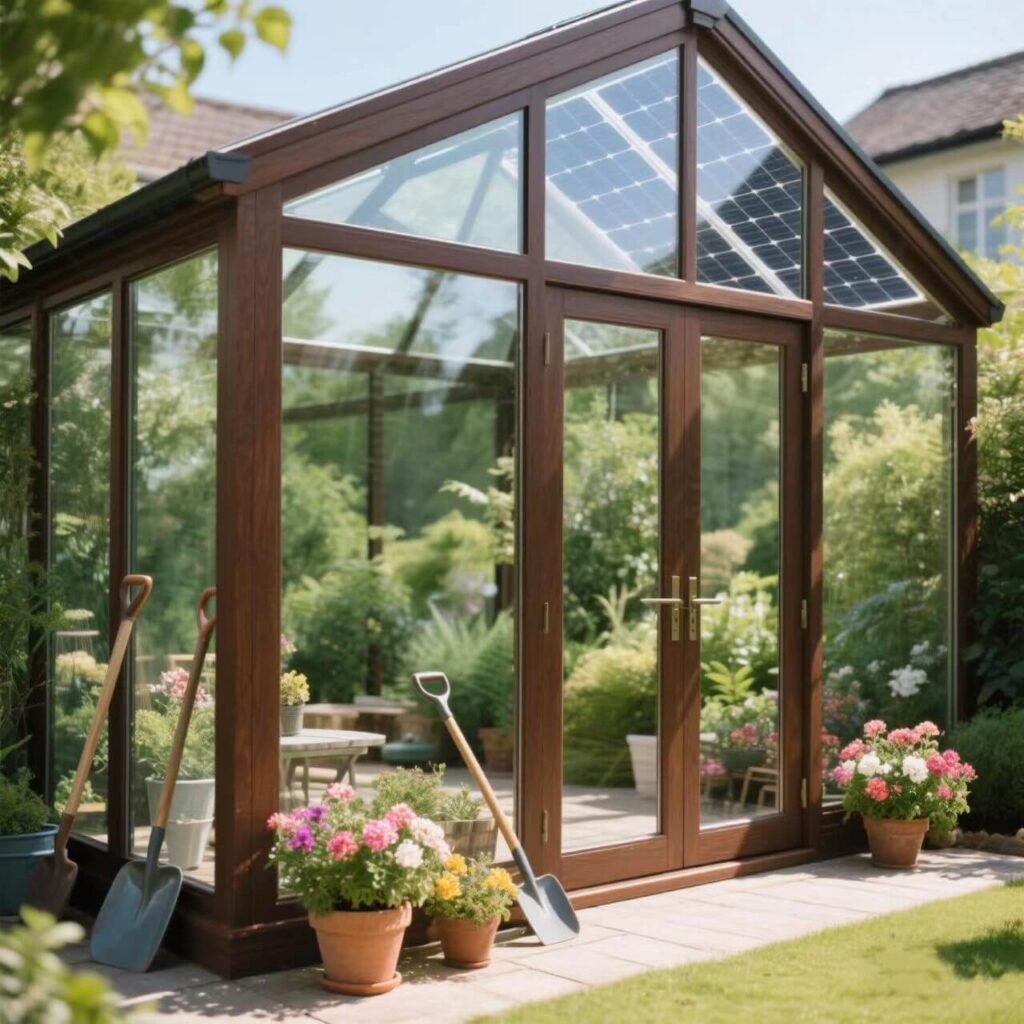
Key BIPV applications include curtain walls and glass facades, skylights and atrium roofs, glass canopies and covered walkways, glass balustrades and railings, and greenhouse structures. For architects and developers seeking comprehensive BIPV solutions, Jia Mao Bipv’s solutions and applications portfolio provides end-to-end support from initial design concept through installation and commissioning.
| Building Type | Typical Glass Area (m²) | Recommended Transparency | Estimated Annual Yield (kWh) | HVAC Savings (%) |
|---|---|---|---|---|
| Commercial Office Tower (40 floors) | 6,000 – 10,000 | 40–60% | 800,000 – 1,500,000 | 25–35% |
| Shopping Mall / Retail Center | 2,000 – 5,000 | 50–70% | 200,000 – 600,000 | 20–30% |
| Hospital / Healthcare Facility | 1,500 – 4,000 | 50–70% | 180,000 – 500,000 | 20–30% |
| Airport Terminal | 10,000 – 30,000 | 40–60% | 1,500,000 – 4,500,000 | 25–40% |
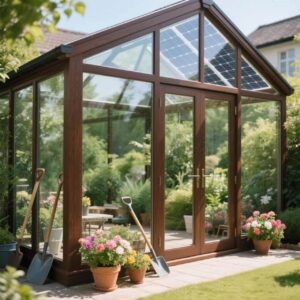
| Residential Sunroom / Atrium | 20 – 80 | 60–80% | 2,400 – 12,000 | 15–25% |
| Greenhouse / Agricultural | 500 – 5,000 | 60–80% | 50,000 – 500,000 | N/A |
Retrofitting
Retrofitting existing buildings with transparent solar modules is both an opportunity and a challenge. Many older commercial buildings have large glass surfaces that could be converted into energy-generating assets. The primary advantage of retrofitting is that it allows building owners to improve energy performance and achieve sustainability goals without demolishing and rebuilding.
However, retrofit projects require careful structural assessment. The existing curtain wall framing system must be capable of supporting the additional weight of BIPV glass (typically 11mm thick, weighing 25–35 kg/m²) and the associated electrical connections. Wiring must be routed discreetly through existing mullions and transoms, and inverter equipment needs accessible installation locations. Engineers at Michigan State University have specifically designed transparent solar technologies that can be retrofit to existing glass-covered buildings, applying thin photovoltaic coatings directly to existing glass surfaces.
For successful retrofitting, it is advisable to conduct a thorough facade energy audit, assess structural load capacity with a licensed engineer, select modules with standard glazing pocket dimensions (to minimize framing modifications), and work with experienced BIPV installers who understand both glazing and electrical systems. Jia Mao Bipv’s modules are engineered with an ultra-thin 11mm total profile specifically designed for curtain wall compatibility, making them an excellent choice for retrofit projects.
New Construction
New construction projects offer the greatest flexibility for transparent solar module integration because the BIPV system can be designed into the building from the earliest architectural concept stage. This allows for optimized facade orientation, custom module sizing, integrated electrical routing, and coordinated structural engineering.
In new construction, architects can strategically assign different transparency levels to different building zones: high transparency for ground-floor retail, medium transparency for office floors, and lower transparency for parking structure facades or mechanical screening. This zone-based approach maximizes both energy generation and occupant comfort.
New construction also enables smart building integration from the outset. Transparent solar modules can be coordinated with building automation systems for HVAC load optimization, combined with electrochromic (dynamic tinting) technology for automated solar control, connected to battery storage systems via DC coupling for on-site energy management, and equipped with occupancy-based sensors that adjust transparency levels based on space utilization. The result is a net-zero-capable building that generates, stores, and intelligently manages its own energy.

New construction projects can integrate transparent solar modules from the design phase, optimizing both energy generation and architectural vision.
Installation Tips
Requirements
Successful installation of transparent solar modules requires coordination across multiple disciplines: architectural design, structural engineering, glazing installation, and electrical systems. The fundamental requirements include structural framing capable of supporting BIPV module weight (typically 25–35 kg/m² for glass-glass construction), code-compliant electrical conduit routing within mullion channels, inverter/optimizer placement with adequate ventilation and accessibility, proper grounding and bonding per NEC Article 690 (or local equivalent), and weatherproofing that meets curtain wall engineering waterproofing standards.
For the electrical system, Maximum Power Point Tracking (MPPT) optimizers at the individual panel level are recommended to maximize energy harvest, particularly when modules experience variable shading conditions across a large facade. Grid-interactive smart inverters should support utility grid stability features such as reactive power control and frequency response. Jia Mao Bipv’s modules feature DC coupling compatibility with commercial energy storage systems and automated demand response capabilities for peak utility period management.
Challenges
The most common challenges in transparent solar module installation include managing the complexity of combined glazing and electrical trades, ensuring consistent weatherproofing at electrical penetration points, coordinating construction sequencing (glazing installation must align with electrical rough-in), accommodating thermal expansion differences between PV glass and framing materials, and meeting varied building code requirements across jurisdictions.
Another significant challenge is partial shading management. Building facades inevitably experience uneven shading from adjacent structures, trees, or the building’s own geometry. Unlike rooftop arrays where shading patterns are relatively predictable, facade installations require sophisticated electrical design with module-level power electronics to prevent shaded modules from dragging down the performance of the entire string.
Best Practices
To ensure optimal performance and longevity, follow these best practices: engage a certified BIPV installer with documented experience in both curtain wall glazing and photovoltaic systems; use structural silicone sealants rated for 25+ years that are compatible with photovoltaic encapsulant materials; specify concealed wiring systems that maintain architectural aesthetics while allowing future maintenance access; implement a remote performance monitoring system with predictive maintenance alerts for 24/7 system surveillance; and schedule annual performance audits with professional inspections to verify both optical clarity and electrical output.
Commissioning is critical. Before handover, the system should undergo complete IV-curve testing of every module string, infrared thermographic scanning to detect hot spots or connection issues, insulation resistance testing of all DC circuits, and visual inspection of all weatherproofing seals. Documentation should include baseline performance data against which future degradation can be measured.
Video: Understanding Building-Integrated Photovoltaics (BIPV) — Key Concepts for Installers and Architects
Prós e contras
Advantages
Transparent solar modules offer a compelling set of advantages that make them uniquely suited for urban and architectural applications. They enable space-efficient energy generation by utilizing glass surfaces that would otherwise be passive building elements — critical in dense cities where rooftop area is limited. They provide dual functionality, simultaneously serving as premium architectural glazing with superior thermal performance (reducing HVAC costs by 20–40%) and as clean energy generators.
Their aesthetic versatility allows seamless integration into building designs, making them virtually indistinguishable from conventional high-performance glass at higher transparency levels. They offer flexible deployment angles — unlike rooftop panels that require specific tilt angles, transparent modules perform effectively on vertical facades, capturing energy from low-angle morning and afternoon sunlight. They contribute to multiple green building certification credits under programs such as LEED, BREEAM, and WELL, addressing energy performance, daylighting quality, and occupant comfort.
Additionally, they provide UV and infrared protection, blocking harmful radiation that causes interior fading and occupant discomfort. They support net-zero building goals by enabling on-site renewable energy generation integrated directly into the building envelope. And they create lightweight, portable applications — before being laminated into architectural glass, transparent solar cells are thin and easy to transport, opening possibilities for mobile devices, smart wearables, and portable charging solutions.
Limitations
Transparency comes with inherent trade-offs that buyers must understand. The lower efficiency compared to conventional panels (5–12% vs. 20–25%) means that transparent modules generate less electricity per square meter, requiring larger glass areas to match the output of traditional systems. The higher upfront cost ($200–$600/m² vs. $80–$150/m² for conventional panels) can be a barrier, though this is partially offset by dual functionality and HVAC savings.
The technology is still maturing — while semi-transparent crystalline silicon modules are well-proven, fully transparent TLSC technology has not yet reached widespread commercial deployment, and long-term field performance data beyond 10–15 years is limited for the newest designs. Installation complexity is greater than for standard rooftop arrays, requiring coordination between glazing and electrical trades with specialized expertise. And the fragility of glass means that handling, shipping, and installation require more care than for framed crystalline modules with polymer backsheets.
Typical Decision Factors When Choosing Transparent Solar Modules
Cost (25%)
Transparency (20%)
Durability (18%)
Aesthetics (12%)

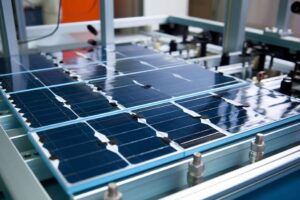
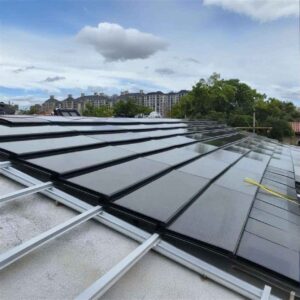
Close-up of semi-transparent solar module technology showing the carefully engineered balance between cell density and light transmission.
Choosing the best transparent solar module for your project requires balancing five interconnected factors: efficiency, transparency, durability, cost, and aesthetics. No single module excels at all five simultaneously — the optimal choice depends entirely on your specific application, building orientation, climate, budget, and design vision.
For projects that prioritize maximum energy generation, opt for lower-transparency modules (20–40%) with higher cell coverage, which are ideal for skylights, canopies, and south-facing facades. For projects where unobstructed views and natural daylight are paramount — such as retail storefronts or residential windows — high-transparency modules (70–90%) provide energy generation as a bonus while maintaining the glass’s primary function. For most commercial office applications, medium-transparency modules (40–60%) offer the best overall balance of power output, daylight quality, and thermal performance.
As a practical next step, consider consulting with an experienced BIPV manufacturer who can provide customized recommendations based on your project parameters. Jia Mao Bipv offers comprehensive design consultation and custom module manufacturing with variable transparency, sizing, color, and power output — backed by 25-year performance warranties and a 3 GW annual production capacity. Whether you are an architect exploring BIPV for the first time or a developer scaling a proven concept, the right transparent solar module can transform your building from an energy consumer into an energy producer. You can explore their full range of photovoltaic glass products e BIPV solutions to find the right fit for your next project.

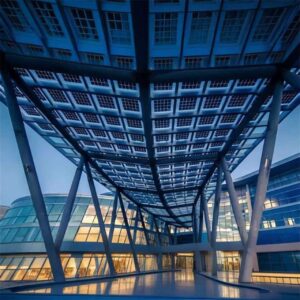
The future of sustainable architecture: buildings that generate their own clean energy through transparent solar technology.
Frequently Asked Questions (FAQ)
Q1: What is the efficiency of transparent solar panels compared to traditional solar panels?
Transparent solar panels currently achieve system-level efficiencies of 5–12% for semi-transparent modules and 1–5% for fully transparent designs, compared to 20–25% for conventional opaque monocrystalline panels. However, because transparent modules can be deployed across much larger glass surface areas, their total energy yield per building can be substantial. Manufacturers like Jia Mao Bipv report annual energy yields of 180–250 kWh/m² for their transparent BIPV glass products.
Q2: How much do transparent solar panels cost?
Transparent solar panel pricing typically ranges from $200 to $600 per square meter, depending on the transparency level, cell technology, and customization requirements. While this is 2–4 times more expensive per watt than conventional panels, transparent modules also replace standard architectural glazing, offsetting their cost through dual functionality and HVAC energy savings of 20–40%.
Q3: Can transparent solar panels be retrofitted onto existing buildings?
Yes. Transparent solar modules can replace existing glass panels in curtain wall systems, or thin photovoltaic coatings can be applied directly to existing glass. Retrofit projects require structural assessment of the existing framing system and careful coordination of electrical routing. Technologies originally developed at Michigan State University were specifically designed with retrofit applications in mind.
Q4: How long do transparent solar panels last?
Premium transparent solar modules are designed to last 25–30 years, comparable to conventional solar panels. Leading manufacturers offer 25-year linear power warranties guaranteeing at least 80% of original output. MSU researchers have developed zinc-oxide coatings that maintain performance for up to 30 years, and Jia Mao Bipv provides additional 15-year optical clarity and 12-year product warranties.
Q5: What types of buildings benefit most from transparent solar modules?
Commercial office towers with large glass curtain walls benefit most due to their vast vertical glass surfaces. Other high-value applications include airports, shopping malls, healthcare facilities, educational campuses, greenhouses, and high-end residential properties with sunrooms or glass atriums. Any building with significant south-, east-, or west-facing glass surfaces is a strong candidate for BIPV integration.
Q6: What is the difference between fully transparent and semi-transparent solar panels?
Fully transparent solar panels use TLSC (Transparent Luminescent Solar Concentrator) technology that is nearly invisible, with 1–5% efficiency. Semi-transparent panels use spaced conventional silicon cells within glass, achieving 7–12% efficiency while providing 20–70% visible light transmission. Semi-transparent modules — such as those produced by Jia Mao Bipv — are currently more commercially available and cost-effective for most BIPV applications.
Q7: Do transparent solar panels work on cloudy days or in low-light conditions?
Yes. High-quality transparent solar modules maintain approximately 15% of their rated output at low irradiance conditions (200 W/m²). Because they harvest UV and infrared wavelengths that penetrate cloud cover more effectively than visible light, transparent modules can perform relatively well in diffuse light conditions. This makes them suitable for climates with variable weather, not just sunny regions.
Q8: What certifications should I look for when choosing transparent solar modules?
Look for IEC 61215 (crystalline silicon module design qualification and type approval), IEC 61730 (photovoltaic module safety qualification), and relevant building code certifications for your jurisdiction. For BIPV applications, the module should also meet architectural glazing standards including wind load, thermal shock, and fire safety requirements. LEED and BREEAM pre-certification documentation from the manufacturer is also valuable for green building projects.
Q9: Can transparent solar panels reduce building energy consumption beyond electricity generation?
Absolutely. Transparent solar modules block up to 85% of infrared radiation and 99% of UV light, reducing solar heat gain and lowering cooling loads by 25–40%. This thermal management function reduces HVAC energy consumption, decreases peak demand charges, and improves occupant comfort — benefits that persist even on days when electricity generation is below peak. Combined with their daylighting benefits (reducing artificial lighting needs), transparent modules deliver comprehensive energy savings.
Q10: Who are the leading manufacturers of transparent solar panels for BIPV applications?
Leading manufacturers in the transparent BIPV space include Jia Mao Bipv (offering comprehensive customizable transparent modules with 3 GW annual production capacity), Onyx Solar (Spain, specializing in photovoltaic glass for facades), Polysolar (UK, focusing on transparent canopies and BIPV), and Ubiquitous Energy (US, developing ClearView Power TLSC technology). When selecting a manufacturer, evaluate their production capacity, warranty coverage, customization flexibility, and track record of completed installations.


-300x300.jpg)