In 2025, amorphous photovoltaic panels are transforming how we think about solar energy generation. Unlike their crystalline counterparts, these flexible and lightweight solar solutions are opening doors for applications that were previously impossible with traditional rigid panels. From sleek building facades to portable charging devices, amorphous silicon technology is making renewable energy more accessible than ever before.
The beauty of amorphous photovoltaic panels lies in their versatility. Whether you live in a cloudy region, need a flexible power source for your outdoor adventures, or want to integrate solar technology seamlessly into your building’s architecture, these thin-film marvels offer practical solutions for diverse energy needs. With the global push toward sustainability gaining momentum, amorphous panels represent a smart, forward-thinking choice for homeowners, businesses, and innovators alike.
As energy costs continue to rise and environmental concerns become more pressing, understanding the advantages and applications of amorphous photovoltaic technology can help you make informed decisions about your energy future. Companies like Jia Mao Bipv are at the forefront of this revolution, developing advanced building-integrated photovoltaic solutions that combine functionality with aesthetic appeal.
Principais conclusões
- Amorphous photovoltaic panels offer superior performance in low-light and high-temperature conditions compared to crystalline alternatives.
- Their flexibility and lightweight design enable applications in wearables, IoT devices, and building-integrated systems.
- Lower manufacturing costs make solar energy more accessible for budget-conscious consumers.
- Environmental sustainability is enhanced through reduced silicon usage and recyclable materials.
- Real-world applications span from consumer electronics to emergency power and remote monitoring systems.
What Are Amorphous Photovoltaic Panels?
Unique Structure and Materials
Amorphous photovoltaic panels represent a fundamentally different approach to solar energy collection compared to traditional crystalline silicon technology. The term “amorphous” comes from the Greek word meaning “without form,” which accurately describes the non-crystalline structure of the silicon used in these panels. Unlike monocrystalline or polycrystalline panels where silicon atoms are arranged in a precise, orderly lattice structure, amorphous silicon features a random atomic arrangement that gives it unique properties.
The manufacturing process for amorphous panels involves depositing extremely thin layers of silicon onto a substrate material, which can be glass, stainless steel, or even flexible plastic. Each layer is only about 1 micrometer thick—roughly 300 times thinner than the wafers used in crystalline panels. This thin-film approach means that amorphous panels require significantly less raw silicon material, typically using less than 1% of the silicon needed for conventional crystalline panels. The result is a lighter, more flexible product that can conform to curved surfaces and integrate seamlessly into various applications.
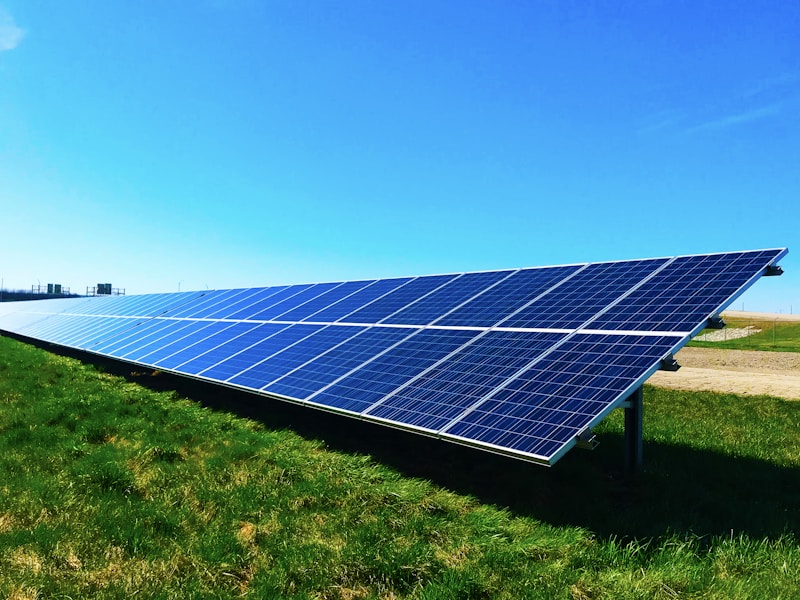
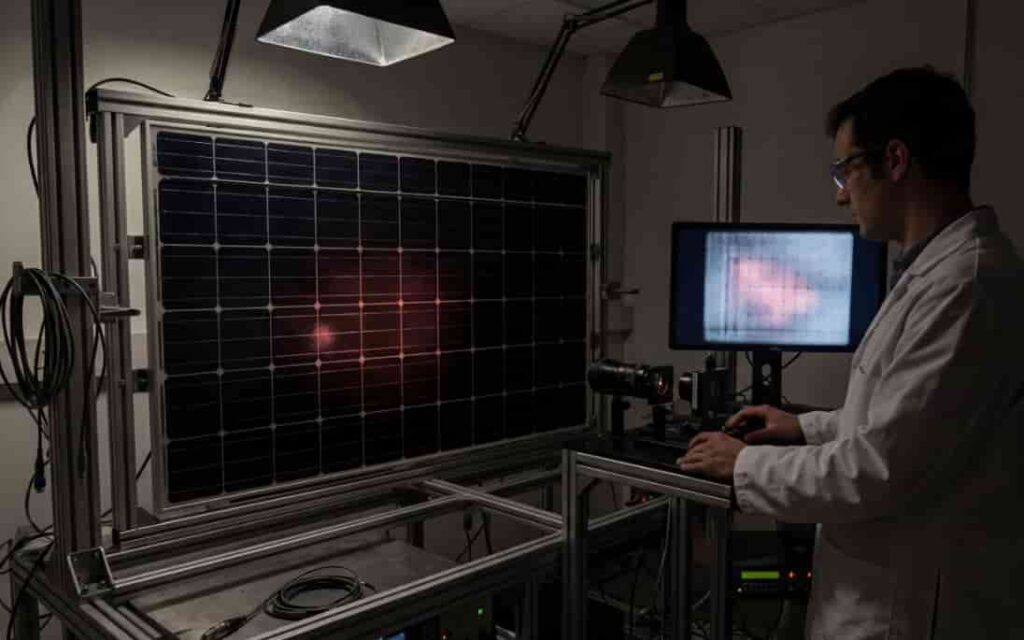
The hydrogenated amorphous silicon (a-Si:H) used in these panels contains hydrogen atoms that help stabilize the material’s electronic properties. This hydrogenation process is crucial because it reduces defects in the amorphous structure that would otherwise trap electrons and reduce efficiency. Modern manufacturing techniques have refined this process to create panels with improved stability and longer operational lifespans, addressing one of the historical concerns about thin-film technology.
Differences from Crystalline Panels
Understanding the key differences between amorphous and crystalline photovoltaic panels helps clarify why each technology suits different applications. The most fundamental distinction lies in how these materials convert sunlight into electricity. Crystalline silicon panels rely on a highly ordered atomic structure to create efficient electron pathways, achieving laboratory efficiencies of up to 26% for monocrystalline cells. Amorphous panels, with their disordered structure, typically achieve efficiencies between 6% and 14% under standard test conditions.
However, efficiency ratings under ideal laboratory conditions don’t tell the complete story. Amorphous panels possess a broader spectral response, meaning they can absorb a wider range of light wavelengths including diffuse and indirect sunlight. This characteristic makes them particularly effective in real-world conditions where clouds, shadows, or indirect sunlight are common. According to EnergySage research, amorphous panels can produce more energy than their rated efficiency would suggest when deployed in locations with frequent overcast conditions.
| Characteristic | Amorphous Silicon | Monocrystalline Silicon | Polycrystalline Silicon |
|---|---|---|---|
| Typical Efficiency | 6-14% | 20-26% | 15-20% |
| Temperature Coefficient | -0.20%/°C | -0.35%/°C | -0.40%/°C |
| Low-Light Performance | Excelente | Good | Moderado |
| Flexibility | Alta | None | None |
| Weight per Watt | Light | Heavy | Heavy |
| Silicon Usage | ~1% of crystalline | Alta | Alta |
| Shade Tolerance | Superior | Ruim | Ruim |
Temperature performance represents another crucial difference. Crystalline panels experience significant efficiency losses as temperatures rise, with typical temperature coefficients around -0.35% to -0.40% per degree Celsius above 25°C. Amorphous panels demonstrate superior heat tolerance with temperature coefficients around -0.20% per degree Celsius. In hot climates where panel surface temperatures can exceed 60°C, this difference translates to meaningful real-world performance advantages for amorphous technology.
“The momentum in thin-film and amorphous solar technologies has been remarkable. We’re seeing these panels excel in applications where traditional crystalline panels simply cannot perform—from curved architectural surfaces to portable power solutions. The technology has matured significantly, and 2025 marks a turning point for mainstream adoption.”
— Solar Industry Analysis, SEIA Research 2025
The structural flexibility of amorphous panels enables applications impossible with rigid crystalline technology. While traditional panels must be mounted on flat surfaces with adequate structural support, amorphous panels can wrap around curved building elements, integrate into roofing materials, and even roll up for portable use. This versatility has driven innovation in building-integrated photovoltaics (BIPV), where solar generation becomes an integral part of the building envelope rather than an add-on system.
Key Benefits of Amorphous Photovoltaic Panels
Flexibility and Lightweight Design
The physical characteristics of amorphous photovoltaic panels open possibilities that extend far beyond traditional solar installations. Weighing as little as 2-3 kg per square meter compared to 10-15 kg for conventional crystalline panels, amorphous technology reduces structural requirements and installation complexity. This weight advantage proves particularly valuable for rooftop installations on older buildings where structural capacity may be limited, or for mobile applications where every gram matters.
Flexibility transforms amorphous panels from simple energy generators into versatile building materials. Modern manufacturing techniques produce panels that can bend to radii as tight as 25 millimeters without damage, enabling installation on curved surfaces like barrel roofs, domes, and automotive applications. Companies like Jia Mao Bipv have leveraged this flexibility to create innovative architectural solar solutions that blend seamlessly with contemporary building designs while generating clean energy.
Architectural Integration Advantages
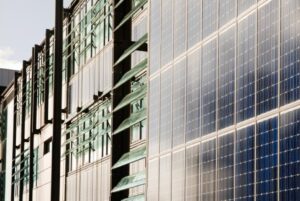
The thin profile of amorphous panels, typically measuring just 2-3 millimeters thick, allows for discrete integration into building facades, awnings, and window systems. Architects and designers appreciate this unobtrusive quality because it enables solar generation without compromising aesthetic vision. Unlike bulky crystalline arrays that announce their presence, amorphous panels can disappear into the building envelope, contributing to the growing field of transparent and semi-transparent solar glazing.
The reduced weight also simplifies installation logistics. Installers can handle larger panel sections without heavy equipment, reducing labor costs and installation time. For retrofitting existing structures, the minimal structural impact means fewer engineering assessments and building permits, accelerating project timelines and reducing overall costs.
Performance in Low Light and High Temperatures
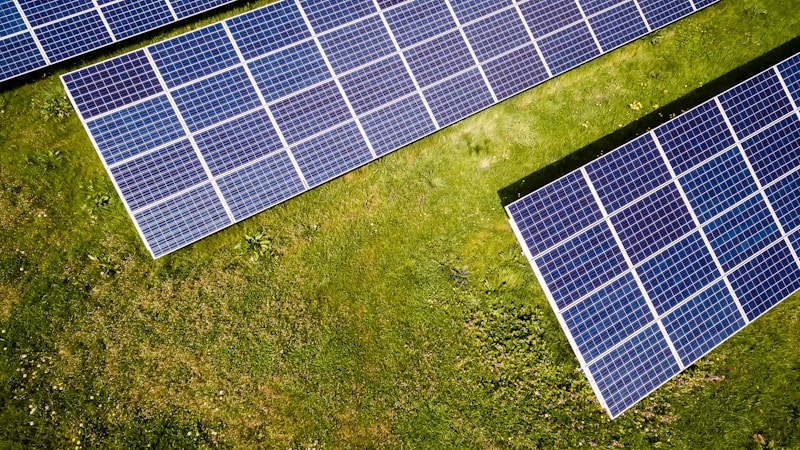
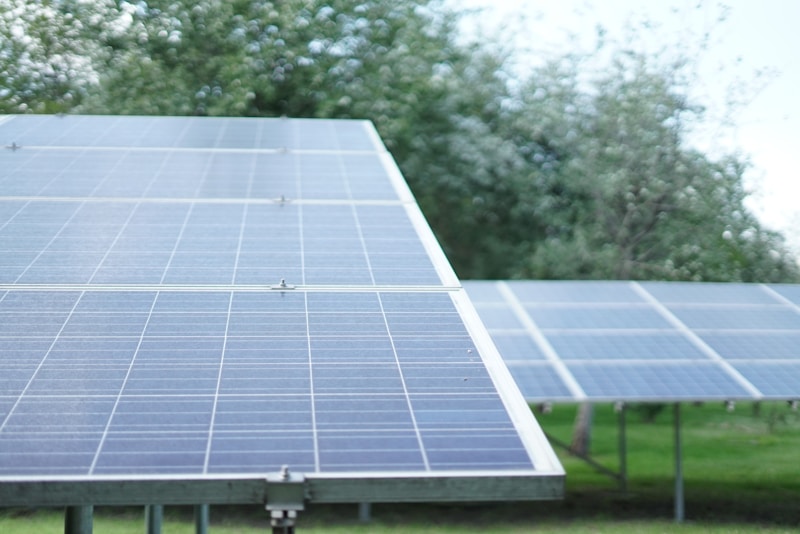
Real-world solar performance depends heavily on environmental conditions that often deviate significantly from laboratory test standards. Amorphous photovoltaic panels excel precisely where crystalline technology struggles most, making them the preferred choice for challenging installation environments. The broader spectral absorption range of amorphous silicon allows these panels to harvest energy from diffuse light scattered by clouds, reflected off buildings, or filtered through atmospheric haze.
Shade Tolerance and Partial Coverage
One of the most significant practical advantages of amorphous technology is its superior shade tolerance. Crystalline panels experience dramatic output drops when even small portions of the panel surface fall into shadow because the cells are connected in series. A single shaded cell can reduce output from an entire panel by 50% or more. Amorphous panels, with their monolithic construction and different electrical characteristics, continue producing useful power even with partial shading, making them ideal for urban environments where trees, neighboring buildings, or architectural elements create complex shadow patterns.
According to testing by PowerFilm Solar, amorphous panels can maintain 60-70% of their rated output under partial shading conditions that would reduce crystalline panel output to just 20-30%. This resilience translates directly to higher annual energy yields in real-world installations where perfect, unobstructed sunlight is rarely available throughout the entire day.
Cost and Accessibility
Manufacturing economics favor amorphous technology in several important ways. The thin-film deposition process uses significantly less raw silicon than the ingot-growing and wafer-cutting processes required for crystalline production. With silicon historically representing a substantial portion of panel manufacturing costs, this material efficiency translates to lower production costs per panel. Additionally, thin-film manufacturing can utilize continuous roll-to-roll processes similar to printing, enabling high-volume production with lower capital equipment investments.
For consumers and businesses with limited budgets, amorphous panels offer an entry point into solar energy that might otherwise be financially out of reach. While the lower efficiency means more panels are needed to achieve the same total output as a crystalline system, the cost per watt often remains competitive, especially when installation costs and structural considerations are factored into the total system expense. The global BIPV market is projected to reach $16.66 billion in 2025, driven partly by the accessibility of thin-film technologies.
UV Resistance and Durability
Longevity concerns about thin-film technology have been addressed through continuous improvements in encapsulation and stabilization techniques. Modern amorphous panels incorporate advanced UV-resistant barrier layers that protect the active silicon material from degradation. Multi-layer encapsulation using ethylene-vinyl acetate (EVA) and fluoropolymer backsheets creates a moisture barrier that prevents the humidity-related failures that affected earlier generations of thin-film products.
The initial light-induced degradation (known as the Staebler-Wronski effect) that occurs in amorphous silicon has been well-characterized and is now accounted for in panel ratings. Most of this degradation occurs within the first few hundred hours of light exposure, after which performance stabilizes. Manufacturers typically rate their panels based on stabilized efficiency values, giving consumers accurate expectations for long-term performance. Quality amorphous panels from reputable manufacturers now carry warranties of 20-25 years, comparable to crystalline products.
Environmental Sustainability
From a lifecycle environmental perspective, amorphous photovoltaic panels offer compelling advantages. The dramatically reduced silicon requirements mean less energy-intensive purification and processing during manufacturing. Studies published in Resources, Conservation and Recycling have found that amorphous silicon-based solar cells have among the lowest ecological impacts of all photovoltaic technologies, with faster energy payback times than crystalline alternatives.
Environmental Impact Comparison
Amorphous silicon panels typically achieve energy payback in 1-2 years, compared to 2-4 years for crystalline panels. This means they generate net positive energy for a longer portion of their operational lifetime. The reduced material intensity also simplifies end-of-life recycling, with primary recovery efforts focusing on the glass substrate and aluminum framing—both highly recyclable materials.
The absence of toxic heavy metals like cadmium (found in some other thin-film technologies) makes amorphous silicon panels more environmentally benign throughout their lifecycle. Recycling pathways for silicon-based panels are well-established, and the lower material content per panel means less waste at end-of-life. For organizations pursuing aggressive sustainability goals, amorphous technology aligns well with circular economy principles and lifecycle carbon reduction targets.
Real-World Applications in 2025
Consumer Electronics and Portable Devices
The consumer electronics industry has embraced amorphous photovoltaic technology as the preferred solution for solar-powered portable devices. The combination of flexibility, lightweight construction, and excellent low-light performance makes these panels ideal for integration into products designed for mobility and outdoor use. From solar-charging backpacks to portable power banks, amorphous technology enables practical solar charging that works in real-world conditions rather than just ideal sunny scenarios.
Smartphone accessory manufacturers have integrated thin amorphous solar cells into cases and charging pads, providing trickle charging that extends battery life during outdoor activities. The panels’ ability to generate useful power from indoor lighting has also opened opportunities for solar-powered calculators, keyboards, and remote controls that never need battery replacement. This application demonstrates how amorphous technology’s unique characteristics—specifically, efficient operation under artificial lighting—create markets that crystalline technology cannot effectively serve.
Solar Charging Solutions
Portable solar chargers built with amorphous panels have become essential gear for hikers, campers, and travelers. These lightweight, foldable units can charge smartphones, GPS devices, and cameras even during overcast days when crystalline portable panels would produce negligible output. The durability of flexible substrates also makes amorphous panels more resistant to the drops, impacts, and rough handling that portable equipment typically experiences.
Video: A comprehensive overview of thin-film solar technologies including amorphous silicon
Building Integrated Photovoltaics (BIPV)
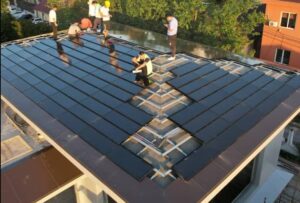
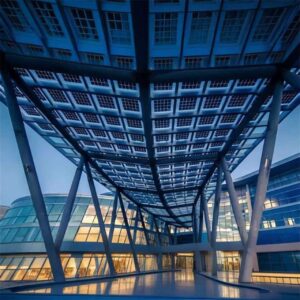
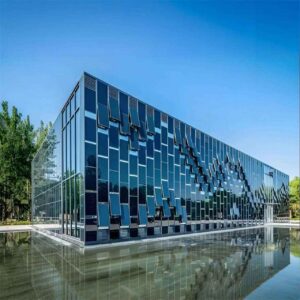
The building-integrated photovoltaics sector represents one of the most significant growth areas for amorphous technology in 2025. Rather than mounting panels on top of existing roofing or cladding materials, BIPV systems replace conventional building materials entirely. Amorphous panels can serve as roofing membranes, facade cladding, or glazing elements, performing dual functions as both weather protection and energy generation. This integration approach pioneered by companies like Jia Mao Bipv reduces total building costs by eliminating redundant materials while adding energy-generating capability.
The aesthetic flexibility of amorphous panels has proven particularly valuable in architecturally sensitive projects. Available in various colors and transparency levels, these panels can match building design requirements without the visual disruption of conventional blue or black crystalline arrays. Historic building renovations, where maintaining original appearance is crucial, have benefited from amorphous panels that integrate invisibly into roofing materials or facade systems.
Market analysis from Research and Markets projects the global BIPV market to reach $68.12 billion by 2030, with thin-film technologies capturing an increasing share due to their unique suitability for building integration applications.
Outdoor and Emergency Power
Emergency preparedness and outdoor recreation markets have driven significant demand for amorphous photovoltaic products. Lightweight, portable solar panels provide reliable power generation for emergency communication equipment, medical devices, and lighting systems when grid power is unavailable. The rugged durability and weather resistance of quality amorphous panels make them suitable for deployment in harsh conditions where crystalline panels might suffer damage.
Disaster relief organizations have incorporated solar charging systems based on amorphous technology into their standard equipment packages. The ability to deploy quickly, operate under variable weather conditions, and survive rough handling makes these panels valuable assets for field operations. Military applications have similarly adopted flexible amorphous panels for powering communications equipment and charging batteries in remote locations where grid power and fuel resupply may be unavailable.
Off-Grid and Remote Solutions
Remote monitoring installations have become a major application category for amorphous photovoltaic panels. Environmental sensors, wildlife cameras, weather stations, and agricultural monitoring equipment increasingly rely on solar power for continuous operation in locations far from grid electricity. The superior low-light performance of amorphous technology ensures these systems continue operating during extended cloudy periods that might disable crystalline-powered alternatives.
Telecommunications infrastructure in remote areas frequently utilizes amorphous solar panels for powering repeater stations, signal boosters, and satellite communication terminals. The reduced maintenance requirements—stemming from better shade tolerance and temperature performance—lower operational costs for installations that may be accessible only by helicopter or extended overland travel.
Wearables and IoT Devices
The Internet of Things revolution has created demand for self-powered sensors and devices that can operate indefinitely without battery replacement or external power connections. Amorphous photovoltaic cells are uniquely suited for this application due to their ability to harvest energy efficiently from indoor ambient lighting. Research published by Embedded.com highlights how hydrogenated amorphous silicon cells can collect sufficient energy in typical indoor lighting conditions to power low-power sensors and wireless transmitters.
Wearable technology represents a growing frontier for amorphous solar integration. Fitness trackers, smartwatches, and health monitoring devices can extend battery life or achieve full energy independence through small integrated solar cells. The flexibility of amorphous panels allows them to conform to curved surfaces like watch faces or wristbands without affecting comfort or aesthetics. As wearable technology continues evolving, solar harvesting will increasingly become a standard feature rather than a novelty.
“The integration of amorphous silicon solar cells into IoT devices represents a paradigm shift in how we approach distributed sensor networks. These panels enable truly autonomous operation, eliminating battery replacement logistics that previously made large-scale IoT deployments impractical. We’re seeing this technology transform everything from smart agriculture to industrial monitoring.”
— Industry Technology Report, Embedded Systems Conference 2025
Comparing Solar Technologies
Efficiency and Performance
When evaluating solar technologies, efficiency metrics require careful interpretation within proper context. Laboratory efficiency ratings measure performance under standardized test conditions that include specific irradiance levels (1000 W/m²), cell temperature (25°C), and spectral distribution (AM 1.5). Real-world conditions rarely match these parameters, which is why panels with lower rated efficiency sometimes outperform higher-rated alternatives in actual installations. Understanding how different technologies respond to real-world variables helps in selecting the optimal solution for specific applications.
Amorphous photovoltaic panels typically achieve module efficiencies between 6% and 14%, significantly lower than the 20-26% range common for modern monocrystalline panels. However, this efficiency gap narrows considerably under non-ideal conditions. The temperature coefficient advantage alone can recover 10-15% of the efficiency difference in hot climates where panel temperatures regularly exceed 50°C. Combined with superior diffuse light utilization, amorphous panels often deliver annual energy yields that compare more favorably than nameplate efficiency ratings would suggest.
| Performance Factor | Amorphous Silicon | Monocrystalline | Real-World Impact |
|---|---|---|---|
| Standard Test Efficiency | 6-14% | 20-26% | Laboratory comparison only |
| High Temperature Loss (at 50°C) | -5% | -9% | Amorphous advantage in hot climates |
| Diffuse Light Response | Excelente | Moderado | Better cloudy day performance |
| Annual Degradation Rate | 0.5-1.0% | 0.3-0.5% | Slight crystalline advantage |
| Partial Shade Response | 70% retained | 20-30% retained | Major amorphous advantage |
| Low Light Threshold | 50 W/m² | 200 W/m² | Extended generation hours |
Energy Yield vs. Rated Power
The distinction between rated power and annual energy yield is crucial for economic analysis. A 100-watt crystalline panel and a 60-watt amorphous panel of similar physical size will produce different amounts of energy over a year depending on installation location and conditions. In equatorial regions with consistent direct sunlight, the crystalline panel’s higher efficiency translates to proportionally higher energy production. However, in temperate regions with significant cloud cover, the amorphous panel may narrow the gap substantially or even achieve comparable annual yields.
Independent field testing conducted across various climate zones has demonstrated that amorphous panels consistently outperform efficiency-based predictions in locations characterized by diffuse solar radiation. Northern European installations, Pacific Northwest regions of North America, and monsoon-affected Asian locations have all shown amorphous technology performing at or above expectations while crystalline installations sometimes underperform rated specifications.
Installation and Integration
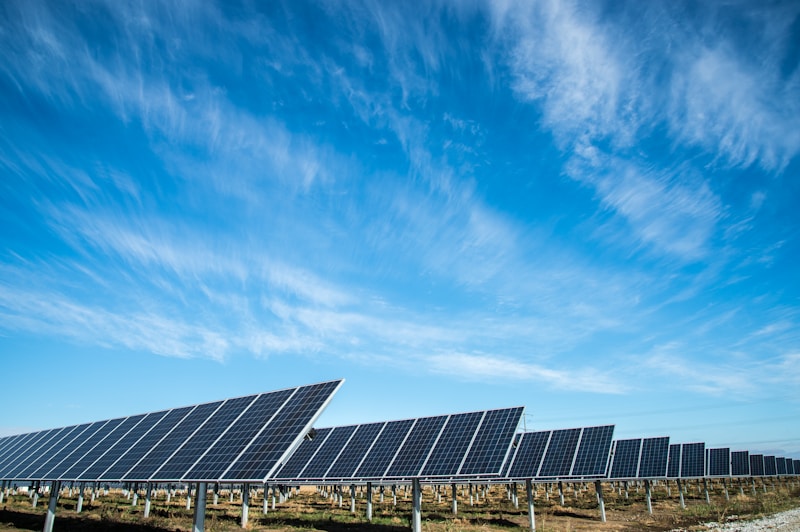
Installation requirements differ substantially between amorphous and crystalline technologies, affecting both initial costs and long-term maintenance considerations. Crystalline panels require robust mounting structures capable of supporting significant weight and wind loads. The rigid glass-fronted construction necessitates careful handling during installation and limits mounting options to flat or slightly angled surfaces with direct structural support.
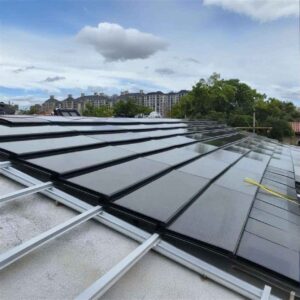
Amorphous panels offer dramatically more installation flexibility. Adhesive-backed flexible panels can bond directly to roofing membranes, metal cladding, or other substrates without penetrating the building envelope. This peel-and-stick installation approach eliminates roof penetrations that could become leak points over time. For building-integrated applications, amorphous panels from specialized BIPV manufacturers can be specified as primary building materials, incorporated during initial construction rather than added as aftermarket modifications.
Maintenance and Serviceability
Long-term maintenance profiles favor amorphous technology in several respects. The absence of individual cell interconnections means no risk of hot spots from single-cell failures that can plague crystalline panels. The monolithic construction is inherently more tolerant of micro-cracks and physical stress that accumulate over years of thermal cycling and weather exposure. When repairs are necessary, the modular nature of thin-film installations often allows replacement of individual sections rather than entire panel arrays.
Cleaning requirements remain similar between technologies, though the lower profile and smoother surface of many amorphous panels can facilitate easier cleaning in installations where debris accumulation is a concern. Self-cleaning coatings developed for thin-film applications leverage the smooth surface characteristics to promote water sheet flow that carries away dust and organic matter.
Best Use Cases for Amorphous Panels
Selecting amorphous technology makes the most sense when application requirements align with the technology’s inherent strengths. The following scenarios represent ideal candidates for amorphous photovoltaic panels, where their unique characteristics provide meaningful advantages over crystalline alternatives.
Building-integrated applications where aesthetics matter represent a prime use case. When solar generation must not compromise architectural vision, the color flexibility, transparency options, and form factor versatility of amorphous panels provide solutions that crystalline technology cannot match. Facades, curved rooflines, and glazing systems all benefit from thin-film approaches pioneered by innovative companies in the BIPV design sector.
Portable and mobile applications where weight and durability matter favor amorphous panels. The combination of lightweight construction, physical flexibility, and resistance to damage from impacts and vibration makes thin-film panels the standard choice for RVs, boats, camping equipment, and military field applications. When panels must survive being rolled up, folded, stepped on, or dropped, amorphous technology’s physical resilience proves invaluable.
Challenging environmental conditions including extreme heat, persistent cloud cover, or complex shading patterns all favor amorphous technology. Urban installations surrounded by taller buildings, forest-adjacent properties with tree shadows, or equatorial locations with intense afternoon temperatures will see amorphous panels outperform their efficiency ratings while crystalline alternatives underperform.
User Experiences and Case Studies
Residential Adoption Stories
Homeowners across diverse geographic and economic circumstances have discovered that amorphous photovoltaic panels offer practical solar solutions tailored to their specific needs. Understanding real-world adoption experiences provides valuable perspective on how this technology performs outside laboratory conditions and marketing specifications.
Suburban homeowners with partially shaded properties have found particular success with amorphous installations. Where crystalline system proposals required extensive tree removal or accepted significant output limitations, amorphous panels maintained useful production despite dappled shade from landscape trees. One Pacific Northwest homeowner reported that their amorphous roof installation achieved 85% of expected annual output despite shade coverage that a crystalline installer had deemed unworkable, validating the technology’s superior shade tolerance claims.
Retrofit projects on older homes with limited roof structural capacity have benefited from amorphous technology’s reduced weight. Historic home preservation guidelines often restrict visible rooftop modifications, making the discrete profile of thin-film installations attractive. Homeowners have successfully integrated amorphous panels into standing-seam metal roofing, membrane roofs, and even traditional tile installations where crystalline panels would have required visible rack mounting systems.
Cost-Conscious Consumers
Budget-minded homeowners have leveraged the lower initial cost of amorphous panels to achieve solar adoption that would otherwise be financially out of reach. While larger array sizes are necessary to achieve equivalent output, the reduced per-panel pricing often results in competitive total system costs, particularly when installation labor savings from lighter panels and simpler mounting are factored in. For households prioritizing immediate cash flow over maximum efficiency, amorphous technology provides a viable pathway to solar energy independence.
Commercial and Industrial Examples
Commercial building owners and industrial facility managers have discovered strategic applications for amorphous photovoltaic technology that capitalize on its unique characteristics. Large-scale deployments demonstrate how thin-film solar can address challenges that crystalline technology cannot efficiently solve.
Warehouse and distribution center operators have embraced lightweight flexible panels for their extensive flat roof surfaces. Traditional crystalline installations on these structures often face structural limitations—the roofs are designed to support minimal loads beyond their own weight and occasional maintenance personnel. Amorphous panels weighing under 3 kg per square meter can cover these roofs without expensive structural reinforcement, converting previously unsuitable surfaces into productive power generation assets.
“Our industrial clients have seen the value proposition shift dramatically for thin-film technology. When you factor in avoided structural engineering costs and faster installation timelines, amorphous panels frequently deliver better returns than higher-efficiency alternatives on buildings with lightweight roof systems. The technology has found its niche, and that niche keeps expanding.”
— Commercial Solar Development Analysis, 2025
Agricultural facilities have adopted amorphous panels for greenhouse integration, where semi-transparent options allow light transmission for plant growth while generating electricity. The diffuse light characteristics of greenhouses align perfectly with amorphous silicon’s spectral response, generating useful power even on overcast days when greenhouse operations continue but crystalline panels would produce minimal output.
Innovative and Off-Grid Uses
Some of the most creative applications of amorphous photovoltaic technology emerge from off-grid scenarios where conventional power infrastructure is unavailable or impractical. These installations demonstrate the technology’s adaptability and resilience in demanding real-world conditions.
Remote scientific research stations in polar and high-altitude environments have deployed amorphous panels specifically for their cold-weather performance advantages. While crystalline panels experience increased output at low temperatures, the extreme conditions of these installations—including extended low-light periods, high albedo from snow reflection, and physical stress from temperature extremes—favor the durability and diffuse-light performance of amorphous technology.
Maritime applications have grown substantially, with sailing vessels and commercial ships integrating flexible amorphous panels into deck surfaces, bimini covers, and sail materials. The salt-water corrosion resistance of properly encapsulated thin-film panels, combined with their ability to conform to curved hull surfaces and continue producing power while partially shaded by rigging and sails, makes them ideal for marine environments where crystalline panels face significant challenges.
Disaster relief operations increasingly depend on portable amorphous solar systems for field deployment. The lightweight, packable nature of flexible panels allows air transport in quantities that would be impossible with rigid crystalline alternatives. Field hospitals, communication centers, and water purification systems can achieve energy independence quickly using technology that survives the rough handling inherent in emergency deployment scenarios.
Your Path to Accessible Solar Energy
Amorphous photovoltaic panels have emerged as a transformative technology that makes solar energy generation simpler, more accessible, and more versatile than ever before in 2025. Their unique combination of flexibility, lightweight construction, superior low-light performance, and cost-effectiveness opens doors to applications where traditional crystalline panels simply cannot compete. From sleek building facades to portable charging solutions, from IoT sensors to emergency power systems, amorphous technology is expanding the boundaries of where and how we can harvest solar energy.
The advantages are clear: better performance in challenging conditions, easier installation with fewer structural requirements, excellent shade tolerance for urban environments, and environmental sustainability through reduced material consumption. While crystalline panels maintain their position for maximum-efficiency ground-mount installations, amorphous technology has carved out essential niches that continue expanding as innovation progresses.
Whether you’re a homeowner exploring solar options for a shaded property, a business owner seeking to monetize underutilized roof space, or an innovator developing the next generation of solar-powered devices, amorphous photovoltaic panels deserve serious consideration. Companies like Jia Mao Bipv are leading the charge in building-integrated applications, creating solutions that combine energy generation with architectural beauty.
Ready to explore how amorphous photovoltaic technology can work for your specific application? Contact a qualified solar professional to discuss your needs, evaluate your site conditions, and design a system optimized for your goals. The future of accessible, integrated solar energy is here—and it’s more flexible than ever.
Perguntas frequentes
What is an amorphous photovoltaic panel?
An amorphous photovoltaic panel is a type of thin-film solar panel made from non-crystalline silicon deposited in very thin layers on a substrate. Unlike traditional crystalline panels with their rigid, ordered atomic structure, amorphous silicon has a random atomic arrangement that allows for flexible, lightweight panel construction while using significantly less silicon material in manufacturing.
How do amorphous panels perform in cloudy weather?
Amorphous panels excel in cloudy conditions compared to crystalline alternatives. Their broader spectral response allows them to capture diffuse and indirect sunlight more efficiently, maintaining useful power output even when direct sunlight is unavailable. This characteristic makes them particularly suitable for regions with frequent overcast conditions or installations where consistent daily production matters more than peak output.
Are amorphous solar panels good for BIPV applications?
Yes, amorphous panels are exceptionally well-suited for building-integrated photovoltaic applications. Their flexibility allows conforming to curved surfaces, their lightweight construction minimizes structural requirements, and their availability in various colors and transparency levels enables aesthetic integration that crystalline panels cannot achieve. Companies like Jia Mao Bipv specialize in these architectural solar solutions.
How long do amorphous photovoltaic panels last?
Quality amorphous panels from reputable manufacturers typically carry warranties of 20-25 years, comparable to crystalline products. While early thin-film technology experienced faster degradation, modern manufacturing techniques and improved encapsulation have addressed these concerns. Initial light-induced degradation stabilizes within the first few hundred hours, after which performance remains consistent for decades.
Can amorphous panels work with indoor lighting?
Yes, amorphous silicon panels can generate useful electricity from indoor artificial lighting, making them ideal for IoT devices and indoor applications. Their efficient response to visible light wavelengths—the primary output of most artificial lighting—enables continuous operation of low-power sensors and devices without batteries or external power connections.
What is the cost difference between amorphous and crystalline panels?
Amorphous panels generally cost less per panel but require more panels to achieve equivalent output due to lower efficiency. However, total system costs often remain competitive when factoring in reduced structural requirements, faster installation, and eliminated need for structural reinforcement on lightweight roofs. The best economic choice depends on specific installation circumstances and space availability.
Are amorphous panels environmentally friendly?
Amorphous panels rank among the most environmentally sustainable photovoltaic technologies. They use less than 1% of the silicon required for crystalline panels, achieve faster energy payback times, and avoid toxic heavy metals found in some other thin-film technologies. End-of-life recycling focuses on glass and aluminum recovery, both well-established recycling streams.
Do amorphous panels work in hot climates?
Amorphous panels perform exceptionally well in hot climates due to their superior temperature coefficient. While all solar panels lose efficiency as temperatures rise, amorphous panels lose approximately half as much output per degree of temperature increase compared to crystalline alternatives. In locations where panel temperatures regularly exceed 50°C, this advantage translates to meaningfully higher real-world energy production.
Can I install amorphous panels on a curved surface?
Yes, flexible amorphous panels can bend to conform to curved surfaces with radii as tight as 25mm without damage. This capability enables installation on barrel roofs, domes, vehicle surfaces, and other curved architectural elements where rigid crystalline panels cannot be mounted effectively.
What applications are best suited for amorphous solar technology?
Ideal applications include building-integrated photovoltaics, portable and emergency power systems, off-grid remote installations, IoT and wearable devices, marine applications, and any installation with significant shading, weight restrictions, or aesthetic requirements. The technology excels where its unique advantages—flexibility, light weight, shade tolerance, and low-light performance—address specific application challenges that crystalline technology cannot efficiently solve.
External Resources
For additional information on solar technology and industry developments, consult these authoritative sources:


-300x300.jpg)