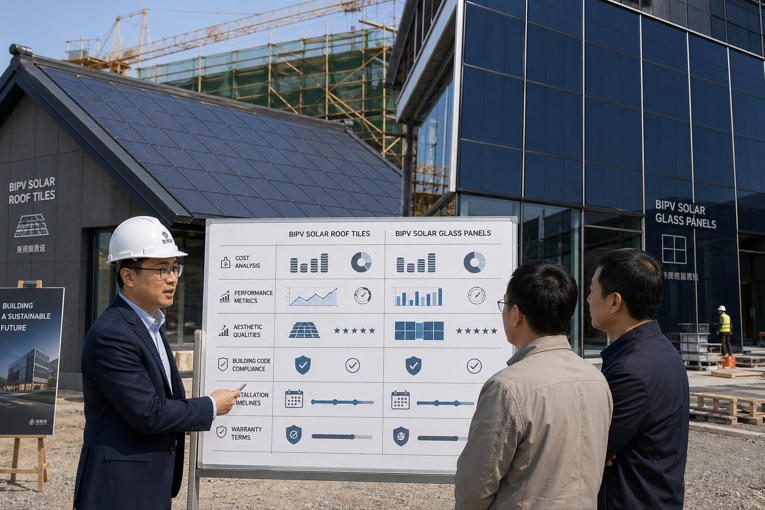

Choosing between BIPV tiles and BIPV glass is not simply a product comparison. It is a decision about the building envelope, the energy model, the roof or facade structure, the construction schedule, and the future maintenance plan.
This article guides architects, contractors, developers, and builders through a structured comparison of BIPV tiles and BIPV glass for a new build. It highlights performance, aesthetics, cost, installation coordination, warranties, and practical decision steps.
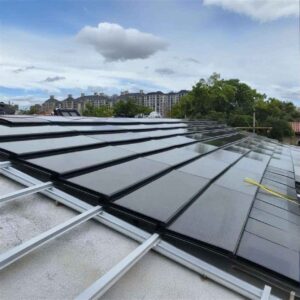
The core difference is straightforward: BIPV tiles usually replace roofing materials, while BIPV glass usually replaces or integrates with architectural glazing, skylights, curtain walls, canopies, or facade panels. Both generate electricity, but they solve different design problems.
According to the Whole Building Design Guide, building-integrated photovoltaics are photovoltaic elements located directly within the building envelope or canopy structure. That definition matters because BIPV must be specified as both a power-generating system and a construction material. You can review the technical background from the Whole Building Design Guide BIPV resource.
For project teams comparing real product formats, Jia Mao Bipv BIPV solutions include roof-integrated products, photovoltaic glass, transparent modules, and facade-oriented systems. The strongest projects usually bring the manufacturer into the design conversation early, before the roof grid, facade grid, and electrical routing are frozen.
Overview of BIPV options
BIPV tiles: what they are
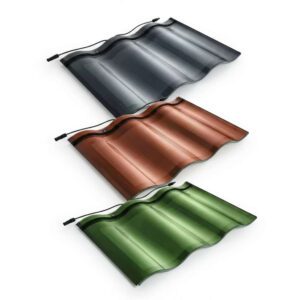
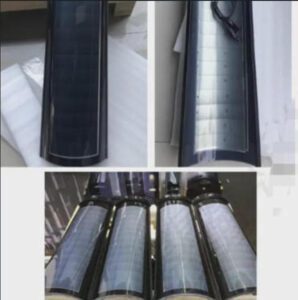
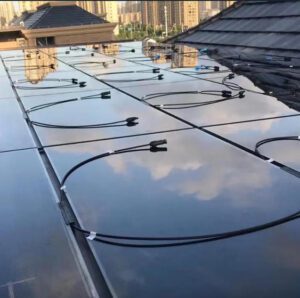
BIPV tiles are solar roof components designed to function as part of the roof covering. They may resemble roof tiles, shingles, slates, or modular roof panels. Instead of mounting solar panels above a completed roof, BIPV tiles become part of the roof surface itself.
They are most suitable for:
- New homes where curb appeal is a major selling point.
- Luxury residential projects where rack-mounted PV would interrupt the roofline.
- Roof replacement projects where the roof covering and solar system can be planned together.
- Developments with homeowner association or planning restrictions on visible solar arrays.
- Projects where a clean roof appearance is more important than maximum low-cost wattage.
The key advantage is architectural continuity. The solar system reads as part of the roof, not an attachment. The key challenge is that roofing details become solar details: battens, underlayment, valleys, ridges, gutters, snow guards, ventilation, and service access must all coordinate with the electrical design.
BIPV glass: what it is
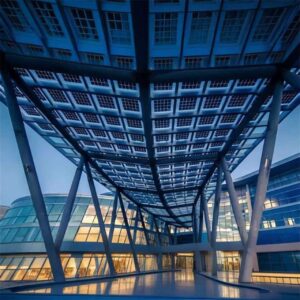
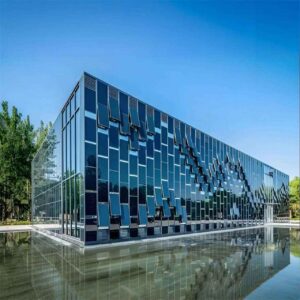
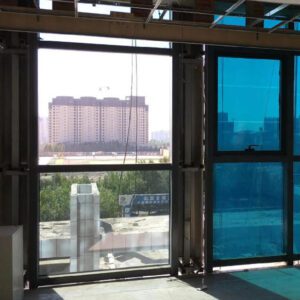
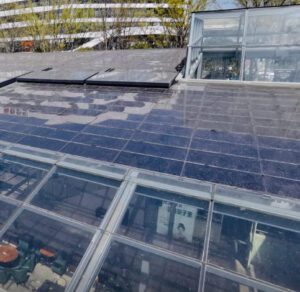
BIPV glass is photovoltaic glass used in facades, curtain walls, skylights, canopies, atriums, balcony railings, greenhouses, spandrel zones, or roof glazing. It may be opaque, semi-transparent, colored, patterned, or transparent depending on the cell spacing and glass configuration.
It is most suitable for:
- Commercial buildings with large facade areas.
- Public buildings where visible sustainability has brand or civic value.
- Canopies, atriums, and skylights that need daylight and solar generation.
- Buildings with limited roof area but large vertical or overhead glass surfaces.
- Architectural projects where PV should become part of the facade language.
For BIPV glass projects, products such as photovoltaic glass for building integration are evaluated through several lenses at once: solar output, glass safety, transparency, color, wind load, waterproofing, fire requirements, and replacement procedures.

Performance considerations
Energy yield factors
Energy yield depends on surface orientation, tilt, shading, operating temperature, module technology, inverter design, and maintenance. BIPV tiles generally perform best when installed on sun-facing roof planes with suitable pitch and limited shading. BIPV glass can use facades and canopies that standard roof PV cannot use, but vertical facades often produce less annual energy per square meter than optimally tilted roof surfaces.
The U.S. Department of Energy explains that PV cells convert sunlight into electrical energy and are connected into modules and arrays as part of a full PV system. That same physics applies to BIPV, but the building surface fixes the module angle more rigidly than a conventional rack system. See the DOE explanation of solar photovoltaic technology basics.
In a new build, the best yield decisions are made before architectural drawings are locked. A roof with a simple south-facing plane may favor BIPV tiles. A dense urban building with limited roof area but a large south or west facade may benefit from BIPV glass, especially if the facade also provides solar shading.
Bar chart: indicative relative annual energy yield by BIPV surface
0%
20%
40%
60%
80%
100%
95–100%
Optimized roof
85–92%
BIPV tiles
75–85%
Glass canopy
55–65%
BIPV facade
40–52%
Shaded glazing
Observação: Values are illustrative. Real yield requires site-specific modeling for location, azimuth, tilt, shading, temperature, soiling, and inverter losses.
Thermal and acoustic performance
Thermal behavior is one of the most underestimated BIPV decision factors. Roof-integrated tiles may operate hotter than rack-mounted panels if rear ventilation is limited. BIPV glass in a ventilated facade can perform better thermally than sealed-in glazing, but the cavity design must allow heat to escape.
BIPV glass also affects daylighting, glare, solar heat gain, and acoustic performance. Semi-transparent glass can reduce direct solar gain while maintaining daylight, but cell spacing and coating selection should be coordinated with interior comfort targets. In schools, offices, and public buildings, acoustic glass specification may matter as much as wattage.
For residential roofs, BIPV tiles should be coordinated with roof insulation and ventilation strategy. For glass systems, ask for U-value, solar heat gain coefficient, visible light transmittance, acoustic rating, and laminated safety glass details when applicable.
Aesthetics and architectural impact
Integration with rooflines
BIPV tiles are usually the better choice when the roof is a dominant architectural feature. They can create a continuous roof plane without raised rails, visible clamps, or module rows that conflict with dormers and hips.
Roofline integration depends on:
- Tile dimensions and compatibility with roof geometry.
- Ridge, hip, valley, and eave details.
- Color consistency between active solar tiles and inactive dummy tiles.
- Snow-shedding and drainage behavior.
- Safe replacement access for individual tiles.
For high-end homes, the visual value can be significant. A buyer may accept a slightly higher cost per watt if the result avoids the visual bulk of conventional rooftop solar.
Glass appearance and glazing options
BIPV glass gives architects a different palette: transparency, colored glass, visible cell patterns, fritted glass, spandrel panels, skylight modules, and photovoltaic shading elements. It can become a deliberate facade material rather than a hidden energy system.
Products such as BIPV colored glass panels are especially relevant for buildings where the solar surface must match a facade concept. In this situation, the question is not “Can we hide the solar?” but “Can the solar layer become part of the architectural identity?”

Structural and mounting implications
Roof load considerations
BIPV tiles must be evaluated as a roofing system. The structure must handle dead load, wind uplift, snow loads, maintenance loads, and any local seismic requirements. The design team should compare the weight of the proposed BIPV tile assembly against the conventional roof covering it replaces.
Key roof questions include:
- Does the roof structure support the full tile system, including underlayment and battens?
- How are wind uplift zones handled at corners and edges?
- Are inactive matching tiles available for shaded or non-solar areas?
- Can damaged tiles be removed without disturbing large roof sections?
- How are valleys, chimneys, skylights, vents, and roof penetrations detailed?
Frame and mounting compatibility
BIPV glass must be compatible with the facade, curtain wall, canopy, or skylight framing system. The glass unit is not just a solar module; it may also be a safety glass element, weather barrier, shading device, or structural glazing component.
Design teams should confirm glass thickness, laminate configuration, edge bite, pressure plate compatibility, drainage path, cable exit, junction box position, thermal expansion, and replacement procedure. For larger or security-sensitive projects, BIPV photovoltaic laminated glass can be evaluated where impact resistance, safety glass behavior, and energy generation must be combined.
Durability and maintenance
Weather resistance
Weather resistance is where BIPV becomes a construction-risk decision. BIPV tiles must shed water like a roof covering. BIPV glass must manage water like glazing or facade cladding. In both cases, the installation should use layered water management rather than relying only on exposed sealant.
For tiles, review underlayment, overlaps, flashing, drainage channels, and snow behavior. For glass, review gaskets, pressure plates, structural silicone, weep holes, cavity drainage, condensation control, and edge sealing.
UL Solutions notes that PV modules can be installed in demanding environments such as heavy snow, high winds, desert conditions, roof coverings, and curtain walls. Their PV module certification services include testing related to module safety, BIPV, performance, corrosion, mechanical load, PID, and fire behavior.
Cleaning and inspections
BIPV tiles on pitched roofs may benefit from rainfall, but debris can still collect around valleys, roof edges, dormers, and low-slope transitions. BIPV glass facades may stay cleaner than shallow roofs, but fingerprints, mineral deposits, urban pollution, and construction dust can affect appearance and output.
Inspection planning should answer:
- Who can safely access the roof or facade?
- What cleaning tools and chemicals are allowed?
- How often should drainage paths be checked?
- Can a single tile or glass module be replaced without special equipment?
- How will output losses be identified through monitoring?

Installation and construction timeline
Trade coordination
BIPV installation affects more trades than standard solar. BIPV tiles require coordination between the roofer, electrician, solar installer, general contractor, waterproofing team, and inspector. BIPV glass often adds the facade contractor, glazier, structural engineer, and curtain wall consultant.
The earlier the coordination starts, the lower the risk of rework. Shop drawings should show module sizes, cable routes, junction box locations, penetrations, flashing details, inverter locations, access routes, and replacement procedures.
For teams planning installation workflows, the BIPV solar panel installation and design guide provides a useful project-planning reference for assessment, system selection, permits, commissioning, and maintenance.
On-site challenges
Common on-site issues include late roof dimension changes, facade tolerance problems, cable routes blocked by structure, delivery damage to glass modules, weather delays before waterproofing completion, and inspection questions about rapid shutdown or fire access.
BIPV tiles tend to be more sensitive to roofing sequence. BIPV glass tends to be more sensitive to facade tolerances and lifting logistics. For both, mockups reduce risk. A small roof or facade mockup can test waterproofing, cable concealment, visual alignment, and installer familiarity before full installation.
Cost and life-cycle economics
Upfront vs operating costs
BIPV tiles and BIPV glass usually cost more upfront than conventional rack-mounted PV. But in new construction, they may replace materials already in the budget: roof tiles, skylight glass, canopy glass, spandrel glass, or facade cladding. That avoided material cost should be included in the comparison.
The correct comparison is often:
- Conventional roof or facade + conventional solar system.
- Versus BIPV roof or BIPV glass assembly + integrated solar electrical system.
The building-integrated solar cost and ROI guide explains why BIPV should be evaluated as both a building material and an energy asset.
| Decision factor | BIPV tiles | BIPV glass | Best-fit project signal |
|---|---|---|---|
| Main building surface | Pitched roofs, roof replacement, residential new builds | Facades, skylights, canopies, atriums, curtain walls | Choose tiles when roof appearance dominates; choose glass when facade or daylighting matters. |
| Energy yield profile | Often stronger if roof pitch and orientation are favorable | Variable; vertical facades produce less per m² but unlock more surface area | Model annual kWh by surface, not only module wattage. |
| Envelope risk | Roof waterproofing, flashing, drainage, snow behavior | Glazing seals, facade drainage, condensation, thermal movement | Choose the system your contractor team can detail and service confidently. |
| Visual impact | Clean roofline and low visual disruption | Architectural expression, transparency, color, facade identity | Use tiles for subtle integration; use glass for visible design value. |
| Trade coordination | Roofer + electrician + solar installer | Facade/glazing contractor + electrician + structural team | BIPV glass usually needs earlier facade coordination. |
| Maintenance access | Roof access and tile replacement planning | Facade access, lifts, BMU, glazing replacement workflow | Choose based on long-term service reality, not only first-day appearance. |
| Cost logic | Can offset roof covering cost | Can offset glazing, canopy, or facade cladding cost | Compare against the material being replaced. |
Pie chart: typical life-cycle value drivers in a BIPV new build
BIPV
value mix
Energy generation: 30%
Avoided roof/facade material: 25%
Architectural value: 20%
Operating cost reduction: 15%
ESG/resale positioning: 10%
Planning note: The value mix changes by project. A luxury home may weight aesthetics more; a commercial facade may weight avoided cladding and ESG visibility more.
Financing and incentives
Financing and incentives vary by country, state, city, and utility. In the United States, residential buyers can review the IRS Residential Clean Energy Credit, while commercial buyers should discuss investment tax credits, depreciation, and eligible cost treatment with tax professionals.
For U.S. state and local incentives, the DSIRE incentives database is a useful starting point. For BIPV, documentation matters because some costs may be clearly solar-related while others may relate to roofing or facade construction. Keep invoices, product datasheets, installation scope, and electrical commissioning documents separated clearly.
Building codes, standards, and warranties
Safety and electrical codes
BIPV must satisfy both building and electrical requirements. The electrical design should address grounding, bonding, conductor routing, inverter compatibility, rapid shutdown where applicable, arc-fault protection, disconnects, labeling, and utility interconnection.
At the module level, IEC 61730 is widely referenced for PV module safety qualification. The IEC describes IEC 61730-1 photovoltaic module safety requirements as covering construction requirements intended to support safe electrical and mechanical operation.
At the building level, local authorities may ask for fire rating, wind-load calculations, roof assembly approvals, curtain wall details, or structural glazing documentation. For new builds, the safest path is to involve the authority having jurisdiction early rather than waiting until the permit submission is complete.
Warranties and service
Warranty review should be more detailed for BIPV than for conventional PV. A BIPV roof or glass facade has multiple warranty layers:
- PV product warranty.
- Power output or degradation warranty.
- Roofing or glazing workmanship warranty.
- Waterproofing or envelope warranty.
- Inverter and monitoring warranty.
- Finish, color, transparency, or glass warranty if applicable.
The contract should answer who responds first if there is a leak, broken glass, failed tile, output drop, inverter alarm, or cable fault. A system with excellent components can still frustrate owners if warranty responsibility is split across suppliers without a clear service process.
Case studies and benchmarks
Residential example
Consider a new 280 m² detached home with a prominent pitched roof visible from the street. The owner wants solar but rejects raised racks because the roof is a key design feature. The project team compares standard roof tiles plus conventional PV against BIPV tiles.
The BIPV tile option has higher upfront material cost, but it reduces the need for separate roof covering across the active solar area and preserves the roofline. The design team chooses BIPV tiles on the sun-facing plane and matching inactive tiles on shaded roof sections. The electrical designer separates roof planes into different MPPT zones to reduce mismatch.
The main success factor is early coordination: ridge details, valleys, underlayment, cable routes, and attic access are finalized before roof framing begins. The result is not the lowest cost per watt, but it meets the owner’s energy and aesthetic goals without late-stage redesign.
Commercial example
Consider a six-story office building with limited roof area, strong sustainability targets, and a large south-west facade. Standard rooftop PV cannot meet the owner’s visibility and energy goals. The design team evaluates BIPV glass for spandrel bands and a semi-transparent entrance canopy.
The facade BIPV produces less energy per square meter than tilted roof PV, but it uses a large vertical area that would otherwise be passive cladding. The canopy also provides shading at the entrance, improving comfort and reducing glare. The facade contractor and electrical engineer coordinate cable concealment inside mullions and service access from the building maintenance system.
The main success factor is facade-grid discipline: the team avoids too many custom glass sizes, groups PV zones by similar shading exposure, and specifies replacement procedures before procurement.
Decision framework and practical checklist
Step-by-step decision process
Use this process when deciding between BIPV tiles and BIPV glass:
- Define the main project goal: maximum energy, premium aesthetics, facade identity, daylighting, material replacement, or ESG visibility.
- Map available building surfaces: roof planes, facades, skylights, canopies, atriums, and shading structures.
- Model realistic energy yield: include tilt, orientation, shading, temperature, and inverter design.
- Compare replaced materials: roof covering for tiles; glazing, canopy, or facade cladding for glass.
- Check structural and envelope risks: waterproofing, wind load, snow load, drainage, fire, thermal movement, and access.
- Review construction sequencing: identify which trades must coordinate before procurement.
- Compare warranty boundaries: product, power, workmanship, roof/facade envelope, glass, and service response.
- Choose based on project fit: not every project needs BIPV glass, and not every new home needs BIPV tiles.
Quick-start checklist
- Choose BIPV tiles if the roof is the primary visible solar surface.
- Choose BIPV glass if the facade, canopy, skylight, or daylighting strategy is central to the design.
- Request installed project photos, not only renderings.
- Ask for product datasheets, certifications, test reports, and warranty documents.
- Confirm how single modules, tiles, or glass units are replaced.
- Model annual kWh by surface orientation and shading.
- Compare BIPV cost against conventional exterior material plus separate PV.
- Bring the manufacturer, architect, roofer or facade contractor, and electrical designer into one coordination meeting before final specification.
Related video: understanding building-integrated photovoltaics
The video below provides a useful visual introduction to BIPV applications and helps align project stakeholders before product selection and detailing discussions.
BIPV tiles and BIPV glass both turn building surfaces into energy-generating assets, but they serve different project goals. BIPV tiles are usually strongest when the roof is the key design surface and the owner wants clean residential or pitched-roof integration. BIPV glass is usually stronger when the project needs photovoltaic facades, skylights, canopies, curtain walls, daylight control, or visible architectural expression.
The best choice depends on project goals, climate, available surfaces, budget, structure, waterproofing strategy, energy model, and warranty responsibility. A roof-focused home with strong solar exposure may favor BIPV tiles. A commercial building with large facade area and sustainability branding may justify BIPV glass even if the facade yield per square meter is lower than roof PV.
Practical next steps are simple: align stakeholders early, prepare a surface-by-surface energy model, compare avoided material costs, request product and warranty documentation, and involve the manufacturer before construction documents are finalized. If your team is comparing BIPV roof tiles, photovoltaic glass, or combined roof-and-facade systems, Jia Mao Bipv can support early-stage product discussions through its official BIPV manufacturer website.
FAQs
What are the typical lifespans of BIPV tiles vs BIPV glass?
Both are typically designed for long service lives, often aligned with PV performance warranties of 25 years or more. BIPV glass may also be evaluated as architectural glazing, while BIPV tiles must be evaluated as a roof covering. Actual lifespan depends on product construction, installation quality, weather exposure, maintenance, and warranty terms.
How do installation timelines differ between tile and glass systems?
BIPV tiles usually follow roof construction sequencing and require close coordination with roofing and electrical trades. BIPV glass often depends on facade, glazing, or canopy procurement and may have longer shop drawing and fabrication timelines. Custom glass sizes, colors, laminates, or curtain wall interfaces can extend lead time.
What incentives or rebates commonly apply to BIPV installations?
Incentives vary by region. Solar tax credits, renewable energy rebates, depreciation benefits, and local utility programs may apply, but BIPV projects need careful cost documentation because some costs relate to roofing or facade construction. Buyers should check local programs and consult tax professionals before procurement.
Is BIPV glass less efficient than BIPV tiles?
Not necessarily at the module level, but BIPV glass is often installed vertically or semi-transparently, which can reduce annual yield per square meter. BIPV tiles on a well-oriented pitched roof often produce more energy per square meter. The correct comparison is annual kWh from the actual building surface.
Can BIPV tiles and BIPV glass be used on the same building?
Yes. Many new builds can use BIPV tiles on favorable roof planes and BIPV glass on canopies, skylights, or facades. The electrical design should separate different orientations and shading conditions into appropriate inverter or MPPT zones.
Which option is better for a residential new build?
BIPV tiles are usually the first option to evaluate for residential pitched roofs because they preserve the roofline and integrate with the roofing system. BIPV glass may be better for homes with large atriums, skylights, pergolas, sunrooms, or modern glass facades.
Which option is better for a commercial building?
BIPV glass is often attractive for commercial buildings because facades, curtain walls, canopies, and spandrel zones provide large usable surfaces. BIPV tiles can still work for commercial buildings with pitched roofs, hospitality projects, campuses, or visible roofscapes.
What documents should be requested before choosing BIPV tiles or glass?
Request product datasheets, electrical parameters, installation drawings, structural assumptions, waterproofing details, fire and safety documentation, test certificates, warranty terms, replacement procedures, cleaning instructions, and project references with similar climate and building conditions.