Building-integrated solar is moving from a niche architectural feature to a practical design decision for homeowners,
developers, and facility managers who want clean electricity without treating solar as an afterthought. Instead of
mounting a conventional photovoltaic array above finished construction, building-integrated photovoltaics, or BIPV,
are designed to become part of the building envelope itself.
That difference changes the buyer conversation. A BIPV roof tile, glass-glass facade, skylight, canopy, or cladding
panel must be evaluated as both an energy asset and a construction material. It has to produce electricity, shed water,
resist wind, manage heat, meet electrical codes, and still look appropriate for the property.

This guide explains how to compare BIPV options through three lenses: aesthetics, efficiency, and durability. It is
written for property owners, real estate developers, architects, construction teams, and facility managers evaluating
solar roofs, transparent solar glass, facades, canopies, or integrated skins.
not after structural drawings and roof assemblies are fixed. Early coordination lets the PV layer replace selected
exterior materials, which can reduce duplicated labor, attachment hardware, and visual compromises.
What is Building-Integrated Solar (BIPV) and How It Differs from Traditional PV
Core concepts and definitions
Building-integrated photovoltaics are solar power-generating materials that replace or perform the role of conventional
building materials in the roof, facade, skylight, curtain wall, canopy, balcony, or shading system. The
Whole Building Design Guide overview of BIPV
describes BIPV as photovoltaic collector elements located directly within the building envelope or canopy structure.
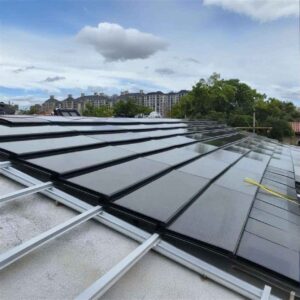
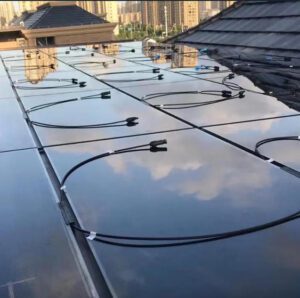
Traditional rooftop PV is usually installed after the roof is complete. Rails, clamps, standoffs, and modules are
added above the waterproofing layer. BIPV is different: the solar component may be the visible roof surface, the
weathering layer, the glass element, or the exterior cladding.
For buyers, this means the product specification must include both solar performance and building performance. A
module datasheet alone is not enough. You also need details on fire classification, wind uplift, drainage paths,
walking limitations, sealing method, fastening system, thermal expansion, and replacement procedures.
Key advantages and potential trade-offs
The primary advantage of BIPV is multifunctionality. One building layer can provide weather protection, architectural
finish, and renewable power generation. This can be especially valuable where planning restrictions, premium design
requirements, roof space constraints, or visible street-facing elevations make conventional rack-mounted solar less
attractive.
BIPV also supports a cleaner architectural result. On high-end residential roofs, hotels, public buildings, logistics
campuses, and corporate headquarters, visible rail systems and mismatched module geometry may reduce design acceptance.
Integrated solar can help the energy system look intentional.
The trade-offs are real. BIPV may cost more upfront, may require more coordination with the roofing or facade contractor,
and may have less ventilation behind the solar cells than rack-mounted PV. Lower ventilation can raise operating
temperatures, which may reduce output in hot climates. Product replacement also requires more attention because the
solar component may be tied into the weathering system.
Common BIS/BIPV configurations
Buyers typically encounter several BIPV configurations:
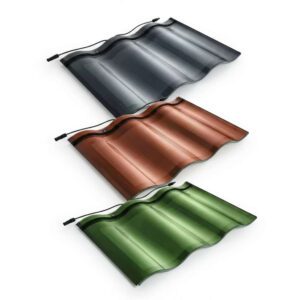
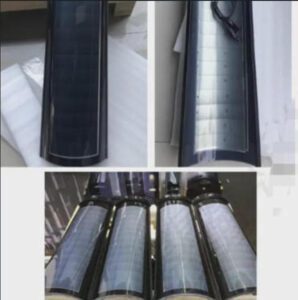
- Solar roofing tiles and shingles: Used in place of selected roof tiles, slates, or shingles.
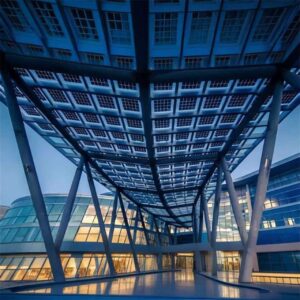
- Glass-glass roof modules: Often used for canopies, atriums, carports, and daylighting structures.
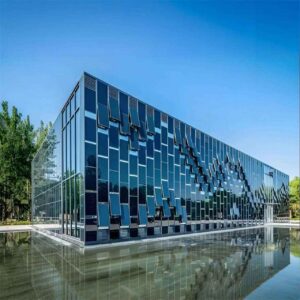
- Photovoltaic facade panels: Used as rainscreen cladding, spandrel glass, or curtain wall elements.
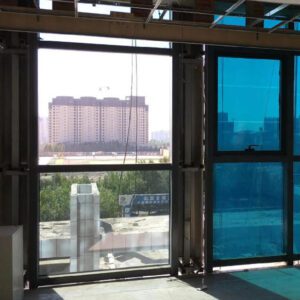
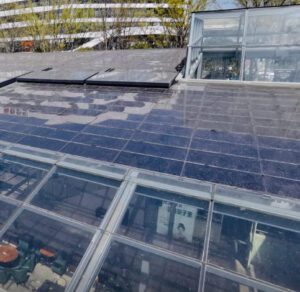
- Transparent or semi-transparent solar glass: Used in skylights, atriums, greenhouses, and sunrooms.
- Solar shading devices: PV louvers, fins, and canopies that generate electricity while reducing cooling loads.
Jia Mao Bipv works in this space with integrated solar roofing, transparent solar panels, photovoltaic glass, and
project-specific BIPV solutions. Buyers comparing product families can start with the company’s
BIPV product portfolio
and its
solutions and applications page
to understand where different formats are typically used.
Aesthetics: Designing with Form and Function in Mind
Visual integration with architectural style
A successful BIPV system should look like it belongs to the building. On a contemporary home, dark glass solar roof
modules may reinforce a minimalist appearance. On a commercial building, photovoltaic facade panels may create a
disciplined grid that aligns with curtain wall mullions. On a heritage-sensitive property, the challenge is different:
the solar surface may need to be limited to less visible roof planes or selected auxiliary structures.
The strongest projects start with architectural alignment. Module dimensions should be coordinated with roof battens,
facade joints, gutters, skylights, expansion gaps, and parapet lines. Poor coordination can leave awkward slivers at
roof edges or facade corners, increasing waste and weakening the visual result.

Color, texture, and edge details for curb appeal
BIPV appearance is shaped by more than module color. Buyers should review glass reflectivity, cell visibility, frame
thickness, edge trim, ridge details, flashing transitions, and how the system looks in morning and afternoon light.
Some modules appear nearly black from street level, while others show cell patterns, busbars, or color variation.
Ask for photos from installed projects, not only studio renderings. A sample board viewed outdoors is useful because
anti-reflective coatings, textured glass, and colored encapsulants can look different under cloudy, sunny, and low-angle
conditions.
Impact on property value and marketability
For property owners, BIPV can support marketability when it solves a visible design problem. A roof that produces
electricity while maintaining a clean surface may appeal to buyers who would reject bulky rack-mounted solar. For
commercial owners, visible integrated solar can communicate energy strategy to tenants, customers, and investors.
However, market value depends on documentation. Future buyers and asset managers will want clear records showing
product type, expected output, warranty coverage, electrical drawings, maintenance instructions, and replacement
procedures. A visually elegant system without documentation can become a due diligence concern.
Materials and Integration Options
PV modules vs. microinverters and integrated skins
A BIPV system usually includes solar modules, conductors, connectors, inverters, mounting or integration hardware,
flashing, waterproofing elements, and monitoring equipment. Inverter architecture matters because shading patterns
on roofs and facades can be complex.
String inverters may be appropriate where modules have similar orientation and sunlight exposure. Module-level power
electronics, such as microinverters or DC optimizers, can improve monitoring granularity and reduce mismatch losses
when different roof planes, dormers, parapets, trees, or nearby buildings create partial shade.
Building envelope implications: cladding, glazing, and skins
BIPV should be treated as part of the envelope design. For roofs, this includes underlayment, water channels, ridge
and valley details, snow guards, and service access. For facades, it includes rainscreen cavities, pressure equalization,
vapor control, drainage planes, fire breaks, and attachment to the structural backup wall.
A common industry mistake is to let the solar team optimize electrical yield while the envelope team solves waterproofing
separately. The better approach is a combined detail review. The architect, structural engineer, electrical engineer,
roofing contractor, facade contractor, and manufacturer should agree on penetrations, cable routes, expansion joints,
and access zones before procurement.
Retrofit vs. new-build considerations
New construction offers the best opportunity to optimize BIPV because module dimensions, structural loads, roof pitch,
drainage, electrical rooms, conduit paths, and utility interconnection can be coordinated early.
Retrofit projects can still work well, especially when the roof or facade is already scheduled for replacement. If a
building needs a new roof within the next few years, replacing the exterior layer with an integrated solar surface may
be more logical than installing conventional PV on top of an aging assembly.

Energy Efficiency: Maximizing Performance Through Design
System sizing aligned with load profiles
BIPV sizing should begin with the building’s load profile, not simply the available roof or facade area. A home with
daytime occupancy, electric vehicle charging, and heat pump operation may use solar differently from an office building
with weekday peaks or a warehouse with refrigeration loads.
Good pre-design analysis reviews 12 months of utility data, tariff structure, demand charges, future electrification
plans, battery interest, export rules, and available installation surfaces. For commercial buildings, load matching
can be more valuable than maximum annual generation if demand charges or limited export compensation affect the
financial case.
Shading, orientation, and performance in different climates
Orientation and shading remain critical. Roof-integrated systems facing the equator generally produce more annual
electricity, but east-west designs may better spread generation across the day. Facade BIPV usually has lower annual
yield than optimally tilted roof PV, but it can perform better during low winter sun angles and may use vertical
surfaces that would otherwise generate no energy.
Climate also changes priorities. In hot regions, ventilation and temperature coefficients matter because solar cells
lose output as they heat up. In snowy climates, slope, snow shedding, edge retention, and load rating deserve close
review. In coastal areas, salt mist resistance and corrosion-rated hardware become more important.
Bar Chart: Indicative Relative Annual Output by Surface Type
Illustrative values only. Actual production depends on location, tilt, azimuth, shading, module temperature, and inverter design.
BIPV-specific efficiency benchmarks and warranties
BIPV efficiency should not be compared only against premium rooftop modules. A building-integrated product may have
a different job: replacing roof tile, glass, or facade cladding while producing electricity. Buyers should compare
wattage per square meter, expected annual kWh, degradation rate, temperature coefficient, shading tolerance, and
warranty terms.
その IEA PVPS technical guidebook on BIPV
highlights the importance of treating BIPV as both PV technology and construction technology. That dual role is why
warranty review should include product warranty, performance warranty, waterproofing responsibility, installation
workmanship, and service response process.
Durability and Weather Resistance
Material durability, warranty terms, and testing standards
BIPV components are exposed to UV radiation, wind, rain, hail, temperature cycling, thermal expansion, and sometimes
foot traffic during maintenance. Buyers should ask which test standards apply to the module and which building codes
apply to the assembly.
Common areas to review include fire classification, wind uplift, impact resistance, hail testing, water penetration,
electrical insulation, mechanical loading, connector protection, and corrosion resistance. For electrical safety and
code context in the United States, the
National Electrical Code NFPA 70
is a key reference point, while local authorities determine final requirements.
Sealing, drainage, and thermal expansion considerations
Water management is one of the most important BIPV design topics. Roof-integrated solar should not rely on a single
exposed seal as the only line of defense. Better designs use layered protection: overlapping surfaces, channels,
flashings, underlayment, drainage paths, and accessible details that can be inspected.
Thermal movement also matters. Glass, aluminum, steel, sealants, roof membranes, and supporting structures expand at
different rates. If expansion gaps are ignored, stress can accumulate around edges, fasteners, and cable penetrations.
Maintenance access and replacement planning
Durable systems are designed for service. Before buying, ask how a single damaged panel is removed, whether replacement
parts are standardized, how cables are accessed, and whether the work requires a roofing contractor, electrician, or
both.
Maintenance access is especially important for steep roofs, glass canopies, atriums, and vertical facades. A system
that looks clean in renderings can become expensive to service if no safe access route exists.
Building Codes, Permits, and Standards
Local permitting processes and required documentation
BIPV permitting usually touches multiple disciplines. A permit package may need architectural drawings, structural
calculations, product datasheets, fire classification, electrical single-line diagrams, inverter information, racking
or integration details, roof or facade details, and utility interconnection documents.
Early engagement with the authority having jurisdiction can prevent redesign. Some jurisdictions treat BIPV primarily
as solar equipment, while others scrutinize it as part of the roof or facade assembly. For developers working across
regions, this difference can affect schedule risk.
Safety standards and electrical codes relevant to BIPV
Electrical safety topics include rapid shutdown requirements, grounding and bonding, arc-fault protection, conductor
routing, inverter placement, disconnect labeling, firefighter access, and utility interconnection.
Because BIPV is integrated into the structure, coordination between the electrical and building teams is more important
than in a conventional rooftop PV project. Cable routes must be protected from water, abrasion, sharp edges, excessive
heat, and inaccessible failure points.
Cost, ROI, and Financing Options
Upfront costs vs. long-term savings
BIPV often carries a higher upfront price than standard rooftop PV. But the correct comparison is not always “BIPV
versus solar panels.” In new construction or major renovation, the better comparison may be “BIPV roof or facade
versus conventional exterior material plus separate solar.”
That framing changes the economics. If the integrated solar layer replaces premium roof tile, glass, metal panels, or
facade cladding, part of the installed cost may be offset by avoided material and labor. Buyers should request a line-item
estimate showing what the project would cost with and without BIPV.
| シナリオ | Best Use Case | Primary Cost Drivers | Value Drivers | Buyer Questions |
|---|---|---|---|---|
| Integrated solar roof tile | New homes, roof replacement, premium residential projects | Roof complexity, flashing, underlayment, electrical labor, tile layout | Clean appearance, avoided roof material, power generation, resale appeal | How are valleys, ridges, snow guards, and damaged tile replacement handled? |
| Glass-glass canopy or atrium | Entrances, carports, walkways, courtyards, commercial amenities | Structural glass, framing, waterproofing, transparency level, safety glazing | Shade, daylight control, visible sustainability feature, electricity output | What is the light transmission level and how is condensation managed? |
| Photovoltaic facade panel | Commercial buildings, public buildings, logistics and industrial sites | Facade substructure, fire breaks, access equipment, module customization | Uses vertical area, supports ESG goals, reduces cladding-only area | What are the fire, wind, drainage, and replacement details for the assembly? |
| Semi-transparent solar glass | Skylights, greenhouses, sunrooms, curtain walls | Glass specification, cell spacing, laminated safety requirements, framing | Daylighting, solar control, electricity generation, architectural identity | How does transparency affect heat gain, glare, and annual energy production? |
Incentives, rebates, and depreciation/tax benefits
Incentives vary by country, state, province, and utility territory. In the United States, homeowners should review the
IRS Residential Clean Energy Credit,
while businesses should consult tax professionals about investment tax credits, depreciation, domestic content rules,
and local programs.
Incentive eligibility for BIPV can be more nuanced than conventional PV because some costs relate to roofing or facade
construction. Buyers should ask accountants and incentive administrators which portions of the project qualify and
what documentation is required.
Total cost of ownership and resale value impact
Total cost of ownership should include design fees, structural review, installation, inverter replacement, monitoring,
cleaning, maintenance access, insurance implications, roof or facade warranty coordination, and potential future
replacement.
Pie Chart: Example BIPV Total Installed Cost Allocation
Illustrative allocation for planning discussions. Actual project costs vary by region, product, building type, and labor market.
- BIPV modules and glass: 40%
- Installation and integration labor: 30%
- Electrical balance of system: 15%
- Design, permits, engineering: 10%
- Commissioning and documentation: 5%
Resale impact is strongest when the system is easy to explain. A buyer packet should include utility savings history,
monitoring screenshots, warranty documents, permits, inspection results, maintenance logs, and contact details for
service support.
Installation Process and Project Timelines
Site assessment and design finalization
A complete site assessment should examine roof age, structure, slope, orientation, shading, drainage, facade condition,
fire access, electrical service capacity, utility interconnection requirements, and safe maintenance access.
For new buildings, BIPV should be included in design development drawings before final envelope specifications are
locked. For retrofit projects, a roof or facade condition survey should be completed before committing to layout.

Scheduling, coordination with other trades, and disruption
BIPV installation affects more trades than standard PV. Roofing contractors, facade installers, electricians, general
contractors, glaziers, waterproofing specialists, and inspectors may all be involved.
Project schedules should include time for shop drawings, sample approval, structural review, procurement, mockups,
utility applications, installation sequencing, inspections, commissioning, and owner training. Long-lead custom glass
or facade modules should be ordered only after dimensions and connection details are verified.
Commissioning, testing, and handover documentation
Commissioning confirms that the system is safe, operational, and documented. The handover package should include
as-built drawings, electrical diagrams, inverter settings, monitoring access, test results, warranty certificates,
cleaning instructions, emergency shutdown labels, and maintenance contacts.
For commercial facilities, add the BIPV system to the building management and asset register. Facility teams should
know which elements can be walked on, which areas need special access equipment, and how to respond to alarms.
Maintenance, Cleaning, and Longevity
Maintenance requirements by material type
Solar glass, roof tiles, and facade panels have different maintenance needs. Roof-integrated systems should be inspected
for debris buildup, damaged flashing, sealant aging, blocked drainage paths, loose trim, and wiring protection.
Vertical facades may stay cleaner than low-slope roofs but still need inspection after storms and nearby construction.
Inverters and monitoring systems also require attention. Many performance issues are first visible in monitoring data
rather than from the ground.
Cleaning best practices and stain prevention
Cleaning frequency depends on rainfall, dust, pollen, bird activity, pollution, roof slope, and nearby trees. Use
manufacturer-approved cleaning methods. Abrasive brushes, harsh chemicals, and pressure washing can damage coatings,
seals, or edge details.
In dry climates, scheduled cleaning can protect energy yield. In rainy regions, visual inspection may be more important
than frequent washing unless dirt accumulates along low-slope edges.
Predictive maintenance and inspection schedules
A practical inspection schedule includes a visual review after major storms, annual electrical performance checks,
inverter status review, drainage inspection, and thermal imaging when unexplained production losses appear.
Predictive maintenance becomes easier when monitoring is configured well from day one. Module-level or string-level
data can help identify shading growth, connector issues, failed electronics, or soiling patterns before they become
larger problems.
Choosing a Reputable Installer and Brand
Evaluating credentials, warranties, and past projects
BIPV selection should include both product and installer review. Ask for completed projects with similar roof types,
facade systems, climate exposure, and building use. A company with standard PV experience may still need support from
roofing, glazing, or facade specialists for integrated systems.
Review warranty boundaries carefully. If a leak occurs near a BIPV roof valley, who responds first: the roofer, solar
installer, general contractor, or manufacturer? Clear responsibility prevents delay.
Requesting proposals, and comparing bids
A strong proposal should include scope of work, product models, system size, expected annual production, layout drawings,
structural assumptions, waterproofing details, electrical design, exclusions, warranty terms, monitoring platform,
permitting responsibilities, commissioning process, and maintenance guidance.
Avoid comparing bids only by price per watt. For BIPV, the bid must also be compared by envelope performance, finish
quality, service access, replacement procedure, and construction coordination.
Post-installation support and service contracts
Post-installation support is where many buyer experiences are won or lost. Ask how service tickets are handled, what
response times are typical, whether replacement modules are stocked, and whether remote monitoring is actively reviewed.
If you are evaluating custom solar roofing tiles, transparent solar panels, photovoltaic glass, or integrated project
packages, Jia Mao Bipv can be contacted through its
BIPV project inquiry page
for product information, application fit, and quote discussions.
BIPV is not simply a solar purchase. It is a building envelope decision, an electrical system decision, and a long-term
asset decision. The best projects balance visual integration, annual energy yield, weather resistance, maintainability,
warranty clarity, and realistic financial assumptions.
Recap of the key decision factors for BIS/BIPV buyers
- Choose the BIPV format that matches the building surface: roof, facade, glass, canopy, or shading device.
- Compare lifecycle value, not just price per watt.
- Review waterproofing, drainage, fire, wind, electrical, and replacement details before signing.
- Model energy output based on actual orientation, shading, climate, and load profile.
- Confirm warranty responsibility across the manufacturer, installer, roofer, facade contractor, and electrician.
How to approach a BIS project with confidence
Start with the building objective. If the goal is maximum low-cost generation on a flat commercial roof, conventional
PV may be enough. If the goal is a clean roofline, a solar facade, a power-generating glass canopy, or a premium
visible sustainability feature, BIPV deserves serious evaluation.
Use early design meetings to bring together the architect, engineer, contractor, solar specialist, and product supplier.
The earlier BIPV is integrated into the design process, the fewer compromises the project will face later.
Final checklist for evaluating options before purchase
- Confirm the product is suitable for the building surface and climate.
- Request installed project photos, datasheets, test documents, and warranty terms.
- Ask for an annual energy estimate based on site-specific shading and orientation.
- Check how the system handles water, snow, wind, fire safety, and thermal movement.
- Clarify who owns roof or facade warranty responsibility after installation.
- Review service access and single-panel replacement procedures.
- Compare BIPV cost against conventional exterior material plus separate solar.
- Confirm permitting, utility interconnection, commissioning, and monitoring responsibilities.
FAQs
What is the typical payback period for BIPV installations?
Payback varies widely by electricity price, incentives, avoided building material cost, orientation, climate, financing,
and installation complexity. In many projects, BIPV payback should be evaluated against the combined cost of a
conventional roof or facade plus separate solar, not against solar panels alone.
How does BIPV affect roof warranties and building codes?
BIPV can affect roof or facade warranties because the solar component becomes part of the envelope. Buyers should
obtain written confirmation from the manufacturer, installer, roofer, and general contractor explaining who is
responsible for leaks, flashing, module failure, workmanship, and code compliance.
Can BIPV be integrated into existing structures without a full retrofit?
Yes, but it depends on the condition of the existing roof or facade, structural capacity, electrical service, access,
and waterproofing details. BIPV is often most practical during roof replacement, facade renovation, or major building
upgrades because construction access and envelope work are already planned.
How do I assess aesthetic options without compromising energy performance?
Request physical samples, installed project photos, reflectivity data, color options, and site-specific energy modeling.
Some aesthetic choices, such as higher transparency or unusual colors, may reduce output. The right decision depends
on whether the project prioritizes maximum kWh, architectural expression, daylighting, or a balanced result.
What maintenance schedule is recommended for BIPV systems?
A practical schedule includes regular monitoring review, annual visual inspection, drainage checks, cleaning when
soiling is visible, and additional inspection after severe storms. In commercial buildings, add the BIPV system to the
facility maintenance plan so electrical and envelope issues are tracked together.
Is BIPV less efficient than traditional rooftop solar?
It can be, especially when the integrated surface has less ventilation, non-optimal orientation, or transparent cell
spacing. However, BIPV may use surfaces that traditional PV cannot use, such as facades, skylights, and canopies.
The better metric is annual useful energy plus avoided building material value.
Which buildings are best suited for BIPV?
BIPV is well suited for new homes, premium roof replacements, commercial facades, public buildings, hotels, campuses,
carports, atriums, and projects where solar visibility, design quality, or limited roof space matters. It is especially
compelling when solar can replace a planned exterior material.
What documents should I request before approving a BIPV proposal?
Request product datasheets, warranty documents, test certificates, layout drawings, electrical diagrams, structural
assumptions, waterproofing details, annual production estimates, permit scope, commissioning plan, maintenance
instructions, and replacement procedures.
For additional technical reading, buyers can review the
NREL report on BIPV in the residential sector,
the
U.S. Department of Energy homeowner guide to solar tax credits,
and Jia Mao Bipv’s
BIPV blog and technical articles.