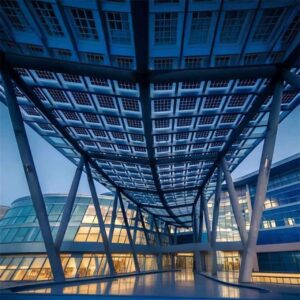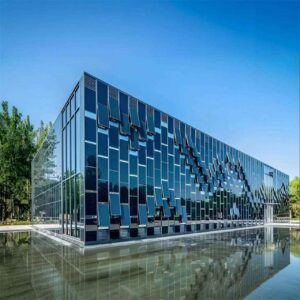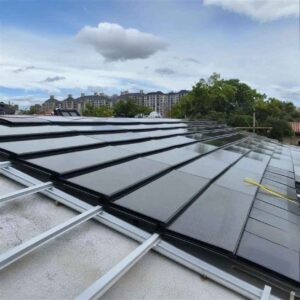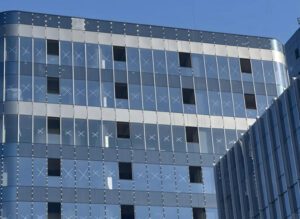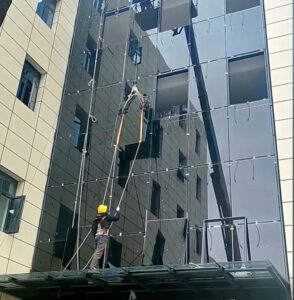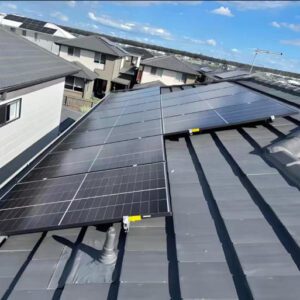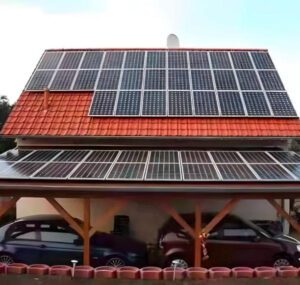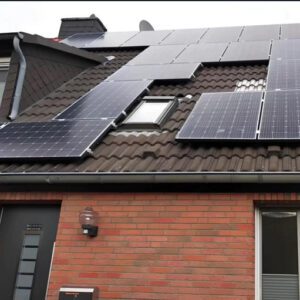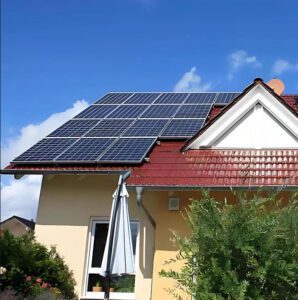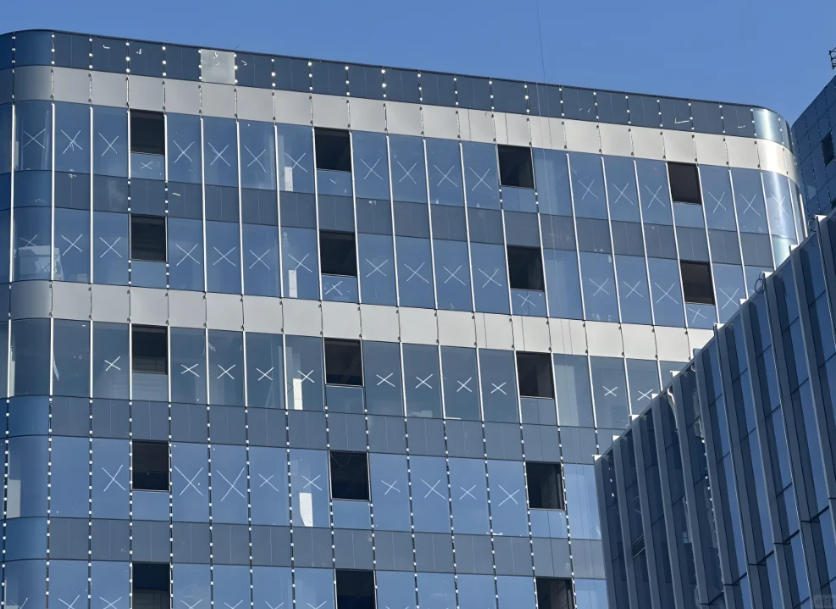

A PV glass curtain wall does two jobs at the same time. It is the building skin, and it is the power plant. The budget argument starts with that double duty.
A BIPV quote lands on your desk. The price per square metre is close to double the glass package you priced last quarter. Your client wants to know why in the next meeting.
This is where most estimates fall apart. Teams price solar as equipment that gets bolted onto a finished building. In a building-integrated project, the solar material is the building. You buy it once, and you stop buying something else.
This guide gives you a repeatable way to price that swap. It is written for the people who sign the numbers: curtain wall and roofing contractors, PV EPCs, and the architects and consultants who defend the budget in front of a client. Jia Mao Bipv manufactures PV glass for facades and roofs, and we sit in these estimate reviews every week.
One warning before the numbers. BIPV cost estimation is not a pricing exercise. It is a scope exercise. Get the scope wrong and no spreadsheet will save you.
Defining the BIPV Cost Logic: Displacement vs. Addition
Start with one idea. A BIPV panel takes the place of a building product you were going to buy anyway. The value of the product you no longer buy is your offset cost.
A curtain wall is the outer glass skin of a building. It hangs on a frame, keeps weather out, and lets light in. It carries no floor loads. That makes it a natural home for PV glass, because the modules can do the same job with the same thickness and the same fixings.
その IEA PVPS Task 15 programme defines a BIPV product as one that must serve both functions at once. That definition is not academic. It tells you exactly what you are allowed to offset.
Take a semi-transparent PV glass unit at USD 235 per square metre. The low-e insulated glass unit it replaces costs about USD 160. The offset is USD 160. The extra USD 75 is the part you can argue about.
Add the frame, the brackets, the sealant, the inverter, the cable and the labour, and the gap widens. The table below shows the whole picture. The reference project is a 1,000 m² semi-transparent facade at 110 W per m², which gives 110 kWp. Rates are in USD and rounded to the nearest dollar.
Table 1 — Offset worksheet for a 1,000 m² semi-transparent BIPV curtain wall (USD)
| Cost line | Conventional curtain wall | BIPV curtain wall | Difference |
|---|---|---|---|
| Glass or PV module supply, per m² | 160 | 235 | +75 |
| Framing, mullions, brackets, gaskets, per m² | 80 | 123 | +43 |
| Installation labour, per m² | 50 | 90 | +40 |
| Inverters, cabling, junction boxes, per m² | 0 | 56 | +56 |
| Engineering, structural checks, permitting, per m² | 8 | 34 | +26 |
| Testing and commissioning, per m² | 2 | 22 | +20 |
| Installed cost, per m² | 300 | 560 | +260 |
| Installed cost, 1,000 m² | 300,000 | 560,000 | +260,000 |
| Installed cost, per kWp (110 kWp) | 2,727 | 5,090 | +2,364 |
Two numbers matter here. The net premium is USD 260,000 on the whole package, or 87% above the plain glass option. The offset has already removed USD 300,000 that was going to leave the client’s account either way.
The premium looks small per square metre and huge per kilowatt
That gap is a real trap. USD 260 per square metre reads like a rounding error on a tower. USD 2,364 per kWp reads like a mistake.
Both are true. They answer different questions.
Use cost per square metre when the client compares facade options. The envelope budget is set per square metre, and the PV version has to fit inside that conversation.
Use cost per kilowatt when the client compares energy options. A ground-mount plant and a glass facade produce the same unit of energy, so the comparison has to land on the same unit.
Industry note. Module price and installed price are not the same story. European glass-glass BIPV modules sell for roughly EUR 120 to EUR 250 per square metre. The installed system lands at EUR 300 to EUR 625. That is a 1.8 to 2.5 times gap, and it is made of brackets, sealant, access equipment, electricians and paperwork.
Where estimates go wrong first
A budget built from a module quote always misses the same items. Brackets are quoted per fixing point, not per panel. Sealant is quoted per linear metre. Access equipment is quoted per week, not per square metre. A 2,000 m² facade can hide EUR 60,000 to EUR 130,000 in brackets, gaskets, sealant and flashings alone.
Jia Mao Bipv sends a line-item template with every quote for this reason. Teams that price from the module price alone routinely miss 15% to 20% of the package.
Plain-English glossary
Keep this table open while you read the rest of the page.
| Term | What it means in a budget review |
|---|---|
| BIPV | Building-integrated photovoltaics. Solar material that also works as a building product such as glass, tile or cladding. |
| BAPV | Building-applied photovoltaics. Conventional panels mounted on racks above a finished roof. |
| Curtain wall | The outer glass skin hung on a building frame. It keeps weather out and carries no floor load. |
| Offset cost | The price of the building product the PV material replaces. |
| Net premium | BIPV cost minus offset cost. The money you are really spending on energy generation. |
| kWp | Kilowatt peak. The output of a module under standard test conditions, used to compare system size. |
| インバーター | The box that turns direct current from the modules into grid-compatible alternating current. |
| BOS | Balance of system. Everything except the modules: cabling, junction boxes, isolators, monitoring. |
| EPC | Engineering, procurement and construction. One contract covering design, supply and build. |
| Rainscreen | An outer skin fixed over a drained and ventilated cavity, used to clad walls. |
| Mullion | The vertical bar between two panels of a curtain wall. |
| LCOE | Levelised cost of energy. Lifetime cost divided by lifetime output, in USD per kWh. |
Critical Cost Inputs: The Data Gathering Phase
You cannot price what you have not specified. Five inputs drive almost all of the variation, and each one needs a number before the estimate leaves your desk.
Material specifications
Module type sets both the price and the yield. Opaque crystalline glass gives you more watts per square metre. Thin-film and semi-transparent glass give you daylight and a lower price per square metre, with fewer watts behind it.
Frame, glass coating and laminate build-up then move the number again. A low-iron tempered front glass with an anti-reflective coating costs more than standard float glass and pays back in output over 25 years. Ask your supplier for watts per square metre at each transparency level. That single figure drives the array size, the cable schedule and the inverter choice, and it is the number the estimate actually needs.
Structural requirements
PV glass is heavier than the glass it replaces in most cases, and the brackets are more complex. Expect dedicated sub-frames, thermal breaks, and isolation pads where aluminium meets steel.
This is the line item that surprises structural engineers most often. The panel is rarely the problem. The fixing and the drainage detail are.
Electrical infrastructure
Every BIPV facade needs an inverter, DC cabling, junction boxes, isolators, surge protection and a grid connection point. Inverters run about USD 0.13 per Wdc for a string unit and about USD 0.35 per Wdc for a microinverter. The cheaper unit usually needs replacing around year 10 to 12. The expensive one lasts about 20 to 25 years.

The edge is where most cost arguments end up. Frame depth, sealant type and the drainage path decide whether the facade stays dry for 25 years.

Plant room space is a cost input. Cabling, isolators and clearance take floor area that someone has to give up on the drawings.
Labour specialisations
A BIPV facade needs two trades on the same panel at the same time: glaziers who understand the envelope, and electricians who understand the array. Neither trade owns the other’s work.
Crew productivity gives you the labour number. A four-person glazing crew with two electricians fits 20 to 40 m² per day in most markets. That rate drives the whole labour line.
Table 2 — The five inputs, typical ranges, and who owns them
| 入力 | Typical range | Who must confirm it | What gets missed |
|---|---|---|---|
| Module type and build-up | EUR 120–350 per m² | Supplier and architect | Colour, transparency, wattage per m² |
| Frame, brackets, fixings | EUR 15–45 per m², plus EUR 8–20 per fixing point | Facade contractor | Thermal breaks, isolation pads |
| Inverters and BOS | USD 0.13–0.35 per Wdc, plus 10–16% of module cost | Electrical contractor | Plant room space, cable routes |
| Labour and access | EUR 55–85 per hour, EUR 15–40 per m² for access | Main contractor | Two-trade coordination time |
| Engineering and permitting | 6% of installed cost | EPC or consultant | Fire, wind and structural reports |
Your supplier should be able to hand over the first three columns as a schedule. If they cannot, the estimate is a guess. Details on how facade modules, inverters and weatherproofing fit together are worth reading before you fix the specification.
The Budgeting Framework: A Step-by-Step Approach
Build the estimate in four phases. Each phase answers one question, and each phase has an owner. A BIPV cost estimation framework only works when those owners are named before the tender goes out.
Phase 1 — Direct material costs. Everything that arrives on a truck: glass, frame, brackets, sealant, cable, inverter, junction boxes. This is the “hard” cost and it is usually 70% to 75% of the base.
Phase 2 — Installation and integration labour. The glazing crew, the electricians, the crane or hoist, the access equipment, and the commissioning visit. This is the “soft” cost that hides the two-trade premium.
Phase 3 — EPC management. Design coordination, structural calculations, permitting, site supervision, insurance and margin. On a well-run job this lands at 6% to 10%.
Phase 4 — Contingency. A buffer for the site conditions nobody drew. BIPV needs more than plain glazing because two scopes have to line up on the same day.

The estimate review that matters happens before tender, not after. Every line needs an owner in the room.

Base installed cost only. Contingency and finance costs sit on top of this split.
Table 3 — Budget template applied to the 1,000 m² reference project (USD)
| フェーズ | What sits inside it | Amount | Share of base |
|---|---|---|---|
| 1 Direct material | Modules 235,200 + framing and hardware 123,200 + electrical BOS 56,000 | 414,400 | 74% |
| 2 Labour and site | Installation labour 89,600 + testing and commissioning 22,400 | 112,000 | 20% |
| 3 EPC management | Engineering, structural checks, permitting, supervision, margin | 33,600 | 6% |
| Base estimate | 560,000 | 100% | |
| 4 Contingency | 8% of base for site and interface risk | 44,800 | — |
| Budget to present | 604,800 | — |
Build a full line-by-line cost breakdown once and reuse it on every bid. The categories rarely change, and the rates are easy to refresh.
Run the four phases in order and never let a later phase hide an earlier gap. If the module price is still an estimate, write “estimate” next to it and flag it in the review. Published cost ranges for installed PV glass give you a sanity check on the total before you commit.
Design Levers: Factors That Increase Budgetary Pressure
Three design decisions move the budget more than anything else on the drawings. All three get made early, and all three are hard to reverse later.
Customisation
Colour, pattern and transparency are the visible levers. They are also the most expensive. A custom ceramic-printed colour adds 15% to 40% to the module price, and it often adds lead time as well.
Transparency cuts both ways. Higher transparency means more daylight and fewer watts per square metre. You buy a nicer interior and a smaller array with the same glass area.
Geometry
Flat rectangles are cheap. Everything else costs more. Curved surfaces, trapezoids, and stepped elevations all increase cutting waste, jig time and installation hours.
Certification
Fire performance, wind load, impact resistance and seismic ratings are not optional extras on a high-rise. They change the frame, the glass build-up and the test programme. Each upgrade is defensible, and each one adds cost to the structural package rather than the module.
Table 4 — Design levers and typical premium
| Lever | Typical effect on cost | Where it lands |
|---|---|---|
| Custom colour or printed pattern | +15% to +40% on module price | Module supply |
| Non-standard panel size | +10% to +25% | Module supply and cutting waste |
| Curved or faceted geometry | +25% to +60% | Frame, jigs, labour hours |
| Transparency above 40% | +0% to +20% cost, lower W per m² | Module choice and yield |
| Bifacial glass-glass build-up | +8% to +12% | Module supply, 15–25% more yield |
| Upgraded fire or wind certification | +5% to +15% of system cost | Frame and test programme |
A colour catalogue is a design tool, not a cost tool. Ask for the standard range first and price the custom range second. Our colour and finish catalogue shows what is stock and what is made to order, and the difference in lead time is usually bigger than the difference in price.
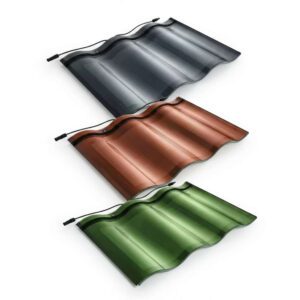
On pitched roofs the same logic applies. Curved solar roof tiles solve a real problem on heritage and villa projects, and they cost more per kWp than flat modules because every tile is a shaped part.
Cost Optimization: Strategies to Lower the Budget
Four moves cut real money without touching the design intent.
Standardise the module size. Pick one or two panel dimensions and repeat them across the elevation. Every unique size adds a cutting step, a spare part and a jig. Modular dimensions typically remove 5% to 8% of module waste on a mid-rise facade.
Buy the glass and the PV from one source. Two suppliers means two lead times, two warranties and one gap in the middle. An integrated package removes double handling at the dock and puts one team on the hook for the interface. Jia Mao Bipv ships modules, brackets and sealant as one package for this reason, because the interface is easier to control when one party owns it.
Shorten the DC runs. Put the inverters close to the array and group strings by orientation. Shorter runs mean less cable, less voltage drop and less labour in the ceiling void. On a large facade this is 3% to 5% of the electrical package.
Fix the programme before you fix the price. Access equipment is charged by the week. A two-week delay on a 1,000 m² facade costs more than a 2% discount on modules.

Same building, two products. The roof array is cheaper per kWp. The facade covers far more area, and it replaces material the client was already buying.
Comparing mounting systems before the tender is worth an afternoon. The bracket family you choose sets the installation speed, and installation speed sets the labour line.
Risk Management in BIPV Budgeting
Three risks eat BIPV budgets. All three are predictable, and all three can be priced.
The interface risk
The facade contractor owns the envelope. The electrical contractor owns the array. The gap between them is where overruns live.
A common pattern: the glazier finishes a bay, the electrician arrives two days later, and the access equipment has already moved. Everyone is right, and the client pays.
Price the interface as a line item. Give it an owner. Write the sequence into the programme. A named coordinator costs less than a week of standing time.
Lead times
BIPV glass takes longer to make than standard glass because the module is built to order. Ten to sixteen weeks is normal. Standard curtain wall glass is often six to eight.
Late glass does not just delay the facade. It holds the crane, the scaffold and the crew. On a city-centre tower, that standing cost runs into five figures per week.
Weatherproofing and warranty
The seal is the part nobody wants to own. The power warranty runs 25 years. The weather seal often runs 10. Budget the inspection regime now, because a leak found in year 8 is a facade problem and an electrical problem at the same time.

Two trades, one panel, one sequence. The cost of getting this moment wrong shows up three weeks later in the variation account.
Industry note. A Frankfurt office project budgeted EUR 210 per square metre for its south facade and finished at EUR 485. The overrun was 131%, and most of it came from details that were never priced: access, interface coordination and upgraded fixings. The tender price was not wrong. The scope was incomplete.
Engineers tend to raise the same concerns on every project. The problems engineers raise first are worth reading before a design review, because they usually become the contingency line. Getting the envelope integration sequence right early removes most of them, and a simple cleaning and maintenance plan keeps the yield where the model says it should be.
Comparing BIPV vs. Traditional PV for Budgetary Decision Making
The honest comparison is not BIPV against solar. It is BIPV against glass plus nothing, or glass plus a rooftop array.
CapEx
A rooftop array on a commercial building costs about USD 850 per kWp. A semi-transparent BIPV curtain wall costs about USD 5,090 per kWp. That is a six-fold difference on the invoice, and it is the number that kills projects in the first meeting.
The number is also misleading. More than half of the BIPV invoice buys material the project needed anyway.

Blue is the building product you were already buying. Amber is the money you are actually spending on generation.
OpEx and value
A facade array produces less per kWp than a roof array in most climates, because the panels stand vertical and catch a lower angle of light. A well-oriented facade still delivers 800 to 1,000 kWh per kWp per year in central Europe, and more in southern China or the Middle East.
The energy is only part of the return. The glass also cuts solar heat gain, which lowers cooling load, and it raises the lettable quality of the floor plate because the light is softer. The full ROI of a PV glass curtain wall is worth modelling before the first client meeting, because the answer changes with tariff and orientation.

Assumes USD 0.18 per kWh, USD 3,500 of annual cooling savings, USD 1,500 of extra cleaning, and 2% annual energy price growth. Flat tariffs push break-even to about year 14.
Space efficiency
A 12-storey tower with a 40 m by 40 m footprint has about 1,600 m² of roof and roughly 15,000 m² of facade. If the client wants on-site generation, the roof runs out of area long before the demand does.
That is the argument that wins with developers. The facade is not competing with the roof. It is the only surface left.
Table 5 — BIPV curtain wall against rooftop PV on the same building
| Factor | Rooftop PV (BAPV) | BIPV curtain wall |
|---|---|---|
| Installed cost | USD 850 per kWp | USD 5,090 per kWp |
| Net premium after offset | USD 850 per kWp | USD 2,364 per kWp |
| Available area on a tower | Roof only, often under 2,000 m² | Whole envelope, often over 10,000 m² |
| Yield per kWp in central Europe | 950–1,100 kWh | 800–1,000 kWh |
| Cooling load effect | Small | Measurable, 5–12% of cooling energy |
| Replacement cycle | Modules at year 25, inverter at year 12 | Glass at year 25, inverter at year 12 |
| Effect on facade budget | None, it is an extra | Replaces an existing line |
| Effect on building value | Modest | Strong, it is a visible building feature |
Global deployment data explains why this comparison is now on every client’s desk. The IEA tracks solar PV as the fastest-growing power source in history, and building surfaces are the largest remaining untapped area in dense cities. Research groups such as Fraunhofer ISE and analysts at Wood Mackenzie keep publishing cost curves that make the envelope case stronger each year.
https://www.youtube.com/watch?v=GippsZ8p6nc
A ventilated photovoltaic facade on a residential block in Gothenburg. Watch the fixing sequence: every panel is a weather barrier first and a generator second.
Case Study Application: From Blueprint to Budget
Take the 1,000 m² facade from Table 1. The client is a developer. The architect wants a dark, semi-transparent glass skin. The contractor has a facade budget of USD 320 per square metre.
Step 1 — Displaced glass cost. The specified low-e insulated unit with frame and labour prices at USD 300 per square metre. That is USD 300,000 of committed spend before solar enters the conversation.
Step 2 — BIPV cost. The PV version prices at USD 560 per square metre installed, including inverters and commissioning. That is USD 560,000.
Step 3 — Net premium. The difference is USD 260,000, or USD 260 per square metre. On a 12-storey tower with 15,000 m² of floor area, that is roughly USD 17 per square metre of gross floor area. The conversation changes when it is framed that way.
Step 4 — Budget alignment. The developer approves the facade package at USD 560,000 and books the USD 260,000 premium against the energy budget instead of the envelope budget. The contingency moves from 8% to 8% of the base, and the interface coordination gets a named owner in the EPC contract.
Table 6 — The same numbers the client sees
| Line | Amount (USD) |
|---|---|
| Conventional curtain wall, 1,000 m² | 300,000 |
| BIPV curtain wall, installed | 560,000 |
| Offset, material not purchased | −300,000 |
| Net premium | 260,000 |
| Annual electricity saving at USD 0.18 per kWh | 17,100 |
| Annual cooling saving | 3,500 |
| Extra cleaning and inspection | −1,500 |
| Net annual benefit | 19,100 |
| Simple payback | 13.6 years |
| Payback with 2% energy price growth | 12年 |
| 25-year cumulative net position | +364,000 |
Across the facade projects we price at Jia Mao Bipv, the net premium usually lands between USD 200 and USD 320 per square metre. The spread is that narrow because the offset moves with the glass specification, not with the solar layer. A client who upgrades the base glass to a heavier insulated unit is already paying part of the premium before the PV conversation starts.
Real projects land in the same range when the building is new and the electricity price is high. The Wuhan Science and Technology Exhibition Center runs 1,200 kWp across 9,600 m² of facade and skylight, produces about 1.56 GWh a year, saves roughly USD 110,000 annually, and pays back in 7.2 years. That project had three advantages: a new-build envelope, a high daytime tariff, and a client who wanted the building to be the exhibit.
Most projects do not get all three. That is why the estimate has to show the net premium and the assumptions side by side. A client who understands the assumptions will argue about the tariff. A client who only sees the gross number will cancel the project.
Conclusion
A BIPV budget is not a solar budget with a bigger price tag. It is an envelope budget with an energy line inside it. Teams that price it as an addition always overrun. Teams that price it as a displacement usually land within 5% of their estimate.
Three habits make the difference. Offset the displaced material before you quote anything. Price the interface between the glazing crew and the electricians as a line item. Put the contingency in front of the client instead of inside the module price.
Table 7 — Final checklist before the number leaves your desk
| Check | Done when |
|---|---|
| Offset calculated per m² and per kWp | Both numbers exist in the sheet |
| Displaced product named and priced | A supplier quote backs the offset figure |
| Brackets, gaskets, sealant, flashings counted | Priced per fixing point and per linear metre |
| Access equipment priced by week | Programme dates are fixed |
| Inverter type and replacement year stated | 10–12 years for string, 20–25 for micro |
| Two-trade sequence written into the programme | A named coordinator owns it |
| Weather seal warranty matched to power warranty | Gap is explained to the client |
| Lead time reflected in the cash flow | Glass delivery date is contractual |
| Certification scope confirmed | Fire, wind and impact reports listed |
| Contingency stated separately | Client sees it as a line, not a surprise |
The last point is the one teams skip. Early collaboration between design and procurement is cheaper than any value-engineering exercise later. Bring the facade contractor, the electrical contractor and the module supplier into the same room before the tender, not after.
If you are pricing a facade or a roof right now, send us your facade drawings. We will send back a line-item estimate with the offset already separated out, so you can see the premium instead of guessing at it.
FAQs for Professionals
1. How do I calculate the offset value of the curtain wall when switching to BIPV?
Price the curtain wall you would have built, at the same size, the same wind rating and the same thermal performance. Use the full installed rate, not the glass price. That means glass, frame, brackets, sealant, labour and access. On a semi-transparent system the offset usually lands at 45% to 60% of the BIPV cost. Subtract it from the BIPV price and the remainder is your net premium.
2. Which is more cost-effective: BIPV integrated into the glass or BIPV as a rainscreen?
Glass integration wins when the building already needs a glass facade and the client wants daylight. The offset is high because the glass package is expensive. A rainscreen wins when the wall is opaque, the budget is tight, and the priority is kilowatts rather than transparency. In numbers, an opaque rainscreen often costs USD 400 to USD 625 per m² against USD 450 to USD 700 for a semi-transparent glass curtain wall. The rainscreen also produces more watts per square metre.
3. How does the choice of inverter (string vs. micro) affect the total installation budget?
A string inverter costs about USD 0.13 per Wdc and needs replacing around year 10 to 12. A microinverter costs about USD 0.35 per Wdc and lasts 20 to 25 years, but it adds cost per panel and more connection points. On a facade with several orientations and partial shading, microinverters often recover their price difference through yield. On one clean, unshaded plane, a string inverter is cheaper overall. Our guide to microinverters or string inverters walks through the decision with worked numbers.
4. What is the typical labour premium for BIPV compared with standard glazing?
Expect 40% to 80% more labour hours per square metre than conventional glazing for the same area. Three things drive it: heavier panels, two trades on the same fixing, and slower panel setting because each unit is also an electrical component. On a well-organised site the premium sits near the bottom of that range. On a retrofit with limited access, it can exceed it.
5. How do custom colours or textures in BIPV modules impact the per-watt cost?
A custom colour adds 15% to 40% to the module price, and it usually lowers output because the coating blocks some light. The combined effect can lift cost per watt by 25% to 60%. Standard dark blue, grey and black finishes carry little or no premium. Ask for the stock range before you design around a custom tone.
6. Where are the most common hidden costs in BIPV project budgets?
Six places: brackets and fixings priced per point, sealant priced per linear metre, access equipment priced per week, plant room space, interface coordination between two trades, and upgraded fire or wind certification. Together these often add 15% to 20% to a budget built from a module quote alone.
7. How should I budget for the interface between the BIPV system and the waterproofing layer?
Budget it as a separate line, at 5% to 8% of the facade package. Include the flashing design, the drainage path, the sealant schedule and one inspection visit after the first rain event. Then give one party contractual responsibility for the whole assembly. Splitting the seal between two contracts is the single most reliable way to create a leak.
8. Does using a single-source provider for both modules and installation reduce overall project risk?
It reduces interface risk, not technical risk. One supplier means one lead time, one warranty and one party accountable for the finished assembly. Projects that split supply and installation often save 3% to 5% on the module price and lose more than that in coordination time. The saving is real only when you have a facade contractor who has already installed PV glass.
9. How do I estimate the impact of BIPV on the building’s HVAC load and subsequent energy savings?
Model it as a shading and solar-heat-gain change, not as an energy credit. A semi-transparent PV facade typically cuts solar heat gain by 20% to 45% compared with clear glass, which often shows up as a 5% to 12% reduction in cooling energy. Run the building energy model with the PV glass properties as an input. Do not add a generic percentage to the savings line.
10. What contingency percentage is recommended for BIPV projects compared with traditional construction?
Use 8% to 12% for a new-build BIPV facade with a complete specification. Use 12% to 18% for a retrofit or a complex geometry. Standard curtain wall work usually carries 5% to 8%. The extra buffer covers two-trade sequencing and the details that only appear when the first bay goes up.
11. How do different building codes (fire and wind) influence the cost of BIPV structural supports?
Wind load sets the bracket family and the fixing density, and fire performance sets the glass build-up and the cavity details. A high-rise facade in a typhoon zone can need fixings at half the spacing of a low-rise job, which doubles the bracket line. Fire-rated assemblies often require tested edge details, and those tests cost money before anything is built.
12. How can I present the BIPV budget to a client to emphasise long-term value over initial CapEx?
Lead with the net premium, not the gross cost. Show the offset as a deducted line, then show the annual benefit and the cumulative position over 25 years. Add the cooling saving and the facade replacement value. When a client sees USD 260 per square metre of premium against a 12-year payback, the conversation moves from price to timing.