The global BIPV market surpassed USD 23.4 billion in 2024 and is growing at over 20% annually. But inside that headline number, two distinct approaches — roof-mounted solar and façade-integrated solar — are performing very differently in real buildings, for different building types, climates, and ownership structures. This article cuts through the lab-test comparisons to examine what actually happens in the field.
For architects, developers, EPC contractors, and building asset managers: performance figures from product datasheets are measured at Standard Test Conditions (STC) — 1,000 W/m² irradiance, 25°C cell temperature, perfect orientation. Real buildings deliver none of these conditions consistently. The gap between rated output and actual annual yield routinely runs 10–20% for rooftop systems and 15–30% for vertically-mounted façade systems, depending on shading, thermal management, and installation geometry.
This guide builds the decision framework for choosing, specifying, and communicating the right approach — grounded in published field data, not marketing assumptions.
1) Conceptual Foundations: Roof-Mounted vs. Façade-Integrated Solar

Definitions and Typical Use-Cases
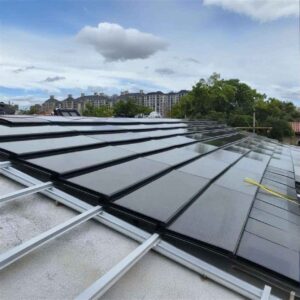
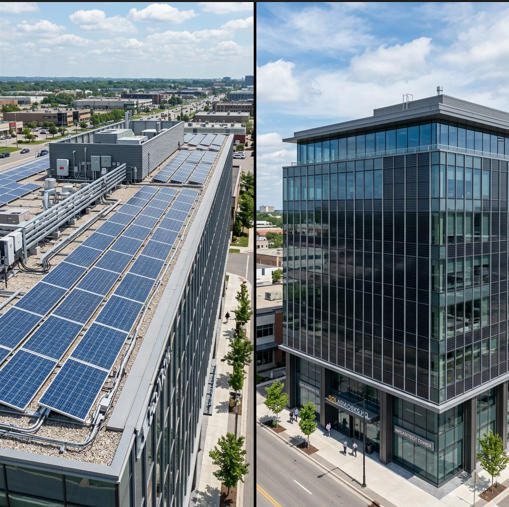
Roof-mounted solar — technically called BAPV (Building-Applied Photovoltaics) when standard panels are racked above the existing roof membrane — places solar modules on the building’s highest horizontal or near-horizontal surface, where irradiance is highest and installation is simplest. The solar system and the building envelope are two separate, independently warrantied assemblies. BAPV is the dominant technology in commercial solar today, accounting for the majority of the 800+ GW of solar installed globally.
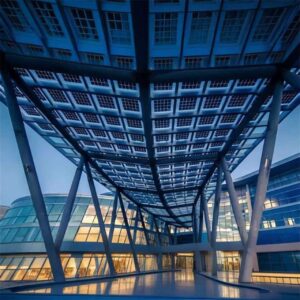
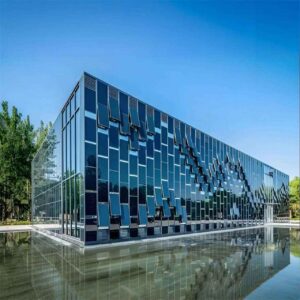
Façade-integrated solar — the core of BIPV (Building-Integrated Photovoltaics) — replaces or supplements conventional building cladding (curtain wall glazing, rainscreen panels, louvres, spandrel panels) with photovoltaic-active elements. The PV module and the building envelope function are the same product. This means the system must simultaneously meet PV performance standards そして building envelope requirements — weatherproofing, fire resistance, structural glazing, and aesthetic integration.
Typical use-cases diverge sharply. Roof-mounted PV dominates on commercial warehouses, logistics facilities, retail parks, and industrial buildings where maximising kWh output per dollar invested is the primary objective and façade area is either limited or architecturally unconstrained. Façade BIPV dominates on commercial office towers, high-rise residential, retail flagships, hospitality, and any building where the envelope is a design asset and available roof area is small relative to total floor area.
Historical Evolution and Market Trends
Rooftop PV achieved cost-effectiveness first because it required no architectural integration — standard panels on standard racking, installed by solar contractors with no involvement from the building architect or façade engineer. The result was a technology that scaled rapidly but remained structurally separate from the building.
Façade BIPV has followed a longer maturation curve. Early deployments in the 1990s and 2000s were primarily demonstration projects — expensive, architecturally significant, and economically marginal. The current generation is different: BIPV façade market size reached USD 4.1 billion in 2024 and is projected to reach USD 28.3 billion by 2034 at a 21.3% CAGR, driven by tightening energy codes (the EU’s Energy Performance of Buildings Directive requires zero-emission new buildings from 2030), falling BIPV module costs (dropping approximately 8–12% annually), and growing demand from developers for buildings that generate ESG-reportable renewable energy from their envelope.
Core Trade-offs in Performance, Aesthetics, and Integration
The fundamental trade-off matrix between the two approaches shapes every downstream decision:
| Dimension | Roof-Mounted (BAPV) | Façade-Integrated (BIPV) | Implication |
|---|---|---|---|
| Annual energy yield | Higher (optimal tilt, full irradiance) | Lower per m² (vertical, partial irradiance) | Roof wins on kWh/m²; façade wins on usable surface area in tall buildings |
| System complexity | Low — separate from building envelope | High — must serve dual function | Façade requires co-ordinated structural, façade, and electrical engineering |
| Aesthetic impact | Visible panels on roof (usually acceptable) | Fully integrated — invisible or architectural feature | Façade BIPV is preferred in design-sensitive or heritage contexts |
| Upfront cost | $1.40–$2.55/W installed (commercial) | $280–$625/m² (200–625 €/m²) | Façade cost must be compared to replaced cladding, not to rooftop PV |
| Maintenance access | Standard fall-protection roof access | BMU, rope-access, or swing-stage at height | Façade O&M cost is 2–3× rooftop per m² |
| Applicability | Best for low-rise, large roof footprint | Best for high-rise, limited roof-to-façade ratio | Many tall commercial buildings have 10–20× more façade area than roof |
2) Performance Metrics That Matter in the Field
Energy Yield, Degradation, and System Efficiency
Performance ratio (PR) — the ratio of actual system output to theoretical output based on measured irradiance — is the standard field performance metric. A well-designed rooftop commercial system achieves a PR of 0.78–0.84. Published research on full-scale BIPV façade installations, including the Berlin “living laboratory” study published in Energies (2025), documents façade BIPV performance ratios of 0.75–0.83 — comparable to rooftop systems despite the less favourable vertical orientation.
Annual energy yield tells a different story. A south-facing vertical façade in Central Europe receives approximately 50–70% of the annual solar irradiance that an optimally tilted roof surface receives. For a 1,000 m² façade producing 120 Wp/m² at a specific yield of 900 kWh/kWp (south-facing vertical, Central Europe), annual generation is approximately 108,000 kWh. The equivalent roof area at 180 Wp/m² and 1,100 kWh/kWp specific yield produces approximately 198,000 kWh — 83% more per square metre. However, a 30-storey office building may have 2,000 m² of roof and 12,000 m² of south and west façade. The façade potential dwarfs the roof.
Annual degradation rates for commercial-grade monocrystalline modules in both roof and façade configurations average 0.5–0.7% per year, producing approximately 80–85% of initial rated output at Year 25. Thin-film modules used in some façade applications degrade at 0.3–0.5%/year — slower cell degradation, but often higher initial losses from temperature and shading effects on vertical surfaces.
Temperature, Shading, and Installation Geometry Impacts
Temperature is the most underestimated performance variable in both systems. Rooftop panels on dark membranes can reach back-plate temperatures of 65–75°C on summer afternoons. At a typical temperature coefficient of −0.35%/°C and 40°C above STC (25°C), output drops by 14% instantaneously. Façade panels on ventilated curtain wall systems operate 10–15°C cooler than equivalent rooftop panels because the cavity behind the module provides convective cooling — recovering 3–5% of the temperature-related loss.
Published research confirms this effect. A study in Applied Energy documented variations in cell temperature of up to 42°C across a BIPV façade depending on local convective heat transfer conditions — underscoring that ventilation cavity design is not an aesthetic choice, it is a performance-engineering decision. Façade modules on poorly ventilated systems (where the cavity is inadvertently blocked by building services or structural elements) consistently underperform by 8–15% compared with adequately ventilated configurations.
Source: IEA PVPS Task 15, scientific literature on BIPV façade performance (Energies 2025 Berlin case study, ScienceDirect 2025 comparison study). Values are indicative for Central European latitudes (48–52°N). Tropical and subtropical locations show higher absolute values with similar relative ratios between orientations.
Real-World Measurement vs. Test-Lab Results
The performance gap between laboratory ratings and field results is structural, not incidental. STC conditions — 1,000 W/m² irradiance, 25°C cell temperature, AM1.5 spectrum — occur for only a fraction of operating hours in any real installation. A comprehensive analysis found that real-world commercial solar systems typically deliver outputs with an overall measurement uncertainty of ±10.6% compared with STC-rated values.
For façade BIPV, the additional factors that widen the lab-to-field gap include: inter-module shading from the building’s own geometry (projecting balconies, setbacks, adjacent towers), diffuse irradiance patterns on vertical surfaces (a vertical façade receives a higher proportion of diffuse radiation than a tilted roof — relevant because thin-film products perform better than crystalline silicon under diffuse conditions), and mismatch losses from varied module temperatures across a large façade height.
3) Aesthetics and Architectural Integration

Visual Impact and Design Language Alignment
Roof-mounted solar is largely invisible from street level on single-storey or low-rise commercial buildings — particularly when set back behind parapets. On mid-rise buildings, the panel array is visible from adjacent buildings and upper floors, but its visual language (“solar panels on a roof”) is culturally understood and broadly accepted for commercial properties.
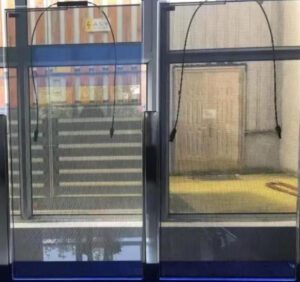
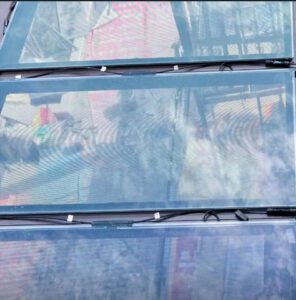
Façade BIPV operates in a completely different aesthetic register. When specified correctly, a BIPV curtain wall is visually indistinguishable from premium architectural glazing — the solar cells become the building’s surface texture. Mitrex’s opaque cladding panels, for example, replicate stone, timber, and concrete finishes through ceramic digital printing; from 3 metres away, the difference from natural stone veneer is undetectable. Onyx Solar’s coloured PV glass is available in over 20 standard RAL colours. Jia Mao BIPV’s transparent glass modules offer transparency options from 10% to 90% with custom cell arrangement patterns — allowing architects to specify a visual rhythm of light and shadow on interior spaces as a deliberate design element, not a side-effect of the technology.
Material Choices, Finishes, and Colour Consistency
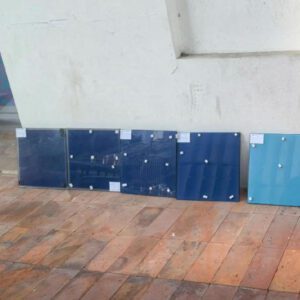
Colour consistency across a large BIPV façade is a critical quality-control requirement that has historically been a source of specification disputes. Solar cells are manufactured in batches, and slight variations in cell processing create colour shifts visible across a façade if modules from different production batches are mixed. Best-practice procurement requires specifying the entire façade from a single production lot — or at minimum, pre-sorting modules by colour tolerance class before installation, a practice that dedicated BIPV manufacturers with large production capacity can accommodate more reliably than smaller suppliers.
Material choices affect both aesthetics and performance. Glass-glass laminates with low-iron (ultra-clear) front glass transmit approximately 91.5% of incident light to the cells — an 8% improvement over standard float glass that directly increases annual yield. Coloured interlayer films reduce cell efficiency by 5–15% depending on colour depth, but the energy cost of achieving a specific architectural finish is a known, quantifiable variable that can be modelled into the financial projection at specification stage.
Implications for Tenant Experience and Property Value
Published real estate market data consistently shows that commercial buildings with visible, credentialled sustainability features — including BIPV façades that demonstrate generation data in building lobbies — command rent premiums of 3–7% and lower vacancy rates compared with comparable non-certified buildings in the same market. For a 20,000 m² GLA office building generating $800/m² average rent, a 5% premium represents $800,000 in additional annual rental income — an order of magnitude larger than the annual energy savings from the BIPV façade itself.
This asymmetry has fundamental implications for how BIPV façade projects should be financially structured. The energy generation ROI is real but modest; the asset value and tenant attraction ROI is larger and faster. Building developers and asset managers who model only the energy savings when evaluating BIPV façade investment are consistently undervaluing the full return picture.
4) Installation, Duration, and Maintenance Considerations
Rooftop Mounting Challenges and Access Constraints
Commercial rooftop solar installation is operationally well-understood, with a mature supply chain of racking manufacturers, mounting contractors, and balance-of-system suppliers. The primary challenges are not technical — they are logistical. On an occupied building, rooftop crane lifts, material staging, and installation work must be scheduled around building operations, tenant lease terms, and roof membrane warranty constraints.
Rooftop installation timelines for commercial systems typically run 2–6 weeks for systems up to 500 kWp, including electrical commissioning. The critical path items are structural engineering sign-off (particularly for ballasted systems where design wind speed and snow load determine ballast quantity), utility interconnection pre-approval, and membrane manufacturer approval of the attachment details.
Façade Integration: Installation Complexity and Weatherproofing
BIPV curtain wall installation involves multiple overlapping disciplines — façade contractor, electrical contractor, and commissioning engineer — whose work sequences must be tightly coordinated. A BIPV façade installation timeline runs 50–100% longer than an equivalent conventional curtain wall, primarily because electrical commissioning (string testing, inverter configuration, grid interconnection sign-off) adds hold points that delay completion of each floor’s installation sequence.
Weatherproofing is the highest-stakes element of BIPV façade installation. A BIPV module that passes IEC 61730 wet leakage testing (which verifies the module’s internal electrical insulation, not its water-tightness as a cladding element) does not necessarily prevent wind-driven rain penetration at the module-to-framing interface. Building envelope water intrusion testing — ASTM E331 for laboratory verification and AAMA 501.2 for installed system field testing — must be specified as contractual deliverables on every BIPV façade project. These tests address a different failure mode from the PV certifications and both must pass.
Cleaning, Inspections, and Long-Term Maintenance
Rooftop solar maintenance is well-established: annual thermal imaging to identify hot-spot modules and failing connectors, semi-annual visual inspection, and cleaning frequency set by local soiling rate (quarterly in dusty environments, semi-annually in clean urban environments). Access requires fall-protection equipment — standard for any commercial roof maintenance team.
Façade BIPV maintenance requires the same Building Maintenance Unit (BMU) or rope-access infrastructure used for conventional curtain wall cleaning — at a cost of 2–3× the per-square-metre rooftop equivalent. Self-cleaning coatings, such as those applied to Jia Mao BIPV’s ultra-clear tempered glass product range (which reduce cleaning frequency and associated costs by approximately 30%), partially offset this premium but do not eliminate it. Budget for façade BIPV O&M at $20–$40/m²/year for a high-rise commercial building, versus $8–$15/m²/year for an equivalent rooftop installation.
5) Cost, Financing, and Lifecycle Economics
Upfront CAPEX vs. Long-Term Energy Savings
The single most important reframing for BIPV façade cost analysis is that the relevant comparison is not “BIPV façade vs. rooftop solar” — it is “BIPV façade vs. premium conventional cladding.” A curtain wall specification on a commercial office tower already costs €150–€250/m² for the glass curtain wall system alone. The incremental cost of BIPV over that baseline — not the total BIPV cost — is what drives the payback calculation.
| Cost Element | Commercial Rooftop BAPV | Opaque BIPV Cladding | Semi-Transparent BIPV Curtain Wall |
|---|---|---|---|
| Module / panel hardware | $55–$95/m² | €180–€350/m² | €200–€400/m² |
| Mounting / framing | $25–$55/m² | €70–€110/m² | €90–€140/m² |
| Electrical BOS | $30–$60/m² | €35–€70/m² | €40–€80/m² |
| Installation labour | $20–$40/m² | €70–€110/m² | €80–€130/m² |
| Total installed (indicative) | $130–$250/m² | €355–€640/m² | €410–€750/m² |
| Less: conventional cladding/curtain wall | N/A (rooftop system; no replacement) | Less €150–€250/m² | Less €150–€250/m² |
| Net incremental cost over baseline | $130–$250/m² | €65–€390/m² | €160–€500/m² |
| Annual energy value (€0.15/kWh) | €18–€28/m²/yr | €15–€30/m²/yr | €12–€22/m²/yr |
| Simple payback on net incremental cost | 5–14 yrs | 4–10 yrs | 7–15 yrs |
O&M Costs, Warranties, and Replacement Cycles
O&M cost structures differ fundamentally between roof and façade systems. Rooftop BAPV O&M averages $15–$25/kW/year based on NREL benchmark data, with the largest single planned expenditure being inverter replacement at Year 10–15. Façade BIPV O&M is better benchmarked per square metre of façade area (because access cost scales with area, not system capacity): budget €20–€40/m²/year for a maintained high-rise façade, versus €8–€15/m²/year for a comparable rooftop system.
PV module warranties follow similar structures regardless of installation type: a 25–30 year power output warranty (typically guaranteeing ≥80% of rated output at end of warranty) and a 10–12 year product workmanship warranty. The critical addition for façade BIPV is that the module warranty must be complemented by a building envelope warranty — covering weatherproofing, sealant integrity, and frame corrosion resistance — that is often held by a different party (the façade contractor) than the PV module warranty (held by the module manufacturer). Ensuring these two warranties are aligned in term length and clearly delineated in responsibility is a contract management priority that has tripped up numerous commercial projects.
Impact of Incentives, Codes, and Deployment Scale
The US 30% Investment Tax Credit (ITC) under IRS Section 48 applies to BIPV systems — both rooftop and façade — when the components meet equipment criteria. Combined with MACRS 5-year accelerated depreciation, a commercial BIPV project in the US can recover 45–55% of its capital cost in the first year of operation through tax benefits alone. The post-incentive economics shift both roof and façade BIPV into clearly positive return territory for commercial taxpaying entities in most high-sun US markets.
In Europe, the revised EPBD (Energy Performance of Buildings Directive) requires that all new commercial buildings above 250 m² deploy solar energy systems by 2027 where technically suitable — a mandate that makes BIPV façade specification in new construction essentially compulsory for many building types, changing the financial analysis from “voluntary investment with a payback” to “mandatory compliance cost with a partial energy offset.”
6) Structural and Regulatory Considerations
Building Codes, Fire Safety, and Insurance Implications
Rooftop PV must comply with NEC Article 690 (electrical), IBC (structural loads, fire access setbacks), and UL 790 Class A fire classification. These requirements are well-understood, with established plan-check workflows at most US building departments. NFPA 855 governs co-located battery storage systems above 20 kWh.
Façade BIPV faces a more complex multi-standard compliance matrix. In the US, buildings above 40 feet with combustible exterior wall materials must pass NFPA 285 intermediate-scale fire testing — a requirement that tests the complete façade assembly including insulation, cavity design, and mounting hardware, not just the BIPV module in isolation. A published March 2026 large-scale fire test study found that BIPV modules with 2.0mm thin glass and standard EVA encapsulant exhibited significantly higher fire hazard than those with thicker glass and POE/ionomer encapsulants — a finding that is driving specification changes in the industry. Procurement teams should require module-specific NFPA 285 test reports for the exact assembly configuration proposed, not extrapolations from tested assemblies.
Insurance implications also diverge. Most commercial property insurers treat rooftop BAPV as insured improvements, requiring UL 1703 or UL 61730 module listing and inspection certification. BIPV façade systems require the insurer to treat the PV element as part of the building envelope — a category that may trigger review of the building’s glazing, fire, and structural insurance clauses. Early engagement with the property insurer (before specification is locked) avoids coverage surprises at practical completion.
Permitting Processes for Roof vs. Façade Systems
Commercial rooftop solar permitting typically runs 4–12 weeks for plan review and inspection, depending on system size and AHJ backlog. The permit set includes a structural calculation package, single-line electrical diagram, module and inverter specification sheets, and anti-islanding compliance documentation. In most jurisdictions, rooftop solar permits follow established workflows with predictable timelines.
Façade BIPV permits are more complex because they require simultaneous approval from multiple review streams: building plan check (structure, fire, envelope), electrical inspection, and — on new construction — coordination with the building’s overall certificate of occupancy timeline. In jurisdictions where BIPV façade is still a relatively new submission type, AHJ pre-application meetings during design development can reduce permit review time by 30–40% by resolving unfamiliar code interpretation questions before the formal submission.
Structural Load, Vibration, and Wind Considerations
Rooftop BAPV structural assessment focuses on dead load (typically 10–22 kg/m² for ballasted systems), wind uplift (ASCE 7-22 field, edge, and corner zones), and snow drift behind raised panel rows. These are well-characterised load cases with established calculation methodologies.
Façade BIPV structural loads involve glass-glass module weight (typically 20–22 kg/m² for standard 3.2mm/3.2mm laminates), wind pressure on vertically-mounted large-format panels (which can exceed 3,000 Pa on upper floors of high-rise buildings in coastal locations), thermal movement of the glass-aluminium-steel assembly through seasonal temperature cycles, and dynamic wind buffeting of large unsupported panel areas. Jia Mao BIPV’s facade modules are engineered to withstand 4.0 kPa (4,000 Pa) wind pressure — sufficient for mid-rise and high-rise applications without additional frame reinforcement — and use matched thermal expansion coefficient materials in the frame and encapsulation to prevent cracking at thermal stress concentrations.
7) Reliability and Resilience in Real-World Conditions
Drainage, Snow Loads, and Wind Pressures on Roofs vs. Façades
Rooftop PV arrays create micro-environments that affect both their own performance and the roof beneath them. Snow accumulates behind tilted panel rows at rates 20–40% higher than on open roof areas; drainage can be impaired by conduit crossovers and ballast frames. Regular inspection after significant snowfall events — particularly relevant for flat-roof commercial systems in northern climates — is a maintenance discipline that rooftop solar operators frequently underestimate in their O&M planning.
Façade systems face different resilience challenges. Wind-driven rain at the module-to-framing interface is the primary weatherproofing failure mode, followed by UV degradation of perimeter sealants (a 25-year warranty on the sealant material does not eliminate the need for periodic inspection and topcoating). Vertical glass panels shedding water downward also create drainage load on lower floors that must be managed through façade drainage design — a detail that is sometimes omitted when BIPV modules are specified by PV engineers without involvement of the façade engineering team.
Failure Modes and Maintenance Response
| Failure Mode | システム・タイプ | Typical Detection Method | Response Time | Repair Cost Indicator |
|---|---|---|---|---|
| Inverter failure | Both | Monitoring alert (zero production) | 1–3 business days | $1,500–$8,000 |
| DC connector arc fault | Both (higher risk in roof — UV + thermal cycling) | AFCI monitoring, thermal imaging | Same day (safety) | $200–$600 per connector |
| Module hot spot (cell damage) | Both | Annual thermal (IR) imaging | Planned maintenance cycle | $300–$800 per module |
| Sealant failure / water ingress | Façade (primary concern) | AAMA 501.2 water test, visual inspection | Immediate (building damage risk) | $1,500–$8,000 per linear metre of joint |
| Glass breakage | Façade (higher exposure at height) | Visual inspection, vibration monitoring | Immediate (safety) | $600–$2,500 per module + BMU access |
| Membrane penetration leak | Rooftop (penetrating mount) | Roof leak reports, annual inspection | Within 48 hours | $200–$800 per penetration + membrane repair |
| Module delamination / PID | Both (higher risk in façade — thermal cycling) | EL imaging, annual visual inspection | Planned maintenance cycle | $400–$1,200 per affected module |
Adaptation to Retrofits and Renovations
Retrofit viability differs significantly between the two approaches. Rooftop BAPV retrofit onto an existing commercial building requires structural confirmation of dead-load capacity and roof membrane compatibility — constraints that are typically manageable for post-1990 commercial buildings. The installation can proceed floor by floor or zone by zone without disturbing occupied areas, and the building’s exterior appearance is not significantly altered during construction.
Façade BIPV retrofit involves either replacing existing cladding (a major building project requiring scaffolding, dust containment, and often tenant relocation) or adding BIPV as a secondary rainscreen layer in front of the existing façade (an approach that adds depth, weight, and complexity but avoids full cladding demolition). For existing buildings where the façade is functionally adequate but aesthetically dated, the secondary-layer approach offers a path to BIPV integration that amortises the cladding replacement cost over the BIPV system’s lifetime — often the most financially attractive retrofit option.
8) Case Studies Across Building Types
▶ Video: BIPV design principles across 8 façade typologies — egg-crated, folded, layered, and more — with case studies from commercial deployments worldwide. Essential viewing for architects and developers specifying BIPV for new or retrofit projects.
Commercial Office Buildings and Retail Façades
Atlassian Central Tower, Sydney: Onyx Solar supplied 1,794 custom PV louvres for Atlassian’s 40-storey hybrid-structure headquarters — the tallest of its kind globally. Each louvre produces 138 Wp; the full system totals 247 kWp. Critically, the louvres serve as both solar shading elements (reducing direct solar gain on occupied floors) and electricity generators — a dual function that improves the building’s energy balance on two dimensions simultaneously. The project also demonstrates a procurement model that B2B specifiers should understand: large-scale BIPV façade projects require a supply chain that includes the PV manufacturer, a certified glazing contractor, a local building product distributor, and a commissioning engineer — none of whom can be substituted for a standard rooftop solar contractor.
Berlin “Living Laboratory” BIPV Façade: A comprehensive case study published in Energies (2025) documented full-year performance of a BIPV ventilated curtain wall on a Berlin office building. Key findings: performance ratio of 78% (comparable to well-designed rooftop systems), cooling energy demand reduced by 18% compared with a conventional glazed façade, and annual yield within 5% of design-stage energy models — indicating that façade BIPV energy modelling tools have matured to reliable accuracy for design-stage financial projections.
Residential High-Rises and Multifamily Developments
Multifamily high-rise buildings present the clearest case for façade BIPV over rooftop solar. A 30-storey residential tower with 800 m² of roof and 8,000 m² of south and west façade has 10× more energy-generating potential on its façade than on its roof. The tenants most affected by the building’s energy costs — through electricity allocation in common areas and the building’s HVAC systems — benefit from the generation regardless of whether it comes from the roof or the walls.
The complicating factor in residential applications is the aesthetic sensitivity of façade materials in premium residential markets. Coloured and patterned BIPV glass products that match the building’s design language — available from specialist manufacturers in custom RAL colours, custom transparency levels, and custom cell arrangements — have resolved this barrier on multiple high-profile residential towers in Europe and the Middle East. The standard objection that “BIPV makes the building look industrial” reflects the product generation of 10 years ago, not current technology.
Historic or Retrofit Projects with Preservation Constraints
A 2025 comprehensive review of BIPV in historic buildings (ScienceDirect) examined 41 case studies of heritage-listed buildings that had integrated BIPV systems. The finding relevant to practitioners: façade BIPV is more viable than rooftop solar in many historic building contexts because heritage preservation rules more commonly restrict visible roof alterations (which affect the building’s silhouette) than façade modifications (where replacement cladding within the existing opening geometry is often approvable).
Specific BIPV solutions for preservation-constrained projects include: semi-transparent PV in existing window openings (maintaining the visual rhythm of the original fenestration while generating electricity), BIPV louvre systems added in front of existing solid walls (interpreted as reversible additions, not permanent envelope modifications), and coloured BIPV glass that matches historic stone or brick tones — enabling solar integration without the chromatic disruption that standard blue or black solar panels create in a heritage context.
9) Environmental and Sustainability Considerations
Embodied Energy, Lifecycle Assessment, and End-of-Life
A 2025 prospective lifecycle analysis of BIPV façades published in Energy and Buildings found embodied carbon of 85–120 kg CO₂-eq/m² at manufacture, with energy payback time of 2.5–5 years depending on location and orientation. Over a 30-year building life, a south-facing BIPV curtain wall in Central Europe avoids approximately 60–90 kg CO₂-eq/m²/year — producing a net lifecycle carbon reduction of 1,500–2,400 kg CO₂-eq/m².
Rooftop PV embodied carbon is lower (approximately 50–80 kg CO₂-eq/m² for standard glass-backsheet modules) and energy payback is shorter (1.5–3 years in high-sun locations) — but rooftop panels do not replace embodied carbon in a conventional building material. The full lifecycle comparison should credit BIPV façade for the avoided embodied carbon of the conventional cladding it replaces (typically 30–80 kg CO₂-eq/m² for glass curtain wall or stone cladding), which narrows the net embodied carbon gap between roof and façade approaches.
Source: Popp et al. (2025), Energy and Buildings; IEA PVPS Task 15 lifecycle data. BIPV façade net lifecycle carbon balance is substantially positive in all non-zero grid-carbon-intensity markets. Percentages illustrative for south-facing facade, Central Europe, grid carbon intensity 0.25 kg CO₂-eq/kWh.
Urban Heat Islands, Albedo, and Microclimate Effects
Rooftop PV has a nuanced urban heat island (UHI) effect. Dark panel surfaces absorb solar radiation that would otherwise be reflected by a light-coloured cool roof — increasing local surface temperature. However, shading of the roof membrane beneath the panels reduces membrane surface temperature by up to 12.4°C (per a ScienceDirect 2025 comparison study) — a thermal benefit to the building’s cooling loads that partially offsets the surface albedo reduction.
Façade BIPV on glass curtain wall systems generally has a neutral-to-positive UHI effect because it replaces clear glass (which transmits solar radiation into the building interior as heat gain) with a PV-active assembly that captures the radiation as electricity rather than transmitting it. For opaque BIPV cladding replacing dark conventional cladding, the UHI effect depends on the module surface colour — lighter coloured BIPV products have higher albedo and lower UHI contribution than dark-panel equivalents.
Recyclability of Modules and Coatings
At end-of-life, both rooftop and façade PV modules contain the same recyclable materials: silicon cells (95% recoverable by mass), tempered glass (fully recyclable via standard glass processing), aluminium frames (90%+ recyclable), and copper wiring. Commercial-scale recycling infrastructure for PV modules is expanding under EU WEEE Directive requirements, with module take-back schemes available from most major manufacturers. The incremental cost, amortised over the module’s 25–30 year life, adds less than €2/m² to the total cost of ownership — a negligible factor in the economics but an important procurement verification for organisations with formal circular-economy commitments.
10) A Practical Decision Framework for Practitioners

Step-by-Step Assessment Checklist
Map available solar surfaces by annual irradiance
Commission a façade irradiance analysis for all building orientations. Any surface receiving <600 kWh/m²/year should be excluded from the BIPV specification. South and west-facing surfaces typically qualify in latitudes above 35°N; north-facing surfaces rarely do.
Calculate roof-to-façade area ratio
Divide usable roof area (after HVAC, drainage, and fire setbacks) by usable south+west façade area. If the ratio is <0.3 (tall building), façade BIPV provides greater total generation potential. If >0.8 (low-rise warehouse), rooftop BAPV is almost always the primary technology.
Determine the baseline cladding specification
Identify what the façade would be without BIPV. Premium curtain wall glazing (€150–€250/m²) produces a much shorter incremental payback for BIPV than basic render or metal cladding (€50–€100/m²). The higher the baseline cladding specification, the stronger the BIPV case.
Check structural and fire compliance constraints
Confirm existing structural frame capacity (for retrofit) or design structural frame to accommodate BIPV loads (for new build). Confirm NFPA 285 (US) or EN 13501 (EU) compliance path for façade assemblies. Verify that proposed BIPV modules carry the required fire classification for the building height and occupancy type.
Model full lifecycle economics including all value streams
Include electricity savings, cooling load reduction (up to 18–23% for BIPV façades replacing single-skin glazing), applicable tax incentives (US 30% ITC, MACRS; EU member-state programs), avoided cladding cost, asset value premium, and green certification value. Projects that model only electricity savings consistently undervalue BIPV and reach the wrong specification decision.
Select product type to match architectural and performance requirements
Semi-transparent in vision zones (20–40% VLT for occupied spaces); opaque BIPV cladding in spandrel and parapet zones (higher output, shorter payback); hybrid layouts that combine both. For product specification support across glass-glass modules, coloured glass, and transparent façade panels, Jia Mao BIPV’s façade panel comparison resource provides a structured specification framework covering efficiency, aesthetics, cost, and maintenance risk by product type.
When to Prefer Roof-Mounted vs. Façade-Integrated Solutions
✅ Prefer Roof-Mounted BAPV When:
Building is low-rise (1–4 storeys) with large roof footprint; primary objective is maximum kWh/$ ROI; façade is simple render or metal cladding; project is retrofit onto a structurally sound existing roof; timeline pressure requires standard permit pathways.
✅ Prefer Façade BIPV When:
Building is mid-rise or high-rise with limited roof-to-façade ratio; façade is being replaced or specified new; baseline cladding is premium curtain wall; ESG/LEED/BREEAM certification is a project objective; tenant attraction and property value are financial drivers; heritage constraints restrict rooftop modifications.
✅ Specify Both (Hybrid) When:
Building has both large roof area and substantial south/west façade exposure; 100% renewable energy offset is the target; façade performance alone is insufficient to meet energy code compliance; different building zones have different aesthetic and technical requirements.
⚠️ Require Expert Assessment When:
Building is in dense urban environment with significant inter-building shading; heritage or preservation constraints apply; structural frame is pre-1990 and capacity is unconfirmed; project is in a jurisdiction with limited BIPV permit experience; cooling load reduction from façade BIPV is a significant component of the financial model.
How to Communicate Trade-offs to Stakeholders
The most productive stakeholder conversation about roof vs. façade solar reframes the question from “which is cheaper?” to “which delivers better total value over the building’s life?” Three communication tools consistently help non-technical stakeholders reach evidence-based decisions:
The 20-year TCO table — showing capital, electricity savings, incentives, O&M, and asset value impact side-by-side — grounds the conversation in full-lifecycle economics rather than line-item hardware costs. The annual energy yield map — a floor plan or building elevation showing kWh generation per façade zone — makes the spatial logic of the technology visible to architects and developers who are visual thinkers. The risk register — explicitly listing the top five failure modes for each approach, their probability, cost, and mitigation — demonstrates that the decision is not simply about optimism or pessimism about technology, but about manageable engineering risks with known mitigation strategies.
From Specification to Installation: Jia Mao BIPV’s Role in Commercial Façade Projects
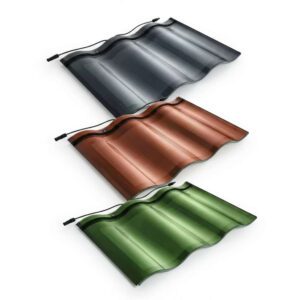
For EPC contractors, curtain-wall fabricators, and commercial developers navigating the roof vs. façade solar decision, Jia Mao BIPV provides engineering-grade specification support from early design through procurement. Their 3 GW annual production capacity enables custom module sizing, colour matching, and transparency specifications that smaller BIPV manufacturers cannot accommodate at commercial scale. Products span transparent façade glass, coloured PV glass, opaque cladding modules, and solar roof tiles — all carrying 25-year power output warranties, 4.0 kPa wind pressure certifications, and full electrical documentation packages required for AHJ plan review. Pre-specification consultations are available for teams comparing product options before design development closes.
Conclusion: Key Findings on Performance, Aesthetics, and Cost
The roof vs. façade solar question does not have a universal answer — it has a building-specific answer that depends on geometry, economics, aesthetics, and organisational objectives. The key findings from the field data reviewed in this guide are:
On performance: Rooftop solar delivers higher kWh/m² in all cases. Façade BIPV delivers more total kWh per building for tall buildings with more façade area than roof area. Both approaches achieve real-world performance ratios of 0.75–0.85 when properly engineered. The lab-to-field performance gap runs 10–30% for both — this must be modelled, not assumed away.
On aesthetics: Current-generation BIPV façade products have eliminated the visual compromise that limited adoption a decade ago. Coloured, patterned, and fully transparent options allow architects to specify solar integration without sacrificing design intent. The rent premium and asset value data supports treating BIPV façade aesthetics as a financial variable, not just an architectural preference.
On cost: Rooftop BAPV remains the lower total-cost option for low-rise commercial buildings where the comparison is against ground-mounted or rack-mounted hardware. BIPV façade becomes cost-competitive — often achieving 4–10 year payback on incremental cost — when evaluated against the premium cladding it replaces in new construction, and when all value streams (cooling load reduction, incentives, asset value, ESG reporting) are included in the model.
For designers and owners: Start the solar integration conversation at schematic design, not after design development is complete. Decisions about roof orientation, façade area, cladding specification, and structural system made at schematic stage determine the economics and feasibility of every solar option. Retrofitting solar thinking into a locked design is consistently 20–40% more expensive than integrating it from the outset.
For policymakers: Building energy codes that mandate solar readiness — such as IECC Appendix CB and the EU EPBD solar requirement — accelerate adoption most effectively when they specify the technical standards for solar-ready design (conduit sleeves, load paths, service entrance capacity) rather than simply reserving roof area on a drawing. The latter creates compliance theatre; the former creates genuinely deployable solar infrastructure.
For future research: The most valuable data gaps in the current literature are long-term (15–25 year) field performance records for façade BIPV under various climatic conditions, systematic analysis of BIPV façade cooling load reduction across building types and climate zones, and real-world tracking of asset value premiums associated with BIPV certification. Projects commissioned today should include monitoring instrumentation that captures these data points for the benefit of the next generation of specification decisions.
Ready to Specify Roof or Façade Solar for Your Next Project?
Compare BIPV module options, request technical documentation, or arrange a pre-specification consultation for commercial and industrial projects — façade glass, transparent panels, coloured BIPV, and solar roof tiles, all with 25-year warranties and full engineering support.
View BIPV Product Range →