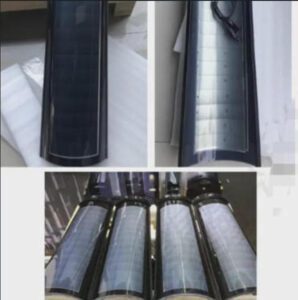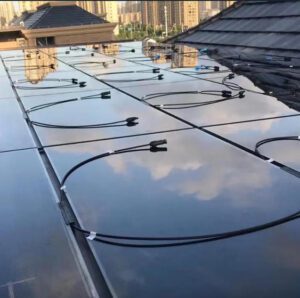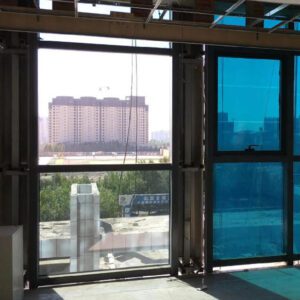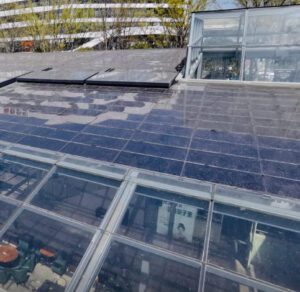

Colored solar panels are moving from niche architectural projects into mainstream residential, commercial, and BIPV specifications. Homeowners want solar that does not clash with clay tile roofs. Architects want energy-generating facades that respect design intent. Developers want lower-carbon buildings without turning every elevation into a black rectangle.
The challenge is that color is not neutral. Any coating, dye, ceramic frit, filter, patterned glass, or colored laminate changes how light reaches the photovoltaic cell. Some solutions reduce output only slightly; others can create a measurable energy penalty, especially in low-light, high-temperature, or partially shaded conditions.
This guide explains how to balance aesthetics with performance. It covers color technologies, efficiency trade-offs, selection criteria, installation planning, system optimization, and long-term maintenance. It also shows how to read electrical specifications such as PCE, Voc, Isc, Vmp, and Imp before choosing a colored solar module.
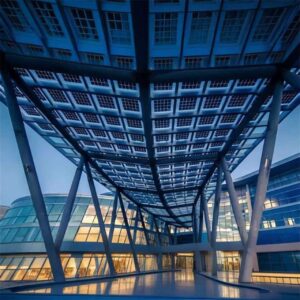
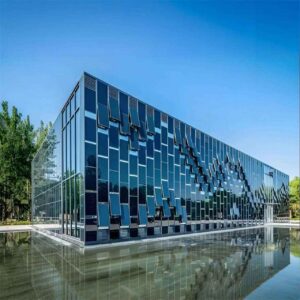
For building-integrated projects, suppliers such as BIPV colored glass panels from Jia Mao Bipv are often evaluated not only as solar products, but also as facade materials: glass, weather barrier, design surface, and energy generator in one system.
Understanding colored solar panels and efficiency
Aesthetic goals vs efficiency realities
Standard solar panels look dark because the cell and anti-reflective surface are designed to absorb as much sunlight as possible. Colored solar panels intentionally reflect or filter part of the visible spectrum to create a specific appearance. That is why a terracotta, silver, white, bronze, green, or blue panel may produce less power than a similar black module under identical conditions.
The practical question is not “Do colored panels lose efficiency?” but “How much loss is acceptable for this building, roof area, approval process, and energy target?” On a heritage roof, a small output penalty may be worthwhile if it avoids planning rejection. On a warehouse roof with no visibility concerns, a conventional high-efficiency black module may deliver better economics.
According to the U.S. Department of Energy, PV cells convert sunlight into electrical energy and are assembled into modules and arrays as part of a complete PV system. That basic principle does not change when modules are colored, but the optical path between sunlight and the cell does change. See the DOE explanation of solar photovoltaic technology basics for the foundation.
How color interacts with solar cell operation
A solar cell responds to photons. When a colored surface reflects certain wavelengths to the human eye, fewer photons may reach the cell. The loss depends on three variables:
- Spectrum management: Some coatings reflect narrow visible bands while allowing useful wavelengths to pass.
- Surface reflectance: Glossy or pale colors often reflect more light than matte dark colors.
- Cell architecture: Monocrystalline, N-type, HJT, TOPCon, and thin-film technologies respond differently to filtered light and temperature.
Color can also influence operating temperature. Darker panels absorb more heat; lighter surfaces may stay slightly cooler but can sacrifice irradiance reaching the cell. The best design is not always the darkest or the lightest—it is the one with the best annual energy yield after optical, thermal, shading, and inverter effects are modeled together.

Color technologies behind tinted and colored panels
Surface dyes, filters, and color-matched laminates
Colored solar panels are usually created with one or more of the following technologies:
- Colored front glass: Ceramic frit, screen printing, or coated glass creates the visible color.
- Optical filters: Selective filters reflect specific wavelengths while transmitting others to the cell.
- Colored encapsulants or laminates: The color layer sits within the module stack.
- Patterned or textured glass: Texture softens glare and improves architectural integration.
- Backsheet color matching: Often used for black, white, or custom visual uniformity, especially where cell gaps are visible.
For roof-integrated and facade-integrated applications, 太陽電池ガラス is especially relevant because the module may replace conventional cladding, skylight glass, spandrel glass, railing glass, or roofing elements.
Effects on spectral response and durability
The color layer should be judged by more than its first-day appearance. Ask how it behaves after years of ultraviolet exposure, thermal cycling, moisture, salt mist, cleaning chemicals, and abrasion. A color solution that looks excellent in a showroom but yellows, chalks, or delaminates after five summers can damage both energy production and building appearance.
Useful questions include:
- Is the color applied to the exterior glass, inside the laminate, or behind the cell layer?
- Does the supplier provide UV aging data and color-difference measurements?
- Has the module passed damp heat, thermal cycling, mechanical load, and hail impact tests?
- Is the color warranty separate from the electrical performance warranty?
NREL’s PV efficiency resources show why testing conditions matter: efficiency claims should be tied to standardized measurement conditions, not just marketing language. For reference, review the NREL photovoltaic cell efficiency chart.
How color influences performance: physics and trade-offs
Typical efficiency penalties and when they are negligible
Efficiency penalties vary widely. A subtle dark blue or black-on-black aesthetic may have a small difference compared with a conventional module. A pale white, terracotta, or highly reflective surface can have a larger output reduction. In BIPV facades, annual energy yield can also be affected by vertical mounting angle, orientation, nearby buildings, and seasonal shading.
Bar chart: illustrative relative output by panel appearance
100%
75%
50%
25%
0%
98–100%
Black
90–96%
Dark blue
84–92%
Gray
75–88%
Terracotta
65–82%
White
注: This chart is illustrative. Final output depends on cell technology, coating type, mounting temperature, orientation, and verified test data.
In some projects, a 5–12% module-level penalty may be negligible if the roof has extra area, local electricity prices are high, or the colored product helps win permit approval. In other cases, especially where roof area is limited, the same penalty can push a project below its payback target.
Conditions that amplify or mitigate color-related losses
Color-related losses are amplified when panels are installed on hot, poorly ventilated surfaces; when strings are mismatched; when colored modules are mixed with conventional modules in the same string; or when facades are shaded by balconies, trees, neighboring towers, or parapets.
Losses can be mitigated through:
- Choosing higher-efficiency cell platforms before applying color treatment.
- Using module-level power electronics where shading or orientation varies.
- Designing rear ventilation gaps for roof and facade systems.
- Separating different colors, orientations, or tilt angles into different MPPT inputs.
- Verifying the actual colored-module datasheet, not the base module datasheet.
Pie chart: common sources of annual yield loss in colored PV projects
収量
loss mix
Optical/color filtering: 35%
Temperature and ventilation: 25%
Shading and mismatch: 20%
Soiling and cleaning access: 12%
Inverter/wiring design: 8%
Project insight: Color is only one part of the performance story. Poor ventilation or mismatched strings can erase more yield than the color layer itself.
Choosing the right panel type for color and efficiency
Overview of monocrystalline, polycrystalline, and thin-film options
Monocrystalline panels are the default choice for many colored solar applications because they start with higher conversion efficiency. If color treatment reduces output, a higher-efficiency base cell gives the project more margin.
Polycrystalline panels are less common in premium colored projects today. They may offer cost advantages in some markets, but their visual grain and lower average efficiency can make them less attractive for high-design roofs and facades.
Thin-film technologies can provide uniform appearance and better low-light behavior in some applications, but they often require more area for the same capacity. For large facades, that may be acceptable. For small roofs, it can be limiting.
Where roof space is constrained, consider comparing colored options against high-efficiency solar panels to understand the opportunity cost of color.
Suitability of colored panels for different roof types and budgets
| Project type | Best color strategy | Efficiency priority | Budget impact | Key procurement question |
|---|---|---|---|---|
| Heritage clay tile roof | Terracotta or reddish-brown roof-integrated PV | Medium | Higher upfront cost, easier visual approval | Is there color-fastness data after UV exposure? |
| Modern villa with black roof | All-black monocrystalline module | High | Moderate premium | Is the black backsheet included in the tested power rating? |
| Commercial flat roof | Conventional dark high-efficiency panel | Very high | Lowest cost per kWh | Is color actually required from ground-level sightlines? |
| Office curtain wall | Colored BIPV glass with separate MPPT zones | Medium to high | Can offset facade cladding cost | Does the module meet both PV and building-envelope requirements? |
| School or public building | Patterned blue, gray, or green facade PV | Medium | Premium justified by education and public visibility | Can the monitoring dashboard show real-time generation? |
Color options and their aesthetic impact
Palette considerations for various architectural styles
Color should be selected from the building outward, not from a product catalog inward. A terracotta roof may need a warm matte finish. A glass office tower may need a gray-blue surface that aligns with curtain wall reflections. A public cultural building may accept stronger colors because the PV becomes part of the visual identity.
Common color directions include:
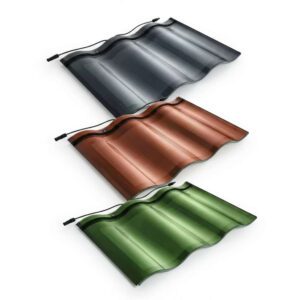
- Black: Best for modern roofs and highest visual uniformity.
- Dark blue: Familiar solar appearance with moderate aesthetic softness.
- Gray or silver: Useful for metal roofs, facades, and urban buildings.
- Terracotta: Strong fit for clay tile roofs, heritage zones, and Mediterranean-style buildings.
- Green or bronze: Often used in landscape-sensitive or custom facade projects.
- White: Architecturally attractive but usually requires careful output modeling because of higher reflectance.

Building codes, HOA guidelines, and potential resale implications
Before choosing a color, check whether the property is subject to homeowner association rules, heritage district review, fire setbacks, roof access pathways, wind uplift requirements, or facade safety standards. Colored PV can help projects pass visual review, but only if documentation is complete.
For resale, buyers may value solar that blends into the building more than highly visible black panels. However, future buyers will also ask about system output, monitoring records, warranty transferability, and whether replacement panels can be color-matched. Keep all product samples, batch codes, color references, and commissioning data in the handover file.
Evaluating efficiency: key specs and certifications
Core electrical specs: PCE, Voc, Isc, Vmp, Imp
When comparing colored solar panels, do not rely only on wattage. Read the electrical data carefully:
- PCE, power conversion efficiency: The percentage of incident solar energy converted to electricity.
- Voc, open-circuit voltage: The voltage when the module is not connected to a load.
- Isc, short-circuit current: The current under short-circuit conditions.
- Vmp, voltage at maximum power: The operating voltage when the module delivers peak power.
- Imp, current at maximum power: The operating current at peak power.
- Temperature coefficient: The percentage of power lost for each degree above standard test temperature.
If the supplier provides data for the uncolored base module but not the colored version, ask for a corrected datasheet. The electrical design should be based on the actual colored product that will be delivered.

Color warranties, UV resistance, and performance under real-world conditions
Colored panels need two warranty conversations: electrical output and visual stability. A standard power warranty may not cover color fading, gloss loss, coating chalking, or visible mismatch between replacement modules and original modules.
Ask for:
- Linear power warranty terms.
- Product workmanship warranty terms.
- Color stability warranty and measurement method.
- UV exposure test reports.
- Damp heat and thermal cycling results.
- Replacement policy for color-matched modules.
For certification language, buyers commonly look for IEC 61215 design qualification and IEC 61730 safety qualification. You can review the official IEC catalog page for IEC 61215 photovoltaic module testing before finalizing procurement language.
Sourcing trustworthy products and standards to look for
Manufacturer credibility, warranties, and after-sales support
A credible colored PV supplier should be able to support architects, electrical designers, installers, and owners. That means providing drawings, mounting details, electrical files, warranty documents, color samples, glass specifications, and test reports before purchase—not after a problem appears onsite.
For BIPV projects, review the supplier’s complete custom BIPV product range and confirm whether the same team can support modules, glass configuration, mounting, inverters, and project documentation.
Good procurement teams also ask who will answer warranty claims locally, how replacement modules are matched, and whether discontinued colors are covered by a documented substitution process.
Test reports, color-fastness data, and third-party certifications
Request evidence, not adjectives. Useful documents include:
- IEC 61215 and IEC 61730 certificates.
- Factory flash test reports for the delivered batch.
- UV aging and color-difference reports.
- Mechanical load and hail impact test results.
- Fire classification documentation.
- Salt mist or ammonia resistance tests for coastal or agricultural sites.
- Bill of materials traceability for glass, encapsulant, cells, junction boxes, and connectors.
Installation planning for colored panels
Roof assessment, mounting strategies, and weather considerations
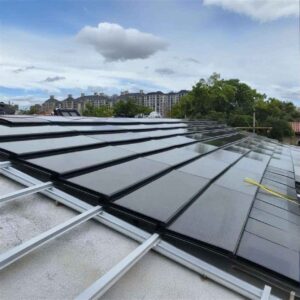
Colored panels often receive more visual scrutiny than standard arrays. Layout lines, clamps, cable paths, junction boxes, and edge spacing all matter. A well-installed colored roof should look intentional from the street, not patched together.
Before installation, assess:
- Roof age, waterproofing condition, and structural capacity.
- Orientation, tilt, and annual shading profile.
- Wind uplift zone and mounting requirements.
- Drainage paths and snow-shedding behavior.
- Maintenance access and safe cleaning routes.
- Color consistency across module batches.
For project teams planning BIPV installation details, the BIPV installation design guide is a useful starting point for coordinating design, permits, system selection, and commissioning.
Ventilation, thermal management, and potential shading issues
Heat reduces PV output. Colored panels mounted flush to a roof or integrated into a facade can run hotter than rack-mounted panels with free rear airflow. This is especially important for BIPV glass, roof tiles, and curtain wall systems.
Good thermal planning includes rear ventilation gaps where possible, avoiding unnecessary heat traps, separating hot facade zones into appropriate electrical strings, and checking temperature coefficients. In urban facades, shading from balconies, mullions, nearby towers, trees, and signage should be simulated across the year, not guessed from a noon site photo.

System optimization: inverters, wiring, and shading management
Choosing inverters and bypass diodes suited for colored panels
Colored panels should be electrically grouped by similar behavior. Avoid placing modules with different colors, tilts, orientations, or shading patterns in the same string unless the inverter and design strategy can handle mismatch.
Bypass diodes help reduce the impact of partial shading, but they do not make shading harmless. If a facade has repeated shadow lines from fins or balconies, consider module-level optimization, microinverters, or string segmentation.
Energy.gov explains the role of power electronics in converting DC electricity to AC and supporting grid services. For background, see solar inverters and grid services basics.
Microinverters vs string inverters and shading mitigation
String inverters can be cost-effective when all modules face the same direction, have similar color treatment, and receive similar sunlight. They are common on simple roofs and large commercial arrays.
マイクロインバータ or DC optimizers can be valuable when panels have different orientations, colors, or shading conditions. They allow each module or group of modules to operate closer to its own maximum power point.
For colored BIPV facades, system designers often separate zones by elevation, floor band, color, and shading exposure. The extra design time can prevent years of underperformance.
Maintenance, warranties, and long-term performance
Cleaning routines and impact on color integrity
Cleaning affects both energy yield and appearance. Dust, pollen, bird droppings, salt, and urban pollution can be more visible on pale or matte colored modules than on black modules. However, aggressive cleaning can damage coatings or alter gloss.
Use manufacturer-approved cleaning methods. Typically, that means soft water, non-abrasive tools, low-pressure rinsing, and avoiding harsh chemicals. In coastal, desert, or industrial environments, cleaning intervals may need to be shorter. In rainy climates with sufficient panel tilt, cleaning may be less frequent.
Documentation, claim processes, and monitoring for color stability
Create a project handover file that includes:
- Final datasheets for the exact colored modules.
- Serial numbers and flash test reports.
- Color sample references and batch numbers.
- Installation photos before and after wiring is concealed.
- Warranty certificates and claim contacts.
- Commissioning report and inverter settings.
- Annual monitoring snapshots.
Monitoring helps separate normal seasonal variation from real underperformance. If a colored array loses output, compare irradiance, temperature, inverter data, soiling, and shading before assuming module failure.
Related video: how solar panels work
The video below gives a useful visual explanation of the photovoltaic effect. It is helpful for owners, design teams, and sales teams who need a quick refresher before discussing colored PV trade-offs.
Colored solar panels can make solar acceptable on roofs and facades where conventional black modules would be visually rejected. But color must be treated as an engineering variable, not just a design preference.
The key decision factors are panel technology, color method, verified electrical data, installation temperature, inverter design, shading profile, warranty coverage, and cleaning access. The safest approach is to align aesthetic goals with verified performance data before ordering materials.
Use this practical checklist before committing to a colored solar installation:
- Confirm whether color is required for planning approval, HOA compliance, or architectural value.
- Ask for the datasheet of the exact colored module, not only the base module.
- Compare annual energy yield, not just nameplate wattage.
- Separate different colors, orientations, and shading zones electrically.
- Verify IEC certifications and UV/color-fastness test data.
- Review color warranty wording and replacement color-matching policy.
- Model ventilation and temperature effects for roof-integrated or facade systems.
- Document all batch numbers, serial numbers, and commissioning results.
FAQs
What is the best color for minimizing efficiency loss?
Black or very dark blue usually minimizes efficiency loss because these surfaces absorb more useful light and are closest to standard PV module design. Gray can also perform well depending on coating technology. White and pale colors usually need more careful yield modeling.
Do colored panels require special mounting or handling?
Often yes. The electrical mounting method may be similar to standard panels, but colored panels need stricter visual alignment, batch control, careful clamp placement, and coating-safe handling. BIPV glass also needs coordination with facade or roofing trades.
How do warranties address color fading or delamination?
Standard PV power warranties may not cover visual fading. Ask for a separate color stability warranty, UV test data, delamination coverage, and a written replacement policy that explains how color matching will be handled years after installation.
Can colored panels be integrated with existing solar systems without performance penalties?
They can be added, but they should not automatically be placed into the same string as older or non-colored modules. Differences in current, voltage, orientation, degradation, and color-related output can create mismatch losses. Use separate MPPT inputs, optimizers, or microinverters when needed.
How should I verify color-fastness before purchase?
Request UV aging reports, damp heat test data, outdoor exposure references, color-difference measurement criteria, and real project photos after several years of operation. Also ask whether replacement modules are reserved or reproducible in the same color.
Are colored solar panels suitable for commercial buildings?
Yes, especially when used as BIPV facades, skylights, curtain wall glass, or visible roof areas. Commercial buyers should evaluate total facade value, energy yield, maintenance access, fire classification, and inverter zoning rather than judging only module cost.
Do colored solar panels cost more than standard black panels?
Usually yes. The premium comes from colored glass, coating processes, lower production volumes, additional testing, and architectural documentation. In BIPV projects, the premium may be offset because the PV material can replace conventional cladding or roof material.
Can white solar panels be efficient?
White panels can work, but they generally reflect more visible light, so their output may be lower than dark modules. They are best used where architectural value, heat appearance, or planning approval justifies the trade-off and where enough surface area is available.