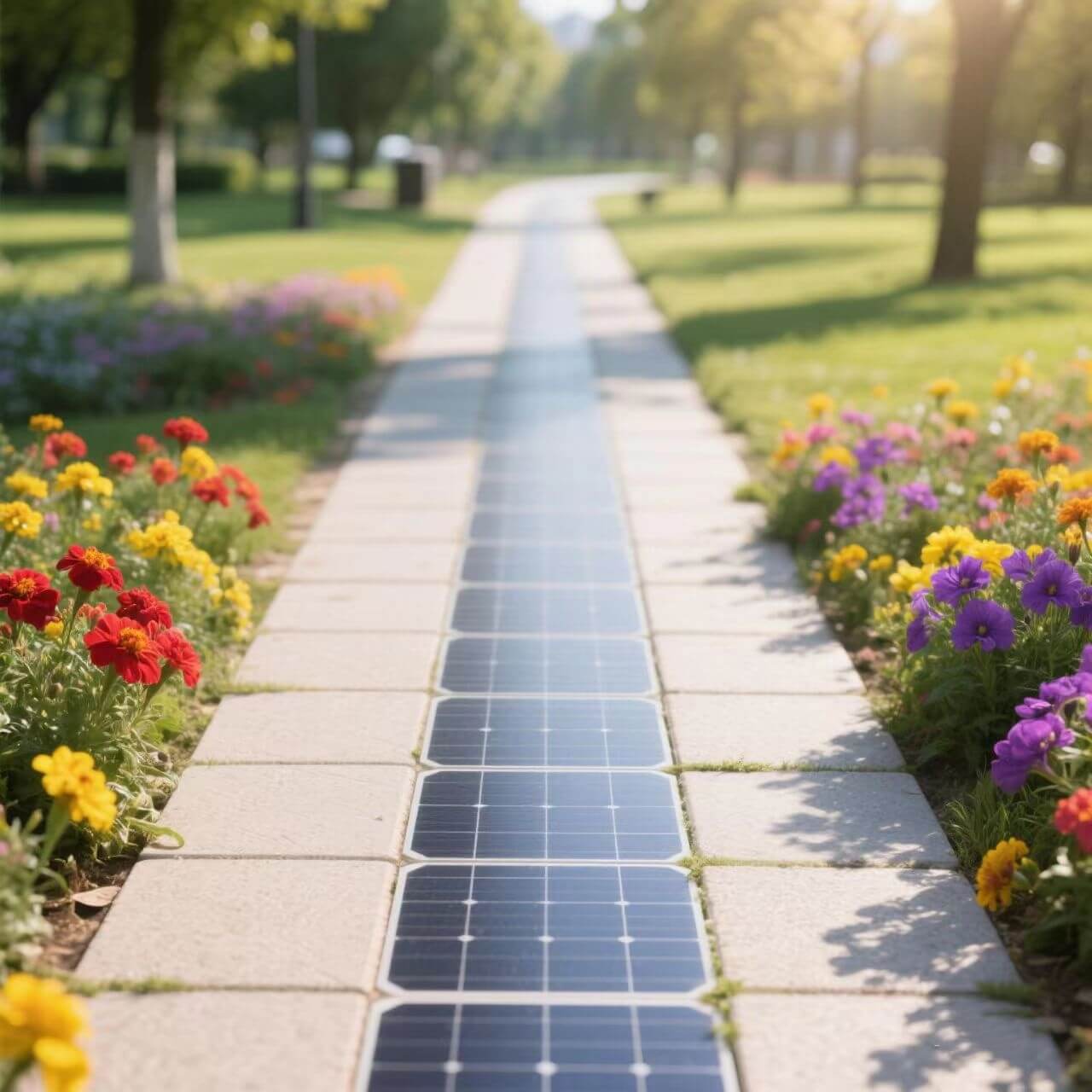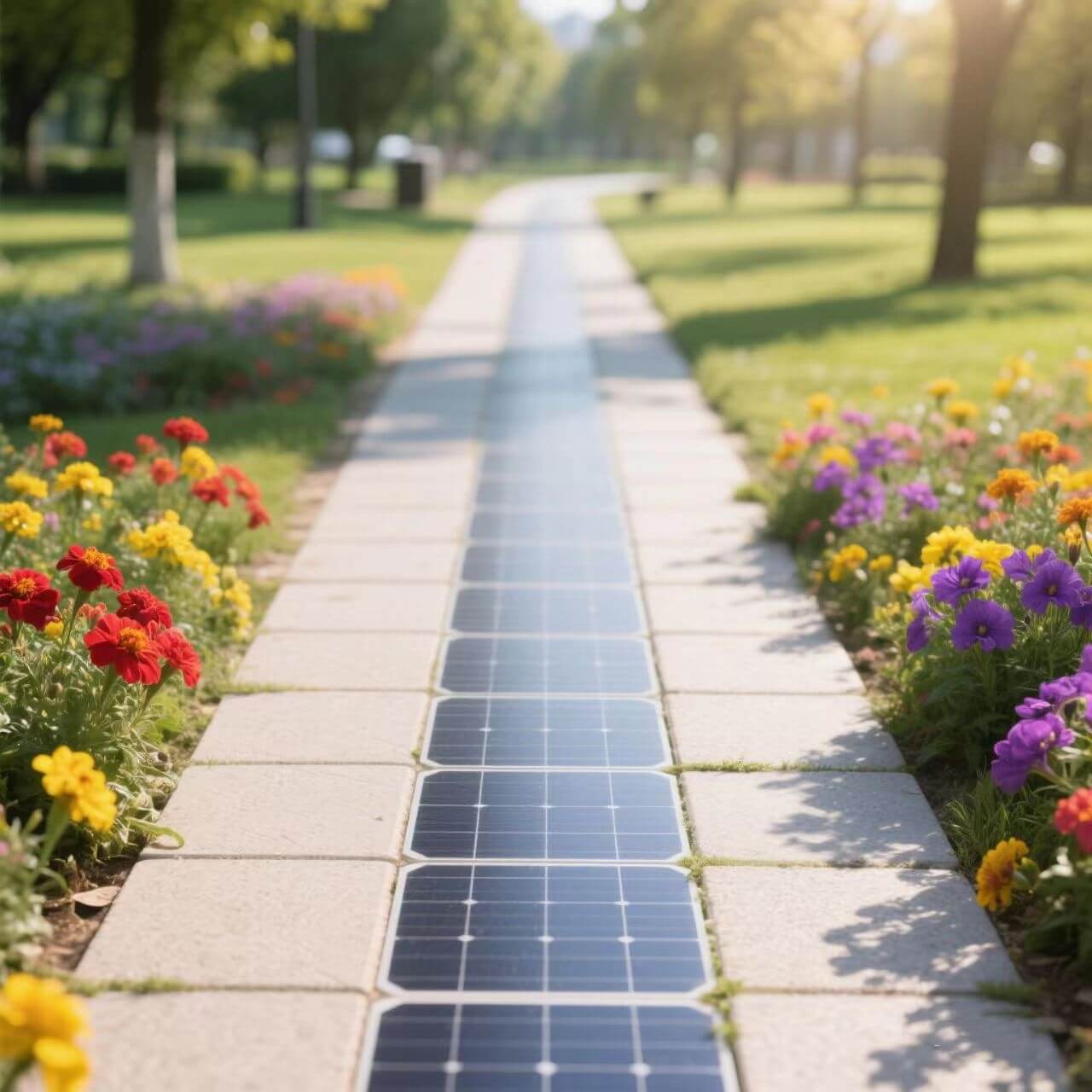

walkable solar tiles patio

Integrating Walkable Solar Tiles into a Backyard Patio with Waterproofing and Safety in Mind

目次

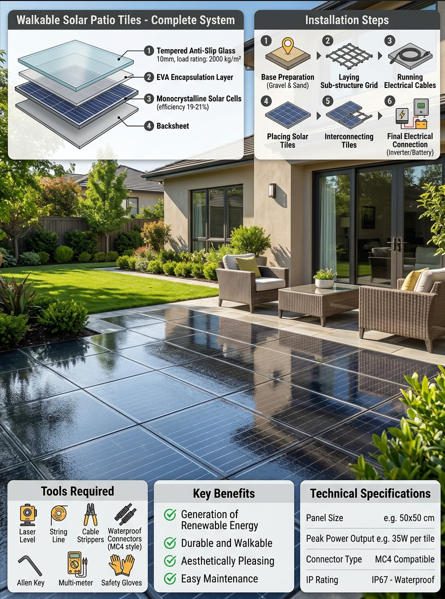
Modern backyard patio with sleek tile surface surrounded by landscaping and outdoor furniture

A backyard patio sits unused for approximately 8,600 hours per year — every daylight hour when no one happens to be standing on it. During those hours, it absorbs solar radiation and reflects it as waste heat. Walkable solar tiles transform that passive surface into an active energy asset, generating electricity from the same sunlight the patio was already receiving. A 20 m² installation in Phoenix, Arizona, with an average daily irradiance of 5.7 kWh/m², produces approximately 1,600–1,900 kWh annually — enough to offset a household’s annual lighting load or power an electric vehicle for 5,000–6,000 miles per year.

But there is a critical difference between installing conventional pavers and installing photovoltaic pavers that carry live electrical circuits beneath a surface people walk on barefoot, that children play on, and that rain, snow, and irrigation water regularly soak. Waterproofing failures can create shock hazards. Improper drainage can undermine the subbase and crack tiles. Missing permits can void homeowner insurance. And choosing the wrong slip-resistance specification can turn a wet patio into a liability.

This guide covers every technical and practical dimension of integrating walkable solar tiles into a backyard patio — from initial goal-setting and site assessment through waterproofing strategy, electrical code compliance, load testing, installation procedures, and long-term maintenance. Each section draws on published product specifications, building code requirements, and field installation data rather than generic claims about “clean energy” and “sustainability.”

Assessing Goals and Constraints

Define Performance Goals for the Solar Tile Patio

Before selecting a product or hiring a contractor, quantify what you need the patio to accomplish. Performance goals typically fall into three categories: energy production (kWh/year), aesthetic integration (color, texture, pattern), and functional durability (foot traffic frequency, furniture loads, weather exposure). These goals directly determine product selection, subbase engineering, and budget.

A household consuming 10,000 kWh/year that wants to offset 15% of its electricity bill needs approximately 1,500 kWh of annual production from the patio. At 10–15% module efficiency typical of walkable tiles (compared to 20–22% for conventional rooftop panels), that requires roughly 18–25 m² of unshaded tile surface in a location with 4.5–5.5 kWh/m²/day average irradiance. If the patio is only 15 m², the energy goal must be adjusted downward — or supplemented with conventional rooftop panels to close the gap.

Write down specific, measurable targets before engaging any vendor: target annual kWh production, maximum acceptable tile thickness (affects transition to adjacent surfaces), required slip resistance rating (DCOF or ASTM standard), design load in PSI or kg point load, and aesthetic parameters (glass color, cell visibility, edge profile). These become the specification sheet against which every product and bid is evaluated.

Budget, Timeline, and Maintenance Expectations

Walkable solar tiles cost significantly more per square meter than conventional pavers or even rooftop solar panels. Based on published pricing from manufacturers like PLATIO Solar, walkable solar pavers range from €50–€80 per unit (approximately $55–$90 USD), translating to roughly $150–$250 per m² for the tiles alone — before subbase preparation, electrical work, waterproofing, and labor. A complete 20 m² patio installation typically totals $6,000–$12,000 depending on site complexity and local labor rates.

Compare that to conventional concrete pavers at $15–$30/m² installed or standard rooftop solar at $150–$200/m² (but producing 40–60% more energy per m² due to higher efficiency and optimal tilt angle). The walkable tile’s value proposition is not pure energy economics — it is the dual use of space that was already allocated to a patio, the elimination of roof penetrations, and the aesthetic integration that many homeowners prefer.

Maintenance costs are moderate. Expect to spend $100–$200 annually on professional cleaning and inspection, with occasional tile replacement costs of $80–$150 per tile if impact damage occurs. The expected service life is 20–25 years for the photovoltaic components, with the glass and frame structure lasting 30+ years if the subbase and waterproofing remain intact.

Compatibility with Existing Landscape and Outdoor Structures

Walkable solar tiles must transition smoothly to adjacent surfaces — lawn edges, pool decks, garden beds, steps, and existing concrete slabs. Height differences exceeding 6 mm create trip hazards and ADA non-compliance. The tile thickness (typically 40–65 mm depending on manufacturer) must align with the existing grade or the subbase must be excavated to accommodate the tile assembly without creating a raised platform that interrupts the patio’s visual and functional flow.

Existing shade structures (pergolas, awnings, mature trees) reduce energy output proportionally. A pergola covering 40% of the patio area eliminates roughly 40% of potential generation. This does not necessarily disqualify the project — it means the energy production target must account for actual unshaded area, not total patio area.

Understanding Walkable Solar Tiles Technology

What Walkable Solar Tiles Are and How They Work

A walkable solar tile is a building-integrated photovoltaic (BIPV) module engineered to function simultaneously as a structural paving surface and an electricity generator. Each tile contains photovoltaic cells — typically monocrystalline silicon at 15–22% cell efficiency — laminated between layers of tempered, anti-slip glass and a robust structural frame. When sunlight strikes the glass surface, the cells generate direct current (DC) electricity, which is converted to alternating current (AC) by microinverters and fed into the building’s electrical system or exported to the grid.

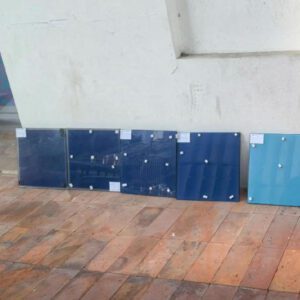
The Jia Mao Bipv photovoltaic floor tile line exemplifies the current state of the technology: monocrystalline cells delivering 30–40W per tile at 15% module efficiency, slip-resistant textured tempered glass rated to 10,000 PSI compressive strength, IP68-rated waterproof junction boxes, and modular electrical design allowing individual tile replacement without system-wide shutdown. Their tiles meet ASTM D2047 slip resistance requirements and are designed for continuous pedestrian traffic including wheelchair accessibility.

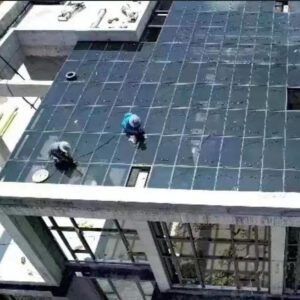
Application-of-photovoltaic-floor-tiles-on-park-square-sidewalks

How They Differ from Traditional Rooftop or Ground-Mounted Solar

Three fundamental engineering differences separate walkable solar tiles from conventional panels. First, the glass must be thick enough (typically 8–12 mm laminated) to bear pedestrian and furniture loads without flexing, compared to the 3.2 mm glass on standard rooftop panels. Second, the surface must provide slip resistance under wet conditions — a requirement that rooftop panels, which are never walked on intentionally, do not need to meet. Third, the installation angle is fixed at 0° (horizontal), which reduces energy production by approximately 10–15% compared to an optimally tilted rooftop array at the same location.

A research paper published in Energy Conversion and Management documented the development and testing of walkable PV floor tiles for pavement applications in Hong Kong, confirming satisfactory performance in solar energy conversion, anti-slip performance, and heat resistance — validating the technology for real-world pedestrian environments.

Walkable Solar Tiles vs. Rooftop Panels vs. Ground-Mount Systems

ParameterWalkable Solar TilesRooftop PanelsGround-Mount Systems
Module Efficiency10–15%20–22%20–22%
Tilt Angle0° (horizontal)15–45° (optimized)15–45° (adjustable)
Load Bearing400–10,000+ kg point loadNot designed for foot trafficNot designed for foot traffic
滑り抵抗ASTM D2047 / DIN R11–R13Not applicableNot applicable
Glass Thickness8–12 mm laminated3.2 mm tempered3.2 mm tempered
Waterproofing NeedsCritical (ground-level water exposure)Roof flashing requiredMinimal
Installation Cost/m²$150–$250 (tiles only)$100–$150 (panels only)$80–$130 (panels only)
Dual-Use ValueReplaces paving materialNone (sits on existing roof)Consumes yard space
Energy per m² (Annual, mid-latitude)80–130 kWh150–220 kWh160–230 kWh

Aesthetic and Integration Options with Patio Design

Modern walkable solar tiles are available in multiple glass types (clear, opal, tinted), cell colors (black, blue), and frame materials (recycled plastic, aluminum, concrete composite). Onyx Solar’s walkable PV floor offers customizable module sizes, surface textures, transparency levels, and colors to align with project aesthetics while maintaining energy performance. PLATIO Solar provides Midnight Black, Ocean Blue, and Clear Glass variants — allowing homeowners to match the solar surface to their landscape palette.

For projects requiring a seamless visual transition between solar and non-solar areas, manufacturers can supply matching “dummy” tiles with identical dimensions and surface finish but no photovoltaic cells. These are used in heavily shaded zones or areas under permanent furniture, maintaining the aesthetic pattern without wasting PV material on unproductive locations.

Site Assessment and Patio Design Considerations

Assess Sun Exposure and Shading Patterns

A solar site assessment for a patio is more complex than for a rooftop because ground-level surfaces face more shading obstacles. Fences, adjacent buildings, garden walls, mature trees, and even the homeowner’s own roof overhang can cast shadows across the patio throughout the day. A shadow study — ideally using software like SketchUp with solar simulation or a handheld solar pathfinder tool — should map shade patterns across the patio surface at 9 AM, 12 PM, and 3 PM for both summer and winter solstice dates.

The minimum viable sun exposure for a cost-justified walkable solar tile installation is approximately 4 hours of direct, unshaded sunlight per day during peak solar months. Patios that receive less than this are better served by conventional pavers with a separate rooftop or carport solar installation. A south-facing patio in the northern hemisphere with no overhead obstructions within 30 feet is the ideal scenario.

Subsurface Conditions and Load Distribution

Unlike conventional pavers that tolerate minor subbase imperfections through the flexibility of sand-set installations, walkable solar tiles contain rigid glass and electrical components that cannot flex without cracking cells or breaking solder joints. The subbase must be engineered to distribute loads evenly and prevent differential settlement.

The recommended subbase structure for a walkable solar tile patio is a minimum of 4–6 inches of compacted crushed gravel (meeting ASTM D2940 gradation requirements) over compacted native soil, topped with 1 inch of leveling sand or a mortar bed depending on the manufacturer’s specifications. Soil conditions matter: expansive clay soils require deeper excavation and possibly a geotextile fabric separator to prevent clay migration into the gravel base. Sandy soils drain well but may require edge restraints to prevent lateral migration.

A plate compactor must make at least two passes in perpendicular directions over each 2-inch lift of gravel. Target compaction is 95% of maximum dry density per ASTM D698 (standard Proctor). Under-compacted subbases settle unevenly over time, cracking tile glass and breaking waterproof seals at joints — the two most common failure modes in ground-level solar tile installations.

Patio Materials Compatibility and Slip Resistance

The coefficient of friction (COF) of a walkable solar tile determines whether the surface is safe when wet. The Americans with Disabilities Act (ADA) recommends a minimum static COF of 0.6 for level surfaces and 0.8 for ramps. Most walkable solar tiles achieve a dynamic coefficient of friction (DCOF) of 0.42–0.60 under ANSI A326.3 or equivalent ratings of R11–R13 under the German DIN 51130 standard — sufficient for pedestrian use in wet conditions.

Jia Mao Bipv’s 太陽光発電フロアタイル use textured tempered glass with ASTM D2047 compliance, providing safe pedestrian traction in all weather conditions including rain. Their self-cleaning surface treatment also reduces biofilm and algae growth — a common slip hazard on outdoor surfaces in humid climates that standard smooth glass would not adequately address.

Waterproofing Strategies for Embedded Systems

太陽光発電床タイル-jmbipv

Choosing Waterproofing Membranes and Their Placement

Water is the primary enemy of any ground-level electrical installation. A walkable solar tile patio must prevent water from pooling around junction boxes, infiltrating conduit runs, and saturating the subbase (which causes frost heave in cold climates and erosion in all climates). The waterproofing strategy depends on whether the patio is installed on grade (directly on soil and gravel) or over a structural deck (concrete slab, rooftop terrace).

For on-grade installations, the primary defense is proper drainage and gravel base engineering rather than a continuous membrane below the tiles. Water should drain through permeable joints between tiles, pass through the gravel base, and disperse into the native soil. The electrical components (junction boxes, conduit) must be individually sealed to IP67 or IP68 standards and installed in drainage-friendly positions where standing water cannot accumulate.

For installations over structural decks (elevated patios, rooftop terraces, balconies), a continuous waterproofing membrane — typically TPO (thermoplastic polyolefin), EPDM (ethylene propylene diene monomer), or a liquid-applied polyurethane system — is installed over the structural deck before the tile pedestal or support system is placed on top. The membrane must have a minimum slope of 2% (¼ inch per foot) toward drain points to prevent ponding. Sika Sarnafil PVC detail membranes and similar products are commonly specified for these applications due to their puncture resistance and long-term UV stability.

Sealing Joints and Penetrations Around Tiles

Every joint between tiles is a potential water entry point. Joint sealant selection depends on the expected movement: rigid mortar joints (zero movement) work for tiles set on a mortar bed over a concrete slab, while flexible polyurethane or silicone sealants (±25% movement capability) are required for sand-set or pedestal-supported installations where thermal expansion causes seasonal joint width changes of 1–3 mm.

Electrical penetrations — where cables exit the tile and enter the subbase conduit — are the highest-risk waterproofing points. Each penetration should use a compression gland fitting rated IP68 or better, seated in a sealant bed, with a secondary drainage path below in case the primary seal fails. The Jia Mao Bipv floor tile system addresses this with IP68-rated junction boxes and underground wiring concealed within the subbase, eliminating exposed cable runs that could be damaged by foot traffic or maintenance equipment.

Edge Detailing and Transition to Surrounding Surfaces

The perimeter of the solar tile field must prevent water from undermining the subbase at the edges. A concrete edge restraint — typically a 4-inch-wide by 8-inch-deep concrete curb poured flush with the tile surface — anchors the perimeter tiles, contains the gravel base, and provides a clean transition to adjacent lawn, garden bed, or concrete surfaces. The edge restraint’s top should be sealed with a flexible sealant where it meets the first row of tiles, creating a continuous waterproof perimeter.

Transitions to house walls, steps, and other vertical surfaces require a minimum 4-inch flashing upturn — the waterproofing membrane or sealant must extend up the vertical surface to a height above the maximum expected water level during heavy rain. This detail is frequently overlooked in patio installations and is responsible for the majority of water intrusion complaints where patios abut building foundations.

Electrical Safety and Code Compliance

Local Electrical Codes and Permit Requirements

Any photovoltaic system connected to a building’s electrical system — including walkable solar tiles — requires an electrical permit in virtually all U.S. jurisdictions. The governing code is NEC Article 690 (Solar Photovoltaic Systems), which covers circuit sizing, grounding, disconnects, overcurrent protection, and labeling for all PV installations. The 2023 NEC update added requirements for rapid shutdown (Article 690.12) that apply to building-mounted systems — and an argument can be made that a patio directly adjacent to a dwelling falls under this requirement depending on local interpretation.

The permit process typically requires a site plan showing the tile layout and electrical routing, a single-line electrical diagram showing the PV array, inverter(s), disconnect, and point of connection, a structural detail or manufacturer’s load rating certification, and the installer’s electrical license number. EcoFlow’s code compliance guide provides a useful overview of the permit requirements by jurisdiction type.

Do not skip this step. An unpermitted solar installation can void homeowner insurance, create liability in the event of electrical fire or shock, and reduce property value at resale when the buyer’s inspector flags the non-compliant system.

GFCI Protection, Backfed Breakers, and Isolation Switches

Ground-level solar installations in wet locations have heightened shock risk. The 2023 NEC GFCI requirements mandate ground-fault circuit interrupter protection for all outdoor receptacles and, by extension, any electrical system where water contact is foreseeable. For walkable solar tiles on a patio, this means the inverter output circuit should include GFCI protection, and the DC side should include ground-fault detection and interruption (GFDI) — a standard feature on most modern solar inverters.

The solar circuit connects to the building’s electrical panel through a backfed breaker, which must comply with the NEC 120% rule: the combined amperage of the main breaker and the solar backfed breaker cannot exceed 120% of the panel’s busbar rating. For example, a 200A panel with a 200A main breaker can accept a maximum solar backfed breaker of 40A (200 × 120% = 240A; 240A − 200A = 40A). If the patio system exceeds this limit, the panel must be upgraded or a line-side tap connection installed.

An isolation switch (AC disconnect) must be installed between the inverter and the panel — accessible to utility workers and first responders — and clearly labeled per NEC 690.13. For patio installations, this switch is typically mounted on an exterior wall near the tile field.

Certifications, Warranties, and Installer Qualifications

Walkable solar tiles should carry, at minimum, IEC 61215 (design qualification), IEC 61730 (safety qualification), and applicable regional certifications (UL listing for U.S., CE marking for EU). Fire classification (Class A, B, or C per UL 790) is relevant for installations adjacent to buildings. Slip resistance should be certified to ASTM D2047, ANSI A326.3, or DIN 51130 by an independent testing lab.

The installer should hold NABCEP PV Installation Professional certification (the gold standard for U.S. solar installers), a valid state electrical license, and liability insurance covering solar installations. OSHA 10 for Construction certification is a baseline safety requirement. Request proof of all certifications before work begins — and verify them independently. The Jia Mao Bipv manufacturer selection guide provides an expanded framework for evaluating both product certifications and installer qualifications.

Drainage, Waterproof Membranes, and Flashing

Planning for Drainage to Prevent Water Pooling

Water pooling on a solar tile surface is both an energy problem (standing water scatters light and reduces output by 5–15%) and a safety problem (increased slip risk and accelerated biofilm growth). The patio surface must be graded to drain — a minimum slope of 1–2% away from the building is standard practice for all patio construction, and walkable solar tiles are no exception.

For permeable joint designs (where water drains between tiles into the gravel base), the gravel base itself must be graded to direct subsurface water toward a perimeter French drain or daylight outlet. For impermeable designs (tiles set on mortar over a waterproof membrane on a structural slab), surface drains must be integrated at the low points, with drain grates flush with the tile surface and connected to a stormwater system.

Compatibility of Membranes with Tile Installation

Not all waterproofing membranes tolerate the point loads transmitted through tile pedestal supports. A standard TPO membrane over rigid insulation can be punctured by concentrated loads — requiring protection boards (typically 1/4-inch high-density polyethylene) between the pedestal feet and the membrane. EPDM membranes are more puncture-resistant but less compatible with adhesive-applied flashing details. Liquid-applied membranes (polyurethane or PMMA) conform to complex geometries and bond directly to concrete substrates, making them preferred for complex patio shapes with multiple penetrations.

The membrane must be chemically compatible with the tile adhesive, joint sealant, and conduit materials. Bituminous (asphalt-based) membranes can degrade PVC conduit over time, while certain silicone sealants do not adhere to TPO surfaces. Request compatibility data from both the membrane and tile manufacturers before specifying the system.

Flashing Details at Edges and Around Penetrations

Critical flashing locations include the wall-to-patio junction (where the patio meets the house foundation), internal corners (where two patio edges meet at 90°), drain penetrations (where drain pipes pass through the membrane), and conduit penetrations (where electrical conduit enters or exits the waterproof layer). Each of these details follows a standard sequence: apply primer, install base flashing layer, lap the membrane over the flashing, seal with compatible sealant, and install a protective cover or counter-flashing.

The SolarTech flashing installation guide provides detailed illustrations for common solar-to-building flashing details. For patio installations specifically, the most critical detail is the wall base flashing — it must extend a minimum of 4 inches above finished grade and be counter-flashed into a reglet or tucked behind the wall cladding’s weather-resistant barrier.

Load Testing and Durability

Specified Load Limits and Safety Margins

Walkable solar tiles are rated by two load metrics: distributed load (uniform pressure across the tile surface, measured in PSI or kPa) and point load (concentrated force from a single contact point, such as a furniture leg or high heel, measured in kg or lbs). Onyx Solar’s walkable PV floor withstands up to 400 kg point load. PLATIO pavers are rated for cars up to 2 tons. Jia Mao Bipv’s photovoltaic floor tiles are rated at 10,000 PSI compressive strength — capable of withstanding continuous foot traffic and light maintenance vehicle loads.

Safety margins are critical. A tile rated for 400 kg point load should never be subjected to exactly 400 kg in service — that is the failure threshold, not the operating limit. Standard engineering practice applies a safety factor of 2.0–3.0x, meaning a 400 kg-rated tile should not receive point loads exceeding 130–200 kg in normal use. Heavy planters, hot tub legs, and grill casters can easily exceed these limits if not distributed across bearing pads.

Impact Resistance and Surface Wear Concerns

The tempered glass surface of walkable solar tiles resists scratches from foot traffic and normal patio activities, but is vulnerable to impact from dropped objects — a falling cast-iron grill grate, a heavy ceramic pot, or a child’s thrown rock can crack the glass. Tempered glass fractures into small granules (safe, but the tile is destroyed), while laminated glass holds together after cracking (repairable in some cases, but output is reduced from cracked cells beneath).

Surface wear from sand, grit, and foot traffic gradually reduces the anti-slip texture over time. In high-traffic commercial installations, Onyx Solar recommends a surface wear assessment every 5 years. For residential patios with moderate traffic, a 10-year interval is typically sufficient — but the slip resistance should be retested if the surface becomes visibly smooth or polished.

Wind Uplift Considerations for Elevated Tiles

Patios at ground level face minimal wind uplift risk because there is no air gap beneath the tiles for wind pressure to exploit. However, elevated patios — rooftop terraces, second-floor balconies, raised decks — are exposed to wind speeds that can lift loose-laid tiles. The Journal of Wind Engineering research on roof paver uplift demonstrated that corner and edge pavers on flat roofs experience uplift pressures 2–3x higher than field (interior) pavers during high-wind events.

Mitigation strategies include mechanical fastening (screws through the frame into the substructure), wind clips (metal brackets connecting adjacent tiles), and ballasting (adding weight through thicker subbase material). For elevated patios in wind zones exceeding 110 mph basic wind speed, a structural engineer should calculate the required hold-down forces per ASCE 7-22 Chapter 30 (Components and Cladding) and specify the appropriate restraint system.

Installation Steps and Best Practices

Step-by-Step Overview of Installation

A complete walkable solar tile patio installation follows this sequence, typically spanning 5–10 working days for a 20 m² project depending on site complexity:

PhaseActivitiesDurationKey Considerations
1. Site PreparationExcavate to depth (8–12 inches), grade for drainage, compact native soil1–2 daysSoil testing for expansive clay; geotextile if needed
2. Subbase ConstructionInstall compacted gravel in 2-inch lifts, install edge restraints1–2 days95% compaction per ASTM D698; verify grade with laser level
3. Electrical Rough-InInstall conduit, pull home-run cables, mount junction boxes and disconnect1 daySchedule 40 PVC or rigid metal conduit; GFDI protection at inverter
4. Waterproofing (if over slab)Apply membrane, flash penetrations, test with 24-hour flood test1–2 days2% minimum slope toward drains; test before covering
5. Tile SettingSet tiles per manufacturer pattern, connect tile-to-tile wiring1–2 daysMaintain consistent joint width; torque connections per spec
6. Joint SealingFill joints with specified sealant or polymeric sand0.5 dayTemperature must be above 40°F for sealant cure
7. Electrical CommissioningWire to inverter, test each string, verify grounding, connect to panel0.5–1 dayIV curve trace each string; megger insulation test
8. Inspection & ActivationPass electrical inspection, activate system, configure monitoring0.5 dayInspector verifies NEC 690 compliance, labeling, disconnect access

Tools, Parts, and On-Site Safety

The installation requires a combination of hardscape construction tools and electrical installation equipment: plate compactor, laser level, diamond wet saw (for cutting border tiles), conduit bender, wire strippers, torque wrench (for MC4 or manufacturer-specific connectors), multimeter, and insulation resistance tester (megger). The electrical portions must be performed by a licensed electrician — this is not a DIY-compatible phase of the project.

On-site safety protocols include de-energizing the building’s main panel during the interconnection phase, covering tile surfaces with opaque material during installation to prevent DC voltage generation while wiring is exposed, using insulated tools for all DC work, and posting warning signs during construction. Solar tiles generate voltage whenever exposed to light — a half-finished patio with exposed wiring is a shock hazard that must be managed continuously during the installation process.

Pre-Use Testing and Commissioning Procedures

Before the system goes live, the installer should perform an IV curve trace on each string (to verify that every tile is producing expected voltage and current), an insulation resistance test (megger test at 500V or 1,000V DC to verify no ground faults), a ground continuity test (to verify that all exposed metal frames are bonded to the equipment grounding conductor), and a visual inspection of all connections, sealants, and flashing details. The monitoring system should be activated and baselined — recording the first full day of production as a reference for future performance comparison.

Maintenance, Cleaning, and Long-Term Care

Cleaning Protocols to Maintain Efficiency and Slip Resistance

Ground-level solar tiles accumulate dirt, pollen, leaf debris, and organic matter faster than elevated rooftop panels. A study published in PMC/NIH documented soiling losses of 5–25% depending on location and cleaning frequency — and horizontal surfaces (0° tilt) accumulate soiling faster than tilted surfaces because rain does not sheet-wash debris away as effectively.

The recommended cleaning protocol for walkable solar patio tiles is to sweep or blow loose debris weekly, wash with low-pressure water and a soft brush monthly (using deionized or softened water to avoid mineral deposits), remove organic stains (bird droppings, tree sap, food spills) promptly with a pH-neutral cleaner, and never use abrasive pads, pressure washers above 1,500 PSI, or chemical solvents that could damage the anti-slip coating or AR treatment.

Jia Mao Bipv integrates a self-cleaning hydrophobic coating into their photovoltaic floor tile product line that reduces cleaning frequency by up to 70% — a significant maintenance cost reduction for residential installations where the homeowner would otherwise need to clean the surface every 2–4 weeks to maintain optimal output.

Inspecting Seals, Joints, and Tile Integrity

Sealant and joint integrity should be inspected visually every 6 months — spring and fall are natural inspection points. Look for cracked, separated, or missing sealant in tile joints, discolored or swollen areas around electrical penetrations (indicating moisture intrusion), cracked or chipped glass on any tile, and loose edge restraints or shifted perimeter tiles. Any cracked tile should be replaced promptly — a compromised glass surface allows water to reach the PV cells, causing corrosion and accelerated degradation that spreads to adjacent cells through the electrical circuit.

Seasonal Maintenance Plan and Inspection Checklist

SeasonMaintenance TasksInspection Focus
SpringDeep clean after pollen season; clear drain outlets; apply sealant repairs from winter freeze damageJoint integrity, edge restraint condition, drain flow test
SummerRegular cleaning schedule; monitor output peaks; check for heat-related sealant softeningProduction data vs. baseline; slip resistance spot-check if surface appears smooth
FallRemove fallen leaves daily during leaf-drop season; pre-winter sealant check; gutter/drain clearingTile surface condition; electrical connection tightness; inverter operation
WinterSnow removal with plastic shovel (no metal blades); de-icing with PV-safe products onlyFreeze-thaw damage to joints; standing water/ice accumulation points; subbase settling

Case Studies and ROI Considerations

Real-World Examples of Backyard Patio Implementations

Published installation data from PLATIO Solar provides concrete reference points for residential patio projects. A 40 m² driveway installation in Frankfurt, Germany delivered 6.64 kWp capacity — producing an estimated 5,800–6,600 kWh annually at Frankfurt’s average irradiance of 1,050 kWh/m²/year. A smaller 5 m² garden terrace in Feblbach, Germany achieved 0.84 kWp, generating approximately 740–880 kWh/year — sufficient to power outdoor lighting, a garden irrigation pump, and charge a battery storage system for evening use.

In Hong Kong, the walkable PV floor tile research published in Energy Conversion and Management tested a pavement installation under real tropical conditions, confirming satisfactory energy conversion performance with 9 monocrystalline silicon cells per tile in a series configuration. The research validated both the electrical output and the anti-slip and heat-resistance performance required for continuous pedestrian use in a hot, humid climate.

Cost Versus Benefit Analysis and Payback Period

20 m² Patio Solar Tile Installation: 25-Year Cost vs. Cumulative Savings

Upfront Costs

Solar Tiles (20 m²)

$4,000–$5,000

Subbase + Waterproofing

$1,500–$2,500

Electrical + Inverter

$1,200–$2,000

Labor + Permits

$1,200–$2,000

Total Before ITC

$7,900–$11,500

After 30% Federal ITC

$5,530–$8,050

25-Year Cumulative Savings (Phoenix, AZ — $0.13/kWh avg.)

Annual Energy Value

$208–$247/yr

25-Year Cumulative

$5,200–$6,175

Avoided Paver Cost

$600–$1,200

Assumptions: 20 m² installation, 1.6–1.9 kWp capacity, 1,600–1,900 kWh/year production in Phoenix (5.7 kWh/m²/day), utility rate $0.13/kWh escalating 2.5%/year, 0.5%/yr panel degradation, 30% federal ITC. Avoided paver cost represents the conventional pavers that would have been purchased instead. Net payback period: 12–18 years for Phoenix; 18–25 years for lower-irradiance locations.

The payback period for walkable solar tiles is longer than for conventional rooftop solar (typically 5–9 years) because of lower module efficiency at 0° tilt and higher per-watt installation costs. The value proposition centers on three factors that dollar-per-kWh calculations miss: the patio surface was needed anyway (the solar tiles replace conventional pavers, not empty space), there are no roof penetrations or aesthetic compromises, and the installation adds measurable property value that appraisers increasingly recognize in solar-equipped homes — EnergySage data shows that solar installations increase home sale prices by an average of $15,000–$25,000 nationwide.

Future Scalability and Upgrade Paths

A well-designed solar tile patio is inherently scalable. The modular electrical architecture — with each tile as an independent generation unit connected to microinverters — allows expansion by adding tiles to the array edges without rewiring existing circuits. If the homeowner later expands the patio, the new tiles connect to additional microinverter channels on the existing monitoring platform.

Technology upgrades are also possible: when higher-efficiency cells become available in 10–15 years, the tile glass and frame can potentially be re-laminated with new cells — preserving the subbase, waterproofing, and electrical infrastructure while upgrading only the photovoltaic component. This is a key advantage of the BIPV approach over conventional panels, where the entire module (frame, glass, cells) is replaced as a unit. Jia Mao Bipv’s modular electrical design specifically accommodates individual tile replacement and technology refresh cycles without system-wide shutdown — a design feature that extends the economic life of the installation well beyond the 25-year PV warranty period.

Video: How PLATIO Solar Pavement Is Installed

This step-by-step installation guide from PLATIO Solar demonstrates the complete process of integrating solar pavers into a residential driveway — from subbase preparation through tile setting, wiring, and system commissioning:

Completed modern patio with integrated solar energy tiles and outdoor seating area at sunset

Integrating walkable solar tiles into a backyard patio is an engineering project that sits at the intersection of hardscape construction, photovoltaic system design, waterproofing, and electrical code compliance. When executed correctly — with proper subbase engineering, drainage planning, membrane detailing, NEC-compliant wiring, and a structured maintenance program — the result is a dual-purpose surface that generates electricity for 25+ years while serving as a functional, attractive outdoor living space.

The practical next steps for any homeowner considering this project are to conduct a solar site assessment of the patio area (minimum 4 hours of direct sun), obtain quotes from at least three NABCEP-certified installers who have documented experience with walkable solar tile systems, verify product certifications (IEC 61215, IEC 61730, ASTM D2047 slip resistance, fire classification), confirm electrical permit requirements with the local authority having jurisdiction, and establish a maintenance agreement or self-maintenance protocol before system activation.

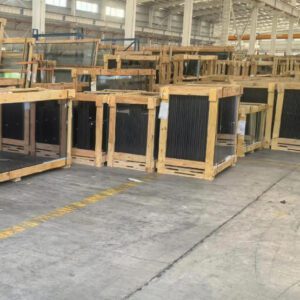
For those who want the energy generation benefits of a solar patio but need guidance on product selection, Jia Mao Bipv offers a complete range of walkable photovoltaic floor tiles with 10,000 PSI compressive strength, IP68 waterproof connections, ASTM D2047-compliant slip resistance, and a 25-year performance guarantee — backed by a 3 GW manufacturing facility with full digital traceability from raw material to installed tile. A professional assessment of your specific site conditions is the essential first step toward determining whether walkable solar tiles are the right solution for your backyard.


Frequently Asked Questions (FAQs)

1. What are walkable solar tiles and how do they integrate with a backyard patio?

Walkable solar tiles are building-integrated photovoltaic (BIPV) modules designed to function simultaneously as a structural paving surface and an electricity generator. Each tile contains photovoltaic cells laminated between layers of tempered, anti-slip glass with compressive strength ratings of 400–10,000+ kg point load. They install on a prepared subbase (compacted gravel and sand or mortar over a concrete slab) using the same layout principles as conventional pavers, with the addition of electrical wiring that connects each tile to microinverters and the building’s electrical panel. The tiles replace conventional patio pavers entirely — serving as the walking surface while generating 80–130 kWh per square meter annually at mid-latitude locations. Products like Jia Mao Bipv’s photovoltaic floor tiles are specifically engineered for this dual-purpose application with IP68-rated waterproof connections and modular electrical design.

2. Do walkable solar tiles provide adequate waterproofing for a patio?

Walkable solar tiles themselves are waterproof units with IP67 or IP68-rated junction boxes that prevent water ingress to electrical components. However, the tile surface is not a continuous waterproofing membrane — water passes through the joints between tiles and must be managed through the subbase drainage system. For on-grade patios (installed on soil and gravel), this is handled by grading the gravel base toward a French drain or daylight outlet. For patios over structural decks or living spaces, a continuous waterproofing membrane (TPO, EPDM, or liquid-applied polyurethane) must be installed beneath the tile support system with a minimum 2% slope toward drain points. The joints, penetrations, and perimeter edges require specific flashing and sealant details to prevent water from undermining the subbase or entering the building envelope.

3. What permits and codes apply to installing walkable solar tiles in my area?

In the United States, any photovoltaic system connected to a building’s electrical system requires an electrical permit governed by NEC Article 690 (Solar Photovoltaic Systems). The permit process requires a site plan, single-line electrical diagram, structural load certification, and the installer’s electrical license. GFCI/GFDI protection is required for outdoor installations in wet locations per NEC 210.8(A). The solar circuit connects through a backfed breaker subject to the NEC 120% rule. Additionally, a building permit may be required for the hardscape construction depending on your municipality. Some jurisdictions require separate solar-specific permits. Always verify requirements with your local Authority Having Jurisdiction (AHJ) before beginning work. Unpermitted installations can void homeowner insurance and create liability exposure.

4. How do I maintain walkable solar tiles and ensure long-term safety?

Maintenance involves three parallel tracks: surface cleaning, joint and seal inspection, and electrical monitoring. Clean the tile surface weekly with a broom or leaf blower, and wash monthly with soft water and a non-abrasive brush. Inspect joint sealants and edge restraints every 6 months (spring and fall) for cracks, separation, or erosion. Monitor system production data monthly and investigate any panel producing less than 90% of the string average. Schedule a professional electrical inspection annually ($200–$500) covering connection tightness, grounding continuity, insulation resistance, and inverter operation. In cold climates, remove snow with a plastic shovel and avoid metal-blade scrapers or harsh chemical de-icers that damage anti-slip coatings. Replace cracked tiles promptly to prevent moisture ingress to cells and wiring.

5. How much electricity can a walkable solar tile patio produce?

Production depends on three variables: total tile area, local solar irradiance, and shading conditions. At 10–15% module efficiency and 0° tilt angle, a walkable solar tile produces approximately 80–130 kWh per square meter per year at mid-latitude locations with 4.5–5.5 kWh/m²/day irradiance. A 20 m² patio in Phoenix, Arizona produces roughly 1,600–1,900 kWh/year; the same patio in Seattle produces 900–1,100 kWh/year. PLATIO Solar’s documented Frankfurt installation (40 m²) achieved 6.64 kWp capacity with estimated annual production of 5,800–6,600 kWh. These numbers are 35–45% lower than the same area covered with optimally tilted rooftop panels — the trade-off for using a horizontal, walkable surface.

6. Are walkable solar tiles safe for children, pets, and bare feet?

Properly certified walkable solar tiles are safe for all pedestrian use including children and pets. The tiles operate at Safety Extra Low Voltage (SELV), typically 30–50V DC per tile string — below the 60V DC threshold considered hazardous to human touch. Electrical connections are sealed to IP67/IP68 standards (submersion-proof), preventing contact with live components. The glass surface meets ASTM D2047 or DIN R11–R13 slip resistance standards, including when wet. Surface temperature in direct summer sun can reach 50–65°C (122–149°F) — comparable to concrete pavers — which may be uncomfortable for bare feet during peak afternoon hours. Installing tiles with lighter glass colors (opal or clear rather than black) reduces surface temperature by 5–10°C.

7. What subsurface preparation does a walkable solar tile patio require?

The subbase must be engineered to prevent differential settlement that would crack tile glass and break waterproof seals. The standard specification is 4–6 inches of compacted crushed gravel (ASTM D2940 gradation) over compacted native soil, topped with 1 inch of leveling sand or a mortar bed. Compaction must reach 95% of maximum dry density per ASTM D698 using a plate compactor with at least two perpendicular passes per lift. Expansive clay soils require deeper excavation (8–12 inches) and geotextile fabric separation. The subbase must be graded at 1–2% slope for drainage. This preparation is identical to premium paver installation with the added requirement that electrical conduit is integrated during the gravel base phase — before the sand leveling layer is placed.

8. How do walkable solar tiles compare in cost to conventional rooftop solar?

Walkable solar tiles cost approximately $150–$250/m² for tiles alone, with total installed costs of $400–$575/m² including subbase, waterproofing, electrical, and labor. Conventional rooftop panels cost $100–$200/m² for panels alone, with total installed costs of $200–$350/m². However, the walkable tile replaces a conventional paver that would have cost $15–$60/m² — netting back $15–$60/m² in avoided paving costs. The levelized cost of energy from walkable tiles ($0.15–$0.25/kWh) is higher than rooftop solar ($0.05–$0.10/kWh) due to lower efficiency at 0° tilt. The decision to use walkable tiles over rooftop panels is architectural and space-driven, not purely economic — it makes sense when rooftop solar is not feasible, when the patio area is already being constructed or renovated, or when aesthetic integration is a primary requirement.

9. What happens if a walkable solar tile cracks or breaks?

Tempered glass tiles fracture into small, relatively harmless granules when broken — similar to automotive side windows. The broken tile stops producing electricity but does not create a shock hazard because bypass diodes in adjacent tiles route current around the failed unit. Most manufacturers design their systems with modular electrical architecture that allows individual tile replacement without system-wide shutdown. The replacement process involves removing the broken tile, disconnecting its electrical pigtail, installing the new tile, reconnecting, and sealing the joints — typically a 1–2 hour procedure for a qualified installer. Keeping 2–3 spare tiles on hand (purchased with the original order to ensure batch matching) is recommended for prompt repairs.

10. Can I install walkable solar tiles myself as a DIY project?

The hardscape portion (excavation, subbase, tile setting) can be performed by a competent DIYer with paver installation experience. However, the electrical portions — wiring tiles, connecting inverters, installing disconnect switches, and interconnecting to the building’s electrical panel — must be performed by a licensed electrician per NEC Article 690 and virtually all local electrical codes. A DIY electrical installation cannot be permitted or inspected, which means it cannot be legally connected to the grid, may void your homeowner insurance, and creates shock and fire liability. The recommended approach is to hire a general contractor for the hardscape work and a NABCEP-certified solar installer for the electrical work, with both coordinating on the subbase conduit placement that bridges the two scopes.

jmbipvについて

BIPVメーカーやサプライヤーと協力したいですか?または、カスタムBIPV製品を取得したいですか?

Shanghai JAMO New Energy Technology Co., Ltd.は、中国・上海にある建築物一体型太陽光発電(BIPV)製品の大手メーカーであり、ソリューション・プロバイダーである。

シェア

フェイスブック
ツイッター
LinkedIn

コネクト

24時間以内にご連絡いたします。

あなたの緊急の照会については、whatsappによって私達に連絡しなさいいいえ: +86 18321592370

当てる

私たちは、お客様との長期ビジネスを確立されています。私達のプロダクトの何れかのモデルに興味がある場合は、お問い合わせは、自由にしてくださいを参照してください。

お急ぎのお問い合わせは、whatsapp番号: : +86 18321592370までご連絡ください。

jmbipvについて