Successful BIPV integration in Hong Kong depends on supportive policies, innovative business models, and deep collaboration among building owners, architects, contractors, and manufacturers. This guide focuses entirely on actionable steps, real-world solutions, and proven strategies for overcoming the local challenges that make Hong Kong one of the most demanding—and most rewarding—markets for Building Integrated Photovoltaics.
Whether you are a property developer evaluating your next façade renovation, a facility manager exploring on-site renewable energy, or a government adviser drafting climate policy, this article is designed to walk you through the technical, economic, and regulatory factors that determine whether a BIPV project in Hong Kong succeeds or fails. Every section below draws on real Hong Kong case studies, published government data, and insights from leading industry figures—so you can move from theory to implementation with confidence.
The global building integrated photovoltaic market was valued at USD 23.41 billion in 2025 and is projected to reach USD 85.9 billion by 2034. Hong Kong, with its forest of glass-clad skyscrapers and ambitious carbon neutrality targets, is uniquely positioned to capture a meaningful share of that growth—provided stakeholders understand how to navigate the city’s distinctive blend of opportunity and complexity.
In the sections that follow, we cover everything from the fundamentals of BIPV technology and Hong Kong’s unique urban suitability, to detailed benefits, key success factors, and real project case studies including the landmark Wan Chai Tower retrofit and the pioneering Ma Wan Primary School collaboration. Let’s get started.
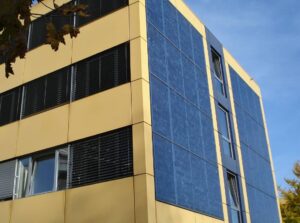
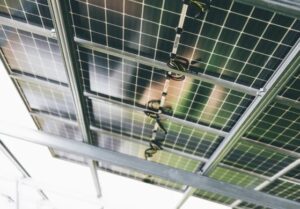
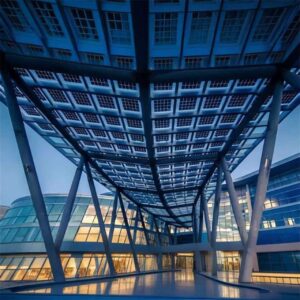
 Hong Kong’s dense skyline of glass-clad towers represents one of the world’s largest untapped surfaces for building integrated photovoltaic deployment.
Understanding Building Integrated Photovoltaics in Hong Kong
What Is BIPV Technology
Building Integrated Photovoltaics, or BIPV, refers to photovoltaic materials that replace conventional building elements—such as curtain wall glass, roof tiles, skylights, and façade cladding—while simultaneously generating electricity from sunlight. Unlike bolt-on solar panels (known as Building Applied Photovoltaics, or BAPV), BIPV components serve a dual purpose: they function as weather protection, insulation, shading, or structural glazing and produce clean energy at the same time.
A modern BIPV module from a manufacturer like Jia Mao Bipv typically consists of monocrystalline silicon cells with efficiencies exceeding 22%, encapsulated between layers of ultra-clear tempered glass using advanced POE encapsulant films. The result is a building material that looks, feels, and performs like premium architectural glass—but harvests solar energy throughout its 25-year-plus lifespan. Products range from fully opaque photovoltaic spandrel panels to transparent BIPV glass with adjustable light transmittance from 10% to 90%, enabling architects to maintain natural daylighting while generating power.
The key distinction to understand is this: BIPV is not a solar panel attached to a building. It is the building. When a curtain wall panel is replaced with a BIPV module, the cost of the original glass is offset against the BIPV investment—fundamentally changing the economic equation compared to traditional rooftop solar.
As Professor Yang Hongxing, a pioneer of BIPV research at the Hong Kong Polytechnic University and founding president of the Solar Energy Society of Hong Kong, explains: “Apart from those deployed on the roof, photovoltaic panels can also be installed on building walls to replace glass curtain walls without affecting the exterior design. Now there are also a wide range of photovoltaic panels to suit different purposes like PV tiles and colourful silicon PV panels.”
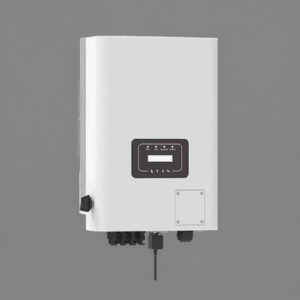
For a deeper technical walkthrough of how BIPV panels connect with a building’s electrical infrastructure, the BIPV panel installation and wiring guide from Jia Mao Bipv is an excellent resource.
Why Hong Kong’s Urban Environment Suits BIPV
Hong Kong is, paradoxically, both one of the most challenging and one of the most logical cities in the world for BIPV deployment. The challenge is obvious: extreme urban density, towering buildings casting complex shadow patterns, typhoon-force winds, high humidity, and a subtropical climate that pushes cooling loads to their limits. But it is precisely these constraints that make BIPV not just viable—but arguably essential.
Consider the numbers. In Hong Kong, buildings account for over 90% of total electricity consumption and generate more than 60% of the city’s carbon emissions, according to data from the Electrical and Mechanical Services Department (EMSD). The city’s Climate Action Plan 2050 demands a radical shift in how buildings consume and produce energy. Yet Hong Kong has virtually no land for ground-mounted solar farms—every square metre of surface is contested.
This is where vertical real estate becomes the answer. A typical Hong Kong high-rise has far more façade area than roof area. When you multiply the four walls of a 40-storey tower by the dozens of such towers in a single district, the available surface for BIPV is enormous. The key insight, as Professor Yang Hongxing noted, is that “due to the high land price in Hong Kong, it is impossible to mount photovoltaic solar panels on the ground as in mainland China. Therefore, we have to adopt the building-integrated photovoltaic (BIPV) technology here.”
Hong Kong also benefits from strong average solar irradiance—about 1,150–1,250 kWh/m² per year—and even the diffuse and reflected light from surrounding glass towers (a phenomenon called “albedo gain”) can meaningfully contribute to BIPV output. Modern BIPV systems using bifacial cells and micro-inverters are specifically designed to harvest energy in exactly these conditions. Hong Kong’s climate, for all its challenges, delivers plenty of usable sunlight year-round.
Finally, Hong Kong’s advanced building codes, world-class engineering talent, and sophisticated curtain wall industry provide the technical ecosystem needed to deliver BIPV at scale. The infrastructure is already here—it just needs to be activated.
Key Features of BIPV Systems
To understand why BIPV is gaining traction in Hong Kong’s built environment, it helps to know the core features that differentiate modern BIPV systems from conventional solar or standard building materials. The following table compares the key attributes across three categories: standard glass curtain walls, rooftop solar (BAPV), and BIPV:
| Feature | Standard Glass Curtain Wall | Rooftop Solar (BAPV) | BIPV Curtain Wall / Façade |
|---|---|---|---|
| Generates Electricity | No | Yes | Yes |
| Replaces Building Material | N/A (is the material) | No (added on top) | Yes (replaces glass/cladding) |
| Usable Surface in High-Rise | Roof only for solar | Roof only | Roof + Façade + Skylight + Canopy |
| Aesthetic Integration | High | Low to Medium | High (customisable colours, transparency) |
| Thermal Performance | Standard U-value | No envelope benefit | Shading + insulation + energy generation |
| Typhoon / Wind Load Rating | Meets code | Varies | Meets curtain wall code (≥4.0 kPa) |
| Typical Lifespan | 25–30 years | 25 years | 25+ years (with performance guarantee) |
| Cost Offset | None | None (pure add-on cost) | Offsets cost of replaced material |
Beyond this comparison, modern BIPV systems from manufacturers like Jia Mao Bipv offer several standout technical features that matter in Hong Kong’s demanding environment. Ultra-clear tempered glass achieves up to 91.5% light transmittance—an 8% improvement over standard glass—while meeting architectural curtain wall wind pressure resistance of 4.0 kPa. Self-cleaning surface coatings reduce maintenance costs by approximately 30%, which is critical for high-rise façades where access is expensive. And proprietary cell arrangement processes allow custom architectural patterns, so each building can have a unique aesthetic identity while generating clean power.
For architects and specifiers looking at product options, the Jia Mao Bipv product catalogue showcases the full range—from BIPV laminated glass for façades to solar roofing tiles and transparent panels.
Here is a short video that provides an excellent visual overview of how Building Integrated Photovoltaics work in practice and how they are transforming modern architecture:
Video: Understanding Building-Integrated Photovoltaics – Hugh Lowry, Elemex Architectural FacadesBenefits of BIPV Integration for Hong Kong Buildings
Energy Efficiency and Smart Management
One of the most compelling advantages of BIPV in Hong Kong is its ability to simultaneously reduce energy consumption and generate electricity—a double benefit that no other façade material can deliver. In a city where air conditioning accounts for a massive share of building energy use, the shading effect of BIPV panels on south- and west-facing façades can reduce solar heat gain by 30–50%, depending on the panel configuration and orientation. This translates directly into lower cooling loads, smaller HVAC systems, and reduced peak electricity demand.
When BIPV façades are paired with modern Building Management Systems (BMS), the results become even more powerful. Smart inverters and real-time monitoring platforms allow facility managers to track energy generation and consumption on a panel-by-panel basis. Some advanced setups integrate BIPV output data with the BMS to dynamically adjust lighting and HVAC settings—for example, dimming interior lights when BIPV-equipped skylights are delivering strong daylight, or pre-cooling spaces during peak solar generation hours to shift demand away from expensive peak tariff periods.
A 2023 study published in Frontiers in Energy Research confirmed that BIPV systems deliver dual benefits of boosting renewable energy potential in built environments while delivering cost and time savings during construction—because the BIPV module replaces a building component rather than being added on top of one. In Hong Kong’s hot and humid subtropical climate, where cooling represents the single largest energy expense in commercial buildings, this dual function—shading plus generation—delivers a measurable improvement in whole-building energy performance that conventional curtain walls simply cannot match.
For building owners who want to understand the full cost breakdown of integrated photovoltaics in modern construction, the data consistently shows that when you factor in the avoided cost of the conventional façade material plus the energy savings plus the Feed-in Tariff revenue, the net investment premium for BIPV over standard glass is significantly lower than most people assume.
Economic Value and ROI
The economics of BIPV in Hong Kong have improved dramatically over the past five years, driven by falling module costs, improving cell efficiencies, and—critically—the Hong Kong Government’s Feed-in Tariff (FiT) scheme. Under the FiT, building owners who install eligible renewable energy systems of up to 1 MW can sell the electricity they generate to CLP or HK Electric at rates significantly higher than the normal tariff—currently HK$2.5 to HK$4 per kWh depending on system capacity.
To illustrate the ROI with a concrete example: Professor Yang Hongxing at PolyU has documented that a 3,000 to 5,000-watt photovoltaic system installed on a residential building roof can generate approximately 3,000 to 6,000 kWh of electricity per year. At FiT rates, this translates to an annual revenue of HK$12,000 to HK$24,000, with a payback period of roughly five to seven years. For larger commercial BIPV façade installations, the payback dynamics are different—initial costs are higher, but so is the energy yield per building, and the avoided cost of conventional cladding material significantly reduces the net investment.
Here is a simplified illustration of the cost-benefit structure for a typical Hong Kong commercial BIPV façade project:
Illustrative 25-Year Cost vs. Benefit for a 200 kWp BIPV Façade (Hong Kong)
| Item | Value (HK$) |
|---|---|
| BIPV Module + Installation Cost | $6,000,000 |
| Less: Avoided Conventional Curtain Wall Cost | -$2,400,000 |
| Net BIPV Investment Premium | $3,600,000 |
| 25-Year FiT Revenue (est. 200,000 kWh/yr × HK$3) | +$15,000,000 |
| 25-Year Energy Savings (reduced cooling) | +$2,500,000 |
| Maintenance Costs (25 years) | -$750,000 |
| Net 25-Year Benefit | +$13,150,000 |
Note: Figures are illustrative and will vary based on building orientation, shading, system size, and FiT rate adjustments. For project-specific modelling, consult a qualified BIPV supplier such as Jia Mao Bipv.
Beyond direct financial returns, BIPV delivers significant ESG (Environmental, Social, and Governance) value. In Hong Kong’s commercial property market, green building certifications such as BEAM Plus are increasingly tied to rental premiums and tenant attraction. A BIPV-equipped building makes a visible, measurable commitment to sustainability that resonates with corporate tenants, institutional investors, and regulatory bodies alike.
Sustainability and Urban Impact
Hong Kong’s Climate Action Plan 2050 sets an ambitious target: achieve carbon neutrality by mid-century. With buildings responsible for over 60% of the city’s carbon emissions, there is no path to that target without fundamentally transforming how the building stock generates and consumes energy. BIPV is one of the very few technologies that can make a meaningful dent in these numbers at scale, precisely because it targets the dominant energy consumers—commercial and residential buildings—at their point of consumption.
The environmental impact is tangible. The 22 kWp photovoltaic system installed on the roof of PolyU’s Lee Shau Kee Building generates around 24,000 kWh of electricity annually and reduces approximately 17 tonnes of carbon emissions each year. Now imagine that figure multiplied across the thousands of high-rise buildings in Hong Kong’s Central, Wan Chai, Kowloon, and New Territories districts. A 2025 study published in the journal Nexus modelled BIPV glazing across 118,521 buildings in Hong Kong and found that citywide deployment could reduce cooling demand through shading while simultaneously generating substantial clean electricity.
Beyond carbon reduction, BIPV contributes to Hong Kong’s urban resilience. Distributed generation—power produced at or near the point of consumption—reduces strain on the centralised grid, lowers transmission losses, and improves energy security. In a city vulnerable to extreme weather events, having thousands of buildings that can generate their own electricity provides a decentralised buffer that no single power plant can replicate.
There is also a powerful visual and cultural dimension. When a landmark building in Central or Tsim Sha Tsui installs a BIPV façade, it sends a signal to the entire market. It normalises renewable energy, inspires competitors, and shifts public perception about what “green buildings” can look like. BIPV doesn’t require buildings to look different—it allows them to look better while doing more.
 Hong Kong’s dense urban core presents an unparalleled opportunity for BIPV to drive citywide carbon neutrality.
Key Factors for Successful BIPV Integration
Policy Support and Incentives
No BIPV market develops without supportive policy, and Hong Kong’s experience proves the point. The single most impactful policy instrument has been the Feed-in Tariff (FiT) Scheme, launched in 2018 under the Scheme of Control Agreements between the government and the two power companies, CLP and HK Electric. The FiT allows owners of eligible renewable energy systems—generally up to 1 MW—to sell generated electricity back to the grid at rates significantly above the normal tariff. The scheme runs until the end of 2033, with published rate updates over time.
The impact has been substantial. According to Professor Yang Hongxing, BIPV capacity in Hong Kong grew from single-digit MWp in 2018, when the FiT was introduced, to nearly 100 MWp by 2024. That growth was not accidental—it was directly driven by the financial certainty that the FiT provides. When a building owner can calculate a clear revenue stream from solar generation, BIPV shifts from “nice idea” to “budget line item with quantifiable payback.”
Beyond the FiT, Hong Kong’s policy landscape includes several other supportive elements. The Buildings Department has introduced facilitation measures to streamline the approval process for solar installations on private buildings. The Environmental Bureau’s Climate Action Plan 2050 provides the overarching policy framework, setting renewable energy targets that implicitly support BIPV. And the EMSD maintains a public database of photovoltaic installations that serves as both a registry and a demonstration tool, building public trust through transparency.
However, challenges remain. A 2025 investigation by the Earth Journalism Network found that rooftop solar uptake has been slower than expected, partly due to complex approval processes, building management resistance in multi-owner properties, and uncertainty about long-term FiT rates. For BIPV specifically, the lack of a dedicated BIPV building code—as opposed to treating BIPV modules as either “electrical equipment” or “building material” under separate regulatory frameworks—creates procedural friction that adds time and cost to projects.
Industry stakeholders, including manufacturers such as Jia Mao Bipv, have been advocating for more streamlined permitting specifically for BIPV façade and curtain wall applications, recognising that these projects sit at the intersection of building and electrical regulations and need a coordinated approval pathway.
Business Models and Financing
Getting the technology right is only half the battle. In Hong Kong’s property market—where building ownership structures are notoriously complex and capital allocation decisions involve multiple stakeholders—the business model and financing approach often determine whether a BIPV project moves forward or stalls in committee.
Several business models have gained traction in Asia-Pacific BIPV markets, and each has applicability in Hong Kong. The most straightforward is the owner-financed model, where the building owner funds the BIPV installation directly and captures all the FiT revenue and energy savings. This works best for single-owner commercial properties, government buildings, and institutional facilities—exactly the profiles of Hong Kong’s early BIPV successes like Wan Chai Tower and the CIC Zero Carbon Building.
For multi-owner residential and commercial properties—which represent the majority of Hong Kong’s building stock—the Energy Service Company (ESCO) model offers a more practical pathway. Under this arrangement, a third-party ESCO finances, installs, and maintains the BIPV system, sharing the FiT revenue and energy savings with the building’s owners or management corporation. The building owners avoid upfront capital expenditure, while the ESCO earns a return on its investment over a long-term contract period (typically 15–20 years). This model directly addresses the capital barrier that prevents many Hong Kong building owners from pursuing BIPV.
A third model gaining momentum is the Power Purchase Agreement (PPA), where a third party owns the BIPV system and sells the generated electricity to the building at a rate below the grid tariff. This delivers immediate savings to the building occupant without any capital outlay, while the PPA provider captures the FiT premium. For large commercial tenants in Grade A office towers—the kind of properties that dominate Hong Kong’s central business districts—this model aligns BIPV economics with standard commercial lease structures.
Green financing instruments are also playing an increasingly important role. The Hong Kong Monetary Authority’s green bond framework and the growing appetite among institutional investors for ESG-aligned assets mean that BIPV projects in Hong Kong can access capital at favourable rates. Several local banks now offer green loan products with preferential terms for renewable energy installations, and the cost dynamics of BIPV have improved enough that standard project finance structures can work for larger installations.
Stakeholder Collaboration
BIPV projects in Hong Kong require a level of cross-disciplinary collaboration that goes well beyond a typical construction project. Because BIPV sits at the intersection of architecture, structural engineering, electrical engineering, building services, and regulatory compliance, no single party can deliver a successful project alone. The most effective Hong Kong BIPV deployments have consistently been those where collaboration was designed into the process from the very beginning.
The critical stakeholders in a Hong Kong BIPV project include the building owner or developer, the architect, the structural and façade engineer, the electrical engineer, the BIPV product manufacturer and supplier, the main contractor and specialist façade installer, the relevant government departments (Buildings Department, Fire Services Department, EMSD), and the power company (CLP or HK Electric for grid connection and FiT application). Missing any one of these parties in the early design stage can create costly redesigns or approval delays later.
One of the most instructive examples of stakeholder collaboration in Hong Kong’s BIPV history is the Ma Wan Primary School project, where the Department of Architecture at the University of Hong Kong provided technical design support, the Innovation and Technology Commission co-funded the project, and the school itself became both a demonstration site and an educational platform. This three-way partnership—academic research, government funding, and community deployment—created a model that other Hong Kong projects have since emulated.
For manufacturers like Jia Mao Bipv, effective collaboration means more than supplying panels. It means providing complete design and installation support, including façade integration drawings, interface details, wiring routing logic, and commissioning specifications that the entire project team—from architect to electrical contractor—can work with. The best BIPV outcomes happen when the manufacturer is involved early in the design process, not brought in after the façade design is already locked.
“The lesson from Hong Kong’s most successful BIPV projects is clear,” says one industry veteran working across Greater China. “You need the architect, the engineer, the manufacturer, and the approvals authority talking to each other from day one. BIPV is not a product you bolt on at the end—it is a design decision that shapes everything from the structural grid to the electrical riser.”
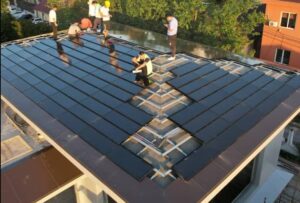
 Successful BIPV integration starts with cross-disciplinary collaboration between architects, engineers, manufacturers, and regulators from the earliest design stage.
Hong Kong BIPV Projects and Lessons Learned
Wan Chai Tower Retrofitting Case
If there is one project that demonstrated BIPV’s viability in a dense, high-rise Hong Kong context, it is the Wan Chai Tower retrofit. Completed in 2003 as a pilot project funded by the Hong Kong Government’s Innovation and Technology Commission and supported by CLP Research Institute, this 24-storey government office building at 12 Harbour Road became the testing ground for three distinct BIPV integration strategies—each designed to answer a different question about how photovoltaics could work in a real Hong Kong building.
The three BIPV subsystems installed at Wan Chai Tower were:
| System Type | Integration Approach | Key Purpose |
|---|---|---|
| Roof Rack PV | Standard rooftop mounting | Baseline performance comparison |
| Sun Shading BIPV | PV panels as façade shading devices | Test dual-function envelope performance |
| Skylight BIPV | PV panels as glazing infill in atrium | Test daylighting + generation balance |
With approximately 500 m² of PV surface and 55 kW of installed capacity, the system was estimated to generate roughly 30,000 kWh annually—reducing CO₂ emissions by approximately 18–23 tonnes per year, according to government publications and research papers from Hong Kong Polytechnic University.
But the real value of the Wan Chai Tower project was not the kilowatt-hours. It was the data—and the willingness to share it publicly. The project was formally monitored and the results communicated through government channels, academic papers, and industry presentations. This transparency built confidence among other building owners and developers, proving that BIPV could perform reliably under Hong Kong’s subtropical conditions, complex shading environment, and demanding building codes.
The critical lesson from Wan Chai Tower is this: in dense cities, BIPV works best when it is designed as envelope plus shading plus energy—not as solar panels stuck on as an afterthought. The sun shading BIPV subsystem, in particular, demonstrated that a single building element could provide weather protection, reduce solar heat gain, and generate electricity simultaneously. This triple function is exactly what makes BIPV economically and architecturally compelling in Hong Kong’s high-rise environment.
For anyone planning a similar retrofit, the step-by-step BIPV installation guide provides a practical framework covering assessment, system selection, permitting, commissioning, and ongoing maintenance.
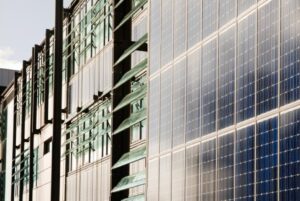
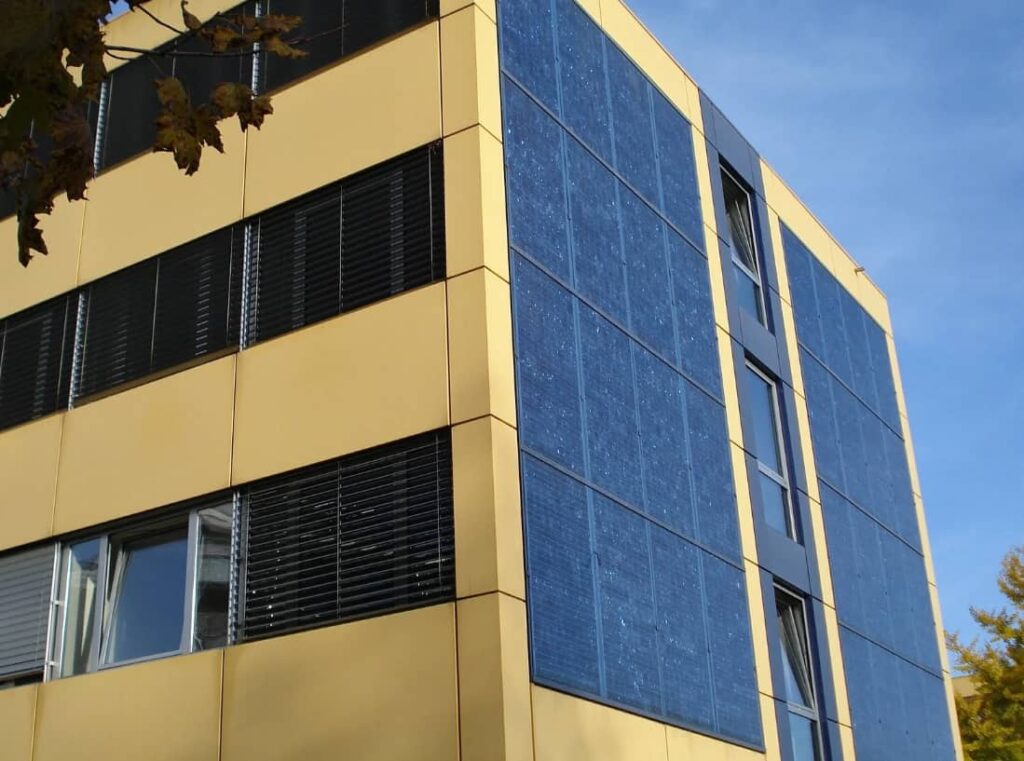
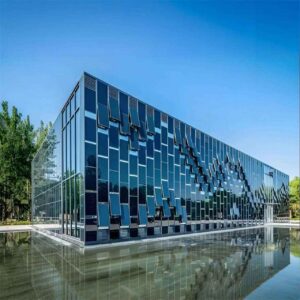
 Modern BIPV façade systems, inspired by pioneering projects like Wan Chai Tower, combine energy generation with architectural shading and weather protection.
Ma Wan Primary School Collaboration
While Wan Chai Tower proved that BIPV could work in a high-rise government building, the Ma Wan Primary School project—launched in the early 2000s on Ma Wan Island—demonstrated something equally important: that BIPV could be designed into a new building from scratch, as a fully integrated system rather than a retrofit, and that the process could serve educational and community engagement goals alongside energy generation.
The project, technically supported by the Department of Architecture at the University of Hong Kong and jointly funded by the Innovation and Technology Commission and CLP Research Institute, installed four BIPV subsystems on the newly constructed CCC Kei Wai Primary School. What made this project distinctive was the completeness of the integration. Unlike Wan Chai Tower, where BIPV was added to an existing structure, the Ma Wan school was designed from the ground up with BIPV as part of the building’s architectural language. PV cladding and shading installations were incorporated into the design of the building envelope from the earliest stages.
The educational dimension was deliberate and powerful. The school became a living laboratory for solar energy education, with students participating in monitoring the BIPV system’s performance and learning about renewable energy through hands-on activities. Research published in the Asia-Pacific Forum on Science Learning and Teaching documented how the school’s curriculum coordinator used the BIPV installation as a teaching tool, integrating solar energy investigation activities into the primary school science curriculum.
For the broader BIPV industry, the Ma Wan project established several important precedents. First, it showed that BIPV could be cost-effectively integrated into new construction at a modest scale—a school building, not a corporate tower—broadening the perceived applicability of the technology. Second, it demonstrated the value of academic-industry-government partnership, a model that Hong Kong has since replicated in projects at the Hong Kong Science Park and the CIC Zero Carbon Building. Third, it proved that community engagement and education could be built into the BIPV deployment process, creating advocates and informed stakeholders who would support future renewable energy projects.
For schools, community buildings, and institutional clients exploring BIPV for the first time, manufacturers like Jia Mao Bipv offer tailored BIPV solutions and applications that can be scaled from modest institutional installations to large commercial deployments—with the same underlying technology and quality standards.
Advances in Vacuum BIPV Curtain Walls
One of the most exciting technical frontiers in Hong Kong’s BIPV landscape is the development of vacuum BIPV curtain walls—a technology that combines the power generation capabilities of photovoltaic glazing with the superior thermal insulation of vacuum glass. This innovation, actively researched by teams at the Hong Kong Polytechnic University and supported by the Construction Industry Council (CIC), addresses one of the fundamental challenges of BIPV in hot climates: how to generate electricity from the building envelope without creating a thermal penalty.
A conventional BIPV curtain wall panel generates electricity but still allows a significant amount of heat to transfer through the glazing into the building interior. In Hong Kong’s climate, where cooling loads dominate energy consumption, this heat gain partially offsets the energy benefit of the PV generation. The vacuum BIPV curtain wall solves this by incorporating a vacuum layer—similar to a thermos flask—between the PV glass layers, dramatically reducing the U-value (thermal transmittance) of the panel.
Research published in ScienceDirect’s Energy Procedia found that vacuum BIPV curtain walls can not only perform on-site power generation but also significantly reduce heat transfer through the building envelope. The dual benefit—electricity generation and superior insulation—makes this technology particularly promising for Hong Kong’s west-facing façades, which receive intense afternoon sun and are the primary drivers of cooling load in commercial buildings.
The practical implications for Hong Kong are significant. If vacuum BIPV curtain walls can be manufactured at scale and at competitive cost, they could transform the economics of façade-integrated solar by eliminating the thermal trade-off that currently limits BIPV’s appeal to some building designers. Instead of arguing that BIPV “generates enough electricity to offset the heat gain,” designers could show that BIPV actually reduces both energy consumption and carbon emissions simultaneously—making the business case even stronger.
This is an area where manufacturers with strong R&D capabilities play a critical role. Jia Mao Bipv, for instance, has invested in next-generation BIPV technologies including self-dimming materials that automatically adjust transparency based on light conditions, integration of thermal storage materials for improved building energy efficiency, and flexible BIPV materials for curved architectural designs. These innovations, combined with advances in vacuum glazing, point toward a future where every square metre of a Hong Kong building’s skin is an active, intelligent energy asset.
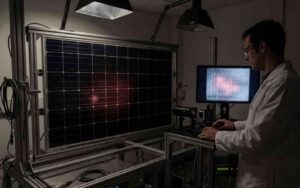
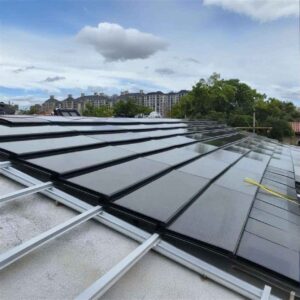
 Advances in vacuum BIPV curtain wall technology promise to combine superior thermal insulation with on-site power generation—a breakthrough for Hong Kong’s energy-hungry buildings.
Integrating BIPV technology successfully in Hong Kong is not a theoretical exercise—it is happening now, driven by real projects, real data, and real policy support. From the pioneering Wan Chai Tower retrofit that proved BIPV could perform in a dense urban high-rise, to the Ma Wan Primary School collaboration that showed BIPV could be designed into new buildings from the ground up, to the cutting-edge vacuum BIPV curtain wall research that promises to eliminate the thermal trade-offs of earlier systems, Hong Kong has built a body of evidence and experience that few cities can match.
The path forward is clear. Building owners need to evaluate their façades as energy assets, not just weather barriers. Architects need to specify BIPV from the earliest design stages, not treat it as an add-on. Policymakers need to continue strengthening the FiT scheme and streamlining approval processes. Financiers need to recognize BIPV as a bankable, revenue-generating building component. And the entire value chain—from manufacturers to installers to grid operators—needs to collaborate more effectively than ever.
Professor Yang Hongxing put it best: “By integrating photovoltaics into the building envelope on a massive scale, we will be able to minimise carbon emissions and create a green campus.” Replace “campus” with “city,” and you have the vision for Hong Kong’s future.
If you are ready to explore BIPV for your next building project—whether it is a curtain wall retrofit, a new-build façade, a rooftop system, or a skylight integration—the team at Jia Mao Bipv offers end-to-end support: from initial concept and product selection through detailed design, manufacturing, and technical commissioning support. With an annual production capacity of 3 GW, a comprehensive product range including transparent BIPV glass, laminated BIPV façade panels, and solar roofing tiles, and deep experience serving projects across Asia, Jia Mao Bipv is the partner you need to turn your building’s skin into a high-performance energy generator.
Get a Free BIPV Consultation from Jia Mao Bipv →
Frequently Asked Questions
What is BIPV technology and how does it differ from traditional solar panels?
BIPV (Building Integrated Photovoltaics) refers to photovoltaic materials that replace conventional building components—such as curtain wall glass, roof tiles, skylights, and façade cladding—while generating electricity. Unlike traditional bolt-on solar panels (BAPV), BIPV modules serve a dual function as both building material and energy generator. This means they offset the cost of the replaced building element, provide thermal benefits like shading and insulation, and produce clean power—all in one product. In Hong Kong, where façade area far exceeds roof area in most buildings, BIPV enables vastly more solar capacity than rooftop-only approaches.
Is BIPV suitable for Hong Kong’s typhoon-prone climate?
Yes. Modern BIPV modules designed for Hong Kong must meet stringent curtain wall standards, including wind pressure resistance of 4.0 kPa or higher—equivalent to the requirements for conventional architectural glazing. Leading manufacturers like Jia Mao Bipv use ultra-clear tempered glass, structural adhesive sealing systems, and heavy-duty lamination specifically engineered for typhoon-prone coastal environments. The Wan Chai Tower BIPV installation has operated successfully through multiple typhoon seasons since 2003, demonstrating the technology’s resilience under real Hong Kong conditions.
What is the Feed-in Tariff (FiT) scheme in Hong Kong and how does it support BIPV?
The Feed-in Tariff (FiT) Scheme allows owners of eligible renewable energy systems up to 1 MW to sell the electricity they generate to CLP or HK Electric at rates above the normal electricity tariff—currently HK$2.5 to HK$4 per kWh depending on system capacity. The scheme, running until the end of 2033, provides a predictable revenue stream that significantly improves the payback period for BIPV investments. Since its launch in 2018, the FiT has been the primary driver of Hong Kong’s growth from single-digit MWp to nearly 100 MWp of installed solar capacity.
How much does BIPV cost compared to standard glass curtain walls?
BIPV curtain wall panels typically cost 2–3 times more per square metre than standard glass curtain walls. However, the relevant comparison is the net cost premium—the BIPV cost minus the cost of the conventional curtain wall panel it replaces, minus the FiT revenue and energy savings over the system’s 25-year lifespan. When calculated this way, the effective premium is significantly lower, and many projects achieve positive ROI within 7–12 years. For a detailed breakdown, see Jia Mao Bipv’s cost analysis.
Can BIPV panels be transparent enough for windows and skylights?
Yes. Modern transparent BIPV modules are available with light transmittance levels ranging from 10% to 90%, allowing architects to balance daylighting needs with energy generation. Transparent BIPV glass from manufacturers like Jia Mao Bipv can be integrated into windows, skylights, and curtain walls using conventional structural glazing techniques, maintaining the building’s aesthetic while generating clean electricity.
What was the Wan Chai Tower BIPV project and why is it significant?
The Wan Chai Tower BIPV project, completed in 2003, was a government-funded pilot that installed three types of BIPV systems—rooftop, sun shading façade, and skylight—on a 24-storey government office building in Wan Chai. With 55 kW installed capacity generating approximately 30,000 kWh annually, it was the first large-scale demonstration that BIPV could perform reliably in Hong Kong’s dense urban environment. Its significance lies in the publicly shared monitoring data, which built industry confidence and paved the way for subsequent BIPV projects across the city.
What is vacuum BIPV curtain wall technology?
Vacuum BIPV curtain wall technology combines photovoltaic glazing with vacuum insulation—similar to a thermos flask—to create a façade panel that generates electricity while dramatically reducing heat transfer into the building. Research conducted at Hong Kong Polytechnic University has shown that this technology can significantly reduce cooling loads in subtropical climates like Hong Kong, making it particularly promising for west-facing and south-facing commercial building façades where solar heat gain is highest.
How do I choose the right BIPV manufacturer for a Hong Kong project?
Look for manufacturers with proven curtain wall-grade product certifications, experience with high-wind-load environments, customisation capabilities (size, colour, transparency), and a track record of supporting projects from design through commissioning. Capacity matters too—a manufacturer like Jia Mao Bipv, with 3 GW annual production capacity and a full range of BIPV products, can support both small institutional projects and large commercial deployments with consistent quality and delivery reliability.
What are the main barriers to BIPV adoption in Hong Kong?
The main barriers include complex multi-department approval processes, the challenge of coordinating among multiple property owners in typical Hong Kong strata-title buildings, perceived high upfront costs (though net costs are lower than headline figures suggest), limited awareness among architects and developers, and the absence of a dedicated BIPV building code that streamlines the regulatory pathway. Policy reforms, industry education, and innovative financing models (ESCOs, PPAs) are all helping to address these barriers.
How can I get started with a BIPV project in Hong Kong?
Start by assessing your building’s façade and roof areas for solar potential, considering orientation, shading from neighbouring buildings, and structural capacity. Engage a qualified BIPV solutions provider early in the design process—before the façade design is locked—to evaluate product options, estimate energy yield and financial returns under the FiT scheme, and map the regulatory approval pathway. Jia Mao Bipv offers free initial consultations to help building owners and architects evaluate BIPV feasibility for their specific projects.


-300x300.jpg)